From the Massey Blast to the BP Spill : Fossil Fuels are Killing Us

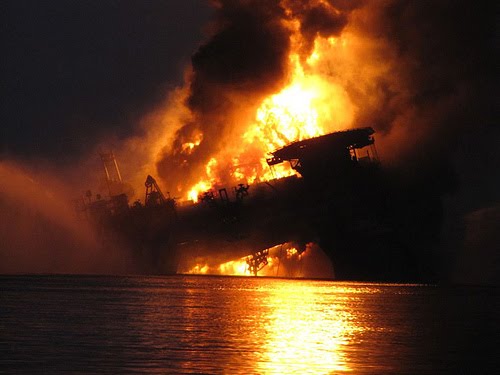
Deepwater Horizon oil rig burning before sinking into the Gulf of Mexico. Photo from U.S. Department of Energy / Leonard Doyle / Flickr.

Global response emerging:
Fossil fuels are killing us

By Alex Knight / The Rag Blog / May 11, 2010

See ‘Government exempted BP from environmental review,’ from Democracy Now!, Below.

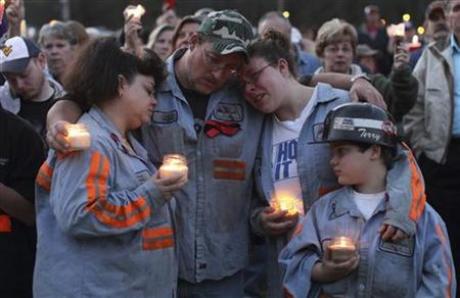
Just two weeks after the Massey Energy coal explosion on April 5 that killed 29 miners in West Virginia, the BP oil rig Deepwater Horizon exploded in the Gulf of Mexico, killing 11 more workers.

These back-to-back tragedies have brought attention to the fossil fuel industry’s terrible safety record — in both cases there were known safety violations on site, but the government did nothing to prevent disaster from occurring. See the interview below which explains how the federal government approved this BP rig and many more without conducting the environmental review they are legally obligated to.

Unlike the industry executives attempting to shift blame and avoid responsibility, we must look beneath the surface to discover the deeper meaning of these horrible crises.

Is the universe giving us a warning that fossil fuels are going to destroy us? Because if global climate change continues at the rate it has, in the not-too-distant future we will see many thousands, or even millions more deaths as crops dry up, floods destroy coastal wetlands, and diseases migrate to temperate regions. This is no joke. Families and communities are being destroyed so coal and oil corporations can boost their profit margins.

We need to be open to hearing the lessons that are all around us, especially from those who have been silenced and beaten down by capitalism.

Immediately after the Massey explosion and the BP explosion, was Earth Day — April 22. And on this date, indigenous and poor people from around the globe were meeting in Cochabamba, Bolivia, for the World People’s Conference on Climate Change, a grassroots response to the corporate fraud that was the Copenhagen Summit.

Bolivian President Evo Morales, who was proclaimed “World Hero of Mother Earth” by the United Nations General Assembly in October, hosted the conference, proclaiming “The capitalist system looks to obtain the maximum possible gain, promoting unlimited growth on a finite planet. Capitalism is the source of asymmetries and imbalance in the world.”

30,000 people from 140 countries convened and approved the “Cochabamba Protocol,” which calls for an International Climate Justice tribunal to prosecute climate criminals, and condemns REDDs which put a price on wild forests and encourage development, along with carbon market schemes. The protocal proposes a Universal Declaration of Mother Earth and demands that industrialized polluting nations cut carbon emissions by 50 percent as part of a new, binding climate agreement.

Global momentum is building towards confronting capitalism in terms of the ecological devastation it is causing. Here in the United States, Rising Tide North America is calling for a “Day of Action, Night of Mourning” this Friday, May 14, to call for BP to pay for all cleanup and long-term ecological effects of their spill, for the abolition of offshore oil drilling, and for “a rapid and just transition away from fossil fuels.”

[Alex Knight is an organizer and writer in Philadelphia. He is currently organizing with Philly Students for a Democratic Society (SDS) and working with others to mobilize Philadelphia for the US Social Forum this June 22-26 in Detroit. He also maintains the website endofcapitalism.com and is in the process of writing a book called The End of Capitalism. He can be reached at activistalex@gmail.com]

Families of miners from Massey Coal comfort each other during candlelight vigil in Montcoal, West Virginia, April 10, 2010. Photo by John Gress / Reuters.

Government exempted BP
From environmental review

By Democracy Now! / May 7, 2010

JUAN GONZALEZ: Well now to the Gulf of Mexico where the enormous oil slick in the Gulf continues to expand. Interior Secretary Ken Salazar has ordered a three-week halt to all new offshore drilling permits. Emphasizing that the companies involved had made “major mistakes,” Salazar spoke to reporters Thursday outside BP’s Houston crisis center. He noted that lifting the moratorium on new permits will depend on the outcome of a federal investigation over the Gulf spill and the recommendations to be delivered to President Obama at the end of the month.

SECRETARY KEN SALAZAR: Minerals Management Service will not be issuing any permits for the construction of new offshore wells. That process will be concluded here on May the 28th. At that point in time, we’ll make decisions about how we plan on moving forward. There is some very major mistakes that were made by companies that were involved. But today is not really the day to deal with those issues. Today and the days ahead really are about trying to get control of the problem.

JUAN GONZALEZ: Secretary Salazar added that the existing offshore oil and natural gas drilling will continue, even as public meetings to discuss new oil drilling off the Virginia coast have been canceled for this month.

AMY GOODMAN: Salazar’s announcement comes on the heel of a Washington Post exposé revealing that the Minerals Management Service had approved BP’s drilling plan in the Gulf of Mexico without any environmental review. The article notes that the agency under Secretary Salazar had quote “categorically excluded” BP’s drilling as well as hundreds of other offshore drilling permits from environmental review.

The agency was able to do this using a loophole in the National Environmental Policy Act created for minimally intrusive actions like building outhouses and hiking trails. Well, for more on this story, we’re joined now from Tucson, Arizona, by Kieran Suckling, executive director of the Center for Biological Diversity. Welcome to DEMOCRACY NOW!, Kieran. Explain this loophole, how you found it, and what it means for the Gulf.

KIERAN SUCKLING: Well, when a federal government is going to approve a project, it has to go through an environmental review. But for projects that have very, very little impact like building an outhouse or a hiking trail, they can use something called a categorical exclusion and say there’s no impact here at all so we don’t need to spend energy or time doing a review.

Well, we looked at the oil drilling permits being issued by the Minerals Management Service in the Gulf, and we were shocked to find out that they were approving hundreds of massive oil drilling permits using this categorical exclusion instead of doing a full environmental impact study. And then, we found out that BP’s drilling permit — the very one that exploded — was done under this loophole and so it was never reviewed by the federal government at all. It was just rubber-stamped.

JUAN GONZALEZ: Well, according to the Washington Post article, in one of its assessments of the agency “estimated that a large oil spill from a deep platform like the Deepwater Horizon would not exceed a total of 1,500 barrels and that a deepwater spill occurring off the intercontinental shelf would not reach the coast.” Obviously, both of those — both of those assessments have proven dramatically off the mark. As many as 250-400 waivers a year for drilling in the Gulf?

KIERAN SUCKLING: Yeah, yeah, absolutely. It’s also important to note that when the government says it’s very unlikely this spill will occur, it’s unlikely the spill will reach shore, those aren’t even the government’s own assessments. They’re just repeating what BP, Exxon, and other oil companies put in their drilling applications. And since there’s no environmental impact study, the government never actually does an independent review. So everyone is just repeating the industry’s statements as they rubber-stamp the approvals.

AMY GOODMAN: Reporters questioned White House press secretary Robert Gibbs on Wednesday about why BP’s Gulf of Mexico drilling operation was exempted from the detailed environmental impact analysis last year.

REPORTER: … Why BP was exempted from the environmental impact analysis?

SECRETARY ROBERT GIBBS: Yeah, well, I — the — there are a series of reviews that have to — that have to — you have to go through in order to get drilling permits. The process by which was referenced in that article is part of the review that Secretary Salazar is undergoing.

REPORTER: Robert, does the White House believe it was a mistake, for this categorical exemption to be granted to BP for Deepwater Horizon?

SECRETARY ROBERT GIBBS: That’s part of the investigation. I don’t know the answer to that.

REPORTER: Ok, so that’s something that you’re looking into presently?

SECRETARY ROBERT GIBBS: I would say as the President asked Secretary Salazar to undertake a thirty-day review of what happened, that that would certainly be part of the process under which he would evaluate.

AMY GOODMAN: Kieran Suckling, that was Robert Gibbs, White House press secretary. Respond to his response.

KIERAN SUCKLING: The White House and the Department of Interior are really sort of ducking their heads on this issue right now because it’s an enormous problem. Especially since just a few months ago the Government Accountability Office came out with the report on MMS’s operations in Alaska, where they also have offshore drilling, and specifically said the agency is not doing these environmental studies properly. They’re avoiding doing them at all. And then they went ahead knowing that the GAO had just done this study and continued to put them out.

So, this is not something new. MMS knew they had a problem. In fact, when Interior Secretary Salazar first came into office, he announced ‘There’s a new Sheriff in town, I’m going to clean up this corrupt agency,’ and instead of doing that, he’s pushed them to put out more offshore oil drilling permits while not cleaning up what is clearly a broken process of doing any environmental review at all.

JUAN GONZALEZ: I want to play a clip of President Obama where he says that oil spills don’t come from rigs, but from refineries. He was speaking on April 2nd, just over two weeks before the explosion of the Deepwater Horizon rig.

PRESIDENT BARACK OBAMA: I want to put out, by the way, that oil rigs today generally don’t cause spills. They are technologically very advanced. Even during Katrina, the spills didn’t come from the oil rigs, they came from the refineries onshore.

JUAN GONZALEZ: Kieran Suckling, your response?

KIERAN SUCKLING: Yeah, I mean, I think what the President has said here is actually just very, very critical, because he is repeating, and I suspect without even knowing it, the big lie of offshore oil drilling. For decades, the oil companies and the Minerals Management Services have told us, ‘Oil drilling is safe, it’s fine, that’s not where oil spills come from.’

In fact, that’s the basis of not doing any environmental review is, you simply assert it will never be a problem, therefore, you don’t even have to study it. When it’s true that they don’t leak often, but when they do leak, it’s absolutely catastrophic. It’s very similar to nuclear power plants. They don’t often fail, but when they fail it’s catastrophic. And, therefore, you have to plan for catastrophe. You have to do very intensive environmental analysis, not simply say, ’It’s rare, so we can ignore it.’

AMY GOODMAN: Kieran Suckling, what do think has to happen right now?

KIERAN SUCKLING: Well, first off, I think that the President should announce a complete moratorium on all new offshore oil drilling. This three-week time-out is really too little, too late. And it’s very important to do that now because the president, under the urging of Secretary of Interior Ken Salazar, has planned to open up new offshore oil drilling in Alaska, in the eastern Gulf of Mexico, and on the Atlantic coast. And that just needs to end. It’s not safe anywhere, anytime.

Secondly, the president should immediately revoke existing oil permits and especially in Alaska. Shell Oil, this July, has… is going to start doing offshore oil drilling in the Chukchi Sea of Alaska. And if you think it’s difficult to clean up oil in the relatively warm, calm Gulf of Mexico, imagine trying to do this with icebergs and sea ice, 20 hours of darkness in the Arctic oceans. It just cannot be done. If this spill had happened in Alaska, its magnitude would have been10 times worse than has happened in the Gulf.

Then, thirdly, the President should start an initiation of an investigation of Ken Salazar and his role in allowing this to happen. Salazar has been a major proponent of the offshore oil drilling industry. He passed legislation as a senator in 2006 to open up the Gulf of Mexico in the first place to offshore oil drilling. He gets campaign contributions by British Petroleum. And then he walks into this agency he is supposed to reform, and instead of reforming it, pushes it to do even more offshore oil drilling. So Ken Salazar is part of the problem here, not the solution. He should not be doing the investigation of MMS. He should be under investigation for helping to cause this crisis.

AMY GOODMAN: Well, Kieran Suckling, we want to thank you very much for being with us, Executive Director of the Center for Biological Diversity speaking to us from Tucson, Arizona. This is Democracy Now!, democracynow.org, the War and Peace Report…

Source / Democracy Now!

The Rag Blog

Posted in Rag Bloggers | Tagged , , , , , , , , , | Leave a comment

On the road in France.

David Hamilton with consultation from Chris Dobbs, American expatriate
artist living in Lyon, France.

When making comparisons between France and the United States, I typically favor France, but not always. France has no Grand Canyon or redwoods. No buffalo or buzzards. The French make a virtue out of force feeding geese, love nuclear power, eat horses, smoke cigarettes too much and pot not enough. Other exceptions escape me.

I was first infected with Francophilia thanks to the U.S. Army, which in 1964 very kindly sent me to France rather than Vietnam. Two months before the Gulf of Tonkin incident, which signaled the beginning of the U.S. assumption of the principal fighting role in Vietnam, I arrived at a major headquarters unit in Orleans, France, to begin my career as an army clerical worker. It was a nice, clean job in a non-combat zone, the very definition of soft duty. Although unaware at the time, I had lucked out beyond my wildest dreams.

Orleans is just upstream from the famed chateau region of the Loire Valley and an hour south of Paris. Although I complained about it for the next two and a half years, it beat being anywhere near Vietnam, or Germany for that matter, by considerably more than a country mile. Only much later did I realize it was a seminal time for me.

Besides our regular army jobs, we were required to do extra duty about once a week, usually struggling to stay awake while “guarding” some empty office building through the night. I volunteered to be a “duty driver” instead. This only meant that I might have to wake up in the middle of the night to drive some drunk lieutenant home from the officer’s club. It was my first experience driving in France.

I have since driven through France several times and have concluded that there are several features of the French road system that are clearly superior to that in the U.S. — and a couple that are not. Although the French are not typically defensive drivers, France has about 40% fewer traffic fatalities per capita than the U.S. Clearly, they have something positive going for them in this sphere. It is not that they are better drivers or have safer cars. More likely this commendable safety record is due to the traffic system design. American expatriate friends who have lived in France for many years say that it is also due to a cultural undercurrent of patience and civility.

This latter opinion flies in the face of the common American stereotype that the French are rude. I believe this stereotype is pure crap. France is the world’s most popular tourist attraction and an important component of that is its citizens being gracious hosts. I’ve seen Americans in France berating waiters for not speaking English far more often than French waiters being rude to American customers.

Virtually every day French people volunteer to speak their limited English to me even though I’m in their country and speak rudimentary French. Americans who say the French are rude are almost invariably bigoted chauvinists who have never been here. If they have, they probably came on a guided tour with pre-conceived prejudices and lacked the willingness or ability to speak a word of French. Try to imagine a Frenchman at Denny’s insisting on a French-speaking waiter. Yet that’s the kind of expectation such Americans have.

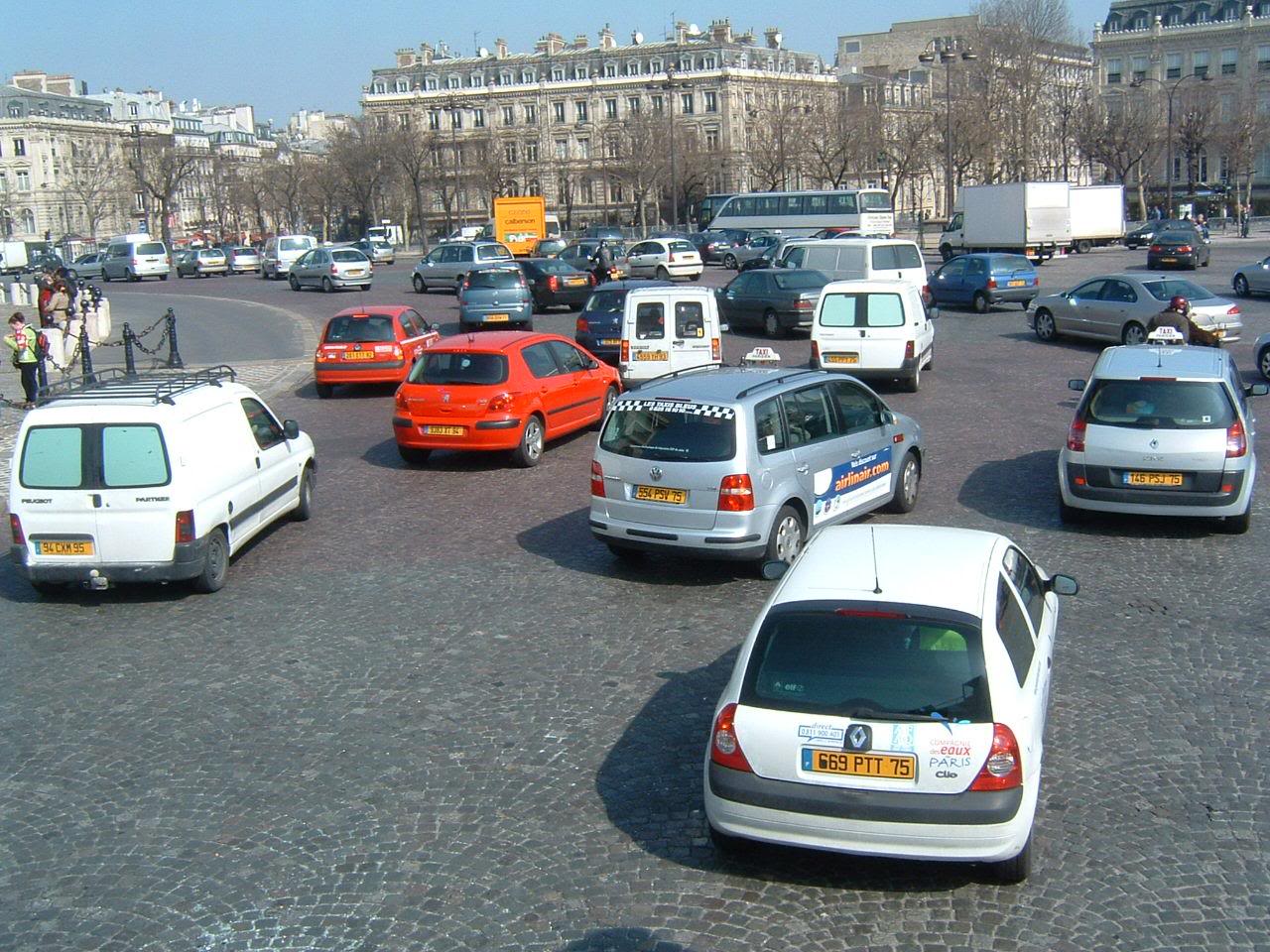
The most noticeable difference in the road system is traffic circles. They are rare in the U.S. but very common in France, especially outside city centers. They replace stop signs and red lights and keep traffic continuously moving. On entering them, you must yield to cars already on them, but usually everything just keeps flowing. One can pass through even medium sized towns without ever stopping, having gone through several circles in the process.

Each circle has clearly marked directional options, both road numbers and towns to be found in the direction indicated. You just need to know the next major town in the direction you want to go and it will appear on a sign pointing to the correct road. If you are uncertain where you’re going, you can keep circling until you decide. French drivers, however, are quick to observe this indecisiveness and may honk, gesture, and mouth unintelligible remarks. This is especially true if you have an Avis sticker on your back window.

To the American driver, the main negative feature of these circles is that they have two lanes going around them and often two lanes entering them. This sometimes calls for a certain amount of maneuvering. The maneuver where a car in the inside (left) lane of the circle suddenly realizes it is time to exit right is troublesome to Americans used to precise rules of the road. To the French, however, it is an event that calls forth the efficacious driving principle in which rigid rules that bread complacency and displace personal responsibility to external institutions are replaced by individual initiative and mutual negotiations. This mix of freedom, caution and cooperation enables traffic circles to work well.

The French readiness to communicate with other drivers is subtly different from that which typically takes place in the U.S. In the U.S., most people are reticent to express their displeasure with other drivers because the recipient of their remarks may be heavily armed and have an easily offended masculinity. This potential for serious road rage is practically non-existent in France.

For the French, not having the God-given right to possess deadly force at all times, expressing such displeasure isn’t all that risky, so people feel more free to indulge. But these exchanges are a kind of banter with a core of politeness or at least civility. They have even been known to apologize. If you think they’re saying something nasty, it’s probably because you’re paranoid and don’t understand idiomatic French.

The signage on French roads, unlike that in the U.S., utilizes international symbols. It is in most respects better, at least insofar as telling you where you are going. The signs can, however, be ambiguous, especially for someone unaccustomed to the international signage and who doesn’t read French. It helps to have a navigator with a translation dictionary.

Another complication is that the numbers used refer to the metric system. Of course, anyone familiar with both the metric system and the confusing jumble of measurements we use in the U..S will attest to the superiority and greater simplicity of the former. But it does take getting used to.

The directional signs at traffic circles allow you to travel across France, even on back roads, if you know the next major town along the way to your destination, referring to maps only occasionally to determine the towns along your route. If the town you’re looking for is not found on the signs, there will be one saying “toutes directions” or “autres directions”. Follow those until you arrive at a circle with a sign pointing to the place you want to go. It almost always works.

Another feature of signage is that Americans may find bothersome is that they never refer to cardinal directions. There is no highway D15 east and D15 west; only D15. This may be due to D15 winding in several directions as it circumvents some town. We carry a compass.

Another clearly superior feature of the French road system is that large trucks are always obliged to go slower than cars, in some cases much slower. On super highways outside cities cars can go up to130km per hour while trucks are limited to 90. This confines trucks to the right hand lane. It also allows tourists who don’t know where they are going to nestle among them until they figure it out. On smaller departmental roads, the difference is usually 90 and 80. The maximum speed a truck may go is shown by numbers on its back door. Imagine I-35 with no semis blazing along at 80mph. And due to reliance on a much better developed rail system for the movement of goods, there are many fewer trucks to deal with.

On French roads the speed limits change automatically when it rains. On super highways, it drops from 130kph to 110 for cars and 90 to 80 for trucks. Corresponding changes are required on smaller roads. Although I’ve never seen it, I have heard that this exists in the US, but varies from place to place and is poorly enforced. However, speed limits are seldom posted on secondary roads except to slow you down when passing through towns. The maximum speeds are uniform for all roads of a certain type and you’re supposed to know what they are without being told. On a D (departmental) road, it’s 90kph on dry roads, dropping to 80 if it’s raining. But no sign will remind you of this. If you learned to drive in
France, you were required to know maximum speeds for different types of roads under different conditions. Tourist have to figure it out by other means and it’s best to do so quickly because French police, when they make one of their rare appearances on highways, will give you a ticket for the slightest transgression of the prescribed limit.

Another outstanding feature is the “passage”. These are pedestrian cross walks, a series of white rectangles painted across streets in urban areas. There are very common, not only at corners, and vehicles must stop for pedestrians who are in them. They often do so even for pedestrians near one who look like they might be thinking about crossing, especially those with a cane or are pushing a baby carriage. These events must be anticipated. The question often arises as to who got there first, but the pedestrian has the priority in this game. The driver behind the driver who is about to brake for a pedestrian also must be prepared to act
suddenly. Strolling tourists not from California are often timorous about exerting this right, but the French seem to feel confident hurling themselves into the “passage ” without looking or breaking stride.

Another very positive feature of transportation in France is that there are so many alternatives to cars. Towns are more compact and many people actually walk to do daily errands. This contrasts sharply with the US, where the invariable first act upon leaving one’s house is to get into one’s car. The arrangement of our urban geography is predicated on the
assumption of individual car use.

Imagine no cars. For many French it isn’t hard to do. Living in compact towns and cities laid out long before the advent of cars, they can walk to nearby stores for all their needs. This has added benefits in terms of reducing pollution, promoting health, maintaining small
enterprises and social integration.

There are far more bicyclists in France, some doing mundane tasks and others out getting exercise. Many older men seem to be preparing for another run at the Tour de France. Bicycles rarely have special lanes and you are actually expected to defer to them.

Besides these alternatives to driving, France has a vastly better developed system of public transportation. The train system, owned by the government, is especially good. Trains go to even very small towns. We stayed in a town of no more than two thousand, but it had frequent train service to the nearest city and from there to the entire country. Given the paucity of train service in the US, killed off early in the 20th century by car manufacturers and oil companies, I would speculate that the French ride trains a thousand times more per capita than Americans. The trains that run between major cities are now all TGV’s, high speed trains that run close to 200mph. Paris to Marsailles can be as little as a few hours. As the train stations are near the city centers, trains are typically quicker from home to ultimate destination than if you flew.

In Paris especially, few people get around by car. It’s not practical. There isn’t room for them, especially parking places, and municipal authorities look down on their use. This attitude is the opposite of the US where space for cars is sacrosanct. In urban France, parking garages are keep out of sight by being located underground and tourists are reluctant to drive down the dark holes leading to them. If you can by some miracle find an above ground parking spot, be ready to spend real money to rent it. There won’t be a parking meter for each
space, but on the coveted site “payant” will be written. This means you must find the nearby machine dispensing permits, insert to correct change, take the paper permit it gives you indicating how long you have and put it in a clearly visible place on your dashboard. This may run you a couple of euro an hour with a two hour limit. If you get a parking ticket and
ignore it, you will get a large bill in the mail, even in the US. If you ignore that too, good luck renting a car next time you come to Europe.

Alternatives to using a car in Paris or within other French cities are many. Besides walking and personal bikes, there is an extensive and well organized metro system that is directly connected to a regional train system that takes you far out into the suburbs. There is an even more extensive bus system that uses the same tickets as the metro and provides you with a view, but moves more slowly. For still more leisurely albeit costly transportation there is the “batobus”, large public boats covered with clear plastic canopies that run up and down the Seine through scenic central Paris. The latest transportation innovation is the public bicycles that can be found at installations all over Paris. You simply put a credit card into the machine found at each bike station as a deposit to get into the system. Then you can take out a bike for 30 minutes free and for very little thereafter, leaving it at any other bike station in the city. These are three speed bikes, but most of Paris is pretty flat. By these and other means, such as reducing the number of parking spots and lanes for cars, the municipal government is openly and successfully reducing car use within the city.

The result of all these alternatives is that for urban dwellers cars are secondary transportation, a luxury used for special occasions. In contrast, life in the US has been organized in such a way as to make car ownership an absolute necessity, the primary if not the only form of transportation.

But what about the negative features of driving in France? There are only a couple that seriously bother me. One is that they don’t tell you how much to slow down for corners on rural roads. You’ll be on a D (departmental) road where the top speed limit is 90kph and approaching a curve. Nothing says to slow down. There may be blue and silver chevrons pointing in the direction of the curve to warn you, but no sign advises you about the safe speed. This reflects a gymkhana mentality. You clearly can’t make that corner at 90kph unless you’re a professional race car driver in a formula one vehicle. How fast you can actually do it depends on your car, skill and nerve. A similar system in the US would produce an epidemic of rollovers. In France, it’s a matter of personal responsibility.

Another major problem on French roads is motorcycles. All the rules that apply to cars don’t seem to apply to them. They totally ignore the speed limits, pass at any time and anywhere, park arbitrarily and often travel in packs that seem to be racing one another for high stakes. Like on California freeways, they drive down the stripes between car lanes at a very high rate of speed, flying by while you’re limited to stop and go. The difference is that because of high gas prices, there are exponentially more of them in France. If you suddenly change lanes without noticing their very rapid approach, bad news. A willingness to constantly risk death seems to be a basic qualification for motorcycle ownership. You would think that the French highway patrol police would clamp down on this, but there are very few of them, a fact that has other advantages.

The French have a different concept of social space that is much closer and includes how they drive. Their houses and cars are generally smaller. They stand closer to talk to one another. And they are quite comfortable driving much closer to other cars. If you are a tourist trying to drive leisurely through the countryside, this means that one is very often two feet off your rear bumper and looking impatient. The solution is to merely pull over. On narrow roads, we do it every few kilometers.

This closeness includes the spatial geography of towns and cities. Virtually all of them came into existence centuries before cars and have not been significantly rebuilt to accommodate them. If you choose to get up close and personal with France by driving across it on secondary and tertiary roads, you will often find yourself passing through villages where the road shrinks to one lane to be shared with pedestrians, bicycles, dogs, restaurant sign boards and oncoming traffic. Cars belonging to visitors are often not allowed in these villages. You are required to park on the periphery and walk in. Signs confront you saying “interdit sauf riverains”, forbidden except for locals. Other signs inform you as to who has the right of way when confronting oncoming traffic on a particularly narrow stretch. These places were not designed with cars in mind, and they now seek to make only minimal compromises. This contrasts sharply with the post-car lay out of American urban geography and our exaltation of the rights of these machines.

Finally, a major difference between driving in France and the US is that it costs significantly more in France. These greater costs are a result of much higher gas prices due to taxes. Gas is now above $7 a gallon and there are also lots of tolls on superhighways outside cities. The French are ok with this because they understand that the money goes into the road system, just as they are ok with higher taxes in general because they get meaningful benefits for their tax money, not just transfer payments to corporations like in the US. Given the other transportation options, driving long distance is seen as a luxury. Even the argument that
you can pack a whole family in one car doesn’t hold water. The train guys, government employees, have thought of that and offer family based pricing. You can buy a Carte Enfant + card that gets you 50% off for that child and anyone who travels with him or her. Americans would puke at similar gas prices and tolls because they see “free” roads as a right and don’t see all the related costs.

If you think that the road system in the US is the best in the world, you’re wrong. Having a passport to go with your driver’s license might enlighten you. But few American tourists venture out on French roads, especially the back roads. As a result, they miss many of the best sights.

There are many features of European roads that could be easily adopted that would save thousands of lives in the US every year. Requiring large trucks to go significantly slower than cars and automatically reducing speed limits when it rains would cost practically nothing. But, these reforms are so very seldom discussed that few Americans are even aware of them. The trucking industry and their corporate clients find improving your safety costly and inconvenient. In the US where corporations rule, reducing traffic fatalities has little measurable impact on the only thing that really matters, the bottom line. Such concerns are therefore a very low priority.

Vastly expanding public transportation would shift the whole picture, saving thousands of lives, reducing oil consumption and improving the environment. But expanding the public sphere is heresy in capitalist America, so don’t hold your breath for these obvious reforms to take place.

Type rest of the post here

Source /
The Rag Blog

Posted in RagBlog | Leave a comment

David P. Hamilton : On the Road in France


Paris traffic circle webshots

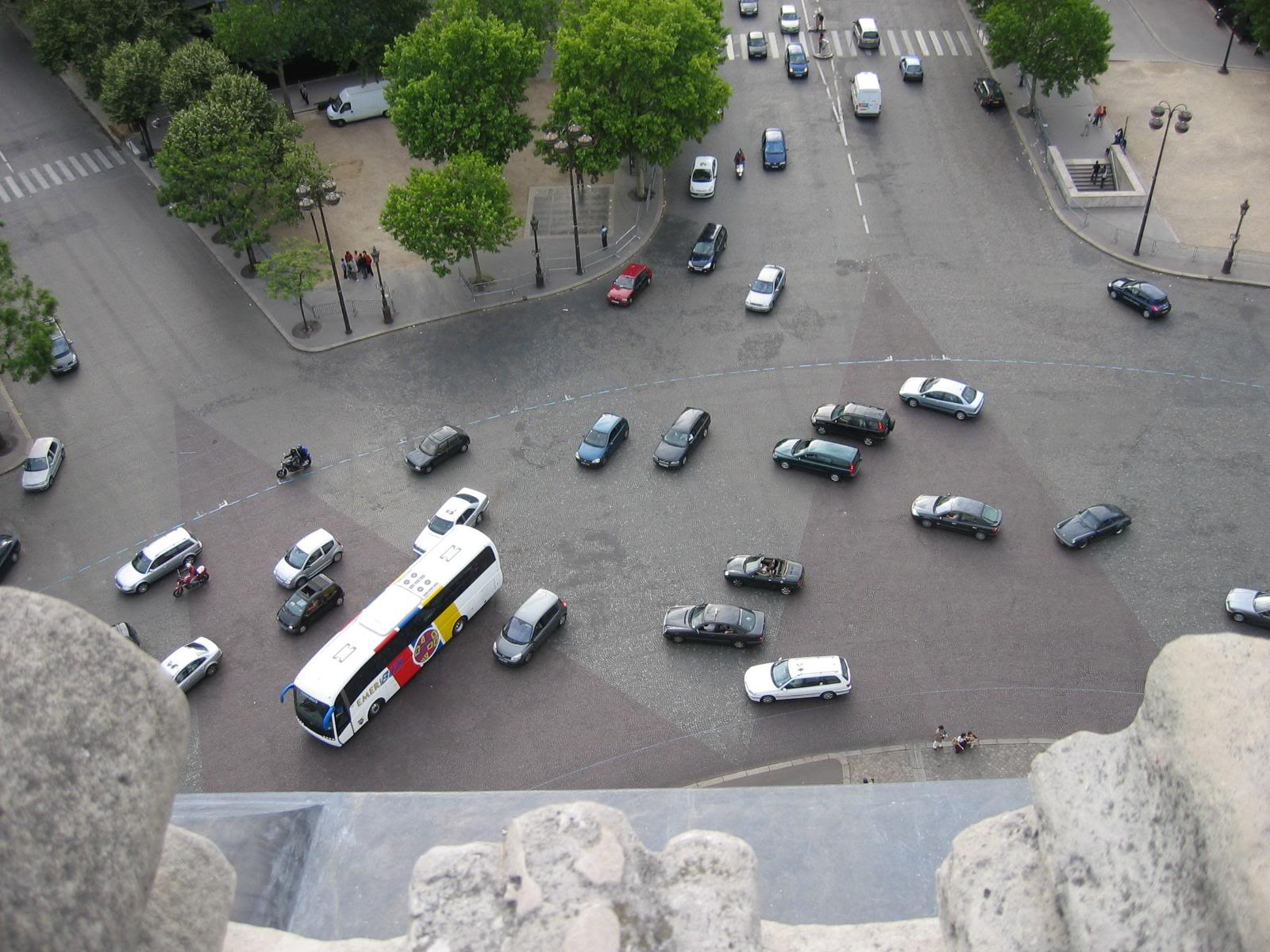
View of traffic circle below the Arc-de-Triomphe. Photo from travelpod.com.

By David P. Hamilton / The Rag Blog / May 11, 2010

[This article was written in consultation with Chris Dobbs, American expatriate artist living in Lyon, France.]

ON THE ROAD IN FRANCE — When making comparisons between France and the United States, I typically favor France, but not always. France has no Grand Canyon or redwoods. No buffalo or buzzards. The French make a virtue out of force feeding geese, love nuclear power, eat horses, smoke cigarettes too much and pot not enough. Other exceptions escape me.

I was first infected with Francophilia thanks to the U.S. Army, which in 1964 very kindly sent me to France rather than Vietnam. Two months before the Gulf of Tonkin incident, which signaled the beginning of the U.S. assumption of the principal fighting role in Vietnam, I arrived at a major headquarters unit in Orleans, France, to begin my career as an army clerical worker. It was a nice, clean job in a non-combat zone, the very definition of soft duty. Although unaware at the time, I had lucked out beyond my wildest dreams.

Orleans is just upstream from the famed chateau region of the Loire Valley and an hour south of Paris. Although I complained about it for the next two and a half years, it beat being anywhere near Vietnam, or Germany for that matter, by considerably more than a country mile. Only much later did I realize it was a seminal time for me.

Besides our regular army jobs, we were required to do extra duty about once a week, usually struggling to stay awake while “guarding” some empty office building through the night. I volunteered to be a “duty driver” instead. This only meant that I might have to wake up in the middle of the night to drive some drunk lieutenant home from the officer’s club. It was my first experience driving in France.

I have since driven through France several times and have concluded that there are several features of the French road system that are clearly superior to that in the U.S. — and a couple that are not. Although the French are not typically defensive drivers, France has about 40% fewer traffic fatalities per capita than the U.S.

Clearly, they have something positive going for them in this sphere. It is not that they are better drivers or have safer cars. More likely this commendable safety record is due to the traffic system design. American expatriate friends who have lived in France for many years say that it is also due to a cultural undercurrent of patience and civility.

This latter opinion flies in the face of the common American stereotype that the French are rude. I believe this stereotype is pure crap. France is the world’s most popular tourist attraction and an important component of that is its citizens being gracious hosts. I’ve seen Americans in France berating waiters for not speaking English far more often than French waiters being rude to American customers.

Virtually every day French people volunteer to speak their limited English to me even though I’m in their country and speak rudimentary French. Americans who say the French are rude are almost invariably bigoted chauvinists who have never been here. If they have, they probably came on a guided tour with preconceived prejudices and lacked the willingness or ability to speak a word of French. Try to imagine a Frenchman at Denny’s insisting on a French-speaking waiter. Yet that’s the kind of expectation such Americans have.

The most noticeable difference in the road system is traffic circles. They are rare in the U.S. but very common in France, especially outside city centers. They replace stop signs and red lights and keep traffic continuously moving. On entering them, you must yield to cars already on them, but usually everything just keeps flowing. One can pass through even medium sized towns without ever stopping, having gone through several circles in the process.

Each circle has clearly marked directional options, both road numbers and towns to be found in the direction indicated. You just need to know the next major town in the direction you want to go and it will appear on a sign pointing to the correct road. If you are uncertain where you’re going, you can keep circling until you decide. French drivers, however, are quick to observe this indecisiveness and may honk, gesture and mouth unintelligible remarks. This is especially true if you have an Avis sticker on your back window.

To the American driver, the main negative feature of these circles is that they have two lanes going around them and often two lanes entering them. This sometimes calls for a certain amount of maneuvering. The maneuver where a car on the inside (left) lane of the circle suddenly realizes it is time to exit right is troublesome to Americans used to precise rules of the road.

To the French, however, it is an event that calls forth the efficacious driving principle in which rigid rules that bread complacency and displace personal responsibility to external institutions are replaced by individual initiative and mutual negotiations. This mix of freedom, caution, and cooperation enables traffic circles to work well.

The French readiness to communicate with other drivers is subtly different from that which typically takes place in the U.S. In the U.S, most people are reticent to express their displeasure with other drivers because the recipient of their remarks may be heavily armed and have an easily offended masculinity. This potential for serious road rage is practically non-existent in France.

For the French — not having the God-given right to possess deadly force at all times — expressing such displeasure isn’t all that risky, so people feel more free to indulge. But these exchanges are a kind of banter with a core of politeness or at least civility. The French have even been known to apologize. If you think they’re saying something nasty, it’s probably because you’re paranoid and don’t understand idiomatic French.

The signage on French roads, unlike that in the U.S., utilizes international symbols. It is in most respects better, at least insofar as telling you where you are going. The signs can, however, be ambiguous, especially for someone unaccustomed to the international signage and who doesn’t read French. It helps to have a navigator with a translation dictionary. Another complication is that the numbers used refer to the metric system. Of course, anyone familiar with both the metric system and the confusing jumble of measurements we use in the U.S. will attest to the superiority and greater simplicity of the former. But it does take getting used to.

The directional signs at traffic circles allow you to travel across France, even on back roads, if you know the next major town along the way to your destination, referring to maps only occasionally to determine the towns along your route. If the town you’re looking for is not found on the signs, there will be one saying “toutes directions” or “autres directions.” Follow those until you arrive at a circle with a sign pointing to the place you want to go. It almost always works.

Another feature of French signs that Americans may find bothersome is that they never refer to cardinal directions. There is no highway D15 east and D15 west; only D15. This may be due to D15 winding in several directions as it circumvents some town. We carry a compass.

Another clearly superior feature of the French road system is that large trucks are always obliged to go slower than cars, in some cases much slower. On super highways outside cities cars can go up to130km per hour while trucks are limited to 90. This confines trucks to the right hand lane. It also allows tourists who don’t know where they are going to nestle among them until they figure it out.

On smaller departmental roads, the difference is usually 90 and 80. The maximum speed a truck may go is shown by numbers on its back door. Imagine I-35 in Austin with no semis blazing along at 80mph. And due to reliance on a much better developed rail system for the movement of goods, there are many fewer trucks to deal with.

On French roads the speed limits change automatically when it rains. On super highways, it drops from 130kph to 110 for cars and 90 to 80 for trucks. Corresponding changes are required on smaller roads. Although I’ve never seen it, I have heard that this exists in the U.S., but varies from place to place and is poorly enforced.

However, speed limits are seldom posted on secondary roads except to slow you down when passing through towns. The maximum speeds are uniform for all roads of a certain type and you’re supposed to know what they are without being told. On a D (departmental) road, it’s 90kph on dry roads, dropping to 80 if it’s raining. But no sign will remind you of this.

If you learned to drive in France, you were required to know maximum speeds for different types of roads under different conditions. Tourists have to figure it out by other means and it’s best to do so quickly because French police, when they make one of their rare appearances on highways, will give you a ticket for the slightest transgression of the prescribed limit.

Another outstanding feature is the “passage.” These are pedestrian cross walks, a series of white rectangles painted across streets in urban areas. They are very common, not only at corners, and vehicles must stop for pedestrians who are in them. They often do so even for pedestrians near one, when they even look like they might be thinking about crossing. This is especially true for anyone using a cane or pushing a baby carriage.

These events must be anticipated. The question often arises as to who got there first, but the pedestrian has the priority in this game. The driver behind a driver who is about to brake for a pedestrian also must be prepared to act suddenly. Strolling tourists not from California are often timorous about exerting this right, but the French seem to feel confident hurling themselves into the “passage ” without looking or breaking stride.

Another very positive feature of transportation in France is that there are so many alternatives to cars. Towns are more compact and many people actually walk to do daily errands. This contrasts sharply with the U.S., where the invariable first act upon leaving one’s house is to get into one’s car. The arrangement of our urban geography is predicated on the
assumption of individual car use.

Imagine no cars. For many French it isn’t hard to do. Living in compact towns and cities laid out long before the advent of cars, they can walk to nearby stores for all their needs. This has added benefits in terms of reducing pollution, promoting health, and maintaining small
enterprises and social integration.

There are many more bicyclists in France, some doing mundane tasks and others out getting exercise. Many older men seem to be preparing for another run at the Tour de France. Bicycles rarely have special lanes and you are actually expected to defer to them.

Besides these alternatives to driving, France has a vastly better developed system of public transportation. The train system, owned by the government, is especially good. Trains go to even very small towns. We stayed in a town of no more than two thousand, but it had frequent train service to the nearest city and from there to the entire country.

Given the paucity of train service in the U.S., killed off early in the 20th century by car manufacturers and oil companies, I would speculate that the French ride trains a thousand times more per capita than Americans. The trains that run between major cities are now all TGV’s, high speed trains that run close to 200mph. Paris to Marsailles can be as little as a few hours. As the train stations are near the city centers, trains are typically quicker from home to ultimate destination than if you flew.

In Paris especially, few people get around by car. It’s not practical. There isn’t room for them, especially parking places, and municipal authorities look down on their use. This attitude is the opposite of what you find in the U.S, where space for cars is sacrosanct.

In urban France, parking garages are kept out of sight; they are underground and tourists are reluctant to drive down the dark holes leading to them. If you can by some miracle find an above ground parking spot, be ready to spend real money to rent it. There won’t be a parking meter for each space, but on the coveted site “payant” will be written. This means you must find the nearby machine dispensing permits, insert the correct change, take the paper permit it gives you indicating how long you have, and put it in a clearly visible place on your dashboard. This may run you a couple of euro an hour with a two hour limit.

If you get a parking ticket and ignore it, you will get a large bill in the mail, even in the US. If you ignore that too, good luck renting a car next time you come to Europe.

Alternatives to using a car in Paris or within other French cities are many. Besides walking and personal bikes, there is an extensive and well organized metro system that is directly connected to a regional train system that takes you far out into the suburbs. There is an even more extensive bus system that uses the same tickets as the metro and provides you with a view, but moves more slowly. For still more leisurely albeit costly transportation there is the “batobus,” a large public boat covered with clear plastic canopies that runs up and down the Seine through scenic central Paris.

The latest transportation innovation is the public bicycles that can be found at installations all over Paris. You simply put a credit card into the machine found at each bike station as a deposit to get into the system. Then you can take out a bike for 30 minutes free and for very little thereafter, leaving it at any other bike station in the city. These are three speed bikes, but most of Paris is pretty flat.

By these and other means, such as reducing the number of parking spots and lanes for cars, the municipal government is openly and successfully reducing car use within the city.

The result of all these alternatives is that for urban dwellers cars are secondary transportation, a luxury used for special occasions. In contrast, life in the U.S. has been organized in such a way as to make car ownership an absolute necessity, the primary if not the only form of transportation.

But what about the negative features of driving in France? There are only a couple that seriously bother me. One is that they don’t tell you how much to slow down for corners on rural roads. You’ll be on a D (departmental) road where the top speed limit is 90kph and approaching a curve. Nothing says to slow down. There may be blue and silver chevrons pointing in the direction of the curve to warn you, but no sign advises you about the safe speed.

This reflects a gymkhana mentality. You clearly can’t make that corner at 90kph unless you’re a professional race car driver in a formula one vehicle. How fast you can actually do it depends on your car, skill, and nerve. A similar system in the U.S. would produce an epidemic of rollovers. In France, it’s a matter of personal responsibility.

Another major problem on French roads is motorcycles. The rules that apply to cars don’t seem to apply to them. They totally ignore the speed limits, pass at any time and anywhere, park arbitrarily, and often travel in packs that seem to be racing one another for high stakes. Like on California freeways, they drive down the stripes between car lanes at a very high rate of speed, flying by while you’re limited to stop and go.

The difference is that because of high gas prices there are exponentially more of them in France. If you suddenly change lanes without noticing their very rapid approach, bad news. A willingness to constantly risk death seems to be a basic qualification for motorcycle ownership. You would think that the French highway patrol would clamp down on this, but there are very few of them, a fact that has other advantages.

The French have a different concept of social space that is much closer and includes the way they drive. Their houses and cars are generally smaller. They stand closer to talk to one another. And they are quite comfortable driving much closer to other cars. If you are a tourist trying to drive leisurely through the countryside, this means that one is very often two feet off your rear bumper and looking impatient. The solution is to merely pull over. On narrow roads, we do it every few kilometers.

This closeness includes the spatial geography of towns and cities. Virtually all of them came into existence centuries before cars and have not been significantly rebuilt to accommodate them. If you choose to get up close and personal with France by driving across it on secondary and tertiary roads, you will often find yourself passing through villages where the road shrinks to one lane to be shared with pedestrians, bicycles, dogs, restaurant sign boards and oncoming traffic.

Cars belonging to visitors are often not allowed in these villages. You are required to park on the periphery and walk in. Signs confront you saying “interdit sauf riverains,” forbidden except for locals. Other signs inform you about who has the right of way when confronting oncoming traffic on a particularly narrow stretch. These places were not designed with cars in mind, and they now seem to make only minimal compromises. This contrasts sharply with the post-car lay out of American urban geography and our exaltation of the rights of these machines.

Finally, a major difference between driving in France and the U.S. is that it costs significantly more in France. These greater costs are a result of much higher gas prices due to taxes. Gas is now above $7 a gallon and there are also lots of tolls on superhighways outside cities. The French are OK with this because they understand that the money goes into the road system, just as they are OK with higher taxes in general because they get meaningful benefits for their tax money, not just transfer payments to corporations like in the US.

Given the other transportation options, driving long distances is seen as a luxury. Even the argument that you can pack a whole family in one car doesn’t hold water. The train guys, government employees, have thought of that and offer family based pricing. You can buy a Carte Enfant + card that gets you 50% off for that child and anyone who travels with him or her. Americans would puke at similar gas prices and tolls because they see “free” roads as a right and don’t take into account all the related costs.

If you think that the road system in the U.S. is the best in the world, you’re wrong. Having a passport to go with your driver’s license might enlighten you. But few American tourists venture out on French roads, especially the back roads. As a result, they miss many of the best sights.

There are many features of European roads that could be easily adopted that would save thousands of lives in the U.S. every year. Requiring large trucks to go significantly slower than cars and automatically reducing speed limits when it rains would cost practically nothing. But, these reforms are so very seldom discussed that few Americans are even aware of them.

The trucking industry and its corporate clients find improving your safety costly and inconvenient. In the U.S. where corporations rule, reducing traffic fatalities has little measurable impact on the only thing that really matters: the bottom line. Such concerns are therefore a very low priority.

Vastly expanding public transportation would shift the whole picture, saving thousands of lives, reducing oil consumption, and improving the environment. But expanding the public sphere is heresy in capitalist America, so don’t hold your breath for these obvious reforms to take place.

[David P. Hamilton is an Austin-based activist and writer.]

The Rag Blog

Posted in RagBlog | Leave a comment

From Massey to BP : Global Reaction is Building

Deepwater Horizon oil rig burning before sinking into the Gulf of Mexico. Photo from U.S. Department of Energy / Leonard Doyle / Flickr.

Global movement building…
From the Massey Coal to the BP Oil Spill:
Fossil fuels are killing us

By Alex Knight / The Rag Blog / May 11, 2010

See ‘Government exempted BP from environmental review,’ from Democracy Now!, Below.

Just two weeks after the Massey Energy coal explosion on April 5 that killed 29 miners in West Virginia, the BP oil rig Deepwater Horizon exploded in the Gulf of Mexico, killing 11 more workers. These back-to-back tragedies have brought attention to the fossil fuel industry’s terrible safety record — in both cases there were known safety violations on site, but the government did nothing to prevent disaster from occurring. See the interview below which explains how the federal government approved this BP rig and many more without conducting the environmental review they are legally obligated to.

Unlike the industry executives attempting to shift blame and avoid responsibility, we must look beneath the surface to discover the deeper meaning of these horrible crises.

Is the universe giving us a warning that fossil fuels are going to destroy us? Because if global climate change continues at the rate it has, in the not-too-distant future we will see many thousands, or even millions more deaths as crops dry up, floods destroy coastal wetlands, and diseases migrate to temperate regions. This is no joke. Families and communities are being destroyed so coal and oil corporations can boost their profit margins.

We need to be open to hearing the lessons that are all around us, especially from those who have been silenced and beaten down by capitalism.

Immediately after the Massey explosion and the BP explosion, was Earth Day — April 22. And on this date, indigenous and poor people from around the globe were meeting in Cochabamba, Bolivia, for the World People’s Conference on Climate Change, a grassroots response to the corporate fraud that was the Copenhagen Summit.

Bolivian President Evo Morales, who was proclaimed “World Hero of Mother Earth” by the United Nations General Assembly in October, hosted the conference, proclaiming “The capitalist system looks to obtain the maximum possible gain, promoting unlimited growth on a finite planet. Capitalism is the source of asymmetries and imbalance in the world.”

30,000 people from 140 countries convened and approved the “Cochabamba Protocol,” which calls for an International Climate Justice tribunal to prosecute climate criminals, and condemns REDDs which put a price on wild forests and encourage development, along with carbon market schemes. The protocal proposes a Universal Declaration of Mother Earth and demands that industrialized polluting nations cut carbon emissions by 50 percent as part of a new, binding climate agreement.

Global momentum is building towards confronting capitalism in terms of the ecological devastation it is causing. Here in the United States, Rising Tide North America is calling for a “Day of Action, Night of Mourning” this Friday, May 14, to call for BP to pay for all cleanup and long-term ecological effects of their spill, for the abolition of offshore oil drilling, and for “a rapid and just transition away from fossil fuels.”

Government exempted BP
From environmental review

By Democracy Now! / May 7, 2010

JUAN GONZALEZ: Well now to the Gulf of Mexico where the enormous oil slick in the Gulf continues to expand. Interior Secretary Ken Salazar has ordered a three-week halt to all new offshore drilling permits. Emphasizing that the companies involved had made “major mistakes,” Salazar spoke to reporters Thursday outside BP’s Houston crisis center. He noted that lifting the moratorium on new permits will depend on the outcome of a federal investigation over the Gulf spill and the recommendations to be delivered to President Obama at the end of the month.

SECRETARY KEN SALAZAR: Minerals Management Service will not be issuing any permits for the construction of new offshore wells. That process will be concluded here on May the 28th. At that point in time, we’ll make decisions about how we plan on moving forward. There is some very major mistakes that were made by companies that were involved. But today is not really the day to deal with those issues. Today and the days ahead really are about trying to get control of the problem.

JUAN GONZALEZ: Secretary Salazar added that the existing offshore oil and natural gas drilling will continue, even as public meetings to discuss new oil drilling off the Virginia coast have been canceled for this month.

AMY GOODMAN: Salazar’s announcement comes on the heel of a Washington Post exposé revealing that the Minerals Management Service had approved BP’s drilling plan in the Gulf of Mexico without any environmental review. The article notes that the agency under Secretary Salazar had quote “categorically excluded” BP’s drilling as well as hundreds of other offshore drilling permits from environmental review.

The agency was able to do this using a loophole in the National Environmental Policy Act created for minimally intrusive actions like building outhouses and hiking trails. Well, for more on this story, we’re joined now from Tucson, Arizona, by Kieran Suckling, executive director of the Center for Biological Diversity. Welcome to DEMOCRACY NOW!, Kieran. Explain this loophole, how you found it, and what it means for the Gulf.

KIERAN SUCKLING: Well, when a federal government is going to approve a project, it has to go through an environmental review. But for projects that have very, very little impact like building an outhouse or a hiking trail, they can use something called a categorical exclusion and say there’s no impact here at all so we don’t need to spend energy or time doing a review.

Well, we looked at the oil drilling permits being issued by the Minerals Management Service in the Gulf, and we were shocked to find out that they were approving hundreds of massive oil drilling permits using this categorical exclusion instead of doing a full environmental impact study. And then, we found out that BP’s drilling permit — the very one that exploded — was done under this loophole and so it was never reviewed by the federal government at all. It was just rubber-stamped.

JUAN GONZALEZ: Well, according to the Washington Post article, in one of its assessments of the agency “estimated that a large oil spill from a deep platform like the Deepwater Horizon would not exceed a total of 1,500 barrels and that a deepwater spill occurring off the intercontinental shelf would not reach the coast.” Obviously, both of those — both of those assessments have proven dramatically off the mark. As many as 250-400 waivers a year for drilling in the Gulf?

KIERAN SUCKLING: Yeah, yeah, absolutely. It’s also important to note that when the government says it’s very unlikely this spill will occur, it’s unlikely the spill will reach shore, those aren’t even the government’s own assessments. They’re just repeating what BP, Exxon, and other oil companies put in their drilling applications. And since there’s no environmental impact study, the government never actually does an independent review. So everyone is just repeating the industry’s statements as they rubber-stamp the approvals.

AMY GOODMAN: Reporters questioned White House press secretary Robert Gibbs on Wednesday about why BP’s Gulf of Mexico drilling operation was exempted from the detailed environmental impact analysis last year.

REPORTER: … Why BP was exempted from the environmental impact analysis?

SECRETARY ROBERT GIBBS: Yeah, well, I — the — there are a series of reviews that have to — that have to — you have to go through in order to get drilling permits. The process by which was referenced in that article is part of the review that Secretary Salazar is undergoing.

REPORTER: Robert, does the White House believe it was a mistake, for this categorical exemption to be granted to BP for Deepwater Horizon?

SECRETARY ROBERT GIBBS: That’s part of the investigation. I don’t know the answer to that.

REPORTER: Ok, so that’s something that you’re looking into presently?

SECRETARY ROBERT GIBBS: I would say as the President asked Secretary Salazar to undertake a thirty-day review of what happened, that that would certainly be part of the process under which he would evaluate.

AMY GOODMAN: Kieran Suckling, that was Robert Gibbs, White House press secretary. Respond to his response.

KIERAN SUCKLING: The White House and the Department of Interior are really sort of ducking their heads on this issue right now because it’s an enormous problem. Especially since just a few months ago the Government Accountability Office came out with the report on MMS’s operations in Alaska, where they also have offshore drilling, and specifically said the agency is not doing these environmental studies properly. They’re avoiding doing them at all. And then they went ahead knowing that the GAO had just done this study and continued to put them out.

So, this is not something new. MMS knew they had a problem. In fact, when Interior Secretary Salazar first came into office, he announced ‘There’s a new Sheriff in town, I’m going to clean up this corrupt agency,’ and instead of doing that, he’s pushed them to put out more offshore oil drilling permits while not cleaning up what is clearly a broken process of doing any environmental review at all.

JUAN GONZALEZ: I want to play a clip of President Obama where he says that oil spills don’t come from rigs, but from refineries. He was speaking on April 2nd, just over two weeks before the explosion of the Deepwater Horizon rig.

PRESIDENT BARACK OBAMA: I want to put out, by the way, that oil rigs today generally don’t cause spills. They are technologically very advanced. Even during Katrina, the spills didn’t come from the oil rigs, they came from the refineries onshore.

JUAN GONZALEZ: Kieran Suckling, your response?

KIERAN SUCKLING: Yeah, I mean, I think what the President has said here is actually just very, very critical, because he is repeating, and I suspect without even knowing it, the big lie of offshore oil drilling. For decades, the oil companies and the Minerals Management Services have told us, ‘Oil drilling is safe, it’s fine, that’s not where oil spills come from.’

In fact, that’s the basis of not doing any environmental review is, you simply assert it will never be a problem, therefore, you don’t even have to study it. When it’s true that they don’t leak often, but when they do leak, it’s absolutely catastrophic. It’s very similar to nuclear power plants. They don’t often fail, but when they fail it’s catastrophic. And, therefore, you have to plan for catastrophe. You have to do very intensive environmental analysis, not simply say, ’It’s rare, so we can ignore it.’

AMY GOODMAN: Kieran Suckling, what do think has to happen right now?

KIERAN SUCKLING: Well, first off, I think that the President should announce a complete moratorium on all new offshore oil drilling. This three-week time-out is really too little, too late. And it’s very important to do that now because the president, under the urging of Secretary of Interior Ken Salazar, has planned to open up new offshore oil drilling in Alaska, in the eastern Gulf of Mexico, and on the Atlantic coast. And that just needs to end. It’s not safe anywhere, anytime.

Secondly, the president should immediately revoke existing oil permits and especially in Alaska. Shell Oil, this July, has… is going to start doing offshore oil drilling in the Chukchi Sea of Alaska. And if you think it’s difficult to clean up oil in the relatively warm, calm Gulf of Mexico, imagine trying to do this with icebergs and sea ice, 20 hours of darkness in the Arctic oceans. It just cannot be done. If this spill had happened in Alaska, its magnitude would have been10 times worse than has happened in the Gulf.

Then, thirdly, the President should start an initiation of an investigation of Ken Salazar and his role in allowing this to happen. Salazar has been a major proponent of the offshore oil drilling industry. He passed legislation as a senator in 2006 to open up the Gulf of Mexico in the first place to offshore oil drilling. He gets campaign contributions by British Petroleum. And then he walks into this agency he is supposed to reform, and instead of reforming it, pushes it to do even more offshore oil drilling. So Ken Salazar is part of the problem here, not the solution. He should not be doing the investigation of MMS. He should be under investigation for helping to cause this crisis.

AMY GOODMAN: Well, Kieran Suckling, we want to thank you very much for being with us, Executive Director of the Center for Biological Diversity speaking to us from Tucson, Arizona. This is Democracy Now!, democracynow.org, the War and Peace Report…

Source / Democracy Now!

The Rag Blog

Posted in RagBlog | Leave a comment

Bob Feldman : A People’s History of Afghanistan / 5

Muhammad Zahir Shah reigned over Afghanistan from 1933-1973. Photo from AP / Guardian.

Part 5: 1933-1953
A People’s History of Afghanistan

By Bob Feldman / The Rag Blog / May 2, 2010

[If you’re a Rag Blog reader who wonders how the Pentagon ended up getting stuck “waist deep in the Big Muddy” in Afghanistan (to paraphrase a 1960s Pete Seeger song) — and still can’t understand, “what are we fighting for?” (to paraphrase a 1960s Country Joe McDonald song) — this 15-part “People’s History of Afghanistan” might help you debate more effectively those folks who still don’t oppose the planned June 2010 U.S. military escalation in Afghanistan? The series so far can be found here.]

The U.S. War Machine has been bombing Afghanistan for over eight years in its endless war against the Taliban regime’s Afghan government. Yet over 80 percent of Afghanistan’s territory in early 2010 was apparently still controlled by the Taliban regime and other armed Islamic guerrilla groups in Afghanistan that are apparently now allied with the Taliban.

One possible reason neither the Republican Bush II Administration nor the Democratic Obama Administration was able to achieve a quick military victory in the endless war in Afghanistan is that most members of the militaristic U.S. Establishment’s foreign policy-making elite apparently still don’t know very much about the history of the people of Afghanistan.

Nadir Shah’s successor as Afghan King, Muhammad Zahir Shah, sat on the Afghan throne, for example, from 1933 to 1973 — although he apparently never received as much mass media coverage in the USA during his 40 year reign in Afghanistan as did either Queen Elizabeth II or Princess Di of England.

But in the 1930s, “fascist intelligence agents… succeeded in penetrating the government apparatus and particular branches of the Afghan economy as `consultants,’ `advisers’ and `experts,” according to The Truth About Afghanistan by S. Gevortom. The same book also noted that:

The German colony in Afghanistan…greatly increased on the eve of the Second World War… Hitler’s agents Schenk, Fischer, Wenger and Knerlein… infiltrated the war ministry and the ministry of public works of Afghanistan… Nazi Germany managed to spread its influence among tribes in the south of Afghanistan and in the north-western border areas.

And apparently Nazi agents in Afghanistan encouraged increased anti-Semitism in Afghanistan during World War II, so that the economic situation of the remaining Afghans of Jewish background deteriorated when Zahir Shah’s monarchical government restricted their economic activity to local trading only and removed them from the foreign trade positions some had previously held.

But Zahir Shah’s government did not align Afghanistan with Nazi Germany during World War II. Instead, Zahir Shah’s government announced in November 1941 that — like the Irish government of Eamon DeValera — it would remain neutral during World War II.

Yet during Zahir Shah’s 40-year reign, some people in Afghanistan began to demand more democratization and modernization. A secret society of supporters of constitutional reform and democratization, the People of the Afghan Youth (Halqa-yi-Jawani-I Afghanistan) was formed and then broken up by the monarchical regime. But after Zahir Shah appointed his uncle, Shah Mahmud Khan, to be the Afghan monarchy’s prime minister in 1945, Shah Mahmud ordered the release of all Afghan political prisoners.

The first student union in Afghanistan, called the Union of Students, was then founded in 1946 and its political orientation was liberal reformist and anti-imperialist. The following year, the anti-monarchist, Awakened Youth (Weekh–Zalmayan) group of Afghan nationalists was started, which openly discussed the ideal of setting up a democratic republic in Afghanistan.

Then, in 1949, a parliamentary election was held and 40 percent of the elected members of the new Afghan parliament favored democratization and modernization reforms. So, not surprisingly, the Afghan parliament next passed a 1949 law which finally legalized freedom of the press in Afghan society.

Predictably, according to Afghanistan: A Modern History by Angelo Rasanayagam, “the enactment of laws permitting freedom of the press led to the appearance of newspapers and other publications whose favorite targets became the [Afghan] ruling family oligarchy and [Afghan] conservative religious leaders.”

At the same time, between 3,500 and 5,000 Afghans of Jewish background still lived in Afghanistan in 1949 — with more than 2,000 of them residing in the city of Herat and deriving their family incomes from the Persian carpet trade or from employment as tailors and shoemakers. But aside from a few wealthy families, most of the Afghans of Jewish background were forbidden to leave the country between 1933 and 1950. After 1951, however, they were allowed to emigrate from Afghanistan.

So by 1966, many Afghans of Jewish background had moved to either India or Israel/Palestine and only about 800 people of Jewish background now lived in Afghanistan; and by 1967 nearly 4,000 people of Afghan background now lived in Israel/Palestine.

By December 1969 only a few dozen Afghans of Jewish background still lived in either Herat or in Kabul; and, in all of Afghanistan, there were now only about 300 Afghans of Jewish background. And by 2005, according to The New York Times, only one Afghan of Jewish religious background apparently still lived in Afghanistan.

At Kabul University, meanwhile, during the early 1950s, the Union of Students “became a forum for free-wheeling debate and attacks on the status quo” in Afghanistan, according to Afghanistan: A Modern History. A Movement of the Enlightened Youth, the TNB (Tehrik-i-Naujawanan Baidar), was also started by young students in Afghanistan which, in its manifesto, called for:

  1. granting legal rights to Afghan women;
  2. a democratic Afghan government which was accountable to an elected Afghan parliament;
  3. eradication of official corruption in Afghanistan;
  4. the formation of political parties in Afghanistan; and
  5. the economic development of Afghanistan’s economy.

After a 1952 demonstration was held by these groups which demanded that people in Afghanistan be allowed to form political parties, however, the monarchical Afghan government prevented any further protest by these dissident political groups.

According to Afghanistan: A Modern History, for example, just before a 1953 palace revolution in Afghanistan, the Movement of the Enlightened Youth/TNB group of young political dissidents “was suppressed” by the Afghan monarchical regime and “some of its more vocal leftists were jailed.” The same book also recalled that among the Afghan leftist dissidents imprisoned in 1953 were included Dr. Abdul Rahman Mahmoodi (who was “the doyen of Afghan Marxism”), an Afghan historian named Mir Ghulam Mohammad Ghubar and an Afghan Marxist intellectual named Mir Akbar Khyber.

Next: “A People’s History of Afghanistan—Part 6: 1953-1967″

[Bob Feldman is an East Coast-based writer-activist and a former member of the Columbia SDS Steering Committee of the late 1960s.]

  • Previous installments of “A People’s History of Afghanistan” by Bob Feldman on The Rag Blog can be found here.

The Rag Blog

Posted in Rag Bloggers | Tagged , , , , | Leave a comment

Obama’s Natural Choice of Kagan

By Glenn Greenwald / May 10, 2010

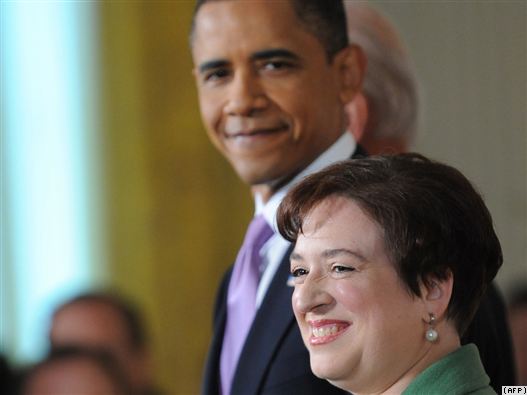
It’s anything but surprising that President Obama has chosen Elena Kagan to replace John Paul Stevens on the Supreme Court. Nothing is a better fit for this White House than a blank slate, institution-loyal, seemingly principle-free careerist who spent the last 15 months as the Obama administration’s lawyer vigorously defending every one of his assertions of extremely broad executive authority. The Obama administration is filled to the brim with exactly such individuals — as is reflected by its actions and policies — and this is just one more to add to the pile. The fact that she’ll be replacing someone like John Paul Stevens and likely sitting on the Supreme Court for the next three decades or so makes it much more consequential than most, but it is not a departure from the standard Obama approach.

The New York Times this morning reports that “Mr. Obama effectively framed the choice so that he could seemingly take the middle road by picking Ms. Kagan, who correctly or not was viewed as ideologically between Judge Wood on the left and Judge Garland in the center.” That’s consummate Barack Obama. The Right appoints people like John Roberts and Sam Alito, with long and clear records of what they believe because they’re eager to publicly defend their judicial philosophy and have the Court reflect their values. Beltway Democrats do the opposite: the last thing they want is to defend what progressives have always claimed is their worldview, either because they fear the debate or because they don’t really believe those things, so the path that enables them to avoid confrontation of ideas is always the most attractive, even if it risks moving the Court to the Right.

Why would the American public possibly embrace a set of beliefs when even its leading advocates are unwilling to publicly defend them and instead seek to avoid that debate at every turn? Hence: Obama chooses an individual with very few stated beliefs who makes the Right quite comfortable (even as they go through the motions of opposing her). As Kevin Drum writes:

[R]ight now Obama has the biggest Democratic majority in the Senate he’s ever going to have. So why not use it to ensure a solidly progressive nominee like Diane Wood instead of an ideological cipher like Kagan?… When Obama compromises on something like healthcare reform, that’s one thing. Politics sometimes forces tough choices on a president. But why compromise on presidential nominees? Why Ben Bernanke? Why Elena Kagan? He doesn’t have to do this. Unfortunately, the most likely answer is: he does it because he wants to.

It’s even less surprising that Obama would not want to choose someone like Diane Wood. If you were Barack Obama, would you want someone on the Supreme Court who has bravely and resolutely insisted on the need for Constitutional limits on executive authority, resolutely opposed the use of Terrorism fear-mongering for greater government power, explicitly argued against military commitments and indefinite detention, repeatedly applied the progressive approach to interpreting the Constitution to a wide array of issues, insisted upon the need for robust transparency and checks and balances, and demonstrated a willingness to defy institutional orthodoxies even when doing so is unpopular? Of course you wouldn’t. Why would you want someone on the Court who has expressed serious Constitutional and legal doubts about your core policies? Do you think that an administration that just yesterday announced it wants legislation to dilute Miranda rights in the name of Scary Terrorists — and has seized the power to assassinate American citizens with no due process — wants someone like Diane Wood on the Supreme Court?

One final thought about Kagan for now. As I said from the beginning, the real opportunity to derail her nomination was before it was made, because the vast majority of progressives and Democrats will get behind anyone, no matter who it is, chosen by Obama. That’s just how things work. They’ll ignore most of the substantive concerns that have been raised about her, cling to appeals to authority, seize on personal testimonials from her Good Progressive friends, and try to cobble together blurry little snippets to assure themselves that she’s a fine pick. In reality, no matter what they know about her (and, more to the point, don’t know), they’ll support her because she’s now Obama’s choice, which means, by definition, that she’s a good addition to the Supreme Court. Our politics is nothing if not tribal, and the duty of Every Good Democrat is now to favor Kagan’s confirmation. Conservatives refused to succumb to those rules and ended up with Sam Alito instead of Harriet Miers, but they had a much different relationship to George Bush than progressives have to Obama (i.e., conservatives — as they proved several times [Miers, immigration, Dubai Ports] — were willing to oppose their leader whey they disagreed). The White House knows that progressives will never try to oppose any important Obama initiative, and even if they were inclined, they lack the power to do so (largely because unconditional support guarantees impotence).

All that said, I’ve said everything I had to say about Kagan in the pre-nomination process in order to enable as informed a public discussion as possible, and am not going to endlessly repeat those criticisms now just for the sake of doing so. Perhaps the confirmation process, for once, will yield some valuable information about the nominee and we’ll acquire at least some insight into how she thinks and what her judicial values and methods will be. I’m willing to keep an open mind. NPR’s Nina Totenberg yesterday uncovered (or was provided) a relatively encouraging piece of evidence that no public commentators (including me) had previously discovered: a 2005 letter co-signed by Kagan which opposed a proposal by Lindsey Graham to strip “War on Terror” detainees of the right to habeas corpus on the ground that the proposal was a violation of core American principles (that provision was ultimately included in the Military Commissions Act and struck down in 2008 by a 5-4 Supreme Court as unconstitutional).

The most important point to note about Kagan now is the one highlighted this weekend by Talk Left’s Armando, as first reported by The Los Angeles Times: in 1995, Kagan condemned the Supreme Court confirmation process as “a vapid and hollow charade” and an “embarrassment,” arguing that Senators should “insist that any nominee reveal what kind of Justice she would make, by disclosing her views on important legal issues.” Kagan should absolutely be held to her own position in that regard. Her argument that nominees should be compelled to answer such questions was absolutely right, and that’s especially applicable to Kagan in light of her own glaring lack of a real record on virtually everything. She ought to be held to her own position and “reveal what kind of Justice she would make” and “disclose her views on important legal issues.” I’m certainly willing to listen if she does that and then make a rational assessment of her based on those answers. Anyone wanting to form a rational choice should demand that she do the same.

* * * * *

I’ll be on Democracy Now this morning at 8:10 a.m. EST (live video here) discussing Kagan, and on MSNBC a few times later today, and will post exact times when I know them.
© 2010 Salon.com

Glenn Greenwald was previously a constitutional law and civil rights litigator in New York. He is the author of the New York Times Bestselling book “How Would a Patriot Act?,” a critique of the Bush administration’s use of executive power, released in May 2006. His second book, “A Tragic Legacy”, examines the Bush legacy.

Type rest of the post here

Source /
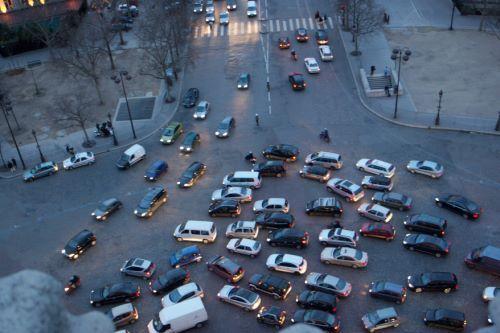
The Rag Blog

Posted in RagBlog | Leave a comment

Kagan and Obama : Birds of a Feather?


Elena Kagan:
A natural choice for Obama

Nothing is a better fit for this White House than a blank slate, institution-loyal, seemingly principle-free careerist…

By Glenn Greenwald / May 10, 2010

It’s anything but surprising that President Obama has chosen Elena Kagan to replace John Paul Stevens on the Supreme Court. Nothing is a better fit for this White House than a blank slate, institution-loyal, seemingly principle-free careerist who spent the last 15 months as the Obama administration’s lawyer vigorously defending every one of his assertions of extremely broad executive authority.

The Obama administration is filled to the brim with exactly such individuals — as is reflected by its actions and policies — and this is just one more to add to the pile. The fact that she’ll be replacing someone like John Paul Stevens and likely sitting on the Supreme Court for the next three decades or so makes it much more consequential than most, but it is not a departure from the standard Obama approach.

The New York Times this morning reports that “Mr. Obama effectively framed the choice so that he could seemingly take the middle road by picking Ms. Kagan, who correctly or not was viewed as ideologically between Judge Wood on the left and Judge Garland in the center.”

That’s consummate Barack Obama. The Right appoints people like John Roberts and Sam Alito, with long and clear records of what they believe because they’re eager to publicly defend their judicial philosophy and have the Court reflect their values. Beltway Democrats do the opposite: the last thing they want is to defend what progressives have always claimed is their worldview, either because they fear the debate or because they don’t really believe those things, so the path that enables them to avoid confrontation of ideas is always the most attractive, even if it risks moving the Court to the Right.

Why would the American public possibly embrace a set of beliefs when even its leading advocates are unwilling to publicly defend them and instead seek to avoid that debate at every turn? Hence: Obama chooses an individual with very few stated beliefs who makes the Right quite comfortable (even as they go through the motions of opposing her). As Kevin Drum writes:

[R]ight now Obama has the biggest Democratic majority in the Senate he’s ever going to have. So why not use it to ensure a solidly progressive nominee like Diane Wood instead of an ideological cipher like Kagan?… When Obama compromises on something like healthcare reform, that’s one thing. Politics sometimes forces tough choices on a president. But why compromise on presidential nominees? Why Ben Bernanke? Why Elena Kagan? He doesn’t have to do this. Unfortunately, the most likely answer is: he does it because he wants to.

It’s even less surprising that Obama would not want to choose someone like Diane Wood. If you were Barack Obama, would you want someone on the Supreme Court who has bravely and resolutely insisted on the need for Constitutional limits on executive authority, resolutely opposed the use of Terrorism fear-mongering for greater government power, explicitly argued against military commitments and indefinite detention, repeatedly applied the progressive approach to interpreting the Constitution to a wide array of issues, insisted upon the need for robust transparency and checks and balances, and demonstrated a willingness to defy institutional orthodoxies even when doing so is unpopular?

Of course you wouldn’t. Why would you want someone on the Court who has expressed serious Constitutional and legal doubts about your core policies? Do you think that an administration that just yesterday announced it wants legislation to dilute Miranda rights in the name of Scary Terrorists — and has seized the power to assassinate American citizens with no due process — wants someone like Diane Wood on the Supreme Court?

One final thought about Kagan for now. As I said from the beginning, the real opportunity to derail her nomination was before it was made, because the vast majority of progressives and Democrats will get behind anyone, no matter who it is, chosen by Obama. That’s just how things work. They’ll ignore most of the substantive concerns that have been raised about her, cling to appeals to authority, seize on personal testimonials from her Good Progressive friends, and try to cobble together blurry little snippets to assure themselves that she’s a fine pick.

In reality, no matter what they know about her (and, more to the point, don’t know), they’ll support her because she’s now Obama’s choice, which means, by definition, that she’s a good addition to the Supreme Court. Our politics is nothing if not tribal, and the duty of Every Good Democrat is now to favor Kagan’s confirmation.

Conservatives refused to succumb to those rules and ended up with Sam Alito instead of Harriet Miers, but they had a much different relationship to George Bush than progressives have to Obama (i.e., conservatives — as they proved several times [Miers, immigration, Dubai Ports] — were willing to oppose their leader whey they disagreed). The White House knows that progressives will never try to oppose any important Obama initiative, and even if they were inclined, they lack the power to do so (largely because unconditional support guarantees impotence).

All that said, I’ve said everything I had to say about Kagan in the pre-nomination process in order to enable as informed a public discussion as possible, and am not going to endlessly repeat those criticisms now just for the sake of doing so.

Perhaps the confirmation process, for once, will yield some valuable information about the nominee and we’ll acquire at least some insight into how she thinks and what her judicial values and methods will be. I’m willing to keep an open mind. NPR’s Nina Totenberg yesterday uncovered (or was provided) a relatively encouraging piece of evidence that no public commentators (including me) had previously discovered: a 2005 letter co-signed by Kagan which opposed a proposal by Lindsey Graham to strip “War on Terror” detainees of the right to habeas corpus on the ground that the proposal was a violation of core American principles (that provision was ultimately included in the Military Commissions Act and struck down in 2008 by a 5-4 Supreme Court as unconstitutional).

The most important point to note about Kagan now is the one highlighted this weekend by Talk Left’s Armando, as first reported by The Los Angeles Times: in 1995, Kagan condemned the Supreme Court confirmation process as “a vapid and hollow charade” and an “embarrassment,” arguing that Senators should “insist that any nominee reveal what kind of Justice she would make, by disclosing her views on important legal issues.”

Kagan should absolutely be held to her own position in that regard. Her argument that nominees should be compelled to answer such questions was absolutely right, and that’s especially applicable to Kagan in light of her own glaring lack of a real record on virtually everything. She ought to be held to her own position and “reveal what kind of Justice she would make” and “disclose her views on important legal issues.”

I’m certainly willing to listen if she does that and then make a rational assessment of her based on those answers. Anyone wanting to form a rational choice should demand that she do the same.

© 2010 Salon.com

[Glenn Greenwald was previously a constitutional law and civil rights litigator in New York. He is the author of the New York Times Bestselling book How Would a Patriot Act?, a critique of the Bush administration’s use of executive power, released in May 2006. His second book, A Tragic Legacy, examines the Bush legacy.]

Source / Salon.com / Common Dreams

The Rag Blog

Posted in RagBlog | Tagged , , , , , | 1 Comment

Marc Estrin is a writer and peace activist who lives in Burlington, Vermont. His novels,Insect Dreams, The Half Life of Gregor Samsa, The Education of Arnold Hitler, Golem Song, and The Lamentations of Julius Marantz have won critical acclaim. His memoir, Rehearsing With Gods: Photographs and Essays on the Bread & Puppet Theater (with Ron Simon, photographer) won a 2004 theater book of the year award. He is currently working on a novel about the dead Tchaikovsky.

Estrin studied theater directing and worked in repertory theater and continues to be involved with the famed Bread and Puppet Theater, is an ordained Unitarian Universalist Minister, and is a cellist and vocalist who has performed with several symphony orchestras.

I try to deal with political/cultural/philosophical material somewhat laterally — by inserting the issues into fiction settings. It’s my way of writing “political novels” without writing “political novels” — and thus hopefuly reaching an audience which wouldn’t read political novels, or even necessarily have thought about such issues at all. It’s a strategy with a small chance of success, small but not zero.

Posted in RagBlog | Leave a comment

Rabbi Arthur Waskow : Whores in Washington; Blowout in the Gulf

“Whore of Babylon.” Pen and watercolour over pencil. By William Blake (1809) / British Museum.

Blow jobs in DC;
Blowout in the Gulf

By Rabbi Arthur Waskow / The Rag Blog / May 10, 2010

You think that subject line above is just a trick to catch your attention? No, I mean it. Big Oil’s provision of whores in Washington to give blow jobs to U.S. officials helped produce the oil well blowout in the Gulf.

The Gulf oil blowout is only on the surface a technological failure. Much deeper and more to the point, it is a political failure.

Or if you represent Big Oil, it was a political triumph — until the blowout.

(What happened in the Gulf was not a “spill.” A “spill” happens when a finite amount of oil is spilled from a ship. The blowout is more like a geyser, a gusher, a volcano. The oil comes from the enormous undersea reservoir of oil. The oil well pokes a hole into the earth’s covering of that oil reservoir — and unless there is a way to cap the blowout, the oil pours and pours and pours.)

In many of the world’s off-shore oil wells, there is a remote-controlled “acoustic switch,” a shut-off device that is the last resort when the technology malfunctions and a blowout nears. Some countries mandate the acoustic device, and many companies insert them even when they are not required. But the U.S. does not mandate them, and BP did not insert one.

When I say “the U.S.,” in this case I mean a division of the Interior Department called the Minerals Management Service. What do we know about it?

This: On September 10, 2008, Charlie Savage of The New York Times reported that,

In three reports delivered to Congress on Wednesday, the department’s inspector general, Earl E. Devaney, found wrongdoing by a dozen current and former employees of the Minerals Management Service, which collects about $10 billion in royalties annually and is one of the government’s largest sources of revenue other than taxes.

‘A culture of ethical failure’ pervades the agency, Mr. Devaney wrote in a cover memo. …

Two other reports focus on ‘a culture of substance abuse and promiscuity’ in the service’s royalty-in-kind program. That part of the agency collects about $4 billion a year in oil and gas rather than cash royalties…

The investigation also concluded that several of the [Minerals Management Service] officials ‘frequently consumed alcohol at industry functions, had used cocaine and marijuana, and had sexual relationships with oil and gas company representatives.’

In blunter words, Big Oil provided whores to MMS officials who were supposed to be regulating Big Oil.

So MMS prostituted itself in return. And as a result, 11 oil rig workers were killed and the Gulf Coast of the United States faces an ecological and economic catastrophe.

Now that’s whoring on a grand scale, far beyond anything the Bible condemns. (Except maybe when it talks about the Whore of Babylon, an empire not so different from the American Empire. Now it’s not Emperor Nebuchadnezzar but “private” corporations, recently declared by the Supreme Court to be equal to human beings in their right to free speech by way of making unlimited election campaign contributions, who are the culprits, with the legal “government” turned into johns, tricks, for the Corporate whores. Or maybe it’s really the government that has made itself the Whore of Babylon, selling itself to Big Oil? )

The acoustic switch costs half a million dollars, according to the Wall Street Journal. It costs less than that to buy enough whores to keep the MMS happy. Here’s the political balance book: Invest a hundred thousand bucks or so to buy whores for the agencies that oversee you, make billions in profit from the absence of oversight, use the billions to invest in election campaigns if some clueless sheriff starts complaining about your whorehouse. A sweet deal, all around.

I forgot to add: Even in the last few weeks, since the Gulf oil blow-out, the MMS has been exempting new oil well applicants from doing environmental impact statements.

Even the Gulf disaster is small potatoes compared to the global disaster Big Oil is cooking up for us, colluding with Big Coal to see how much they need offer to buy the government.

As for a Climate Healing Act from Congress: Senator Graham is whining that the oil blowout is ruining the chances to pass a bill. Why? Because now the Big Payoff to Big Oil, permission to do off-shore drilling, is in danger. Those permits were to pay for Big Oil’s tolerating a Climate Act full of other sweet goodies for itself. And without the permits, Big Oil will go home sulking, not ready to pay the house of whores called the Senate enough to buy their votes any more.

There is only one answer to this disgusting, lethal — literally lethal — mess. That is public power, enough citizens angry about the poisoning of our planet to blow Big Oil and Big Coal right out of the water.

A democratic blowout. Small “d.”

A movement now as powerful as the civil rights movement was 45 years ago, when it forced Lyndon Johnson to bring Congress the Voting Rights Act.

That movement got laws passed, but it didn’t start there. It started with nonviolent direct action, civil disobedience. Sit-ins. Marches. Freedom Rides. Freedom Schools. Mass mobilizations.

Who is ready now?

Let me know.

Shalom, Arthur

[Rabbi Arthur Waskow, director, The Shalom Center; co-author, The Tent of Abraham; author of Godwrestling: Round 2, Down-to-Earth Judaism, Torah of the Earth, and a dozen other books on Jewish thought and practice, as well as books on U.S. public policy. The Shalom Center voices a new prophetic agenda in Jewish, multireligious, and American life. To receive the weekly on-line Shalom Report, click here.]

The Rag Blog

Posted in Rag Bloggers | Tagged , , , , | 2 Comments

Who Should We Believe? : Faisal Shahzad, and the Gulf of Tonkin

Gulf of Tonkin incident, off the coast of North Vietnam, August 2, 1964. Illustration by E.J. Fitzgerald (1980) / U.S. Navy Historical Center / Wikimedia Commons.

Who should we believe?
How foreign policy lies lead to war

By Harry Targ / The Rag Blog / May 10, 2010

Should we believe ‘intelligence officials’? ‘Western diplomats’? ‘A senior intelligence official’? ‘A senior military official’? Or ‘the official who would speak of the investigation only on condition of anonymity’?

I was reading The New York Times accounts, Friday, May 7, of the ongoing investigation of the attempted Times Square bombing by suspect Faisal Shahzad. I was intrigued by a variety of stories that turned speculation by various anonymous informed sources into complex analyses of Shahzad’s international connections, the transformation of the Taliban from a political force in Afghanistan to one also in Pakistan, the emergence of a variety of other Islamic dissident groups in Pakistan and their connections with Taliban and perhaps Al Queda.

The lead in the front page story on May 7 headlined “Pakistani Taliban Are Said to Expand Alliances” stimulated my curiosity:

The Pakistani Taliban, which American investigators suspect were behind the attempt to bomb Times Square, have in recent years combined forces with Al Qaeda and other groups, threatening to extend their reach and ambitions, Western diplomats, intelligence officials and experts say.

The story indicates that the Pakistani Taliban have reached out to other militant groups, “splinter cells” (which sounds really scary), “foot soldiers,” and guns-for-hire.” The article continues with elaborations of nefarious early connections between the Taliban in Afghanistan and Pakistan, Al Qaeda, and increasing numbers of Pakistani Punjabi militants.

Faisal Shahzad may have received bomb training from one of these groups, a claim reiterated in another article quoting a senior military official who was not authorized to speak in public. The article reported that the leader of the Pakistani Taliban said that “the group had suicide bombers in the United States, who, he said would carry out their mission at an opportune time” while denying complicity in the Times Square bombing attempt.

Reading these stories and viewing a variety of claims about the causes and connections of the failed bombing reminded me of a short essay I wrote for an interesting volume of writings and graphic design images edited by Rebecca Targ titled “Lying,” in Fold: the Reader. I wrote:

Foreign policy lies lead to war

On August 2, 1964, North Vietnamese armed motor boats attacked two U.S. naval vessels off the coast of North Vietnam. The administration of Lyndon Johnson defined the attacks as an unprovoked act of North Vietnamese aggression. Two days later it was announced that another attack on U.S. ships in international waters had occurred and the U.S. responded with air attacks on North Vietnamese targets.

President Johnson then took a resolution he had already prepared to the Congress of the United States. The so-called Gulf of Tonkin resolution declared that the Congress authorizes the president to do what he deemed necessary to defend U.S. national security in Southeast Asia. Only two Senators voted “no.” Over the next three years the U.S. sent over 500,000 troops to Vietnam to carry out a massive air and ground war in both the South and North of the country.

Within a year of the so-called Gulf of Tonkin incidents, evidence began to appear indicating that the August 2 attack was provoked. The two U.S. naval vessels were in North Vietnamese coastal waters orchestrating acts of sabotage in the Northern part of Vietnam. More serious, evidence pointed to the inescapable conclusion that the second attack on August 4 never occurred.

President Johnson’s lies to the American people about the Gulf of Tonkin contributed to the devastating decisions to escalate a U.S. war in Vietnam that cost 57,000 U.S. troop deaths and upwards of three million Vietnamese deaths.

Forty years later, George W. Bush and his key aides put together a package of lies about Iraq imports of uranium from Niger, purchases of aluminum rods which supposedly could be used for constructing nuclear weapons, development of biological and chemical weapons, and connections between Saddam Hussein and Osama Bin Laden.

As the Vietnamese and Iraqi cases show, foreign policies built on lies can lead to imperial wars, huge expenditures on the military, economic crises at home, and military casualties abroad.

Are there any lessons to learn from the Vietnam and Iraqi cases sited above? I think so.

Two of the most damaging, indeed murderous, foreign policies of the United States were built on lies.

The record indicates that key policy-makers in both the Vietnam and Iraq eras made decisions with almost no knowledge of the political cultures of the two countries. In the Vietnam era not more than a handful of Americans had knowledge of the Vietnamese language or history.

In both cases, foreign policy decisions were shaped by frames of reference, or ideologies, that bore little or no relationship to the political reality in the countries targeted for war. The frame shaping Vietnam was the war on international communism; for Iraq it was the war on terrorism.

In both cases, decisions were made based on recommendations of parties interested in war, from Pentagon officials, to military contractors and arms merchants, to academic and think tank “experts,” to media outlets with stories to create, to journalists seeking to establish their careers, to liberal and conservative politicians seeking issues to shape their own quests for power.

Returning to the Times Square incident, we may never learn the truth. But we can assume with confidence that military, economic, academic, and journalistic interests will promote a scenario of a Pakistani Taliban/Al Queda connection to the failed adventure in New York. And we can expect that all these interests will promote the idea that such attacks, perhaps successful next time, can occur anyplace in the United States. We must live in terror of the terrorists.

Finally, we can be sure that “the cure” for perpetual terrorism will not include economic development, a just and humane U.S. foreign policy, ending drone attacks on Pakistani citizens, and stopping the demonization of peoples of color, in this case, those who embrace the Muslim religion.

[Harry Tarq is a professor in American Studies who lives in West Lafayette, Indiana. He blogs at Diary of a Heartland Radical.]

The Rag Blog

Posted in Rag Bloggers | Tagged , , , , , , | 1 Comment

High peak haikus

Gary Snyder was a teenage mountaineer, studied Oriental languages, became a Beat poet in San Francisco with Ginsberg and featured in a Kerouac novel. After moving to Japan he took the vows of a Zen monk and Buddhism remains central to his work, which links ecology to literary values. Now 75, he lives on a remote 100-acre ranch in the Sierra Nevada

* James Campbell
* The Observer, Saturday 16 July 2005
* Article history

Gary Snyder

‘The world is not simply a theatre for human beings’ … Gary Snyder

In October 1955, hand-written posters appeared in the bars and cafés of San Francisco’s bohemian North Beach district: “Invitation to a Reading. 6 Poets at 6 Gallery. Remarkable collection of angels on stage reading their poetry. No charge. Charming event.” The poets that evening half a century ago were Allen Ginsberg, Michael McClure, Philip Whalen, Philip Lamantia, Kenneth Rexroth as MC, and Gary Snyder, described by Ginsberg at the time as “a bearded youth of 26, formerly a lumberjack and seaman, who had lived with the American Indians”. Ginsberg added graciously that Snyder was “perhaps more remarkable than any of the others”.

The Six Gallery reading has gone down in history for the first public performance of Ginsberg’s poem “Howl”. The task of following its apocalyptic declarations (“I saw the best minds of my generation destroyed by madness, starving hysterical naked”) fell to Snyder, who admits to having doubted whether he could hold the suddenly stunned audience. He read parts of a long poem rooted in Native American folklore, “Myths & Texts”, about as far from “Howl” as it is possible to get, swinging between the Buddha and a black bear “married / To a woman whose breasts bleed / From nursing the half-human cubs”. Snyder remembers the evening for “the feeling people had, by the time it was over, that it had been a historical moment. No question about it. From that time on, there was a poetry reading every night somewhere in the Bay area. It launched the poetry reading as a cultural event in American life.”

Jack Kerouac, who was also present, drunkenly winding up the audience, later recalled Snyder as “the only one who didn’t look like a poet”. While the others were “either too dainty in their aestheticism, or too hysterically cynical”, Snyder made Kerouac think of “the oldtime American heroes”. Three years later, Kerouac capped his homage by publishing The Dharma Bums, a novel featuring Snyder as the mountain-climbing, haiku-hatching hero, Japhy Ryder.

Snyder might still be taken for a lumberjack rather than a poet. He wears boots and a cap, keeps a multi-purpose knife looped on to his belt (nowadays next to a mobile phone), and spends a large part of each day outdoors, working with his hands. In the 1960s, he was part of the alternative literary movement that spread across the US and Europe. Seamus Heaney recalls first reading Snyder’s early poems “in a little anthology of Beat poets published in London. By the time I met him in person, at a party in Berkeley in 1971, I had caught up with the work he had published since. He was togged out in jeans and a rough cotton shirt. You could easily imagine him hunkering under a stone wall on the Aran Islands.”

Snyder and his wife Carole live with their frisky poodle pup in a single-storey house he built, with professional help, in the foothills of the Sierra Nevada, four hours’ drive north-east from San Francisco. Deer peep through the foliage at the visitor on the three-mile unpaved road to Snyder’s ranch. On a walk in the surrounding pine and black-oak forest, he points out claw marks on a tree-trunk made by a bear – the same bear, perhaps, that features in a recent poem eating all the pears from a fenced-off tree by the house. A wildcat dispatched his chickens. Until recently, the family had only an outside lavatory some 50 yards away, which, he says wryly, “could be dangerous in the mornings” – pumas also lurk among the pines, though seldom seen – but the Snyders now have the luxury of an inside bathroom with a polished wooden tub. He called the place Kitkitdizze, a local Wintun Indian word for the surrounding low ground-cover bush, also known as mountain misery. “We had our hands full the first 10 years getting up walls and roofs, bathhouse, barn, the woodshed. I set up my library and wrote poems and essays by lantern light.” Kai, Snyder’s eldest son, was a child when work on the house began in 1969. He has memories “of heat and dust and a lot of people working, and me getting underfoot”. In the beginning, says Kai, now in his late 30s, “all our water had to be pumped by hand, which my dad did every day for about 40 minutes. It was good exercise, I guess. All the cooking was done on a wood stove, and our heating was produced by the same method. It was like a 19th-century lifestyle in lots of ways.”

A new wing was added when Snyder received a Bollin-gen prize ($50,000), for “lifetime achievement in poetry”, in 1997. He now has a telephone line, though no TV aerial, and is hooked up to email, whereby he communicates with a worldwide literary and ecological network of friends. “We are off the electrical grid,” he says, not without pride, “but have a stand-alone power system, involving solar panels and generators. We cut our own firewood from the down and dead trees. And of course we keep things in stock, a pantry full of food, half a year’s worth of rice.” He serves tea in the Chinese manner, and for lunch Korean noodles, with local wine freely to hand.

Last year, Snyder published his first collection of new poems in 20 years. Readers of Danger on Peaks soon find themselves in familiar territory: poems about work and nature, frequently with ecological and oriental overtones. A lifelong student of Buddhism, he lived in Japan for 10 years during the 1950s and 60s, where he took the vows of a Zen monk. While serious about his Buddhism, he is undogmatic. The subject is sometimes treated with humour in his work. A poem that begins “The Dharma is like an avocado! / Some parts so ripe”, moves on to “the great big round seed”,

Hard and slippery,
It looks like
You should plant it – but then
It shoots out through your fingers –
gets away.

Even when it goes unmentioned in the verse itself, the meditative tendency sits behind his work and nature poems. He writes about repairing a car with the same attentiveness he gives to Zen ritual. A Snyder poem about sweeping a path, or fiddling with the engine of a pick-up, is about what it says it’s about. “If somebody wants to find some moral interpretation, that’s all right with me. But basically yes, it’s about repairing the car. Who needs more than that?” Some poems, such as “Getting in the Wood”, are made up of the names of tools and accessories: “Wedge and sledge, peavey and maul, / little axe, canteen, piggyback can . . . / All to gather the dead and the down.” The voice emerges from a clear gaze and a clear mind, qualities that have characterised Snyder’s poetry since the opening poem of his first book, Riprap (1959):

Down valley a smoke haze
Three days heat, after five days rain
Pitch glows on the fir-cones
Across rocks and meadows
Swarms of new flies.
I cannot remember things I once read
A few friends, but they are in cities.

Heaney, to whom one of the poems in Danger on Peaks is dedicated, says: “From the start I trusted the unleavened quality of the poems, the materiality of what they started from, and liked them better the closer they hewed to sensation and the vernacular. And hearing him read strengthened my admiration. He wasn’t in a hurry, not out to suck up to the audience or harangue them. The voice gave space and weight to the words, so that they back-echoed a bit.” A poet of a younger generation, Glyn Maxwell, praises what he calls Snyder’s “wide, gladdening openness”. He believes the “laid-back, jotted-down tone of Snyder’s verse masks an acute sensitivity to rhythm and assonance. He has a wonderful ability to convey the physical nature of a moment: ‘Drinking cold snow-water from a tin cup / Looking down for miles / Through high still air.'” Heaney adds: “If a bricklayer’s hand could speak, it might sound like early Snyder. If a buddha backpacked in northern California, he too might sound like Snyder.”

Recently turned 75, Snyder is wiry, his face weathered, with eyes that reminded Kerouac of “an old Chinese sage”. Sleepy some of the time, they widen with curiosity and frequently crease with mirth. The remoteness of the 100-acre ranch is such that Carole, who is Japanese, is excited at the prospect of “meeting someone new”, but the Snyders live in a widespread community of about 40 families, “each place pretty self-sufficient, though we all cooperate and lend each other things”. Kai recalls that he and his brother “walked to school, about 45 minutes through the woods to a one-room schoolhouse. The kids were a mix of original redneck population and the new wave of people who were coming back to the woods to try to live more in touch with nature and in a more sustainable way. My best friend at school was the son of a logging family, very conservative. His family kind of avoided my family. But they were good people.”

Snyder is at pains to distinguish his way of life from “a back-to-the-land, counter-cultural, utopian image of living outside of society. That’s all right if you’re going to just go like Thoreau did for a year, and you can walk over to Emerson’s for dinner. But this is more like what the farm and the ranch in the west is, where people live at a distance, with a certain amount of genuine sustainable skill, though for the time being our life depends on machinery – chainsaws, generators, grass-cutters and so forth. Now, when I first came up here I didn’t have any of that, and there may come a time again when I don’t have it. And so there are other strategies, too.” Kai emphasises his father’s attachment to “doing things in the old ways, using tools that are made locally, things that are made with an intimate understanding of the place where you live. It’s about being rooted in a place, and also understanding that the world is changing very fast and that technologies may only be a transitory crutch, a substitute for a deeper understanding of how to live in a place.”

The nearest shops are 30 miles away, in leafy Nevada City, a creation of the 1849 gold rush, now no larger than a sizeable English village. Greeted on all sides as he makes his way along the main street, reminiscent of Wild West filmsets, Snyder has time for everyone while giving the impression he’d be unhappy anywhere but on his own patch. In a local bar, a large, hearty man recognises him from a poetry reading at a farm almost 40 years ago. His recollection of the event is perfect, while the poet’s is hazy.

“Don’t you remember, you signed the book to me and Ann?”

“I think I do remember,” Snyder says.

“And don’t you remember, the cow took a bite out of the book? And you signed it to the cow as well? And then the cow crapped on the book?”

“I must remember,” Snyder says, unfalteringly polite.

Gary Sherman Snyder was born in San Francisco in 1930 and raised on a farmstead north of Seattle. His parents, Harold and Lois, were “semi-educated, proud, western-American-style working-class. My father’s brothers all went to sea or worked in logging camps. My mother was from a railroad town in Texas, very much a feminist rebel.” The Snyders owned a small dairy farm, but required outside work to keep ticking over. When Snyder was a child, “there was no work for seven years”. Family entertainment consisted of reading aloud in the evenings: “Robert Burns, Edgar Allan Poe – very musical poetry which caught my ear.” Even as a small boy he was known for his love of nature. “I would go and cook and stay alone for a night or two, when I was just eight or nine years old, quite far from the house. At the age of 15, I became a mountaineer and began to climb all the peaks of the Pacific north west. The kind that require ropes and ice axes. Snow peaks. Volcanoes. Big ones.” He read widely throughout childhood and adolescence but “my first interest in writing poetry came from the experience of mountaineering. I couldn’t find any other way to talk about it.” The adventure of scaling summits blended with the aesthetic thrill of viewing oriental landscape paintings at the Seattle Art Museum, to inspire an approach to poetry that, while it has developed over the decades, has not altered fundamentally. In 1996, he finally published Mountains and Rivers Without End, a long poem begun 40 years earlier.

After studying anthropology and literature at Reed College, Oregon, Snyder enrolled at the University of California, Berkeley, in 1953, to study oriental languages. He went on to translate poetry from Chinese and Japanese. His interest in east Asian culture and thought was spurred, he says, by “an ethical realisation that the Judeo-Christian tradition gives moral value only to the human being. I discovered that there were other traditions, including Hindu and Buddhist and Native American, in which all biological life is considered part of the same drama, that the world is not simply a theatre for the human being, in which everything else is just a stage prop. That became a very clear image to me.” In the summer holidays, he worked as a fire-lookout in the Washington Cascade Mountains. “All through July and August. You take just the food you need for that time, and a radio.” There he found the opportunity to practise meditation, study Chinese, and write his first surviving poems. Many years later, on Mount Sourdough, he discovered that a scribbled verse was still pinned to the lookout’s cabin wall: “I, the poet Gary Snyder / Stayed six weeks in fifty-three / On this ridge and on this rock / & saw what every Lookout sees.”

He plays down his work as a translator; the best-known works are the Cold Mountain Poems of the eighth-century hermit Han-Shan, a T’ang dynasty dharma bum. The 24 versions, made in the mid-1950s, read as though straight from the pen of the young Snyder, already planning a life of wood-chopping and water-pumping, off the electrical grid:

Men ask the way to Cold Mountain
… there’s no through trail
In summer, ice doesn’t melt
The rising sun blurs in swirling fog.
How did I make it?

Most translations from Chinese and Japanese are “too wordy”, he says. “The early translators would not believe what was in front of their eyes, which was very short lines. Arthur Waley’s translations are outmoded now, though in their time they were helpful. Ezra Pound was a brilliant amateur, who by luck came up with a few good lines, but not many.” The economy of classical Chinese poetry has influenced his own. “So much occidental poetry is full of religious imagery or mythological reference, both of which are absent from the Chinese. Chinese poetry is secular, logical and unsymbolic.”

An interest in Asian life and culture was “in the air” in San Francisco in the 1950s. “When I got into that scene I realised there were people thinking along similar lines, and also doing similar things in poetry. Of course, there was a big Asian population in the city. The presence was palpable.”

Snyder points out that the San Francisco poetry renaissance was already advanced, in the work of Rexroth, Robert Duncan, Jack Spicer and others, before the subversive Ginsberg gang arrived from the east coast: “They just publicised it.” Ginsberg died eight years ago. While not averse to being classified as one of the survivors of the Beat Generation, Snyder stresses “that it’s a historical term. Indulging a nostalgia for it is not interesting. People say: ‘Are you a Beat writer?’ – I get called a Beat writer all the time – and I say: ‘I was at one time, briefly, but going by what I have done in the past 30 years, no’.” His writing, he says, “belongs in the non-academic wing of contemporary American poetry. Beat is too limiting a word.” The critic Marjorie Perloff, who has written widely on American poetry, says she never thinks of Snyder as a Beat poet. “His poetry has a directness and immediacy that appeals to young people. He started out as a follower of William Carlos Williams, using short, free-verse lines and colloquial diction, but as time has gone on he has shown himself to be first and foremost a nature poet in the Emerson-Thoreau tradition. The Beats were essentially urban, engaged in oppositional social activity, whereas Snyder’s forte is an account of the relationship of man – and I do mean man, because Snyder is rather patriarchal – to his environment.” Heaney feels that “he’s right to resist the Beat label. He loves barehanded encounters with the here and now, but cares deeply for tradition. You might say he knows equally the workings of tanka and tanker. He keeps his ear to the ground, and listens more than he howls.”

Ginsberg remained a lifelong friend -in a late poem, he depicts himself reading Snyder’s Selected Poems unselfconsciously while sitting on the loo – and was a partner in purchasing the land on which the Snyders live. Through the pines, Snyder points out a small house built by Ginsberg, now occupied by Snyder’s younger son Gen, a manual labourer. Kai is an environmental scientist; Carole, whom he married in 1991, has two daughters, Mika, who has recently graduated from law school, and Robin, a student, both in their 20s.

The last letters Snyder received from Kerouac, who died in a broken-down state in 1969, were ranting and insulting, but Snyder remains affectionate towards the man who mythologised him in a cult novel before he reached the age of 30. “Jack was a dedicated person. As a Buddhist he had some very good insights. It was all mixed up with his French-Canadian Roman Catholicism, but so what? It’s hard to know why people self-destruct. They do so for reasons of deep and ancient karma, qualities of their character they were born with.” As for the unwanted burden of being Japhy Ryder, “the only problem I have is that I have to keep reminding people it’s a novel. There’s a lot of fiction woven into The Dharma Bums. And I am not Japhy Ryder.”

As the publicity surrounding the Beat Generation spread, Snyder typically did his own thing and left for Japan. Settled in a bare room – “just a few books and a table” – in the Shokoku-ji Temple in northern Kyoto, one of several temple systems of the Rinzai sect of Zen, he acted as personal assistant to a Roshi, or Zen master. “I spent my first year cooking breakfast and lunch for him, and teaching him English. At the same time, I was studying Japanese and meditating for four or five hours a day.” One week out of each month, he attended the local Zen monastery for intensive meditation, or sesshin, which means “concentrating the mind”. In an essay, Snyder described the typical day: rising at 3am, dashing “icy water on the face from a stone bowl”, then sitting crosslegged for lengthy periods. “One’s legs may hurt during long sitting, but there is no relief until the Jikijitsu rings his bell.” After a 20-minute walking interval, the young monks resume their sitting. “Anyone not seated when the Jikijitsu whips around the hall is knocked off his cushion.” Writing to a friend, Snyder quipped, “I wear me Buddhist robes & look just like a blooming oriental.”

After a brief visit to the US in 1959, he returned to Japan, this time with the poet Joanne Kyger. The pair were soon married (Snyder had previously been married briefly to Alison Gass). Judging by Kyger’s Japan and India Journals (1981), conflicting expectations of life in Asia surfaced immediately. Kyger writes: “Shortly after arriving in Japan, Gary asked me, ‘Don’t you want to study Zen and lose your ego?’ I was utterly shocked: ‘What! After all this struggle to attain one?'” The Journals end with Kyger returning home alone. “He wouldn’t let me keep a wooden spoon,” she writes. In Snyder’s new book there is a complimentary reference to Kyger’s poetry. “I think we can say we are good friends now,” he says.

It is a curiosity of Snyder’s career that while his first full collections – A Range of Poems and The Back Country – were issued by a London publisher, Fulcrum Press, in 1966 and 1967, he has barely been published in Britain since. His early work was welcomed by, among others, Thom Gunn, who wrote appreciatively on Snyder in more than one London journal. Snyder’s British readership has had to depend mostly on American imports (readily available), which puzzles him. “There is more interest in my work in Germany, France, the Czech Republic.” In the US, some of his collections, such as Riprap and The Back Country, have never been out print. Turtle Island, which won a Pulitzer prize in 1975, is reprinted roughly once a year. Heaney and Maxwell lament the absence of British editions of Snyder’s work. Maxwell says: “Perhaps he doesn’t fit, as he’s not seductively obscure or ringingly accessible. And his is a foreign landscape, a faraway country, really: America before us, without us, after us.”

As a writer who, from the beginning, has yoked ecological concerns to literary values, Snyder is often asked about the high-consuming, short-attention-span hazards of modern existence. In short, what’s wrong with the way we live, and what can be done? “I don’t feel inclined to make the first humanistic, easy answer, which is: We must change our values. It would be foolish to put forward simple solutions. However, for those who can, one of the things to do is not to move. To stay put. That doesn’t mean don’t travel; it means have a place and get involved in what can be done in that place. That’s the only way we’re going to have a representative democracy in America. Nobody stays anywhere long enough to take responsibility for a local community.” The present US government is “demonstrably bad” for the environment. “Under the Clinton administration, the Environmental Protection Agency was actually called on to defend and monitor the environment. The Bush administration made it clear it wanted the EPA to be on the side of industry. The fox is in the chicken run, and in this case the fox is the oil industry.” With oil prices rising, he foresees an era of “turmoil and turbulence and probably dictatorships. People and subcultures who have the flexibility and know-how to slip through that will do so. So here is a Thoreauvian answer to the question, What is to be done? Learn to be more self-reliant, reduce your desires, and take care of yourself and your family.”

Gary Sherman Snyder

Born: May 8, 1930, San Francisco.

Education: 1944-47 Lincoln High School, Portland; ’47-51 Reed College, Oregon; ’51 Indiana University; ’53-55 University of California, Berkeley.

Married: 1950 Alison Gass (’52 divorced); ’60 Joanne Kyger (’65 divorced); ’67 Masa Uehara (two sons: Kai and Gen) (’87 divorced); ’91 Carole Koda.

Employment: 1950-57 logger, trail-crew member, fire lookout, merchant seaman; ’86-2001 professor of creative writing at University of California, Davis.

Some poetry: 1959 Riprap; ’60 Myths & Texts; ’66 A Range of Poems; ’67 The Back Country; ’70 Regarding Wave; ’74 Turtle Island; ’86 Left Out in the Rain; ’96 Mountains and Rivers Without End; 2004 Danger on Peaks.

Essays: 1969 Earth House Hold; ’80 The Real Work: Interviews and Talks; ’95 A Place in Space.

Some Awards: 1975 Pulitzer Prize; ’97 Bollingen Prize; 2004 Masaoka Shiki International Haiku Grand Prize.

· Danger On Peaks by Gary Snyder (2004), is published by Shoemaker & Hoard, price $22.

Type rest of the post here

Source /
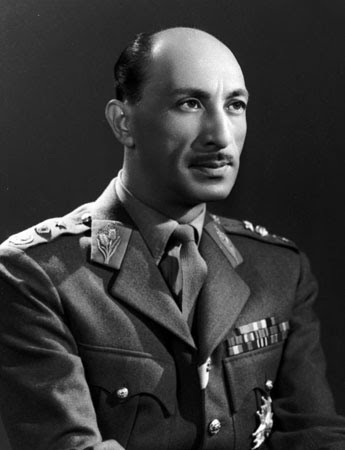
The Rag Blog

Posted in RagBlog | Leave a comment

Greg Moses : The Sound of Un-Hatched Chickens Crashing

Generation Payback:
The cash value of capitalism

By Greg Moses / The Rag Blog / May 9, 2010

Confronted on Tax Day by satellite visions of free market capitalism led by the American Tea Party, global investors began to exit the building. A 34-point drop in the Global Dow on April 16 was followed by a 42-point fall on April 27 and a plummet of 170 points during the first week of May. Now with a lavish bailout in Europe — of the financiers, by the financiers, and for the financiers — investors are retracing the exit steps.

As the cash value of capitalism fell from the shelf of a shaky rally, precisely in alignment with the televised prognostication of Steven Hochberg at Elliott Wave International, heavyweight voices at the Capitalism Knows Best Channel (CNBC) were pleading for a “new normal” that would allow each and every one of us the time and earnings we needed to pay back everyone we owed.

Restructuring is the magic word that signifies the best hope for the consciousness of the creditor classes that they can have their debt bubble and eat it too. Restructuring is the middle term that makes possible the conclusion of a “new normal” whenever the premise turns out to be California or Greece.

It hardly matters whether you favor the private sector or the public. As Robert Prechter has amply documented, social mania has been pervasive, and on his account it could not have been otherwise. Whether the party in power was Democrat, Republican, Conservative, Labor, Socialist, Enron, Madoff, or Lehman, everybody grabbed at least one imminent duty and placed it on the pay-later plan.

My Aunt Billie who learned her personal finance skills from the Great Depression warned me early in the 1970s that there was something wrong with the baby boom’s approach to dollar bills. For better and worse, prefigured by Joplin, Hendrix, and Morrison, we winged our boom-time destiny straight into the flame.

If there is to be a process of social healing during the debt detox that lies ahead, as all the junk gets flushed down the world commode, a certain maturity will demand acceptance of the pain that comes with any withdrawal of toxic needs.

And if fortitude will be needed from debt payers, then debt collectors also should confront their complicity in a relationship that long ago showed all the symptoms of codependency. On all fronts public and private we have built a world house of debt. Not only the users of toxic assets, but the pushers, too, need to go through their social share of pain in the coming adjustment to sober living.

One annoying aspect of the Tea Party movement is how it pretends to stand apart from the history that got us here or the pain that will get us out. Scapegoats are most necessary where self-guilt is most threatening. Whose wealth have you been counting on? Whose humanity was the source of that wealth?

If the new Parthenon of the global economy is to be a project of collective restructuring, the creditor class must renounce all ideologies that apologize for debt slavery. The world became addicted to debt partly because there were pusher-men eager to get everybody hooked.

As signified on May 5 by the spinning-top candlestick on the S&P chart, we were transfixed in realization that all the debt in this life might never be repaid. Or if it could be repaid it would take so long as to be systemically demoralizing. Alienation is the word Marx used to name lives confined to other people’s motives for profit. Indeed, that spinning-top candlestick appeared on the occasion of Marx’s 192nd birthday — the day of the Greek uprising.

Once a person or generation realizes they have sold themselves into slavery, are they required to keep the contract? And if the lender could foresee the whole slavery debt coming, wouldn’t we call it predatory? Therefore, in the name of a crash and recovery that shall not be the re-alienation of the debtor classes, some systematic reduction in accounts receivable is one thing the “new normal” will require.

Arcane financial instruments called the Credit Default Swaps (CDS) are finally explainable on these terms. Invention of the CDS by JP Morgan in 1995 was a symptom that the system as a whole had gone debt-aholic. The CDS was the class consciousness of debt pushers acting out, insuring each other against the prospect of their junkie clients collapsing from under the weight of delivered services. It was a scheme that presumed dollars themselves would be reality enough to sustain all value in the aftermath of a pusher economy.

Creditor classes have developed pretty good notions of what they expect the debtor classes to give up: things like retirement. In return (pun or not) debtor classes have the inalienable right to remind bond holders of something Poor Richard nearly said: never mark a chicken to market before it’s hatched.

[Greg Moses is editor of the Texas Civil Rights Review and author of Revolution of Conscience: Martin Luther King, Jr. and the Philosophy of Nonviolence. He can be reached at gmosesx@gmail.com.]

A very smug pre-crash H. Dumpty. Bronze statue in Mesa, Arizona, by Kimber Fiebiger. Photo by Gerald Thurman. Image from Roadtrip America.

The Rag Blog

Posted in Rag Bloggers | Tagged , , , , , | Leave a comment