Mother’s Day 2010 : ‘State of the World’s Mothers’

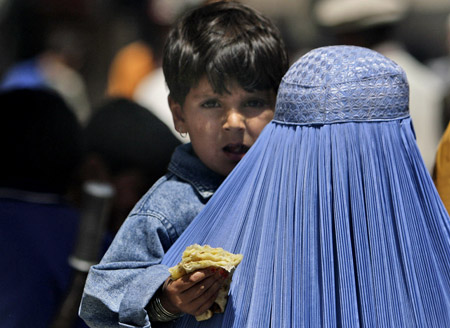
Afghan mother and child. Photo from Center for American Progress.

U.S. ranking not so good…
Reporting on the status of mothers

The dreadful circumstances of so many of the world’s mothers and children on this Mother’s Day are preventable. There is enough money in this world, and technology, talent, and trained people, to alleviate these conditions.

By Jack A. Smith / The Rag Blog / May 9, 2010

On Mother’s Day 2010, what are the best countries in which to be a mother on the basis of the exacting “Mother’s Index” compiled annually by the prestigious international organization Save the Children? You may be surprised.

This year’s “State of the World’s Mothers,” released May 3 at Save the Children headquarters in Fairfield, Conn., weighs such matters as lifetime risk of maternal death, contraceptive use, female life expectancy at birth, expected number of years of formal education for females, maternity leave benefits, ratio of male/female earned income, participation of women in national government, child mortality rate (per 1,000 births), among other factors.

The Save the Children report notes that “Every year, 50 million women in the developing world give birth with no professional help and 8.8 million children and newborns die from easily preventable or treatable causes.” The organization stresses “the critical shortage of health workers in the developing world and the urgent need for more female health workers to save the lives of mothers, newborn babies and young children.”

The 160 countries surveyed are divided into three categories, generally from richest to poorest — Most Developed Countries (43 of them), Less Developed Countries (77), and Least Developed Countries (40).

Leading the top five More Developed Countries is Norway, followed by Australia, Iceland, Sweden, Denmark.

Leading the top five Less Developed Countries is Cuba, followed by Israel, Argentina, Barbados, Republic of Korea.

Leading the Least Developing Countries is Maldives, followed by Rwanda, Lesotho, Malawi, and Uganda.

The United States was number 28 in terms of “the best place to be a mother” in the More Developed Countries, behind nearly all the states in Western and Central Europe and, of course, Scandinavia. Canada was number 20. Greece, Latvia, Austria, and Croatia were the four countries just ahead of the United States.

Dragging down the U.S. ranking are several factors. The American government is the least generous of the 43 More Developed Countries in terms of maternity leave benefits (12 weeks leave, unpaid). No other country provides so little time off after childbirth and only four others do not offer paid leave. The rest pay more benefits for longer leaves. France, for instance, pays full salary for 14 weeks maternity leave, Denmark pays full salary for 52 weeks, Ireland 80% of usual salary for 26 weeks.

Another factor is America’s relatively high rate of lifetime risk of maternal death (1 in 4,800). As USA Today pointed out “A woman in the United States is more than five times as likely as a woman in Bosnia and Herzegovina, Greece or Italy to die from pregnancy-related causes in her lifetime and her risk of maternal death is nearly 10-fold that of a woman in Ireland.” (Ireland has the best ratio in the world — one mother dies in 47,600 births.)

Further, the rate of infant mortality (below age five), 8 per 1,000 births in the U.S., may be lower than that in most of the Less and Least Developing Countries, but it is higher than most countries in its own category. For example, in Serbia it is 7 per 1,000, in the UK it’s 6, in the Netherlands 5, the Czech Republic 4. The world’s lowest rating, 3 deaths per 1,000 births, has been attained by Sweden, Finland, and tiny Luxembourg.

In Cuba, which led the Less Developed Countries, the infant mortality rate is 6 per 1,000, an amazing statistic for a relatively poor developing country. In other Latin American societies the figure is often much higher: Argentina, 16 per 1,000, Brazil 22, Mexico 17.

The U.S. has imposed deep economic, trade and political sanctions on Cuba for over 50 years, which certainly weakens its smaller neighbor, but Cuba has managed to provide good medical care for all women, 19 years of formal schooling for females, compared to 16 for its nemesis to the north, and for women to occupy 43% of seats in the national government compared to 17% in Uncle Sam’s legislature. Health care and eduction through college are free in Cuba.

It is generally within the Least Developed Countries, which are also the poorest, where the world’s mothers suffer the most, though this is not always the case. The worst place in the world for women is Afghanistan, which has been occupied and controlled by the United States and its puppet government in Kabul for nearly nine years. With token exceptions, virtually all of Washington’s efforts and money have focused on war and politics, with the people left to fend for themselves, and the condition of women and girls generally improving little if at all since the days when the Taliban ruled Afghanistan.

According to the State of the World’s Mothers:

Conditions for mothers and their children in the bottom 10 countries are grim. On average, 1 in 23 mothers will die from pregnancy-related causes. One child in 6 dies before his or her fifth birthday, and 1 child in 3 suffers from malnutrition. Nearly 50% of the population lack access to safe water and only 4 girls for every 5 boys are enrolled in primary school.

The gap in availability of maternal and child health services is especially dramatic when comparing Norway and Afghanistan. Skilled health personnel are present at virtually every birth in Norway, while only 14% of births are attended in Afghanistan. A typical Norwegian woman has more than 18 years of formal education and will live to be 83 years old; 82% are using some modern method of contraception, and only 1 in 132 will lose a child before his or her fifth birthday.

At the opposite end of the spectrum, in Afghanistan, a typical woman has just over 4 years of education and will live to be only 44. Some 16% of women are using modern contraception, and more than 1 child in 4 dies before his or her fifth birthday. At this rate, every mother in Afghanistan is likely to suffer the loss of a child.

Zeroing in on the children’s well-being portion of the Mothers’ Index, Sweden finishes first and Afghanistan is last out of 166 countries. While nearly every Swedish child — girl and boy alike — enjoys good health and education, children in Afghanistan face a 1 in 4 risk of dying before age 5. Nearly 40% of Afghan children are malnourished and 78% lack access to safe water.

The dreadful circumstances of so many of the world’s mothers and children on this Mother’s Day are preventable. There is enough money in this world, and technology, talent, and trained people, to alleviate these conditions. Every year, trillions of dollars are invested in destructive wars or are accumulating in the bank accounts of the super rich. An annual portion of these funds is all that is required to greatly reduce the unnecessary annual deaths of millions of children, and to provide health care and education for all the mothers of the world and their beloved offspring.

  • The full text of the report is here.
  • [Jack A. Smith was editor of the Guardian — for decades the nation’s preeminent leftist newsweekly — that closed shop in 1992. Smith now edits the Hudson Valley Activist Newsletter, where this article also appears.]

    The Rag Blog

    Posted in Rag Bloggers | Tagged , , , , , | 1 Comment

    A THOUGHT FOR MOTHER’S DAY
    By Jack A. Smith / The Rag Blog / May 9, 2010

    On Mother’s Day 2010, what are the best countries in which to be a mother on the basis of the exacting “Mother’s Index” compiled annually by the prestigious international organization Save the Children? You may be surprised.

    This year’s “State of the World’s Mothers,” released May 3 at Save the Children headquarters in Fairfield, Conn., weighs such matters as lifetime risk of maternal death, contraceptive use, female life expectancy at birth, expected number of years of formal education for females, maternity leave benefits, ratio of male/female earned income, participation of women in national government, child mortality rate (per 1,000 births), among other factors.

    The Save the Children report notes that “Every year, 50 million women in the developing world give birth with no professional help and 8.8 million children and newborns die from easily preventable or treatable causes.” The organization stresses “the critical shortage of health workers in the developing world and the urgent need for more female health workers to save the lives of mothers, newborn babies and young children.”

    The 160 countries surveyed are divided into three categories, generally from richest to poorest — Most Developed Countries (43 of them), Less Developed Countries (77), and Least Developed Countries (40).

    Leading the top five More Developed Countries is Norway, followed by Australia, Iceland, Sweden, Denmark.

    Leading the top five Less Developed Countries is Cuba, followed by Israel, Argentina, Barbados, Republic of Korea.

    Leading the Least Developing Countries is Maldives, followed by Rwanda, Lesotho, Malawi, and Uganda.

    The United States was number 28 in terms of “the best place to be a mother” in the More Developed Countries, behind nearly all the states in Western and Central Europe and, of course, Scandinavia. Canada was number 20. Greece, Latvia, Austria and Croatia were the four countries just ahead of the United States.

    Dragging down the U.S. ranking are several factors. The American government is the least generous of the 43 More Developed Countries in terms of maternity leave benefits (12 weeks leave, unpaid). No other country provides so little time off after childbirth and only four others do not offer paid leave. The rest pay more benefits for longer leaves. France, for instance, pays full salary for 14 weeks maternity leave, Denmark pays full salary for 52 weeks, Ireland 80% of usual salary for 26 weeks.

    Another factor is America’s relatively high rate of lifetime risk of maternal death (1 in 4,800). As USA Today pointed out “A woman in the United States is more than five times as likely as a woman in Bosnia and Herzegovina, Greece or Italy to die from pregnancy-related causes in her lifetime and her risk of maternal death is nearly 10-fold that of a woman in Ireland.” (Ireland has the best ratio in the world — one mother dies in 47,600 births.)

    Further, the rate of infant mortality (below age 5) 8 per 1,000 births,in the U.S. may be lower than that in most of the Less and Least Developing Countries, but it is higher than most countries in its own category. For example, in Serbia it is 7 per 1,000, in the UK it’s 6, in the Netherlands 5, the Czech Republic 4. The world’s lowest rating, 3 deaths per 1,000 births, has been attained by Sweden, Finland, and tiny Luxembourg.

    In Cuba, which led the Less Developed Countries, the infant mortality rate is 6 per 1,000, an amazing statistic for a relatively poor developing country. In other Latin American societies the figure is often much higher: Argentina, 16 per 1,000, Brazil 22, Mexico 17.

    The U.S. has imposed deep economic, trade and political sanctions on Cuba for over 50 years, which certainly weakens its smaller neighbor, but Cuba has managed to provide good medical care for all women, 19 years of formal schooling for females, compared to 16 for its nemesis to the north, and for women to occupy 43% of seats in the national government compared to 17% in Uncle Sam’s legislature. Healthcare and eduction through college are free in Cuba.

    It is generally within the Least Developed Countries, which are also the poorest, where the world’s mothers suffer the most, though this is not always the case. The worst place in the world for women is Afghanistan, which has been occupied and controlled by the United States and its puppet government in Kabul for nearly nine years. With token exceptions, virtually all of Washington’s efforts and money have focused on war and politics, with the people left to fend for themselves, and the condition of women and girls generally improving little if at all since the days when the Taliban ruled Afghanistan.

    According to the State of the World’s Mothers: “Conditions for mothers and their children in the bottom 10 countries are grim. On average, 1 in 23 mothers will die from pregnancy-related causes. One child in 6 dies before his or her fifth birthday, and 1 child in 3 suffers from malnutrition. Nearly 50% of the population lack access to safe water and only 4 girls for every 5 boys are enrolled in primary school.

    “The gap in availability of maternal and child health services is especially dramatic when comparing Norway and Afghanistan. Skilled health personnel are present at virtually every birth in Norway, while only 14% of births are attended in Afghanistan. A typical Norwegian woman has more than 18 years of formal education and will live to be 83 years old; 82% are using some modern method of contraception, and only 1 in 132 will lose a child before his or her fifth birthday. At the opposite end of the spectrum, in Afghanistan, a typical woman has just over 4 years of education and will live to be only 44. Some 16% of women are using modern contraception, and more than 1 child in 4 dies before his or her fifth birthday. At this rate, every mother in Afghanistan is likely to suffer the loss of a child.

    “Zeroing in on the children’s well-being portion of the Mothers’ Index, Sweden finishes first and Afghanistan is last out of 166 countries. While nearly every Swedish child – girl and boy alike – enjoys good health and education, children in Afghanistan face a 1 in 4 risk of dying before age 5. Nearly 40% of Afghan children are malnourished and 78% lack access to safe water.”

    The dreadful circumstances of so many of the world’s mothers and children on this Mother’s Day are preventable. There is enough money in this world, and technology, talent and trained people to alleviate these conditions. Every year, trillions of dollars are invested in destructive wars or are accumulating in the bank accounts of the super rich. An annual portion of these funds is all that is required to greatly reduce the unnecessary annual deaths of millions of children, and to provide healthcare and education for all the mothers of the world and their beloved offspring.

    — The full text of the report is at http://www.savethechildren.org/publications/state-of-the-worlds-mothers-report/

    Type rest of the post here

    Source /

    The Rag Blog

    Posted in RagBlog | Leave a comment

    Jonah Raskin : A Specter is Haunting Europe

    Is the old Europe history? A cafe in Brussels.

    Crisis in Greece a sign of the times?
    A specter is haunting Europe

    By Jonah Raskin / The Rag Blog / May 8, 2010

    BRUSSELS — The Europe of old is on its way into the history books — not with a sudden bang but with a long, slow whimper.

    That’s the way it feels to me as I sit at this cafe in Belgium on a gray day in May, and after conversations and interviews with longtime friends and new acquaintances. All around me, good Belgians — Dutch speakers and French speakers — are sipping wine, drinking coffee, and conversing politely.

    This is the way I remember Belgium, where I lived and taught American literature as a Fulbright professor in the 1980’s when Ronald Reagan was president, anti-Americanism was at a high point, and when I introduced students to Herman Melville, Emily Dickinson, and to American jazz, the blues, and film noir.

    Of course, Belgium has changed since the 1980’s, and so has Europe. Old buildings that I knew well have had facelifts, Facebook has captured at least one generation, and the culture of the book is endangered more than ever before. That’s what I hear from students and their parents.

    Moreover, all over the continent, Europeans are wondering more than they have for decades how much longer they can go on quietly sipping wine, and drinking coffee. How much longer can cafe life, which has come to define the culture of Europe, remain a reality?

    My Belgian friends are wondering if the financial crisis that caught up with Greece and the Greek people and that led to violent protests in the streets of Greece can catch up with other countries. A new sense of anxiety has quietly descended on Belgium, where Flemish nationalists are on the rise as a political force. A sense of unease has also descended on England too where the long-entrenched Labor Party of Tony Blair failed to win enough votes in the popular election, and the conservatives have staged a major comeback.

    In Ireland the new IRA recently set off explosions and raised the specter of more bombs. From Spain to Poland, there isn’t a country where citizens are sleepîng comfortably at night and dreaming of a wonderful future.

    “Of course what happened in Greece can also happen here,” says a 40-something-year-old Belgian who works for an NGO and who has witnessed natural and human made disasters around the world. “That’s what we’re all afraid of — that the crisis that kicked off in Greece will spread and engulf us all.” His views were echoed by others.

    In the mid-1980s when I last lived here, Europeans blamed many of their social, political and economic woes on the Russians, the Americans and the immigrants. The immigrants are still blamed, and immigrants are pressured to conform to traditional ways. In Belgium and France it is now illegal for Arab women to cover their faces. The burka has been decreed un-European and outlawed.

    There are also new twists to the old story of the immigrants. Now, for example, Moroccans who have been in Europe for decades are pointing a finger at recent arrivals from Poland and Russia and accusing them of taking their jobs away.

    Accompanying the uncertainty about jobs and the economy, there is uncertainty about national and cultural identity. Belgian politicians such as Siegfried Bracke of the New Flemish Alliance are using the crisis of identity to advance their own careers and to fan the flames of wounded ethnic and regional pride. A kind of tribalism seems to be on the rise, even as Europeans see that all things European are connected and that the crisis in Greece does not stop at the Greek borders but spreads outward.

    All this matters intensely to me. My own ancestors came from Europe and it is in Europe that I sense my own roots. I have lived and worked in Europe on and off since the 1960’s, and I feel that Europe and the United States are connected. Their woes are also our woes. The way they respond to issues such as immigration and unemployment will help us or hinder us.

    Right now I am writing the conclusion to this essay at a computer in a comfortable house outside of Brussels, where Vice President Joe Biden recently spoke. It is spring. There are open fields and farms. Local farmers grow strawberries which are coming into season — harvested by hand by immigrant laborers. The teenage son of my friends will play football — soccer as we call it — this afternoon and his father and I will watch from the sidelines. Their teenage daughter will be in an end-of-the-year dance performance at her school. Life goes on in the midst of the crisis. But increasingly it seems to me fewer and fewer individuals can stand on the sidelines.

    There are no barricades in the streets as there were in Europe in 1968. But no matter where one lives in Europe, one is asked or invited or forced to choose sides and to make choices. My old Belgian friend who teaches at a university here is reviewing for a newspaper a new translation of Karl Marx’s classic about capitalism, Das Kapital. A few days ago in Brussels he pointed out to me the place where Marx wrote The Communist Manifesto that begins, “A specter is haunting Europe, the specter of Communism.” It is no longer Communism that is haunting Europe. But Europe is still haunted. It is a place of disquieting ghosts and it does not see that they will soon be exorcised.

    [Jonah Raskin is he author of The Mythology of Imperialism and Field Days.]

    The Rag Blog

    Posted in Rag Bloggers | Tagged , , , , | 2 Comments

    Budd Saunders : Luck, and Dumb Luck

    Sailers in 1946 are shown wearing goggles to shield their eyes from an atomic blast. Dr. Phil Trapp told about how such goggles were expected to protect his World War II Marine flotilla from the effects of a third atomic bomb to be dropped on the beach just ahead of them. Dumb luck saved them. Photo by Bob Landry / Life Magazine.

    (And a whole row of ‘had’s…)
    Luck, and dumb luck

    By Budd Saunders / The Rag Blog / May 8, 2010

    DURHAM, Arkansas — I ran across a note that had been lost for some time and I want to share its content. The note has nothing to do with politics, war, or anything but English grammar. It is a sentence that contains 11 “had”s in a row, and it is perfectly correct.

    My father-in-law wrote it out years ago. My wife Nancy’s father is George Armitage Miller, one of the outstanding intellects of the 20th century. Words and communication were his life. Whatever else the sentence is, it is interesting: “John, where Bill had had ‘had’, had had ‘had had’; ‘had had’ had had the teacher’s approval.”

    When George visited us years ago, Nancy mentioned several things so I would notice them. When her father was sitting in a chair with his head nodding, he wasn’t asleep, he was thinking. He would take out a small notebook from his pocket and write in it. I was told not to ask what he was writing because I wouldn’t understand it. It was to himself. When he would later communicate, you would understand, like WordNet 2.1. You can find it with your computer and download it. It’s free and very useful.

    There have been another two disasters and a near disaster recently affecting our country. The oil blowout in the Gulf of Mexico, Nashville under water, and a car bomb in Times Square. We watched CNN for news on these disasters.

    Actually, I rather think the real disaster in the bomb scene was the character who built the “bomb.” Faisal Shahzad, a naturalized American, had it all worked out. He had placed a vehicle where an explosion would have caused destruction of property and many casualties. His explosives were amateurish at best. But he had transportation to JFK International Airport.

    There was an announcement by some government agency representative extolling the various groups involved and how alert they were. Homeland Security had all of the bus stations at the Port Authority covered, but at JFK, Shahzad got through security. That pretty much put the wraps on those characters as the heroes in this made-for-TV drama in which, just as the villain is about to escape, somebody notices that he is on a plane. I can hear the dramatic music build, until the plane is called back to the gate. I suppose it was TSA who went on board and trundled Mr. Shahzad off to be interrogated.

    Then the story changed. It seems he only got through security once and hadn’t been on the plane after all. The plane was called back because there were “suspected accomplices” on board. I suppose they looked Middle Eastern, which is racial profiling and only permitted in Arizona.

    As I have continued watching and listening to the news I have come to a conclusion. It seems that all of the agencies involved were working together. That’s good. But it’s not so much that they were smarter than the bomber, as that they were very lucky. This guy was just plain dumb.

    Luck reminded me of something a friend of ours wrote and I dug it out of one of the many piles of papers around the house. Dr. Phil Trapp is Emeritus Professor of Psychology from the University of Arkansas. He wrote a letter to the Northwest Arkansas Times in 2007 in which he gave some examples of “dumb luck.”

    In World War II he commanded a flotilla of landing craft destined to invade Japan. They were to invade right after a third Atomic Bomb was “dropped on the beach just ahead of” them. They were to wear goggles to protect them from the “brilliant light” of the bomb. Nobody back then knew about radiation fallout. Fortunately Japan surrendered before the invasion.

    Another example he gives of “dumb luck” is the chlorine compound in aerosols and car air conditioners being discontinued before the ozone layer was completely destroyed. Professor Trapp also commanded Marine landing craft at Red Beach on Iwo Jima Island. He survived. And that was really luck.

    We can’t count on luck, but we can remember (if our attention spans aren’t too short) the words of the man who alerted police to the suspicious SUV in Times Square. He was a street vendor and disabled Vietnam War veteran who sold T-shirts. When asked what he had to say about the event, he replied, “If you see something, say something.” He saw something different and said something for sure. He told a police officer and thus the comedy began. In the classical sense, comedies all have happy endings. This one did. And a clown for the central character.

    Question authority. It’s the American way.

    [Budd Saunders is a Vietnam veteran who lives in Arkansas and writes a regular column for the Durham Dispatch.]

    The Rag Blog

    Posted in Rag Bloggers | Tagged , , , | Leave a comment

    Marc Estrin : The Mathematics of Mother’s Day


    A novel approach:
    Happy Mother’s Day

    By Marc Estrin / The Rag Blog / May 8, 2010

    Novelist and Rag Blog contributor Marc Estrin will be Thorne Dreyer’s guest on Rag Radio, Tuesday, May 11, 2-3 p.m. (CST) on KOOP 91.7 FM in Austin. For those outside the listening area, go here to stream the show.

    They will discuss Marc’s novels, his history with the legendary Bread and Puppet Theater, and more — including his Rag Blog scoop “Got Fascism?: Obama Advisor Promotes ‘Cognitive Infiltration’” that created quite a stir on the internet.

    The following is from Marc Estrin’s novel, Golem Song.

    Having been reminded by Debbie, one of his girlfriends, Alan Krieger walks into a drug store to buy a card for his mother.

    OK, Walgreens. Let’s see, cards over there. Good! Mother’s Day still with us. Holy moly Shazam! I can’t believe it. I can’t fucking believe it. Let’s see — one two three four five six seven eight nine ten times one two three four five sections, that’s fifty columns times one two three four five six seven eight nine ten eleven twelve thirteen rows. That’s fifty times thirteen. Fifty times ten is five hundred plus three times fifty — six hundred and fifty! Six hundred and fucking fifty! Six hundred and fifty different Mother’s Day cards! How can you have six hundred and fifty… oh, I see: categories. Different categories.

    Soooo… here’s MOTHER like my mother, I guess, though who could be like my mother?… then what else? MOTHER-TO-BE. I wonder if they have “Mother-that-was” for miscarriages — there’s a million dollar idea. HUMOROUS MOTHER-TO-BE. How about humorous plain Mother? But she’s not all that funny. OTHER MOTHER. Nice rhyme. GOD MOTHER and GOD MOTHER ADULT. Is that like X-rated? Let’s see. Nope, stodgier. NEW MOTHER, ah, poor thing, should be in the condolence section with little packs of Valium attached. Oh, here’s a good one: LIKE A MOTHER. A Mother’s Day card for my “Like a Mother”? No, that would be too mean. I mean I’m mean, but I’m not that mean. Gottenu — FRIEND’S MOTHER! One isn’t enough? You have to adopt more? I can’t deal with this. FROM MOM TO CHILDREN — for Mother’s Day? What a rabid guilt-trip! I know you won’t remember to send me a Mother’s Day card, so I’m sending one to you, hope you feel terrible, love Mom. CARDS FROM BOTH OF US — for the frugally-minded, no doubt. CARDS ACROSS THE MILES. Dear Mom, thinking of you from Challenger Two. Can you see me waving? SISTER, SISTER’S FIRST. RELIGIOUS SISTER For Mother’s Day? Our Lady of Fornication? Ah, NANA, ooo-la-la. Oop. We’re in the unspeakably hip section — CARDS SUITABLE FOR SINGLE PARENT. Love them 90s! And last but not least, Ladies and Gentlemen, more lethal than a speeding bullet, more powerful than a TV commercial — it’s SUPERMOM, who years ago, in the Orient, learned the secret of clouding men’s minds. How the hell am I going to choose? This is a Ph.D. thesis project. Limit the search, Alan. Back, back. Back, like the aging Goethe, to the simple realm of basic MOTHER.

    OK, so then we’ve got only one two three four and a half sections of ten times thirteen rows. A little less than half the total, the exact arithmetic is beyond me at this hour of mental and spiritual exhaustion, but say three hundred cards to go through. Only three hundred? Well, we’ll do an adjectival inspection for relevance to our very own mother. Courage, Alan, this is no worse than cataloguing Saddam Hussein’s CBW holdings. “Gentle”? No. “Tender?” No. “Soothing?” Oi, oi, oi. “Guiding?” By contrast, perhaps. “Sharing.” A little less would be appreciated. “Understanding.” Possibly. Though what she understands is unclear. “Patient.” Like an adder. “Kind.” Yeah. To quadrupeds. “Undemanding.” Gimme a break. Must not be Jewish. “Dependable.” Like death and taxes. “Strong.” You bet, 200 proof, pH one point oh. “Warm…generous…giving…thoughtful — though what kinds of thoughts they’re not saying — kind — didn’t we have that one before? — unselfish.” Am I on the wrong planet?

    “Am I on the wrong planet?” This is the fundamental question asked by hostages. And hostages are usually ignored.

    “Hey buddy, am I on the wrong… I’m talkin to you, don’t walk away from me.”

    See?

    “Asshole!”

    Jesus, I’m only one row across one section. Two hundred ninety cards to go, I’ll never make it. “Always there.” Well, God knows that’s true. “Never too busy.” On the other hand, might it not be better to be been a latch-key kid? But they don’t hire corporate execs with rolled-down stockings. Oh, look at this. How sweet. She “always finds the sunshine”. And if the rains do come, she “keeps only the rainbows.” Ipecac ahoy. Here’s a mom that “always shows concern for others” and “expects very little in return.”

    That’s it. I’ve had it. My cup of irony runneth over. We’re going to do this by the random method, and grit our decaying teeth at the result. Close your eyes, Alan. Now spin twice around, moving in a trajectory to your right as you spin, trying not to make a fool of yourself by poking your finger into someone’s pupik — there! Got it! My finger directly on a card without falling on my face. Oh praise to your semi-circular canals, Alan, for their faithful service all these years…

    Why, it’s Snoopy! Yes, Snoopy, why not? It matches her literary level, and is thematically appropriate, though she won’t get the obvious reference. What does Snoopy have to say to my sainted mother? Ah, a riddle. A conundrum, as it were. “What does a mother stand for?” Snoopy, my canine-ical friend, do you really want to ask that question? Are you prepared for the answer? But… I give up. What does a mother stand for? Open the card, and the answer is… “She’s so busy she doesn’t have time to sit down.” Good try, old droopy-nose, but avoidance will get you nowhere. You have to get up pretty early in the morning to hoodwink me, and it’s already 8:14 p.m.. But Mother Legree will like such innocence, and take it as a compliment. $1.49? For this devious piece of shit? That’s three and a half White Castle hamburgers? Well, this, plus a small bag of Hershey Kisses to support her habit, and perhaps absolve me of all but one passive peck ought to do it for under five bucks. Laudamus te, oh my sweet, reminding Debeleh, who hath spared us the heartache and nitroglycerine of another forgotten Mother’s Day.

    [Marc Estrin is a writer and activist, living in Burlington, Vermont. His novels, Insect Dreams, The Half Life of Gregor Samsa, The Education of Arnold Hitler, Golem Song, and The Lamentations of Julius Marantz have won critical acclaim. His memoir, Rehearsing With Gods: Photographs and Essays on the Bread & Puppet Theater (with Ron Simon, photographer) won a 2004 theater book of the year award. He is currently working on a novel about the dead Tchaikovsky.]

    Want to read the whole novel? Buy it for a penny!

    The Rag Blog

    Posted in Rag Bloggers | Tagged , , , | 3 Comments

    Bob Feldman : A People’s History of Afghanistan / 4

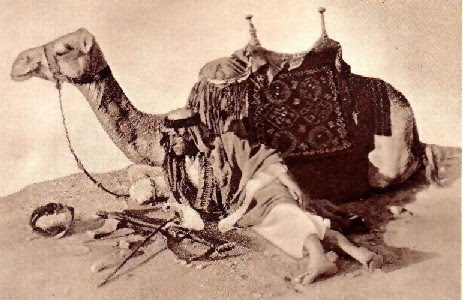
    British Intelligence agent T.E. Lawrence (Lawrence of Arabia) came to Afghanistan in 1928, and virtually directed anti-government activities. Image from Jordan Jubilee.

    Part 4: 1924-1933
    A People’s History of Afghanistan

    By Bob Feldman / The Rag Blog / May 2, 2010

    [If you’re a Rag Blog reader who wonders how the Pentagon ended up getting stuck “waist deep in the Big Muddy” in Afghanistan (to paraphrase a 1960s Pete Seeger song) — and still can’t understand, “what are we fighting for?” (to paraphrase a 1960s Country Joe McDonald song) — this 15-part “People’s History of Afghanistan” might help you debate more effectively those folks who still don’t oppose the planned June 2010 U.S. military escalation in Afghanistan? The series so far can be found here.]

    Between January 2009 and late March 2010, nearly 400 U.S. soldiers lost their lives in the Pentagon’s endless war in Afghanistan. Yet the history of people in Afghanistan is still unknown to many people in the USA.

    In July 1928, for example, Afghan King Amanullah, for a second time, attempted to enact a series of democratic reforms in Afghanistan by convening a loya jirga — a meeting of Afghanistan’s leading tribal and religious leaders — and urging it to support the following reforms:

    1. establishment of a Western-style constitutional monarchy, a cabinet of ministers, an elected lower legislative house of representatives and a nominated upper legislative house;
    2. separation of religious and state power;
    3. legal emancipation of women and abolition of polygamy;
    4. compulsory education for all Afghans; and
    5. establishment of co-educational schools.

    Most of Amanullah’s July 1928 proposed modernization and democratic reforms were rejected, however, by the members of the loya jirga meeting. So Amanullah then convened a new loya jirga meeting that only included his own political supporters, which then approved all his reform proposals and also banned slavery, declared Afghanistan to be a secular state, and legally abolished the use of a chadar or veil by Afghan women.

    But agents of the UK government in Afghanistan such as T.E. Lawrence (a/k/a “Lawrence of Arabia”) apparently then encouraged the religiously conservative Afghan tribal leaders who opposed Amanullah’s democratic reform program — because it reduced their power, privileges and special influence within Afghan society — to start another uprising against Amanullah’s regime. According to The Truth About Afghanistan by S. Gevortom:

    In late 1928 by bribery and deception British agents managed to provoke a rebellion among certain tribes in the eastern part of Afghanistan. A British Intelligence agent, Col. T.E. Lawrence, arrived in the north-western province of India. Under the alias of aircraftsman Shaw he became very active in arranging meetings with Afghan opposition leaders and virtually directed anti-government activities in Afghanistan…”

    By November 1928 Shinwari Pashtun tribesmen in Afghanistan had burned down Amanullah’s winter palace and were marching on Kabul to overthrow his regime. So after fleeing to Kandahar, Amanullah then abdicated in favor of his brother Inayatullah Khan, before eventually going into exile in Italy. But, ironically, the Shinwari Pashtun tribesmen had also burned down the UK government’s consulate in the city of Jalalabad before marching on to Kabul.

    So, not surprisingly, British agents then created “another center of rebellion in northern areas of Afghanistan where their henchman Bacha Saquo was operating,” according to The Truth About Afghanistan. The same book also recalled:

    On the eve of his force’s attack on Kabul his envoys had a secret meeting with British ambassador Humphreys to clarify details of the planned seizure of the Afghan capital. On February 28, 1929, the British Daily Mail wrote that Britain’s representative in Kabul, Humphreys, had helped… Bacha Saquo to come to power…Supporting the rebels…British military aircraft time and again violated the air space… British planes flew over Kabul…

    So only three days after Amanullah’s abdication in January 1929, Saquo — a Tajk bandit from northern Afghanistan — entered Kabul with his followers and “seized Kabul, overthrew the… government and proclaimed himself” the Afghan king, according to The Truth About Afghanistan. But, according to Afghanistan: A Modern History by Angelo Rasanayagam, the UK government-backed Saquo then “subjected the city and its… inhabitants to nine month reign of terror” in which there was much looting, pillage and raping of women by his troops.

    Not surprisingly, in response to the nine-month reign of terror in Kabul, armed Afghan opposition to Saquo’s regime soon developed within Afghanistan and though, initially, “strongly supported by the imperialist and internal reactionary forces,” according to The Truth About Afghanistan, Saquo did not remain in power for long. After the UK government apparently ended its support for Saquo — and began to back the Afghan tribal army of General Mohamad Nadir Khan and his Afghan clan — Saquo’s troops were soon defeated.

    The Afghan tribal army of Nadir Khan and his Afghan clan then occupied Kabul in October 1929; and Saquo and his leading followers were publicly hanged in November 1929 — “despite a pledge to spare Bacha Saquo’s life and a promise of safe passage signed on a copy of the Koran by the victorious general, ”when Saquo had agreed to surrender the previous month, according to Afghanistan: A Modern History.

    Nadir Khan then was placed on the Afghan throne, himself, by his tribal army; and in September 1930 a jirga was convened which officially proclaimed Nadir Khan as Nadir Shah, the new Afghan king. Nadir Shah then built up a regular Afghan army of 40,000 men, opened up the Afghan economy to privately-owned corporations and promulgated a new Afghan Constitution in 1931 — before being assassinated by an Afghan high school student in November 1933.

    Under the Afghan Constitution of 1931, an autocratic monarchical political system linked to Afghan religious conservatives was reestablished and the religious law of the Hanafi School of Sunni Islam was decreed as the official law of Afghanistan. The imams of Afghan mosques were then put on the Afghan government payroll during Nadir Shah’s brief reign and relatives of influential Afghan religious figures were all appointed by Nadir Shah to lucrative government positions.

    It was also during Nadir Shah’s four-year reign that the first Afghan higher educational institution, the Faculty of Medicine, was set up in 1932. But, prior to his assassination in 1933, “there was a perception that Nadir Shah leaned towards” UK imperialism too much, because the UK government had “granted him 170,000 pounds” after his seizure of power in 1929, according to Afghanistan: A Modern History.

    Following Nadir Shah’s assassination in 1933, the remaining Afghans of Jewish religious background were only allowed to live in Herat, Balkh, or Kabul and were prohibited from living in other towns in Afghanistan. In Herat, Balkh, and Kabul, Afghans of Jewish background apparently also only now lived in separate neighborhoods from the neighborhoods in which Afghans of other religious backgrounds lived.

    In addition, after 1933 they were not allowed to leave Herat, Balkh, or Kabul without a permit and were required to pay a special yearly poll tax. Between 1933 and 1950, people of Jewish background in Afghanistan were also not allowed to obtain jobs in the Afghan monarchical government’s civil service, and their children were not allowed to attend Afghan government schools.

    Next: “A People’s History of Afghanistan—Part 5: 1933-1953″

    [Bob Feldman is an East Coast-based writer-activist and a former member of the Columbia SDS Steering Committee of the late 1960s.]

    • Previous installments of “A People’s History of Afghanistan” by Bob Feldman on The Rag Blog can be found here.

    The Rag Blog

    Posted in Rag Bloggers | Tagged , , , , , , | Leave a comment

    Teabaggers in 2010? : Debunking the Political Wisdom

    Image from The Daily Globe.

    Will the right wing seize power?
    Looking ahead to November

    By Ted McLaughlin / The Rag Blog / May 7, 2010

    [The Rag Blog doesn’t post a lot about election predictions, but I think it is important that the right-wingers don’t return to power in November. It is vital for the Democrats (with all their faults) to stay in the majority in both houses of Congress. — Ted McLaughlin.]

    The conventional wisdom among political pundits these days is that the Democrats will suffer a humiliating defeat in the November elections — possibly even a bad enough defeat to cost them control of one or both houses of Congress. While the party out of power usually gains a few seats in an off-year election, I am still failing to see that the seats lost will be an abnormally large number, and the polls continue to support that view.

    The latest poll is a Washington Post/ABC News Poll. The poll was conducted April 22nd through April 25th, and has a margin of error of 3 percentage points. Frankly, the poll shows the Democrats are not in nearly as bad a position as many pundits want people to believe. In fact, the numbers look pretty good for Democrats.

    One interesting aspect of this poll does show that this has the capability to be a very volatile election. Consider the answers given when respondents were asked whether they would vote for their incumbent congressman or look around for an alternative:

    Re-elect………………..32%
    Look around…………57%
    No opinion……………..9%

    But when one looks at other numbers in the poll, it can easily be seen that this volatility is not just in Democratically-held districts. The numbers actually favor Democrats, and those districts that are volatile could well be Republican districts being challenged by teabagger candidates. Here are how the numbers look when respondents were asked which party they would vote for if the election were held today:

    Democrat………………..48%
    Republican………………43%
    No opinion…………………6%

    I think one reason many pundits are predicting a bad November for Democrats is the role of the teabagger movement. The reasoning is that the teabaggers are a broad-based movement made up of people from across the political spectrum, and when combined with Republicans they will outnumber Democrats. Fortunately that is just not true. The teabaggers are actually just an angry element of the Republican Party, and the poll numbers bear that out. Consider the answers to the following questions:

    Which group best represents your own values?

    Democrats………………..48%
    Republicans………………24%
    Teabaggers………………..14%

    Which group is most concerned about needs of people like you?

    Democrats………………..49%
    Republicans………………23%
    Teabaggers………………..17%

    Which group best understands the economic problems people are having?

    Democrats………………..48%
    Republicans………………22%
    Teabaggers………………..17%

    As you can see, even when you add the teabaggers and the Republicans together they can only get 38-40% of the respondents. That doesn’t sound like the makings of a humiliating defeat for Democrats to me. Those numbers look great for Democrats (about triple the margin of error). When considered in their proper perspective, as only being an angry part of the Republican Party, it really doesn’t look like the teabaggers will have much of an effect on the coming election.

    I still believe the most important issue in the coming election will be the economy. The above numbers show that people still trust Democrats with the economy more than Republicans by 48% to 39%. The Republicans still have a long way to go in convincing voters they can handle the economy better than Democrats, and their recent opposition to reforming Wall Street is not going to help them with that. Just consider the answer to the following question:

    Do you support or oppose stricter federal regulations on the way Wall Street firms conduct their business?

    Support………………..63%
    Oppose…………………29%
    No opinion……………..8%

    The main way Republicans are trying to make themselves look better on the economy is their repeated attempts to blame President Obama for the continuing recession and the country’s deficit, but even that effort is failing to gain any traction. The poll asked respondents who they blamed for the current state of the economy and the current deficit. Here’s how they answered:

    Who’s more responsible for the current state of the economy?

    Barack Obama………………..25%
    George W. Bush……………..59%

    Who’s more responsible for the current federal budget deficit?

    Barack Obama………………..22%
    George W. Bush……………..60%

    Right-wing organizations and corporations have sunk a lot of money into advertisements, lobbyists and funding for teabagger protests. The teabaggers have been loud and obnoxious. And the Republicans have told a multitude of lies. But it doesn’t look like it’s done much good so far. They still haven’t convinced a majority of the country that Republicans could rule better than the Democrats.

    Of course, the real key to how the election will go in November is turnout — especially Democratic turnout. The Republicans are angry and desperate, and they will go to the polls. If the Democrats can get their people to the polls they will do well (as the numbers show). If they don’t then they will not do well. It’s as simple as that.

    There’s still six months to go before the election (and something unexpected could still happen). But the question right now is whether the Democrats can get their voters energized in the remaining time. The outcome of the election hangs on that.

    [Rag Blog contributor Ted McLaughlin also posts at jobsanger.]

    The Rag Blog

    Posted in Rag Bloggers | Tagged , , , | 9 Comments

    Happy Birthday Karl

    Birthday card by James Retherford / The Rag Blog / May 5, 2010.

    The Rag Blog

    Posted in Rag Bloggers | Tagged , | 2 Comments

    Ray Reece : Where’s the Outrage?

    A dead Portuguese man-of-war floats on rust-colored oil off the Louisiana coast on Tuesday, May 4, 2010. Photo by Eric Gay / AP.

    Where’s the outrage?
    Just more ‘Happy Motoring’

    Given the other threats currently menacing planet Earth and its so-called civilization, this oil-gash disaster ought to qualify as the ultimate wake-up call to citizen outrage and mass sustained political action…

    By Ray Reece / The Rag Blog / May 5, 2010

    The recent explosion of the offshore oil rig in the Gulf of Mexico promises to become, in my view, the gravest man-made environmental catastrophe since the U.S. rained nuclear death on Hiroshima and Nagasaki in 1945, with Chernobyl and Exxon Valdez bringing up the rear.

    Experts are straining to formulate likely scenarios for the subsequent “oil spill,” which is actually a gusher on the ocean floor that is spewing an estimated 5,000 barrels of crude per day. The images we’re seeing of the oil already on the surface of the water are ugly and infuriating, and they’re going to get more so.

    They’re going to get surreal. They’re going to get apocalyptic. They’re going to show us devastated beaches and wetlands in wildlife preserves, oil-tainted seabirds, turtles and crabs, destroyed fisheries, and, quite possibly, as a coda not depicted even in Dante’s Inferno, the ocean itself on fire, releasing billows of acrid black smoke to the atmosphere.

    Given the other threats currently menacing planet Earth and its so-called civilization, this oil-gash disaster ought to qualify as the ultimate wake-up call to citizen outrage and mass sustained political action, indeed to revolution. Likewise, the blown-up oil rig, under lease to British Petroleum, ought to be studied as a perfect paradigm of the agents at work in the looming demolition of life as we know it in the biosphere.

    I speak of the agents of “post-industrial” capitalism and globalization in relentless pursuit of economic expansion and further profit for the corporate elite.

    No strategy, no technology, regardless of the risk, is off-limits to these operators and their allies in government, so long as said strategies lead to more profit. That’s why we’re seeing higher-risk oil exploration and production in deep-sea fields where it wasn’t profitable to drill before, i.e. before the advent of Peak Oil, i.e. declining conventional reserves, with corresponding increases in the price of petroleum.

    That’s why we’re suffering a clamor for “clean coal” and a return to fashion of nuclear power plants, both of which are riddled with lethal long-term environmental problems that cannot be resolved.

    In an honest, soul-searching, intelligent social order, these advanced assaults on the survivability of the planet, certainly including its Homo sapiens species, would trigger a global mass movement toward the revolution above mentioned, a movement demanding the radical reorganization of human society based on the principle, above all, of infinite sustainability of the planet and its biosphere.

    That’s a daunting phrase, I know. It means taking the longest conceivable view of the future of the biosphere. It means asking and trying to answer a question that is oddly unimaginable to most people even of generally good faith, even to my fellow progressives, much less to corporate masters of the universe like those we might find in the executive suites of British Petroleum, Goldman Sachs, et. al.

    The question is this. What must the citizens of the planet do to ensure the survival and well-being of the natural environment — which of course is their habitat — not just for centuries into the future, not just for millennia, but for the hundreds of millions of years still remaining to life on Earth before it expires in the furnace of the “red giant” phase of a dying sun?

    As preposterous as this question will seem to many, it seems more preposterous to me to evade it, to laugh it off as unanswerable and therefore ridiculous. Each generation of Homo sapiens inhabiting the planet has a sacred responsibility to protect and indeed to enhance it — not only for the well-being of that generation but for all the generations of Homo sapiens and all the generations of all the other species yet to follow.

    To evade the question of how to accomplish that is an abrogation of the moral and spiritual imperative that alone gives meaning to our existence as human beings in the first place.

    It’s not terribly difficult, after all, to visualize the global society that would have to be established to ensure the perpetual well-being of the biosphere. It’s a matter of simple, elementary logic, like, duh, why didn’t we think of that before?

    The basic objectives are cut-and-dried: (1) maximize efficiency in the production and distribution of life-support resources; (2) minimize waste; (3) do absolutely nothing to exceed the natural carrying capacity of the geographic area under consideration, from the local to the bioregional to the continental and finally the global.

    In practice this would mean, at the macro level, an abandonment of the capitalist demand for constant economic growth in pursuit of constant growth in profit. We would turn rather to the cultivation of steady-state economies, with an emphasis not on profit but on local and regional production of life-support commodities for local and regional consumption.

    The giant teeming cities and their rings upon rings of exurban subdivisions and freeways to nowhere would gradually be replaced by a new geography of small to mid-size cities and towns that function primarily as market and processing centers for the rings of family and community farms that supply them.

    At every turn, we would strive for the highest possible degree of local and regional self-reliance, thus to minimize fuel-burning imports, among other virtues, including full employment in a necessarily labor-intensive economy. We would also strive to eliminate or at least minimize the use of the automobile as the dominant form of personal mobility, opting instead for trains and buses, trolleys and trams, bicycles, horses and shoe leather.

    We would be a sociable society, learning to travel and interact with each other again, and learning we like it. We would be a stable society, too, with strict controls on population growth, aiming to reduce the global total from seven billion — which is where we are now, which is utterly unsustainable — to one billion, say, which is where we were at the turn of the 20th century.

    These ideas are hardly original with me. No small number of conscientious people and organizations in the U.S. and abroad have not only visualized a perpetually sustainable social order but are working today to try to effect it.

    One such group is the Center for Maximum Potential Building Systems in Austin, co-directed by Pliny Fisk and Gail Vittori. Another is the Institute for Local Self-Reliance in St. Paul, Minnesota, headed by David Morris.

    Still others include TransitionNetwork.org in Totnes, England; Radical Relocalization in Kingston, Ontario; and the World Coalition for Local and Regional Self-Reliance, or WOCO, of whose tiny, nascent, ragtag board I am a founding member.

    As for individuals who are focused on sustainability, a pioneer thinker and leading verbal bomb-thrower is James Howard Kunstler, author of The Long Emergency, a now-classic text on Peak Oil, and World Made by Hand, a novel set in the post-petroleum era that lies just ahead. Kunstler is much in demand as a speaker. He also maintains a popular blog called Clusterfuck Nation (kunstler.com), where he posts a fresh diatribe every Monday.

    A second writer and speaker who has contributed richly to the literature of sustainability is Kirkpatrick Sale, author of Human Scale and Dwellers in the Land, among other works. He is now director of the Middlebury Institute (middleburyinstitute.org), conceived in Vermont, which advocates for dissolution of the American empire through state secession from the union, e.g. a Second Vermont Republic.

    Effective as these stalwarts may be, however, they do not trouble the thoughts of the overwhelming majority of the people of the world who need to be reached. Among that majority there is not to be discerned the faintest sign of mass outrage over the BP oil spill catastrophe in the Gulf of Mexico — or any other threat to the biosphere — and certainly no reflex toward revolution.

    Why? Because the corporate masters of the universe have long since extended their power and control over not just the physical resources of the planet but indeed over the minds, values, loyalties and habits of the people themselves.

    How could we expect the youth of America and Japan, say, to rise in outraged revolt over the Gulf oil spill — its ominous implication for their own futures notwithstanding — while they sit mesmerized in front of their Sony video games? Ditto the American working class, say, mesmerized by the round and round of NASCAR racing and other so-called sports events produced ad nauseum by the corporate masters.

    No moral outrage. No revolution. Just a continuation of what Kunstler calls the benighted culture of “Happy Motoring.” This story will not have a happy end.

    [Ray Reece is affiliated with the World Coalition for Local and Regional Self-Reliance. He is a former columnist for The Budapest Sun and author of The Sun Betrayed: A Report on the Corporate Seizure of U.S. Solar Energy Development, among other published works. His most recent book is Abigail in Gangland, a novel. He is currently based in Cagli, Italy.]

    The Rag Blog

    Posted in Rag Bloggers | Tagged , , , , , , | 7 Comments

    Dick J. Reavis : Something Missing at Texas Writers’ Festival?

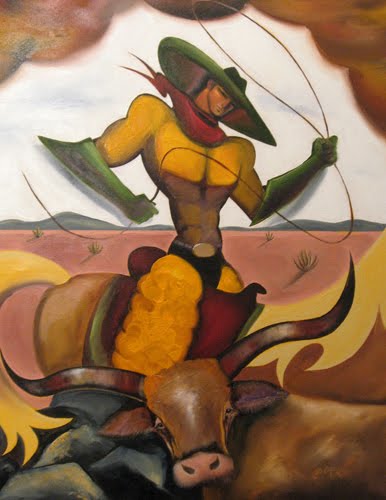
    “The Texican.” Painting © Mike Aston /
    mikeastonart.com .

    Artaud and Arizona:
    Tempest at Texas Observer’s writers’ fest

    By Dick J. Reavis / The Rag Blog / May 5, 2010

    This weekend a startling email come to my inbox and to those of others who are identified with journalism in Texas. Its title line read, “To Liberal Activists Who Happen to be Latina/o/s.” Though I don’t fit either the Liberal or Latino categories, being a nosy former reporter, I read what its poster, antonioartaud@grandecom.net, had to say.

    “The revered journal of Texas liberal politics The Texas Observer is having a writer’s festival,” its opening blandly began. “Guess what — they forgot to invite any Tejana /o/s and African Americans. Impossible, you say. Que fue eso? Did we forget to show our papers? How do we prove we’re Texans too?

    “And to make matters worse, they’re in cahoots with Texas Monthly,” Artaud continued. “Almost all the writers invited are either the editor of Texas Monthly or former/present Texas Monthly writers. Yes, the same magazine that has ignored us for over 25 years as personas non grata in their Texas.”

    The post closed with an exhortation and a warning: “Cancel your subscription, write a letter, protest the event at Scholz Biergarten, but above all, consider yourself on notice.”

    I am told that the author of the post, Antonio Artaud, is a student of journalism at a college in San Antonio. His sentiment was, to use an oldster’s term an Anglo journalist friend applied: “Right on!” Artaud knows of what he speaks — and what he pointed to is a scandal.

    Monday Artaud followed with a post containing messages of support from, among others, the novelists Dagoberto Gilb of San Marcos and the all-around San Antonio wordsmith, Gregg Barrios (who also wrote for The Rag in Sixties Austin). Something was building. “Latina/o/s” were, for the moment anyway, rising to protest against business as usual in the circles of Texas journalism.

    The hubbub died late Monday or early Tuesday when Artaud sent a third post, announcing that the Observer had agreed to include a Latino writers panel and issue an apology. Better late than never, I suppose. But as always in American history, it appears that no arrangement was made to include blacks.

    Before the hubbub died, I did some thinking. Placing myself in the shoes of the editors of the Observer and TM, I asked what might be done to permanently integrate those publications without fundamentally altering anything.

    I’d have canceled the Writers’ Festival (or “writers’ festival,” as the Observer’s announcement so graphically put it.) I’d have rescheduled it and expanded its panel to include — two or three New York Puerto Ricans or Dominicans! After all, Nuyoriqueños are as much Latinos as Mexican-Americans, and many of them are as African-American as anybody in the United States.

    If this idea doesn’t make sense, it should: the Texas nonfiction establishment has already applied the same logic to Anglo Texans.

    I may get some of the facts wrong because I’ve been outside of Texas for six years, but to the best of my knowledge, the editors of the daily newspapers in Dallas, Houston, Austin, and San Antonio are white non-Texans. The editors of The Texas Observer and Texas Monthly, Bob Moser and Jake Silverstein, fit the same category, even though the general report is that they’ve improved those publications.

    I am less sure about the Observer, but at the Monthly, the tally is plain: the magazine has had four editors, only the first of whom was a Texan. My observations, when I was a journalist in Texas, were that at both dailies and elite magazines in Texas, only about half of the editorial staffers were Texans before they became reporters in Texas.

    The Observer and the Monthly are, of course, by now “old media.” The most contemporary entry into the ranks of elite Texas journalism is the online daily, The Texas Tribune. I would note that its first and only editor, Evan Smith, is from the city of New York.

    A few years ago I put together a still-unpublished statistical study of the Monthly which showed that Texans, 95 percent of the editorial staff at the magazine’s outset, became a minority during the ‘80s, and stabilized at about half during the ‘90s. The Monthly has never hired a Mexican-American staff writer and its one African-American reporter vanished within months of his engagement.

    None of this should surprise anyone, I suppose. It is accepted wisdom among educated Americans today that class and regional differences don’t count for anything: we live in a placeless, classless meritocracy, people believe.

    When Texas Monthly, as today, calls itself the “National Magazine of Texas” it in no way means to imply that it is the magazine of a state which sometimes imagines itself a nation. Instead, it is a magazine of national quality — which in the publishing world, means “as good as what’s published in New York” — that, incidentally, happens to be published in Texas.

    The sensibilities of the locale mean nothing, the standard of reporting means everything. Journalism is an acultural scientific product, disconnected to land, the past, and tradition. It produces sterile news, cleansed of the smell of the dirt from which it came.

    With that as the accepted wisdom, it’s clearly heresy to bring even ethnicity, as Arnaud did, into the equation. Meritocracy knows no gradations, so what difference can it make that the editor of the Tribune is from New York, the editor of the Monthly from California and the editor of the Observer from North Carolina?

    I dissent from the accepted view for reasons that are as inchoate and instinctual as sometimes studied and glib. Suspicions haunt me, the latest of them because of the controversy over Mexican immigration in Arizona.

    Several years ago Texas was the home to two or three border-control militias, just as Arizona was. I looked into the Texas outfits and found that even though they were led by small-time ranchers whose spreads were near the border, those ranchers — and most of their lieutenants — were recent arrivals from the rural Midwest.

    My suspicions and speculations tell me that, Arizona being the retirement destination of the Midwest, as Florida is for New York, Arizona’s anti-Mexican hysteria is probably traceable to the state’s non-natives. In a way, it comes naturally to them: Mexico is as foreign to rural
    Midwesterners as Iraq is to most Texans.

    Anglo, Latino, and African-American natives of the frontera alike have traditionally regarded immigration restrictions as a joke, though in recent years they have become a real annoyance. But inlanders tend to see border walls, passport requirements, and crossing-bridge shakedowns as dignified embodiments of American law.

    As reactionary as Texas may otherwise be, its last president, the Islamophobic George W. Bush, made an honest attempt at humanizing immigration law, and the state’s current governor, Rick Perry — a lifetime member of the Sons of Confederate Veterans, no less! — has said that Arizona’s anti-Mexican ethnocentrism is not for him or his state.

    I can find no other factor that uniquely explains the “progressive” character of the Bush and Perry stand except this: growing up even as Anglos in Texas, their attitudes towards Mexico and its descendants took a better-than-American form. Neither regards immigration as a merely legal or economic — or racial — issue, as most Americans do.

    According to the theory of meritocracy common to the American empire, success and placement depend, not upon the question of national or regional origin, but instead upon one’s educational credentials. Other differences between Americans have no place in this scheme.

    This is why state-supported universities, for example, conduct national talent searches for almost all faculty jobs. The same placelessness has been at bottom of the selection of editors and writers for the Monthly and the Observer and probably, the Tribune as well. If in Texas we hire editors and journalists who are often non-Texans, according to meritocratic ideology, it must be because competent writers are hard to come by in Texas; if we also wind up with editors and writers who are not Mexican-American or black, why would the same conclusion not apply? The theory that marginalizes Anglo Texans downgrades all Texans, Latinos and African-Americans as well.

    In his original posting, Artaud attached a copy of the Observer’s announcement of its bash. I counted 13 panelists. Perhaps because I have been away, I recognized the names of only seven of them, among them one writer from the city of New York. I wondered to myself, “how many of these Texas writers are really Texans?” I do not know the answer yet, but my guess is that it’s more than one. Were the same sort of celebration being staged in New York, I do not believe that a single paisano would be on the billing; more than one — certainly not! Yet Texas is today more populous than New York.

    The Observer, in deciding to heed Artaud’s complaint, at least in regard to Latinos, may have decided at long last to remedy its lack of sincerity and vision — for a month or two, anyway. But the notion that the self-expression of Texas should be the affair of non-Texans is only an extension of the otherwise-hidden hegemony which skin color makes plain.

    Today I was thinking that, perhaps because I’ve been called a “horse’s ass” more than once, I should feel a little bit sorry for horses as well. In the eyes of most of them, I’ll wager, all equine magazines should be written and published — by equines, not by their riders!

    Horse sense tells me that in Texas, whites are riding on the back of a culture that has always included Mexican-Americans and African-Americans, and white non-Texans are riding on the back of the cultural mix that only Texans, of any color or ethnicity, fully appreciate or understand.

    [Dick J. Reavis is a former staffer at the Moore County News, The Texas Observer, Texas Monthly, the San Antonio Light, the Dallas Observer, Texas Parks & Wildlife Magazine, the Fort Worth Star-Telegram and the San Antonio Express-News. He also wrote for The Rag in Austin in the Sixties. He can be reached at dickjreavis@yahoo.com.]

    Antonio Artaud passed along this letter, sent to The Texas Observer by UT professor Emilio Zamora:

    Editors,

    I published a book on Mexicans and the Texas home front with Texas A&M Press and co-edited an anthology on Latinos and Latinas in WWI with UT Press, both in 2009. I have received two awards for the first book from the Texas State Historical Association and the Institute of Texas Letters. Despite this, I was not invited to participate in your writers’ festival. This is not the first time that public programs on new books have slighted me, but I have recently discovered that this time you have also overlooked other recently published authors of Latino/a descent. You may have included one of these noted authors, Belinda Acosta, but only after she pointed out the glaring problem.

    I should add that Latino and Latina writers are also usually absent from the pages of The Observer and this is not necessarily due to our failure to submit materials to you. A case in point is Professor Angela Valenzuela’s excellent review of Avatar which she submitted on February 5, 2010. You have not published the piece nor have you even sent her a note acknowledging her submission.

    I cannot help but think that the problem of under-representation and erasure of major portions of U.S. and Texas history (women, minorities, labor, civil rights, for example) in our public school curriculum extends far beyond the Texas State Board of Education. Isn’t it really a sorry shame that we should be talking like this among ourselves when major battles for equal rights (with the State Board of Education, for instance) require our undivided attention.

    Emilio Zamora, Professor
    Department of History
    University of Texas at Austin

    The Rag Blog

    Posted in Rag Bloggers | Tagged , , , , , , , | 11 Comments

    VERSE / Larry Piltz : The Gulf

    Art from illusion360.

    The Gulf

    “The water was fouled at once,
    but they drank it none the less,
    a mess of mud and blood”
    – Thucydides

    Oil on the water
    blood on the sands
    cruel and unusual
    big business plans
    eleven souls dying
    then millions more
    of fellow live beings
    damn big business whores
    crude in their veins
    greedy slick hearts
    their making a killing
    rips lives apart
    big oil at the table
    pounds on its chest
    keeps us addicted
    kills all the rest
    what becomes of our world
    what becomes of our pride
    what becomes of our lives
    when death comes with the tide

    Larry Piltz / The Rag Blog
    Austin, TX
    (from Back Bay,
    Biloxi, MS)
    May 4, 2010

    The Rag Blog

    Posted in Rag Bloggers | Tagged , , , | 4 Comments

    In a Changing World : Workers on the Move

    Workers in Paris join in massive May Day demonstration. Photo from AFP.

    As the nature of work evolves…
    A week of worker militancy

    Those who proclaimed May Day as the workers’ day over a hundred years ago understood the need for global solidarity to achieve justice.

    By Harry Targ / The Rag Blog / May 4, 2010

    This was a week of worker militancy. Wednesday, April 28, in large cities and small towns, workers rallied in support of improved health and safety at the workplace. [See “Austin Construction Workers: No los Vamos a Olvidar” by Alice Embree.] This was the fortieth anniversary of the establishment of the Occupational Health and Safety Administration. In the minds and hearts of these workers were the recent deaths in mines in West Virginia and Kentucky and oil rigs in the Gulf of Mexico.

    On April 29 masses of workers assembled, thousands in Manhattan, to protest Wall Street’s robbery of the American people, particularly for its creation of an economic crisis that has cost workers all over the globe millions of jobs.

    And finally on Saturday, May 1, the international day of workers’ solidarity, inspired by the protests in support of the eight-hour day movement in Chicago in 1886, millions of workers mobilized everywhere; from Hong Kong, Istanbul, Athens, Berlin, Hamburg, Manila, Moscow, Seoul, Tokyo Taiwan, Bangkok, to Havana. In the United States huge throngs marched in support of immigrant rights in Los Angeles, San Francisco, Chicago, New York, Dallas, Austin, and many other cities.

    I just finished teaching a course called “The Politics of Capital and Labor in the United States.” We read texts that analyzed the development of capitalism as the dominant mode of production. We discussed its various stages from competitive to monopoly capitalism to today’s era of finance capital. I highlighted the post-World War II period in U.S. and world history emphasizing the establishment of a permanent war economy, deindustrialization, financialization, and neo-liberal globalization.

    We then concentrated on the changing nature of the circumstances of work and workers over the last 60 years drawing upon the collection from Dollars and Sense magazine called “Real World Labor.” By way of summary, I prepared a list of the impacts of systemic economic and political changes on workers derived from the various essays in the book. The list, in no particular order, suggests the ways in which the lives of workers have been transformed over the last 60 years and why the mass mobilizations of workers, such as those this week, are so desperately needed.

    The list only touches the surface. It includes dramatic increases in state and employer mechanisms to obstruct union organizing. Union density in the United States has declined from a peak of 33% in the early 1950s to 15% today (half in the public sector). Employers skillfully use workplace policies to destroy the potential for worker solidarity, from encouraging racism, and inter-ethnic hostilities, to creating two-tier salary schedules.

    Work has been increasingly sub-contracted and outsourced, shifting manufacturing and service employment from once higher paid industrial capitalist countries to poor countries whose traditional economies have been disrupted to accommodate new factories of outsourced work. Sweatshops, initiated in textile mills in Britain and the United States 200 years ago, began to be transferred to countries of the Global South in the 1960s and now, with declining real wages in the United States, are returning to domestic venues.

    Work has been casualized. Job creation is increasingly characterized by part-time, contingent, and seasonal work, with significant portions of the work force defined as “illegal.”

    For those with jobs, whether in manufacturing or service, modern forms of Taylorism are imposed on work processes. Originally Taylorism inspired efforts to control all the physical movements of workers to maximize their productivity at all costs. Now such techniques are applied in the service sector as well, programming what workers say to customers and the appropriate physical space prescribed for interactions with them. Generally, techniques have been created to maximize the productivity (but not wages) with which all work is performed.

    Workplace harassment has been rising in recent years, including demeaning treatment of workers, targeting workers with seniority so that they will be forced to retire, and encouraging racism and sexism on the job.

    Similarly, the initiating of workplace regulations in the past has been reversed. Taking occupational health and safety as an example, systems of rules, regulations, and inspections led to a significant decline in workplace deaths and injuries during the 1970s. Those changes that benefited workers have been reversed since the 1980s.

    It is estimated that a shop floor or workplace can be expected to be inspected only once every 83 years. The tragedies in mines and on oil rigs this year remind workers that their jobs have become as dangerous again as they were 50 years ago.

    And of course real wages, benefits, and jobs have all declined. Economists still debate what should be the “natural unemployment rate.” Everywhere, from U.S. cities to most of Latin America, Africa, Asia, and the Middle East, life-sustaining remunerative activities involve creative street hustling, what economists call “the informal sector.” Good paying secure jobs — as a percentage of all the work in the world — are declining. In factories and service jobs “wage theft” has become common; that is, employers find ways to avoid paying workers what they have earned.

    State policies have enforced increasing exploitation of workers. Old fashioned repression, that is using the police and armies to crush union-organizing drives, occurs from time to time. In the United States, business lobbyists pressure state legislatures to pass “right to work” legislation limiting the ability of workers to form unions. Dilatory procedures for certifying union recognition, impediments to elections, prohibitions on strikes, and administrative decisions to prohibit categories of workers from unionizing have become instruments of state policy. Of course, in every country where organizing campaigns occur, leaders are targeted for dismissal and sometimes death squads.

    In addition to this modest list, the transforming global economy has created millions of migrant workers who are forced out of their jobs and from their land to become a pool of reserve workers who desperately seek work in other countries. Masses of Latin Americans come to the United States to find low paying jobs while they are threatened by state repression, most immediately illustrated by the new draconian Arizona law.

    Mobility also occurs from and to countries of the Global South. A million Bolivians have migrated since 1999 to work in sweatshops in neighborhoods of Buenos Aries, thousands of Nicaraguans pick pineapples in neighboring Costa Rica, and Central Americans work in Mexican factories.

    So this week workers everywhere were on the move. Their campaigns and rallies are about worker rights, jobs, benefits, and the capacity to be treated, wherever they live, with human dignity. The annual May Day events suggest that workers’ struggles are truly global. Capitalism in the era of neo-liberal globalization is truly global and in the end organization and resistance must be global.

    In one of the essays in the Real World Labor reader Bill Fletcher suggests what is necessary for the U.S. labor movement to participate in the struggle for global justice. The labor movement must “…understand the problem of empire, or if one prefers, imperial ambitions… the American working class resides in a world where corporate/government connections are strengthening, and with them increased repression of progressive and democratic forces in the face of unfolding globalization.”

    Those who proclaimed May Day as the workers’ day over a hundred years ago understood the need for global solidarity to achieve justice. Workers need to build off this week’s dynamism to create a movement of global solidarity.

    [Harry Tarq is a professor in American Studies who lives in West Lafayette, Indiana. He blogs at Diary of a Heartland Radical.]

    The Rag Blog

    Posted in Rag Bloggers | Tagged , , , , , | 1 Comment