Larry Ray : Echoes from Vietnam

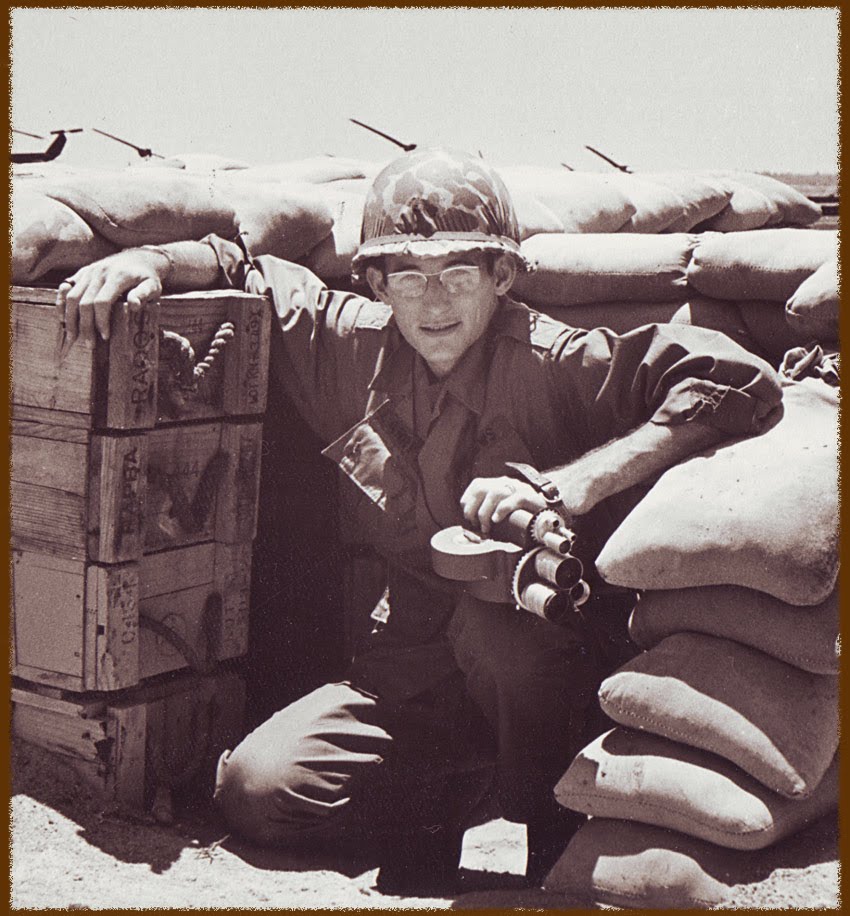
Larry Ray in Cu Chi Vietnam, late summer 1966.

Echoes from Vietnam:
Dying again in Afghanistan

Afghanistan is an even older and thornier problem [than Vietnam]. And one that cannot be bombed into submission.

By Larry Ray / The Rag Blog / October 4, 2009

Forty three years ago as a young civilian correspondent and documentary filmmaker, I stepped off the plane in Saigon knowing nothing about the history of that country or its people, and little or nothing about why Americans were fighting and dying there. I had come to see the war of my time.

As a U.S. Navy veteran and young news anchor for a South Texas regional TV station it seemed a given that we were there to fight godless communism and that we were the good guys.

It was 1966 and WWII had been over for 21 years and hostilities in Korea had ceased in 1953. But Americans still saw our military and patriotism as Johnny marching home again to ticker tape parades. We had whipped the Nazis and the Japs, and fought the North Koreans and commie Chinese to a draw. Clearly American might was not to be messed with.

But by 1966 America’s claim of winning an honorable peace in South Vietnam was being seriously challenged by seasoned journalists in both Saigon and Washington D.C.. About the time I arrived, Morley Safer filed his story showing our Marines using a zippo lighter to set fire to thatch roofed homes in a rural village on a “search and destroy” mission. His was perhaps the first story that Americans saw that suggested America was facing bleak prospects of victory. We damn sure were not winning hearts and minds.

After a few months of sitting through bogus U.S. military press briefings which we called the “five o’clock follies,” and working with seasoned reporters from around the world, my Boy Scout naiveté disappeared. After a year of the outright lies and misrepresentations in Pentagon and White House press releases about things I had seen with my own eyes, my naiveté turned to a frustrated, simmering anger. An anger that was ultimately taken to the streets across America just a few years later.

Since the Vietnam War, accredited correspondents have no longer been allowed to freely move about and report on our wars. Reporters are now “embedded” within military units under their control and influence.

The parallels between America’s disastrous involvement in Southeast Asia and our costly and ill-advised involvement in the Middle East have fired up that frustration and anger anew. This time opposition by the average American to requests for more troops in Afghanistan is getting louder before the new call for 40,000 more troops has even been approved.

Our involvement in Vietnam started in 1950. General Eisenhower’s decision to send military advisers to help the South Vietnamese army was the start of a massive buildup of American troop strength which reached a high of 543,482 in 1969. In the early years in Vietnam the Pentagon was still using a set-piece, WWII battle mentality, and Communism was our new political devil. And this was a hot, sweaty jungle war with no front lines.

Very few Americans spoke or understood the sing-songy monosyllabic Vietnamese language. The history and dynamics of a very old country that had been at war in some form or another for more than a thousand years was lost on those tasked with guiding America’s efforts there.

The fiercest battles were being secretly waged between the Joint Chiefs of Staff and the Department of State. The State Department’s political and diplomatic findings were muzzled and marginalized. We bombed Hanoi while increasing numbers of young draftees and regular American troops were being slaughtered as they fought fiercely in unforgiving conditions for a cause they did not understand. Almost twice as many Vietnamese, insurgents as well as civilians, died from our bombs and bullets.

America’s strong belief in the efficacy of power reasoned that if bombing our way to peace was not working, there was no need to consider diplomacy or a new approach. Clearly we only needed to drop more bombs, send in more troops and the enemy would finally give up. And that is just what we did. The generals called for increasing the enemy body count to achieve peace and allow us to return home with honor. And our politicians went right along with that reasoning.

We failed to appreciate that we were in the middle of a very old private fight between North and South. Intelligence showed early on that a majority in the South was ready for peace, even a communist style of peace, and most of all wanted the “long noses” who they saw as raining destruction down upon them to be driven out of their country. In Vietnam there ultimately was no victory and no honor for America. Today Vietnam is peaceful and prosperous and an important trading partner with the USA, just like our top trading partner, communist China.

The military might mentality was challenged early on by president John F. Kennedy, who in 1961 bucked extreme pressure from the Pentagon and within his own White House, and refused to order combat troops into Vietnam, limiting our presence there to military advisers. JFK listened not only to his top military brass, but also to his State Department, particularly undersecretary George Ball who predicted pretty much what eventually happened, except reality was worse than what he envisioned. After JFK’s death his order halting combat troops was reversed by President Johnson, driven more by domestic politics than military necessity.

In Vietnam 58,000 American troops were killed, 155,192 were wounded or missing. The touted “domino effect” where all Southeast Asia would topple country after country to communism if we didn’t win in Vietnam now is easy to see as so much expedient political hysteria.

The story is, of course, much more complex than this, but the bare bones are that politicians and military leaders refused to listen to the State Department and other foreign service experts who laid bare the corrupt leadership of South Vietnam, and pointed out that this was a long simmering internal war of insurgency with strong nationalistic roots. The actual communist Chinese or Soviet Russian interest in and backing of the war was extremely limited.

Our desire to strike back after the attack on the World Trade Center and Pentagon on September 11, 2001, combined the totally inept leadership of the George W. Bush administration with, once again, expedient political hysteria. First we launched an inadequately planned and then insufficiently supported attack upon al Qaeda strongholds in Afghanistan. Osama bin Laden and his al Qaeda top officials escaped to protective sheltering by tribal supporters who had seen their country invaded by the British, the Soviet union, and now American and NATO troops.

Then, with political misinformation, outright lies, a cowed press and a Congress that asked few questions, our government launched an unprovoked invasion of Iraq, which had nothing whatsoever to do with the 9-11 attacks on the USA. This mad neo-conservative misadventure has had a massively destabilizing effect upon the Middle East and has bred more hatred for the USA and our military in the Arab world.

It has also unnecessarily stressed our military’s ready troop strength and equipment readiness with 4,300 U.S. troops killed and more than 30,000 wounded and injured as of September 2009. Cost of the Iraq war is expected to surpass the $686 billion present day dollar value cost of the Vietnam war by year’s end.

One of President Obama’s first actions after taking office was to make good on his promise to get us out of Iraq, and that is now underway. Though the dynamics, politics, religion and leadership are totally different from Vietnam, Iraq, like Vietnam, will ultimately reach its own destiny without the forceful imposition of American ideas and politics upon its ancient culture. We eliminated its despotic leader, but its people still must sort through complex religious and ideological differences on its own and they may or may not decide to remain some sort of democracy.

Afghanistan is an even older and thornier problem. And one that cannot be bombed into submission. Afghanistan was first invaded by Alexander the Great in 330 BC. The tribal warlords have never been successfully subdued. No “surge” of military troops will somehow completely overpower the zealotry of religious belief. Imagine foreign troops invading America trying to subdue and forcibly control ultra-orthodox elements of the Southern Baptist Convention or the Catholic Church, because they saw them as bad for the American people.

Afghanistan has never had organized, cohesive governance and is today just a fragile step away from becoming a failed state like Somalia. That is why it was an ideal location for Bin Laden to train his al Qaeda fighters. The American figurehead Afghan President, Hamid Karzai, has become a real problem for the U.S. as well as NATO. We had hoped, with our backing, he could somehow unify the disparate tribes flung through the mountains and badlands into a proud democracy.

But such dreams have been jarred by the reality of a Karzai-rigged national election with rampant vote tampering and voter intimidation. Karzai is no better than the warlords we want him to pull together. Karzai has now distanced himself from his American minders and has lost legitimacy in the eyes of the Afghan people.

Now we want to send in a massive number of new troops and equipment to somehow again “win hearts and minds” and drive out the Taliban with brute force.

While the Taliban have no designs upon terror against America or any of the other NATO nations now with troops in the country, they operate as brutal criminals in Afghanistan and neighboring Pakistan. An increased armed American presence there is a daily irritant to Afghans, as well as neighboring rogue areas of Pakistan caught between foreign troops who often cannot tell the difference between peaceful civilians and the Taliban.

Once more we are fighting a war where troops do not speak the language or understand the people and are tasked with fighting often in 130º heat. The goal of preventing Afghanistan from again becoming an al Qaeda terrorist training ground cannot be accomplished by bombing the country into submission. This is a complicated political, diplomatic and sociological challenge.

President Obama, in office less than a year, just like JFK, must soon make a decision regarding the politically charged prospect of approving or disapproving more troops being called for by a top military general. I hope he is aware of the assessment of others who have tried to subdue this ragged country:

“Afghanistan taught us an invaluable lesson . . . It has been and always will be impossible to solve political problems using force. We should have helped the people of Afghanistan in improving their life, but it was a gross mistake to send troops into the country.”

– Retired Red Army General Boris Gromov

[Retired journalist Larry Ray is a Texas native and former Austin television news anchor. He also posts at The iHandbill.]

The Rag Blog

Posted in Rag Bloggers | Tagged , , , , , , | Leave a comment

Obama Plays Nuclear Chess with Iran

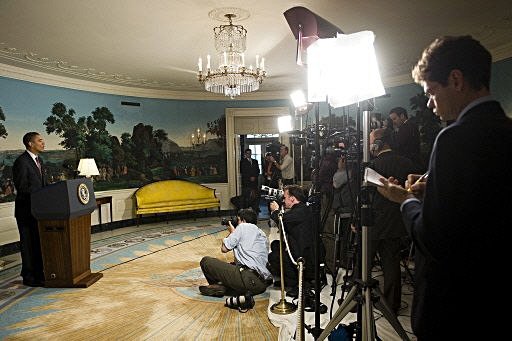
President Obama discusses talks with Iran in Geneva, at White House Oct. 1, 2009. Photo by AFP.

Is Obama putting Ahmadinejad on the defensive?
The complex question of Iran’s nuclear plans

By Steve Weissman / The Rag Blog / October 4, 2009

Neo-con pundits demand regime change in Iran. Israeli president Bibi Netanyahu makes no secret of his hopes to bomb, bomb, bomb Iran in 2010. And many in the left-leaning blogosphere accuse Washington of making phony claims that yet another Middle Eastern country is moving toward weapons of mass destruction. But a closer look suggests that Barack Obama may be playing a nuanced game that could severely restrict Iran’s capacity to build nuclear weapons.

Start by asking the telltale question: Do the Iranians have a program to build a bomb? In a November 2007 National Intelligence Estimate, the U.S. intelligence community concluded “with high confidence that in fall 2003, Tehran halted its nuclear weapons program.” But British, French, German and Israeli spy-masters have increasingly come to believe that American intelligence got it wrong and that the Iranians either restarted or never stopped their efforts to design a nuclear warhead.

The dispute, often quite heated, revolves in part over test data, reports, diagrams, videos and other documentation that the media mistakenly calls “the laptop.” According to the highly-respected Institute for Science and International Security (ISIS), German intelligence had recruited an Iranian agent who passed the documentation to his wife just before the Iranian government arrested him. He is believed to have died in custody, but in 2004 his wife smuggled the information into Turkey, where she gave it to U.S. authorities.

The IAEA has repeatedly asked the Iranians about the information, but has not given them copies of the documentation itself in order to protect where it came from. The Iranians claim it is all a forgery and have refused for two years to answer the IAEA’s questions about the underlying information.

Several senior staff-members at the International Atomic Energy Agency believe the documentation to be authentic and cited it along with other information in a secret working report titled “Possible Military Dimensions of Iran’s Nuclear Program.”

The ISIS website has published portions of the report, which concludes that the Iranians have the know-how to put a workable nuclear warhead into one of their Shabab 3 missiles. The Associated Press wrote about the report on September 17, and the Sunday New York Times headlined it on October 4.

The report remains an unfinished document, and the IAEA’s outgoing director-general, Nobel Peace laureate Mohammed ElBaradei, has argued strongly against its release. But, the publicity surrounding the report raises damning questions that Iranian negotiators will have difficulty evading.

Which brings us to a second question: Did the Iranians try to conceal their enrichment facility near the holy city of Qom, as Obama accused them of doing?

Iran’s president Mahmoud Ahmadinejad and his defenders argue that he fulfilled his legal commitment to the IAEA by reporting the plant’s existence on September 21, which was more than the required six months before introducing nuclear materials into any new facility. Iran had agreed to give this standard six-month notification when it signed its original safeguards agreement with the IAEA.

The Obama administration and Dr. ElBaradei say no, Iran subsequently agreed to notify the IAEA of any new enrichment facility when they first decide to build it. This was in the “additional protocol” or “modified Code 3.1” that Iran signed in December 2004.

The legal dispute arises because Iran never formally ratified the new agreement and withdrew its promise to observe it in March 2007. Former weapons inspector Scott Ritter and others argue that this absolved Iran of any legal obligation to report the Qom plant before it did. The IAEA’s ElBaradei, normally a good friend of the Iranians, believes that they had no legal right to withdraw their promise to the IAEA and were “on the wrong side of the law” in not reporting the Qom plant from the start.

Whoever has the better legal argument, the lack of transparency on the Qom plant added to suspicions that the Iranians were looking to turn their legal stockpile of low-enriched uranium into high-enriched uranium for weapons. They could do this simply by withdrawing from the Nuclear Non-Proliferation Treaty and IAEA inspections, which they have threatened to do.

The U.S. intelligence community appears to have had this in mind in their 2007 National Intelligence Estimate, when they determined “with moderate-to-high confidence that Tehran at a minimum is keeping open the option to develop nuclear weapons.” Should it decide to exercise that option, the NIE declared, “Iran probably would use covert facilities — rather than its declared nuclear sites — for the production of highly enriched uranium for a weapon.”

By dramatically “revealing” the Qom enrichment plant only days after Tehran reported it to the IAEA, Obama put the Iranians on the defensive, which the Americans and their allies probably intended. Happily, Tehran responded by quickly agreeing to accept IAEA inspections starting on October 25, which should help move their nuclear program into greater transparency and make any secret bomb-making a great deal more difficult.

[A veteran of the Berkeley Free Speech Movement and the New Left monthly Ramparts,Steve Weissman lived for many years in London, working as a magazine writer and television producer. A former senior editor at Truthout, he now lives and works in France. For previous articles by Steve Weissman on The Rag Blog, including those about Iran and the “Green Revolution,” go here.]

The Rag Blog

Posted in Rag Bloggers | Tagged , , | Leave a comment

Cause of Death : Forensic Science Gone Bad

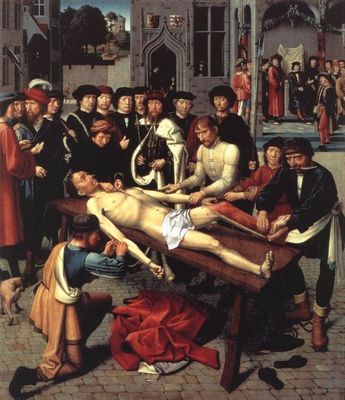
“The Judgment of Cambyses” (right panel) by Gerard David, 1498.

A post mortem:
The justice system and the medical examiner

There has been a spate of occurrences that is beginning to cast some doubt on the judgment of at least some medical examiners, and the problem is nationwide.

By Ted McLaughlin / The Rag Blog / October 4, 2009

Medical Examiners perform autopsies, rule on cause of death and testify to their findings in a court of law. Their job is at the very core of our system of justice, and generally juries trust them implicitly. If a medical examiner says something is true, then most juries accept that pronouncement as unimpeachable. After all, that medical examiner has medical training and most jurors do not.

But recently, there has been a spate of occurrences that is beginning to cast some doubt on the judgment of at least some medical examiners, and the problem is nationwide. Just look at some of these recent incidents documented by the Fort Worth Star-Telegram:

  • The Boston medical examiner’s office sent the wrong bodies to funeral homes and had a body cremated before police could determine whether a murder had taken place.
  • A Mississippi forensic pathologist is being sued over his testimony that was key in convicting two men later exonerated by DNA testing. The pathologist was conducting about 1,500 autopsies a year.
  • The Oklahoma City medical examiner’s office had its accreditation yanked this summer because of dozens of deficiencies, and a grand jury reported that the office mishandled items that could have been used as evidence in criminal cases.
  • The Tennessee Medical Board found a state medical examiner guilty of 18 counts of misconduct, potentially compromising hundreds of convictions. The violations included botched work, tampering with evidence and sloppy records, with a heap of callousness added to the mix.

Texas is not immune to these problems either. In our large and populous state with 254 counties, only six of those counties have medical examiner offices that are accredited by the National Association of Medical Examiners (NAME). These counties are Harris, Tarrant, Dallas, Travis, Bexar and Nueces (and some of these offices have even had some embarrassing goof-ups). Look at what has happened recently in Texas:

  • The Tarrant County medical examiner’s office said injuries from a pickup wreck killed him. But after a funeral director hundreds of miles away found a bullet in the man’s head, authorities realized a killer was on the loose.
  • A child molester faked his own death and almost got away with it after the Travis County medical examiner mistook the burned body of an 81-year-old woman for the 23-year-old man.
  • A woman was on her way to Death Row in Alabama after a medical examiner now working in Texas said she had suffocated her newborn. The sad truth, other experts said, was that the baby was stillborn.
  • An Austin baby sitter has spent years on Death Row for a baby’s murder. The medical examiner whose testimony helped put her there now says the baby’s death may have been an accident.

To their credit, the Texas legislators tried to do something about this in the 2009 legislative session. They passed a bipartisan bill “that would have required that medical examiners and their deputies be board-certified in anatomic and forensic pathology. It would also have given medical examiners the say-so on who can attend autopsies and the power to subpoena law enforcement and medical records.”

In my opinion, the bill didn’t go far enough. It should have also limited the number of autopsies a single person could perform in a year to 350 or less, and should have required ME offices to be accredited by NAME. But it was a good start on what needs to be done and would have improved the quality of autopsies in Texas.

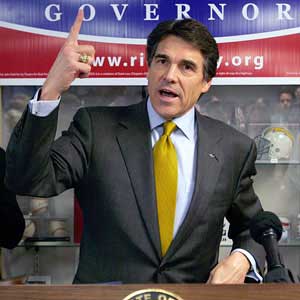
So what happened to this good bipartisan bill? It was vetoed by Governor Rick Perry! And the governor refuses to respond to questions about why he did this. Could it be that he just doesn’t care about the state of criminal justice in Texas?

Criminal trials start with a determination by the medical examiners office. If that determination is faulty (or downright wrong), then there is almost no possibility that the trial can result in a fair and just verdict.

We’ve already seen that Perry presided over the execution of an innocent man, and then tried to cover it up by a timely replacement of several Texas Forensic Science Commission board members. With his veto of the medical examiner bill, he leaves little doubt that he considers his political fortunes more important than the accuracy and fairness of the criminal justice system in Texas.

Is there any doubt remaining that he should be replaced as governor?

[Ted McLaughlin also blogs at jobsanger.]

The Rag Blog

Posted in RagBlog | Tagged , , , , | 1 Comment

Afghani Olympics : Will Obama Lose This One Too?


Will Obama learn from his Chicago defeat
And abandon the no-win Afghanistan marathon?

Team Obama needs — as the International Olympics Committee has just done — to be continually reminded that the rest of the world is not an American kick ball.

By Harvey Wasserman / The Rag Blog / October 4, 2009

The stunning rejection of Barack Obama’s play for the Chicago Olympics had better teach him a good lesson about escalating in Afghanistan.

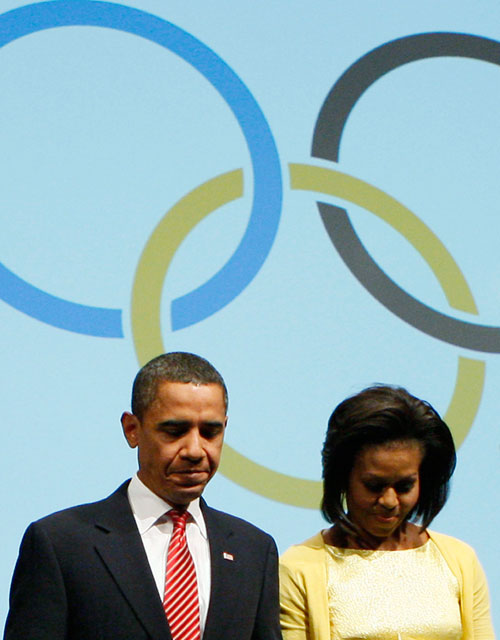
Ignoring fierce grassroots resistance in Chicago itself, the Obamas flew to Copenhagen to “persuade” the International Olympic Committee to give the games to the Windy City.

Imagine yourself a member of the Olympic Committee as the almighty President of the United States and his entourage, with the world media in tow, swoops down from Olympus to tell you how to make your decision.

Are we surprised Chicago was summarily bounced?

Imagine yourself an Afghani villager as the almighty President of the United States shoots down from Olympus those murderous drones that kill your family and your neighbors, to be followed by heavily armed troops who — after eight years of brutal slaughter — now want to “help.”

Obama’s decision on Afghanistan will define the rest of his presidency — and the fate of our nation.

He can mimic Lyndon Johnson and senselessly squander American lives and treasure. He will then finish as a slumped, tragic failure (along with the rest of us).

Or he can stop, as few fallen empires have done, and seek a sane, sustainable path away from the madness that is conquest.

Congress is now turning health care reform into a shambles. It is preparing to use climate chaos as an excuse to fund nuclear power plants whose abject failure is epic.

On issue after issue, from the Cuban embargo to gay marriage to civil liberties and so much more, the Administration has caved to the right, as if the people who put them in office no longer exist.

But for the moment, all pales before Afghanistan. If Obama chooses to escalate, he will plunge us into an abyss from which there is no recovery or escape.

There are no excuses. Rarely in our history has there been a more transparent decision.

No matter what our critical issue, we are now compelled to throw all we have into preventing the national suicide that would be escalation in Afghanistan.

Team Obama needs — as the International Olympics Committee has just done — to be continually reminded that the rest of the world is not an American kick ball.

See you on the goal line.

[Harvey Wasserman’s History of the United States is at www.harveywasserman.com, as is Solartopia! Our Green-Powered Earth.]

The Rag Blog

Posted in Rag Bloggers | Tagged , , , , | 8 Comments

Capitalist Health Care : We Live the Result

This is some considerable evidence that the common folk really don’t have much to say about the kind of health care we are going to get. Until we get this kind of activity and big money out of Congress, there will be no democracy.

Richard Jehn / The Rag Blog

A demonstration in Washington against Obama’s healthcare reform plan. Photograph: Rex Features.

Revealed: millions spent by lobby firms fighting Obama health reforms
By Chris McGreal / October 1, 2009

Six lobbyists for every member of Congress as healthcare industry heaps cash on politicians to water down legislation

America’s healthcare industry has spent hundreds of millions of dollars to block the introduction of public medical insurance and stall other reforms promised by Barack Obama. The campaign against the president has been waged in part through substantial donations to key politicians.

Supporters of radical reform of healthcare say legislation emerging from the US Senate reflects the financial power of vested interests ‑ principally insurance companies, pharmaceutical firms and hospitals ‑ that have worked to stop far-reaching changes threatening their profits.

The industry and interest groups have spent $380m (£238m) in recent months influencing healthcare legislation through lobbying, advertising and in direct political contributions to members of Congress. The largest contribution, totalling close to $1.5m, has gone to the chairman of the senate committee drafting the new law.

A former member of Bill Clinton’s cabinet says fears that the industry could throw its money behind the populist rightwing backlash against public insurance have scared the Obama White House into pulling back from the most significant reforms in return for healthcare companies not trying to scupper the entire legislation.

Drug and insurance companies say they are merely seeking to educate politicians and the public. But with industry lobbyists swarming over Capitol Hill ‑ there are six registered healthcare lobbyists for every member of Congress ‑ a partner in the most powerful lobbying firm in Washington acknowledged that healthcare firms’ money “has had a lot of influence” and that it is “morally suspect”.

Reform groups say vast spending, and the threat of a lot more being poured into advertisements against the administration, has helped drug companies ensure there will be no cap on the prices they charge for medicines ‑ one of the ways the White House had hoped to keep down surging healthcare costs.

Insurance companies have done even better as the new legislation will prove a business bonanza. It is not only likely to kill off the threat of public health insurance, which threatened to siphon off customers by offering lower premiums and better coverage, but will force millions more people to take out private medical policies or face prosecution.

“It’s a total victory for the health insurance industry,” said Dr Steffie Woolhander, a GP, professor of medicine at Harvard University and co-founder of Physicians for a National Health Programme (PNHP).

“What the bill has done is use the coercive power of the state to force people to hand their money over to a private entity which is the private insurance industry. That is not what people were promised.”

PNHP blames a political process it says is corrupted by millions of dollars poured into the election campaigns of members of Congress and influencing the discourse about health reform by funding advertising campaigns, supposedly independent studies and patients rights organisations that press the industry’s interests.

A primary target of criticism is Senator Max Baucus, the single largest recipient of health industry political donations and chairman of the finance committee that drafted the legislation criticised by Woolhander.

The committee this week twice voted against including public insurance in the legislation, with Baucus opposing it both times.

Baucus took $1.5m from the health sector for his political fund in the past year. Other members of the committee have received hundreds of thousands of dollars. They include Senator Pat Roberts, who last week tried to stall the bill by arguing that lobbyists needed three days to read it.

Baucus holds dinners for health industry executives at which they pay thousands of dollars each to be at the table, and an annual fly-fishing and golfing weekend in his home state of Montana that lobbyists pay handsomely to attend. They have included John Jonas, who represents healthcare firms for Patton Boggs, widely regarded as the top lobbying firm in Washington. Jonas, who formerly worked on the congressional staff, acknowledges that political contributions are intended to buy influence and says it works.

“It would be very naive to say they’re not influenced. The contributors certainly hope they’re influencing and the recipients probably ultimately are influenced,” he said. “I think it’s a morally suspect practice, and then you have to look at its application to see if it’s morally bankrupt … I think what’s bad about the system is it’s got more and more lax over time.

“When I started in this practice you did not talk issues at a fundraiser. It was impolite. And then with this need for money, the system has got coarser over time so that they go around the room asking what issues you’re interested in, much more of a linkage of dollars to a discussion of the issues now.”

The health industry permeates the process in other ways. At Baucus’s side, drafting much of the wording of the reform, was Liz Fowler, a senate committee counsel whose last position was vice-president of the country’s largest health insurer, Wellpoint, which stands to be a principal beneficiary of the new law.

Health companies and their lobby firms also recruit heavily among congressional staffers as a means of maintaining influence.

Baucus declines to discuss political donations but told Montana’s Missoulian newspaper earlier this year that “no one gets special treatment”.

Robert Reich, the labour secretary in the Clinton administration, says the Obama White House, mindful of how the health industry killed off Clinton’s attempts at reform, has grown so fearful of industry money that it has quietly reached agreement to pull back from price caps and public health insurance.

“The White House made a Faustian bargain with big pharma and big insurance, essentially scuttling both of these profit-squeezing mechanisms in return for these industries’ agreement not to oppose healthcare legislation with platoons of lobbyists and millions of dollars of TV ads.”

The pharmaceutical companies are apparently pleased enough that they are now putting $120m into advertising supporting the emerging legislation.

Jonas described the bill emerging from the Senate as “in realm of what is politically possible”.

“Is the bill overly distorted by money? I don’t think it actually is,” he said. “It’s a good bill in the sense that it’s a net improvement in the system … [but] it’s a bad bill if you think it’s supposed to be a comprehensive solution to the US healthcare problems.”

Source / The Guardian

The Rag Blog

Posted in RagBlog | Tagged , | Leave a comment

Surprising Facts About Who’s Watching What


Fighting Delusion: Attention to Political News
By Joel Hirschhorn / October 2, 2009

You may be surprised, as I was, that a recent poll found that more Americans than ever are paying attention to national political news. But this does not necessarily mean that American democracy is in good shape.

Here are the key summary statistics from the poll: 36 percent follow news about national politics very closely, 42 percent somewhat closely, 16 percent not too closely and just 6 percent not at all. With seemingly little newspaper readership and even relatively low numbers for network news shows, not to mention people being consumer with surviving financially, these numbers are worth attention. Especially surprising is that 6 percent figure for people not following national politics at all. Frankly, it just does not seem compatible with what usually seems like massive disinterest in politics.

Here are some other numbers that merit your consideration: those following politics very closely are just 30 percent for Democrats, compared to 41 percent for Republicans and 37 percent for independents. What’s with Democrats? Are they so happy with the performance of the Democrat controlled Congress and the White House that they do not feel it necessary to following national political news? If so, they may be far more delusional than loyal, especially if Republicans get their act together enough to make major advances in the congressional elections in 2010.

Wait, there are some more fascinating data. For men, 42 percent follow political news very closely, much higher than the 30 percent for women. Are women naturally less interested in politics, or are they just a whole lot busier?

And dig this: Older Americans, 65 and above, have a striking 46 percent following politics very closely, far greater than the 19 percent for those age 18 to 29. Young people probably have more to lose with a lousy political system than older people, but obviously are either more disinterested or cynical.

What about education level? No surprise here. Those with a high school education or less have just 26 percent paying very close attention, compared to 41 percent for college educated.

And for income level, a similar result: those making $75,000 or more yearly have 45 percent paying close attention, compared to just 26 percent for those making less than $30,000.

An awful lot of people that suffer the consequences of political decisions should be paying a lot more attention to political news. If they did, they might vote differently, if they vote at all. If corruption of American politicians by corporate and other special interests is ever to be killed, it will take a lot more Americans caring much more about political events.

Source / SearchWarp.com

Thanks to Joel Hirschhorn / The Rag Blog

Posted in RagBlog | Tagged , | Leave a comment

Health Care Reform and our Socialist National Parks

Ken Burns’ “The National Parks: Our Best Idea.” Real health care reform is isn’t such a bad idea, either.

Taking refuge in PBS’ series on our public parks
While the Kabuki dance in Washington continues

By Dr. Stephen R. Keister / The Rag Blog / October 3, 2009

Fatigued and battered by the dishonesty inherent in the health care debate, I gave way to fatigue and disenchantment with the U.S. political establishment and for the past week have been enthralled by the aesthetics and historical narrative of Ken Burns’ PBS series on the public parks in our country. Many of these I have never seen, and will never see firsthand, so I was pleased to have the opportunity to experience the overwhelming beauty and diversity of these magnificent areas of peace and tranquility via PBS.

Throughout I gave thanks to the many folks behind the preservation of these gifts to the nation, like John Muir, Theodore Roosevelt, Franklin D. Roosevelt, Harold Ickes, and many many more. While watching this terrific series, I was impressed with this nation’s greatest experiment in socialism, the government at work for the benefit of the people, fiercely opposing those who would commercialize these lands, destroying the beauty, cutting the trees, mining for minerals, obliterating the wildlife, and in essence continuing the American dream of making money at all cost to the environment and the human habitation of the lands.

Unfortunately, the Kabuki dance in Washington continues. The Senate Finance Committee, under the guidance of its chairman, well financed to the tune of nearly three million dollars from the health insurance lobbies, has finally passed a bill which will move along the discussion of “health care” (or, more to the point, “insurance reform”).

Dr. Quentin Young, national coordinator for Physicians for a National Health Program, has noted that the author for the bill for the committee was one Liz Fowler, a former VP at WellPoint, the nation’s largest health insurer. This factunderlines the need to back up, start over, and let Congress reconsider the matter of the single payer Medicare for All alternative which, above all, would eliminate the need for private insurance companies, and most likely save the nation over $400 billion annually, enough to cover the 47 million uninsured.

The public option has become essentially a farce, meaning different things to different people. In its pure form it would be a public insurance company to compete on an even footing with the various insurance companies involved in the health insurance cartel; however, each congressman and senator appears to have a differing view of what the plan might entail, including “triggers,” “cooperatives,” and various modifications that could make the whole concept meaningless.

White House leadership has been intermittent and half-hearted. The President never made a pitch for a true single payer plan, administered by a public insurance company, overseen by a non-political government agency. Instead, according to reliable sourced, the insurance executives have had an open door at the White House, while President Obama has reached a private deal with the pharmaceutical companies to “control prices” over the next ten years.

At no point has the medical profession been a big player in the health care debate despite the fact that a poll shows 73% of physicians approving a change in the present system. I grant that the AMA has been consulted, but I am sure that Mr. Obama is aware that this is smoke and mirrors, that the AMA is a political lobby and not representative of the desires or wishes of the vast majority of American physicians.

We will see if the White House shows any degree of cordiality to the caravan of “Mad as Hell” doctors on their way to Washington from the State of Oregon. We will see if finally the physicians are as welcome at the White House as are the executives of the insurance and pharmaceutical industries.

If there is not a move to single payer, or at least a true public option, we will be left with negotiating with the insurance cartel to revise their current practices — requiring them to take in those with pre-existing illnesses, forbidding disallowance of legitimate claims –- and in return mandating by fiat that all Americans buy insurance with a government subsidy.

This would put the insurance industry in control with a windfall of almost one trillion dollars of public tax money to subsidize reform. Not only that but one can anticipate further collusion and deceit on the part of the industry. Why should they change their modus operandi? One could imagine, for instance, a company agreeing to insure a person with a “pre-existing” condition such as diabetes while, in the fine print, care for diabetic kidney disease, cardiovascular disease associated with diabetes, or diabetic eye disease would be disallowed.

A right of appeal to an overburdened government oversight official would no doubt be available, but one can imagine that this would take months to implement. Yet, this is what the Republicans and Blue Dog Democrats appear to want. I must say that I am pleased and proud of our member of congress in Pennsylvania, a registered Blue Dog, who has courageously come out in support of the public option, and even included Wendell Potter in her town meetings.

Private insurance, as national health insurance, has worked in the Netherlands, and in Switzerland. Jonathan Cohn has an excellent article in the September 29 New Republic, entitled “Going Dutch.” Mr. Cohn points out:

“There is a catch, A big catch. Private insurance in the Netherlands works because it operates more or less like a public utility. The Dutch government regulates industry prices tightly — more tightly than the reforms now moving through Congress propose to do in the United States.”

He continues:

“The new system came on line in 2006 and, so far, the results are encouraging. Everyone picks an insurance carrier once a year, more or less the same way employees of large companies do here in the United States, during annual open enrollment periods. By law, the coverage is generous, no matter which carrier someone chooses, Plans cover all medically necessary services — as defined by the government, in consultation with independent experts and medical societies — and they pay for all but a tiny fraction of the bills. The government provides income-based subsidies, and roughly two-thirds of the population gets some assistance.”

The pending legislation brings to mind George Washington’s remark: “Few men have virtue to withstand the highest bidder.” Such is the current climate in Washington, D.C. These legions of insurance company prostitutes are at their worst when they go about frightening the elderly and uninformed with their Medicare scare mongering.

The New York Times of September 27 pointed this out in an editorial which notes:

“It has been frustrating to watch Republican leaders posture as the vigilant protectors of Medicare against health reforms designated to make the system better and more equitable. This is the same party that in the past tried to pare back Medicare and has repeatedly denounced the kind of single-payer system that is at the heart of Mediicare and its popularity.”

I recently heard a local Rabbi recounting the story of how he and his wife spent a year in Jerusalem 16 years ago. Upon arrival, they purchased government health insurance for the year. The Rabbi’s wife had an accident in which she broke her wrist in five places, sprained her right arm, bruised some ribs, and scratched up her face. She was taken by ambulance to the hospital, seen by five doctors, x-rayed, and a cast was applied to her arm. She had follow-up visits including x-rays and a CT scan. All this was covered by the medical insurance which had been purchased for the year for $322.

In discussing the public unrest, the “tea bag” rallies, the disruptions of congressional town meetings by hate groups, young and old, and the frequently-voiced disdain for “government programs” in general, one wonders why these folks should not be provided with a choice. If indeed they are past age 65 and dislike Medicare and Social Security, let us be reasonable and provide them with the opportunity to opt out of the programs.

If they are under the age of 65 and hateful of government programs let us provide them the right to discontinue payment of their payroll taxes and thereby forego the option at the age of 65 of receiving social security and Medicare. And, as for these folks who totally despise President Obama, let us call to their attention that he agrees with them totally about not prosecuting Bush administration war criminals, is on board with them on not regulating the failed financial institutions of Wall Street, favors the Republican policy of American Empire, agrees that we should continue electronic surveillance of the American public, and has shown no leadership in ending the absurd “war on drugs.”

I would further suggest that all progressives pay homage to Representative Grayson of Florida who has shown the courage and conscience to speak up unequivocally for universal health care and at the same time face down the purveyors of hate and fear. Progressives should also heed Jeff Sharlet’s warnings in his book “The Family.” It seems to me that we are being completely out-maneuvered in Washington by The Fellowship’s Doug Coe and his followers.

I am encouraged by the move for a viable single payer plan within the Commonwealth of Pennsylvania where I live. Bill 1660 is now before the State Legislature and bill 400 before The Senate. The Governor has indicated that he will sign the bill if passed. This bill would decrease dramatically the costs of health care to municipalities, school districts, and employers. Of course, we face the same corporate lobbying that exists at the national level; hence, the test locally must be whether elected officials work for their constituents or for the insurance companies.

This old curmudgeon will by 88 years of age this month. I am very grateful to the United States government for providing me with Medicare and Social Security since my retirement at age 70. There has been no disruption or mismanagement of these “socialistic” programs. I have no complaints with either program, and I’m sure I have put a strain on Medicare with my malignancy and neuropathy.

I am grateful, as well, for my friends from academia that I have become associated with since my wife’s death. Their support can never be fully calculated or rewarded. My new associates at The Rag Blog in Austin have been invaluable in sustaining my morale and encouraging me to revisit the progressive causes of my youth.

Finally, my thanks to my closest support, the widow of a physician contemporary, who is an intellectual and a grand Lady (note the capital “L”), who must put up with my every day ranting and periods of disenchantment with our society, and my disillusionment with the state of medical care since the insurance industry has morphed it from a fine profession into a business.

[Dr. Stephen R. Keister lives in Erie, Pennsylvania. He is a retired physician who is active in health care reform.]

The Rag Blog

Posted in Rag Bloggers | Tagged , , , | 6 Comments

Afghanistan : Get Out Before It’s Too Late


Learn from history:
Withdraw from Afganistan now

…the United States and its NATO allies [have] slipped deeper and deeper into the Afghanistan quagmire with the same historical ignorance that characterized American lack of awareness of Vietnamese history.

By Harry Targ / The Rag Blog / October 3, 2009

We are approaching a time when critical decisions will be made on Afghanistan; whether the U.S. government will expand the war for years, sucking us into a quagmire of unimaginable proportions, or disengage, increasing the possibility of investing in health care reform, modest responses to the danger of climate change, and jobs and justice for workers.

Forty-five years ago, as President Johnson was signing the Voting Rights Act of 1965 and launching the Great Society programs to lift “the other America” out of poverty he was making apocryphal decisions to send thousands of young men to fight and die in Vietnam (and to kill some three million Vietnamese people).

With growing Vietnamese resistance to the U.S. war effort, the U.S. military turned to massacring villagers, assassinating suspected enemies, and carpet bombing and napalming. The hopes and dreams of a better America were burned to a crisp in the jungles of Vietnam.

As many have written in print and cyberspace, the war in Afghanistan must come to an end. Francis Boyle, an international lawyer and professor, wrote in 2002 that the United States should never have made war on Afghanistan. The tragedy of 9/11 was an act of terrorism, not an act of war launched by Afghanistan.

“An act of war is a military attack by one state against another state. There is so far no evidence produced that the state of Afghanistan, at the time, either attacked the United States or authorized or approved such an attack.”

Nothing ever since justifies the war the United States initiated in Afghanistan in October, 2001.

In the subsequent years, the United States and its NATO allies slipped deeper and deeper into the Afghanistan quagmire with the same historical ignorance that characterized American lack of awareness of Vietnamese history. As Marc Pilisuk, social psychologist, reminds us about Vietnam,

“Fear of admitting we were wrong led to one new tactic after another. With military efforts bogged down in unfriendly jungle areas, we resorted to the use of toxic herbicides and ‘open target area bombing,’ burning villages, torturing peasants for information, propping up a succession of puppet governments… Efforts to ‘win the minds and hearts’ of people were undermined by military violence and a nearly universal wish to get the U.S. troops out of their country.”

Pilisuk then elaborates on the complex history of Afghanistan; which includes defeating invading imperial armies, internal tribal conflicts, U.S. support for those now seen as terrorists in the 1980s war against the pro-Soviet regime in Kabul, and shocking underdevelopment. He compellingly argues that: “Planning to remake Afghanistan in the back offices of the Pentagon is to repeat the neglect of cultural and historical factors in Vietnam.”

What to do now? Tom Hayden initiated a petition campaign in September, 2009, securing signatures of those who demand an end to the war in Afghanistan. In it he proposes an exit strategy that makes sense:

  1. Our government should adopt an exit strategy from Afghanistan based on all-party talks, regional diplomacy, unconditional humanitarian aid, and timelines for the near-term withdrawal of American and NATO combat troops.
  2. The aerial bombardments of Afghan and Pakistan villages, like burning down haystacks to find terrorist needles, should end.
  3. Military spending should be reversed in Afghanistan to focus on food, medicine, shelter, the socio-economic needs of the poor, and the dignity of women and children.

As these scholar/activists correctly state: the United States should never have made war on Afghanistan and the eight year war reflects the same ignorance of the history the U.S. displayed in Vietnam. As the Hayden petition argues, the Obama administration must embark on a diplomatic effort to bring together contending political forces in Afghanistan with the assistance of interested governments in Asia and the Persian Gulf.

The only solution to the war in Afghanistan is the withdrawal of United States troops from that country. Adopting the recommendations of Generals McChrystal and Petraeus for more troops is a blueprint for disaster.

[Harry Tarq is a professor in American Studies who lives in West Lafayette, Indiana. He blogs at Diary of a Heartland Radical, where this article also appears.]

The Rag Blog

Posted in Rag Bloggers | Tagged , , , | 14 Comments

Greg Moses : Cramming for the Downside

Downside up.

Riding down the moody Dow:
Cramming for the downside

If the humming engine of human history rides a geometry of social mood, then downtimes cannot be caused by anything that uptimes do…

By Greg Moses / The Rag Blog / October 2, 2009

The modern-day Pythagoras of market forecasting Robert Prechter has been predicting a crash of historic proportions, but that’s not the most interesting thing. More interesting is why he sees it coming.

As a theorist of the Elliot Wave, Prechter grounds his forecasts upon a mathematical pattern that tracks impulses of social mood. Everything else is symptomatic.

The background theory of the Elliott Wave is different from the kind of thinking that expects a straight-line series of effects from causes. Instead, the Elliott Wave returns us to pre-modern intuitions of cycles. It must have been clear to anyone caught up in the recent Bear market rally that pure stubbornness had taken hold of buyers. On Prechter’s account, that stubbornness is about to change sides.

If the humming engine of human history rides a geometry of social mood, then downtimes cannot be caused by anything that uptimes do — although consequences of downtimes can be altered by the preparations that uptimes make. As social mood descends into the seventh circle of hell, there will be every temptation to blame the descent itself upon uptime actors. Yet all blaming will miss an important point.

What could the natural purpose of downtime be? In the bullish 1978 book, Elliott Wave Principle, Prechter and A.J. Frost argue that the up and down waves of social mood provide “the most efficient method of achieving both fluctuation and progress in a linear movement” (26). If social mood adjusts the mode of our approach to reality, then we see things differently and engage them differently when we are up. But that means there are things to learn when we are down, too.

On the fractal model of the Elliott Wave, we experience smaller fluctuations of mood within a series of larger patterns. In his bearish book of 2002, Conquer the Crash, Prechter argues that we are on the cusp of a very large degree downward drift. We will be learning hard lessons the hard way, and largely because that’s what down moods are good for. Such lessons will be meant to last more than a lifetime, and we are the generation fated to carry these lessons forward.

We will shortly see which lessons from the high times have any worth in the valley of our shadows. Old man winter is a rock hard grader. There can be no bonus points for students who do not use the warm months to prepare. Get ready for some serious grade deflation.

To begin thinking about the political future that would correspond with Prechter’s crash assumptions, we could turn our clocks back to Franklin Roosevelt’s presidency or the less-remembered panic of 1837. Unlike Roosevelt, who was able to transform depression politics into a winning streak, Democrat Martin Van Buren was not able to win even a second term against the mood of 1840. He was ousted by the “log cabin” Whig candidate William Henry Harrison, who promptly died of pneumonia.

Illness is a fateful consequence of down moods according to Prechter’s systematic theory of Socionomics. Looked into your local flu clinic lately?

Perhaps the most reliable guide to downtime politics will be found in the life — and the curiously timed death — of Huey Long, who argued that American politics had better deliver a Christmas tree after every election if politicians wanted people to prefer the ballot box as their form of political change. Depression politics killed the messenger but not the message. If the Constitution survives the coming crash, it will earn its keep through tangible benefits.

Returning to the crash of 1835 to 1842, I choose to think about Emerson, who opened 1836 with the essay “Nature.” If you want to maintain order in your mind and spirit the thing to do is take long walks in the woods. Interesting how Ken Burns turns our attention this very week to the conservation system expressed in our national parks. There is an American mecca, and it boasts a jobs program that can’t be outsourced.

Reading Emerson’s 1836 text as a downtime crammer gets more interesting when we see that Chapter 2 is about “Commodity.” How poor can we be, Emerson asks, so long as we live upon the earth? “Nature, in its ministry to man,” he writes, “is not only the material, but is also the process and the result.” We live in the arms of a “divine charity.” Commodity cuts a path to Beauty so long as we nurture the inwardness of the work we do. Emerson pulls Thoreau aside in 1837. “Do you keep a journal?” As the nation falls into panic, Thoreau began to write.

On the model of nature that was so important to Emerson and Thoreau during that great depression, I think about a big tree. Part of the tree puts out leaves, reaching up, showing off. We have been through a great leafing time together.

Another part of the tree works ever in the dark, quietly pushing downward in solitary, unforeseeable effort. Of course the deepest roots could blame the highest leaves for making all the dark work necessary. But that would be like blaming Wall Street for the collective turn we are about to make.

Then there is the ugly stuff, the kind of thing that Thoreau went to jail over. As downtime invites the spiritualist to dig deeper within, it also kicks up real dust. Never before have the tools of conflict been so lethally arrayed. Remember the Alamo? That was 1836. Over in Alabama, the Creek nation was driven off its land, again. In Florida, federal troops at Ft. Defiance drew “first blood” in the Seminole War.

If Prechter is right for the right reasons, then in about two more years it should be clear enough to everyone why the peace movement must prevail. Surely, that would be a lesson worth learning once and for all.

[Greg Moses is editor of the Texas Civil Rights Review and author of Revolution of Conscience: Martin Luther King, Jr. and the Philosophy of Nonviolence. He is short gold and the S&P. He can be reached at gmosesx@gmail.com.]

The Rag Blog

Posted in Rag Bloggers | Tagged , , , | 1 Comment

Glenn W. Smith : Has Rick Perry Committed a Federal Crime?


Rick Perry fires investigators in Willingham case;
Is he guilty of obstruction of justice?

Gov. Rick Perry, like Pilate before him, washed his hands of any responsibility for the execution of a man experts say was innocent. And now Perry has fired three board members of the state agency investigating the controversial 2004 execution of Cameron Todd Willingham…

‘Business as usual,’ Perry told the Associated Press the firings were ‘business as usual.

By Glenn W. Smith / October 2, 2009

Also see ‘Perry terminates board members investigating execution,’ by Glenn W. Smith, Below.

When Gov. Rick Perry obstructed an investigation into the execution of a man experts say was innocent, he committed a crime against all Texans. State executions are carried out in our names, collectively and individually. Subverting the truth in such a matter is a betrayal of the public trust that is difficult to describe or comprehend.

But Perry may have also committed a crime against the U.S., and I’m not talking about his secession threats. He may have violated federal law, U.S.C. 18.1001.

This is no trivial matter. An innocent man was executed. Federal laws and guidelines are in place to keep that from happening. Perry may well have violated those laws and guidelines, for which there are criminal penalties.

Last night, CNN commentator, Texas hero and political strategist Paul Begala wrote us at DogCanyon with the following observation about our post earlier yesterday (see below):

Glenn, thanks for this important post. The eyes of the world are upon Texas, which has almost certainly executed an innocent man. Bully for you for tying this outrage to Perry’s anti-government rants with the teabaggers.

Let’s see if I get this straight: Perry and the teabaggers don’t trust the government to write an insurance policy, but they do trust the government to lock a man in a cage for years, to strap that man down on a gurney, and fill his veins with poison – in the case of poor Mr. Willingham, for a crime he did not commit. I know a lot of principled conservatives who oppose the death penalty, based on their distrust of government. Perry, of course, is neither truly principled nor truly conservative. He is a small man, a moral coward, and a political opportunist of the worst sort. Thank you for calling this to my attention.

There oughta be a crime against hypocrisy such as Perry’s. It turns out there might be. Follow us on the jump for details on the statutes and guidelines Perry may have violated.

§ 1001. Statements or entries generally
(a) Except as otherwise provided in this section, whoever, in any matter within the jurisdiction of the executive, legislative, or judicial branch of the Government of the United States, knowingly and willfully—

(1) falsifies, conceals, or covers up by any trick, scheme, or device a material fact;
(2) makes any materially false, fictitious, or fraudulent statement or representation; or
(3) makes or uses any false writing or document knowing the same to contain any materially false, fictitious, or fraudulent statement or entry;
shall be fined under this title, imprisoned not more than 5 years or, if the offense involves international or domestic terrorism (as defined in section 2331), imprisoned not more than 8 years, or both. If the matter relates to an offense under chapter 109A, 109B, 110, or 117, or section 1591, then the term of imprisonment imposed under this section shall be not more than 8 years.

Doesn’t the language seem like it was written with Rick Perry in mind: “falsifies, conceals, or covers up by any trick, scheme, or device a material fact”? But there’s even more to it than that.

Texas receives millions of dollars in crime-fighting money from the Coverdell Forensic Science Improvement Grants Program of the U.S. Justice Department. To receive that money, Texas had to create the Texas Forensic Science Commission. The applying and receiving agencies, including the governor, certify that an independent, external agency exists that will investigate “negligence or misconduct substantially affecting the integrity of forensic results.”

Now, read this special note attached to the Justice Department’s application guidelines, because they specifically invoke U.S.C. 18.1001 cited above:

Note: In making this certification, the certifying official is certifying that these requirements are satisfied not only with respect to the applicant itself but also with respect to each entity that will receive a portion of the grant amount. Certifying officials are advised that: (1) a false statement in the certification or in the grant application that it supports may be subject to criminal prosecution, including under 18 U.S.C. § 1001, and (2) Office of Justice Programs grants, including certifications provided in connection with such grants, are subject to review by the Office of Justice Programs and/or by the Department of Justice’s Office of the Inspector General.

In other words, the United States Justice Department tells its Coverdell Grant recipients that they’d better have an independent forensics agency of the highest integrity, and they’d better not falsify, conceal, or cover up by any trick, scheme, or device a material fact.

If firing three members of the commission and bringing to a screaming halt an investigation and hearing about the execution of an innocent man is not a trick to cover up material facts, nothing is.

By the way, it won’t be a defense for Perry to claim the agency once was independent, or once had integrity. Justice expects those to be ongoing conditions, so to speak.

Furthermore, the Office of Justice Program’s Standard Forms and Instructions specify that grant applicants must follow the granting agency’s rules and guidelines:

4. It will comply with all lawful requirements imposed by the awarding agency, specifically including any applicable regulations, such as 28 C.F.R. pts. 18, 22, 23, 30, 35, 38, 42, 61, and 63, and the award term in 2 C.F.R. § 175.15(b).

The Coverdell requirements clearly state (in a pdf link found in the eligibility section, “2009 solicitation document”):

A certification regarding external investigations into allegations of serious negligence or misconduct. Each applicant must submit a certification that “a government entity exists and an appropriate process is in place to conduct independent external investigations into allegations of serious negligence or misconduct substantially affecting the integrity of the forensic results committed by employees or contractors of any forensic laboratory system, medical examiner’s office, coroner’s office, law enforcement storage facility, or medical facility in the State that will receive a portion of the grant amount.”

The Justice Departement and its Office of Inspector General regularly investigate Justice’s grant recipients. If they are not already investigating Perry’s attacks on state Forensic Science Commission, they soon will be.

As noted yesterday, law enforcement agencies throughout Texas receive major grants from the Coverdell program, and all the grants are contingent on the federal government’s insistence that an independent investigating agency of the highest integrity be empowered to certify forensic labs and look into negligence and misconduct. Perry may have put that crime-fighting money in jeopardy. That in itself should be a crime.

I am no lawyer, so I will have to leave it to Justice Department investigators to decide whether to pursue a criminal case against Perry. The law clearly prohibits acts of the sort Perry just committed. By destroying the independence and integrity of a critical law enforcement agency to conceal material facts, Perry did exactly what the law told him not to do.

The laws are intended to clean up sloppy forensics work that leads to gross injustices. They are intended to guard against injustices committed by crime labs the Forensics Commission oversees. It is a peculiar circumstance when a governor subverts the functions of the watchdog agency itself. Once again, there’s nothing trivial about laws and guidelines intended to guard against the execution of the innocent and other injustices. In the end, we can only hope that justice, as they say, will prevail.

Source / Dog Canyon

Cameron Todd Willingham,with his wife, Stacy and their three children who died in a fire Dec. 23, 1991, at the family’s Corsicana, Texas, home.

Perry terminates board members investigating execution

By Glenn W. Smith / October 1, 2009

Gov. Rick Perry, like Pilate before him, washed his hands of any responsibility for the execution of a man experts say was innocent. And now Perry has fired three board members of the state agency investigating the controversial 2004 execution of Cameron Todd Willingham. If ever there was a story that the Texas press corps should pursue to the point of saturation coverage, this is it.

“Business as usual,” Perry told the Associated Press the firings were “business as usual.” No kidding. Last time it was just some university regents who no longer supported him. This time it was a group of people investigating whether Perry’s government killed an innocent man.

This time it involves members of the Texas Forensic Science Commission investigating whether the State – let me emphasize this for Perry’s teabagger friends who rail about intrusive government – whether the State killed an innocent man, Cameron Todd Willingham. Willingham was convicted in the arson deaths of his three infant daughters. Killed by lethal injection, Willingham professed his innocence until the end. Perry denied a stay of execution, another way of saying the governor ordered the death of Willingham.

Three independent reviews say the deadly fire was not deliberately set. It wasn’t arson. Willingham was innocent. The most recent expert to criticize the original investigation, nationally recognized authority Craig Beyler, was scheduled to speak to a public meeting of the Forensic Commission on Friday.

So Perry fired the commissioners, and the meeting’s been cancelled. Perry no doubt feels like a little death penalty squabble will fire up his right wing base. His Republican opponent, Sen. Kay Bailey Hutchison, offered mild criticism of Perry, but stressed that she was a strong supporter of the death penalty. Such cowardice is business as usual with these two.

Here’s Perry’s thinking: His voters support the death penalty. Texans won’t learn enough about the details of the case to think it’s anything but an argument over the death penalty, and he’ll be on the right side of that argument. End of story. The great moral matters of innocence and death are reduced to insignificant little nothings. This is why it is deadly important that the press get the facts to voters.

Let me ask this question: Do we really want the State to take such a murderously cavalier and political approach to the killing of Texans? Many years ago, I covered Death Row as a reporter. Among the few sentenced to death at the time, there were none I ever wanted to see go free. However, investing the State – any state – with the power of death over its citizens seemed to me then and seems to me now a dangerous, democracy-threatening thing to do. Perry’s handling of the Willingham case proves the point.

Here’s how David Grann of the New Yorker described Beyler’s findings on the investigation that led to Willingham’s death.

In a scathing report, he concluded that investigators in the Willingham case had no scientific basis for claiming that the fire was arson, ignored evidence that contradicted their theory, had no comprehension of flashover and fire dynamics, relied on discredited folklore, and failed to eliminate potential accidental or alternative causes of the fire.

And here’s how the Dallas Morning News describes Perry’s actions:

This week, the governor chose not to extend the terms of Austin lawyer Sam Bassett, former chair of the commission, as well as two others on the nine-member Texas Forensic Science Commission. The new commission chair promptly cancelled Friday’s meeting on the Beyler report.

The Willingham case, in which his three young children died in a 1991 Corsicana house fire, has drawn national attention. Anti-death penalty advocates consider it the likeliest case in recent decades in which an innocent man was executed.

Perry had denied Willingham’s request for a stay of execution five years ago. His lawyers asked the governor for the 30-day reprieve to give the courts time to review new reports that called the fire investigation into question. Willingham had always maintained his innocence.

Next time, it might be someone you love who is wrongly accused. It might even be you. The debate over the death penalty will go on. Meanwhile, the actions of Rick Perry must be judged within the context of today’s law. In that context, Perry’s actions are morally repugnant. Perry ought to want to know the truth of the matter. The truth won’t hurt him politically and it might save his soul.

I have no doubt Perry will try to make this a debate about the death penalty. It is not. At the core, it should be a debate about the governor’s moral judgment. He could probably fight that debate to a draw by standing up now for the truth. Instead, he’s managed to make the best argument to date for a moratorium on executions.

Hutchison’s weak statement on the matter serves her no better. Democratic gubernatorial hopeful Tom Schieffer was stronger, demanding today that the Forensics Commission reschedule the hearing Perry succeeding in obstructing.

Schieffer said, “No one in public life should ever be afraid of the truth. In the final analysis, truth is the only thing that serves justice.” Truth is damned important to justice in the initial analysis, too.

Perry was apparently acting within his legal authority when he refused to reappoint the Forensics Commission members. His action is obstruction of justice nonetheless.
Dog Canyon

Source / Dog Canyon

Perry’s obstruction of justice: It costs lives. Will it cost Texas money?

When Rick Perry blocked a state investigation into the 2004 execution of Cameron Todd Willingham, he subverted justice. He may cost Texas millions in federal dollars.

According to the Legislative Budget Board analysis of the 2005 bill creating the Texas Forensic Science Commission, a state must have an independent investigative process in place to look into “allegations of serious negligence or misconduct affecting the integrity of laboratories, facilities and other entities in the state that conduct forensic analyses used in criminal proceedings.” The LBB was quoting from federal law.

When the integrity of the independent agency is destroyed, what becomes of the federal funds to operate it? When Perry himself has committed “serious negligence or misconduct affecting the integrity” of investigations, what becomes of the federal money?

Read all of this story here: here.

Also see: Editorial: Perry’s Willingham delay / Dallas Morning News / Oct. 1, 2009

The Innocence Project’s Barry Scheck on MSNBC’S ‘The Ed Show’

Visit msnbc.com for Breaking News, World News, and News about the Economy

The Rag Blog

Posted in RagBlog | Tagged , , , | 3 Comments

Top Ten Lies About Iran and Its ‘Nuclear Program’

Looks like Vancouver or maybe the Seattle area, but this is actually Tehran. Looks the same as your home town, doesn’t it?

Top Things You Think You Know About Iran That Are Not True
By Juan Cole / October 1, 2009

Thursday is a fateful day for the world, as the US, other members of the United Nations Security Council, and Germany meet in Geneva with Iran in a bid to resolve outstanding issues. Although Iranian president Mahmoud Ahmadinejad had earlier attempted to put the nuclear issue off the bargaining table, this rhetorical flourish was a mere opening gambit and nuclear issues will certainly dominate the talks. As Henry Kissinger pointed out, these talks are just beginning and there are highly unlikely to be any breakthroughs for a very long time. Diplomacy is a marathon, not a sprint.

But on this occasion, I thought I’d take the opportunity to list some things that people tend to think they know about Iran, but for which the evidence is shaky.

Belief: Iran is aggressive and has threatened to attack Israel, its neighbors or the US.

Reality: Iran has not launched an aggressive war in modern history (unlike the US or Israel), and its leaders have a doctrine of “no first strike.” This is true of Supreme Leader Ali Khamenei, as well as of Revolutionary Guards commanders.

Belief: Iran is a militarized society bristling with dangerous weapons and a growing threat to world peace.

Reality: Iran’s military budget is a little over $6 billion annually. Sweden, Singapore and Greece all have larger military budgets. Moreover, Iran is a country of 70 million, so that its per capita spending on defense is tiny compared to these others, since they are much smaller countries with regard to population. Iran spends less per capita on its military than any other country in the Persian Gulf region with the exception of the United Arab Emirates.

Belief: Iran has threatened to attack Israel militarily and to “wipe it off the map.”

Reality: No Iranian leader in the executive has threatened an aggressive act of war on Israel, since this would contradict the doctrine of ‘no first strike’ to which the country has adhered. The Iranian president has explicitly said that Iran is not a threat to any country, including Israel.

Belief: But didn’t President Mahmoud Ahmadinejad threaten to ‘wipe Israel off the map?’

Reality: President Mahmoud Ahmadinejad did quote Ayatollah Khomeini to the effect that “this Occupation regime over Jerusalem must vanish from the page of time” (in rezhim-e eshghalgar-i Qods bayad as safheh-e ruzgar mahv shavad). This was not a pledge to roll tanks and invade or to launch missiles, however. It is the expression of a hope that the regime will collapse, just as the Soviet Union did. It is not a threat to kill anyone at all.

Belief: But aren’t Iranians Holocaust deniers?

Actuality: Some are, some aren’t. Former president Mohammad Khatami has castigated Ahmadinejad for questioning the full extent of the Holocaust, which he called “the crime of Nazism.” Many educated Iranians in the regime are perfectly aware of the horrors of the Holocaust. In any case, despite what propagandists imply, neither Holocaust denial (as wicked as that is) nor calling Israel names is the same thing as pledging to attack it militarily.

Belief: Iran is like North Korea in having an active nuclear weapons program, and is the same sort of threat to the world.

Actuality: Iran has a nuclear enrichment site at Natanz near Isfahan where it says it is trying to produce fuel for future civilian nuclear reactors to generate electricity. All Iranian leaders deny that this site is for weapons production, and the International Atomic Energy Agency has repeatedly inspected it and found no weapons program. Iran is not being completely transparent, generating some doubts, but all the evidence the IAEA and the CIA can gather points to there not being a weapons program. The 2007 National Intelligence Estimate by 16 US intelligence agencies, including the CIA and the Defense Intelligence Agency, assessed with fair confidence that Iran has no nuclear weapons research program. This assessment was based on debriefings of defecting nuclear scientists, as well as on the documents they brought out, in addition to US signals intelligence from Iran. While Germany, Israel and recently the UK intelligence is more suspicious of Iranian intentions, all of them were badly wrong about Iraq’s alleged Weapons of Mass Destruction and Germany in particular was taken in by Curveball, a drunk Iraqi braggart.

Belief: The West recently discovered a secret Iranian nuclear weapons plant in a mountain near Qom.

Actuality: Iran announced Monday a week ago to the International Atomic Energy Agency that it had begun work on a second, civilian nuclear enrichment facility near Qom. There are no nuclear materials at the site and it has not gone hot, so technically Iran is not in violation of the Nuclear Non-Proliferation Treaty, though it did break its word to the IAEA that it would immediately inform the UN of any work on a new facility. Iran has pledged to allow the site to be inspected regularly by the IAEA, and if it honors the pledge, as it largely has at the Natanz plant, then Iran cannot produce nuclear weapons at the site, since that would be detected by the inspectors. Secretary of State Hillary Clinton admitted on Sunday that Iran could not produce nuclear weapons at Natanz precisely because it is being inspected. Yet American hawks have repeatedly demanded a strike on Natanz.

Belief: The world should sanction Iran not only because of its nuclear enrichment research program but also because the current regime stole June’s presidential election and brutally repressed the subsequent demonstrations.

Actuality: Iran’s reform movement is dead set against increased sanctions on Iran, which likely would not affect the regime, and would harm ordinary Iranians.

Belief: Isn’t the Iranian regime irrational and crazed, so that a doctrine of mutually assured destruction just would not work with them?

Actuality: Iranian politicians are rational actors. If they were madmen, why haven’t they invaded any of their neighbors? Saddam Hussein of Iraq invaded both Iran and Kuwait. Israel invaded its neighbors more than once. In contrast, Iran has not started any wars. Demonizing people by calling them unbalanced is an old propaganda trick. The US elite was once unalterably opposed to China having nuclear science because they believed the Chinese are intrinsically irrational. This kind of talk is a form of racism.

Belief: The international community would not have put sanctions on Iran, and would not be so worried, if it were not a gathering nuclear threat.

Actuality: The centrifuge technology that Iran is using to enrich uranium is open-ended. In the old days, you could tell which countries might want a nuclear bomb by whether they were building light water reactors (unsuitable for bomb-making) or heavy-water reactors (could be used to make a bomb). But with centrifuges, once you can enrich to 5% to fuel a civilian reactor, you could theoretically feed the material back through many times and enrich to 90% for a bomb. However, as long as centrifuge plants are being actively inspected, they cannot be used to make a bomb.

The two danger signals would be if Iran threw out the inspectors or if it found a way to create a secret facility. The latter task would be extremely difficult, however, as demonstrated by the CIA’s discovery of the Qom facility construction in 2006 from satellite photos. Nuclear installations, especially centrifuge ones, consume a great deal of water, construction materiel, and so forth, so that constructing one in secret is a tall order. In any case, you can’t attack and destroy a country because you have an intuition that they might be doing something illegal. You need some kind of proof. Moreover, Israel, Pakistan and India are all much worse citizens of the globe than Iran, since they refused to sign the NPT and then went for broke to get a bomb; and nothing at all has been done to any of them by the UNSC.

Source / Informed Comment

The Rag Blog

Posted in RagBlog | Tagged , , | 1 Comment

U.S. Schools : Segregation Worse Today Than in the 1950’s

“The Problem We All Live With” by Norman Rockwell. Photo courtesy of the Detroit Institute of Arts.

U.S. schools are more segregated today than in the 1950s

In California and Texas segregation is spreading into large sections of suburbia as well. This is the social effect of years of neglect to civil rights policies that stressed equal educational opportunity for all.

October 1, 2009

[This story is Number 2 in Project Censored’s “Top 25 Censored Stories for 2010.” It is based on the study “Reviving the Goal of an Integrated Society: A 21st Century Challenge,” by Gary Orfield, the Civil Rights Project, UCLA, January 2009, with student researchers Melissa Robinson and Rena Hawkins and faculty evaluator Sangeeta Sinha, PhD, Southwest Minnesota State University.]

Schools in the United States are more segregated today than they have been in more than four decades. Millions of non-white students are locked into “dropout factory” high schools, where huge percentages do not graduate, and few are well prepared for college or a future in the US economy.

According to a new Civil Rights report published at the University of California, Los Angeles, schools in the U.S. are 44 percent non-white, and minorities are rapidly emerging as the majority of public school students in the U.S. Latinos and blacks, the two largest minority groups, attend schools more segregated today than during the civil rights movement forty years ago. In Latino and African American populations, two of every five students attend intensely segregated schools. For Latinos this increase in segregation reflects growing residential segregation.

For blacks a significant part of the reversal reflects the ending of desegregation plans in public schools throughout the nation. In the 1954 case Brown v. Board of Education, the U.S. Supreme Court concluded that the Southern standard of “separate but equal” was “inherently unequal,” and did “irreversible” harm to black students. It later extended that ruling to Latinos.

The Civil Rights Study shows that most severe segregation in public schools is in the Western states, including California — not in the South, as many people believe. Unequal education leads to diminished access to college and future jobs. Most non-white schools are segregated by poverty as well as race. Most of the nation’s dropouts occur in non-white public schools, leading to large numbers of virtually unemployable young people of color.

Schools in low-income communities remain highly unequal in terms of funding, qualified teachers, and curriculum. The report indicates that schools with high levels of poverty have weaker staffs, fewer high-achieving peers, health and nutrition problems, residential instability, single-parent households, high exposure to crime and gangs, and many other conditions that strongly affect student performance levels.

Low-income campuses are more likely to be ignored by college and job market recruiters. The impact of funding cuts in welfare and social programs since the 1990s was partially masked by the economic boom that suddenly ended in the fall of 2008. As a consequence, conditions are likely to get even worse in the immediate future.

In California and Texas segregation is spreading into large sections of suburbia as well. This is the social effect of years of neglect to civil rights policies that stressed equal educational opportunity for all. In California, the nation’s most multiracial state, half of blacks and Asians attend segregated schools, as do one quarter of Latino and Native American students.

While many cities came under desegregation court orders during the civil rights era, most suburbs, because they had few minority students at that time, did not. When minority families began to move to the suburbs in large numbers, there was no plan in place to attain or maintain desegregation, appropriately train teachers and staff, or recruit non-white teachers to help deal with new groups of students. Eighty-five percent of the nation’s teachers are white, and little progress is being made toward diversifying the nation’s teaching force.

In states that now have a substantial majority of non-white students, failure to provide quality education to that majority through high school and college is a direct threat to the economic and social future of the general population. In a world economy, success is linked to formal education. Major sections of the US face the threat of declining education levels as the proportion of children attending inferior segregated schools continues to increase.

Rural schools also face severe segregation. In the days of civil rights struggles, small towns and rural areas were seen as the heart of the most intense racism. Of 8.3 million rural white students, 73 percent attend schools that are 80 to100 percent white.

Our nation’s segregated schools result from decades of systematic neglect of civil rights policy and related educational and community reforms.

According to the UCLA report, what is needed are leaders who recognize that we have a common destiny in an America where our children grow up together, knowing and respecting each other, and are all given the educational tools that prepare them for success in our society. The author maintains that if we are to continue along a path of deepening separation and entrenched inequality it will only diminish our common potential.

Source / Project Censored

Go here to read the full report.

The Rag Blog

Posted in RagBlog | Tagged , , , , | 3 Comments