Singin’ on Sunday – k.d. lang

KD Lang – Constant Craving, Live in Sydney

I remember seeing her and her band play in 1984 at the University of Alberta Students’ Union building. I also remember at the time thinking that for country music (which I’ve never been especially fond of), she was pretty good. Glad she made it. She came from a tiny town in Alberta, Consort. Nobody big was ever from Consort before k.d.

Richard Jehn / The Rag Blog

The Rag Blog

Posted in RagBlog | Tagged , | Leave a comment

St. Augustine of Hippo on the Practice of Torture

St. Augustine, as painted by the Italian painter Sandro Botticelli in 1480 / 1902encyclopedia.com.

St. Augustine on torture, with an afterword by Willie Nelson

By William Michael Hanks / The Rag Blog / June 14, 2009

Over 1,500 years ago Augustine of Hippo reflected on the practice of torture –- a topic in the public conversation today. His observations lead me to believe that the villains are not as small as Dubya, Cheney, and Rumsfeld, but may indeed be immersed in human nature itself. He frames the internal conflict as discernment between the perceived imperatives of worldly duty and the higher values of justice rendered to the dignity of mankind.

“Even when a city is enjoying the profoundest peace, some men must be sitting in judgment on their fellow men. Even at their best, what misery and grief they cause! No human judge can read the conscience of the man before him. That is why so many innocent witnesses are tortured to find what truth there is in the alleged guilt of other men. It is even worse when the accused man himself is tortured to find out if he be guilty. Here a man still unconvicted must undergo certain suffering for an uncertain crime –- not because his guilt is known, but because his innocence is unproved. Thus it often happens that the ignorance of the judge turns into tragedy for the innocent party.

There is something still more insufferable –- deplorable beyond all cleansing with our tears. Often enough, when a judge tries to avoid putting a man to death whose innocence is not manifest, he has him put to torture, and so it happens, because of woeful lack of evidence, that he both tortures and kills the blameless man whom he tortured lest he kill him without cause. And if, on Stoic principles, the innocent man chooses to escape from life rather than endure such tortures any longer, he will confess to a crime he never committed.”

St. Augustine, City of God, 426 AD — Book XIX, Chapter 6.
(English translation, Gerald G. Walsh, S.J., Demetrius B. Zema, S.J., Grace Monahan, O.S.U., Daniel J. Honan.)

If indeed the enemies of the brighter angles of human nature are more deeply rooted than the visible leaves and branches, then our effort is wasted in merely pruning them –- we must lay an axe to the root.

When we elect our representatives we have accomplished about 20% of the job. The remaining 80% is in seeing to it that they reflect our values. So many words through the centuries call our attention to the struggle between right and wrong.

But Perhaps Willie Nelson, Poet-Philosopher, put it best for us today in Turk Pipkin’s documentary, One Peace at a Time: “Right and wrong is not that hard, it’s just what we choose to do.”

The Rag Blog

Posted in Rag Bloggers | Tagged , | Leave a comment

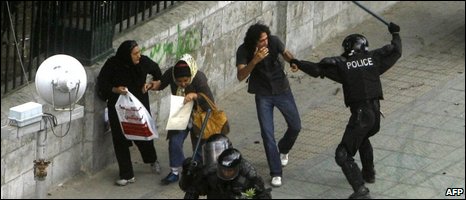
Live-Blogging the Uprising in Iran

From Huffington Post: 8:28 PM ET — Not just in Tehran. Via email, reader Farbod writes: “This is from Ardabil in the northwest. Mousavi’s home province. I think it is very important that people see demonstrations from all over Iran, not just Tehran.”

The revolution will not be televised. But it may be Tweeted.

By Harry Edwards / The Rag Blog / June 14, 2009

An awesome demonstration of the coming together of new technology is going on right now on Huffington Post. Nico Pitney is live-blogging the action in Iran in an up-to-the-minute fashion. All relevant Twitter sites have been compiled and are available for perusal. And a huge compendium of news sites as well. Literally hundreds of sources. I may turn into a believer in Twitter after this.

The Rag Blog

Posted in Rag Bloggers | Tagged , , , | 2 Comments

This Is Your Friendly American Banker

Thanks to Leslie Sklar / The Rag Blog

Posted in RagBlog | Tagged , , | Leave a comment

The War on Drugs: Framing Suspects They’re Convinced Are Guilty Anyway

I have to ask, “How many times a week does this happen?” We watched a parade of trumped up terrorism charges fail in court in the years of hysteria following 9/11. Is there also a racist foundation to the hysteria of the war on drugs? It wouldn’t surprise me one bit. Being a proponent of calling a permanent peace treaty to the war on drugs, it is high time we paid closer attention to these stories of false arrest and held police maniacs and zealots accountable across the nation.

Richard Jehn / The Rag Blog

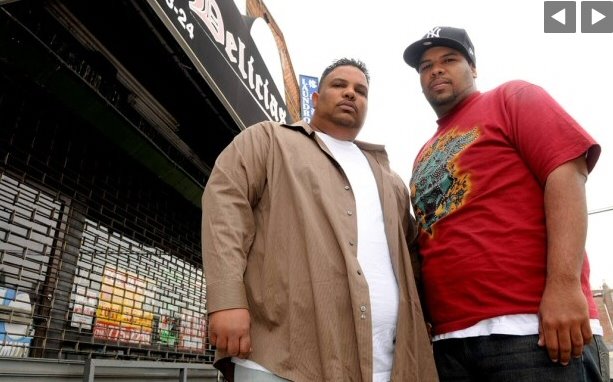
The Story: Undercover police arrested two brothers for dealing cocaine at a New York night club. The officers claimed Maximo Colon, left, and his brother Jose sold two bags of cocaine to them. – The Truth: The brothers proved their innocence — and laid the groundwork for a multimillion dollar lawsuit — with a video from the club’s security cameras. Photo: Henny Ray Abrams/AP.

Brothers Prove Cops Wrong With Video
By Tom Hays and Colleen Long / June 13, 2009

NEW YORK — When undercover detectives busted Jose and Maximo Colon last year for selling cocaine at a seedy club in Queens, there was a glaring problem: The brothers hadn’t done anything wrong.

But proclaiming innocence wasn’t going to be good enough. The Dominican immigrants needed proof.

“I sat in the jail and thought. . . how could I prove this? What could I do?” Jose, 24, recalled in Spanish during a recent interview.

As he glanced around a holding cell, the answer came to him: Security cameras. Since then, a vindicating video from the club’s cameras has spared the brothers a possible prison term, resulted in two officers’ arrest and become the basis for a multimillion-dollar lawsuit.

The officers, who are due back in court June 26, have pleaded not guilty, and New York Police Department officials have downplayed their case.

But the drug corruption case isn’t alone.

On May 13, another NYPD officer was arrested for plotting to invade a Manhattan apartment where he hoped to steal $900,000 in drug money. In another pending case, prosecutors in Brooklyn say officers were caught in a 2007 sting using seized drugs to reward a snitch for information. And in the Bronx, prosecutors have charged a detective with lying about a drug bust captured on a surveillance tape that contradicts her story.

Elsewhere, Philadelphia prosecutors dismissed more than a dozen drug and gun charges against a man last month when a narcotics officer was accused of making up information on search warrants.

The revelations in New York have triggered internal affairs inquiries, transfers of commanders and reviews of dozens of other arrests involving the accused officers.
Many drug defendants’ cases have been tossed out. Others have won favorable plea deals.

The misconduct “strikes at the very heart of our system of justice and erodes public confidence in our courts,” said Bronx District Attorney Robert Johnson.

Despite the fallout, authorities describe the corruption allegations as aberrations in a city where officers daily make hundreds of drugs arrests that routinely hold up in court. They also note none of the cases involved accusations of organized crews of officers using their badges to steal or extort drugs or money for personal gain — the story line of full-blown corruption scandals from bygone eras.

Peter Moskos, a professor at John Jay College of Criminal Justice, agrees the majority of narcotics officers probably are clean. But he also believes the city’s unending war on drugs will always invite corruption by some who don’t think twice about framing suspects they’re convinced are guilty anyway.

“Drugs are a dirty game,” Moskos said. “Once you realize it’s a game, then you start playing with the rules to win the game.”

Just ask the Colon brothers.

* * * * *

The brothers’ evening started much like any other.

Max’s friend worked at a bodega down the street from Delicias de Mi Tierra, where they’d sometimes drink and play pool in the evenings. This night, the pool table was closed. They instead sat at the bar. Security cameras ended up filming their every move.

The brothers barely moved from the same spot for about 90 minutes as the undercovers entered the bar and mixed with the crowd. Moments after the officers left, a backup team barged in and grabbed six men, including the brothers.

Paperwork signed by “UC 13200” — Officer Henry Tavarez — claimed that he told a patron he wanted to buy cocaine. By his account, that man responded by approaching the 28-year-old Max, who then went over to the undercover and demanded to pat him down to make sure he wasn’t wearing a wire.

Max collected $100 from Tavarez, the report said. The officer claimed to see two bags of cocaine pass through the hands of three men, including Jose, before they were given to him.

Jose was released after a court appearance. His brother was shipped off to Riker’s Island until he could make bail.

“I was scared,” Max said of his time at Rikers. “I don’t get into trouble, and here I am with real criminals.”

* * * * *

The moment Jose walked out of the holding cell, he made a beeline for Delicias and asked for a copy of the security tapes from the night they were arrested, Jan. 4, 2008.

“I knew it would be the only way to defend myself, because I knew the police would not believe me,” he said.

The owner of Delicias queued up the tapes and the two waded through an entire day’s worth of surveillance — until they found the two hours the men spent in the club that night — supposedly selling drugs.

Jose quickly got the tape to defense attorney Rochelle Berliner, a former narcotics prosecutor. She couldn’t believe what she was seeing.

“I almost threw up,” she said. “Because I must’ve prosecuted 1,500, 2,000 drug cases. . . and all felonies. And I think back, Oh my God, I believed everything everyone told me. Maybe a handful of times did something not sound right to me. I don’t mean to sound overly dramatic but I was like, sick.”

What the tape doesn’t show is striking: At no point did the brothers interact with the undercovers, nor did the brothers appear to be involved in a drug deal with anyone else. Adding insult to injury, an outside camera taped the undercovers literally dancing down the street.

Berliner handed the tape over to the District Attorney’s integrity unit. It reviewed the images more than 100 times to make sure it wasn’t doctored by the defense before deciding to drop all charges against the brothers in June.

Six months later, Officer Tavarez and Detective Stephen Anderson pleaded not guilty to drug dealing and multiple other charges that their lawyers say were overblown.

Anderson’s attorney has described him as a seasoned investigator who had no reason to make a false arrest. Tavarez, his attorney said, was a novice undercover merely along for the ride.

* * * * *

Life quickly deteriorated for Max and Jose after their arrest.

They owned a successful convenience store in Jackson Heights, but lost their license to sell tobacco, alcohol and lottery tickets. The store closed a week before their case was dismissed.

“My life changed completely,” Jose said. “I had a life before, and I have a different existence now. . . Now, I’m not able to afford to live in my own house or care for my children.”

Jose has found construction work, while Max commutes two hours to Philadelphia to work at a relative’s bodega. They stay away from the old neighborhood, where they say ugly rumors about them persist.

The brothers have filed a $10 million false arrest lawsuit against the police department, the officers involved and the city.

“I’m angry because, why’d it happen to me? I know a lot of people … they don’t go the right way and they can get away with it,” Max said. “I’m young and I try to go the right way and boom, this happened to me. So I’m angry with life, too.”

Copyright 2009 The Associated Press.

Source / America On Line

The Rag Blog

Posted in RagBlog | Tagged , , | 4 Comments

Health Care for the Rich : U.S. 50th in Life Expectancy

How can it be that 49 countries have a longer life expectancy, if we supposedly have the ‘best’ health care system in the world? It is because our system is the best only for the rich.

By Ted McLaughlin / The Rag Blog / June 14, 2009

Republicans are quick to claim that the United States has the best health care system in the world. It should be the best, because it is the most expensive. The United States spends more for health care than any other country in the world. But “most expensive” and “best” are two different things.

While the U.S. system is undoubtedly the most expensive, there is one little statistic that shows it is far from the best. The fact is that the United States ranks a very poor 50th in life expectancy for its citizens. Let me repeat that. While life expectancy is 78.1 years for U.S. citizens, there are 49 countries where the life expectancy is longer.

How can it be that 49 countries have a longer life expectancy, if we supposedly have the “best” health care system in the world? It is because our system is the best only for the rich. If you have the money to purchase the best insurance possible, and the money to pay for the medical bills that insurance won’t cover, then the U.S. health care system is great. But what about the other 95% of the population?

The other 95% of the population is in trouble (although many of them don’t know it yet, because they are healthy right now). We know that around 41 million people don’t have any health insurance at all. Their problem is obvious to everyone.

But there is a much larger group of working and middle class families who have insurance through their work. These people are one layoff away from having no insurance themselves. They are also in for a shock when they need to use that private insurance and they find out how much it does NOT cover (62% of bankruptcies in the U.S. are dues to medical bills and 75% of those people had insurance). They can also find their insurance has been cancelled once the medical bills start climbing.

That’s because health insurance companies are in business to make money — not to pay medical bills. The more medical bills they can avoid paying, the larger their profits. In fact, the insurance company employees who deny the most claims (medical bills) are the ones who get the biggest bonuses. The reason our country is 50th in life expectancy is because the private insurance companies are more concerned with maximizing profits than with patient health.

But there is an interesting fact about the 49 countries with a longer life expectancy. They have a public (government-run) health insurance system. In most of those systems (like France or Canada), every citizen can choose their own doctor and hospital, and no one has to declare bankruptcy because of unpaid medical bills — because those public insurance systems pay for whatever treatment the doctor says is needed.

Harvey Brenner, professor of public health at the University of North Texas Health Science Center and Johns Hopkins University, says, “What we are able to find in the industrialized world is that life expectancy will be influenced in a beneficial manner to the extent that health care expenditure is publicly financed.”

That’s because in countries where patients must pay a large part of their own medical bills, they tend to wait until their medical problems are serious before consulting a doctor. These countries (including the U.S.) also put less emphasis on preventative care.

The conservative American Enterprise Institute disagrees that public insurance is the reason for the longer life expectancy. They say the life expectancy is determined by having high economic growth and per capita income levels. That’s a silly argument. Are they saying there are 49 countries with a higher economic growth and per capita income than the United States? No one, even a conservative, could really believe that!

The truth is that economic growth and high per capita income are spurred upwards by a healthy workforce. So while the American economic engine is among the best in the world, it could be even better with a public health insurance system producing healthier workers. It would also be helped by the fact that American companies would be able to compete with foreign companies more easily, because they wouldn’t have to pay the high private insurance costs of their workers (even if they paid for part of a public insurance system, it would be much cheaper than current rates).

There are only two groups that would not benefit from a public (government-run single-payer) health insurance system — the richest 1-5% of U.S. citizens and the insurance companies. For everyone else public insurance would be better. It would:

  • cover the 41 million Americans currently without insurance.
  • protect the middle class from bankruptcy because of huge medical bills.
  • give workers continuing insurance coverage even when switching jobs or being laid off.
  • save small businesses and corporations money in covering their employees and provide them with healthier workers.
  • save money by cutting out the huge profits and high overhead of insurance companies.
  • allow every citizen to choose their own doctor and hospital.
  • let doctors determine medical treatment instead of insurance companies.
  • put more emphasis on preventative medical care.
  • increase the life expectancy of all citizens.

Do you really want an insurance company restricting your choice of doctor or hospital, or determining what kind of medical treatment you can receive? Do you want your insurance to disappear if you lose your job or your medical bills get too high? Do you want an insurance company employee to get a huge bonus for denying your medical claim?

If not, then make sure your senator and representative know that health care reform must include a public insurance option. If it doesn’t, it will be little more than a huge payday for private insurance companies, and it won’t solve the problems in our health care system.

The Rag Blog

Posted in Rag Bloggers | Tagged , | Leave a comment

Foodie Friday Dribbles Into Saturday: Great Reading About Food

This could have been another Foodie Friday post, but I felt it was interesting and important enough not to delay it for a week. These Internet food sites are fantastic, with much information about things that matter immensely now and into the future. Great reading here …

Richard Jehn / The Rag Blog


Sustainable Food Blogs
By Paula Crossfield / June 12, 2009

Fresh news on sustainable food is popping up everywhere online these days, but consistency is a virtue. As the editor of a food policy blog, I rely on these sites to inform and feed my own work. But anyone, from an ag policy wonk to a newbie just learning about the perils facing the food system, can find something here. A look at 10 of my favorite regular reads:

The Ethicurean has been a leader, churning out hard-hitting stories on food policy, food safety and the models for improving the food system. Featuring the writing of editor Bonnie Powell, Elanor Starmer and others, the newly redesigned site has also come to be known as the place to catch up on the weekly food policy news via their well-sourced digest. Check out Powell’s recent look at the allotment system in Britain.

The realities of our food system can really get you down. That’s why Kerry Trueman of Eating Liberally employs laughs like “the only way we’ll ever get [Rush] Limbaugh to go organic, is when he dies and rots — from radio host to compost,” in her clever round-ups on the state of our food system. Her latest post focuses on whether “A Nation of Ninnies Need a Nanny.”

The Green Fork blog is the Eat Well Guide’s home base for updates on the food system. The focus is on empowering eaters with well-tuned, action-oriented information on the food system, with a fetish for new media and a slice of dark humor mixed in too. Check out editor Leslie Hatfield’s recent post on the controversy surrounding the cancellation of Michael Pollan’s book The Omnivore’s Dilemma from the “common reading” program at Washington State University.

Culinate not only provides a home base for a sustainable kitchen, it also provides food for thought. Editor Kim Carlson doesn’t overlook pleasure and taste in the quest for a better food system. Recently, an article by Twilight Greenaway investigated the plight of new farmers’ search for land.

Online environmental mag Grist.org has consistently reported on issues facing the food system. Grist’s Food Kingdom editor Tom Philpott and contributors Stephanie Ogburn and Tom Laskawy parse the food news of the day. Check out Philpott’s latest piece on what we can learn about our food system from the financial collapse.

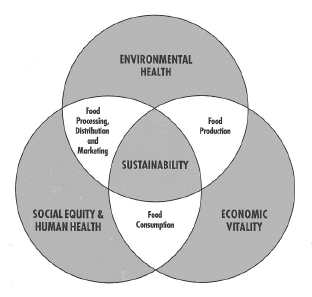
Goals of a local / community food system. Graphic: Source.

Jill Richardson never sleeps! Or that is what it seems like, anyway, because not a stone is left unturned at La Vida Locavore. She keeps a close eye on Congress, and isn’t afraid to rail against the powers that be. Read her latest report on the National Animal Identification System, which would require even backyard hens to be identified, seemingly placing an unfair burden on small farmers.

One of Natasha Chart’s strengths is an ability to look at the big picture, dissecting the changes and the road blocks to building a better food system on Sustainable Food, a project of Change.org. Consider this post on how GMOs actually increase pesticide use, which is the opposite of what biotech companies claim.

Ever wonder what President Obama is thinking in the food systems debate? If anyone knows it’s Eddie Gehman Kohan, who takes us into the White House kitchen, serves up policy reports on this administration and keeps us up to date on President Obama’s comings and goings on Obamafoodorama. Check out her recent report about news of a copy-cat of the White House garden at 10 Downing Street.

A project of the Johns Hopkin’s Bloomberg School of Public Health, the Center for a Livable Future’s blog takes public health issues and science in the food debate and makes it accessible to even the unscientific among us. Ralph Loglisci and others contribute reports, like this one on Big Ag’s influence on agricultural Land Grant College studies.

Cooking Up a Story features videos of food system experts and innovators, as well as posts on policy issues, kitchen literacy and recipes. Check out editor Rebecca Gerendasy’s recent interview with Vandana Shiva.

[Paula Crossfield is the editor and lead writer for civileats.com, an active and intelligent food blog. I met with her recently and asked her if she wouldn’t mind surveying the world of sustainable food blogs for Bitten. –Mark Bittman]

Source / New York Times

The Rag Blog

Posted in RagBlog | Tagged , , | Leave a comment

The Blue-Green Alliance, and the Threat from the Populist Right


Van Jones and the Green Jobs Initiative

By Carl Davidson / The Rag Blog / June 13, 2009

[Prepared as a Memo for the Working Class Studies Association Conference, June 6-8 2009, at the University of Pittsburgh.]

1. One of the more important progressive measures launched in the first 100 days of the Obama administration is the Green Jobs Initiative within the broader Economic Recovery Act. There is substantial money allocated to it, and the appointee brought on to shepherd its development, Van Jones, is one of the few Obama appointees clearly from the left. Green Jobs is also a product of the Blue-Green Alliance, a joint effort by labor unions and environmental groups, which has funded advocacy for the program for years.

2. There are two aspects to Green Jobs, the immediate and the structural. The immediate has to do with bringing living-wage employment with a future to those who need it most, the unemployed and under-employed youth of the inner city. The structural has to do with Green Jobs being part of a larger effort to shift the country’s energy system from one based on burning carbon and uranium to one based on sustainable renewables — solar, wind, wave, hydro and geothermal. All these require major upgrading of the country’s infrastructure and a retooling of its manufacturing for more advanced products and production. Both aspects require a new Green industrial policy, alongside an erosion of the country’s traditional military-industrial policy and more recent neoliberal market fundamentalism.

3. The neoliberal diehards in the House and Senate GOP, together with the right-wing populism stirred up by the Fox-Limbaugh-Hannity media reactionaries, are preparing an all-out attack of Green Jobs on several fronts. First, they attack the whole concept that there is any urgency to anything Green. In their view, global warming and climate change are simply left-wing hoaxes used as a cover to attack the free market and promote government planning, leading to socialism. Second, they attack it as affirmative action for people of color, supposedly masking moral failure and public schools as the real reason for the problems of the inner city. Third, they are preparing a red-baiting campaign against Van Jones in particular, as part of a wider effort to red-bait Obama and deny the legitimacy of his election.

4. Green Jobs will require more than White House and Congressional Democrat support in order to survive this resistance and counter-attack. Getting a program adopted by Congress is only the first step on a long road to its deployment. Community and youth organizations, environmental groups and the trade unions are facing the task of launching a social movement to see to it that Green Jobs is not gutted, delayed or otherwise sabotaged.

5. Green Jobs can be undermined indirectly as well. The program ultimately has to be deployed locally, and pass through state, county and city governments and their hangers-on. Left to their own inclinations, funds for Green Jobs may be diverted to parks or highway projects that shore up existing government worker payrolls with little new employment of those most in need. Alternately, new construction can be turned over to firms importing non-union labor, or using labor at minimum wage rather than living wage standards. Only local coalitions mobilized with some clout at the base can prevent this, and the ball is in the court of the left to organize them.

6. Green Jobs is a natural for the left to build coalitions of diversity in working-class and low-income communities. Start with organizations close to those who need Green Jobs most-inner city youth service agencies, neighborhood churches and their youth groups, sports groups-then approach others needed to make a collaborative work, such as trade union apprenticeship programs, community college trade skills teachers, local home building or remodeling companies looking for new projects. With this assembled, find the local political incumbents, especially at the state level, ready to go to bat for your project. Connect with Green for All, Van Jones’ group, if it’s in a major city near you, for advice.

7. The left has its own approach to bring to the Green Jobs table, apart from being a catalytic organizer. Green Jobs can be implemented in a “low road” way, by giving funds to contractors who hire youth at minimum wage, who in turn winterize a few public buildings, bypass the unions and dump the youth when it’s over. Obviously, this is to be avoided. But there’s a high road, solidarity economy approach that builds a stakeholder collaborative on businesses, unions, credit unions and schools, with a strategic view of a lasting green construction worker cooperative as an outcome, together with higher-tech career paths through community college partnership with high-tech green firms. The solidarity economy, in turn, serves as a way to educate concretely about the prospects for a socialist future.

8. Green Jobs is a product of a long and complex series of working-class and youth struggles. One part reaches back to the global justice battles in the streets of Seattle more than a decade ago. The unions joined this to battle NAFTA, and the youth came out of green and global justice concerns. Both found themselves on the same side of the barricades battling police in the streets — ‘Teamsters and Turtles Forever!’ was a spontaneous slogan. Some in the Steelworkers’ Union and the Sierra Club took it further, and in a paradigm shift, began to see each other as natural allies rather than natural adversaries. The tons of steel and 19,000 machined parts in every wind turbine had to be manufactured and assembled somewhere, after all. This was formally put together and funded as the Blue-Green Alliance. The other component came from the anger of inner city youth facing jails and police harassment and brutality. Demanding jobs for youth was not new and often ignored, but when Van Jones in Oakland put out “Green Jobs, Not Jails” to put kids to work insulating buildings and installing solar panels, he suddenly had people listening in a new way. There is more to the story, but this is the heart of it, and organic development from class struggle, labor-community alliances and youth insurgency. There will be more battles, but with this energy to build on, the prospects are very bright.

[Carl Davidson is webmaster for SolidarityEconomy.net, a national committee member of the Committees of Correspondence for Democracy and Socialism, and a coordinating committee member of the US Solidarity Economy Network. Together with Jerry Harris, he is author of Cyber-Radicalism: A New Left for a Global Age, available at lulu.com. This article was also posted to Keep on Keeping On.]

The Rag Blog

Posted in Rag Bloggers | Tagged , , | 5 Comments

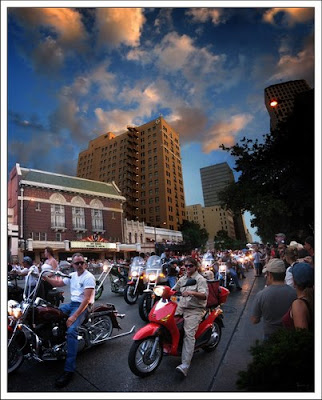
Susan Van Haitsma : Biker Chick for Peace

Bikers parade down Congress Ave. in Austin during 2008 Republic of Texas Biker Rally. Photo from Panaramio.

Roll on, Bikers

I held a sign reading ‘Biker Chicks for Peace’… As the bikers passed by, the majority flashed peace signs back at us, smiling and nodding in response.

By Susan Van Haitsma / The Rag Blog / June 13, 2009

[The Republic of Texas Biker Rally brings tens of thousands of motorcyclists to Austin yearly. Friday night, June 12, 15,000 motorcycles of all shapes and sizes roared down Congress Avenue as massive crowds cheered them on. Then stunt legend Robbie Knievel jumped over two Budweiser trucks with pyrotechnics, thunderclouds, and the Texas State Capitol as a backdrop. The Rag Blog’s Susan Van Haitsma was there with a contingent from CodePink of Austin.]

Maybe I was a biker chick in a former life. Maybe I am one now. In either case, it was pretty thrilling to be standing at the corner of Cesar Chavez and Congress Avenue last evening as the thousands of bikers turned the corner onto our main drag along their parade route from the Exposition Center. Even inhaling all that exhaust seemed worth being that close to the rumble.

In fact, a group of us dressed in pink biker duds and pink police uniforms were part of the spectacle. We decided to bring a Peace/Stop War message to the biker audience to see how it played. And we were heartened by the overwhelmingly positive reaction from the crowd that rolled by.

I held a sign reading “Biker Chicks for Peace” along with our black, denim and pink-clad entourage, and two of us wore pink police uniforms and held a large “Stop War” sign in the shape of a stop sign. As the bikers passed by, the majority flashed peace signs back at us, smiling and nodding in response. The women, especially.

Now, we did have our eyes peeled for even one pair where the woman drove and the man sat in back. We spotted one three-wheeler with a woman at the throttle and a man in back, but he seemed to be a designated videographer, so we weren’t sure that counted. One of these days, there’s going to be a brave pair who will break the taboo — and then, maybe the dam will break and real men everywhere will want to prove their manliness by handing the controls to a woman — and not back-seat drive, either….

Hey, a biker chick can dream. And we did see quite a few women riding solo.

I was impressed with the care bikers had to take to ride so close to each other in a parade of that size. And, as I walked up and down Congress afterward to take a closer look at the bikes, I marvelled at how they kept their machines so shiny and pristine, many of the bikers having traveled many dusty miles to attend the rally.

There’s certainly an allure to the motorcycle and the open road. Maybe it’s also the artistry of the bikes, and the riskiness of the ride. A bike that got a lot of attention was toting a trailer in the shape of a coffin that had, “A Ride To Die For” written in script on the side. Riders are both extra tough and extra vulnerable, as the tragic accident later that night on US 290 attests.

As I rode home on my trusty bicycle, I did appreciate the quietness of my ride and the lack of fumes. I’m most in love with my green machine. But, I wish the best for the bikers who roll a different way.

[Susan Van Haitsma, a regular contributor to The Rag Blog, is active in Austin with Nonmilitary Options for Youth and CodePink. She also blogs as makingpeace at Statesman.com and at makingpeace.]

The Rag Blog

Posted in Rag Bloggers | Tagged , , | Leave a comment

Cindy Sheehan : The ‘Myths of the Robber Class’

Rag Bloggers meet with Cindy Sheehan, June 11, 2009. From left, Former Camp Casey organizer Patrice Schexnayder, The Rag Blog’s Jim Retherford and Alice Embree, Cindy Sheehan, Rag Blog co-editor Thorne Dreyer and correspondent David MacBryde, and Chris Hargreaves of the New Journalism Project.

Cindy Sheehan in Austin

…her message is also about the community she knows that you can believe in. That community surrounded her in Crawford, Texas. and still appreciates her courage.

By Alice Embree / The Rag Blog / June 13, 2009

See ‘Dueling Protests Square Off Near Bush’s Dallas Home’ by Anna M. Tinsley, Below.

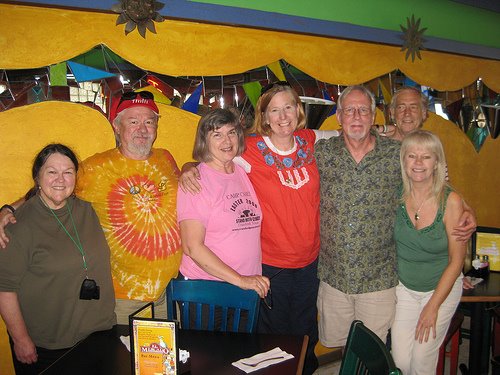
Cindy Sheehan came to Austin promoting her new internet book, Myth America: 10 Greatest Myths of the Robber Class and the Case for Revolution. She spoke at the Unitarian Universalist Church on Wednesday and came from the Alex Jones show to El Mercado to meet with Rag Bloggers at a south Austin restaurant on Thursday afternoon.

On August 6, 2005, Cindy Sheehan went to Crawford, Texas with a question for President George W. Bush. Her son, Casey had been killed in Iraq on April 4, 2004. When twelve Marines were killed in Iraq on August 3, 2005, she heard Bush tell the nation they had died for a “noble cause.” The question Cindy Sheehan brought to Bush’s vacation ranch was “For What Noble Cause?”

The simple question resonated with the authority of a mother’s grief. Sheehan had become active in Military Families Speak Out and helped found Gold Star Families for Peace. But it was camping out in a Crawford ditch that brought her international attention. Her direct action galvanized a peace movement that had succumbed to near-terminal low morale from the double dose of “shock and awe” and a Bush second term.

From the initial seven campers in that ditch, Camp Casey grew into a tent city, able to spring up repeatedly when Bush took his many vacations. Camp Casey attracted thousands of peace activists to Crawford. The experience was profoundly moving. [See Alice Embree: Easter Weekend at the Ranch,The Rag Blog.] Peace activists, veterans and active-duty soldiers were welcomed there. Camp Casey was where the war was personal and not the forgotten, barely noticed background noise on the national news.

Plunged into the limelight, Cindy Sheehan found herself criticized for occupying that limelight. Taking the antiwar message to Congress, she heard from Democrats that a majority was needed in the House to challenge war funding and hold the policy makers accountable. When that Democratic majority was achieved in 2006, she heard that a Senate majority was needed. Nothing changed. Entirely disillusioned with the Democratic Party, Cindy Sheehan decided to run against House Speaker Nancy Pelosi as an independent. Sheehan’s progressive platform had strong labor, environmental and foreign policy planks. She advocated single payer health insurance and legalizing marijuana. She got little media attention as a candidate and a lot of flack from Democrats and came in second in the race.

Barrack Obama had emerged as a presidential candidate, benefiting greatly from the energy of peace activists. When he became President, his promise of ending the war morphed into the withdrawal of troops from Iraqi cities, the maintenance of permanent bases and the re-deployment of the military to another war zone.

Now Cindy Sheehan hosts a weekly internet radio show,Cindy Sheehan’s Soapbox. The Nobel Peace prize nominee had three published books before she released the internet book, Myth America, available on her website. She does not believe the Democratic Party offers alternatives. She advocates change on a smaller scale where people forge community to strengthen each other, where they forge common ground around sustainable agriculture, buying locally, minimizing consumption, forgoing credit and moving their money from the mega-banks into not-for-profit credit unions.

Cindy Sheehan was in Dallas before she came to Austin. There, she led a demonstration to the barricades in front of George W. Bush’s new suburban home. She drew fire from the right (“News Flash, Cindy. There’s a new President.”) She has written a small, downloadable book — more of a pamphlet — on the myths you can’t believe in about America. But, her message is also about the community she knows that you can believe in. That community surrounded her in Crawford, Texas. and still appreciates her courage.

[To find Myth America: 10 Greatest Myths of the Robber Class and the Case for Revolution by Cindy Sheehan, go here.]

Cindy Sheehan at Dallas protest. Photo by Brandon Wade / special to the Ft. Worth Star-Telegram.

Dueling Protests Square Off Near Bush’s Dallas Home

By Anna M. Tinsley / June 9, 2009

DALLAS – Eighth-grader Steven Rasansky had a front-row seat for a government lesson Monday.

Sitting at his friends’ lemonade stand across the street from former President George W. Bush’s new home, he watched anti-war protesters and Bush supporters square off with only a city street dividing them.

Front and center in the sweltering 90-degree heat was Cindy Sheehan, the California mother who drew national attention in recent years with her protests near Bush’s Crawford ranch as she demanded to speak to him about her son’s death in Baghdad.

“George Bush and his administration are mass murderers,” she told the crowd, using a loudspeaker. “People say, ‘Cindy, get over it.’ Well, there are still two wars raging. I don’t have an option of getting over it. . . . We have to keep it up so things like this don’t happen again.”

Anti-war protesters say they want Bush and his administration investigated and prosecuted for war crimes and crimes against humanity. Sheehan has also demonstrated against President Barack Obama because the Democrat has continued the wars.

During the more than half-hour protest, which included a nearly mile-long march to the neighborhood, protesters yelled, “Don’t wait, investigate.” Pro-Bush supporters chanted “USA” for the former president whom they say did a good job.

“I think this is crazy,” said Rasansky, 13, whose friends had hoped to make some money selling pink lemonade and chocolate chip cookies. “I didn’t think it would end up like this.”

Bearing signs with slogans ranging from “No war criminals in my neighborhood” and “W = War Crimes” to “Don’t Mess with Bush” and “They did not die in vain,” more than a hundred people turned out on both sides of the issue.

Dozens of police officers and Secret Service agents blocked the entrance to the Bush neighborhood and patrolled the area. An officer who declined to give his name said there had been no arrests and no problems.

Erika Davis drove from Fort Worth to join the protest against Bush.

“Just because we have a new president, people say you should forget about it,” said Davis, a 62-year-old counselor in Fort Worth. “I don’t believe anyone is above the law.”

Charlotte and Chuck Herman of Dallas turned out to support Bush, holding a sign that read “Bush saved you cowards.”

“We think he made a great president and we’re glad he moved back here to Dallas,” said Charlotte Herman, 64. “We want him to retire in peace.”

Marla Kilday, who lives near Bush in Dallas, was also there to support him.

“I think this is inappropriate,” she said. “The man has given his eight years in office and we just want the neighborhood to be peaceful and quiet.”

Sheehan’s son, Army Spc. Casey Sheehan, died in a 2004 ambush in Baghdad. She said she can’t allow Bush’s “crimes” to be forgotten just because he is no longer in the White House.

“You can bet your whatever that every time I’m in Dallas, I’ll be out here holding a picture of my son.”

Source / Ft. Worth Star-Telegram / truthout

Also see Cindy Sheehan Visits Austin by Susan Van Haitsma / Makingpeace / June 12, 2009

The Rag Blog

Posted in Rag Bloggers | Tagged , , , , , , , | Leave a comment

Foodie Friday: Fixing the Broken US Agriculture System

Will Allen was named a MacArthur Fellow in 2008, the honor popularly known as the “genius grant.”

A Good Food Manifesto for America
By Will Allen / May 2009

I am a farmer. While I find that this has come to mean many other things to other people – that I have become also a trainer and teacher, and to some a sort of food philosopher – I do like nothing better than to get my hands into good rich soil and sow the seeds of hope.

So, spring always enlivens me and gives me the energy to make haste, to feel confidence, to take full advantage of another all-too-short Wisconsin summer.

This spring, however, much more so than in past springs, I feel my hope and confidence mixed with a sense of greater urgency. This spring, I know that my work will be all the more important, for the simple but profound reason that more people are hungry.

For years I have argued that our food system is broken, and I have tried to teach what I believe must be done to fix it. This year, and last, we have begun seeing the unfortunate results of systemic breakdown. We have seen it in higher prices for those who can less afford to pay, in lines at local food pantries, churches and missions, and in the anxious eyes of people who have suddenly become unemployed. We have seen it, too, in nationwide outbreaks of food-borne illness in products as unlikely as spinach and peanuts.

Severe economic recession certainly has not helped matters, but the current economy is not alone to blame. This situation has been spinning toward this day for decades. And while many of my acquaintances tend to point the finger at the big agro-chemical conglomerates as villains, the fault really is with all of us who casually, willingly, even happily surrendered our rights to safe, wholesome, affordable and plentiful food in exchange for over-processed and pre-packaged convenience.

Over the past century, we allowed our agriculture to become more and more industrialized, more and more reliant on unsustainable practices, and much more distant from the source to the consumer. We have allowed corn and soybeans, grown on the finest farmland in the world, to become industrial commodities rather than foodstuffs. We have encouraged a system by which most of the green vegetables we eat come from a few hundred square miles of irrigated semi-desert in California.

When fuel prices skyrocket, as they did last year, things go awry. When a bubble like ethanol builds and then bursts, things go haywire. When drought strikes that valley in California, as is happening right now, things start to topple. And when the whole economy shatters, the security of a nation’s food supply teeters on the brink of failure.

To many people, this might sound a bit hysterical. There is still food in the suburban supermarket aisles, yes. The shelves are not empty; there are no bread lines. We haven’t read of any number of Americans actually starving to death.

No, and were any of those things to happen, you can rest assured that there would be swift and vigorous action. What is happening is that many vulnerable people, especially in the large cities where most of us live, in vast urban tracts where there are in fact no supermarkets, are being forced to buy cheaper and lower-quality foods, to forgo fresh fruits and vegetables, or are relying on food programs – including our children’s school food programs – that by necessity are obliged to distribute any kind of food they can afford, good for you or not. And this is coming to haunt us in health care and social costs. No, we are not suddenly starving to death; we are slowly but surely malnourishing ourselves to death. And this fate is falling ever more heavily on those who were already stressed: the poor. Yet there is little action.

Food won’t have to travel, losing flavor, texture and vitamins, if we grow it where we live, making our cities into true concrete jungles.

Many astute and well-informed people beside myself, most notably Michael Pollan, in a highly persuasive treatise last fall in the New York Times, have issued these same warnings and laid out the case for reform of our national food policy. I need not go on repeating what Pollan and others have already said so well, and I do not wish merely to add my voice to a chorus.

I am writing to demand action.

It is time and past time for this nation, this government, to react to the dangers inherent in its flawed farm and food policies and to reverse course from subsidizing wealth to subsidizing health.

We have to stop paying the largest farm subsidies to large growers of unsustainable and inedible crops like cotton. We have to stop paying huge subsidies to Big Corn, Big Soy and Big Chem to use prime farmland to grow fuel, plastics and fructose. We have to stop using federal and state agencies and institutions as taxpayer-funded research arms for the very practices that got us into this mess.

We have to start subsidizing health and well-being by rewarding sustainable practices in agriculture and assuring a safe, adequate and wholesome food supply to all our citizens. And we need to start this reform process now, as part of the national stimulus toward economic recovery.

In my organization, Growing Power Inc. of Milwaukee, we have always before tried to be as self-sustaining as possible and to rely on the market for our success. Typically, I would not want to lean on government support, because part of the lesson we teach is to be self-reliant.

But these are not typical times, as we are now all too well aware.

As soon as it became clear that Congress would pass the National Recovery Act, I and members of my staff brainstormed ideas for a meaningful stimulus package aimed at creating green jobs, shoring up the security of our urban food systems, and promoting sound food policies of national scope. The outcome needed to be both “shovel-ready” for immediate impact and sustainable for future growth.

We produced a proposal for the creation of a public-private enabling institution called the Centers for Urban Agriculture. It would incorporate a national training and outreach center, a large working urban farmstead, a research and development center, a policy institute, and a state-of-the-future urban agriculture demonstration center into which all of these elements would be combined in a functioning community food system scaled to the needs of a large city.

Alemany Farm is a project of the Alemany Resident Management Corp., founded by the residents of the public housing complex that lies alongside it, located next to a major freeway in the city of San Francisco. On this beautiful farm, children from the housing complex learn to grow crops and sell their produce in farmers’ markets.

We proposed that this working institution – not a “think tank” but a “do tank” – be based in Milwaukee, where GrowingPower has already created an operating model on just two acres. But ultimately, satellite centers would become established in urban areas across the nation. Each would be the hub of a local or regional farm-to-market community food system that would provide sustainable jobs, job training, food production and food distribution to those most in need of nutritional support and security.

This proposal was forwarded in February to our highest officials at the city, state and federal level, and it was greeted with considerable approval. Unfortunately, however, it soon became clear that the way Congress had structured the stimulus package, with funds earmarked for only particular sectors of the economy, chiefly infrastructure, afforded neither our Congressional representatives nor our local leaders with the discretion to direct any significant funds to this innovative plan. It simply had not occurred to anyone that immediate and lasting job creation was plausible in a field such as community-based agriculture.

I am asking Congress today to rectify that oversight, whether by modifying the current guidelines of the Recovery Act or by designating new and dedicated funds to the development of community food systems through the creation of this national Centers for Urban Agriculture.

Our proposal budgeted the initial creation of this CUA at a minimum of $63 million over two years – a droplet compared to the billions being invested in other programs both in the stimulus plan and from year-to-year in the federal budget.

Consider that the government will fund the Centers for Disease Control at about $8.8 billion this year, and that is above the hundreds of millions more in research grants to other bio-medical institutions, public and private. This is money well spent for important work to ensure Americans the best knowledge in protecting health by fighting disease; but surely by now we ought to recognize that the best offense against many diseases is the defense provided by a healthy and adequate diet. Yet barely a pittance of CDC money goes for any kind of preventive care research.

In 2008, the Department of Homeland Security approved spending $450 million for a new National Bio and Agro-Defense Facility at Kansas State University, in addition to the existing Biosecurity Research Institute already there. Again, money well spent to protect our food supply from the potential of a terrorist attack. But note that these hundreds of millions are being spent to protect us from a threat that may never materialize, while we seem to trivialize the very real and material threat that is upon us right now: the threat of malnourishment and undernourishment of very significant number of our citizens.

Government programs under the overwhelmed and overburdened departments of Agriculture and of Health and Human Services do their best to serve their many masters, but in the end, government farm and food policies are most often at odds between the needs of the young, the old, the sick and the poor versus the wants of the super-industry thatagriculture has become.

By and large, the government’s funding of nutritional health comes down to spending millions on studies to tell us what we ought to eat without in any way guaranteeing that many people will be able to find or afford the foods they recommend. For instance, food stamps ensure only that poor people can buy food; they cannot ensure that, in the food deserts that America’s inner cities have become, there will be any good food to buy.

We need a national nutrition plan that is not just another entitlement, that is not a matter of shipping surplus calories to schools, senior centers, and veterans’ homes. We need a plan that encourages a return to the best practices of both farming and marketing, that rewards the grower who protects the environment and his customers by nourishing his soil with compost instead of chemicals and who ships his goods the shortest distance, not the longest.

If the main purpose of government is to provide for the common security of its citizens, surely ensuring the security of their food system must be among its paramount duties. And if among our rights are life, liberty and the pursuit of happiness, we are denied all those rights if our cities become prisons of poverty and malnutrition.

As an African-American farmer, I am calling on the first African-American president of the United States to lead us quickly away from this deepening crisis. Demand, President Obama, that Congress and your own Administration begin without delay the process of reforming our farm and food policies. Start now by correcting the omission in your economic stimulus and recovery act that prevented significant spending on creating new and sustainable jobs for the poor in our urbancenters as well as rural farm communities.

It will be an irony, certainly, but a sweet one, if millions of African-Americans whose grandparents left the farms of the South for the factories of the North, only to see those factories close, should now find fulfillment in learning once again to live close to the soil and to the food it gives to all of us.

I would hope that we can move along a continuum to make sure that all of citizens have access to the same fresh, safe, affordable good food regardless of their cultural, social or economic situation.

[Will Allen is the founder and chief executive officer of Growing Power, 5500 W. Silver Spring Dr., Milwaukee WI 53218, www.growingpower.org. He can be reached at will@growingpower.org.]

Source / San Francisco Bay View

Thanks to Janet Gilles / The Rag Blog

Posted in RagBlog | Tagged , , | 1 Comment

Vigil at T. Don Hutto Center on June 20th

As ICE cynically says on their Web site, “The facility provides an effective and humane alternative to maintain the unity of alien families as they await the outcome of their immigration hearings or the return to their home countries.”

Family Friendly Lockups?
By Diana Claitor / The Rag Blog / June 12, 2009

Central Texas is one of two places in the entire U.S. where the federal immigration people are experimenting with family detention. The other is Pennsylvania.

Now, I don’t know about you, but I think we Austinites need to take every chance to show the feds and the world that we don’t approve, that we are not okay with refugee mamas and their babies and kids being incarcerated in a prison camp while their cases are decided.

The T. Don Hutto Center is not actually in Austin, but on the railroad tracks on the edge of nearby Taylor (about 30 miles east of Austin) and it is run by the Corrections Corporation of America (CCA), a for-profit adult corrections company.

On Saturday, June 20th, organizations from across Texas will be joined by Amnesty International and National LULAC in a vigil honoring World Refugee Day in front of the T. Don Hutto family detention center in Taylor, Texas.

A caravan will leave Austin from 2604 E. Caesar Chavez at 11:30 am. The vigil will begin with a 1pm walk from Heritage Park in Taylor. Protestors will gather for a vigil at the T. Don Hutto detention center at 1001 Welch from 2-4pm.

Warning: Get a map online beforehand, because it’s off the beaten track.

There will be speakers, music, art and a lot of that big red sun, so I will not do the walk but instead will go straight to the vigil at 2 p.m. and wear a hat. It would be good to see a strong Austin contingent there in light of the national visitors. Maybe some of us ex-Rag, ex-Sun and early Chron people want to say “Ya basta!” to this whole idea for detaining children.

Family detention is not a simple subject—check out the New Yorker article and see the two exceptional documentaries on Hutto—but one basic truth applies: it’s just not right. More humane and less-costly alternatives exist that keep families together and out of prison-like detention centers. A study by the Vera Institute found that more than 90% of immigrants on a supervised release program attended their immigration hearings. The average cost of a supervision program is $12 a day compared to reportedly over $200 a day to detain a person at Hutto.

And listen to the nine-year-old kid from Canada when he says, “I don’t like to stay in this jail …. this place is not good for me.”

Check out tdonhutto.blogspot.com for more information. Or call Bob Libal of Grassroots Leadership at (512) 971-0487 or Diana Claitor of Texas Jail Project at (512) 597-8746.

Source /

The Rag Blog

Posted in RagBlog | Tagged , , | Leave a comment