The Sotomayor Nomination : Racism and Right-Wing Lunacy


Racism and Right-Wing Lunacy

Her comment was simply a truism: identity shapes experience, which then informs perceptions. Identity provides a lens through which one then observes reality.

By Tim Wise / June 1, 2009

For a group that regularly decries what they view as “minority” whining, and the politics of victimization, white conservatives are demonstrating a penchant for the unhinged histrionics of victimhood, virtually unparalleled in modern times. Facing a nation led by a black man, with a black wife and black children, sullying the hallowed halls of a house they long considered white in more than just name, the far-right finds itself in the midst of a prolonged and currently exploding aneurysm, which would be humorous to observe were it not so toxic in its consequences for the nation.

Going off the Rails on a Crazy Train: Right-Wing Lunacy in the Age of Obama

Now, with the nomination of Judge Sonia Sotomayor to the Supreme Court, these same gasbags see yet further confirmation of the takeover of America by hostile colored forces. It is making them insane, literally, as with Bill O’Reilly, who recently stated with a straight (if somewhat contorted and scowling) face, that Sotomayor’s nomination is just more evidence that the left “sees white men as the problem,” in America.

Reactionary cranks across the radio dial have been trying to outdo one another in the annals of batshit lunacy, and so the rhetoric has been ratcheted up in the past week, from mere statements that Sotomayor is “racist” for suggesting that racial, ethnic and gender identity might affect a judge’s sensibilities (an obvious truth devoid of any racism, and to which we will shortly return), to indicting her as a “bigot,” “anti-white,” and equivalent to David Duke. This latter gem comes from Rush Limbaugh, a man for whom accusing others of racism is more than a little precious. After all, Limbaugh himself once told a black caller to take the bone out of his nose, and has quipped that all mug shots of criminal suspects look like Jesse Jackson.

That Rush would compare Sotomayor to Duke only indicates the extent to which the right either lacks the capacity for research, for discernment, or for honesty. Just to clarify, David Duke has openly praised Adolf Hitler and the Nazi regime, claimed that Jews are akin to cancer, and has said, among other things that “Europeans and Asians are higher than Africans on the evolutionary scale,” that white folks’ “racial character” is responsible for virtually all civilizational achievement, and that black crime is the result of making the legal system “equalized for unequal people.” He has blamed integration for the spread of venereal disease, and has advocated the sterilization of poor black women. In his autobiography he calls for the rising up of “Aryan warriors” to take back the culture, violently if necessary, from the Jews he believes have hijacked it.

Oh, and it should be noted that for a guy who would now criticize–if only by comparison to Sotomayor — David Duke, Rush might wish to remember his audience: a group that, in a 1991 phone poll, answered overwhelmingly (to the tune of over 80 percent) that if they lived in Louisiana they would gladly vote for Duke, who at that time was running for Governor.

The full compliment of smears against Sotomayor is far too extensive to list, but among the other choice items, we have G. Gordon Liddy expressing concern about the Judge’s menstrual cycle. Liddy is apparently worried that if the Court were conferencing about an important case during said cycle, Sotomayor’s judgment might be impaired. Unlike Liddy’s own judgment, which in 1971 led him to draw up plans (which he then presented to the Attorney General), to kidnap and beat anti-Nixon protesters, and to hire “high-class prostitutes” (his words) to lure Democratic Party leaders onto yachts and film them having sex. Liddy, presumably not suffering from the debilitating effects of menses, also offered to be assassinated if it would help cover up the Nixon gang’s burglary of Democratic headquarters, which he had masterminded.

Then there’s the immigrant-bashing bigot Tom Tancredo, who accused Sotomayor of being the equivalent of a Latino KKK member. That his concern about racism rings a bit hollow, given that the director of his own PAC just pled guilty to karate-chopping a black woman in the head, and given many of the blatantly racist things that have spilled from his mouth in recent years, should be obvious. It is the likes of these who would question the judgment of Sonia Sotomayor, and do so with no sense of shame or irony.

Truth and Consequences: Race, Identity and the Myth of Objectivity

In any event, with all the asininity floating around the AM dial, and however tempting it might be to restrict oneself to the much-deserved ridicule that conservatives have invited on this subject, an even modestly honest examination of her words indicates the unfairness of the attacks upon Sotomayor. Likewise, such an interrogation points out the depths of white racist thinking in this, the so-called “post racial” age of Obama.

First, let’s be clear about what Judge Sotomayor did and didn’t say. She did not say that Latina judges are inherently superior to white male judges. What she said was simply this: that she hopes her experiences, as a woman and Latina, would help her to render better, fairer decisions, specifically on cases about discrimination, than might be the case for white men in the same position. The meaning of this is innocent enough, at least for those whose synapses haven’t been permanently impaired by the likes of Michael Savage, Glenn Beck and Ann Coulter. What Sotomayor is suggesting is that being a Latina, like anything else, informs one’s perceptions and interpretations of facts and the law, because it will have affected one’s experiences in life.

There is nothing even remotely controversial about this statement. Indeed, it is one with which other justices (on the right no less) have agreed, such as Sandra Day O’Connor who said the same thing about being a woman in 1981, Clarence Thomas, who claimed that his experience with poverty would make him more sensitive to the concerns of non-elites (not that it has, but he said it), and Samuel Alito, who suggested his family’s immigrant experience would help inform his opinions of immigration-related issues.

Her comment was simply a truism: identity shapes experience, which then informs perceptions. Identity provides a lens through which one then observes reality. It doesn’t mean that a person is then incapable of rendering fair opinions on legal matters, having viewed a particular case through that prism, but it does mean that objectivity — the notion that a judge is a mere blank slate with no lens whatsoever–is a lie.

And of course it is. To make such a claim is not, as Newt Gingrich would have it, “new racism,” let alone equivalent, as Newt would also have it to “the old racism.” As writer John Ridley has noted, the old racism (which really ain’t that old, as dozens of anti-Obama YouTube clips during the election made painfully clear), often involved enslavement, lynchings, whippings, segregation, and regular terrorism at the hands of white mobs. The old racism was about the deliberate denying of opportunities to people of color. You know, sorta like the kind of racism practiced by the late Justice William Rehnquist (a favorite of Gingrich and his ilk), during his days as a law clerk, during which time he penned a memo defending segregation and advocating that it be maintained, or during his days as a GOP poll watcher, who tried to keep blacks and Latinos from voting in Arizona. Or like the kind of racism advocated by the Princeton alumni group to which Justice Alito once belonged, which seeks to restrict the admission of women and folks of color at the elite university. Yeah, like that.

Even more to the point though — and in what confirms Sotomayor’s presumably racist comment as glaringly and obviously accurate — is that all of that old racism was given the cover of law by white male judges, who because of their personal biases, shaped by their identities as privileged group members who had the luxury of seeing nothing wrong with the social order from which they profited, could shrug in the face of institutional white supremacy. In other words, that white men for over 150 years rendered one after another opinion dispensing with the rights of blacks, Indians, Asians, and all other non-whites, demonstrates the fundamental truth of what Judge Sotomayor is suggesting: identity matters. How else could such esteemed jurists–presumably the best and brightest of their day, in terms of mere academic credentials–render such horrific judgments as were handed down in Dred Scott orPlessy v. Ferguson? Is it not self-evident that had there been persons of color on the Court when those cases were argued, that such justices would have likely felt a wee bit different about the validity of separate but equal? Or the suggestion, rendered in Dred Scott that blacks had no rights which the white man was bound to respect?

The simple truth, which white men often have a hard time grasping, is that we too have a lens. We may not realize it, of course, or we may consider that lens to be merely normal, in the sense that it is a generic, rational, human one, unsullied by our race or gender. But the luxury of believing such a manifestly absurd notion is the hallmark of white privilege and white supremacist thinking. To believe that one’s own reality is the reality for all, and to then universalize that which is actually particular to oneself, is to suggest that you and others like you are the very model of a human being: superior in terms of judgment, clarity, intellect, discernment and objectivity to all others, clouded as they are by their mere social identities. It is a fundamentally racist concept, laden with a color and gender-blind smugness to which persons of color and women of all colors have long been subjected and about which they have long tired.

The law is not, as some appear to believe, a fixed, scientific thing, free from differing interpretations. This, after all, is why so many Supreme Court opinions are split, rather than unanimous, 9-0 renderings. Rational and fair minded people, all of them legal scholars, can and do come to different conclusions about the same set of facts, the same legal precedents, and the same Constitution to which all are sworn. And when considering the reasons why two judges may look at the same facts and see totally different realities, race, gender, class and other identity markers might be found among the answers. Not because there is something inherently different about whites or people of color, men or women, which leads them to different conclusions, but because our social location can mightily influence what we see and what we don’t see.

How anyone could argue with this basic point is beyond the rational mind’s ability to comprehend, especially when it comes to the subject of race. After all, according to surveys in the early 1960s, at a time when this nation was still a formal system of institutionalized apartheid and white domination, two-thirds of whites said that blacks had fully equal opportunities with whites, and nearly 90 percent said, in one poll, that black children were treated equally in schools. In other words, most whites even then, at the height of the civil rights movement, saw no need for that movement. Surely this was not because whites are intrinsically cruel or hard-hearted people, incapable of sympathy in the face of human suffering. Rather, it must be because as whites they simply didn’t need to see the suffering as real. They had the luxury of remaining totally oblivious to the lived experiences of millions of their fellow countrymen and women. That whites could have been so deluded, in retrospect, suggests that indeed one’s racial identity matters and that people of color are likely to bring a deeper understanding to these discussions, including legal deliberations, than most of us would. It is not that whites can’t get it, so to speak. After all, nine white men in Brown ultimately overturned the evil deeds of those other white men in Plessy. But it is to say that the ability to really see institutional injustice is probably a bit keener in those who have long been the targets of it.

This is why we have the example of Supreme Court Justice Joseph Bradley who justified striking down post-emancipation civil rights protections in 1883 by claiming that blacks had unfairly become the “special favorites of the law” by virtue of things like the Freedman’s Bureau, and that they should no longer benefit from this so-called preferential treatment. Rather, Bradley insisted, they should “take the place of mere citizens.” That Bradley could say such a thing, thereby ignoring the institutionalized privileges enjoyed by whites, and the obvious fact that whites were not “mere citizens” but privileged ones (who indeed had been the only legal citizens until about eighteen years before he rendered this judgment) is stunning confirmation of Sotomayor’s comments. Here was an otherwise competent jurist, making a fundamentally ridiculous argument, in all likelihood because as a white man, he had never had to consider his own elevated status as anything but normal and natural.

Sotomayor as a Quota Hire? The Incipient Racism of the Conservative Right

But it isn’t only in the assumption of white objectivity (as compared to the presumed capricious and identity-driven subjectivity of the colored folks) that suggests the ongoing presence of white racism in the Sotomayor debate. Even worse has been the way in which white commentators have jumped on the judge’s nomination as evidence of affirmative action, by which they of course mean the promotion of less qualified, perhaps even unqualified, people of color to positions they don’t deserve, at the expense of more qualified white men.

Although there is no objective way in which one could truly rank the most qualified persons for a Supreme Court appointment — there is, after all, no scale of brilliance that can be applied for this purpose — it is stunning to see how quickly white folks rush to impugn the capabilities of persons of color in high places, irrespective of whether they have any information to justify the attack. While white Republicans have previously praised judicial mediocrity as a positive good when the possessor of such limited skill was a white guy, any hint that a person of color is less than a certifiable Mensa member, sets them off on a rant against the compromising of standards.

So, for instance, we have paleo-bigot Pat Buchanan (who over the past few years appeared twice on a radio show hosted by an overt white supremacist), calling her an affirmative action pick and intellectual “lightweight.” This, coming from a man who once praised the “genius” of Hitler.

Fred Barnes not only claims that Sotomayor has been a recipient of affirmative action–and that she may well never have gotten into Princeton without it — but goes further, implying that her graduating Summa Cum Laude (which most sane people consider a sign of intellectual and academic heft), really means nothing in her case, and might have been the result of lenient grading. Unlike, say, his kindred spirit George W. Bush’s gentleman’s C, about which the former President actually bragged a few years ago, as if it were perfectly respectable.

Michael Goldfarb at the Weekly Standard asks, as if the answer were so obvious as to need no asking at all, “Does anyone dispute that Sotomayor has been the recipient of preferential treatment for most of her life?” This, despite no evidence that she has received anything for which she was not qualified, or that she would have failed to obtain but for her race and ethnicity. To white conservatives, it seems as though any person of color who advances to a high-ranking position must have been the beneficiary of a rigged game. After all, how could they possibly be as good as the white folks they leapfrogged to get there? Indeed, this was the underlying argument of Geraldine Ferraro during the presidential primaries, who insisted that candidate Obama was only the frontrunner because of his race.

That whites are so quick to presume preferential treatment is at work whenever someone who looks different than us makes it to the top is a hallmark of racist thinking. So too, it is based on the absurd notion that when white men do obtain such slots, it must have been merit based, and couldn’t possibly have been the result of a race or gender preference. Even though such preferences for white men were written into the laws of the nation (and the colonies before nationhood) for hundreds of years. Even though still today, according to the available evidence, whites continue to be favored in job searches, irrespective of qualifications. Even though the history of white male success has been almost entirely one of preferences given, favors done, and the receipt of unearned, unjustified advantage. Indeed, even when the white men in question grew up in modest conditions, this remains true, as with the aforementioned Bill O’Reilly, who often ruminates upon his lack of privilege growing up in Levittown, on Long Island, but forgets to mention that the community in which he grew up was racially restricted to whites, at the behest of the developer .

As it turns out, Sonia Sotomayor is likely to be confirmed, white reactionary racism and all around pedantry notwithstanding. Such bigots have, at least, lost that much power, and for that we can be grateful. But let us still be mindful of the strong undercurrent of racism that continues to poison our national politics, and to which millions of Americans still respond, at least if radio listener numbers and ratings are any indication. That the ability of angry white men to derail a Supreme Court nomination has diminished is nice. That we still have to be subjected to their pugnacious bile on a daily basis — and that such biliousness will likely only grow in coming years, as they see their hegemonic grip on the country and the world begin to slip — serves as a reminder that they are still very much out there, and capable of great damage.

May the aneurysm’s rupture continue unmolested. Godspeed to that.

[Tim Wise is a prominent anti-racist writer and activist.]

Source / The Red Room / Racism Review

Thanks to Lisa Sánchez González / The Rag Blog

Posted in RagBlog | Tagged , , , , , | 1 Comment

Movement Lawyer Dead in Plane Crash

Attorney Susan Jordan, shown here in her Oakland office in 1999, was killed Friday in a plane crash in southern Utah. Photo: John Burgess/The Press Democrat.

Susan Jordan defended the Rag‘s own Marilyn Buck.

Susan Jordan, Criminal Justice Defense Lawyer Passes On
By Christina Aanestad / June 2, 2009

Susan Jordan, a civil litigator and criminal justice lawyer from Mendocino County died Friday, May 29th in a plane crash in Utah. She was 67 years old and left a legacy of civil litigation and criminal justice work behind. Jordan represented several prominent political activists throughout her career as a criminal defense lawyer, including Earth First!’s Judi Bari after she was car bombed with Daryl Cherney in 1990 and members of the SLA, Symbionese Liberation Army in the kidnapping of Patty Hearst.

Susan Jordan was one of the first attorney’s to offer legal defense for Earth First! activists planning non violent civil disobedience during the Redwood Summer campaign in 1990. Then, Earth First! organizers Judi Bari and Daryl Cherney were car bombed and subsequently arrested as the main suspects. Cherney says Jordan came to their defense.

“She came to the rescue right away. Without hesitation, she marched into the police office, announced that she was Judi Bari’s attorney and demanded to see her. And it was Susan who barged her way into Highland hospital to see her client Judy Bari while she was in the ICU and, you know, there’s the Oakland Police and the FBI just trying to get a false confession out of this woman whose fighting for her life and it was Susan Jordan who came to Judy’s rescue and backed their dogs off you might say.”

In the legal field, Jordan most notably made the first successful argument of self defense for a battered woman who killed her rapist, in the late 1970’s. Jordan said it was the first ruling of it’s kind. I spoke with her last April.

“It used to be called the ‘Battered Spouse Defense.’ I didn’t coin the term; I tried the first case where it was used. In the law it didn’t exist before. Women who defended themselves or reacted against violence, were locked away for life. No one understood that sometimes it was the only way out. And the case that arises from this is the case called the People vs. Inez Garcia. Inez was a Latin American woman who shot and killed her rapist. Her first trial she was convicted of murder. And she asked, I was a very young lawyer, she asked me to represent her-I had no idea if I could do anything, but I represented her on the theory that yes you can defend yourself against someone who rapes you, even if they don’t have a gun.”

CA: “And where you successful?”

SJ: “Yes, she was acquitted.”

Jordan was dubbed a feminist lawyer for her work defending women in criminal court. She was also a mentor to other women lawyers like Mary Ann Villwock in Ukiah.

“It was unusiual in t hose days in the 70’s for women-it was less and less unusual for women to go into law and be lawyers, but it was still unusual for women to be litigators and she was an amazing leader in that field and never stopped.”

Jordan was also Marilyn Buck’s attorney, and helped grant her a parole release from prison after serving nearly 30 years of an 80 year sentence, for several crimes including involvement in Assata Shaukur’s escape from prison in the late 1970’s, armed robbery and the bombings of several government buildings. Buck will be released next year. Discussing Buck’s case Jordan said women face severe obstacles in the criminal justice system.

“Women get treated worse than men, not only in prison but in the criminal justice system. Marilyn was seen as an aberration, she was a white woman working with a group of radical black men and every stereotype they could dream up against her, witch, bitch everything negative prevailed against her in court.”

More recently, Jordan represented attorney Lynne Stewart who was convicted of relaying messages for her client, convicted terrorist, Sheik Omar Abdul Rahman. Stewart maintains she was doing her job representing her client. But the government disagreed. Jordan said Stewart’s case is another sign of women’s obstacles in the criminal justice system.

“In the criminal justice system all the stereotypes applying to women really work against them. I recently represented a woman in New York, Lynne Stewart she was an attorney charged with terrorism in her work representing the blink Sheik if you remember her public image-this doting old unattractive grandmother who must be slightly dingy. That’s what the press did to her. And in fact she was a wonderful, incredibly devoted lawyer.”

Stewart consequently lost her license to practice law, but she says she’s grateful Jordan stepped in to help frame her statement at sentencing.

“He gave me 28 months, when the government wanted 30 years. So, Susan had a role in getting that favorable sentence, and even though 28 months isn’t a joke when you’re 70 years old. I know it could have been a lot worse and in a large way Susan was responsible for it being not worse.”

Stewart says her case against the US government is on appeal. Jordan also defended members of the urban guerilla group, the SLA, Symbioneese Liberation Army in the kidnapping of Patty Hearst. Jordan also defended Sarah Jane Olson, a former member of the SLA, who went underground then resurfaced nearly 20 years later when authorities located her. Olson served 7 years and was released earlier this year, according to the LA times. Cherney says Jordan was in it for the long haul.

Susan Jordan as a civil rights attorney crossed multiple generations, multiple eras in history starting out in the early 60’s and going right through the present times. So she was a person who kept modern. She may have gotten older but she didn’t’ become obsolete; She stayed quite current and she was a tiger. So I think on o of the legacies of Susan Jordan was how she shifted with the times and represented an expansive activist’s over a 40 year period and did so effectively, and followed the latest police trends of oppression and followed the latest activist developments and how we evolved and do things and stayed with it. She was in it for the ride.”

These are just a handful of the people whose lives Jordan touched. According to her website, JORDAN was recently sworn in as the first tribal Judge for the Hopland Band of Pomo Indians. She also led the successful legal defense of ballot language for Measure H an anti-GMO initiative in Mendocino County, against the Monsanto corporation. And, she represented several medical marijuana clients in criminal court.

Villwock says Jordan’s life was cut too short.

“She was interested in abused women in Guatemala, I just heard she had plans to go and assist prisoners in Haiti. She had connections everywhere and was very influential in anything she was involved in.”

In addition to her legal work, Jordan was a yoga enthusiast. She also taught meditation to local lawyers, according to the Santa Rosa Press Democrat. She was working on an autobiography at the time of her death. Jordan is survived by her husband, attorney Ronald C. Wong; a daughter, Jennifer Jordan Wong; a sister, and a brother.

Source / North Coast Indy Bay

Thanks to Mariann Wizard / The Rag Blog

Posted in RagBlog | Tagged , | 1 Comment

Rules Bar Non-Profit News Media from Congress

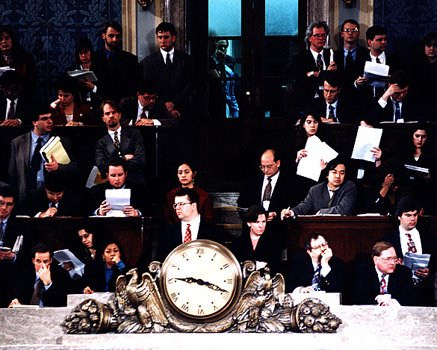
The House of Representatives Press Gallery. Photo: Source.

Capitol Improvement: If nonprofits are supposed to save journalism, why aren’t their reporters allowed into congressional press galleries?
By Megan Tady / June 2, 2009

An outdated congressional rule effectively excludes nonprofit news organizations from the D.C. beat.

Many players in the journalism world hope that one short string of letters and numbers can save our crumbling media system: 501(c)(3). And no, it’s not a lottery number.

It’s the IRS code for nonprofit status, and veteran journalists are eyeing it hungrily. As newspapers crumble, leaving thousands of journalists unemployed, nonprofit news models are emerging as possible replacements for failing commercial media.

But this new media savior suffers from a major handicap: An outdated congressional rule bars many nonprofit news organizations from covering Capitol Hill. While reporters working for nonprofit organizations are sometimes granted temporary access to congressional press galleries, the Standing Committee of Correspondents and their executive committees continue to deny permanent credentials to any news organization that isn’t “supported chiefly by advertising and subscriptions.”

What does this mean for nonprofit news organizations? They’re effectively excluded from the D.C. beat. They can’t attend press conferences to ask tough questions, hound congressional staffers, watch floor proceedings, or work from the House and Senate pressrooms while waiting for leaked inside information—you know, the basics of political reporting.

So when the Center for Independent Media, which operates a network of six independent news websites covering both state government and Washington D.C., applied for permanent membership with the Periodical Press Gallery in April, they were denied. The center’s 501(c)(3) nonprofit status was one reason given for the rejection.

Here’s the irony: Even as nonprofit news models are heralded as a way to continue hard-hitting, public-interest journalism and foundations are beginning to bankroll them, their reporters can’t truly act as watchdogs over government.

The Center, which is currently appealing its rejection, is collaborating with Free Press (where I work) and others to urge Congress to change the rule, which was originally intended as a way to keep advocacy groups out of government pressrooms.

“That rule has served to effectively block nonprofit news organizations, and we feel like it needs to be re-examined because it doesn’t serve the public’s interest,” says David Bennahum, president and CEO of the Center.

In response to the call for reform, Joe Keenan, director of the Daily Press Gallery, told Politico in May that the guidelines are being reexamined.

“It’s a whole new ballgame,” Keenan told Politico. “We just have to figure out how to deal for it. We don’t want to establish a precedent that allows every special interest group to get a credential.”

Bennahum understands the committee’s concern about lobbying restrictions, but believes the current rules are too simplistic. “The problem is that the instrument used to address those concerns is so crude and blunt,” he says. “It needs a scalpel and not a sledgehammer.”

Nonprofit news organizations are not new. Magazines like Mother Jones and The American Prospect — and, yes, In These Times — have been operating as nonprofit organizations for decades. What’s new is the urgency of journalism’s crisis and the blooming of online, local—often nonprofit—newsrooms across the country, such as VoiceofSanDiego.org and MinnPost.com.

As newspapers continue their death spiral, it’s heartening to see these innovative attempts to support freely available, quality journalism. But a news article is only as good as its sources. If nonprofit political journalists are routinely kept away from the Capitol—and the elected officials who work there—they’ll inevitably end up relying more on press releases and secondary sources for their reporting. And nonprofit organizations won’t have a prayer of joining the White House press corps if they’ve already been denied membership at the congressional press galleries.

“For those of us who try to cover the workings of Congress, [the press galleries are] ground zero, and you want to be there,” Bennahum says.

But nonprofit media aren’t only facing problems in Washington: Many state capitals look to the nation’s capital to set their own press gallery rules. (Bennahum says the Center’s Colorado Independent has encountered similar restrictions when trying to cover the Denver statehouse.) This is bad news for any citizen wondering where his state income tax dollars go, especially considering that the ranks of reporters covering the nation’s statehouses have decreased by 32 percent in the past six years, according to a recent American Journalism Review study.

“Part of our call for reform is that we know it will have a cascading effect [at the state level],” Bennahum said.

It’s beginning to make waves, in Washington at least. During a Senate hearing on the “Future of Journalism” held in May, Sen. John Kerry (D-Mass.) suggested one way to recognize the contributions of online journalists covering Congress. “We can make sure that the rules for credentialing congressional reporters are modernized,” Kerry said.

The 2004 presidential candidate vowed to work with Senate Rules Committee Chairman Chuck Schumer (D-N.Y.) and the Standing Committee of Correspondents on the credentialing issue. (The Senate Rules Committee has jurisdiction over the press galleries.)

Here’s to hoping rule reform comes quick. The growing number of empty press gallery chairs should make us nervous. We need competent, fearless reporters to fill them, regardless of their tax status.

[Megan Tady is a campaign coordinator and writer for Free Press, the national, nonprofit media reform organization, and a former National Political Reporter for InTheseTimes.com.]

Source / In These Times

Thanks to Diane Stirling-Stevens / The Rag Blog

Posted in RagBlog | Tagged , , | 2 Comments

FILM / Turk Pipkin’s Remarkable ‘One Peace at a Time’

Another day at the office. Turk Pipkin (who refers to himself in the movie as a “human q-tip” ) shoots at the Muharam Shia Festival in Calcutta, India.

One Peace at a Time: A film about a messed up world and how we can fix it.

By William Michael Hanks / The Rag Blog / June 2, 2009

See Willie Nelson Video, and a sneak preview Video of One Peace at a Time, Below.
Also see Turk Pipkin, and a Brief History of the Documentary Form, by William Michael Hanks / The Rag Blog.

[‘One Peace at a Time: A film about a messed up world and how we can fix it.‘ A feature documentary film by Turk Pipkin. Produced by the Nobelity Project. One Peace at a Time is a sequel to Pipkin’s highly acclaimed Nobelity.]

One Peace at a Time documents Turk Pipkin’s global odyssey to find working solutions for humanity’s most urgent problems.

In the 1960s the issues that most concerned the activist community were civil rights and the Vietnam War. Many believed that we could make a difference by getting involved and making our voices heard. At that time the horizon of concerns did not go far beyond the landscape of domestic issues.

Now, confirming Marshall McLuhan’s insights, the media of television and the Internet have changed our worldview and our conversation. With a global perspective, the problems of our time threaten to overwhelm our sensibilities and defy attempts to gain traction against them. In an odyssey of faith, Turk Pipkin invested years of searching the world for antidotes to the threats against our survival.

Through interviews with nine Nobel laureates, ten non-governmental organization (NGO) innovators, one U. S. Congressman, and one musician-philosopher, One Peace at a Time provides a first-hand look at the projects that are working to make a better world. But Turk Pipkin, a Texas writer, actor and director, living in Austin, has done even more –- he has produced a work that represents the evolution of documentary production.

In his previous documentary Nobelity Turk Pipkin begins with Nobel Laureate Steve Weinberg speaking about the problems facing the world today. This began a journey that led to conversations with eight more Nobel Laureates around the world. As a father, Turk Pipkin was eager to engage the challenges that his children would face in coming years. In Nobelity he defines for us the significant problems of our time. But that led to something more — the participation of his wife, Christy, and his daughters, in a new project to find effective solutions to those problems.

In his sequel One Peace at a Time we see the solutions developed by those working on the front lines to leave a better world for future generations. The film opens with Turk in a train station in India. At about six feet six inches tall he is unmistakably a visitor on a road trip. And that is the form of the film. It is the most enduring of documentary forms — a road movie, a travelogue, but unlike any you’ve ever seen.

Carrying his camera he says: “There are so many layers that separate me from reality — but that morning I looked up from my camera and suddenly the problems were looking back at me — I wasn’t behind the camera anymore –- I was part of the picture.”

Ironically, it is the layers in the film that bring so much to its power. The foundation is its theme: the power of individual choices. Upon that is layered the pictures of the people and places which provide a sense of reality that is sometimes tragic and surprisingly, comic. On that is layered an artful music score providing context and mood. Over a multi-panel montage of children living in poverty among industrial waste and pollution Bob Dylan sings:

“Broken idols, broken heads,
People sleeping in broken beds.
Streets are filled with broken hearts.
Broken words never meant to be spoken,
Everything is broken.”

The music together with the content works to evoke worlds of meaning as we hear “Peace Train,” “The Weight,” and “Better Way” — songs of an earlier generation seen with the children of a new generation dramatize the continuing struggle for justice, peace, and the dignity of life.

Overlaying that is the first-person descriptions of the success of those who are leading the way to provide solutions. And, upon that is the voice of guide and narrator, Turk Pipkin, who provides perspective for the film. The final layer is the reflexivity, the self awareness, that engages us more fully in the theme — we, as the audience, are aware of our role.

As we travel with Turk through the slums of India, Africa, and Bangladesh we see first-hand the conditions that imprison children in seemingly unalterable poverty but as Turk leads us on a journey of hope we begin to see that, if we choose, we can make a difference — each of us can make the world better.

Back in Texas, in a chess game with Willie Nelson, the importance of our choices is seen through the moves they make on the chessboard. Willie says: “You know what to do, right and wrong is not that hard, its just what you choose to do.” The Nobel Laureates and NGO leaders tell us more about the world’s problems and show us that we can change the course of history when we choose to act.

“What you do, where you are, is of significance.”
Desmond Tutu, Nobel Peace Prize

“There is nothing magical about change. It’s getting up off your ass and caring enough to take the first steps to contribute to change on an issue you care about.”
Jody Williams, Nobel Peace Prize

“Even the poorest of the poor person has enormous potential. If you decide where you want to be, and I decide where I want to be … we’ll be there.”
Muhammad Yunus, Nobel Peace Prize

“We’re doing harm. Our decisions are clearly not made with our descendants in mind.”
Steve Weinberg, Nobel Prize in Physics

“There are twenty five million children living in orphanages … a million more each year. In 2006 there were only 3,332 adoptions in India.”
Caroline Boudreaux, Founder, The Miracle Foundation

Turk tells us that he didn’t know what to expect when he visited the orphanages in India but smiling, he says that what he found was love and joy. That hopeful tone resonates throughout the film. There is precious little to smile about in media these days but the sight of those children singing, laughing, and learning, undeterred by conditions of poverty and difficulty, brought a big smile to my face too.

Drug and AIDS counselor at CARE’s HIV/needle-exchange program in Dhaka, Bangladesh.

However, it is not a film marred by a Pollyanna vision. The reality of how the world is failing to provide for even the basic needs stated in the United Nations “Rights of the Child”: clean water, adequate nutrition, health care, education, a stable loving environment, and conditions of freedom and dignity, is the organizing structure for the film.

Six million children die of hunger each year. Sixteen thousand die of hunger each day. Twelve children die of hunger each minute. In the time it takes you to read this paragraph, six children died of hunger. While you process that –- one more died. How could that be possible? One more.

That is one example of how One Peace at a Time brings home the big numbers to a personal level. Turk Pipkin leads us further into an almost apocalyptic landscape as he attends the convention to ban cluster munitions in Oslo, Norway.

“A cluster munition is essentially a large container that opens up in mid-air and spews out hundreds of individual bomblets. So if you use these anywhere near civilian areas you’re almost guaranteed to kill and injure large numbers of civilians. To make matters worse, many of these individual bomblets — hundreds at a time — don’t explode on contact. Instead they function like anti-personnel land mines — they keep killing weeks, months, and decades later.
Steve Goose, Human Rights Watch

The United States is the most prolific user and exporter of these munitions — we also refuse to sign the treaty to ban them. This led Turk to his Congressman, Lloyd Doggett, to ask how citizens can influence legislation on this and other important issues.

“In terms of the money that we appropriate every year, fifty-five cents of every dollar went to military expenditures. We spend enough in one week in Iraq to fund the college education of over a million students — we could be putting people on the dean’s list instead of the casualty list. Just electing someone is not enough. You have to have an informed public movement that really cares about how our budget is allocated.”
Lloyd Doggett, U. S. House of Representatives

Not satisfied to merely show what we can do, Turk Pipkin put his own blood and treasure on the line as well. He broke his leg in the Grand Canyon while filming a sequence on global warming. He sponsored a child in India through The Miracle Foundation, provided micro-financing to a small businesswoman in Africa through Kiva.org, raised money for a well to deliver clean water to an Ethiopian village, and through The Nobelity Project, sponsored a computer classroom in Kenya

One Peace at a Time is not only a compelling look at what is being done to solve the problems of our time but shows the power of our choices to make a difference. It is also an outstanding example of the evolution of the documentary form. The most unexpected thing about the film is the humor, joy, and hope that it delivers. This isn’t a doomsday prophecy — it is an inspiring roadmap to a better world.

One Peace at a Time home: The Nobelity Project

Turk Pipkin Website: TurkPipkin.com

Choose to Act

This is a road movie about choices. One Peace at a Time calls on us to choose a project and get engaged in the solution. All of the following organizations are making a difference in the lives of people around the world. At a time when many investments are showing negative returns, these are some of the best investments you can make.

[William Michael Hanks has written, produced and directed film and television productions for the National Aeronautics and Space Administration, The U. S. Information Agency, and for Public Broadcasting. His documentary film The Apollo File won a Gold Medal at the Festival of the Americas. Having experienced the challenges and the evolution of the form in his own work, his view from that lens brings into focus both the content and technique of One Peace at a Time. William Michael Hanks lives in Nacagdoches, Texas.]

Nobelity Project Computer Lab at Mahiga Primary School in rural Kenya.

Turk Pipkin: “I’m headed to Kenya in a week to purchase land for the high school for 400 students that we’re going to build near this primary school. Education in the area currently ends after 8th grade, and we’ve made a big commitment to help change chat. The Nobeliy Project has raised about 20k of the 100k we need for the school. We’re accepting donations at nobelity.org.”

Willie Nelson for One Peace at a Time

About One Peace at a Time.

One Peace at a Time is an inspiring feature documentary highlighting solutions to some of the world’s most pressing problems. The film includes the insights of Nobel Peace laureate Muhammad Yunus, Nobel Physicist Steven Chu, (Barack Obama’s Secretary of Energy), Dr. Helene Gayle (CEO of CARE, International), American legend Willie Nelson and many others.

The film follows director Turk Pipkin’s five-continent, two-year search for a better way ahead. Pipkin sought the answer to one basic question: Can we provide basic rights — water, nutrition, education, healthcare and a sustainable and peaceful environment — to every child on earth?

The solutions Pipkin chronicles include the model Indian orphanages of The Miracle Foundation, family planning initiatives with Thailand’s Mechai Viravaidya, Ethiopian water projects with A Glimmer of Hope, and Architecture for Humanity’s global design challenge for communities in need in the Himalayas, the Amazon and the slums of Nairobi.

In Banngladesh, Pipkin met Muhammad Yunus, the “Banker to the Poor” whose pioneering work in microfinance has led tens of millions of people out of extreme poverty. “We must be pilots,” Yunus told Pipkin. We must know where we are going and lead the world where we want to go.”

One Peace at a Time is Pipkin’s sequel to his highly acclaimed documentary Nobelity, which Esquire Magazine called, “Nine ways to save the World.” While Nobelity looked at problems through the eyes of nine Nobel laureates, the new movie focuses on solutions that every person can be a part of.

“People are hungry to play a part in creating a better world,” says Pipkin. “I hope this film will inspire large numbers of people to accomplish great things in the world and in their own lives.”

The film is produced by the Nobelity Project, a 501c3 nonprofit working for a more peaceful and sustainable world. Proceeds from the film support the Nobelity in Schools education program and the nonprofit’s development work in Kenya, Ethiopia and elsewhere.

In its own words, “The Nobelity Project collaborates with Nobel laureates and other inspiring leaders to provide reliable information and innovative thinking on pressing global problems and solutions that work. Combining professional filmmaking with a nonpartisan, nonprofit education program, our work reaches a broad cross section of people interested in making a difference.”

One Piece at a Time will have a national release in September and October this year. It is being distributed by Monterey Media and will play in theaters around the country and there will also be hundreds of screenings in community centers, churches, on campuses and in private homes. Anyone who wants to sponsor a screening can contact nobelity.org.

Actor, writer and filmmaker Turk Pipkin has had a long career in books, television and film. He is the writer and director of the award-winning documentary Nobelity. As an actor, he appeared in the feature films Friday Night Lights, The Alamo and Scanner Darkly. On HBO’s The Sopranos, Turk played the recurring role of Janice’s narcoleptic boyfriend, Aaron Arkaway. He is the author of ten books including the New York Times best-seller, The Tao of Willie, co-authored with Willie Nelson.

One Peace at a Time – Sneak Preview

The Rag Blog

Posted in Rag Bloggers | Tagged , , , , , , | 1 Comment

FILM / Turk Pipkin, and a Brief History of the Documentary Form

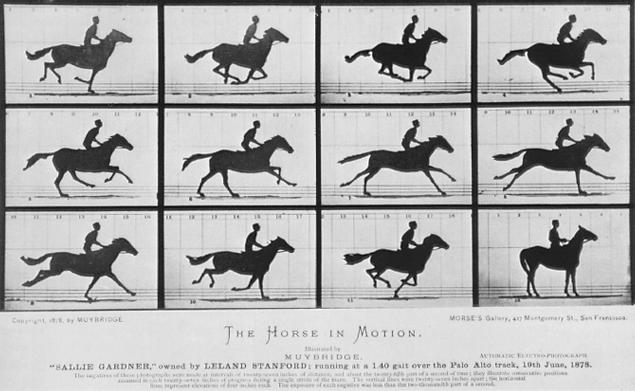
Eadweard Muybridge: The Horse in Motion.

The documentary form is only now realizing the possibilities foreshadowed by its beginnings.

By William Michael Hanks / The Rag Blog / June 2, 2009

Also see Turk Pipkin’s Remarkable ‘One Peace at a Time by William Michael Hanks / The Rag Blog.

The release of Turk Pipkin’s One Peace at a Time provides an excellent opportunity to reflect on the evolution of the documentary film

The documentary form is only now realizing the possibilities foreshadowed by its beginnings. As early as 1874 photographers were experimenting with taking a series of still pictures that, when rapidly displayed in sequence, came to life in motion. Eadweard Muybridge arranged a row of still cameras along a horse track. As the horse ran along the track a series of tripwires connected to the cameras took individual photographs.

In Nobelity Turk interviews Ahmed Zewali, Nobel Prize in Chemistry. He is looking at events at the level of molecules. He refers to Muybridge and remarks that his photos were capturing pictures at 1900 milliseconds. Current technology enables capturing pictures in 200 millionth of a billionth of a second.

The motion studies of Muybridge demonstrated the foundation of the documentary: “its ability to open our eyes to worlds available to us… but not perceived.” (Erik Barnouw, Documentary: A History of the Non-Fiction Film) Specialized cameras and film were soon developed for the purpose of capturing moving images. Lumiére in France and Edison in America were pioneers in the production of equipment and exhibitions.

From its inception, the documentary has held a tenuous relationship with the popular cinema. Between 1896 and 1907 almost all motion pictures were documentary films. Reels limited running time to a few minutes. Titles of the day included Arrival of a Train, Gondola Scene in Venice, and The Fish Market in Marseilles.

By 1912 documentaries were in decline. The increasing use of staged sequences such as The Coronation of Elizabeth II and Charge up San Juan Hill diluted its significance. The increasing production of fiction films, The Great Train Robbery often cited as the first, and the establishment of the commercial studio system relegated the documentary form to a diminishing role in popular taste. The documentary was not financially viable.

After the initial decline of the documentary only the newsreel and travelogue kept the form alive. Notable exceptions such as Robert Flaherty’s Nanook of the North and the agitprop films of Dziga Vertov in Russia began to foreshadow the future of documentary –- the ability to bring us closer to real people and significant events.

In choosing the “road movie” or travelogue model in Nobelity and One Peace at a Time, Turk connects us with the one form of documentary that has survived intact from the beginnings of documentary film. Even when other forms were in decline, the travelogue remained viable.

The documentarists of the 1940s through the 1960s struggled continuously with the limitations of technology. The size and weight of cameras and recording equipment and the sensitivity of film required large crews, limited the shot possibilities, and demanded extensive lighting to produce.

In the 1970s portable video equipment began to offer hope that the potential of the documentary form might be fulfilled. The cost of professional video equipment remained an obstacle to wide use but in recent years even that difficulty has been overcome with the arrival of light, self-contained and high-quality camcorders.

As the technology available to the documentarist has evolved so has the art and technique. The predominant narrative technique of the 30s and 40s was the “voice of god.” An off-camera narrator explained in dramatic tones what was seen onscreen as in The Plow That Broke the Plains and Victory at Sea.

By the 1960s the techniques of French cinema verité moved the viewer closer to the subject creating a more immediate experience. The “fly on the wall” technique, which sought to eliminate the perception of the camera and narrator, told stories in the first person only. These techniques sought to further immerse the viewer in the events.

An evolutionary improvement of the first-person technique is the presence of an on-camera guide –- a narrator to bridge and give meaning to the sequences. A further evolution is reflexivity, which reminds us that we are seeing a film, and further engages us in the experience.

Examples of reflexivity are Turk’s acknowledgement of the production process such as holding a door open for the camera, including the camera in the shots, and his conversational awareness of the viewer. Dziga Vertov, Luis Buñuel, Alfred Hitchcock, and others use this technique effectively to involve the viewer more organically in the experience.

Taken together, the availability of lightweight high quality equipment, the use of first person narrative, spontaneity of movement, music and sound, and low cost digital distribution has finally freed the documentary from it’s early confinement and makes the form available to anyone who has the desire to inform, inspire, and create understanding. Follow Turk’s example, see the film, choose a cause, get a camcorder, and document your project to save the world!

Wikipedia on Documentary.

UC Berkeley — Media Resources Center
Chronology of Documentary History.

International Documentary Association
See outstanding documentaries online.

[William Michael Hanks has written, produced and directed film and television productions for the National Aeronautics and Space Administration, The U. S. Information Agency, and for Public Broadcasting. His documentary film The Apollo File won a Gold Medal at the Festival of the Americas. William Michael Hanks lives in Nacagdoches, Texas.]

The Rag Blog

Posted in Rag Bloggers | Tagged , , , | 1 Comment

Zine Fest : When Houston is Cool

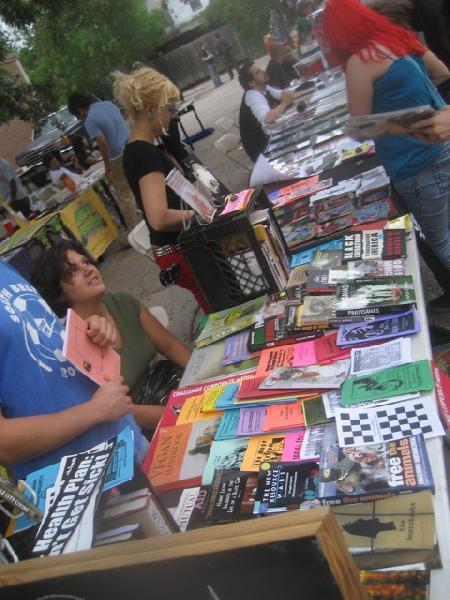
Zines on parade at Zine Fest Houston, May 16, 2009. Photo by Rob Block / Houston Independent Media.

Zine Fest Houston 2009

The fest showcased dozens of writers, artists, publishers and distros who presented a wide variety of independent publications with topics ranging from politics to poetry, from freegan lifestyle to bicycle messengering. . . featuring characters ranging from gay republicans to small town preachers to pot-smoking superheroes.

By shane patrick boyle / The Rag Blog / June 2, 2009

Also see, Space City News at Zine Fest: No ‘fusty ramble down memory lane,’ by Chris Tebow Smith, Below.

Houston often gets a bad rap for being not as cool (both in terms of culture and temperature) as other cities like Austin for example, but this doesn’t stop creative people in the humid city from doing cool stuff anyway. Years ago, when what is now known as Zine Fest Houston was still in its planning stages, we were frequently told that a zine fest in Houston could never happen. There is no zine scene in Houston people still tell me. No zines and no interest in zines. All of this may be true but you wouldn’t know it if you attended the 2009 Zine Fest Houston last month.

Zine Fest Houston (formerly known as The Houston Comix and Zine Festival) is an event dedicated to promoting zines, minicomics and other forms of small press, alternative, underground and diy media & art. It is also a grassroots attempt to build the local zine, diy and alternative media scenes and form networks with media creators in other areas. The goal of the event is for attendees to not only discover new publications, but also to be inspired to create their own diy media projects.

Approximately 250 people attended this year’s event which took place May 16 at the Caroline Collective in Houston’s museum district. The fest showcased dozens of writers, artists, publishers and distros who presented a wide variety of independent publications with topics ranging from politics to poetry, from freegan lifestyle to bicycle messengering, from autobiography to fantasy and fiction featuring characters ranging from gay republicans to small town preachers to pot-smoking superheroes. It also featured live music, spoken word performances, a kids’ area for lil’ zinstas, an exhibit of local publications and the presentation on Space City News (later renamed Space City!), Houston’s first underground newspaper and first recognized alternative publication.

Most of the creators represented were from Houston and other Texas cities, but Heather Rector came all the way from Sacramento by bus with five issues of her zine, Dreams of Donuts, which features autobiographical comics about dumpster diving, communal living, relationships, silk screening, zine making and freegan living. She said she enjoyed Houston and plans to do her next zine about Zine Fest Houston.

MC Miller and Jen Hernandez of Austin will also be including comics about Zine Fest Houston in an upcoming zine. Their autobiographical humor comic Buttersword appears both online and in print form. The Zine Fest episodes of Buttersword are already up in the web version and can be found here, here, here, and here.

Another Austinite working in both online and print comics who attended was Dylan Edwards. This was the second Zine Fest for Dylan whose comic, Politically Inqueerect, focuses on the relationship of a gay couple with conservative poitical views. He also does Tranny Toons and Outfield (a series of one-panel sports comics with an LGBT theme) which have appeared online and in syndication. Dylan, a very busy person who is a commercial artist by trade, also does sculptures of little monsters called Feeping Creatures (Feeps for short) and has a nonfiction graphic novel coming out next year that deals with personal stories of people who are both gay and transgender.

Variety is definitely the spice of Zine Fest Houston. Among titles like Political Inqueerect, the Green Reefer and Bad Ass Zine, you could also find Dave Nelson’s Finding Elim, a wholesome comic about a fictional small town, focusing on a Presbyterian pastor and his more liberated granddaughter. When Dave contacted me about tabling at the Fest, he cautioned that his comics might be a bit tame for our tastes. Nevertheless, Dave fit right in with the other zinstas and told me his comics received a better reception at Zine Fest than at a comics convention he attended two weeks earlier.

And while we’re on the subject of variety, I should point out out that Zine Fest Houston had more to offer than just comics. John Rittman’s MPH was pointed out by many attendees as an example of how a zine can be about anything. MPH, now in its tenth year, is described as “a magazine for disgruntled couriers and asshole bartenders.” Literary publications such as Panhandler and Nano Fiction offered poetry and short fiction and Hank Hancock read from his zine, Broke, which is a serialized novel.

Underbelly Printing presented hand-made, silkscreened books. Lauren Trout of Arcade Distro had a wide assortment of zines to offer and Sedition Collective brought samples of some of the publications available in their infoshop. Music distros were also represented. Walter and Hannah of Straight Up Distro sold international anarchist music and Team Science Records showcased music by local indy bands.

There was also an exhibit of zines and alternative media published in Houston. The exhibit curated by Jo Collier and myself included zines going back to the early 80s and underground newspapers dating back to the mid 60s and an archive of gay publications.

The highlight of the festival was the Space City News panel presentation by Thorne Dreyer and Sherwood Bishop.

Thorne Dreyer was founding “funnel” of The Rag, Austin’s original underground newspaper (it was one of the nation’s first and longest running, and was also distributed in Houston), a member of SDS in Austin, a founder of Space City News (Space City!), Houston’s first alternative newspaper, a member of the editorial collective at Liberation News Service (LNS) in New York, and a former station manager at KPFT, Houston’s Pacifica station. He currently serves as co-editor of The Rag Blog and as director of the New Journalism Project in Austin.

Sherwood Bishop has been active in alternative media since 1969, when he joined the Space City! collective. In the 1970s and 80s he worked at and/or wrote for numerous other publications, including the Dallas Notes from the Underground, Liberation Magazine in New York, and several Houston publications, including Houston City Magazine, In Art, and Art Scene. He was also an early pioneer in the web media, having established one of the first internet sites at the University of Texas in the early 90s. He currently teaches economics at Texas State University in San Marcos.

The two spoke about Space City News, late 60s and 70s radicalism in Houston and Austin and underground media in general and discussed how the work they were doing is relevant for activists and journalists today. The presentation served as a reunion for the paper which turns 40 this Friday. They were also joined by other Space City! alumni including Chris Tebow Smith, who sold Space City News out of her locker as a student at Westbury High School, Russ Noland, and cindy soo. A recording of the discussion can be found here.

A workshop on writing for alternative media, to be hosted by Houston IndyMedia was planned to follow the Space City! presentation, but was canceled when strong winds and the threat of rain forced the outside portion of the festival to move inside, displacing the workshops and the exhibit.

Some people, including a few exhibitors left at this point, but a small crowd remained, more people continued arriving and the festive atmosphere went on until after the planned ending time.

[Shane patrick boyle is the founder and primary organizer of Zine Fest Houston.]

Oldtimers in flowered shirts! Former Space City staffers at Zine Fest Houston: Sherwood Bishop, cindy soo, Rag Blog co-editor Thorne Dreyer and Chris Tebow Smith.

Space City News at Zine Fest: No ‘fusty ramble down memory lane…’

By Chris Tebow Smith / The Rag Blog / June 2, 2009

Recently, I went to Zine Fest Houston for a presentation by Thorne Dreyer and Sherwood Bishop about Houston’s underground newspaper, Space City News (later renamed “Space City!”) and the underground press movement of the 1960s and 1970s. Thorne was one of the founders of Space City News and Sherwood was a longtime collective member.

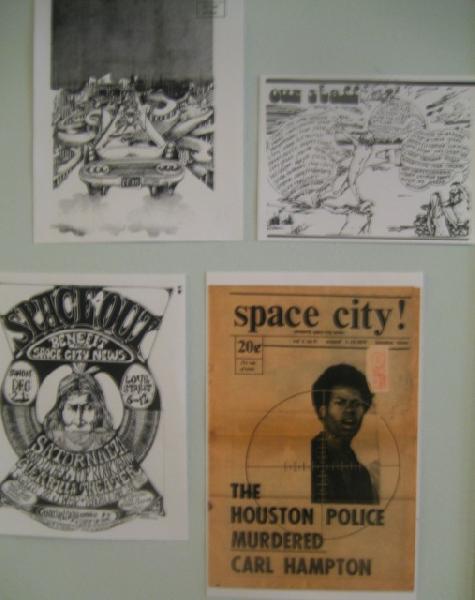
Rather than a fusty ramble down memory lane, it was a great and refreshingly relevant presentation on Space City News, Freak culture, (we weren’t apolitical hippies with flowers in our hair) the KKK’s violent opposition, police oppression, Pacifica radio, The Rag, the underground press, that led into a discussion of activism and progressive politics in the blogosphere today. In addition to a lively give and take with Thorne and members of the audience, Sherwood provided the Show and Tell, bringing a collection of vintage underground rags to display.

I am honored to know these guys and lucky to have spent some of my formative years at their feet during a politically-charged, socially convulsive, historic moment when civil rights, the anti-war movement, gay rights, and feminism formed a Voice that changed the world.

Space City News was the lighthouse in Houston for others like me who came from far and wide to join the growing family of activists gathering at the base, happy to find other counterculture freaks. Thorne mentioned how easily identifiable we all were to each other — and to the “straights” — wherever we traveled. It was like having a new skin color in common.

I was still in high school, getting called to the office regularly for refusing to say the Pledge of Allegiance, wearing a black armband to protest the war in Vietnam, and wearing a flag shirt sewn by my best buddy Robin Zank. (Abbie Hoffman later had Robin make one for him after he saw my flag shirt while speaking in Houston.)

I devoured every issue of Space City! and decided that I had to be a part of it. When I called to find out how to sell the paper, the person I spoke to was Sherwood Bishop, who immediately took me under his wing as my Space City! mentor. I still remember a few lines of the Cuban National Anthem.

In those days, the New Left reeked with male chauvinism, but I remember the Space City collective as a group of equals, and the sharp, strong women in it demanded respect and got it. These were the early, exciting days of Women’s Liberation, and I looked up to them as role models.

I started selling Space City News from my locker at Westbury High School, which led me straight back to the office and almost caused my expulsion from 11th grade, but I kept at it. Kids were hungry for the truth and the paper was very popular. Copies passed from hand to hand all over the school, and its influence was evident. The high school version of the college campus group SDS soon sprang up. It was called SUDS — Student Union for a Democratic Society, and we protested ROTC recruitment on campus among other things. At Bellaire High, Harrell Graham started one of the growing number of high school underground papers, “The Plain Brown Watermelon.” And we all marched, again and again, against the war.

Those were heady times, full of righteous outrage, meetings, outrageous fun, meetings, passionate activism, and more meetings. It was a sweet treat to reconnect with my two old friends and mentors. I have missed them, but not the meetings

Space City! display at Zine Fest Houston. Photo by Rob Block / Houston Independent Media.

The Rag Blog

Posted in Rag Bloggers | Tagged , , , , , | 3 Comments

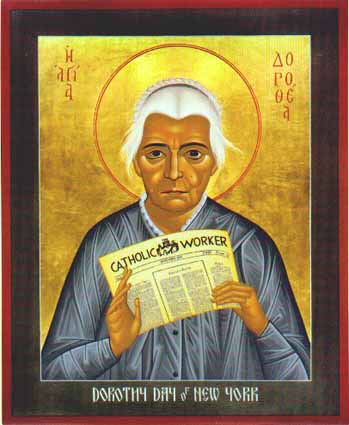
Austin’s ‘Mary House’ : From a Real ‘Pro-Life’ Catholic Worker

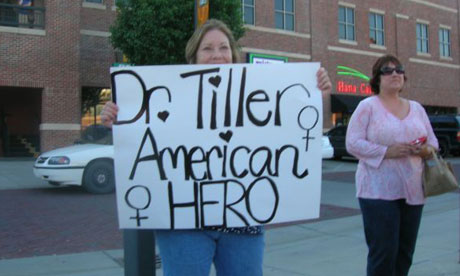
I fear that the most recent murder of an abortion doctor will inflame the hatred and zeal of these people, who in private and public will try to justify the murders of abortionists.

By Lynn Goodman-Strauss / The Rag Blog / June 2, 2009

My work in the Austin Catholic Worker house of hospitality, Mary House, consumes all of my time. Our work is a scandal in this very rich town, because we are the ONLY free medically supportive housing (versus hospitals and nursing homes, which most sick and dying people do not need). Our guests are homeless adults with terminal or critical illnesses, and about one third of them are middle class people whose illnesses outlasted their benefits, real property, savings and automobiles!

That said, it is clear that this work is as “pro-life” as it comes. Which everyone but the “real” pro-lifers believes! I fear that the most recent murder of an abortion doctor will inflame the hatred and zeal of these people, who in private and public will try to justify the murders of abortionists. This is just as hypocritical and vicious as I can imagine, and so I have written a letter to the Austin Statesman, which they may refuse to publish. I also sent a copy to the local Catholic bishop, Gregory Aymond.

Although we may not agree on whether a fetus is a person, we never will disagree about the evil of murdering any person. I cannot say that about most Catholics, evangelicals, and other “pro-lifers” (read, anti-abortion, NOT pro-life in any sense that would actually enhance the lives of unaborted, unwanted children — you know, stuff like day care, health care, education, prenatal vitamins, etc.) will countenance the most basic of Christian tenets, Love. Love in Action, to be more precise. Sometimes it seems that our work in catholic worker communities consists of evangelizing Christians to their own faith!

Here is the letter I sent:

This is a codicil to those who say that an abortion doctor’s murder is somehow justified. Gandhi said it best: “An eye for an eye only makes the whole world blind.” Those of us who value life must respect the life of every single human being. That includes criminals on death row and abortion doctors, too. After all, the Jesus we pro-lifers claim to follow forgave his own murderers as he died a cruel and unjust death.

We who call ourselves Christians cannot pick and choose those we deem worthy of life. Shame on misguided souls who rationalize the death of one doctor to “prevent” abortion. Murder is murder! And human life is human life, no matter who the person is or what he does, or how old she is.

Very truly yours,

Lynn Goodman-Strauss
Mary House Catholic Worker
Austin, TX

Go here to learn about Austin’s Mary House.

The Rag Blog

Posted in Rag Bloggers | Tagged , , , | 2 Comments

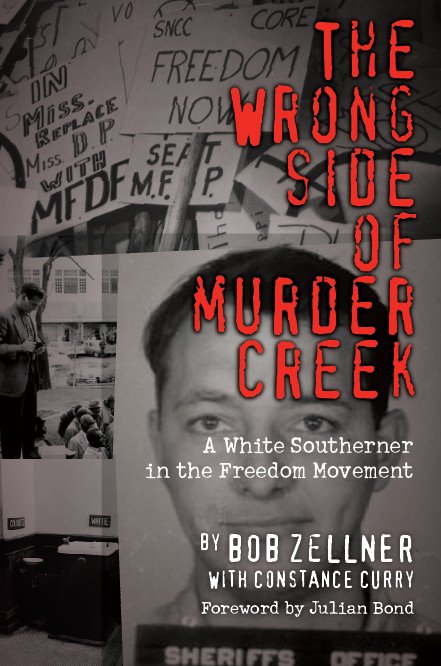
BOOKS / Bob Zellner’s ‘The Wrong Side of Murder Creek’

If you want a taste of what life on the front lines was like in the Southern civil rights movement, you have to read this book.

By Jo Freeman

[The Wrong Side of Murder Creek: A White Southerner in the Freedom Movement by Bob Zellner with Constance Curry; Forward by Julian Bond. Published by New South Books, Montgomery AL/Louisville MO; ©2008, 352 pp. $27.95 cloth.]

To those of us who were civil rights activists in the 1960s, Bob Zellner and Constance Curry were legends in their own time. Not big legends like Stokely Carmichael and Julian Bond, but people you knew about even though you never met them, saw them or heard them speak.

They made their reputation working for SNCC, as white civil rights workers trying to liberate the South from American apartheid. Now Connie has helped Bob write his memoir of those perilous times. It’s quite a read.

Murder Creek is really two books in one, and the title itself is a double entendre. The first half is about growing up “progressive” in Alabama. The second half is about SNCC (the Student Nonviolent Coordinating Committee). Zellner joined the SNCC staff in 1961 and stayed with it until almost the end, watching it sputter out of existence a couple of years after it decided to become an all black organization in 1967.

Murder Creek is an actual body of water, dividing Brewton from East Brewton, in the south Alabama county where Bob did most of his growing up. Bob’s father was a Methodist minister, whose congregations were poor and dispossessed whites — the kind who lived on the wrong side of the tracks in East Brewton. Bob’s mother was a school teacher; both parents were educated and for their time and place, liberal on race as well as economic issues.

They raised five sons who were open to changing the way things were done in the South. Bob made his first stand for civil rights as a student at a Methodist college in Montgomery. In 1960 he met Dr. Martin Luther King and Rev. Ralph Abernathy in the local courthouse while they were on trial and attended a couple mass meetings in Abernathy’s church.

As a result he was summoned to appear before the Alabama state Attorney General, who, among other things, told him to report any contact with “Communists.” Some of the “Communists” on the A.G.’s list — Anne Braden, Virginia Durr — did reach out to Bob after reading about him in the newspapers and became his mentors in the civil rights movement.

For just trying to learn about the Montgomery movement Bob and four other students were almost arrested and were asked to leave the college. Bob was the only one of the four with parental support and the only one who did not leave. He stayed until he graduated, then went off to Atlanta to join SNCC.

Supported by a grant from the Southern Conference Education Fund, arranged by Anne Braden, Bob’s job was traveling to college campuses to talk to white students about the movement. But in SNCC style he went wherever he was needed — mostly where Jim Forman (SNCC’s chief administrator) wanted him to go.

Thus we don’t learn much about his experiences trying to break through the wall of white prejudice among young Southerners but we certainly learn a lot about demonstrations and jail. Bob was in plenty of those. In 1968, when he tried to ask a question of George Wallace at a Harvard convocation, Little George cut him off by telling the audience that “this man has been in practically every jail in Alabama” (plus a few in Georgia, Mississippi, Louisiana and Virginia).

That’s the other meaning of Murder Creek. Civil rights workers were fair game for whites wanting to defend the Southern way of life. Beating them was sport; killing wasn’t a crime. After reading detailed descriptions about all the times Bob was jailed and beaten one is amazed that he lived to write this memoir, that his is not the 41st name among the martyrs listed on the Civil Rights Memorial in Montgomery.

Bob was under constant surveillance, but neither the FBI nor the state police protected him or any other civil rights worker. The FBI took notes as they observed the Klan trying to beat him to death, and the police. . . well, they helped beat him up.

Reporters with notebooks and cameras offered the only protection to peaceful demonstrators, and they were also threatened. In a 1963 confrontation in Danville, Va. police broke the cameras of any reporter who used them. There’s a lot of civil rights history that wasn’t written in the “first draft” of newspaper stories because of police intimidation.

Although SNCC was the core of Bob’s life, it wasn’t all of it. Zellner went to grad school and worked at a variety of jobs. His post-SNCC movement job was with GROW, which meant both Grass Roots Organizing Work and Get Rid of Wallace. It helped black and white workers unite against bosses and owners. If you want a taste of what life on the front lines was like in the Southern civil rights movement, you have to read this book.

©2009 Jo Freeman for SeniorWomen.com

Source / SeniorWomen.com

Find The Wrong Side of Murder Creek at NewSouth Books.

Thanks to Jay D. Jurie /The Rag Blog

Posted in RagBlog | Tagged , , , , | Leave a comment

Sherman DeBrosse : God, Guns, Gays and… Gitmo

Photo from WHDH.com.

Adding the Fourth ‘G’

The idea is to make Democrats appear soft on terrorism and legitimize torture and abuses of civil liberties.

By Sherman DeBrosse / The Rag Blog / June 2, 2009

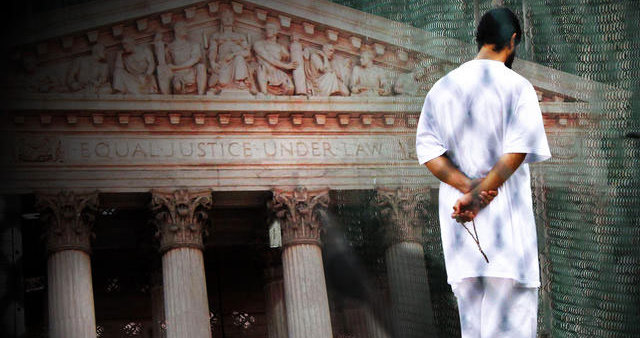
Aside from reproductive issues, the Republican hot button issues begin with the letter “G”– God, guns, and gays. Now we are seeing a carefully orchestrated campaign –complete with expensive television advertisements — to add Gitmo as the fourth “G.” The idea is to make Democrats appear soft on terrorism and legitimize torture and abuses of civil liberties.

The drive is being spearheaded by former Vice President Dick Cheney, a truly odious man. He has the full throated support of Karl Rove and former Speaker Newt Gingrich –both masters of demagoguery and political tactics — and the whole stable of political shock jocks. Most recently, the radio propagandists savaged one of their own when a Chicago radio personality experimented with waterboarding and concluded that it was indeed torture!

These people know that a substantial majority of Americans support torture, keeping the Guantanamo detention facility open, domestic spying, and curtailments of civil liberties. These policies are overwhelmingly backed by Republicans and also have the support of independents. The Democrats know this too. That is why they went along with so much Bush legislation in these areas and are now refusing to support President Barack Obama in closing Gitmo. Only six Democratic Senators stood with the president. It is now hard to remember that George W. Bush and John McCain wanted to close Gitmo.

Cheney and the Republicans are seeking to rewrite the history of torture, claiming it produced solid results that permitted them to avert massive attacks on the homeland. The fact is that most torture was used to obtain information to hype the false case that Iraq had weapons of mass destruction and must be invaded. This is to say, torture produced false confessions and bad information used to support the invasion.

The politics of fear worked in 2002-2003, and they are beginning to make it work again. Cheney and his Republican friends warn that closing Gitmo and tightening the rules of evidence in detainee proceedings will result in terrorists walking the streets. The Not in My BackYard strategy lends legitimacy to a pack of thoroughly dishonest arguments. A basic assumption is that everyone now held there is guilty of terrorism. We are also asked to believe that these people would easily escape super-max federal prisons. Though they would be kept away from the general prison population, we are told they would quickly convert minority prisoners into terrorists.

There seem to be few willing to answer the prophets of fear and doom. To do so could result in one being called a friend of terrorists. Given the dominant “he said-she said” approach to journalism, no one with a pen or microphone would dare presenting information to puncture these fables. Republicans have learned to expertly play on the inability of the mainstream media to deal fairly with issues that touch on security matters.

Republicans have seized upon Speaker Nancy Nelosi’s failure to deal well with the matter of the September 4, 2002, CIA briefing on “enhanced interrogation techniques.” She and former Senator Bob Graham said they did not recall waterboarding being mentioned. We now know that one Abu Zubaydah had been waterboarded 83 times before that briefing. Later, in February 2003, a staffer told the Speaker that waterboarding had long been going on. At that point her only choice was to admit that she had been conned by the CIA and that it was not too late to do much other than work to elect a Democratic president. This made it possible for critics to say she 1) should have been able to see through the CIA’s opaque language and 2) insist that she was soft on terrorism while 3) tacitly approving of torture while 4) also besmirching the CIA. These four Republican positions are inherently inconsistent, but almost no one in the mainstream media has pointed to this obvious fact.

Few in the MSM asked her Republican critics if the CIA did not, in the opinion of many, have a record of bending the truth when talking to Congress. These critics should also have been frequently reminded that Rep. Peter Hoekstra, the House Republican expert on intelligence, had also complained that the agency has lied to Congress.

At base, the issue is massive expansion of executive power. The Republican Party had a long and honorable history of opposing expansions of presidential power. This record was badly tarnished by the abuses of executive power under Richard Nixon and Ronald Reagan, and George W. Bush took the abuses of power and big government to new extremes. In 2005 and 2006, moderates within the Bush administration were able to dial back some of the torture.

Now Cheney is leading a successful effort to eradicate this part of the Republican heritage — opposition to executive supremacy and big government. With these elements removed from the Republican credo, it is very hard to understand how that party can continue to call itself conservative. The word will only apply if we reach back to the times when conservative meant backing executive supremacy, the Court of Star Chamber, bowing to ecclesiastical authority, and depriving people of fundamental rights.

The mind boggles a bit at trying to imagine 21st Century people wanting to become known as the party of torture. But this is precisely what is going on, and the GOP could benefit by retaining existing supporters and attracting independents. But maybe the mind should not boggle at this.

The Republicans are not living in this century. They are a party bent on becoming more of a “whites only” men’s club that is overly dedicated to an extreme version of American Exceptionalism, that was popular long ago. It holds that Americans, especially provincials and right-wing Christians, have been gifted by God with the ability to decide which human beings should be treated with dignity and respect. At base they yearn for the days of the House Un-American Activities Committee and Joseph McCarthy, and they are certain they are endowed with the ability to spot un-American attitudes and “reverse racism” at a thousand paces.

[Sherman DeBrosse, the pseudonym for a retired history professor, is a regular contributor to The Rag Blog and also blogs at Sherm Says and on DailyKos.]

The Rag Blog

Posted in Rag Bloggers | Tagged , , | 3 Comments

Rabbi Arthur Waskow : Murder is Murder and Abortion is Not

A sign commemorating George Tiller at a candlelight vigil in Wichita, Kansas, where Dr Tiller was murdered on Sunday. Photo by Joe Stumpe / AFP/Getty.

I recognize that some other religious traditions do claim it is murder, but I both disagree with their theology and think they have no right to impose it on mine, by state power or by murder.

By Rabbi Arthur Waskow / The Rag Blog / June 1, 2009

So another physician has been murdered for making it possible for women to actually use their constitutional right to choose an abortion.

All honor to Dr. Tiller, who joins the list of martyrs for ethical decency and human rights, killed for healing with compassion. In his case, a religious martyr in the fullest classical sense, killed in his own church as he arrived to worship, killed for acting in accord with his religious commitments and his moral and ethical choices.

And all dishonor to those vicious attackers like Bill O’Reilly who have egged on the kind of violence that finally murdered Dr. Tiller. And who have blasphemously invoked the name of God to justify these incitements to murder.

There are two real-life cases of abortion that have shaped my own judgment on the practice, in addition to the Torah’s only comment on abortion –- which makes utterly clear that it it is not murder. (The Torah says that if someone causes an abortion but does no other harm to the mother, the agent owes a money recompense to the father for the loss of his potential offspring. And that’s all.)

I recognize that some other religious traditions do claim it is murder, but I both disagree with their theology and think they have no right to impose it on mine, by state power or by murder.

One of these real-life cases of abortion that have shaped my views is that my father’s mother had already birthed five young boys when she became pregnant again in 1914. She hoped to be able to concentrate her energy on raising those five instead of birthing more. Because abortions were illegal, she had a “back-alley” abortion –- and it killed her. So she was unable to raise any of them. Her early death cast a shadow over my father’s life till his own dying day.

The second is that one of my friends and teachers, a great and eminent rabbi, was the child of a mother who fled Vienna after Hitler annexed Austria. His mother was pregnant again when the family needed to leave, and they knew that the underground “railroad” to freedom was bound to be too arduous for a pregnant woman. The choices were: staying in Austria, to die together; leaving her behind, to die alone; or aborting the fetus, so that all of the family had a chance to live. She had an abortion. Today my rabbi friend says they thought then and ever since that she had given birth to the whole family.

I wish the President, when he spoke at Notre Dame, had said explicitly what these stories teach me: that women are moral beings, possessed of moral agency and responsibility in this unique situation where their own bodies are intertwined with another’s; and that the lives of women would be endangered once again if abortion were criminalized again.

He chose instead to say only that the choices are difficult and that unwanted pregnancies should be minimized.

On this point, I wish he had been specific — that the US government should subsidize comprehensive sex education and the provision of free condoms, The Pill, and other contraceptives in all American high schools, and should require health insurance companies to cover the cost of birth control and abortion.

And I wish that religious communities would begin providing comprehensive sex education as their children reach adolescence (and probably for adults as well). In the Jewish community, for example, this should be part of the preparation for bar/bat mitzvah.

This would in fact be rooted in the ancient rabbinic tradition which defined the moment when a boy became an adult bound by the sacred commitments of mitzvot as the day when he had two pubic hairs. Then the rabbis said that instead of checking individuals, they would settle on 13 years and one day. But the point about puberty and sexual maturity was made. (Indeed, it is probably precisely because of the imperative need for ethical sexual behavior beginning with the onset of sexual maturity that the rabbis thought Jews should at that point be bound by the mitzvot.)

Unfortunately, in modern Jewish life this teaching is prudishly ignored. What rabbi have you heard ever address the new Jewish adult and the adult community about sexual ethics, as part of the public ceremony of welcoming him/ her as a bar/bat mitzvah? Time to renew this ancient teaching!

Shalom, Arthur

The Rag Blog

Posted in Rag Bloggers | Tagged , , | Leave a comment

Ralph Solonitz : Pro Life?

Political cartoon by Ralph Solonitz / The Rag Blog / May 23, 2009.
[Ralph Solonitz’ cartoons also appear at
MadasHellClub.net.]

The Rag Blog

Posted in Rag Bloggers | Tagged , , , | Leave a comment

Bill O’Reilly and ‘Tiller the Baby Killer’

Excerpts from Bill O’Reilly’s attacks on murdered physician George Tiller.

O’Reilly’s campaign against murdered doctor

The Fox News star had compared Tiller to a Nazi, called him a ‘baby killer,’ and warned of ‘Judgment Day’

By Gabriel Winant / May 31, 2009

When his show airs tomorrow [June 1], Bill O’Reilly will most certainly decry the death of Kansas doctor George Tiller, who was killed Sunday while attending church services with his wife. Tiller, O’Reilly will say, was a man who was guilty of barbaric acts, but a civilized society does not resort to lawless murder, even against its worst members. And O’Reilly, we can assume, will genuinely mean this.

But there’s no other person who bears as much responsibility for the characterization of Tiller as a savage on the loose, killing babies willy-nilly thanks to the collusion of would-be sophisticated cultural elites, a bought-and-paid-for governor and scofflaw secular journalists. Tiller’s name first appeared on “The Factor” on Feb. 25, 2005. Since then, O’Reilly and his guest hosts have brought up the doctor on 28 more episodes, including as recently as April 27 of this year. Almost invariably, Tiller is described as “Tiller the Baby Killer.”

Tiller, O’Reilly likes to say, “destroys fetuses for just about any reason right up until the birth date for $5,000.” He’s guilty of “Nazi stuff,” said O’Reilly on June 8, 2005; a moral equivalent to NAMBLA and al-Qaida, he suggested on March 15, 2006. “This is the kind of stuff happened in Mao’s China, Hitler’s Germany, Stalin’s Soviet Union,” said O’Reilly on Nov. 9, 2006.

O’Reilly has also frequently linked Tiller to his longtime obsession, child molestation and rape. Because a young teenager who received an abortion from Tiller could, by definition, have been a victim of statutory rape, O’Reilly frequently suggested that the clinic was covering up for child rapists (rather than teenage boyfriends) by refusing to release records on the abortions performed.

When Kansas Attorney General Phill Kline, an O’Reilly favorite who faced harsh criticism for seeking Tiller’s records, was facing electoral defeat by challenger Paul Morrison, O’Reilly said, “Now we don’t endorse candidates here, but obviously, that would be a colossal mistake. Society must afford some protection for viable babies and children who are raped.” (Morrison ultimately unseated Kline.)

This is where O’Reilly’s campaign against George Tiller becomes dangerous. While he never advocated anything violent or illegal, the Fox bully repeatedly portrayed the doctor as a murderer on the loose, allowed to do whatever he wanted by corrupt and decadent authorities. “Also, it looks like Dr. Tiller, who some call Tiller the Baby Killer, is spending a large amount of money in order to get Mr. Morrison elected. That opens up all kinds of questions,” said O’Reilly on Nov. 6, 2006, in one of many suggestions that Tiller was improperly influencing the election.

Tiller’s excuses for performing late-term abortions, O’Reilly suggested, were frou-frou, New Age, false ailments: The woman might have a headache or anxiety, or have been dumped by her boyfriend. She might be “depressed,” scoffed O’Reilly, which he dismissed as “feeling a bit blue and carr[ying] a certified check.” There was, he proposed on Jan. 5, 2007, a kind of elite conspiracy of silence on Tiller. “Yes, OK, but we know about the press. But it becomes a much more intense problem when you have a judge, confronted with evidence of criminal wrongdoing, who throws it out on some technicality because he wants to be liked at the country club. Then it’s intense.”

Tiller, said O’Reilly on Jan. 6 of this year, was a major supporter of then-Gov. Kathleen Sebelius. “I think it’s unfairly characterized as just a grip and grin relationship. He was a pretty big supporter of hers.” She had cashed her campaign check from Tiller, “doesn’t seem to be real upset about this guy operating a death mill, which is exactly what it is in her state, does she?” he asked on July 14 of last year. “Maybe she’ll — maybe she’ll pardon him,” he scoffed two months ago.

This is where it gets most troubling. O’Reilly’s language describing Tiller, and accusing the state and its elites of complicity in his actions, could become extremely vivid. On June 12, 2007, he said, “Yes, I think we all know what this is. And if the state of Kansas doesn’t stop this man, then anybody who prevents that from happening has blood on their hands as the governor does right now, Governor Sebelius.”

Three days later, he added, “No question Dr. Tiller has blood on his hands. But now so does Governor Sebelius. She is not fit to serve. Nor is any Kansas politician who supports Tiller’s business of destruction. I wouldn’t want to be these people if there is a Judgment Day. I just — you know… Kansas is a great state, but this is a disgrace upon everyone who lives in Kansas. Is it not?”

This characterization of Tiller fits exactly into ancient conservative, paranoid stories: a decadent, permissive and callous elite tolerates moral monstrosities that every common-sense citizen just knows to be awful. Conspiring against our folk wisdom, O’Reilly says, the sophisticates have shielded Tiller from the appropriate, legal consequences for his deeds. It’s left to “judgment day” to give him what’s coming.

O’Reilly didn’t tell anyone to do anything violent, but he did put Tiller in the public eye, and help make him the focus of a movement with a history of violence against exactly these kinds of targets (including Tiller himself, who had already been shot). In those circumstances, flinging around words like “blood on their hands,” “pardon,” “country club” and “judgment day” was sensationally irresponsible.

Source / salon.com

The Rag Blog

Posted in RagBlog | Tagged , , , | 5 Comments