Many Innocents Still at Guantanamo — Will Obama Make It Right?

See A Prison of Words by Noah Feldman below.

Ex-Bush Official to AP: Many at Gitmo Are Innocent
March 19, 2009

SAN JUAN, Puerto Rico — A former Bush administration official says many Guantanamo detainees are innocent, and have been held only because U.S. officials hoped they would know something important.

Lawrence B. Wilkerson was chief of staff to Secretary of State Colin Powell. He says only two dozen or so of the roughly 800 men held at Guantanamo are terrorists. About 240 prisoners remain at the US military prison.

“There are still innocent people there,” Wilkerson told The Associated Press on Thursday. “Some have been there six or seven years.”

Wilkerson says he learned of their innocence through State Department briefings and military commanders. He first made the allegations in an Internet posting this week.

The Pentagon has said the detainees are dangerous enemy combatants.

Source / AP / New York Times

A Prison of Words
By Noah Feldman / March 18, 2009

Cambridge, Mass. — HAS the Obama administration changed the legal rules for detaining suspects in the war on terrorism, or is it continuing in the footsteps of the Bush administration?

We got a clue last week when the Justice Department filed an important document “refining” the government’s position in lawsuits over those held at Guantánamo Bay. Hailed by supporters as a leap forward, yet criticized by human rights groups as being little different from what came before, the filing reveals a distinctive approach to constitutional law. Cautious and modest where George W. Bush was ambitious and brash, Mr. Obama still claims the authority necessary to sustain almost everything his predecessor did.

Perhaps what’s most important here is what Mr. Obama’s lawyers do not say. The Bush White House long insisted that the president had inherent power as commander in chief to do whatever it took to defend the country — including overriding American and international law. The Obama filing, however, is silent on the topic of inherent executive power. Indeed, the magic words “commander in chief” never even appear.

Technically, the Obama lawyers have not abandoned the argument for broad presidential power, just implied that such authority is unnecessary to get them what they want.

Yet omitting the claim to unfettered executive authority shows respect for Congress and international standards. In effect, the Obama administration is saying to the courts that if the detainees cannot be held as a matter of federal or international law, judges should release them. This approach is brave — so brave it might even prove foolhardy if the courts, sick of nearly a decade of detention, decide to clear the decks.

The filing argues that the authorization for the use of military force passed by Congress after 9/11 — the contemporary equivalent of a declaration of war — gives the president the powers any sovereign would have under the general principles of the international law of war. Relying on international law to make sense of Congress’s grant of power has deep roots in our constitutional tradition.

In the context of America’s present global military posture, however, the rediscovery of this notion is little short of astonishing. The laws of war, mostly designed for old-fashioned struggles between sovereign states, often do not fit today’s circumstances. The Bush administration saw this mismatch as an occasion to treat the Geneva conventions as “quaint” (in the words of Alberto Gonzales, the former White House counsel).

The Obama lawyers, however, seem to believe that the international law of war is flexible enough to serve their interests — and even to expand the president’s power to detain suspects beyond the strict language used by Congress when it gave President Bush authority to carry out his war on terrorism.

Here is where the law gets complicated: In 2001, Congress told the president he could make war on anyone who had “planned, authorized, committed or aided” the Sept. 11 attacks. The Bush administration, though, went further; it claimed the power to detain any “enemy combatant,” defined to include “anyone who is part of or supporting Taliban or Al Qaeda forces or associated forces.” In an unfortunate legal overreach, one administration lawyer said the government could detain a “little old lady in Switzerland” whose donation to an Afghan orphanage ended up in the hands of Al Qaeda.

In place of the “enemy combatant” definition, the Obama administration now claims the right to detain anyone who “substantially supported” terrorists. Thankfully, the Obama standard would free the little old Swiss lady. But the words “substantial support” do not come from international law any more than Bush’s “enemy combatant” did.

The administration lawyers suggest in their brief that “substantial support” of terrorists could be defined by some unspecified analogy to the laws of detention in traditional armed conflict. Yet the details are left to the imagination; and when push comes to shove, this language might well include all the Guantánamo detainees, including those who never belonged to a terrorist group.

The upshot is that the Obama approach is potentially broad enough to continue detaining everyone whom the Bush administration put in Guantánamo in the first place. The legal theories are subtler, and the reliance on international law may prove more attractive to our allies. But President Obama is stuck with the detainees Mr. Bush left him, and some may pose a real danger. Faced with this conundrum, and pressed for answers by judges who are rightfully impatient, the administration is hurrying to reframe existing powers in new legal doctrines.

The true test of whether Mr. Obama has improved on the Bush era lies in how his administration justifies its decisions on the 241 remaining Guantánamo detainees, whose cases will now be evaluated internally and reviewed by the courts. If the new legal arguments actually affect who goes free and who stays in custody, then they will amount to meaningful change. Without real-world effects, though, even the most elegant new legal arguments are nothing but words.

[Noah Feldman is a law professor at Harvard, a fellow at the Council on Foreign Relations and a contributing writer to The Times Magazine.]

Source / New York Times

The Rag Blog

Posted in RagBlog | Tagged , , , , | Leave a comment

Poet Lawrence Ferlinghetti Turns 90

Photo of Lawrence Ferlinghetti by Deanne Fitzmaurice / SF Chronicle.

Catching up with Lawrence Ferlinghetti

‘Oldies such as myself talk about the good old days with nostalgia since that was when they were young and beautiful (and full of testosterone).’ — Lawrence Ferlinghetti

By Heidi Benson / March 19, 2009

SAN FRANCISCO — On Tuesday [March 24], poet Lawrence Ferlinghetti turns 90. Nearly 60 years ago, he came to San Francisco, fell in love with this “small white city,” and soon after co-founded City Lights Books. One of the most vibrant and long-lived cultural institutions in town, the store remains an international magnet for the imaginative, as does the Web site for City Lights Booksellers & Publishers, Citylights.com

Mayor Gavin Newsom has declared that March 24 will henceforth be called “Lawrence Ferlinghetti Day,” in honor of his “enormous contributions to our city’s life and culture,” while the bookstore staff invites everyone to send along birthday wishes, via e-mail, to: lfbirthday@citylights.com.

Q: When you were named San Francisco’s first poet laureate in 1998, you spoke of the damage to the culture caused by the yawning gap between the city’s rich and poor. Have your worst fears been borne out?

A: When I arrived in the city, the citizens seemed to have an island, considering San Francisco a kind of offshore republic, founded by gold miners and gold diggers, cast-off seamen and vagabonds, railroad barons and rogue adventurers and ladies of fortune. What with the electronic revolution and the Information Age, we have joined the rest of the world.

Oldies such as myself talk about the good old days with nostalgia since that was when they were young and beautiful (and full of testosterone).

Q: You served as a ship’s commander in the Pacific during World War II. What’s the most important thing you learned in the Navy?

A: In four years at sea, I learned that the sea is a monster and can turn on you at any time. Seeing Nagasaki made me an instant pacifist.

Q: How have the concerns of poets changed since you began writing?

A: In the social revolution of the 1960s, the chant was “Be here now.” Today with television, e-mail and especially cell phones, it’s “Be somewhere else now.”

Q: Your favorite 19th century American poet?

A: Walt Whitman, of course. He gave voice to the people and articulated an American populist consciousness.

Q: Why do you prefer the term wide-open poetry to Beat poetry?

A: I never wrote “Beat” poetry. Wide-open poetry refers to what Pablo Neruda told me in Cuba in 1950 at the beginning of the Fidelista revolution: Neruda said, “I love your wide-open poetry.”

He was either referring to the wide-ranging content of my poetry, or, in a different mode, to the poetry of the Beats. Wide-open poetry also refers to the “open form” typography of a poem on the page. (A term borrowed from the gestural painting of the Abstract Expressionists.)

Q: Can writing be taught?

A: It has to be taut.

Q: Is texting poetry?

A: It can be.

Q: You’ve always been an activist, as well as an artist. What do you advise activists who are complacent now that a new, seemingly more enlightened administration is in charge?

A: The dictatorial reign of George the Second almost destroyed our civil liberties as well as our economy.

We shall now see whether an “enlightened” administration can defeat Washington, D.C.,’s culture of corruption. The press has given socialism a bad name, falsely equating it with Soviet Communism. What is needed today is a form of civil libertarian socialism in which all democratic civil rights are fully protected.

What with shrinking energy resources and radical climate change, a worldwide planned economy is needed. Why won’t any politician even whisper it?

Q: In the upcoming film of “Howl,” James Franco will play Allen Ginsberg. Who is playing you?

A: Charlie Chaplin.

Q: Who is the love of your life?

A: Life itself is the love of my life.

Q: What’s the secret of your beautiful skin?

A: Genetics.

Source / SF Gate

Lawrence Ferlinghetti – Last Prayer

Thanks to Mariann Wizard and Bob Simmons / The Rag Blog

Posted in RagBlog | Tagged , , , , , | 2 Comments

HEALTH CARE / ‘Economic Power Must be Regulated with Prudence’

Pope Pius XI, 1857-1939 A.D.

‘Economic power is headstrong and vehement, and if it is to prove beneficial to mankind it must be securely curbed and regulated with prudence.’ — Pope Pius XI, May 15, 1931.

Government and single payer health care: Caving to the special interests

By Dr. Stephen R. Keister / The Rag Blog / March 19, 2009

This past Sunday I made an exception to my usual regime and watched Meet the Press. From the ongoing discussion two points stood out:

1.) In Europe the “recession” was as prevalent as it is here in the United States However, the level of public anxiety is much more tempered since the majority of Europe’s social democracies have excellent ongoing health care for all; the state sponsored educational systems, through university level — if the student is qualified — are intact, and the unemployment insurance is much more extensive.

2.) During the presidential campaigns none of the candidates discussed help for the poor, and since the inauguration of President Obama there has not been a whisper. Yet the campaign was marked by the sub-rosa text concerning which candidate was a “better Christian!” Perhaps one should recall the Homilies of St. Basil: “The bread that you store up belongs to the hungry; the cloak that lies in your chest belongs to the naked; and the gold that you have hidden in the ground belongs to the poor.” Again, I noted previously that a survey showed that 70% of American “Christians” had not read the Sermon On The Mount!

Why mention these two subjects? Health care is currently one of two items on the front burner for many Americans. Yet we must concede that those blessed with wealth can avail themselves of much better care, such as boutique care at a well known clinic, while the poor are relegated to the Repug’s treatment place of choice, the local emergency room. The rate of chronic disease is statistically much lower among the well-to-do than among the underprivileged. Of course, the other subject in the headlines is the unconscionable executive bonus fiasco within AIG and the other Wall Street financial firms. There are parallels which we will allude to later.

The recent White House Conference on Health Care was a sham as far as the delivery of a program of health care to the citizens of our nation. I have seen no in-depth discussion of the proceedings in the mainstream media; however, there have been a number of excellent expositions of the underhanded back-scratching of the insurance industry on the internet. For the sake of brevity I will call attention to the article by Helen Redmond at SocialistWorker.org, “Left Out From Obama’s Health Care Summit.”

Universal, single payer health care as promoted by Physicians For A National Health Program and Rep. John Conyer’s HR 676 were all but disregarded save for late permission for Dr. Oliver Fine of PNHP to give the single presentation for single payer/universal care.

Interestingly, in the March 13, 2009, Time Magazine there is an article regarding the “gang of nine” in the United States Senate at work producing a plan as a sop to the insurance industries with an estimated cost of approximately 40% more than that propounded by Dr. Fine at the White House conference. Of course, there is no reason to suspect that Dr. Fine and PNHP are dependent on the financial largesse of the insurance companies and the pharmaceutical industry. Further, all the plans, save that of Rep. Conyers and PNHP, hint at the need to require by government fiat that the underprivileged purchase private health insurance. This matter was addressed from the standpoint of constitutionality in my last Rag Blog article.

All of this deferential treatment of the insurance cartel, despite the fact, reported by Bloomberg News on March 11, 2009, that the cost of private insurance has increased in price by 119% for family coverage, since 1999. Yet, every 30 seconds someone in the U.S. files for bankruptcy because of their medical bills. and an estimated 18,000 Americans die each year because of lack of insurance. In a recent poll cited in Op-Ed News, 74% of the public endorsed a “public health insurance plan like Medicare.” This is confirmed by a separate poll in the Huffington Post of the same date showing that 73% of voters approve of a public health insurance plan. Further details are available in Barbara O’Brien’s excellent posting on AlterNet, “Why Conservatives Are Radical on Health Care”

President Obama has shown insight regarding health care at several levels: his opening up of stem-cell research, his executive order regarding the availability of contraceptives, and his recent appointments of Margaret Hamburg and Joshua Sharfstein to the top positions at the FDA. It is gratifying to see people with professional knowledge and integrity, without peripheral connections to the pharmaceutical industries, replacing the Bush hacks that have threatened our pharmaceuticals and food supply for the past eight years.

Yet, in spite of these encouraging moves it would appear that the Obama administration is giving way to the same pressures and incentives from the health insurance industry and pharmaceutical makers that were evident in his appointment of members of the Wall Street gaggle to his Treasury Department and as White House economic advisers. As for health care, one would have expected, from the campaign promises, new faces providing the lead in health care, as one might have expected from an economic team (Krugman, Stiglitz for example) rather than the tired old bunch of Milton Friedman acolytes that ended up overseeing the AIG and related messes. Perhaps, to avoid becoming a one term president, Obama should listen intensely to the voice of the people rather than caving in to the powerful forces that underlie the Washington establishment. There still may be time. Once again the president blew it regarding the Charles Freeman affair by bending to the will of a small but wealthy interest group.

In the entire health care discussion, and I have eluded to this on prior occasion, there has been only minimal discussion regarding the physician shortage, especially among GPs and internists, in this country. In France, for instance, there are enough physicians, with excellent academic back grounds, to make house calls!

If we can ever offer medical care for all there just still would not be enough physicians to provide adequate and thoughtful care. Hence, we must immediately address getting more doctors available, not specialists from India, or exotic specialists trained in the USA. I have previously suggested government subsidization of medical education, in the European model, or creation of a medical academy, such as the Naval Academy at Annapolis, with stipulations that after internship the graduates spend six years in a medically deprived area. Another unique institution has recently appeared in this area, a free standing Osteopathic College of Medicine. This is not affiliated with a university which envelops multiple doctoral programs, nor is there an affiliated large university hospital teaching/research complex. It amounts to what in Europe would be considered, perhaps, an advanced trade school. I had content for three or four years with the students, who tend to be older than those in the university affiliated medical schools, while an attending physician at a local free clinic. These students are intense and devoted and have a first rate passage percentage on the state/national boards. One problem, as with the conventional medical schools, is the high indebtedness upon graduation, that forces them into high paying specialties.

One is delighted to see the growing populism and public anger regarding the bungled health care and economic situations. However, as an old man I am cautious and I have noted several other authors expressing concern that the anger dare not take to the streets as it does in Western Europe. Here we are confronted by a totally different culture that does not tolerate public outcry very well. The progressives and liberals are not cohesive, but tend to be diverse and willing to debate and argue. The right is organized, dominated by rite and ritual, unquestioning of their leadership, and could quite easily put brown shirts on the NRA and follow the “man on the white horse.” We have discussed the Weimar Syndrome previously.

We must keep up a continual barrage of messages to our “representatives,” alluding to the fact that we are aware of their subservience to the powers of the lobbies (which we can confirm on opensecrets.org). We must have local gatherings of unions, civic organizations, and progressive groups and petition our elected representatives. We must write letters to the editor, realizing that many will not be published (as is the case here with The Erie Times News) if they show an overly “liberal” bent, or conflict with the wishes of the newspaper’s advertisers. (Unfortunately, those that appear here seem to be chosen on the basis of eighth grade writing ability and thought processes. It must be emphasized to local governments, as well as to employers, that single payer, universal care, will result in considerable financial savings with employee coverage. Some states like Pennsylvania are pushing state-wide single payer, universal coverage, we must back their efforts with will and determination. Again, this has a chance of passage with help of the citizens. One should note that the MSM is not broadly involved in the discussion.

I intended to refer once again to the matter of physician payment, systemic corruption and waste in research and academia, the immorality of health costs and advertising, the rip offs of the public by the pharmaceutical industry, but with my editor’s permission will broach these matters later.

[Dr. Stephen R. Keister, a regular contributor to The Rag Blog who lives in Erie, PA. He is a retired physician who is active in health care reform. His previous articles on The Rag Blog can be found here.]

The Rag Blog

Posted in Rag Bloggers | Tagged , , | 1 Comment

Canada Allows War Criminal in to Speak


Canada breaking the law by hosting war crimes suspect George W. Bush
By John Mcnamer / March 18, 2009

The Canadian government has knowingly allowed the violation of both Canadian domestic law and international human-rights law by failing to stop former U.S. president George W. Bush from crossing the border for a paid speaking engagement with a private Calgary audience.

Many competent international authorities have concluded that the available evidence establishes that Bush and the Bush administration committed torture and other war crimes and crimes against humanity. Therefore Canada now has a duty to condemn, investigate, prosecute and punish those crimes.

Prime Minister Stephen Harper, Attorney General Rob Nicholson and other responsible ministers were notified on March 11 of specific evidence clearly demonstrating there are reasonable grounds to believe Mr. Bush has been complicit in torture and other war crimes.

Under Canada’s immigration laws, if there are reasonable grounds to believe a person is complicit in these crimes, entry to Canada must be denied.

The test is not whether a person has been convicted, but whether there are reasonable grounds to think they have been involved in such crimes.

Even though Canadian officials were referred to the overwhelming evidence of Bush’s involvement in torture government officials apparently took no action to bar Bush or commence an investigation.

In fact government officials did not even feel the need to bother with the courtesy of a reply to Lawyers Against the War (LAW).

LAW plans to consult with peace and justice advocates in Canada and around the world with a view to maximizing the likelihood of successful prosecutions that would be a move toward restoring the rule of law.

Many around the world are pressing for proper prosecutions. In the U.S., release of a major complaint alleging war crimes against 31 Bush administration officials prepared by the Robert Jackson Steering Committee is expected in April.

This initiative is led by Professor Lawrence Velvel, Dean of the Massachusetts School of Law.

A growing number of people completely agree with UN Special Rapporteur Martin Scheinin, who recently said, “We have had a witch hunt for alleged terrorists for the past seven and a half years. . . . Now I think the witch hunt is over and it is time for the law to step in.” Prof. Scheinin also said states are under a positive obligation to conduct independent investigations into alleged violations of the right to freedom from torture or other inhumane treatment.

[John McNamer, 61, is a member of LAW from Kamloops. He was awarded the Bronze Star Medal while serving in Vietnam with the U.S. Army’s 4th Infantry Division.]

© Copyright (c) The Province

Source / The Province

The Rag Blog

Posted in RagBlog | Tagged , , , | 2 Comments

Blackwater Is Staying in Iraq, Against Iraqi Wishes

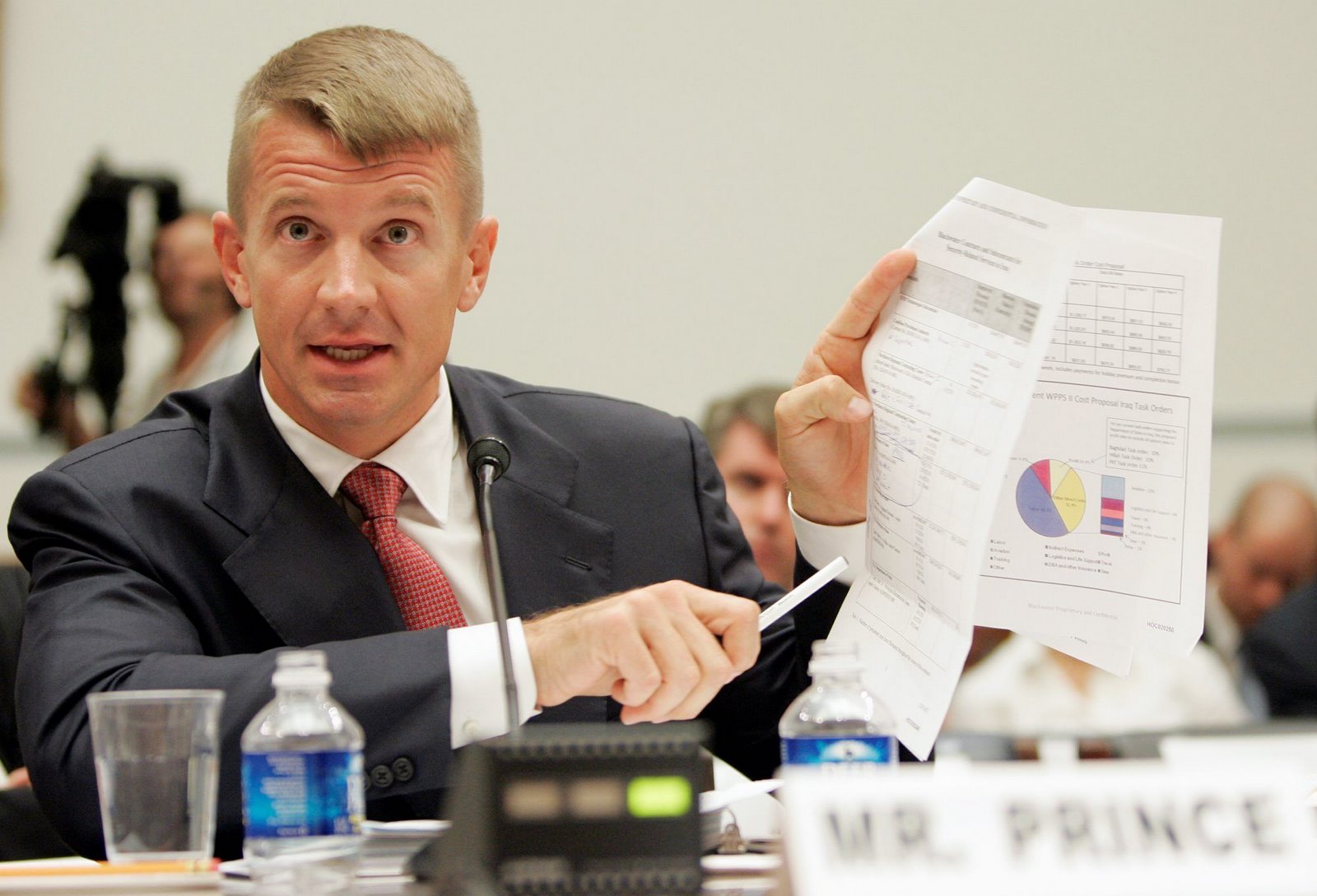
Blackwater Chief Executive Officer Erik Prince defends his company’s performance in Iraq before the House oversight committee in 2007. Photo: Associated Press.

New Deal for Blackwater
By Jim McElhatton / March 17, 2009

Days after the Baghdad government decided it no longer wanted the company then known as Blackwater in Iraq, the State Department signed a $22.2 million deal in February to keep the embattled contractor working there through most of the summer, contract records show.

The decision keeps Blackwater – since renamed Xe – in Iraq months longer than anyone has suggested publicly, while raising questions about why the U.S. would pay a contractor for work in Iraq if it may not be able to operate there legally.

The State Department has been under pressure from Blackwater critics, including several in Congress, not to renew the company’s contracts in Iraq. Much of the concern stems from a 2007 incident that left 14 Iraqi civilians dead and six former Blackwater guards facing manslaughter charges. One of the guards pleaded guilty, but the company was accused of no wrongdoing in the incident.

In late January, the Iraqi government said it would not renew Blackwater’s operating license and that the company would have to leave as soon as a joint Iraqi-U.S. committee completes its work on guidelines for the operation of private security companies. State Department officials said they would honor the decision.

On Feb. 2, a department spokesman was asked whether officials planned to renew one of Blackwater’s contracts past May. The spokesman, Robert Wood, said the department had told Blackwater “we did not plan to renew the company’s existing task force orders for protective security details in Iraq.”

But records available through a federal procurement database show that on that same day, the State Department approved a $22.2 million contract modification for Blackwater “security personnel” in Iraq, with a job completion date of Sept. 3, 2009.

“Why would you continue to use Blackwater when the Iraqi government has banned the highly controversial company and there are other choices?” asked Melanie Sloan, executive director of the nonpartisan Citizens for Responsibility and Ethics in Washington.

State Department spokesman Noel Clay said the contract modification involves aviation services. “The place of performance is Iraq, but it is totally different than the Baghdad one that expires in May,” he said.

Ms. Sloan called the State Department’s explanation of the Feb. 2 deal a “parsing of words” and said “they should just be straight with us.”

Xe spokeswoman Anne Tyrell declined to comment on the status of the company’s work in Iraq or the Feb. 2 contract modification. She said the company was aware that the State Department had indicated that it did not plan to renew its contracts in Iraq but that Xe officials had not received specific information about leaving the country.

“We’re following their direction,” she said.

The Iraqi Embassy in Washington had no comment on the Blackwater contract when contacted on Monday.

The State Department has given clear indications for months that the Iraqi government might not be renewing Blackwater’s operating license.

Harold W. Geisel, the State Department’s inspector general, told the congressionally mandated Commission on Wartime Contracting at a Feb. 2 hearing that officials were awaiting the outcome of an FBI report into the 2007 shooting incident before deciding whether to keep Blackwater in Iraq.

“The issue is not only one of, well, what we would like to do, but it also is to some extent what the department can do,” Mr. Geisel said of decisions about the future of Blackwater’s role in Iraq, according to a transcript of the hearing.

“Blackwater had certain assets that the department determined the other contractors did not have,” he said, citing the company’s 24 aircraft as an example.

Nonetheless, Mr. Geisel said his office did “advise the department that they better start planning for when the Iraqis say this is it with Blackwater. And without getting into diplomatic negotiations, I believe the department is planning for this eventuality, which is clearly not too far off.”

Scott Amey, general counsel for the Project on Government Oversight, a nonprofit group that investigates federal contracting, said the State Department’s decision to continue paying Blackwater for security in Iraq raises broader questions about federal procurement practices.

“This case highlights the fact that the U.S. government over-relies on contractors and that it isn’t in a position to hold them accountable,” he said. “Continuing to do new business with questionable actors flies in the face of spreading trust, peace and democracy around the world.”

The contractor, based in North Carolina, recently underwent a big shake-up. The company changed its name to Xe, pronounced “zee,” last month. Also, a subsidiary, Blackwater Lodge and Training Center, which secured the State Department’s $22.2 million contract modification, was renamed.

Blackwater founder Erik Prince and company President Gary Jackson have resigned.

Mr. Prince has donated nearly a quarter-million dollars over the years to political causes. More than half of the donations went to the National Republican Congressional Committee and the Republican National Committee, according to a 2007 Democrat-led House committee report, citing data from the nonpartisan Center for Responsive Politics.

Blackwater also had spent hundreds of thousands of dollars lobbying Congress, according to Senate records. It contributed between $10,001 and $25,000 to former President Bill Clinton’s charitable foundation. Mr. Clinton released the donor information last year to avoid conflict-of-interest questions about his fundraising activities and the duties of his wife, Hillary Rodham Clinton, as President Obama’s secretary of state.

Despite any political good will that the company might have generated from its lobbying and political activities, it was unable to dodge fallout from the Sept. 16, 2007, shooting incident in Baghdad, in which prosecutors said six former guards went on an unprovoked rampage, shooting innocent Iraqi civilians.

Five of the former guards have pleaded not guilty to manslaughter charges, while a sixth pleaded guilty to voluntary manslaughter and attempted manslaughter. Attorneys for the former guards say they fired in self-defense.

Source / Washington Times

The Rag Blog

Posted in RagBlog | Tagged , , , | Leave a comment

Cheney’s Version of Iraq Accomplishment Tainted


Cheney’s Mission Accomplished
By Juan Cole / March 17, 2009

Dick Cheney: “I guess my general sense of where we are with respect to Iraq and at the end of now, what, nearly six years, is that we’ve accomplished nearly everything we set out to do….”

What has Dick Cheney really accomplished in Iraq?

* An estimated 4 million Iraqis, out of 27 million, have been displaced from their homes, that is, made homeless. Some 2.7 million are internally displaced inside Iraq. A couple hundred thousand are cooling their heels in Jordan. And perhaps a million are quickly running out of money and often living in squalid conditions in Syria. Cheney’s war has left about 15% of Iraqis homeless inside the country or abroad. That would be like 45 million American thrown out of their homes.

* It is controversial how many Iraqis died as a result of the 2003 invasion and its aftermath. But it seems to me that a million extra dead, beyond what you would have expected from a year 2000 baseline, is entirely plausible. The toll is certainly in the hundreds of thousands. Cheney did not kill them all. The Lancet study suggested that the US was directly responsible for a third of all violent deaths since 2003. That would be as much as 300,000 that we killed. The rest, we only set in train their deaths by our invasion.

* Baghdad has been turned from a mixed city, about half of its population Shiite and the other half Sunni in 2003, into a Shiite city where the Sunni population may be as little as ten to fifteen percent. From a Sunni point of view, Cheney’s war has resulted in a Shiite (and Iranian) take-over of the Iraqi capital, long a symbol of pan-Arabism and anti-imperialism.

* In the Iraqi elections, Shiite fundamentalist parties closely allied with Iran came to power. The Islamic Supreme Council of Iraq, the leading party in parliament, was formed by Iraqi expatriates at the behest of Ayatollah Khomeini in 1982 in Tehran. The Islamic Mission (Da’wa) Party is the oldest ideological Shiite party working for an Islamic state. It helped form Hizbullah in Beirut in the early 1980s. It has supplied both prime ministers elected since 2005. Fundamentalist Shiites shaped the constitution, which forbids the civil legislature to pass legislation that contravenes Islamic law. Dissidents have accused the new Iraqi government of being an Iranian puppet.

* Arab-Kurdish violence is spiking in the north, endangering the Obama withdrawal plan and, indeed, the whole of Iraq, not to mention Syria, Turkey and Iran.

* Hundreds of thousands of Iraqi women have been widowed by the war and its effects, leaving most without a means of support. Iraqi widows often lack access to clean water and electricity. Aljazeera English has video.

* $32 billion were wasted on Iraq reconstruction, and most of it cannot even be traced. I repeat, Cheney gave away $32 bn. to anonymous cronies in such a way that we can’t even be sure who stole it, exactly. And you are angry at AIG about $400 mn. in bonuses! We are talking about $32 billion given out in brown paper bags.

* Political power is being fragmented in Iraq with big spikes in the murder rate in some provinces that may reflect faction-fighting and vendettas in which the Iraqi military is loathe to get involved.

* The Iraqi economy is devastated, and the new government’s bureaucracy and infighting have made it difficult to attract investors.

* The Bush-Cheney invasion helped further destabilize the Eastern Mediterranean, setting in play Kurdish nationalism and terrifying Turkey.

Cheney avoids mentioning all the human suffering he has caused, on a cosmic scale, and focuses on procedural matters like elections (which he confuses with democracy– given 2000 in this country, you can understand why). Or he lies, as when he says that Iran’s influence in Iraq has been blocked. Another lie is that there was that the US was fighting “al-Qaeda” in Iraq as opposed to just Iraqis. He and Bush even claim that they made Iraqi womens’ lives better.

The real question is whether anyone will have the gumption to put Cheney on trial for treason and crimes against humanity.

Source / Informed Comment

The Rag Blog

Posted in RagBlog | Tagged , , , | 2 Comments

Seattle P-I Becoming First Internet Only Newspaper

Roger Oglesby, right, of The Seattle Post-Intelligencer, announced the paper’s final print edition. Photo: Dan DeLong/Seattle Post-Intelligencer, via Associated Press.

Seattle Paper Shifts Entirely to the Web
By William Yardley and Richard Pérez-Peña / March 16, 2009

SEATTLE — The Seattle Post-Intelligencer will produce its last printed edition on Tuesday and become an Internet-only news source, the Hearst Corporation said on Monday, making it by far the largest American newspaper to take that leap.

But The P-I, as it is called, will resemble a local Huffington Post more than a traditional newspaper, with a news staff of about 20 people rather than the 165 it had, and a site with mostly commentary, advice and links to other news sites, along with some original reporting.

Other newspapers have closed and many more are threatened. But the transition to an all-digital product for The P-I will be especially closely watched in an industry that is fast losing revenue and is casting around for a new economic model.

For one thing, the closing may end up putting greater pressure on the surviving and financially struggling Seattle Times, because of the end of a joint operating agreement between the two papers. It may even bring closer the day when Seattle has no local paper at all.

And the way The P-I is changing might hint at a path for future newspaper closings. To some extent, in shifting its business model, it will enter a new realm of competition. It will compete not just with the print-and-ink Times, but also with an established local news Web site, Crosscut.com, a much smaller nonprofit organization that focuses on the Northwest. The move shows how some newspapers, in the future, may not vanish but move the battle from print to the digital arena.

“The bloodline will live on,” Roger Oglesby, the paper’s publisher and editor, told the employees Monday morning in the newsroom. The Web site will remain at the paper’s address, SeattlePI.com, and assume its new form on Tuesday.

Under the decades-old joint operating agreement, The Times handled all non-newsroom operations for both, like printing, delivery, advertising and marketing. Hearst executives said they were dissolving that agreement, but it was not clear how that would affect the money-losing Times. It will no longer have to share revenue with Hearst, but it will also be unable to share expenses — the same situation The Denver Post found itself in after its rival, The Rocky Mountain News, folded late last month.

For their part, Times executives said that the end of The P-I was a short-term challenge, but a potential lifeline in the long run. “Had Hearst not made this decision, the survival of The Times was unlikely,” said Jill Mackie, vice president for public affairs at The Times.

The new P-I site has recruited some current and former government officials, including a former mayor, a former police chief and the current head of Seattle schools, to write columns, and it will repackage some material from Hearst’s large stable of magazines. It will keep some of the paper’s popular columnists and bloggers and the large number of unpaid local bloggers whose work appears on the site.

Among those survivors is Monica Guzman, 26, who writes The Big Blog, which she describes as tapping into “the conversation about news in Seattle, whatever stories are getting buzz, whatever people seem to be most interested in talking about.”

Sitting at her desk surrounded by departing reporters who packed boxes quietly or sipped whiskey, Ms. Guzman said it was “more than this hunk of paper” that she would miss, but her colleagues and their encyclopedic knowledge and instincts. “To go on without some of that, it’s a little scary,” she said.

The P-I lost $14 million in 2008. Hearst announced in January that if it could not find a buyer, it would cease printing. Few people expected a buyer to emerge.

Hearst hopes to capitalize on the healthy Web traffic The P-I already has, about 1.8 million unique visitors a month, according to Nielsen Online. It usually outranks the online readership of The Times, despite much smaller print circulation, 118,000 on weekdays last year, compared with 199,000 for The Times.

“We clearly believe we are in a period of innovation and experimentation, and that’s what this new SeattlePI.com represents,” said Steven R. Swartz, president of Hearst’s newspaper division. “We think we’ll learn a lot, and we think the Seattle market, being so digitally focused, is a great place to try this.”

The new P-I will be led by Michelle Nicolosi, executive producer of the site since 2005, who has been an editor and prize-winning reporter. David McCumber, the managing editor, and Mr. Oglesby will not stay with The P-I, but will remain with Hearst in some capacity, executives said.

Hearst said it would offer severance packages to about 145 employees. Because the newspaper has had no business staff of its own, the new operation plans to hire more than 20 people in areas like ad sales.

Among the new columnists, Hearst said, will be Norm Rice, a former Seattle mayor; Maria L. Goodloe-Johnson, who heads the city’s public schools; John McKay, a former United States attorney; and two former governors.

David Brewster, the publisher of Crosscut, praised Hearst for “creating new journalism,” rather than completely shutting down The P-I. “There’s definitely room,” he said. “Seattle will be quite a vital place.”

Ruth Teichroeb, an investigative reporter who was among those who lost their jobs, said she worried about what would be lost. “The thing that’s always been closest to my heart is The P-I’s coverage of the underdog, people who are invisible,” she said. “Those people who have the least voice in society are losing access to another part of the mainstream media.”

[William Yardley reported from Seattle, and Richard Pérez-Peña from New York.]

Source / New York Times

The Rag Blog

Posted in RagBlog | Tagged , , , | Leave a comment

Why Did A.I.G. Pay Goldman Sachs $12.9 Billion?

Hong Kong AIG building. Photo: Chow Meisy.

The Gift That Keeps on Giving
March 16, 2009

After four bailouts totaling some $170 billion, the American International Group has finally answered some of the questions about where the money went. Unfortunately, the answers have only succeeded in raising many more questions.

On Saturday, Americans learned that A.I.G. planned to pay $165 million in bonuses to executives and employees in the very division that caused the problems that led to the federal bailouts. Taxpayers have every right to be outraged, and President Obama was right to acknowledge that outrage on Monday, when he vowed to try to stop the payments.

Mr. Obama’s tough talk, however, contrasted with comments made by his top economic adviser, Lawrence Summers, and by the Treasury Department. They had already expressed dismay but said that legally they could do nothing to stop the bonuses, which, in fact, had already mostly been paid on Friday.

It is frustrating enough for Americans to try to figure out which part of that mixed message reflects the administration’s true position. But the bigger issue is that the bonuses are something of a distraction. Seen by themselves, the payments are huge, but they are less than one-tenth of 1 percent of the money already committed to the A.I.G. bailout.

Which brings us to the second disclosure of recent days. It was common knowledge that most of the A.I.G. bailout money had been funneled to the company’s trading partners — banks and other financial firms that would have lost big if A.I.G. were allowed to fail. On Sunday, after much prodding by Congress and the public, A.I.G. finally released the partners’ identities, along with amounts paid thus far to make them whole.

The largest single recipient was Goldman Sachs ($12.9 billion). The amount — hardly chump change even by Wall Street standards — appears to contradict earlier assertions by Goldman that its exposure to risk from A.I.G. was “not material” and that its positions were offset by collateral or hedges. If so, why didn’t the hedges pay up instead of the American taxpayers?

Other recipients include 20 European banks that received a total of $58.8 billion and Merrill Lynch ($6.8 billion), Bank of America ($5.2 billion) and Citigroup ($2.3 billion).

Altogether, the disclosures account for $107.8 billion in A.I.G. bailout money. Which leaves us wondering about the rest of the money. Another $30 billion was added to the A.I.G. bailout pot this month and must be accounted for as soon as it is spent. That leaves some $32 billion unaccounted for. Where did it go?

Taxpayers also need to be told the precise nature of the banks’ dealings with A.I.G. Appearing on “60 Minutes” on Sunday, Ben Bernanke, the Federal Reserve chairman, described A.I.G. as a company “that made all kinds of unconscionable bets.” Well, on the other side of those bets are the banks that received the bailout money. It is possible that one side of a bet is acting unconscionably and that another side is acting in good faith. But it’s also possible that both sides are trying to play an unseemly game to their own advantage.

Congress must investigate, and the new disclosures give them enough to get started. Untangling all the entanglements is not only essential to understanding how the system became so badly broken, but also to restoring faith in the government that it is up to the task of fixing it.

Source / New York Times

The Rag Blog

Posted in RagBlog | Tagged , , , | Leave a comment

Economy : Long Shot Your Best Bet

Getting Randomly Picked To Make Half-Court Shots Now Best Way To Earn Living

WASHINGTON — A new study released by the U.S. Bureau of Labor Statistics Tuesday confirmed that the most dependable source of income for American workers in the current economic climate is to win a novelty contest in which one must successfully shoot a basketball from half-court.

“After factoring in the odds of your ticket number being called while attending a game, the median dollar value awarded, and the athletic ability of the average American citizen, and cross-referencing these data with employment forecasts and current job-security indices, we have determined that half-court shooting contests are currently the most effective way to support a family of four,” the report read in part. “While this may seem like dire news, keep in mind that the consolation prize for missing the shot usually includes a food item from the concession stand.”

The report cited several other possible methods of securing a livelihood, including 50-50 raffles, lotto scratch-offs, and inventing YouTube

Source / The Onion

Thanks to Tom Welsh / The Rag Blog

Posted in RagBlog | Tagged , | 3 Comments

BOOKS / Van Jones’ ‘Green Collar Economy’

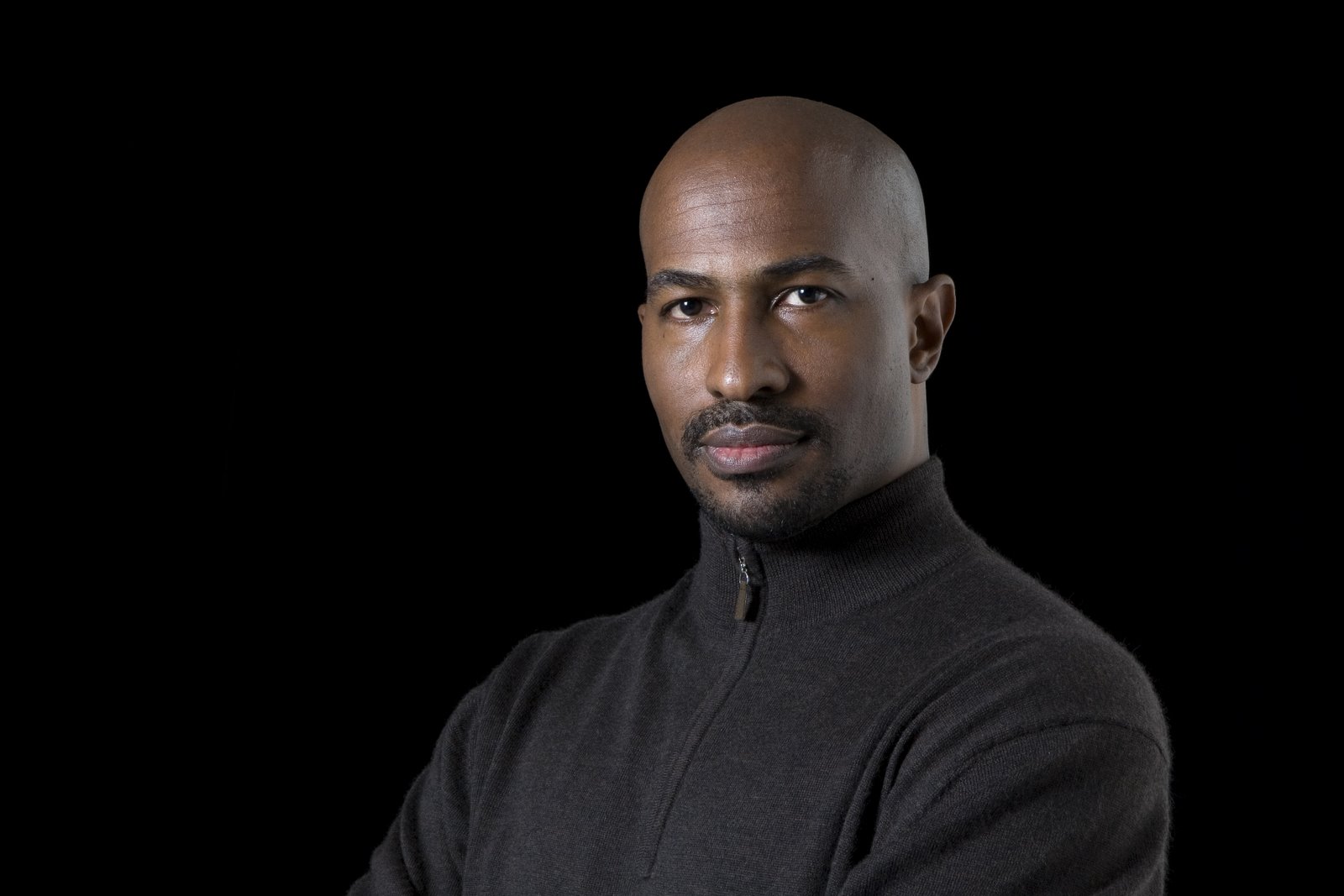
Environmental activist Van Jones, author of Green Collar Economy.

A Review of ‘Green Collar Economy:
How One Solution Can Fix Our Two Biggest Problems’

‘The best answer to our ecological crisis also responds to our socio-economic crisis. The surest path to safe streets and peaceful communities are not more police and prisons, but ecologically sound economic development. And that same path can lead us to a new green economy’ — Van Jones

By Carl Davidson / The Rag Blog / March 17, 2009

[Rag Blog contributor Carl Davidson reviews ‘Green Collar Economy: How One Solution Can Fix Our Two Biggest Problems’ by Van Jones (Harper-Collins, 2008). The book’s author, environmental activist Van Jones, was recently named an advisor to President Obama on green jobs.]

It’s time to link the newly insurgent U.S. Green Jobs movement with the worldwide efforts for the solidarity economy. Both are answering the call to fight the deepening global recession, and both face common adversaries in the failed “race to the bottom,” environment-be-damned policies of global neoliberalism.

That’s the imperative facing left-progressive organizers with connections to these two important grassroots movements. It’s even more important in the wake of the appointment of a key leader of one of these movements, Van Jones of “Green For All,” to a top environmental and urban policy post in the Obama administration.

Jones is a founder of an urban-based campaign focused on low-income young people, multinational and multicultural, that first developed as a progressive response to police repression, gang killings and all-round “criminalization of youth.” He saw the exclusion of this sector of the population from living-wage work and other opportunities as a key cause of the violence and destruction. Putting young people to work at low-to-medium skill levels retrofitting buildings for energy efficiency seemed like a no-brainer, so the demand for “Green Jobs, Not Jails” was raised.

The slogan found deep resonance as it spread across the country. Its all-round implications were spelled out in Jones’ widely acclaimed book, “The Green Collar Economy: How One Solution Can Fix Our Two Biggest Problems.” It spells out a string of ingenious, interconnected programs aimed at resolving the savage inequalities of structural unemployment and the global dangers of climate change rooted in carbon-based energies systems.

“Let’s be clear,” says Jones in the opening pages of his book, “The main piece of technology in the green economy is a caulk gun. Hundreds of thousands of green collar jobs will be weatherizing and energy-retrofitting every building in the United States.”

He doesn’t leave the matter there, but makes use of this picture to point out what’s “shovel ready,” to use the lingo of debate around stimulus spending. Green jobs span the entire range of occupations, with a special focus on high-tech manufacturing in emerging alternative energy industries.

“Green Collar Economy” was instantly a powerful voice in policy circles. It gained a wider and deeper significance in light of the financial crises that hit the fan soon after it reached the bookstores. Just as the voter revolt against Wall Street helped lift Obama to the Oval Office, so too was Van Jones’s urban policy monograph raised into a “What Is To Be Done” manifesto for deep structural reforms capable of busting the onset of a major depression.

“The best answer to our ecological crisis also responds to our socio-economic crisis,” Jones explains. “The surest path to safe streets and peaceful communities are not more police and prisons, but ecologically sound economic development. And that same path can lead us to a new green economy.”

How does it connect with the solidarity economy? This parallel movement with even earlier roots is widely known throughout the Global South, especially Latin America, as well as Europe and Quebec. It has been comprised of a range of projects where social capital is partnered with worker, community, consumer and peasant cooperative ownership structures. These were designed to fight back against the economic devastation wrought by neoliberal IMF-imposed “solutions” that left people without a safety net or means of survival. People turned to each other at the grassroots in common efforts, hence the term “solidarity economy.”

Both the solidarity economy and the green economy are “value centered” schools of economic thought. They are in the classical tradition of political economy, which in turn is rooted in moral philosophy. They are not simply descriptive of supposedly objective economic processes, but are prescriptive. At full throttle, they are organizing principles for shaping the future, locally and globally, via local organization and mass mobilization. For its part, the solidarity economy stresses the values of cooperation and mutual aid, especially in governance structures of productive, consumer or financial units. The green economy emphasizes ongoing sustainability and harmony between people and the eco-system of which they are a part.

The solidarity economy is about how people relate to each other, while the green economy is about how people relate to their wider environment. Naturally, there is considerable overlap between the two. Both see the current order as destructive of people and planet, and are working to turn things around.

“Equal protection of all people, equal opportunity for all people, and reverence for all creation.” These are what Jones terms the “three pillars” of the new green global economy.

Neither economic vision is monolithic. Both schools of thought span a range of views, some of which are in contention. In the Green Jobs movement for instance there are debates on nuclear power and “clean coal,” and what role, if any, these might have in a low-carbon future. In the solidarity economy movement there are discussions on the place of markets and government, and whether cooperative structures can use either or both to their advantage. There is also debate over the importance of “high road” allies within the business community, “high road” meaning traditional business structures that bring wider community and environmental responsibility into their business plans, rather than simply short-term shareholder profit.

Where Van Jones’ approach to both the green and solidarity economies most compels our attention is that he starts where the need is greatest, the millions of unemployed and underemployed inner city youth. The structural crises of neoliberal capitalism has long ravaged this sector of our society through deindustrialization, environmental racism and a wrecking ball approach to schools in favor of more prisons. To borrow from Marx, these young people are bound with radical chains, and when they break them with the tools suggested in Green Collar Economy, they free not only themselves, but the rest of us are set in a positive direction as well.

“The green economy,” Jones explains, reflecting on Hurricane Katrina, “should not be just about reclaiming thrown-away stuff. It should be about reclaiming thrown-away communities. It should not be just about recycling materials to give things a second life. We should also be gathering up people and giving them a second chance. Formerly incarcerated people deserve a second shot at life-and all obstacles to their being able to find that second chance in the green sector should be removed. Also, our urban youth deserve the opportunity to be part of something promising.”

Jones is a strategic thinker who gives definite answers to the question, “Who are our friends, who are our adversaries?” He narrows the target to speculative capital with roots in carbon-based energy industries and the militarism needed to secure their supplies. He seeks close allies in the wider working class of all nationalities, especially in the Blue-Green Alliance formed on the core partnership of the United Steelworkers with the Sierra Club. He also looks for allies among faith communities, environmentalists in the suburbs and rural populations suffering at the hands of anti-ecological agribusiness, offering a vision of wind farms and solar arrays for sustainable rural development. He sees the importance of cutting back defense spending and opposing unjust wars abroad.

Finally, he holds out a hand to green businesses in alternative energies, the current and future manufacturers of clean power:

“Our success and survival as a species are largely and directly tied to the new eco-entrepreneurs-and the success and survival of their enterprises. Since almost all of the needed eco-technologies are likely to come from the private sector, civic leaders and voters should do all that can be done to help green business leaders succeed.”

Jones is not talking just about mom and pop operations here, but an important and growing sector of productive capital. These will range from small upstarts to T. Boone Pickens-type investors wanting to create giant wind farms and large coastal arrays of wave generators, along with the manufacturing firms that build their equipment. Some on the left who want to see a clean renewable energy future will have to make adjustments in their “anti-corporate” strategies if they want to pursue this goal effectively with these high-road allies. Dan Swinney of the Chicago Manufacturing Renaissance Council explains his current project, the Chicago Green Manufacturing Network, as a case in point:

“CMRC is working with the Cleveland-based Great Lakes Wind Network/WireNET and the City of Chicago in building the capacity of local manufacturing companies to become the supply chain for the explosive wind turbine industry. Illinois and other states currently have ambitious Renewable Energy Portfolios that create a huge market for wind turbine companies and others in the renewable energy field. Currently the components for these companies are principally made by European and Asian suppliers. We will rise to the challenge of building the capacity of local companies to supply the high quality components for wind turbines and other renewable energy companies. This will be a means to diversify the markets for some of the 12,000 manufacturing companies in our region and an opportunity to create hundreds if not thousands of new permanent, full-time jobs in manufacturing.”

But Green Collar Economy’s core mass base remains a united Black and Latino community in close alliance with organized labor, the same engine of change that put Obama in the White House. And by asserting the interests and needs of that base, the green jobs and infrastructure proposals in Obama’s stimulus package serve to drive the entire recovery effort in a progressive direction.

“We want to build a green economy strong enough to lift people out of poverty,” says Jones, “We want this green wave to lift all boats… In the wake of Katrina, we reject the idea of ‘free market’ evacuation plans. Families should not be left behind to drown because they lack a functioning car or credit card…In an age of floods, we reject the ideology that says we must let our neighbors ‘sink or swim’.”

The nature of the Green New Deal’s adversaries — the carbon-based energy speculators and the military industries defending them — is the key reason Jones’ strategy requires a massive mobilized base. The structural reforms needed to dislodge and displace them are going to require a great deal of popular power from below. The petroleum-coal industrial nexus alone is subsidized to the tune of $1 trillion annually, according to Congressman Robert Kennedy Jr. in his foreword to Jones’ book. Some are outright opposed to any “New Deal,” green or otherwise, as the GOP in Congress reveal with their votes against the Recovery Act. The Green Jobs components were often cited by the right as “pork” or “the road to socialism.” Others want to destroy the Green New Deal from within, via “greenwashing.” These are politicians who take their lead from some corporations that have become skilled at changing their ads to “green” but continue producing toxics and other waste from the polluter’s agenda.

Jones singles out Newt Gingrich, the GOP’s neoliberal-in-chief, as particularly devious: “He has skillfully used rising fuel prices to stoke public support for climate-destroying measures…Their new tactic is to spread confusion about the real solutions by deliberately blurring distinctions between themselves and the champions of genuine answers.” Jones has to take the battle into the government and electoral arenas. The resources of state power are required to bring the green economy to scale, even if it requires a gut-wrenching struggle with polluters who have a good number of politicians on their payrolls and with revenue streams long fused to the public trough.

The solidarity economy faces these battles as well. For the most part, it overlaps with the green economy at the grassroots. Its mission can be summarized as generating new wealth in a green way, but with a worker-community ownership or control component built into a project’s agenda from the start. As a major finance capitalist and former oilman who wants to invest in wind farms in a major way, T Boone Pickens is clearly part of the green economy, but not part of the solidarity economy. A wind farm on an Indian reservation cooperatively owned by the tribe and employing its members and selling power both locally and regionally would be very much part of the solidarity economy.

But the picture is more complex. “Stakeholder” solutions are not quite as clear-cut. For instance, GAMESA, a Spanish high-tech firm and a leading European manufacturer of wind turbines, recently opened a plant in Bucks County, PA. To do so, it formed stakeholder partnerships with the county and state governments, getting tax allowances and land-use easements to refit and old closed steel mill. The United Steel Workers union was brought in as a partner: 1000 new union jobs were created, hiring many of the unemployed steelworkers. The “solidarity” here is between high-road capital, the USW, local government and the unemployed of the area, but it’s a stretch for some who might want to reserve ‘solidarity’ strictly to cooperative ownership structures.

The stakeholder solidarity offers practical flexibility in the wider struggle to bring both movements to scale. Cooperative structures that evolve out of deeper structural reforms have the quality of altering the relations of power in production and local governance. Even if on a small scale, they can point to a future of wider economic democracy, acting as a bridge to new socialist relations.

In any case, a powerful high-road alliance opens the door to those on its left wing who want to take it farther. Van Jones himself has no problem with either form; his book celebrates the stakeholder green jobs alliances implemented by the Green Party mayor of Richmond, CA, as well as the Green Worker Cooperatives in building salvaging businesses in the South Bronx, NY.

At one point in his book, Jones uses a metaphor of two ships to sum up the current crossroads facing the American people, the Amistad and the Titanic. The latter carried the wealthy elite indulging in idle pleasures, and a proletarian crew labored below in an unsound structure. The former had been taken over by insurgent slaves, taken to safe harbor, but still lacked wider resources for the crew’s future. The folly of reshuffling the deck chairs on the Titanic has long been a metaphor for doomed tinkering at reforms in a closed system. The Amistad, however, offers a more open future. Those familiar with the story know it involves further complex struggles, with new allies, high born and low, against a dying system. But it offers hope and change, both of which are in high regard these days.

[Carl Davidson is a member of the coordinating committee of the U.S. Solidarity Economy Network, and a national committee member of the Committees of Correspondence for Democracy and Socialism, and currently is webmaster for ‘Progressives for Obama.’ He is co-author of ‘CyberRadicalism: A New Left for a Global Age,’ and co-editor of ‘Solidarity Economy: Building Alternatives for People and Planet,’ both available at lulu.com. This article was also posted at SolidarityEconomy.net.]

The Rag Blog

Posted in Rag Bloggers | Tagged , , , , , | 4 Comments

Rag Blog Report : Mauricio Funes Wins in El Salvador


Photos from the elections in El Salvador by Al / The Rag Blog.

Live from El Salvador

One team in San Martin actually was notified that an ARENA representative in a dark corner (pants down) was trying to smuggle out Actas and ballots… An FMLN activist had seen him struggling with his belt and made sure to help, revealing the envelopes he had stuffed in his pants.

By Al / The Rag Blog / March 17, 2009

[This is the third in a series of dispatches from a regular Rag Blog contributor who is writing under a pseudonym due to the sensitivity of the situation in El Salvador.]

I was in the small dusty town of Rosario de Moro where there were sixteen voting tables. Our group left our hotel in San Salvador and got to the voting site by 4:30 a.m. It was in a small school with a covered basketball court which meant that we were in the shade. The FMLN had an office across the street and they had mobilized and were ready for their work.

Each table had four official people sitting at it — two from the ARENA party and two from the Frente Faribundo Marti for National Liberation (FMLN). Then there were vigilantes (observers) in party vests — two for each party. Red vests for the FLMN and red white and blue for ARENA. We met two of the police officers and entered the site promptly at 5. Four international observers determined to stay the entire day until the Actas (final reports) were faxed and the papaletas (ballots) had been loaded onto trucks and taken into the Capitol by the police.

I’ll jump ahead now because for all the lack of technology, the votes got counted quickly with a lot of transparency. Each ballot shown to everyone at the table and put into the hands of a Party representative. There were checks and balances as each roster (padron) was counted and the corners torn off the ballots. Unused ballots were counted and stamped. We watched as the Actas (table results) were faxed to San Salvador, checking to make sure the verbal results we had gotten at each table had not been replaced.

This is why we were there to guard against fraud — against the 800 bused in Guatemalans and Nicaraguans, against the replacement of Actas and stolen ballots. DUI (ID cards) for dead people and bought votes.

There is much more to say.

But Mauricio Funes won the presidency and it was known by 6 p.m. (after the polls closed at 5) at my election site. The vice president is Salvador Sanchez Cerena, a former guerrillera in the struggle here. Everyone that speaks of this election says it is dedicated to the dead. To Oscar Romero assassinated as he gave mass in March, 1980. And to the people massacred.

It is a huge turning point. The 1992 UN brokered peace accords here resulted in an end to the civil war, but it has been the relentless organizing of the FLMN in every sector that has resulted in a people’s victory. The streets were filled with red shirts and red FLMN banners. Fireworks lit the sky. The man overseeing the polling place said to me: “Sometimes a party celebrates. This time the people celebrate.”

The Rag Blog

Posted in Rag Bloggers | Tagged , , | Leave a comment

Seth Meyers: US SNL Government Propagandist


Pop Goes the Culture: Live from New York … It’s the Same Old Propaganda
By Lord Baltimore / March 15, 2009

Studio 8H in New York City’s Rockefeller Center is not only the two-floor sound stage from which Saturday Night Live airs, but has also long been one of the most important stages for mainstream American political satire and comedic commentary over the past three decades. Whereas during its thirty-four year tenure, from Chevy Chase’s prat-falling Gerald Ford to Tina Fey’s brilliant impersonation of bimbo huntress Sarah Palin, SNL has successfully lampooned many American politicians, the show has long steered clear of challenging government propaganda or party-line talking points. Dubious ideologies of American imperialism and exceptionalism are not only often ignored but, at times, are even reinforced by the show’s writers, producing jokes that can easily be seen as, at best, ignorant and misinformed, and at worst, downright dogmatic and racist.

SNL‘s reinforcement of American political propaganda has never been more pronounced, offensive or unapologetic than under the helm of Seth Meyers, who succeeded Fey as the show’s head writer in 2006. Meyers clearly has a hard-on for Barack Obama (he donated $4000 to his campaign) and revitalized the show’s waning popularity by exposing the embarrassing absurdity of the Illinois Senator’s political opponents. More recently, Meyers has shown that the new President’s Congressional adversaries should face defenestration due to their dissent over his economic policies, at the devious bidding of Obama’s henchman Rahm Emanuel (a suggestion that I too subscribe to, as long as Rahm is then also thrown through a closed window, followed soon thereafter by the President himself).

What is clear is that real issues are never fair game with Meyers in charge, and each politics-related sketch seems to serve the purpose of revealing his own tired political perspective: Republicans are stupid and wrong, Democrats are well-intentioned, if at times silly, but the United States is always right and just. Regardless of this blinkered viewpoint, this format is often harmless and usually humorous.

Sometimes, however, the results are a bit more sinister.

Even though challenging the American status quo is off-limits to Meyers and his writing staff, they often revel in making fun of foreign countries and cultures, proving time and again that the American public, far from being able to stomach substantial satire and criticism of its own government’s policies, historical narratives and national mythologies, eats up racial stereotypes and dehumanizing generalizations like Big Macs, and is always hungry for more.

Nowhere is Meyers’ own voice heard more explicitly than on SNL‘s Weekend Update. The famous faux-news report segment, an SNL staple since its very first broadcast back in 1975 and obvious inspiration to shows like The Daily Show and The Colbert Report, is arguably the funniest part of each episode and allows the SNL writers to deliver their own perspective and commentary in a much more direct forum, rather than through the prism of sketch comedy or subtle satire. Meyers, as Weekend Update anchorman, is playing himself and, thus, the audience is able to hear his views straight from the source.

As such, on the March 7, 2009 episode, Meyers had this to say:

“The Iranian government this week has demanded an apology from Hollywood saying the films 300 and The Wrestler were insulting to Iranians. Well how ’bout this Iran: you apologize for the hostage crisis, pursuing nuclear weapons, high gas prices, financing Hamas, denying the Holocaust, and setting fire to a Danish Embassy because of a couple cartoons, and then you’ll get your apology for The Wrestler.”

This little laugh-line got the biggest cheer and loudest applause of the evening from the audience and Meyers appeared to be pretty pleased with himself afterwards. But hey, it’s an entertainment show that is supposed to make people laugh, right? So what’s the big deal?

The big deal is that humor doesn’t work in a vacuum. Context is what makes situations and punchlines funny, and if a joke is based on a flawed, faulty, or completely false premise, it fails. The joke itself doesn’t need to rely on truth, but the context certainly does. The best humor pushes boundaries, challenges assumptions. The only way this particular gag could succeed is if all parties involved – from the writer to the audience – were ignorant of reality and held a strikingly demonized view of the Iranian people. And succeed it did.

This characterization (or caricaturization) of Iran is based wholly on American mainstream media propaganda and US – and Israeli – governmental talking points. The premise is that Iran has a lot more to apologize to America for than vice versa and, therefore, the idea of Iran demanding an apology from the US is patently absurd. It assumes that history began thirty years ago and that the United States, the world’s Super Empire, has been long victimized, threatened, and offended by a country nearly six times smaller than it, with less than a quarter the population, and which has a military budget that is literally one hundred times smaller than the US’.

Meyers’ glib delivery played to his audience’s own ignorance; his self-congratulatory smirk hid truths that every literate American should really know by now. The crowd hooted and hollered as Meyers claimed that it is Iran that hasn’t given the US a fair shake all these years and that this demand on Hollywood just goes one insult too far. Regardless of the fact that the American film industry has long demonized Middle Eastern Muslims, from Beau Geste to Ishtar to Iron Man, as aggressive, violent, irrational, barbaric terrorists hell bent on destroying the Western way of life for no particular reason, other than perhaps uncontrollable freedom-hating, apparently it’s Iran that owes us, not the other way around. In this one punchline, Meyers has revealed himself to be a know-nothing parrot, ripe for propagandistic ventriloquism.

Luckily for the Obama Administration, just like Bush’s before it, folks like Seth Meyers continue to repeat government talking points without the slightest hint of skepticism or reason. Meyers is all too eager to defend Barack against his detractors, who are often portrayed as petty and vindictive Republicans, and willfully regurgitates the same old nationalism and xenophobia – which has not slackened at all with Obama’s inauguration – with aplomb.

Granted, this should come as no surprise to SNL viewers, as Meyers has shown his true colors many times before on Weekend Update. On November 18, 2006 – right after the Democrats regained control over Congress, when anti-Bush sentiment was at its peak – Meyers delivered this quip:

“Christian and Muslim Britons joined forces yesterday to tell city officials to stop taking the Christianity out of Christmas, warning them that this simply fuels a backlash against Muslims. Also fueling a backlash against Muslims: terrorism.”

And then, only two months later, on January 20, 2007, repeated the punchline with a different set-up:

“Muslim groups are concerned that the new season of 24, which features Muslim terrorists setting off a nuclear explosive near Los Angeles will foster hate against them and create a climate of Islamophobia. Also creating a climate of Islamophobia: terrorism.”

It’s clear that Meyers’ own bigotry remains unabated and undeterred in this glorious post-racial American reconstruction era of Barack Obama.

So, why should Iran as a nation, or Iranians as a people, apologize to the United States or the American people? According to Mr. Meyers, an apology is owed for the “hostage crisis” during which Iranian students held 52 U.S. diplomats in the American embassy in Tehran for 444 days. Perhaps this would be a reasonable request if history began on November 4, 1979, the day the embassy was taken. But it didn’t.

Meyers’ entire joke hinges on deliberate misinformation and selective memory. The history that Meyers (in a way speaking for most Americans and echoing the oft-repeated rhetoric of the US government) ignores is as follows:

In 1953, the American government backed a CIA coup in Iran that overthrew the popular and democratically-elected Prime Minister Mohammad Mossadegh, after the nationalization of the Iranian oil industry, and installed a brutally repressive and violent dictatorship under Shah Mohammad Reza Pahlavi. The Shah ruled Iran, with constant US support and financial backing, for over 25 years, during which opposition to the tyrannical monarchy was countered and suppressed with imprisonment, torture, and execution by the Shah’s security agency and intelligence apparatus, SAVAK. SAVAK was trained and funded by both the US and Israel. When the people of Iran finally revolted and drove the Shah from the country in 1979, he found asylum in the United States. The United States has never issued any sort of apology for the 1953 coup, its support of dictatorship, or for its role in attempting to suppress the 1979 revolution.

In order to strike a blow to US influence in Iran, which had been profoundly powerful during the Shah’s reign, the American Embassy in Tehran was occupied by Iranian revolutionaries. Ever since, the American government has imposed harsh economic and financial sanctions on Iran.

The United States has also covertly supported many anti-Iranian organizations since 1979. Most notable is its cooperation and protection over the years of the Mujahedeen-e-Khalq (MEK), an Iranian opposition network that, in 1981, assassinated about 70 high ranking Iranian officials including cabinets members, elected parliamentarians, and the new Chief Justice when it bombed state headquarters.

For eight years, between 1980 and 1988, the United States supported Saddam Hussein’s expansionist war against Iran that cost over one million lives. During the war, Iraq used US-supplied chemical weapons on Iranian citizens.


On July 3, 1988, an Iranian A-300 Airbus passenger plane was shot down by the U.S. Navy warship, the USS Vincennes, in Iranian territorial waters. All 290 people on board Iranian Flight 655 were killed, having been blown out of the sky by two missiles. 66 of the passengers were children under 12. Although the U.S. military called the attack an “accident,” the crew of the USS Vincennes was awarded combat-action ribbons and its Commander was specifically commended with a medal for “heroic achievement.”


The U.S. Navy claimed that the crew of the USS Vincennes mistook the Iranian plane for an F-14 Tomcat fighter jet, an excuse that hardly holds up to the most cursory scruntiny (see diagram to the left for a tragic laugh). Iran’s allegations that the warship was far too technologically advanced to make such a catastrophic mistake was dismissed by the American government. When questioned about the incident, then-Vice President George H.W. Bush barked, “I will never apologize for the United States of America, ever. I don’t care what the facts are!”

The United States military and government has never taken responsibility for this act of aggression and has never made an official apology to the Iranian people or government for the assault on its citizens.

Seth Meyers probably doesn’t know any of this, which is strange considering this information is very easy to come by, to fact check, and to confirm. One might reasonably assume that, being the head writer of one of the longest-running shows on television, Seth Meyers is literate. All he’d need to do is read.

Meyers also suggested that Iran apologize to the United States for “pursing nuclear weapons.” Despite the fact that there has never been any evidence of Iran’s quest for such weaponry (and extensive intelligence reporting to the contrary) and the Iranian government at all levels has constantly, consistently, and categorically denied any interest in militarizing their nuclear program on moral, rational, and religious grounds, and Iran’s nuclear energy program is wholly transparent, heavily monitored, and completely legal under the Nuclear Non-Proliferation Treaty, Meyers has decided to take Cheney’s word for it. Hey, it worked with Iraq, right?

Meyers also blamed Iran for high gas prices. Odd, considering that nothing has affected these prices more than American imperialism in the Middle East, notably its current occupation of Iran’s two neighbors. Also, Iran’s oil output is drastically below full production levels due to the years of heavy sanctions imposed upon the country by the United States. In addition, few things would improve Iran’s drilling and export capabilities more than a successful, functional nuclear energy program, which would provide much needed power domestically and free up oil and gas for shipment abroad.

Iran, as a country, is also blamed for denying the Holocaust. How an entire country can deny something is beyond me, but even if he meant President Mahmoud Ahmadinejad specifically, he’d be wrong. Ahmadinejad has never denied the Holocaust, but rather has questioned why the European genocide has been mythologized in order to justify the displacement of and violence against the Palestinian people. Ahmadinejad’s reasoning in 2005 was as follows:

“If the Europeans are telling the truth in their claim that they have killed six million Jews in the Holocaust during the World War II – which seems they are right in their claim because they insist on it and arrest and imprison those who oppose it, why the Palestinian nation should pay for the crime. Why have they come to the very heart of the Islamic world and are committing crimes against the dear Palestine using their bombs, rockets, missiles and sanctions…If you have committed the crimes so give a piece of your land somewhere in Europe or America and Canada or Alaska to them to set up their own state there.”

In February 2006, he spoke more directly about mythology and the stifling of criticism:

“Some Western governments, in particular the US, approve of the sacrilege on the Prophet Mohammad (PBUH), while denial of the Myth of the Holocaust, based on which the Zionists have been exerting pressure upon other countries for the past 60 years and kill the innocent Palestinians, is considered as a crime.”

In an article for Kein Krieg!, writers Anneliese Fikentscher and Andreas Neumann analyze Ahmadinejad’s speeches and conclude that,

“What Ahmadinejad does is not denying the Holocaust. No! It is dealing out criticism against the mendacity of the imperialistic powers who use the Holocaust to muzzle critical voices and to achieve advantages concerning the legitimization of a planned war. This is criticism against the exploitation of the Holocaust…The assertion that Ahmadinejad denies the Holocaust thus is wrong in more than one aspect. He does not deny the Holocaust, but speaks of denial itself. And he does not speak of denial of the Holocaust, but of denial of the Myth of Holocaust. This is something totally different. All in all he speaks of the exploitation of the Holocaust. The Myth of Holocaust, like it is made a subject of discussion by Ahmadinejad, is a myth that has been built up in conjunction with the Holocaust to – as he says – put pressure onto somebody. We might follow this train of thoughts or we might not. But we cannot equalize his thoughts with denial of the Holocaust.”

Meyers mentions Iran’s support for Hamas, the democratically elected representative of the Palestinian people in Gaza, as another thing Iran should apologize for. He does this less than two months after the Israeli military bombarded the Gaza Strip for three weeks, killing over 1,300 people, more than 400 of them children. Two new episodes of Saturday Night Live were aired during the massacre and, obviously, no mention was made whatsoever to Israeli aggression. But here, quite unprovoked, Meyers decides to trot out an absurd litany of complaints against Iran. Clearly, for Meyers, resistance to dehumanization, starvation, invasion, occupation, and ethnic cleansing and the support for that resistance is, quite simply, “terrorism.” I mean, hey, most Palestinians are Muslims after all and we know how Seth feels about those people.

Finally, a reference is made to the outrage expressed over the publication of cartoons disparaging to Islam in a Danish newspaper back in 2006. There were many protests, sometimes quite violent, all over the world in response to the offensive cartoons. In Iran, hundreds of protesters rioted outside the Danish Embassy in Tehran. Danish flags were burned, and the embassy gate and two trees caught fire as well. The crowd was forced back by Iranian police with the use of tear gas. So, when Meyers mentions this event, does he mean that the Iranian people owe the Danish people an apology, or does he mean that the Iranian government should apologize for using tear gas on its own citizens in its attempt to pacify a protest? Either way, how does a situation sparked by cartoons published in a Danish newspaper and the backlash Denmark received from it have to do with Iran apologizing to the United States? Is Copenhagen now an extension of Hollywood in Meyers’ opinion? What an odd thing for him to say.

Perhaps it wasn’t funny enough for Meyers to say that Iran might first want to consider asking for an apology from the United States for deeming it part of an “Axis of Evil” after spontaneous candlelight vigils were held in Iran for the victims of the the World Trade Center attacks and the Iranian government was instrumental in allowing the United States to invade Afghanistan in 2001, or for rebuffing Iranian overtures made by both Presidents Khatami and Ahmadinejad to reopen full diplomatic relations between the two countries, or for violating Iranian airspace with predator drones and territorial waters in the Persian Gulf with battleships since 2003, or for raiding the Iranian Consulate General in Iraq and arresting five staff members, before demanding anything of Hollywood.

Meyers is not a journalist, he is a comedian and a writer. He is not expected to investigate and expose new truths to the American public at 12:05am on Sunday mornings; however, one might argue, it also isn’t his job to propagate lies and strengthen the already ridiculous misconceptions of his audience. In short, while he’s not Bill Moyers, he’s also not Larry the Cable Guy – at least he should try not to be.

The reason the American public doesn’t know anything about the world around it is because of people like Seth Meyers. Propaganda isn’t spread simply through White House press releases, shoddy Beltway reporting, and loud-mouthed punditry. Common beliefs need the constant support and encouragement from the mainstream, from outlets other than political media, in order to solidify themselves within the mindset of a community. Entertainers, more than most, shape public opinion and help stereotypes linger in the collective consciousness of their audience.

Nazi propaganda minister Joseph Goebbels once said, “If you tell a lie big enough and keep repeating it, people will eventually come to believe it.” Over six decades later, George W. Bush echoed this sentiment by explaining that, “In my line of work, you have to keep repeating things over and over and over again for the truth to sink in…to, kind of, catapult the propaganda.” By making and repeating jokes based on false premises, comedians like Meyers do the busy work of war criminals like Goebbels and Bush, thus making their job easier. He is now firmly in service of the Obama Administration and will continue to push the same aggressive agenda under the guise of entertainment.

Seth, you ignorant slut.

[Nima Shirazi was born and raised in Manhattan. He now lives in Brooklyn and writes the weblog Wide Asleep In America under the moniker Lord Baltimore. He can be reached at wideasleepinamerica@gmail.com.]

Source / Wide Asleep in America

The Rag Blog

Posted in RagBlog | Tagged , , , | Leave a comment