Pakistan: Urgent Foreign Policy Matter for Obama

This matter becomes all the more urgent with Pakistan moving troops to the Indian border because of the threats coming from that nation over the Mumbai attack. Purohit has some fine suggestions for the incoming administration in order to establish a more realistic relationship with Pakistan and the entire region.

Richard Jehn / The Rag Blog

Protesters burn an Indian flag Friday during a demonstration in Karachi, Pakistan. Photo: Fareed Khan, AP.

Why Solving Pakistan is the Pivot for Obama’s South Asian Security Strategy
By Raj Purohit / December 26, 2008

In the space of 10 days, two terrorist actions in South Asia highlighted why President-elect Obama’s desire to adopt a regional approach to the interlinked crises of Afghanistan, India and Pakistan may ultimately rank among the most strategically significant decisions of his administration.

Last month, the world watched in horror as militants brought the thriving metropolis of Mumbai to a halt with a multi-faceted attack on its hotel, entertainment and transportation system. The attacks, dubbed India’s 9-11, saw 188 civilians killed and hundreds more injured. A few days later militants in Pakistan attacked a market place killing dozens of civilians.

Although the attack in Peshawar had a devastating impact on the local populace, it drew less media attention than those in Mumbai, in part due to the lack of international media in that city and also because the Peshawar bombing was one in a long line of attacks in Pakistan in recent months.

Despite the variation in media attention and the way in which they were reported as two distinct stories, it is important that the new U.S. administration looks at the two attacks and the related foreign policy questions holistically. A careful appraisal of the situation suggests that, once in office, President Obama’s administration must adopt a regional approach to the instability in South Asia and also recognize that Pakistan is at the heart of both the crisis and any resolution.

The fledgling democratic government of Pakistan is faced with three interrelated challenges. First, they must address the security situation on their border with Afghanistan where the Taliban is in the ascendancy despite a vigorous Pakistani military campaign. Second, the government must also deal internally with the open sore that is Kashmir. Despite the best efforts of both India and Pakistan to deemphasize Kashmir in public and seek to build confidence between the two countries through other measures, it is clear that Kashmir is a priority issue to a substantial number of Pakistanis, including those involved in the Mumbai killings. Third, the authorities must also battle the militancy within its own border that grew quickly during the reign of General Musharraf.

The Obama administration can assist their Pakistani counterparts in all three of these areas. On Afghanistan, it can bolster the Pakistani government in the eyes of its own people by acknowledging the sacrifice of its military fighting against the Taliban. It can also reduce U.S. drone activity, and by extension reduce civilian deaths, by increasing human intelligence cooperation. U.S. non-military aid can also be a valuable tool in the effort to win the battle for hearts and minds in the tribal border region.

Additionally, the Obama government can force Afghanistan to accept a fixed border between the two countries i.e. the internationally recognized Durand line. Many regional analysts and commentators have urged the U.S. to pressure Afghanistan to accept the line believing that it will increase domestic Pakistani support for vigorous policing of the border and make it harder for the Taliban and others to move freely between the two countries.

President Obama should assign an envoy to begin a dialogue between the two countries on Kashmir. The best efforts of both countries to deemphasize this issue were ended by the Mumbai attacks and it is time to begin a process that resolves the Kashmir question and removes a grievance that militant leaders use to recruit impressionable individuals to their ranks. It is important to note that by endorsing the Durand line and seeking a resolution to the Kashmir crisis, President Obama would also assuage the fears of Pakistani elites who have been nervously sharing a map drawn by U.S.neo-conservatives that sketches out a truncated Pakistan that had lost land to India and Afghanistan. As Jane Perlez noted in the International Herald Tribune:

“One of the biggest fears of the Pakistani military planners is the collaboration between India and Afghanistan to destroy Pakistan,” said a senior Pakistani government official involved in strategic planning who insisted on anonymity in accordance with diplomatic rules. “Some people feel the United States is colluding in this.”

Finally, early in his administration, President Obama should underscore his support for a democratic Pakistan. Historically, democracy has been an antidote to militancy in Pakistan and it will require the engagement of its people to respond to the militants within its own borders.

[Raj Purohit is an independent consultant and associate professor at American University, Washington College of Law. He served as the Director and CEO for Citizens for Global Solutions until July 2008. Prior to joining CGS, Raj was Legislative Director for Human Rights First, where he was responsible for leading the organization’s advocacy efforts in Congress, with a focus on international relations, judiciary and security issues. Raj helped develop and implement new legislative initiatives and lobbying strategies. He also represented Human Rights First in a range of coalitions, including the Washington Working Group on the International Criminal Court, and was a media spokesperson.

Before joining Human Rights First, Raj served as Legislative Director for the National Association of Criminal Defense Lawyers. He has alsoserved as Director of Legal Services at the Center on Conscience and War. Raj received his Bachelor of Laws (LL.B) from Sussex University (1995) and his LL.M. in International Legal Studies from American University, Washington College of Law (1997).]

Source / Informed Comment

The Rag Blog

Posted in RagBlog | Tagged , , , | Leave a comment

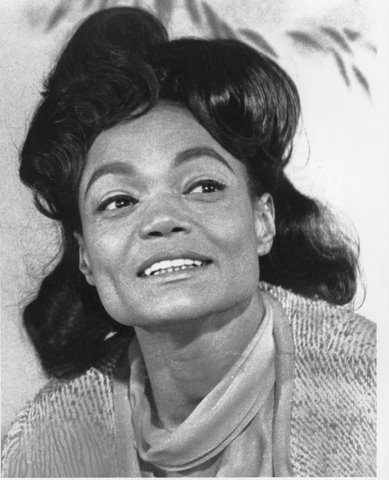
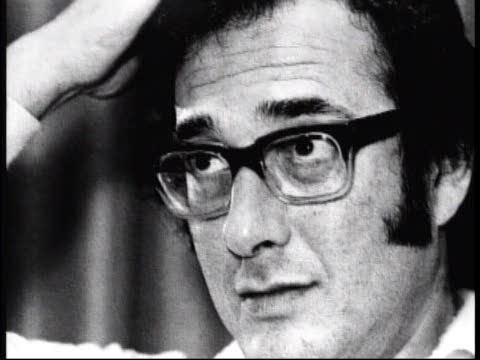
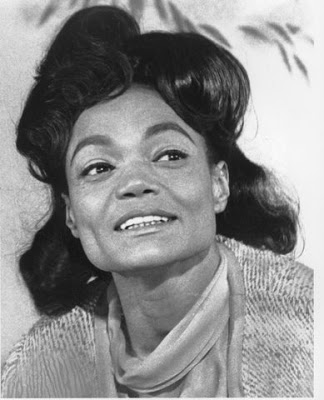
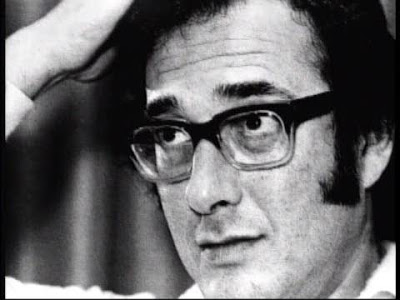
Harold Pinter and Eartha Kitt : Artists and Rebels

Both lived long, productive, exciting lives and went out celebrated by their peers and countless fans; none of us could reasonably ask for more than they wrung out of life.

By Chris Thompson / December 26, 2008

See ‘Remembering Nobel Laureate Harold Pinter: Is Our Conscience Dead?,’ by Ann Wright; ‘Art, Truth and Politics,’ by Harold Pinter; ‘Eartha Kitt versus the LBJs’ by Frank James; and Video of Eartha Kitt singing ‘Everything Changes,’ Below.

It’s naturally standard practice to mourn the dead, but we find ourselves checking that impulse when it comes to Eartha Kitt and Harold Pinter. The fact is, both lived long, productive, exciting lives and went out celebrated by their peers and countless fans; none of us could reasonably ask for more than they wrung out of life. Kitt started life picking cotton in South Carolina by day and being beaten by her own family by night; she ended it as one of the most elegant sex symbols, songstresses, and dancers to charm the modern world. Along the way, she threw the Vietnam War right in Lady Bird Johnson’s face and made her cry. Nixon put her on his enemies list, a badge of honor in most people’s books. Pinter carved out an entirely new sensibility in modern drama, got his name turned into an adjective, and spent his remaining years using his arsenal to dice up George W. Bush quite nicely. And both beat the actuarial tables, so there’s that. A tip o’ the hat to the both a youse.

Source / East Bay Express

Remembering Nobel Laureate Harold Pinter: ‘Is Our Conscience Dead?’
By Ann Wright / December 26, 2008

On the news today of the death of Harold Pinter, the winner of the 2005 Nobel Prize for Literature, I remembered hearing his Nobel Laureate lecture/acceptance speech. I was in London in December 2005, speaking at the annual Stop the War conference when Pinter delivered his speech – not in Oslo, as Pinter was very sick and could not travel, but in London via TV link.

I was amazed and thrilled that he chose to use the Nobel Prize platform and devote a huge portion of his speech to shining an international spotlight on the tragic effects of the past decades of US foreign policy and particularly, on George Bush and Tony Blair’s decisions to invade and occupy Iraq, on Guantanamo and on torture.

Pinter’s Laureate speech question, “Is Our Conscience Dead?” is most relevant today when three years after his acceptance speech, “Art, Truth and Politics,” Bush, Cheney, Rice and other administration officials are either trying to rewrite history or, as in Cheney’s case – purposefully revealing his role in specific criminal acts of torture and daring the American legal system and people to hold him accountable.

Following is the part of Pinter’s lecture that speaks to the invasion of Iraq, torture and Guantanamo – and our collective and individual conscience.

Art, Truth and Politics
By Harold Pinter

[The following is excerpted from Harold Pinter’s Nobel Lecture delivered on December 7, 2005.]

The United States no longer… sees any point in being reticent or even devious. It puts its cards on the table without fear or favour. It quite simply doesn’t give a damn about the United Nations, international law or critical dissent, which it regards as impotent and irrelevant.

It also has its own bleating little lamb tagging behind it on a lead, the pathetic and supine Great Britain.

What has happened to our moral sensibility? Did we ever have any? What do these words mean? Do they refer to a term very rarely employed these days – conscience? A conscience to do not only with our own acts but to do with our shared responsibility in the acts of others? Is all this dead?

Look at Guantanamo Bay. Hundreds of people detained without charge for over three years, with no legal representation or due process, technically detained forever. This totally illegitimate structure is maintained in defiance of the Geneva Convention. It is not only tolerated but hardly thought about by what’s called the ‘international community’. This criminal outrage is being committed by a country, which declares itself to be ‘the leader of the free world’. Do we think about the inhabitants of Guantanamo Bay? What does the media say about them? They pop up occasionally – a small item on page six. They have been consigned to a no man’s land from which indeed they may never return. At present many are on hunger strike, being force-fed, including British residents. No niceties in these force-feeding procedures. No sedative or anesthetic. Just a tube stuck up your nose and into your throat. You vomit blood. This is torture.

What has the British Foreign Secretary said about this? Nothing. What has the British Prime Minister said about this? Nothing. Why not? Because the United States has said: to criticise our conduct in Guantanamo Bay constitutes an unfriendly act. You’re either with us or against us. So Blair shuts up.

The invasion of Iraq was a bandit act, an act of blatant state terrorism, demonstrating absolute contempt for the concept of international law. The invasion was an arbitrary military action inspired by a series of lies upon lies and gross manipulation of the media and therefore of the public; an act intended to consolidate American military and economic control of the Middle East masquerading – as a last resort – all other justifications having failed to justify themselves – as liberation. A formidable assertion of military force responsible for the death and mutilation of thousands and thousands of innocent people.

We have brought torture, cluster bombs, depleted uranium, innumerable acts of random murder, misery, degradation and death to the Iraqi people and call it ‘bringing freedom and democracy to the Middle East’.

How many people do you have to kill before you qualify to be described as a mass murderer and a war criminal? One hundred thousand?

More than enough, I would have thought. Therefore it is just that Bush and Blair be arraigned before the International Criminal Court of Justice. But Bush has been clever. He has not ratified the International Criminal Court of Justice. Therefore if any American soldier or for that matter politician finds himself in the dock Bush has warned that he will send in the marines. But Tony Blair has ratified the Court and is therefore available for prosecution. We can let the Court have his address if they’re interested. It is Number 10, Downing Street, London.

Death in this context is irrelevant. Both Bush and Blair place death well away on the back burner. At least 100,000 Iraqis were killed by American bombs and missiles before the Iraq insurgency began. These people are of no moment. Their deaths don’t exist. They are blank. They are not even recorded as being dead. ‘We don’t do body counts,’ said the American general Tommy Franks.

Early in the invasion there was a photograph published on the front page of British newspapers of Tony Blair kissing the cheek of a little Iraqi boy. ‘A grateful child,’ said the caption. A few days later there was a story and photograph, on an inside page, of another four-year-old boy with no arms. His family had been blown up by a missile. He was the only survivor. ‘When do I get my arms back?’ he asked. The story was dropped. Well, Tony Blair wasn’t holding him in his arms, nor the body of any other mutilated child, nor the body of any bloody corpse. Blood is dirty. It dirties your shirt and tie when you’re making a sincere speech on television.

The 2,000 American dead are an embarrassment. They are transported to their graves in the dark. Funerals are unobtrusive, out of harm’s way. The mutilated rot in their beds, some for the rest of their lives. So the dead and the mutilated both rot, in different kinds of graves.

I have said earlier that the United States is now totally frank about putting its cards on the table. That is the case. Its official declared policy is now defined as ‘full spectrum dominance’. That is not my term, it is theirs. ‘Full spectrum dominance’ means control of land, sea, air and space and all attendant resources.

The United States now occupies 702 military installations throughout the world in 132 countries, with the honourable exception of Sweden, of course. We don’t quite know how they got there but they are there all right.

The United States possesses 8,000 active and operational nuclear warheads. Two thousand are on hair trigger alert, ready to be launched with 15 minutes warning. It is developing new systems of nuclear force, known as bunker busters. The British, ever cooperative, are intending to replace their own nuclear missile, Trident. Who, I wonder, are they aiming at? Osama bin Laden? You? Me? Joe Dokes? China? Paris? Who knows? What we do know is that this infantile insanity – the possession and threatened use of nuclear weapons – is at the heart of present American political philosophy. We must remind ourselves that the United States is on a permanent military footing and show no sign of relaxing it.

Many thousands, if not millions, of people in the United States itself are demonstrably sickened, shamed and angered by their government’s actions, but as things stand they are not a coherent political force – yet. But the anxiety, uncertainty and fear which we can see growing daily in the United States is unlikely to diminish.

I know that President Bush has many extremely competent speech writers but I would like to volunteer for the job myself. I propose the following short address which he can make on television to the nation. I see him grave, hair carefully combed, serious, winning, sincere, often beguiling, sometimes employing a wry smile, curiously attractive, a man’s man.

‘God is good. God is great. God is good. My God is good. Bin Laden’s God is bad. His is a bad God. Saddam’s God was bad, except he didn’t have one. He was a barbarian. We are not barbarians. We don’t chop people’s heads off. We believe in freedom. So does God. I am not a barbarian. I am the democratically elected leader of a freedom-loving democracy. We are a compassionate society. We give compassionate electrocution and compassionate lethal injection. We are a great nation. I am not a dictator. He is. I am not a barbarian. He is. And he is. They all are. I possess moral authority. You see this fist? This is my moral authority. And don’t you forget it.’

I hope you will decide that yes, we do have a conscience and that you will join the millions of Americans who say we must hold accountable those who have committed criminal acts while in government – the policy makers as well as the implementers.

Write and call the new President and the new Congress and demand official investigations into war crimes and other criminal acts committed by members of the Bush administration and join us on Inauguration day to remind the new President of his responsibilities.

Source / truthout

Eartha Kitt sings ‘Everything Changes’ from Mimi le Duck

Eartha Kitt versus the LBJs
by Frank James / December 26, 2008

Say what you will about Eartha Kitt, the American original of a performer who died at 81 on Christmas Day, she certainly knew how to disrupt a White House event.

One of the best Kitt stories ever has to be how she gave First Lady Lady Bird Johnson the blues in 1968. A petite woman, Kitt had an out-sized ego and just as sizable chip on her shoulder, the latter the result of an unhappy childhood she often talked of (a biracial child born out of wedlock in 1927 small-town South Carolina. You get the picture.)

The White House story was captured by David Murphy in a biography of Mrs. Johnson called “Texas Bluebonnet: Lady Bird Johnson.”

As the president was contemplating his future, Lady Bird went on with her official duties and hosted a Women Doers lunch on Jan. 18, 1968 that was to focus on crime. Singer and actress Eartha Kitt was invited upon the recommendation of Sharon Francis and Liz Carpenter since Kitt had testified to Congress in favor of the President’s anti-crime legislation. When President Johnson entered the room, Kitt confronted him, “Mr. President, what do you do about delinquent parents, those who have to work and are too busy to look after their children?” He told her that Social Security legislation was just passed that provided millions of dollars for daycare centers. Kitt was not pleased but Johnson told her those were issues for the women to discuss at the lunch.

During the question period, Kitt stood up and confronted Lady Bird, “Boys I know across the nation feel it doesn’t pay to be a good guy.” She moved into (sic) closer to the First Lady and said that boys don’t want to behave for fear of being sent to Vietnam saying, “You are a mother too though you have had daughters and not sons. I am a mother and I know the feeling of having a baby come out of my guts. I have a baby and then you send him off to war. No wonder the kids rebel and take pot. And Mrs. Johnson, in case you don’t understand the lingo, that’s marijuana.

Lady Bird was proud to match her stare for stare and Sharon Francis said she sat ready to stand up in between Mrs. Johnson and Kitt since Francis was closer than the Secret Service. After Kitt finished her tirade, Betty Hughes, wife of the New Jersey governor, rose to her feet and recalled how she had lost a husband in World War II and had sons in Vietnam and said, “I think that anybody who takes pot because there is a war on is a kook. These young people are still juniors. They have to be regulated. I hope we adults are still in control.” After the wife of the Washignton mayor, Benetta Washington, who, like Kitt, was African-American, spoke up and said we must channel our anger in constructive manners, Lady Bird spoke:

“Because there is a war on, and I pray that there will be a just and honest peace — that still doesn’t give us a free ticket not to try to work for better things — against crime in the streets and for better education and health for our people. I cannot identify as much as I should. I have not lived the background that you have nor can I speak as passionately or as well, but we must keep our eyes and our hearts and our energies fixed on constructive areas and try to do something that will make this a happier, better educated land.” The room broke into applause. Kitt’s confrontations with Mrs. Johnson lead (sic) to a slow decline of her career and she told Newsweek shortly after the luncheon, “if Mrs. Johnson was embarrassed, that’s her problem.”

As a Lady Bird sympathizer, biographer Murphy clearly had little use for Kitt.

A more dispassionate writer might have observed that Kitt showed a rare courage for an American, especially a black one in 1968, to be as confrontational as she was with a first lady.

The White House has a way of intimidating people, even those who are famous and powerful in their own spheres.

But she obviously wasn’t overwhelmed by the trappings that surround the presidency. She spoke truth as she saw it to power. And she did that knowing it wasn’t going to help her career, that she ran the risk of being blacklisted, as it were.

Still, it didn’t matter. For that alone, she deserves to be remembered.

Source / The Swamp

The Rag Blog

Posted in RagBlog | Tagged , , , , , , , | Leave a comment

Poor Junior: The Free Markets Say Shoe-Throwing Is the Next Olympic Sport

The shoe maker said the black polyurethane-soled shoes have been renamed Bush Shoes.

Maker of Bush-attack shoes swamped by orders
December 22, 2008

Received orders for 370,000 pairs

ISTANBUL – The alleged maker of the shoes that an Iraqi journalist hurled at U.S. President George W. Bush has had to take on 100 extra staff to cope with a surge in demand for his footwear, he said on Monday.

“Between the day of the incident and 1:00 pm today we have received orders totaling 370,000 pairs”, Istanbul-based Serkan Turk, head of sales at Baydan Shoes, told AFP.

Normally the firm sold only 15,000 pairs a year of the model that Muntazer al-Zaidi threw at the U.S. president at a press conference in Baghdad on December 14 to become an instant hero across the Arab world, he said.

Turk said orders had initially flooded in from Iraq, followed by other Middle East countries and finally from the rest of the world, including for 19,000 pairs from the United States.

Formerly prosaically dubbed Model 271, the black polyurethane-soled shoes have been renamed Bush Shoes, he said.

Turk insisted the company was not profiting from the soaring demand to up the factory price from the $27 (19.30 euros) it had been charging, while adding that it was “delighted from all points of view” at its unexpected success.

Throwing shoes is considered a grave insult in the Arab world, but Turk indicated that they would probably not have done Bush much harm had they hit him.

“They look heavier than they are,” he said. “They only weigh 300 grams (10 ounces).”
Top

Judge says shoes destroyed

Turk’s claims come after the investigating judge in the Zaidi case said last week the famous shoes were detsroyed by security agents durning checks to ensure they did not contain explosives.

Zaidi, 29, has been charged with “aggression against a foreign head of state during an official visit,” an offence that carries a prison term of between five and 15 years under Iraqi law.

He is to go on trial on December 31, an investigating judge said Monday, rejecting allegations by the journalist’s family that he had been tortured in custody.

Source / Al Arabiya

Thanks to Mariann Wizard / The Rag Blog

Posted in RagBlog | Tagged , , | Leave a comment

Brooksley Born Could Have Saved Us From This Financial Catastrophe

Brooksley Born. Photo source.

The Woman Greenspan, Rubin & Summers Silenced
By Katrina vanden Heuvel

“Break the Glass” was the code-name high-level Treasury Department figures gave the $700 billion bailout; it was to be used only as a last- resort measure.

Now millions have been sprayed and damaged by broken glass.

But more than a decade ago, a woman you’re likely never to have heard of, Brooksley Born, head of the Commodity Futures Trading Commission– a federal agency that regulates options and futures trading–was the oracle whose warnings about the dangerous boom in derivatives trading just might have averted the calamitous bust now engulfing the US and global markets. Instead she was met with scorn, condescension and outright anger by former Federal Reserve Chair Alan Greenspan, former Treasury Secretary Robert Rubin and his deputy Lawrence Summers. In fact, Greenspan, the man some affectionately called “The Oracle,” spent his political capital cheerleading these disastrous financial instruments.

On Thursday [October 8, 2008], the New York Times ran a masterful and revealing front page article exposing the culpability of Greenspan, Rubin and Summers for the era of dangerous turbulence we live in.

What these “three marketeers” — as they were called in a 1999 Time magazine cover story — were adept at was peddling the timebombs at the heart of this complex crisis: exotic and opaque financial instruments known as derivatives–contracts intended to hedge against risk and whose values are derived from underlying assets. To cut to the quick, Greenspan, Rubin and Summers opposed regulating them. “Proposals to bring even minimalist regulation were basically rebuffed by Greenspan and various people in the Treasury,” recalls Alan Blinder, a former Federal Reserve board member and economist at Princeton University, in the Times article.

In 1997, Brooksley Born warned in congressional testimony that unregulated trading in derivatives could “threaten our regulated markets or, indeed, our economy without any federal agency knowing about it.” Born called for greater transparency–disclosure of trades and reserves as a buffer against losses.

Instead of heeding this oracle’s warnings, Greenspan, Rubin & Summers rushed to silence her. As the Times story reveals, Born’s wise warnings “incited fierce opposition” from Greenspan and Rubin who “concluded that merely discussing new rules threatened the derivatives market.” Greenspan deployed condescension and told Born she didn’t know what she doing and she’d cause a financial crisis. (A senior Commission director who worked with Born suggests that Greenspan and the guys didn’t like her independence. ” Brooksley was this woman who was not playing tennis with these guys and not having lunch with these guys. There was a little bit of the feeling that this woman was not of Wall Street.”)

In early 1998, according to the Times story, one of the guys, Larry Summers, called Born to “chastise her for taking steps he said would lead to a financial crisis. But Born kept at it, unwilling to let arrogant men undermine her good judgment. But it got tougher out there. In June 1998, Greenspan, Rubin and the then head of the SEC, Arthur Levitt, Jr., called on Congress “to prevent Ms. Born from acting until more senior regulators developed their own recommendations.” (Levitt now says he regrets that decision.) Months later, the huge hedge fund Long Term Capital Management nearly collapsed — confirming some of Born’s warnings. (Bets on derivatives were a key reason.)

“Despite that event,” the Times reports, ” Congress (apparently as a result of Greenspan & Summer’s urging, influence-peddling and pressure) “froze” Born’s Commissions’ regulatory authority. The next year, Born left as head of the Commission. Born did not talk to the Times for their article.

What emerges is a story of reckless, willful and arrogant action and behaviour designed to undermine a wise woman’s good judgment. The three marketeers’ disdain for modest regulation of new and risky financial instruments reveals a faith-based fundamentalist approach to the management of markets and risk. If there is any accountability left in our system, Greenspan, Rubin and Summers should not be telling anyone how to run anything. Instead, Barack Obama might do well to bring back Brooksley Born and promote to his team economists who haven’t contributed to the ugly mess we’re in.

Source / The Nation, October 9, 2008

Thanks to Mariann Wizard and Mike Wood / The Rag Blog

Posted in RagBlog | Tagged , , , | 1 Comment

Unregulated Markets Led to Economic Ruin

Source.

Laissez-Faire Capitalism Should Be as Dead as Soviet Communism
By Arianna Huffington / December 22, 2008

The collapse of Communism as a political system sounded the death knell for Marxism as an ideology. But while laissez-faire capitalism has been a monumental failure in practice, and soundly defeated at the polls, the ideology is still alive and kicking.

The only place you can find an American Marxist these days is teaching a college linguistic theory class. But you can find all manner of free market fundamentalists still on the Senate floor or in Governor’s mansions or showing up on TV trying to peddle the deregulation snake oil.

Take Sen. John Ensign, chairman of the National Republican Senatorial Committee, who went on Face the Nation and, with a straight face, said of the economic meltdown: “Unfortunately, it was allowed to be portrayed that this was a result of deregulation, when in fact it was a result of overregulation.”

Or Gov. Mark Sanford, who told Joe Scarborough he was against bailing out the auto industry because it would “threaten the very market-based system that has created the wealth that this country has enjoyed.”

If a politician announced he was running on a platform of “from each according to his ability, to each according to his need” he would be laughed off the stage. That is also the correct response to anyone who continues to make the case that markets do best when left alone.

It’s time to drive the final nail into the coffin of laissez-faire capitalism by treating it like the discredited ideology it inarguably is. If not, the Dr. Frankensteins of the right will surely try to revive the monster and send it marauding through our economy once again.

We’ve only just begun to bury the financially dead, and the free market fundamentalists are already looking to deflect the blame.

In a comprehensive piece on what led to the mortgage crisis and the subsequent financial meltdown, the New York Times shows how the Bush administration’s devotion to unregulated markets was a primary cause of our economy to ruin. But the otherwise fascinating piece puts too much focus on the “mistakes” the Bush team made by not paying attention to the warning signs popping up all around them.

“There is no question we did not recognize the severity of the problems,” claimed Al Hubbard, Bush’s former chief economic adviser. “Had we, we would have attacked them.”

But the mistake wasn’t in not recognizing the “severity of the problems” — the mistake was the ideology that led to the problems. Communism didn’t fail because Soviet leaders didn’t execute it well enough. Same with free market fundamentalism. In fact, Bush and his team did a bang-up job executing a defective theory. The problem wasn’t just the bathwater; the baby itself is rotten to the core.

William Seidman, the longtime GOP economic advisor who oversaw the S&L bailout in 1991, cuts to the chase: “This administration made decisions that allowed the free market to operate as a barroom brawl instead of a prize fight. To make the market work well, you have to have a lot of rules.”

Even Alan Greenspan, whose owl-eyed visage would adorn a Mount Rushmore of unregulated capitalists, has begun to see the light, telling a House committee in October that he “made a mistake in presuming that the self-interests of organizations, specifically banks and others, were such that they were best capable of protecting their own shareholders and their equity in the firms.”

But most Republicans are still refusing to see what’s right in front of them. Especially Bush, our CEO president, who lays the blame not on the failures of the marketplace but on past administrations and corporate greed. “Wall Street got drunk,” he says. Maybe so, but who made the last 8 years Happy Hour, and kept serving up the drinks?

Last week, Ben Smith reported that the GOP was launching “a new, in-house think tank aimed at reviving the party’s policy heft.” In a private memo explaining the think tank, RNC chairman Mike Duncan wrote: “We must show how our ideology can be applied to solve problems.” But, of course, it’s that very ideology that’s causing the problems. It’s like the old horror movie cliché: “We’ve traced the call — it’s coming from inside the house!”

We’ve got to do everything we can to make sure there will be no sequels to this political horror. The blame shifters cannot be allowed to make their case without the truth being pointed out at every turn. It’s time to relegate free market fundamentalists to the same standing as Marxist ideologues: intellectual curiosities occasionally trotted out as relics of a failed philosophy.

Source / Huffington Post

The Rag Blog

Posted in RagBlog | Tagged , , | Leave a comment

An American Icon, the SUV, Is Slowly Vanishing

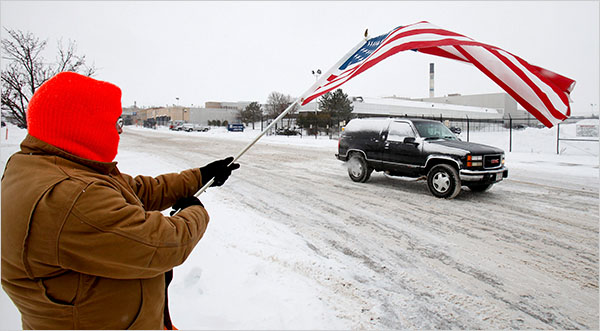
Billy Bob Grahn, a county official, paid tribute Tuesday as a G.M. plant in Janesville, Wis., became one of three to close. Photo: Andy Manis for The New York Times.

Nearly the End of the Line for S.U.V.’s
By Nick Bunkley and Bill Vlasic / December 23, 2008

JANESVILLE, Wis. — Even a federal bailout could not save three of the last remaining plants in the United States still making sport utility vehicles.

Reeling from its financial problems and a collapsing S.U.V. market, General Motors on Tuesday closed its factories in this city and in Moraine, Ohio, marking the passing of an era when big S.U.V.’s ruled the road. The moves followed the shutdown last Friday of Chrysler’s factory in Newark, Del., which produced full-size S.U.V.’s.

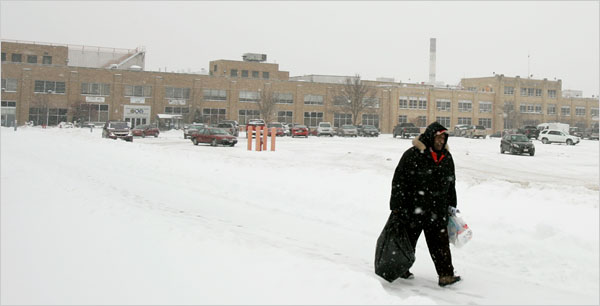
The last Chevrolet Tahoe rolled off the line here in Janesville shortly after 7 a.m. in the 90-year-old plant, which had built more than 3.7 million big S.U.V.’s since the early 1990s.

Most of the plant’s 1,100 remaining workers were not scheduled to work the final day, but many showed up for an emotional closing ceremony. Dan Doubleday, who had 22 years on the job, broke down in the plant’s snowy parking lot afterward.

“I was a fork lift driver,” he said, glancing at his watch through welling tears. “Until about seven minutes ago.”

At the Mocha Moment coffee shop around the corner, two co-workers, Michael Berberich and Lisa Gonzalez, exchanged Christmas presents just as they had most years since they were both hired in 1986.

“For a while we had it made,” Ms. Gonzalez said. “I just wish it would have lasted.”

The fate of the Janesville, Moraine, and Newark plants was sealed this spring, when rising gas prices suddenly made S.U.V.’s unpopular, and long before President Bush approved $17.4 billion in emergency loans last week to keep G.M. and Chrysler out of bankruptcy.

While the overall new vehicle market has dropped 16 percent so far this year, sales of big S.U.V.’s have plummeted 40 percent.

With consumers shifting rapidly to smaller, more fuel-efficient cars, G.M. no longer needed to produce big S.U.V.’s in Janesville as well as in a plant in Texas.

Still, some Janesville workers felt G.M. broke a pledge in its 2007 contract with the United Automobile Workers to keep the factory running.

“We didn’t deserve this,” said John Dohner Jr., shop chairman at U.A.W. Local 95. “We’ve all put a lot of hard work into trying to secure a future here.”

Shrinking market shares have forced G.M., Chrysler and the Ford Motor Company to close more than a dozen assembly plants and shed tens of thousands of workers in recent years. The moves have devastated communities from Georgia to New Jersey and from Michigan to Oklahoma.

Even so, G.M. and Chrysler are likely to close more manufacturing facilities as they overhaul their operations to meet conditions of the federal loans.

“The companies are moving very fast now to close plants, but it may be too little, too late,” said John Casesa, a principal in the Casesa Shapiro Group, a consulting firm. “They’re doing now what they should have done 15 or 20 years ago.”

G.M.’s Moraine plant was the last to build the midsize Chevrolet Blazers and GMC Envoys that were once among the best-selling vehicles in the country.

The Janesville factory built three of the biggest and most profitable vehicles in G.M.’s lineup, the Chevrolet Tahoe and Suburban and GMC Yukon. The Chrysler plant in Newark also made big S.U.V.’s — the Dodge Durango and Chrysler Aspen.

Their closings leave the Big Three with only one factory each still devoted to making traditional big S.U.V.’s — Ford in Kentucky, G.M. in Texas, and Chrysler in Detroit.

The Janesville plant once employed more than 5,000 workers and turned out 20,000 Tahoes, Yukons and Suburbans each month. With its closing, residents worried about the future of this city of 64,000 people, about 75 miles southwest of Milwaukee.

“Janesville will lose a lot,” said Patti Homan, as she finished a strawberry-topped waffle at the nearby Eagle Inn restaurant. “I expect my electricity to go up, water rates to go up, property taxes to go up, and the value of my home to go down.”

Ms. Homan worked in the plant for 23 years, and her father, brother and husband all retired from the factory. “It’s generation after generation for so many families here,” she said.

The empty feelings in Janesville were echoed in Moraine, a suburb of Dayton and last week at the Chrysler plant in Newark.

More than 1,000 workers were laid off at the Moraine plant. Under terms of the U.A.W. contract for all its members, they and the workers in Janesville and Newark will collect unemployment checks and payments from G.M. that together equal about 80 percent of their take-home pay.

“It’s been a good ride, man,” said Frank Hereford as he left the G.M. Janesville plant. Photo: Andy Manis for The New York Times.

But those payments will only last about a year. And with the U.A.W. prepared to suspend its “jobs bank” program as a condition of the federal loans, there will be no safety net after that.

Some workers will have an opportunity to transfer to other plants. But with the industry contracting so quickly, there is little job security in making a move.

“I can’t risk transferring,” said David Williams, one of the remaining 1,100 workers at the Newark plant when it closed. “I don’t want to go 1,200 miles away to get laid off again.”

Mr. Williams installed a sunroof on the last Dodge Durango to come down the assembly line in Newark. Now he plans to take massage-therapy classes and pursue a new career far from the factory floor.

“Enough with the concrete,” he said. “It’s time for some carpet and climate control.”

On the last day for the Newark plant, 84-year-old Woody Bevans unlocked the weight room at the U.A.W. union hall and began brewing coffee for a handful of retirees who passed the time there.

A Texan who started work at the plant when it opened in 1952, Mr. Bevans recalled how the factory was first used to build tanks for the Korean War. He retired in 1983, but thought the plant would go on forever.

“We had hope right up until the last,” Mr. Bevans said. “We’re really going to feel it when it shuts down. There’s a big chain reaction, believe me.”

The University of Delaware is negotiating with Chrysler to buy the plant and redevelop the 270-acre site with academic buildings and a technology park.

After the plant closed, one of the workers, Merle Black, drove directly to a Delaware Department of Labor office and registered for job openings. He is hoping to become a heavy equipment operator, and possibly be involved in the demolition of the factory where he used to install airbag parts.

“If I can get in there to help take it apart, I don’t mind,” Mr. Black said. “That’s where I spent the last 19 years. That’s what I know.”

The closing of an auto plant draws a crowd, with some people somber and nostalgic and others defiant and energized.

Outside the Janesville plant on Tuesday, a few workers posed for pictures in front of the building while others said their goodbyes as they loaded gear in their snow-covered S.U.V.’s

One man had two small children with him on the last day. Another man wearing an orange ski mask waved a large American flag as departing workers drove by.

Many of the workers trudged over to a one-story, cinder-block building on the grounds of the factory, a bar called the Zoxx 411 Club. A sign said “customers only” and forbade reporters and media from entering.

Outside, a cluster of reporters, including a documentary film crew from Japan, tried to interview workers about the last days of the S.U.V. plant.

“It’s been a good ride, man,” said Frank Hereford, a body shop worker, as he left the plant with a microwave oven that heated up countless lunches during many of his 38 years with G.M. “Good people worked down here.”

Source / The New York Times

Thanks to Betsy Gaines / The Rag Blog

Posted in RagBlog | Tagged , , | Leave a comment

Some Assembly Required

Thanks to Harry Edwards / The Rag Blog

Posted in RagBlog | Tagged , | Leave a comment

Have Yourself a Merry Little Christmas

Adding to the sad irony of this post is the fact that Sadhbh Walshe’s article below did not appear in one mainstream news source in the USA. That there are 30 million Americans who must resort to food stamps to survive in this unfortunate economic climate (largely caused by corrupt bankers and politicians) is not sufficiently newsworthy for the likes of the network news channels or mainstream newspapers to bother mentioning. I am ashamed of my heritage.

Richard Jehn / The Rag Blog

Source / The Richter Scales: Men Who Blog

And on that note:

Christmas on the margins
By Sadhbh Walshe / December 24, 2008

The idea of chief executives being bailed-out while more than 30 million Americans are living on food stamps is unappetising

I was racing through the supermarket the other day trying to get my Christmas shopping out of the way. I would have been finished in record time had I not been held up at the checkout line because the bozo ahead of me decided to return something. I began to sigh loudly and roll my eyes until I realised that the bozo in question was a young mother obliged to return a pack of chocolate chip cookies she tried to purchase with her food stamps.

I tried not to catch her eye while the cashier recalculated her purchases without the cookies. (Her little boy didn’t look too happy.) She was still $1.27 short on her food stamp card, but there didn’t seem to be anything else she could spare. She dug into her purse and managed to put together the required sum with dimes and nickels. She smiled at me red-faced as her bags were packed. But I was the one who was more embarrassed.

I had been held up in a similar fashion a few days before in the same supermarket. On that occasion, the perpetrator had to return a bottle of orangeade. Her children were not too happy about it either.

I can’t help thinking about what sort of Christmas these women and their families are going to have if a packet of chocolate chip cookies and a bottle of orangeade are beyond their reach.

I told a friend that I may end up on food stamps myself next year if I can’t write my way out of my own financial quagmire. He was highly amused and said he hoped they had a second tier of food stamps for people who enjoy champagne and caviar.

It turns out you cannot buy champagne on food stamps, or any kind of alcohol for that matter. You can buy orangeade and chocolate chip cookies, though, and if you are really frugal and save up your food stamps for many weeks, you might even be able to afford caviar.

You can buy any kind of food as long as it’s not prepared like restaurant food or heated. The snag is that with an average food stamp allowance of $24 per person per week, you can’t really buy much of anything.

I hope I never end up on food stamps. If I were obliged to reduce my appetite to accommodate a budget of $24 a week, I would definitely be in need of something stronger than orangeade to take my mind off the situation.

Back in October 2000, just before he was elected president, George Bush described his base as “the haves and the have mores.” The remark was made in jest at the annual Al Smith Black Tie dinner, but the joke turned out to be on all those people who used to have just about enough, and who now, eight years later, have next to nothing.

According to government data, as of September, 31.5 million Americans were using the food stamp programme, up 17% from the previous year. That’s 10% of the US population. These are staggering figures.

They bring to mind another staggering figure I recently came across that I have been unable to remove from my subconscious. It is $163,987,000 – the salary that Henry Paulson, now secretary of the US Treasury, took home in 2006 for his services as CEO of Goldman Sachs.

Two years later, Goldman Sachs required a massive bail-out from taxpayers. Many of these taxpayers may soon be applying for food stamps.

When Paulson sits down to his sumptuous Christmas feast, paid for with some of the spoils from that nine-figure salary, I hope he will he spare a thought for the 10% of Americans who have barely enough to eat.

I’m sure that if he ever witnessed first hand the humiliation of a person unable to pay for their food at a supermarket checkout, he would feel compelled to redistribute his millions among the 31.5 million food stamp recipients.

Maybe then they could afford a decent Christmas dinner next year.

Source / The Guardian

Thanks to Mariann Wizard and Ms. Gloria “The Muse” Hill for the video / The Rag Blog

Posted in RagBlog | Tagged , , | Leave a comment

Glimpses of Our (North American) Future?

Here’s a cheery holiday story from exotic, picturesque Japan.

Mariann Wizard / The Rag Blog

An elderly man walks away from a Tokyo grocery store after being observed stealing medicine for an upset stomach. Photo: CNN.

Report: More elderly Japanese turn to petty crime
From Kyung Lah / December 24, 2008

TOKYO — Beset by economic worries and loneliness, elderly Japanese are turning to petty crime in increasing numbers, the nation’s Justice Ministry reports.

In 2007, 48,605 persons age 65 and older were arrested in crimes other than traffic violations, more than double the number five years earlier, according to a ministry report.

Thefts such as shoplifting and pick-pocketing were the main offenses, the ministry report said.

“The main reasons they shoplift are poverty and loneliness,” said Kazuo Kawakami, a former federal prosecutor. “The traditional Japanese family is gone, and now our elderly live alone.”

Morio Mochizuki, who heads SPUJ, one of Japan’s largest security firms, said the stories of shoplifting suspects at the thousands of stores his company oversees across Japan bear that out.

And the problem becomes more acute during New Year holidays, traditionally a time for family gatherings in Japan, Mochizuki said.

Economics also plays a role. Japan’s economy went into recession this year, the government says. And the country’s national pension system has been bogged down with mismanagement and corruption, leaving many pensioners with fears their lifetime savings will be lost.

“I feel sorry for them. When I talk to them, they don’t have enough money for food,” Takayuki Fujisawa, an employee of SPUJ, said of the elderly he’s caught shoplifting.

SPUJ recently allowed CNN to follow its security team at one Tokyo grocery store. In just moments, they nabbed a 69-year-old woman, allegedly trying to steal food worth about $10.

One hour later, officers stopped a second suspect, an 80-year-old man. He had enough money to pay for all of his groceries, but security officers said he tried to leave the store without paying for medicine for an upset stomach.

“I’m so sorry,” he told officers. “I live alone. My wife is in the hospital.”

Population trends offer little hope for a turnaround in the elderly crime trend. Twenty percent of Japan’s population is older than 65, the largest percentage of elderly of any country in the world. Compounding the problem, Japan has one of the world’s lowest birth rates.

On Japan’s northern island of Hokkaido, more elderly than teenagers — by a 3 to 2 ratio — were arrested in 2006, police said.
advertisement

Despite the arrest numbers, prosecutions of the elderly in a culture that holds them in high regard are rare. Stores often don’t even report the crime to police, according to security experts.

The 80-year-old man who stole the stomach medicine was eventually led to his bicycle by store security. The security officer helped the man with his groceries and bowed in respect, hoping the elderly man had learned his lesson and would return as a good customer.

Source / CNN Asia

Thanks to Mariann Wizard / The Rag Blog

Posted in RagBlog | Tagged , , | Leave a comment

Modern Classics Dept. : Christmas With Louise

The following Christmas story, passed along to us by Harry Edwards, is dedicated to the Ghost of Christmas Past. That’s because it won first prize in the 1999 Louisville Sentinel contest to find out who had the wildest Christmas dinner. It’s been published over the years so you may have already read it. If so, then we know you’ll read it again. If you haven’t — and assuming you’re not one particular uptight Granny — we’re betting it’ll brighten your day. Of course there are those among you who will say, “Hey, that’s nothing. Just listen to this…”

Christmas With Louise

As a joke, my brother used to hang a pair of panty hose over his fireplace before Christmas. He said all he wanted was for Santa to fill them. What they say about Santa checking the list twice must be true because every Christmas morning, although Jay’s kids’ stockings were overflowed, his poor pantyhose hung sadly empty.

One year I decided to make his dream come true. I put on sunglasses and went in search of an inflatable love doll. They don’t sell those things at Walmart. I had to go to an adult bookstore downtown.

If you’ve never been in an X-rated store, don’t go. You’ll only confuse yourself. I was there an hour saying things like, “What does this do? You’re kidding me! Who would buy that?” Finally, I made it to the inflatable doll section.

I wanted to buy a standard, uncomplicated doll that could also substitute as a passenger in my truck so I could use the car pool lane during rush hour. Finding what I wanted was difficult. Love Dolls come in many different models. The top of the line, according to the side of the box, could do things I’d only seen in a book on animal husbandry. I settled for Lovable Louise. She was at the bottom of the price scale. To call Louise a doll took a huge leap of imagination.

On Christmas Eve and with the help of an old bicycle pump, Louise came to life. My sister-in-law was in on the plan and let me in during the wee morning hours. Long after Santa had come and gone, I filled the dangling pantyhose with Louise’s pliant legs and bottom. I also ate some cookies and drank what remained of a glass of milk on a nearby tray. I went home, and giggled for a couple of hours.

The next morn ing my brother called to say that Santa had been to his house and left a present that had made him VERY happy but had left the dog confused. She would bark, start to walk away, then come back and bark some more.

We all agreed that Louise should remain in her panty hose so the rest of the family could admire her when they came over for the traditional Christmas dinner.

My grandmother noticed Louise the moment she walked in the door. “What the heck is that?” she asked.

My brother quickly explained, “It’s a doll.”

“Who would play with something like that?” Granny snapped.

I had several candidates in mind, but kept my mouth shut.

“Where are her clothes?” Granny continued.

“Boy, that turkey sure smells nice Gran” Jay said, to steer her into the
dining room.

But Granny was relentless. “Why doesn’t she have any teeth?”
Again, I could have answered, but why would I? It was Christmas and no one wanted to ride in the back of the ambulance saying, “Hang on Granny, hang on!”

My grandfather, a delightful old man with poor eyesight, sidled up to me and said, “Hey, who’s the naked gal by the fireplace?”

I told him she was Jay’s friend. A few minutes later I noticed Grandpa by the mantel, talking to Louise. Not just talking, but actually flirting. It was then that we realized this might be Grandpa’s last Christmas at home.

The dinner went well. We made the usual small talk about who had died, who was dying, and who should be killed, when suddenly Louise made a noise like my father in the bathroom in the morning. Then she lurched from the panty hose, flew around the room twice, and fell in a heap in front of the sofa.

The cat screamed. I passed cranberry sauce through my nose, and Grandpa ran across the room, fell to his knees, and began administering mouth-to-mouth resuscitation. My brother fell back over his chair and wet his pants.

Granny threw down her napkin, stomped out of the room, and sat in the car.

It was indeed a Christmas to treasure and remember.

Later in my brother’s garage, we conducted a thorough examination to decide the cause of Louise’s collapse. We discovered that Louise had suffered from a hot ember to the back of her right thigh.

Fortunately, thanks to a wonder drug called duct tape, we restored her to perfect health.

Louise went on to star in several bachelor party movies.

I think Grandpa still calls her whenever he can get out of the house.

The Rag Blog

Posted in RagBlog | Tagged , | Leave a comment

Bummer

Thanks to Karen Lee Wald / The Rag Blog

Posted in RagBlog | Tagged , , | Leave a comment

Roger Baker on the Economy : Sick and Getting Sicker

Image: 1929 Rollin Kirby cartoon on Stock Market Crash, courtesy of Kiko’s House.

‘At this point, even megadoses of federal stimulation are having little effect in restoring confidence and reflating the collapsing bubble of US capital investment.’
By Roger Baker
/ The Rag Blog / December 24, 2008

This will clue you in about how sick the economy really is. The current economic contraction was initiated by a loss of confidence in the sub-prime mortgage loans that were bundled and issued as international securities by the deregulated US investment banks. From there, things started to unravel.

At this point, even megadoses of federal stimulation are having little effect in restoring confidence and reflating the collapsing bubble of US capital investment. In fact the bank bailouts are likely making things worse by papering over massive amounts of bad loans, keeping the toxic debt on the books at an inflated price. Bailing out the banks didn’t work, and dropping interest rates to zero didn’t work, so now the feds are about to see if injection large amounts of federal Keynesian stimulation via grassroots spending will finally restimulate spending without igniting uncontrollable inflation. The restimulation effort is comparable trying to drive a car that has a steering wheel with a lot of play; you don’t know when your efforts will take hold or which way you will be headed when they do.

As the global economy contracts in a chain reaction of deflation, even what were previously seen as sound long term capital investments now look shaky. All production aimed at discretionary consumer spending is in question as the global economy restructures and accommodates to slower growth, less energy, and more essential needs.

The economic contraction is global whereas the fed’s injections of cash liquidity are primarily national. Therein lies an obvious policy mismatch. We are addicted to foreign credit and Chinese manufactured goods and imported oil. Our economic crisis and its solution are, and must be, international.

The following snips are extracted from the first part of Doug Noland’s much longer and generally excellent weekly economic analysis.

“…To this point, a barrage of unprecedented monetary and fiscal policy responses has restrained the forces of systemic collapse…

With private sector credit growth now struggling mightily, public finance was forced to really take up the slack. Federal government debt expanded at a 39.2% pace, playing a decisive role in generating sufficient system-wide credit expansion…

With even an unsustainable $2.0 trillion annual pace of federal borrowings failing to reverse the downward economic spiral, the
Federal Reserve last week was compelled to signal in no uncertain terms that policymakers “will employ all available tools to promote the resumption of sustainable economic growth and to preserve price stability.”…

The dilemma for the Fed (and markets) is that while such an enormous amount of credit would do little more than somewhat steady our maladjusted bubble economy, it would at the same time perpetuate the massive flow of dollar finance out to the global financial system. In short, the Fed’s determination to reflate ensures continued monetary disorder. And I would further argue that ongoing monetary disorder – and associated corruption to various market pricing mechanisms – will impede system adjustment and extend the lengths of US and global downturns and restructuring periods…

Factoring in other financial outflows, the rest of world would be called upon to purchase another trillion or so of our financial claims next year – and for years on end…

At the end of the day, I expect the dollar to suffer from its relative dismal position with respect to both financial flows and our economy’s deep structural maladjustment. Years of egregious credit and spending excesses have left an economic structure uniquely dependent upon, on the one hand, huge ongoing public sector credit injunctions and, on the other, huge unending imports. This is a terrible predicament for a currency…”

The Rag Blog

Posted in Rag Bloggers | Tagged , , , , | 2 Comments