Bush Throws Polar Bears Under the Bus

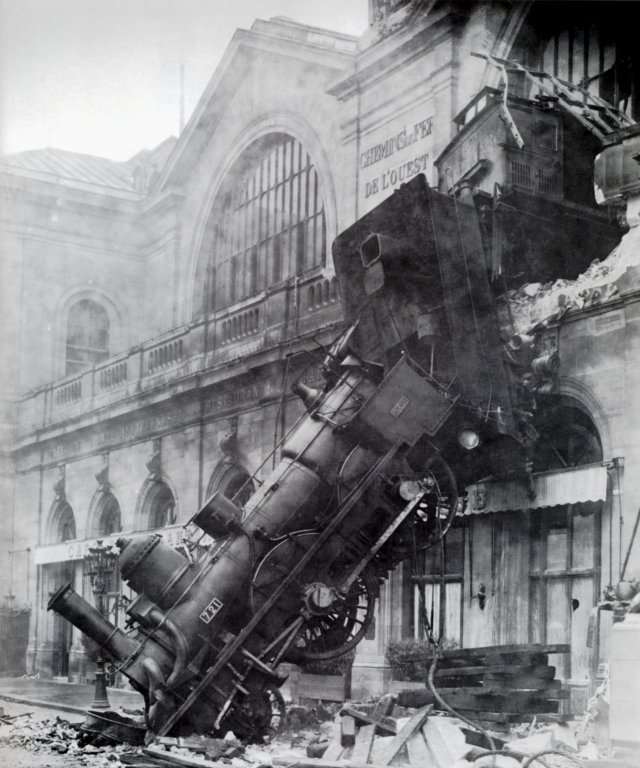
Polar bear reacts to today’s news.

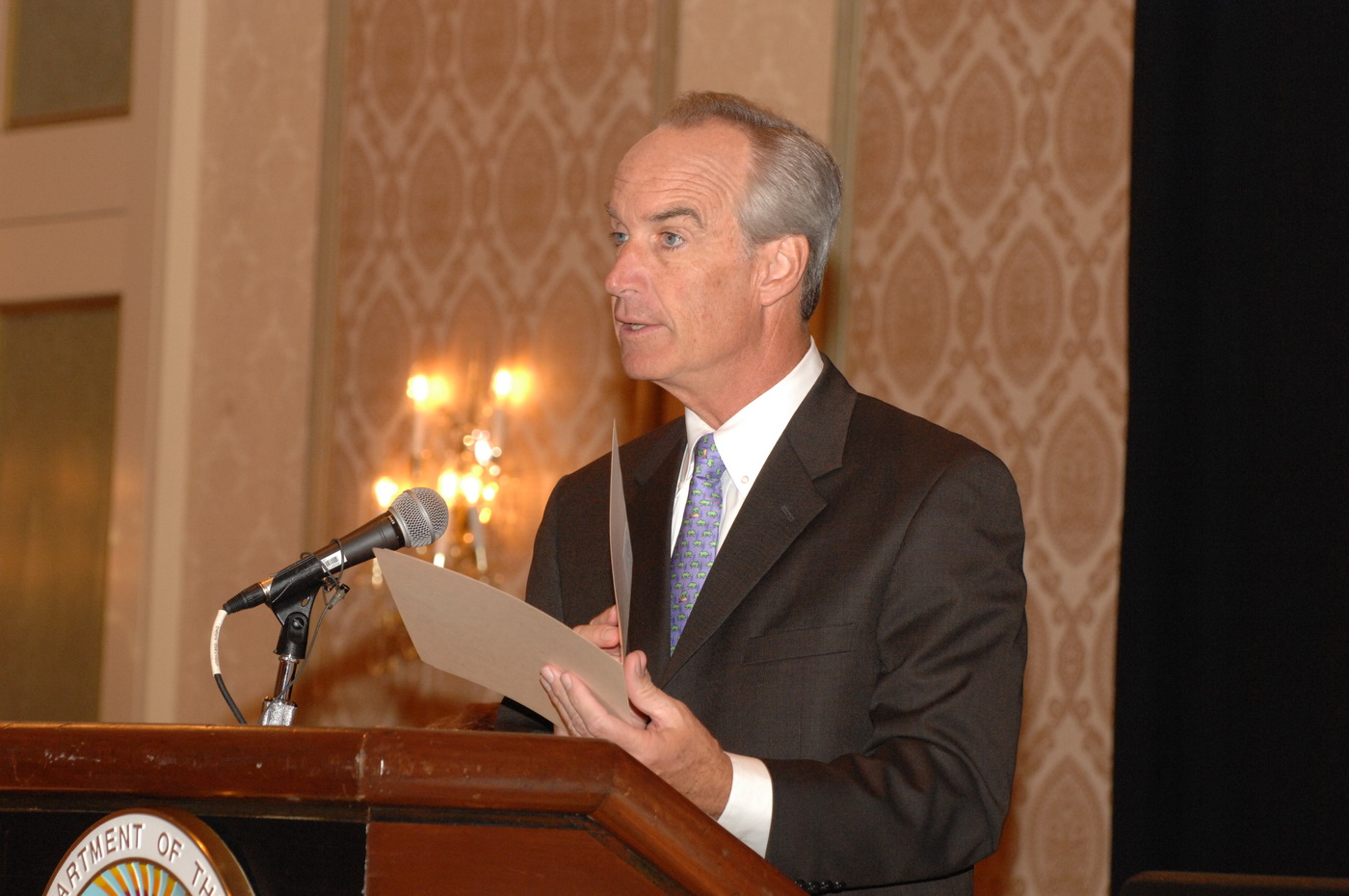
Interior Secretary Dirk Kempthorne announces revisions to Endangered Species Act.

‘To finally admit that the science compels the listing of the polar bear as threatened due to global warming, but then deny it the protections the Endangered Species Act should provide is nothing other than irresponsible and shameful.’ — Defenders of Wildlife’s Jamie Rappaport Clark.

By Erin McCallum / December 11, 2008

See ‘Bush revises protections for endangered species’ by Dina Cappeillo, Below.

WASHINGTON – The U.S. Fish and Wildlife Service (FWS) announced today that it will deny the polar bear the appropriate and necessary protections of the Endangered Species Act (ESA).

“This rule makes a mockery of the Endangered Species Act, our nation’s most important wildlife protection law,” said Defenders of Wildlife executive vice president, Jamie Rappaport Clark. “The polar bear doesn’t have time for political maneuvers. Its habitat is melting away, its food is becoming scarce and the science is clear that the cause is global warming – yet the rule this administration released today affirms that little will be done to save the species from sure extinction.”

Defenders of Wildlife has already filed suit in federal court contesting the legality of a previous, “interim final” version of this rule, and will challenge this new final rule as well to ensure that the polar bear, which was listed as “threatened” under the ESA on May 14, 2008 receives the full protections that other species receive under the ESA.

“We are forced to challenge this rule because it denies vital protections to the polar bear that it needs to survive,” said Clark.

Listing polar bears as threatened should help protect polar bear habitat from threats such as oil and gas development, which the Bush administration is aggressively pursuing in the Chukchi Sea north of Alaska and has even proposed in the pristine Arctic National Wildlife Refuge, which provides the primary land denning habitat for the species. Instead, the administration has made it clear with its 4(d) rule that the ESA will not provide any additional protections from these and other harmful activities than those that already exist under the Marine Mammal Protection Act (MMPA), and will provide no protection whatsoever against emissions of greenhouse gases that are causing the rise in global temperatures that directly threaten the polar bear.

Specifically, the 4(d) rule eliminates some of the necessary protections for the polar bear and its habitat under the ESA, based on the incorrect assertion that the polar bear is already adequately protected under other laws, such as the MMPA. Furthermore, the rule states that the ESA’s protections against “incidental take” – death or harm to polar bears caused by human activities such as oil and gas development – do not apply at all if those activities occur outside of Alaska.

“It’s really not surprising that the Bush administration, with its longstanding resistance to taking any responsible action against global warming, would think of a stunt like this in its waning days in office” said Clark. “To finally admit that the science compels the listing of the polar bear as threatened due to global warming, but then deny it the protections the Endangered Species Act should provide is nothing other than irresponsible and shameful.”

History:

The polar bear is the largest of the world’s bear species and is distributed among nineteen Arctic subpopulations – two of which, the Chukchi and the Southern Beaufort Sea populations, are located within the United States.

Polar bears are threatened with extinction from global warming, which is melting the Arctic sea ice where polar bears hunt for ringed and bearded seals, their primary food source.

The U.S. Geological Survey published a series of reports predicting that loss of summer sea ice—crucial habitat for polar bears—could lead to the demise of two-thirds of the world’s polar bears by mid-century, including all of Alaska’s polar bears.

[Defenders of Wildlife is dedicated to the protection of all native animals and plants in their natural communities. With more than 1 million members and activists, Defenders of Wildlife is a leading advocate for innovative solutions to safeguard our wildlife heritage for generations to come.]

Source / Defenders of Wildlife

Bush revises protections for endangered species
By Dina Cappeillo / December 11, 2008

WASHINGTON -— Just six weeks before President-elect Barack Obama takes office, the Bush administration issued revised endangered species regulations Thursday to reduce the input of federal scientists and to block the law from being used to fight global warming.

The changes, which will go into effect in about 30 days, were completed in just four months. But they could take Obama much longer to reverse.

They will eliminate some of the mandatory, independent reviews that government scientists have performed for 35 years on dams, power plants, timber sales and other projects, a step that developers and other federal agencies have blamed for delays and cost increases.

The rules also prohibit federal agencies from evaluating the effect on endangered species and the places they live from a project’s contribution to increased global warming.

Interior Department officials described the changes as “narrow”, but environmentalists saw them as eroding the protections for endangered species.

Interior officials said federal agencies could still seek the expertise of federal wildlife biologists on a voluntary basis, and that other parts of the law will ensure that species are protected.

“Nothing in this regulation relieves a federal agency of its responsibilities to ensure that species are not harmed,” said Interior Secretary Dirk Kempthorne in a conference call with reporters.

Current rules require biologists in the Fish and Wildlife Service and National Marine Fisheries Service to sign off on projects even when it is determined that they are not likely to harm species. The rule finalized Wednesday would do away with that requirement, reducing the number of consultations so that the government’s experts can focus on cases that pose the greatest harm to wildlife, officials said.

But environmentalists said that the rule changes would put decisions about endangered species into the hands of agencies with a vested interest in advancing a project and with little expertise about wildlife. Several groups planned to file lawsuits immediately.

“This new rule is essentially a changing of the guard for determining how government projects will affect endangered species,” said Francesca Grifo, director of the Scientific Integrity Program at the Union of Concerned Scientists. “Instead of expert biologists taking the first look at potential consequences, any federal agency, regardless of its expertise, will now be able to make decisions that should be determined by the best available science.”

Between 1998 and 2002, the Fish and Wildlife Service conducted 300,000 consultations. The National Marine Fisheries Service, which evaluates projects affecting marine species, conducts about 1,300 reviews each year.

The reviews have helped safeguard protected species such as bald eagles, Florida panthers and whooping cranes. A federal government handbook from 1998 described the consultations as “some of the most valuable and powerful tools to conserve listed species.”

Obama has said he would work to reverse the changes. But because the rule takes effect before he is sworn in, he would have to restart the lengthy rulemaking process. Congressional lawmakers have also vowed to take action, perhaps through a rarely used law that allows review of new federal regulations.

In a related development, the Bush administration also finalized on Wednesday a special rule for the polar bear, a species that was listed as threatened in May because of global warming. The rule would allow oil and gas exploration in areas where the bears live, as long as the companies comply with the Marine Mammal Protection Act.

Source / AP

View final 4(d) rule here.

Also see Interior Publishes Final Narrow Changes to ESA Regulations, Clarifies Role of Global Processes in Consultation / US Dept of the Interior / Dec. 11, 2008

The Rag Blog

Posted in RagBlog | Tagged , , , , , , | 1 Comment

HEALTH CARE / Western Medicine and the Dilemma of Life’s End

One version of life’s end: Charon the ferryman.

I do not write these observations as a medical ethics expert, but merely as an 87 year old retired physician, a secularist, with cancer of the prostate; thus, with some insight into what lies ahead.’

By Dr. Stephen R. Keister / The Rag Blog / December 11, 2008

The mythology of Classical Greece involved the end of life concept that one awaited on the banks of the River Styx for old Charon’s barge to carry one across to the Elysian fields. Unfortunately the 3,000 or more years of the Abrahamic Religions creates a much more complex problem for the current resident of the United States to face, especially in these times of economic uncertainty, as I will explain. These problems are not being discussed, save in very brief reports, by the mainstream media; however, I fear, that many of use who have not faced, or sublimated, the concerns to be addressed will suddenly be faced by harsh realities.

I do not write these observations as a medical ethics expert, but merely as an 87 year old retired physician, a secularist, with cancer of the prostate; thus, with some insight into what lies ahead. If one is interested in medical ethics I would suggest James Drane Phd’s excellent book “More Humane Medicine.” I would also suggest that one carefully read a release from the New Zealand Catholic Bioethics Center, June 2001 where Pope Pius XII’s address to the 1957 Congress of Anesthesiologists regarding the prolonging of life by “extraordinary means” is summarized by the medico-moralist, Gerard Kelly; “ordinary means” are all medicines, treatments, and operations, which offer a reasonable benefit and which can be obtained and used without excessive expense, pain, or other inconvenience. “Extraordinary means” are all medicines, treatments, and operations, which cannot be obtained or used without excessive expense, pain, or other inconvenience, or which, if used, would not offer a reasonable hope of benefit.”

Pope Pius XII further clarified these terms when he said: “But normally one is held to use only ordinary means — according to circumstances of persons, places, times, and culture — that is to say, means that do not involve any grave burden for oneself or another. A more strict obligation would be too burdensome for most people and would render the attainment of the higher, more important good too difficult.” (The “higher goal” he speaks of is “eternal life.”)

This as background for an article noted in the Dec. 3, 2008, issue of The Independent from Ruislip, England regarding a gentleman with widely disseminated cancer of the kidney. His physician advised a new chemotherapeutic agent manufactured by Pfizer, which might prolong his life for up to six months at a cost of $54,000. The problem is that the National Institute For Health and Clinical Excellence approved only $22,750 of the cost of that drug. Thus, a wide discussion in the U.K. as to the price of medication and “how much is life worth.” A debate relative to the ethical/moral needs of prolonging ones person’s life as opposed to depleting a not inexhaustible health insurance fund for treatment of hundreds of folks for the transient benefit of a few.

What if we had an analogous situation in the United States? How would it be resolved. If one is among the 50 million folks in the United States without insurance there would be no problem as the consideration would never arise. If one were insured, or were covered under the grossly flawed Medicare Prescription Plan, I am sure that the insurance carrier would question the medication as an “experimental procedure” and look for an out, and as to the Medicare Drug Plan the carrier would agree to pay a portion after a large deductible.” The Dec. 3, 2008 New York Times listed the amount spent on medications in 24 nations and the United States led the list at $6,714 per capita.

Why do we spend so much for medications? Recently I noted that the pharmaceutical industry spent a half billion dollars on TV advertising of medications to promote sleeping last year. Merely watch TV and every other ad, so it seems, is for a pharmaceutical, the most popular being those medications to aid in obtaining an erection. The price of prescription drugs in this country is a national disgrace, but too extensive to address fully here, thus, if interested, I would suggest buying Marcia Angell, M.D.s book: The Truth About The Drug Companies, How They Deceive Us and What to Do About It. Dr. Angell dispels the fact that most of the pharmaceutical expense goes for “research” when indeed it goes for advertising, lobbying, and executive salaries. We are one of two western democracies that permit advertising of prescription medications.

With the ongoing collapse of the economy our present problems are going to become gargantuan. There are hundreds of thousands of elderly in nursing or old folks homes, supported by their or their childrens IRAs or 401Ks which are disappearing it seems near overnight. We reach a breaking point in the near future, what do we do? Go on Medicaid? Not feasible as the fund is underfunded at present, and the payments to the institution are discounted to a point that financial survival of the facility would be impossible. As unemployment increases, where do once working folks go for care? The already overburdened emergency rooms, of course? The hospitals in most states are required to take in emergency admissions, thus in a populace without insurance who pays the hospital bills, and how do the hospitals survive? Perhaps the various European government overseen health care programs might begin to look good to the powers that be in the United States.

But I digress… Returning to the gentleman from Ruislip. If indeed he is in severe discomfort, and has only six months to live, the hospice services could come into play. We locally have two excellent hospice services for the terminally ill, working with diligence, kindness, empathy, and professional excellence. My personal preference would be to be kept comfortable and at rest rather than being given chemotherapy drugs with all manner of nasty side-effects. This, in turn, raises another immediate issue and that is that one should have an advance directive, or living will, and a power of attorney for medical care granted to a relative or close friend. My living will specifies that I receive no CPR, dialysis, treatment on a ventilator, and no un-needed surgical procedures. I am aghast at the great number of my intelligent friends who do not have living wills.

Finally another alternative available in only the states of Oregon and Washington is “death with dignity” or assisted suicide. This has been in place in Oregon for some years, and as I understand it, works quite well in spite of the many shrill denunciations by the same folks who oppose abortion in the event of rape or incest, or get into a lather regarding “gay marriage.” “Death with dignity” is also available in The Netherlands and Belgium. Switzerland has even opened a new euthanasia clinic in Berne, i.e. The EX International Clinic, competing with another clinic in Zurich, i.e. Dignitas, which offers “assisted suicides based on Christian principles.” The Independent of Dec. 8, 2008 has a full accounting of their offerings. And one can go sightseeing before checking in! For more on this subject I would suggest reading Final Exit, by Derek Humphrey or seeing his website, assistedsuicide.org.

In any event, I fear, the day of reckoning is not far away. We have, largely because of our mobile society, warehoused our elderly in this country, but the money is running out. We have tolerated health care, not worthy of a third world country, at the dictates of the insurance industry, the neo-liberal (supply side) economists, and their prostituted politicians. There is little time ahead to do something constructive, and perhaps it is too late. One hopes that the public arises, throws off its blinders, ignores the propaganda of the insurance and pharmaceutical industries that overwhelm us on TV, and demands that the Obama administration enact single payer, universal health care, as noted in HR 676 and is underwritten by Physicians For A National Health Program. Beware PhARMA is starting a TV propaganda blast, prior to the Obama inauguration, supporting the current Medicare Drug plan which has already made them and the insurance companies a vast amount of money. The lies and misrepresentation will be mind-boggling.

I see some hope to the response at the Door and Window factory in Chicago. The employees fought back, the community organized and supported the workers, the Liberal Media made themselves heard. Seemingly progress has been made. In the 1890’s the citizens led by Eugene Dens prevailed, as they did in the 1930s with the leadership of those such as John L. Lewis and Phillip Murray. Perhaps, just perhaps, the American people will awaken, cast off the propaganda of big business and the current Republican party and take America back. We owe it to our elderly, our poor, our helpless, and our children.

The Rag Blog

Posted in Rag Bloggers | Tagged , , , | 2 Comments

Convictovich…


Cartoon by Ralph Solonitz / The Rag Blog

The Rag Blog

Posted in Rag Bloggers | Tagged | Leave a comment

Politics in El Salvador : Echos of Nicaragua

Special to The Rag Blog

‘The Salvadoran Right has capitalized on the chaos in Nicaragua to further their negative campaign to defame the left-wing Farabundo Martí National Liberation Front (FMLN) party.’

By Leah Wilson / The Rag Blog / December 11, 2008

See ‘Open Letter to Nicaragua Solidarity Activists’ by Chuck Kaufman, Below.

SAN SALVADOR, El Salvador — The results of Nicaragua’s municipal elections on November 9, 2008, and the post-election violence and calls of fraud have saturated El Salvador’s newspapers throughout November.

The Salvadoran Right has capitalized on the chaos in Nicaragua to further their negative campaign to defame the left-wing Farabundo Martí National Liberation Front (FMLN) party and its presidential candidate Mauricio Funes and vice-presidential candidate Salvador Sánchez Cerén who have a 13 point lead over the governing right-wing Nationalist Republican Alliance (ARENA) party. As ARENA — which has had an openly close relationship with the Bush administration and implemented neoliberal and repressive policies under the Bush camp’s guidance — realizes the likelihood of El Salvador taking a left turn in the presidential elections in March 2009, they have stepped up the efforts of their campaign.

Fuerza Solidaria is doing much of the dirty work. It’s an organization that was founded by right wing Venezuelan Alejandro Peña Esclusa with the sole purpose of stopping the leftward turn that many Latin American countries have decided to take. The primary message of their print, TV, and pamphlet campaign is the same US-interventionist rhetoric seen in every Salvadoran election: if the FMLN wins, your relatives living in the US will be deported and remittances sent home from the US (which amount to over $3 billion dollars a year and sustain the Salvadoran economy) will come to an end. So far, the US government has made no attempts to clarify the lies being propagated using their name, despite declarations of neutrality for the 2009 elections.

The violence, chaos and accusations of fraud that followed Nicaragua’s November elections, along with the United States’ freezing of Millennium Fund social project money for Nicaragua after the elections, has added a new dimension to the campaign against the FMLN. While Fuerza Solidaria has played a part in this new effort, it is primarily the right-wing owned media that have taken the lead. I am including an open letter from the US-based solidarity organization Nicaragua Network that contains more information on the Nicaraguan government and the actual events of November 9 and the aftermath — something you will not find in the mainstream media.

La Prensa Gráfica and the Diario de Hoy (unaffectionately known as the Diablo de Hoy by many Salvadorans) are two of the most widely circulated dailies in El Salvador. They are also owned by right-wing businessmen who consistently do the work of the ARENA party in their coverage of national and international events. Throughout the month of November, articles highlighting the violence in Nicaragua were combined with references to the FMLN’s historic ties to Nicaragua’s governing Sandinista Front for National Liberation (FSLN) party. Accusations of FMLN participation in the post-election violence were rampant, often substantiated by photos of one person wearing an FMLN T-shirt in a group of masked Sandinistas and testimonies of journalists who supposedly saw cars with Salvadoran license plates. The story of the freezing of Millennium Fund money, of which El Salvador is currently a recipient, was also front-page news.

So, currently in El Salvador I found myself thinking a lot about Nicaragua. I knew that the Salvadoran Right’s use of the chaos there was just part of their campaign tactics (which judging by the polls have proved mostly ineffective in swaying the opinions of the people of El Salvador); however, I wanted a better analysis of Nicaragua outside of the El Salvador lens. In my efforts to make sense of the Nicaragua elections and better understand the very complex political situation there, I read lots of materials; but the open letter pasted below from the Nicaragua Network not only gave me that clarity that cannot be found in the mainstream media, but it helped me better understand the nature of international solidarity in general and Central American solidarity specifically.

Open Letter to Nicaragua Solidarity Activists
By Chuck Kaufman / December 9, 2008

[Chuck Kaufman is national co-coordinator of the Nicaragua Network.]

The Nicaragua Network has received many notes and emails about our coverage of Nicaragua in recent months. Some think we’re too supportive of the government of President Daniel Ortega, while others think we are too critical. Still others have written to thank us for what they consider to be balanced information in a highly polarized situation. We welcome the dialogue and constructive criticism and are encouraged that so many people are still paying attention to Nicaragua and the US role in that small, poor country.

In my more than 21 years on the national staff of the Nicaragua Network, it has never been more difficult to determine the best way to present the information and analysis we provide to solidarity activists in the United States. In the 1980s we saw our mission to be to explain to the US solidarity community the actions of the Sandinista government in the context of the brutal US-manufactured contra war and economic sabotage. That resulted in the appearance of uncritical support of the Sandinistas on our part.

In the era of the neoliberal governments, news and analysis was easy. We opposed neoliberalism, US domination, and the efforts to wipe out the gains of the Sandinista revolution. Today our work is more difficult because there are both positive and negative aspects of the current government’s political project, and there are divisions within Sandinismo about how to move forward. Our staff and board have had many long phone and email conversations in an effort to sharpen and balance our analysis.

Many people came to their love of Nicaragua after the 1990 electoral defeat of the Sandinistas, and thus have no experience with the Sandinista revolutionary period. This is especially true in the Sister City movement which began in the 1980’s but it is the only sector of Nicaragua solidarity to add significant new members after the 1990 electoral defeat. I have the greatest respect for the sister city groups; they are the ones who have stuck with their partners in Nicaragua through thick and thin while many of those whose solidarity was motivated primarily by ideology have long since moved on to other progressive causes. I am not for a moment implying that people in sister city groups are apolitical; a conversation with our board, most of whom represent sister city groups, would dispel that error quickly.

Still, it is hard for anyone who joined the solidarity movement after 1990 to understand the historical importance of the FSLN to those of us who traveled to – and supported – Nicaragua in the 1970s and 1980s. After 1990, the neoliberal Nicaraguan governments worked hard to eradicate the memory of the Sandinista revolution and the Sandinista struggles to protect the Nicaraguan people from attacks by the US-sponsored contras. Our government and corporate media worked equally hard to eradicate those memories in the United States. However, many of us in the Nicaragua Network haven’t forgotten.

I think it would be useful, both for new and older solidarity activists, if we review the roots of the Nicaragua Network to better understand the context in which we develop our current information and analysis.

The Nicaragua Network was born 30 years ago this coming February 24 at a conference in Washington, DC. A number of major cities already had solidarity committees working to support the Sandinista armed liberation movement. They decided they needed national coordination to make their work more effective. So, the Nicaragua Network was formed first and foremost to provide solidarity support to the Sandinista Front for National Liberation (FSLN) and its struggle to overthrow, by force of arms, the brutal US-backed Somoza dictatorship.

The Sandinista triumph on July 19,1979 was met with joy not only in Nicaragua but here in the United States as well. The wedding of the Sandinista socialist program with liberation theology’s “preferential option for the poor” created what Oxfam-Great Britain later called “the threat of a good example.” The Empire was quick to strike back. I don’t need to go into the whole history of the illegal and immoral contra war and the relentless efforts by the US government and the corporate media to vilify and delegitimize the Sandinista government, both before and after it became a duly elected representative democracy in 1984.

The campaign of misinformation, disinformation, and outright lies was enthusiastically waged by the US corporate media, led by the Washington Post and New York Times. I was surprised when someone referred us to an article in the New York Times to demonstrate the Nicaragua Network’s bias. When have we ever been able to believe a word about Nicaragua that was printed in the New York Times? When reporters like Raymond Bonner tried to report factually and impartially from Central America, they were demoted or fired. Bonner eventually received an apology, but the New York Times bias never changed.

So yes, there is no question that the Nicaragua Network has its own bias. Our bias is in favor of democratic socialism (not to be confused with social democracy) and a preferential option for the poor. We don’t hide it, and we make no apologies. While the government of President Daniel Ortega may fall short in the area of democratic socialism, it is our judgment that it is demonstrating a proven preferential option for the poor. We view the mission of the Nicaragua Network to be to stop the US government from once again denying Nicaraguans the opportunity to achieve greater economic and social justice. The most fundamental mission of the Nicaragua Network is to stop our government from intervening in Nicaragua’s internal affairs.

As evidence of the Ortega government’s preferential option for the poor, I would cite as an example that it will have eliminated illiteracy by July 2009 and the majority of municipalities have already been declared free of illiteracy. That is due, in part, to the fact that the first action of the new government was to eliminate school fees. This bold action enabled more than 100,000 additional children to attend school. During the neoliberal years, many parents weren’t able to send their kids to school because of school fee policies dictated by the IMF and World Bank. For adult literacy the Sandinista government has implemented the Cuban literacy program “Yes, I Can!” and even extended it to the Miskito and Mayagna (Sumo) indigenous languages.

That is just one example. The free health clinics are once again staffed and stocked with medicine so that patients receive medicine, rather than prescriptions they couldn’t afford to fill under the right-wing governments of 1990-2007. Cooperation with Cuba and Venezuela has given several thousand people back their sight after cataract surgery, and free operations in the hospitals have saved uncounted lives. The Sandinista government has also resurrected the small and medium farming sector, the historic backbone of Nicaragua’s economy, which wasn’t even in the National Development Plan Ortega inherited from his predecessor Enrique Bolaños.

The Zero Hunger program has provided 32,709 poor families with animals, seeds, fertilizer, etc. so they could become food self-sufficient and sell their surplus. Zero Usury has provided low interest loans to small farmers and merchants so they can earn a livelihood and feed their families. Houses for the People is putting roofs over the heads of families that previously lived in shacks built of anything they could find. Project Love is working to eliminate the tragedy of child labor. The subsidized food distribution centers are all that stand between some families and malnutrition. The Sandinista government is taking steps to feed, clothe and house its people despite skyrocketing food costs and the greatest crisis in capitalism in 80 years. I think these programs mean something; and what they mean for the lives of real people is more important than the howls and outrage among the political class in Nicaragua and abroad.

Do we think the Ortega government is perfect? No, and even a casual reading of the information and analysis we have produced over the nearly two years of his presidency will demonstrate that fact. We continue to criticize Sandinista support for criminalizing therapeutic abortion. We have criticized violent excesses of Sandinista supporters during the recent electoral process. And we have cautioned that the effort to monitor foreign funding of nongovernmental organizations not be used as an excuse to persecute women’s rights groups.

But, do we think the Ortega government is better than another right-wing, neoliberal government beholden to US masters? Absolutely. Just imagine how much worse the people of Nicaragua would be suffering in the current economic crisis if US-favored Eduardo Montealegre had become president in January 2007 instead of Daniel Ortega. How much worse off in the current economic crisis would poor Nicaraguans be in the absence of the anti-poverty programs of the current Sandinista government? The answer should be self evident.

I personally find it hard to get excited about the claims by the right-wing of fraud in the recent municipal elections. I think the claims are much greater than the reality. Of course, the US advisers and funders of the right-wing parties know all about stealing elections. Maybe they assume that all elections are as crooked as the ones in Florida and Ohio. My analysis is that the FSLN received more votes than the opposition. The biggest stink was made about the mayoral election in Managua, but an independent poll right before the election showed FSLN candidate Alexis Arguello with a 5 point lead, and that’s what he won by. Frankly, I think the supporters of Ivy League trained oligarch Eduardo Montealegre just can’t believe that a barrio born former boxer beat him. I’m delighted, and I can’t imagine why any U.S. solidarity activist would want to see Montealegre, the corrupt banking buddy of the Bush regime, as mayor of Nicaragua’s capital city.

The FSLN played by the European-US “liberal democracy” rules in 1984, 1990, 1996, 2001, and 2006. In 1984 the US forced the major opposition candidate out of the race, when it was obvious he would lose, so they could claim the election was not legitimate. In 1990, the US spent more per voter on the Nicaraguan election than Democrats and Republicans combined spent per voter on the 1988 US presidential election.

In 1996 the election was blatantly stolen by the Constitutional Liberal Party with US technological assistance as well as funding. Jimmy Carter and Oscar Arias told Ortega he had to accept the fraudulent results to prevent a civil war. He did, just as he accepted the 1990 returns resulting in the first peaceful turnover of power from one political party to another in Nicaragua’s history. The result of the 1990 election doomed Nicaraguans to 17 years of hunger, poverty, and the loss of nearly everything they had gained from ousting the Somoza dictatorship.

Is it any wonder if some in the FSLN might have been determined not to suffer losses in this year’s municipal election, or that certain international election observers, who had certified previous fraudulent elections as “free and fair,” were not invited to observe this one? (There were other certified international observers, however, and the political parties had poll watchers just like in US elections.) I find it hard to fault the logic even if I don’t approve of all the methods. And if the fraud was as blatant as the charges claim, why won’t the Constitutional Liberal Party present its “evidence” to the Supreme Electoral Commission where they hold an equal number of seats as the Sandinistas? Sure, some of the media events were impressive and disturbing, but that’s not the same as following the constitutionally mandated mechanisms for proving fraud.

The FSLN won the majority of municipalities in the previous election and, by all account; most of the Sandinista mayors did a good job. With the additional boost of the Ortega government’s anti-poverty programs over the last two years, I don’t find it surprising at all that they made further gains this year. The surprise would be if they hadn’t.

One of the tried and true tactics of the so-called democracy building programs of the National Endowment for Democracy (NED) and US Agency for International Development (USAID) is to manipulate polls, quick counts, and the corporate media to cast doubts on the legitimacy of elections. Look at the Ukraine election of 2003, where they succeeded, and the Venezuelan recount vote of 2004, where they failed, to see similarities to the reactions to the Nicaraguan municipal elections of 2008.

What does surprise me is that some people in the US continue to fail to recognize the treachery of our government and credulously read and listen to the US corporate media. How many times must it be proven that the US government and corporate media lack any commitment to democracy when the outcome doesn’t conform with their perceived “interests” before some people learn to read the propaganda?

So the Nicaragua Network will continue to expose and oppose US intervention in Nicaragua and elsewhere. We will continue to support governments that show a preferential option for the poor. And we’ll continue to oppose right-wing neoliberalism wherever it rears its ugly head. We’ll continue to fight disinformation by putting out true information about the Sandinista government’s anti-poverty programs, and we’ll continue to criticize its excesses of authoritarianism.

We won’t get the balance right in each and every case, but I firmly believe that if you examine the body of our work from the perspective of our historical mission, on the whole we are right where we should be. We welcome constructive criticism when solidarity activists believe we are off the mark and we always welcome dialogue.

The Rag Blog

Posted in Rag Bloggers | Tagged , , , , , , | 1 Comment

Charlie Loving: And Now Chicago …

Cartoon by Charlie Loving / The Rag Blog

Posted in Rag Bloggers | Tagged | 1 Comment

In Austin and Everywhere : Today is the ‘Day Without a Gay’

December 10 is International Human Rights Day.

‘In order for this movement to continue it can’t just be about marching and being pissed off. It’s got to be creative in different ways to get into the hearts and minds of moderate voters,’ said daywithoutagay.org creator Sean Hetherington.

By Peter Henderson / November 9, 2008

See ‘Day Without a Gay in Austin!’, Below.

SAN FRANCISCO – Same-sex marriage advocates plan to “Call in gay” on Wednesday in a protest designed to show Americans how big a part of daily life — and the economy — gays and their supporters are.

The Internet-organized project, which follows California’s passage of anti-same-sex-marriage Proposition 8, urges “Day Without a Gay” participants to skip work and volunteer in the community.

The idea is creating a controversy over how to garner support without protesters hurting their cause.

Californians struck down same-sex marriage last month, reversing a court decision that had affirmed the right. The November 4 vote stopped gay unions in California — one of a handful of states, provinces and mostly European countries that allowed it.

After the vote, protest marches targeted U.S. temples of the Church of Jesus Christ of Latter-day Saints, the Mormons, who were top supporters of California Proposition 8, which limits marriage to a man and a woman. That led to a nationwide protest day on November 15.

“In order for this movement to continue it can’t just be about marching and being pissed off. It’s got to be creative in different ways to get into the hearts and minds of moderate voters,” said daywithoutagay.org creator Sean Hetherington.

The Los Angeles comedian and his boyfriend, Aaron Hartzler, put the focus on volunteering, although one of the groups behind the November 15 rallies, jointheimpact.com, urges people to shut businesses and avoid spending anything.

The protest appears inspired by the 2004 film “A Day Without a Mexican” which imagines the effect on California of a day when there are no Latinos, leading to chaos on the state.

Source / Reuters

Day Without a Gay in Austin!

Come together for a rally and speak-out at Austin City Hall in protest of inequality. Join the LGBT community in their economic boycott and nationwide direct action for marriage equality by rallying for your beliefs.

On December 10, in unison with “Day Without a Gay” there will be a rally and speak-out at Austin City Hall. This is a direct representation of our ability to repeatedly come together for a cause that has been laying idle for too long.

Bring your beautiful faces, fabulous signs and your friends. Our efforts as a community only shine the brightest when we come together as one.

If anyone would like to help out in any way — or to add your name or your organization’s name to this call — please contact: dcloud@mail.utexas.edu

Make your impact.

We’ll see you there.

Atticus Circle asks attendees to demonstrate the ways in which glbtq persons give back to our community by bringing a canned food item to donate to the Capitol Area Food Bank.

Rally speakers include: Holly Lewis (community activist & labor organizer), Paul Scott (Exec. Director, Equality Texas), Meredith Bagley (UT Ph.D student and member of the Austin Valkyries rugby club), Jodie Eldridge (Atticus Circle), Paige Schilt (former media director and current research fellow, Soul Force), City Council Member Mike Martinez, Dana Cloud (UT professor and member of Pride and Equity Faculty Staff Assoc. and the International Socialist Organization).

LGBTQA workers, business owners, consumers and taxpayers contribute over $700 billion to the U.S. economy each year and should not be treated as second-class citizens.

General strikes and economic boycotts have proven powerful weapons in the history of non-violent protests, and we must be willing to make sacrifices to fight for equal rights, including the right to marry. Until ALL are equal, NONE are equal. A day without us would be tragic because it’s a day without love, so the gay community will take a historic stance against hatred by donating love to a variety of causes.

JOIN THE IMPACT was a HUGE success and will continue to thrive because of your selfless efforts. We’ve reacted to prop 8 with anger, with resolve, and with courage. NOW, it’s time show America and the world how we love.

Dana Cloud / The Rag Blog

Go to the Day Without a Gay website.

And, to learn more and to volunteer, go to Texas — Day Without a Gay.

The Rag Blog

Posted in RagBlog | Tagged , , , , , | Leave a comment

Greek Riots Expand; Address Corrupt Political System

Thousands march at funeral of Greek youth Alexandros Grigoropoulos; demand end to culture of corruption. There’s more to the Greek uprising then the alleged murder of an anarchist youth. Photo by Reuters / AP.

‘A switch has been flicked and the pressure cooker’s boiled over,’ said David Lea, an analyst at Control Risks in London, who compares the riots with those in Parisian suburbs in 2005.

Greek riots fueled by graft, economic woes
By Natalie Weeks and Maria Petrakis / December 10, 2008

With tear gas and smoke lingering in the air, Spiros Politis stood in front of his Athens drugstore, ready to open after rioters firebombed the building next door.

In the small hours yesterday, the 46-year-old defiantly put out the blaze as youths pelted police with stones and threw Molotov cocktails in some of the worst violence since student rebellions helped topple a military junta in the 1970s.

“Traditions that bound society have deteriorated,” said Politis, owner of Pharmacy Philellinon adjacent to Syntagma Square, a focal point of clashes in the Greek capital following the Dec. 6 police shooting of a 15-year-old boy. “There is no political will to resolve the issues, and I mean political in a greater sense of the whole community.”

The chaos in Athens and Thessaloniki — along with a slowing economy and deepening dissatisfaction with a dynastic political order — is shaking Prime Minister Kostas Karamanlis’s government, which holds a one-vote parliamentary majority. Opposition leader George Papandreou’s Panhellenic Socialist Movement, or Pasok, is leading opinion polls for the first time in eight years.

Papandreou, the son and grandson of former prime ministers, yesterday called for early elections, saying that the government of Karamanlis, nephew of yet another former prime minister, “has lost the confidence of the Greek people.”

State workers are planning a national strike today, aiming to bring to a halt cities across the country that are waking up to the prospect of clearing up the debris from more destruction overnight. The workers are protesting Karamanlis-introduced taxes on the self-employed and small businesses aimed at helping meet budget-deficit targets.

‘Boiled Over’

“A switch has been flicked and the pressure cooker’s boiled over,” said David Lea, an analyst at Control Risks in London, who compares the riots with those in Parisian suburbs in 2005. “There are certain places where anarchists are more likely to inspire violence, and that’s Greece.”

Behind the riots is anger at an embedded culture of corruption. Greece, which joined the European Union in 1981, is the most corrupt in western Europe and ranks 24th of the 27 EU countries, according to Berlin-based Transparency International’s annual corruption perception index.

“It’s a plague on both houses,” said Professor Kevin Featherstone, director of the Hellenic Observatory at the London School of Economics. “It’s a sense of frustration. How do you change a system that has corruption so deeply embedded?”

This month, an all-party parliamentary committee will say whether any lawmakers have been involved in a corruption scandal involving a land swap with a monastery that left taxpayers 100 million euros ($130 million) poorer.

Youth Unemployment

Both New Democracy and Pasok are struggling to keep a lid on the increasingly angry youth population. The unemployment rate for the 15 to 24 age group was 19 percent in August, according to the latest figures from the National Statistics Service in Athens. That’s the highest percentage among all age groups, the statistics show.

The overall jobless rate was 7.2 percent in June, while the economy is growing at an annual rate of about 3 percent, according to national statistics.

Rioters fire-bombed stores in Athens and Thessaloniki, the country’s second-largest city, and threw rubble at police for a fourth day following the death of Alexis Grigoropoulos in an Athens suburb.

Arrests, Injuries

Police said 87 people were arrested in Athens for attacking officers, vandalism and looting. A total of 176 people were detained while 12 police were injured, police said. Mega TV reported that total arrests in Greece reached 157. Violence erupted again after the boy’s funeral yesterday in the capital.

Pavlos, who asked for his last name not be used because of fear of arrest, was among the crowd of black-clad hooded youths cheering when flames licked the three-meter high Christmas tree in Athens’s central Syntagma Square on Dec. 8.

“This isn’t violence, this is destruction,” said Pavlos, 20, who studied hotel management in the Greek capital. “The trigger was the death of the kid, but the reasons are much deeper. Consumerism, the police, the government, the way the state functions. There are no opportunities.”

Grigoropoulos was killed after a group of about 30 teenagers attacked a patrol car with projectiles in the Exarhia district of Athens, according to the Interior Ministry.

The area is adjacent to the National Technical University of Athens, the site of the 1973 student uprising against the military junta. Now the rioters, many in their teens, are hooked up via the Internet and mobile-phone text messages.

The government is promising a quick investigation into the circumstances of the shooting but Politis, the pharmacy owner, said politicians need to go beyond just finding out what happened that night in Athens.

“How do you fix it? How does the government pay for it like they say they will?” he said. “Christmas is over.”

Source / Bloomberg

The Rag Blog

Posted in RagBlog | Tagged , , , , , , , | 6 Comments

Chicago Sit-In : Courageous Union Making Impressive Statement

United Electrical Union Workers Local President Armando Robles, left, and U.E. Western Regional President Carl Rosen address the media about negotiations with Bank of America and Republic Windows and Doors on the fourth day of a sit-in at the companies factory Monday, Dec. 8, 2008 in Chicago. Photo by M. Spencer Green / AP.

‘They refused to walk away from their jobs quietly or to accept the argument that the lay-offs were an inevitable result of the nation’s economic hard times.’
By Peter Dreier / December 9, 2008

Since Friday, 240 members of the United Electrical, Radio and Machine Workers of America (UE), a small but feisty union that has always been in the progressive wing of the labor movement, have displayed uncommon courage. They have illegally occupied their Chicago factory after their employer abruptly told them that it was shutting down the plant.

Equally impressive, President-elect Barack Obama, by quickly endorsing the workers’ protest, showed the kind of bold leadership that progressives have been hoping for, but didn’t expect to see so soon. Indeed, Obama’s statement puts him ahead of Franklin Roosevelt, who didn’t embrace worried workers’ escalating demands until after his inauguration in March 1933, when a quarter of the workforce was unemployed.

The workers began their sit-in on Friday, after their employer, Republic Windows and Doors, closed the factory with only three days notice. The company management told the workers and their union, UE Local 1110, that the Bank of America had canceled Republic’s line of credit, making it impossible to stay in business — or even pay employees the severance and vacation pay they’d earned. The company immediately terminated the workers’ health insurance.

The BofA said that the cancellation was routine business practice, caused by Republic’s cash flow problem in the wake of declining sales in the nation’s housing construction downturn.

“When a company faces such a dire situation, its lender is not empowered to direct the company’s management how to manage its affairs and what obligations should be paid,” declared the North Carolina-based BofA in a statement. “Such decisions belong to the management and owners of the company.”

The BofA’s antiseptic statement reflected the kind of cold-blooded market fundamentalism that has led a growing number of Americans to demand more government regulation of big business.

But the Republic workers didn’t wait for government action. They refused to walk away from their jobs quietly or to accept the argument that the lay-offs were an inevitable result of the nation’s economic hard times. They peacefully took over the plant, where some of them had worked for decades, and demanded that the Bank of America and Republic management find a solution. The workers insist that they won’t leave until getting assurances they will receive severance and vacation pay, but they also hope to find a way to keep the plant open.

Although by occupying the factory they are breaking the law, no politician has called for the Chicago Police Department to arrest them — a sure sign that their action has become a symbol of working families’ distress in the unraveling Bush economy. Millions of Americans, watching interviews with the workers on TV during the past few days, can identify with their plight – the loss of their jobs, their health insurance and perhaps their homes – only a few weeks before Christmas.

The sit-in began the same day that President Bush reluctantly acknowledged, for the first time, that the country was in a recession. He released a Department of Labor report revealing that U.S. employers axed 533,000 jobs in November, the biggest monthly cut since 1974. As a result, the official unemployment rate has jumped to 6.7 percent. Now in its twelfth month, the recession is already the longest since a 16-month slump in 1981-82. Some economists predict that this downturn will set a new post-World War 2 record.

“When it comes to the situation here in Chicago with the workers who are asking for their benefits and payments they have earned,” Obama said during a press briefing on Sunday, ” I think they are absolutely right. What’s happening to them is reflective of what’s happening across this economy.”

With that statement, Obama used his bully pulpit to endorse the workers’ protest and to put pressure on the Bank of America and Republic to forge a solution. Representatives of the company, BofA, and the union have been meeting at the bank’s office in downtown Chicago. Congressman Luis Gutierrez has been moderating the talks.

The symbolism of the workers’ take-over also adds credence to Obama’s call for a major government-funded infrastructure program that will stimulate several million jobs — almost all of them in the private sector — and help jump-start the ailing economy.

“The workers want Bank of America to keep the plant open and the workers employed,” said UE President Carl Rosen. “There is always a demand for windows and doors. But with Barack Obama’s stimulus proposal, there will be even greater demand for the products made by Republic’s workers. It doesn’t make sense to close this plant when the need is so obvious.”

“We were cutting out glass for an order for 1,000 new windows last week,” 34 year-old Vicente Rangel, a Republic employee for 15 years, told the Los Angeles Times. “There was work to do. Then, the bosses called us to a meeting and said everyone was quitting, whether they wanted to or not.” The union workers earned an average of $14 an hour, and received health insurance and retirement benefits as part of their union contract.

“I’m not scared because I’m not alone on this,” said Raul Flores, according to the Chicago Tribune. The 25-year old Flores, who had worked at Republic for eight years, added, “We’re strong and we’re going to stay. This gives us the strength to keep going. This is going to be for everyone.”

Americans have rallied to the Republic workers’ cause. They’ve sent money, food, clothing, blankets, and good wishes. (To donate, go here). On Monday, protesters picketed a Bank of America branch on Chicago’s West Side, explaining that they support the workers’ sit-in. A coalition of unions and community groups, Jobs with Justice, held a rally at Chicago City Hall and threatened to organize a boycott of the Bank of America if the problem isn’t resolved.

Union members, politicians, and others have highlighted the irony that Bank of America just got $25 billion of the federal government’s bank bail-out funds, designed to push banks to start lending money again. BofA’s refusal to extend Republic further credit seems cold-blooded and hypocritical.

The bank’s hypocrisy hasn’t been lost on elected officials. Illinois Gov. Rod Blagojevich threatened to suspend all state government business dealings with BofA if a reasonable solution is not achieved quickly. He asked the state Department of Labor to investigate if Republic had violated Illinois’ plant closure laws. The company may also have violated the federal Worker Adjustment and Retraining Notification Act, a 1988 law that requires employers to provide employees and community 60 days notice in advance of plant closings and large-scale layoffs.

After U.S. Senator Dick Durbin (D-Ill.) visited the plant, he expressed support for the workers, observing, “The taxpayer dollars going into these big banks are not for dividends, they’re not for executive salaries,” according to the Chicago Tribune (which, ironically, just declared bankruptcy). “They’re for loans and credit to businesses just like Republic so they can stay in business and so these workers won’t be out on the street unemployed.”

Chicago aldermen have called for hearings on Republic, which received over $10 million in city redevelopment funds. They and Cook County officials suggested withdrawing hundreds of millions of dollars of government funds from the Bank of America.

“We never expected this,” Melvin Maclin, a factory employee and vice-president of the UE local, told the Associated Press about the support they’ve received. “We expected to go to jail.”

Inside the factory’s lobby, local residents and workers covered the walls with hand-scrawled signs, according to the Los Angeles Times.

“Thank you for showing us all how to fight back!” wrote one person. “Here’s to change, from the bottom up,” penned another.

These sentiments will sound familiar to anyone who followed Obama on the presidential campaign trail. “Change comes from the bottom up,” the former community organizer said frequently during his stump speeches.

During the past two weeks, as Obama appointed moderates and former Clintonites to high-level positions in his economic brain-trust, some progressives worried that the president-elect was already moving to the center, even as the economy nosedived. But Obama’s call for the largest public investment plan since the interstate highway program begun in the 1950s, his support for a major federal loan to the Big 3 auto companies if they retool to become more energy-efficient, and now his embrace of the Republic workers’ occupation of their factory has given many progressives assurance that Obama hasn’t forgotten his liberal instincts.

Its worth recalling that FDR did not campaign for president in 1932 — three years into the Great Depression — as a proponent of government activism or with a clear plan for economic recovery. But in the five months between his election victory and his March 1933 inauguration, Depression conditions had worsened, and grassroots worker and community protests escalated throughout the country. As soon as he took office, Roosevelt became more vocal, using his bully pulpit — in speeches and radio addresses — to promote New Deal ideas, pushing banking reform, public works, relief for struggling farmers, and help for homeowners within the first few months of his administration. In June 1933 he signed the National Industrial Recovery Act (NIRA), which for the first time recognized workers’ right to collective bargaining.

Immediately, union activists gave speeches and posted signs — on posters and billboards, and in store windows — proclaiming, “The President wants you to join the union.” Workers responded, and union membership began to climb. When the Supreme Court ruled in May 1935 that NIRA was unconstitutional, FDR and Congress immediately enacted the National Labor Relations Act, often called the Wagner Act, to preserve workers’ right to organize. Workers became even bolder in order to protect their jobs and defend their rights. Department store clerks, bakers, hospital laundry workers, longshoremen, meatpackers, steelworkers, tire and auto workers, and others engaged in various forms of protest, including the first wave of “sit-down” strikes demanding recognition of their unions. The combination of government intervention and union activism laid the foundation for the post-World War 2 prosperity that lifted the majority of Americans into the middle class.

That social contract has now been shredded, spurred by two decades of government deregulation of business, widening inequality, increasing job insecurity, and the unraveling of the social safety net, including health insurance. These trends have been compounded during the Bush years — corrupt crony capitalism, the mortgage meltdown, escalating foreclosures, and large-scale lay-offs.

The bold factory take-over by the Republic workers in Chicago may be a fluke, or it just could be the opening salvo of a new wave of grassroots activism, not only by workers and their unions, but also by community groups, enviros, religious congregations, housing crusaders, and the millions of Americans inspired by Obama’s campaign who voted for the first time in November. Clearly the Republic workers’ protest has struck a nerve with the American people, including many who don’t share their plight but can nevertheless empathize with their predicament.

It would be uplifting and useful to see vigils and rallies in cities around the country on behalf of another New Deal — a pump-priming infrastructure plan, a “green jobs” investment program, a universal health insurance proposal, a long-overdue reform of corporate-friendly labor laws, a strategy to help Americans afford housing, and a significant federal investment in public schools and college financial aid.

Like FDR, Obama can use his bully pulpit to encourage Americans to organize and raise their voices – as he did Sunday in support of the workers at Republic Windows and Doors, a month before he officially takes office. But if Americans want the country to change direction, as the election results indicated, they’ll have to follow Obama’s advice, and the Republic workers’ example: change happens from the bottom up.

[Peter Dreier teaches politics at Occidental College, where he directs the Urban & Environmental Policy Program.]

Source / The Huffington Post

The Rag Blog

Posted in RagBlog | Tagged , , , , , , | 2 Comments

Sherman DeBrosse : Big Three Bailout a Must

UAW workers picket GMC plant. Photo by Spencer Platt / Getty Images.

An auto bridge loan is essential to reduce the pain of recession.
By Sherman DeBrosse
/ The Rag Blog / December 10, 2008

The U.S. economy is so fragile that the Congress must extend a bridge loan to the Big Three automakers. The loan should give the government part ownership in the industry and guarantee that cost-cutting and modernizing measures will be undertaken immediately. To do otherwise is to risk greatly deepening the recession and putting at least three million people out of work. That is a conservative number, when we consider the goods and services purchased by parts manufacturers and their employees. In a very fragile economy, the ripple effects of shutting down the domestic auto industry could be enormous and take years to repair.

Most Americans believe that the Big Three have made many poor decisions, but the matter of a bridge loan should be decided on the basis of whether this is a good time to punish Detroit. The important questions are: Is it safe to risk the collapse of the domestic automobile industry at this time? Is it in the interest of the United States to have a domestic auto industry? Does having a domestic automobile industry have anything to do with national security? (Hint — think of World War II.) Is its existence key to our “industrial policy?” Some will say we have no industrial policy, but we have one that is clearly written into the tax code and other legislation.

The heads of the Big Three were foolish to come initially to Washington in private jets, and appear so ill-prepared to answer tough questions. These execs came to Washington expecting to be treated like the heads of AIG and CitiCorp — few questions and an open checkbook. As far as we know, the financiers who received help were not grilled or asked for recovery plans.

As inept as they appeared, there is evidence that these huge firms had finally gotten on the track of improving their companies. They cannot be entirely blamed for the present crisis. It was a result of a recession that has been growing worse since October, 2007 and then a credit lockdown that came about as the financial system almost completely imploded. The financial crisis has driven auto sales down 60% in the United States. The European auto industry is also on the ropes and is about to receive over $50 billion in government bailouts.

Yes, they should have been making more efficient cars and fewer SUVs, but the customers wanted the SUVs. Even recently, SUV sales went up when gas prices declined. We cannot blame the Big Three for having short-sighted customers.

Many of the opponents of a bailout mention the industry’s failure to produce energy-efficient cars as proof that Detroit’s leadership simply come up with products that people want today. There is much merit to this argument, and we all recall what happened to the ill-fated electrical car in 1999. But the Republicans who raise this argument usually were not friendly to raising fuel efficiency standards in the past.

Richard Shelby of Alabama is their main spokesman. Some other Republicans, like Shelby, have an interest in seeing the Big Three go under because their states have invested millions in helping foreign auto producers set up shop here.

The unnoticed elephant in the room is Republican dislike of unions. Republicans often overlook recent UAW concessions and complain about wages and severance and retirement packages. The fact that more than 41 Republican senators have agreed to filibuster a bridge loan is rooted in ideology and dislike of unions. Now some of the Republicans say the UAW should shoulder more of the burden of health benefits for retired workers in return for equity in the companies. And of course, we are told that the UAW would have to accept wage cuts down to the level of workers in Japanese-owned plants here. Truth is that the UAW has already accepted a portion of the burden of retiree benefits and has made concessions that will bring wages to the level of employees in Japanese owned-plants. The UAW claims that its wages are already at the level of one of the Japanese manufacturers in the US.

We are hearing that there could be a compromise package offering considerably less that 20 billion — just enough to get the companies to March, when the new administration will be able to help. No matter what the package engineered between the execs, White House, and Congressional leadership might be, it will be very difficult to head off a Republican filibuster. This might be the last chance to smite the UAW with a filibuster as we now know that it is legal to use funds from the $700 bailout package to rescue the nation’s largest industry. The Obama administration can use that money without dumping on the UAW. Another option would be to use Federal Reserve funds for the bailout; that too is legal. Chairman Ben Bernanke has been absolutely silent on the subject. A FED bailout would move the matter out of the political arena. It would be a judgment made purely on the basis of economics.

If the matter must be resolved in Congress, Democratic supporters of assistance will have to swallow steep wage and benefit cuts. If President-Elect Barack Obama is forced to specifically endorse a short-range plan that inflicts great pain on the workers, he has spent precious political capital and probably hurt himself with those workers. There are still many UAW folks who detest their leadership for previously making concessions that were absolutely unavoidable.

At the moment, 60% of the American public opposes any bail-out. Much of this is bail-out fatigue mixed with anti-union sentiment. Many who work for wages far below union scale resent other workers getting a bigger slice of the American dream, and many traditional Republicans simply cannot understand why any worker should want more than $15 an hour. Then there is the old argument about how best to reignite an economy. Most Democrats believe the depression of 1929 was caused by underconsumption, and think it best to put money in the hands of ordinary working families. On the other side, we are again reading arguments that all of FDR’s public works accomplished little. The remedy is to place a still larger share of the money supply in the hands of people at the top of the economic pyramid because they will almost certainly hasten to use it to create new jobs. The former view is informed more by ideology — economic theology — than solid analysis.

The fact is that the financial system still needs a great deal of repair; that is why the banks and other credit institutions are not making loans. Many of them are leveraged over 100% and invested in toxic mortgage and other questionable assets. The recession got a lot worse as soon as it was clear that the financial system was cratering. Half a million jobs were lost in November alone, and experts just found that job losses in previous months were far worse than reported. If GM and Chrysler are forced into bankruptcy, unemployment will explode–this is all about the velocity of money. The fear and panic created by the loss of much of the domestic auto industry will send the real economy into an absolute tail spin. Ten percent of the domestic bond and preferred securities market is in the automobile industry. The collapse of much of the auto industry could create a situation on the markets that could take decades to repair.

All of this should boil down to what is best for millions of workers. It’s the old saw about economics being made for people and not visa versa.

Much will depend upon whether Republican senators are guided by pragmatism or ideology and economic theology. This week, we will know if a compromise is possible or if the FED will give all of us a way out of this dangerous situation. Much will depend on whether the GOP can keep in line 41 pro-filibuster Senators. Auto parts suppliers are in many states, and troubled dealerships are everywhere. Should the filibuster strip people of their incomes, it is hard to imagine Republicans not losing more than a few votes among people directly and indirectly tied to the automobile industry. It could even happen that people who see no connection between themselves and the industry will be hurt, and some of them might possibly figure out what happened to them.

If there is no relief, the Big Three would be well advised to take any steps necessary to curtail spending so that they can remain in place for federal assistance next January or February. The new Congress will have larger Democratic majorities, and passage of a suitable bail-out will be more feasible.

[Sherman DeBrosse, the pseudonym for a retired history professor, is a contributor to The Rag Blog and also blogs at Sherm Says and on DailyKos.]

The Rag Blog

Posted in Rag Bloggers | Tagged , , , , , , | 1 Comment

Housing Crisis: 8 Million Foreclosures in 4 Years


Foreclosures could top 8 million: Credit Suisse
By MarketWatch / December 9, 2008

BOSTON — More than 8 million mortgages could go into foreclosure in coming years in the wake of the credit meltdown as the economy worsens and the U.S. suffers more job losses, according to a recent report.

Credit Suisse’s fixed-income research team forecast that 8.1 million mortgages will be in foreclosure over the next four years, representing 16% of all mortgages. In a recent research note, Credit Suisse lifted its earlier forecast from April when it predicted 6.5 million foreclosures, or 13% of all mortgages.

“Despite some initial signs that subprime foreclosures were near a plateau, the combination of severe weakening in the economy, continued decline in home prices, steady increase in delinquencies, particularly in the prime mortgage space, ensure that foreclosure numbers, absent more dramatic intervention, will march steadily higher,” Credit Suisse wrote.

Federal officials are struggling to find ways to restructure home loans to ease foreclosures as home prices continue to fall around the country. However, regulators are finding it difficult to modify mortgages because many were packaged up into complex credit vehicles and sold to large investors around the globe.

Earlier this week, Office of the Comptroller of the Currency director John Dugan released statistics showing a high re-default rate on mortgages that have been modified in the first two quarters of 2008.

“The results were surprising, and not in a good way,” Dugan told a gathering in Washington at the Office of Thrift Supervision’s annual conference.

According to the OCC statistics, which looked at loans modified in the first quarter and second quarter of 2008, 36% of borrowers had re-defaulted by being more than 30 days past due and after six months the rate was roughly 56%.

After eight months, 58% of borrowers had re-defaulted. The OCC tracked the number of borrowers that re-defaulted on their mortgages after the modification was completed.

Dugan acknowledged that not all re-defaulted mortgages go to foreclosure, but he argued that the number was very high. He said he was not sure why there was such a high level of re-default, pointing out that it may be because the modifications were not low enough to be affordable.

Additionally, Office of Thrift Supervision director John Reich on Monday said rather than modifying mortgages, focusing on job creation might be a better use of federal dollars. Reich’s statement clashed with Federal Deposit Insurance Corporation Chairwoman Sheila Bair over the best way to use government funds to end the financial crisis. Read more on the failure of many mortgage modifications.

Meanwhile, Credit Suisse said that if home prices continue to spiral down, more and more mainstream borrowers could end up walking away from their homes, especially if the mortgage is worth more than the value of the house.

“Thus far, the population of subprime borrowers in the U.S. is relatively small,” the analysts wrote. “However, the severe recession that appears more and more likely, coupled with the collapse of confidence in housing and resultant foreclosures and the impact on credit scores, risks transforming the U.S. into a subprime society.”

Adding to the headwinds, a deteriorating labor market will put more pressure on foreclosures, they said.

Source / MarketWatch

Thanks to Diane Stirling-Stevens / The Rag Blog

Posted in RagBlog | Tagged , , , | Leave a comment

Roger Baker : Getting a Read on this Economy Business

‘We can now observe that the creation of unlimited credit by unregulated investment banks, together with peak/near peak oil causing a steep oil price rise, is together enough to trigger a panicky deflationary spiral that has its own complex dynamics.’

By Roger Baker / The Rag Blog / November 10, 2008

See ‘Beijing holds key to prosperity’ by Henry C K Liu, Below.

Fossil fuel limits are an important key to insight, but are not sufficient for understanding the current world economic crisis.

Future oil production can be calculated almost with the precision of the laws of physics. The world is now about to decline in the production of the vital fluid that powers almost all world transportation, with no viable replacement available any time soon.

This predictable causal factor is in sharp contrast to its consequences; the impact of fossil fuels limitation in affecting the global economy. Here more traditional economic thinking can still be helpful in filling out the details of how events are likely to play out.

I will list some examples of sources that are both conscious and unconscious of peak oil, but all of which are useful, in my opinion.

We can now observe that the creation of unlimited credit by unregulated investment banks, together with peak/near peak oil causing a steep oil price rise, is together enough to trigger a panicky deflationary spiral (read run on the world’s banks) that has its own complex dynamics. The economic results are partly due to mass psychology and are accordingly hard to predict.

A useful source of economic insight from a social impact perspective is Loretta Napoleoni’s “Rogue Economics,” which anticipates and documents a global rebirth of decentralized grassroots tribalism as a result of the current unregulated and rapacious corporatism. She may be right, and this is an important concept linking economics, politics and sociology.

One clearly observable economic pattern is that oil now acts as an economic limit to the expansion of the global economy. If and when the global economy recovers, oil prices will soon rise enough to restrain the recovery, much like the automatic governing mechanism of a classic steam engine, when it is set so as to increasingly restrain its top speed.

Wrote Tom Whipple:

…In the three-way struggle among worldwide oil depletion, new oil production projects, and the global recession, we have a pretty good handle on depletion and new projects, but appreciation of the depth and length of the recession is not well understood. What was widely believed last year to be a couple of weak quarters is now generally acknowledged to be the worst economic slump since World War II. Optimists, especially on Wall Street and in Detroit, are saying that by 2010, or 2011, or 2012, the recession should be over and economic growth will return. There is great faith that the world’s governments can manage a recovery by lowering interest rates, pumping trillions of government money into the financial system, loaning money to failing corporations, and instituting massive stimulus packages. Some are not so sure…

There are many good economic analysts on the internet, and a growing minority now see the big picture in a way that incorporates peak oil. The Post Carbon Institute is a leader in providing good big picture information.

Check out their “Reality Reports” and the splendid economic lecture series by Chris Martenson. Here is one interview with Martenson.

Check out ASPO-USA . And also the Oil Drum and Energy Bulletin.

Here are a few other fossil-fuel-conscious sources I like: Matt Simmons; Jim Paplava, et al of Financial Sense; and James Howard Kunstler .

That said, it is also important to understand the valid conclusions of the best economists who do not focus much on the economics of peak oil. Some of the best independent reporting and geopolitical and economic analysis is to be found on the Asia Times Online website. It is the first place I turn for good independent reporting on affairs in Asia and the Mideast, although its writers are not always in agreement:

Here for example is a piece explaining the poor ability of classic Keynesian economic stimulation (like that now being advocated by Paul Krugman) to revive the US economy. The economic crisis is global in nature, so US-based remedies are not a good match, but there are other problems. See this and other stuff by David Goldman on the ATO blog.

To my way of thinking, Henry C. K. Liu is one of the keenest economic observers anywhere. Asia Times Online archives much of Liu’s writing.

Below Liu says that China and its acceptance of non-market based economics is the key to any potential global economic recovery. To save the global economy and to keep it from getting dragged down into the unregulated quagmire the investment banks have generated, the Chinese will have to dump market capitalism. Here are some details, by Henry C.K. Liu, from the last part of a much longer two part article, typified in its thinking by this snip:

…China’s ability to rescue the stalled global economy through reform in trade is extremely limited. The best way for China to contribute to stabilizing the world economy is to develop the country’s domestic market and to increase the purchasing power of the population through a progressive income policy with full employment. It fact, China needs to adopt a bottom-up development strategy of direct assistance to people, the opposite of the US top-down development strategy of
assistance to institutions…

China and the Global Crisis:
Beijing holds key to prosperity

By Henry C K Liu / December 6, 2008

[….]

…China needs to recognize that market capitalism with central banking is not the most effective or efficient system to achieve full employment with rising wages. China needs to adopt a full employment policy as a national objective. A socialist system must provide every able citizen who wants to work opportunity for work. China is still grossly underdeveloped economically. With so much to do to bring China into a modern nation, it is hard to imagine a country like China not having a labor shortage. China must create an economic system that puts full employment as a top priority, not allow itself to be trapped by neo-liberal market fundamentalism of using unemployment to keep wages low to protect the value of money.

What China must do

With recurring capitalistic market crashes, the world is beginning to realize that market capitalism can destroy wealth as fast as it can create wealth. While keeping markets as an auxiliary mechanism for efficient allocation of resources, China must rely on central planning to direct investment in an orderly manner in sectors need for national development, such as modernization of food production and distribution. It must rely on planning to direct investment towards physical and social infrastructure, in universal education and universal health care. These investments must be increased and accelerated with much higher targets for each five-year plan.

To do this, China must develop more respect for and reliance on domestic indigenous talent and make more opportunities available to young people. Brain drain is the greatest loss China has suffered in the past century. In recent years, a massive loss to other countries of well-educated people has blighted the Chinese finance sector. Chinamust develop policies to stop further brain drain and to revert the flow of human resources back into China.

China must invest more on domestic development than on exports, particularly on rural development. It must not look for growth through cross-border wage arbitrage by foreign capital. Wage income is the only reliable index of growth for any economy. Export-led growth is unsustainable for meeting the needs of an economy that comprises one fifth of the world’s population, particularly when export earning is denominated in fiat dollars that cannot be spent in China domestically.

Modernization is not merely blindly copying the advanced economies. China must avoid excessive faith in market forces while taking care not to ignore them. It must set a framework in which market forces that create benefits for the community are encouraged and those that create costs to community are penalized.

At its root, China is an agricultural economy. Chinese leaders have depicted the new socialist countryside program as having higher productivity, improved livelihood of farming families, a higher-degree civilization with greater socialist ethics, a clean environment and democratic management in the 11th Five-Year Program (2006-2010) period, showing the resolve of China’s leadership to spread the fruits of reform to its rural areas, especially poor regions.

The central government allocated 13 billion yuan in 2007 to its poverty reduction program, 13 times that in 1980 and 37.2% of which was earmarked for the autonomous regions of Inner Mongolia, Xinjiang, Ningxia, Guanxi and Tibet, and provinces with large ethnic populations, such as Guishou, Yunan and Qinghai.

While this a good start, it is woefully inadequate. What is needed is 100 times the amount ($160 billion) every year until these regions reach self-sustaining prosperity. After all, a nation that holds close to $2 trillion in foreign exchange reserves, should not tolerate poverty anywhere within its borders.

After more than 30 years of economic reform, the poverty rate in rural areas has dropped to less than 3%. But that still leaves 40 million poor due to China’s big (1.3 billion) population. China also has 26 million people who live at subsistence level beyond the reach of the poverty reduction program. The Chinese government has turned more attention on its rural poor by reducing various taxes and promoting free universal compulsory education. The agricultural tax, which has had a history of 2,600 years, was rescinded completely in 2006 and an increasing number of children in rural areas gained access to free compulsory education.

China also has begun to lower the price of medical services by reinstituting a rural cooperative medical service system. Still such a timid anti-poverty program for the world’s largest creditor nation is a glaring contradiction. Yet this program is too timid in allowing poverty to continue to be a drag on economic growth.

China has since unveiled ambitious plans to help the 800 million people living in the countryside catch up economically with city dwellers. More rural investment and agricultural subsidies and improved social services are the main planks of a policy to create a “new socialist countryside,” which President Hu has declared as a national priority.

The new policy regards constructing a new socialist countryside an important historic task in the process of China’s modernization. “The only way to ensure sustainable development of the national economy and continuous expansion of domestic demand is to develop the rural economy and help farmers to become more affluent,” the policy asserts. It aims to modernize the countryside, which has fallen behind in China’s development in recent decades.

From 2006 until 2010, the government promises sustained increases in farmers’ incomes, more industrial support for agriculture and fasterdevelopment of public services. Yet current plans remain timid in relation to the size of the problem and must be redoubled to prevent rural poverty from emerging as a drag on national economic development.

Local governments have been warned that they will be held to account for ineffective administration and misallocation of precious resources on false symbol of prosperity. The new measures promise greater protection and improved democracy in rural areas, and local government bureaucracies will be streamlined to increase cost effectiveness. Instead of gauging progress by GDP growth, attention should be paid to income growth, particularly farm income growth. Income is all; without income, all else is mirage.

In part, the new socialist countryside policy is driven by concerns about China’s ability to sustain food self-sufficiency going forward as a global crisis of food is fast building. The past 25 years of rapid urbanization have seen much farmland turned into urbanized development zones, and more than 200 million farmers have migrated to the cities to serve export sector needs.

The new food policy proposes that China should remain “basically self-sufficient” in grain. It promises increased subsidies for farmers growing grain, as well as continued revenue “bonuses” for local governments in the grain belt, and says the government will continue setting minimum prices for grain purchases.

With 800 million people living in the countryside, the only way to ensure sustainable development of the national economy and continuous expansion of domestic demand is to develop the rural economy and help farmers to become more affluent than city dwellers to reverse the migration trend. The program also stressed that construction of the new countryside should focus on practical development and involve democratic consultations. Most of all, ample farm credit must be provided by the central government to help poor rural region to kick start development.

Chinese agriculture is at a crossroads as the benefits of the agricultural changes first ushered in late 1978 have lost momentum. Grain production, which reached record levels in 1984, dropped suddenly in 1985 and is only now beginning to push above 1984 levels. The area under cultivation, already small compared with the population, is steadily declining as new housing, schools, factories and roads nibble away at rice paddies and wheat fields. State investment in agriculture has dropped precipitously over the past two decades.

China’s exposure to the international financial crisis is primarily a result of its high dependency on exports, which in turn is the result of high dependency on financial market forces to allocate the use of capital, particularly foreign capital.

Markets seldom direct resources where they are needed, only to where profit is easiest and highest. Market forces when unregulated and undirected always lead to uneven and sometime undesirable development. Much of China’s economic dilemma today is the result of blind acceptance of the Hayekian efficacy of market forces. The reliance of a labor market to direct economic development is counterproductive. China needs to understand that labor is not a commodity but a national resource. The value of labor should not be allowed to be set by supply and demand in a labor market. It should be set by national policy around which markets are organized to fulfill it. This is the fundamental flaw of China economic reform for the past three decades.

China’s ability to rescue the stalled global economy through reform in trade is extremely limited. The best way for China to contribute to stabilizing the world economy is to develop the country’s domestic market and to increase the purchasing power of the population through a progressive income policy with full employment. It fact, China needs to adopt a bottom-up development strategy of direct assistance to people, the opposite of the US top-down development strategy of assistance to institutions.

This means a strategy to set the increase of personal income and social benefits as a goal around which the economic system is organized, rather than letting personal income and social benefits be the outcome of imported dysfunctional economic systems such as predatory neo-liberal cowboy market capitalism.

[Henry C K Liu is chairman of a New York-based private investment group. His website is at http://www.henryckliu.com/.]

Source / Asia Times Online

The Rag Blog

Posted in Rag Bloggers | Tagged , , , , , , , | 2 Comments

Rejecting Bigotry at Tyson, Shelbyville, Tennesee


An Injury to Eid is an Injury to All
By Stuart Appelbaum / December 9, 2008

‘The only way working people ever win is if we stand together. It doesn’t matter whether it’s race or religion: United we stand, divided we fall.’

Philosopher Martha Nussbaum wrote in The New Republic in September that “religious difference drives otherwise sane people crazy.” In the wake of 9/11, few would disagree. However, Nussbaum wasn’t talking only about Muslim extremists. She was also describing the Puritan fanaticism of 17th century Massachusetts.

As Americans, we take pride that our country has been the world’s lodestar for religious pluralism. But our tolerance doesn’t mean we have purged ourselves of religious hatred. Anyone in doubt ought to talk to members of the Retail, Wholesale and Department Store Union, who work at the Tyson poultry plant in Shelbyville, Tenn.

The Tyson plant relies on a workforce that includes many immigrants. In Shelbyville, 400 of its 1,200 employees are from Somalia — one of only two countries whose population is entirely Muslim.

Like other Muslim workers, the Somalis at Tyson faced obstacles to honoring their faith. For example, most Muslims celebrate Eid Al-Fitr — the religious holiday that marks the end of Ramadan, the Islamic holy month of fasting. To those at the plant who observe Eid, the holiday is as important to them as Christmas is to Christian co-workers. However, Tyson didn’t recognize Eid as a paid holiday. That’s why when talks for a new contract began, the workers’ eight-member negotiating committee — all but two of whom were Christian — proposed making Eid a paid holiday.

Though no U.S. union had ever made these issues a bargaining priority, Tyson’s response was positive and constructive. The outcome was an agreement guaranteeing that, in exchange for Labor Day, Eid would be a paid holiday. The union’s bargaining committee endorsed the compromise and 90 percent of the union’s members voted in favor of it.

“It allows me to work on the second shift and still pray when I need to,” said Abdillahi Jama, who came to the United States as a refugee four years ago. “It’s very important to us. Eid is one of our most sacred holidays.”

For Jama’s non-Muslim co-workers, trading Labor Day for the Eid wasn’t a significant loss. Many of them pointed out that it had been 23 years since Tyson closed the plant for Labor Day and that workers welcomed the chance to put aside their holiday to work that day for premium wages.

“I know how I’d feel if someone said I couldn’t go to church,” said Waymon Walker, a 20-year Tyson employee. “It doesn’t matter what someone’s religion is. Being in a union means looking after each other. That’s all this contract does.”

Sadly, others disagreed. After learning of the agreement on Fox News, some right-wing websites referred to Shelbyville as a new battlefield in a clash of civilizations. One blogger wrote: “The problem is that the accommodation of Islamic holidays and practices abets, however unwittingly, an avowedly supremacist agenda that is directed toward supplanting American laws and mores and imposing Islamic law here.”

Within two days, more than 1,000 e-mails flooded our union’s website. Each had the same message: that the union, and me in particular, were promoting the interests of radical Islam. (Apparently, the fact that I’m also the national president of the Jewish Labor Committee didn’t dissuade them.)

Tyson also faced scorn, including calls for a consumer boycott. It approached the union and proposed bringing back Labor Day in place of Eid, but Shelbyville’s workers didn’t give in. They countered that both Labor Day and the Eid should be holidays. Tyson agreed.

Calvin Ewing, a Tyson employee for 27 years, summed up the workers’ attitude best. “The only way working people ever win is if we stand together. It doesn’t matter whether it’s race or religion, it’s always the same for working people: United we stand, divided we fall.”

Union members like Ewing have something to teach America about what it will take to overcome bigotry. They remind us that by bringing workers together, unions help break down the isolation that fosters ignorance and prejudice. They also teach us that by demonstrating the practical value of tolerance, unions can do more to bridge cultural divides than simple appeals to our better nature.

Union members aren’t fundamentally better than other Americans. They just have the advantage of being part of an institution that stands up for fundamentally good values.

At the end of the day, the labor movement may be one of the best hopes America has of overcoming the religious differences that drive otherwise sane people crazy.

[Stuart Appelbaum is president of the 100,000-member Retail, Wholesale and Department Store Union, UFCW.]

Source / In These Times

Thanks to Diane Stirling-Stevens / The Rag Blog

Posted in RagBlog | Tagged , , | 1 Comment