
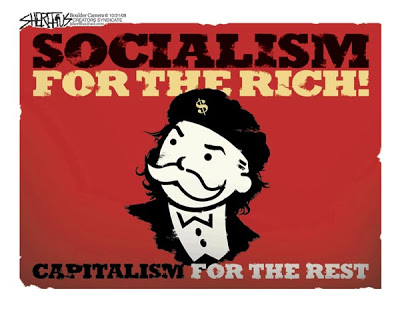
Thanks to Harry Edwards / The Rag Blog
Thanks to Harry Edwards / The Rag Blog
‘If we rid ourselves of every vestige of racism then we are confronted by the fact that our government is murdering our neighbors, our family members, on a daily basis. In this global village a person in what we call Pakistan might as well be living on West 32rd St.’
By Alan Pogue / The Rag Blog / December 2, 2008
See ‘Confronting the Terrorist Within’ by Chris Hedges, Below.
I am reflecting on the difference between the Democratic and Republican parties. The Democrats have always had a better domestic policy but their foreign policy is not so different from the Republicans. I went to the war in Vietnam during the Johnson administration. Lyndon nearly killed me. His wife owned stock in Northwest Orient Airlines that flew me to Vietnam so she made a few dollars off of my near death experience. What I see in the Democratic Party is “War on Terrorism (somewhat) Lite” but no end to the “war on terrorism.” No end to ripping off other countries.
Anyone who wishes to pursue this thought may read the article by Chris Hedges that follows. If we rid ourselves of every vestige of racism then we are confronted by the fact that our government is murdering our neighbors, our family members, on a daily basis. In this global village a person in what we call Pakistan might as well be living on West 32rd St. There is no fundamental difference unless our minds are taken over by the mainstream press which fails, in most cases, to profile the murder victims. What if every person who is killed in Afghanistan (pick your country) had a full page in the New York Times to examine the significance of their death
Confronting the Terrorist Within
By Chris Hedges / December 1, 2008The Hindu-Muslim communal violence that led to the attacks in Mumbai, as well as the warnings that the New York City transit system may have been targeted by al-Qaida, are one form of terrorism. There are other forms.
The wars in Iraq and Afghanistan, when viewed from the receiving end, are state-sponsored acts of terrorism. These wars defy every ethical and legal code that seek to determine when a nation can wage war, from Just War Theory to the statutes of international law largely put into place by the United States after World War II. These wars are criminal wars of aggression. They have left hundreds of thousands of people, who never took up arms against us, dead and seen millions driven from their homes. We have no right as a nation to debate the terms of these occupations. And an Afghan villager, burying members of his family’s wedding party after an American airstrike, understands in a way we often do not that terrorist attacks can also be unleashed from the arsenals of an imperial power.
Barack Obama’s decision to increase troop levels in Afghanistan and leave behind tens of thousands of soldiers and Marines in Iraq—he promises only to withdraw combat brigades—is a failure to rescue us from the status of a rogue nation. It codifies Bush’s “war on terror.” And the continuation of these wars will corrupt and degrade our nation just as the long and brutal occupation of Gaza and the West Bank has corrupted and degraded Israel. George W. Bush has handed Barack Obama a poisoned apple. Obama has bitten it.
The invasions and occupations of Afghanistan and Iraq were our response to feelings of vulnerability and collective humiliation after the attacks of Sept. 11, 2001. They were a way to exorcise through reciprocal violence what had been done to us.
Collective humiliation is also the driving force behind al-Qaida and most terrorist groups. Osama bin Laden cites the Sykes-Picot Agreement, which led to the carving up of the Ottoman Empire, as the beginning of Arab humiliation. He attacks the agreement for dividing the Muslim world into “fragments.” He rails against the presence of American troops on the soil of his native Saudi Arabia. The dark motivations of Islamic extremists mirror our own.
Robert Pape in “Dying to Win: The Strategic Logic of Suicide Terrorism,” found that most suicide bombers are members of communities that feel humiliated by genuine or perceived occupation. Almost every major suicide-terrorist campaign—over 95 percent—carried out attacks to drive out an occupying power. This was true in Lebanon, Sri Lanka, Chechnya and Kashmir, as well as Israel and the Palestinian territories. The large number of Saudis among the 9/11 hijackers appears to support this finding.
A militant who phoned an Indian TV station from the Jewish center in Mumbai during the recent siege offered to talk with the government for the release of hostages. He complained about army abuses in Kashmir, where ruthless violence has been used to crush a Muslim insurgency. “Ask the government to talk to us and we will release the hostages,” he said, speaking in Urdu with what sounded like a Kashmiri accent.
“Are you aware how many people have been killed in Kashmir? Are you aware how your army has killed Muslims? Are you aware how many of them have been killed in Kashmir this week?” he asked.
Terrorists, many of whom come from the middle class, support acts of indiscriminate violence not because of direct, personal affronts to their dignity, but more often for lofty, abstract ideas of national, ethnic or religious pride and the establishment of a utopian, harmonious world purged of evil. The longer the United States occupies Afghanistan and Iraq, the more these feelings of collective humiliation are aggravated and the greater the number of jihadists willing to attack American targets.
We have had tens of thousands of troops stationed in the Middle East since 1990 when Saddam Hussein invaded Kuwait. The presence of these troops is the main appeal, along with the abuse meted out to the Palestinians by Israel, of bin Laden and al-Qaida. Terrorism, as Pape wrote, “is not a supply-limited phenomenon where there are just a few hundred around the world willing to do it because they are religious fanatics. It is a demand-driven phenomenon. That is, it is driven by the presence of foreign forces on the territory that the terrorists view as their homeland. The operation in Iraq has stimulated suicide terrorism and has given suicide terrorism a new lease on life.”
The decision by the incoming Obama administration to embrace an undefined, amorphous “war on terror” will keep us locked in a war without end. This war has no clear definition of victory, unless victory means the death or capture of every terrorist on earth—an impossibility. It is a frightening death spiral. It feeds on itself. The concept of a “war on terror” is no less apocalyptic or world-purifying than the dreams and fantasies of terrorist groups like al-Qaida.
The vain effort to purify the world through force is always self-defeating. Those who insist that the world can be molded into their vision are the most susceptible to violence as antidote. The more uncertainty, fear and reality impinge on this utopian vision, the more strident, absolutist and aggressive are those who call for the eradication of “the enemy.” Immanuel Kant called absolute moral imperatives that are used to carry out immoral acts “a radical evil.” He wrote that this kind of evil was always a form of unadulterated self-love. It was the worst type of self-deception. It provided a moral façade for terror and murder. The wars in Iraq and Afghanistan are a “radical evil.”
The tactic of suicide bombing, equated by many in the United States with Islam, did not arise from the Muslim world. It had its roots in radical Western ideologies, especially Leninism, not religion. And it was the Tamil Tigers, a Marxist group that draws its support from the Hindu families of the Tamil regions of Sri Lanka, who invented the suicide vest for their May 1991 suicide assassination of Rajiv Ghandi.
Suicide bombing is what you do when you do not have artillery or planes or missiles and you want to create maximum terror for an occupying power. It was used by secular anarchists in the 19th and early 20th centuries, who bequeathed to us the first version of the car bomb—a horse-drawn wagon laden with explosives that was ignited on Sept. 16, 1920, on Wall Street. The attack was carried out by an Italian immigrant named Mario Buda in protest over the arrest of the anarchists Sacco and Vanzetti. It left 40 people dead and wounded more than 200.
Suicide bombing was adopted later by Hezbollah, al-Qaida and Hamas. But even in the Middle East, suicide bombing is not restricted to Muslims. In Lebanon, during the attacks in the 1980s against French, American and Israeli targets, only eight suicide bombings were carried out by Islamic fundamentalists. Twenty-seven were the work of communists and socialists. Christians were responsible for three.
The dehumanization of Muslims and the willful ignorance of the traditions and culture of the Islamic world reflect our nation’s disdain for self-reflection and self-examination. It allows us to exalt in the illusion of our own moral and cultural superiority. The world is far more complex than our childish vision of good and evil. We as a nation and a culture have no monopoly on virtue. We carry within us the same propensities for terror as those we oppose.
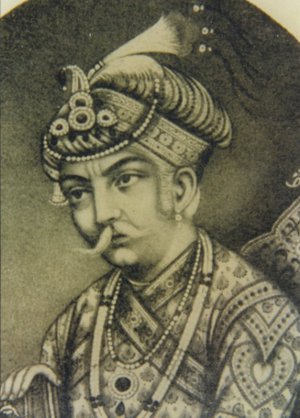
The Muslim Indian Emperor Akbar at the end of the 16th century filled his court with philosophers, mystics and religious scholars, including Sunni, Sufi and Shiite Muslims, Hindu followers of Shiva and Vishnu, as well as atheists, Christians, Jains, Jews, Buddhists and Zoroastrians. They debated ethics and belief. Akbar was one of the great champions of religious dialogue and tolerance. He forbade any person to be discriminated against on the basis of belief. He declared that everyone was free to follow any religion. His enlightened rule took place as the Inquisition was at its height in Spain and Portugal, and in Rome the philosopher Giordano Bruno was being burnt at the stake in Campo de’ Fiori for heresy.
Tolerance, as well as religious and political plurality, is not exclusive to Western culture. The Judeo-Christian tradition was born and came to life in the Middle East. Its intellectual and religious beliefs were cultivated and formed in cities such as Jerusalem, Antioch, Alexandria and Constantinople. Many of the greatest tenets of Western civilization, as is true with Islam and Buddhism, are Eastern in origin. Our concept of the rule of law and freedom of expression, the invention of printing, paper, the book, as well as the translation and dissemination of the classical Greek philosophers, algebra, geometry and universities were given to us by the Islamic world. The first law code was invented by the ancient Iraqi ruler Hammurabi. One of the first known legal protections of basic freedoms and equality was promulgated in the third century B.C. by the Buddhist Indian Emperor Ashoka. And, unlike Aristotle, he insisted on equal rights for women and slaves.
The East and the West do not have separate, competing value systems. We do not treat life with greater sanctity than those we belittle. There are aged survivors in Hiroshima and Nagasaki who can tell us something about our high moral values and passionate concern for innocent human life, about our own acts of terrorism. Eastern and Western traditions have within them varied ethical systems, some of which are repugnant and some of which are worth emulating. To hold up the highest ideals of our own culture and to deny that these great ideals exist in other cultures, especially Eastern cultures, is made possible only by historical and cultural illiteracy.
The civilization we champion and promote as superior is, in fact, a product of the fusion of traditions and beliefs of the Orient and the Occident. We advance morally and intellectually when we cross these cultural lines, when we use the lens of other cultures to examine our own. The remains of villages destroyed by our bombs, the dead killed from our munitions, leave us too with bloody hands. We can build a new ethic only when we face our complicity in the cycle of violence and terror.
The fantasy of an enlightened West that spreads civilization to a savage world of religious fanatics is not supported by history. The worst genocides and slaughters of the last century were perpetrated by highly industrialized nations. Muslims, including Saddam Hussein’s brutal regime, have a long way to go before they reach the body count of the secular regimes of the Nazis, the Soviet Union or the Chinese communists. It was, in fact, the Muslim-led government in Bosnia that protected minorities during the war while the Serbian Orthodox Christians carried out mass executions, campaigns of genocide and ethnic cleansing that left 250,000 dead.
Those who externalize evil and seek to eradicate that evil through violence lose touch with their own humanity and the humanity of others. They cannot make moral distinctions. They are blind to their own moral corruption. In the name of civilization and high ideals, in the name of reason and science, they become monsters. We will never free ourselves from the self-delusion of the “war on terror” until we first vanquish the terrorist within.
[Chris Hedges writes a weekly column for truthdig. He was the Middle East bureau chief for The New York Times.]
Source / truthdig
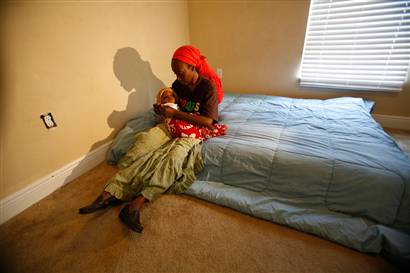
MIAMI – Max Rameau delivers his sales pitch like a pro. “All tile floor!” he says during a recent showing. “And the living room, wow! It has great blinds.”
But in nearly every other respect, he is unlike any real estate agent you’ve ever met. He is unshaven, drives a beat-up car and wears grungy cut-off sweat pants. He also breaks into the homes he shows. And his clients don’t have a dime for a down payment.
Rameau is an activist who has been executing a bailout plan of his own around Miami’s empty streets: He is helping homeless people illegally move into foreclosed homes.
“We’re matching homeless people with people-less homes,” he said with a grin.
Rameau and a group of like-minded advocates formed Take Back the Land, which also helps the new “tenants” with secondhand furniture, cleaning supplies and yard upkeep. So far, he has moved six families into foreclosed homes and has nine on a waiting list.
‘Everyone deserves a home’
“I think everyone deserves a home,” said Rameau, who said he takes no money from his work with the homeless. “Homeless people across the country are squatting in empty homes. The question is: Is this going to be done out of desperation or with direction?”
With the housing market collapsing, squatting in foreclosed homes is believed to be on the rise around the country. But squatters usually move in on their own, at night, when no one is watching. Rarely is the phenomenon as organized as Rameau’s effort to “liberate” foreclosed homes.
Florida — especially the Miami area, with its once-booming condo market — is one of the hardest-hit states in the housing crisis, largely because of overbuilding and speculation. In September, Florida had the nation’s second-highest foreclosure rate, with one out of every 178 homes in default, according to Realty Trac, an online marketer of foreclosed properties. Only Nevada’s rate was higher.
Like other cities, Miami is trying to ease the problem. Officials launched a foreclosure-prevention program to help homeowners who have fallen behind on their mortgage, with loans of up to $7,500 per household.
The city also recently passed an ordinance requiring owners of abandoned homes — whether an individual or bank — to register those properties with the city so police can better monitor them.
Elsewhere around the country, advocates in Cleveland are working with the city to allow homeless people to legally move into and repair empty, dilapidated houses. In Atlanta, some property owners pay homeless people to live in abandoned homes as a security measure.
From shelter to home
In early November, Rameau drove a woman and her 18-month old daughter to a ranch home on a quiet street lined with swaying tropical foliage. Marie Nadine Pierre, 39, has been sleeping at a shelter with her toddler. She said she had been homeless off and on for a year, after losing various jobs and getting evicted from several apartments.
“My heart is heavy. I’ve lived in a lot of different shelters, a lot of bad situations,” Pierre said. “In my own home, I’m free. I’m a human being now.”
Rameau chose the house for Pierre, in part, because he knew its history. A man had bought the home in the city’s predominantly Haitian neighborhood in 2006 for $430,000, then rented it to Rameau’s friends. Those friends were evicted in October because the homeowner had stopped paying his mortgage and the property went into foreclosure.
Rameau, who makes his living as a computer consultant, said he is doing the owner a favor. Before Pierre moved in, someone stole the air conditioning unit from the backyard, and it was only a matter of time before thieves took the copper pipes and wiring, he said.
“Within a couple of months, this place would be stripped and drug dealers would be living here,” he said, carrying a giant plastic garbage bag filled with Pierre’s clothes into the home.
He said he is not scared of getting arrested.
“There’s a real need here, and there’s a disconnect between the need and the law,” he said. “Being arrested is just one of the potential factors in doing this.”
Miami spokeswoman Kelly Penton said city officials did not know Rameau was moving homeless into empty buildings — but they are also not stopping him.
No actions to stop
“There are no actions on the city’s part to stop this,” she said in an e-mail. “It is important to note that if people trespass into private property, it is up to the property owner to take action to remove those individuals.”
Pierre herself could be charged with trespassing, vandalism or breaking and entering. Rameau assured her he has lawyers who will represent her free.
Two weeks after Pierre moved in, she came home to find the locks had been changed, probably by the property’s manager. Everything inside — her food, clothes and family photos — was gone.
But late last month, with Rameau’s help, she got back inside and has put Christmas decorations on the front door.
So far, police have not gotten involved.
Source / AP / MSNBC
Thanks to Sarito Carol Neiman / The Rag Blog
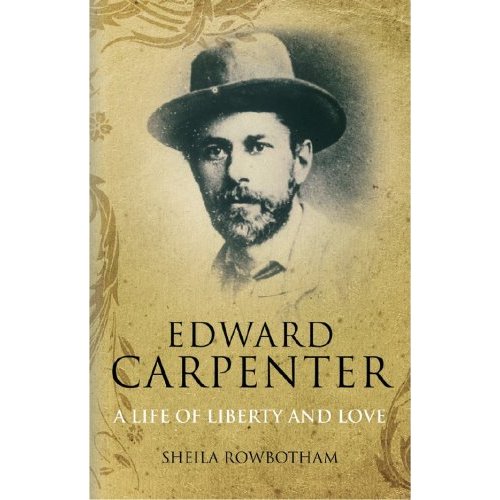
A Pioneer’s Life Richly Rendered:
Sheila Rowbotham offers the comprehensive, critical, contextualized biography Edward Carpenter deserves.
By Doug Ireland
Edward Carpenter: A Life of Liberty and Love
By Sheila Rowbotham / Verso / 565 pages, $39.95.
When Edward Carpenter (1844-1929) broke free of the stifling world of upper-class Victorian England into which he was born, his rejection of its cosseted, impossibly mannered life was total. In his time, he became the most famous apostle of a wide-ranging revolt against sexual hypocrisy and the straightjacket of class divisions in human interpersonal relations. And Carpenter’s courageous contributions over a long life made him one of the most important precursors of gay liberation, one whose influence spanned countries and continents.
Carpenter and his working-class lover of 37 years, George Merrill, became one of history’s most celebrated same-sex couples, on a par with Jean Cocteau and Jean Marais or with Christopher Isherwood and Don Bachardy. Yet despite his well-known defense of homosexuality, Carpenter was one of the most beloved figures of British socialism, so much so that on his 80th birthday in 1924, 43 years before same-sex relations were legalized in the United Kingdom, the entire Cabinet of the first Labour Party government, led by Carpenter’s old friend Prime Minister Ramsay MacDonald, signed a profuse tribute to him.
A poet, essayist, and philosopher, a pioneer environmentalist and feminist, the most generous of humanitarians, an advocate of alternative democratic lifestyles who eschewed the bourgeois accumulation of possessions, and a tireless and skilled propagandist for social change, Carpenter is primarily remembered today for his writings on homosexuality.
But it is one of the great merits of Sheila Rowbotham’s superb new biography, the first in-depth account of his life and work, that she restores the remarkable Carpenter to his proper place as one of the most significant figures in the rise of the British cultural left and in the creation of the shifts in attitudes that made the election of the first Labour government possible.
When Carpenter was born, “sodomy” was still a capital crime technically subject to the death penalty, a sanction that was only changed to life imprisonment in 1861 when Carpenter was 17, and although aware from an early age of his intense attraction to his own sex he did not have his first sexual experience with a man until he was 20. His first love occurred while he was an increasingly radical and egalitarian university student at Cambridge, but it was fleeting, painful, and an apparent single carnal episode with the love object – Edward Beck, a somewhat younger student who later became a conservative Cambridge dean – was not repeated, because as Rowbotham writes, “the ambiguity of strong friendships in the 1870s blurred any explicit expression of sexual passion [and] the equivocal attitudes to homosexual desire in Cambridge… created a perplexing kind of freedom which had to be intimated within bounds which could never be clearly marked out.”
After Beck broke off their brief romantic friendship, leaving a lasting wound, Carpenter visited Paris in search of male prostitutes in a country in which homosex was not illegal, but his sexual experiences there left him emotionally empty, unfulfilled, and unhappy.
Carpenter’s sense of alienation from his sexual self only really began to dissipate when he read Walt Whitman’s “Leaves of Grass,” for “Whitman’s advocacy of an ‘adhesive’ democratic, manly comradeship was attractive to Carpenter because it provided a new homoerotic possibility, and at the same time touched a political nerve. Whitman’s ‘Democratic Vistas’ (1871) presented ‘adhesiveness’ as the complement to individualism, a brotherhood in which all races fused as comrades.”
Carpenter became a confirmed Whitmanite, but it was not until 1874 as he was about to graduate from Cambridge that Carpenter worked up the courage to write “a long letter” to Whitman. “Because you have… given me a ground for the love of men, I thank you continually in my heart,” Carpenter wrote the bard, “and others thank you though they do not say so. For you have made men to be not ashamed of the noblest instinct of their nature. Women are beautiful, but to some there is that which surpasses the love of women.”
Whitman loved the letter, and there ensued a correspondence that would only end with Whitman’s death.
Using a trip to America on behalf of his wealthy family’s financial entanglements there as an excuse, Carpenter – who after a brief stint as a cleric had joined the Cambridge University Extension program to teach the working classes in northern England – finally met Whitman and spent a week in his house with him. (He also sought out and met Ralph Waldo Emerson.)
One of Carpenter’s young gay disciples in later years, Chester A. Arthur III (1901-1972), the grandson and namesake of the US president, recalled in his old age that Carpenter had told him he had “slept” with Whitman, and that Whitman “thought people should ‘know’ each other on the physical and emotional plane as well as in the mental. And that the best part of comrade love was that there was no limit to the number of comrades one could have.”
Meeting Whitman, writes Rowbotham, “clarified new ways of seeing, feeling, and being for Carpenter, giving him a different means of denoting significance. It was the start of an alternative outlook on the world.” Moreover, “Carpenter’s visit to Whitman… made him more bold sexually: he embarked on exploratory encounters with working-class men, ‘railway-men, porters, clerks, signalmen, ironworkers, coach-builders, Sheffield cutters,’ discovering he could ‘knit up more alliances more satisfactory to me than any I had before known… I felt I had come into, or at least in sight of, the world to which I belonged, my natural habitat.'”
His Whitman visit had also awakened a deepening love of nature, and on his return Carpenter moved first to the working-class industrial city of Sheffield, then to a farm in a nearby village where he worked at market gardening and wrote his first book, “Towards Democracy” (1883), a long prose poem greatly influenced by Whitman and the influential Christian Socialist art critic and social essayist John Ruskin.
The book “contains Carpenter’s observations of the poverty he saw in the streets of the northern cities, the crushing, destructive working conditions, and the lack of human contact between people of different classes. These are mixed together with Ruskinian diatribes against commercialism… and a romantic Whitmanite embracing of all humanity, however despised or outcast.” Politics was a means to an end, for the “democracy” Carpenter sought was “a new way of being human, a new manner of encountering others,” flecked with homosensual accents. The book attracted a growing audience of socialists and sexual rebels over the ensuing decades and converted many to the radical cause.
By this time Carpenter had inherited considerable wealth on the death of his father, and bought three fields at Millthorpe, a “tiny, remote settlement in the Cordwell Valley” not too far from Sheffield, where he had a gray stone house built and set up to live a simpler life as a market gardener with the aid of a local farming family.
Having been converted to socialism after reading “England for All” (1881) by the pioneer of British socialism, Henry Hyndman, he began attending meetings of Hyndman’s Social Democratic Federation and gave ₤300 to Justice, the first and longest-surviving Marxist newspaper in England, which Hyndman started that year. And Carpenter began criss-crossing English towns and cities to lecture where “little networks of heresy,” from utopians to hard-headed municipal reformers, “coalesced to become the cores of the new [Socialist] movement.” He continued to keep a heavy lecture schedule until he was nearly 80.
He helped found the Sheffield Socialist Society, and in 1885 helped the Working Men’s Radical Association put up one of the first independent labor candidates for Parliament.
As Rowbotham puts it, “Carpenter’s unusual circumstances as a Millthorpe market gardener endowed him with a certain mystique among the newly radicalized intelligentsia earnestly debating poverty, class inequality, sexual relations, new ethical codes…” and he gained renown as a practitioner of an alternative style of living even as his lectures, constant stream of books, and never-ending series of articles in the new socialist and radical publications made him well-known.
In all his speeches and writings, he “stressed, as he had in ‘Towards Democracy,’ that the moral elements in historical movements were the key to change because they caused men and women to desire an alternative.” Carpenter’s libertarian brand of socialism had a strong anarchist tinge, but he had an entirely ecumenical view of the left that saw all its factions as working toward a common goal, and envisioned a labor “movement” that would unite them all.
For Carpenter, “Socialism was not merely a movement for industrial emancipation, it ‘meant the entire regeneration of society in art, in science, in religion, and in literature, and the building up of a new life in which industrial socialism was the foundation,'” as he put it in 1887.
However, Carpenter’s simple, alternative lifestyle, which included rejection of traditional bourgeois dress, a sometimes backsliding vegetarianism, and his fondness for sandals (which he eventually began to make at Millthorpe as a supplement to his income) was not to the taste of all leftists; his Socialist comrade George Bernard Shaw dryly nicknamed Carpenter “the Noble Savage.”
In one of his most successful books, “Civilization: Its Cause and Cure” (1889), which went through 18 editions in English in the ensuring four decades and was widely published in translation, including Japanese, Carpenter flayed class divisions, “Panglossian Victorian complacency,” and “faith in automatic progress as a result of external changes in science, technology, productivity, and material prosperity.” Deploying references to Plato, Carpenter “wanted to validate physical desires denigrated by Christianity, and homosexuality peeps out gingerly from [its] pages, smuggled in under cover of the classics.”
Carpenter met the man who was to become his partner for the rest of his life, 25-year-old George Merrill, in 1892 as they were descending from a train at Sheffield. They briefly and wordlessly cruised each other, and Merrill followed Carpenter at a distance as he walked off toward Millthorpe in the company of waiting friends. Eventually Carpenter stopped and turned, the two exchanged names and addresses, and a relationship that would last for the next three and a half decades was born. Their life together at Millthorpe entered into legend.
Rowbotham relates that “After meeting Merrill, Carpenter was seeking a more outright way of expressing male-male love than was possible under Whitman’s cloak of comradeship.” In 1893 and 1894, Carpenter set to work on four pamphlets – “Woman and Her Place in a Free Society,” “Marriage in a Free Society,” “Sex-love and its Place in a Free Society,” and “Homogenic Love and its Place in a Free Society.”
“The decision to write about sexuality in general,” notes Rowbotham, “was consistent with Carpenter’s tendency to seek out broad alliances rather than to isolate himself. Moreover the other pamphlets gave ‘Homogenic Love’ a degree of cover, for he could appear as a writer on sexual topics in general rather than as a homosexual pleading a case.”
The first three pamphlets, which took an advanced feminist position arguing that women deserved full social and economic freedom, that marriage was a form of prostitution, and that housework was real work, were all published, and eventually collected as “Love’s Coming of Age” in 1896. But the publisher refused to bring out “Homogenic Love,” so Carpenter paid to have it privately printed, and “the first British statement by a homosexual man, linking emancipation to social transformation, was destined only for friends and acquaintances.”
Drawing on the works in German of the pioneer German homosexual liberationist Karl Ulrichs (Carpenter was fluent in German, French, and Italian), “Homogenic Love” argued that same-sex desire was congenital and that private sexual behavior should be no concern of the law, which could not stop “natural” feelings, only persecute those individuals caught expressing them, while offering fertile terrain for blackmailers.
In the wake of the imprisonment and trial of Oscar Wilde – who had admired Carpenter’s “Towards Democracy” – the following year, an event which “left a vortex of fear in its wake,” Carpenter’s attempts to find a publisher for “Homogenic Love” were universally rejected, and his attempts to publish articles based on his privately printed plea for homosexual liberation were repeatedly rejected, even by journals on the left which normally welcomed him. But “Homogenic Love” was published in German in 1895, in the French journal La Societé Nouvelle the next year, and copies made their way into the hands of sympathetic American sex radicals, particularly in the anarchist movement, which greatly admired Carpenter and Whitman.
In 1897 Carpenter finally managed to get his article on same-sexers, “An Unknown People,” published in the freethinkers’ magazine The Reformer, arguing for sexual education for lonely young “Urnings” (he’d adopted Ulrichs’ term for homosexuals) and insisting that they were not the “decadents” of popular imagination but “fine, healthy specimens.”
In an 1899 article in the International Journal of Ethics on “Affection in Education,” Carpenter argued that “intense and romantic” friendships between pupils, and between teachers and pupils, played a vital part in education. And when the scientific study “Sexual Inversion” by the pioneering sexologist Havelock Ellis, a longtime friend and admirer of Carpenter who was married to a lesbian, was crucified in the press and pursued by the censors, Carpenter did not hesitate to spring publicly to its defense.
In 1902 Carpenter edited “Ioläus,” an anthology celebrating same-sex love which drew its title from the name of Hercules’ warrior comrade, and in which is chronicled, as Rowbotham puts it, “a great crowd of historical ‘friends.’ Greek and Spartan warrior lovers and shepherd boys appear in the procession along with Sir Thomas Browne, Michelangelo and the Persian poet Hafiz. From more recent times, Richard Wagner, King Ludwig II of Prussia, Walt Whitman, Byron and Shelley present themselves in its pages. Nor were the women forgotten; Carpenter included Queen Anne and Lady Churchill as well as the resolute Lady Eleanor Butler and Sarah Ponsonby who eloped to live in Wales and became known as the ‘Ladies of Llangolen’ during the 18th century.”
Over the years, Millthorpe and the Carpenter-Merrill ménage acted as a magnet for young men troubled about their same-sex attractions, both those from the working classes Carpenter favored – and whom he often bedded, sometimes arousing temporary fits of jealousy from the equally promiscuous Merrill that soon subsided – and a stream of younger, disconsolate would-be writers and intellectuals who were homosexual.
Among those whom the charismatic Carpenter served as sexual therapist and literary counselor were the budding poet Siegfriend Sasson, who wrote in requesting an audience that Carpenter’s writings had helped him understand the antipathy he felt to young women; and the even younger Robert Graves, a schoolmaster dismissed for an affair with a schoolboy, who wrote in a thank you note that Carpenter had “absolutely taken the scales” from his eyes. Graves eventually gained worldwide fame as the author of “I, Claudius.”
Even the already well-known author E.M. Forster benefited from his 1914 Millthorpe pilgrimage. “Merrill,” Rowbotham relates, “who was familiar with the syndrome of nervous devotees, intuitively broke through Forster’s self-conscious reticence.”
As Forster later recalled, “George Merrill touched my backside – gently and just above the buttocks – I believe he touched most peoples. The sensation was unusual and I still remember it, as I remember the position of a long-lost tooth. It was as much psychological as physical. It seemed to go straight through the small of my back into my ideas, without involving any thought.”
On Forster’s return home, he immediately sat down and wrote his novel “Maurice,” a homosexual story of love across the class divide for which the Carpenter-Merrill couple was the template, and in which the character of Alec Scudder the servant gamekeeper was loosely based on Merrill. Forster regarded Carpenter as “a saviour” and noted ecstatically in his diary, “Forward rather than back, Edward Carpenter! Edward Carpenter! Edward Carpenter!”
But Carpenter’s home also was a magnet for a never-ending stream of radicals – working-class trade unionists, Socialist and Labour Party leaders, rebellious aristocrats, emancipated women (who numbered among his most important friendships), environmentalists, land reformers, leaders of cooperatives, freethinking spiritual seekers, and delegations en masse from Socialist youth walking clubs all trouped to Carpenter’s door and enjoyed his warm and bountiful hospitality.
Merrill died suddenly in 1928, and, shattered by the loss, Carpenter soon followed a year later. They are buried next to each other.
In Rowbotham, Carpenter has at long last found the biographer he deserves. A disciple of the great English historian E.P. Thompson and a socialist feminist historian and essayist whose writings over the last three decades have made her a revered figure in the women’s movement, Rowbotham has always insisted on the importance of grassroots social movements from below.
And in her massive book on Carpenter, Rowbotham details his tireless activism and its incredible impact in fostering and nurturing the British left and the labor movement. Tens of thousands of workers who never read Carpenter had heard him lecture, or speak at open-air public meetings which attracted crowds in the thousands, whether he was appearing in support of strikers, arguing for women’s suffrage, calling for the curtailment of pollution by industry, opposing the Boer War and World War I, or demanding that the privileged aristocracy’s control of the land be ceded to the people who worked it.
Many more knew Carpenter, a talented musician who entertained Millthorpe visitors by playing his beloved Beethoven on the piano, as the composer and lyricist of the popular socialist hymn “England, Arise!,” which was one of the frequently-sung anthems of the labor left.
Rowbotham is a felicitously vivid, witty, and evocative writer who captures Carpenter’s magnetic personality and makes him come alive. But this is no undiluted hagiography, for Rowbotham neatly picks apart Carpenter’s failings, foibles, and blind spots, including his unfortunate tendency to an ideological anti-Semitism (although he had close friends who were Jews) and a certain condescension, typical of Cambridge men of the era, toward Third World peoples – this despite his outspoken opposition to British colonialism and imperialism and his early and then-controversial support of the movement for independence in India, which he’d visited and written about.
Carpenter’s legacy includes a direct, linear connection to the modern American homosexual rights movement, for it was when a young Harry Hay in 1925 stumbled across a restricted library copy of Carpenter’s influential 1916 book “The Intermediate Sex,” with its visions of same-sexers organizing to demand their rights, that Hay grasped the principals of homosexual emancipation which, two and half decades later, would lead him to found the Mattachine Society.
As brilliantly researched and told by Rowbotham, “Edward Carpenter: A Life of Liberty and Love” has lessons for same-sexers, and for the left, which are invaluable in considering how we got to where we are and whither we should go. If you think you know Carpenter, this book’s revelations will nonetheless surprise you, as they did me. And if you don’t know him, you owe it to yourself to add this important and entertaining work, illustrated with numerous photos, to your bookshelf.
Carpenter’s most important writings, including “Toward Democracy,” “Ioläus,” “The Intermediate Sex,” and his word-portrait of his lover George Merrill are all available online. The music and lyrics to Carpenter’s working-class anthem, “England, Arise!” are here. And the Edward Carpenter Forum provides a wide range of Carpenteriana at here.
Doug Ireland can be reached through his blog DIRELAND.
©GayCityNews 2008
Source / Gay City News / Nov. 26, 2008
Find Edward Carpenter: A Life of Liberty and Love at Amazon.com
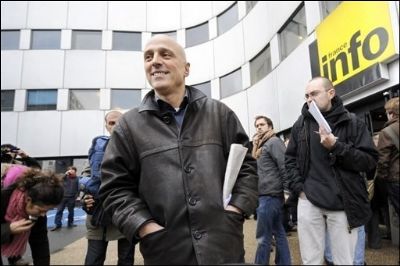
This over the top arrest by French cops and their strip search of a journalist for a “libel charge” has the Paris press up on arms.
Larry Ray / The Rag Blog / December 1, 2008
News that a newspaper’s director was arrested at home, handcuffed and strip-searched led French journalists’ unions to call for protests on Monday.
December 1, 2008
PARIS – French journalists’ unions on Sunday called for protests after a director at the leftist newspaper Liberation was arrested at his home, humiliated in front of his sons, handcuffed and strip-searched.
Vittorio de Filippis, the newspaper’s director for development, said three police officers turned up at his house in the early hours on Friday to take him in for questioning over a libel suit lodged by the head of a Internet provider service in January 2007.
During the five hours that he was held at the police station in the Paris region, he was handcuffed, strip-searched twice and interrogated without a lawyer.
“This is unprecedented in France,” Filipis told AFP. “No director of a publication has ever been subjected to what I was forced to subject to.”
The journalist was cited in a complaint lodged by Xavier Niel, head of the Free Internet provider, for libel over a commentary posted on the newspaper’s website in response to an article on Niel’s legal problems.
Police sources told AFP that the judge ordered the arrest after Filippis refused to answer a previous subpoena.
“My eldest son, who is 14, witnessed this scene. His brother, 10, did not come out of his room but I later learned that he was awake,” Filippis recounted in Liberation.
“I barely had time to reassure my son that I was not a crook and that this had to do with the newspaper.”
At the station, Filippis said he was forced to undress and was subjected twice to body cavity searches.
Liberation’s lawyer Jean-Paul Levy said he was outraged by the police treatment in a case that is “not even punishable by jail time”.
Two unions, the SNJ-CGT and CFDT, called for a protest Monday to express outrage over the police methods used against Filippis and call for respect for journalists’ rights.
Source / AFP / Expatica
Also see Police Treatment of Journalist Prompts Outcry in France by Edward Cody / Washington Post / Nov. 30, 2008
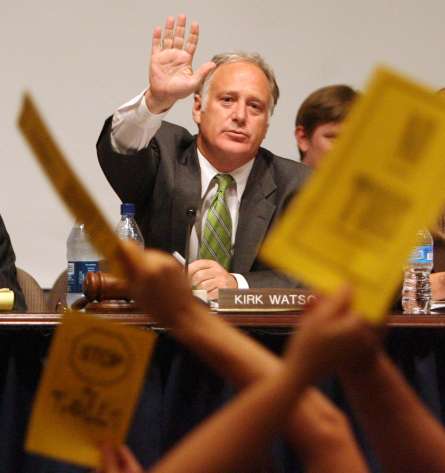
Texas Sen. Kirk Watson at public meeting on toll roads in Austin, September 2007. Photo by Kelly West, Austin American-Statesman.
See ‘Time is Now to Fix Transportation’ by Texas senators John Corona and Kirk Watson, Below.
There are a number of questionable assertions in the op ed piece by Texas senators John Corona and Kirk Watson, below, and also some good ones. The devil is in the details.
In essence the article says we need to change our transportation policy, which is true. But the editorial misses its target in one important respect; in light of energy (oil supply and climate-related) constraints and credit market constraints, the change is going to have to be deeper and more dramatic than portrayed here, and should properly be initiated at the national level. A bankrupt Detroit and a frozen bond lending market signify anything but business as usual.
Continue reading
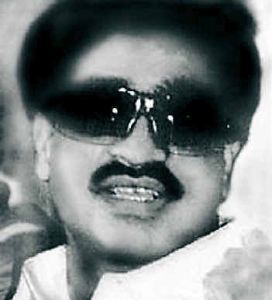
The coordinated nighttime assault against seven major targets in Mumbai is reminiscent of the 1993 bombings that devastated the Bombay Stock Exchange. The recent attack bears the fingerprints of the same criminal mastermind – meticulous preparation, ruthless execution and the absence of claims or demands.
The eerie silence that accompanied the blasts are the very signature of Ibrahim Dawood, now a multi-millionaire owner of a construction company in Karachi, Pakistan. His is hardly a household name around the world like Osama bin Laden. Across South Asia, however, Dawood is held in awe and, in a twist on morals, admired for his belated conversion from crime boss to self-styled avenger.
His rise to the highest rungs of India’s underworld began from the most unlikely position as the diligent son of a police constable in the populous commercial capital then known as Bombay.
His childhood familiarity with police routine and inner workings of the justice system gave the ambitious teenager an unmatched ability to outwit the authorities with evermore clever criminal designs. Among the unschooled ranks of Bombay gangland, Ibrahim emerged as the coherent leader of a multi-religious mafia, not just due to his ability to organize extortion campaigns and meet payrolls, but also because of his merciless extermination of rivals.
Dawood, always the professional problem-solver, gained the friendship of aspiring officers in India’s intelligence service known as Research and Analysis Wing (RAW). He soon attracted the attention of American secret agents, then supporting the Islamic mujahideen in their battle against the Soviet occupiers of Afghanistan. Dawood personally assisted many a U.S. deep-cover operation funneling money to Afghan rebels via American-operated casinos in Kathmandu, Nepal.
Eager to please all comers, Dawood occasionally got his wires crossed, providing travel documents and other amenities to Islamist airplane hijackers. In response, Washington spymasters tried to unofficially “impound” his investment in the Nepalese casinos. Dawood’s fury is legendary among locals. An honorable businessman, he held to the strict belief that a deal is a deal and there can be no reneging for any reason.
As Bombay moved into the league of Asia’s premier cities – hotel rates and apartment rentals are the highest in the region – Dawood could have led a comfortable life as top dog. Instead he suffered a spasm of conscience, a newfound moral outrage, when rightwing Hindu nationalists destroyed a mosque in northern India in 1992, slaying 2000 Muslim worshippers, mostly women and children.
One a day in the following May, his henchmen set off bombs across Bombay, killing more than 300 people. His personal convictions had – uncharacteristically – overcome his dispassionate business ethics. Reeling in shock, his top lieutenant, a Hindu, attempted to assassinate Dawood. A bloody intra-gang war followed, but as always Dawood triumphed, even while away in exile in Dubai and Karachi.
In the ensuing decade, at the height of violence in Kashmir, Dawood sent his heavily armed young trainees by boat from Karachi on covert landings onto Indian beaches. This same method was used in the Mumbai assault with more boats, seven craft according to initial navy reports.
Why the timing of this raid, on the dawn of Thanksgiving in America? The leader of India’s opposition and former deputy Prime Minister L. K. Advani had long sought Dawood’s extradition from Pakistan, a move opposed by the then military government in Islamabad. With the restoration of civilian rule, the new Pakistani prime minister (Gillani) consented to New Delhi’s deportation request.
Washington and London both agreed with the India’s legal claim and removed the longstanding “official protection” accorded for his past services to Western intelligence agencies. U.S. diplomats, however, could never allow Dawood’s return. He simply knows too much about America’s darker secrets in South Asia and the Gulf, disclosure of which could scuttle U.S.-India relations. Dawood was whisked away in late June to a safe house in Quetta, near the tribal area of Waziristan, and then he disappeared, probably back to the Middle East.
As in the case of America’s Afghan war protégé Osama bin Laden, the blowback to U.S. covert policy came suddenly, this time with spectacular effects in Mumbai. The assault on the Taj Mahal Palace Hotel will probably go down as the first lethal blow to the incoming Obama administration. The assailants, who spoke Punjabi and not the Deccan dialect, went to a lot of trouble to torch the prestigious hotel, which is owned by the Tata Group. This industrial giant is the largest business supporter of the U.S.-India nuclear cooperation agreement, and Tata is now planning to become a nuclear power supplier. The Clintons, as emissaries of Enron, were the first to suggest the nuclear deal with New Delhi, so Obama inherits the Mumbai catastrophe even before he takes office.
Dawood, ranks fourth on Forbes’ list of the world’s 10 most wanted fugitives from the law. After the new round of attacks that killed more than 100 people and laid waste top five-star hotels, Dawood can now contend for the No.1 spot in the coming months and years. In contrast to the fanatic and often ineffective bin Laden, Dawood is professional on all counts and therefore a far more formidable adversary. Yet some in Pakistan’s military intelligence agency say that Dawood is dead, killed in July. This version of events is much the same as a variation of the bin Laden story. If true, then his underlings are carrying on the mission of an outlaw transfigured into a legend.
[Yoichi Shimatsu. Former editor of The Japan Times in Tokyo and journalism lecturer at Tsinghua University in Beijing. Shimatsu has covered the Kashmir crisis and Afghan War.]
Source / New America Media
Thanks to Carl Davidson / The Rag Blog
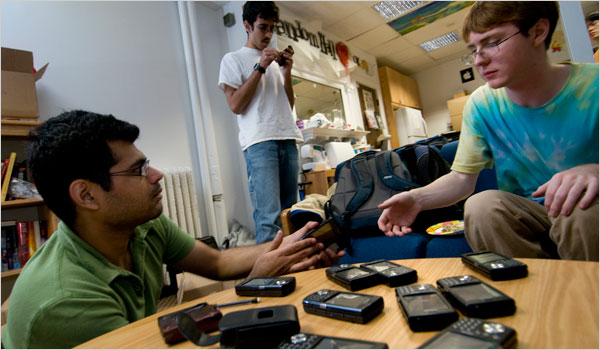
Even its practitioners acknowledge that, if misused, collective intelligence tools could create an Orwellian future on a level Big Brother could only dream of.
By John Markoff / November 29, 2008
Harrison Brown, an 18-year-old freshman majoring in mathematics at M.I.T., didn’t need to do complex calculations to figure out he liked this deal: in exchange for letting researchers track his every move, he receives a free smartphone.
Now, when he dials another student, researchers know. When he sends an e-mail or text message, they also know. When he listens to music, they know the song. Every moment he has his Windows Mobile smartphone with him, they know where he is, and who’s nearby.
Mr. Brown and about 100 other students living in Random Hall at M.I.T. have agreed to swap their privacy for smartphones that generate digital trails to be beamed to a central computer. Beyond individual actions, the devices capture a moving picture of the dorm’s social network.
The students’ data is but a bubble in a vast sea of digital information being recorded by an ever thicker web of sensors, from phones to GPS units to the tags in office ID badges, that capture our movements and interactions. Coupled with information already gathered from sources like Web surfing and credit cards, the data is the basis for an emerging field called collective intelligence.
Propelled by new technologies and the Internet’s steady incursion into every nook and cranny of life, collective intelligence offers powerful capabilities, from improving the efficiency of advertising to giving community groups new ways to organize.
But even its practitioners acknowledge that, if misused, collective intelligence tools could create an Orwellian future on a level Big Brother could only dream of.
Collective intelligence could make it possible for insurance companies, for example, to use behavioral data to covertly identify people suffering from a particular disease and deny them insurance coverage. Similarly, the government or law enforcement agencies could identify members of a protest group by tracking social networks revealed by the new technology. “There are so many uses for this technology — from marketing to war fighting — that I can’t imagine it not pervading our lives in just the next few years,” says Steve Steinberg, a computer scientist who works for an investment firm in New York.
In a widely read Web posting, he argued that there were significant chances that it would be misused, “This is one of the most significant technology trends I have seen in years; it may also be one of the most pernicious.”
For the last 50 years, Americans have worried about the privacy of the individual in the computer age. But new technologies have become so powerful that protecting individual privacy may no longer be the only issue. Now, with the Internet, wireless sensors, and the capability to analyze an avalanche of data, a person’s profile can be drawn without monitoring him or her directly.
“Some have argued that with new technology there is a diminished expectation of privacy,” said Marc Rotenberg, executive director of the Electronic Privacy Information Center, a privacy rights group in Washington. “But the opposite may also be true. New techniques may require us to expand our understanding of privacy and to address the impact that data collection has on groups of individuals and not simply a single person.”
Mr. Brown, for one, isn’t concerned about losing his privacy. The M.I.T researchers have convinced him that they have gone to great lengths to protect any information generated by the experiment that would reveal his identity.
Besides, he says, “the way I see it, we all have Facebook pages, we all have e-mail and Web sites and blogs.”
“This is a drop in the bucket in terms of privacy,” he adds.
GOOGLE and its vast farm of more than a million search engine servers spread around the globe remain the best example of the power and wealth-building potential of collective intelligence. Google’s fabled PageRank algorithm, which was originally responsible for the quality of Google’s search results, drew its precision from the inherent wisdom in the billions of individual Web links that people create.
The company introduced a speech-recognition service in early November, initially for the Apple iPhone, that gains its accuracy in large part from a statistical model built from several trillion search terms that its users have entered in the last decade. In the future, Google will take advantage of spoken queries to predict even more accurately the questions its users will ask.
And, a few weeks ago, Google deployed an early-warning service for spotting flu trends, based on search queries for flu-related symptoms.
The success of Google, along with the rapid spread of the wireless Internet and sensors — like location trackers in cellphones and GPS units in cars — has touched off a race to cash in on collective intelligence technologies.
In 2006, Sense Networks, based in New York, proved that there was a wealth of useful information hidden in a digital archive of GPS data generated by tens of thousands of taxi rides in San Francisco. It could see, for example, that people who worked in the city’s financial district would tend to go to work early when the market was booming, but later when it was down.
It also noticed that middle-income people — as determined by ZIP code data — tended to order cabs more often just before market downturns.
Sense has developed two applications, one for consumers to use on smartphones like the BlackBerry and the iPhone, and the other for companies interested in forecasting social trends and financial behavior. The consumer application, Citysense, identifies entertainment hot spots in a city. It connects information from Yelp and Google about nightclubs and music clubs with data generated by tracking locations of anonymous cellphone users.
The second application, Macrosense, is intended to give businesses insight into human activities. It uses a vast database that merges GPS, Wi-Fi positioning, cell-tower triangulation, radio frequency identification chips and other sensors.
“There is a whole new set of metrics that no one has ever measured,” said Greg Skibiski, chief executive of Sense. “We were able to look at people moving around stores” and other locations. Such travel patterns, coupled with data on incomes, can give retailers early insights into sales levels and who is shopping at competitors’ stores.
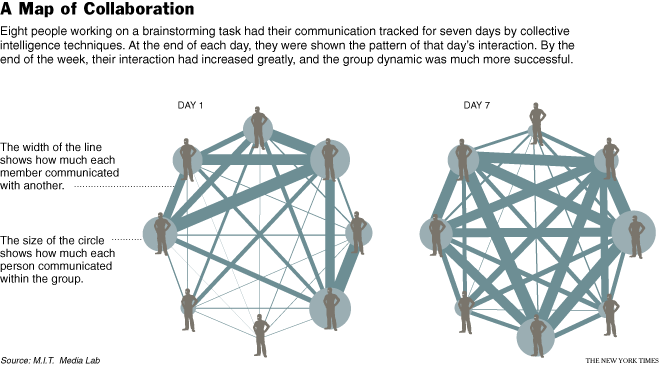
The Media Lab researchers have worked with Hitachi Data Systems, the Japanese technology company, to use some of the lab’s technologies to improve businesses’ efficiency. For example, by equipping employees with sensor badges that generate the same kinds of data provided by the students’ smartphones, the researchers determined that face-to-face communication was far more important to an organization’s work than was generally believed.
Productivity improved 30 percent with an incremental increase in face-to-face communication, Dr. Pentland said. The results were so promising that Hitachi has established a consulting business that overhauls organizations via the researchers’ techniques.
Dr. Pentland calls his research “reality mining” to differentiate it from an earlier generation of data mining conducted through more traditional methods.
Dr. Pentland “is the emperor of networked sensor research,” said Michael Macy, a sociologist at Cornell who studies communications networks and their role as social networks. People and organizations, he said, are increasingly choosing to interact with one another through digital means that record traces of those interactions. “This allows scientists to study those interactions in ways that five years ago we never would have thought we could do,” he said.
ONCE based on networked personal computers, collective intelligence systems are increasingly being created to leverage wireless networks of digital sensors and smartphones. In one application, groups of scientists and political and environmental activists are developing “participatory sensing” networks.
At the Center for Embedded Networked Sensing at the University of California, Los Angeles, for example, researchers are developing a Web service they call a Personal Environmental Impact Report to build a community map of air quality in Los Angeles. It is intended to let people assess how their activities affect the environment and to make decisions about their health. Users may decide to change their jogging route, or run at a different time of day, depending on air quality at the time.
“Our mantra is to make it possible to observe what was previously unobservable,” said Deborah Estrin, director of the center and a computer scientist at U.C.L.A.
But Dr. Estrin said the project still faced a host of challenges, both with the accuracy of tiny sensors and with the researchers’ ability to be certain that personal information remains private. She is skeptical about technical efforts to obscure the identity of individual contributors to databases of information collected by network sensors.
Attempts to blur the identity of individuals have only a limited capability, she said. The researchers encrypt the data to protect against identifying particular people, but that has limits.
“Even though we are protecting the information, it is still subject to subpoena and subject to bullying bosses or spouses,” she said.
She says that there may still be ways to protect privacy. “I can imagine a system where the data will disappear,” she said.
Already, activist groups have seized on the technology to improve the effectiveness of their organizing. A service called MobileActive helps nonprofit organizations around the world use mobile phones to harness the expertise and the energy of their participants, by sending out action alerts, for instance.
Pachube (pronounced “PATCH-bay”) is a Web service that lets people share real-time sensor data from anywhere in the world. With Pachube, one can combine and display sensor data, from the cost of energy in one location, to temperature and pollution monitoring, to data flowing from a buoy off the coast of Charleston, S.C., all creating an information-laden snapshot of the world.
Such a complete and constantly updated picture will undoubtedly redefine traditional notions of privacy.
DR. PENTLAND says there are ways to avoid surveillance-society pitfalls that lurk in the technology. For the commercial use of such information, he has proposed a set of principles derived from English common law to guarantee that people have ownership rights to data about their behavior. The idea revolves around three principles: that you have a right to possess your own data, that you control the data that is collected about you, and that you can destroy, remove or redeploy your data as you wish.
At the same time, he argued that individual privacy rights must also be weighed against the public good.
Citing the epidemic involving severe acute respiratory syndrome, or SARS, in recent years, he said technology would have helped health officials watch the movement of infected people as it happened, providing an opportunity to limit the spread of the disease.
“If I could have looked at the cellphone records, it could have been stopped that morning rather than a couple of weeks later,” he said. “I’m sorry, that trumps minute concerns about privacy.”
Indeed, some collective-intelligence researchers argue that strong concerns about privacy rights are a relatively recent phenomenon in human history.
“The new information tools symbolized by the Internet are radically changing the possibility of how we can organize large-scale human efforts,” said Thomas W. Malone, director of the M.I.T. Center for Collective Intelligence.
“For most of human history, people have lived in small tribes where everything they did was known by everyone they knew,” Dr. Malone said. “In some sense we’re becoming a global village. Privacy may turn out to have become an anomaly.”
Source / New York Times
Thanks to Jim Retherford / The Rag Blog

We Will Not Jump Ship
By Sheila Samples / November 29, 2008
Thou, too, sail on, O Ship of State!
Sail on, O Union, strong and great!
Humanity with all its fears,
With all the hopes of future years,
Is hanging breathless on thy fate!
~~Henry Wadsworth Longfellow
The recent blowout election that gave us President Elect Barack Obama resulted in a flood of emotion that engulfed both parties. The one thing they had in common was that neither party could believe it. Political comedian Mort Sahl once said, “Liberals feel unworthy of their possessions. Conservatives feel they deserve everything they’ve stolen.”
If we have learned nothing else about Republicans, it’s that, with few exceptions, they are vindictive, immoral, blood-thirsty, and just plain power-mad. Republicans are so much better at destroying things than Democrats are. They say and do whatever it takes to win. And if that doesn’t work — they seize it anyway.
So we were braced for another disappointment — not because we didn’t share Obama’s vision of change and his hope for a better life for all Americans, but because voting machines were frantically flip-flopping votes from Obama to John McCain, minority voters were purged, telephones jangled with robocalls smearing Obama as an alien terrorist — and John King over at CNN kept ramming solid red “magic” maps in our faces as proof that McCain could not lose.
So, what happened?
We woke up. After snoozing through massive homicide, refusing to confront genocide, ignoring fratracide and the hopelessness that has driven an alarming number of our military to commit suicide… we woke up. We stood united against a national addiction to chaos, bloodshed and corruption. We voted for a leader who promised to break that addiction, and to heal this nation in the name of the people.
By election night, we were giddy with relief. We clambered aboard that ship of state and rode the wave of long-lost hope — free at last. Obama’s win ripped a hole in the political air, and millions of us stood weeping as the blissful sound of Democracy wafted through every nook and cranny to swirl around this magnificent moment in our history.
But that was election night. Republicans, terrified of change, were in shock — in total disarray. But the next morning, they were out in force — maggots streaming from rotten turds whose blossoms had been stomped on.
The Heritage Foundation warned against the danger of the Left’s “radical agenda” of health care, education and energy. House majority leader John Boehner was either drunk or stupidly arrogant, or both, when he maintained that Obama may have won, but his “far-left agenda” was out of step with the majority of Americans. Boehner did concede, however, that House Republicans might work with Obama “when it is in the best interest of our nation,” and only when it promoted “superior Republican alternatives…”
Boehner’s predecessor, Dick Armey, was quick to point out that Obama didn’t win — Republicans lost. And they lost because they were just too damned compassionate. Armey is chairman of Freedom Works, which advocates scrapping the Federal Income Tax, kicking older folks out of Social Security to keep from overburdening the young, and of course freedom — such as that of network carriers to manage and control Internet content. According to Armey, Republicans have simply forgotten their principles.
Richard Haass, Council on Foreign Relations president, hissed, “The one thing I’m sure of is, events will test him. …There will be coups. …There will be genocide. … There will be terrorism.” Gee, Bush hasn’t completed his sprint to the finish line yet, and those like Haass are already waxing nostalgic for the Bush Doctrine.
Georgia Congressman Paul Broun called Obama a “Marxist” who was determined to set up a jack-booted Gestapo civilian security force to use against citizens — an ominious tactic taken right out of Hitler’s playbook. In the ensuing flap, Broun refused to apologize, or to acknowledge that the “civilian national security force” proposed by Obama is, in reality, a two-year-old pilot program — The Civilian Response Corps of the United States of America trained and equipped to “deploy rapidly to countries in crisis or emerging from conflict, in order to provide reconstruction and stabilization assistance.” The State Department has already deployed members to Sudan, Chad, Haiti, Lebanon, Kosovo, Iraq and Afghanistan.
Intolerance, hate — racism — runs deep within the heart of this country. It’s easy not to be racist, to support civil rights, equality — but when confronted by a change so abrupt, so momentous as the election of an African-American president, many white Americans have problems calming their inner beast. William Ferris, senior associate director of the Center for the Study of the American South at the University of North Carolina, said when discussing the hundreds of threats against Obama that the election of a black president is “the most profound change in the field of race this country has experienced since the Civil War. Racism is like cancer,” Ferris said, “It’s never totally wiped out, it’s in remission.”
Remission? Perhaps, except for those like the feral, all-knowing, all-caring, all-sensing, all-feeling, all-concerned — pretty much all-everything — “Maha Rushie” Limbaugh, who has been in shrieking racist meltdown since the day Obama announced his candidacy. Referring to Barack Hussein Obama early and often, Limbaugh stoked racist fear by warning millions of Dittodeadheads they were being taken over by a “half-minority.” In April 2007, Limbaugh aired an insulting Paul Shanklin parody, “Barack The Magic Negro,” and went from that to trying to whip up murderous riots at the Democratic National Convention.
Limbaugh, Sean Hannity, and their gang of slimy supremacist clones inflame the fires of fear and hate on a daily — hourly — basis. They know exactly what they’re doing. “The economic mess Bush has gotten us into is all Obama’s fault! The Obama recession is in full swing! We will soon be in the throes of an Obama depression! Obama’s going to raise our taxes! Obama’s coming after our 401k retirement checks! Millions more will lose their jobs! Quick — burn a cross — hang a noose in your tree before it’s too late!“
And Michael Savage warns that Blacks don’t want just a foot in the door; they are poised to take over the entire nation. On his Nov. 18 broadcast, Savage said, “I am telling you that there’s gonna be a wholesale firing of competent white men in the United States government up and down the line, in police departments, in fire departments. Everywhere in America, you’re going to see an exchange that you’ve never seen in history…”
If that’s not enough to send us screaming into the night, our knees hitting our chins, Lisa Miller, former front-page religious writer for the Wall Street Journal, now Newsweek‘s Society/Religion editor, asks, in a shameful, code-word laden piece — “Is Obama the Antichrist?”
Miller quotes several right-wing evangelicals, and she says conservative Christians believe a great battle is imminent. “After years of tribulation — natural disasters, other cataclysms (such as the collapse of financial markets) — God’s armies will vanquish armies led by the Antichrist himself. He will be a sweet-talking world leader who gathers governments and economies under his command to further his own evil agenda.” Miller says, given Obama’s liberal positions on abortion and traditional marriage, it’s no wonder that “Obama triggers such fear in the hearts of America’s millennialist Christians.” And, if we want proof — one of the winning lottery numbers in Obama’s home state of Illinois was 666 — which Miller says everyone knows is the sign of the Beast, or the Antichrist.
The fascist lies and smears of Republicans and their doppleganger radio creeps should come as no surprise to those paying attention. However, the ripples of uneasiness and fear surging through Democratic ranks as a result of these assaults is a bit puzzling. Perhaps it’s because after eight years of covering — and uncovering — deceit, lies, and monstrous war crimes perpetrated by George Bush, they are hesitant to trust another president regardless of his party affiliation. Or, perhaps they’re afraid to have hope because they believe George Orwell’s flat, no-wiggle-room assertion that — “All issues are political issues, and politics itself is a mass of lies, evasions, folly, hatred, and schizophrenia.“
Whatever the reason, each day brings a new rash of criticism about Obama’s choices for his transition team, his economic team, his foreign policy team. His selection of Rahm Emanuel as chief of staff, probable selection of Hillary Clinton as Secretary of State, and his decision to keep Robert Gates as Defense Secretary for at least a year resulted in cries of betrayal throughout the left-wing blogosphere.
For two Democrats to agree on any one thing would indeed be change. Everybody has his/her own views as to who should make up the cabinet. And, since I’m the most liberal Democrat I know, it seems obvious that Obama should have put the environment into the hands of award-winning former vice president Al Gore, justice into the hands of Constitutional scholar Jonathan Turley, and Defense into the hands of former Supreme Allied Commander General Wesley Clark.
Those on the left who complain that Obama is “loading up his administration with Clintonites” should pause and take a deep breath. Anybody old enough to serve — who has the experience to serve — would necessarily come from either the Clinton or the Bush era. Which would you prefer? We should remember it is Obama’s policies, not theirs, that will be put into effect. He promised change — to be honest and up-front with all the people. He is keeping that promise.
Last week, in three days Obama held three press conferences wherein he outlined policies that reach far beyond the immediate crisis, such as his long-range plan to boost the economy by creating 2.5 million jobs. “We’ll put people back to work rebuilding our crumbling roads and bridges, modernizing schools that are failing our children,” he said, “and building wind farms and solar panels; fuel-efficient cars and the alternative energy technologies that can free us from our dependence on foreign oil and keep our economy competitive in the years ahead.”
Millions of us who voted for Obama are weary of fighting our way through the tangles of an Orwellian world. We yearn to live in a Wellstonian world, one where “…politics is not about observations or predictions. Politics is what we create by what we do, what we hope for, and what we dare to imagine.“
Obama is not perfect. The problems Bush is only too happy to dump on him are almost insurmountable and getting worse by the day. Obama will make mistakes, but he has promised that, with our help, the hopes of all Americans can be realized. Together — we can change the direction of the country.
We will not jump ship. Come hate or high water — we can do it.
Yes. We. Can.
[Sheila Samples (sheilastuff.blogspot.com) is an Oklahoma writer and a former civilian US Army Public Information Officer. She is a regular contributor for a variety of Internet sites. Contact her at rsamples@wichitaonline.net.]
Source / Information Clearing House

See video of Vieni via con me below.
Paolo Conte
If you’ve never heard of this guy, you should. So here he is in all his Italian glory, singing a wonderful dance tune, Archietture Lontane from his 1995 album Una Faccia in Prestito.
Paolo Conte (born January 6, 1937) is an Italian singer, pianist and composer notable for his grainy, resonant voice (evocative of Francophone singers like Jacques Brel) and wistful, sometimes melancholic lyrics.
Paolo Conte was born in Asti, Piedmont.
His performing career began as a vibraphone player in local and touring bands (Saint Vincent Jazz Festival). He began songwriting with his brother Giorgio Conte early on and eventually began writing songs of his own. As a poet, painter and lawyer as well as a musician, he first earned attention during the late ’60s and early ’70s as the creative force behind hits from Adriano Celentano and Patty Pravo. Conte began his solo career with a 1974 self-titled LP, with subsequent efforts like 1987’s Aguaplano and 1990’s Parole D’Amore Scritte a Macchina enjoying considerable success throughout Europe. 1998’s Paolo Conte, a greatest-hits collection, was his first U.S. release. His compilation album is titled The Best of Paolo Conte.
Some of his hits were used in many movies, for example “Come di” in Mickey Blue Eyes (1999), “Vieni via con me” in French Kiss (1995) , Mostly Martha (2001), Welcome to Collinwood (2002), and the “Fritz” Coca Cola commercial that was widely shown in US movie theaters in early 2006. As well as in No Reservations (2007), “Sparring Partner” in 5×2 (2004) (French humourist Pierre Desproges used both in his Chroniques de la haine ordinaire.) One of Conte’s greatest hits, Azzurro (1968, performed by A. Celentano and later many other artists) was “appropriated” by the fans of the Italian national football team—affectionately called “gli azzurri” (“The blue ones”)—as a sort of unofficial “anthem” during the 2006 FIFA World Cup.
Source / Wikipedia
Here is the official Paolo Conte Web site.
And since I can never get enough of this style … There are many other video and audio resources on the Internet if you are interested.
Paolo Conte – Come Away with Me (Vieni via con me)
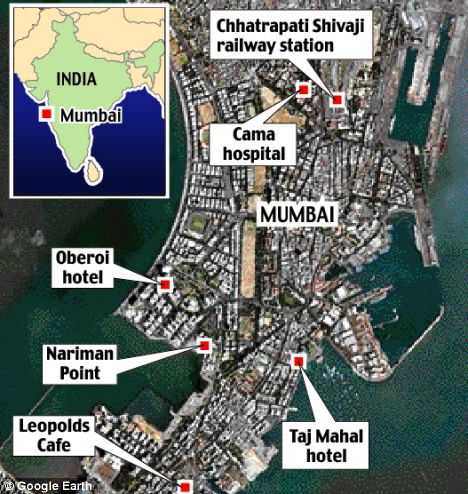
Many Indians have called the attacks in Mumbai “India’s 9/11.” As an American who lived in India, I can feel that country’s anguish over these horrific and indiscriminate acts of terror.
Most Indian observers, however, were critical in 2001 and after of how exactly the Bush administration (by which we apparently mainly mean Dick Cheney) responded to September 11. They were right, and they would do well to remember their own critique at this fateful moment.
What where the major mistakes of the United States government, and how might India avoid repeating them?
1) Remember Asymmetry
The Bush administration was convinced that 9/11 could not have been the work of a small, independent terrorist organization. They insisted that Iraq must somehow have been behind it. States are used to dealing with other states, and military and intelligence agencies are fixated on state rivals. But Bush and Cheney were wrong. We have entered an era of asymmetrical terrorism threats, in which relatively small groups can inflict substantial damage.
The Bush administration clung to its conviction of an Iraq-al-Qaeda operational cooperation despite the excellent evidence, which the FBI and CIA quickly uncovered, that the money had all come via the UAE from Pakistan and Afghanistan. There was never any money trail back to the Iraqi government.
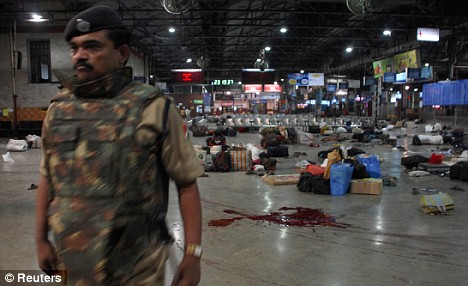
Many Indian officials and much of the Indian public is falling into the Cheney fallacy. It is being argued that the terrorists fought as trained guerrillas, and implied that only a state (i.e. Pakistan) could have given them that sort of training.
But to the extent that the terrorists were professional fighters, they could have come by their training in many ways. Some might have been ex-military in Britain or Pakistan. Or they might have interned in some training camp somewhere. Some could have fought as vigilantes in Afghanistan or Iraq. They needn’t be state-backed.
2) Keep Your Eye on the Ball
The Bush administration took its eye off al-Qaeda and the Taliban, and instead put most of its resources into confronting Iraq. But Iraq had nothing to do with al-Qaeda or the Taliban. Eventually this American fickleness allowed both al-Qaeda and the Taliban to regroup.
Likewise, India should not allow itself to be distracted by implausible conspiracy theories about high Pakistani officials wanting to destroy the Oberoi Hotel in Mumbai. (Does that even make any sense?) Focusing on a conventional state threat alone will leave the country unprepared to meet further asymmetrical, guerrilla-style attacks.
3) Avoid Easy Bigotry about National Character
Many Americans decided after 9/11 that since 13 of the hijackers were Saudi Wahhabis, there is something evil about Wahhabism and Saudi Arabia. But Saudi Arabia itself was attacked repeatedly by al-Qaeda in 2003-2006 and waged a major national struggle against it. You can’t tar a whole people with the brush of a few nationals that turn to terrorism.
Worse, a whole industry of Islamphobia grew up, with dedicated television programs (0’Reilly, Glen Beck), specialized sermonizers, and political hatchetmen (Giuliani). Persons born in the Middle East or Pakistan were systematically harassed at airports. And the stigmatization of Muslim Americans and Arab Americans was used as a wedge to attack liberals and leftists, as well, however illogical the juxtaposition may seem.
There is a danger in India as we speak of mob action against Muslims, which will ineluctably drag the country into communal violence. The terrorists that attacked Mumbai were not Muslims in any meaningful sense of the word. They were cultists. Some of them brought stocks of alcohol for the siege they knew they would provoke. They were not pious.
They killed and wounded Muslims along with other kinds of Indians.
Muslims in general must not be punished for the actions of a handful of unbalanced fanatics. Down that road lies the end of civilization. It should be remembered that Hindu extremists have killed 100 Christians in eastern India in recent weeks. But that would be no excuse for a Christian crusade against Hindus or Hinduism.
Likewise, Prime Minister Manmohan Singh, as a Sikh, will remember the dark days when PM Indira Gandhi was assassinated by her Sikh bodyguards after she had sent the Indian security forces into the Golden Temple, and the mob attacks on Sikhs in Delhi that took place in the aftermath. Blaming all Sikhs for the actions of a few was wrong then. It would be wrong now if applied to Muslims.
4) Address Security Flaws, but Keep Civil Liberties Strong
The 9/11 hijackings exploited three simple flaws in airline security of a procedural sort. Cockpit doors were not though to need strengthening. It was assumed that hijackers could not fly planes. And no one expected hijackers to kill themselves. Once those assumptions are no longer made, security is already much better. Likewise, the Mumbai terrorists exploited flaws in coastal, urban and hotel security, which need to be addressed.
But Bush and Cheney hardly contented themselves with counter-terrorism measures. They dropped a thousand-page “p.a.t.r.i.o.t. act” on Congress one night and insisted they vote on it the next day. They created outlaw spaces like Guantanamo and engaged in torture (or encouraged allies to torture for them). They railroaded innocent people. They deeply damaged American democracy.
India’s own democracy has all along been fragile. I actually travelled in India in summer of 1976 when Indira Gandhi had declared “Emergency,” i.e., had suspended civil liberties and democracy (the only such period in Indian history since 1947). India’s leadership must not allow a handful of terrorists to push the country into another Emergency. It is not always possible for lapsed democracies to recover their liberties once they are undermined.
5) Avoid War
The Bush administration fought two major wars in the aftermath of 9/11 but was never able to kill or capture the top al-Qaeda leadership. Conventional warfare did not actually destroy the Taliban, who later experienced a resurgence. The attack on Iraq destabilized the eastern stretches of the Middle East, which will be fragile and will face the threat of further wars for some time to come.
War with Pakistan over the Mumbai attacks would be a huge error. President Asaf Ali Zardari and Prime Minister Yousuf Raza Gilani certainly did not have anything to do with those attacks. Indeed, the bombing of the Islamabad Marriott, which was intended to kill them, was done by exactly the same sort of people as attacked Mumbai. Nor was Chief of Staff Ashfaq Kiyani involved. Is it possible that a military cell under Gen. Pervez Musharraf trained Lashkar-e Tayiba terrorists for attacks in Kashmir, and then some of the LET went rogue and decided to hit Mumbai instead? Yes. But to interpret such a thing as a Pakistan government operation would be incorrect.
With a new civilian government, headed by politicians who have themselves suffered from Muslim extremism and terrorism, Pakistan could be an increasingly important security partner for India. Allowing past enmities to derail these potentialities for detente would be most unwise.
6) Don’t Swing to the Right
The American public, traumatized by 9/11 and misled by propaganda from corporate media, swung right. Instead of rebuking Bush and Cheney for their sins against the Republic, for their illegal war on Iraq, for their gutting of the Bill of Rights, for their Orwellian techniques of governance, the public gave them another 4 years in 2004. This Himalayan error of judgment allowed Bush and Cheney to go on, like giant termites, undermining the economic and legal foundations of American values and prosperity.
The fundamentalist, right-wing Hindu Bharatiya Janata Party, which has extensive links with Hindu extremist groups, is already attacking the secular, left-of-center Congress Party for allegedly being soft on Muslim terrorism. The BJP almost dragged India into a nuclear war with Pakistan in 2002, and it seeded RSS extremists in the civil bureaucracy, and for the Indian public to return it to power now would risk further geopolitical and domestic tensions.
India may well become a global superpower during the coming century. The choices it makes now on how it will deal with this threat of terrorism will help determine what kind of country it will be, and what kind of global impact it will have. While it may be hypocritical of an American to hope that New Delhi deals with its crisis better than we did, it bespeaks my confidence in the country that I believe it can.
Source / Informed Comment
Failure to engage with Latin America in more constructive ways than in the past will continue the alienation that has resulted from bad policy and destructive action since the interference in Chile in the early 1970s. As our friend Karen Wald remarks about this article, however, “As usual, wrong reasons but right suggestions….klw.”
Richard Jehn / The Rag Blog

U.S.: Hemispheric Group Calls for Major Changes in Americas Policy
By Jim Lobe / November 24, 2008
WASHINGTON (IPS) – An elite inter-American commission sponsored by a think tank that is considered close to likely key policy-makers in the administration of President-elect Barack Obama is calling for sharp break in U.S. policy toward Latin America, a substantial opening toward Cuba, greater diplomatic engagement with Venezuela, and a major reassessment of its war on drugs.
In a 32-page report entitled “Rethinking U.S.-Latin American Relations” released by the Brookings Institution Monday, the 20-member “Partnership for the Americas Commission” is urging Obama, among other things, to lift all restrictions on travel to Cuba by U.S, citizens and take other steps to ease the nearly 50-year-old U.S. embargo against Havana, and to put far greater emphasis on reducing demand for drugs at home and the export of guns to Mexico.
The Commission, which was co-chaired by former Mexican President Ernesto Zedillo and Washington’s former ambassador to the United Nations, Thomas Pickering, is also calling on the U.S. Congress to phase out tariffs on ethanol imports from Latin America and subsidies on corn-based ethanol here as part of a larger initiative to develop sustainable energy resources, combat climate change, and foster greater regional integration.
It also calls for the creation of a new “Americas Eight” (A8) that would serve as an umbrella of eight heads of state in the region, including at least the U.S., Mexico, and Brazil and other countries with the continent’s largest populations and economies, that would serve as a “steering committee” to promote the “partnership” between the northern and southern subregions and revitalise hemispheric institutions like the Organisation of American States (OAS).
“A valuable window of opportunity soon will open for the U.S. government to rethink its relations with and policies toward the LAC (Latin American and Caribbean) countries,” the report declared, noting both the advent of the Obama presidency and the bicentennial celebrations in 2009 and 2010 of independence of many Latin American countries. Both should lead to “fresh thinking and new policies”.
Indeed, the Commission’s membership and its sponsorship by Brookings, whose staff includes many senior veterans of the Bill Clinton administration likely to get key posts under Obama, especially in the State Department if, as reported, Sen. Hillary Clinton, becomes secretary of state, suggest that the report’s recommendations will be taken seriously.
Aside from Pickering, prominent U.S. members of the Commission included Nancy Birdsall, the president of the Washington-based Centre for Global Development; the assistant secretary of state for Inter-American Affairs under Clinton, Jeffrey Davidow; Clinton’s U.S. Envoy to the Americas Thomas “Mack” McLarty; and Brookings president and Clinton’s deputy secretary of state, Strobe Talbott.
Aside from Zedillo, prominent Latin American members included former Chilean President Ricardo Lagos, former Peruvian Prime Minister Roberto Danino, and former Guatemalan vice president Eduardo Stein.
Although more detailed in specific recommendations in key issue areas, the report’s tone largely echoes that of a major report issued in May by the influential, if somewhat more conservative, Council on Foreign Relations (CFR), entitled “U.S.-Latin American Relations: A New Direction for a New Reality.”
That report called, among other things, for engaging Cuba on a range of issues of mutual concern with a view to ending the embargo, engage more with Venezuelan President Hugo Chavez, deepen Washington’s strategic relationships with Brazil and Mexico, establish a better balance between military and security aid and economic and social assistance in its anti-drug efforts, and recognise once and for all that, in its words, “If there was an era of U.S. hegemony in Latin America, it is over.”
That message was repeated emphatically in the Commission’s report, which stressed the degree to which Latin America’s political and economic ties with the outside world and internally have diversified.
“Their enhanced confidence and autonomy will make many LAC countries much less responsive to U.S. policies that are perceived as patronizing, intrusive or prescriptive, and they will be more responsive to policies that engage them as partners on issues of mutual concern,” according to the report, which also noted that, despite their own competition for regional influence, both Brazil and Venezuela “agree that Washington should play a more limited role in their part of the world.”
The report identified four areas that “hold most promise” for forging a “hemispheric partnership” — developing sustainable energy sources and combating climate change; managing migration effectively; enhancing economic integration; and protecting the hemisphere from drug trafficking and organised crime.
But it also stressed the importance of relations with Cuba which, it said, “have disproportionately dominated U.S. policy toward the LAC region for years (and) have hindered Washington’s ability to work constructively with other countries.”
“Political change in Washington, combined with demographic and ideological shifts in the Cuban American community and recent leadership changes in Cuba itself, offer a valuable opportunity to change course,” the report stated.
It called on Obama to, among other steps, lift all restrictions on travel to Cuba by U.S. citizens; remove caps on remittances by Cuban Americans to their families on the island – something Obama promised to do during the campaign; take Cuba off the State Department’s list of state sponsors of terrorism; end restrictions on humanitarian aid in cases of natural disasters; and re-integrate Cuba into regional and global economic and political organisations.
“These recommendations will not be uncontroversial,” noted Pickering, who retired form the Foreign Service with the highest rank of career ambassador in 2001. He added that Washington’s decades-long efforts to isolate Havana had helped its rulers “be the jailers of the Cuban people.”
The report also called for easing its hostility toward Venezuela’s Chavez, urging a “calibrated, nonconfrontational approach in its relations with Venezuela…based on mutual respect and nonintervention in each other’s internal affairs and those of neighboring countries.”
On migration, it called for establishing ministerial-level coordination between the U.S. and key migrant-sending countries; establish a new visa system to encourage circular migration patterns; enact legislation to provide a path to legal status in the U.S. for undocumented immigrants without a criminal record; and facilitate remittances.
The Commission, according to Zedillo, agreed that recent repressive U.S. actions, including the construction of what he called the “abominable” and “profoundly offensive” wall along parts of the U.S.-Mexican border, “will make the problem worse”.
On drugs and organised crime, the report called for a hemispheric dialogue and evaluation of specific anti-drug measures; a substantial increase in funding for programmes to treat drug-offenders and reduce demand; a greater emphasis on promoting alternative livelihoods for those affected by eradication efforts.
“What we have been doing until now [has been] a total failure,” Zedillo said, with respect to the drug war.
To promote the proposed partnership, the report called for the creation of the A8 that would be modeled on the Group of Eight most powerful western nations and Russia that in recent years have set much of the economic and political agenda for global institutions.
At a press briefing on the report, Pickering suggested that there could be some permanent members, and others, including oft-neglected Caribbean nations, which would rotate in and out.
Source / IPS News
Thanks to Karen Lee Wald / The Rag Blog
Thorne Webb Dreyer, Editor





