Go Sign On to Something You Believe In Today


The Land of the Silent and the Home of the Fearful
By Dave Lindorff / August 28, 2008

I was a speaker last night at an anti-war event sponsored by the Unitarian Universalist Congregation of Monmouth County, Progressive Democrats of America and Democrats For America in Lincroft, NJ, near the shore. It was a great group of activist Americans who want to see this country end the Iraq War, turn away from war as a primary instrument of policy, and start dealing with the pressing human needs of the country and the world.

Yet even in this group of committed people, one woman stood up during the question-and-answer session and said, “I want to get involved in writing emails to members of Congress urging them to cut off funding for the war and other things, but if I do that won’t I end up getting put on a ‘watch list’ or something?”

I told her the short answer was yes, she probably would. In George Bush’s and Dick Cheney’s America, no one is safe from such spying, and even from harassment, as witness Tom Feeley, the man behind the website Information Clearing House, who had armed men invade his house at night and threaten his wife complaining about his First Amendment-protected effort to publicize important stories on the Internet.

But I also told her that it didn’t matter. She should defend her freedom of speech and her right to petition for redress of grievances, just as she was defending her freedom of assembly by attending last night’s event.

The only demonstrably true statement George Bush has made in his sorry eight years in office is that the Constitution is “just a goddamned piece of paper.” While it wasn’t the point he was making, when he reportedly shouted this at a couple of Republican members of Congress who were questioning the constitutionality of some of his actions, he was right that the nation’s founding document is only worth the parchment and ink it’s composed of, unless people use it and defend it.

There is a remarkable and palpable fear abroad in this land-not a fear of terrorism, but a fear of speaking up, a fear of being labeled as “different” or as a “troublemaker.”

People will lean over and whisper their opinions, if they think they are anti-Establishment, as though someone might be listening. People write me after some of my columns run, praising me for my “courage,” though why it should be perceived as requiring courage to merely write something in America is beyond me.

The worst thing is that every time someone says she or he is afraid, or acts afraid to speak or write what she or he is thinking, five more acquaintances become equally scared and silenced.

The corollary, though, is that each time someone forgets or ignores or rejects that fear, five people gain courage the do the same thing.

Now I’m not saying that there aren’t people monitoring, and reporting on, what we say. I know our government is busy doing that. I assume that my Internet activities are being monitored by the National Security Agency. I assume my phones are tapped. I assume there was some agent or informant among the fine people at the church last night. But these Stasi wannabes have no power if we don’t let them frighten us into silence and inaction.

What I find discouraging is the widespread acceptance, even on the left, of this effort to intimidate us, and the pervasive attitude of fear that has grown up around us. I spent a year and a half living in a truly fascistic society in China, where there are real, concrete threats to life and liberty faced by those who stand up and say what they are thinking, and yet sometimes I think that ordinary people I met in China were braver about stating their minds than many, or even most Americans are. I’m not talking here about saying things like that you think the Post Office is dysfunctional, or that you think federal bureaucrats are corrupt or that taxes are too high. I’m talking about questioning the system, or challenging the war, or protesting military spending. Chinese people would tell me all the time that the Chinese Communist Party was a corrupt gang of thugs or that you could not get justice in a Chinese court. Chinese people are closing down factories that short them on their pay. They have rallied in the thousands and burned down police stations when corrupt police have raped, killed and then covered up the death of a young girl. They have marched in massive impromptu protests at the theft of their homes through eminent domain.

If you want to see where we’re headed here in America, check out the workplace. There, we Americans have, through years of collective cowardice and unwillingness to stand together in organized labor unions, allowed our constitutional freedoms to be almost completely erased. Today, an American workplace is more akin to a police state than to a democratic society. Say what you’re thinking on the job, and you’re liable to lose it. Wear a shirt that says something the boss disagrees with, and you either remove that shirt or you are unemployed. Even that final refuge of free speech, the bumper sticker, can get workers in trouble if the wrong one shows up in the company parking lot. That loss of will and of freedom has in no small way contributed to the loss of jobs and the decline in living standards of American workers.

It’s time for all of us to put a stop to this creeping usurpation of our liberties.

The anxious woman who asked her question came up to me after the meeting and said proudly that she would not be afraid, and would start signing on to protest letter-writing and emailing campaigns.

We need lots more like her.

[Dave Lindorff is a Philadelphia-based journalist and columnist. His latest book is “The Case for Impeachment” (St. Martin’s Press, 2006 and now available in paperback edition). His work is available at http://www.thiscantbehappening.net/. ]

Source / Information Clearing House

The Rag Blog

Posted in RagBlog | Tagged , , | 1 Comment

Why Can We Not Do Something About Poverty?

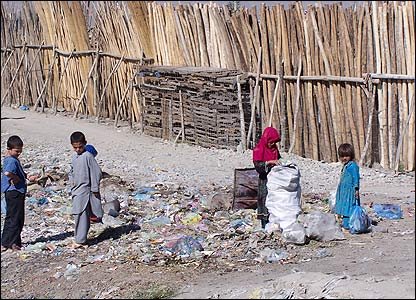
Kabul street children

World poverty ‘more widespread’
By Steve Schifferes / August 27, 2008

Tackling global poverty requires both public and private investment

The World Bank has warned that world poverty is much greater than previously thought.

It has revised its previous estimate and now says that 1.4 billion people live in poverty, based on a new poverty line of $1.25 per day.

This is substantially more than its earlier estimate of 985 million people living in poverty in 2004.

The Bank has also revised upwards the number it said were poor in 1981, from 1.5 billion to 1.9 billion.

The new estimates suggest that poverty is both more persistent, and has fallen less sharply, than previously thought.

However, given the increase in world population, the poverty rate has still fallen from 50% to 25% over the past 25 years.

“This is pretty grim analysis coming from the World Bank,” said Elizabeth Stuart, senior policy adviser at Oxfam.

“The urgency to act has never been greater, especially in sub-Saharan Africa where half the population of the continent lives in extreme poverty, a figure that hasn’t changed for over 25 years.”

Regional differences

The new figures confirm that Africa has been the least successful region of the world in reducing poverty.

The poor need growth – but it must be distributed more equitably

The number of poor people in Africa doubled between 1981 and 2005 from 200 million to 380 million, and the depth of poverty is greater as well, with the average poor person living on just 70 cents per day.

The poverty rate is unchanged at 50% since 1981.

But in absolute numbers, it is South Asia which has the most poor people, with 595 million, of which 455 million live in India.

The poverty rate, however, has fallen from 60% to 40%.

China has been most successful in reducing poverty, with the numbers falling by more than 600 million, from 835 million in 1981 to 207 million in 2005. The poverty rate in China has plummeted from 85% to 15.9%, with the biggest part of that drop coming in the past 15 years, when China opened up to Western investment and its coastal regions boomed.

In fact, in absolute terms, China accounts for nearly all the world’s reduction in poverty. In percentage terms, world poverty excluding China fell from 40% to 30% over the past 25 years.

Millennium goals

The new figures still suggest that the world will reach its millennium development goal of halving the 1990 level of poverty by 2015, according to World Bank chief economist Justin Lin.

“Poverty has fallen by about 1% per year since 1981,” he said.

“However the sobering news that poverty is more pervasive than we thought means we must redouble our efforts.”

Oxfam, however, warns that another 100 million people may be forced into poverty by rising food prices, as well as the additional 400 million identified in the new report.

The Bank’s findings come as the OECD has reported that many rich countries have cut back on their foreign aid budgets, with little sign that the pledge made at the G8 summit at Gleneagles in 2005 to double aid to Africa by 2010 is being met.

The World Bank’s new poverty line of $1.25 per day in 2005 is equivalent to its $1 per day poverty line introduced in 1981 after adjustment for inflation. The new estimates are based on 675 household surveys for 116 countries, based on 1.2 million interviews. The data has also been revised on the basis of new data on inflation and prices from the 2005 ICP survey of world prices, which showed that the cost of living in developing countries was higher than previously thought. It does not take into account the recent increases in fuel and food prices.

Source / BBC News

The Rag Blog

Posted in RagBlog | Tagged , , | Leave a comment

Thursday Thought: The USA Today


Thanks to Diane Stirling-Stevens | The Rag Blog | Posted August 28, 2008

Posted in RagBlog | Tagged , , | 1 Comment

Denver : Iraq Veterans March Against the Machine

Vets/Rage Against the Machine march in Denver Wednesday.

Rage Against the Machine fans join vets in rousing Denver protest
By Carl Davidson / August 28, 2008

I start the day early loading leaflets and joining Leslie Cagan, Judith LeBlanc and five other United for Peace and Justice volunteers headed to the Denver Coliseum on the North Side of town before 9:00 am.

We’re going to the ‘Rage Against the Machine’ benefit for Iraq Veterans Against the War, organized by the Tent State kids and their allies, and we’re expecting about 10,000 young people. It’s a beautiful day-sunny, not too hot, blue skies with a few clouds, and the first range of the Rockies clear on the horizon. The concert is to be followed by a mass march to the Pepsi Center, led by the vets, to press their antiwar demands on the Democrats. Since there’s no permit, and the Pepsi Center is restricted with ‘protest pens’ no one intends to enter, there’s a sense of tension in the air.

Our UFPJ leaflet has a simple message: Join us Sept. 20 to knock on a million doors for peace. Get signatures on petitions, get to know your neighbors, get outside your ‘comfort zones’ into new neighborhoods and help us double the size of our movement with new names, addresses and emails.

Since the lines are long and organized, we quickly get out thousands of flyers. A brief rap, and most people say, ‘Oh, this is cool. I can do this.’ Some don’t want to be bothered, interested only in the bands, and a few kids are rather spaced out early since no intoxicants other than the music are permitted on the grounds.

I get a ‘workfare’ pass into the concert with terrific seats. This means I’m on the security team for IVAW inside the concert and along the line of march. We get our special chartreuse armbands and blue wristbands, a quick training in nonviolent methods in dealing with problems. Then we’re into the cavernous space, with a local Denver band, Flobots, which is decidedly left and high-energy hip-hop. IVAW speakers appear between numbers and keep the politics of the day clear and focused.

They have three demands: ‘Out Now,’ full benefits for returning vets, and reparations for Iraq. They have no great love for the Democrats who keep voting to fund the war, they’re angry with Obama for not taking a harder line, but they see McCain as more dangerous, both to the world and to vets. They want militancy, but they insist on nonviolence for the day, and demand a resolute respect for their leadership and ground rules.

When “Rage” comes on the stage and gets itself and the crowd wound up, one thing becomes crystal clear. If you’re interested in radical and democratic social change from below, here is one powerful engine for it. You dismiss, ignore or demoralize the high energy and critical force of these young people at your peril. This is a multiclass, multinational force of youth, and on this day, they are accepting the lead of the working class, even if it’s taking the form of the politics, militancy, organization and discipline of the Iraq vets.

The beautiful thing is how well it all worked.

The vets marched in formation with cadence at the front, dozens of them in uniform, some in full dress with a chest full of medals. They wanted us to keep a short space for media behind them, then everyone else another few yards back behind a large banner supporting GI resistance to the war. No breakaways and no nonsense. If arrest situations came up, we had our instructions on how to keep those who didn’t want to risk arrest still involved, but out of the immediate reach of the police.

I’d guess that at least two-thirds of the 10,000 Rage fans joined us, then we picked up other youth, a few workers, and even Convention delegates along the way. The banners and signs and costume were colorful, the chants imaginative and militant, and the energy infected everyone, even the crowds of bystanders, many of whom broke into applause.

I had one of the harder jobs, keeping people from breaking the front ranks and jumping the banner. But with the vets leadership, we kept the spirit both upbeat and disciplined. Denver’s overkill police presence was everywhere, but everything remained civil. Some even felt some sympathy for them, sweltering on a hot sunny day in their new Black Ninja Turtle outfits, which must have been unbearable.

It was a long march, nearly five miles. One problem was keeping everyone hydrated, but cases of water kept showing up at critical points. The best energy was downtown Denver, with the cheering and applause from Convention delegates. But we all knew there were trouble spots ahead.

Denver’s security rules meant you couldn’t get closer to the Pepsi center than several hundred yards, and then you were to be put in fenced ‘protest pens.’

The vets would have none of it. They hadn’t risked their lives, supposedly defending the Constitution, to be treated this way. They were going to march until they were stopped and then we’d seen what would happen. As we got closer to the skirmish line, they stopped several times, and the vets took turns giving heart-rending stories to the press, which, by this time, was everywhere, and driving us nuts trying to keep them to respect our lines and discipline.

At the final stopping point, a decorated Marine told the cops they would get no violence from us, and we expected none from them. The three demands were read to Obama’s campaign and the Democratic Party. The vets demanded a response, and were determined to wait for one.

So now we had the problem of keeping thousands of people, encircled by police and barricades, in an upbeat, but patient and calm state of mind.

One young Black kid from Denver of our security team rose to the occasion. He starts doing his raps, and those of others as well. The crowd loves it, especially when he gets on their case for not being too good at ‘call and response.’ So he starts an on-the-spot workshop on how we can all become better rappers.

Next two young African American women start softly singing an old church-based civil rights song ‘Those Who Love Freedom…” The lyrics are simple and lyrical, and soon hundreds are singing it, over and over. For me, powerful memories come up from my days on Freedom Marches in Mississippi, when we sang this same song in the face of the Klan and cops. When I start to sing along, my eyes fill with tears from long-buried emotions. To hell with it, I decide, let the tears flow, and I sing along.

Finally, we get the word. The other side blinked. The Obama campaign’s top veterans affairs people ask the Vets to send two reps into the Pepsi center to discuss their demands. Moreover, they want an ongoing series of discussions to make sure all veterans concerns are heard and dealt with. That’s enough for IVAW to call a victory, even if a partial one, and work out a way to bring the day to a close. It’s decided that we part the crowd down the middle, opening a path. The vets do an about face, march in formation though the crowd, and as they pass, to many cheers, we fall in behind, get back to the downtown area, and go our various ways.

I find a way to get to my car, then back to ‘tent city’ to secure our display in preparations for leaving. I meet up with my team in a Taco joint, where they, along with some of the new media people working with Laura Flanders, are watching Joe Biden’s speech. I’ll have to read it tomorrow, because given everything we’ve been through, right now it seems rather trivial.

Source / Progressives for Obama

The Rag Blog

Posted in RagBlog | Tagged , , , , , , , , , | Leave a comment

U.N. Finds U.S. Airstrike Killed 90 Afghans

An Afghan doctor, left, examines Zinat Gul’s wounded hand, who allegedly was wounded by a U.S. air strike in Shindand district, as her mother looks on at a hospital in Herat, east of Kabul, Afghanistan, on Monday. Photo by Fraidoon Pooyaa / AP.

Most fatalities in U.S.-led attack said to be children
By Candace Rondeaux and Karen DeYoung / August 27, 2008

ISLAMABAD, Pakistan — United Nations officials in Afghanistan said Tuesday that there was “convincing evidence” at least 90 civilians — two-thirds of them children — were killed in a U.S.-led airstrike last week that caused the Afghan government to call for a review of U.S. and NATO military operations in the country.

Kai Eide, the top U.N. official in Afghanistan, said local officials and residents in the western province of Herat corroborated reports that 60 children and 30 adults had been killed in an Aug. 21 military operation led by U.S. Special Operations forces and the Afghan army.

In a statement, Eide called the incident a “matter of grave concern to the United Nations” and said he had “repeatedly made clear that the safety and welfare of civilians must be considered above all else during the planning and conduct of all military operations.”

U.S. forces in Afghanistan have increased their reliance on air power since last year, causing a corresponding increase in civilian deaths. The Herat assault appears to have caused the largest civilian loss of life attributed to U.S. forces since the war began in late 2001.

Pentagon spokesman Bryan Whitman said military commanders in Afghanistan continued to believe that the attack in Herat “was a legitimate strike on a Taliban target.”

Whitman promised a detailed investigation. “This has a lot of people’s interest, and my sense is they want to be thorough and complete. We’re doing it as expeditiously as we can.”

The U.N. findings came as the government of President Hamid Karzai demanded more coordination between Afghan and international security forces and called for greater accountability on the part of U.S. and NATO troops operating in the country. Afghanistan’s Council of Ministers called Monday for a halt to aerial bombings and to what it called overly aggressive house raids and illegal detentions. The council demanded an agreement with U.S. and NATO forces that would define the parameters of international military operations in Afghanistan.

Afghan officials and independent investigators say more than 165 civilians have been killed in four airstrikes in the past two months. The deaths have angered Afghans, who are pressuring Karzai to seek greater control over foreign troops even as resurgent Taliban fighters increase their attacks on the international presence in Afghanistan.

Sultan Ahmed Baheen, spokesman for the Afghan Foreign Ministry, said his office and the Afghan Defense Ministry have been working to draft a document that would require more coordination between Afghan security forces and international troops to minimize civilian deaths and damage from military operations. About 60,000 troops from 40 nations are in Afghanistan, including 32,000 from the United States.

At the United Nations on Tuesday, Russia introduced a sharply worded draft statement expressing concern about reports that U.S. airstrikes in Afghanistan had caused “numerous civilian casualties, including women and children.”

U.N. diplomats said the Russian text stood little chance of being adopted in the Security Council, where the United States wields veto power. They interpreted the Russian action as a signal that it would pursue a more confrontational approach with the United States in response to Washington’s criticism of the Russian intervention in Georgia.

U.S. officials in Washington said they have been anticipating that Karzai will demand a formal status-of-forces agreement with the United States; the Bush administration is finalizing a similar accord with Iraq after protracted negotiations. Although U.S. troops participate in the NATO-led force in Afghanistan under a U.N. mandate, the bulk of U.S. forces fall under Operation Enduring Freedom, a U.S.-only force governed by an exchange of diplomatic notes signed with the Afghan government in May 2003.

At least 90 percent of all aircraft being used in the Afghan war belong to U.S. forces operating under their own command structure. “Civilian deaths are not a NATO problem,” said Marc Garlasco, a military analyst at New York-based Human Rights Watch. “Civilian casualties are primarily being caused in airstrikes in support of the counterterrorism mission that the United States is running completely separate from the NATO-run counterinsurgency conflict,” said Garlasco, who has compiled a report on civilian deaths from airstrikes to be published next month.

Last year, as Taliban attacks increased, the number of civilian deaths caused by airstrikes spiked sharply, from 116 killed in 2006 to 321 in 2007, according to figures issued by the U.S. Air Forces Central Command. The number of sorties increased by about one-third in 2007, and the amount of munitions that were dropped more than doubled, according to the data.

Garlasco said the amount of bombs dropped by U.S. airstrikes in June (317,000 pounds) and July (270,000 pounds) is equivalent to the total tonnage dropped in 2006. The vast majority of the strikes, Garlasco said, are unplanned missions called in by U.S. Special Operations ground forces fighting Taliban units or because a “target of opportunity” is located through on-the-ground intelligence.

Unlike in Iraq, where U.S. forces frequently use 250-pound bombs to make attacks more precise, Garlasco said American troops in Afghanistan “are still using a lot of” 2,000-pound bombs.

The Herat bombing occurred around midnight after U.S. Special Operations forces and Afghan troops led a raid on a compound in the town of Azizabad where they said they thought a Taliban commander was holding a meeting with supporters. U.S. military officials said at least 30 insurgents were killed, including the commander, who is known as Mullah Siddiq.

Afghan officials in Herat said the bombing occurred as dozens of villagers gathered for a memorial ceremony for a villager who was killed last year. Ahmed Dehzad, one of the province’s parliamentary representatives, said that local officials had received reports of Taliban activity in the vicinity several days before the ceremony but that coalition forces did not issue a warning before the attack on a compound near where the ceremony was held.

A spokesman for the Afghan army’s western command said Saturday that an army investigation into the incident confirmed that about 60 children and 19 women had been killed in the airstrike. The spokesman, Raouf Ahmedi, said there was no evidence that any of those killed had ties to the Taliban.

The U.N. investigators found that at least 15 people were injured in the operation.

A little more than a day after the raid, a U.S. military spokeswoman dismissed as “outrageous” the Afghan government’s assertions that scores of civilians had been killed in the attack. Lt. Col. Rumi Nielson-Green said U.S. forces who inspected the site afterward found that five civilians had been killed.

A U.S. official in Washington, speaking on the condition of anonymity, said the Taliban has become adept at spreading false intelligence to draw U.S. strikes on civilians. “The fact is that the Taliban now has pretty good insight into where we’re picking up information and how we’re developing it into actionable intelligence,” the official said. “They’ve figured out a way to misguide us.”

[DeYoung reported from Washington. Staff writer Colum Lynch at the United Nations and special correspondent Javed Hamdard in Kabul contributed to this report.]

Source / Washington Post

The Rag Blog

Posted in RagBlog | Tagged , , , , , | Leave a comment

‘Everyone at the Top Is Getting Fat Off Our Misery’

See “New Orleans, Three Years Later” by Jordan Flaherty and Katrina video with Richard Dreyfus, below.

By Diane Stirling-Stevens / The Rag Blog / August 28, 2008

I was looking at my calendar; the ‘things to do’. I note on August 29, my daughter-in-law turns 27 (happy thought). I remember 3 years ago on that date, Katrina struck New Orleans (not a happy thought). While we were watching the news of the hurricane, we got a phone call from one of our sons. His former wife (Katrina actually was her name which was spooky), her new husband and 2 of their friends (total of 4) were coming back from having gambled in our town (Laughlin, NV), and were killed instantly by a drunk driver. We called relatives; all were watching this storm – and suddenly our still-loved, Katrina (age 37) was dead.

While we were trying to get past that bit of news, my mother called. My cousin (Barry – age 51) decided life wasn’t all that great and like my other cousin (Jim), he decided to end his life with a gun – he died August 29, 2005; Katrina died August 29, 2005, and Gaby celebrated her 24th birthday August 29, 2005 – this was our personal ‘day’ at a time when the hurricane was taking other lives.

August 29 – 2008; John McCain will turn 72 years old. August 29, 1960 – OPEC was formed; ‘oil’, ‘oil’, ‘oil’ …

While I realize there are millions of other ‘events’ that one might take note of on 8/29 – sometime in history, this is one day for my family, that will certainly be always remembered as one that only the delight of our much-loved Gaby, celebrated another birthday.

Anyway, I found this article and thought it should be shared.

Locally, we have about 4 Katrina victims that relocated to our area after they simply couldn’t get any type of prompt assistance with their needs. All of them lost their homes; they had to eat, and while their spouses remained in the local area helping other family members, they decided to check out ‘our town’. We’ve heard each of their stories, and it’s made their plight more ‘real’ to us because they ultimately brought their families to join them and are happy to feel safe from future storms/hurricanes. We know they’re not all that excited about living in the desert because they miss the lush surroundings; the great fish they enjoyed – we don’t have much to offer in the way of water other than the Colorado River that runs through our town, but they claim they don’t worry about bad weather claiming their homes again.

New Orleans, Three Years Later
By Jordan Flaherty / August 28, 2008.

Despite sunny media reports about post-Katrina rebuilding, the facts on the ground reveal a stark portrait of a city transformed.

As headlines focus on party conventions and presidential running mates, the third anniversary of Hurricane Katrina has been largely overlooked. Several organizations have released reports in the past week, however, offering a chance to to assess the impact of disastrous federal and state policy on the people of New Orleans. The reports examine the current state of the city; meanwhile, grassroots activists have plans to broadcast their message from the streets. For those people who have heard mostly uplifting stories about the city’s recovery, the facts on the ground may be shocking.

According to a study by PolicyLink, 81 percent of those who received the Federally-funded, State-administered Road Home grants had insufficient resources to cover their damages. The average Road Home applicant fell about $35,000 short of the money they need to rebuild their home, and African American households on average had an almost 35 percent higher shortfall than white households.

More than one in three residential addresses — over 70,000 — remain vacant or unoccupied, according to a report by the Greater New Orleans Community Data Center. While workers with Brad Pitt’s Make It Right project are working on overdrive to finish the first of their scores of planned houses in the notoriously devastated Lower Ninth Ward, the neighborhood overall ranks far behind other neighborhoods in recovery, with only 11 percent of its pre-Katrina number of households. The same report notes that since the devastation of the city, rents have raised by 46 percent citywide (much more in some neighborhoods), while many city services remain very limited — for example, only 21 percent of public transit buses are running.

Divided City

Its not just grassroots activists that speak of race and class divides in the city — a recent poll by the Kaiser Family Foundation found that 70 percent of the city feel we’re divided by class and/or race. The Kaiser survey found some unity among New Orleanians — we’re united in feeling forgotten by the rest of the U.S. Eight out of 10 said the federal government has not provided sufficient support. Nearly two-thirds think that the U.S. public has largely forgotten about the city.

The survey found large percentages saying that their own situation has deteriorated. Fifty-three percent of low- income residents report that their financial situation is worse today than pre-Katrina. The percentage of residents who say they have been diagnosed with a serious mental illness such as depression has tripled since 2006.

There is a continuing debate about how many people live in New Orleans, with no solid figures until the next complete census. But last year, the census bureau estimated a population of 239,000. Other analysts — and Mayor C. Ray Nagin — estimate the population to be nearly 100,000 higher. By any measurement, the growth in that number has stagnated, while at least 200,000 former residents (out of a former population of nearly 500,000) have been unable to return — even the higher estimates of city population include enough new transplants to the city that 200,000 is a safe estimate. The once nearly 70 percent African American city is now estimated to be less than 50 percent African American, a change reflected in the changing face of electoral politics statewide. While Republicans have been losing across the U.S., Christian Coalition candidate Bobby Jindal was easily elected Governor last year, and in the city, decades of Black-majority city council shifted to a white majority.

Blank Slate or Burial Ground

Much of the change in the city is led by a new strata of the city’s population — planners, architects, developers, and other “reformers.” Many of them self-identify as “YURPs” — Young, Urban Rebuilding Professionals — in their work with countless nonprofits, foundations, and businesses. Some have spoken of the city as a blank slate on which they can project and practice their ideas of reform, whether in health care, architecture, urban planning, or any of countless other areas, especially education. What this worldview leaves out, according to some advocates, is the people who lived here before, who are the most affected by these changes, and have the least say in how they are carried out. “It wasn’t a blank slate, it was a cemetery,” says poet and educator Kalamu Ya Salaam. “People were killed, and they’re building on top of their bones.”

The vast majority of New Orleans’ new professionals have come here with the best intentions, with a love for this city and a desire to help with the recovery. However, despite token attempts at “community feedback,” many activists criticize what they see as a paternalistic attitude among many of the new decision makers.

For example, our education system was in crisis pre-Katrina, and certainly needed revolutionary change. Change is what we have gotten — the current system is in many ways unrecognizable from the system of three years ago — but this revolution has been overwhelmingly led from outside, not by the parents, students and staff of the New Orleans school system.

Shortly after the post-Katrina evacuation of the city, the entire staff of the public school system was fired. Not long after that, school board officials chose to end recognition or negotiation with the teachers’ union — the largest union in the city, and arguably the biggest outlet of Black middle class political power in the city. Since then, the school landscape has changed remarkably — from staff to decision-making structure to facilities. According to Tulane professor Lance Hill, “New Orleans has experienced a profound change in who governs schools and a dramatic reduction of parent and local taxpayer control of schools.”

The school system used to consist of 128 schools, 124 of them controlled by the New Orleans School Board. Now according to Hill, 88 have opened for the fall, and “50 of them are charter schools (privatized management) governed by self-appointed, self-perpetuating boards; 33 are run by the State Department of Education through the Recovery School District; and only five are governed by the elected school board.”

“There are now 42 separate school systems operating in New Orleans,” Hill continues, with their own “school policies, including teacher requirements, curriculum, discipline policies, enrollment limits, and social promotions. Publicly accountable schools in which parents have methods for publicly redressing grievances are limited to only five schools (5.6 percent of the total).”

Several recent articles have expressed fawning admiration for the new school system, including extended pieces in the New York Times and the New Orleans Times-Picayune. For school reformers, who came to New Orleans with a desire to try out the changes they had imagined, this represents a dream come true. They have media support, federal, state and city officials on their side, a massive influx of cheap (and young, idealistic) labor, through programs like Teach for America (who supplied 112 teachers last year, has committed 250 this year, and a projected 500 next year) and tens of millions of dollars in funding through sources such as the Gates and Walton foundations.

There is no doubt that some students receive an excellent education in the new New Orleans school districts, but critics are concerned that the students that are being left behind, are those that need the most help — those without someone to advocate for them, to research and apply for the best schools. According to Kalamu Ya Salaam, who is director of a school program called Students at the Center, the new systems represent “an experimentation with privatization, and everything that implies.”

Although the new charter schools have been able to choose from the best facilities and have used methods such as state standardized tests to pick only select students (including 40 percent fewer special education students), there are still serious questions over the extent to their much-heralded success. G.W. Carver School, the subject of a fawning Times piece last Spring, received an 88 percent failure rate for English and an 86 percent failure rate for Math.

Anniversary and Commemoration

August 29th, the anniversary of the devastation of the city, falls between the Democratic and Republican conventions. While the Democratic and Republican parties crown their nominees, activists on the ground will be on the streets, still fighting for a just recovery. “It ain’t to rain on Obama’s parade,” says Sess 4-5, a New Orleans-based hip hop star and activist, “but the people down here need the world to understand that its still a tragic situation. The rent has tripled, the health care system is in shambles, we have less access to education for our kids. The working class and poor are being exploited, while everyone at the top is getting fat off our misery.”

“We think August 29 should be holy day, not a day for business as usual,” explains Sess, who is one of the organizers of a Katrina March and Commemoration, starting Friday morning in the Lower Ninth Ward, and marching into the 7th Ward. That march is one of two activist commemorations in the city that day, the other starting uptown, near the BW Cooper development, one of the major housing developments torn down this year. “The Mayor announced to the world that New Orleans was ‘open for business’ but we’re here to tell you that it is closed for families,” declares former public housing resident Barbara Jackson, who will be part of the demonstration at BW Cooper, called Sankofa Day of Commemoration. “Five thousand demolished homes. Eight thousand new jail beds. This is their one for one replacement plan for us.”

Taking to the streets is not the only agenda of local activists. In New Orleans, people have been organizing at the grassroots, working together to build a movement. In the aftermath of the U.S. Social Forum last year in Atlanta, a broad coalition of social justice organizations began meeting monthly to combine efforts. This group, called the Organizers Roundtable, is an important spot for collaborations and community building.

It’s been community, not foundations or government, that has led this city’s recovery at the grassroots. Bayou Road — a street of Black-owned, community-oriented, businesses in New Orleans’ seventh ward — has rebuilt post-Katrina to more businesses than they had before the storm. It hasn’t been government help that has enabled these businesses to come back, but the effort of community members coming together. It was also community, and local support, that has brought back the membership of many local cultural organizations, like the network of Social Aid and Pleasure Clubs, who organize secondline parades nearly every weekend throughout the year, as well as benefits that provide school supplies for area youth.

The Right to the City alliance (RTTC), a nationwide coalition of organizations that focuses on urban issues such as health care, criminal justice, and education, sees the continuing crisis in New Orleans as central to their work. They are co-sponsoring the march in New Orleans, as well as actions in seven other cities, including Los Angeles, New York City, Oakland, Providence, San Francisco, Washington, D.C. and Miami.

The work of RTTC deserves special notice, as a coalition that has worked to support the struggles of the people of New Orleans, and to bring that struggle and solidarity home to their own communities, while taking guidance from voices on the ground. In this time of many competing visionaries struggling to reshape this city, that willingness to listen to the people who lives are being affected, and to take that struggle and those lessons home to their own communities, may be the radical change New Orleans needs most.

Source / AlterNet

Although he’s rather flippant and not particularly articulate, Dreyfuss relates his thoughts on Katrina and its aftermath in this interview with Norah O’Donnell of MSNBC.

Richard Dreyfuss on Katrina and the Republicans

The Rag Blog

Posted in Rag Bloggers | Tagged , , | 1 Comment

Free Gaza Boats Returning to Cyprus


Gaza activists to return to Cyprus with Palestinian students
By Stefanos Evripidou / August 28, 2008

THE TWO ‘Free Gaza’ boats will set sail from Gaza today for Cyprus after successfully breaking the Israeli sea blockade of the Strip last Saturday.

Most of the 44 peace activists will return with the boats, while a number of international human rights workers will remain in Gaza to conduct human rights monitoring.

One Israeli activist, Jeff Halper, was detained by Israeli authorities after trying to return home to Jerusalem via the Erez land crossing between Israel and Gaza. Halper underwent questioning at the Sderot police station for entering the Gaza Strip in defiance of a military degree banning Israeli citizens from doing so.

The Israeli authorities decided to let the boats to enter the coastal enclave, the first to do so in years, because they wanted to avoid a public confrontation that could attract worldwide attention.

Israeli foreign ministry officials have claimed the boats were allowed to pass unhindered by the Israeli navy since they did not present a security threat.

The Free Gaza Movement which arranged the symbolic voyage to “end the siege of Gaza” argue that Israel has effectively lifted the blockade, imposed since 2007 when Hamas seized control of government from Palestinian President Mahmoud Abbas.

The activists maintain that if boats are inspected first by Cypriot authorities and given the all-clear, then there should be no reason why goods and people cannot move freely between Gaza and the rest of the world.

In an effort to cement this freedom, activists accompanied Gazan fishermen eight to nine miles out from the coast. The fishermen were previously prevented from fishing beyond four to six miles by the Israeli navy, according to activists in Gaza.

Today, in a further challenge to Israel’s tight grip over the Strip, the SS Liberty and SS Free Gaza will be carrying on board 12-14 Palestinians who were previously denied exit visas by Israel.

“Some of those leaving are students, with valid visas or dual citizenship, who have been accepted to universities abroad. Additionally, one Palestinian professor will finally be able to go back to teaching in Europe, and one young, Palestinian woman will finally be reunited with her husband,” said one of the organisers yesterday.

The organisers will have the boats inspected by the Gaza Port Authority and Cypriot authorities on arrival to ensure no interference on the part of the Israeli authorities when they leave Gaza.

“By Israel’s own admission, it has no authority to inspect the boats or the passengers when they leave Gaza,” said the organiser.

Dr. Vangelis Pissias, a Greek member of the Movement, said: “We do not accept that Israel can stop these boats. Palestinians have the same rights as all other peoples. Why is it that the only people in the Mediterranean without access to their own waters are the Palestinians?”

According to the Israeli newspaper, Haaretz, the Israeli authorities did not intend on stopping the boats leaving Gaza, but highlighted that this was not a blanket approval for all boats wanting to enter or leave Gaza.

Copyright © Cyprus Mail 2008

Source / Cyprus Mail

Thanks to Alan Pogue / The Rag Blog

Posted in RagBlog | Tagged , , | Leave a comment

Angola : Slavery Haunts America’s Plantation Prisons

Prisoners picking cotton at Louisiana State Penitentiary in Angola. Photo by William Albert Allard / National Geographic.

‘It’s not even really a metaphor for slavery. Slavery is what’s going on’
By Maya Schenwar / August 28, 2008

On an expanse of 18,000 acres of farmland, 59 miles northwest of Baton Rouge, long rows of men, mostly African-American, till the fields under the hot Louisiana sun. The men pick cotton, wheat, soybeans and corn. They work for pennies, literally. Armed guards, mostly white, ride up and down the rows on horseback, keeping watch. At the end of a long workweek, a bad disciplinary report from a guard – whether true or false – could mean a weekend toiling in the fields. The farm is called Angola, after the homeland of the slaves who first worked its soil.

This scene is not a glimpse of plantation days long gone by. It’s the present-day reality of thousands of prisoners at the maximum security Louisiana State Penitentiary, otherwise known as Angola. The block of land on which the prison sits is a composite of several slave plantations, bought up in the decades following the Civil War. Acre-wise, it is the largest prison in the United States. Eighty percent of its prisoners are African-American.

“Angola is disturbing every time I go there,” Tory Pegram, who coordinates the International Coalition to Free the Angola 3, told Truthout. “It’s not even really a metaphor for slavery. Slavery is what’s going on.”

Mwalimu Johnson, who spent 15 years as a prisoner at the penitentiary and now works as executive secretary of the Capital Post-Conviction Project of Louisiana, concurred.

“I would truthfully say that Angola prison is a sophisticated plantation,” Johnson told Truthout. “‘Cotton is King’ still applies when it come to Angola.”

Angola is not alone. Sixteen percent of Louisiana prisoners are compelled to perform farm labor, as are 17 percent of Texas prisoners and a full 40 percent of Arkansas prisoners, according to the 2002 Corrections Yearbook, compiled by the Criminal Justice Institute. They are paid little to nothing for planting and picking the same crops harvested by slaves 150 years ago.

Many prison farms, Angola included, have gruesome post-bellum histories. In the 1950s, ’60s and ’70s, Angola made news with a host of assaults – and killings – of inmates by guards. In 1952, a group of Angola prisoners found their work conditions so oppressive that they resorted to cutting their Achilles’ tendons in protest. At Mississippi’s Parchman Farm, another plantation-to-prison convert, prisoners were routinely subjected to near-death whippings and even shootings for the first half of the 20th century. Cummins Farm, in Arkansas, sported a “prison hospital” that doubled as a torture chamber until a federal investigation exposed it in 1970. And Texas’s Jester State Prison Farm, formerly Harlem Prison Farm, garnered its claim to fame from eight prisoners who suffocated to death after being sealed into a tiny cell and abandoned by guards.

Since a wave of activism forced prison farm brutalities into the spotlight in the 1970s, some reforms have taken place: At Angola, for example, prison violence has been significantly reduced. But to a large extent, the official stories have been repackaged. State correctional departments now portray prison farm labor as educational or vocational opportunities, as opposed to involuntary servitude. The Alabama Department of Corrections web site, for example, states that its “Agriculture Program” “allows inmates to be trained in work habits and allows them to develop marketable skills in the areas of: Farming, Animal Husbandry, Vegetable, meat, and milk processing.”

According to Angola’s web site, “massive reform” has transformed the prison into a “stable, safe and constitutional” environment. A host of new faith-based programs at Angola have gotten a lot of media play, including features in The Washington Post and The Christian Science Monitor.

Cathy Fontenot, Angola’s assistant warden, told Truthout that the penitentiary is now widely known as an “innovative and progressive prison.”

“The warden says it takes good food, good medicine, good prayin’ and good playin’ to have a good prison,” Fontenot said, referring to the head warden, Burl Cain. “Angola has all these.”

However, the makeover has been markedly incomplete, according to prisoners and their advocates.

“Most of the changes are cosmetic,” said Johnson, who was released from Angola in 1992 and, in his new capacity as a prison rights advocate, stays in contact with Angola prisoners. “In the conventional plantations, slaves were given just enough food, clothing and shelter to be a financial asset to the owner. The same is true for the Louisiana prison system.”

Wages for agricultural and industrial prison labor are still almost nonexistent compared with the federal minimum wage. Angola prisoners are paid anywhere from four to twenty cents per hour, according to Fontenot. Agricultural laborers fall on the lowest end of the pay scale.

What’s more, prisoners may keep only half the money they make, according to Johnson, who notes that the other half is placed in an account for prisoners to use to “set themselves up” after they’re released.

Besides the fact that two cents an hour may not accumulate much of a start-up fund, there is one glaring peculiarity about this arrangement: due to some of the harshest sentencing practices in the country, most Angola prisoners are never released. Ninety-seven percent will die in prison, according to Fontenot.

(Ironically, the “progressive” label may well apply to Angola, relative to some locations: In Texas, Arkansas and Georgia, most prison farms pay nothing at all.)

Angola prisoners technically work eight-hour days. However, since extra work can be mandated as a punishment for “bad behavior,” hours may pile up well over that limit, former prisoner Robert King told Truthout.

“Prisoners worked out in the field, sometimes 17 hours straight, rain or shine,” remembered King, who spent 29 years in solitary confinement at Angola, until he was released in 2001 after proving his innocence of the crime for which he was incarcerated.

It’s common for Angola prisoners to work 65 hours a week after disciplinary reports have been filed, according to Johnson. Yet, those reports don’t necessarily indicate that a prisoner has violated any rules. Johnson describes guards writing out reports well before the weekend, fabricating incident citations, then filling in prisoners’ names on Friday, sometimes at random. Those prisoners would then spend their weekend in the cotton fields.

Although mechanical cotton pickers are almost universally used on modern-day farms, Angola prisoners must harvest by hand, echoing the exact ritual that characterized the plantation before emancipation.

According to King, these practices are undergirded by entrenched notions of race-based authority.

“Guards talked to prisoners like slaves,” King told Truthout. “They’d tell you the officer was always right, no matter what.”

During the 1970s, prisoners were routinely beaten or “dungeonized” without cause, King said. Now, guards’ power abuses are more expertly concealed, but they persist, fed by racist assumptions, according to King.

Johnson described some of the white guards burning crosses on prison lawns.

Much of this overt racism stems from the way the basic system – and even the basic population – of Angola and its environs have remained static since the days of slavery, according to Pegram. After the plantation was converted to a prison, former plantation overseers and their descendants kept their general roles, becoming prison officials and guards. This white overseer community, called B-Line, is located on the farm’s grounds, both close to the prisoners and completely separate from them. In addition to their prison labor, Angola’s inmates do free work for B-Line residents, from cutting their grass to trimming their hair to cleaning up Prison View Golf Course, the only course in the country where players can watch prisoners laboring as they golf.

Another landmark of the town, the Angola Prison Museum, is also run by multi-generation Angola residents. The museum exhibits “Old Sparky,” the solid oak electric chair used for executions at Angola until 1991. Visitors can purchase shirts that read, “Angola: A Gated Community.”

Despite its antebellum MO, Angola’s labor system does not break the law. In fact, it is explicitly authorized by the Constitution. The 13th Amendment, which prohibits forced labor, contains a caveat. It reads, “Neither slavery nor involuntary servitude, except as a punishment for crime where of the party shall have been duly convicted, shall exist within the United States.”

That clause has a history of being manipulated, according to Fordham Law Professor Robert Kaczorowski, who has written extensively on civil rights and the Constitution. Directly after the 13th Amendment was enacted, it began to be utilized to justify slavery-like practices, according to Kaczorowski. Throughout the South, former slaves were arrested for trivial crimes (vagrancy, for example), fined, and imprisoned when they could not pay their fines. Then, landowners could supply the fine in exchange for the prisoner’s labor, essentially perpetuating slavery.

Although such close reproductions of private enslavement were phased out, the 13th Amendment still permits involuntary servitude.

“Prisoners can be forced to work for the government against their will, and this is true in every state,” Kaczorowski told Truthout.

In recent years, activists have begun to focus on the 13th Amendment’s exception for prisoners, according to Pegram. African-Americans are disproportionately incarcerated; one in three black men has been in prison at some point in his life. Therefore, African-Americans are much more likely to be subject to involuntary servitude.

“I would have more faith in that amendment if it weren’t so clear that our criminal justice system is racially biased in a really obvious way,” Pegram said.

Prison activists like Johnson believe that ultimately, permanently changing the status quo at places like Angola may mean changing the Constitution – amending the 13th Amendment to abolish involuntary servitude for all.

“I don’t have any illusions that this is a simple process,” Johnson said. “Many people are apathetic about what happens in prisons. It would be very difficult, but I would not suggest it would be impossible.”

Even without a constitutional overhaul, some states have done away with prison farms of their own accord. In Connecticut, where the farms were prevalent before the 1970s, the farms have been phased out, partially due to the perceived slavery connection. “Many black inmates viewed farm work under these circumstances as too close to slavery to want to participate,” according to a 1995 report to the Connecticut General Assembly.

For now, though, the prison farm is alive and well in Louisiana. And at Angola, many prisoners can expect to be buried on the land they till. Two cemeteries, Point Lookout 1 and 2, lie on the prison grounds. No one knows exactly how many prisoners are interred in the former, since, after a flood washed away the first Angola cemetery in 1927, the bodies were reburied in a large common grave.

Point Lookout 1 is now full, and with the vast majority of Angola’s prisoners destined to die in prison, Point Lookout 2 is well on its way, according to King.

“Angola is pretty huge,” King said. “They’ve got a lot of land to bury a lot of prisoners.”

No one knows how many of the prisoners kept in involuntary servitude at Angola are innocent. But at least one who has proven his innocence in court, overturning his conviction, is still behind bars. Please see “Declared Innocent, but Not Free.”

Source / truthout

The Rag Blog

Posted in RagBlog | Tagged , , , , , , , | 1 Comment

Montana Governor Brian Schweizer Blasts Bush and His Petro-Dictators

Governor Brian Schweizer

See video below.

Schweitzer electrifies convention with energy speech
By Josh Dorner / August 27, 2008

While most of the excitement last night was focused on Senator Clinton’s speech, Montana Governor Brian Schweitzer gave an electrifying (and highly animated) speech outlining a strong, clear vision for a new energy future. Given his strong performance, it came as no surprise that Schweitzer was mobbed by bloggers and camera crews this morning as he strode through the Big Tent. Here’s some excerpts from his speech:

On the crises we face:

Right now, the United States imports about 70 percent of its oil from overseas. At the same time, billions of dollars that we spend on all that foreign oil seems to end up in the bank accounts of those around the world who are openly hostile to American values and our way of life. This costly reliance on fossil fuels threatens America and the world in other ways, too. CO2 emissions are increasing global temperatures, sea levels are rising and storms are getting worse.

On an “all of the above” approach:

It’s not a question of either wind or clean coal, solar or hydrogen, oil or geothermal. We need them all to create a strong American energy system, a system built on American innovation.

On drilling:

We simply can’t drill our way to energy independence, even if you drilled in all of John McCain’s backyards, including the ones he can’t even remember. That single-answer proposition is a dry well, and here’s why. America consumes 25 percent of the world’s oil, but has less than 3 percent of the reserves. You don’t need a $2 calculator to figure that one out. There just isn’t enough oil in America, on land or offshore, to meet America’s full energy needs.

On the solution:

Invest $150 billion over the next 10 years in clean, renewable energy technology. This will create up to 5 million new, green jobs and fuel long-term growth and prosperity.

Watch it:

Full text of the speech is here.

Source / The Sierra Club Compass

The Rag Blog

Posted in RagBlog | Tagged , , | Leave a comment

Bush Remains Arrogant and Defiant

Joshua Bolten (center) with a couple of other White House criminals

Bush steps up fight over congressional authority
By Matt Apuzzo / August 28, 2008

WASHINGTON — The Bush administration is raising the stakes in a court fight that could change the balance of power between the White House and Congress.

Justice Department lawyers said Wednesday that they will soon ask a federal appeals court not to force the president’s top advisers to comply with congressional subpoenas next month. President Bush argues Congress doesn’t have the authority to demand information from his aides.

U.S. District Judge John Bates strongly rejected that stance last month, ordering former White House counsel Harriet Miers to testify and White House chief of staff Joshua Bolten to turn over documents related to the firing of federal prosecutors.

It was a historic loss for the Bush administration, a stinging ruling in the first such case ever to make it to the courts.

The House Judiciary Committee responded swiftly, demanding Miers appear Sept. 11 as it investigates whether federal prosecutors were inappropriately fired as part of a White House effort to politicize the Justice Department.

The Bush administration had already indicated it would appeal but Justice Department lawyers said Wednesday that they will ask the court to step in quickly and temporarily put Miers’ appearance on hold while the appeal plays out. It’s a risky move for an administration that has spent years trying to strengthen the power of the presidency.

If the appeals court refuses to temporarily block the testimony, it would essentially be endorsing Bates’ ruling against the Bush administration. Miers likely would have to comply with the subpoena, setting a precedent that would give Congress new teeth in its investigations and weaken future presidents.

On the other hand, if the appeals court temporarily blocks Miers’ testimony, it could allow the Bush administration to run out the clock before a new Congress comes to Washington and the case becomes moot. In that situation, Bates’ order will have been weakened and future presidents will have more wiggle room.

The Bush administration could have taken other steps to avoid a showdown at the appeals court. Even if it appealed Bates’ ruling, it could have negotiated a deal with Congress in which Miers and Bolten provided some information voluntarily and lawmakers agreed to withdraw the lawsuit.

But House counsel Irv Nathan said negotiations have been “completely useless.”

“We have not found willing partners on the other side of the table,” Nathan said in court Wednesday, telling Bates that “we’re being dunced around here.”

Justice Department attorney Carl Nichols called those statements misleading but declined to elaborate. He said the Justice Department would file documents with the appeals court by Thursday asking the judges to step in.

Source / Washington Post

Thanks to Diane Stirling-Stevens / The Rag Blog

Posted in RagBlog | Tagged , | Leave a comment

Global Warming: We’re Not 100% Doomed


‘Almost all political conflict, especially in the US, boils down to a fight between the Sane Billionaires and the Insane Billionaires’
By Jonathan Schwarz

I believe human civilization will likely — despite current appearances — manage to mitigate global warming and survive. I have about ten reasons for this. One of them is that this is one of the few political issues in which the Sane Billionaires are on the progressive side.

Almost all political conflict, especially in the US, boils down to a fight between the Sane Billionaires and the Insane Billionaires. It generally follows this template:

INSANE BILLIONAIRES: Let’s kill everyone and take their money!

SANE BILLIONAIRES: I like the way you think. I really do. But if we keep everyone alive, and working for us, we’ll make even more money, in the long term.

INSANE BILLIONAIRES: You communist!!!

So from a progressive perspective, you always have to hope the Sane Billionaires win. Still, there’s generally a huge chasm between what the Sane Billionaires want and what progressives want.

This is not the case with global warming. Take Thomas Friedman, who is a pure distillation of Sane Billionarism. (And he is literally a billionaire by marriage.) On trade, foreign policy, etc., Friedman—unlike, say, Dick Cheney—doesn’t want to kill everyone on earth. He’s intelligent enough to understand blood is a big expense. However, he wants to keep us all working to make even more money for him and his fellow billionaires, and is certainly willing to kill anyone who gets out of line. There’s a gigantic chasm between this and anything that could be termed progressive.

But with global warming, Friedman is to a large degree on the progressive side. He’s like Marriner Eccles, an industrialist who later became Chairman of the Federal Reserve under FDR. Eccles said this about the Great Depression:

“It became apparent to me, as a capitalist, that if I lent myself to this sort of action [by his fellow businessmen] and resisted any change designed to benefit all the people, I could be consumed by the poisons of social lag I had helped to create.”

Then there’s the example of the National Clean Energy Summit that was just held in Nevada. The attendees were people like T. Boone Pickens, Robert Rubin, a Google representative, and Michael Bloomberg—Sane Billionaires all. (Actually, Rubin may only be a Sane Semi-Billionaire.)

This doesn’t mean progressives will win on global warming. It’s a gigantic challenge in any case. And dealing with it might require so much change that some of the Sane Billionaires will flip back to the other side. But as with people like Eccles, the threat of the Sane Billionaires’ own personal destruction combined with huge social movements can push the SBs to places you might not expect. (Note that this conference got these SBs to the same location as the Vice President of United Steelworkers.)

Thus, we have more wind at our backs than it first appears. No one can know whether this will be enough, even with a huge social movement. And it certainly won’t be enough without a huge social movement. But we’re not necessarily doomed.

MORE GOOD NEWS: Giant evil utility Xcel is shutting down two coal plants in Colorado and replacing their output with newly-built solar and wind power.

Source / This Modern World / Posted July 22, 2008

Thanks to Bill Meacham / The Rag Blog

Posted in RagBlog | Tagged , , , | Leave a comment

Remember the Bees? EPA Is Hiding Something


EPA is Hiding Colony Collapse Disorder Information
August 18, 2008

NRDC Forced to Sue to Get Public Records on Bee Mystery

WASHINGTON — The Natural Resources Defense Council filed a lawsuit today to uncover critical information that the US government is withholding about the risks posed by pesticides to honey bees. NRDC legal experts and a leading bee researcher are convinced that the US Environmental Protection Agency (EPA) has evidence of connections between pesticides and the mysterious honey bee die-offs reported across the country. The phenomenon has come to be called “colony collapse disorder,” or CCD, and it is already proving to have disastrous consequences for American agriculture and the $15 billion worth of crops pollinated by bees every year.

EPA has failed to respond to NRDC’s Freedom of Information Act request for agency records concerning the toxicity of pesticides to bees, forcing the legal action.

“Recently approved pesticides have been implicated in massive bee die-offs and are the focus of increasing scientific scrutiny,” said NRDC Senior Attorney Aaron Colangelo. “EPA should be evaluating the risks to bees before approving new pesticides, but now refuses to tell the public what it knows. Pesticide restrictions might be at the heart of the solution to this growing crisis, so why hide the information they should be using to make those decisions?”

In 2003, EPA granted a registration to a new pesticide manufactured by Bayer CropScience under the condition that Bayer submit studies about its product’s impact on bees. EPA has refused to disclose the results of these studies, or if the studies have even been submitted. The pesticide in question, clothianidin, recently was banned in Germany due to concerns about its impact on bees. A similar insecticide was banned in France for the same reason a couple of years before. In the United States, these chemicals still are in use despite a growing consensus among bee specialists that pesticides, including clothianidin and its chemical cousins, may contribute to CCD.

In the past two years, some American beekeepers have reported unexplained losses of 30-90% of the bees in their hives. According to the U.S. Department of Agriculture (USDA), bees pollinate $15 billion worth of crops grown in America. USDA also claims that one out of every three mouthfuls of food in the typical American diet has a connection to bee pollination. As the die-offs worsen, Americans will see their food costs increase.

Despite bees’ critical role for farmers, consumers, and the environment, the federal government has been slow to address the die-off since the alarm bells started in 2006. In recent Congressional hearings, USDA was unable to account for the $20 million that Congress has allocated to the department for fighting CCD in the last two years.

“This is a real mystery right now,” said Dr. Gabriela Chavarria, director of NRDC’s Science Center. “EPA needs to help shed some light so that researchers can get to work on this problem. This isn’t just an issue for farmers — this is an issue that concerns us all. Just try to imagine a pizza without the contribution of bees! No tomatoes. No cheese. No peppers. If you eat apples, cucumbers, broccoli, onions, squash, carrots, avocados, or cherries, you need to be concerned.”

Chavarria has spent more than 20 years studying bees, and has published a number of academic papers on the taxonomy, behavior and distribution of native bees.

NRDC filed the lawsuit today in federal court in Washington DC. In documents to be filed next month, NRDC will ask for a court order directing EPA to disclose its information about pesticides and bee toxicity.

More information on CCD can be found at NRDC’s www.BeeSafe.org web site.

The Natural Resources Defense Council is a national, nonprofit organization of scientists, lawyers and environmental specialists dedicated to protecting public health and the environment. Founded in 1970, NRDC has 1.2 million members and online activists, served from offices in New York, Washington, Chicago, Los Angeles, San Francisco and Beijing.

CONTACT: Natural Resources Defense Council (NRDC) Josh Mogerman at 312/780-7424 jmogerman@nrdc.org.

Source / Organic Consumers Association

The Rag Blog

Posted in RagBlog | Tagged , , | Leave a comment