Cyberspace Command : Hackers With Wings

When this happens, we can all feel safe at last.

Roger Baker / The Rag Blog

Air Force Aims for ‘Full Control’ of ‘Any and All’ Computers
By Noah Shachtman May 13, 2008

The Air Force wants a suite of hacker tools, to give it “access” to — and “full control” of — any kind of computer there is. And once the info warriors are in, the Air Force wants them to keep tabs on their “adversaries’ information infrastructure completely undetected.”

The government is growing increasingly interested in waging war online. The Air Force recently put together a “Cyberspace Command,” with a charter to rule networks the way its fighter jets rule the skies. The Department of Homeland Security, Darpa, and other agencies are teaming up for a five-year, $30 billion “national cybersecurity initiative.” That includes an electronic test range, where federally-funded hackers can test out the latest electronic attacks. “You used to need an army to wage a war,” a recent Air Force commercial notes. “Now, all you need is an Internet connection.”

On Monday, the Air Force Research Laboratory introduced a two-year, $11 million effort to put together hardware and software tools for “Dominant Cyber Offensive Engagement.” “Of interest are any and all techniques to enable user and/or root level access,” a request for proposals notes, “to both fixed (PC) or mobile computing platforms… any and all operating systems, patch levels, applications and hardware.” This isn’t just some computer science study, mind you; “research efforts under this program are expected to result in complete functional capabilities.”

Unlike an Air Force colonel’s proposal, to knock down enemy websites with military botnets, the Research Lab is encouraging a sneaky, “low and slow” approach. The preferred attack consists of lying quiet, and then “stealthily exfiltrat[ing] information” from adversaries’ networks.

But, in the end, the Air Force wants to see all kinds of “techniques and technologies” to “Deceive, Deny, Disrupt, Degrade, [or] Destroy” hostile systems. And “in addition to these main concepts,” the Research Lab would like to see studies into “Proactive Botnet Defense Technology Development,” the “reinvent[ion of] the network protocol stack” and new antennas, based on carbon nanotubes.

raditionally, the military has been extremely reluctant to talk much about offensive operations online. Instead, the focus has normally been on protecting against electronic attacks. But in the last year or so, the tone has changed — and become more bellicose. “Cyber, as a warfighting domain . . . like air, favors the offense,” said Lani Kass, a special assistant to the Air Force Chief of Staff who previously headed up the service’s Cyberspace Task Force. “If you’re defending in cyber, you’re already too late.”

“We want to go in and knock them out in the first round,” added Lt. Gen. Robert Elder, commander of the 8th Air Force, which focuses on network issues.

“An adversary needs to know that the U.S. possesses powerful hard and soft-kill (cyberwarfare) means for attacking adversary information and command and support systems at all levels,” a recent Defense Department report notes. “Every potential adversary, from nation states to rogue individuals… should be compelled to consider… an attack on U.S. systems resulting in highly undesireable consequences to their own security.”

Source. / Wired
Also see Secret Cybersecurity Plans / Wired

The Rag Blog
Posted in RagBlog | Tagged , , | Leave a comment

The Compassionate Conservative Rides Again!


Bush: I quit golf over Iraq war
May 14, 2008

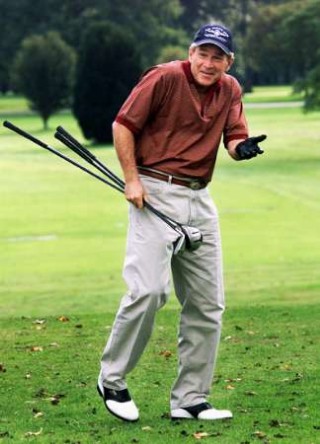
WASHINGTON — US President George W. Bush said in an interview out Tuesday that he quit playing golf in 2003 out of respect for the families of US soldiers killed in the conflict in Iraq, now in its sixth year.

“I think playing golf during a war just sends the wrong signal,” he said in an interview for Yahoo! News and Politico magazine.

“I don’t want some mom whose son may have recently died to see the commander-in-chief playing golf,” he said. “I feel I owe it to the families to be in solidarity as best as I can with them.”

The US president traced his decision to the August 19, 2003 bombing of UN headquarters in Baghdad, which killed the world body’s top official in Iraq, Sergio Vieira de Mello.

“I remember when de Mello, who was at the UN, got killed in Baghdad as a result of these murderers taking this good man’s life. And I was playing golf — I think I was in central Texas — and they pulled me off the golf course and I said, it’s just not worth it anymore to do,” said Bush.

Bush’s last round of golf as president dates back to October 13, 2003, according to meticulous records kept by CBS news.

On the day of the bombing two months earlier, he had cut short his golf game at the 12th hole and returned to his ranch in tiny Crawford, Texas.

Source. / Agence France-Presse

Thanks to Jim Baldauf / The Rag Blog

Posted in RagBlog | Tagged , , | Leave a comment

Unboxed: Moving from Curiousity to Wonder


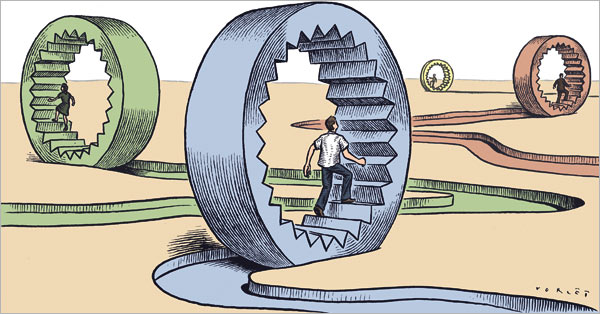
Can You Become a Creature of New Habits?
By Janet Rae-Dupree

HABITS are a funny thing. We reach for them mindlessly, setting our brains on auto-pilot and relaxing into the unconscious comfort of familiar routine. “Not choice, but habit rules the unreflecting herd,” William Wordsworth said in the 19th century. In the ever-changing 21st century, even the word “habit” carries a negative connotation.

So it seems antithetical to talk about habits in the same context as creativity and innovation. But brain researchers have discovered that when we consciously develop new habits, we create parallel synaptic paths, and even entirely new brain cells, that can jump our trains of thought onto new, innovative tracks.

Rather than dismissing ourselves as unchangeable creatures of habit, we can instead direct our own change by consciously developing new habits. In fact, the more new things we try — the more we step outside our comfort zone — the more inherently creative we become, both in the workplace and in our personal lives.

But don’t bother trying to kill off old habits; once those ruts of procedure are worn into the hippocampus, they’re there to stay. Instead, the new habits we deliberately ingrain into ourselves create parallel pathways that can bypass those old roads.

“The first thing needed for innovation is a fascination with wonder,” says Dawna Markova, author of “The Open Mind” and an executive change consultant for Professional Thinking Partners. “But we are taught instead to ‘decide,’ just as our president calls himself ‘the Decider.’ ” She adds, however, that “to decide is to kill off all possibilities but one. A good innovational thinker is always exploring the many other possibilities.”

All of us work through problems in ways of which we’re unaware, she says. Researchers in the late 1960s discovered that humans are born with the capacity to approach challenges in four primary ways: analytically, procedurally, relationally (or collaboratively) and innovatively. At puberty, however, the brain shuts down half of that capacity, preserving only those modes of thought that have seemed most valuable during the first decade or so of life.

Read all of it here / The New York Times / May 4, 2008

Thanks to Betsy Gaines / The Rag Blog

Posted in RagBlog | Tagged , | Leave a comment

Just Another Day in Mosul

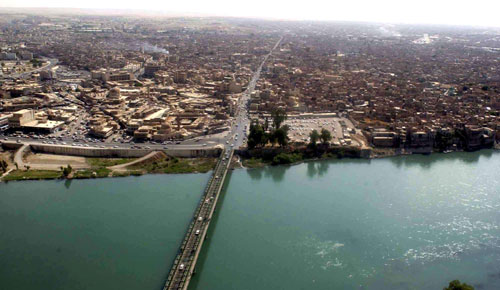
Tigris River in Mosul before drop in water-level

Iraq: Mosul Residents Suffer Shortage of Piped Water
May 13, 2008

[Text of report by Dubai-based Iraqi private Al-Sharqiyah TV on 7 May]

Mosul, capital of the Ninawa Governorate, especially the right side of the city [preceding five words as heard], is suffering from a shortage of piped water, because the purification stations stopped working due to the fact that pumps cannot pump water from the Tigris River, as its water level has dropped.

A source in the governorate said that the cut-off of water supplies on the right side of the city [preceding five words as heard] might last for a few days, noting that this has something to do with bringing about an increase in the water level of the river.

For his part, an official source at the Water Resources Directorate in Mosul said that the drop in the water level of the Tigris River is due to the dry season that Iraq experienced this year and the shortage of rainfall and snowfall in the northern region last winter, which decreased the number of the tributaries feeding the river.

Local residents in Mosul said that they observed a drop in the water level of the Tigris River, which passes through the centre of the city, to levels which some of them termed as scary, especially after the emergence of islands in the middle of the river. The residents were not used to seeing such a drop in the water level of the river in spring.

Originally published by Al-Sharqiyah TV, Dubai, in Arabic 1310 7 May 08.

Source / redOrbit

The Rag Blog

Posted in RagBlog | Tagged | 1 Comment

Dictating What You’re Allowed to Know

A fine example of suppression of the truth, a characteristic of the best examples of fascist states around the globe and throughout history. Remember that when you are carted off to jail for saying something unkind about an influential politician.

Richard Jehn / The Rag Blog

Military analysts named in Times exposé appeared or were quoted more than 4,500 times on broadcast nets, cables, NPR

Summary: A New York Times article detailed the connection between numerous media military analysts and the Pentagon and defense industries, reporting that “the Bush administration has used its control over access and information in an effort to transform” media military analysts “into a kind of media Trojan horse — an instrument intended to shape terrorism coverage from inside the major TV and radio networks.” A Media Matters review found that since January 1, 2002, the analysts named in the Times article — many identified as having ties to the defense industry — collectively appeared or were quoted as experts more than 4,500 times on ABC, ABC News Now, CBS, CBS Radio Network, NBC, CNN, CNN Headline News, Fox News, MSNBC, CNBC, and NPR.

To read all of it, complete with analysis of who did what and to whom, click here. / Media Matters

The Rag Blog

Posted in RagBlog | Tagged , , , | Leave a comment

"Liberty City 7" and the Marginalization of Black Discontent

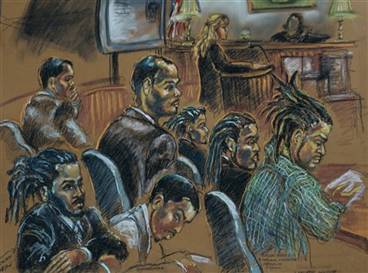
In this courtroom drawing, U.S. Attorney Jacqueline Arango, center, makes her closing arguments before Judge Joan Lenard during the so-called “Liberty City Seven” trial in Miami on Thursday, Dec. 13, 2007

The Vendetta Against Black Men
By Salim Muwakkil / May 13, 2008

Despite the rise of Sen. Barack Obama, black men remain in the bull’s-eye of governmental repression and police brutality.

The government is currently re-trying six black men who have already faced two hung juries in a case accusing them of planning to blow up both the Sears Tower in Chicago and the Miami FBI headquarters.

American law enforcement has long marginalized black discontent by attributing it to more organized external forces.

Known as the “Liberty City 7,” after the low-income Miami neighborhood in which they lived, the seven arrested men could soon become domestic casualties in the war on terror. (In December, the jury acquitted one of the men but then deadlocked on the remaining six. On April 16, a second trial also ended with a hung jury.)

Close observers of the trial argue a case of government entrapment. The two FBI informants — immigrants from Lebanon and Yemen to whom the government paid more than $130,000 for their services — had incentive to exaggerate the scope of the plot. And, it turns out, they were the ones who suggested the targets, purchased the surveillance equipment and supplied the transportation.

More troubling is the larger inference that black radical groups like the Moorish Science Temple, to which the men had a peripheral connection, are somehow in league with Islamic radicals like al Qaeda.

It’s an example of how American law enforcement tends to marginalize black discontent by attributing it to more organized external forces. This is a tendency rooted in U.S. tradition: black radicals and civil rights activists of past eras were often linked to communists and other “outside agitators” — as if the progeny of enslaved Africans needed Karl Marx to detail their gripes about life in America. Now, apparently, the government claims the link is with Osama bin Laden.

Despite no verdict of guilt, the men have been locked up since their 2006 arrest. Incidentally, U.S. Immigration and Customs Enforcement agents took into custody the man acquitted during the first trial and transported him to a detention center in Lumpkin, Ga., a day after the trial ended. Deportation proceedings have since begun against the man, a legal U.S. resident originally from Haiti.

Surely, these six struggling black men — who neighbors contend were simply trying to provide positive role models and improve their crime-ridden community — pose no serious threat to national security. However, by implying the men have mysterious Islamic links and a general hatred for America, the government can justify persecuting them.

It’s enough to make you say, “God Damn America!”

And if that’s not enough, consider the case of Sean Bell, an unarmed black man who died in a 50-shot fusillade of police bullets in Queens, N.Y. In November 2006, Bell had a bachelor party at a strip club the day before his wedding and was leaving with two friends when undercover officers confronted and then shot them. The officers mistakenly thought the men were armed and reaching for their guns. Bell’s surviving friends said their attackers never identified themselves as police officers.

The three cops who fired the bullets killing Bell and injuring his friends were acquitted of all charges. The judge ruled, essentially, that the officers’ fear justified firing 50 bullets at the unarmed trio.

The Bell case is just one of dozens — perhaps hundreds — of similar cases of police abuse against young African-American men.

In Chicago, for example, police — reportedly chasing a seat belt scofflaw — broke into a South Side home on April 30 with no warrant and arrested six members of a family, including two juveniles. Witnesses and lawyers for the family members say the police acted abusively. Among those arrested and brutalized was Elijah Henderson, 18, one of two youths wrongfully arrested in the 1998 murder of 11-year-old Ryan Harris.

“I don’t think it’s a coincidence that this young man, who was falsely accused 10 years ago, is now in a lockup, beat up by Chicago police,” says Andre Grant, Henderson’s attorney.

Obama spoke briefly about the Bell case, urging aggrieved New Yorkers to express support for the judge’s not-guilty ruling. But he has said nothing publicly about the Liberty City 7 verdict and re-retrial or the problems of police brutality in his home city.

By downplaying these racial grievances, Obama is doing his part in the implicit deal he made with the American public to avoid any suspicion of playing the race card.

The Rev. Jeremiah Wright disrupted that deal, so he had to go. Question is: What else will go with him?

Salim Muwakkil is a senior editor of In These Times, where he has worked since 1983, and an op-ed columnist for the Chicago Tribune. He is currently a Crime and Communities Media Fellow of the Open Society Institute, examining the impact of ex-inmates and gang leaders in leadership positions in the black community.

More information about Salim Muwakkil.

Source. / In These Times

Thanks to Mercedes Lynn de Uriarte / The Rag Blog

Posted in RagBlog | Tagged , , , | Leave a comment

It’s All About the Oil … Again


The US lines up its chess pieces to trigger the demise of the Bolivarian Revolution and achieve regional dominance.
By Ramón Santiago / May 13, 2008

Since the violation of Ecuador’s sovereignty by the Colombian military, relations between Venezuela and Colombia have been fraught to say the least. The “magical laptops” allegedly captured by Colombian forces have become a fountain of highly debatable intelligence information – all aimed at proving that Venezuela and President Chavez are somehow in cahoots with the FARC – and by extension will “prove” that the Venezuelan state is in fact a “sponsor of terrorism”. Interpol is due to report on the contents and findings in the laptops this Thursday, May 15th.

Resurrecting the US IV Fleet

While the laptop saga was developing it was announced that the defunct US IV Fleet will be reactivated after July 1st with the aim of, “employing naval forces to build confidence and trust among nations through collective maritime security efforts that focus on common threats and mutual interests”, according to Admiral Gary Roughead speaking from the Pentagon.

Despite Roughead’s attempt to describe the role of the IV Fleet as being somehow beneficial to the region, President Chavez sees it as outright intimidation as the US tries to shore up its declining influence in the Caribbean and South America. Remember that the IV Fleet was finally disbanded in 1950 after WWII as there were no threats in the region to US hegemony.

Manta military base to Colombo-Venezuelan border?

Upon assuming the Presidency of Ecuador in 2007, Rafael Correa stated that the US military base at Manta would not have its lease extended when it expires in 2009. The Manta base was established in Ecuador in 1998 under then president Jamil Mahuad.

The Manta base has been the subject of some controversy in recent weeks when suspicions pointed to the fact that the attack on the FARC camp on Ecuadorian territory was actually launched from Manta using US “smart bombs”. The attack was in collusion with the Colombian military whose Commander-in-Chief is President Álvaro Uribe.

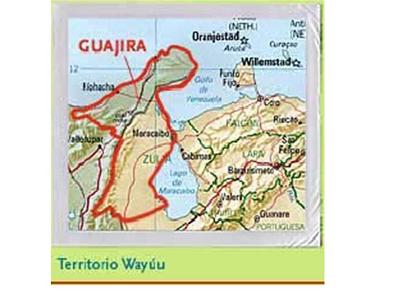
Now we have the declarations of ex US Ambassador to Caracas, William Brownfield to consider. He was transferred to Bogotá from Caracas after failing to rally the Venezuelan opposition. Upon being asked about the Manta military base in Ecuador, which will be uprooted next year, Brownfield indicated that the base could be relocated on Colombian territory in La Guajira – on the Colombo-Venezuelan border. (See map below with La Guajira outlined in red)

Former US Ambassador to Caracas, now transferred to Bogota
indicated that the US AFB at Manta could be relocated at
La Guajira, on the Colombo-Venezuelan Border

Note that La Guajira borders with Venezuela’s resource-rich Zulia state where the old oligarchs have had a long history of trying to secede from Venezuela itself. After huge oil reserves were discovered in Zulia early last century, the US has always had a strong interest in this region of Venezuela. This goes all the way back to just before WWI.

Geopolitical chess board

At this point let’s review the geopolitical chessboard. Here are the pieces:

* US IV Fleet in the Caribbean after July 1st

* Secessionist rumblings in Zulia. State governor Manuel Rosales is a fierce opponent of President Chavez. He ran against President Chávez in the last presidential elections in 2006 and lost by a wide margin.

* Current hostile relationship between Colombia and Venezuela. President Álvaro Uribe of Colombia is Washington’s main ally in the region.

* US base to be established in La Guajira if we are to believe Ambassador Brownfield.

* The “laptops” will officially spill their secrets on Thursday May 15th and will no doubt be used to accuse Venezuela of “sponsoring terrorism”.

* Vast oil reserves and infrastructure to exploit them already set up in Zulia, which borders Colombia.

* World energy crisis looming with oil currently over US$120/barrel

* The US wants to destroy or at least weaken the Bolivarian Revolution as it spreads throughout the region, undermining US traditional influence in the “back yard”.

* The main objective is to oust President Chavez.

There you have it. Washington’s plans and objectives all ready to be put into action, with outright aggression impossible to rule out. The US IV Fleet and the establishment of a US military base in La Guajira are obvious taunts or to be more precise “saber rattling” against Venezuela.

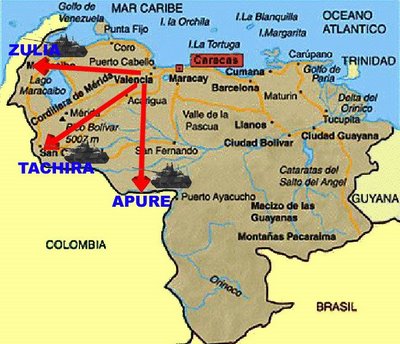
We do not see US troops being involved but rather gradual proxy diplomatic tensions being built up by the Uribe regime. The objective will be to spark possible skirmishes in border regions such as in Táchira, Zulia and Apure which have been infiltrated by Colombian paramilitaries. (See map below)

Venezuelan states of Táchira, Zulia and Apure have
been infiltrated by Colombian Paramilitaries

It’s all about oil….again

The chessboard and the heinous plans can be deciphered from the pieces in the US and Colombian “arsenals”. They hold all the ingredients to cause a regional conflict in South America. A regional conflict would suit US interests as a regional conflagration would give the US a pretext to “intervene to protect Venezuelan oil reserves in the interests of national security”. In another scenario, UN “peace-keeping troops” could be brought in as they were brought in for renewed occupation of Haiti, following the US-backed coup there.

The attack on the FARC camp in Ecuador was just a trial to judge the reaction of countries in the region as well as the OAS and the Río Group.

The next aggression in this ongoing chess game could trigger unforeseen consequences for the region as a whole. The pieces are in place but who will make the first attacking move, and when?

© Copyright 2008 by AxisofLogic.com

Source / Axis of Logic

The Rag Blog

Posted in RagBlog | Tagged , , | Leave a comment

Uganda’s Success: Ignoring Bad Western Advice


Africa Plays the Rice Card
By G. Pascal Zachary

For years, Western experts promised Africans that free-market ideology would save them from poverty and famine. Now, one African country is showing that sometimes, a little protectionism can work wonders.

Farming has suddenly become fashionable again. Once a largely ignored corner of the development business, agriculture is now a hot field among experts more versed in structural adjustments than crop rotations. Record prices for cereal crops such as wheat, corn, and rice have many of them viewing farmers as a key component of economic growth in poor countries and as a supply-side solution to the political instability those high prices have caused everywhere from West Africa to Bangladesh. Researchers should be careful, however, to learn the right lessons from the countries that are already harvesting success.

Consider the case of Uganda. The country’s rice output has risen 2½ times since 2004, according to the Ministry of Trade. Rice production is expected to reach an astonishing 180,000 metric tons this year, up from 135,000 in 2006 and 102,000 in 2005. Consumption of imported rice, meanwhile, fell by half from 2004 to 2005 alone, and by half again from 2005 to 2007.

Uganda’s importers, seeing the shift, have invested in new mills in the country, expanding employment and creating competition for farmer output, thereby improving prices. New mills, meanwhile, lowered the cost of bringing domestic rice to market. While people in developing countries across the globe are clamoring about the sharp rise in food prices, Ugandans are still paying about the same for rice as they always have. And Uganda is poised to start exporting rice within East Africa—and beyond.

The secret of Uganda’s homegrown success? Ignoring decades of bad Western advice.

In the 1990s, African governments sharply reduced or eliminated duties on imported rice, urged on by the World Bank, the International Monetary Fund (IMF), and some influential free-market economists. The assumption was that richer countries would reciprocate by curtailing subsidies to their own farmers. That never happened. In response, a few African countries have raised duties on rice, violating a key tenet of neoliberal trade philosophy. Protectionism is supposed to be bad—so bad that international advisors have spent decades convincing African governments to open their markets as wide as possible to imports.

One of the leaders of Uganda’s rice revolution is Gilbert Bukenya, the country’s vice president and its leading advocate for the commercialization of agriculture. I first met Bukenya at his home on the shores of Lake Victoria, where he laid out the basic philosophy. “By farming smarter, Ugandans not only can grow more, they can earn more money,” he told me. An advocate of food self-sufficiency, Bukenya wants Ugandans to eat more homegrown rice, boosting local farmers and rice millers while at the same time freeing hard cash for other uses. Bukenya has long promoted a new African rice that grows in “uplands” (as opposed to wetland “paddies”) and requires less water.

Embracing a new variety is only part of the working-smarter formula. Once rice output began to expand, Bukenya and other Ugandan politicians played another card: They stumped for a duty of 75 percent to be imposed on foreign rice. The legislature passed the duty, which stimulated domestic rice production further.

Uganda’s success in expanding its rice production is especially interesting because the people of sub-Saharan Africa spend nearly $2 billion a year on rice grown outside Africa. The amount Africans spend on rice alone equals the national budgets of the governments of Ghana and Senegal combined. With the help of wise policies, African farmers could grow much more rice on their own, maybe even enough to eliminate virtually all imported rice. Eliminating rice imports would benefit Uganda by ensuring a local supply as Asian rice is becoming less available and more expensive.

What Uganda recognized is that the world’s major rice exporters actually practice the opposite of what the World Bank and IMF preach. Much of the rice grown in Pakistan, Vietnam, and especially the United States is stimulated by subsidy payments to farmers. Then the rice is “dumped” into African markets at low prices—sometimes below the cost of production. These producers also maintain stiff duties against imported rice, contradicting free-market ideology but helping protect domestic farmers against global competition. And for good reason: Virtually every successful Asian economy was built on selective trade barriers—and in China and India, the world’s two fastest growing economies, such barriers remain in force. Even South Korea and Japan maintain massive duties on imported rice simply to protect the livelihoods of their own rice farmers. Rice duties are working in Uganda—and also in Nigeria, where rice output is also soaring. In both countries, the value of imported rice is declining and locally produced rice is winning the hearts and minds of ordinary consumers.

Rice is just one example. African governments might wish to repeat Uganda’s success with other crops (which ones depends on specific trade flows and the agricultural strengths of the particular country). But African governments should be encouraged to rely on a mix of economic tools, including farm protectionism, aimed at helping indigenous producers.

Uganda and other African countries need to be careful that protectionism doesn’t become a cover for inefficiency or corruption. And selective protectionism is no panacea for Africa even when such policies effectively aid local producers. But, after decades of hardship, economic self-reliance is a worthy goal for most African countries. Uganda’s rice experiment deserves wider attention, if only because it shows that Africans aren’t passive victims of global economic forces. They are fighting back.

G. Pascal Zachary, a former Wall Street Journal correspondent, teaches journalism at Stanford University and is finishing a book on Africa for Scribner.

Source / Foreign Policy

Thanks to Steve Russell / The Rag Blog

Posted in RagBlog | Tagged , | Leave a comment

Robert Rauschenberg Dead at 82

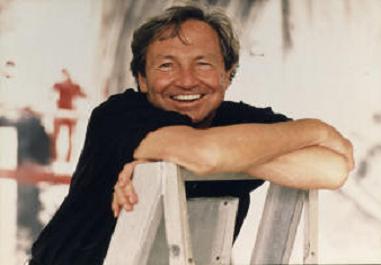
Robert Rauschenberg. Photo by Ed Chappell.

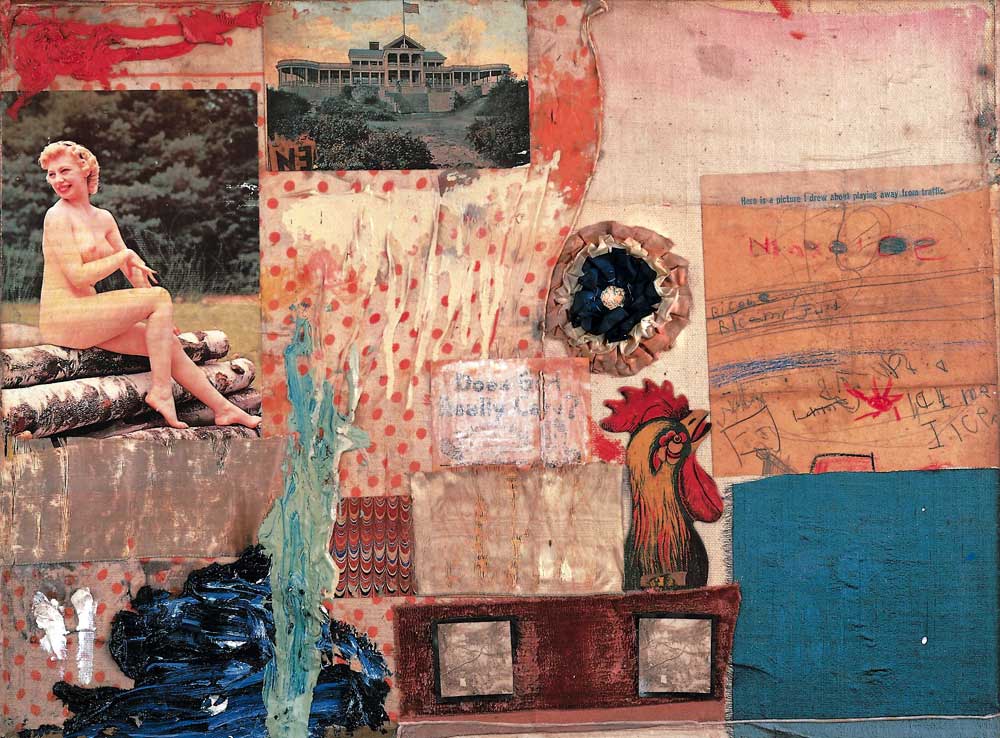
Robert Rauschenberg, Untitled, 1955. Oil paint, crayon, pastel, paper, fabric, print reproductions, photographs and cardboard on wood., 39.3 x 52.7 cm (15 1/2 x 20 3/4 in.). Jasper Johns Collection. © Robert Rauschenberg / Adagp, Paris.

Artist Robert Rauschenberg, Port Arthur native
A unique and creative artist, he was not afraid to cross boundaries, change media
By Lisa Gray / May 13, 2008

Texas native Robert Rauschenberg, the prolific painter/sculptor/jack-of-all-trades who for decades stretched the definition of art, has died.

“He was one of the greatest inventors, in art, of the last 50 years,” said Josef Helfenstein, director of the Menil Collection. “Since the 1950s, he reinvented art all the time. He changed media. He crossed boundaries. He has a unique place in the history of postwar art.

“Jasper Johns said that no one has invented more than Rauschenberg since Picasso — and I think that’s a good way to look at it,” said Helfenstein, who curated the 2007 Menil show Robert Rauschenberg: Cardboards and Related Pieces, the artist’s last museum exhibit.

Rauschenberg died of heart failure Monday night at his home in Florida following a short illness, said Jennifer Joy, spokeswoman for his New York gallery, PaceWildenstein. He was 82.

Born in Port Arthur and raised in the Church of Christ, as a boy, Rauschenberg planned to become a preacher. But at age 15, he changed his mind.

“I wasn’t proper for that job,” he once told the Chronicle, “because I was not going to see evil in everything, and I was not about to give up my own life to get the promise of one later. I’ll take my chances and make the best of this world.”

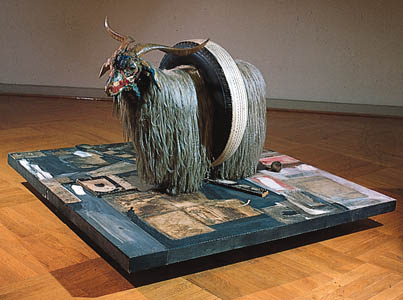
That love of life, with all its wildness and imperfections, was almost the only thing that defined his art. In the ’50s, when Abstract Expressionists held their paintings above messy everyday life, Rauschenberg dragged street junk to his studio and incorporated it into “combines” — scandalous-seeming combinations of painting and sculpture.

Bed consisted of his pillow and quilt, mounted on wood, then painted and drawn on. Other pieces incorporated tires, stuffed farm animals, police barriers, light bulbs, tennis balls and stained-glass windows. To Rauschenberg, everything was material.

Even other art. Once, he erased a Willem de Kooning drawing and declared his erasure to be art.

Another time, he recruited his friend the composer John Cage, to drive a Model A Ford over 20 sheets of paper. Automobile Tire Print, he called the resulting work.

Sometimes, his work wasn’t even an object, but an event. He frequently immersed himself in collaborations with dancers such as Merce Cunningham and Trisha Brown. For 1963’s Pelican, he donned a helmet and parachute, then roller-skated to a sound collage of his own making.

Monogram (1959), a goat girdled by a rubber tire, was among the collection of Combines (mixed-media works) by Robert Rauschenberg that was exhibited in New York City, Los Angeles, and Paris during 2006.

In 1954, Rauschenberg met the then-unknown artist Jasper Johns. The New York Times said the intimacy of their relationship during the next years, a consuming subject for later biographers and historians, coincided with the production by the two of them of some of the most groundbreaking works of postwar art.

His vision of art was, literally, big. In Houston, a 1998 Rauschenberg retrospective curated by the Menil Collection spilled out of that museum and into the Contemporary Arts Museum and Museum of Fine Arts, Houston. In New York, the same show commanded both Guggenheims.

During that retrospective, the MFAH showed 1/4 Mile or 2 Furlong Piece, a collection of paintings and sculpture that Rauschenberg had begun seven years before. It stretched 1,420 feet.

But even then, Rauschenberg wasn’t finished with it. He planned to continue it, he said, until “the final day.” It was a diary of his artwork, and he had no intention of retiring. He liked the idea that 1/4 Mile might someday grow to two miles.

In a review of Robert Rauschenberg: A Retrospective, former Chronicle art critic Patricia C. Johnson wrote that the 1998 exhibit “compresses five decades of ceaseless artistic investigation into 300 choice objects. It also reveals that, at 71, this seminal artist still is the enfant terrible he was when he began to rattle art’s cages half a century ago. The massive exhibit, spread across Houston’s three art museums, attempts to give shape to an artist who, like an ever-changing chimera, is quite impossible to pin down or summarize.”

Rauschenberg’s last museum show, at the Menil, coincided with a show of Rauschenberg’s recent photo collages at Texas Gallery.

“He loved to work,” said Fredricka Hunter of Texas Gallery. “He never wavered from that,” even after two strokes left him unable to use his right hand. He attended the 2007 gallery opening in his wheelchair, still a charismatic, powerful personality.

“He was probably the most important 20th-century hero that I’ll ever know,” Hunter said.

Born in Port Arthur on Oct. 22, 1925, Ernest Milton Rauschenberg adopted the name Robert and took his first art class at the Kansas City Art Institute in 1947 after serving in the Navy.

The GI Bill enabled him to study at the Académie Julian in Paris and the avant-garde Black Mountain College in North Carolina, where the legendary Josef Albers was teaching.

He settled in New York in 1950. It was the heyday of Abstract Expressionism, but Rauschenberg would have no truck with it.

He lived on day-old bread and buttermilk and imposed on himself “a kind of morality,” he told the Chronicle in 1998.

“If I couldn’t find material to do an artwork walking around the block once, I wouldn’t do it.”

In later years the block included the entire world: his home on Captiva Island in Florida as well as countries from Mexico to Tibet that have participated in his artists’ collaborative, the Rauschenberg Overseas Culture Interchange.

But his moral rule never fundamentally changed.

“I have a great curiosity, and I switch materials often when I can’t think of anything new to do,” Rauschenberg told the Chronicle before the three-museum retrospective in Houston.

“Problems turn me on. They are limitations, and somehow, limitations not only insist on what you can’t do but sometimes force you to do something that you couldn’t think of before.”

Rauschenberg is survived by his partner of 25 years, artist Darryl Pottorf, and his son, Christopher.

Copyright 2008 Houston Chronicle

Source. / Houston Chronicle

Also see Rauschenberg and Dance, Partners for Life / New York Times

The Rag Blog

Posted in RagBlog | Tagged , , | Leave a comment

If Your Heart’s Not In It …

Frankly, My Dear…
By Chuck Dupree / May 13, 2008

Barney Frank is known for a lot of things. The most prominent gay member of Congress, he’s now the chairman of the Financial Services Committee. In his 14th term in the House, he made a kind of splash by appearing, without smiling, on The Colbert Report, a non-trivial accomplishment in itself.

But he does have quite a sense of humor, as the Times reports.

Between an economic stimulus package and the Federal Reserve’s rescue of Wall Street, he said, “they [the Bush administration] have been pushed into accepting a lot of government help for the market.”

“People aren’t good at doing things they dislike,” he added.

Then, in a flash of trademark wit, he said that asking the White House to support more government intervention was “like asking me to judge the Miss America contest — if your heart’s not in it, you don’t do a very good job.”

In addition, he can make a deal. And with this group of Republicans, that’s saying quite a lot.

Within the administration, where some high-level officials privately refer to him as “scary smart,” no one is underestimating him. After the House approved his bill on Thursday, though without enough votes to override a veto, Mr. Frank quickly went on the offensive, seeking to undercut the administration’s argument that homeowners in trouble should have known better.

“No dumb people got America into this problem,” he snapped. “You had to be really smart to understand collateralized debt obligation derivatives.”

Mr. Frank, who holds degrees from Harvard and Harvard Law School, understands collateralized debt obligations.

What vexes the administration, at times, is that he also holds strong liberal feelings about what he views as the government’s top obligations — to aid the poor and protect victims of discrimination, to police the markets and, in the case of as many as two million Americans at risk of losing their homes, to offer a helping hand if one is needed.

Really! I mean, can you imagine anything more distressing? By definition, if people are in need, they don’t deserve help. Only Wall Street, the weapons manufacturers, and the drug companies should get assistance from the government; everyone else is on his or her own.

“Barney has been very fair,” said Representative Dana Rohrabacher of California and one of the most conservative members of the House. “I think that I have been treated more fairly, and a number of my Republican colleagues have been treated more fairly, since the Democrats have become the majority than I was treated by my own leadership.”

Mr. Frank politely interjected, “I know the gentleman joins me in looking forward to continued years of such treatment.”

Such friendly banter was a far cry from the day in 1995 when Representative Dick Armey of Texas, the Republican majority leader, referred to him as “Barney Fag” in a radio interview.

Ah, the subtlety and intelligence of the Texas Congressman.

Source / Bad Attitudes

The Rag Blog

Posted in RagBlog | Tagged , | Leave a comment

Dude. You’re a Security Threat.


Blunt Federal Letters Tell Students They’re Security Threats
By Scott Shane / May 13, 2008

WASHINGTON — A German graduate student in oceanography at M.I.T. applied to the Transportation Security Administration for a new ID card allowing him to work around ships and docks.

What the student, Wilken-Jon von Appen, received in return was a letter that not only turned him down but added an ominous warning from John M. Busch, a security administration official: “I have determined that you pose a security threat.”

Similar letters have gone to 5,000 applicants across the country who have at least initially been turned down for a Transportation Worker Identification Credential, an ID card meant to guard against acts of terrorism, agency officials said Monday.

The officials also said they were sorry about the language, which they may change in the future, but had no intention of withdrawing letters already sent.

“It’s an unfortunate choice of words in a bureaucratic letter,” said Ellen Howe, a security agency spokeswoman.

Ms. Howe and Maurine Fanguy, who oversees the new ID card program, said that most foreign students did not qualify for the identity cards, but that the letters were not intended to label the recipients as potential terrorists. (Some applicants are also turned down because of criminal records.)

Mr. von Appen, 23, one of at least four oceanography students at the Massachusetts Institute of Technology who received identical letters, said he was stunned by its language.

“I was pretty much speechless and quite intimidated,” said Mr. von Appen, whose research is supported by a $65,000-a-year grant from the National Science Foundation.

A British student at M.I.T. who was rejected, Sophie Clayton, 28, said that at first she was amused at what appeared to be a bureaucratic absurdity. But as she pondered the designation, Ms. Clayton said she grew worried. “The two words ‘security threat’ are now in the files next to my name, my photograph and my fingerprints,” she said.

Institute officials were also disturbed. The agency controls airport security, and “our students travel in and out of the country a lot,” said Danielle Guichard-Ashbrook, associate dean and director of the international student office at M.I.T.

And the agency is part of the Department of Homeland Security, which oversees immigration matters, including student visas.

Ms. Guichard-Ashbrook said the security agency should remove the misleading language from all files and issue new letters formally withdrawing the “threat” label.

But Ms. Howe, the agency spokeswoman, said that the letters were legal, if flawed, and that there were no plans to send replacements.

She said she did not believe the denial letters would cause students any problems with visa renewal or airport security checks. They will even be able to enter secure ports and ships for their work as long as they are accompanied by someone with the new ID, Ms. Howe said.

The Transportation Worker Identification Credential requirement is being phased in starting Oct. 15. The cards cost the applicant $132.50 and have been issued to 275,000 people so far of 1.2 million people expected to receive the credential, officials said.

Source. / New York Times

Also see U.S. deems some MIT grad students ‘security threats’ / The Tech / UWire

Thanks to Jim Baldauf / The Rag Blog

Posted in RagBlog | Tagged , , | Leave a comment

Art Car Tragedy in Houston

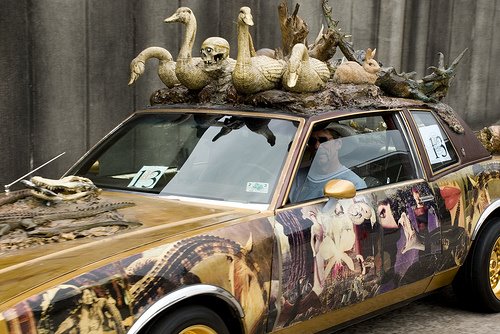
Our friend Tom passed away early this morning [Sunday, May 11, 2008]. He was killed by a drunk driver.

Tom was a great guy and he will be missed terribly.

This picture was taken yesterday as he arrived for the parade, the last time I saw him. He was driving the Swamp Mutha, one of the artcar museum cars. I walked up and being the smart ass I can be, pretended like I didn’t know and asked, “hey this car is cool (it is), did you build it?” Tom went into artcar museum curator mode and said “actually, this car was built back in the early 80’s by…” I stopped him, “Tom, I know, I was just kidding.” He said “Aw you son of a bitch, you really got me. I owe you one now.” in that mock angry voice he would sometimes use. We smiled and laughed as he drove off to find his spot in the lineup

Delta Niner.

Curator remembered as ‘da Vinci kind of guy’
Tom Jones’ loved ones say memorial will reflect his zany humor, uplifting spirit
By Jennifer Latson / May 13, 2008

The memorial service for Houston artist Tom Jones will likely involve Art Cars, bikers and bagpipes. It will be lively, quirky and inherently Scottish — like Tom, his relatives said Monday.

Friends and family spent Monday making funeral arrangements for Jones, who was killed early Sunday morning when a suspected drunken driver plowed a parked car on top of him as he sat on a curb in front of the Art Car Museum. He was the museum curator.

The driver, Dustin Allen Poe, 23, was released on bail Monday afternoon. Poe, of Mexia, was charged with intoxicated manslaughter following the 2 a.m. crash. He could not be reached for comment.

If convicted, Poe could face two to 20 years in prison. He was previously convicted of drunken driving in Waco four years ago.

As news of Jones’ death rippled through Houston’s art community, some who knew him were outraged over the senselessness of the crash.

But Jones wouldn’t want to see lives poisoned with anger, his family said.

“Tom was very much into increasing the peace,” said his older sister, Barb Jones. “The kid who hit him has made his own hell, and Tom would not want any particular negativity toward him.”

Tom Jones, who moved to Houston with his family when he was 12, was well-known in the arts community as a talented artist in a variety of media, and as a mentor to others.

He had a degree in radio, TV and film from Sam Houston State University, where he had a radio show. In his professional life, he focused on photography. He became curator of the Art Car Museum four years ago. He had been active in the Art Car Parade since its inception in 1988.

He was a skilled mechanic, said his sister. On Monday, she stood in his garage and looked at the three cars he’d been working on recently.

His primary mode of transportation was a classic Volkswagen sports car, the Karmann Ghia.

“Tom was a very da Vinci kind of guy,” Barb Jones said.

Until seven years ago, Jones was also an avid biker, who favored Harley-Davidsons. One day he was riding his Harley to work when a pickup hit him at an intersection.

“Tom and his motorcycle got tumbled and crunched,” his sister said. “One leg had a compound fracture and the other foot was crushed.”

Jones, who had to learn to walk again, never fully regained the use of his legs. He gave up his motorcycle because he didn’t feel coordinated enough to drive it safely, friends and family said.

But he never held a grudge against the driver who hit him.

“It angered me more than it angered him,” said his brother-in-law, Pat Southard.

Celebration of life

Some of his friends blame the injuries from his previous accident for not letting him scoot out of the path of Poe’s car on Sunday.

“That’s why he died out there,” said Noah Edmundson, director of the Art Car Museum. “He couldn’t get out of the way.”

Jones’ family has planned a celebration of his life for 3 p.m. Sunday at the museum. The service will likely draw crowds from the various communities he touched — Art Car drivers, bikers, and even the friends who, with Jones, formed a roller-skating club in the ’80s, called the Urban Animals.

The massive show of support from those groups had already cheered his grieving family.

“All of this outpouring has really taken a lot of the horror out of this, at least for the moment,” said his sister.

A humorous tribute

The friends who are planning his memorial service hope it will reflect his zany humor and uplifting spirit, down to the bagpipes his brother-in-law bought him in Scotland as a lark.

By Monday afternoon, an impromptu shrine outside the Art Car Museum had grown to cover the curb where he was hit and the fence behind it with tokens to mark his life: the speed gauge from a Harley, riding gloves, strips of film negatives and a slide projector tray.

There was an orange tree from the Orange Show Center for Visionary Art, which organizes the Art Car Parade. And there were pieces from Saturday’s crop of Art Cars: a plastic hamburger, a Buddha statue and a mounted animatronic bass bearing the inscription, “Tom, we remember your laughter.”

[Chronicle reporter Mike Glenn contributed to this report.]
Copyright 2008 Houston Chronicle

Source. / Houston Chronicle

An Interview with Tom Jones

Read more about Houston’s Art Car Parade at the
Orange Show website.
Art Car Parade on Wikipedia with links to photo galleries.

Thanks to Connie Clark / The Rag Blog

Posted in RagBlog | Tagged , , , | Leave a comment