To Embrace the Concept of Universal Oneness


Next Mothers Day Let’s Invite the Whole Family
by Medea Benjamin / May 12, 2008

Next Mothers Day, I don’t want to be organizing yet another rally of Mothers Against War in Washington DC and lamenting the state of our dysfunctional human family. I want to be celebrating the successes of the first 100 days of a new administration. I want to see us healing the collective traumas of the past eight years and becoming a nation that reflects the values of compassion and kindness that most mothers hold dear.

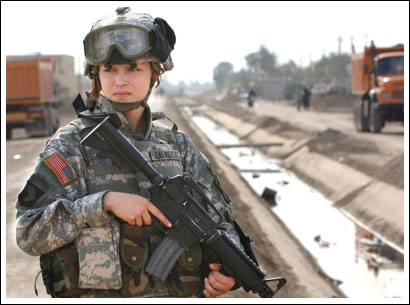
Next Mothers Day, I want us to be welcoming our soldiers home from Iraq and taking care of them when they get here. I don’t want to hear any more bickering in Congress about whether we should provide decent educational benefits to our vets — especially from those who supported the war! I don’t want to read more horror stories about dilapidated VA hospitals and bureaucratic sinkholes that keep veterans from getting the care they need. I want us to come together — whether we were for or against this war — to nurture our wounded sons and daughters.

Next Mothers Day, I want us to have come to grips with the disaster we have wreaked upon the Iraqi people. I want us to mourn their losses, express contrition and help rebuild the nation we destroyed. I want us to ensure a viable homeland for our Palestinian sisters and brothers. I want us to rebuild a relationship of trust and respect with our Arab neighbors so that we can mutually address the threat of terrorism.

Next Mothers Day, I want us to repair old family feuds. I want us to restore relations with the Cuban cousins we banished some 50 years ago, starting with lifting the embargo. I want us to sing and dance and drink mojitos with our Caribbean kin, relishing in our common zest for life.

We shouldn’t stop with Cuba. I want us to reach out with a mother’s open arms toward other nations we are today bullying, from Venezuela to Iran. I want us to bring out the carrots and put away the sticks, as we have recently done in the case of North Korea. I want us to abandon the “do as I say, not as I do” approach to nuclear deterrence and support global disarmament.

Next Mothers Day, I want us to be immersed in a crash course on overcoming our oil addiction and cleaning up the mess we have made of our Mother Earth. I want us to stop pillaging the family jewels and instead embrace conservation, restoration and a fairer distribution of our planet’s wealth.

Next Mothers Day, I want us to practice unconditional love. I want us to heed the words of Julia Ward Howe’s original Mothers Day proclamation when she said that “We, the women of one country, will be too tender to those of another country to allow our sons to injure theirs.” I want us to form kinship circles that stretch across the globe, to teach our children to feel empathy towards other children, to truly embrace the concept of universal oneness.

Next Mothers Day, when we sit down to a bountiful brunch, I want the other members of our global household to be seated at the table. That will truly be a fitting tribute to the women who brought us into this world.

Medea Benjamin (medea@globalexchange.org) is cofounder of CODEPINK and Global Exchange. If you would like to help the Iraqi refugees, see http://www.codepinkalert.org/.

Source / Common Dreams

The Rag Blog

Posted in RagBlog | Tagged , | Leave a comment

Stop the Destructive Rhetoric About Iran

We already wrote about this a couple of days ago. However, the signs of impending attack against Iran remain quite ominous (see also here and here).

We expect to publish more about this tonight or tomorrow.

Richard Jehn / The Rag Blog

People live in Tehran, too.

Quiet US Confession: Weapons Were Not Made In Iran After All
By CASMII / May 12, 2008

In a sharp reversal of its longstanding accusations against Iran arming militants in Iraq , the US military has made an unprecedented albeit quiet confession: the weapons they had recently found in Iraq were not made in Iran at all.

According to a report by the LA Times correspondent Tina Susman in Baghdad: “A plan to show some alleged Iranian-supplied explosives to journalists last week in Karbala and then destroy them was cancelled after the United States realized none of them was from Iran. A U.S. military spokesman attributed the confusion to a misunderstanding that emerged after an Iraqi Army general in Karbala erroneously reported the items were of Iranian origin. When U.S. explosives experts went to investigate, they discovered they were not Iranian after all.”

The US, which until two weeks ago had never provided any proof for its allegations, finally handed over its “evidence” of the Iranian origin of these weapons to the Iraqi government. Last week, an Iraqi delegation to Iran presented the US “evidence” to Iranian officials. According to Al-Abadi, a parliament member from the ruling United Iraqi Alliance who was on the delegation, the Iranian officials totally refuted “training, financing and arming” militant groups in Iraq . Consequently the Iraqi government announced that there is no hard evidence against Iran.

In another extraordinary event this week, the US spokesman in Iraq, Maj. Gen. Kevin Bergner, for the first time did not blame Iran for the violence in Iraq and in fact did not make any reference to Iran at all in his introductory remarks to the world media on Wednesday when he described the large arsenal of weapons found by Iraqi forces in Karbala.

In contrast, the Pentagon in August 2007 admitted that it had lost track of a third of the weapons distributed to the Iraqi security forces in 2004/2005. The 190,000 assault rifles and pistols roam free in Iraqi streets today.

In the past year, the US leaders have been relentless in propagating their charges of Iranian meddling and fomenting violence in Iraq and since the release of the key judgments of the US National Intelligence Estimate in December that Iran does not have a nuclear weaponisation programme, these accusations have sharply intensified.

The US charges of Iranian interference in Iraq too have now collapsed. Any threat of military strike against Iran is in violation of the UN charter and the IAEA’s continued supervision on Iran’s uranium enrichment facilities means there is no justification for sanctions.

CASMII calls on the US to change course and enter into comprehensive and unconditional negotiations with Iran.

For more information or to contact the Committee Against Sanctions and Military Intervention in Iran (CASMII) please visit http://www.campaigniran.org/.

Source / Information Clearing House

The Rag Blog

Posted in RagBlog | Tagged , | Leave a comment

Ehrenreich : Hillary Embraces Her Inner Bitch


Hillary’s Gift to Women
by Barbara Ehrenreich

In Friday’s New York Times, Susan Faludi rejoiced over Hillary Clinton’s destruction of the myth of female prissiness and innate moral superiority, hailing Clinton’s “no-holds-barred pugnacity” and her media reputation as “nasty” and “ruthless.” Future female presidential candidates will owe a lot to the race of 2008, Faludi wrote, “when Hillary Clinton broke through the glass floor and got down with the boys.”

I share Faludi’s glee — up to a point. Surely no one will ever dare argue that women lack the temperament for political combat. But by running a racially-tinged campaign, lying about her foreign policy experience, and repeatedly seeming to favor McCain over her Democratic opponent, Clinton didn’t just break through the “glass floor,” she set a new low for floors in general, and would, if she could have got within arm’s reach, have rubbed the broken glass into Obama’s face.

A mere decade ago Francis Fukuyama fretted in Foreign Affairs that the world was too dangerous for the West to be entrusted to graying female leaders, whose aversion to violence was, as he established with numerous examples from chimpanzee society, “rooted in biology.” The counter-example of Margaret Thatcher, perhaps the first of head of state to start a war for the sole purpose of pumping up her approval ratings, led him to concede that “biology is not destiny.” But it was still a good reason to vote for a prehistoric-style club-wielding male.

Not to worry though, Francis. Far from being the stereotypical feminist-pacifist of your imagination, the woman to get closest to the Oval Office has promised to “obliterate” the toddlers of Tehran — along, of course, with the bomb-builders and Hezbollah supporters. Earlier on, Clinton foreswore even talking to presumptive bad guys, although women are supposed to be the talk addicts of the species. Watch out — was her distinctly unladylike message to Hugo Chavez, Kim Jong-Il, and the rest of them — or I’ll rip you a new one.

There’s a reason why it’s been so easy for men to overlook women’s capacity for aggression. As every student of Women’s Studies 101 knows, what’s called aggression in men is usually trivialized as “bitchiness” in women: Men get angry; women suffer from bouts of inexplicable, hormonally-driven, hostility. So give Clinton credit for defying the belittling stereotype: She’s been visibly angry for months, if not decades, and it can’t all have been PMS.

But did we really need another lesson in the female capacity for ruthless aggression? Any illusions I had about the innate moral superiority of women ended four years ago with Abu Ghraib. Recall that three out of the five prison guards prosecuted for the torture and sexual humiliation of prisoners were women. The prison was directed by a woman, Gen. Janis Karpinski, and the top U.S. intelligence officer in Iraq, who also was responsible for reviewing the status of detainees before their release, was Major Gen. Barbara Fast. Not to mention that the U.S. official ultimately responsible for managing the occupation of Iraq at the time was Condoleezza Rice.

Whatever violent and evil things men can do, women can do too, and if the capacity for cruelty is a criterion for leadership, as Fukuyama suggested, then Lynndie England should consider following up her stint in the brig with a run for the Senate.

It’s important — even kind of exhilarating — for women to embrace their inner bitch, but the point should be to expand our sense of human possibility, not to enshrine aggression as a virtue. Women can behave like the warrior queen Boadicea, credited with slaughtering 70,000, many of them civilians, or like Margaret Thatcher, who attempted to dismantle the British welfare state. Men, for their part, are free to take as their role models the pacifist leaders Martin Luther King and Mahatma Gandhi. Biology conditions us in all kinds of ways we might not even be aware of yet. But virtue is always a choice.

Hillary Clinton smashed the myth of innate female moral superiority in the worst possible way — by demonstrating female moral inferiority. We didn’t really need her racial innuendos and free-floating bellicosity to establish that women aren’t wimps. As a generation of young feminists realizes, the values once thought to be uniquely and genetically female — such as compassion and an aversion to violence — can be found in either sex, and sometimes it’s a man who best upholds them.

Source. / The Huffington Post

The Rag Blog

Posted in RagBlog | Tagged , , | Leave a comment

Carbon Dioxide Hits New High

World CO2 levels at record high, scientists warn
By David Adam / May 12, 2008

The concentration of carbon dioxide in the atmosphere has reached a record high, according to new figures that renew fears that climate change could begin to slide out of control.

Scientists at the Mauna Loa observatory in Hawaii say that CO2 levels in the atmosphere now stand at 387 parts per million (ppm), up almost 40% since the industrial revolution and the highest for at least the last 650,000 years.

The figures, published by the US National Oceanic and Atmospheric Administration (NOAA) on its website, also confirm that carbon dioxide, the chief greenhouse gas, is accumulating in the atmosphere faster than expected. The annual mean growth rate for 2007 was 2.14ppm – the fourth year in the past six to see an annual rise greater than 2ppm. From 1970 to 2000, the concentration rose by about 1.5ppm each year, but since 2000 the annual rise has leapt to an average 2.1ppm.

Scientists say the shift could indicate that the Earth is losing its natural ability to soak up billions of tons of carbon each year. Climate models assume that about half our future emissions will be re-absorbed by forests and oceans, but the new figures confirm this may be too optimistic. If more of our carbon pollution stays in the atmosphere, it means emissions will have to be cut by more than currently projected to prevent dangerous levels of global warming.

Martin Parry, co-chair of the Intergovernmental Panel on Climate Change’s working group on impacts, said: “Despite all the talk, the situation is getting worse. Levels of greenhouse gases continue to rise in the atmosphere and the rate of that rise is accelerating. We are already seeing the impacts of climate change and the scale of those impacts will also accelerate, until we decide to do something about it.”

Source. / The Guardian, UK

Thanks to David Hamilton / The Rag Blog

Posted in RagBlog | Tagged , , , | Leave a comment

Engelhardt and McKibben : Last Chance to Save the Earth


The Defining Moment for Climate Change
By Tom Engelhardt

Already climate change — in the form of a changing pattern of global rainfall — seems to be affecting the planet in significant ways. Take the massive, almost decade-long drought in Australia’s wheat-growing heartland, which has been a significant factor in sending flour prices, and so bread prices, soaring globally, leading to desperation and food riots across the planet.

A report from the Bureau of Meteorology in Australia makes clear that, despite recent heavy rains in the eastern Australian breadbasket, years of above normal rainfall would be needed “to remove the very long-term [water] deficits” in the region. The report then adds this ominous note: “The combination of record heat and widespread drought during the past five to 10 years over large parts of southern and eastern Australia is without historical precedent and is, at least partly, a result of climate change.”

Think a bit about that phrase — “without historical precedent.” Except when it comes to technological invention, it hasn’t been much part of our lives these last many centuries. Without historical precedent. Brace yourselves, it’s about to become a commonplace in our vocabulary. The southeastern United States, for instance, was, for the last couple of years, locked in a drought — which is finally easing — “without historical precedent.” In other words, there was nothing (repeat, nothing) in the historical record that provided a guide to what might happen next.

Now, it’s true that the industrial revolution, which led to the release of greenhouse gases into the atmosphere at historically unprecedented rates, was also, in a sense, “without historical precedent”; but most natural events — unlike, say, the present staggering ice melt in the Arctic — have been precedented (if I can manufacture such a word). They have been part of the historical record. That era — the era of history — is now, however, threatening to give way to a period capable of outrunning history itself, of outrunning us.

The planet in its long existence may have experienced the extremes to come, but we haven’t. The planet, unlike much life on it, may not — given millions or tens of millions of years to recover — be in danger, but we are.

When you really think about it, history is humanity. It’s common enough to talk about some historical figure or failed experiment being swept into the “dustbin of history,” but what if all history and that dustbin, too, go… well, where? What are we, really, without our records? Once we pass beyond them, beyond all the experience we’ve collected, written down, and archived since those first scratches went on clay tablets in the lands of the Tigris and Euphrates — now being stripped of their cultural patrimony — at least two unanswerable questions arise. Once history has been left in the dust, where are we? — and, who are we?

Let the indefatigable environmentalist Bill McKibben, who has a powerful urge to stop us just short of the cliff of the post-historical era, take it from here. Tom

The World at 350:
A Last Chance for Civilization

By Bill McKibben

Even for Americans, constitutionally convinced that there will always be a second act, and a third, and a do-over after that, and, if necessary, a little public repentance and forgiveness and a Brand New Start — even for us, the world looks a little Terminal right now.

It’s not just the economy. We’ve gone through swoons before. It’s that gas at $4 a gallon means we’re running out, at least of the cheap stuff that built our sprawling society. It’s that when we try to turn corn into gas, it sends the price of a loaf of bread shooting upwards and starts food riots on three continents. It’s that everything is so inextricably tied together. It’s that, all of a sudden, those grim Club of Rome types who, way back in the 1970s, went on and on about the “limits to growth” suddenly seem… how best to put it, right.

All of a sudden it isn’t morning in America, it’s dusk on planet Earth.

There’s a number — a new number — that makes this point most powerfully. It may now be the most important number on Earth: 350. As in parts per million (ppm) of carbon dioxide in the atmosphere.

A few weeks ago, our foremost climatologist, NASA’s Jim Hansen, submitted a paper to Science magazine with several co-authors. The abstract attached to it argued — and I have never read stronger language in a scientific paper — “if humanity wishes to preserve a planet similar to that on which civilization developed and to which life on earth is adapted, paleoclimate evidence and ongoing climate change suggest that CO2 will need to be reduced from its current 385 ppm to at most 350 ppm.” Hansen cites six irreversible tipping points — massive sea level rise and huge changes in rainfall patterns, among them — that we’ll pass if we don’t get back down to 350 soon; and the first of them, judging by last summer’s insane melt of Arctic ice, may already be behind us.

So it’s a tough diagnosis. It’s like the doctor telling you that your cholesterol is way too high and, if you don’t bring it down right away, you’re going to have a stroke. So you take the pill, you swear off the cheese, and, if you’re lucky, you get back into the safety zone before the coronary. It’s like watching the tachometer edge into the red zone and knowing that you need to take your foot off the gas before you hear that clunk up front.

In this case, though, it’s worse than that because we’re not taking the pill and we are stomping on the gas — hard. Instead of slowing down, we’re pouring on the coal, quite literally. Two weeks ago came the news that atmospheric carbon dioxide had jumped 2.4 parts per million last year — two decades ago, it was going up barely half that fast.

And suddenly, the news arrives that the amount of methane, another potent greenhouse gas, accumulating in the atmosphere, has unexpectedly begun to soar as well. Apparently, we’ve managed to warm the far north enough to start melting huge patches of permafrost and massive quantities of methane trapped beneath it have begun to bubble forth.

And don’t forget: China is building more power plants; India is pioneering the $2,500 car, and Americans are converting to TVs the size of windshields which suck juice ever faster.

Here’s the thing. Hansen didn’t just say that, if we didn’t act, there was trouble coming; or, if we didn’t yet know what was best for us, we’d certainly be better off below 350 ppm of carbon dioxide in the atmosphere. His phrase was: “…if we wish to preserve a planet similar to that on which civilization developed.” A planet with billions of people living near those oh-so-floodable coastlines. A planet with ever more vulnerable forests. (A beetle, encouraged by warmer temperatures, has already managed to kill 10 times more trees than in any previous infestation across the northern reaches of Canada this year. This means far more carbon heading for the atmosphere and apparently dooms Canada’s efforts to comply with the Kyoto Protocol, already in doubt because of its decision to start producing oil for the U.S. from Alberta’s tar sands.)

We’re the ones who kicked the warming off; now, the planet is starting to take over the job. Melt all that Arctic ice, for instance, and suddenly the nice white shield that reflected 80% of incoming solar radiation back into space has turned to blue water that absorbs 80% of the sun’s heat. Such feedbacks are beyond history, though not in the sense that Francis Fukuyama had in mind.

And we have, at best, a few years to short-circuit them — to reverse course. Here’s the Indian scientist and economist Rajendra Pachauri, who accepted the Nobel Prize on behalf of the Intergovernmental Panel on Climate Change last year (and, by the way, got his job when the Bush administration, at the behest of Exxon Mobil, forced out his predecessor): “If there’s no action before 2012, that’s too late. What we do in the next two to three years will determine our future. This is the defining moment.”

In the next two or three years, the nations of the world are supposed to be negotiating a successor treaty to the Kyoto Accord. When December 2009 rolls around, heads of state are supposed to converge on Copenhagen to sign a treaty — a treaty that would go into effect at the last plausible moment to heed the most basic and crucial of limits on atmospheric CO2.

If we did everything right, says Hansen, we could see carbon emissions start to fall fairly rapidly and the oceans begin to pull some of that CO2 out of the atmosphere. Before the century was out we might even be on track back to 350. We might stop just short of some of those tipping points, like the Road Runner screeching to a halt at the very edge of the cliff.

More likely, though, we’re the Coyote — because “doing everything right” means that political systems around the world would have to take enormous and painful steps right away. It means no more new coal-fired power plants anywhere, and plans to quickly close the ones already in operation. (Coal-fired power plants operating the way they’re supposed to are, in global warming terms, as dangerous as nuclear plants melting down.) It means making car factories turn out efficient hybrids next year, just the way we made them turn out tanks in six months at the start of World War II. It means making trains an absolute priority and planes a taboo.

It means making every decision wisely because we have so little time and so little money, at least relative to the task at hand. And hardest of all, it means the rich countries of the world sharing resources and technology freely with the poorest ones, so that they can develop dignified lives without burning their cheap coal.

That’s possible — we launched a Marshall Plan once, and we could do it again, this time in relation to carbon. But in a month when the President has, once more, urged us to drill in the Arctic National Wildlife Refuge, that seems unlikely. In a month when the alluring phrase “gas tax holiday” has danced into our vocabulary, it’s hard to see (though it was encouraging to see that Clinton’s gambit didn’t sway many voters). And if it’s hard to imagine sacrifice here, imagine China, where people produce a quarter as much carbon apiece as we do.

Still, as long as it’s not impossible, we’ve got a duty to try. In fact, it’s about the most obvious duty humans have ever faced.

A few of us have just launched a new campaign, 350.org. Its only goal is to spread this number around the world in the next 18 months, via art and music and ruckuses of all kinds, in the hope that it will push those post-Kyoto negotiations in the direction of reality.

After all, those talks are our last chance; you just can’t do this one light bulb at a time. And if this 350.org campaign is a Hail Mary pass, well, sometimes those passes get caught.

We do have one thing going for us: This new tool, the Web which, at least, allows you to imagine something like a grassroots global effort. If the Internet was built for anything, it was built for sharing this number, for making people understand that “350” stands for a kind of safety, a kind of possibility, a kind of future.

Hansen’s words were well-chosen: “a planet similar to that on which civilization developed.” People will doubtless survive on a non-350 planet, but those who do will be so preoccupied, coping with the endless unintended consequences of an overheated planet, that civilization may not.

Civilization is what grows up in the margins of leisure and security provided by a workable relationship with the natural world. That margin won’t exist, at least not for long, this side of 350. That’s the limit we face.

Bill McKibben is a scholar-in-residence at Middlebury College and co-founder of 350.org. His most recent book is The Bill McKibben Reader.

Copyright 2008 Bill McKibben

Source. / TomDispatch

Thanks to David Hamilton / The Rag Blog

Posted in RagBlog | Tagged , , , | Leave a comment

The Mission in Afghanistan: Poppy Protection?


Marines Stuck Protecting Opium in Helmand
By Barnett Rubin / May 8, 2008

An AP story quoting me about the deployment of U.S. Marines to Garmser District, Helmand Province, Afghanistan is making the rounds on the Internets, and mostly being misinterpreted by conspiracy theorists who think it shows that the US government (or the “Bush crime family”) is engaged in drug trafficking. A surprising number of them seem to be Ron Paul supporters. I thought I would try to explain what I think this story is about and what my quoted comments meant.

The nub:

The Marines of Bravo Company’s 1st Platoon sleep beside a grove of poppies. Troops in the 2nd Platoon playfully swat at the heavy opium bulbs while walking through the fields. Afghan laborers scraping the plant’s gooey resin smile and wave.

Last week, the 24th Marine Expeditionary Unit moved into southern Helmand province, the world’s largest opium poppy-growing region, and now find themselves surrounded by green fields of the illegal plants that produce the main ingredient of heroin.

The Taliban, whose fighters are exchanging daily fire with the Marines in Garmser, derives up to $100 million a year from the poppy harvest by taxing farmers and charging safe passage fees — money that will buy weapons for use against U.S., NATO and Afghan troops.

Yet the Marines are not destroying the plants. In fact, they are reassuring villagers the poppies won’t be touched. American commanders say the Marines would only alienate people and drive them to take up arms if they eliminated the impoverished Afghans’ only source of income.

Many Marines in the field are scratching their heads over the situation.

Read the rest of it here. / Informed Comment: Global Affairs

The Rag Blog

Posted in RagBlog | Tagged , , | Leave a comment

Breaking: Attack on Iran Inevitable?

War With Iran Might Be Closer Than You Think
By Philip Giraldi / May 9, 2008

There is considerable speculation and buzz in Washington today suggesting that the National Security Council has agreed in principle to proceed with plans to attack an Iranian al-Qods-run camp that is believed to be training Iraqi militants. The camp that will be targeted is one of several located near Tehran. Secretary of Defense Robert Gates was the only senior official urging delay in taking any offensive action. The decision to go ahead with plans to attack Iran is the direct result of concerns being expressed over the deteriorating situation in Lebanon, where Iranian ally Hezbollah appears to have gained the upper hand against government forces and might be able to dominate the fractious political situation.

The White House contacted the Iranian government directly yesterday through a channel provided by the leadership of the Kurdish region in Iraq, which has traditionally had close ties to Tehran. The US demanded that Iran admit that it has been interfering in Iraq and also commit itself to taking steps to end the support of various militant groups. There was also a warning about interfering in Lebanon. The Iranian government reportedly responded quickly, restating its position that it would not discuss the matter until the US ceases its own meddling employing Iranian dissident groups. The perceived Iranian intransigence coupled with the Lebanese situation convinced the White House that some sort of unambiguous signal has to be sent to the Iranian leadership, presumably in the form of cruise missiles. It is to be presumed that the attack will be as “pinpoint” and limited as possible, intended to target only al-Qods and avoid civilian casualties.

The decision to proceed with plans for an attack is not final. The President will still have to give the order to launch after all preparations are made.

Source / The American Conservative / Information Clearing House

Also see“Bomb Bomb Iran, Surgical Strike Dept,” The Rag Blog, May 4, 2008.

The Rag Blog

Posted in RagBlog | Tagged , | 1 Comment

Cindy Sheehan on Mother’s Day

Cindy Sheehan outside the White House on Nov. 7, 2006. Photo by Ben Schumin.

Mother’s Day 2008: Peaceful Idealism v. Political Pragmatism
By Cindy Sheehan / May 11, 2008 / Mother’s Day

As men have often forsaken the plough and the anvil
At the summons of war,
Let women now leave all that may be left of home
For a great and earnest day of counsel.
Let them meet first, as women, to bewail and commemorate the dead.
Let them solemnly take counsel with each other as to the means
Whereby the great human family can live in peace…
(From Julia Ward Howe’s 1870 Mother’s Day Proclamation)

Sadly, this is the fifth Mother’s Day since Casey was killed in Iraq on April 04, 2004. The people who told me that “time will heal” were wrong, or maybe it just takes more time? I have spoken to many mothers who buried their child years ago, however, that tell me it does not get any easier. I suspect the mothers who have buried children are probably right.

On this Mother’s Day, though, I am reflecting on all kinds of moms. Some women never have children and it seems that their lives are complete. Some women desperately want to have children, but for some reason, cannot. Some women have lost their only child to the ravenous war machine and they somehow go on. One specific mother has her family intact and can callously sign blank checks to pay for war (that are really nothing but death warrants for other people’s children) with only the life and health of her political party in her heart. Another mother can talk about “obliterating” an entire innocent country filled with mothers and children without even blinking her eyes that only shed crocodile tears at the appropriate moments.

Some of us are lucky enough to have had loving moms and some of us have had mothers who were cold and distant. Other moms are abusive, while some have been abused. Our world is made up of all kinds of women some of which are suited to be mothers some of which are suited to political life; some both: many neither.

I am a mother of four children. I planned on every one of them outliving me. When I thought of growing old, I imagined being surrounded on holidays by four children, children-in-law, grandchildren and great grandchildren. In the natural order of things, children should always bury their parents, but in our unnaturally violent, war torn world where shopping malls, schools, the streets and entire innocent nations are turned into bloodbaths, the situation is reversed and too many parents must tragically bury their children.

Today, one mother joyously watched her daughter marry at a pig farm in Crawford, TX. The mother’s husband, the daughter’s father, proudly looked on the scene that his actions have denied to so many of us. The daughter wore an Oscar de la Renta gown and it has been reported that there will be dancing throughout the night. Because of her father’s lies and greed, too many people the daughter’s age have been buried in their military dress uniforms (if there was enough of the body left to be buried) while their mothers and fathers watched in heartbroken grief as their child’s body was lowered into a cold, cold grave for eternity.

Too many mothers today in Iraq will have their babies blown to bits by American bombs or an insurgent’s last desperate act. If an Iraqi mother is fortunate enough to have all her children around her, she will be scraping for food, clean water and praying for a few minutes of electricity, or at least one day of peace and quiet.

Recently, I was confronted by a man at a farmer’s market in San Francisco. He is not “pro war” but he is pro-Pelosi because he is a “political pragmatist.” Apparently, Ms. Pelosi funding the war for another year is “politically pragmatic” because it is worth murdering tens of thousands of more innocent people so that Democrats can gain the White House and more seats in Congress. I wish I had the luxury of being a political pragmatist, but I must do everything in my power to save other mothers from the life of never ending grief that I have been condemned to by men and women some of whom are mothers and fathers who have forgotten that other people’s children are precious to their parents, too.

On Mother’s Day this year, while mothers all over America are being taken out to brunch or being served breakfast in bed, I would like us to take time out of our day to reflect on the mothers who have been harmed by the last six years of bloody wars that are waged by neocon-Republicans and paid for by complicit-Democrats. I want us in the US to remember that we are a nation, if not in a legal, moral or declared war: at least a violent occupation that seems like a war to those that have been adversely affected by it.

I am luckier than many mothers whose only child has been stolen from them for lies, because I will be surrounded by my three surviving children and their partners on Mother’s Day and we will spend the time staring at my daughter’s belly which is fat (and one week past due) with my first grandchild. My grandson will never meet his Uncle Casey but he will know him because of the love that is left in his family.

I challenge us all to reject “political pragmatism” and embrace “peaceful idealism” for the love of all the world’s children.

Julia Ward Howe’s Mother’s Day Proclamation should be enshrined in our war-soaked national consciousness as our economy, ecology and our communities are being ravaged by the rapacious war machine:

Say firmly:

“We will not have questions answered by irrelevant agencies,
Our husbands will not come to us, reeking with carnage,
For caresses and applause.
Our sons shall not be taken from us to unlearn
All that we have been able to teach them of charity, mercy and patience.
We, the women of one country,
Will be too tender of those of another country
To allow our sons to be trained to injure theirs.”

[Cindy Sheehan is the mother of Spc. Casey Austin Sheehan who was KIA in Iraq on 04/04/04. She is a co-founder and President of Gold Star Families for Peace and the author of two books: Not One More Mother’s Child and Dear President Bush.]

Source. / CommonDreams

The Rag Blog

Posted in RagBlog | Tagged , | 1 Comment

Military Moms: We Need Each Other to Heal


Mother’s Day Veteran: Moms Wear Combat Boots, Too
by Eli PaintedCrow

At the age of twenty, being a mother of a three and five year-old was not easy. Being a single mom on welfare living in a cockroach-infested apartment was not living. I thought I needed to learn discipline, so I walked into the army recruitment office. I spent my 21st birthday in boot camp on a five-mile road march. Many a mom has gone through boot camp. I was no exception.

Today I work towards building a network of women, many of them mothers, who have served in the US military. We seek ways to tell the truth and speak for peace. This Mother’s Day is a time to remember the mothers serving in the military whose stories you’re not likely to hear.

In 1987 I was activated and left for Honduras. Once you put on the uniform, you’re a soldier and you do what is expected of you. You do your job and try not to think. You learn to shut your emotions off. When I returned, I didn’t talk with my sons about these life changes. You just come back, go to work, feed your kids.

In 1993 I went to drill sergeant school. Another eight weeks away from home. As a woman in the military, I had to eliminate showing any emotion or insecurity. It affected how I raised my sons. They knew what it was like to be in the military at very young ages. You lose emotions; you lose yourself and connections to others. They drove it out of me in boot camp and finished it off by sending me to Iraq. I don’t feel like a very good mom or partner these days.

My depression can be severe. Some days I can get out of bed, some days I can’t. Other times all I can do is cry. The military teaches you to accept the rules. When you have PTSD, the VA’s evaluation process seems to be the biggest obstacle to get help. Most veterans just give up.

Women are returning from Iraq and Afghanistan and don’t know what is happening to them. They can’t be around their kids; they can’t control their anger or sadness and no one can get close to them. They’re suffering from PTSD but they pretend they’re all right because they don’t want to look weak.

When I started to speak about my experience, my son, a former Marine, thought I was crazy. He is still afraid for me. He thinks someone is going to kill me if I keep talking. But as a mother and a grandmother of eight, I feel there is an obligation to clear the path for our children. My tour in Iraq taught me this lesson.

It broke my heart to watch 20-year-olds walk in from patrol with faces dirty from the dust and heat — looking as if they just came in off the playground — with pictures of their loved ones on their armbands and their weapons on their backs, talking about how they just graduated high school.

Mothers cry for their babies, here and in Iraq. Mothers are the casualties that are not counted. We are the wounded that go untreated. We are also the healers that can change anything. We protect life because we give it. Send a prayer for the mothers and babies who have lost each other. This Mother’s Day remember them, remember us. We need each other to heal. And for all mothers who feel helpless because they think they can’t do anything to stop the war — if you knew the truth you would try.

Eli PaintedCrow is a SWAN co-founder and a retired vet working for peace with the Women of Color Resource Center in Oakland, CA. SWAN (Service Women’s Action Network) is a network of women veterans who have gathered to heal from the trauma of military service and war, to document our stories and to support our transformation from soldiers to peacemakers.

Source / Common Dreams

The Rag Blog

Posted in RagBlog | Tagged , , | Leave a comment

Feminism & Women : Backlash Spectacular

Phyllis Schlafly in action, 1979

A Doctorate for Phyllis Schlafly, Oh My….
By Katha Pollitt

Washington University is giving Phyllis Schlafly an honorary doctorate. Let me run that by you again. , the distinguished 155-year-old seat of higher learning in St. Louis, is giving an honorary degree to Phyllis Schlafly–archfoe of the Equal Rights Amendment, the United Nations, Darwinism and other newfangled notions, and the promoter of innumerable crackpot far-right conspiracy theories who called the Bomb “a marvelous gift that was given to our country by a wise God.”

Her eighty-two years haven’t mellowed her one bit: last year she blamed the Virginia Tech massacre on the English department; called intellectual men “liberal slobs”; advocated banning women from traditionally male occupations like construction, firefighting and the military; and defended men’s property rights over their wives’ vaginas (“by getting married, the woman has consented to sex, and I don’t think you can call it rape”). The campus is in an uproar, and no wonder. After four years of hard work, female seniors get to watch their school honor someone who thinks they should park their diplomas in the kitchen sink. Washington U might as well bring in mad misogynist Chris Matthews as commencement speaker. Oh. You mean…? No! Yes.

Tell me the backlash against feminism isn’t crackling up a storm. I try to keep my eye on the big picture and the bottom line: education, employment, autonomy, power. Surely, I tell myself, the fact that half of all new med students are female is more important than Paris Hilton’s omnipresent visage; that a woman has made the first viable run for the presidency says more about the United States than that media clowns like Matthews basically call her a crazy castrating bitch on a daily basis; or that Caitlin Flanagan, smarmy enemy of working mothers (and another big believer in compulsory sex for wives), won a National Magazine Award for reviews and criticism.

But sometimes I think we’re truly going backward, as Republican hegemony, conservative Christianity and anti-feminist media propaganda take their cumulative toll. All those judges, all that money, all that shock jockery, all those magazines obsessively following stars’ weight and baby bumps: it would be strange if they had no effect. As far as concrete setbacks go, look no further than the case of Lilly Ledbetter, whose right to sue for pay discrimination was denied by the Supreme Court last May. In a 5-to-4 decision, the Justices overturned the standard interpretation of existing law to declare that Ledbetter was twenty years too late: the victim of pay discrimination must sue within six months of the initial discriminatory act–never mind whether she knew about it (many employers, including Ledbetter’s, forbid workers from discussing their salaries; she found out she was paid less than any man at her level from an anonymous tip).

Given the realities of life, the Court has given employers the nod to pay women less, as long as they can keep the women in the dark for 180 days. In April a bill to restore women’s right to sue failed in the Senate, 56-to-42, because for some reason everything now needs sixty votes to become law. John McCain said the bill would lead to too many lawsuits (hello? all it would have done was restore the law we’d lived with for forty-four years); what women needed was more “education and training.” Because right now, women are just too dumb to merit equal pay. As Dahlia Lithwick wrote in a coruscating piece in Slate, if women take this sitting down, maybe they really are dumb.

The suspicion that women are dim would explain why Oklahoma has just passed a law requiring not only that women seeking abortions be forced to view sonograms of their fetuses but that the picture be taken in the way most likely to reveal the clearest picture–often up their vaginas. In other antichoice news, an abortion ban will be on the ballot again in South Dakota, this time with narrow exceptions for rape and incest. And mark June 7 on your calendar–it’s Protest the Pill day, brought to you by the American Life League and other antichoice groups, which claim, despite the evidence, that “the Pill kills babies” by preventing implantation of fertilized eggs.

Maybe it’s good that the antichoice movement is outing itself as opposed to contraception, as prochoicers have long maintained and not many pundits have noted–but it also shows that they believe they can come out of the closet and not be dismissed as lunatics. Look for more struggles over government birth-control funding–already way down, thanks to budget cuts and inflation–as the antichoicers move the goal posts of how “life” is defined.

Yes, women are still making gains in education and–slowly–in politics and other areas. But longstanding feminist gains are eroding: battered women’s shelters, for example, are closing for lack of funds. And the advances haven’t made the difference once hoped for. There are more powerful female Hollywood executives than ever, but as Manohla Dargis pointed out in a splendid rant (her word) in the New York Times, the movies are relentlessly male-focused: the conventional Hollywood wisdom is “Women can’t direct. Women can’t open movies. Women are a niche.”

Culturally, there’s misogyny wherever you look: Grand Theft Auto IV, which offers players the opportunity to have sex with prostitutes and kill them, got rave reviews and is expected to have $500 million in sales its first week out. If there’s a pro-woman cultural event with that kind of reach and impact, I’d like to hear about it. It certainly wouldn’t be Vanity Fair’s photo of tween icon Miley Cyrus, clad in nothing but a bedsheet at all of 15 years old–or the daily media onslaught urging women to focus on their babies like a Zen master contemplating a rock–when not taking pole-dancing lessons, getting Botoxed or catching up on the latest “studies” purporting to prove that they lack the drive and brains to do anything better with their brief time on earth. Feminism, please call home!

Source. / The Nation

Thanks to Mercedes Lynn de Uriarte / The Rag Blog

Posted in RagBlog | Tagged | Leave a comment

Myrmekiaphila neilyoungi : Sat Down Beside Her

Neil Young

Neil Young spider
(Myrmekiaphila neilyoungi, female.)

Neil Young gives his name to a spider
by Roland Piquepaille / May 9, 2008

Canadian rocker Neil Young made headlines this week for appearing at the JavaOne conference and for releasing his musical archive on Blu-ray discs. But he was also honored by a East Carolina University (ECU) professor of biology, who named a newly discovered trapdoor spider Myrmekiaphila neilyoungi after the legendary rock star. According to the strict rules established by the International Commission on Zoological Nomenclature, the second word defining a new species must end in ‘i’ if it’s named after a person. So the researcher didn’t break the naming scheme. It also was the case in 2005 when Cornell University named several beetles after Bush, Cheney and Rumsfeld. But read more…

A slime-mold beetle of the genus Agathidium closely related to new species named for President George Bush, Vice President Dick Cheney and Secretary of Defense Donald Rumsfeld. (Drawing by Frances Fawcett, Ithaca, NY)

This new trapdoor spider species has been discovered in 2007 in Jefferson Co., Alabama, by Jason Bond, an ECU professor of biology. “‘There are rather strict rules about how you name new species,’ Bond said. ‘As long as these rules are followed you can give a new species just about any name you please. With regards to Neil Young, I really enjoy his music and have had a great appreciation of him as an activist for peace and justice.’”

Bond co-wrote a paper on this new spider with Norman I. Platnick, curator at the American Museum of Natural History in New York.

This paper was published by American Museum Novitates under the name “Taxonomic review of the trapdoor spider genus Myrmekiaphila (Araneae: Mygalomorphae: Cyrtaucheniidae).”

Here is a link to the abstract. “The mygalomorph spider genus Myrmekiaphila comprises 11 species known only from the southeastern United States. The type species, M. foliata Atkinson, is removed from the synonymy of M. fluviatilis (Hentz) and placed as a senior synonym of M. atkinsoni Simon. A neotype is designated for M. fluviatilis and males of the species are described for the first time. Aptostichus flavipes Petrunkevitch is transferred to Myrmekiaphila. Six new species are described: M. coreyi and M. minuta from Florida, M. neilyoungi from Alabama, M. jenkinsi from Tennessee and Kentucky, and M. millerae and M. howelli from Mississippi.”

For more information, here is a link to the full paper. (PDF format, 32 pages, 8.97 MB). The illustrations above have been extracted from this document.

Finally, if you’re fascinated by spiders, you should read Platnick’s World Spider Catalog. World Spider Catalog. You’ll learn that Myrmekiaphila neilyoungi belongs to the Cyrtaucheniidae family.

Source. / ZDNet

Thanks to Harry Edwards / The Rag Blog

Posted in RagBlog | Tagged , , | Leave a comment

J. Gilles : Medical Means Toxic


Public health and the pharmaceutical myth
By Janet Gilles / May 11, 2008 / The Rag Blog

Onward with the lesson that medical means toxic, the FDA cannot approve a drug without establishing the level at which it will kill half the cats, rats, and mice in the study.

We have a very serious public health problem in this country. Meanwhile, in an environment where our foods contain little or no nutrition BECAUSE of government subsidies to junk food, “progressives” demand free pharmaceuticals for everyone:

Over 300 Doctors, Health Professionals Call For Healthy Farm Bill

“The Farm Bill is fundamentally a public health bill,” said Dr. Benjamin of the American Public Health Association. “Its long reach affects the food security of our nation and, in turn, our health.”

The letter, sent to Chairs and Ranking Minority Members on the House and Senate Agriculture Committees, targets policies in previous Farm Bills that have helped make the calorie-dense foods Americans already over-consume – namely cheap starches and highly processed foods made from added sweeteners and oils derived from corn and soybeans – some of the cheapest to buy.

“Our communities are flooded with cheap, unhealthy foods that ultimately are helping drive healthcare costs through the roof,” said Dr. David Wallinga, director of the Food and Health Program at the Institute for Agriculture and Trade Policy.

Source. / Public Health Action

And check out the following.

There are articles like this about all the major drugs, because, as I say, they are toxic.

By definition.

That is what a pharmaceutical is, a toxic substance.

Somehow the popular conception is that they have been proven safe by FDA, but actually, no.

They are proven toxic.

Paxil, Lies, and the Lying Researchers Who Tell Them

A bombshell has just appeared in the International Journal of Risk & Safety in Medicine. The subject of the paper is Paxil study 329, which examined the effects of the antidepressant paroxetine in adolescents. The study findings were published in the Journal of the American Academy of Child and Adolescent Psychiatry in 2001. These new findings show that I was wrong about Paxil Study 329. You know, the one that I said overstated the efficacy of Paxil and understated its risks. The one that I claimed was ghostwritten. Turns out that due to legal action, several documents were made available that shed more light on the study. The authors (Jureidini, McHenry, and Mansfield) of the new investigation have a few enlightening points. Let’s look at the claims and you can then see how wrong I was, for which I sincerely apologize. The story is actually worse than I had imagined. Here’s what I said then:

Article [quote from the study publication]: Paroxetine is generally well-tolerated and effective for major depression in adolescents (p. 762).

Data on effectiveness: On the primary outcome variables (Hamilton Rating Scale for Depression [HAM-D] mean change and HAM-D final score.

I went on to bemoan how the authors took differences either based on arbitrary cutoff scores or from measures that assessed something other than depression to make illegitimate claims that paroxetine was effective. Based upon newly available data from the study, here’s what happened.

• The protocol for the study (i.e., the document laying out what was going to happen in the study) called for eight outcome measurements. To quote Jureidini et al: “There was no significant difference between the paroxetine and placebo groups on any of the eight pre-specified outcome measures.” So I was wrong. Paxil was not better on 4 of 8 measures — it was better on ZERO of eight measures. My sincerest apologies.

• Another quote from Jureidini and friends: “Overall four of the eight negative outcome measures specified in the protocol were replaced with four positive ones, many other negative measures having been tested and rejected along the way.”

Let’s break this thing down for a minute. The authors planned to look eight different ways for Paxil to beat placebo. They went zero for eight. So, rather than declaring defeat, the authors then went digging to find some way in which Paxil was better than a placebo. Devising various cutoff scores on various measures on which victory could be declared, as well as examining individual items from various measures rather than entire rating scales, the authors were able to grasp and pull out a couple of small victories. In the published version of the paper, there is no hint that such data dredging occurred. Change the endpoints until you find one that works out, then declare victory.

How About Safety?

I was incensed about the coverage of safety, particularly the magical writing that stated that a placebo can make you suicidal, but Paxil could not. I wrote:

It gets even more bizarre. Remember those 10 people who had serious adverse psychiatric events while taking paroxetine? Well, the researchers concluded that none of the adverse psychiatric events were caused by paroxetine. Interestingly, the one person who became “labile” [i.e., suicidal] on placebo – that event was attributed to placebo. In this magical study, a drug cannot make you suicidal but a placebo can. In a later document, Keller and colleagues said that “acute psychosocial stressors, medication noncompliance, and/or untreated comorbid disorders were judged by the investigators to account for the adverse effects in all 10 patients.” This sounds to me as if the investigators had concluded beforehand that paroxetine is incapable of making participants worse and they just had to drum up some other explanation as to why these serious events were occurring.

Turns out I missed a couple things. Based on looking at an internal document and doing some calculations, Jureidini et al. found that serious adverse events were significantly more likely to occur in patients taking paroxetine (12%) vs. placebo (2%). Likewise, adverse events requiring hospitalization were significantly disadvantageous to paroxetine (6.5% vs. 0%). Severe nervous system side effects — same story (18% vs. 4.6%). The authors of Study 329 did not conduct analyses to see whether the aforementioned side effects occurred more commonly on drug vs. placebo.

Funny how they had time to dredge through every conceivable efficacy outcome but couldn’t see whether the difference in severe adverse events was statistically significant.

One quote from the discussion section of the paper sums it all up:

There was no significant efficacy difference between paroxetine and placebo on the two primary outcomes or six secondary outcomes in the original protocol. At least 19 additional outcomes were tested. Study 329 was positive on 4 of 27 known outcomes (15%). There was a significantly higher rate of SAEs with paroxetine than with placebo. Consequently, study 329 was negative for efficacy and positive forharm.
But the authors concluded infamously that “Paroxetine is generally well-tolerated and effective for major depression in adolescents.”

Enter Ghostwriters. Documentary evidence as shown on indicated that the first draft of the study was ghostwritten. This leaves two roles for the so-called academic authors of this paper:

They were willing co-conspirators who committed scientific fraud.

They were dupes, who dishonestly represented that they had a major role in the analysis of data and writing of the study, when in fact GSK operatives were working behind the scenes to manufacture these dubious results.

Source. / Clinical Psychology and Psychiatry: A Closer Look / April 28, 2008

The Rag Blog

Posted in Rag Bloggers | Tagged , , , | Leave a comment