Dr. Stephen R. Keister : Christmas Spirit and the Compassionate Doctor

“The Family Doctor,” lithograph by Grant Wood, 1941.

Christmas past:
The compassionate doctor
and today’s medical culture

By Dr. Stephen R. Keister / The Rag Blog / December 22, 2010

The Christmas season means many things to many people; however, as I approach age 90 I tend to reflect on what was and what might have been. Christmas to me represents a time of giving — not of material things, but of kindness and compassion.

Many of the modern day fundamentalist “Christians” might feel disdain for those of us who are secularists — and believers in a code of secular ethical culture. But to me the largest concepts of Christian morality lie within Matthew 5:1-12 (The Beatitudes), Luke 10:25-37 (The Parable of The Good Samaritan), and Matthew 19:23-26, (Jesus’ tale of the possibility of a rich man entering the Kingdom of Heaven).

I would like to reflect on two outstanding physicians that I have known who I believe embody that spirit.

Dr. William Watt Graham Maclachlan was my mentor during my period of residency in internal medicine at Mercy Hospital in Pittsburgh, 1945-1950. Dr. Maclachlan was some 60 years of age, a graduate of McGill when the tradition of Sir William Osler still persisted there, a member of the Association of American Physicians with its membership of 50 outstanding doctors nationally, and personal physician to two diverse personalities, Andrew Mellon and Philip Murray of the National Steelworkers.

Dr. Maclachlan’s great love was teaching and caring for the folks in the charity wards, especially those in the pneumonia ward where he supervised much of the early work with penicillin in treating lobar pneumonia, a disease that then carried a 50% fatality rate. The pneumonia ward was populated largely by residents of two local refuge houses, most of them alcoholics, who were admitted in dire straights and in many cases with little hope of recovery.

Dr.Maclachlan would pause at each bedside, check the individual’s name on his chart, pull up a chair, grasp the man’s hand, address him by his last name, and reassure him of his progress and care. It was from him that I learned to appreciate the true objective of the physician, love and consideration for the individual as a human being. In due time Dr. Maclachlan inspired me to become a rheumatologist, before such a specialty formally existed. and thus gave me a purpose for my life during the years 1950-1990.

At this season I think often of the privilege I had in knowing such a wonderful, far-sighted, compassionate human being.

Another person who I will always remember is Dr. Hyman Casselman, lovingly known as “Casey.” I met Dr. Casselman in 1950 or thereabouts, when I opened practice in Erie, Pennsylvania. Casey was a Canadian, also trained at McGill, who had interned in Erie, married a local lady of considerable means, and settled here to work as a family physician. During World War II he was assigned to an army dispensary in Arlington, Virginia. where his patients proudly included Generals Marshall and Eisenhower — before they had achieved full military rank.

Casey was the physician for the underprivileged, the poor and neglected, in the Erie area. He made house calls day and night in all kinds of weather and he never pushed a family for payment. His primary concern was for the well-being of the individuals and their families, not for his financial gain.

He never had a big house in the affluent section of the city. I remember encountering an elderly Afro-American who looked me in the eye and proudly said, “Dr. Casselman is my family doctor.” Casey was one of the few physicians who joined me in opposing the Vietnam War. I was proud to have such a partner in my personal and very lonely rebellion. I was also proud, in Casey’s later days, to be asked to present him with the Maimonides Award. Casey died at the age of 92 in 1998.

These two gentleman would be entirely befuddled by today’s medical culture where, upon entering a physicians office, you are immediately asked for your insurance card and asked to sign a bunch of papers having to do with financial and legal liability. You are then paged by your given name as if the receptionist/nurse were an old acquaintance, and escorted into an examining room where you are interviewed by a physician’s assistant.

No more of this sitting down and talking to the doctor for 45-60 minutes on the first visit and developing a personal friendship. Finally, if fortunate, one is able to spend 15-20 minutes with the physician, who may well be taking notes on a laptop during the interview. Sometimes you are even granted the opportunity to ask questions before being hurried out the door to set up your next appointment.

I have personally been fortunate, and I do not believe that it is because I am a physician, to have had the privilege of communicative, caring doctors (very much an exception these days) as my personal internist, my pain management physician, and an oncologist at our outstanding Regional Cancer Center.

Since the health insurance industry takeover of medical care in the United States — as we have noted in prior dispatches on The Rag Blog –- medicine has been transformed from a profession into a business not unlike those designed to sell insurance or used cars.

In the present culture of greed and materialism in the United States I see very little hope for our reverting to what we once were, or transforming our health care system into what exists in many other nations of the world. There appears to be little political interest, for instance, in establishing a single payer, universal health care system, as is promoted by Physicians for a National Health Program or the American Nurses Association.

In case you missed it, I would call everyone’s attention to an extensive and impressive document published on Mother Jones online. It’s the International Federation of Health Plans’ “2010 Comparative Price Report, Medical and Hospital Fees by Country.” We should become familiar with the information in this report if we indeed some day hope to join the rest of the world — with first rate care at reasonable costs.

There are only two nations in the industrialized world with “socialized medicine” — Canada and the UK — and 93% of Canadians are reported to be happy with their program. The UK program is a bit in flux under the current Tory Government and I have seen no recent statistics on satisfaction. The remaining nations have programs based on private health insurance with government oversight of costs and services.

I look to the future with more fear than I have experienced since the days of Sen. Joe McCarthy. The Obama administration, in spite of the howls from the political right, has little in common with the progressive America of the LaFolletts, Norman Thomas, and Franklin D.Roosevelt.

There is little hope of obtaining again our once national greatness under a Congress and Senate dominated by the corporations and their mainstream media shills. It seems to me a paradox that Obama is so hated by the mass of the conservative movement when in essence he is in bed with the majority of their policies.

One must surmise then that the dislike is based on his being seen as “the other” by a poorly informed, television-hypnotized public — a public which lives largely in a world noted for what Hannah Arendt called “the totalitarian contempt for facts and reality.” It was Joseph Goebbels who said, “It is the absolute right of the State to supervise the formation of public opinion.”

Finally, as a “senior citizen” I am aghast at the commercial efforts to take advantage of the elderly population with contrived misinformation like the massive advertising campaign to sell Medicare Advantage Plans in place of normal medicare to the senior population. This advertising costs millions of dollars, all to be passed on to the poor devil who buys the junk.

And the unending barrage of pharmaceutical ads on TV! The pharmaceutical industry, which spends more on advertising than on research, is passing on the costs to the buyer with this flow of undocumented foolishness. “Be sure and tell your doctor if you have diabetes or high blood pressure.” Goodness, if your doctor is not aware that you have high blood pressure or diabetes it is time you change doctors.

Happy Holidays to all.

[Dr. Stephen R. Keister lives in Erie, Pennsylvania. He is a retired physician who is active in health care reform and is a regular contributor to The Rag Blog.]
The Rag Blog

Posted in Rag Bloggers | Tagged , , , , , | 5 Comments

Dan Lyons : The Internet Splits in Two

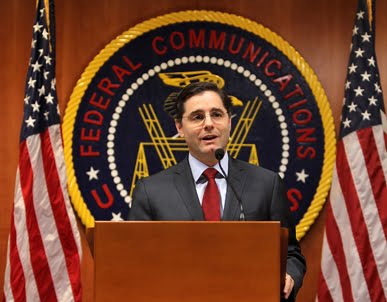
FCC Chairman Julius Genachowski speaks to media on net neutrality December 1, 2010 at FCC headquarters in Washington, DC. Photo by Alex Wong / Getty Images.

Compromise on net neutrality:
The Internet splits in two

By Dan Lyons / The Daily Beast / December 22, 2010

Tuesday’s FCC ruling on net neutrality shifts billions in profits and boils down to one fact: There will soon be a fast Internet for the rich and a slow Internet for the poor.

The Federal Communications Commission approved a set of net neutrality rules Tuesday, and nobody is happy. While liberals claim the FCC has caved to pressure from carriers, right-wingers are calling the new rules a government takeover of the Internet. In their tea-addled brains, the new rules represent yet another example of creeping socialism taking over every aspect of our lives. FCC Chairman Julius Genachowski is “Julius Seizure.” Cue the black helicopters.

No matter what you think about the new rules, however, they signal an important turning point in the development of the Internet. We are going from Phase One, where everything is free and open and untamed, into Phase Two, which is all about centralization, consolidation, control — and money.

Because don’t kid yourself. Money is driving all of this. As in: Hey, we’ve created this marvelous new platform for communicating with each other. We’ve demonstrated that very large sums of money can be generated by sending stuff over these wires. Now let’s figure out who gets what.

Tuesday’s new FCC rules grant two big concessions to carriers. First, the rules will apply to wired broadband connections, but they will pretty much leave wireless alone. Second, carriers remain free to create “fast lanes” on the Internet. They can charge Internet companies to ride on the faster pipes, and perhaps also charge consumers more money to get access to those speedy services.

That is a huge deal. It means we are entering an age in which we will have two Internets — the fast one, with great content, that costs more (maybe a lot more) to use, and then the MuggleNet, which is free but slow and crappy. Cable TV vs. rabbit ears.

On wireless — which eventually will be the more important platform — that disparity will be even more evident. The rich will get great stuff. The poor will get, well, what the poor usually get, which is not much.

Oddly enough this bifurcation resonates beyond just the speed of our Internet connection. It also is happening to information itself. We could be heading into a world where the rich get better information, from a wider choice of sources, while the poor get less.

That’s already happening, to some extent. If you’re a trader on Wall Street and can afford a Bloomberg terminal, you get better information sooner than the poor schlumps who are home trying to play at being day traders.

It will happen even more as news organizations, like Rupert Murdoch’s News Corp. and The New York Times, start putting content behind pay walls.

And so the digital divide widens into an information divide, which of course has huge implications for politics, economics, and even democracy itself.

Consider that in the 2008 election both sides were struggling to reach so-called low information voters. What happens when access to information becomes even more restricted? Where your ability to become informed is based upon your ability to pay? That’s the world we’re heading into. The first 15 years of the Internet, where it was all about peace and love and freedom, are drawing to a close.

The ultimate irony is that we are creating an information age where some of us — many of us — will get less information instead of more.

In his terrific new book, The Master Switch: The Rise and Fall of Information Empires, Columbia University professor Tim Wu describes the way every new communication platform starts out with a phase where there is openness and innovation, and where lots of amateurs (now we call many of them “hackers”) try out different things and spout lots of utopian rhetoric about making the world a better place.

Then, about 15 years in, things start to close down and become more centralized. The new platform becomes dominated by a small number of companies in the hands of powerful visionaries with an urge for empire-building. This also happened in telegraph, movies, radio, telephone — and now it’s happening to the Internet.

Steve Jobs is building an empire around selling music, movies, and news to people who own iPhones and iPads. Mark Zuckerberg is building an empire around the gathering and selling of the personal data of a half a billion people.

Now the carriers get their slice of the action. A lot of people hate the carriers, but try, for a moment, to see the world through their eyes. For 15 years they have sat around watching hundreds of billions of dollars of market value get created on the end of their wires (Google, eBay, Apple, Netflix, Amazon, Facebook) while all they get is a puny monthly subscriber fee.

The carriers won’t say this publicly, but I’m sure they resent being denied a share of the wealth being created on the platform that they’ve been so kind to build and maintain for the rest of us. What they also won’t say publicly, or at least not in this blunt a fashion, is: If you want us to keep building out more bandwidth, then start sharing the loot. Otherwise you can go build your own high-speed network.

Obnoxious? Certainly. But also persuasive. The FCC’s compromise probably represents the best deal anyone could get.

What this means for society remains to be seen. But I’m pretty sure those of us who have been around for Phase One of the Internet are going to look back on these last 15 years as the good old days.

[Dan Lyons is technology editor at Newsweek and the creator of Fake Steve Jobs, the persona behind the notorious tech blog, The Secret Diary of Steve Jobs. Before joining Newsweek, Lyons spent 10 years at Forbes. This article was originally published by the The Daily Beast and was distributed by Free Press.]

Obama caves on net neutrality

Interview with Timothy Karr, director of Free Press, by the Young Turks

The Rag Blog

Posted in RagBlog | Tagged , , , , , | 2 Comments

Medea Benjamin : To the Gay Community

Code Pink protesters at Senate Arms Services Committee hearing on “Don’t Ask, Don’t Tell” in Washington December 2, 2010. Woman with sign is Medea Benjamin. Photo from Democratic Underground.

To the gay community:
Now that you can join, please don’t!

By Medea Benjamin / December 21, 2010

The peace group I co-founded, CODEPINK, has not only been protesting the wars in Iraq and Afghanistan, and the drone attacks in Pakistan, but we have been going to military recruiting stations, high schools and career fairs throughout the country encouraging our youth not to join the military.

We talk to young people about the illegality of the wars under international law since we were not attacked by either Iraq or Afghanistan. We talk about how killing and maiming innocent civilians is morally wrong and creates new enemies, perpetuating the cycle of violence. We explain that the majority of Afghans and Iraqis want us out of their countries and that these wars are not making us safer. We insist that our military should be used to defend us at home, not to invade other people’s lands.

We know that the military is one of the only ways many young people can afford a college education these days and that the financial crisis severely limits this generation’s career options. But we still encourage young men and women to look for other opportunities that don’t involved killing or being killed in wars we shouldn’t be fighting.

It might seem contradictory, then, that CODEPINK was an enthusiastic supporter of the rights for gays and lesbians to join and serve openly in the military. But within our organization, it was never even controversial — we stand up for the rights of all human beings. The decision to join the military or not should be determined by individual choice, not institutional discrimination.

We pressured our Congressional reps and attended every hearing with signs calling for the repeal of Don’t Ask, Don’t Tell. We joined protests at the White House and rallies in Congressional districts. And we were in the Senate on Saturday when the historic vote passed, hugging and kissing our friends who had struggled so hard for this victory.

We understand that allowing gay soldiers to openly serve in the military is a crack in the armor of bigotry that will eventually open the way for gay people to marry and be guaranteed equality in the workplace. We understand this victory in the larger context of the march toward full human rights for this oppressed community. And who knows? Perhaps this victory will also serve to strengthen the military’s respect for human rights abroad.

We also understand the potential for a powerful alliance between the gay and anti-war communities. We can work together to help young people — gay and straight — find careers that won’t kill them, maim them, destroy them psychologically, or cause them to do harm to others.

We can jointly reach out to those already in the military to speak out against the violations of the rights of peoples whose land we occupy. We can ask gay veterans to join groups like Veterans for Peace and Iraq Veterans Against the War. And we can work together to turn our military from an aggressive force to one that truly defends us here at home.

As we struggle to find a more civilized way to treat each other in this world, let us recognize the commonalities in the fight for gay rights and the fight to end war.

[Medea Benjamin (medea@globalexchange.org) is cofounder of Global Exchange and CODEPINK: Women for Peace This article was distributed by CommonDreams.]

The Rag Blog

Posted in RagBlog | Tagged , , , | 3 Comments

Danny Schechter : WikiLeaks and the Fetish of Secrecy

Graphic from APS.

Wikileaks and the secrets that deceive us

It’s the age-old battle between our right to know and their right to keep us from knowing.

By Danny Schechter / The Rag Blog / December 21, 2010

In the days of Stalin’s Russia, not only would dissidents “disappear” but also, even in the pre-digital era, photographs of officials at May Day reviewing stands would be erased from photographs when their political stars fell. Our own “Kremlinologists” would know who was in, and who was out by comparing last year’s pictures with this years.

That’s one way of concealing information.

Just last week Republicans on the Financial Crisis Inquiry Commission pushed to have certain words removed from the report they were writing because they posed a conflict to their view that only the government was to blame for the financial collapse

Explained economist Paul Krugman,

Last week, reports Shahien Nasiripour of The Huffington Post, all four Republicans on the commission voted to exclude the following terms from the report: “deregulation,” “shadow banking,” “interconnection,” and, yes, “Wall Street.”

When Democratic members refused to go along with this insistence that the story of Hamlet be told without the prince, the Republicans went ahead and issued their own report, which did, indeed, avoid using any of the banned terms.

In our media today, omission of images and ideas is as key to sanitizing the news as is commission, What is not reported or perhaps even known is often more important than stories that are twisted by bias.

Enter WikiLeaks and an age-old battle between our right to know and their right to keep us from knowing. Its critics make a fetish about keeping secrets as if it is a holy duty and not a system of keeping the public uninformed about what their government is doing in its name.

The public has a right to know if officials are saying one thing in private and another in public, if they are concealing information or just plain lying.

The Pentagon Papers showed us that wars could be waged deceptively, based on deliberate falsehoods. WikiLeaks revelations about the Iraq and Afghanistan wars tell a similar story. We have learned how torture and civilian deaths were pervasive — and covered up.

Veteran investigative reporter Bob Parry argues that in the national security area, journalists — and the people — need leaks from officials of conscience.

He writes:

Whatever the unusual aspects of the case, the Obama administration’s reported plan to indict WikiLeaks founder Julian Assange for conspiring with Army Pvt. Bradley Manning to obtain U.S. secrets strikes at the heart of investigative journalism on national security scandals.

That’s because the process for reporters obtaining classified information about crimes of state most often involves a journalist persuading some government official to break the law either by turning over classified documents or at least by talking about the secret information. There is almost always some level of “conspiracy” between reporter and source.

Contrary to what some outsiders might believe, it’s actually quite uncommon for sensitive material to simply arrive “over the transom” unsolicited. Indeed, during three decades of reporting on these kinds of stories, I can only recall a few secret documents arriving that way to me.

It’s not just the government that hides behind secrecy rules it puts in place. The private sector does too — with the complicity of much of the media, which did not warn us about the financial crisis that was building. We didn’t learn about the pervasive fraud in the banking and real estate industries and still don’t know the full extent of the crimes of Wall Street.

Do we have to wait for historians to tell us that the stories we are being told are a crock?

Anyone remember reading about the Spanish American war? That’s the one which also marked the beginnings of “yellow journalism” when screaming headlines and falsified photos were used to mobilize the public for war.

Back then, at the turn of the last century, an American battleship, the USS Maine, sank in Havana Harbor. The incident sparked a battle cry, “REMEMBER THE MAINE.” We were told that “THEY” sank it. The incident led to war which later spread to the Philippines at a cost of six million lives.

Eighty years later, a submersible submarine went down to the remains of the Maine on the harbor floor. What they found was that no one — no terrorists, no Spaniards, no Cubans, nobody sank the Maine. There had been an accident in the engine room. The whole war was based on a well publicized event that never happened.

If we had known that at the time, many lives would have been saved and U.S. foreign policy might not have gone in an imperial direction.

So, back to today:

What do we gain from persecuting and prosecuting Bradley Manning who was among three million people with access to the diplomatic cables we are now reading about? What will we gain by jailing or killing (as some right wingers advocate) Julian Assange, who is already being called “the Che Guevara of the Information Age”?

The CIA’s murder of the original Guevara created a global martyr whose image is still among the most popular icons in the world. Guevara had his own problems with hostile women. One, Molly Gonzales, tried to break through barricades upon his arrival in New York with a seven-inch hunting knife. He later became famous for saying, “the true revolutionary is guided by a great feeling of love.”

Assange is being accused of sexual crimes in Sweden, a country, ironically, recently condemned by Amnesty International for not enforcing its own laws against rape. Now, the WikiLeaker-in-chief, is being targeted by the leak of a Swedish police document detailing charges against him. (They are charges, not facts, and may be serious under Swedish law.)

The ongoing and well-orchestrated war on WikiLeaks is also outraging millions worldwide who see the United States as a secretive and manipulative colossus that lives on lies and deception.

For many, this issue has reached a level of hysteria which, like the “Red Hunts” of the 1920s and the commie “crimes” of the cold war era, will only bring more shame to a Washington desperate to change the story away from the content of the leaked cables to allegations of wrongdoing by Assange. The Administration is also virtually torturing the man who dumped the documents, Bradley Manning, in Gitmo-like conditions, in an effort to turn hum against Assange. He has yet to be tried.

We can’t put the leaks genie back in the bottle. We might do better reflecting on the meaning of these disclosures for our democracy and media. The big secret is the one we don’t want to see: that we are building support and respect for WikiLeaks even as officials fulminate against it.

[“News Dissector” Danny Schechter is a journalist, author, Emmy award winning television producer, and independent filmmaker. Schechter directed Plunder: The Crime of Our Time, and a companion book, The Crime of Our Time: Why Wall Street Is Not Too Big to Jail. Contact him at dissector@mediachannel.org.]

The Rag Blog

Posted in Rag Bloggers | Tagged , , , , , , | Leave a comment

Greg Moses : Dream Remains for Hector Lopez and Others

Photo from Reuters.

Despite defeat of DREAM Act:
Hope remains for Hector Lopez and others

By Greg Moses / The Rag Blog / December 21, 2010

Two weeks ago 21-year-old Hector Lopez was the poster-perfect picture for hope in the DREAM Act. The story of his American dream, his abrupt deportation, and his heroic bid for asylum was featured in The New York Times just one day before the House of Representatives passed the act on Dec. 8. News reports called for a quick vote in the Senate. Lopez was riding high on a hope that the American system would shortly set him free from a federal lockup for migrants in Arizona.

Then the DREAM Act came unraveled. The Senate vote was postponed for a week. The vote to vote on it fell five votes short. And Lopez, the former student-body president of Rex Putnam High School of Portland, Oregon, suddenly felt the air sucked out of his hopes.

“But the failure of the Senate to pass the DREAM Act in no way changes the status of the dreamers,” insists immigrant advocate Ralph Isenberg, who has been working on the Lopez release full time for several weeks. “This is not a time to panic. Instead, we need to make certain that our national policy of not deporting students like Hector remains intact.”

Isenberg is referring to widely publicized statements made earlier this year by President Barack Obama and federal immigration authorities promising that they would cease spending tax money on efforts to deport young people who had been brought to the U.S. as children.

“I am absolutely certain that Hector Lopez will be released,” says Isenberg on the Sunday before Christmas. “He meets all the criteria for dreamers. He has lived in the U.S. for all but a few weeks of his life. He has been an exemplary student. And if the President’s words are any good, he said dreamers are not to be deported. I have not found another case where a dreamer with Hector’s qualifications and background has been deported.”

Encouraged by what he calls a “sincere tone” in his communications with Immigration and Customs Enforcement (ICE) authorities in Arizona, Isenberg has promised to meet all expenses involved in the bonding, release, transportation, and supervision of Lopez so that he can spend the holidays at home with his mother.

Isenberg says he is thankful that ICE officials conducted an interview with Lopez last Wednesday exploring claims that Lopez has a “credible fear” of being re-deported to Mexico. After two full months of life as an American exile in Mexico, Lopez came back across the border in mid-November carrying written appeals for asylum. Officials have reportedly promised a speedy evaluation of the claims in the coming week says Isenberg. Yet despite hopeful signs of sincere treatment in Arizona, Isenberg claims that the past week was stressful for Lopez.

Hector Lopez. Photo from ColorLines.

“Hector had a very bad week,” says Isenberg. “He was shocked by the DREAM Act failing in the Senate.” And he was informed that on Human Rights Day, Dec. 10, an immigration judge in California ruled that the Lopez deportation case could not be reopened at this time.

“Hector is starting to show signs of extreme stress that I fear could lead to depression,” wrote Isenberg in a weekend communication to ICE officials in Arizona. “I also understand the facility psychologist met with Hector. I sincerely hope Hector will be released soon and know that he will most likely suffer from post traumatic stress upon his release. He will get the love and attention he needs from his family and friends. It is imperative that we get Hector released to minimize the amount of mental trauma he has suffered and allow him to resume his position in our society.”

As for the immigration judgment coming out of California, Isenberg points to a passage in the ruling where the judge appears to be appealing to some common sense that cuts through the rigid legalism of the immigration codes.

“The Court notes that were the Government to agree to joint reopening of Respondent’s proceedings… [Lopez] is eligible to pursue relief in the form of suspension of deportation,” wrote the judge in his concluding remarks.

“Respondent has apparently lived in the United States since his entry in 1989… and therefore accrued the requisite physical presence. Respondent has presented voluminous evidence of his good character, contributions to society, and accomplishments. His affidavit also provides evidence of the hardship he has faced upon removal to Mexico.

“While the Court would be amenable to granting Respondent’s Motion sua sponte so that he could pursue his application for suspension of deportation, it is prevented from doing so due to lack of jurisdiction.”

As Isenberg sees it, ICE authorities in Arizona have the sua sponte discretion to release Hector Lopez immediately and return him to his American life by Christmas.

“I told Hector on the telephone this weekend not to give up,” says Isenberg. “He is still on track for being released this week. It would be cruel and unusual punishment not to release this kid.”

[Greg Moses is editor of the Texas Civil Rights Review and author of Revolution of Conscience: Martin Luther King, Jr. and the Philosophy of Nonviolence. A chapter by the author appears in Philosophic Values and World Citizenship: Locke to Obama and Beyond, edited by Leonard Harris and Jacoby Adeshei Carter. He can be reached at gmosesx@gmail.com.]

Also see:

The Rag Blog

Posted in Rag Bloggers | Tagged , , , , , | Leave a comment

Ted McLaughlin : Republicans Play Political Football With START Treaty

Political cartoon by Matson / Roll Call.

UPDATE: December 22, 2010 The New START arms control treaty with Russia was ratified by the Senate today by a 71-26 vote, with 13 Republicans crossing the aisle to support it. But they did so in defiance of the Republican leadership which opposed the treaty to the end — after making unsuccessful attempts to sabotage it with amendments that would have made the treaty unacceptable to the Russians.

The Republicans, the START Treaty,
and the “No” game

Congressional Republicans are treating the issue like another political football.

By Ted McLaughlin / The Rag Blog / December 21, 2010

It looks like the Republicans are still playing the “No” game, where they try to delay or stop anything President Obama tries to accomplish. The difference this time is that their obstructionism will make life more dangerous — both for Americans and for those living in other countries. That’s because this time their little game may determine whether the number of nuclear weapons in the world is reduced or increased.

Last April the United States and Russia agreed, after serious negotiations, on a new Strategic Arms Reduction Treaty (START). The new treaty, signed by Presidents Obama and Medvedev, would reduce the strategic nuclear weapons of both countries by an additional 30%. There is little doubt that the Russians will confirm the treaty, since Putin gets whatever he wants from the Russian Duma (legislature). The only doubt is whether the U.S. Senate will ratify the treaty.

It takes a two-thirds vote of the Senate to ratify a treaty with another country, and although a clear majority of the Senate is in favor of ratification, it remains to be seen whether the magic number of 67 can be reached. That’s because many Republicans, including the party leadership in the Senate, have come out against approving the treaty. One senator even had the temerity to suggest there is no reason to rush into approving the treaty — although voting on the treaty eight MONTHS after both presidents signed it can hardly be called a rush to judgment.

The Republicans have tried to give the impression over and over again that the treaty was unverifiable and would put the United States at a disadvantage somehow. Both of those charges are ridiculous. The fact is that all of the Joint Chiefs of Staff of the United States Military are enthusiastically in favor of the START treaty. I can’t believe they would be in favor of any treaty that disadvantaged the United States or weakened our defenses.

In addition, all of the former (and the current) Secretary of States (including the ones who served in Republican administrations) have come out in favor of the treaty. And all of our NATO allies (who are probably in more danger from Russian weapons than we are) are in favor of the treaty. In fact, it seems that the only opponents of the START treaty are some Congressional Republicans, and they’re treating the issue like another political football. They just don’t want to let President Obama have any kind of accomplishment — even one that makes the world a little safer place.

The Republicans seem to think they can kill the treaty (showing their fringe right-wing base how anti-Obama they are) and nothing will really change with the world balance of power. Unfortunately, that’s just not true. The Republicans have tried to amend the treaty, but that is just an effort to kill it. Any amendment would mean the two countries would have to go back and negotiate all over again, and the Russians are in no mood to do that.

Russian Foreign Minister Sergei Lavrov said, “The START agreement, which was drafted on the basis of strict parity, completely meets the national interests of both Russia and the United States. It cannot be reopened, becoming the subject of new negotiations.” Putin, the real power in Russia, went even further. He said the failure to ratify the treaty would be “dumb,” and would most likely be the start of a new arms race — he said Russia would have to take some kind of action in response.

So things are not going to stay the same no matter what the Senate does. If they ratify the treaty, nuclear arms will be reduced by a significant 30%. If they don’t, the Russians are likely to increase their nuclear weapons total (and we would probably do the same) — putting the Doomsday clock a few minutes closer to midnight. And I couldn’t really blame the Russians if they reacted in that way.

Why should they trust us if we refuse to ratify a reduction in nuclear weapons? Remember, we are the only nation on Earth that has ever used nuclear weapons. We are also the only nation that has refused to guarantee that we won’t launch a first strike of nuclear weapons. Those two facts together make us look like a very dangerous foe — a foe that may not be trustworthy.

It is extremely important that the United States ratify this treaty, especially after all the international relations that were seriously damaged by the Bush administration. It is critical that President Obama be viewed by the world as restoring the United States as a trustworthy partner in establishing world peace (and that he be viewed as having the internal power to do that). If the Republicans are able to kill the treaty it will damage our relations abroad — among our friends and our enemies.

It looks like the vote will be close [though things are looking better as of this writing]. All of the Republican’s “poison pill” amendments have been easily defeated, but not by two-thirds votes (like the treaty would need for ratification). The Democrats say they have 57 votes from their own caucus (55 Democrats and both independents — Sanders and Lieberman). Wyden (Oregon) is absent because he just had cancer surgery. That means 10 Republican votes will be necessary for ratification.

According to Sen. Schumer (New York), there are currently five Republicans who say they will vote for the START treaty — Cochran (Mississippi), Collins (Maine), Snowe (Maine), Voinovich (Ohio), and Lugar (Indiana). That means five more Republican votes will be needed, and it’s anyone’s guess as to who they will be or whether it’s even possible.

Even though I think it’s bad politics, I can sort of understand the Republican desire to obstruct President Obama from accomplishing anything. But this time they’ve stepped over the line. This time they’re playing a dangerous game of international political chicken. I wonder if they know that — or even care.

[Rag Blog contributor Ted McLaughlin also posts at jobsanger.]

The Rag Blog

Posted in Rag Bloggers | Tagged , , , , , , , , | Leave a comment

BOOKS / Robert Jensen: The Commons as Kinder-and-Gentler Capitalism


All That We Share isn’t enough:
The Commons as kinder-and-gentler capitalism?

By Robert Jensen / The Rag Blog / December 20, 2010

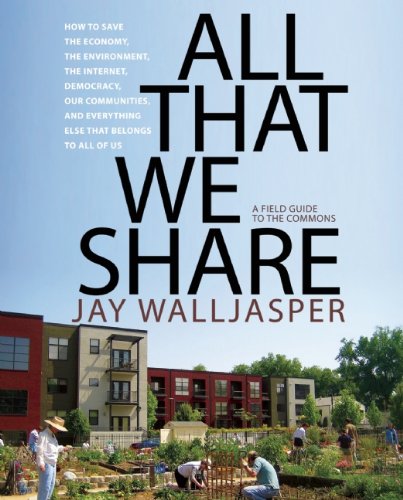
[All That We Share: A Field Guide to the Commons/How to Save the Economy, the Environment, the Internet, Democracy, Our Communities, and Everything Else That Belongs to All of Us, by Jay Walljasper and On the Commons (The New Press, 2010), 288 pages, $18.95.]

All That We Share is an exciting and exasperating book. The excitement comes from the many voices arguing to place “the commons” at the center of planning for a viable future. The exasperation comes from the volume’s failure to critique the political and economic systems that we must transcend if there is to be a future for the commons.

In the preface, the book’s editor and primary writer, Jay Walljasper, describes how he came to understand the commons as a “unifying theme” that helped him see the world differently and led him to believe that “as more people become aware of it, the commons will spark countless initiatives that make a difference for the future of our communities and the planet.”

Defining the commons as “what we share” physically and culturally — from the air and water to the internet and open-source software — the contributors recognize that a society that defines success by individuals’ accumulation of stuff will erode our humanity and destroy the planet’s ecosystems.

Walljasper calls for a “complete retooling” and “a paradigm shift that revises the core principles that guide our culture top to bottom.” No argument there. Unfortunately the book avoids addressing the specific paradigms we must confront. Is commons-based transformation possible within a capitalist economy based on predatory principles and an industrial production model built on easy access to cheap concentrated energy?

The book appears to offer a kinder-and-gentler capitalism with more regulated markets, but there is no attempt to wrestle with the effects of the corrosive and unsustainable principles — unlimited greed and endless growth — on which capitalism is based.

Can we expect those core principles of the system to magically evaporate? Why will the commons become the domain of popular movements rather than corporations? If there is no attention to the inherently predatory nature of capitalism, it’s difficult to imagine how people will win out over profit.

There’s also little in the book about the need to shift from the industrial mode of production, which has generated the material comfort taken for granted by most in the First World. A sustainable commons-based society requires dramatic reductions in consumption, but contributors rarely address the scope of the change necessary (with the exception of Winona LaDuke’s essay on efforts to rebuild indigenous life at the Anishinaabeg White Earth Reservation). Forget about critiquing the lifestyles of the rich and famous — the commons can’t sustain the lifestyles of ordinary folks in a high-energy/high-technology world.

The problem is not that “the commons” isn’t a valuable concept, but that it is not a substitute for analysis of the political and economic systems that degrade the commons. The book is right to call for local experiments in cooperative living (I spend considerable time and energy on such projects), but as we pursue those experiments within the existing systems, we have to be honest about the limits of those systems and not fear being labeled radical. Radical analysis is not an intellectual indulgence but a practical necessity.

As a model for “commoners,” Walljasper cites the right-wing forces’ ideological campaign in the late 20th century to shape the market fundamentalism that eventually became state policy. He suggests that today “large numbers of people of diverse ideological stripes” can rally behind the commons, which may be true.

But right-wing forces didn’t assemble people of different ideological stripes; they pushed an openly reactionary analysis and had a clear political and economic program. Just as they defended capitalism to the detriment of the commons, a countermovement has to openly critique capitalism to serve the commons. Just as they took the industrial model as a given, a countermovement has to question that model openly.

It may be that the commons has the power to transform people’s consciousness as Walljasper seems to hope, but hanging one’s analysis and political hopes — as the book’s long subtitle suggests — on that concept strikes me as evasion rather than engagement. In the end, we have to come to terms with capitalism and the industrial model that are deeply entrenched in the United States. That can’t be done obliquely but must be confronted head-on.

[Robert Jensen is a journalism professor at the University of Texas at Austin and board member of the Third Coast Activist Resource Center in Austin. He is the author of All My Bones Shake: Seeking a Progressive Path to the Prophetic Voice, (Soft Skull Press, 2009) and Getting Off: Pornography and the End of Masculinity (South End Press, 2007); Jensen is also co-producer of the documentary film Abe Osheroff: One Foot in the Grave, the Other Still Dancing, which chronicles the life and philosophy of the longtime radical activist. Robert Jensen can be reached at rjensen@uts.cc.utexas.edu.]

The Rag Blog

Posted in Rag Bloggers | Tagged , , , | Leave a comment

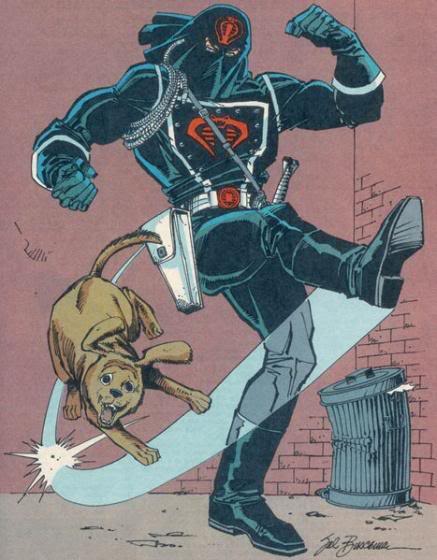
Marc Estrin : Kicking the Dog

Image from Photobucket.

Passing of the lantern:
Kicking the dog

By Marc Estrin / The Rag Blog / December 20, 2010

So Julian Assange is now without his passport, braceleted under house arrest, waiting for the Wheels of Injustice to slowly grind. At this point, his story is not so much that of killing the messenger (though that is what many in the U.S. are calling for), as that of kicking the dog.

The dog in question was Julian’s close ancestor, Diogenes, a contentious fanatic foolish enough to spend his life with a lantern, looking unsuccessfully for “an honest man.” Some say he sought “a human being.” His writings did not survive, but there are legends.

Notorious for his provocative behavior, people called him a dog, a nickname he embraced. “Other dogs,” he said, “bite their enemies. I bite my friends to save them.”

He wasn’t kind to his enemies either. At a sumptuous dinner given by a wealthy man, a guest became so outraged by Diogenes’ behavior that he began to throw bones to “the dog.” The philosopher got up, lifted his leg and toga, and took a leak on him.

Like Assange’s, Diogenes’ life was a relentless campaign to promote reason and virtue, and to debunk the values and institutions of a corrupt society. In doing so he disregarded laws, customs, conventions, public opinion, reputation, honor and personal dishonor.

Political authority was a main target for both — its folly, pretense, selfishness, vanity, self-deception, corruption, and artificiality of conduct. Diogenes said: “Those who have virtue always in their mouth, and neglect it in practice, are like a harp which emits a sound pleasing to others, while being itself deaf to the music.”

So together the dogs — Diogenes and Assange — challenge the false coin of human morality, sharing Socrates’ belief that one can be a doctor to men’s souls, and morally improve humanity, while being contemptuous of its behavior.

Sitting alone in a Dickensian prison, or now with wi-fi in a mansion, Assange has not yet been assassinated, as many have called for. He may or may not end like Socrates, taken out by the State. But Diogenes lived a long while, and one hopes the same may be true for Julian Assange.

One legend of Diogenes’ death is that, at 90, he committed suicide by holding his breath. If or when Assange does die, it will likely be because he, too, is no longer allowed to breathe, speak, or leak out his documents.

[Marc Estrin is a writer, activist, and cellist, living in Burlington, Vermont. His novels, Insect Dreams, The Half Life of Gregor Samsa, The Education of Arnold Hitler, Golem Song, and The Lamentations of Julius Marantz have won critical acclaim. His memoir, Rehearsing With Gods: Photographs and Essays on the Bread & Puppet Theater (with Ron Simon, photographer) won a 2004 theater book of the year award. He is currently working on a novel about the dead Tchaikovsky.]

The Rag Blog

Posted in Rag Bloggers | Tagged , , , , , | Leave a comment

Harvey Wasserman : Our Gay Commander-in-Chief

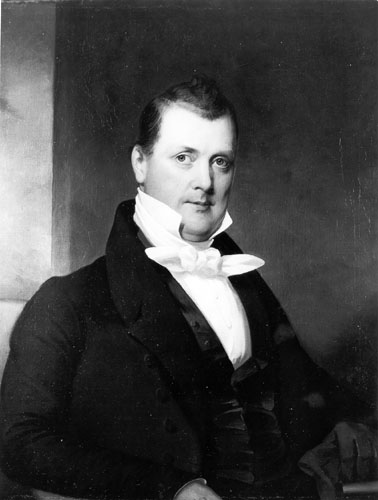
President James Buchanan. Image from Encyclopedia Dickensonia.

‘Mister Fancy’ James Buchanan:
Our gay Commander-in-Chief

By Harvey Wasserman / The Rag Blog / December 20, 2010

As “conservatives” scream and yell about gays in the military, they might remember that in all likelihood we have already had a gay Commander-in-Chief.

His name was James Buchanan. He was the 15th President of the United States.

A Democrat from Pennsylvania, Buchanan is discreetly referred to in official texts as “our only bachelor president.”

In fact, many historians believe that he may well have been “married” to William Rufus King, a pro-slavery Democrat from Alabama who was our only bachelor Vice President.

The two men lived together for years. Andrew Jackson, never one to shy from bullhorn bigotry, was among those who variously referred to them as “Aunt Nancy” and “Mr. Fancy.” Other Washington wags called them “Mr. and Mrs. Buchanan,” and the like.

The nature of their relationship was never officially confirmed or proclaimed in public. They were widely referred to as “Siamese twins,” slang at the time for a gay couple. But there was no incriminating gap dress or heartfelt double-ring ceremony, civil or otherwise. It was not uncommon at the time for men and women of the same gender to live together and even share a bed while remaining sexually uninvolved.

Buchanan was once engaged to marry a wealthy young woman named Ann Coleman. But the complex affair ended with her mysterious, untimely death. When King became ambassador to France in 1844, Buchanan complained that “I have gone wooing to several gentlemen, but have not succeeded with any of them.”

With no Moral Majority or Bible thumping fundamentalists to plague them, the King-Buchanan liaison was generally embraced as a political and personal fact of life in a nation consumed with real issues of life and death, freedom and slavery.

In 1852 King was elected as Franklin Pierce’s Vice President. But on an official mission, King contracted a fever and died, leaving Buchanan alone and deeply distraught.

In 1856, Buchanan defeated John C. Fremont, the first presidential candidate from the new Republican Party. Buchanan did not run for reelection in 1860, when Abraham Lincoln was the victor.

Buchanan’s presidency was plagued by economic and sectional disaster. He was a “doughface” northerner with sympathies for southern slavery. Devoted to consensus and compromise, he was swept away by the intense polarization that led to Civil War.

Through his entire time in the White House, President Buchanan lived alone. His niece served as “First Lady.” He stayed unmarried, and had his personal letters burned upon his death, prompting further speculation on his sexual orientation.

Maybe it’s time those legislators who have been so fiercely opposed to gays in the military face the high likelihood that at least one Commander in Chief would probably be among them.

[Harvey Wasserman’s History of the United States S is at www.harveywasserman.com, along with Passions of the Potsmoking Patriots “Thomas Paine,” which portrays George Washington as a gay potsmoker.]

The Rag Blog

Posted in Rag Bloggers | Tagged , , , , | 3 Comments

Kate Braun : Yule 2010 is Time of Great Energy

Commemorate change with items associated with the Holly King.

Celebrating Lord Sun’s rebirth and
capturing the energy of Yule 2010

By Kate Braun / The Rag Blog / December 20, 2010

“Troll the ancient Yuletide carol, fa la la la la, la la la la”

Tuesday, December 21, 2010, is Yule. It is a Full Wishing Moon and a Lunar Eclipse. Eclipses are times of major changes; Full Moons are times of realizing intentions; Tuesday is Tyr’s day and this Norse god may be considered comparable to Mars as he is a warrior, the god of single combat. All in all, Yule 2010 is a time of Great Energy. The challenge is how to capture and use this energy in positive ways.

The emphasis of this celebration is Lord Sun’s rebirth, signaling the end of the Time That Is No Time. Decorations and themes associated with Yule involve symbolism reflecting change, evolution, the turning of the Wheel of Life, renewal, and light.

Use evergreens (real, if possible), sprigs of holly, mistletoe, 8-spoked wheels, and candles (red, white, green) in your decorations. One of the ways to commemorate changes is to use items associated with the Holly King and the Oak King.

The Holly King, God of the Waning Year, traditionally wears a sprig of holly in his hat, wears red clothing, and drives a sled pulled by 8 reindeer (representing the 8-spoked Wheel of Life). He will be supplanted by the Oak King, God of the Waxing Year, at the end of their ritual battle or dance. Similarly, the full lunar eclipse brings darkness from which light emerges.

I recommend you include activities representing change, rebalancing, and forward motion in your program for this celebration. Prepare to let go of whatever it is that you no longer need. Let the light of Lord Sun and a full Lady Moon pull you from the Past into the Now and on into the Future.

Serve your guests a robust feast including roast meat, apples, nuts, cider and/or Wassail. You will want to raise a toast to Lord Sun on this day welcoming his return and the prosperity associated with that return.

An incense to burn during this celebration may be made by mixing together 2 T. dried pine needles, 1 T red sandalwood chips, 1 T. cedar chips. To this mixture add 20 drops Frankincense oil, 10 drops Myrrh oil, 5 drops Cinnamon oil, 5 drops Allspice oil, 5 drops Pine oil. Stir all together and then add 2 T. Frankincense resin.

Let the mixture “cure” for a day or two before using. Drop the incense onto a heated charcoal tablet and use a feather to waft the smoke around you and your guests. Focus your energies on themes such as: Balance, Renewal, Positive Change.

[Kate Braun’s website is www.tarotbykatebraun.com. She can be reached at kate_braun2000@yahoo.com.]

The Rag Blog

Posted in RagBlog | Tagged , , , , , | Leave a comment

By Kate Braun / The Rag Blog

“Troll the ancient Yuletide carol, fa la la la la, la la la la”

Tuesday, December 21, 2010, is Yule. It is a Full Wishing Moon and a Lunar Eclipse. Eclipses are times of major changes; Full Moons are times of realizing intentions; Tuesday is Tyr’s day and this Norse god may be considered comparable to Mars as he is a warrior, the god of single combat. All in all, Yule 2010 is a time of Great Energy. The challenge is how to capture and use this energy in positive ways.

The emphasis of this celebration is Lord Sun’s rebirth, signaling the end of the Time That Is No Time. Decorations and themes associated with Yule involve symbolism reflecting change, evolution, the turning of the Wheel of Life, renewal, and light.

Use evergreens (real, if possible), sprigs of holly, mistletoe, eight-spoked wheels, and candles (red, white, green) in your decorations. One of the ways to commemorate changes is to use items associated with the Holly King and the Oak King. The Holly King, God of the Waning Year, traditionally wears a sprig of holly in his hat, wears red clothing, and drives a sled pulled by eight reindeer (representing the eight-spoked Wheel of Life). He will be supplanted by the Oak King, God of the Waxing Year, at the end of their ritual battle or dance.

Similarly, the full lunar eclipse brings darkness from which light emerges. I recommend you include activities representing change, rebalancing, and forward motion in your program for this celebration. Prepare to let go of whatever it is that you no longer need. Let the light of Lord Sun and a full Lady Moon pull you from the Past into the Now and on into the Future.

Serve your guests a robust feast including roast meat, apples, nuts, cider and/or Wassail. You will want to raise a toast to Lord Sun on this day welcoming his return and the prosperity associated with that return.

An incense to burn during this celebration may be made by mixing together 2 T. dried pine needles, 1 T red sandalwood chips, 1 T. cedar chips. To this mixture add 20 drops Frankincense oil, 10 drops Myrrh oil, 5 drops Cinnamon oil, 5 drops Allspice oil, 5 drops Pine oil. Stir all together and then add 2 T. Frankincense resin.

Let the mixture “cure” for a day or two before using. Drop the incense onto a heated charcoal tablet and use a feather to waft the smoke around you and your guests. Focus your energies on themes such as: Balance, Renewal, Positive Change.

Type rest of the post here

Source /

The Rag Blog

Posted in RagBlog | Leave a comment

Carlos Calbillo : On the Passing of Carlos Guerra

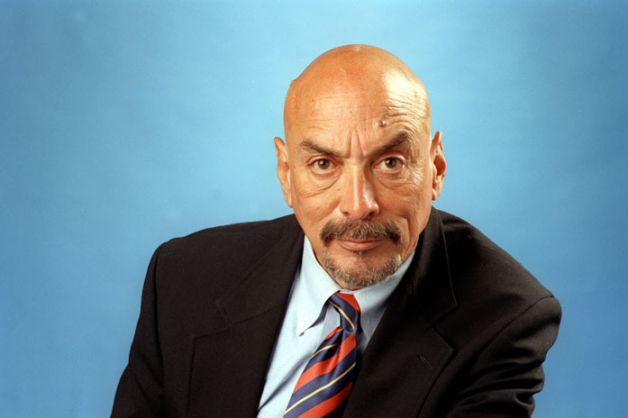
“America’s friendliest angry looking retired columnist… and feared by fish.” — Carlos Guerra, on Twitter.

Columnist and Sixties Chicano
activist Carlos Guerra dies

See “Memories from ‘the day’: On the passing of Carlos Guerra,” by Carlos Calbillo / The Rag Blog, Below.

Carlos Guerra, 63, an icon of the Sixties Chicano movement, a former columnist for the San Antonio Express-News, and a leader in social justice issues throughout his life, died December 6, in Port Aransas, Texas.

Arnold Garcia, Jr., wrote in the Austin American-Statesman that Carlos Guerra “was a student activist, grant writer, political organizer, fundraiser, legislative aide, jeweler, opinion writer and a pretty darned good cook.” And, Garcia said, Guerra “was a man whose intellect — like his humor — refused to recognize boundaries.”

Guerra was, according to the Texas Observer’s Melissa Del Bosque, “one of the first prominent Latino columnists in American newspapers,” and was “one of Texas’ most recognizable voices and a role model for countless younger journalists.” In an obituary, the San Antonio Express-News said that Guerra “was an outspoken advocate for increased access to higher education, environmental issues and Latino participation in government and politics.”

Guerra, who grew up in Robstown, Texas, became an early leader in the Sixties Chicano movement. He was national chairman of the Mexican American Youth Organization (MAYO) and worked with La Raza Unida Party, serving as chairman of Ramsey Muniz’s second race for Texas governor.

At a memorial service for Carlos Guerra December 11 at Palo Alto College in San Antonio, former Raza Unida leader Mario Campeon said, “He stood for the well-being of others, particularly the poor. He fought…the fierce discrimination that existed at that time.” “All of us of that generation had the passion,” said Campeon, “but Carlos was also a gifted speaker in articulating the agenda of the Chicano movement.”

Thorne Dreyer / The Rag Blog / December 15, 2010

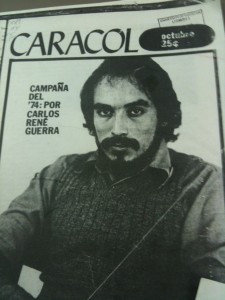
Carlos Guerra on the cover of Caracol, a Texas-based Chicano literary/news magazine from the 1970s. Image from National Association of Hispanic Journalists.

Memories from ‘the day’:
On the passing of Carlos Guerra

By Carlos Calbillo / The Rag Blog / December 15, 2010

The 60’s of course were a different time, and we as thinking young people were being influenced and bombarded by the dominant American culture: the music, the militancy — revolution was in the air — and of course the fashion. We wore bell bottoms, paisley shirts, and desert boots with our serapes and brown berets. We were young and crazy — some of us actually idealistic — trying to find a new way in the reality that was Texas of the times.

This society we perceived as intolerably oppressive and it definitely seemed to us “enlightened” youth to be designed to keep brown and black people down. So we took up “arms” against it, much to the horror of our parents and other “gente decente,” such as LULAC and their ilk.

I met Carlos Guerra at some of these early confabs of the Mexican American Youth Organization (MAYO), and since the Houston MAYO cadres were urban and “hippie-ish,” many of us either didn’t speak Spanish or did so haltingly. When I began to attend MAYO actions in the small communities across South Texas (small compared to Houston) and discovered that some of the MAYO hermanos/hermanas spoke mostly Spanish, perhaps out of nationalistic zeal, I — and many of the Houston MAYOs — would become uncomfortable.

One time we traveled to Robstown, Texas, to support a rally protesting the racist school system, which of course was designed not to educate our people, but to serve as an institutional bludgeon to keep us Mexicans down and ignorant. Robstown was a perfect example of a small Texas town where the population was overwhelmingly Mexican-American yet the economics and politics were tightly controlled by the gringo establishment.

The rally was being held in front of the MAYO headquarters in a down and out barrio and about 100 community people, parents, and students were there, very pissed, carrying protest signs in English and in Spanish. Robstown MAYO chieftain Mateo Vega was delivering a fiery bilingual speech and rant.

The Robstown police, represented by several big white guys in coats, ties, and sunglasses — and wearing very large pistols prominently on their belts — were walking around taking our pictures and generally acting like racist thugs out of central casting.

Carlos Guerra was there of course and afterwards we all met to debrief. I will never forget that, unlike the linguistic ideologues who considered those of us from Houston to be culturally pendejos, he was a firme vato who looked upon us, his urban hermanitos, not with scorn or disgust, but with a loving bemusement — and with an open attitude of inclusion.

Carlos of course was completely tri-lingual and spoke not only English perfectly but also a beautiful Texas Spanish and a stunning pachuco cálo.

From the beginning, Carlos understood the need to unite and not to fight, something that we in the current political arena and climate sometimes appear to forget.

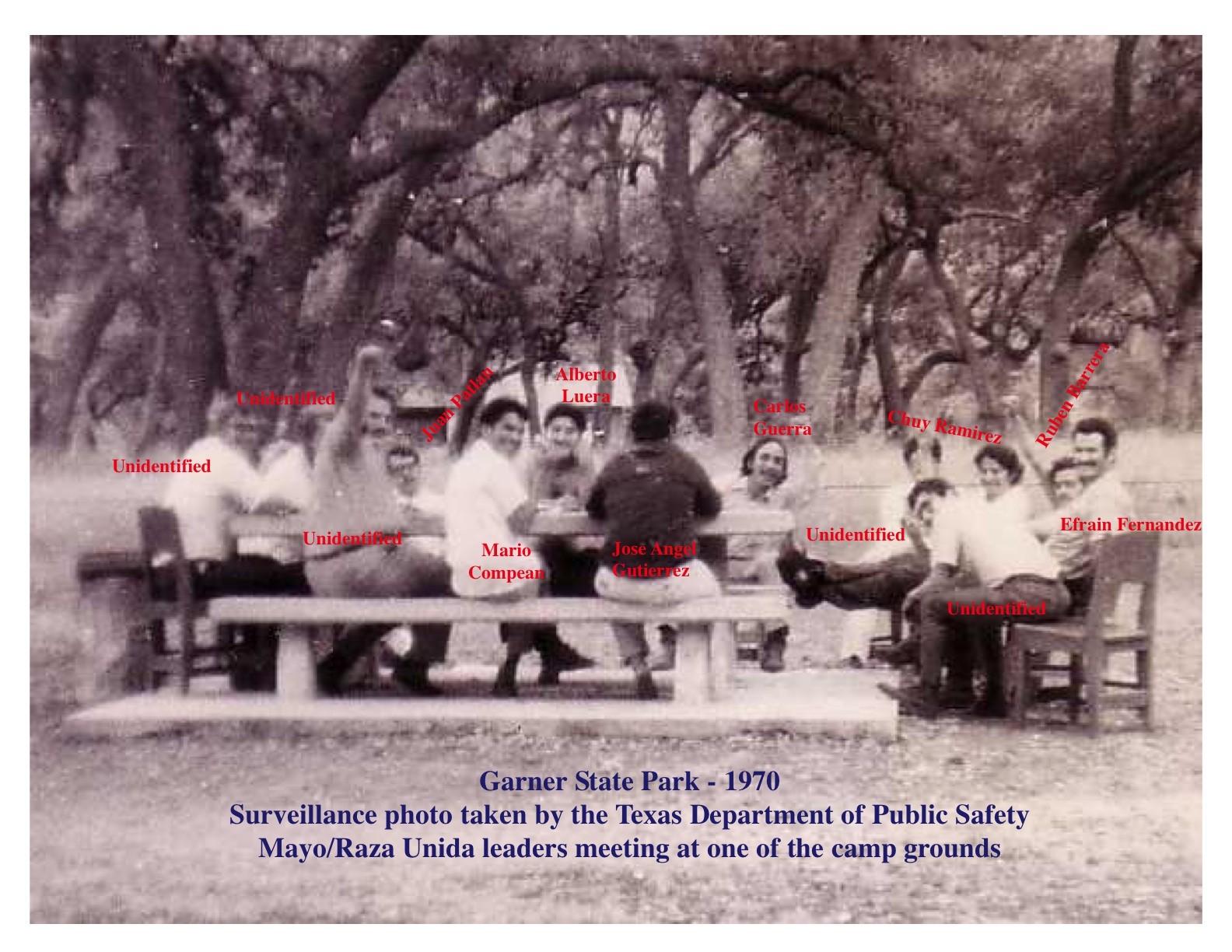
Texas DPS surveillance photo of MAYO/Raza Unida leaders meeting on the campgrounds at Garner State Park, 1970. Carlos Guerra is in the rear, leaning to the right.

CLICK ON IMAGE TO ENLARGE

Another incident I remember with my friend “Charlie War” — as some of us jokingly called him — was when MAYO and La Raza Unida Party had finally succeeded in taking over Crystal City and surrounding towns, and even entire counties, and Jose Angel Gutierrez called for all chapters to meet and to discuss future strategy at Garner State Park.

It was a beautiful setting with picnic tables under the great oak trees and we munched on barbacoa and tripitas as Jose Angel led us in discussion. We had all noticed several unmarked police vehicles on the periphery and we could see and even hear their cameras — with telephoto lenses — clicking away.

Eventually, Carlos Guerra and several others, including myself, made our way over to the parking lot at Garner where most of us had parked our junky cars. The lot filled suddenly with uniformed DPS troupers who began to berate, intimidate, and bait us in the way that only they knew how to do.

They went around writing down the license plate numbers of all of our cars, which they seemed to know well. Being new to this kind of political intimidation, I freaked out and began to back off. Carlos Guerra fearlessly went up to these PENsadores and began an attempt to educate them on the rights of American citizens to peacefully assemble, our right to meet without fear of governmental interference or intimidation.

Several of these sons of Texas seemed shocked and taken aback that their “right” to harass us was being challenged by this long-haired hippie who seemed not to fear them or anything else for that matter. They became very upset but apparently couldn’t come up with an excuse to arrest Carlos in front of witnesses; they muttered something and left.

Every time we visited Robstown, Carlos was there ready to assist us, his urban MAYO brothers and sisters, with a meal or with a place to crash. There have been many — and will be many more — remembrances of Carlos Guerra, incredible tales, profound and funny adventures, many of them even true. For those of us who were touched by his life, it goes without saying that we, and I for one, will never forget his wit, his love, and his example.

To paraphrase the bard (some vato from Inglatierra): “He was a man, take him for all in all, I shall not look upon his like again.”

Amen y con safos. Descanse en paz, hermanito en una raza que pronto llegará a ser verdaderamente unida, porque si se puede…

[Carlos Calbillo is a filmmaking instructor and filmmaker living and working in his hometown of Houston, Texas. He is currently working on a documentary film on emerging Latino political power in Houston and Texas. He can be reached at laszlomurdock@hotmail.com]

The Rag Blog

Posted in Rag Bloggers | Tagged , , , , , , , , , , | 1 Comment