Dr. S. R. Keister : An Aging Population Faces Financial Panic


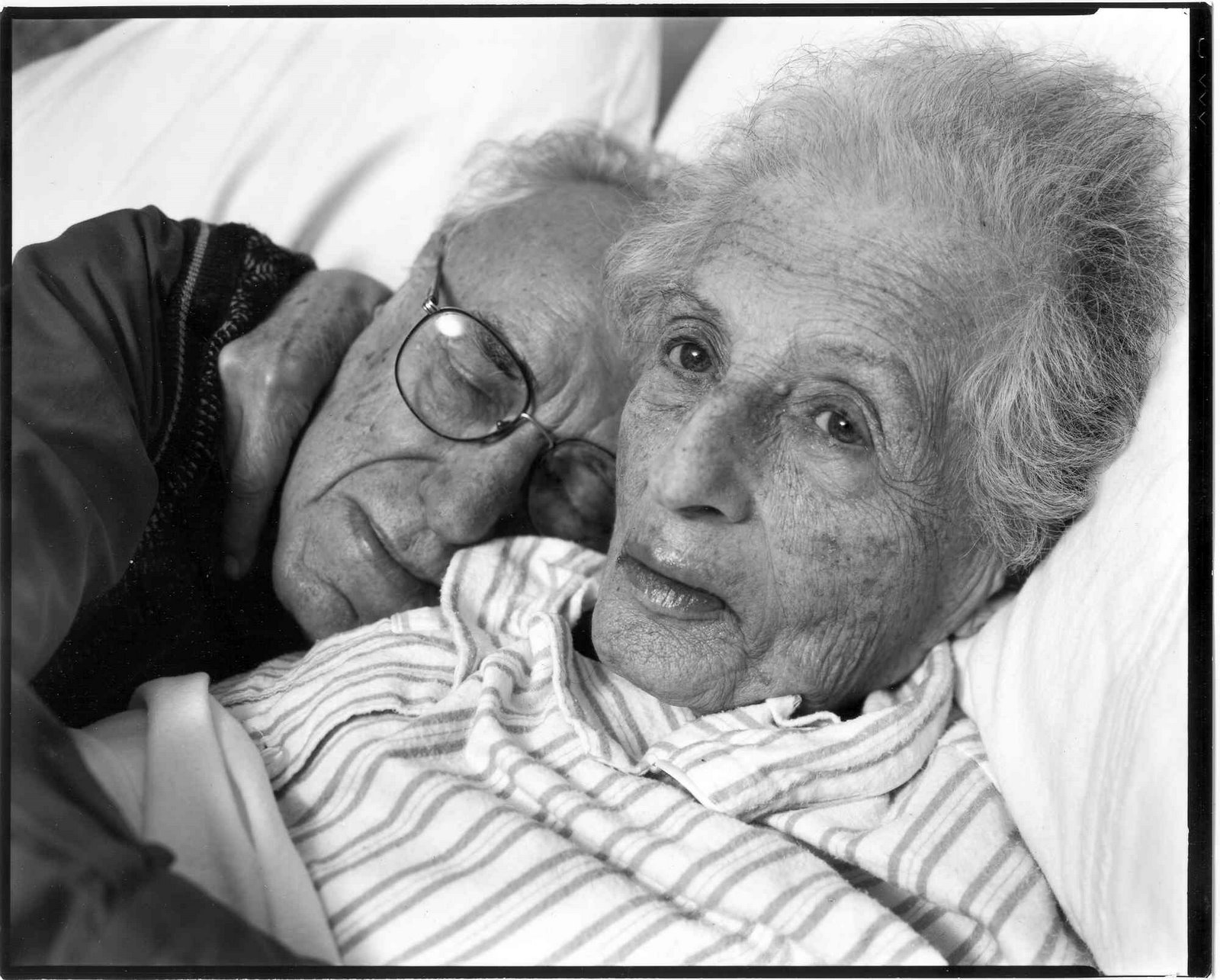
‘I, as a member of a fading generation, have a few observations about the fate of the aging citizens of the United States in this time of impending economic crises.’
By Dr. S. R. Keister
/ The Rag Blog / November 11, 2008

As one who has experienced the panorama of our nation and culture since arriving in this world in 1921 I have a few observations that, I fear, will not make the way easier for President Elect Obama, who appears to be a gentleman of intelligence and compassion. To date I have seen little energy expended in addressing this possible impending serious problem.

Since I, as a young student, heard of the disposition of the un-well, elderly in the civilizations of the arctic regions, I have given thought to the ultimate nature of things. In medieval times, and even more recently, the care of the elderly was a function of the family. In the lack of family, orders of Sisters such as the Sisters of Charity and Sisters of Mercy provided care and succor to the infirm and the elderly. However, there has been a stark change in this area since approximately 1980, or perhaps a decade or so previously.

With the advent of the amoral entrepreneur a change has occurred. We have seen the introduction of the capitalist philosophy into the “care” of the aging. We now are faced with a multiplicity of “nursing homes,” “assisted care living facilities” and “retirement homes” in excess in this once caring nation. Before beginning the critique of this hypocrisy allow me to digress a bit.

Social Security and Medicare have made dollars available to the elderly, abetted by the industrial and academic pension plans, the IRA and 401K. We have also been blessed to a limited extent by the hospice movement and the death with dignity laws in Oregon and Washington State. The flip side of the coin is the prevalent, and misunderstood, “non-profit” institution that advertises care for the elderly. Non-profit? There are bona-fide charities which are “non-profit,” i.e. Salvation Army, Red-Cross, Doctors without Borders, etc; however, there is another face to this. There is the “non-profit” institution that personifies the retirement homes, and such, that dot the landscape today.

These are basically tax-exempt institutions, sans stock holders, run by directors, and executive staffs who are salaried as per the board’s discretion, and do not show “profit” in their statements, but instead report “excess income.” Many of these are merely money making machines (MMM) that utilize the “care” of the elderly as their source of profit. The sales departments find it very fruitful, playing on the fears, lack of security, and lack of understanding of the aged. Of course we have a careful check of the old person’s financial statement!

We now face an impending crises as many of these residents have been paying their way with a now rapidly diminishing IRA, supported frequently by their children’s now rapidly diminishing IRA. Let me illustrate with an example.

The Bountiful Retirement Home (I made up the name) is one of many “homes” owned by the X-corporation and has been hereabouts for 20 years. Business has been good, as there are many oldsters with first rate stock portfolios. Let us say, as of six years ago, grandma applies for admission with a stock portfolio worth $300,000. She is accepted with alacrity and praised for her wise choice. She is “sold” an apartment of 1000 square feet with kitchenette, for $120,000. The funds are held in escrow returnable to her estate. (The fact, as of six years ago, that she loses the 6% interest on the funds, and that X-corporation is now the beneficiary is not stressed). After her death the moneys go to her estate after the apartment is resold/rerented. Of course grandma can furnish the apartment as she desires.

What else are her entitlements? Electricity and heat are provided, although, there is no emergency generator service in case of power failure, and emergency egress is lacking in a three story building, in which 50% of residents use walking aids, in case of fire.(One pays for one’s own phone, TV, and computer connections.) But there are offsetting advantages. For $3000/month one is provided with breakfast and dinner, the latter in a dining room, though no credit is given if one misses a meal when eating out with family or friends 2-4 evenings per week (estimated costs of dinners, $17). A nurse is available who will fill one’s pill box for $10, give an insulin injection for $10, or weigh one for $3. One can get minor repairs in the apartment for a fee, one can have the snow brushed of one’s car for a fee, one can get transportation in the institution-owned van for a fee. One can even have the opportunity of donating escrow moneys to add an Alzheimers Unit to the institution. Entertainment designed for kindergartners is provided. The MOM grinds on.

Now we have the current economic collapse with an estimated loss of 50% in most IRAs. The MOM shows compassion. The management raises to monthly fee by 7%, i.e. $210. The management needs the increased income to cover “rising expenses.” There is a certain problem looming; however, many of the residents are not cognizant of the fact and the mainstream media is not apparently aware of the situation. Other oldsters are terrified but do not know where to turn.

I have indicated merely one example, but there are thousands of the elderly in nursing homes, assisted care homes, etc., facing an imminent disaster. One hopes that some agency of the Obama administration will begin addressing the problem. A problem largely created by the greed of uncontrolled capitalism that has been extant since the Reagan administration and certainly of no interest to the economically neo-liberal Bush administration. Happily many of the legitimate church related housing facilities are looking at the problem and will, I am sure, be privy to its solution.

I would hope that someone, somewhere, is listening.

[S. R. Keister, a retired physician, is a regular contributor to The Rag Blog.]

The Rag Blog

Posted in Rag Bloggers | Tagged , , , , | 4 Comments

Numbers of Homeless Iraq and Afghanistan Vets Are Growing

According to the Department of Veterans Affairs, there are about 195,000 homeless veterans on any given night. Photo: AP/World Wide Photos.

Iraq and Afghanistan war veterans join the homeless
By Anna Sussman / November 11, 2008

Ethan Kreutzer joined the Army at the age of 17 and fought with the 19th Airborne in Jalalabad, Afghanistan. When he retuned home, he had no money, no education and no civilian job experience. He soon became homeless. He slept in an alley off Haight Street, behind two trash cans.

June Moss drove from Kuwait to Iraq as an Army engineer in a truck convoy. When she returned to the United States, she lost her home, and drove her two young children from hotel to hotel across Northern California.

Sean McKeen, a hardy, broad-shouldered 21-year-old with a wide smile, went to Iraq to clear land mines, and to get money for college. When he returned home, he became homeless in less than a week. He found himself sleeping in a cot in a crowded homeless shelter in San Francisco.

They are all part of a growing trend of homelessness among returning war on terrorism veterans.

More than 2,000 military personnel return home to California each month. Most have no specialized job experience, education or an easy familiarity with civilian life. And many have post traumatic stress disorder (PTSD), making it difficult to get along with friends and family, and almost impossible to hold down a job.

“You feel like the whole world is against you when you get home,” said Kreutzer. “I was sleeping on the sidewalk, whereas I had been wearing a uniform less than a year before.” Soft- spoken and restless, Kreutzer was recruited in a 7-Eleven while still in high school. After five months in Afghanistan, he had a mental breakdown, diagnosed as PTSD. When he returned to the United States, he spent almost four years living on the streets.

Kreutzer said he’s met several veterans of the war in Iraq on the streets of San Francisco, or sleeping in Golden Gate Park. He also said he met several veterans of the war in Afghanistan, like himself, who were in similar situations.

Kreutzer now lives in a temporary housing facility for veterans on Treasure Island, run by the group Swords to Plowshares. He attends PTSD counseling with other war on terrorism veterans so that he can learn to maintain a job and house. “I was haunted by a lot of issues, a lot of things that I saw over there that were not good things. There are some times when I can wake up in a room and think I’m still there. I still remember what it tastes like, the air over there. I see all the rocks, I see the people,” said Kreutzer.

One of the symptoms of PTSD is isolation and withdrawal, according to Amy Fairweather, director of the Iraq Veterans project at Swords to Plowshares. “So that interferes with your ability to get a job. People sit in the dark by themselves,” she said.

Fairweather is seeing large numbers of homeless war on terrorism veterans come through her doors.

“Homelessness can happen very quickly, if they don’t get the help they need. Their mental health will get worse, they will become more depressed,” she said. “We are seeing Iraq and Afghanistan veterans, who are homeless, coming in very quickly. After Vietnam, it generally took about five to 10 years to end up on the streets. We’re seeing people on the streets three months after they come home.”

Moss spent 12 years with the military and had purchased a house with a VA home loan, but she fell behind on payments.

“When I got back from Iraq, I knew something was wrong,” she said. Diagnosed with PTSD, she found herself awake at night devising ways to keep her family safe. “I decided to move the refrigerator in front of the door to bunker us in,” she said. “Then I would stay up all night baking cookies because I didn’t want to go to sleep. Eventually, I stopped leaving the house altogether.”

Moss lost her job and her income, and the bank foreclosed on her home.

She moved her two kids between temporary housing units and hotels until her PTSD was under control. Now, she has a temporary house for her family, and a full-time job at the VA. “It’s because of my kids that I go to therapy and take my medication. If it wasn’t for them, I don’t know what would happen,” she said.

Other veterans are not so lucky. McKeen was exposed to more than 300 bomb blasts in Iraq. He suffers from traumatic brain injury as well as PTSD. When he returned home, he slept on couches at friends’ houses, and in his car while looking for a job. He spent many nights wandering the streets before he ended up in a shelter.

“It’s like a culture shock returning home, but you are supposed to be used to it,” he said. “Unless you are in war, nobody can understand what it’s like. And they expect you to just function normally by yourself after that?”

The Department of Veterans Affairs estimates about 2,000 war on terrorism veterans have become homeless upon returning to the United States. It’s still a small number, when compared to the staggering numbers of homeless Vietnam War-era veterans, but one that could balloon in the coming months.

At the Palo Alto VA, the inpatient programs for PTSD and TBI are crowded with war on terrorism veterans – an indication that a large number are at risk for homelessness, according to director of homeless programs Keith Harris.

“Before it gets to the point where someone is living on the street, what they are typically doing is struggling with a mental health disorder, burning their bridges with the people around them, family, employers, spouses,” he said. ” I don’t believe there is a large chunk of returnees literally homeless without a roof over their heads, but I think a large chunk of them are at risk for it.”

The homeless shelter at the Palo Alto VA is full. And many veterans still complain that the VA is unprepared and overly bureaucratic. Most have to wait six to eight months for claims to be addressed.

But by all accounts, the VA is far better prepared this time than it ever has been in the past. With an understanding that the looming homeless crisis is best treated as a mental health issue, it has hired 17,000 mental health workers, making it the largest mental health program in the country.

But with some 2 million active service members still fighting and undergoing the trauma of war, Moss wonders if any amount of preparation by the VA can address the fundamental problem of readjustment.

“I think the problem is war itself,” she said. “War changes a person. I talk to all vets. The same experiences we had coming home from Iraq are the same experience World War II (vets) saw, Vietnam saw, Korean War saw, so it hasn’t changed. I think the real problem is probably just war itself.”

Anna Sussman is a journalist who has reported from the United States, Africa and Asia. To comment, e-mail forum@sfchronicle.com.

Source / San Francisco Chronicle

The Rag Blog

Posted in RagBlog | Tagged , , , | 1 Comment

IMAGE / The Great Blue Hope

Photo by Stephanie Chernikowski / The Rag Blog.

I was born by the river in a little tent
Oh and just like the river I’ve been running ever since
It’s been a long, a long time coming
But I know a change gonna come, oh yes it will

It’s been too hard living but I’m afraid to die
Cause I don’t know what’s up there beyond the sky
It’s been a long, a long time coming
But I know a change gonna come, oh yes it will

I go to the movie and I go downtown
Somebody keep telling me don’t hang around
It’s been a long, a long time coming
But I know a change gonna come, oh yes it will

Then I go to my brother
And I say brother help me please
But he winds up knocking me
Back down on my knees

Ohhhhhhhhh…..

There been times that I thought I couldn’t last for long
But now I think I’m able to carry on
It’s been a long, a long time coming
But I know a change gonna come, oh yes it will

Sam Cooke

this song has been running thru my head all day, as sung by sam cooke, and the image of the soaring heron as well.

stephanie chernikowski / The Rag Blog
new york city
11.4.08 8:42 am

The Rag Blog

Posted in Rag Bloggers | Tagged , | 1 Comment

Bush’s Toxic Legacy : The EPA’s ‘Stalin Era’


‘It’s absolutely shocking what’s going on,’ say insiders. ‘Secretive changes have diluted science and jeopardized public health.’
By Rebecca Clarren / November 11, 2008

This may sound like just another Erin Brockovich-style tear-jerker. Enter stage right: Poor people exposed to toxic chemicals who worry that the government is ignoring their plight.

But the story of the hundreds of sick people who live near the former Kelly Air Force Base illuminates an entirely new manner in which the Bush administration has diluted science and put public health at risk. This year, largely in obeisance to the Pentagon, the nation’s biggest polluter, the White House diminished a little-known but critical process at the Environmental Protection Agency for assessing toxic chemicals that impacts thousands of Americans.

As a coalition of more than 40 national and local environmental organizations put it in a letter to EPA administrators this past April: “EPA, under pressure from the Bush White House, has given the foxes the keys to the environmental protection henhouse.”

So meet lifelong San Antonio residents Robert and Lupe Alvarado. For decades, the Alvarados, whose modest home sits around two miles from Kelly, have lived with toxic chemicals underfoot. This is the poor part of town, adorned with chain-link fences and black metal bars concealing the windows. Many houses lack a proper foundation and rest on simple concrete slabs.

Beneath the Alvarados’ house and those of their neighbors are shallow pools of groundwater that are polluted with tetrachloroethylene, or PCE, a chemical associated with cancer, liver and kidney disease. Before the Kelly base closed in 2001, mechanics used PCE to degrease parts on airplanes and fighter jets. For decades, they chronically dumped the solvent into poorly sealed or unsealed waste pits on the base, where it seeped underground, forming a plume that sprawls over four square miles under 23,000 homes and businesses. Locals refer to the area as “the toxic triangle.”

On cool or rainy days, when the Alvarados close the windows and shut off the air conditioning, a sweet chemical smell floods the house. When they eat dinner during these times, says Robert, 66, it’s like tasting something acrid. “We drink bottled water but there’s nothing we can do about the air except go outside and wait,” says Lupe, 64.

Robert, a handsome man with almond skin, limps across his cramped living room with a black metal cane. He shows me a letter that recently arrived from the local hospital, congratulating him; he’d qualified for a kidney transplant. A few years ago he suffered a brain aneurysm, causing him to become nearly blind. His wife and one of his daughters both have battled thyroid cancer. “We know at least 15 people on this street alone who have some sort of cancer,” says Robert, a former labor relations employee at Delta Air Lines. “We call ourselves the living dead.”

In the Alvarados’ front yard, a purple cross sticks out of a cluster of banana trees. The crosses, distributed by a local community group, punctuate front yards throughout the neighborhood. They mark homes where people are battling cancer or other illnesses, an estimated 25 percent of households, according to local activists.

Surveys conducted by the federal Agency for Toxic Substances and Disease Registry have found elevated levels of kidney, liver and cervical cancer, leukemia and low birth weights in the neighborhoods that surround Kelly Air Force Base. A survey by the University of Texas found that 91 percent of adults in the area experienced multiple illnesses, including chronic sinus infections, nausea, heart and lung disease. Based on these studies, the area qualifies as a cancer cluster (with a higher rate of terminal illness, per capita, than areas of a similar size), says Wilma Subra, a chemist and environmental health activist based in Louisiana, who has consulted with Kelly community activists.

Although it has conducted limited testing, the EPA acknowledges that it’s possible for PCE vapor to rise from groundwater into people’s living rooms and kitchens. Yet it says the Alvarados and their neighbors have nothing to fear. Based on EPA air quality tests inside five area homes, the nation’s environmental guardian claims that it’s safe for residents to live above the plume for the next 40 to 100 years, or the amount of time it will take for the chemicals to naturally dissipate.

The fact is, EPA scientists haven’t completed an updated scientific assessment of PCE, including its health risks, for a decade. Worse, a comprehensive review of the carcinogenic chemical may never be coming. Anti-regulatory crusaders inside the Bush White House have peopled the EPA with top officials apparently more concerned with limiting government spending than public health. According to critics within and outside the EPA, the agency has stifled independent research and compromised scientific assessments of all manner of toxins and carcinogens that Americans breathe, drink and touch.

“It feels like Stalin-era Russia, like the administration set themselves up to decide what’s allowable science and what isn’t,” says a high-ranking staff scientist at the EPA, who spoke on condition of anonymity. “Until the recent economic crash, this has been such an anti-regulatory administration. One of the ways to undermine regulations is to undermine the science behind them. It’s absolutely shocking what’s going on.”

Public health officials say this attempt to derail the scientific evaluation of toxins is one of the most damning legacies of the Bush administration. In late September, the Government Accountability Office issued a scathing critique of the EPA’s new toxic-assessment procedures. It concluded that the secretive procedures compromise scientific credibility and sacrifice the public’s trust in government. Despite such hefty criticism, public officials fear that because the new procedures have been instituted at the EPA so far below the public radar, their harmful impact will survive long after Bush leaves office. It will take a bold and expedient move by Barack Obama or the next Congress to curtail the influence of the Pentagon and other government agencies on the EPA.

It sounds like just another mind-numbing acronym: IRIS. Although not widely known, the Integrated Risk Information System is a database that houses the scientific analyses of toxic chemicals. It’s the foundation for most environmental regulations in the U.S. and beyond. Created in 1985 to be the final word on how specific chemicals impact human health, IRIS assessments are subject to review by both EPA scientists and independent experts. EPA regional offices, states and governments worldwide use this data to set standards for drinking water, air emissions and cleanup of chemical spills by both industry and agencies such as the Department of Defense, the National Air and Space Administration and the Department of Energy.

At least that’s how the process used to work before Bush administration appointees arrived in Washington, determined to snap shut the government’s wallet. Chief among them was John Graham, appointed in 2001 as administrator of the Office of Information and Regulatory Affairs, a powerful but little-known division within the Office of Management and Budget, an agency that controls the White House purse strings.

Before arriving at OMB, Graham headed the industry-funded Harvard Center for Risk Analysis, a conservative think tank known for proposing legislative reforms to limit government. Upon arrival in Washington, Graham demanded that agencies make greater use of cost-benefit analyses in formulating regulations. In his first six months on the job, Graham rejected 17 proposed rules submitted to OMB for review, due to the overriding costs of such regulation to industry and the economy.

Graham’s anti-regulatory sentiment found an ally at the EPA. George Gray, a former director of the Harvard Center, became assistant administrator for the Office of Research and Development, a position that gave him direct management power over the EPA’s chemical assessment program, in 2006. Inside the bags he packed for his new job was a staunch determination to expose uncertainty in scientific studies. At the top of his agenda, Gray told the journal Environmental Science & Technology in 2006, was an overhaul of IRIS assessments.

Historically, EPA scientists would apply a single number to the toxicity of a compound. That number reflected how much exposure a person could take before getting sick. But, explained Gray, because the human population is so diverse, there’s always an inherent uncertainty of how one person may react to low levels of exposure versus his neighbor. “I think recognizing uncertainty is sort of a sign of this kind of humility,” Gray told the journal.

Instead, he added, the agency would categorize the toxicity of a compound in a range. “We are going to recognize that the levels of exposure that we are [expecting] in the environment are usually hundreds to thousands of times lower than what we know about now.”

This line of thinking is not humble but concerning, says Adam Finkel, a professor of public health at the University of Medicine and Dentistry of New Jersey, and an expert in the field of risk assessment. “The problem with creating a range is that you can home in on the middle of the range or the low end of the range — that’s been George’s hobbyhorse for a long time,” says Finkel. “But why would you want to be only in the middle range? The reason for the range is that people are diverse. Homing in on the middle only protects half the people and leaves the other half unprotected.”

Not incidentally, under Gray’s tenure at the EPA, the agency has lowered the economic value of human life by nearly $1 million, or 11 percent. A human life is now worth just under $7 million. Such calculations are critical when government determines whether a proposed regulation is financially cost-effective to enforce.

For the Pentagon, the arrival of Gray and Graham couldn’t have been better timed. Since the early 1990s, the EPA has been conducting a toxic assessment of perchlorate, a major component in rocket fuel, used by the military and its contractors in bases throughout the country.

The chemical is incredibly widespread. It shows up in the groundwater of 35 states from New England to California; it has contaminated 153 public water systems in 26 states. Between 17 million and 40 million Americans are exposed to perchlorate at a level many scientists consider unsafe. According to a 2006 CDC study, 36 percent of American women are iodine deficient, putting them at risk for perchlorate-related thyroid problems. Due in part to perchlorate-contaminated irrigation water, most Americans who eat lettuce in the winter ingest the chemical. It has also appeared in melons, spinach and milk, according to 2005 and 2006 studies by the Food and Drug Administration.

A 2002 IRIS assessment led the EPA to call for a safe exposure dose of one part per billion — roughly the equivalent of a drop of water in a home swimming pool. That finding was expected to propel a stringent cleanup policy, one that could cost the Department of Defense billions of dollars.

But when the Pentagon and OMB saw the IRIS assessment, they were furious, says Kevin Mayer, a California-based EPA Superfund manager, who had been involved with the perchlorate review. “The Defense Department was openly upset, not only with the conclusions the scientists at EPA had drawn, but with the external peer review,” says Mayer. “I don’t think the Defense Department was hiding any motives. Anyone can see they have a lot at stake. They’re already spending millions of dollars a year on Superfund sites in California, and groundwater is really hard to clean.”

Concurrently, a preliminary EPA review of trichloroethylene (TCE), used by the military to degrease jets and metal parts, found that the chemical was up to 40 times more likely to cause cancer than was previously believed. Military activities have contaminated some 1,400 sites nationwide with TCE. Again, the Pentagon was staring down a hefty price tag for cleanup.

Fortunately for the Pentagon, it had a sympathetic ear in Graham and Gray. In 2005, the EPA distributed a proposal to revise the chemical assessment process; officials at the Office of Management and Budget sat down with the IRIS blueprint and pulled out a red pen.

The plan that emerged calls for expanding the role of other federal agencies in determining which chemicals are assessed each year. It allows agencies like the Pentagon, Department of Energy and NASA to identify “mission critical” chemicals to the agency’s operations.

Significantly, the new process affords OMB more oversight and involvement in what critics say should be a purely scientific assessment. Now OMB and other non-health agencies have three additional opportunities to comment. Such comments are off-limits to public scrutiny and not available to congressional review unless subpoenaed. If OMB doesn’t agree with certain scientific findings, it can effectively block EPA from moving forward with the assessment.

Longtime EPA officials were astounded by OMB’s audacity. Implementing such a plan is “like industry selecting its own cleanup standards,” an EPA scientist told Inside OSHA in August 2005.

Regardless, this spring, EPA officials and OMB adopted the Pentagon’s suggestions for the new IRIS process. The new plan, says Gray, results in higher-quality risk assessments. This sets up a process that “allows others to bring in scientific information and expertise,” Gray writes in an e-mail. “We’ve heard the criticisms that this is somehow allowing a backdoor, but it should be noted that all draft IRIS assessments are peer reviewed by outside experts. If it doesn’t pass scientific muster, we won’t accept it, and all final decisions on IRIS content remain with EPA.”

Paul Yaroschak, an official with the Department of Defense’s Emerging Contaminants initiative, says it’s important for the Pentagon to be involved. “We wouldn’t be serving the public very well if we didn’t bring studies to bear on this,” he says. He and others within the Office of Management and Budget underscore that they are not interfering with the EPA’s assessment but providing valuable information.

“All we do is provide them with written comments and scientific studies,” says Yaroschak. “We have no influence on the decisions that the EPA makes. EPA makes the judgment, EPA controls the process.” Graham, now dean of the Indiana University School of Public and Environmental Affairs, says that participation by other federal agencies is crucial to ensuring that the IRIS process has “scientific quality and credibility.”

However, even after peer reviews, the OMB and other federal agencies have one last opportunity to review the document. If the agencies don’t like the scientific findings, they can convene with the EPA, again in private, and reject the findings. These secretive meetings undercut the scientific credibility of IRIS assessments, says Lynn Goldman, an EPA administrator under Clinton, who now teaches environmental health at Johns Hopkins University.

“The new process is an open invitation for interested parties to meddle with IRIS in secret,” Goldman told members of the Senate Committee on Environment and Public Works last spring. “Their involvement in the IRIS interagency process gives the appearance — if not the reality — of providing a back door through which industry groups can exert pressure to modify EPA’s conclusions or to subject the process to endless delays.”

Such manipulation and delays aren’t a possibility, they’re already happening, says an EPA staff scientist who agreed to speak on a condition of anonymity. “OMB has created de facto vetoes all over the place,” the scientist says. “If we don’t make the changes they want, the assessment doesn’t go any further. They’re trying to take our assessments and change the science so that a chemical looks much less risky.”

The EPA scientist asserts that the OMB modifies language in EPA reports to put qualifiers on the science. “Every time there’s a dispute with OMB, the debate comes to the desk of George Gray, and he of course always agrees with OMB, so we end up doing a lot of things we feel are incorrect, but that George Gray directed us to do.”

Already, say critics, it’s possible to determine how the influence of the Pentagon and other agencies will play out. In the past two years, since Gray has been at the agency, the EPA has produced more than 40 chemical assessments. Yet only four evaluations met OMB approval and were finalized. The EPA, which should be completing 50 per year to stay current, faces a backlog of 70 chemical assessments in need of updating.

TCE, the solvent used to degrease airplanes, still lacks a finalized assessment, despite the conclusions of a 2006 National Academy of Sciences review of EPA’s assessment, which found a strong connection between the chemical and cancer, and urged the EPA to finalize the analysis so that comprehensive exposure standards could be complete.

In the case of perchlorate, after six years of political thrashing back and forth between the EPA and OMB, the environmental agency announced in early October that it wouldn’t regulate perchlorate in the drinking water. Instead, the agency issued a “health advisory,” which is non-mandatory, due to be finalized by Dec. 1. The advisory is 15 times less strict than the agency’s original proposal in 2002.

OMB heavily edited the perchlorate proposal, eliminated key passages and requested that the EPA use a computer modeling approach to calculate the chemicals risks, rather than the broad scientific data available, reported Juliet Eilperin of the Washington Post. Among the studies deleted by OMB officials was one conducted by the CDC, which describes the impact of the chemical on infants, the most sensitive population.

“If you look at the body of literature [about perchlorate], it would lead to a different conclusion than EPA is making,” says Tom Zoeller, a University of Massachusetts endocrinologist, specializing in thyroid hormone and brain development. “They’re not using all of the information that they have available to them to derive a number. The effect of it is to set a standard that isn’t as strict.”

The Alvarados and their neighbors in San Antonio, who want to know whether the PCE in their groundwater is making them sick, must wait several years for an answer from the EPA. The IRIS database currently contains PCE data that’s 20 years old. Although the EPA completed an updated assessment three years ago that found that low doses could cause cancer, Gray directed his staff to reanalyze the cancer risk, using an unvetted risk analysis computer model, which staff scientists say would lead to a less-protective assessment. According to the GAO, since 2006, EPA staff have gone back and forth with Gray; the assessment remains unfinalized.

With a flick of a pen, Obama could reinstate the old IRIS process. Whether this will happen remains to be seen. His transition office didn’t return calls and e-mails asking if it would be likely to reverse the Bush administration changes to the IRIS process.

“If the Obama administration is serious about protecting poisoned communities, fixing the IRIS program is the place to start,” says Jennifer Sass, a toxicologist at Natural Resources Defense Council. “This should be the top priority at EPA. It’s really fundamental.”

Rep. Brad Miller, D-S.C., chairman of the House Committee on Science and Technology, has taken matters into his own hands. In September, he introduced legislation that would make EPA solely responsible for the IRIS process. The agency would be barred from consulting with any agency, including OMB, that had a conflict of interest in the scientific review.

“This bill gets the process back on track and in the sole hands of EPA where it belongs, so scientists can make important decisions for public health and ultimately help save lives,” says Miller. “The current system is fundamentally broken and cried out for this reform.”

Yet because IRIS is so obscure, it’s doubtful there will be a national clamor demanding restoration of EPA control. And that makes it easy for politicians to maintain the status quo, says David Michaels, a professor at the George Washington University School of Public Health, and author of “Doubt Is Their Product: How Industry’s Assault on Science Threatens Your Health.”

“Power usually wants to hold on to power,” says Michaels. “The Defense Department will fight like crazy to maintain their ability to influence EPA’s deliberations. I believe these changes were made to limit EPA’s independence long after the defense industry-friendly Bush administration leaves office.”

In the meantime, the Alvarados continue to sit in their living room, breathing contaminated air. “How many more people are going to die because they don’t want to release this information?” asks Lupe Alvarado, referring to the EPA. Several of her friends have died recently of cancer. She struggles to stop crying as she talks, but it’s a losing battle. The brown napkin she presses to her eyes darkens with tears. “We’re all casualties of war,” she says. “We’re dying out here, one by one.”

[Thanks to David Armstrong, bureau chief of the National Security News Service in Washington, D.C. Support for this article was provided by the Fund for Investigative Journalism.]

Source / salon.com

The Rag Blog

Posted in RagBlog | Tagged , , , , | Leave a comment

Varieties of State Capitalism : China’s Plan to Kickstart its Economy

An elevated highway site near Hangzhou, the sort of project that would be financed in a new economic stimulus package. Photo by Qilai Shen / European Pressphoto Agency.

‘China has a more efficient kind of state-nourished capitalism; they can mandate that the government spend a lot on intelligent infrastructure.’
By Roger Baker
/ The Rag Blog / November 11, 2008

See ‘China Unveils Sweeping Plan for Economy’ by David Barboza, Below.

Both the United States and China have state capitalism wherein the governments try to nourish the capitalist sector to keep it expanding fast enough to pay off all its economic obligations/debts with interest.

China has a somewhat different and more efficient kind of state-nourished capitalism; they can mandate that the government (the fiscal sector) spend a lot on intelligent infrastructure, but we have a much more contentious process.

Our government is propping up capitalism by bailing out the investment banking sector that made all the risky bets on eternal high growth, assuming some of the excess cash will trickle out into the rest of the economy. We have a deeply imbedded habit over a long period of using treasury debt to finance consumer stuff from China; we have a bank-based economy and they have our transplanted industrial economy.

A visionary and progressive industrial policy is apparently beyond the understanding and abilities of the US political system as currently configured. Over decades we have gotten financially clogged arteries, a bad staff infection of lobbyists who run Washington, and a hollowed out economy based with its remaining industry largely based on auto-addiction to cheap oil.

To be brief, almost all industrial economies from Sweden to Brazil have some variety of mixed system, de facto state capitalism; almost no countries without a taxing government sector or without a market sector at the opposite end.

But in the US, the capitalist class has gradually hijacked the government to siphon off all the money on behalf of ruling class interests. The economist Mancur Olson died before he could get a Nobel Prize in economics for writing penetratingly about this universal tendency toward the expansion of bureaucracy in government over time.

China Unveils Sweeping Plan for Economy
By David Barboza / November 10, 2008

SHANGHAI — China announced a huge economic stimulus plan on Sunday aimed at bolstering its weakening economy, a sweeping move that could also help fight the effects of the global slowdown.

At a time when major infrastructure projects are being put off around the world, China said it would spend an estimated $586 billion over the next two years — roughly 7 percent of its gross domestic product each year — to construct new railways, subways and airports and to rebuild communities devastated by an earthquake in the southwest in May.

The package, announced Sunday evening by the State Council, or cabinet, is the largest economic stimulus effort ever undertaken by the Chinese government.

“Over the past two months, the global financial crisis has been intensifying daily,” the State Council said in a statement. “In expanding investment, we must be fast and heavy-handed.”

The plan was unveiled as finance ministers from the Group of 20 nations met in São Paulo, Brazil, over the weekend.

It came less than a week before President Hu Jintao was scheduled to travel to Washington for a global economic summit meeting hosted by President Bush.

On Saturday, Mr. Hu spoke by telephone with President-elect Barack Obama about a variety of issues, including the global financial crisis and how their countries might cooperate to help resolve economic problems.

Asian markets welcomed news of the stimulus plan. The Japanese Nikkei index rose 5.6 percent in trading early Monday. Stocks in Hong Kong and Shanghai rallied strongly, jumping over 5 percent and lifting share prices that have been depressed for much of the year.

Although Beijing has indicated that it will focus on keeping its own economy on track, it is difficult to insulate any economy from a global downturn. After five years of growth in excess of 10 percent, China’s economy is beginning to weaken. Growth in exports and investment is slowing, consumer confidence is waning and stock and property markets are severely depressed.

The stimulus plan, though driven by domestic concerns, represents a fresh commitment by China to keep from adding to the economic and financial woes of the United States and Europe. It is also likely to cheer foreign investors in China’s economy by ensuring that the country remains a source of growth.

China’s package is not comparable to fiscal stimulus measures that are being discussed in Washington. In China, much of the capital for infrastructure improvements comes not from central and local governments but from state banks and state-owned companies that are encouraged to expand more rapidly.

The plan also differs from the $700 billion financial rescue package approved by Congress, which has helped strengthen bank balance sheets but did not directly mandate new lending or support specific investment projects in the United States.

China’s overall government spending remains relatively low as a percentage of economic output compared with the United States and Europe. Yet Beijing maintains far more control over investment trends than Washington does, so it has greater flexibility to increase investment to counter a sharp downturn.

It was unclear how Chinese officials arrived at the $586 billion figure or how much of the stimulus would be spending above what Beijing normally earmarks for infrastructure projects. Beijing said it was loosening credit and encouraging state-owned banks to lend as part of a more “proactive fiscal policy.”

The government said the stimulus would cover 10 areas, including low-income housing, electricity, water, rural infrastructure and projects aimed at environmental protection and technological innovation — all of which could incite consumer spending and bolster the economy. The State Council said the new spending would begin immediately, with $18 billion scheduled for the last quarter of this year.

State-driven investment projects of this kind have been a major impetus to Chinese growth throughout the 30 years of market-oriented reforms, a strong legacy of central planning.

The biggest players in many major Chinese industries — like steel, automobiles and energy — are state-owned companies, and government officials locally and nationally have a hand in deciding how much bank lending is steered to those sectors.

The investment numbers announced by China’s central government often include projects financed by a variety of sources, including state-backed entities and even foreign investors.

Beijing is struggling to cope with rapidly slowing economic growth. A downturn in investment and exports has led to factory closings in southern China, resulting in mass layoffs and even setting off sporadic protests by workers who have complained that owners disappeared without paying them their wages.

With many economists in China now projecting that growth in the fourth quarter of this year could be as low as 5.8 percent, and amid worries that the country’s economy could be walloped by the global financial crisis, Beijing is moving aggressively.

Analysts were expecting China to announce a big stimulus package, but they said they were surprised at its size. “That is much more aggressive than I expected,” said Frank Gong, an economist at J. P. Morgan who is based in Hong Kong. “That’s a lot of money to spend.”

Mr. Gong said that after the Asian financial crisis in 1997, Beijing undertook a similar, but much smaller, stimulus package, earmarking huge sums to build the country’s highway and toll-road system, projects that helped keep the economy growing.

Arthur Kroeber, managing director at Dragonomics, a Beijing-based economic research firm, said the government was concerned because people in China had suddenly pulled back on spending as a precautionary move because of worries about China’s suffering with the global economy.

“The government is sending a signal saying: ‘We’re going to spend in a big way,’ ” Mr. Kroeber said Sunday in a telephone interview. “This is designed to say to the market that people should not panic.”

Source / New York Times

Thanks to Jim Retherford / The Rag Blog

Posted in Rag Bloggers | Tagged , , , | 1 Comment

‘Mama Afrika’ : Singer Miriam Makeba Dies at 76

Miriam Makeba performed in a concert on Sunday night in southern Italy shortly before she died early Monday. Photo by Cesare Abbate / European Pressphoto Agency.

Jacob Zuma: ‘Miriam Makeba used her voice, not merely to entertain, but to give a voice to the millions of oppressed South Africans under the yoke of apartheid.’
By Alan Cowell / November 10, 2008

Miriam Makeba: Swimming Freestyle. Video Below.

LONDON — Miriam Makeba, a South African singer whose voice stirred hopes of freedom among millions in her own country though her music was formally banned by the apartheid authorities she struggled against, died overnight after performing at a concert in Italy on Sunday. She was 76.

The cause of death was cardiac arrest, according to Vincenza Di Saia, a physician at the private Pineta Grande clinic in Castel Volturno near Naples in southern Italy, where she was brought by ambulance. The time of death was listed in hospital records as midnight, the doctor said.

Ms. Makeba collapsed as she was leaving the stage, the South African authorities said. She had been singing at a concert in support of Roberto Saviano, an author who has received death threats after writing about organized crime.

Widely known as “Mama Africa,” she had been a prominent exiled opponent of apartheid since the South African authorities revoked her passport in 1960 and refused to allow her to return after she traveled abroad. She was prevented from attending her mother’s funeral after touring in the United States.

Although Ms. Makeba had been weakened by osteoarthritis, her death stunned many in South Africa, where she stood as an enduring emblem of the travails of black people under the apartheid system of racial segregation that ended with the release from prison of Nelson Mandela in 1990 and the country’s first fully democratic elections in 1994.

In a statement on Monday, Mr. Mandela said the death “of our beloved Miriam has saddened us and our nation.”

He continued: “Her haunting melodies gave voice to the pain of exile and dislocation which she felt for 31 long years. At the same time, her music inspired a powerful sense of hope in all of us.”

“She was South Africa’s first lady of song and so richly deserved the title of Mama Afrika. She was a mother to our struggle and to the young nation of ours,” Mr. Mandela’s was one of many tributes from South African leaders.

“One of the greatest songstresses of our time has ceased to sing,” Foreign Minister Nkosazana Dlamini-Zuma said in a statement. “Throughout her life, Mama Makeba communicated a positive message to the world about the struggle of the people of South Africa and the certainty of victory over the dark forces of apartheid and colonialism through the art of song.”

For 31 years, Ms. Makeba lived in exile, variously in the United States, France, Guinea and Belgium. South Africa’s state broadcasters banned her music after she spoke out against apartheid at the United Nations. “I never understood why I couldn’t come home,” Ms. Makeba said upon her return at an emotional homecoming in Johannesburg in 1990 as the apartheid system began to crumble, according to The Associated Press. “I never committed any crime.”

Music was a central part of the struggle against apartheid. The South African authorities of the era exercised strict censorship of many forms of expression, while many foreign entertainers discouraged performances in South Africa in an attempt to isolate the white authorities and show their opposition to apartheid.

From exile she acted as a constant reminder of the events in her homeland as the white authorities struggled to contain or pre-empt unrest among the black majority.

Ms. Makeba wrote in 1987: “I kept my culture. I kept the music of my roots. Through my music I became this voice and image of Africa, and the people, without even realizing.”

She was married several times and her husbands included the American black activist Stokely Carmichael, with whom she lived in Guinea, and the jazz trumpeter Hugh Masekela, who also spent many years in exile.

In the United States she became a star, touring with Harry Belafonte in the 1960s and winning a Grammy award with him in 1965. Such was her following and fame that she sang in 1962 at the birthday party of President John F. Kennedy. She also performed with Paul Simon on his Graceland concert in Zimbabwe in 1987.

But she fell afoul of the U.S. music industry because of her marriage to Mr. Carmichael and her decision to live in Guinea.

In one of her last interviews, in May 2008 with the British music critic Robin Denselow, she said she found her concerts in the United States being cancelled. “It was not a ban from the government. It was a cancellation by people who felt I should not be with Stokely because he was a rebel to them. I didn’t care about that. He was somebody I loved, who loved me, and it was my life,” she said.

Ms. Makeba was born in Johannesburg on March 4, 1932, the daughter of a Swazi mother and a father from the Xhosa people who live mainly in the eastern Cape region of South Africa. She became known to South Africans in the Sophiatown district of Johannesburg in the 1950s.

According to Agence France-Presse, she was often short of money and could not afford to buy a coffin when her only daughter died in 1985. She buried her alone, barring a handful of journalists from covering the funeral.

She was particularly renowned for her performances of songs such as what was known as the Click Song — named for a clicking sound in her native tongue — or “Qongoqothwane,” and Pata Pata, meaning Touch Touch in Xhosa. Her style of singing was widely interpreted as a blend of black township rhythms, jazz and folk music.

In her interview in 2008, Ms. Makeba said: “I’m not a political singer. I don’t know what the word means. People think I consciously decided to tell the world what was happening in South Africa. No! I was singing about my life, and in South Africa we always sang about what was happening to us — especially the things that hurt us.”

In a tribute, Jacob Zuma, head of the ruling African National Congress, said the party “dips its banner in tribute to an African heroine, Miriam Zenzile Makeba, a freedom fighter and outstanding African cultural figure.”

“Miriam Makeba used her voice, not merely to entertain, but to give a voice to the millions of oppressed South Africans under the yoke of apartheid,” Mr. Zuma said.

[Celia W. Dugger contributed reporting from Johannesburg and Rachel Donadio from Rome.]

Source / New York Times

Miriam Makeba: Swimming Freestyle

Also see Taking Africa With Her to the World by Jon Pareles / New York Times / Nov. 10, 2008

Thanks to Harry Edwards / The Rag Blog

Posted in RagBlog | Tagged , , , , , , , , | Leave a comment

Zwarich: The True Democracy Project

The time is ripe for a discussion of the structure of a viable progressive organization. Now that the election cycle (and all it entailed this year) is completed, let the discussion begin. Here is a proposal from Ray Zwarich that can serve as a starting point for discussion.

Richard Jehn / The Rag Blog

The chart represents organization by US Congressional districts, (which the ‘district’ level agencies represent). Local Citizens Groups, within Congressional districts, could be organized by existing defined wards and precincts, by zip code, by neighborhood, by issues affinity, or by other criteria as democratically established. See below for legend.

A Picture Plus 1000 Words – The True Democracy Project
By Zwarich / The Rag Blog / November 9, 2008

To My Fellow Progressives:

Amidst the post-election ‘what next?’ discussions that we hear on every side, I would like to make a brief presentation of a complex idea. Being brief is something I’m not very good at, as many may very well already know. (People who are at all familiar with my writing know that I am always far too ‘wordy’, a fault that I am trying to work on, but with only limited success).

I will try to present this concept in ‘a picture’, (an organizational chart), plus ‘a thousand words’, (I’ll try my best). The picture is the easy part. (Please see attached). The thousand words will be a challenge. (In a more thorough presentation that I am trying to finish, I have already written 13,000 words, and am just getting into ‘the meat’ of the idea).

I will try here, in these one thousand words, to simply present the basic idea, and not argue in favor of it, or present the level of detail to which I have already developed it. I hope that any who read this might consider circulating it among friends and associates. Plato posited that ideas exist apart from us, and that we do not create them, we only encounter them. Many others, including right here on The Rag Blog, (there have been comments wishing for a ‘people’s congress’), have had this same basic idea spring up in their own minds. I believe that it is an idea whose time has hopefully come.

Anyway…….here goes, (and starting the 1000 word count from here).

I think we need to expand our thinking dramatically. We need to think in a far larger and broader paradigm than we have yet allowed ourselves. Simply put: we need to build a democracy of our own, by taking advantage of the full degree of power inherent in interactive digital communications, (whose potential we have exploited somewhat, but whose full power we have barely begun to tap). We need to build a ‘fully featured’ and robust democratic organization, whose purpose will be to pool our resources in order to communicate our powerful message of ‘Democracy’ and ‘The Common Good’, to ‘the masses’ of the American citizenry, (recognizing that in a democracy, ‘communication’ is THE most basic element in acquiring political power).

This democracy we need to build, to which I refer at this point as the True Democracy Project, will practice what it preaches. Its message will be manifest in its methods. Being assiduously and scrupulously democratic, to the greatest degree that we can devise, will be the most important policy of this democratic organization. Whatever agenda this organization might democratically establish, “our process (democracy) will be our most important policy”. Democracy, as extended to its inherent purpose, the promotion of the Common Good, will also provide the framework of our most Basic Message.

The long range concept will be to grow into a ‘party’. With that in mind, this organization should call itself the True Democrats, and advance the motto, (to encapsulate its basic credo), “If you don’t believe in True Democracy, DON’T call yourself a True Democrat”.

This name will allow this group to both identify itself with the existing Democratic Party, and at the same time challenge this existing party for legitimacy as the ONE party, (of the two major parties, as our system defines), that represents the interests of The People, against the interests of The Rich, (amalgamated capital, whose interests are legitimately represented by the Republican Party, but who have captured control of both parties, in a clear ‘taxation without representation’ system in which the Common Good is NOT currently represented). Thus the long range goal is NOT to build a ‘third party’, but rather to supplant the existing Democratic Party, and to become (or take over) one of the two ‘major parties’.

This democratic organization shall focus on the full development and exploitation of the power of interactive Internet communications capacity. It will require the development of considerably advanced new software. It will use this technology, (such as email list-serve type groups and forums, coupled with web-based networking capacity), to root the entire decision making apparatus of the organization in ‘The Will of The People’.

This organization will include a ‘Judicial Branch’ to guard the rights of The People. The forums through which the business of the group is conducted will be ‘moderated’, but all ‘moderation’ will take place after the fact, using the tool of ‘censure’ to punish behavior that does not conform to democratically established standards, rather than ‘censorship’, which governs behavior, (and destroys free speech, the most basic building block of True Democracy), before the fact. The insidious democracy-destroying power of censorship lies in the fact that The People are prevented from being aware of the behavior of the censors, and they have no recourse from their autocratic decisions.

All moderators will be officers of the Judicial Branch, and their decisions will be subject to appeal up the line of authority in this branch. (See organizational chart)

The ‘Legislative Branch’ will be directly connected to the citizen-membership through the capacity of the interactive digitally networked connection. Citizen-members, at the most basic ‘neighborhood’ level, will have the direct power to vote on all major decisions. Authority and responsibility will be delegated through a representational system, (for practical reasons), but all decisions of import will be voted on by referendum, through the software that will be developed, (and using practical quorum requirements as are established, perhaps through a proxy system; quorum rules must recognize that many people may not want to have the responsibility of maintaining highly detailed daily attention).

The ‘Executive Branch’ will also be rooted in The People, not only by selection of officers by direct election, but through a system of interactive communications ‘councils’, that reach all the way down to the neighborhood level of the organization, where ‘local councils’ will send roots out into the general community.

These three branches, reflecting the three basic functions of governance, will be defined by a robust system of checks and balances that will be established, through the definition and assignation of various powers, in the group’s constitution.

There perhaps should be two classifications of membership, ‘supporting members’, and ‘governing members’.

Supporting members would be asked to make a modest initial donation, and would periodically be asked to make additional voluntary contributions. Supporting members will be welcomed to exercise limited privileges to participate in the group’s discussions, hoping that their interest will lead them to ‘upgrade’ their membership. Supporting members will comprise the group’s basic communications base.

Governing members, those who will have the right to vote, will pay regular dues, at a modest and affordable level. Dues money will be split, by statutory formula as democratically established, between the various levels of organization.

We must realize that ‘politics’ is a numbers game, and that the numbers are VERY large. The object of the ‘game’ is to get the most people on our side, and to do that we must communicate with them. We must develop the capacity to communicate with tens, and hundreds, of millions of people.

We must set the goal of building an organization that is completely scalable, that is fluidly capable of starting small, but is designed to build a membership of millions. If dues are set at merely $5 per month, an organization with 100k dues-paying citizen-members would (obviously) have an operating budget of $500k per month. But we must extend these projected numbers into the millions. An organization of a million members could do a LOT of communicating with $5 million per month. (And so on). Any who doubt that massive numbers of people would be willing to pay regular dues to an organization that benefits them directly, (by directly empowering through True Democracy), please consider that AARP currently has 35 million dues paying members, (and all it offers is some sham discounts on motel rooms and insurance policies).

If we pool our resources in this way, the ‘whole’ will be far greater than ‘the sum of its parts’. Many polls indicate that at least 7% of the current voting population, (a percentage that translates to 14 million American citizens), strongly identify themselves as progressives. If we could organize even half that number, we would have an organization with a budget of $420 million per year to use for constant and ongoing communication of our simple and powerful message of Democracy and the Common Good.

(My one thousand word limit looms. Only a few words left to sum up)

I hope that any who read this will be interested in discussing this further. I would love to share the extended material I am working on, (hoping to finish in the next few days). A project of this magnitude would require the efforts and energies of a significant number of people of diverse skills and talents, (political scholars, veteran organizers, software developers, fund raisers, etc, as well as, of course, citizens who are eager to be empowered).

I hope that anyone interested will feel free to contact me, or else take this idea and develop it yourselves. To have any chance at all to be successful, NO one can ‘own’ it. (And if anyone tried to do so, if anyone tried to maintain control by building in ‘back channel’ levers of power, the very integrity on which this idea wholly depends would be destroyed, and whatever organization was built would fail (miserably) to reach this potential). To succeed, this idea, and whatever we build from it, must be democratically owned by ALL of us.

The Rag Blog

Posted in RagBlog | Tagged , , | 2 Comments

More Bailout Bonanza : A Quiet Windfall for U.S. Banks

Lotsa’ kibble: Typical US banker post-bailout windfall, thanks to sneaky tax law adjustment.

‘Corporate tax lawyers quickly realized the enormous implications of the document: Administration officials had just given American banks a windfall of as much as $140 billion.’
By Amit R. Paley / November 10, 2008

The financial world was fixated on Capitol Hill as Congress battled over the Bush administration’s request for a $700 billion bailout of the banking industry. In the midst of this late-September drama, the Treasury Department issued a five-sentence notice that attracted almost no public attention.

But corporate tax lawyers quickly realized the enormous implications of the document: Administration officials had just given American banks a windfall of as much as $140 billion.

The sweeping change to two decades of tax policy escaped the notice of lawmakers for several days, as they remained consumed with the controversial bailout bill. When they found out, some legislators were furious. Some congressional staff members have privately concluded that the notice was illegal. But they have worried that saying so publicly could unravel several recent bank mergers made possible by the change and send the economy into an even deeper tailspin.

“Did the Treasury Department have the authority to do this? I think almost every tax expert would agree that the answer is no,” said George K. Yin, the former chief of staff of the Joint Committee on Taxation, the nonpartisan congressional authority on taxes. “They basically repealed a 22-year-old law that Congress passed as a backdoor way of providing aid to banks.”

The story of the obscure provision underscores what critics in Congress, academia and the legal profession warn are the dangers of the broad authority being exercised by Treasury Secretary Henry M. Paulson Jr. in addressing the financial crisis. Lawmakers are now looking at whether the new notice was introduced to benefit specific banks, as well as whether it inappropriately accelerated bank takeovers.

The change to Section 382 of the tax code — a provision that limited a kind of tax shelter arising in corporate mergers — came after a two-decade effort by conservative economists and Republican administration officials to eliminate or overhaul the law, which is so little-known that even influential tax experts sometimes draw a blank at its mention. Until the financial meltdown, its opponents thought it would be nearly impossible to revamp the section because this would look like a corporate giveaway, according to lobbyists.

Andrew C. DeSouza, a Treasury spokesman, said the administration had the legal authority to issue the notice as part of its power to interpret the tax code and provide legal guidance to companies. He described the Sept. 30 notice, which allows some banks to keep more money by lowering their taxes, as a way to help financial institutions during a time of economic crisis. “This is part of our overall effort to provide relief,” he said.

The Treasury itself did not estimate how much the tax change would cost, DeSouza said.

A Tax Law ‘Shock’

The guidance issued from the IRS caught even some of the closest followers of tax law off guard because it seemed to come out of the blue when Treasury’s work seemed focused almost exclusively on the bailout.

“It was a shock to most of the tax law community. It was one of those things where it pops up on your screen and your jaw drops,” said Candace A. Ridgway, a partner at Jones Day, a law firm that represents banks that could benefit from the notice. “I’ve been in tax law for 20 years, and I’ve never seen anything like this.”

More than a dozen tax lawyers interviewed for this story — including several representing banks that stand to reap billions from the change — said the Treasury had no authority to issue the notice.

Several other tax lawyers, all of whom represent banks, said the change was legal. Like DeSouza, they said the legal authority came from Section 382 itself, which says the secretary can write regulations to “carry out the purposes of this section.”

Section 382 of the tax code was created by Congress in 1986 to end what it considered an abuse of the tax system: companies sheltering their profits from taxation by acquiring shell companies whose only real value was the losses on their books. The firms would then use the acquired company’s losses to offset their gains and avoid paying taxes.

Lawmakers decried the tax shelters as a scam and created a formula to strictly limit the use of those purchased losses for tax purposes.

But from the beginning, some conservative economists and Republican administration officials criticized the new law as unwieldy and unnecessary meddling by the government in the business world.

“This has never been a good economic policy,” said Kenneth W. Gideon, an assistant Treasury secretary for tax policy under President George H.W. Bush and now a partner at Skadden, Arps, Slate, Meagher & Flom, a law firm that represents banks.

The opposition to Section 382 is part of a broader ideological battle over how the tax code deals with a company’s losses. Some conservative economists argue that not only should a firm be able to use losses to offset gains, but that in a year when a company only loses money, it should be entitled to a cash refund from the government.

During the current Bush administration, senior officials considered ways to implement some version of the policy. A Treasury paper in December 2007 — issued under the names of Eric Solomon, the top tax policy official in the department, and his deputy, Robert Carroll — criticized limits on the use of losses and suggested that they be relaxed. A logical extension of that argument would be an overhaul of 382, according to Carroll, who left his position as deputy assistant secretary in the Treasury’s office of tax policy earlier this year.

Yet lobbyists trying to modify the obscure section found that they could get no traction in Congress or with the Treasury.

“It’s really been the third rail of tax policy to touch 382,” said Kevin A. Hassett, director of economic policy studies at the American Enterprise Institute.

‘The Wells Fargo Ruling’

As turmoil swept financial markets, banking officials stepped up their efforts to change the law.

Senior executives from the banking industry told top Treasury officials at the beginning of the year that Section 382 was bad for businesses because it was preventing mergers, according to Scott E. Talbott, senior vice president for the Financial Services Roundtable, which lobbies for some of the country’s largest financial institutions. He declined to identify the executives and said the discussions were not a concerted lobbying effort. Lobbyists for the biotechnology industry also raised concerns about the provision at an April meeting with Solomon, the assistant secretary for tax policy, according to talking points prepared for the session.

DeSouza, the Treasury spokesman, said department officials in August began internal discussions about the tax change. “We received absolutely no requests from any bank or financial institution to do this,” he said.

Although the department’s action was prompted by spreading troubles in the financial markets, Carroll said, it was consistent with what the Treasury had deemed in the December report to be good tax policy.

The notice was released on a momentous day in the banking industry. It not only came 24 hours after the House of Representatives initially defeated the bailout bill, but also one day after Wachovia agreed to be acquired by Citigroup in a government-brokered deal.

The Treasury notice suddenly made it much more attractive to acquire distressed banks, and Wells Fargo, which had been an earlier suitor for Wachovia, made a new and ultimately successful play to take it over.

The Jones Day law firm said the tax change, which some analysts soon dubbed “the Wells Fargo Ruling,” could be worth about $25 billion for Wells Fargo. Wells Fargo declined to comment for this article.

Read all of this artice here / Washington Post

Thanks to Jim Retherford / The Rag Blog

Posted in RagBlog | Tagged , , , , , , | 2 Comments

Iran Nuke Documents May Have Been Forged

The parade of Bush administration fabrications to achieve their objectives seems endless. I guess it’s gotten them what they’ve wanted so frequently and with little hassle that it’s a strategy that’s hard to set aside.

Richard Jehn / The Rag Blog


Documents linking Iran to nuclear weapons push may have been fabricated
By Gareth Porter / November 10, 2008

The International Atomic Energy Agency (IAEA) has obtained evidence suggesting that documents which have been described as technical studies for a secret Iranian nuclear weapons-related research program may have been fabricated.

The documents in question were acquired by U.S. intelligence in 2004 from a still unknown source — most of them in the form of electronic files allegedly stolen from a laptop computer belonging to an Iranian researcher. The US has based much of its push for sanctions against Iran on these documents.

The new evidence of possible fraud has increased pressure within the IAEA secretariat to distance the agency from the laptop documents, according to a Vienna-based diplomatic source close to the IAEA, who spoke to RAW STORY on condition of anonymity.

The laptop documents include what the IAEA has described in a published report as technical drawings of efforts to redesign the nosecone of the Iranian Shahab-3 ballistic missile “to accommodate a nuclear warhead.” The documents are also said to include studies on the use of a high explosive detonation system, drawings of a shaft apparently to be used for nuclear tests, and studies on a bench-scale uranium conversion facility.

These technical papers, along with some correspondence related to the alleged secret Iranian program — referred to by the IAEA as “alleged studies” — have been the primary basis during 2008 for the insistence by the US-led international coalition pushing for sanctions against Iran that the Iranian case must be kept going in the United Nations Security Council.

Handwritten Notes

At the center of the internal IAEA struggle is an Iranian firm named Kimia Maadan, which is portrayed in the documents as responsible for studies on a uranium conversion facility, called the “green salt” project, as part of the alleged nuclear weapons program under the Iranian Ministry of Defense.

According to a February 2006 Washington Post article, the United States and its allies believe that Kimia Maadan is a front for the Iranian military.

One of the communications included in the laptop documents – a letter allegedly sent to Kimia Maadan from an unnamed Iranian engineering firm in May 2003 – is at the center of the authenticity argument.

This letter is described in the May 26, 2008 IAEA report as “a one page annotated letter of May 2003 in Farsi.” According to a US source who has been briefed on the matter, the letter has handwritten notes on it which refer to studies on the redesign of a missile reentry vehicle.

Last January, however, Iran turned over to the IAEA a copy of the same May 2003 letter with no handwritten notes on it. This was confirmed by the director of the IAEA Safeguards Department, Olli Heinonen, during a February briefing for member states. Heinonen referred to “correspondence” related to Kimia Maadan that is “identical to that provided by Iran, with the addition of handwritten notes.”

Notes on the Heinonen briefing, compiled by unnamed diplomats who attended it, were posted on the website of the Washington-based Institute for Science and International Security.

The copy of the letter without the handwritten notes was part of a larger collection of documentation concerning Kimia Maadan provided to IAEA by Iran in response to a request for an explanation of that firm’s role in the management of the Iranian Gchine uranium mine.

After the IAEA received the copy of the letter without notes from Iran, some officials began pushing for an acknowledgment by the Agency that there were serious questions about the whether the laptop documents were fabricated, according to the Vienna-based source close to the IAEA.

“There was an effort to point out that the Agency isn’t in a position to authenticate the documents,” said the source.

Heinonen and other IAEA Safeguards Department officials have continued, however, to defend the credibility of the document in question.

According to an American source briefed on the dispute, the defenders of the authenticity of the version of the letter with the handwritten notes say that the appearance of the clean copy can be attributed to Kimia Maadan making multiple copies of the original which have been circulated to various staff members.

Only an Ore-processing Plant

Further evidence damaging to the credibility of the letter and the handwritten notes was provided to the atomic energy watchdog last January by the Iranian government. According to Iran, Kimia Maadan was not working for the Defense Ministry but for the civilian Atomic Energy Organization of Iran (AEOI).

The new Iranian documentation, described in the February 22, 2008 IAEA report, proved to IAEA’s satisfaction that the Kimia Maadan Company had been created in May 2000 solely to carry out a project to design, procure and install equipment for an ore processing plant.

The documents also showed that the core staff of Kimia Maadan was able to undertake the work on ore processing only because the nuclear agency had provided it with the technical drawings and reports as the basis for the contract.

“Information and explanations provided by Iran were supported by the documentation, the content of which is consistent with the information already available to the agency,” the IAEA concluded.

Marie Harff, a spokesperson for the CIA, declined to comment.

Additional Doubts About the Letter

Other questions surround the letter with the handwritten notes. The subject of the letter was Kimia Maadan’s inquiry to the engineering firm about procurement of a programmable logic control (PLC) system, according to the IAEA’s May 26 report.

A PLC system is one of many types of technology that the United States has long sought to deny to the Atomic Energy Organization of Iran. Iran had informed the IAEA even before 2006 that Kimia Maadan had assisted the AEOI in getting around that denial strategy by procuring various technologies for the planned uranium conversion facility at Esfahan.

Given that Kimia Maadan’s role in procurement for the conversion facility was both unrelated to its technical work for the AEOI and part of a covert effort to get around U.S. restrictions, it seems unlikely that they would have made multiple copies of the letter. Even if multiple copies were made, the firm would certainly have taken normal security precautions for a document of that type, marking each copy with a number or name.

A security procedure of that kind would have identified any missing copies. However, this was not the case with the 2003 letter. The United States, as its reason for refusing to provide a copy of the document to Iran, has argued that it would allow Iranian security personnel to identify the person who wrote the notes from their handwriting, according to the US source who has been briefed on the matter.

Another problem with the handwritten letter is the absence of any logical link between the subject of the letter and the alleged work on redesign of the missile. PLC systems, which are used for automation of industrial processes, such as control of machinery on factory assembly lines, would have been irrelevant to the technical studies on redesigning the Shahab-3 missile.

Other Documents Also Under Suspicion

Other documents from the laptop collection, allegedly showing that Kimia Maadan was working closely with the team trying to redesigning the Shahab-3 missile, have also come under suspicion of fraud.

The IAEA’s May 2008 report describes a flowsheet under Kimia Maadan’s name, showing a “process for bench scale conversion of uranium oxide” to UF4 (uranium tetraflouride), also known as “green salt.” The project number shown in the disputed documents for the “green salt” subproject is 5.13.

However, Heinonen stated that the number given to the Gchine subproject was 5.15. According to the documents obtained by the IAEA from Iran last January, this was the number of the uranium ore processing project that was assigned in 1999 by the civilian AEOI, not by the Iranian Defense Ministry. This would mean that the author of the document used the project number 5.13 for the “green salt” subproject based on their knowledge of the AEOI numbering system and not on a military designation.

In his February 25 briefing, Heinonen additionally referred to an alleged letter sent by Kimia Maadan – as manager of three subprojects – to the “missile re-entry vehicle” project, asking for a “technical opinion” on the plans for equipment for a proposed “green salt” conversion facility.

However, it is difficult to understand why the team working on redesigning the missile would be asked for a “technical opinion” on equipment for a uranium conversion facility.

A spokesperson for the State Department’s Office of Arms Control and International Security, which is responsible for IAEA affairs, said in an e-mail that specialists in the office “aren’t able to comment” on the subject of the intelligence documents now being considered by the IAEA.

The IAEA also declined to comment.

Toward a Showdown on the Contradictions

As the contradictions between the new Iranian evidence and the laptop documents relating to Kimia Maadan became apparent, some IAEA officials argued that the Agency should distance itself from what they now suspect are forgeries. Despite that argument, the May 2008 report contained no reference to the issue.

The next IAEA report, due out in mid-November, will include the first response by the Agency to a confidential 117-page Iranian critique of the laptop documents, according to the Vienna-based source.

In the past, IAEA Director General Mohamed ElBaradei has shown an ability to face off with the United States when evidence has been called into doubt. The infamous “Niger forgeries” – documents that purported to show an agreement between Niger and Iraq for the purchase of uranium oxide – were used by the White House as part of its case for war against Iraq.

In response, ElBaradei sent a letter to the White House and the National Security Council in December 2002, over three months before the US launched the Iraq War, warning that he believed the documents were forgeries and should not be cited as evidence of Iraqi intention to obtain nuclear weapons.

When ElBaradei received no response from the Bush administration, he went public to debunk the Niger forgeries. In a speech at the United Nations in March 2003, he declared that the IAEA, after “thorough analysis,” had concluded that the documents alleging the purchase of uranium by Iraqi from Niger “are in fact not authentic.”

The anomalies that have been revealed by the Iranian documents obtained from Iran last January may not be as obvious as the ones that made it clear the Niger documents were fabrications. Nevertheless, they appear to be red flags for IAEA analysts concerned with the issue.

Suspicion has surrounded the “alleged studies” documents from the beginning, because the United States has refused to say who brought the collection to US intelligence four years ago.

Gareth Porter is an investigative journalist and historian who has authored numerous foreign policy analyses and is the author of the book, Perils of Dominance: Imbalance of Power and the Road to War in Vietnam. In a 2006 article in the American Prospect, he revealed Iran’s spurned diplomatic outreach to the Bush Administration in 2003.

Source / Raw Story

And then there’s this tidbit:

IAEA expects better US co-op under Obama
IANS

November 8, 2008

VIENNA: The International Atomic Energy Agency (IAEA) has expressed its hope that the new US government under Barack Obama will have better cooperation with the organisation in propelling Iran’s de-nuclearisation process and easing tension in the Middle East.

IAEA director general Mohamed ElBaradei on Friday hailed president-elect Obama’s position to “create a world without nuclear weapons and value dialogue”.

In an article for the Time magazine, the UN nuclear watchdog chief said he hoped “conditions will be created soon for direct US-Iran negotiations, which are key for durable peace and security in the Middle East”.

He also added that effective nuclear disarmament activities with Iran might be restarted soon.

The IAEA hopes the change of guard at the White House would ease the strained relations between the organisation and Washington, another IAEA official said under condition of anonymity, adding that he was expecting the Obama government to provide the organisation bigger support and more fund.

Relations between the George W. Bush administration and the IAEA abruptly chilled when the UN nuclear watchdog said there was no evidence to bolster US intelligence pointing to an Iraqi nuclear weapons programme and other information used to justify the 2003 war that overthrew Saddam Hussein.

The Bush administration attempted to prevent Elbaradei’s re-election as IAEA chief in 2005, but failed.

The IAEA also sticks to a different stance from the current US government on the Iranian nuclear issue.

Source / Sakaal Times

The Rag Blog

Posted in RagBlog | Tagged , , , | 1 Comment

Hayden, Dohrn, Joseph : 1960s Radicals Predict Rebirth of Social Activism

The panel moderator, Joshua Micah Marshall, left, with Jamal Joseph, Bernardine Dohrn, Tom Hayden and David Fenton. Photo by Chang W. Lee / The New York Times.

The panel moderator, Joshua Micah Marshall, left, with Jamal Joseph, Bernardine Dohrn, Tom Hayden and David Fenton. Photo by Chang W. Lee / The New York Times.

1960s Radicals Predict Rebirth of Social Activism

By Manny Fernandez | November 7, 2008

See ‘DAVID FENTON: Eye of the Revolution’ with vintage photo of Black Panther leader Eldridge Cleaver, Below.

Nothing is more non-nonconformist than a nearly two-hour panel discussion. But times have indeed changed, and the three former political radicals who gathered for one on Saturday in Manhattan did not seem to mind.

At a table in the Steven Kasher Gallery in Chelsea, Tom Hayden sat next to Bernardine Dohrn. Next to her was Jamal Joseph.

Forty years ago, Mr. Hayden was a co-founder of Students for a Democratic Society, a driving force behind the movement against the Vietnam War. He was also a member of the Chicago Seven, who were tried on charges of conspiring to incite a riot at the Democratic National Convention in 1968. Ms. Dohrn was also a leader of S.D.S., and would later help form a violent splinter group called the Weather Underground that bombed government buildings in the early 1970s. Mr. Joseph was a young Black Panther in Harlem who went to prison in the ’80s for harboring a fugitive.

Today, Mr. Hayden, Ms. Dohrn and Mr. Joseph are lecturers, writers and activists. On the Saturday after Election Day, they spoke softly into their microphones and incited no riots among the small audience, but their spirits were high. Though President-elect Barack Obama was not a product of the antiwar movement 40 years ago, the panelists described him as a benefactor of its transformations and predicted he would be the inspiration for social movements.

Mr. Hayden, a former California state senator, said that young Obama supporters “will determine the role of social activism for the next 30 years” and will be inspired by Mr. Obama to pursue community organizing work instead of Wall Street jobs. “A community organizer has been elected president of the United States,” Mr. Hayden said.

Mr. Hayden, Ms. Dohrn and Mr. Joseph met at the gallery to discuss the 1960s and the impact of an Obama presidency on the American political left. Of all the radicals, however, the one who played the biggest role in the presidential race, William Ayers, Ms. Dohrn’s husband, was not there.

Mr. Ayers, who also helped found the Weather Underground, is now a professor of education at the University of Illinois at Chicago. Mr. Obama’s association with Mr. Ayers was a favorite target of criticism by Senator John McCain and Gov. Sarah Palin of Alaska.

Early on in the panel discussion, the moderator, Joshua Micah Marshall, editor and publisher of the political blog Talking Points Memo, asked Ms. Dohrn what it was like for her and her husband to play cameo roles in the campaign.

She said they felt “tremendously lucky to have been together for almost 40 years now.” She added that they were still “proud radicals,” and were “definitively not now, or then, terrorists.”

Of Mr. McCain’s attempts to turn Mr. Obama’s association with Mr. Ayers into a political liability, she said: “It didn’t work in this campaign, if work means reaching independent voters, middle America, thinking people.” She added, “We’re fine and really eager to resume our normal lives.”

Ms. Dohrn, a clinical associate professor at Northwestern University Law School, teaches and writes about children’s law and juvenile justice. She and Mr. Ayers were indicted in 1970 for inciting to riot and conspiracy to bomb government buildings, but charges were dropped because of prosecutorial misconduct.

The discussion on Saturday was organized to promote an exhibition of photographs by David Fenton, who chronicled street protests and the lives of counterculture figures in the late 1960s and early ’70s. The exhibition, which runs until Nov. 26 at the Steven Kasher Gallery, features more than 75 photographs of Columbia University protests, Central Park be-ins and Black Panther demonstrations. Mr. Fenton went on to become chief executive of Fenton Communications, which represents the liberal antiwar group MoveOn.org.

Mr. Fenton, who also sat on the panel, said he had not seen Ms. Dohrn since he photographed the Days of Rage protests in Chicago in 1969. Mr. Fenton, 56, had dropped out of the Bronx High School of Science in 1968 to pursue photojournalism. “There were demonstrations every week,” Mr. Fenton said. “I don’t know if that will ever happen again. I hope it doesn’t have to.”

Source / New York Times

photo of Eldridge Cleaver by David Fenton

Black Panther Minister of Information Eldridge Cleaver, New York City, October 17, 1968. Photo by David Fenton. Vintage gelatin silver, printed 8 3/4 x 6 7/8 inches.

DAVID FENTON: Eye of the Revolution
Exhibition: October 30th through November 26th, 2008

40 Years after 1968 – 69, an Exhibition and Panel Discussion with Tom Hayden, Bernardine Dohrn, and others.

“These pictures are extraordinary. They capture the last couple of years of the 60s more closely than anything I know.” Norman Mailer, 2005

On October 30th the Steven Kasher Gallery in Chelsea opened the exhibition David Fenton: Eye of the Revolution, a look back at Yippies, Black Panthers, Be-Ins, Weatherman, the Chicago 7, tear gas, protests, and the years that changed America forever. The exhibition and panel will address the question of the lasting impact of the 60s on politics and the media.

Still in his teens in the late 60s, underground news photographer David Fenton –- now CEO of a major public interest communications firm –- photographed the passionate street protest and calculated mass media tactics that still shape U.S. politics and culture today. His photos appeared in anti-war and counter-cultural publications around the world, as well as in The New York Times, Life, Look, Newsweek and many others.

Fenton possessed both a police press pass and behind-the-scenes access to the leaders and celebrities of the era. Eye of the Revolution will feature over 75 photographs, including rare vintage prints. Join Fenton on a countercultural journey from Washington, D.C. to New York City, Oakland and Chicago with stops at Columbia, Yale and Berkeley, looking at Civil Rights, the Peace Movement, Black Power, Women’s Liberation, Gay Rights, Hippies, Police Riots, Yippies. Abbie Hoffman, Jerry Rubin, Bobby Seale, Huey P. Newton, Allen Ginsberg, John and Yoko, Black Panther leader Fred Hampton, Weathermen Bill Ayers and Bernardine Dohrn, and the pig who ran for President.

Since his employment at Liberation News Service – which paid him $25 a week in 1969 – Fenton’s protest-driven view of the world has evolved into Fenton Communications, the nation’s largest progressive communications firm. With clients including MoveOn.org and Nelson Mandela, he is still pushing for change in the tradition of 40 years ago.

The panel discussion on November 8th, the Saturday after the Election, will examine the negative and positive legacies of the 60s, and the evolution of alternative media then and now.

David Fenton: Eye of the Revolution will be on view through November 26th, 2008. Steven Kasher Gallery is located at 521 W. 23rd St., New York, NY 10011.

Source / Stephen Kasher Gallery / NYC

Go here to see photos from the exhibition.

Also check out David Fenton’s website.

Thanks to Carl Davidson / The Rag Blog

Posted in RagBlog | Tagged , , , , , , , , , | Leave a comment

Spy Vs. Spy : Cops Attacked by, uh, Cops During DNC Protests

Officers of the law at DNC protest in Denver, Aug. 22, 2008: Don’t spray me, bro’. I’M A COP!!

ACLU: Pepper spray used on undercover cops in Denver may have heatened up scene.
By Felisa Cardona / November 6, 2008

See videos of DNC police action, Below.

When a Jefferson County deputy deployed pepper spray into a crowd during the first night of the Democratic National Convention, he did not know that his targets were undercover Denver police officers.

During a melee that occurred Aug. 25 between protesters, police and bystanders near Civic Center Park, undercover Denver detectives staged a struggle with a police commander in order to get out of the crowd undetected.

A Jefferson County deputy, unaware of the presence of undercover police, thought that the commander was being attacked and deployed the pepper spray, according to a police use-of-force report obtained by the American Civil Liberties Union of Colorado.

The report does not say whether the pepper spray used on the undercover police officers was the first deployment or whether the melee already was underway.

About 106 people were arrested during the incident that took place at 15th Street and Court Place.

Denver police have testified during court trials that they deployed officers to the area that night because they had gathered intelligence that anarchists had planned to gather in Civic Center Park, then move toward the 16th Street Mall to wreak havoc at delegate hotels and other businesses during the DNC.

On Thursday, the ACLU of Colorado sent a letter to Denver’s Independent Monitor, Richard Rosenthal, asking for the Internal Affairs Bureau to conduct an investigation of the pepper-spraying incident.

“The actions of the undercover detectives on Aug. 25, 2008, may have had the effect of exacerbating an already ‘tense situation,’ as their feigned struggle led nearby officers and the public to believe that a commanding officer was being attacked by protesters and that the situation necessitated the use of chemical agents,” says the letter, written by ACLU staff attorney Taylor Pendergrass.

“Such actions may have escalated the overall situation by causing officers on the scene to fear that the protesters threatened their safety, when in fact, the struggle was only between uniformed officers and undercover officers,” he wrote.

Rosenthal said he had received the ACLU’s letter about the pepper-spray incident.

The monitor also received a letter from the ACLU last week requesting a probe into possible conflicting or false statements by police and whether the department withheld evidence in some of the protesters’ criminal trials.

“The letters have been received, and I am in the process of reviewing and evaluating them,” Rosenthal said Thursday.

The ACLU claims videos show that protesters, as well as otherwise uninvolved onlookers, were never ordered or given a chance to disperse before they were surrounded and detained by police.

The city has said it would prosecute as many as 60 accused protesters who declined to accept plea deals. Some cases already have been dismissed after a judge cited a lack of evidence.

Source / Denver Post

DNC standoff between cops and protestors in Denver, August, 2008

Protesters get hit with pepper spray at DNC protest.

Read the ACLU’s letter to the Office of the Independent Monitor.

Also see ‘ACLU presses Denver to investigate events…’ by Nick Cargo / The Raw Story / Nov. 9, 2008

Thanks to Carl Davidson / The Rag Blog

Posted in RagBlog | Tagged , , , , , , | Leave a comment

Bert Garskof on the Obama ‘Movement’ : Shoot Where the Ducks are

Turning the Obama campaign into a real movement: Get your ducks in a row.

Ducks in Flight:

The Obama campaign has often been described as the Obama Movement. Why? Because of the huge number of young people, students and others who flocked to work for Obama and what he promised — change.
By Bert Garskof / The Rag Blog / November 10, 2008

In 1964 I was Middlesex County, New Jersey, Chairman (not yet a “Chair-person”) for “Citizens for Johnson-Humphrey.” I was asked by the regular party chairman to come to his home on election night to watch the results come in. After the victories were reported and the cheering over, the old-time long-time state chairman leaned back in his chair and told me something I have never forgotten. He said with reference to political work, “Shoot where the ducks are!”

Working class, new working class, hippies, students, women, African-Americans, young people. These and others have been suggested as possible flocks over the last century or so. What has been the sign that has lead various parties, groups, sects, factions, fractions, or coalitions to a constituency on which to focus their energies, their theorizing, and hopes? Whom to target? Whom to go after or even, whose lives should we imitate? The latter might be labeled the “be a duck decoy, and they will come to you,” approach. At the beginning, what led Marx to bank on the working class? What led the late 1960s, organizers of the quickly proven wrong, “Free Vermont Movement;” to decide to leave the friendly streets of New York for the grass-y fields of Vermont? Or theorists to wonder about the new working class of white-collar workers? The list that could go on.

In most instances, I think that what led hopeful organizers to their constituencies may be expressed in another aphorism, this one with no attribution as far as I know, “Without motion there can be no movement.” That is, we have asked, “where is there noticeable dis-order in what part of the mass and complexly organized population?” Amongst all the people whose lives are otherwise ordered and integrated within the exploitative capitalist system who are at least partially bursting out from their assigned and yet self-imposed confines?

At this time in the United States, as the depth and complexity of economic crisis is only beginning to become apparent, and as war has drained our resources and exposed our weakness, the Obama candidacy arose and separated itself from unexciting recent elections. Kerry and Gore were candidates whose virtues may have been many, but whose campaigns were fueled for the most part by the usual combination of paid professionals and party regulars.

The Obama campaign has often been described as the Obama Movement. Why? Because of the huge unprecedented number of young people, students and others who flocked to work for Obama and what he promised — change. They are not a Movement. Not now. Not yet. They are in motion. Mobilized by hope and by the chance to participate in a historic moment – one described by Thomas Friedman as “The End of the Civil War.”

To become a movement, the adherents must stay involved and active even though the task it essentially was mobilized to accomplish has been accomplished. It must come to articulate a theory and practice that expresses change more fundamental than electoral change is able to bring about. It must transmute itself so that it becomes one constituency in a broad-democratic worldwide movement to replace Capitalism before Capitalism destroys itself and the rest of us.

A tall order or an impossible dream – which it is, does not matter. For now, the question is more limited, the scope perhaps more manageable. What can we do now to move ahead? Not exactly a small or unimportant question.

I cannot any longer avoid looking at who “we,” is? I intend until corrected by practice for “we” to be broadly defined as leftists. We cannot afford any longer to fight the battles of the 19th and 20th centuries. We need to use what we have learned to move in the present, informed by but without the weight of our own history. Those who understand the current world in terms of the scourge of capital and who hold a vision of a communal/democratic replacement must act as a “we” and act as organizers. There are too many people in motion for us to batter each other with words or for that matter to batter the Democrats or Nader with words. There is good work to be done.

The call for change resonates with our ducks. They moved from the comforts of cynicism and me-ism into action. There is among all of these actors a range of understanding of what is meant by the oft-repeated Emma Goldman quote, “If voting meant anything, they would make it illegal.” Some who worked for Obama are not yet there. They believe that, as it were, the leopard could change its spots. Many who got involved know the limited gains possible within the electoral/two party system and its government. Before Obama, many had worked in free-swinging campaigns against this or that injustice or third party building and settled on lesser goals.

We must organize among the bright- and experience-dulled eyes and all others who for whatever reasons have placed their hopes on and committed their time to Obama. To look at what must be done we must examine Obama himself and the people he mobilized as one inter-locked system. Obama nurtured grass roots volunteerism. He got it. He expressed a vision of grass-roots democratic change. So do we. Change from the bottom up; yet he is now at the top. We must insist on a seeming paradox: The top is the bottom. Hundreds of thousands flocked to this man and this notion. We of the Left must take the “word” for the possibility. The vision — in every ward, town, county, whatever unit can be traversed, say, in 90 minutes — encourage the birth of a group to decide on issues, positions, priorities and to forge an ongoing, working two-way communication with Obama. (The internet may give us virtual groups in addition to geographically defined groups.)

Perhaps we can think of these emerging groups as, (say) New Haven Voices for Change (VC). Each VC group would earn the right promised in the abstract, would earn the right to this two-way communication. I cannot imagine all of the problems and permutations opened up by this vision. I think we who might see this the way I do, and probably have already thought of it and who probably have thought more deeply, ought to get together to think collectively. However, I would also encourage anyone who sees this potential to go ahead and start. You will quickly know more about this than I do or than any collection of people theorizing same.

How to find, how to define, how to keep involvement, how to use our voices to share power (we must dare) with our President, all only must be dimly perceived without the practice that will clear our sight and define and redefine our options. I hope we open up a discussion or better yet, try it.

The Rag Blog

Posted in Rag Bloggers | Tagged , , , | 3 Comments