Ron Ridenour: Sounds of Venezuela, Part VIII

ABC News’ Barbara Walters, to prepare for an interview with Chavez, visits Santa Criz del Este, a famous barrio in Caracas. Jose Gregorio Cedeno, in the red cap, is president of the community council. Doris Seren, in blue, is a teacher and member of the council. Credit: Donna Svennevik/ABC. Source.

Click here to view the entire series.

Sounds of Venezuela
Part VIII: Grass Roots Democracy
By Ron Ridenour / The Rag Blog / October 7, 2008

Participatory democracy: people actively organizing in the communities and attending meetings where local issues are discussed and solutions are proposed and voted on—is a major element of the Bolivarian Revolution. By August 2007, 2.2 million citizens were organized in 25,000 community councils (CC). In February 2008, community councils, their elected spokespersons and municipal officials and advisors engaged in lively meetings to evaluate progress and lay a course for the future. These meetings were followed by gatherings of two of the three largest and most important political parties backing this process: the new PSUV and Venezuela’s oldest, the Communist Party (PCV). I attended some of these events.

In Las Mercedes district, where I lived, nearly 100 members of five CCs gathered at a local hall. A large majority were women, mostly 40 years old and over. They met to consolidate their social organizing and take a position on a structural change proposal. Direct participation had allowed each CC to take individual directions but this was leading to a bit of chaos: differences in how to use resources, what programs took priority, which CC should house the local bank that distributes the funds allocated for community councils. Most of these funds come from the federal government, some from municipalities. These authorities were proposing that the structure be changed to accommodate a bit of centralization and control, which could lead to greater effectiveness.

I was surprised and impressed with how people openly complained about the failure of the municipal government to disseminate adequate information and provide basic training for community leadership and organizers, and about how people’s admiration for Chavez did not hinder several in objecting to the new proposal. A few rose in opposition to the mancomunidades proposal, which would bring several CCs inside an umbrella body that would work with authorities from “above” the individual CCs, as some viewed this.

“There is nothing in the law under which community councils operate that mandates such a direction,” said one opponent. “On the contrary, it speaks of direct power, and resources going directly to each council. Some of the municipal advisors are saying things here that is not the law, nor what Chavez has said.”

Another man spoke sharply from the podium:

“We lack training. We lack information from our local leaders. Some do not know how to manage administratively, either our projects or the moneys allocated. Too many of us are still driven by egoism. We have to learn how to motivate our councils, the spokespersons and our neighbors.”

The issue of where the bank administering CC funds should be located led to a hefty debate. The majority wished to move it from the CC where it was, because that council was not active and there was suspicion that the funds were not well utilized. Representatives from one council said the money they should have received was not forthcoming.

Solutions to these matters would be decided upon at another round of meetings and after street debate.

That evening I attended a local PSUV meeting. The main topic was the current round of CC meetings and the issue of mancomunidades. The general attitude among these one dozen members, mostly over 45 years old, was that “a small group tried to sabotage the assembly”, as the chairman characterized the protest. Not all were caught up in heavy-handed terminology and limited condemnations, and some saw the need to struggle internally to solve significant problems not being addressed by their local government. Among those was the lack of caring and adequate medical treatment at the hospital, which was raised by a retired doctor who volunteers at the local hospital.

After the meeting, five of us went to a café to imbibe in national brews. They asked my opinion on a variety of issues, and what did I see as the number one problem within the revolutionary process. I hesitated to render conclusions after such a short time observing, but they insisted. My spontaneous answer was: the lack of follow through.

Everyone agreed. Example after example plopped onto the wobbly table. I presented one and asked their opinion about the cause. I recalled what a young taxi driver had told me. As a supporter of the Chavez government, Gabriel had applied to take a Francisco Miranda course in Cuba. The idea behind this mission is to create a civilian cadre, which would form a military reserve for defense. The volunteers were often sent to Cuba to acquire a political understanding of revolution and some discipline. So far about 3000 had participated. My driver told me that when he returned from three months “enjoying the generous hospitality of Cubans, not the least the women”, there was nothing to incorporate into, there was no follow up at home. What little he considered he had learned in the brother nation he had forgotten with disuse. Gabriel was so disgruntled he said he would not vote for Rosa León again, albeit mayors have nothing to do with this mission.

Yes, that was all too familiar, the PSUV activists replied. “Lack of infrastructure; most people look after self-interests; some generals don’t want an independent militia; too much talk-not enough action.”

I encountered the same problem with the voceros. At the weekly meeting for all spokespersons of the more than 100 CCs, 17 showed up. They spoke about problems in advancing some projects, about too many activists meeting late or abstaining, problems balancing family, a job and volunteer work. One of the agenda items was an invitation for me to hold a lecture-seminar about communication, how to better reach people in the neighborhoods.

Many spoke enthusiastically about the need for learning. I could also offer advice about a newsletter soon to be launched. Agreement was reached on a day session with lunch and a date set. I prepared for this important initiative. I heard nothing in the week to come. The day before the event, I phoned the municipality’s paid coordinator of the voceros. Oh, he said evenly, no one arranged anything. He did not understand my disappointment and dismay of the frivolous manner of unfulfilling decisions.

Why is making a revolution so difficult?

Ah, imagine your neighbor Sarah. She gets her news from the national and international corporate media. She does what pleases her. If she doesn’t see the fun in doing something she doesn’t do anything. Yeah, we know a lot like her. It might even ring a bell inside. So, what does it take to have Sarah change into a person who wants to cooperate with many others, taking her time, using her energy to create something new, something great for everybody, if everybody works at it? Just what are the tools we need—mental and spiritual as well as physical and emotional ones—and how do we develop them? That is not so easy to conceive let alone practice and transform society in a few years, right?

Already, through the energy generated by the mass behind the committed leadership, wonders have been created. Alongside those I’ve portrayed earlier in these writings, is an essential and historical one. Vicente Vallenilla, the Venezuelan ambassador to Denmark, told me before I departed for his homeland:

“We say that what is happening now is real sovereignty, and for the first time in our history. We are taking our natural resources into our own hands. We are transforming from the sole objective of profit-making for a few to greater distribution of the wealth, commonly created, replacing the raw materialism of today with a more spiritual life tomorrow, one of sovereignty and independence, of wholeness in fellowship and, thus, happiness.”

The Rag Blog

Posted in Rag Bloggers | Tagged | Leave a comment

Finding a World of Reality


Has anyone thought about artifice? Artificial? Vain? The high cost of being ‘entertained’?????
By Diane Stirling-Stevens / The Rag Blog / October 6, 2008

I was tired tonight, and tried to find something on the television that might be interesting. Nope, no such luck. Does anyone believe the C-Span programming that supposedly is ‘investigating’ and ‘hearing’ from those who put this country in financial straits?

Did you believe the CNN or Fox news tonight? Did you really think what they showed on television was important or helpful? Did you pass by the Hollywood tabloid channels that tell you how all of the ‘stars’ are upset by those who take their pictures for money, and in fact, you know damned good and well without this publicity, their television shows and movies wouldn’t generate as much revenue?

So where did you go to next; the FOOD NETWORK channel who taught you how to make a recipe that cost you four times as much as you needed to spend to make a decent meal?

Did you check out the TBN so you could see someone talk about how they were ‘saved’ from their alcohol addiction, and did you think Jesus was watching too? Did you think God really was behind all of this ‘inspirational bullshit’, or were you able to realize that it was just another gimmick?

Then you wind up on one of the soap opera channels where ‘trials and tribulations’ are ever present, while none of the cast members has a hair out of place; no one is caught having to unplug the clogged-up toilet, and every home has not a speck of dust on its well-placed furnishings that somehow manage to escape the ‘dust bunnies’, and the muddy footprints made by the kids!

The weather channel is boring unless it’s talking about a hurricane, tornado, or a tsunami that’s hit ‘somewhere’ in this world.

Your local talk show is boring; they keep re-hashing the key news stories of the day, and you’ve been worn out by Larry King; Bill O’Reilly, and others who gnash their teeth as they pretend to deal with the problems of this country (or the world).

You wish Nancy Grace would just fucking die; she’s evil – she chases hideous crime cases, and hammers on the topic as if her life (and her half million dollar a year salary) depended on it.

You get bored by PBS as they show you the habits of some damned bird who lives in some far-off part of the world, and you wonder if elk will be the next ‘red meat’ on your table after they declare ‘beef’ as the key factor in global warming.

So you run on over to HSN and find you can get the greatest hair spray for $20/can plus shipping, and somehow you think it will make your hair look better than the $1.99 Aquanet that’s on sale at Wal-Greens. You hit QVC and decide that their sweater is much more ‘perfect’ for your fall wardrobe than you can get at K-mart for 1/4 the price.

You decide that all those crime solving programs on the boob-tube are pretty expensive when you realize how much those key actors are being paid to play out the scenes from ‘real life’. Why would you pay $55/month to get this crap, when you can pick up the newspaper at $1.00 a copy and see the ‘real crimes’ for yourself – devoid of ‘drama’.

Did the Turner Classic Movie get you all teary-eyed when you saw Clifton Webb appear in Life With Father or Cheaper by the Dozen, and you were ever so grateful there were no commercial interruptions?

I figured out I could eliminate cable television from my budget and save $55/month. I don’t need my house/land-line phone any more, so that saves me another $20. I know what is real, and I could care less if George Clooney is banging someone I don’t know, or if Gidget goes to Washington or to hell!

What in the world are we doing supporting the movie industry and allowing celebrities to parade around the stage with multi-million dollar incomes, and we gaze at their ‘stardom’ while our credit cards are suffering?

Why would we give a shit what is going on with Lehman’s former CEO when it was all intended to screw us out of our few dollars to start with?

Why would we care if Keating cheated us 25 years ago, or if Paulsen is cheating us 25 years later?

Can’t we just get ‘real’ and boycott all of this extraneous shit; stop paying for ‘access Hollywood and the fantasy world’, and instead get outside and enjoy the weather; the sounds of nature, and hug our kids as we band together to minimize the problems that this nation has dumped on us because of our vanity; greed, and ignorance?

We’ve all had a certain amount of greed; we are all a bit guilty of not being ‘educated and aware’, and we’ve all allowed ourselves to look in the mirror – see the wrinkles, and seek the marketplace for some elixir that might minimize those ‘fine lines’ of age.

You know I’m glad my great grandmother said, ‘you are what you eat’. I’m glad my grandmother showed me that mayonnaise was good on a salad and good for my skin and hair as a topical treatment. I’m glad I saved toilet paper rolls to wrap my hair around those cardboard curlers and save money on ‘plastic rollers’. I’m glad I learned how to put a little bit of honey into a lot of water and run it through my hair as a setting lotion (and no hair-spray was required).

I’m glad I learned how to make blouses from flour sacks. I’m glad I learned how to cut the toes out of my shoes so I could have sandals for the summer. I’m glad I wore plastic bread-sacks over my shoes in the winter when I couldn’t afford rubber boots. I’m glad I made greeting cards from paper shopping bags, and my mother cut up detergent boxes so she could use the cardboard to make Valentine cards for all of us. I’m glad I picked the fields for pop corn so we had it for the winter. I’m glad we had a black walnut tree that dropped those big green blobs onto the driveway so my dad could back his tractor over the nuts and break them open; we toasted them with a bit of salt, and made frozen treats from Kool-Aid and sugar water.

My arms were strong from bringing in the bushel baskets of apples and potatoes we grew; from the pumpkins we harvested for great pumpkin-pies and jack-o-lanterns!

When was the last time you made a candle? I’ve never bought a candle; I’ve made mine for 45 years, and they bring me joy each and every time I light one up. I love the windows being open; I love the chill of the fall nights, and I love every single thing I’ve done to stay ahead of the lazy capitalists who can’t live life without their expensive wine and yachts that float in the harbor.

I pray for the day when life returns back to not what a person’s wealth is, but what the integrity and ‘true grit’ of the individual means as each establishes a small notation in the diary of life on this earth.

I guess I just had to rip this off before I went to sleep because I’m so damned fed up with this artificial bullshit that we’re all being fed in the United States of America.

The Rag Blog

Posted in Rag Bloggers | Tagged | 2 Comments

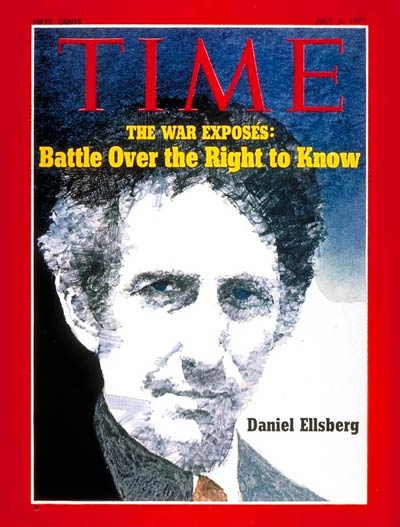
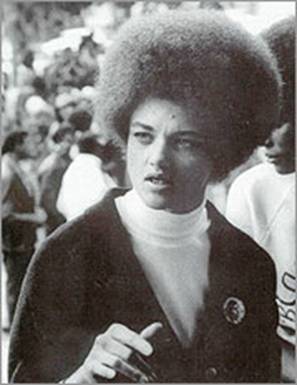
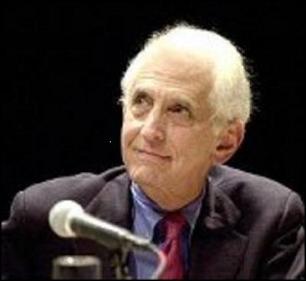
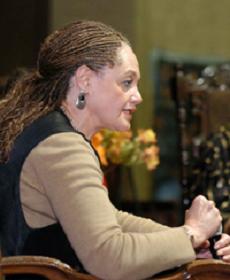
Daniel Ellsberg, Kathleen Cleaver Headline Austin ‘1968’ Conference


History as prologue? 1968 A Global Perspective
By Thorne Dreyer / The Rag Blog / October 7, 2008

See more about Daniel Ellsberg, Kathleen Cleaver and the SDS Comic Show Below.

Daniel Ellsberg and Kathleen Cleaver headline an interdisciplinary conference being held this week at the University of Texas at Austin.

Ellsberg, former military analyst best known for his role in releasing the Pentagon Papers during the Vietnam War is the initial keynote speaker at 1968 A Global Perspective on the campus of UT Austin. Ellsberg speaks on “Secrecy and Presidential Wars: Lessons of ’68” tonight, Tuesday, Oct. 7, at 7:30 at Jessen Auditorium.

Kathleen Cleaver, educator (Yale Univerity and Emory Law School) and former leader of the Black Panther Party, will read from her memoir in progress, “Memories of Love and War,” Friday, Oct.10, at the Texas Union Theater. Michael Hardt of Duke University, Kristin Ross of New York University and Diana Sorensen of Harvard will also deliver keynote speeches.

The Rag Blog co-editor Thorne Dreyer and contributor Alice Embree, both active with SDS in the sixties and currently involved with MDS/Austin, will help run a roundtable discussion on “SDS and Student Activism Today” Saturday at 2:30 pm in MEZ B0.306 on the UT campus. There will be a number of other panels and workshops during the weekend.

Associated events during the week include the following:

* Pre-Conference Film Series: Celluloid for Social Justice.

* Exhibition: To the Moon: The American Space Program in the 1960s, LBJ Library and Museum.

* Exhibition: Texas Poster Art and the SDS Comic Show, UT Center for American History.

* Exhibition: Reimagining Space: The Park Place Gallery Group in 1960s New York.

* Exhibition: The New York Graphic Workshop: 1965-1970

The conference takes place October 10-12, and is being held in tandem with the Fifth Annual Graduate Comparative Literature Conference.


Here’s how the organizers describe the conference:

The year 1968 has become a central myth for the twentieth century, the purported moment of origin for “the present” — for current politics, culture, and academics. This conference commemorates the 40th anniversary of 1968 by calling for a reassessment of its local and global impacts, its icons, myths, and images, the traces and absences left in its wake, and the intellectual and cultural heritages that we are still working through, as the collective memory of participants fades into a post-memory of the still incomplete projects of modernization, globalization, and liberation.

The conference aims to create interdisciplinary discussions of the many different 1968 experiences and projects that can be recovered in global, national, and international frameworks. Flashpoints, major players, artistic responses in all media and genres, and (re)theorizings of 1968 and its heritage will be included as conference themes.

Daniel Ellsberg

Daniel Ellsberg is a former American military analyst employed by the RAND Corporation who precipitated a national political controversy in 1971 when he released the Pentagon Papers, a top-secret Pentagon study of government decision-making about the Vietnam War, to The New York Times and other newspapers.

The release of the Pentagon Papers contributed greatly to the increasingly vocal and wide-spread opposition to the War in Vietnam.

Ellsberg was charged under the Espionage Act of 1917 but the charges were eventually. The release of the Pentagon Papers set in motion a series of events that eventually led to the Watergate break-in and other illegal activities by Nixon’s “plumbers” which were revealed during the trial – and the eventual impeachment of Richard Nixon.

Ellsberg has continued in public life as a writer and political activist.

Kathleen Cleaver

Although Kathleen Neal Cleaver [who was born in Dallas] first came to the attention of the public because of her relationship with Eldridge Cleaver and the Black Panther Party, she has many accomplishments outside of her relationship with Cleaver for which she is well known. She is widely viewed as a gifted lawyer and educator who speaks out ardently against racism. She is greatly in demand as a lecturer and has published numerous articles in newspapers and magazines. . .

. . . Cleaver’s January 1967 arrival at SNCC’s (Student Nonviolent Coordinating Committee) Atlanta, Georgia, headquarters set off a series of life-altering events. As secretary of SNCC’s campus program, she assisted in organizing a black student conference at Fisk University in Nashville, Tennessee. One of the attendees at the March conference was the minister of information for the Black Panther Party (the Party), Eldridge Cleaver.

Eldridge Cleaver’s intense oratory about black nationalism and revolution captivated Kathleen Neal Cleaver. Attracted by the Party’s more radical approach to social change, she left SNCC and joined the Black Panther Party and Eldridge Cleaver in San Francisco in November 1967. The couple was married on December 27, 1967.

[Clashes between San Francisco police and members of the Black Panther Party led to charges against Eldridge Cleaver. The two lived in exile in Cuba and Algeria for a number of year.] In 1987, Kathleen Neal Cleaver divorced Eldridge Cleaver. . .

. . .Of her experiences with the Black Panther Party, Cleaver told the New York Times Magazine, “It was thrilling to be able to challenge the circumstances in which blacks were confined; to mobilize and raise consciousness, to change the way people saw themselves, blacks could express themselves.”

Cleaver continues to have a very active life. As an advocate for the elimination of racism from our culture, she has published articles in magazines and newspapers since 1968 and is much in demand on the lecture circuit. She has also been featured in a number of film documentaries.

Source / Pan African News Wire

The SDS Comic Show

The SDS Comic Show [see schedule of associated events, above] features panels from Students for a Democratic Society: A Graphic History (Hill and Wang), scripted by noted graphic artist and historian Harvey Pekar and edited by Paul Buhle, senior lecturer in American civilization and history at Brown University.

The book tells — in comic book style — the story of SDS, the organization that served as the heart of the New Left movement and the vanguard of the sixties uprising and was perhaps the most important student organization in U.S. history.

According to editor Buhle, “The SDS Comic Show gives an overview history of the influential, but short-lived SDS and illustrates the local, personal stories of young people changing their own lives as they opposed war, racism, and sexism within the campus movements.”

The full schedule and other information are available at the website of 1968 A Global Perspective.

The Rag Blog

Posted in Rag Bloggers | Tagged , , , , , , , , , , , , , , , | 1 Comment

1 in 4 Mammals Now Thought to Face Extinction

A fishing cat (Prionailurus viverrinus), one of the world’s mammals that is declining in population. More than a third are probably threatened with extinction. Photo by Mathieu Ourioux / AFP / Getty Image.

‘What we are facing is a very rapid, accelerating rate of extinction happening right now that is very unnatural.’
By Dan Vergano / October 6, 2008

Many animals worldwide, from toads to tigers, face extinction, a “terrifying possibility” underlined by the release Monday of a report on mammals.

The International Union for the Conservation of Nature (IUCN) predicted earlier that one in eight bird, one in three amphibian and one in three coral-reef species are endangered.

“Extinction is normal and natural, but what we are facing is a very rapid, accelerating rate of extinction happening right now that is very unnatural,” says IUCN biologist Michael Hoffmann. The mammal report comes as the IUCN — the world’s largest organization of environmental groups, with 11,000 scientist members from 160 nations — opened its yearly meeting in Barcelona. “Our results paint a bleak picture,” he says.

Land mammals face their greatest risk of extinction in South and Southeast Asia, where 79% of monkey and ape species are threatened, the report finds. Forest-cutting and expanded farms are destroying the homes of species such as the fishing cat. Habitats from India to Java are threatened by marsh-clearing.

Sea mammals are under particular threat in the North Atlantic, North Pacific and Southeast Asia, where dolphin species suffer from fishing and pollution because of factory and farm runoff.

“Overall, about 30% of animal species face declines,” says World Wildlife Fund biologist Sybille Klenzendorf, an expert on tiger conservation. Steep declines in the population of marine mammals, such as the Gulf of California’s vaquita porpoise, began a decade ago, she says, while land mammals steadily lost numbers over the century.

“It’s not all doom and gloom,” Hoffmann says. Some species, such as African elephants and black-footed ferrets in North America, have rebounded. With habitat preserves, captive breeding and laws against hunting, many more species could be saved, he says. But the IUCN report notes it lacked data for 836 of the world’s mammal species, possibly because those creatures have become extinct.

Source / USA Today

Thanks to S. M. Wilhelm / The Rag Blog

Posted in RagBlog | Tagged , , , , | Leave a comment

Despite the Surge, the Iraqi Brain-Drain Continues

Women carry rice and flour rations that the Iraqi army distributed to returning families in Khan Bani Saad in Diyala province. “We just want people to go back to their normal lives,” said Col. Ali Mahmoud, an Iraqi commander in the area. Photo: Maya Alleruzzo / Associated Press

Iraq too dangerous for many professionals
By Tina Susman / October 5, 2008

The brain drain continues as doctors, professors, engineers and other well-educated, affluent or secular Iraqis flee or stay away, nervous about kidnappings and random violence.

BAGHDAD — Naqi Shakir sits on a sagging mattress pushed against a wall. His wife and two daughters perch on tattered sofas and chairs crowded into the one room of the house with signs of family life: personal photographs tacked to the wall, a TV, books, and knickknacks on dusty shelves.

Except for a folding table and chairs in the kitchen, nearly everything has been sold so the family can bolt as soon as someone rents the two-story home in a relatively safe Baghdad neighborhood.

At a time when the Iraqi government is encouraging its citizens to return and the U.S. military is highlighting security gains across Iraq, the Shakirs want out. They see no future here for Iraqis such as themselves: well educated, affluent, secular or non-Muslim.

Their imminent departure is a major problem facing Iraq, which has suffered a brain drain in the last five years and is struggling to lure back or hang on to educated professionals.

In June, the government raised civil servant salaries 50% to 75% to attract state employees such as teachers and doctors, many of whom were fired after the 2003 U.S.-led invasion that toppled Saddam Hussein. Iraq’s Ministry of Displacement and Migration says tens of thousands of people have returned since last fall.

But more than 2.5 million Iraqis have fled, and the exodus continues. Political and business leaders believe it will be many years before the loss of professionals can be reversed.

The Office of the United Nations High Commissioner for Refugees said it monitored numbers at the main border crossing linking Iraq to Syria from January to July this year and found that 7,200 more Iraqis left than entered. And some say a new U.S. policy opening the door to more Iraqi refugees each year is exacerbating the situation.

“It’s counterproductive,” said Raad Ommar, president of the Iraqi American Chamber of Commerce and Industry in Baghdad. “They’re trying to achieve their goal on one hand of taking Iraqis to the United States, and on the other hand they’re trying to get Iraq stabilized and improve the economy and everything else. The flight of qualified Iraqis is not going to help that.”

After the fall of Hussein, the chamber would get 200 to 300 applications when it placed a newspaper ad seeking a staff attorney, public relations executive, engineer or administrative worker. Now, Ommar is lucky to get 20, usually from people sorely lacking in experience and with checkered resumes resulting from wartime upheavals.

Ommar used to say it would take Iraq a couple of years to recover economically. “Now, if I say five years, I’m not confident,” he said. “I think, in general, people don’t really have much confidence in the future.”

More than 7,000 physicians have left, including virtually all who had 20 years’ or more experience, said Mustafa Hiti, a member of parliament who sits on its health committee. About 600 have returned, he said, but none are the sort of top-flight specialists needed here.

Most specialists were Sunni Arabs who, to achieve their professional status, were members of Hussein’s Baath Party. Even if they did not adhere to its ideology, they were ostracized and forced from their jobs after Hussein was ousted. Now, they do not feel comfortable in a country run by Shiite Muslims, said Hiti, who expressed doubts about the government’s commitment to moving away from the so-called de-Baathification policies.

“Are the parties in the government now willing to give jobs to the right people, or do they see these jobs as political spoils?” Hiti said.

At the Ministry of Higher Education, spokeswoman Siham Shujairi said 6,700 professors had left Iraq and only about 150 had returned. About 300 have been killed.

Shakir, 65, used to make good money as a customs clearing agent, but he closed shop after the 2003 U.S.-led invasion because of security worries. The family smuggled his son out of the country in 2005 after two kidnapping attempts. The Shakirs’ car has been riddled with bullets in a random shooting on a Baghdad street, and a car bomb in the neighborhood damaged their home.

“There is nobody upholding justice here,” Shakir said as a soap opera flickered on the TV and the family’s Pekingese dog ran excited circles across the floor. “You live your life according to chance. Anyone can do anything.”

His daughters Rafah and Raghad, both in their 30s, feel pressure to wear veils outside even though the family is Christian. Rafah Shakir tucks her small cross pendant into her shirt when she goes out.

“I used to have an import-export business. I used to be able to go to my office and work on my own,” said Rafah, who is studying to be a human rights lawyer in Sulaymaniya, in the semiautonomous Kurdistan region of northern Iraq. “I can’t do it anymore. I can’t even wear short sleeves anymore.”

Even though security has improved, professionals continue to be targets of assassinations by extremists who see them as being pro-Western or religious infidels. In addition, the power in Iraq lies with conservative Shiites, and there is no sign that will change any time soon.

Even if provincial elections, considered key to balancing power among Shiites, Sunnis, Kurds and others, take place by early next year, the parties now in power probably will come out on top again. That’s because of name recognition and their appeal to religious voters.

A new election law that awaits final approval seeks to address the issue, banning the use of religious symbols and images on ballots.

This scenario, combined with anger over Iraq’s failing infrastructure and distrust of its stability, does not encourage moderate Muslims such as Ali, 26, who has a medical degree and hopes to immigrate to the United States.

“Nothing is guaranteed. That’s the problem,” said Ali, who asked that his surname not be used to avoid problems with his employer. “Here, everything is possible — but in a negative sense.”

Ali ticked off the frustrations of everyday life: power outages, lack of clean tap water, hours-long waits to buy fuel for cars and generators, and the lack of social life because of most of his friends’ departures and the closure of late-night restaurants, nightclubs, and cinemas.

“Even if it’s safe, if the services are not available it makes life hard,” said Ayad Abdul Ameer, an electrical engineer.

“The gas lines — people just sit there for hours and hours, like they’re dead,” Ali said, growing visibly infuriated as he spoke. “It’s like a Stage 4 cancer,” he said of Iraq’s growing problems.

Ameer returned to Iraq in April after a year abroad but doesn’t plan on staying. He came back because his work visa application was rejected in Oman, and because he needed to repair his house, which had been hit by mortar rounds a couple of months earlier.

Ahmed Farhan, who works as a chef in Scotland, returned to Iraq for the first time in 14 years this month and couldn’t wait to leave again. Even though he and his family are Shiites, Farhan said he found the atmosphere stifling and the sight of armed police and soldiers on street corners unnerving.

“It’s a losing battle,” he said, arguing against the idea that educated Iraqis such as himself are the best hope for reversing the brain drain.

Hiti, the parliament member, has some hope. He is lobbying the health minister to establish a specially protected zone for doctors and their families to live in, in central Baghdad. That could encourage their return, he said. On Monday, the government said doctors would be allowed to carry guns for self-protection. At least 176 physicians have been killed since 2003.

Spokeswoman Shujairi said the Ministry of Higher Education has received hundreds of e-mailed requests from professors outside Iraq who want to know how they can return to their jobs.

Hiti, though, hesitated when asked whether he would encourage Iraqi doctors to come home under the current circumstances.

“I would not give it an absolute ‘yes,’ ” he said, adding that he would prefer his protected zone be finished before doctors return en masse.

“Accidents happen everywhere, but the probability in Iraq is very high.”

Times staff writers Saif Rasheed, Saif Hameed, Mohammed Rasheed and Caesar Ahmed contributed to this report.

Source / Los Angeles Times

The Rag Blog

Posted in RagBlog | Tagged , , , | Leave a comment

Only 39.2% Abroad View America Favourably


After 8 Years, Are You Better Off?
By Ryan / September 30, 2008

Comparing what George W. Bush started with, and what he’s leaving us with.

NATIONAL DEBT

January 20, 2001
$5.7 Trillion

Today
$9.2 Trillion

BUDGET DEFICIT/SURPLUS

January 20, 2001
$431 Billion Surplus over the Previous Three Budget Years

Today
$734 Billion Deficit over the Previous Three Budget Years

AMERICANS IN POVERTY

January 20, 2001
31.6 Million

Today
36.5 Million

PRICE OF GAS

January 20, 2001
$1.39/Gallon

Today
$3.07/Gallon

PERSONAL SAVINGS RATE

January 20, 2001
+2.3%

Today
-0.5%

STRENGTH OF U.S. DOLLAR

January 20, 2001
1.07 Euros per Dollar

Today
0.68 Euros Per Dollar

COMBAT READINESS

January 20, 2001
All Active Duty Army Divisions Were Rated At The Highest Readiness Levels

Today
Not A Single Active Duty Or Reserve Brigade In The U.S. Considered “Fully Combat Ready.”

VIEW OF AMERICA ABROAD/PEW POLL OF TEN NATIONS

January 20, 2001
58.3% Viewed America Favorably

Today
39.2% Viewed America Favorably

So, this shows what George W. Bush started with, and what he’s leaving us with. The numbers speak for themselves.

Can we afford another term? John McCain has supported George W. Bush more than 90% of the time. That’s not change. That’s more of the same, and the same is bad.

Source / I Eat Gravel

Thanks to Diane Stirling-Stevens / The Rag Blog

Posted in RagBlog | Tagged , , | 1 Comment

Indentured College Graduates: How the Capitalist System Locks in the Slaves

I could write a book about this: the capture of innocent young people into a system that requires them to pay off their student loan debts for years as they try to start lives and Families. The way the capitalist system operates is a disgrace to us all, and it’s high time we took back our nation and our lives.

Richard Jehn / The Rag Blog

Tyson Hunter graduated from Boston University last year with a bachelor’s degree — and $152,460 in student loans. His loan payments will eat up about a third of his monthly income, so he has moved into his mom’s Bothell condo to reduce expenses. Photo: John Lok/The Seattle Times

Graduates drowning in debt from high cost of college
By Nick Perry / October 5, 2008

College graduates are starting work with twice as much debt as in the mid-1990s. For many, the burden of loan repayments is constraining big decisions, from picking a career to buying a house.

Tyson Hunter dresses sharply, works out most every day and can’t wait to make his mark on the business world.

Hunter, 23, also happens to owe $152,000 in student loans, accumulated in four years at Boston University. He graduated last year with a bachelor’s degree in business administration, and now earns $40,000 a year at a market-research company.

His loan payments soon will top $1,000 a month — the amount of a small mortgage, and about a third of his salary. If he makes the minimum payments, he will retire his student debt when he is 53 years old, having handed lenders some $300,000.

“Buying a house? That’s not even in the 10-year goals,” says Hunter, who has temporarily moved back into his mom’s Bothell condo to reduce expenses. “The next two years are going to be crippling. Hopefully, after that, it won’t be as crippling.”

At a time when deep uncertainty permeates the economy, graduates across the country are entering the workplace with staggering liabilities. The average student debt has doubled since the mid-1990s.

And that burden often has an effect on the most fundamental choices graduates are making about their lives — decisions about home, family and career.

Take Isiah Sandlin, 32, and Hollie Sexton, 26, who are studying medicine at the University of Washington. Sandlin already has $275,000 in student loans; Sexton, $100,000. When the couple graduate in two years’ time, they expect their combined student loans will top half-a-million dollars.

Each new loan helps cover the payments on the previous ones. At least one of them will likely need to work in a high-paying specialty to make the whole thing fly. Sexton’s dream of volunteering abroad seems a long way off.

“I couldn’t quit now if I wanted to. No way,” Sexton says. “Once you are on the train, you’ve got to keep going.”

Most students borrow

While Hunter and Sandlin have exceptionally large loans, more than two-thirds of all students now borrow money to finance their education, up from less than half in 1993. Among undergrads who borrow, the average finished school in 2004 with loans of $19,000, up from $9,000 a decade earlier, according to one analysis of federal data.

Debt is escalating the fastest in graduate schools.

Take the UW. By its own estimate, the average undergrad who borrows winds up owing a little more than $16,000 by graduation. Master’s students who borrow, however, finish with an average $36,000 in loans; law students with $66,000; medical students with $106,000; and dental students with $143,000.

At Seattle University, where 80 percent of undergrads now borrow, the average student graduates with $23,000 in debt. Because federal loan limits are rising this fall, Seattle U officials say this year’s freshmen can expect to graduate with debts averaging $27,000.

On a 10-year repayment schedule, at 6 percent interest, that will add $300 to a graduate’s monthly bills.

Educators and economists have argued for decades that higher education represents a great long-term investment, thanks to the higher wages graduates can command. Janet Cantelon, director of student financial services at Seattle University, points out that even $300 a month is manageable for most graduates — the equivalent of a car payment — and a good long-term investment.

Yet the payoff is simply not as good as it once was.

Workers with bachelor’s degrees do earn more — an average $51,000 a year, compared with $31,000 a year for high-school graduates, according to the U.S. Department of Labor. But the department also reports that college tuition now costs five times what it did in the early 1980s, and it is rising at more than twice the rate of inflation. Inflation-adjusted wages, meanwhile, have remained stagnant since 2002.

And experts say there are some worrying trends in the rising debt levels — particularly in the precipitous rise in private loans, at least until recent months. More and more of those loans are directly marketed to students, without any oversight or involvement from schools, and often at higher interest rates.

In 1997, the federal government financed almost all student loans, with private loans making up just 5 percent of the market, according to the College Board.

But with the government failing to keep pace with costs, the private sector last year wrote at least 22 percent of the loans. Put another way, the amount of money borrowed from private lenders rose tenfold to $17.1 billion over that decade. And those figures don’t take into account other ways students and their families are borrowing, such as tapping home equity or credit cards.

In recent months, the credit crisis has halted the rapid expansion in private lending, and experts say that may not be a bad thing. Some lenders have abruptly pulled out of community colleges and for-profit schools; others are demanding more documentation.

Treasury Secretary Henry Paulson told Congress the $700 billion economic bailout package it approved Friday will benefit student-loan companies — a result some claim will unfairly reward companies that have profited from writing risky loans to students.

Just how the economic upheaval will play out remains to be seen. For now, at traditional four-year colleges, most students still are able to access large loans.

Driving up college costs in recent years is the fact that states are investing less in public universities, putting more of the burden on students, says Jacqueline King, an assistant vice president at the Washington, D.C.-based American Council on Education.

With its professors and tutors, administrators and groundskeepers, education is labor-intensive, King says. The cost of employing skilled professors has risen sharply. And universities can’t keep costs in check the way big business can, she added, by outsourcing or manufacturing overseas.

To be sure, student loans do help hundreds of thousands of students each year make it through college and improve their prospects in life. And there are signs that parents are coming to grips with the new financial reality of college: Assets in so-called 529 college-savings plans grew from $15 billion in 2001 to $122 billion in 2007, according to the College Board.

But for students graduating now, large loan repayments are adding a significant financial burden at a time when they also face rising health-care costs, expensive housing options and a difficult employment market — not to mention an economy on the brink.

Choices and sacrifices

When Tyson Hunter chose to attend Boston University, he never imagined he would end up borrowing so much money. His parents were willing to pay the equivalent of in-state tuition, about $6,000 or $7,000 a year. He also took a part-time job at a campus Starbucks, earning, with tips, $11 an hour.

BU tells students they will need at least $51,000 per year to cover tuition ($36,500) as well as lodging, food and personal expenses. Add it up, and it costs more than $200,000 for an undergraduate degree — not uncommon these days at a well-regarded private school.

Hunter was in his freshman year when his dad lost his job. His parents later divorced. Those events turned the family’s financial situation upside down, and they could no longer help out.

For a few months, Hunter left BU and tried a cheaper option — classes at Shoreline Community College and Seattle University. But, he said, he missed the intellectual stimulation and “East Coast competitiveness” of BU.

“I thought ‘Screw it. I’ll go back, and I’ll just take on debt,’ ” Hunter said. He doesn’t regret the move for a moment, he added.

“I felt like I was striving to better myself and to reach my greatest potential, and that BU facilitated that,” he said. “I wouldn’t have been nearly as happy if I went to a local school.”

Hunter did receive some extra aid due to his family’s changed circumstances, but it wasn’t nearly enough. Now working as an account manager in Bellevue, Hunter has deferred principal payments on his largest student loan for a year, reducing his monthly bills until April.

“All I can do is offer him a place to stay for free and help him out that much,” said mom, Nancy Hunter. “And if I win the lottery, I can pay off his loans.”

Tyson Hunter said he appreciates his mom giving him a place to live, but he misses his independence. He has sketched out a financial plan that should allow him to move out in February.

Hunter seems confident he will be able to repay his loans. But he has no room for missteps.

For some students, loans can change a career path. That’s the case with Josh Bates.

“Once upon a time, I wanted to be an engineer,” Bates said. “But I didn’t want to take on any more loans. I was so in debt.”

Bates, 27, of Bothell, studied mechanical engineering at Montana State University. He slacked off for a couple of years, he says, partying too much and enjoying the perks of student life. After five years at MSU, he had accumulated nearly $50,000 in student loans, another $8,000 in credit-card debt, and he still didn’t have a degree.

So Bates moved back in with his parents in Bothell and took a full-time job with a Seattle marketing firm. He has been finishing his degree by taking after-hours Central Washington University courses, offered at the Edmonds Community College campus. Because there is no mechanical-engineering program available, Bates has switched his major to business.

“If I had the time to go back to Montana State, I’d go back and finish,” Bates said.

Student loans also are playing into the career decisions of Isiah Sandlin and Hollie Sexton, the couple studying medicine at the UW.

Sandlin accrued a lot of his debt while finishing a four-year degree in naturopathic medicine at Kenmore’s Bastyr University, before realizing his true calling lay in traditional medicine.

He and Sexton, who has accumulated most of her loans during her two years at medical school, say the amount they owe is a big concern.

“I’d be lying to say it didn’t color my specialty,” said Sandlin, who is looking into emergency medicine or a surgical specialty. “Some of the specialties I’m considering are of interest to me, but they also pay particularly well on the whole physician spectrum.”

On Sexton’s 2008-09 financial-aid statement, the UW outlines the expected cost of medical school: $50,500, including tuition, housing and personal expenses. The university subtracts “total resources” — zero — and offers a package that includes $3,000 in grants and $47,500 in federal loans.

Sexton is taking the full amount. She doesn’t feel like she has any other option.

Copyright © 2008 The Seattle Times Company

Source / The Seattle Times

The Rag Blog

Posted in RagBlog | Tagged , , | 2 Comments

Ike: Oil Contamination in the Gulf, Too

At least 500,000 gallons of crude oil spilled into the Gulf of Mexico as Hurricane Ike assaulted the U.S. Gulf Coast. The environmental damage is only now starting to emerge, weeks after the storm. Here, oil coats the waters off southwest Louisiana on Sept. 15. Photo: Louisana Department of Environmental Quality/AP

Tons of Oil Spilled Into Gulf During Ike
By Dina Cappiello, Frank Bass and Cain Burdeau / October 6, 2008

WASHINGTON — Hurricane Ike’s winds and massive waves destroyed oil platforms, tossed storage tanks and punctured pipelines. The environmental damage only now is becoming apparent: At least a half million gallons of crude oil spilled into the Gulf of Mexico and the marshes, bayous and bays of Louisiana and Texas, according to an analysis of federal data by The Associated Press.

In the days before and after the deadly storm, companies and residents reported at least 448 releases of oil, gasoline and dozens of other substances into the air and water and onto the ground in Louisiana and Texas. The hardest hit places were industrial centers near Houston and Port Arthur, Texas, as well as oil production facilities off Louisiana’s coast, according to the AP’s analysis.

“We are dealing with a multitude of different types of pollution here … everything from diesel in the water to gasoline to things like household chemicals,” said Larry Chambers, a petty officer with the U.S. Coast Guard Command Center in Pasadena, Texas.

The Coast Guard, with the Environmental Protection Agency and state agencies, has responded to more than 3,000 pollution reports associated with the storm and its surge along the upper Texas coast. Most callers complain about abandoned propane tanks, paint cans and other hazardous materials containers turning up in marshes, backyards and other places.

Photo: Petty Officer 1st Class L.F. Chambers, US Coast Guard/AP

No major oil spills or hazardous materials releases have been identified, but nearly 1,500 sites still need to be cleaned up.

The Coast Guard’s National Response Center in Washington collects information on oil spills and chemical and biological releases and passes it to agencies working on the ground. The AP analyzed all reports received by the center from Sept. 11 through Sept. 18 for Louisiana and Texas, providing an early snapshot of Ike’s environmental toll.

With the storm approaching, refineries and chemical plants shut down as a precaution, burning off hundreds of thousands of pounds of organic compounds and toxic chemicals. In other cases, power failures sent chemicals such as ammonia directly into the atmosphere. Such accidental releases probably will not result in penalties by regulators because the releases are being blamed on the storm.

Texas Gov. Rick Perry also suspended all rules, including environmental ones, that would inhibit or prevent companies preparing for or responding to Ike.

Power outages also caused sewage pipes to stop flowing. Elsewhere, the storm’s surge dredged up smelly and oxygen-deprived marsh mud, which killed fish and caused residents to complain of nausea and headaches from the odor.

At times, a new spill or release was reported to the Coast Guard every five minutes to 10 minutes. Some were extremely detailed, such as this report from Sept. 14: “Caller is making a report of a 6-by-4-foot container that was found floating in the Houston Ship Channel. Caller states the container was also labeled ‘UM 3264,’ which is a corrosive material.” The caller most likely meant UN3264, an industrial coding that refers to a variety of different acids.

State and federal officials have collected thousands of abandoned drums, paint cans and other containers.

Other reports were more vague. One caller reported a sheen from an underwater pipeline and said the substance was “spewing” from the pipe.

The AP’s analysis found that, by far, the most common contaminant left in Ike’s wake was crude oil — the lifeblood and main industry of both Texas and Louisiana. In the week of reports analyzed, enough crude oil was spilled nearly to fill an Olympic-sized swimming pool, and more could be released, officials said, as platforms and pipelines were turned back on.

The Minerals Management Service, which oversees oil production in federal waters offshore, said the storm destroyed at least 52 oil platforms of roughly 3,800 in the Gulf of Mexico. Thirty-two more were severely damaged. But there was only one confirmed report of an oil spill — a leak of 8,400 gallons that officials said left no trace because it dissipated with the winds and currents.

Air contaminants were the second-most common release, mostly from the chemical plants and refineries along the coast.

About half the crude oil was reported spilled at a facility operated by St. Mary Land and Exploration Co. on Goat Island, Texas, a spit of uninhabited land north of the heavily damaged Bolivar Peninsula. The surge from the storm flooded the plant, leveling its dirt containment wall and snapping off the pipes connecting its eight storage tanks, which held the oil and water produced from two wells in Galveston Bay.

By the time the company reached the wreckage by boat more than 24 hours after Ike’s landfall, the tanks were empty. Only a spattering of the roughly 266,000 gallons of oil spilled was left, and that is already cleaned up, according to Greg Leyendecker, the company’s regional manager. The rest vanished, likely into the Gulf of Mexico.
Ike’s fury might have helped prevent worse environmental damage. Its rough water, heavy rains and wind helped disperse pollution.

Air quality tests by Texas environmental regulators found no problems even in communities near industrial complexes, where power outages and high winds in some cases knocked out emergency devices that safely burn off chemicals. But the storm also zapped many of the state’s permanent air pollution monitors in the region.

“We came out of this a lot better than we could have been, especially thinking where the storm hit,” said Kelly Cook, the homeland security coordinator for the Texas Commission on Environmental Quality.

Katrina ranked as among the worst environmental disasters in U.S. history, with about 9 million gallons of oil spilled. But Ike’s storm surge was less severe than feared — 12 feet rather than 20-feet plus — and the dikes, levees and bulkheads built around the region’s heavy industry mostly held.

Much of that infrastructure is protected by a 1960s-era Army Corps of Engineers system of 15-foot levees similar to the one around New Orleans that failed catastrophically during Katrina. In that storm, floodwaters dislodged an oil tank at a Murphy Oil Corp. refinery in Meraux, La., spilling more than 1 million gallons of oil into the surrounding neighborhoods, canals and playgrounds.

Ike’s toll on wildlife is still unfolding. Only a few pelicans and osprey turned up oiled, but the storm upended nature. Winds blew more than 1,000 baby squirrels from their nests. The storm’s surge pushed saltwater into freshwater marshes and bayous, killing grasses where cattle graze and displacing alligators. Flooding also stranded cows.

The storm also may mangle migration. The Texas coast is a pit stop for birds heading south for the winter. But Ike wiped out many of their food sources, stripping berries from trees and nectar-producing flowers from plants, said Gina Donovan, executive director of the Houston Audubon Society, which operates 17 bird sanctuaries in Texas.

“It is going to cause wildlife to suffer for awhile,” she said.

Along the Houston Ship Channel, a tanker truck floating in 12-feet-high flood waters slammed into a storage tank at the largest biodiesel refinery in the country, causing a leak of roughly 2,100 gallons of vegetable oil. The plant, owned by GreenHunter Energy Inc., uses chicken fat and beef tallow to make biodiesel shipped overseas. It opened just months earlier.

Oneal Galloway of Slidell, La., called to report oil in his neighborhood. The town, north of Lake Pontchartrain, was flooded with Ike’s surge. He said oil had washed down the streets.

“It looked like a rainbow in the water,” Galloway told the AP. “The residue of the oil is all over our fences, there were brown spots in the yard where it killed the grass.”

The likely culprit was not a refinery or oil well, according to Shannon Davis, the director of the parish’s public works department, but a neighbor brewing biodiesel in his backyard with used cooking grease.

Cain Burdeau reported from Texas.

Source / AP / America On Line

The Rag Blog

Posted in RagBlog | Tagged , , , | Leave a comment

Rep. Cummings: "I wonder how he sleeps at night."

Longtime Lehman Brothers Chief Executive Richard S. Fuld Jr., testifies before the House Oversight and Government Reform Committee on Monday. Photo: Susan Walsh, AP

Lehman Brothers Brass Sought Millions
By Julie Hirschfeld Davis / October 6, 2008

WASHINGTON — Days from becoming the largest bankruptcy in U.S. history, Lehman Brothers steered millions to departing executives even while pleading for a federal rescue, Congress was told Monday.

As well, executives who feared for their bonuses in the company’s last months were told not to worry, according to documents cited at a congressional hearing. One executive said he was embarrassed when employees suggested that Lehman executives forgo bonuses, and cracked: “I’m not sure what’s in the water.”

The first hearing into what caused the nation’s financial markets to collapse last month, precipitating a $700 billion bailout, opened with finger-pointing and glimpses into internal company documents from Lehman’s chaotic last hours.

Rep. Henry Waxman, D-Calif., chairman of the House Oversight and Government Reform Committee, said the giant investment bank was “a company in which there was no accountability for failure.” Lehman’s collapse set off a panic that within days had President Bush and Treasury Secretary Henry Paulson asking Congress to pass the rescue plan for the financial sector.

Richard S. Fuld Jr., chief executive officer of Lehman Brothers, declared to the committee “I take full responsibility for the decisions that I made and for the actions that I took.” He defended his actions as “prudent and appropriate” based on information he had at the time.

“I feel horrible about what happened,” he said.

Waxman questioned Fuld on whether it was true he took home some $480 million in compensation since 2000, and asked: “Is that fair?”

Fuld took off his glasses, held them, and looked uncomfortable. He said his compensation was not quite that much.

“We had a compensation committee that spent a tremendous amount of time making sure that the interests of the executives and the employees were aligned with shareholders,” he said. Fuld said he took home over $300 million in those years — some $60 million in cash compensation.

Waxman read excerpts from Lehman documents in which a recommendation that top management should forgo bonuses was apparently brushed aside. He also cited a Sept. 11 request to Lehman’s compensation board that three executives leaving the company be given $20 million in “special payments.”

“In other words, even as Mr. Fuld was pleading with Secretary Paulson for a federal rescue, Lehman continued to squander millions on executive compensation,” Waxman said before Fuld appeared as a witness.

The government let Lehman go under Sept. 15, only to bail out insurance giant American International Group the next day, in a cascading series of financial shocks and failures that put Washington on track for the multibillion-dollar rescue starting the end of that week.

Waxman described that plan as a life-support measure. “It may keep our economy from collapsing but it won’t make it healthy again,” he said.

That sentiment echoed on Wall Street, where the Dow Jones industrials sank below 10,000 on Monday for the first time in four years. Investors fear the crisis will weigh down the global economy and the bailout won’t work quickly to loosen credit markets.

The rescue plan, now law, was so rushed that the usual congressional scrutiny is only coming now, after the fact.

“Although it comes too late to help Lehman Brothers, the so-called bailout program will have to make wrenching choices, picking winners and losers from a shattered and fragile economic landscape,” said Rep. Tom Davis of Virginia, the committee’s senior Republican.

Waxman said that in January, Fuld and his board were warned the company’s “liquidity can disappear quite fast.”

Despite that warning, he said, “Mr. Fuld depleted Lehman’s capital reserves by over $10 billion through year-end bonuses, stock buybacks, and dividend payments.”

Waxman quoted Fuld as saying in one document, “Don’t worry” to the suggestion that executives go without bonuses.

That suggestion came from Lehman’s money management subsidiary, Neuberger Berman. Waxman quoted George H. Walker, President Bush’s cousin and a Lehman executive who oversaw some Neuberger Berman employees, as responding with a dismissive tone to the idea of going without bonuses.

“Sorry team,” he wrote to the executive committee, according to Waxman. “I’m not sure what’s in the water at 605 Third Avenue today…. I’m embarrassed and I apologize.”

Rep. Elijah Cummings, D-Md., said: “I wonder how he sleeps at night.”

Fuld said in his statement that the company did everything it could to limits its risks and save itself.

“In the end, despite all our efforts, we were overwhelmed, others were overwhelmed, and still other institutions would have been overwhelmed had the government not stepped in to save them,” he said.

Source /AP / America On Line

The Rag Blog

Posted in RagBlog | Tagged , , | 2 Comments

Ron Ridenour: Sounds of Venezuela, Part VII

Clean streets, well painted and maintained attractive buildings; homebrew to boot is Colonia Tovar.

Click here to view the entire series.

Sounds of Venezuela
Part VII: Climbing Mountains
By Ron Ridenour / The Rag Blog / October 6, 2008

A tall man with long flowing curly hair and warm eyes met me early the morning after a drinking bout in a local bar. Carlos was a friend of a friend, Juan Luis, both were teachers and Carlos was a long-distance walker. He took me to the nearest mountain on the outskirts of La Victoria for a day’s walk.

I was exhilarated with the first steps up a dirt path. Trees surrounded us. We were alone for six hours of climbing up and down much of the mountain. There were a few wooden houses scattered on the side of the path wide enough for a car, only one of which we saw. Although quite isolated, these houses enjoyed running water from a mountain stream and electricity brought in by the government.

We passed a coffee plantation no longer being cared for. Carlos explained that the owner spent most of his time in Spain, his birth place, and neglected the farm. Apparently there wasn’t enough profit in it.

We stopped to eat a lunch we brought and I swam in a pool of the stream. We chatted while listening to the guacharaca, the only sounds we heard, apart from the eternally rolling stream. We enjoyed listening to the chattering, social tree-dwellers, which feed on abundant seeds and fruits found here. Carlos told me he taught mathematics at the local technical college while his wife taught in Maracay’s Mission Sucre. They saw each other only on the weekends. He supported Chavez and the grass roots revolution but was discouraged by so much inefficiency and corruption. Like many other intellectual workers, he remained on the sidelines although he voted for the process.

When we reached the bottom of the mountain, we walked another kilometer to Juan Luis’ “summer house”, delicately resting on an incline and partially hidden by skinny trees. He and his girl friend come to this rustic place most weekends. While Juan Luis and his lover prepared seafood snacks, a neighbor boy, who watches over their place and a handful of chickens, made coffee a lá fagón—fireplace style—which tasted especially stimulating after 25 kilometers walking in thin tennis shoes.

Carlos and I planned another trip soon. I spent the next days learning, looking forward to our next trip, this time to the very top.

Atop this 2000 meter mountain sits a unique town, Colonia Tovar. The 3,500-hectar area was settled by German farmers from Bavaria, in 1843. To this day, the well-maintained, colorfully painted buildings have Bavarian characteristics. The town is unusually clean and quiet, reflecting a European life style albeit none of the 6,000 residents are actually German, and nearly no one even speaks German.

We had climbed seven hours straight up. We passed the abandoned coffee farm, then some fruit trees cared for by a lone farmer, and stopped at a cluster of houses served by one little store. It was crammed with cartons of Yankee products: Colgate, Nestle, Toms, and, of course, Coca-Cola. The Colombian store-keeper was unaware of the boycott against the Death Squads’ Drink. Carlos’ young cousin was with us this time; he deferred to my request and drank a national soda instead of the all time favorite sugar drink.

We pushed onward and upward. I was surprised how well I—a smoker—kept up with a man in his mid-40s and another in his mid-20s, but the going was tough. Our legs were never planted straight, always stretching at an incline, sometimes required to jump onto rocks laid across the stream, which frequently criss-crossed our path.

As we neared the top, we saw small plots of land planted in strawberries, potatoes, coffee and peaches. Carlos wished to visit one such farm. As part of an education mission for which he had volunteered, he had once taught a girl who lived here. We soon found the house, quite unmistakable for its handsome and solid even stately character.

Pedro and his wife are the owners. His grandfather had built the two-story house and it was long ago paid for. His two teenage daughters, one had been Carlos’s student, also live here. Pedro showed us his 1.5-hectar farm. He was proud of his sweet-tasting peaches and strawberries, and nutritious potatoes. He and his family earned a decent living from this small farm. They had a jeep, two TVs, refrigerator, stove, washing machine, all the modern necessities. They ate some of their produce, including chickens and eggs, and sold the rest. They had enough money leftover to buy a CD or DVD from time to time. True, they had no rent and all the residents in this municipality get their water and electricity free. The house was clean, and decorated with flowers from the garden. It looked so different from the eye sore, dirty house I stayed in.

The family supports Chavez, as do the majority in this area, despite their German heritage and being private farmers. How one man, with family help at peak times, can till just one-and-one-half hectares of land on a steep incline, keeping it cleared of weeds, and earn enough for all they owned and not be in debt—while the two cooperatives I had visited were so far from nearing this accomplishment—is such a big question that I can’t enlighten anymore than I have: discipline, dedication, sense of ownership responsibility.

Once at the welcoming arch-gated entrance of Colonia Tovar, and despite our tiredness, we three men of three generations dashed for the tavern selling its own brew, a lá Bavarian. Cool, light, distinguished taste. The tavern blended the cleanliness and order of Germany, the flowers and warmth of Venezuela. Unfortunately, we had only time for two of their local brew. After the day’s trek, we weren’t about to walk down the mountain. The last bus to town left at 16:00, so we had to rush.

The Rag Blog

Posted in Rag Bloggers | Tagged | Leave a comment

Who Hangs With Extremists? Sarah Palin and the AIP


‘The Alaskan Independence Party is part of a network of extreme right wing groups around the US, some of which have links to white supremacist organizations.’
By Sherman De Brosse / October 6, 2008

Sarah Palin has courted and developed close ties with the secessionist Alaska Independence Party. These people are committed to secession and want a vote on the subject. Most voters in the lower 48 see secession as treasonous, yet almost half of of them will vote for her simply because of a party label, and perhaps her extraordinary charm and charisma.

The Alaska Independence Party was founded in the 1970s by an outspoken gold miner, Joe Vogel, who had many battles with the Park Service and the EPA. Vogel declared, “I’m an Alaskan, not an American. I’ve got no use for America or her damned institutions” and “[T]he fires of Hell are glaciers compared to my hate for the American government.” He founder added in 1991, “And I won’t be buried under their damn flag.” Like his followers, Vogel was an extreme-right winger. He said, “The problem with you John Birchers’ is that you are too damn liberal!”

The party opposes environmental legislation and the federal ownership of land in Alaska.

In the 1990s, it had a surge of membership, attracting militia-types. Including Todd Palin, who was a member from 1995 to July, 2002, when he became an independent. That was a time when his wife was running for Lieutenant Governor on the Republican ticket.

Sarah was seen with Todd at the party’s 1994 convention, and she addressed its convention in 2000 and addressed the convention again this year, but the last was videotape. She spoke warmly of the work of the party and told them, “Keep up the good work!” Party officials speak warmly of Sarah and boast that they worked hard for her election as governor in 2006.

That party’s slogan is “Alaska first-Alaska always.” John Mc Cain’s slogan is “Country First.” How can Sarah and Todd reconcile the two slogans. How can a voter take a chance on a candidate who had clearly flirted with a secessionist fringe group?

It sent delegates to the First American Secessionist Convention in Burlington Vermont in 2006. Present were some organizations linked to the neo-Confederate cause and white supremacy. When Timothy McVeigh was arrested he was wearing the tee shirt of one of these unsavory outfits.

It has close ties to the U.S. Constitution Party, which claims it as a state affiliate. That party was founded by Howard Phillips, and it is the home of Christian Reconstructionism or Dominionism. Dominionism looks to place its kind of Christians in political power. They would rule according to Biblical law. These people want to establish a theocracy in the United States, and they are completely opposed to separation of church and state. There are also many Dominionists in the Alaska Independence Party, and it is very likely that Sarah Palin is a Dominionist because she has attended three churches with Dominionist ties.

Alaska Independence Party leaders urge followers to “infiltrate” the major parties. Dominionist preachers urge the same tactic. If Palin were on some Dominionist mission, she would not be likely to admit to it.

Source / Daily Kos

Thanks to S. R. Keister / The Rag Blog

Posted in RagBlog | Tagged , , , , , , | 2 Comments

Obama and the ‘Weatherman Connection’ : In Defense of Bill Ayers

William Ayers, left, in 1980 with wife, Bernardine Dohrn. Photo by Knoblock, via Associated Press.

‘The Bill Ayers I knew in the late 1960’s was a very thoughtful and serious person.’
By David P. Hamilton / The Rag Blog / October 6, 2008

See ‘Obama and ’60s Bomber: A Look Into Crossed Paths’ by Scott Shane / New York Times, Below.

John McCain couldn’t hold Bill Ayers’ jock strap.

I left graduate school at the Univ. of Texas in September of 1968 and headed north to work for the Radical Education Project (REP) in Ann Arbor. REP had been founded by Tom Hayden and was responsible for selecting, printing and distributing literature to be used by SDS chapters. The staff was an SDS chapter and we shared offices with the Michigan Regional Office of SDS. The main people running the Michigan Regional were Bill Ayers and Diana Oughton. They were a couple at the time and both devoted to education issues. Together they worked at the Children’s Community School in Ann Arbor, a progressive private school for underprivileged children based on the Summerhill model.

The Bill Ayers I knew in the late 1960’s was a very thoughtful and serious person. Besides working at the school, he traveled the region organizing SDS chapters. He also was prominent in the developments within SDS on a national level and attended National Interim Committee meetings at the Chicago national office and all our quarterly conventions. Although we were not close friends, my observation was that Bill was highly conscientious and not particularly involved in the more cultural aspects of those times. Sex, drugs and rock-n-roll were not his passions. Instead, he was an unswerving opponent of the Vietnam War and the American imperialism of which it was a manifestation.

I ran with Bill in a street “affinity group” at Nixion’s inauguration, January 20, 1969. By this time, militancy and defying the cops had become a principal strategy. I’ll omit the details of what we did that day, but we had the cops running, the tear gas flying and we all got away. I last saw him at the fateful final SDS national convention in the summer of 1969. Weather took over the national office. Most of the REP staff sided with the Revolutionary Youth Movement II faction, but supported Weather against the Progressive Labor faction. In September, I returned to UT.

The Weather analysis was largely correct. They recognized that there was a worldwide struggle going on against American imperialism, with Vietnam as the leading edge of the struggle, but only one theater of operation. We had just experienced the May Days in France, the student uprising in Mexico, dozens of major riots in black communities coast to coast and multiple assassinations of progressive American leaders among many other revolutionary events. American imperialism was being attacked on many fronts. Weather’s position was that another front in the struggle should be opened within the US. My problem with their position was largely tactical. They did not see the need to mobilize masses. Instead, they sought to engage in violent acts carried out by small groups in solidarity with the Vietnamese, hopefully forcing the US government to deploy its military domestically and, thus taking pressure off the Vietnamese. My own position was that the movement having an armed wing was not necessarily a bad idea, but I wasn’t willing to be part of it. But Bill and others had that level of commitment. They put their lives on the line.

The Weather Underground (WUO) committed dozens of bombings over the next several years. They bombed the memorial statue dedicated to the police who killed striking workers during Chicago’s 1886 Haymarket Riot (twice), the NY City police headquarters, the US capitol building, the Pentagon and many Bank of America branches. It should be pointed out that they went to great lengths to avoid killing innocent people, but cops were not considered innocent. They are blamed for killing a policeman in a bombing in San Francisco in 1970, but a SF grand jury in 1999 refused to indict anyone. Another person was killed during a bombing of a Defense Department lab at the Univ. of Wisconsin. The victim was in the building at 3 am when the explosion occurred and that bombing was reputedly carried out by Weather copycats, not the WUO itself. The most people who died in a WUO bombing were the three Weather members, Diana Oughton, Ted Gold, and Terry Robbins, who died while making a bomb in a Greenwich Village townhouse in 1970.

It must be pointed out that at the same period, John McCain was flying bombing missions over Vietnam in support of American aggression. The number of people he killed in the process is unknown, but with a doubt, it is considerable. He was shot down when he broke Navy rules by flying back over his bombing target to admire the carnage.

When Bill Ayers and Bernadine Dohrn turned themselves in 1980, most of the charges against them were dropped because of prosecutorial misconduct, primarily searches without warrants carried out by the FBI. All charges against Ayers were dropped. Dohrn received probation and a fine.What the Weather Underground did between 1969 and the end of the Vietnam War must be seen in the context of the times. Malcolm X, Martin Luther King, Robert Kennedy and Fred Hampton had all been assassinated. The American invasion was responsible for the deaths of roughly 2 million Vietnamese. Cambodia and Laos were mercilessly bombed – in secret. In Indonesia, the Sukarno government was overthrown with US support and subsequently an estimated 500,000 “communists” were killed. In 1973, the CIA instigated the overthrow of the democratically elected government of Chile. It also illegally spied on US citizens. Hundreds of African Americans were killed by police and National Guard during the insurrections in black communities. These events are just a few examples of the voraciousness of American imperialism during that period. By comparison, the actions of the WUO hardly merit mention.

Ayers was asked in a January 2004 interview, “How do you feel about what you did? Would you do it again under similar circumstances?” He replied: “I’ve thought about this a lot. Being almost 60, it’s impossible to not have lots and lots of regrets about lots and lots of things, but the question of did we do something that was horrendous, awful? … I don’t think so. I think what we did was to respond to a situation that was unconscionable.” On September 9, 2008, journalist Jake Tapper reported on the comic strip in Bill Ayers’s blog explaining the soundbite: “The one thing I don’t regret is opposing the war in Vietnam with every ounce of my being….’When I say, ‘We didn’t do enough,’ a lot of people rush to think, ‘That must mean, ‘We didn’t bomb enough shit.'” But that’s not the point at all. It’s not a tactical statement, it’s an obvious political and ethical statement. In this context, ‘we’ means ‘everyone.'”[Bill Ayers in now a Distinguished Professor at the Univ. of Illinois, Chicago. He worked with Chicago Mayor Richard M. Daley in shaping the city’s school reform program and was one of three co-authors of the Chicago Annenberg Challenge grant proposal that in 1995 won $49.2 million over five years for public school reform. Since 1999 he has served on the board of directors of the Woods Fund of Chicago, an anti-poverty, philanthropic foundation established as the Woods Charitable Fund in 1941.

Bernadine Dohrn is an associate professor of law at Northwestern. She also serves on the board of numerous human rights committees and since 2002, she has served as Visiting Law Faculty at the Vrije Universiteit in Amsterdam. Her legal work has focused on reforming the much criticized juvenile court system in Chicago and on advocating for human rights at the international level. Dohrn is director and founder of the Children and Family Justice Center, which supports the legal needs of adolescents and their families. It is instructive that the media, in its attempts to link Ayers with Barack Obama, has generally ignored Bernadine.Bill and Bernadine have two children. They also raised, Chesa Boudin, child of imprisoned WUO members, Kathy Boudin and David Gilbert. Chesea Boudin later graduated at the top of his class at Yale, became a Rhodes Scholar and has written a recent book on the Venezuelan revolution.

Obama and ’60s Bomber: A Look Into Crossed Paths
By Scott Shane / October 4, 2008

CHICAGO — At a tumultuous meeting of anti-Vietnam War militants at the Chicago Coliseum in 1969, Bill Ayers helped found the radical Weathermen, launching a campaign of bombings that would target the Pentagon and United States Capitol.
Twenty-six years later, at a lunchtime meeting about school reform in a Chicago skyscraper, Barack Obama met Mr. Ayers, by then an education professor. Their paths have crossed sporadically since then, at a coffee Mr. Ayers hosted for Mr. Obama’s first run for office, on the schools project and a charitable board, and in casual encounters as Hyde Park neighbors.

Their relationship has become a touchstone for opponents of Mr. Obama, the Democratic senator, in his bid for the presidency. Video clips on YouTube, including a new advertisement that was broadcast on Friday, juxtapose Mr. Obama’s face with the young Mr. Ayers or grainy shots of the bombings.

In a televised interview last spring, Senator John McCain, Mr. Obama’s Republican rival, asked, “How can you countenance someone who was engaged in bombings that could have or did kill innocent people?”

More recently, conservative critics who accuse Mr. Obama of a stealth radical agenda have asserted that he has misleadingly minimized his relationship with Mr. Ayers, whom the candidate has dismissed as “a guy who lives in my neighborhood” and “somebody who worked on education issues in Chicago that I know.”

A review of records of the schools project and interviews with a dozen people who know both men, suggest that Mr. Obama, 47, has played down his contacts with Mr. Ayers, 63. But the two men do not appear to have been close. Nor has Mr. Obama ever expressed sympathy for the radical views and actions of Mr. Ayers, whom he has called “somebody who engaged in detestable acts 40 years ago, when I was 8.”
Obama campaign aides said the Ayers relationship had been greatly exaggerated by opponents to smear the candidate.

“The suggestion that Ayers was a political adviser to Obama or someone who shaped his political views is patently false,” said Ben LaBolt, a campaign spokesman. Mr. LaBolt said the men first met in 1995 through the education project, the Chicago Annenberg Challenge, and have encountered each other occasionally in public life or in the neighborhood. He said they have not spoken by phone or exchanged e-mail messages since Mr. Obama began serving in the United States Senate in January 2005 and last met more than a year ago when they bumped into each other on the street in Hyde Park.

In the stark presentation of a 30-second advertisement or a television clip, Mr. Obama’s connections with a man who once bombed buildings and who is unapologetic about it may seem puzzling. But in Chicago, Mr. Ayers has largely been rehabilitated.
Federal riot and bombing conspiracy charges against him were dropped in 1974 because of illegal wiretaps and other prosecutorial misconduct, and he was welcomed back after years in hiding by his large and prominent family. His father, Thomas G. Ayers, had served as chief executive of Commonwealth Edison, the local power company.

Since earning a doctorate in education at Columbia in 1987, Mr. Ayers has been a professor of education at the University of Illinois at Chicago, the author or editor of 15 books, and an advocate of school reform.

“He’s done a lot of good in this city and nationally,” Mayor Richard M. Daley said in an interview this week, explaining that he has long consulted Mr. Ayers on school issues. Mr. Daley, whose father was Chicago’s mayor during the street violence accompanying the 1968 Democratic National Convention and the so-called Days of Rage the following year, said he saw the bombings of that time in the context of a polarized and turbulent era.

“This is 2008,” Mr. Daley said. “People make mistakes. You judge a person by his whole life.”

That attitude is widely shared in Chicago, but it is not universal. Steve Chapman, a columnist for The Chicago Tribune, defended Mr. Obama’s relationship with the Rev. Jeremiah A. Wright Jr., his longtime pastor, whose black liberation theology and “God damn America” sermon became notorious last spring. But he denounced Mr. Obama for associating with Mr. Ayers, whom he said the University of Illinois should never have hired.

“I don’t think there’s a statute of limitations on terrorist bombings,” Mr. Chapman said in an interview, speaking not of the law but of political and moral implications.

“If you’re in public life, you ought to say, ‘I don’t want to be associated with this guy,’ ” Mr. Chapman said. “If John McCain had a long association with a guy who’d bombed abortion clinics, I don’t think people would say, ‘That’s ancient history.’”

Mr. Ayers and his wife, Bernardine Dohrn, a clinical associate professor at Northwestern University Law School who was also a Weather Underground founder, did not respond to multiple requests for comment.

The Schools Project

The Ayers-Obama connection first came to public attention last spring, when both Senator Hilary Rodham Clinton, Mr. Obama’s Democratic primary rival, and Mr. McCain brought it up. It became the subject of a television advertisement in August by the anti-Obama American Issues Project and drew new attention recently on The Wall Street Journal’s op-ed page and elsewhere as the archives of the Chicago Annenberg Challenge at the University of Illinois were opened to researchers.

That project was part of a national school reform effort financed with $500 million from Walter H. Annenberg, the billionaire publisher and philanthropist and President Richard M. Nixon’s ambassador to the United Kingdom. Many cities applied for the Annenberg money, and Mr. Ayers joined two other local education activists to lead a broad, citywide effort that won nearly $50 million for Chicago.

In March 1995, Mr. Obama became chairman of the six-member board that oversaw the distribution of grants in Chicago. Some bloggers have recently speculated that Mr. Ayers had engineered that post for him.

In fact, according to several people involved, Mr. Ayers played no role in Mr. Obama’s appointment. Instead, it was suggested by Deborah Leff, then president of the Joyce Foundation, a Chicago-based group whose board Mr. Obama, a young lawyer, had joined the previous year. At a lunch with two other foundation heads, Patricia A. Graham of the Spencer Foundation and Adele Simmons of the MacArthur Foundation, Ms. Leff suggested that Mr. Obama would make a good board chairman, she said in an interview. Mr. Ayers was not present and had not suggested Mr. Obama, she said.

Ms. Graham said she invited Mr. Obama to dinner at an Italian restaurant in Chicago and was impressed.

“At the end of the dinner I said, ‘I really want you to be chairman.’ He said, ‘I’ll do it if you’ll be vice chairman,’ ” Ms. Graham recalled, and she agreed.

Archives of the Chicago Annenberg project, which funneled the money to networks of schools from 1995 to 2000, show both men attended six board meetings early in the project — Mr. Obama as chairman, Mr. Ayers to brief members on school issues.

It was later in 1995 that Mr. Ayers and Ms. Dohrn hosted the gathering, in their town house three blocks from Mr. Obama’s home, at which State Senator Alice J. Palmer, who planned to run for Congress, introduced Mr. Obama to a few Democratic friends as her chosen successor. That was one of several such neighborhood events as Mr. Obama prepared to run, said A. J. Wolf, the 84-year-old emeritus rabbi of KAM Isaiah Israel Synagogue, across the street from Mr. Obama’s current house.

“If you ask my wife, we had the first coffee for Barack,” Rabbi Wolf said. He said he had known Mr. Ayers for decades but added, “Bill’s mad at me because I told a reporter he’s a toothless ex-radical.”

“It was kind of a nasty shot,” Mr. Wolf said. “But it’s true. For God’s sake, he’s a professor.”

Other Connections

In 1997, after Mr. Obama took office, the new state senator was asked what he was reading by The Chicago Tribune. He praised a book by Mr. Ayers, “A Kind and Just Parent: The Children of Juvenile Court,” which Mr. Obama called “a searing and timely account of the juvenile court system.” In 2001, Mr. Ayers donated $200 to Mr. Obama’s re-election campaign.

In addition, from 2000 to 2002, the two men also overlapped on the seven-member board of the Woods Fund, a Chicago charity that had supported Mr. Obama’s first work as a community organizer in the 1980s. Officials there said the board met about a dozen times during those three years but declined to make public the minutes, saying they wanted members to be candid in assessing people and organizations applying for grants.

A board member at the time, R. Eden Martin, a corporate lawyer and president of the Commercial Club of Chicago, described both men as conscientious in examining proposed community projects but could recall nothing remarkable about their dealings with each other. “You had people who were liberal and some who were pretty conservative, but we usually reached a consensus,” Mr. Martin said of the panel.

Since 2002, there is little public evidence of their relationship.

If by then the ambitious politician was trying to keep his distance, it would not be a surprise. In an article that by chance was published on Sept. 11, 2001, The New York Times wrote about Mr. Ayers and his just-published memoir, “Fugitive Days,” opening with a quotation from the author: “I don’t regret setting bombs. I feel we didn’t do enough.”

Three days after the Qaeda attacks, Mr. Ayers wrote a reply posted on his Web site to clarify his quoted remarks, saying the meaning had been distorted.

“My memoir is from start to finish a condemnation of terrorism, of the indiscriminate murder of human beings, whether driven by fanaticism or official policy,” he wrote. But he added that the Weathermen had “showed remarkable restraint” given the nature of the American bombing campaign in Vietnam that they were trying to stop.

Most of the bombs the Weathermen were blamed for had been placed to do only property damage, a fact Mr. Ayers emphasizes in his memoir. But a 1970 pipe bomb in San Francisco attributed to the group killed one police officer and severely hurt another. An accidental 1970 explosion in a Greenwich Village town house basement killed three radicals; survivors later said they had been making nail bombs to detonate at a military dance at Fort Dix in New Jersey. And in 1981, in an armed robbery of a Brinks armored truck in Nanuet, N.Y., that involved Weather Underground members including Kathy Boudin and David Gilbert, two police officers and a Brinks guard were killed.

In his memoir, Mr. Ayers was evasive as to which bombings he had a hand in, writing that “some details cannot be told.” By the time of the Brinks robbery, he and Ms. Dohrn had emerged from underground to raise their two children, then Chesa Boudin, whose parents were imprisoned for their role in the heist.

Little Influence Seen

Mr. Obama’s friends said that history was utterly irrelevant to judging the candidate, because Mr. Ayers was never a significant influence on him. Even some conservatives who know Mr. Obama said that if he was drawn to Ayers-style radicalism, he hid it well.

“I saw no evidence of a radical streak, either overt or covert, when we were together at Harvard Law School,” said Bradford A. Berenson, who worked on the Harvard Law Review with Mr. Obama and who served as associate White House counsel under President Bush. Mr. Berenson, who is backing Mr. McCain, described his fellow student as “a pragmatic liberal” whose moderation frustrated others at the law review whose views were much farther to the left.

Some 15 years later, left-leaning backers of Mr. Obama have the same complaint. “We’re fully for Obama, but we disagree with some of his stands,” said Tom Hayden, the 1960s activist and former California legislator, who helped organize Progressives for Obama. His group opposes the candidate’s call for sending more troops to Afghanistan, for instance, “because we think it’s a quagmire just like Iraq,” he said. “A lot of our work is trying to win over progressives who think Obama is too conservative.”

Mr. Hayden, 68, said he has known Mr. Ayers for 45 years and was on the other side of the split in the radical antiwar movement that led Mr. Ayers and others to form the Weathermen. But Mr. Hayden said he saw attempts to link Mr. Obama with bombings and radicalism as “typical campaign shenanigans.”

“If Barack Obama says he’s willing to talk to foreign leaders without preconditions,” Mr. Hayden said, “I can imagine he’d be willing to talk to Bill Ayers about schools. But I think that’s about as far as their relationship goes.”

Source / New York Times

Also see Obama allies warn GOP to back off attacks by Charles Babington / Oct. 5, 2008 / AP / Google News

The Rag Blog

Posted in Rag Bloggers | Tagged , , , , , , , , , | 1 Comment