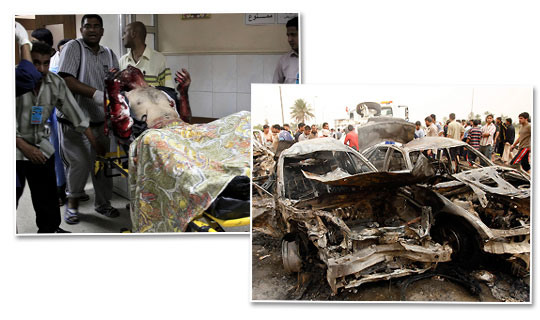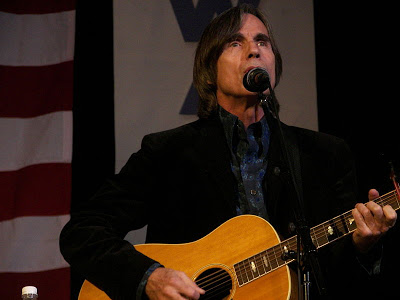
To Be a Republican You Need to Believe …


1. Jesus loves you, and shares your hatred of homosexuals and Hillary Clinton.

2. Saddam was a good guy when Reagan armed him, a bad guy when Bush’s Daddy made war on him, a good guy when Cheney did business with him, and a bad guy when Bush needed a “we can’t find Bin Laden” diversion.

3. Trade with Cuba is wrong because the country is Communist, but trade with China and Vietnam is vital to a spirit of international harmony.

4. The United States should get out of the United Nations, and our highest national priority is enforcing U.N. resolutions against Iraq.

5. A woman can’t be trusted with decisions about her own body, but multinational drug corporations can make decisions affecting all mankind without regulation.

6. The best way to improve military morale is to praise the troops in speeches, while slashing veterans’ benefits and combat pay.

7. If condoms are kept out of schools, adolescents won’t have sex.

8. A good way to fight terrorism is to belittle our longtime allies, then demand their cooperation and money.

9. Providing health care to all Iraqis is sound policy, but providing health care to all Americans is socialism. HMO’s and insurance companies have the best interests of the public at heart.

10. Global warming and tobacco’s link to cancer are junk science, but creationism should be taught in schools.

11. A president lying about an extramarital affair is an impeachable offense, but a president lying to enlist support for a war in which thousands die is solid defense policy.

12. Government should limit itself to the powers named in the Constitution, which include banning gay marriages and censoring the Internet.

13. The public has a right to know about Hillary’s cattle trades, but George Bush’s driving record is none of our business.

14. Being a drug addict is a moral failing and a crime, unless you’re a conservative radio host. Then it’s an illness and you need our prayers for your recovery.

15. Supporting “Executive Privilege” for every Republican ever born, who will be born or who might be born (in perpetuity.)

16. What Bill Clinton did in the 1960’s is of vital national interest, but what Bush did in the ’80’s is irrelevant.

17. Support for hunters who shoot their friends and blame them for wearing orange vests similar to those worn by the quail.

Thanks to Hobbit / The Rag Blog

Posted in RagBlog | Tagged , | 1 Comment

Obama Smearmeister Jerome Corsi Frequent Guest on White Supremacist Radio

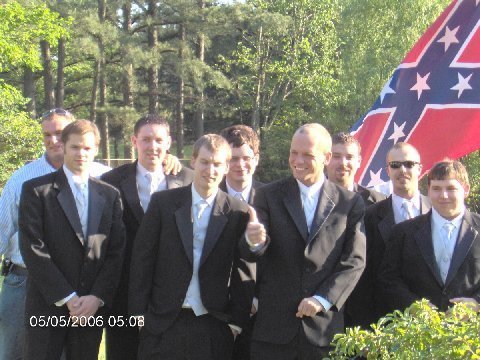
White supremacist talk show host James Edwards with cohorts. Photo from The Political Cesspool Photo Gallery.

Author of new book attacking Obama called ‘luminary’ by rising star of white Confederate media
By Jeffrey Feldman / August 14, 2008

Media Matters is now reporting that author Jerome Corsi, whose smear book of Barack Obama sits atop the NYT best-seller list, is scheduled to appear on the radio show Political Cesspool Aug. 17, 2008. Political Cesspool is a widely recognized white supremacist radio show whose host James Edwards regularly maligns Jews and African Americans, decries miscegenation, and has both interviewed and expressed admiration for widely recognized white supremacist leaders including David Duke and Gordon Lee Baum.

The Southern Poverty Law Center described ‘The Political Cesspool’ in a recent article posted to their hate-group monitoring resource called “Hatewatch”:

Since co-founding “The Political Cesspool” in 2005, Edwards has become a golden boy in white nationalist circles and his show has served as the primary radio nexus of hate in America. Its sponsors included the white supremacist Council of Conservative Citizens (CCC) and the Institute for Historical Review (IHR), a leading Holocaust denial organization. And its guest roster for 2007 reads like a “Who’s Who” of the radical racist right, including such people as the leader of the CCC, Gordon Lee Baum; Holocaust denier and IHR chief Mark Weber; neo-Nazi activist April Gaede; and anti-Semitic professor Kevin MacDonald. The show’s most frequent celebrity racist guest is former Klan leader and neo-Nazi ideologue David Duke, who has logged three appearances.

Several months after the SPLC article, a promotional piece about ‘The Political Cesspool’ circulated around White Supremacist forums, including a list of ‘luminaries’ that James Edards had interviewed during one month alone on his radio show:

During one particular 30-day span, the hosts interviewed the likes of: Dr. Virginia Abernethy, Dr. Chuck Baldwin, Gordon Baum, Esq., Peter Brimelow, Dr. Jerome Corsi, Sam Dickson, Esq., Dr. Thomas DiLorenzo, Dr. David Duke, William Flax, Esq., Dr. Kevin MacDonald, Rev. Ted Pike, Larry Pratt, Dr. Paul Craig Roberts, Dr. Tomislav Sunic, Jared Taylor, Mark Weber, Frosty Wooldridge and several other luminaries.

(from Original Dissent forum, May 15, 2008)

The list of ‘luminaries’ cited in the PR article consists of white supremacists, former KKK leaders, neo-confederate leaders, radical anti-immigration racists, scientific anti-Semites, hardcore gun-advocate nativists–and Jerome Corsi.

Corsi’s upcoming appearance on Political Cesspool is his third appearance on the white supremacist radio show. His other appearances include July 20, 2008 and November 15, 2007.

Media Matters has compiled a full list of racist remarks about African-Americans and Jews posted by Edwards on his blog.

The announcement for Corsi’s guest appearance on The Political Cesspool reads as follows:

The Political Cesspool 8/17/08 (TN) 04:00PM (CST) SOARING TO NEW HEIGHTS
Don’t miss today’s live broadcast as we make an announcement of epic proportions! Joining us on this monumental broadcasts as guests will be Nigel Farage, Chairman of the United Kingdom Independence Party (UKIP) and Dr. Jerome Corsi, author of the runaway best-seller, The Obama Nation. Dr. Corsi’s book debuted at #1 this week on the NEW YORK TIMES Bestseller List and is available at finer bookstores nation wide. (link)

While it should go without saying, the ramifications this holds for the broadcast and print media are profound. While the media has widely reported that Corsi was the author of a previous ‘Swift Boat’ smear campaigns against John Kerry, major media outlets have yet to report Corsi’s affiliation with white supremacist radio.

News of white supremacist ties to an author of a book maligning Senator Barack Obama’s candidacy for President deserves to be a top story within hours of its being reported.

© 2008 Jeffrey Feldman, Frameshop

Source / Frameshop

The Rag Blog

Posted in RagBlog | Tagged , , , , , , , | 1 Comment

BOOKS : The Lies of Jerome Corsi: Inside the Deceptions of the #1 Best-Selling Anti-Obama Book

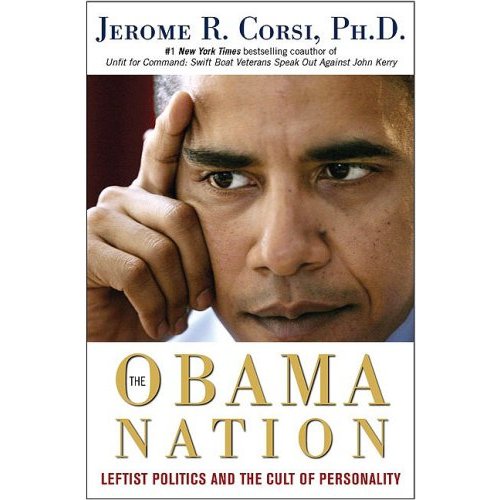
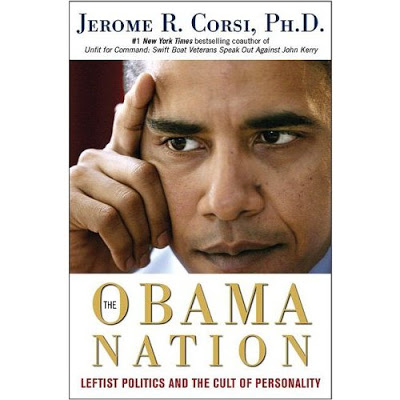
The following is a comprehensive review, and debunking, of Jerome Corsi’s book with the oh-so-clever title, The Obama Nation : Leftist Politics and the Cult of Personality. Corsi, it should be noted, is the architect of swiftboating and a man with no credibility whatsoever (except as a smearmeister). Yet his book will be number one on the upcoming New York Times bestseller list. With a bullet. The bullet, as Rachel Maddow pointed out last night on Countdown, is due to the fact that sales figures have been artificially boosted by extensive “bulk sales” to right wing organizations. Which means they’re being given away. Those that aren’t sitting in boxes somewhere.

A note about Corsi’s academic “credibility.” Countdown guest Eric Burns did a quick check of the book’s “footnotes” before the interview and said that of the first 11 citations, Corsi quotes himself (from his previous writings) in nine of them. In Burns’ words, “a dubious practice at best.”

Thorne Dreyer / The Rag Blog / August 15, 2008

‘This is one of the worst political books ever written’
by John K. Wilson / August 14, 2008

[Note: I’m the author of a book about Obama, Barack Obama: This Improbable Quest, but I’m not part of the Obama campaign.]

See Video from Countdown, below.

Jerome Corsi’s book, The Obama Nation: Leftist Politics and the Cult of Personality, has instantly soared to the top of the bestseller lists. But its popularity is in inverse proportion to its quality. This is one of the worst political books ever written. Corsi piles distortion upon innuendo to create a gigantic heap of right-wing garbage, with a seemingly endless parade of basic factual errors running through the text like rats. Corsi’s book is an embarrassment to the craft of journalism, and any of the conservatives who have praised and promoted it should feel humiliated at how bad it truly is. The Obama campaign just came out with a critique of Corsi’s book; it includes some of the many examples which I found independently and detail below.

Corsi’s editor, Mary Matalin, claims his book is “a piece of scholarship, and a good one at that.” There’s nothing scholarly at all about this pathetic excuse for a hatchet job.

Sean Hannity tried to push Corsi’s crazy theories on his radio and TV shows through multiple appearances. Hannity condemned “all you left-wing bloggers who want to smear Mr. Corsi” and to prove the author’s credibility asked him, “How many footnotes are in the book?” Corsi responded, “There’s over 300 pages, 700 footnotes, and I’ll stand by the truth of every statement in this book.”

Actually, there’s only 681 footnotes. But maybe he’ll stand by the truth of every statement after that one. (For the record, I have 769 footnotes in my shorter book about Obama, which, based on Hannity’s faulty logic, must mean that my book is 13% more true than Corsi’s.) The fact is, a footnote to an unreliable right-wing blogger isn’t proof of the truth; it’s proof that Corsi will write and cite anything, no matter how false, if it serves his far right agenda.

Corsi begins his book by noting that he titled it “Obama Nation” because that sounds like “abomination.”(x) This bad Biblical pun damning Obama as evil reflects the sleazy attacks Corsi makes throughout the book. Corsi recounts that at World Net Daily, “a large number of e-mails were received from readers objecting that Obama was not the Messiah but rather the biblical Antichrist prefigured in Saint John’s Apocalypse.”(225) Corsi denies that he thinks Obama is the Antichrist, but much of his book is devoted to demonizing Obama.

Corsi has admitted in one interview about Obama’s memoir, “I had to read it about six times before I began to figure it out.” Thousands and thousands of people have read Obama’s book, and Corsi seems to be the only one who had to read it six times before he could figure out that Obama was critical of his father’s flaws. No, correct that: Corsi actually never figured it out himself. He admits that he wondered “why Obama failed to discuss his father’s alcoholism and polygamy in his autobiography.”(24) But Corsi writes that he is told by journalist Rob Crilly that he’s wrong, that Obama in fact writes about all of this in his book (it’s described in depth on pages 125-126, 215-217, and 344 of Obama’s memoir). Unable to confess his own inability to read a book that he claims he’s almost “memorized,” Corsi prefers to blame Obama: “What is Obama trying to hide and why would he do so?”(24) Confronted with proof of his own stupidity, Corsi prefers to believe that Obama tried to conceal his father’s flaws in a book which is all about discovering his father’s flaws.

It takes real chutzpah to read a highly acclaimed book six times, overlook the most basic facts clearly written in it, and then blame the author for concealing the truth that he actually wrote. But Corsi has no shame. He writes: “That Obama’s father was a polygamist and an alcoholic may or may not tell us much about Obama. But that Obama does not present the true story about his father outright in his autobiography, in an easy-to-follow fashion, leaves the reader to discover the revelation, much as Obama claims he himself did.”(296) As a literary critic, Corsi is simply dreadful. The brilliance of Obama’s memoir is that he lets the reader discover the flaws of his father just as Obama did himself. It’s crazy to imagine that Obama’s memoir is deceptive because he didn’t follow a strict chronological order.

Obama’s memoir

Corsi’s embarrassing factual errors begin at the very start of his book. Corsi writes: “Interestingly, Obama did not dedicate Dreams from My Father to his mother, or to his father, Barack Senior, or to his Indonesian stepfather. Missing from the dedication are the grandparents who raised him in Hawaii….” That is very interesting, since Obama wrote in the introduction to his memoir, “It is to my family, though — my mother, my grandparents, my siblings, stretched across oceans and continents — that I owe the deepest gratitude and to whom I dedicated this book.”(xvii)

In an appearance on MSNBC, Corsi tried to explain away this mistake pointed out by Media Matters: “In the introduction that he wrote after, this was going with the second book. And the original book had no dedication page and this is not the typical way that you dedicate a book. So I’m making the distinction there is no dedication page in the book at all, never has been.” Once again, Corsi is wrong. The introduction where Obama dedicates his book to his family appears in the original edition of Obama’s memoir, as well as the revised edition Corsi used for his book. Moreover, Corsi’s attack against Obama was that he had not dedicated the book to his family, not that he didn’t have a specific dedication page. But rather than admit a clear factual error, Corsi continues to deny that he made a mistake and tries to deceive viewers about his book.

Corsi claims that in Obama’s memoir, “we find Obama caught up in half-truths”(18) because, Corsi reveals, Obama’s father had turned down a full scholarship from the New School in order to attend Harvard. Where did Corsi learn this? Well, actually, it was printed right there in Obama’s memoir. But Corsi calls it a “half-truth” because “Obama does not make this important point chronologically.”(18)

It’s difficult to convey just how bad of a reader Corsi is. Although he has a Ph.D. (as he reminds us on the cover of the book and the top of every other page), Corsi seems incapable of the most basic reading skills. Instead, Corsi complains about Obama’s memoir, “Deciphering the truth takes much effort….”(18) Unfortunately for his readers, Corsi is not someone who likes to put a lot of effort into a book, whether he’s reading it or writing it.

Many of Corsi’s critiques don’t make any sense at all. Corsi attacks Obama’s memoir because he “never states precisely how many wives his father had, or how many half-brothers and sisters he has from different mothers….”(21) Yet Corsi himself interviews Obama’s uncle: “Sayid Obama was not even sure how many wives his brother had….The number of children Obama Senior had is equally uncertain.”(26) If Obama’s uncle doesn’t know how many wives and children Obama’s father had, why is Corsi denouncing Obama for being unable to state the numbers “precisely”?

According to Corsi, “Obama blames racism for breaking up his parents’ marriage, not his father’s polygamist ways…”(21) Corsi provides no citation for this false claim, probably because it’s not true.

Corsi devotes six full pages of his book to expose a “lie” about how Obama’s father came to America: “Obama is again lying about history to claim JFK had anything to do with bringing his father to the United States to study.”(33) And what was this “lying”? As the Washington Post discovered, John F. Kennedy and the Kennedy family foundation had funded a second airlift to bring African students to US colleges, but that Obama’s father had been part of the first airlift. When Obama talks about the Kennedy family’s role in helping bring students like his father to America, he’s not lying.

By contrast, Corsi’s book is littered with factual errors, such as these identified by Media Matters:

Corsi claims that Obama’s omits his half-sister’s birth: “remarkably, he makes no reference to Maya’s birth”(48) In reality, Obama mentions it on page 47 of his memoir.

Corsi claims that Obama’s work as a community organizer in New York City is “a job Obama does not mention in his autobiography.”(129) Obama does discuss it on page 139.

Corsi suggests that “Obama Senior, following the prescripts of Islamic sharia law, divorced” Obama’s mother in 1963.(44) In reality, there’s not any evidence, beyond the assertions of a right-wing blog, that the divorce had anything to do with sharia law.

According to Corsi, “Still, Obama has yet to answer questions whether he ever dealt drugs, or if he stopped using marijuana and cocaine completely in college, or whether his drug usage extended into his law school days or beyond.”(77) In reality, Obama reports that after he went to college at Columbia, “I stopped getting high.”(120)

According to Corsi, “Nowhere in the autobiography does Obama disclose that his wife-to-be accompanied him to Africa on the 1992 trip.”(25) Not true. Obama writes on page 439, “After our engagement, I took Michelle to Kenya to meet the other half of my family.”

Corsi is fond of using a common technique: he cites some outrageous claim as if it were true and then discusses the impact it would have on voters. For example, he discusses a YouTube video and declares that “What would be heard by most listeners is that Obama hates the military so much that he might leave the United States defenseless against our enemies…”(3)

False reports about religion form a major part of Corsi’s book. Corsi claims, “Obama’s Kenyan father was Muslim.”(20) In reality, Obama’s father was an atheist. This fact is confirmed in Corsi’s own book when Sayid Obama (Barack Sr.’s brother) declared, “I did not see my brother practice Islam, especially after he came back from his studies in the United States.”(22) But Corsi claims, “there is no doubt Obama Senior was a Muslim by birth and upbringing”(22) That’s a lovely claim, but unfortunately for Corsi, it’s factually false: A Muslim, like a Christian, is determined by faith, not by birth and upbringing.

Corsi writes, “Was Obama ever trained in Islam? Obama and his presidential campaign vehemently deny he ever had anything to do with Islam. But is that the truth?”(50) No, it’s not the truth. But the lie belongs to Corsi, not Obama or his campaign. According to Corsi: “Obama did attend a government-run public school in Indonesia and he did receive Islamic instruction, including study of the Koran. Here the Obama campaign makes a mistake. I accept Obama’s statement that he is a Christian, but take exception to the claim that Obama was not introduced to Islam as a child.”(51) Of course, the Obama campaign never claimed that Obama did not receive instruction about Islam, as he explains in detail in his own memoir. Instead, the campaign asserted, “Barack Obama is Not and Never Has Been a Muslim,” which is true. Studying the Koran doesn’t make you a Muslim. Corsi claims that a blog found Obama’s school records and discovered his horrifying revelation: “his religion was listed as Islam.” Well, of course it was. You had to be listed as Christian or Muslim at the school, and with an atheist mother and a nominally Muslim stepfather, it was natural for Obama to be listed as a Muslim.

Corsi attacks Obama at length because his memoir describes a childhood Indonesian home in a “still-developing area on the outskirts of the town.” Corsi complains, “that physical description does not match the Indonesia television news videos showing the house…”(54) According to Corsi, it is “an attractive neighborhood in the center of Jakarta.”(54) Perhaps that’s because things change. In 1970, my parents lived in central Illinois near the edge of a cornfield; today, that same house is in the center of town. In 1970, when Obama lived in Indonesia, Jakarta had a population under four million; today, it’s over 13 million. But rather than the obvious explanation of urban growth, Corsi sees only a vast Obama conspiracy: “it is hard to decipher what Obama might be trying to hide by not being clear about the specific location of the houses where he lived in Jakarta….Looking closely at Obama’s narrative, what dominates the story are the holes.”(55)

Corsi notes “a bizarre but important story” where Obama recounts in his memoir being nine years old and reading a Life magazine in the embassy library and seeing a picture of “the black man who tried to peel off his skin” after using a chemicals to lighten his skin.(65) An extensive investigation by the Chicago Tribune found no such article in Life magazine. It’s possible that Obama had seen a July 1968 article in Esquire, titled “A Whiter Shade of Black,” which dealt with blacks who used an ointment that turned their skin white. Or it’s possible that as a child Obama saw advertisements for skin bleaching products and simply didn’t remember it correctly two decades later. As a 1966 Time article noted, “Advertisements in the Negro magazines still hymn Nadinola skin bleach: ‘Lightens and brightens skin.'”

Yet according to Corsi, “The entire episode suggests what psychologists call ‘hypothetical lying,’ in other words, imagining something that has not happened, but imagining it with so much precise detail that the made-up memory functions for the person as if it were real.”(66) Astonishingly, Corsi concluded: “Has Obama lost the ability to tell the difference between something that actually happened and something he invented?”(66)

The irony here is that Corsi makes far more factual errors than anyone has ever alleged against Obama’s memoir, and Obama was trying to remember incidents 20 years earlier that happened when he was a child.

Corsi offers yet another example of Obama’s faulty memory: a photo that Obama recalls seeing in Life magazine when he was in Indonesia was apparently published in Life a year “after the date Obama wants us to think he left Indonesia.”(67) Corsi concludes, “the puzzle just adds to the growing list of factual discrepancies or outright fabrications that Obama manufactures, very likely on an ongoing basis. Even Indonesian television reporters can’t identify with certainty the addresses where Obama lived with his family.”(67) But it’s ridiculous to conclude that Obama is guilty of “fabrications” because he failed to remember the exact year of his childhood that he saw a photograph in a magazine.

As Stephen Colbert said about Obama, “If we can’t trust you to remember which magazine you read in Indonesia when you were 9, how can we possibly ever trust you to protect our country?”

Who is Jerome Corsi?

Corsi brags that he is a member of the far-right Constitution Party, which “asked me to run as its presidential candidate in 2008…”(xi) As Media Matters noted, Corsi wrote many incredibly offensive and bigoted comments on right-wing message boards. He called Islam “a worthless, dangerous Satanic religion” and wrote that “RAGHEADS are Boy-Bumpers.” According to Corsi, “Boy buggering in both Islam and Catholicism is okay with the Pope as long as it isn’t reported by the liberal press.” And Corsi wrote, “didn’t John Kerry begin practicing Judiasm? He also has paternal grandparents that were Jewish. What religion is John Kerry?” Corsi referred to Katie Couric as “Little Katie Communist.” Corsi called Bill Clinton “an anti-American communist.” Corsi called Hillary Clinton a “FAT HOG” and possibly a “lesbo,” and repeatedly referred to their daughter as “Chubbie Chelsea.”

In short, Corsi is sexist, racist, and bigoted toward many different religions.

(Oddly, although Corsi has no problem denouncing Obama for a book written almost 15 years ago discussing his childhood memories, when Bob Beckel criticized Corsi’s offensive online comments from 2002 and 2003, Corsi complained, “you’re going back to ancient history.” But Corsi’s bigotry isn’t ancient history. As recently as August 9, Corsi claimed that Martin Luther King Jr. was “a shakedown artist.”

Corsi makes openly racist comments in his book, like “Obama’s mother chose another third world prospect for her second husband”(43) or declaring, “the race Obama embraces is not that of his mother, although he does have that choice.”(63) Presumably, Corsi thinks that all Obama needed to do was shout “Caucasian” loudly enough and no one would ever notice that he’s black. In Corsi’s delusional imagination, “Obama wants to will all the white blood out of himself so he can become pure black.”(91) Corsi declares, “His race, he self-determines, is African-American. In making that determination, he rejects everyone white, including his mother and his grandparents.”(91) Of course, anyone who actually reads Obama’s memoir realizes that he never rejects his family or white people. Corsi also worries, “If Obama does win the presidency in 2008, he will be the first president in our history to have an extended family in another country.”(113) These sleazy attacks are meant to convey that Obama isn’t “American” enough.

Corsi writes, “I have pursued Obama’s extensive connections with Islam”(xv) and attacks Obama for being insufficiently anti-Muslim. Corsi writes, “Obama could have an increasingly difficult time convincing U.S. voters he is anything but pro-Islam”(298) and adds, “Obama’s experience with Islam predisposes him to Islam.”(302) Demanding that presidential candidates must hate all Muslims is a particularly sick kind of bigotry.

Corsi even claimedin an August 9, 2008 interview that Obama may not be an American citizen and that his birth certificate is a fake: “We can’t yet get the authentic birth certificate….I’m convinced it’s a forgery.” According to Corsi, “if a birth certificate were forged and put on a website, it’s conceivable that somebody committed a felony.”

Here Corsi is embracing one of the dumbest conspiracy theories in the world. Obama’s birth certificate, released by his campaign to stop these loony rumors, has been proven to be authentic, but far-right conspiracy theorists claimed that the Obama campaign had taken the birth certificate of his sister, Maya Kassandra Soetoro, and changed the date of birth, place of birth, name, sex, and father’s name to make it appear to be Obama’s birth certificate. This conspiracy theory supported by Corsi is particularly stupid because Maya was born in Indonesia, not Hawaii, and therefore doesn’t have a Hawaiian birth certificate. The fact that Corsi supports this conspiracy theory should make everyone question both his sanity and his capacity for rational thought.

Corsi’s crazy theories aren’t limited to Obama. Corsi has accused George W. Bush of running a secret conspiracy to destroy the United States: “President Bush intends to abrogate U.S. sovereignty to the North American Union, a new economic and political entity which the President is quietly forming….Why doesn’t President Bush just tell the truth? His secret agenda is to dissolve the United States of America into the North American Union.” Conservative talk show host Michael Medved criticized Corsi and denounced these conspiracy theories as “puerile paranoia.” Conservative blogger John Hawkins of Right Wing News condemned Corsi’s lunacy: “Nobody has worked harder to convince people that the completely moronic North American conspiracy theory is real.”

Corsi wrote an entire book about this delusion, and has focused on a nonexistent “NAFTA superhighway” and even falsely published an article saying that Mexican president Vicente Fox had confirmed plans for the Amero, a fantasy of Corsi and the John Birch Society about a new currency to replace the dollar.

Plagiarism

Corsi even accuses Obama of plagiarism, claiming his book was a “borrowing of ideas.” According to Corsi, “Many of the black-rage paragraphs Obama wrote in Dreams from My Father bear a striking resemblance to passages Frantz Fanon wrote in his first book, Black Skin, White Masks….”(81) So what is this striking resemblance? Obama wrote about the phrase “white folks” and Corsi quotes him: “Ray assured me that we would never talk about whites without knowing exactly what we were doing. Without knowing that there might be a price to pay.” And the “similarity” in Fanon’s writing? “The black man has two dimensions. One with his fellows, the other with the white man. A Negro behaves differently with a white man and with another Negro.”(81) The only similarity here is the notion that blacks speak differently around whites, which is one of the most common motifs in African-American literature, and hardly original to Fanon or anyone else.

But Corsi has one last trick up his sleeve. He claims that Obama’s mis-remembered story about skin lightening was actually an idea stolen from this passage in Fanon’s book: “For several years certain laboratories have been trying to produce a serum for ‘denegrification'” with all the earnestness in the world, laboratories have sterilized their test tubes, checked their scales, and embarked on researches that might make it possible for the miserable Negro to whiten himself and thus to throw off the burden of that corporeal malediction.”(82) This is, of course, utterly silly. Chemicals to lighten skin had been around for ages and widely advertised. Obama didn’t need Fanon to come up with the idea, especially since Fanon’s bizarre notion of a “denegrification” serum appears to be very different from the skin chemicals.

To sustain this crazy theory of Obama plagiarizing Fanon, Corsi asserts that “Frantz Fanon’s revolutionary writings were instrumental in shaping Obama’s own political analysis of race.”(126) Corsi goes even further, imagining that Obama’s distant father was the source of some kind of Fanon obsession: “We do not know if Obama Senior ever shared Fanon’s writings with his son, but much of the expression of black resentment Obama offers in Dreams from My Father appears strongly influenced by Fanon’s pages.”(82-83) We do not know? Obama last saw his father when he was 10 years old. Does Corsi really think that Obama spent that short time as a kid with his father being indoctrinated in the works of Frantz Fanon?

According to Corsi, “Obama railed against the same forms of racial oppression his father must have felt under British colonialism.”(83) What is Corsi talking about? Obama ultimately rejects the “black rage” that Corsi attributes to him, and nothing about it is “anticolonial” in nature.

Corsi also accuses Obama of plagiarizing words from Deval Patrick, ignoring the fact that Patrick had urged him to use those phrases and was acting in the role of a speechwriter.(226) Then Corsi takes the accusation of plagiarism to psychotic new levels. According to Corsi, “Obama has repeatedly used the words bamboozled and hoodwinked,” claiming that Axelrod was stealing dialogue from a Spike Lee movie that used the same words.(228) Corsi also accuses Obama of plagiarism for using the common pro-labor phrases “si se puede” and “yes we can.” Corsi even accuses Obama of plagiarism for using the word “change,” claiming that “the use of ‘change’ as a political slogan dates back to socialist Saul Alinsky and his desire to cause a radical redistribution of income from the haves to the have-nots in America. Does Axelrod really want his candidate identified with Saul Alinsky?”(230) Needless to say, it’s highly doubtful that Alinsky invented the word “change.”

According to Corsi, “Obama has borrowed phrases freely even from movies, taking ‘bamboozled’ from Spike Lee’s movie about Malcolm X and the phrase ‘He is the One’ from the Matrix movie series.”(300) Of course, “bamboozled” existed as a word long before Spike Lee, and Obama has never said he is “the One.” Oprah Winfrey once said, “Is he the one? South Carolina, I do believe he is the one to bring us the audacity of hope.”(229) To claim that Oprah Winfrey plagiarized from a movie because she used the word “one” is silly.

Corsi’s false attacks on Obama as a plagiarist are particularly ironic because Corsi is himself a plagiarist. After right-wing blogger Debbie Schlussel discovered that Corsi was repeatedly stealing her work (while adding in mistakes), Schlussel declared that Corsi “is a plagiarist, plain and simple. He cannot be trusted.”

Guilt by association

Corsi’s favorite attack against Obama is guilt by association. Corsi complains that Bill Ayers “likes to present himself as the ‘Distinguished Professor of Education’ at the University of Illinois at Chicago.”(119) Perhaps that’s because his title is “Distinguished Professor of Education.”

Corsi claims that Obama’s distant connection to Ayers “could easily block Obama from the White House, and not just in 2008 but forever.”(120)

Corsi claims that, “In his eleven-year reign of underground terror, Ayers participated in thirty bombings.”(139) This is false; Corsi’s sole source is a World Net Daily article that offers no source for this claim. Altogether, there were perhaps 30 bombings and attempted bombings blamed on the Weather Underground, but no one imagines that Ayers participated in all of them, since the organization was highly decentralized while on the run from the police.

Of course, there’s no reason why Corsi needs to exaggerate Ayers’ crimes. What Ayers did was appalling and stupid. But it has nothing to do with Obama, who has condemned Ayers’ past. (By contrast, John McCain has never been asked to criticize G. Gordon Liddy, the Watergate criminal he calls his “friend” who urged his radio listeners to shoot federal law enforcement agents in the head; nor has McCain ever been asked about Oliver North, the Contragate criminal who illegally funneled government money and weapons to support the terrorist activities of the Contras.)

Corsi claimed Alice “Palmer would never have introduced Obama to the Hyde Park political community at the Ayres-Dohrn home unless she saw an affinity between Ayers and Dohrn’s radical leftist history, her own history of far-leftist politics, and the politics of Barack Obama.”(137) But the event wasn’t held primarily for Obama. It was Palmer’s own announcement that she would run for Congress, as the Politicoarticle cited by Corsi made clear. Obama was there as Palmer’s endorsed successor for her Senate seat, but there’s no evidence that he had any role in deciding to hold it at Ayers’ home.)

Corsi claims about Obama: “either he did not know Ayers and Dohrn are still radical leftists—in which case he is implausibly naive—or Obama did know, which would confirm he joined with Ayers and Dohrn because Obama too continues to believe, albeit silently and secretly, in the Far Left’s radical agenda.”(140) Of course, Corsi is so desperate to push the conspiracy theory of Obama as a secret left-wing radical that he omits another possibility: that Obama knew Ayers was a leftist, but he didn’t care. Perhaps Obama believes in the notion of a free society, where you work with people you disagree with.

But according to Corsi, “Even today, Ayers appears to hold the same radical political beliefs he did in the Weather Underground, and Obama had to know that was also the case when he first met Ayers in 1995.”(147) Corsi doesn’t explain how Obama “had to know” Ayers’ views on politics when he first met him. Telepathy? Mind-reading?

Corsi is fond of quoting other people to make the distortions and deceptions he’s afraid to do himself. He quotes a blogger referring to Ayers as “Obama’s boss” and explains that reference was due to Ayers being chair of the Woods Fund board.(147) Corsi doesn’t bother to correct this error (the chair of a foundation board is not the “boss” of the members)

Much like David Freddoso’s anti-Obama book (which I reviewed here), Corsi uses McCarthyist red-baiting techniques to attack Obama, such as his childhood friendship with an alleged communist poet, Frank Marshall Davis. Corsi glorifies the “McCarthy-era committees seeking to expose communists considered to be a security threat.”(86) So what “threat” did this committee find in Davis? According to Corsi, he wrote articles criticizing a Hawaii “Commission on Subversive Activities” and a 1951 article in a communist newspaper. Corsi notes that authors read by Obama were also reds: Langston Hughes and Richard Wright “both had communist connections as well.”(86)

Corsi also denounces Obama’s alleged connections to Saul Alinsky, because he worked for a community group that utilized some of Alinsky’s techniques. According to Corsi, “When Obama tells audiences that his community organizing experience ‘taught me a lot about listening to people as opposed to coming with a premeditated agenda,’ he is reciting pure Alinsky dogma.”(135) To Corsi, listening is “intrinsically an elitist view; always, the organizer knows best.”(135) This is an Orwellian perversion of language to claim that listening is “an elitist view.”

Corsi quotes numerous far-right sources to “prove” his claims, such as this: “Conservative columnist Ann Coulter has characterized Obama’s Dreams from My Father as a ‘dimestore Mein Kampf,'” an insane notion that Corsi doesn’t criticize at all.(78) Corsi doesn’t explain why he thinks it’s reasonable to compare Obama to Hitler.

Another guilt-by-association smear by Corsi is against Rashid Khalidi, a brilliant Columbia University professor who once taught at the University of Chicago and held a fundraiser for Obama. Corsi offers only this baseless attack: “Khalidi’s views are clearly anti-American” because he criticizes US support for Israeli settlements in Palestine.(142)

Corsi even condemns Obama for attending a 1998 Arab community fundraiser featuring the scholar Edward Said. Based on photographs of the event, Corsi makes this accusation: “Obama engages in what appears to be animated conversation with the professor. A second photograph shows Obama and Michelle paying close attention to Said as the professor delivers the evening’s keynote address.”(142) What a shocking revelation! Barack Obama actually listened to a world-renowned professor and then had a conversation with him.

Corsi even goes after the parents of Obama campaign workers. He attacks Obama advisor David Axelrod because his mother wrote in the 1940s for PM, a left-wing newspaper in New York.(216) Corsi even includes a bizarre section noting that Axelrod’s father killed himself and “Obama’s father killed himself driving drunk.”(218)

According to Corsi, Michelle Obama “made herself look like a black racist.”(233) How, exactly, did she do that? Michelle’s senior thesis at Princeton on race included an analysis of “black separatism” and she helped define that term by using a 1967 book, Black Power, which was co-written by Stokely Carmichael, who has since often made crazy speeches insulting whites and Jews. So, even though Michelle never embraced black separatism, because she cited a book to define it written by a controversial figure, she is therefore a “black racist.”(232) Incredibly, Corsi extends his guilt-by-association attacks even to the reading of books.

Nothing quite embodies the sleaziness of Corsi’s attacks so much as his smear of Sam Graham-Felsen, one of Obama’s official bloggers. Corsi recounts how “Graham-Felsen’s bookcase in the Quincy House dorm included titles by Karl Marx and Howard Zinn…”(149) Imagine that: a college student who has books! Graham-Felsen is also deemed guilty for praising Noam Chomsky.(149) And then, as Media Matters pointed out, Corsi falsely presents an article Corsi wrote for the Nation as being written for the magazine “Socialist Viewpoint” (which in reality reprinted it from the Nation, as it reprints many mainstream publications). Corsi then describes the publication in breathless detail: “The Socialist Viewpoint is a magazine published by the Socialist Workers Organization, a group that describes itself as ‘formed to advance the revolutionary Marxist political program in the United States.'”(150) Finally, Corsi declares, “Little Green Footballs has called Graham-Felsen ‘a hardcore Marxist.'”(151) Wow, Little Green Footballs, there’s an unimpeachable source. Corsi quotes another blogger who embraces his McCarthyism: “exactly what is a Democratic candidate doing with a staffer who acts as the campaign’s public’s face when the staffer is featured in Marxist publications?”(151)

Corsi concludes his chapter on Obama’s radical views by writing: “How possibly can Obama argue his association with radicals such as Bill Ayers and Bernardine Dohrn was a long time ago, when he continues to recruit a Marxist sympathizer such as Sam Graham-Felsen to be an official blogger of his 2008 presidential campaign?”(151) Corsi actually believes that Obama should be held responsible for the failure of his campaign to ban anyone who has read a book by Karl Marx or Howard Zinn. Perhaps it would assist the Obama campaign if Corsi came up with a list (let’s call it a “blacklist”) of books that anyone associated with his campaign is not allowed to have read at any point in their lives.

Reverend Wright

Not surprisingly, Corsi joins in the right-wing attacks on Obama for attending the church of Rev. Jeremiah Wright. Twice in the book, Corsi observes that Wright is often “wearing a dashiki”(10) and “gives his sermons while dressed in African garb,”(180) as if his clothing alone should be used to condemn him.

Corsi attacks Wright’s sermon after 9/11 that mentioned America’s “chickens coming home to roost.” According to Corsi, “Reverend Wright adapted the phrase to imply that the terrorist attacks of 9/11 were divine retribution for white America’s continuing racial injustice.”(181) That’s not true. Wright never said that 9/11 was due to “divine retribution” (that was Pat Robertson’s theory) or “racial injustice.” Wright was making the argument that America’s foreign policy had bred resentment in the world, and “violence begets violence.”

When Obama said that he hadn’t heard the most outrageous comments of Rev. Wright being shown over and over again in the press, Corsi wrote: “Obama’s denial spurred investigators to prove the contrary. On March 16, two days after Obama’s denial appeared on the Huffington Post, new evidence emerged. NewsMax’s Ronald Kessler reported that Obama had been in Trinity United Church of Christ on July 22, when Kessler was present. Kessler claimed he and Obama both heard Wright preach a sermon that day in which the preacher blamed the ‘white arrogance’ of America’s Caucasian majority for the world’s suffering, especially the oppression of blacks.”(196) As Media Matters pointed out, Obama was actually in Miami giving a speech at 1:30pm that day. But for Corsi, facts don’t really matter. Corsi also gets his basic facts wrong. It was Jim Davis, not Kessler, who falsely claimed to be in church with Obama that day. Corsi toldthe New York Times, “We can nitpick the date to death.” But the whole point of this fake story about the date was to prove that Obama was in the church when Wright made one of his controversial remarks. If the date is wrong (and it is), then the accusation is false.

Corsi recounts how Obama criticized Wright’s “distorted view” of racism and America and accuses him of “clearly contradicting” himself, writing about this gotcha moment: “How could Obama know these were the subjects of Wright’s sermons unless he had heard them?”(197) Gee, I don’t know, maybe it could have been the round-the-clock news coverage showing Wright’s speeches over and over again. Is Corsi really this stupid? Or does he think his conservative readers are so stupid that they will swallow this nonsense without thinking?

Corsi regularly attacks Obama’s faith. Corsi writes, “before Obama’s baptism at Trinity, when he was nearly thirty years old, there is no other life incident evidencing he is a Christian.”(187) It’s a particularly bizarre accusation: Before Obama became a Christian, there was no “life incident” showing he was a Christian. But that’s really the definition of what it means to become a Christian. Corsi seems to think that a Christian must prove that he was a Christian before he became a Christian in order to be called a real Christian.

Corsi also makes another baseless attack on Obama’s faith, claiming that Obama felt that he “did not necessarily have to be a believer” to join his church. Corsi tries to prove this by quoting what Obama writes in The Audacity of Hope: “faith doesn’t mean you don’t have doubts….religious commitment did not require me to suspend critical thinking….”(188) Amazingly, Corsi compares Obama to Machiavelli for this, calling Obama’s faith “a calculated decision to position yourself favorably in the eyes of those you want to lead, whether you believe in the decision or not.”(188) In Corsi’s view, Christians are incapable of critical thinking and doubt, and by showing his ability to think rationally, Obama must not be a Christian.

Corsi tries to associate Obama with black radicals, and even mentions a short profile on biography.com about Louis Farrakhan that declares, “along with other prominent black leaders such as Al Sharpton and Barack Obama, Farrakhan helped lead the Million Man March on Washington.”(191) Corsi writes, “Obama’s supporters, who clearly want to move Obama as far away from Farrakhan as possible, will be certain to disavow that Obama had any leadership role in Farrakhan’s 1995 march.”(192) Actually, they’ll be certain to disavow it because it’s not true. Obama attended the event, but he never had a leadership role (in fact, he criticized the march organizers). Corsi seems to think it’s perfectly acceptable to put false information in his book as long as he’s quoting someone on the internet.

The Kenya Conspiracy

According to Corsi, “Obama’s 2006 trip to Kenya evidenced his continued ties to a Raila Odinga, a fellow Luo tribesman, who was running for president of Kenya as a Muslim sympathizer with well-known communist political roots.”(93) Corsi falsely claims that Obama was “supporting Odinga openly in Kenya.”(93)

What was the connection? When Obama spoke publicly to a crowd, Odinga was nearby. That’s it. No endorsement. No mention of Odinga by Obama. Just this appearance where Odinga could be seen near Obama. According to Corsi, “Obama, by being seen this prominently with Odinga in public, had injected himself into the presidential contest on the side of his tribesman.”(95-96)

From this slight connection, Corsi goes on for an incoherent 20-page diatribe against Odinga and the intricacies of Kenyan politics. Corsi condemns Odinga, a Christian, for making an agreement with a Muslim group to maintain “open links of communication” if elected president, which Corsi calls “an undeclared radical Islamic political agenda.”(107)

Corsi also attacks Obama for criticizing the corruption of the Kenyan government that Odinga was opposing. Corsi seems to be arguing that there’s no corruption in Kenya, and the shakedown fees reported by a local Chicago news team to enter Kenya were simply a miscommunication.(96)

After the disputed election, when violence broke out between supporters of each candidate, Obama recorded a message urging peace at the request of Secretary of State Condoleezza Rice. Corsi condemns this by writing, “Senator Obama has continued to insert himself into Kenyan politics.”(104) Corsi even repeats conspiracy theories by some in Kenya who think that Obama as president would overthrow the Kenyan government “by means either military or political” to install Odinga.(106)

In one particularly bizarre part of the book, Corsi recounts how political consultant Dick Morris showed up in Kenya to volunteer for Odinga’s campaign (he was expelled from the country by the Kibaki regime Corsi admires). According to Corsi, “Morris’s showing up in Kenya makes no sense outside the Obama-Odinga connection. Odinga critics speculated that Morris had been recommended by former Clinton associates working for Obama.”(115) In reality, Morris worked in the past for both Democrats and Republicans before his sex scandal involving a prostitute drove him to the far right-wing. Corsi mentions that “Morris had been openly critical of Hillary Clinton’s campaign against Obama”(115) without bothering to mention that Morris is a conservative who hates the Clintons but also hates Obama, even falsely reporting in a January 2007 column that Obama had voted against an ethics reform bill that Obama actually voted for. Like so much else in this book, Corsi’s fantasy of an Obama-Odinga conspiracy has zero evidence to support it.

The Rezko Conspiracy

Corsi falsely accuses Obama of taking bribes from Antonin Rezko. According to Corsi, “As we shall see, Rezko was persistent, ultimately convincing Obama to drop working for political organizing causes so he could supplement the dwindling advance he had received at Harvard to write a book with real income as a lawyer, working the small Chicago law firm where the lead partner did much of Rezko’s slumlord legal work for him.”(157) This badly-written sentence includes some astonishing accusations, namely that Rezko was the one who convinced Obama to work for a small law firm that specialized in civil rights advocacy so that “Obama could work for Rezko indirectly and benefit from Rezko’s connections.”(158) There’s only one problem with Corsi’s assertion: He doesn’t have any evidence to support it. In a section completely free of footnotes, Corsi simply proclaims: “The likelihood is that Rezko played a role in getting Obama to join Davis Miner Barnhill & Galland.”(158) Likelihood? That’s a strong word for a completely baseless accusation.

Rezko had tried to hire Obama for his firm after he graduated from law school, which Obama turned down. But Corsi treats this as some secret conspiracy: “Alinsky taught that power was everything and that image, words, and positioning were just methods to capture power, working from communities up. Whatever Obama and Rezko talked about in their first meeting, the record shows Obama ended up working for the lawyer Allison Davis, who was one of Rezko’s business partners.”(159) None of this makes any sense. After law school, Obama could have worked almost anywhere and made a lot of money. Obama gave that up to work for a civil rights firm, not because Rezko made him some kind of a deal to promise him work at the law firm that he could have gotten anywhere.

Yet Corsi concludes that Obama “took steps that helped Davis and Rezko in their business relationship.”(159) In reality, all Obama did was his job. He did about five hours of routine legal work on behalf of community groups doing affordable housing projects with Davis and Rezko, since it’s not surprising that Davis would choose his former law firm to do the work. But this is Corsi’s attempt to blame Obama for Rezko’s corrupt business dealings and Rezko’s failure to maintain low-income housing.

Throughout the book, Corsi demands that Obama should have quit his job even though no one knew about Rezko’s crimes. Corsi wonders why Obama “continued to work for a law firm that had Rezko as a client.”(164)

Corsi declares, “There is no record that Illinois state senator Obama ever so much as placed a speech in the record objecting to the public-housing practices perpetuated in his district by Tony Rezko, let alone calling for investigation of Rezko and his business practices.”(164) That’s because there’s no record that Obama ever knew about the problems with Rezko’s business. The newspapers never reported on it until long after Obama left the state senate, and complaints from tenants would go to local aldermen and city officials, not to a state senator.

Corsi repeatedly tries to claim that Rezko overpaid for the lot he bought alongside Obama’s house, but it’s not true. Corsi admits that Rezko’s wife sold the lot for a profit to Rezko’s former attorney, Michael Sreenan, but treats this as part of the conspiracy: “in an article titled ‘Obama is one lucky fellow,’ Rezko Watch found it was unlikely that Sreenan would actually construct any condos on the lot he had bought from Rita Rezko.”(167) Corsi omits the fact (revealed in a Salon.com article Corsi cites) that Sreenan currently has the lot for sale at $950,000, $375,000 more than he paid for it. As numerous reports have found, the price Obama and Rezko paid for their properties was perfectly legitimate.

Unable to show any wrongdoing, Corsi offers this desperate argument: “Even if no illegality is ever identified, Obama’s continued willingness to take campaign contributions from his ‘friend’ Rezko, even after serious allegations about Rezko’s low-income housing empire began to be raised, have the feel of impropriety.”(170) But according to Opensecrets.org, Rezko’s last donation to Obama came on October 3, 2003, long before any scandal about Rezko appeared—and two months before Rezko gave $4,000 to George W. Bush’s campaign. Would Corsi blame Bush for the “feel of impropriety” of taking money from Rezko?

Corsi declares, “investigative reporters have drawn a line from Obama to Rezko to Saddam Hussein’s Oil for Food scandal, with the key connecting point being billionaire Nadhmi Auchi.”(173) But that same line could be drawn from George W. Bush or any other politician Rezko knew, since it’s pure guilt by association.

Corsi concludes his corruption chapter with one final outrageous lie: Obama “overlooked Rezko’s questionable activities to take money not just to finance his campaigns but to buy the mansion he feels his family deserves.”(175) Corsi’s claim that Obama somehow took money from Rezko to buy Obama’s house is a total fabrication. There is not even the slightest bit of evidence to support it. Obama had a bank loan and a $1.2 million book advance to buy his $1.65 million home. It’s insane to imagine that Obama, after winning a seat in the US Senate, took a massive cash bribe he didn’t need from Rezko and somehow concealed all the money.

Corsi on the issues

In the final line of the book, Corsi writes: “If he sticks to the issues, McCain will defeat Barack Obama.”(304) That’s ironic advice from a writer who devotes almost all of his book to false guilt-by-association smears. Corsi includes almost nothing in this book about Obama’s policies, and what he does write about is usually wrong.

For example, Corsi claims that Obama “pledged to reduce the size of the military,”(257) and claims that there are “video clips that show his saying he wants to reduce the military”(279) but Corsi provides no evidence or citation for this assertion. In reality, Obama has pledged to increase the size of the military by 92,000 troops. Corsi attacks Obama for declaring, “America seeks a world in which there are no nuclear weapons.”(261) Of course, he ignores the fact that Ronald Reagan (and many other presidents) have made similar statements.

Corsi even tries to attack Obama’s opposition to the war in Iraq. Twice in the book, Corsi notes that “Obama’s speech was not recorded by anyone.”(258) The text of Obama’s speech is widely available, and it’s not clear if Corsi is claiming that Obama never made the speech or later on changed the content of it to oppose the war. Corsi even tries to refute Obama’s claim that he was in the midst of a U.S. Senate campaign: “he gave his famous antiwar speech in October 2002 but didn’t officially declare his candidacy for the U.S. Senate until January 2003.”(258) Of course, anyone familiar with politics understands that candidates are often running for office long before an official announcement is made. Like so many other “gotcha” moments in Corsi’s book, he’s simply wrong.

Abortion is the issue Corsi is most obsessed about. According to Corsi, “Obama has consistently refused to support legislation that would define an infant who survives a late-term induced-labor abortion as a human being with the right to live.”(238) In reality, Obama has said he supported a US Senate bill that protects the life of any infant surviving an abortion of any kind at any time. Corsi also claims, “He insists that no restriction must ever be placed on the right of a mother to decide to abort her child.”(238) This is also factually wrong. Obama has endorsed the standard of Roe v. Wade, which allows for state restrictions on late-term abortions so long as the health and life of the mother is protected. In fact, Obama drew some criticism from abortion rights supporters because he said that a mother’s “mental distress” alone should not qualify for the health exception. What Corsi calls “Obama’s radical pro-abortion views”(240) actually represent what a majority of Americans believe.

On Fox and Friends, Corsi declared: “Obama on the floor of the Illinois state senate said that woman had an absolute right to abortion, to kill the baby even if it survived that abortion.” When he was challenged, Corsi declared: “You haven’t looked at the tapes, I’m sorry.” In reality, the transcript of the 2001 senate session cited by Corsi shows that Obama says nothing close to what Corsi claims. Obama expresses support for caring for fetuses after botched abortions. He only objects to the wording of the bill out of fear that it might be used to “essentially bar abortions” by defining the fetus as a person entitled to Constitutional protections.

Corsi offers a particularly inept attack on Obama’s support for raising capital gains tax rates on the wealthiest Americans. After confusing corporate taxes with capital gains taxes, Corsi claims that with higher taxes, “the government ends up collecting less capital gains tax revenue, not more. Why? The answer is fairly simple: under higher capital gains tax rates, investors realize their gains before the higher capital gains rates kick in.”(245) Of course, a capital gains tax increase causes investors to cash out their gains (which provides a temporary revenue jump for the government). But that doesn’t reduce future capital gains. Corsi argues that higher tax rates produce lower tax revenues, a standard conservative canard: “The economics of this principle have been proved repeatedly in the two decades since Reagan was president.”(245) Actually, exactly the opposite is true: tax revenues have grown substantially since tax hikes were passed by George Herbert Walker Bush and Bill Clinton. By Corsi’s logic, tax rates should be reduced to 0.01%, which would magically produce the highest tax revenues.

Some of Corsi’s policy attacks on Obama are comical. According to Corsi, “Obama quietly steered his Global Poverty Act, known as S. 2433, through the Senate.”(250) Corsi cites right-wing critics who declare that the legislation “would commit the U.S. To spending 0.7 percent of Gross Domestic Product on foreign aid, which amounts to a phenomenal total of $845 billion over and above what the U.S. already spends.”(250) This is utter nonsense. The $845 billion figure is entirely fictional, although the Republican National Committee continues to push it for fundraising purposes. Nothing in the bill commits the US to any level of spending, as merely reading the text of the bill would show. Did Corsi even bother to do that? The fact that Corsi repeats yet another right-wing crackpot fraud as if it were real shows how little journalistic credibility he should have.

Rather than examining issues, Corsi concludes one chapter with a section titled “Obama, Secret Smoker,”(234) in which he actually asks this question: “If Obama takes pains to hide his smoking from us, what else does he take pains to hide?”(235) His book features subheadings such as “Obama: Angry in Hawaii”(71), “Obama’s Communist Mentor”(84), “Obama Can’t Bowl”(212), “Michelle, the Angry Obama”(230), and “Obama Fails to Hold Hand over Heart During National Anthem.”(253)

Corsi misreads Obama’s books, selectively cites bits of information from the mainstream press, quotes unsubstantiated smears from right-wing bloggers, and then adds his own mix of lies, unsupported speculation, and conspiracy theories to this stew of slime.

Source / Daily Kos

Rachel Maddow and Eric Burns discuss Obama Nation on Countdown, MSNBC, August 14, 2008

The Obama Nation: Leftist Politics and the Cult of Personality by Jerome Corsi at Amazon.com.

The Rag Blog

Posted in RagBlog | Tagged , , , , , | Leave a comment

Domestic Spying : FBI to Get Freer Rein to Look for Terrorism Suspects

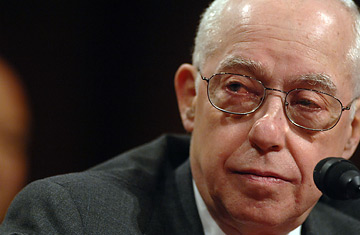
Attorney General Michael Mukasey. Photo by Tom Brown / Getty Images.

New rules ‘expressly authorize the FBI to engage in intelligence collection inside the United States’
By Marisa Taylor / August 14, 2008

WASHINGTON — Attorney General Michael Mukasey confirmed plans Wednesday to loosen post-Watergate restrictions on the FBI’s national security and criminal investigations, saying the changes were necessary to improve the bureau’s ability to detect terrorists.

Mukasey said he expected criticism of the new rules because “they expressly authorize the FBI to engage in intelligence collection inside the United States.” However, he said the criticism would be misplaced because the bureau has long had authority to do so.

Mukasey said the new rules “remove unnecessary barriers” to cooperation between law enforcement agencies and “eliminate the artificial distinctions” in the way agents conduct surveillance in criminal and national security investigations.

“There was clear-eyed and bipartisan recognition after the attacks that we needed to be able — and allowed — to collect intelligence in the United States,” he said in speech prepared for an anti-terrorism conference in Portland, Ore. “Indeed, there was a loud demand for it.”

Noting one area that needs to change, he said agents currently can rely on informants to gather information in ordinary criminal investigations, but are more limited in national security cases. The new rules, he said, will do away with those differences.

“Under the new guidelines, the investigative steps that the FBI may take in a particular investigation will not be driven by irrelevant factors, such as the type of paperwork the agent uses to open the investigation,” he said.

In addition, agents assigned to national security investigations will be given more latitude to conduct surveillance based on a tip. Also, agents will be permitted to search more databases than allowed previously in criminal cases. As it stands now, agents who get a tip about a possible organized crime figure cannot use certain databases that they are allowed to access in national security cases, such as those containing information about state-issued drivers’ licenses.

The Justice Department has kept the draft rules under wraps for at least a month and is expected to publicly release the final version within several more weeks. Even then, portions are expected to remain classified for national security reasons.

Mukasey said he planned to consult with Congress about the rules before releasing them. Nonetheless, Mukasey provided enough detail Wednesday to alarm civil libertarians.

Michael German, a former veteran FBI agent who is now policy counsel for the American Civil Liberties Union, said if Mukasey moves ahead with the new rules as he describes them, he’ll be weakening restrictions originally put in place after the Watergate scandal to rein in the FBI’s domestic Counter Intelligence Program, or COINTELPRO. At the time, the FBI spied on American political leaders and organizations deemed to be subversive throughout the late 1950s and into the 1960s.

“I’m concerned with the way the attorney general frames the problem,” German said. “He talks about ‘arbitrary or irrelevant differences’ between criminal and national security investigations but these were corrections originally designed to prevent the type of overreach the FBI engaged in for years.”

The Justice Department’s Inspector General has found that between 2003 and 2006 the FBI sought personal records of Americans by relying improperly on so-called “national security letters”, rather than seeking court approval. Last week, the FBI apologized to two newspapers for secretly obtaining reporters’ phone records without following proper bureau procedures.

FBI officials have said the bureau has since instituted stronger oversight to prevent abuses, but German said recent events demonstrated that Mukasey needed to strengthen the FBI’s guidelines, not “water them down.”

“Nobody’s complaining about the FBI collecting domestic intelligence when it’s appropriate and authorized under the law,” German said. “What the attorney general is doing is expanding the bureau’s intelligence collection without addressing the mismanagement within the FBI. If you have an agency collecting more with less oversight, it’s only going to get worse.”

Mukasey denied that the new rules would allow agents to investigate someone simply based on race, religion or exercise of First Amendment rights.

Earlier, the Associated Press had reported that Mukasey was considering allowing agents to investigate someone based on a terrorism profile that could rely on race or ethnicity as a factor.

However, Mukasey did not say whether the new guidelines would give the FBI more leeway to rely on race or ethnicity as a significant factor in determining whether an investigation should be launched.

Source / McClatchy

The Rag Blog

Posted in RagBlog | Tagged , , , , , , | Leave a comment

Suffocating Dead Zones Spread Across World’s Oceans

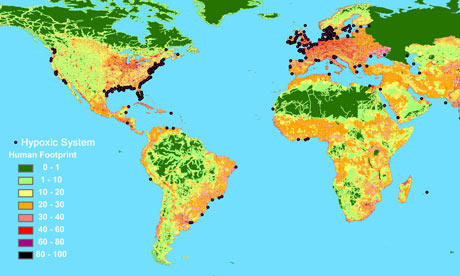
With more than 400 oxygen-starved dead zones in global coastal waters, scientists are calling for such dead zones to be recognised as one of the world’s great environmental problems.

Critically low oxygen levels now pose as great a threat to life in the world’s oceans as overfishing and habitat loss, say experts
By David Adam / August 15, 2008

Man-made pollution is spreading a growing number of suffocating dead zones across the world’s seas with disastrous consequences for marine life, scientists have warned.

The experts say the hundreds of regions of critically low oxygen now affect a combined area the size of New Zealand, and that they pose as great a threat to life in the world’s oceans as overfishing and habitat loss

The number of such seabed zones – caused when massive algal blooms feeding off pollutants such as fertiliser die and decay – has boomed in the last decade. There were some 405 recorded in coastal waters worldwide in 2007, up from 305 in 1995 and 162 in the 1980s.

Robert Diaz, an oceans expert at the US Virginia Institute of Marine Science, College of William and Mary, at Gloucester Point, said: “Dead zones were once rare. Now they’re commonplace. There are more of them in more places.”

Marine bacteria feed on the algae in the blooms after it has died and sunk to the bottom, and in doing so they use up all of the oxygen dissolved in the water. The resulting ‘hypoxic’ seabed zones can asphyxiate swathes of bottom dwelling organisms such as clams and worms, and disrupt fish populations.

Diaz and his colleague, Rutger Rosenberg of the department of marine ecology at the University of Gothenburg, call for more careful use of fertilisers to address the problem.

Writing in the journal Science, the researchers say the dead zones must be viewed as one of the “major global environmental problems”. They say: “There is no other variable of such ecological importance to coastal marine ecosystems that has changed so drastically over such a short time.”

The key solution, they say, is to “keep fertilisers on the land and out of the sea”. Changes in the way fertilisers and other pollutants are managed on land have already “virtually eliminated” dead zones from the Mersey and Thames estuaries, they say.

Diaz says his concern is shared by farmers who are worried about the high cost of fertilisers. “They certainly don’t want to see their dollars flowing off their fields. Scientists and farmers need to continue working together to minimise the transfer of nutrients from land to sea.”

The number of dead zones reported has doubled each decade since the 1960s, but the scientists say they are often ignored until they provoke problems among populations of larger creatures such as fish or lobsters. By killing or stunting the growth of bottom-dwelling organisms, the lack of oxygen denies food to creatures higher up the food chain.

The Baltic Sea, site of the world’s largest dead zone, has lost about 30% of its available food energy, which has led to a significant decline in its fisheries.

The lack of oxygen can also force fish into warmer waters closer to the surface, perhaps making them more susceptible to disease.

The size of marine dead zones often fluctuates with the seasons. A massive dead zone, some 8,000 square miles across, forms each summer in the Gulf of Mexico as floodwater flushes nitrogen-rich fertiliser into the Mississippi River.

Experts said it was slightly smaller than expected this year because Hurricane Dolly stirred up the water. Dead zones require the water to be separated into layers, with little or no mixing between.

As well as fertilisers rich in nitrates and phosphates, sewage discharges also contribute to the problem because they help the algal blooms to flourish.

Diaz and Rosenberg say: “We believe it would be unrealistic to return to pre-industrial levels of nutrient input [to oceans], but an appropriate management goal would be to reduce nutrient inputs to levels that occurred in the middle of the past century,” before the rise in added nutrients began to spread dead zones globally.

Climate change could be adding to the problem. Many regions are expected to experience more severe periods of heavy rain, which could wash more nutrients from farmland into rivers.

In May, scientists reported that oxygen-depleted zones in tropical oceans are expanding. They analysed oxygen levels in samples of seawater and found the effect was largest in the central and eastern tropical Atlantic and the equatorial Pacific. The increase could push oxygen-starved zones closer to the surface and give marine life such as fish less room to live and look for food.

The scientists, led by Lothar Stramma from the Leibniz Institute of Marine Sciences in Kiel, Germany, say the change could be linked to warming seas. At 0C, a litre of seawater can hold about 10ml of dissolved oxygen; at 25C this falls to 4ml. Stramma said: “Whether or not these observed changes in oxygen can be attributed to global warming alone is still unresolved.” The reduction could also be down to natural processes working on shorter timescales, he said.

Source / Guardian, UK.

The Rag Blog

Posted in RagBlog | Tagged , , , , , , | 1 Comment

Houston : Army Recruiter Suspended for Threatening High School Student

Recorded threat sparks bipartisan call for investigation

A story involving an Army recruiter in Texas last week has led to a bipartisan call for an investigation. The recruiter from the Greenspoint Recruiting Station in Houston was suspended after a recording of his threats aired on a local TV station. The recruiter, Sgt. Glenn Marquette, warned eighteen-year-old Irving Gonzales that he would be sent to jail if he decided to go to college instead of joining the military, even though Gonzales had signed a non-binding contract that left him free to change his mind before basic training.

Amy Goodman / Democracy Now / August 6, 2008

Caught on tape : Recruiters threaten youth with jail time
By Mark Greenblatt

HOUSTON — With a war in Iraq and fighting on the rise in Afghanistan, the struggle to bring in new U.S. Army recruits is heating up again.

And Irving Gonzales, 18, got caught up in it all.

As his family’s oldest male, he feels he has to do whatever it takes to help out his single mom. For him, that means working long hours at his after-school job.
“My mom was left struggling. I would give her more than half my paycheck,” Gonzales said.

That’s why the Aldine High School senior started thinking about the Army – and the tens of thousands of dollars in bonuses that can come with enlistment.

“They were offering me school, they were offering me bonuses,” he said.

So Gonzales signed up – but only to “pre-enlist” in the Delayed Entry Program. DEP allows kids to try out the military without a binding commitment.

But the 11 News Defenders have found there is a problem: Army recruiters aren’t sticking to the program and are bullying and even lying to potential recruits and their families to keep them from dropping out.

After he had a change of heart, Gonzalez became one such victim.

“I’d rather just stay here, go to college,” he said he told his recruiter.

The reaction: Gonzalez said a recruiter told him if he did drop out, they would send him to jail.

Scared, Gonzales called Sgt. Glenn Marquette, a supervisor at the Greenspoint Recruiting Station.

Marquette told Gonzales there was no way out.

“You signed a binding contract,” he said.

But that wasn’t true.

Army recruiting regulations say delayed entry members can leave any time. They specifically mention “under no circumstances will any (recruiter) threaten, coerce, manipulate, or intimidate (future soldiers), nor may they obstruct separation requests.”

Further, they state: “At no time will any (recruiter) tell a (Delayed Entry Program) member he or she must go in the Army or he or she will go to jail.”

But when Gonzales asked Marquette what would happen if he just didn’t show up for service, a phone recording captured this reply:

“Then guess what?” said Marquette. “You’re AWOL. Absent without leave. You want to go to school? You will not get no loans, because all college loans are federal and government loans. So you’ll be black barred from that. As soon as you get pulled over for a speeding ticket, they’re gonna see you’re a deserter, they’re going to apprehend you, take you to jail.”

Marquette continued: “So guess what? All that lovey-dovey ‘I wanna go to college’ and all that? Guess what? You just threw it out the window, because you just screwed your life.”
Eric Martinez, 17, is another young recruit who changed his mind.

“They make it seem there’s no way out,” his mother said.

Martinez said the nearby National Cemetery constantly reminds him – and his mother – of the risks and horrors of war.

“She tells me about the stories that happen in Iraq. Some people kill themselves or get shot,” Martinez said.

But when Martinez told that to the recruiter the Army assigned to him, he said he too was threatened.

Then his mother decided to intervene. But when she spoke to the Greenspoint Recruiting Station, they told her, too, that Martinez would be AWOL and go to jail if he didn’t show up for service.

This isn’t the first time the 11 News Defenders have found these sorts of problems — and at the VERY SAME recruiting station location.

Three years ago in May of 2005, we found that another recruiter from that station, a Sgt. Thomas Kelt, had left this phone message to a high school student. This time the issue was simply keeping an appointment to talk:

“By federal law you got an appointment with me at two this afternoon at Greenspoint Mall,” Kelt told him. “OK? You fail to appear and we’ll have a warrant, OK? So give me a call back.”

Our investigation into that call led to the Army announcing a national stand-down so all of its recruiters could re-examine their methods and regulations.

But just two months later, 11 News found that instead of punishing Sgt. Kelt, the Army had promoted him to the role of station commander at a neighboring recruiting station. That meant he would supervise and train other recruiters on how to do the job.

(And today? the Army confirms Sgt. Kelt still holds that supervisory position, but has since been transferred out of Texas.)

So we caught up with Sgt. Marquette to ask about these latest incidents.

11 News: “I just want to know why you’re telling young recruits they’ll go to jail if they want out of the Delayed Entry Program.”

Marquette: “What are you talking about?”

11 News: “We’d just like to know why you’re telling them that.”

Marquette: “I’m on vacation right now. I really don’t want to be bothered!”

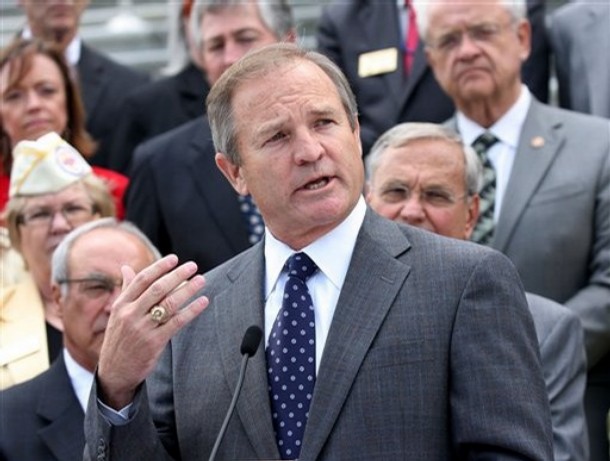
Congressman Ted Poe believes there is an ongoing problem with recruiters.

“We don’t want the government, military, the Army, deceiving American citizens,” Poe said.

Poe speaks from the position of a veteran himself who recently visited Iraq with the Army.

We shared with him new figures 11 News obtained from the U.S. Army that track how recruiters have been doing since our story three years ago.

Turns out, instead of going down, allegations of wrongdoing are actually going up. In 2005, 836 complaints were filed against recruiters. That rose to 874 last year, and the Army is on pace to surpass that figure in 2008.

What’s more? The number of Army recruiters given formal admonishments has nearly doubled since our first report, with 373 citations in 2005 growing to 635 in 2007.

One possible reason for this trend?

The U.S. Government Accountability Office found the Army gives bonuses and other performance incentives to its recruiters based primarily on how many recruits they send to basic training. But the Marine Corps focuses on how many recruits actually finish basic training.

A 2006 GAO report on military recruiting concludes, “This criterion may deter Marine Corps recruiters from committing recruiter violations.”

It is the same point the GAO made in similar reports in 1997 and 1998.

But despite years of recommendations from the GAO, the Army has not changed its ways.

And why would this matter? Take a look at another part of what Sgt. Marquette advised potential recruit Irving Gonzales on what to do if he didn’t want to join the Army anymore:

Marquette (phone recording): “You get into basic training, and you don’t like it? Tell the chaplain you don’t like it. That’s the right way to get out of the Army. Then they’ll process you out of the army… and it’s nothing against your record.”

Gonzales: “That would be the right way to do it?”

Marquette: “Yeah and guess what? If you do it that way? Maybe in the future you may say well (darn), I’m coming to join the Army. Then guess what? You can. You can join the Army. Cuz you got out of the Army the right way. You at least got to go to basic training and try it.”

Gonzales: “I mean that’s the only way? I can’t do it right here?”

Marquette: “No, you cant, no!”

The problem? U.S. Army spokesman Douglas Smith says once you report to basic training, you are a full-fledged soldier. While Smith made clear he can’t comment on Marquette’s specific situation due to an ongoing investigation of the matter, he said in general, “Once you report to basic training it is harder to get out of the Army than if you ask for separation before enlisting.”

What’s more?

“It costs taxpayers money,” Poe said. “And we certainly don’t want people to fake an injury or whatever in boot camp just because the recruiter suggested they do that to get out of the Army permanently.”

But in a written statement to KHOU, the Army’s Smith confirmed:

“(Army recruiters) receive recruiter incentive points for those recruits that ship to (basic training).”

Smith notes the Army does now award some extra incentive points to recruiters when a future soldier completes basic training.

The GAO’s response?

“This change was not like the Marine Corps system, which took away all the recruiter’s credit if the recruit did not make it through basic training,” said Brenda Farrell, director of the GAO’s section that oversees and investigates military matters for Congress. “The Army’s new system just awarded “extra” points.”

And the Army confirms in a written statement that its recruiters still “lose points for those recruits that do not ship to (basic training)… Recruiting personnel are also penalized under the Recruiter Incentive Pay. Recruiting personnel must not exceed the command’s loss rate in order to maintain their monetary incentive.”

This, said Poe, creates a conflict of interest for Army recruiters that encourages them to do whatever it takes to get a recruit to ship to basic training.

“The Marines, in my opinion, have it right,” the Congressman said. “If we could make all the military branches not count a recruit as a recruit until they finish boot camp, then you’re not gonna have the problem.”

But the Army’s Douglas Smith says that currently, “We have no plan to adopt the U.S. Marine Corps model.”

Still, Smith says, “Recruiters should not threaten applicants or Future Soldiers. That violates our regulations.”

He made it clear he was speaking in general, and not about Marquette.

The Congressman’s reaction?

“Our country cannot deceive its citizens,” Poe said. “Since the Army hasn’t taken the initiative, now Congress may have to get involved.”

Poe also said the contract itself to join the Delayed Entry Program is misleading to potential recruits and needs to be rewritten by the Pentagon.

He said it makes it appear as if members really do have to join the Army or face jail, when it’s simply not true.

In the meantime, the U.S. Army says it has launched an investigation into the allegations against Sgt. Glenn Marquette:

“The recruiter against whom the allegations were made has been taken off recruiting duty pending the outcome of the investigation,” the Army said.

And one final fact: The Army confirms they are also at historic lows in the Delayed Entry Program, but deny that that has had any effect on any alleged recruiter behavior.

Source / KHOU.com / Posted July 29, 2008

Houston: Army Recruiters Under Fire / CBS News.

Army Recruiter Threatens Student : Amy Goodman / Democracy Now

The Rag Blog

Posted in RagBlog | Tagged , , , , , , , | 1 Comment

Deployed U.S. Troops Donate to Obama by Six to One Margin


‘Tremendous shift from 2000, when the military vote leaned heavily towards the Republicans’
By Luke Rosiak / August 14, 2008

During World War II, soldiers crouching in foxholes penned letters assuring their sweethearts that they’d be home soon. Now, between firefights in the Iraqi desert, some infantrymen have been sending a different kind of mail stateside: two or three hundred dollars — or whatever they can spare — towards a presidential election that could very well determine just how soon they come home.

According to an analysis of campaign contributions by the nonpartisan Center for Responsive Politics, Democrat Barack Obama has received nearly six times as much money from troops deployed overseas at the time of their contributions than has Republican John McCain, and the fiercely anti-war Ron Paul, though he suspended his campaign for the Republican nomination months ago, has received more than four times McCain’s haul.

Despite McCain’s status as a decorated veteran and a historically Republican bent among the military, members of the armed services overall — whether stationed overseas or at home — are also favoring Obama with their campaign contributions in 2008, by a $55,000 margin. Although 59 percent of federal contributions by military personnel has gone to Republicans this cycle, of money from the military to the presumed presidential nominees, 57 percent has gone to Obama.

Contributions from U.S. Troops Deployed Abroad
Obama, Barack $60,642 (134)
Paul, Ron $45,512 (99)
McCain, John $10,665 (26)
Huckabee, Mike $7,950 (10)
Thompson, Fred $6,350 (7)
Romney, Mitt $5,550 (10)
Clinton, Hillary $3,240 (6)

With the latest campaign finance filings, detailing June fundraising, McCain has overtaken Paul among all military donors, though Paul still leads with contributors listing an overseas address. Financial support from military personnel for anti-war candidates Obama and Paul is a trend that the Center for Responsive Politics first observed last September.

Individuals in the Air Force, Army, Navy and Marine Corps have all leaned Republican this cycle, but the only branch in which that ideology has carried over to the presidential race is the Marine Corps, where McCain leads Obama by about $4,000. In each of the other branches — including the Navy, in which McCain served when he was taken prisoner during the Vietnam War — Obama leads by significant margins.

“That’s shocking. The academic debate is between some who say that junior enlisted ranks lean slightly Republican and some who say it’s about equal, but no one would point to six-to-one” in Democrats’ favor, said Aaron Belkin, a professor of political science at the University of California who studies the military. “That represents a tremendous shift from 2000, when the military vote almost certainly was decisive in Florida and elsewhere, and leaned heavily towards the Republicans.”

In 2000, Republican George W. Bush outraised Democrat Al Gore among military personnel almost 2 to 1. In 2004, with the Iraq war underway, John Kerry closed the gap with President Bush, but Bush still raised $1.50 from the military for every $1 his Democratic opponent collected.

A former West Point professor, Jason Dempsey, noted that the small set of contributions from deployed troops at this point in 2008 — just 323 donations — should not be extrapolated to form conclusions about military personnel overall. “If, on a bad day, a guy gets that letter that says [his tour has been extended] from 12 to 15 months, that could spur a quick donation and expression of anger,” he said. “Donating helps members of the military express their political views privately.”

Seeing political activity of any sort among soldiers is notable, Dempsey added. “It’s hard to describe how apolitical a lot of the enlisted ranks are. He’s worried about other things than following the news.”

Obama, who opposed the war in Iraq but was not in the Senate when it was authorized, has said that as president, he would withdraw most troops from Iraq within about 16 months. McCain, the ranking Republican on the Senate Armed Services Committee and a staunch proponent of the Iraq war, has resisted setting a timeline for withdrawal.

CRP’s totals based on employer are limited to donors contributing more than $200, since information is not provided to the Federal Election Commission for smaller contributions. So these figures are likely to disproportionately represent the mood of officers, who have more disposable income to spend on politics than do the lower ranks. But because young people tend to be more liberal than their elders, the total dollar figures could lean even more in Obama’s favor.

“One possibly mundane explanation (for the tilt in contributions from deployed soldiers) is that the Obama campaign has just been so much savvier with web-based donors. It may be a logistical question,” Belkin pointed out.

Army Specialist Jay Navas contributed $250 while deployed in Iraq, but it wasn’t over the Internet. “It took some effort to get that check. I had my mom send me my checkbook and I walked to the post office in Camp Liberty in Baghdad with an envelope addressed to Barack Obama in Chicago, Illinois,” he said. “He was right on Iraq long when others were jumping into the sea like lemmings, and that’s hard to do. We’re soldiers and we respect courage.”

Only the Coast Guard prefers Democrats across the board, with 78 percent of employees’ total federal contributions going to members of that party, and Obama beating McCain $7,795 to $250. Navas anecdotally confirmed that soldiers are often conservative but that many are making an exception in the presidential race. “Most of my friends are conservative Republicans and they say, ‘I’m voting for Barack.’ McCain does not have a lock on the military vote, that’s for sure,” he said. “We’ll complete our duty — I’m deploying next year — because it’s a commitment I made to the nation, not to a president. But we all know that Iraq was a big mistake.”

The decisions of the U.S. government affect Navas more than most Americans, he said.

“What happens politically in America affects us immediately,” he said. “As soon as the surge was ordered, my tour was extended, just by a pronouncement from the president. For very few Americans can the president say something and your lives are changed.”

Contributions from All Military Personnel
Obama, Barack $335,536 (859)
McCain, John $280,513 (558)
Paul, Ron $232,411 (537)
Clinton, Hillary $167,050 (376)
Republican National Cmte $135,902 (219)
Huckabee, Mike $66,751 (127)
Thompson, Fred $46,400 (93)
Romney, Mitt $43,307 (96)
Giuliani, Rudolph W $22,050 (47)
National Republican Senatorial Cmte $21,885 (26)
DNC Services Corp $16,873 (53)

Based on contributions made during the 2008 election cycle through June 31, 2008.

Source / OpenSecrets

Also see Deployed Troops Donate to Obama 6-1 Over McCain by Jon Soltz / The Huffington Post

Thanks to Thomas Cleaver / The Rag Blog

Posted in RagBlog | Tagged , , , , , | Leave a comment

Texas Congressman Chet Edwards Pivots Closer to V.P. Nomination

Rep. Chet Edwards,D-Texas, at news conference on Capitol Hill in May. A likely veep pick for Barack? Photo by Lauren Victoria Burke / AP.

Powerful moderate Democrat:

‘Simply put, Edwards on the ticket would turn Texas purple in one cycle’
By Matt Glazer / August 14, 2008

The convention is less than two weeks away and the tension is mounting. Who will Barack Obama select to be his running mate? It is starting to look like George W. Bush’s congressman, Chet Edwards, is more and more likely.

Rep. Allyson Schwartz (PA-13) has joined Speaker Nancy Pelosi in singing the Edwards praise.

Certainly, Pennsylvania will be key to victory.

Women, older voters, and suburban voters will all be necessary to achieve this win … Chet Edwards would help Sen. Obama win in swing districts like mine and in states like Pennsylvania…

Chet Edwards would provide strong support to the new administration by engaging Members of Congress to pass critical legislation: health care for all Americans; comprehensive energy policy; new tax policy; and an end to war in Iraq, bringing our troops home safely and responsibly…”

Even as national bloggers like Chris Bowers and some inside the progressive community remain skeptical, the likelihood that Edwards maybe the Senator’s choice is increasing.

CQ Politics points to an interesting fact, most of the people rumored to be on Obama’s short list are slated for speaking times already, and unless they are scheduled to speak twice, the list is either shrinking rapidly or way off base.

As of yesterday, the only rumored candidates not slated to speak in Denver were, Virginia Gov. Tim Kaine, Sen. Evan Bayh, Delaware Sen. Joe Biden, Texas Rep. Chet Edwards, and Gen. Wes Clark. With today’s announcement from the DNCC that both Joe Biden and Evan Bayh have been scheduled to speak at the convention on Wednesday, the list of 5 is down to 3.

This late afternoon announcement has led some to think Kaine is on the cusp of being announced as Obama’s V.P., but something appears to be off in that assessment.

Virginia is already in play. Mark Warner looks to be the heir apparent to John Warner’s vacated seat. Adding Kaine to the ticket doesn’t look to get Obama anywhere. Clark would be a solid choice, looking at a geopolitical question, what states will Clark move? Clark will also highlight the fact that Obama’s resume is focused on domestic policy. Plus, Clark is the only man in the world with a better title than President-Former Supreme Allied Commander. Why would you go from that to Vice President?

That leaves Rep. Edwards. He is a candidate who is a moderate. He is a Democrat who can win tough elections. He is dynamic and engaging. He appeals to independents and moderate Republicans. He expands the base and puts southern races in play on a state and congressional level. He can campaign in rural areas inside New Mexico, Colorado, Montana, Georgia, Virginia, and Ohio. Not to mention the fact he would force the Republicans and McCain to dump money and resources into protecting Texas (a state Obama has been organizing in since March).

The Dallas Morning News describes Edwards as a pivot.

Mr. Edwards, 56, is a moderate, a respected voice on veterans and military issues and well regarded across the political spectrum. Colleagues describe him as a pivot between liberals and Blue Dogs – the bloc of budget cutters and gun rights backers – so he could help Mr. Obama reach swing voters.

As chairman of a subcommittee that controls billions in annual spending, he’s already got more clout than most members of Congress. He’s one of a dozen “cardinals” who serve under the even more powerful Appropriations Chairman, David Obey of Wisconsin.

Mr. Obey called Mr. Edwards one of the “top five or 10 House members” he knows in either party, “an incredibly nice, decent human being” who is “very, very tough minded. … He is most definitely not a slashing partisan. He would be a very good salesperson for the president’s legislative package.”

Simply put, Edwards on the ticket would turn Texas purple in one cycle.

Source / Burnt Orange Report

The Rag Blog

Posted in RagBlog | Tagged , , , , , , , | 2 Comments

Shhhh! Don’t Tell! : The Couple Who Lived in a Mall

Michael Townsend and Adriana Yoto at their secret diggs at Providence Place mall in Providence, R.I. Photo by Stephanie Ewens.

After Michael Townsend and Adriana Yoto found their skyline blighted by a colossal mall, they protested it in an unusual way — they moved in
By Lisa Davis / August 15, 2008

Monday night, millions gathered around the television to watch an event years in the making. No, I’m not talking about the Olympics. Rather, Monday night was the premiere of “The American Mall,” MTV’s “High School Musical” rip-off in which teenage dramas unfold under the dizzying fluorescents of a food court. It’s a story, so says the promo, about a place we all love, where everything is for sale but love and dreams.

Like “Fast Times at Ridgemont High” or “Mallrats,” “The American Mall” presents the enclosed shopping mall — America’s most iconic, infamous and replicated retail phenomenon — as the ultimate gathering place (which was, in fact, the intention of inventor Victor Gruen, the Holocaust survivor who created the first indoor shopping mall in Edina, Minn., in 1956). Funny thing, though: We all love the mall a little less right now. Retail vacancies have hit 6.3 percent in regional malls, the highest number in six years, and not a single new, enclosed shopping mall was built last year. As we hold tighter to our wallets, what’s going to become of all that empty consumer space?

Michael Townsend and Adriana Yoto have an answer.

The Rhode Island couple awoke one morning in 1998 to find the name of their street changed: Kinsley Avenue was now Providence Place, which happened to be the name of the 1.3 million-square-foot mall rising on 13 prime downtown acres. Townsend and Yoto were among the Providence residents objecting to the mall — the cost to taxpayers, the colonizing presence of the structure that dominated the skyline from the highway. But Yoto, a scholar, and Townsend, a public artist, expressed their outrage in an unusual way: They decided to live with the mall. Literally.

In 2003, inside a 750-foot storage space, abandoned since construction days, they crafted a secret apartment within the mall from which they could study its allure. Why do so many of us flock to the mall’s sanitized hallways? Why do we love the sameness of mall life, identical shops and structures across the country? Why is the mall the site of our grievances, the place where gunmen go to inflict maximum pain? Earlier this year, a man set off an explosion in a mall in Exeter, England. The week before, a woman was shot in one.

Clearly, we have complicated emotional relationships to malls, and Townsend and Yoto figured one way to comprehend all that they critiqued was to embrace it, to live it so they might understand it. The mall adventure was to last a week; it went on for four years. If Townsend hadn’t been nabbed by security and charged with criminal trespassing last October, they’d still be camping out there today.

The mall as we know it today — an enclosed concrete box of shops, connected by common space — is only 52 years old, created by Gruen, an Austrian Socialist Jew who thought he was inventing a utopian, community-oriented commercial center. The mall was meant to pull people together from disparate regional corners; instead, with the help of the trusty automobile, it drained those corners, dismembering many a downtown.

But Providence Place was Mall 2.0: four floors, 170 shops and eight restaurants and “entertainment venues” (we called those movie theaters when I was a kid), on the former site of the University of Rhode Island School of Continuing Education building, that were expected to draw people back to downtown, instead of pulling them away. This new breed of mall was not a hulking, ugly box of concrete plopped down among former farmland, but a camouflaged structure, clad in brick and placed at the city’s center.

“Almost no developer builds malls anymore,” said Paco Underhill, author of “Call of the Mall.” “They build ‘alls.'” Hotels, offices, libraries and, yes, residences are now folded into mall developments. Only one traditional enclosed shopping mall was built in 2006 and none last year. Many older structures are being “demalled,” in the language of the industry: razed and rebuilt as mixed-use, open-air facilities we call lifestyle centers — they’re not just shopping centers anymore.

For many people, especially outside America, malls represent a sunnier future, despite the lack of weather inside. The opening of a mall in Soweto, South Africa, for instance, prompted a citywide celebration with Nelson Mandela presiding. But because they are repositories of our aspirations — when you’re at the mall, the better you always hovers within reach — they’re also magnets for our frustration. Last November, a gunman killed eight people in an Omaha, Neb., mall, declaring, “Now I’ll be famous,” before killing himself.

The daughter of a Chinese economist and a fashionable Venezuelan beauty queen, Adriana Yoto, 30, grew up in Chappaqua, N.Y., obsessed with mall shopping. Michael Townsend, 37, came from God-fearing Christian parents in a suburb of Worcester, Mass., and played “Commando” at the mall arcade (he claims to have held the national record at one point). “Our mallifications were very different,” he said.

Shopping had been a point of contention in their marriage long before Providence Place became their neighbor. When she chose to marry Townsend, who makes his living crafting (quite beautiful) murals out of tape, Yoto’s folks told her, “Misery can only be your destiny,” because he couldn’t support her Nordstrom habit on an artist’s pay. She eventually recovered from shopoholism but was left with such passion for malls that she went on to study them, earning a master’s in international relations from the New School, where last year she proffered theories on malls as modern-day British colonies.

Four years after the mall opened, Yoto, Townsend and six friends in their art collective, called Trummerkind (“children of the ruins” in German), vowed to spend a full week at the mall that had transformed their city, to use the mall as an actual public space while surviving sans commerce.

“The mall has something really positive to offer, something that has nothing to do with shopping,” Townsend told me.

“What is it?” I asked.

“I don’t know — that’s what I moved there to find out.”

They never intended to undermine the mall or its corporate structure, or to make a spectacle of themselves. Townsend describes himself as “wired for happiness” and Yoto’s idea of a good time is cataloguing all the items in a store and rating their desirability from “gift-worthy” to “if-it-were-the-apocalypse-and-I-was-looting-I-would-take-it.” Which is precisely what they did during their stint living at the mall. Every day.

Each of them voted in one item (a flashlight, space blanket, sketchbook and facecloth) and accepted an allowance of $20. “I had a lot of tea,” said Yoto. They camouflaged themselves, carrying empty Nordstrom bags and wearing mall outfits — nice slacks and button-down shirts (more of a stretch for Townsend, who will happily wear the same pair of sneakers until they’re held together with tape). At night they had to skirt through a 2-foot-wide passage to the dark space Townsend had found, its walls and ceiling coated in what Yoto described as “opaque gray oatmeal mixed with the contents of a lint trap.” They made a bed of cardboard and insulation tiles where they spent cold nights, not risking capture by using the mall off-hours. They washed up — it was dusty — in mall bathrooms, while Yoto arrived at the porcelain sink in the Origins store each morning, sampling its face cleansers. Occasionally, they leafed through books at Borders.

They were, after four days, both completely bored and totally ecstatic. “I felt this vacation-like euphoria that I’ve never felt till then or since then,” Townsend said. “It was better for me than any nature walk I’ve every taken.” Let’s be clear: He’s not being ironic — this is wired-for-happiness talking. They felt they had subverted the mall’s reason for existence by not buying anything, yet they had achieved what it promised: a release from the burdens of everyday life, within walking distance.

“[The mall is] supposed to be an everyday vacation,” Yoto said. “But it only works if you don’t bring any money or your cellphone.”

The mall has always been much more than a place to shop. “For so many people, the mall was the first place they got to see the world,” said Underhill. “The first place they spent their own money, the first place they met somebody who wasn’t in their neighborhood, the first time they saw things from music to fashion that, previous to that, their only connection to it had been on TV.”

Malls became antidotes to the typically isolated and alienating spaces of suburbia: lonely stretches of highway and echoey McMansions. There we congregate and the worries of the world disappear into the thrum of Muzak and met expectations — they are their own gated communities.

“We’re living on a planet that’s going to hell in a handbag,” said architect and architectural critic Michael Sorkin. “At the mall, you enter a condition of perfect climate control, where it’s clean and orderly and you are not forced in any way to confront reality.”

After their experimental week, Yoto and Townsend returned regularly for four years, attempting to transform that storage space into a luxury apartment furnished by the mall. They built a wall with 39-pound cinder blocks that they hauled in themselves — there was plenty of hard physical labor involved in their attempt at the high life. They added sofas, tables, lamps, a TV, a china hutch and a Sony PlayStation (which was stolen while they lived there, which suggests their presence wasn’t entirely secret), and stayed for days at a time. They planned to install pre-laminated wood flooring and a portable toilet.

Yoto says they played house to submit to the “demands to hyper-stylize.” She’s referring to the visions of decorating perfection in the Pottery Barn catalogs or Domino magazine that make their way to our mailboxes, to the pressure some internalize to make our homes match those images, to have them always ready for inspection. “We’re all asked to be performance artists every day,” she says. “We’re all being watched.”

In the mall — perhaps the most heavily surveilled public arena we have, with security cameras and long lists of behavioral rules — she lived a parallel existence in which she realized those hyper-stylizing dreams, performed for that invisible audience by placing tiny jars of sand on a decorative shelf and a cloth runner on the dining room table, flourishes she would excoriate in her real life, in her own loft a mile away.

Yet while Yoto and Townsend critiqued the mall as an agent of surveillance, they worked hard to make sure they were surveilled. They scanned their sketchbooks’ pages onto their blogs. They uploaded handmade maps of the mall’s undefined spaces. They posted video of their mall apartment on their Web site, which began to appear near the top of Google searches for Providence Place. They assume that’s how security knew to search for them, finding Townsend one October afternoon behind the door they built. Townsend yelled “Surprise!” when they turned on the lights. He pleaded no contest, was sentenced to six months probation and was banned from the mall.

Townsend and Yoto maintain that they feel a real sense of loss that the apartment never reached shelter magazine heights — and that it’s gone.

“How long were you expecting it to go on?” I asked.

“Years. Forever,” Yoto said. “We wanted to bring our child to have its birthday there. We wanted to have the baby’s first steps in the mall.”

In some ways, the project didn’t end. After Townsend’s arrest, they experienced a flurry of fame, including a two-minute spot on “The CBS Early Show” and the coveted back page of the National Enquirer. The blogosphere erupted with cheers, and discussions emerged on the nature of public art. One blogger assessed the mall apartment as an adult version of a fort in the woods. The police, according to one newspaper report, were “so intrigued by the apartment that they went to see it themselves.”

Yoto and Townsend have given talks to law school audiences and art students, even re-created the mall apartment at a Providence gallery. (Yoto sent out the announcement with a picture of herself as the mall advertisement, in a slinky maroon dress and a sultry stare into the camera.) A literary agent signed them to work on a mall book. A producer invited them to pitch a reality show about squatting. (The premise they came up with was “Extreme Helping,” in which they would inhabit abandoned buildings and, in Townsend’s words, “just help the fuck out of people.”) Like the Omaha gunman, their actions inside the mall made them famous.

The management of the Providence Place Mall did not share the general public’s enthusiasm. They announced that the mall felt violated — which caused a predictable cackle in the blogosphere — and for months threatened to sue Yoto and Townsend.

Yoto and Townsend’s furnishings were returned — the property is legally theirs, no matter how illegal the act of putting it there — but an intellectual property scuffle continued. General Growth Properties, the mall’s owner, requested the physical possession and copyright of all of Townsend and Yoto’s images of the mall, including their wedding video, shot on the Woonasquatucket River as they paddled past. GGP has since dropped the suit, perhaps deterred by the continuing wave of positive press and the team of lawyers that sprang to the couple’s defense. (GGP declined to comment for this piece).

Yoto and Townsend’s great crime — what made the mall feel violated — was to make the mall an individual experience, to define the space themselves. They wanted to replicate what developers had done around them: declare an abandoned area blighted and then redevelop it, to make a tiny piece of the mall uniquely theirs. It was their own personal eminent domain.

But protest-through-squatting, it turns out, isn’t unique to them. The comedian Mark Malkoff lived inside a New Jersey IKEA for a week in January, citing the extensive selection of IKEA products in his own apartment, the slimming line between his space and theirs. Maybe the Swedes have a better sense of humor than Americans do, since they actually condoned his corporate colonization.

What most people praising Yoto and Townsend’s adventure miss is that living in the mall is not fringe. It’s the new standard. Forty-three miles away, in suburban Boston, a 1994 mall owned by the same company that built Providence Place added condominiums — real live luxury condominiums — inside. People are paying over a million bucks to live within the Natick mall. Maybe this is the answer to the subprime crisis: All those folks with foreclosed homes could move into shut-down Starbucks and Wal-Marts until the economy perks up.

Meanwhile, tourists trek thousands of miles to shop at Abercrombie or dine at the Olive Garden in New York City. Fifth Avenue is lined with the same shops found in Houston’s Galleria, and chain stores choke avenues once lined with local businesses. As our cities become more like suburbs, and vice versa, we’re all pretty much living at the mall, anyway. Funny, but nobody’s dancing in the food court.

Source / salon.com

The Rag Blog

Posted in RagBlog | Tagged , , , , , | Leave a comment

TECHNOLOGY : How I Became a Soldier in the Georgia-Russia Cyberwar

Cyber Monster by TY Koh

An Army of Ones and Zeroes

‘In recent weeks, Georgia’s government Web sites have been besieged by denial-of-service attacks and acts of vandalism.’

By Evgeny Morozov / August 14, 2008

As Russian and Georgian troops fight on the ground, there’s a parallel war happening in cyberspace. In recent weeks, Georgia’s government Web sites have been besieged by denial-of-service attacks and acts of vandalism. Just like in traditional warfare, there’s a lot of confusion about what’s going on in this technological battle—nobody seems to know whether this is a centralized Russian attack, the work of a loose band of hackers, or something else. Having read so many contradicting accounts, I knew that the only reliable way to find out what was really happening was to enlist in the Russian digital army myself.

Don’t get me wrong: My geopolitical sympathies, if anything, lie with Moscow’s counterparts. Nor do I see myself as an Internet-savvy Rambo character. I had a much simpler research objective: to test how much damage someone like me, who is quite aloof from the Kremlin physically and politically, could inflict upon Georgia’s Web infrastructure, acting entirely on my own and using only a laptop and an Internet connection. If I succeeded, that would somewhat contradict the widely shared assumption—at least in most of the Western media—that the Kremlin is managing this cyberwarfare in a centralized fashion. My mission, if successful, would show that the field is open to anyone with a grudge against Georgia, regardless of their exact relationship with state authorities.

Not knowing exactly how to sign up for a cyberwar, I started with an extensive survey of the Russian blogosphere. My first anonymous mentor, as I learned from this blog post, became frustrated with the complexity of other cyberwarfare techniques used in this campaign and developed a simpler and lighter “for dummies” alternative. All I needed to do was to save a copy of a certain Web page to my hard drive and then open it in my browser. I was warned that the page wouldn’t work with Internet Explorer but did well with Firefox and Opera. (Get with the program, Microsoft!) Once accessed, the page would load thumbnailed versions of a dozen key Georgian Web sites in a single window. All I had to do was set the page to automatically update every three to five seconds. Voilà: My browser was now sending thousands of queries to the most important Georgian sites, helping to overload them, and it had taken me only two to three minutes to set up.

But now I knew that there must be other more sophisticated options out there. After some more investigation, I unearthed two alternatives, one creative and one emotional.

The creative option was to write my own simple program. Although my experience with software development is nonexistent, the instructions looked manageable. All I had to do was create a blank text file, copy and paste the URLs of any Web sites that I wanted to attack, specify how many times these sites should be pinged, and copy and paste a few lines of code from the original instructions. The last bit was to rename it with a .BAT extension, instantly converting it into a file that Windows recognizes as an executable program.

My e-Molotov cocktail was ready to go. I just had to double-click the file, and all those sites that I listed would be inundated with requests. The original blog post also encouraged me to run my program at certain times of the day to coincide with attacks launched by others, thus multiplying their effectiveness.

So far, it looked as if my experiment was succeeding. In less than half an hour, I already had two options that could potentially cause some damage, if I hadn’t stopped after the first few seconds of testing. What I found missing in my first two trials, though, was a sense of priorities. If I were truly interested in destabilizing the Georgian sites, how would I know whether to focus on the Ministry of Transportation or the Supreme Court? What if other volunteers like me were attacking one but not the other? Were my resources more vital on other e-fronts?

Faced with these dilemmas, I turned to the site StopGeorgia for help. This was the emotional option. Branding itself as a site by and for the “Russian hack underground,” StopGeorgia declared that it wouldn’t tolerate “aggression against Russia in cyberspace.” In addition to this militaristic rhetoric, the site offered a very convenient list of targets—Web sites that either belonged to Georgian government agencies or to potential friends of the country (including those of the U.K. and U.S. embassies in Tbilisi). This list included plus and minus signs to indicate whether the sites were still accessible from Russia and, for some reason, Lithuania. The sites with the plus signs were, logically, the primary target; there was no point in attacking the sites that were already down.

The administrators of StopGeorgia did not stop there; they also offered visitors a virtual present. The treat was a software utility called DoSHTTP, which the site encouraged all readers to download. DoSHTTP’s creators bill it as a program to “test” the so-called “denial-of-service attacks” that have become synonymous with modern cyberwarfare. But if you believe the rhetoric on StopGeorgia, its capabilities extend far beyond mere testing—the site encouraged all visitors to use the program to launch attacks, not test them.

After making sure that I wasn’t downloading a virus, I installed DoSHTTP and started playing around with it. Along with offering customizable options to advanced users, there was also a nice option for beginners like me. After entering a URL, I could initiate an attack by clicking something that said “Start Flood.” A flood did follow—war at the touch of a button.

In less than an hour, I had become an Internet soldier. I didn’t receive any calls from Kremlin operatives; nor did I have to buy a Web server or modify my computer in any significant way. If what I was doing was cyberwarfare, I have some concerns about the number of child soldiers who may just find it too fun and accessible to resist.

My experiment also might shed some light on why the recent cyberwar has been so hard to pin down and why no group in particular has claimed responsibility. Paranoid that the Kremlin’s hand is everywhere, we risk underestimating the great patriotic rage of many ordinary Russians, who, having been fed too much government propaganda in the last few days, are convinced that they need to crash Georgian Web sites. Many Russians undoubtedly went online to learn how to make mischief, as I did. Within an hour, they, too, could become cyberwarriors.

Source / Slate

The Rag Blog

Posted in RagBlog | Tagged , , , , , , , | Leave a comment

A Video Series on World Agriculture: Monsanto, Part 3

The World According to Monsanto (Part 3 of 8)

Right now, there is probably no other company that is doing more to endanger the health of this planet, and it’s inhabitants, than Monsanto. With Nazi-like attitude, they are leading the world in shear destructive evil greed. First they were a drug company, and then they expanded to become a drugs and genetic engineering company, and now Monsanto is attempting to acquire water rights in countries with water shortages in a move to control the people’s basic means of survival, and production of the global food supply. Giant transnational corporations like Monsanto, in collusion with the World Bank and the World Trade Organization, seek to commodify and privatize the world’s water and put it on the open market for sale to the highest bidder. Millions of the world’s citizens are being deprived of this fundamental human right, and vast ecological damage is being wrought as massive industry claims water once used to sustain communities and replenish nature.

Click here for more information.

Thanks to Diane Stirling-Stevens / The Rag Blog

Posted in RagBlog | Tagged , | Leave a comment

The Age of Global Apartheid, Courtesy Uncle Sam


A Story of U.S. Immigration In An Age of Global Apartheid
By Ben Terrall, August 14, 2008

In his 2001 book, Operation Gatekeeper: The Rise of the ‘Illegal Alien’ and the Remaking of the U.S.-Mexico Boundary (Routledge), Joseph Nevins focused on the Clinton Administration’s initiatives to heighten security at the U.S.-Mexico border.

That book showed how the alleged goal of reducing immigration to the U.S. by pushing potential migrants from “urban corridors” to remote regions only made the crossing more dangerous, and thus contributed to more needless deaths of poor Mexicans and Central Americans. It also made clear that previous to the 1970s, travel between Mexico and the U.S. was not a national issue.

Nevins’s new book, Dying to Live: A Story of U.S. Immigration In An Age of Global Apartheid (City Lights Publishers, 2008), continues his earlier examination of border policies, but personalizes its analysis by looking at the tragic story of one hard-working family man, Julio Cesar Gallegos, who died with five other men and one young woman in 1998 in Southern California’s Imperial Valley Desert.

Julio, although technically “illegal,” had been living and working in East Los Angeles since 1993. A family emergency drew Julio back to his hometown in central Mexico; he was attempting to return from there to his L.A.-based wife, a U.S. citizen, and their young son, when he and his traveling companions expired. When his body was found it was so mummified it appeared to be charred.

Dying to Live interweaves meticulously documented history of Mexican immigration to the U.S. with the story of the Gallegos family’s struggles. Nevins presents a record of racist legal and extra-legal harassment of Mexicans in the U.S., and stresses that territory which became part of ten states (Texas, Arizona, New Mexico, Oklahoma, Wyoming, Colorado, Kansas, Utah, Nevada, and California) was incorporated into the U.S. only after Washington attacked and occupied Mexico City.

Nevins lays bare the overheated demonization of foreigners that has dominated U.S. politics since the September 11, 2001 Al Qaeda attacks. Among the more disturbing quotes cited is a 2006 statement from Congressman Tom Tancredo of Colorado (who ran for the 2008 Republican presidential nomination): “Many who come across the border are workers. But among them are people coming to kill you and me and your children.”

The reality is that the people being killed are poor Latino travelers. Since the mid-1990s, more than 5,000 migrant corpses have been recovered from the U.S.-Mexico borderlands.

Contrary to the impression fostered by Fox News, these people were not coming to the U.S. out of spite. They were fleeing an economic arrangement that had betrayed them. While the Clinton-backed North American Free Trade Agreement (NAFTA) was marketed in the 1990s as a pro-growth treaty that would “lift all boats,” time has shown that profits NAFTA generated for big business did not trickle down to poor and middle-class people on either side of the border.

In a recent interview, Nevins cited a Carnegie Endowment for International Peace study which found that “between the years 1994 and 2002, about 1.3 million Mexican farmers or farm laborers had been displaced by a trade deficit that had been brought about most significantly by NAFTA.”

Nevins asked, “Where do these people go? Well, they might try to go to Mexican cities, but the promise of NAFTA to greatly increase industrialization in Mexico never materialized. To the extent it materialized anywhere, it was in the border regions, but it didn’t materialize sufficiently. And at the same time, of course, many of these maquiladoras, the factories, are moving to China, so they end up coming to places like New York City, Oakland, California or rural areas of Wisconsin.”

Nevins’s text is complemented by Mizue Aizeki’s powerful photos, which emphasize the basic humanity of poor people targeted by xenophobic U.S. border militarization policies. This book is the perfect antidote to the mantras of hate heard round the clock on right wing AM radio. It artfully shows the importance of solidarity with poor populations who are paying the price for corporate profiteering in the age of NAFTA and other such misleadingly-labeled “free trade” agreements.

* * *

Dying to Live: A Story of U.S. Immigration in an Age of Global Apartheid
by Joseph Nevins, photography by Mizue Aizeki
Open Media Series/ City Lights Books

Excerpts posted here.

* * *

Source / Z-Net

The Rag Blog

Posted in RagBlog | Tagged , , , | 2 Comments