Austin and US 290 E : You Can’t Get There From Here

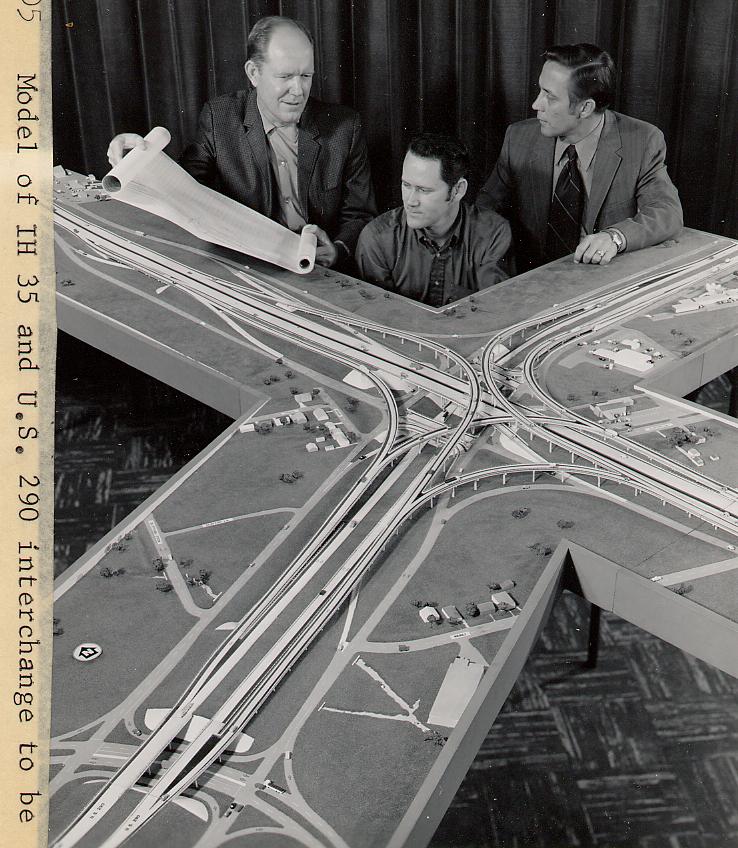
A little historical foreplay: 1971 Plans for the US 290/2222 interchange.

Proposed toll road: ‘The public hearing was set up and designed as an exercise in intimidation’
By Roger Baker / The Rag Blog / August 13, 2008

The conduct of federal law as practiced by the Texas road lobby just hit a new low yesterday at the US 290 E hearing on this proposed new toll road held last night, 8/12/’08.

This proposed but unfunded road would serve many minority and low income citizens commuting to the East of Austin.

The official environmental assessment found that this road would have no significant impact on either the environment, or the low income populations that abound in the areas this road would serve.

Of course, the conduct of the meeting as well as these studies have been privatized so that that there is a built in conflict of interest. It goes without saying that no private environmental studies contractor chosen by either the CTRMA or TxDOT would be likely to get another contract if that contractor had the poor judgment to find that the road had any negative impact that would interfere with the goals those trying to promote the road seek.

The way that the meeting itself was conducted underlines these conclusions of inherent bias and conflict of interest. First of all the public hearing was publicized to begin at 7 pm. But the meeting was set up in such a way that those promoting the road took until 7:50 pm to explain why the road would have no environmental impact., etc. The cost of the road and its shaky financing situation were not explained.

Then the public attending were told that they could not ask questions during the hearing itself, but that they could ask questions during the ten minute break before the start of the hearing itself at 8 pm, by which time time many of the minority and low income citizens in attendance had started to drift away.

The citizens signing up to speak were told that they were not permitted to face the other members of the audience, but that they had to face a large screen with giant numbers on which were projected numbers that that counted down the seconds in the brief time during which they were permitted to speak. These citizens were not allowed to ask questions of either TxDOT, the assembled CTRMA officials, or the private contractors conducting the hearing during the formally recorded portion of the hearing.

This procedure by its nature assured that while all the hour of comments by officials to the pubic were carefully recorded, communications in the other direcion were minimized and answers to questions by officials not recorded. Although comments during the brief three minute time permitted each citizen were indeed recorded, none of the responses to questions by the officials back to citizens during the brief ten minute break from 7:50 pm to 8 pm before the start of the public comments would or even could be recorded.

The ultimate indication that the public hearing was set up and designed as an exercise in intimidation rather than the open communication and information exchange process mandated under federal law was the fact that the organizers went to the trouble and expense of having FIVE giant screens on the walls in the auditorium on which were projected in big red numbers the seconds the numbers remaining in the brief three minutes that each citizen was permitted to speak. No citizen signing up was permitted to donate time to any other citizen.

In this way, the point that made in various ways that while federal laws mandate that a public hearing of some kind must be held, the way that the hearing was structured showed that it was intended to minimize the opportunity for meaningful two-way dialog with the officials and private contractors in charge of organizing this toll road hearing.

The lesson here is probably to channel citizen communications toward writing, because here federal law requires that a paper trail exists of the two-way dialog that this hearing was carefully structured to minimize.

The Rag Blog

Posted in Rag Bloggers | Tagged , , , , , | 3 Comments

Old Glory, Oh Lordy! American Flag Flip-Flopped by Our President

Whoops! Photo by Ezra Shaw / Getty Images.

‘Is Dubya using the flag to make a political statement?’
By Christine / August 12, 2008

George W. Bush seems happy as ever as America’s cheerleader-in-chief at the Beijing Olympics. Too bad his handlers didn’t take care of the flag business as they normally do in arranging props for the President.

So, is Dubya using the flag to make a political statement? Is he unAmerican? What if a figurehead like Miss America showed disrespect like this for America’s number one symbol?

Source / BuzzFlash

Whoa! A few too many, Mr. President?

The Rag Blog

Posted in RagBlog | Tagged , , , | 1 Comment

Gentle Rage: Clyde Bellecourt Remembers the Birth of the American Indian Movement

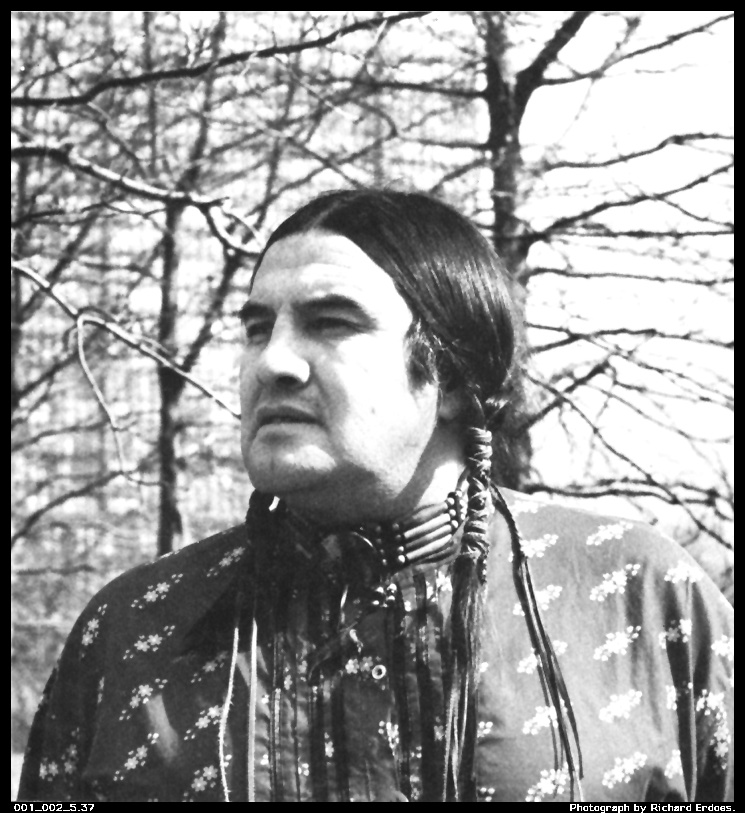
Clyde Bellecourt, one of three founders of the American Indian Movement (AIM) in 1968.

‘We had to create our own institutions. Even today, we can do that all across America.’
By Brenda Norrell / August 13, 2008

SAN FRANCISCO — Clyde Bellecourt spoke of the birth of the American Indian Movement forty years ago, remembering his mother’s own legacy and also the time of the end for the priests who were controlling the Sundance, during the 40th Anniversary, “AIM For Freedom,” Photo Exhibit.

During the culminating night of the exhibit at SomArts, July 30, Bellecourt shared his own journey and the birth of the American Indian Movement. He said his spirit name is Nee-gon-we-way-we-dun, “Thunder Before the Storm.”

Born May 8, 1936, to Anishinabe parents, it was his parents legacy that shaped his course. In boarding school, Bellecourt’s mother was punished severely for speaking her own language. Every time she was caught speaking her Native language, she had to scrub the floors with a toothbrush.

As a boy, Bellecourt noticed that whenever it rained, his mother’s knees would swell. “I remember asking her, ‘Mom what’s wrong with your knees?’” It wasn’t until long after the American Indian Movement formed that she told her son the true story. But even then, the young Clyde could hear her speaking her Anishinabe language late into the night with other women and having a wonderful time.

When he asked to learn the language, his mother would tell him to go to school and study hard. She said he might be a doctor someday. Bellecourt’s father also suffered and ultimately, like so many other young Native men, enlisted in the military because he wanted to get out of the “brutal education system,” the white European education conspiracy between the federal government and the churches, Bellecourt said.

After surviving World War I in Germany by piling dead bodies over him, Bellecourt’s father went on to be the father of seven girls and five boys. Still, when there was lightning and thunder, his father lived with the trauma of the war and would duck for cover.

When the American Indian Movement was formed on July 28, 1968, in Minneapolis, Bellecourt said, “My mother was scared to death.” Then, she began to see the change. She saw children going to powwows, Indians receiving legal services and the many programs started for culture and social services.

It was then that his mother told him why she was reluctant to teach him the Anishinabe language. “We didn’t want you to speak Indian because we didn’t want you to be punished, we didn’t want you to have to crawl across the floors and scrub floors …”

Remembering his mother, Bellecourt said she never gave up her language. It was the last sounds he heard when she was getting ready to pass to the Spirit World. “The last thing she did was she started singing Indian.” His mother was singing about the pristine lakes of White Earth.

“She never gave up.”

Bellecourt found out why her knees always swelled when it rained. It was because she spoke Anishinabe in boarding school. “In the end they tied sacks of marbles on her knees and forced her to scrub floors with a toothbrush on her knees. That is why her knees swelled up when it rained.”

For Bellecourt, it was hard for him to control his anger. He said he would lock himself in his room. But, remembering her life story, he said, “It justified all the bad things that were happening to Indian people. I knew we had to continue.”

Bellecourt said Indian people are victims of the conspiracy between the federal government and the Christian churches, the conspiracy to strip the people of their lands, language and culture. Those same termination policies, however, meant to destroy the people, led the people to come together.

The American Indian Movement was created to create change for Indian people. On July 28, 1968, about 120 mostly women and children, came together. They called themselves the Concerned American Indian Coalition.

Bellecourt said he had spent much time in juvenile institutions and jails, but went on to work as an engineer. On that night when the movement was formed, he said, “I got up and spoke about the terrible conditions for American Indian people.”

At that time, there was nothing taught in the parochial schools about Indian people. There was nothing taught about the amount of food and medicine contributed by Indian people or how in South America, Indian people performed brain surgery while Europeans were still living in caves. There was no study of the advanced Indian aqueducts or the great pyramids, or of how Benjamin Franklin stayed with the Iroquois and took the knowledge of the Iroquois Confederacy to create the United States own confederacy.

“There was absolutely nothing to make our children feel good.”

Bellecourt said Indian people were living in dire poverty. But even now, he said, 90 percent of our people are unemployed, “even with a casino sitting in our backyard today.”

“Today they are digging us up all over the western hemisphere. They have never found a prison, or a guillotine. It must have been a great civilization. They found out that Indian people had no trace of alcohol.”

During the early years, as the Indian suicide rate increased to seven times the national average, Bellecourt began to search for answers in books, such as the hard-to-find, “Our Brothers Keeper,” on the US and Indian relationships. He said it was no longer the time to send people to a church or the BIA to get a handout, someone had to stand up for the treaty rights and against the police brutality.

“We chose to make that change by standing on our treaty rights.”

The American Indian Movement made its stand on treaty rights. Now, he said, Indian people are jeopardizing those very treaty rights, as they make agreements for casinos that include giving up hunting and fishing rights.

“Now, Indian people are making compacts with the states, giving up treaty rights, for casinos.”

“We don’t have to worry about the government anymore, we are terminating ourselves.”

At that first meeting of the American Indian Movement 40 years ago, Bellecourt said he must have scared some people, as they took off out the door. He announced his solution and called it: “Confrontation politics.”

Bellecourt also pointed out that the United States didn’t give American Indians anything because the land and everything else had been theirs before Europeans arrived. “They didn’t give us nothing. Everything that white America got, they got from us.”

The Black Hills meant nothing to the government. The land for Ceremonies and Ghost Dances, was to be Indian peoples “as long as the rivers flow, the grass grows and the sun shines.” Then gold and uranium were discovered and they came for the lumber and rich farm land. The government began to seize the land for gold. “All the gold in Fort Knox comes from Indian land.”

During its four decades of accomplishments, the American Indian Movement operated a successful job training program for thousands of American Indians. “We got them off welfare rolls and put them on payrolls.”

But the main issue for AIM was to stop the United States from seizing Indian children, stealing children and separating families, never to see one another again. AIM helped create the Indian Child Welfare Act. AIM also created survival schools, where Indian children learned hunting, fishing, maple syrup gathering and wild rice harvesting, along with their studies. Among those was the Heart of the Earth Survival School. Meanwhile, AIM challenged the churches, forcing leaders to admit their violations of the sacred words.

Bellecourt said, “AIM is not just Wounded Knee.” He said it is not just protesting outside sports stadiums against mascots, although that is part of AIM.

“We had to create our own institutions. Even today, we can do that all across America.”

“It is not a walk or run across America. When the prayers are over, it is time to roll up the sleeves and get to work.

“The Creator is not going to help you unless you help yourself.”

At the time, 40 years ago, Bellecourt said those who came together didn’t know they were fulfilling a prophecy. The prophecy said that five generations after the Massacre of Wounded Knee, that the drums would be heard again and the fires would be lit again.

Bellecourt recalled that first powwow held in a basement 40 years ago, with young boys coming with bells tied around their Levis. Still, women came dressed in the sacred jingle dress. Today, the powwows are huge and the ceremonies have been brought back.

“There was a time when everything was done through prayer, through a ceremony, through a song.” There was a time when those prayers were always said, before the hunt or any action, for the “Creator to watch over us and Mother Earth to provide for us.”

Bellecourt also remembered when he was young, fishing with his father, catching large amounts of fish for the elderly and handicapped. Every day was thanksgiving and that is the way it is for Indian people.

“The American Indian Movement said: ‘We will never give up another inch of our land and we will fight for everything we have lost.’”

Speaking to the gathering at SomArts in San Francisco, Bellecourt said for those who want to become part of AIM, there are no fees or entrance requirements. “You just have to be who you are, fight and struggle, defend the treaty rights,” and defend the women and those who are suffering. Declaring everyone present a member of AIM, he said, “We are still at war, we are going to unite, and we are going to work together to fight injustice.”

Bellecourt said when he was in jail, he read “Black Elk Speaks,” and the history of Ojibwe Nation. He began to dream of the Sundances and could see the horses, the horses of many colors.

“All I cold think about was, ‘When I get out of jail, I’m going to go to a Sundance.’”

When he did get out of jail, he went to the only Sundance there was, at Pine Ridge and saw Dennis Banks and Russell Means. Bellecourt said around the Sundance arbor, there was a Ferris wheel and merry-go-round. Everyone was eating snow cones and burgers.

Bellecourt said he knew something had to be done. Then, he was told that the Priest was coming to offer communion on the final day of the Sundance. He knew it had to stop.

The Lakotas told Bellecourt that he had better talk to Frank Fools Crow, Lakota spiritual leader, before taking any action and he did. At that time, the government gave the church control over the Sundance. The Sundance and peyote use was sponsored and controlled by the church.

Bellecourt was told, “If you try to do something, they will put you in jail. You had better go talk to the warriors, the Sundancers.” The Sundance was in a state of degradation because of the church control. But, now the warriors did not want it to continue.

At noon the priest came carrying a white leather bundle, with a pipe in it. The priest came to the Sundance arbor with altar boys. When Bellecourt went out into the arbor, the people screamed for him to go home to Minnesota. They told him he wasn’t from there. They threw things at him. Still, Bellecourt asked the priest to please leave and told him that the warriors did not want him there anymore.

As the priest was escorted out of the Sundance arbor, on one side was Bellecourt. On the other side, another warrior had stepped forward. It was Lee Brightman, Sioux/Creek.

Source / Censored News

The Rag Blog

Posted in RagBlog | Tagged , , , , , , | 2 Comments

Berkeley Scientists : World In ‘Mass Extinction Spasm’

Amphibians are dying even in remote Sierra Nevada.

Scientists: Humans To Blame

‘Behind all this lies the heavy hand of Homo sapiens’
By John Boitnott / August 12, 2008

“There’s no question that we are in a mass extinction spasm right now,” said David Wake, professor of integrative biology at UC Berkeley. “Amphibians have been around for about 250 million years. They made it through when the dinosaurs didn’t. The fact that they’re cutting out now should be a lesson for us.”

New species arise and old species die off all the time, but sometimes the extinction numbers far outweigh the emergence of new species, scientists said.

Extreme cases of this are called mass extinction events. There have been only five in our planet’s history, until now, scientists said.

“There’s no question that we are in a mass extinction spasm right now.”

David Wake, UC Berkeley

The sixth mass extinction event, which Wake and others argue is happening currently, is different from the past events.

“My feeling is that behind all this lies the heavy hand of Homo sapiens,” Wake said.

The study was co-authored by Wake and Vance Vredenburg, research associate at the Museum of Vertebrate Zoology at UC Berkeley and assistant professor of biology at San Francisco State University.

There is no consensus among the scientific community about when the current mass extinction started, Wake said.

It may have been 10,000 years ago, when humans first came from Asia to the Americas and hunted many of the large mammals to extinction.

It may have started after the Industrial Revolution, when the human population exploded. Or, we might be seeing the start of it right now, Wake said.

No matter what the start date, data show that extinction rates have dramatically increased over the last few decades, Wake said.

The global amphibian extinction is a particularly bleak example of this drastic decline, he said. In 2004, researchers found that nearly one-third of amphibian species are threatened, and many of the non-threatened species are on in decline.

Amphibians dying even in remote Sierra Nevada

The Bay Area’s back yard provides a striking example, Wake said. He and his colleagues study amphibians in the Sierra Nevada, and the picture is grim there, as well.

“We have these great national parks here that are about as close as you can get to absolute preserves, and there have been really startling drops in amphibian populations there, too,” Wake said.

Of the seven amphibian species that inhabit the peaks of the Sierra Nevada, five are threatened.

Wake and his colleagues observed that, for two of these species, the Sierra Nevada Yellow-legged Frog and the Southern Yellow-legged Frog, populations over the last few years declined by 95 to 98 percent, even in highly protected areas such as Yosemite National Park.

This means that each local frog population has dwindled to 2 to 5 percent of its former size.

Originally, frogs living atop the highest, most remote peaks seemed to thrive, but recently, they also declined.

There are several frog killers in the Sierra Nevada, Wake said.

The first hint of frog decline in this area came in the 1990s, and researchers originally thought that rainbow trout introduced to this area were the culprits – they like to snack on tadpoles and frog eggs.

The UC Berkeley team did experiments in which it physically removed trout from some areas, and the result was that frog populations started to recover.

“But then they disappeared again, and this time there were carcasses,” Wake said.

The culprit is a nasty pathogenic fungus that causes the disease chytridiomycosis.

Researchers discovered the fungus in Sierra Nevada frogs in 2001.

Scientists have documented over the last five years mass die-offs and population collapses due to the fungus in the mountain range.

But the fungus is not unique to California. It has been wiping out amphibians around the world, including in the tropics, where amphibian biodiversity is particularly high, Wake said.

“It’s been called the most devastating wildlife disease ever recorded,” Wake said.

Global warming and habitat constriction are two other major killers of frogs around the world, Wake said. The Sierra Nevada amphibians are also susceptible to poisonous winds carrying pesticides from Central Valley croplands.

“The frogs have really been hit by a one-two punch,” Wake said, “Although it’s more like a one-two-three-four punch.”

The frogs are not the only victims in this mass extinction, Wake said.

Scientists studying other organisms have seen similarly dramatic effects.

“Our work needs to be seen in the context of all this other work, and the news is very, very grim,” Wake said.

The National Science Foundation and National Institutes of Health helped support the study.

Source / NBC11.com

Thanks to Roger Baker / The Rag Blog

Posted in RagBlog | Tagged , , , , , , , | 2 Comments

Pastors Go Postal : The Tacky Trial of Diva Osteen

Victoria Osteen and mega-church televangelist husband Joel.

Continental Airlines flight attendant Sharon Brown told jurors that she could tell Victoria Osteen was “headstrong” during the December 2005 incident that led to Brown’s lawsuit against Osteen. Photo by Steve Ueckert / Houston Chronicle.

Houston megachurch missus Victoria Osteen’s mile high hijinks bring to mind televangelist Schuler’s first class tantrum
By Barbara Ehrenreich / August 12, 2008

For heartsick former supporters of John Edwards, this week offers an edifying tabloid alternative: the civil trial of Victoria Osteen, wife of megachurch minister and televangelist Joel Osteen, for assaulting a flight attendant. The issue was what is sometimes described as a “spill” and sometimes as a “stain” on the armrest of Mrs. Osteen’s first class seat, which the flight attendant refused to clean up with sufficient alacrity because she was busy assisting others board. Although there is no evidence that the spill consisted of tuberculosis-ridden phlegm or avian flu-rich bird poop, Osteen was mightily pissed, allegedly pushing and punching the flight attendant and making such a ruckus that the Osteen family had to be removed from the flight.

I would be more sympathetic to the flight attendant, Sharon Brown, if she weren’t demanding 10 percent of Osteen’s fortune to compensate for injuries including a “loss of faith” and hemorrhoids somehow incurred from a frontal assault. But it isn’t easy being a flight attendant in this era of layoffs, pay cuts and packed planes – certainly not compared to being a millionaire on her way to Vail. Whatever dubious substance Victoria Osteen faced on that first class armrest, she should have been able to derive some serenity from the fact that the church she co-pastors draws 40,000 worshippers a week and that her husband has been dubbed “America’s Most Influential Christian.”

Just another celebrity meltdown set off by insufficiently servile servers? Recall Russell Crowe’s 2005 assault with a telephone on a SoHo hotel clerk, or Naomi Campbell’s attacks with similar weapons –cell phone and Blackberry– on members of her own staff. But there’s a curious antecedent here that Christians would do well to ponder: In 1997, another megachurch pastor and leading televangelist – Robert Schuller – was prosecuted for an eerily similar first class tantrum.

Schuller, like the Osteens, is a proponent of positive thinking – the doctrine that God intends for you to be rich, healthy and generally “great” right here in this life. While politicos have focused on the Christian Right, there’s been far less attention to the fast growing brand of Christianity Light, also represented by televangelists Joyce Meyer, Benny Hinn and Creflo Dollar. Positive thinking is the theology of the modern megachurch, and it avoids all mention of sin –including the “sins” of abortion and homosexuality – lest such “negative” topics turn off any potential converts or “seekers.” Its promise is that you can have anything you want simply by “visualizing” it or, as Osteen puts it, “believing for it” — a doctrine derided by some Christian critics as “name it and claim it.”

Schuller faced a different biohazard on his first class flight in ’97 – cheese. When the flight attendant gave him a fruit and cheese plate for dessert, Schuller insisted that the cheese be removed. The flight attendant refused, explaining, reasonably enough, that all the fruit had been plated with cheese and could be contaminated, from a cheese- allergy sufferer’s point of view . But the pastor was simply on a low-fat diet and did not want to see the cheese on his plate, so he got out of his seat and accosted the flight attendant, shaking him violently by the shoulders. Schuller ended up paying an $1100 fine and undergoing six months of police supervision.

In the theology of Christian positive thinking, “everything happens for a reason.” The Osteens may conclude that the divine intention was to prod them into to emulating Joyce Meyers and Creflo Dollar by investing in a private jet. But there’s another possible message from on high: that this brand of Christianity fosters a distinctly un-Christian narcissism.

Consider the ways the Lord works in the life of the Osteens, as recounted in Joel’s book Your Best Life Now, which has sold four million copies and is graced by a back cover photo of the smiling couple. Acting through Victoria, who kept “speaking words of faith and victory” on the subject, Joel was led to build the family “an elegant home.” On other occasions, God intervened to save Joel from a speeding ticket and to get him not only a good parking spot but “the premier spot in that parking lot.” Why God did not swoop down with a sponge and clean up the offending stain on the armrest remains a mystery, because Osteen’s deity is less the Master of the Universe than an obliging factotum.

Plenty of Christians have already made the point that the positive thinking of Christianity Light is demeaning to God, and I leave them to pursue this critique. More importantly, from a secular point of view, it’s dismissive of other humans, and not only flight attendants. If a person is speeding, shouldn’t he get a ticket to deter him from endangering others? And if Osteen gets the premier parking spot, what about all the other people consigned to the remote fringes of the lot? Christianity, at best, is about a sacrificial love for others, not about getting to the head of the line.

If the Osteens’ brand of religion is what flight attendant Sharon Brown lost faith in as a result of being manhandled by on that plane to Vail, then the suit should be dropped, because Victoria Osteen has already done her enough of a favor.

Source / Barbara’s Blog

The Rag Blog

Posted in RagBlog | Tagged , , , , | Leave a comment

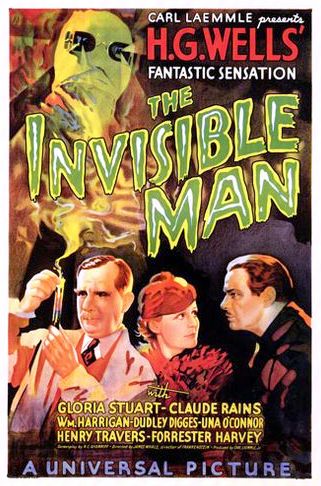
By Bending Light, Researchers Appear Closer to Creating Invisibility Cloak


The fantasy-like technology offers practical uses, like making computer chips even smaller
By John Johnson, Jr. / August 12, 2008

Long the stuff of fantasy, practical invisibility shields have been brought a step closer to reality by researchers who say they have engineered materials that can hide an object by bending ordinary light like balloon animals at a circus.

The researchers, led by Xiang Zhang of the Nanoscale Science and Engineering Center at the University of California, Berkeley, have created two composite materials that possess negative refraction indexes, meaning they bend light opposite to the way most natural substances do. If water exhibited negative refraction, fish swimming in a pool would appear to be in the air above the water.

“This is an important step toward creating a cloak,” Zhang said Monday.

But he insisted the work was not aimed at shielding Federation starships from Klingon battle cruisers. A more practical application, he said, would be to create a so-called “super lens” that could image infinitesimally small objects, enabling the manufacture of still tinier computer chips.

Materials scientists previously have found two-dimensional materials that cause negative refraction, making an object seem to disappear. But the light-bending properties of these materials were unreliable, the science team said.

The Berkeley researchers, whose work appears this week in the journals Science and Nature, created two different, three-dimensional materials that exhibit negative refraction.

The first method involved stacking alternating layers of silver and magnesium fluoride, a transparent compound used in lenses and windows. Then, tiny fishnet patterns — with holes 860 nanometers apart, or less than one-hundredth the diameter of a human hair — were cut into the layers.

Jason Valentine, a UC Berkeley graduate student, said the layers of fishnet work together to bend the light in an unnatural direction. With further development, the material might eventually be able to bend light entirely around an object, channeling it like water flowing around a rock. With no light reflected back at a viewer, the object would not be visible.

The silver-magnesium fluoride material worked only on light frequencies in the infrared range, beyond the visible spectrum. But with a second technique, researchers succeeded in bending light in the red portion of the visible light spectrum.

The technique involved placing small silver nano-wires inside porous aluminum oxide to accomplish a similar light-channeling ability.

Among the advantages of these new materials is that less light is lost than with the previous two-dimensional materials.

Jie Yao, a graduate student in applied science and technology, said several obstacles remained before the materials could be put into mass production. The material is expensive to produce, and researchers need to demonstrate negative refraction at all wavelengths of visible light, not just red.

They also must overcome the problem of directionality. At the present time, an object coated in the material could appear invisible in one direction but fully visible in another.

Surmounting these barriers will take years, Yao said.

Source / LA Times / Houston Chronicle

The Rag Blog

Posted in RagBlog | Tagged , , | Leave a comment

Warrior John McCain : Far More Dangerous Than Bush

John McCain at Forward Operating Base Warrior in Kirkuk, Iraq. Photo by Staff Sgt. Margaret Nelson

‘McCain can see no alternative to military victory, no matter what the cost’
By Steve Weissman / August 12, 2008

During the hottest days of the Cold War, Gen. Thomas Power headed the Strategic Air Command, whose nuclear-armed B-52s were meant to deter the Soviet Union. General Power, like many of the Air Force brass at the time, believed that nuclear war with the Soviets was inevitable. He thought the United States would do better to fight that war sooner rather than later and believed we could emerge victorious. “At the end of the war,” he argued in 1960, “if there are two Americans and one Russian, we win!”

Listening to John McCain talk about Iraq and Iran, I keep thinking of Power. Counter-insurgency and nuclear obliteration are poles apart, I know. But McCain’s insistence on “winning in Iraq,” remaining there “until Iraq is secure,” and “bomb-bomb-bombing Iran” reveal the same mindset that made General Power so dangerous. Caught up in his fear that a military failure would encourage America’s enemies, McCain can see no alternative to military victory, no matter what the cost. This might be a laudable spirit to drum into raw military recruits, but could prove extremely self-destructive in a commander in chief.

The question, if only Obama would ask, is simple: What in McCain’s mind would a military victory in Iraq look like? One of the key instigators of the US invasion, McCain has suggested different answers over the years.

As president of the New Citizenship Project, founded in 1994, he helped create and raise funding for the Project for the New American Century (PNAC), which neo-conservatives such as William Kristol, Richard Perle and Paul Wolfowitz used to push their plans for a pre-emptive war against Iraq. McCain also gave early support to Ahmed Chalabi, the Iraqi exile who widely fabricated and skillfully publicized deliberate disinformation to scare Americans into believing that Saddam Hussein had links to al-Qaeda and active weapons of mass destruction. McCain has recently tried to play down his relationship with the still-active Chalabi, especially since the CIA and others accused the Iraqi of secretly working with Iran.

A top Republican on the Senate Armed Forces Committee, McCain began publicly urging the United States to overthrow Saddam Hussein as early as 1997, calling on the Clinton administration to set up an Iraqi government in exile. The following year, he joined with Senator Joe Lieberman and others to introduce the “Iraq Liberation Act of 1998,” committing Washington to fund Chalabi and other anti-Saddam opposition groups.

In the run-up to the invasion in 2002 and early 2003, McCain continued to join with his neo-conservative allies in parroting Chalabi’s scare stories about terrorist links and WMD and in publicly promoting Chalabi as “a patriot with the interest of Iraq at heart.” McCain also competed with Dick Cheney and Donald Rumsfeld in telling Americans how easy the war would be, how few troops we would need, how the Iraqis would welcome us as their liberators, and how the example of regime change in Iraq would lead to a new wave of democracy throughout the region.

McCain was wrong on every count, and the image of victory he projected – our friend Chalabi leading a peaceful, democratic Iraq that would welcome American military bases for as long as 100 years – now seems, at best, quaint. In fact, the single Iraqi issue on which McCain can conceivably claim to have made a sound judgment was his support for the so-called “surge,” last year’s escalation of American forces that many observers credit with a relative decrease in violence. Other observers point to two factors that McCain doesn’t want to discuss – the ethnic cleansing of Baghdad’s neighborhoods, which forcibly separated feuding Shi’a and Sunnis, and the Pentagon’s effort to win over Sunni tribesmen and former insurgents, often by putting them on the US payroll.

According to Congressional testimony from Gen. David Petraeus, the rapprochement with the Sunnis actually began well before the new troops arrived. More importantly, it will likely prove short-lived if the Shi’a-led government in Baghdad does not move quickly to give the Sunnis a fair share of the economic and political future of a united Iraq. As McCain and others originally proposed it, the surge was supposed to create time and space for these and other political steps, but the Iraqis see no reason to seek political solutions as long as they believe that American troops will remain in country to protect them from their domestic rivals.

McCain does not dispute this. He ignores it, just as he refuses to see that the continued presence of American troops in Iraq has helped to recruit far more anti-American jihadists in Iraq and out than we can ever hope to kill, a point CIA and other analysts have repeatedly made. This is the political side of our current military disaster, and McCain just does not get it. For all his much-vaunted experience, he simply cannot see that a foreign military presence will generally create a hugely negative response, as it has in post-colonial lands from Iraq to Afghanistan – and just as it would in his native Arizona.

Source / truthout

The Rag Blog

Posted in RagBlog | Tagged , , , | Leave a comment

BORRRRING : Republicans Just Can’t Get it Up for Convention


Enthusiasm gap: All the excitement’s in Denver
By Richard T. Cullen / August 11, 2008

While excitement is building for a Democratic Party convention capped by Barack Obama’s historic acceptance speech before a sold-out, 75,000-seat football stadium, the GOP convention the following week is shaping up to be a considerably more staid affair, marked by the conspicuous absence of many of the usual convention attendees.

Republicans aren’t exactly planning to avoid the convention in droves. But compared to past conventions, lawmakers, lobbyists and candidates aren’t beating a path to St. Paul either.

Of the 12 Republicans running in competitive Senate races — five of whom are incumbents — only three have said they will be attending the convention. Six are definite no-shows, and three are on the fence.

“Nobody likes a funeral,” said a Senate Republican press secretary who spoke on the condition of anonymity, citing “the overall climate of general malaise about the party” as the reason for hesitance on the part of Republicans.

On the House side, according to a report in The Hill, during a July 31 conference call National Republican Campaign Committee Chairman Tom Cole of Oklahoma discouraged congressional hopefuls from attending, saying that doing so would potentially be a “waste of time.”

At least a handful of Republican incumbents, ranging from vulnerable incumbents such as Jon C. Porter and Dean Heller, both of Nevada, to safe veteran members such as Jim Sensenbrenner Jr. of Wisconsin and Sue Myrick of North Carolina, have also decided to stay home this year.

“While the congressman believes spending time with the delegates and the party faithful is productive, he is focused on campaigning in his district and ensuring that we keep Nevada red,” said Matt Leffingwell, Porter’s press secretary.

The political environment is just one explanation behind the absence of convention fever. Many GOP lobbyists also have decided the convention isn’t worth the trip — despite the seemingly limitless networking and schmoozing opportunities — in part because of logistics and location.

In 2004, D.C.-based conventioneers could zip in and out of New York City by train. The 2000 convention in Philadelphia was an even shorter ride.

St. Paul, by contrast, requires a flight halfway across the country from Washington — and, of course, the maddening hassle of air travel. The convention dates aren’t great either because opening day falls on Labor Day, which for parents marks the beginning of the school year.

That’s asking a lot of attendees, some of whom question whether, as a destination, the Twin Cities will be worth the aggravation.

“I would definitely say that people aren’t as excited about going to Minneapolis as they were about going to New York City,” said Matthew Keelen, president of the Keelen Group, a D.C.-based lobbying firm. “Minneapolis is a nice city, but it doesn’t quite have the environment and reputation of a New York City, and I think 2004 was a unique convention and a lot of it had to do with where it was,” he said.

“Overall, Republicans have an intensity problem,” added a top Republican lobbyist who requested anonymity. “I have a lot of friends that are just not going that have gone in years past.”

One Republican lobbyist interviewed by Politico said that of all the Republicans in his firm, only half were attending this year’s convention.

The lack of enthusiasm has been a source of frustration for venue owners close to the convention hall at the Xcel Center. Some of them were struggling until recently to meet their reservation expectations .

“We certainly weren’t alone, a lot of venues hadn’t heard anything and were kind of wondering what might of happened,” said David Miller, general manager of the St. Paul Hotel.

Republicans aren’t the only ones who appear less than passionate about their national convention. TV One, a new cable network aimed at African-American viewers, plans to cover the Democratic convention but not the GOP’s.

Rock the Vote, a nonpartisan group that strives to promote youth involvement in the political process, has an elaborate “Ballot Bash” fundraiser scheduled in Denver, which features, according the group’s website, “a live concert featuring exclusive performances and collaborations by marquee artists” in addition to an after-party of “world class DJ’s VIPS and celebrity guests.”

But for the GOP convention, Rock the Vote has more modest aspirations, featuring a “Premier Women’s Event: Political Chicks A Go Go,” sponsored by Lifetime television network and Right Now! with no notable music acts or VIPs.

“As of right now there’s not an equal amount [of events] but we’re working to get it that way,” said Rock the Vote spokeswoman Stephanie Young, who cited “space issues” as part of the reason for the disparity.

Regardless, the Republican National Committee says the level of excitement will be parallel to that of past conventions.

“We’re confident that we’re going to have a great national convention with enthusiastic participation from Republicans nationwide who are working hard every day to elect John McCain in November,” said Amber Wilkerson, an RNC spokeswoman.

Several of the Republicans interviewed contended that the goal isn’t necessarily to compete with the Democratic convention.

“We’re not having a rock concert at a stadium, but yet Republicans are looking at good polling data right now, they’re looking at a candidate who’s getting his sea legs right now,” said Edward Kutler, a Republican lobbyist for Clark and Weinstock. “I really think there is growing enthusiasm about what John McCain is doing and saying.”

Source / Politico

The Rag Blog

Posted in RagBlog | Tagged , , , | Leave a comment

Drawn and Quartered

Mike Keefe / Denver Post

The Rag Blog / Posted August 13, 2008

Posted in RagBlog | Tagged , , | Leave a comment

BOOKS : Small Schools: Public School Reform Meets the Ownership Society


‘Read Small Schools to get angry and radicalized’
By Jill Davidson

Small Schools: Public School Reform Meets the Ownership Society by Michael Klonsky and Susan Klonsky (Routledge, 209 pages, $26.95)

Mike and Susan Klonsky’s Small Schools: Public School Reform Meets the Ownership Society deserves to have sunscreen stains on its pages and sand within as an unlikely recommended summer read. Okay, if there’s a great novel that you’ve been saving for the week that school’s out, read that first. But before school starts up again,* read Small Schools to get angry and radicalized, to remind yourself of the extraordinary value of your work, to cheer for yourselves as worthy alternative underdogs, and to rekindle your fire.

A nightmare gallery of monsters menace public education, and the Klonskys invoke some of the most frightening: the gang of politicians, foundations, think tanks, and corporations that have invaded schools during the still-current Bush administration. Documenting the ways that “the progressive grassroots educational reform movement for small schools has been hijacked by business groups, right-wing ideologues, and the ideology of the Ownership Society,” the Klonskys throw readers into the deep end of the small schools movement, the threats posed by corporate and governmental encroachment on public education, and the toxic ground on which privatization forces have co-opted small schools for corporate gain, both in the authors’ home turf of Chicago and elsewhere.

The breathless pace slows in the first chapter, which unpacks small schools’ “traditional democratic values of Deweyan progressivism combined with Information Age notions of professional community, personalization, and safe learning environments in an unsafe society.” This chapter focuses on the story of opposing school reform movements in Chicago, serving as a useful primer on that city’s tension around school size, control, and ideas of whom its schools are for. This inside baseball of Chicago politics, school reform, and role of the Klonskys’ Small School workshop is contextualized within the movement that includes Deborah Meier’s work in New York, southern Freedom Schools, and other results of progressive efforts around the country. This chapter also captures the “politics of disaster” that have been created in response to public schooling’s complex challenge, describing how a deficit model of education has evolved to dismantle existing public systems.

The sprawling second chapter details and defines the forces and practices of the Ownership Society and its “all-out assault on teachers, public schools, and public space in general.” Featured in President Bush’s 2005 inaugural address, the term was intended to sell the idea that individual citizens should control health care, finances, education, and other key factors of their lives. The Klonskys vehemently oppose the political practices that exemplify the Ownership Society, and their arguments effectively encapsulate the rhetorical co-option of words and ideas—such as the very concept of small schools—that may have originated from the grassroots progressive education movement, but have come to be fully integrated into the current administration’s “demagoguery.” This is compelling stuff.

The third chapter deals with the privatization of our school systems. When the Klonskys write, “In many districts around the country, the best of the small and charter schools have indeed become agents of change, responding to a national sense that the traditional system of public education needs transformation,” you’ll think “Hey, that’s us! That’s CES.” But such schools are anomalies whose existence emphasizes the gulf between intended purpose of charter schools—to provide stimuli to the system and grassroots-driven alternatives—and their current uses as for-profit collectives that rob the public system.

The book concludes with considerations of the role of philanthropy, with most of its attention on the Bill & Melinda Gates Foundation (a CES funder). “It’s hard to say whether the world’s richest man has been part of the problem or part of the solution,” the Klonskys observe. They are far less ambivalent on the role of conservative think tanks that rose to power on a tide of private funding and adept use of technologies that allowed them to emerge from the shadows.

The conclusion “Alternatives to Top-Down Reform,” offers a welcome, and familiar, note of hope, with its faith in the power of professional learning communities. Critical Friends Groups to the rescue! Though its documentation of the forces that oppose what we know works to educate children, and preserve and improve the intellectual and other forms of health of their communities, is daunting and at times heavy-handed, you’ll finish Small Schools with renewed faith in your work as a CES network educator, and a healthy infusion of anger and energy.

* Year round schools: the bane of the education book reviewer. Sorry to slight those of you who are at year-round schools, but you still experience summer, yes? And you still read? Apply this as you see fit (Horace suggests liberally).

[Thie review was first published in the Horace Book Review: Horace Summer 2008, Vol. 24 No. 2.]

Source / CESNationalweb

Find Small Schools: Public School Reform Meets the Ownership Society by Michael Klonsky and Susan Klonsky at Amazon.com.

The Rag Blog

Posted in RagBlog | Tagged , , , , | 1 Comment

Emerging from the Drug War Dark Age : A Psychedelic Drug Revival

Alex Grey’s Oversoul.

LSD and other psychedelic medicines make a comeback
By Charles Shaw

After a 40-year moratorium, credible research for treating illnesses and addictions with psychedelic compounds has made a miraculous comeback.

The return flight from Switzerland was a mix of hope and solemnity for Rick Doblin, the only American to attend the funeral of Dr. Albert Hofmann, the inventor of LSD who had just died at the age of 102. Doblin, a Harvard-educated Ph.D and founder of the Multidisciplinary Association for Psychedelic Studies, an organization that conducts legal research into the healing and spiritual potentials of psychedelics and marijuana, had spent his entire career trying to break through the virtually impenetrable wall of obstinacy that surrounds psychedelic compounds and their potential benefits to society.

More than anyone else in his field, Doblin is all too familiar with what he refers to as the “40-year-long bad trip” that researchers like him have faced in dealing with the fallout from the introduction of LSD and other psychedelic compounds to the Western psyche in the mid 1960s. This 40-year intellectual Dark Age, Doblin says, has been characterized by “enormous fear and misinformation and a vested interest in exaggerated stories about drugs to keep prohibition alive.”

We’ve all heard the tales of kids jumping off rooftops because they think they can fly, of otherwise normal people taking a single hit of LSD and “going insane,” and of course the all-pervasive myth of the “acid flashback.” Although there were acid casualties, most were rare or aberrant tragedies, most often occurring in individuals with pre-existing mental health conditions who never should have taken LSD in the first place. Most of the tales are apocryphal at best, intentional propaganda meant to discourage use.

An Era of Censorship

Why would our government embark on this 40-year Inquisition to burn the psychedelic prophets at the stake and wipe clean from the Earth the true history of psychedelic culture, as if it were the secret of the Holy Grail and the Merovingian dynasty? Why has the psychedelic revolution of the 1960s — one of the most powerful revolutions in human consciousness in all of history — been reduced to pejorative tales of tie-dyed morons skipping through Golden Gate Park in an orgy of self-indulgence? Why would something that the government claims does not deserve respectable attention be the recipient of such Draconian repressive measures? Could it be because, like the secret of Mary Magdalene, the truth could bring the whole order crashing down?

The answer, my friend, blew away in the wind. The extent to which LSD fomented the cultural revolution of the 1960s has all but disappeared in a miasma of drug war propaganda. But do not be fooled. This was no hippie-dippy bullshit. In its time, LSD was more dangerous to the ruling order than Mao, Che or the Founding Fathers themselves. As the New York Times obituary for Hofmann read, “[LSD] was no hustler from a shotgun lab in Tijuana, after all, but a bourgeois revolutionary, born into establishment medicine and able to travel the world and enter societies from the top down, through their most hallowed institutions.”

The U.S. government threw everything but the kitchen sink at getting (certain) Americans to stop “turning on,” launching the drug war that eventually locked up millions of drug users. They handed down ridiculously disproportionate federal sentences to LSD makers that would have made Pablo Escobar commit suicide. But it wasn’t the “turning on” part that they feared, for there are many benefits to having a population otherwise occupied in a false reality. No, it was the “tuning in” and “dropping out” part that kept them awake at night.

Although it may be difficult for the uninitiated to understand at face value, LSD and other psychedelic compounds can have a profound life-altering affect on the user that, more often than not, serves to connect them (or reconnect, as the case may be) to the universal compassion and love for life that is inherent in our species. It invariably causes them to question the validity of the status quo, to examine their life and what surrounds them in terms of beliefs and values.

And in this epoch of industrial civilization, the last thing a corporate culture that survives on war, aggression and consumer spending needs is a consciously awakened population of people who inexorably choose to leave said culture in droves because they see it is killing the planet, themselves, and each other. This is precisely, to the letter, the meaning of “Turn On, Tune In, Drop Out.”

But even for those who would call this hyperbole, what was lost in all the derision and urban myths about LSD and other psychedelic compounds like ayahuasca, peyote, psilocybin and iboga — plant medicines thousands of years old — was the fact that they are miraculously powerful medicines, with the ability to effectively treat, and in some cases, cure some of the most debilitating illnesses and disorders plaguing humanity: addiction, obsessive-compulsive disorder, Post-Traumatic Stress Disorder, and migraine and cluster headaches. They are also effective palliatives for the sick and dying.

Something with such legitimate potential to heal can only be kept in the bottle for so long. In fact, these transcendent therapies are now ebbing back into mainstream respectability. Doblin will be the first to tell you that times are changing, driven by too much government repression, too much scientific orthodoxy, and, perhaps more than any other factor, our culture’s desperate need to learn how to handle what he calls our “collective emotional state.”

“We talk about the veterans suffering PTSD, but it’s really a culture-wide phenomenon,” he said. “We’re at a place where technology and the structure of contemporary life have taken us so far away from our emotions as to create pathological conditions. The systemic violence and selfishness and greed that are in our society need treatment.”

Doblin was one of the first to break through that wall of obstinacy and challenge the Inquisition. He got the U.S. government to approve clinical trials of MDMA-assisted therapy for returning veterans and victims of violent crime or abuse who suffer from Post-Traumatic Stress Disorder. In many ways it was this Newtonian breakthrough that finally challenged the orthodoxy that reigned over the 40-year Dark Age. Western governments had to ask themselves what was more important to them: their irrational and erroneous drug propaganda, or the possibility that the millions of lives they had devastated by war, violence and iniquitous economic policies might actually be repaired. In this, the seeds of a psychedelic renaissance were planted.

A Return to Respectability

Much greater than usual media attention accompanied the most recent World Psychedelic Forum held in March in Basel, Switzerland, the home of Albert Hofmann. A headline in the May issue of the staid British medical journal The Lancet — known for challenging the Pentagon’s Iraq casualty numbers — read, “Research on Psychedelics Moves into the Mainstream.”

The Lancet article identified a number of early-stage clinical trials being conducted on various “anxiety and neurotic disorders” using psychedelic compounds. As previously mentioned, Doblin and MAPS are conducting three parallel studies in Israel, Switzerland and the United States on the use of Ecstasy for treating PTSD. MAPS has also funded the work of controversial Harvard researcher John Halpern and Yale researcher Andrew Sewell, who are studying LSD and psilocybin as treatments for cluster headaches. (Information about their research is available on clusterbusters.com and Erowid, an online clearinghouse for reliable data on virtually every psychoactive plant and chemical known to humans.)

Harvard University, which conducted the last legal research on LSD in the mid-1960s and was the site for one of Halpern’s studies on the effects of MDMA on dying cancer patients, is once again considering clinical trials to support Halpern’s research.

And in a major milestone, on May 13 of this year, Swiss doctor Peter Gasser administered the first legal dose of LSD in more than 36 years. It was for a study of anxiety in palliative care, which helps terminally ill patients transition more peacefully — and with as little pain as possible — into death.

Other complexes like addiction and obsessive-compulsive disorder are being treated with what are called the “shamanic plant medicines”: ayahuasca, the Amazonian vine preparation whose psychoactive component is dimethyltryptamine (DMT); peyote, the North American cactus whose psychoactive component is mescaline; and iboga, an African rainforest shrub.

Addiction is one of the most important new fields of study, not only because of the sheer numbers of afflicted, which the National Institute on Drug Abuse estimates at 23.6 million persons a year at a cost of $181 billion. According to a newly released report from the World Health Organization, the United States is the world’s most addicted society. Of those who are lucky enough to get treatment, half eventually go back to heavy use, and 90 percent suffer brief or episodic relapses for the rest of their lives. This makes the search for an effective and long-lasting new treatment more attractive — and more pressing — than ever.

The Healing Potential of Psychedelics

Unlike other treatments, which have shown pitifully low success rates, psychedelic-assisted therapy focuses on the emotional context under which a patient suffers addiction, not the use of the drugs themselves. “This,” says Tom Roberts, a professor of psychology at Northern Illinois University and the co-editor of a new two-volume compilation, Psychedelic Medicine, “is what makes them uniquely effective. They allow negative ideas and feelings — where most addictions have their origins — to surface into consciousness. With the guidance of a mental health professional, the person can let them go.” Once these negative feelings are gone, Roberts says, the person no longer feels the need to deaden them with drugs or alcohol.

Psychedelic-assisted therapy for addiction pokes a hole in conventional wisdom about drug use, which goes something like this: If, under American law, all illegal drugs are bad for you, how can you then treat an addiction to one drug with another purportedly dangerous drug? This shortsighted line of thinking has been keeping psychedelic compounds illegal in spite of evidence pointing to their benefits.

Indigenous peoples have been using psychedelics as traditional medicine for thousands of years. Ayahuasca and peyote have been used to treat toothaches, pain in childbirth, fever, breast pain, skin diseases, rheumatism, diabetes, colds, blindness, parasites and more. They have also been used as spiritual medicines to cure emotional disorders. Native Americans use peyote to treat the astronomical rates of alcoholism found on the reservations, reportedly with great success, although hard figures are difficult to obtain due to the legal protections given to the Native American Church.

And Western scientists have known of the healing capabilities of psychedelics for decades.

In 1954 two chemists, D.W. Woolley and E. Shaw, published an article in Science magazine that argued that the neurochemical serotonin was the likely culprit behind most major mental disorders, writes Dirk Hanson in Addiction: A Search for a Cure. The worst of the bunch were depression, drug addiction and alcoholism. Woolley and Shaw also confirmed in their study that the most powerful known manipulator of serotonin was LSD because it had an “eerily” similar chemical structure.

Later in the ’50s, a well-known LSD “apostle” named Alfred Matthew “Captain Al” Hubbard started peddling the idea that LSD might hold considerable psychotherapeutic potential. With the assistance of Aldous Huxley and other prominent acid-taking intellectuals, Hubbard gave LSD to Canadian researchers Abram Hoffer, Ross Mclean, and Humphrey Osmond, who studied it as a treatment for alcoholism, while a similar study was conducted at the Stanford Research Institute.

Later, Stan Grof worked with street-level addicts while Timothy Leary conducted psilocybin therapy on prisoners. Even Bill Wilson, the founder of Alcoholics Anonymous, was an acid enthusiast, promoting LSD as a “gateway to an accelerated spiritual awakening.” Wilson noticed that the turnaround in alcoholics did not happen until they hit bottom, and LSD, because it surfaced difficult emotions, hastened an alcoholic’s bottom and helped them avoid more catastrophic bottoms.

The therapy is reinforced through the “afterglow” effect of a “transcendent psychedelic event” (a trip), which Psychedelic Medicine says is “characterized by an elevated and energetic mood and a relative freedom from concerns of the past and from guilt and anxiety.” There emerges an “enhanced disposition and capacity to enter into close relationships.” The “afterglow” usually lasts anywhere from two weeks to a month and then gradually fades into a series of memories that are thought to continue affecting attitude and behavior.

All of these researchers stress that psychological professionals must guide psychedelic sessions, and that full recovery is only possible through continued therapy.

“After 40 years of review,” Doblin takes great care to mention, “we can accurately say it’s not a miracle cure.” Psychedelic-assisted therapy has powerful healing potential, he says, but “does not work for people who don’t really want to look at their inner conflicts.”

[Charles Shaw, a Chicago-based writer, is a regular contributor to AlterNet. He is the former editorial director of the Conscious Choice publications and a contributor to Reality Sandwich and the Huffington Post. He is currently writing Exile Nation, a drug war memoir.]

Source / AlterNet / Posted July 11, 2008

Thanks to radman / The Rag Blog

Posted in RagBlog | Tagged , , , , , , , | 5 Comments

Limbaugh : ‘Edwards Might be Attracted to a Woman Whose Mouth Did Something Other Than Talk’


Limbaugh blowing smoke about Elizabeth Edwards: ‘Could it be that she doesn’t shut up?’
By J.M. / August 12, 2008

On the August 12 broadcast of his nationally syndicated radio show, Rush Limbaugh said of former Sen. John Edwards’ recent disclosure of an extramarital affair:

“I’ve got a theory about the motivations. Well, I don’t know that I could — I don’t know that I can put this one on the air.” Discussing his “theory,” Limbaugh said, “We know — we’ve been told that Elizabeth Edwards is smarter than John Edwards. That’s part of the puff pieces on them that we’ve seen. Ergo, if Elizabeth Edwards is smarter than John Edwards, is it likely that she thinks she knows better than he does what his speeches ought to contain and what kind of things he ought to be doing strategy-wise in the campaign? If she is smarter than he is, could it have been her decision to keep going with the campaign? In other words, could it be that she doesn’t shut up? Now, that’s as far as I’m going to go.”

Limbaugh later added, “It just seems to me that Edwards might be attracted to a woman whose mouth did something other than talk.” Limbaugh went on to say in a subsequent segment: “my theory that I just explained to you about why — you know, what could have John Edwards’ motivations been to have the affair with Rielle Hunter, given his wife is smarter than he is and probably nagging him a lot about doing this, and he found somebody that did something with her mouth other than talk.”

Limbaugh also highlighted his comments on his website, RushLimbaugh.com (subscription required).

From the August 12 broadcast of Premiere Radio Networks’ The Rush Limbaugh Show:

LIMBAUGH: Back to the phones. Winston-Salem, North Carolina, this is James. Nice to have you here, sir. Hello. Is he gone? James, you there? Aw, darn. He wanted to talk about Edwards and who knew and what were the motivations. And I’ve got a theory about the motivations. Well, I don’t know that I could — I don’t know that I can put this one on the air.

JAMES GOLDEN (contributor known on-air as “Bo Snerdley”): Why not?

LIMBAUGH: Well, it’s — I mean, at some point, at some point, you gotta exhibit maturity and restraint. You know, and I do that constantly. But — well, I don’t — look, let me see if I can run you through this and get you to think what I’m thinking without my actually saying it. That might be a pretty big talent if I could do that — make you think what I’m going to say without my having to say it, therefore if anybody gets in trouble for saying it, you say it.

We know — we’ve been told that Elizabeth Edwards is smarter than John Edwards. That’s part of the puff pieces on them that we’ve seen. Ergo, if Elizabeth Edwards is smarter than John Edwards, is it likely that she thinks she knows better than he does what his speeches ought to contain and what kind of things he ought to be doing strategy-wise in the campaign? If she is smarter than he is, could it have been her decision to keep going with the campaign? In other words, could it be that she doesn’t shut up? Now, that’s as far as I’m going to go.

Well, you’re — Snerdley says he’s missing something. If you’re missing it, you’re going to have to provide it. What are you missing? Mm-hmm, mm-hmm.

I can’t close the loop on it. I can’t close the loop on it. I’m on — you know, I’m in a little quicksand already today talking about how the chicks are giving us boring pictures of the female athletes from the Olympics. Because I know — you — the diversity crowd’s going to be upset. They’re going to — “Ooh, do you mean the Olympics are just so you guys can ogle wom–” Yes, because we do not care to watch ’em compete. But back to Elizabeth and the Breck Girl.

I’m sorry, my friends, I just — I can’t. It just seems to me that Edwards might be attracted to a woman whose mouth did something other than talk.

[…]

LIMBAUGH: OK, we’re back. Ladies and gentleman, my theory that I just explained to you about why — you know, what could have John Edwards’ motivations been to have the affair with Rielle Hunter, given his wife is smarter than he is and probably nagging him a lot about doing this, and he found somebody that did something with her mouth other than talk. I think I can back this up from her.

We have a sound bite. This is February 2007. She was on the tabloid show Extra. And this is what she said. Listen very carefully.

HUNTER : The whole experience was life-altering for me. One of the great things about John Edwards is that he’s so open and willing to try new things and do things in new ways.

LIMBAUGH: “Open to new things.” Folks, it is what it is. You get mad at me for bringing the truth to you, but it is what it is.

Source / Media Matters

The Rag Blog

Posted in RagBlog | Tagged , , , , , | 1 Comment