Climate Change: Prepare for Global Temperature Rise of 4 Degrees

Drought-resistant plants such as these in the Majorelle gardens in Marrakech, Morocco, would become more common in British gardens. Photo by Clay Perry / Corbis.

‘We need strategy to adapt to potential catastrophic increase’
By James Randerson / August 7, 2008

Great Britain (UK) should take active steps to prepare for dangerous climate change of perhaps 4C according to one of the government’s chief scientific advisers.

In policy areas such as flood protection, agriculture and coastal erosion Professor Bob Watson said the country should plan for the effects of a 4C global average rise on pre-industrial levels. The EU is committed to limiting emissions globally so that temperatures do not rise more than 2C.

“There is no doubt that we should aim to limit changes in the global mean surface temperature to 2C above pre-industrial,” Watson, the chief scientific adviser to the Department for the Environment, Food and Rural Affairs, told the Guardian. “But given this is an ambitious target, and we don’t know in detail how to limit greenhouse gas emissions to realise a 2 degree target, we should be prepared to adapt to 4C.”

According to the government’s 2006 Stern review on the economics of climate change, between 7 million and 300 million more people would be affected by coastal flooding each year, there would be a 30-50% reduction in water availability in Southern Africa and the Mediterranean, agricultural yields would decline 15 to 35% in Africa and 20 to 50% of animal and plant species would face extinction.

In the UK, the most significant impact would be rising sea levels and inland flooding. Climate modellers also predict there would be an increase in heavy rainfall events in winter and drier summers.

Watson’s plea to prepare for the worst was backed up by the government’s former chief scientific adviser, Sir David King. He said that even with a comprehensive global deal to keep carbon dioxide levels in the atmosphere at below 450 parts per million there is a 50% probability that temperatures would exceed 2C and a 20% probability they would exceed 3.5C.

“So even if we get the best possible global agreement to reduce greenhouse gasses on any rational basis you should be preparing for a 20% risk so I think Bob Watson is quite right to put up the figure of 4 degrees,” he said.

One big unknown is the stage at which dangerous tipping points would be reached that lead to further warming – for example the release of methane hydrate deposits in the Arctic. “My own feeling is that if we get to a 4 degree rise it is quite possible that we would begin to see a runaway increase,” said King.

He said a two-and-half-year analysis by the government’s Foresight programme on the implications for coastal defences had more impact in the corridors of power than any other research on the effects of climate change that he presented.

“No other single factor focussed the minds of the cabinet more than the analysis that I produced through that … We begin to have to talk about ordered retreat from some areas of Britain because it becomes impossible to defend,” he said. “There’s no choice here between adaptation and mitigation, we have to do both.”

Other experts were concerned that Watson’s comments might be seen as defeatist and an admission that emissions reductions were impossible to achieve.

“At 4 degrees we are basically into a different climate regime,” said Prof Neil Adger, an expert on adaptation to climate change at the Tyndall Centre for Climate Change Research in Norwich.

“I think that is a dangerous mindset to be in. Thinking through the implications of 4 degrees of warming shows that the impacts are so significant that the only real adaptation strategy is to avoid that at all cost because of the pain and suffering that is going to cost.

“There is no science on how we are going to adapt to 4 degrees warming. It is actually pretty alarming,” he added.

Speaking to the Guardian, Watson, who is a former science adviser to President Clinton and ex-chief scientist at the World Bank, said the UK should take a lead in research on carbon capture and storage (CCS).

Alluding to the US effort in the 1960s to put a man on the moon he advocated an “Apollo-type programme” to introduce 10 to 20 CCS pilot projects – which work by burying carbon dioxide from burning fossil fuels underground – among OECD countries to develop the technology.

“This would allow coal-fired power plants that are currently being built to be modular and capable of having carbon capture retrofitted, and would show the world that we take the issue of climate change seriously, thus demonstrating real leadership. Without this technology we have a real problem.”

He also said as coal burning is cleaned up to remove harmful sulphur pollution climate change would actually get worse. The sulphur aerosols are actually preventing some warming from taking place currently.

“This offsetting effect, which is equivalent to about 100 parts per million of carbon dioxide, will largely disappear if China and India follow the lead of the US and Europe in limiting sulphur emissions, the cause of acid deposition,” he said.

Source / Guardian, U.K.

The Rag Blog

Posted in RagBlog | Tagged , , , , , | 1 Comment

Our Future: Way More Killing Than Is Necessary


“What Do You See in Your Future?”
The Unnecessary Execution of Jose Ernesto Medellin

By Greg Moses / August 6, 2008

If at 9:59 pm Central Time on Tuesday night you were refreshing your browser to “sort by date” the latest news on “Medellin” as part of your death-watch ritual. And if you clicked to read a somber AP report posted at the Oroville Mercury-Register, you may have seen what I saw: a blank page that only loaded a banner ad at the top, paid for by the United States Army: “What do you see in your future?”

It was some kind of e-haunting that hissed without noise and moved on.

But that lone banner, floating there on nothing but white noise, seemed to make more sense than anything else, because it placed the question of the future in a context of violence as foundation for the United States. If you joined the Army, they’d sock away $40,000 in your behalf to buy a home or start a small business. “After the Army” the American Dream called.

But for any of this to begin to make sense, first there must be some guarantee that the Army makes sense. And for that to make sense, there must be some reason to think that the killing the Army trains you to do will be necessary killing. Which means there has to be something like necessary killing in the first place. And in the second place you have to be quite sure that the killing the Army is put up to these days is of the absolutely necessary kind.

But remember, we got started on this singular meditation during a death watch, by attempting to click into a story to find out if Jose Ernesto Medellin had been killed. And in no way could you come to the conclusion that the killing of Medellin was necessary. He wasn’t going anywhere, especially not on Tuesday night after the Supreme Court had once again split 5 to 4 in their last-minute deliberation. As the Army ad raised the spectre of necessary killing, the Medellin case redoubled the question as universal: “What do you see in your future?”

In the Medellin case, The World Court had twice ruled that the execution should wait for a review. The President of the United States had issued an order that the execution should wait. And the U.S. Supreme Court had twice split 5 to 4 over the question. The death warrant for Medellin would have run out by midnight. The government of Mexico was standing there like an insulted neighbor, having secured both World Court decisions that Mexican citizens in the USA deserve a right to consular assistance. All the Governor of Texas had to say was: “In consideration of our special relation to the people of Mexico, and out of respect for international law, let me take some time to read this evening’s US Supreme Court decision, which was split 5 to 4, and take some time to think about this.”

But Medellin had already been moved into position for the killing. Before it was possible to find out what the Supreme Court had said, the news was out. The Texas Court of Criminal Appeals, the Board of Pardons and Paroles, and the Governor, all invoking the Confederate Principle of State’s Rights — backed by a recent op-ed column at the Houston Chronicle — had proclaimed death. And death was dealt.

Of course, we agree with all the authorities from the World Court on down that the killings for which Medellin was found guilty were altogether gratuitous, horrible, and shocking. Two teenaged girls raped and murdered while walking home through a park. It is difficult to talk about punishments being “cruel and unusual” when crimes like that get done. “Find your strength” says another Army ad. And what strength should we ask the people of the United States to find if not the strength to know, not when killing is strangely satisfying, but when and only when it is necessary.

What is necessary about killing killers? What was necessary about killing Medellin last night?

It’s not at all likely that the killing of a Mexican-born killer in Texas, who had raped and killed teenaged girls, is going to help many people around here to “find their strength” to stop killing. Otherwise the Governor would have stepped in. But the late night killing of Medellin in Texas nevertheless proves that we have not yet learned that what we see in our future is way more killing than necessary.

Greg Moses is editor of the Texas Civil Rights Review and author of Revolution of Conscience: Martin Luther King, Jr. and the Philosophy of Nonviolence. He is a contributor to Red State Rebels: Tales of Grassroots Resistance in the Heartland, to be published by AK Press in June 2008. He can be reached at: gmosesx@gmail.com.

Source / CounterPunch

The Rag Blog

Posted in RagBlog | Tagged , , , , , | Leave a comment

Arianna Huffington : John McCain, Paris Hilton, and the Politics of Nothing

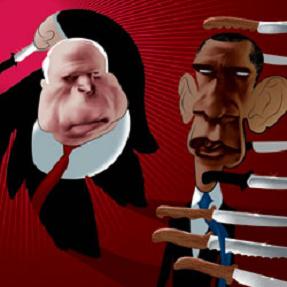
Illustration by André Carrilho / New Yorker.

‘it’s not exactly a surprise that the Republican election machine would resort to trying to make the entire election into an issueless sideshow’
By Arianna Huffington / August 6, 2008

With just ninety days left in the election it’s come down to this: our energy policy and a good deal of this presidential campaign are being discussed through the lens of Paris Hilton. What a big goof it all is! If you just ignore all the soldiers and civilians dying in the Mideast, and all the millions losing their homes and their jobs at home, you could really see the lighter side of it all.

It all started with McCain’s ad comparing Obama to Britney Spears and Paris Hilton. And then we had Paris Hilton’s “response,” followed by the McCain camp’s response to Paris Hilton: “It sounds like Paris Hilton supports John McCain’s ‘all of the above’ approach to America’s energy crisis — including both alternatives and drilling. Paris Hilton might not be as big a celebrity as Barack Obama, but she obviously has a better energy plan.”

Who ever thought this election wasn’t going to be about the issues?

Of course, it’s not exactly a surprise that the Republican election machine would resort to trying to make the entire election into an issueless sideshow. I mean, what else do they have?

But it is still a sad spectacle to see John McCain going along with it with such glib eagerness. The man who once pledged to run a “respectful campaign” and who said that Obama “would rather lose a war in order to win a political campaign” has made it clear that he’d rather lose everything he has stood for than lose the White House.

As New York Magazine’s John Heilemann noted, “we now have an inkling of just how deep in the mud McCain and his people are willing to wallow in order to win in November: right up to their Republican eyeballs.”

The problem is, we’re right down there with him. That’s because all it takes is one of the two candidates to decide to yank the discourse into the ditch and the media — and as a result, the public — follow.

Instead of the media calling the McCain campaign on its pathetic trivialization of the presidential race, they have been engaging in meaningless horse-race analysis of “did the ad work?” The conventional wisdom appears to be that it did.

There was Gloria Borger on CNN, saying, “They put out this ad, and we’re running this ad and we’re talking about it, which from their point of view, actually works for them.”

And there was Dana Milbank with Campbell Brown declaring, “They work and they always work. And we always go through this little dance when everybody says, I’m a different kind of politician, I’m post partisan, I’m a maverick. And of course when it comes right down to it, you need to drive the other guy’s numbers down. If anything, they haven’t gone negative enough just yet.”

As Huffpost’s Seth Colters Walls reports, this is nonsense, period. Indeed, to the extent that eventually the ad may “work,” it will be only because of the media saying that it worked. It’s not even horse-race analysis. It’s the Observer Effect.

Even though the media play this game every election cycle, this time, I honestly thought it would be different. That the problems we’re facing — a disastrous never-ending war, the recession, the near collapse of our banking system, etc., etc. — were just too big to ignore.

But it now appears that the bigger the problems, the more likely it is that they’ll be completely ignored. So here we are: huge problems and a correspondingly empty election. It’s the politics of nothing.

The McCain camp knows that the only way they can win this election is to turn it into a carnival sideshow.

Here’s the question the media should be asking John McCain: “do you think the frivolous, jeering tone of your campaign matches the problems being faced by this country and the sacrifices being made right now by our soldiers overseas?”

And here’s another question: what’s next for John McCain? Where does he and his campaign go from here? If this is where they have taken the political discourse in early August, what have they got for us come October? Here is a preview — our best guess — of what the McCain has in store for us:

“Too Tall.” An ad claiming that proof of Obama’s arrogance is his refusal to be as short as McCain (5′ 6″).

“Sex Tape.” An ad comparing Obama to Paris Hilton’s sex tape to make the point that, well, no point, just that Paris had a sex tape and Obama is, you know, like it.

“Sex Tape II.” An ad with Obama digitally inserted into Paris Hilton’s sex tape.

“Rhymes with Iraq.” An ad pointing out that Obama’s first name almost rhymes with Iraq. The ad is pulled after it’s pointed out that it comes close to mentioning an issue.

“Michelle Obama: a man?” An ad that’s not making any claims, “just asking a question.” The ad succeeds in getting the typical media treatment: “As many have noted, the ad uses hyperbole. Still, however, it raises the question, is Michelle Obama a woman?”

“Barack Obama: gay?” Hard to say, but, per the last ad, if Michelle is indeed a man, then that makes Obama gay.

“Barack Obama: black gay man.” Previous ad forgot to mention Obama’s race.

“akludfilkakmeitceks.” An ad with random letters coming up on the screen. The media declares it “a home run.”

Source / The Huffington Post

Also see The Low-Road Warrior by John Heilemann / The New Yorker / August 1, 2008

The Rag Blog

Posted in RagBlog | Tagged , , , , , , , , | 1 Comment

Sad News About Iraqi Provincial Elections


Iraq parliament fails to pass elections bill
By Ned Parker and Said Rifai / August 7, 2008

Iraq lawmakers break for vacation, unable to agree on oil-rich Kirkuk, which the Kurds want to annex to the semiautonomous Kurdish region.

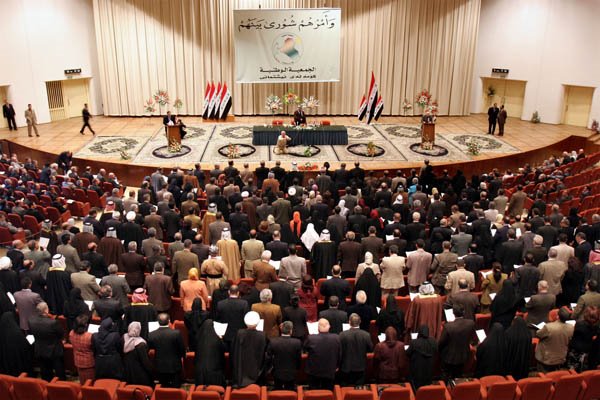
BAGHDAD — The Iraqi parliament broke for summer vacation Wednesday without passing a bill that would have allowed provincial elections to be held this year, dealing a blow to hopes for bringing alienated Sunni and Shiite Muslim voices into the political process any time soon.

The parliament, which tried during a four-day special session to pass the legislation under pressure from the United States and United Nations, could not resolve differences over oil-rich Kirkuk, a volatile mixed area that the Kurds wish to annex to their semiautonomous northern region.

Iraq’s electoral commission had said the measure needed to be passed before lawmakers adjourned for the month in order to hold elections by the end of December.

Lawmakers had been set to adjourn last week when they scheduled the special session. But differences between Kurds, Arabs and Turkmens over Kirkuk ultimately could not be resolved.

Iraqi politicians, officials and Western diplomats have speculated that the political parties in government were never invested in holding a vote this year out of fear they would lose seats and influence at the provincial level. Senior politicians — including President Jalal Talabani, a Kurd, and Vice President Tariq Hashimi, a Sunni Arab — have been absent from Baghdad during the round-the-clock negotiations, citing medical reasons.

The impasse over the legislation left an uncertain situation in Kirkuk, where last week a suicide bomb and ethnic clashes killed 25 people. The delay was also likely to add to frustrations in other mixed provinces — such as Baghdad, Nineveh and Diyala — where a Sunni Arab boycott of 2005 elections created lopsided provincial councils dominated by Shiites and Kurds.

In Anbar province, Sunni tribes that joined U.S. forces in opposing Islamic extremists have wanted elections so they could try to wrest power from their Sunni rivals in the Iraqi Islamic Party.

The breakdown came amid a banner time for the Shiite-led Iraqi government, which has witnessed falling death rates; successful military campaigns in southern Iraq since the spring; and the return to the national government of Iraq’s main Sunni political bloc, which had boycotted the Cabinet for a year.

But fighting is still occurring in Iraq, and the relative calm is fragile. U.S. military commanders and Iraq experts worry that an unexpected event could set off a new cycle of violence among dueling ethnicities and sects.

The political crisis started July 22 when Arabs and Turkmens in parliament surprised the Kurds, recent kingmakers in Iraqi politics, with a call for a secret vote on the election bill’s clause dealing with Kirkuk. In a twist, even some of the Kurds’ longtime Shiite allies abandoned them, and the Kurds walked out as the measure was approved.

The country’s three-member presidency council, headed by Talabani, then vetoed the bill, citing as illegal the secret ballot in parliament.

Efforts to rescue the troubled legislation have gone into overdrive since Sunday, with the constant meetings involving political bloc leaders, the United Nations and U.S. Ambassador Ryan Crocker. At one point, President Bush phoned Massoud Barzani, president of the Kurdish region, in hopes of getting the Kurds to compromise on Kirkuk.

The parliament made a final stab Wednesday at bringing the bill to a vote after approving a $21-billion supplemental budget for the rest of the year. Instead, the parliament opted to reconvene Sept. 9 and to set up a committee to continue negotiations in the short term.

U.S. officials expressed dismay over the deadlock.

“The election law cannot be held hostage to the Kirkuk issue, so we hope very much that the Council of Representatives will continue to seek a compromise that will be adopted promptly,” U.S. Embassy spokeswoman Mirembe Nantongo said.

Times staff writers Saif Hameed, Saif Rasheed and Usama Redha contributed to this report.

Source / Los Angeles Times

The Rag Blog

Posted in RagBlog | Tagged , | Leave a comment

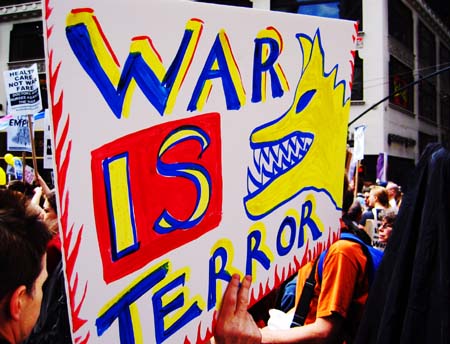
The ‘War’ on Terror : It Just Doesn’t Work


Calling it a ‘war’ is a boon to terrorist recruiters.
By Seth G. Jones and Martin C. Libicki / August 6, 2008

ARLINGTON, Va. – Military might against Al Qaeda and other terrorist groups isn’t working – and no wonder. After studying the record of 648 terrorist groups between 1968 and 2006, we’ve found that military force has rarely been effective in defeating this enemy.

Indeed, the US reliance on military force – especially conventional military forces – has often been counterproductive.

Take Al Qaeda: Despite suffering a setback in Iraq and several senior operatives killed or captured, it has carried out more terrorist attacks after Sept. 11 than it did before, and these attacks have spanned a wider geographic area across Europe, Asia, the Middle East, and Africa.

The group’s methods – from improvised explosive devices to increased suicide attacks – have grown more sophisticated. Its organizational structure has evolved as well, including encouraging a grass-roots approach by members while maintaining strategy and operations from a central location in Pakistan.

This resurgence is reason enough to trigger an overhaul of US counterterrorism strategy.

History offers some critical guidance.

Since 1968, more than three-quarters of terrorist groups have ended because of a political settlement or joint policing and intelligence efforts. But a political solution is not in the cards with Al Qaeda. Its goal – to take down multiple state regimes to create a pan-Islamic caliphate – is too radical to lead to any sort of negotiated settlement with Middle Eastern governments.

A good start toward peace, though, would be for Washington to stop thinking of this as a “war” with a battlefield solution.

Most US allies, such as Britain and Australia, already have. In Britain, for example, the government shuns the phrase “war on terror” despite a long history of dealing with such terrorist groups as the IRA.

And rightly so. Military force often has the opposite effect from what is intended. It is often overused, alienates the local population by its heavy-handed nature, and is a boon to terrorist recruiters.

The term “war” also has a symbolic cost. It feeds into the jihad or “holy war” concept that attracts the attention of potential terrorists by elevating them to “holy warrior” status. Terrorists should be perceived and described as criminals, not holy warriors.

What we are engaged in, more aptly, is “counterterrorism.”

Rather than a military focus, policing and intelligence should form the backbone of US and allied counterterrorism efforts. Tracking down Al Qaeda’s network of members worldwide will require more work abroad from the CIA and FBI, as well as cooperation with foreign police and intelligence agencies.

Such a strategic shift will demand a change in spending. Of the $609 billion in counterterrorism funding authorized by Congress between 2001 and 2007, 90 percent went to military operations. Much of that money would be better spent on law enforcement and intelligence agencies working overseas.

To be sure, when Al Qaeda is involved in an insurgency it may be necessary to use military force particularly special operations forces. But US successes against Al Qaeda in Iraq and the capture of several of its top terrorists in Pakistan suggest that the military and intelligence agencies should increasingly play a background role whenever possible.

Local military, police, and intelligence forces typically have more legitimacy to operate than do US forces, and have a better feel for the lay of the land.

The US military should generally resist being drawn into combat operations in Muslim societies, especially in large numbers, where its presence is likely to increase terrorist recruitment.

There are good reasons to be hopeful. Al Qaeda’s probability of success in actually overthrowing any government is close to zero. Its objectives are virtually unachievable. And no religious terrorist group that has folded since 1968 has achieved victory.

While Osama bin Laden enjoys some popular support in the Muslim world, he has made enemies of virtually every government across the globe.

By alienating most of the world and declaring unachievable objectives, Al Qaeda has set a losing strategy. Let’s not make countering it more difficult than it has to be.

[Seth G. Jones is a political scientist and Martin C. Libicki is a policy researcher at the RAND Corporation. They are authors of the study, “How Terrorist Groups End: Lessons for Countering Al Qaida.”]

Source / Christian Science Monitor

Thanks to BettyTX / The Rag Blog

Posted in RagBlog | Tagged , , , , | Leave a comment

What’s More Important Than Saving the Planet?

This poster is just part of the propaganda

The Scam of Energy Independence
By Juan Cole

John McCain keeps talking about making the US “energy independent.”

Robert Bryce points out that it is impossible for the United States to be energy independent with current technology.

McCain says nuclear energy can make the US independent of “foreign oil.” But the US imports 83% of the uranium it uses!

By the way, if you built a lot of new nuclear reactors, it would cause the price of uranium to go up. There is only so much uranium in the world, so we will have “Peak uranium” after a few years if we go that route.

McCain keeps saying that the US navy has run subs on nuclear power for years and there have been no leaks.

Ahem.

McCain says drilling in the United States can make the US energy independent. Hogwash! HOGWASH. All the offshore fields now known off the lower 48 states, if drilled, might produce 400,000 barrels a day ten to fifteen years from now.

The US imports on the order of 13 million barrels a day of petroleum. The world produces 86 million barrels a day and apparently wants 87. Offshore drilling in the US would yield a drop in the bucket.

In the meantime, China’s oil imports were up 12% last year over the year before. The extra oil from offshore drilling would just get used up lickety split.

McCain calls “foreign oil” expensive!

It is all one global market,folks. Once oil is pumped and goes on the market, it sells for the same price everywhere (except if there are government subsidies, which are a huge waste of money and very bad economics). It doesn’t matter if it is pumped in Oklahoma or Ahvaz, it is priced the same.

Muhammad Sahimi makes this point at some length.

Moreover, getting more fossil fuels out of the ground will produce more global warming, ravaging the world’s coastlines and their inhabitants. Again, it doesn’t matter whether American carbon is put into the atmosphere or Chinese. It is all one atmosphere.

The only prospect for US energy independence is cheap and effective power generation from wind and solar energy, which needs new, cheaper and better methods of battery or other storage to be practical.

Obama’s pledge to invest $150 billion in alternative energy is a promising first step. That is a little more than what the Apollo project cost the US in today’s dollars. And putting a man on the moon was rather less important than, like, saving the planet.

Source / Informed Comment

The Rag Blog

Posted in RagBlog | Tagged , , | Leave a comment

Where Baghdadi Graves Are Marked with Tin Cans

God’s Promise Will Be Fulfilled

Source / Informed Comment / The Guardian

The Rag Blog

Posted in RagBlog | Tagged | 1 Comment

Overly Confident in Voting As the Path to Change

Economic pain spurs delusion, not rebellion. Credit: open source.

Working poor unready to revolt: When economic pain does not motivate political rebellion, is all lost?
By Joel Hirschhorn / Aug 7, 2008

Once upon a time when governments no longer served most of their citizens it was the most economically disadvantaged that could be counted on to rebel against tyranny and injustice. Times have changed, for the worse, despite the spread of democracy.

Here we are with a two-party plutocracy that preferentially serves corporate and wealthy interests and lets the middle class suffer and sink. Plausibly, the middle class is unready to revolt because it still maintains a relatively good standard of living despite rising economic insecurity. But what about the lowest 40 percent of Americans that are the working poor?

A recent survey of this group by the Washington Post, the Henry J. Kaiser Family Foundation and Harvard University conducted this past June looked at the beliefs of adults ages 18 to 64 working 30 or more hours a week, not self-employed and who earned no more than $27,000 in 2007. The results show a fascinating dichotomy. Though there is widespread pain and discontent there is also a stubborn faith in the American dream despite little help from government.

Ninety percent of this group sees the current economy negatively, either not so good or poor, with 52 percent feeling financially insecure and 50 percent feeling less secure than a few years ago. The fractions saying they have difficulty affording basic things are severe, including: 88 percent that cannot save money for college or other education for their children, 82 percent paying for gasoline or other transportation costs, 81 percent saving money for retirement, 65 percent paying for health care and health insurance, 65 percent handling child care, close to 60 percent paying credit card bills, monthly utility bills and rent or mortgage costs, and 47 percent buying food. Three quarters say it has gotten harder to find good jobs and nearly that fraction for finding affordable health care, and 68 percent finding decent, affordable housing.

In the past year this group has had to take many actions to make ends meet, including 70 percent that cut electricity use and home heating; 62 percent that took an extra job or worked extra hours, 51 percent that postponed medical or dental care and 50 percent that took money out of savings or retirement funds.

All this sounds pretty bleak. But are these people mad and pessimistic? Not exactly.

An amazing 69 percent are hopeful about their personal financial situation, 59 percent believe they are more likely over the next few years to move up in terms of their social class, 59 percent believe that their children will have a standard of living much or somewhat better than theirs, and 56 percent think they will achieve the American dream in their lifetime.

Do these lower economic class, hardest hit Americans that account for 25 percent of the adult population believe that government helps them? No. Only 22 percent believe that government programs are making things better for them. But apparently they have bought hook, line and sinker into Barack Obama’s change rhetoric, with a 2 to 1 margin favoring him over John McCain. And when it comes to beliefs about which candidate will do better for them the margins favoring Obama go up to 3 or more to 1 for improving their own financial situation, the national economy and the national health care system. Similarly, Obama is seen as much more concerned with their needs and better represent their values. All very good news for Obama, except that only 70 are registered to vote and about a third saw no difference in whether Obama or McCain was in office.

Faith in Obama, however, pales in comparison to the other source of comfort for dealing with hard economic times. A striking 78 percent find religion or faith in God helps them get through tough economic times.

The unmistakable conclusion from all these data is that no rebellion against the power elites running the two-party plutocracy seems likely. If the bottom 40 percent of Americans in terms of income still believe in the American dream and change-spouting politicians like Obama, it is hard to believe that the more affluent middle 40 percent of the population are ready to support more radical change through political rebellion.

Interesting how gasoline prices are dropping as we approach the Republican and Democratic conventions and Election Day. Apparently, America’s ruling class knows what it is doing. It can keep channeling more and more of the nation’s wealth to the rich, Upper Class producing more economic inequality without fearing the kind of political revolution that Thomas Jefferson thought the nation needs periodically. Consider this: In the three decades after World War II household inflation-adjusted income of the bottom 90 percent increased 83 percent compared to 20 percent increase for the top 10 percent. In contrast, in the past three decades, the bottom 90 percent saw only a 10 percent increase while the top 10 percent received an increase of 232 percent! The two-party stranglehold on our political system has produced rising economic inequality.

Forget all that nonsense about the proletariat. Most Americans use their faith in God or religion or conventional politicians to cope, even in some of the most insecure economic times in American history. They remain overly confident in voting as the path to change. The ruling class has successfully used propaganda to dumb down and manipulate most of the public because delusion has become the opiate of the masses.

In God and Barack Obama We Trust could be placed on all our currency if the views of millions of Americans are taken seriously. Don’t you feel better?

[Joel S. Hirschhorn can be reached through http://www.delusionaldemocracy.com/.]

Source / Associated Content

The Rag Blog

Posted in RagBlog | Tagged , | 1 Comment

A Deal of Stunning Simplicity


A Powerful Peace
by Jonathan Schell

If the nuclear powers wish to be safe from nuclear weapons, they must surrender their own.

With each year that passes, nuclear weapons provide their possessors with less safety while provoking more danger. Possession of nuclear arms provokes proliferation. Both nourish the global nuclear infrastructure, which in turn enlarges the possibility of acquisition by terrorist groups.

The step that is needed to break this cycle can be as little doubted as the source of the problem. The double standard of nuclear haves and have-nots must be replaced by a single standard, which can only be the goal of a world free of all nuclear weapons.

What is it that prevents sensible steps toward nuclear abolition from being taken? The answer cannot be in doubt, either. It is the resolve of the world’s nuclear powers to hold on to their nuclear arsenals. Countries that already have nuclear arms cite proliferation as their reason for keeping them, and those lacking nuclear arms seek them in large measure because they feel menaced by those with them.

A double-standard regime is a study in futility — a divided house that cannot stand. Its advocates preach what they have no intention of practicing. It is up to the nuclear powers to take the first step.

Their nuclear arsenals would be the largest pile of bargaining chips ever brought to any negotiating table. More powerful as instruments of peace than they ever can be for war, they would likely be more than adequate for winning agreements from the non-nuclear powers that would choke off proliferation forever.

The art of the negotiation would be to pay for strict, inspectable, enforceable nonproliferation and nuclear-materials-control agreements in the coin of existing nuclear bombs. What would be the price to the nuclear powers, for example, of a surrender by the nuclear-weapons-free states of their rights to the troublesome nuclear fuel cycle, which stands at the heart of the proliferation dilemma? Perhaps reductions by Russia and the United States from two thousand to a few hundred weapons each plus ratification of the Comprehensive Test Ban Treaty?

Further reductions, now involving the other nuclear powers, might pay for establishment and practice of inspections of ever-greater severity, and still further reductions might buy agreements on enforcement of the final ban on nuclear arms. When nuclear weapons holdings reached zero, former nuclear weapons states and non-nuclear weapons states, abolitionists all, would exercise a unanimous will to manage, control, roll back, and extirpate all nuclear weapon technology.

A world from which nuclear weapons had been banned would, of course, not be without its dangers, including nuclear ones. But we must ask how they would compare with those now approaching.

Let us suppose that the nuclear powers had agreed to move step by step toward eliminating their own arsenals. The iron chains of fear that link all the nuclear arsenals in the world would then be replaced by bonds of reassurance. Knowing that Russia and the United States were disarming, China could agree to disarm. Knowing that China was disarming, India could agree to disarm. Knowing that India was ready to disarm, Pakistan could agree to disarm as well. Any country that decided otherwise would find itself up against the sort of united global will so conspicuous by its absence today.

During the Cold War, the principal objection in the United States to a nuclear-weapon-free world was that you could not get there. That objection melted away with the Soviet Union, and today the principal objection is that even if you could get there, you would not want to be there. The arguments usually begin with the observation that nuclear weapons can never be disinvented, and that a world free of nuclear weapons is therefore at worst a mirage, at best a highly dangerous place to be. It is supposedly a mirage because, even if the hardware is removed, the know-how remains. It is said to be highly dangerous because the miscreant re-armer, now in possession of a nuclear monopoly, would be able to dictate terms to a helpless, terrorized world or, alternately, precipitate a helter-skelter, many-sided nuclear arms race.

This conclusion seems reasonable until you notice that history has taught an opposite lesson. Repeatedly, even the greatest nuclear powers have actually lost wars against tiny, backward nonnuclear adversaries without being able to extract the slightest utility from their colossal arsenals. Think of the Soviet Union in Afghanistan, or the U.S. in Vietnam, or Britian in Suez.

If, in the 60 years of the nuclear age, no great power has won a war by making nuclear threats against even tiny, weak adversaries, then how could a nuclear monopoly by a small country enable it to coerce and bully the whole world? The danger cannot be wholly discounted, but it is surely greatly exaggerated.

If the nuclear powers wish to be safe from nuclear weapons, they must surrender their own. They should collectively offer the world’s non-nuclear powers a deal of stunning simplicity, inarguable fairness, and patent common sense: we will get out of the nuclear weapon business if you stay out of it. Then we will all work together to assure that everyone abides by the commitment.

The united will of the human species to save itself from destruction would be a force to be reckoned with.

Jonathan Schell wrote this article as part of A Just Foreign Policy, the Summer 2008 issue of YES! Magazine. Jonathan is the Harold Willens Peace Fellow at the Nation Institute and a senior visiting lecturer at Yale. He has written many books. This article is adapted from his latest, The Seventh Decade: The New Shape of Nuclear Danger.

Source / Yes! Magazine

The Rag Blog

Posted in RagBlog | Tagged , , | Leave a comment

Before the Spine of the Free Internet Is Broken

Lessig also revealed there is already in existence a cyber equivalent of the Patriot Act waiting for a cyber terrorism event in order to implement its provisions.

Law Professor: Counter Terrorism Czar Told Me There Is Going To Be An i-9/11 And An i-Patriot Act
By Steve Watson / August 6, 2008

Infowars — Amazing revelations have emerged concerning already existing government plans to overhaul the way the internet functions in order to apply much greater restrictions and control over the web.

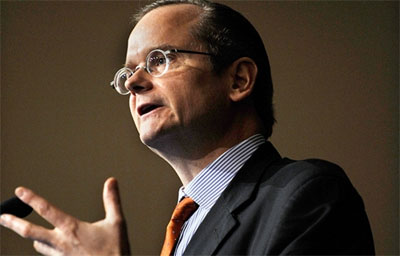
Lawrence Lessig, a respected Law Professor from Stanford University told an audience at this years Fortune’s Brainstorm Tech conference in Half Moon Bay, California, that “There’s going to be an i-9/11 event” which will act as a catalyst for a radical reworking of the law pertaining to the internet.

Lessig also revealed that he had learned, during a dinner with former government Counter Terrorism Czar Richard Clarke, that there is already in existence a cyber equivalent of the Patriot Act, an “i-Patriot Act” if you will, and that the Justice Department is waiting for a cyber terrorism event in order to implement its provisions.

During a group panel segment titled “2018: Life on the Net”, Lessig stated:

There’s going to be an i-9/11 event. Which doesn’t necessarily mean an Al Qaeda attack, it means an event where the instability or the insecurity of the internet becomes manifest during a malicious event which then inspires the government into a response. You’ve got to remember that after 9/11 the government drew up the Patriot Act within 20 days and it was passed.

The Patriot Act is huge and I remember someone asking a Justice Department official how did they write such a large statute so quickly, and of course the answer was that it has been sitting in the drawers of the Justice Department for the last 20 years waiting for the event where they would pull it out.

Of course, the Patriot Act is filled with all sorts of insanity about changing the way civil rights are protected, or not protected in this instance. So I was having dinner with Richard Clarke and I asked him if there is an equivalent, is there an i-Patriot Act just sitting waiting for some substantial event as an excuse to radically change the way the internet works. He said “of course there is”.

Watch Lessig reveal the details at 4.30 into the following video:

Lessig is the founder of Stanford Law School’s Center for Internet and Society. He is founding board member of Creative Commons and is a board member of the Electronic Frontier Foundation and of the Software Freedom Law Center. He is best known as a proponent of reduced legal restrictions on copyright, trademark and radio frequency spectrum, particularly in technology applications.

These are clearly not the ravings of some paranoid cyber geek.

The Patriot Act, as well as its lesser known follow up the Domestic Security Enhancement Act 2003, also known as USA Patriot Act II, have been universally decried by civil libertarians and Constitutional scholars from across the political spectrum. They have stripped back basic rights and handed what have been described by even the most moderate critics as “dictatorial control” over to the president and the federal government.

Many believed that the legislation was a response to the attacks of 9/11, but the reality was that the Patriot Act was prepared way in advance of 9/11 and it sat dormant, awaiting an event to justify its implementation.

In the days after the attacks it was passed in the House by a majority of 357 to 66. It passed the Senate by 98 to 1. Congressman Ron Paul (R-Tex) told the Washington Times that no member of Congress was even allowed to read the legislation.

Now we discover that exactly the same freedom restricting legislation has already been prepared for the cyber world.

An i-9/11, as described by Lawrence Lessig, would provide the perfect pretext to implement such restrictions in one swift motion, as well as provide the justification for relegating and eliminating specific content and information on the web.

Such an event could come in the form of a major viral attack, the hacking of a major city’s security or transport systems, or some other vital systems, or a combination of all of these things. Considering the amount of unanswered questions regarding 9/11 and all the indications that it was a covert false flag operation, it isn’t hard to imagine such an event being played out in the cyber world.

However, regardless of any i-9/11 or i-Patriot Act, there is already a coordinated effort to stem the reach and influence of the internet.

We have tirelessly warned of this general movement to restrict, censor, control and eventually completely shut down the internet as we know it, thereby killing the last real vestige of free speech in the world today and eliminating the greatest communication and information tool ever conceived.

Our governments have reams of legislation penned to put clamps on the web as we know it. Legislation such as the PRO-IP Act of 2007: H.R. 4279, that would create an IP czar at the Department of Justice and the Intellectual Property Enforcement Act of 2007: S. 522, which would create an entire ‘Intellectual Property Enforcement Network’. These are just two examples.

In addition, we have already seen how the major corporate websites and social networks are decentralizing and coming together to implement overarching identification, verification and access systems that have been described by Facebook founder Mark Zuckerberg as “the beginning of a movement and the beginning of an industry.”

Some of these major tech companies have already joined efforts in projects such as the Information Card Foundation, which has proposed the creation of a system of internet ID cards that will be required for internet access. Of course, such a system would give those involved the ability to track and control user activity much more effectively. This is just one example.

In addition, as we reported yesterday, major transportation hubs like St. Pancras International, as well as libraries, big businesses, hospitals and other public outlets that offer wi-fi Internet, are blacklisting alternative news websites and making them completely inaccessible to their users.

These precedents are merely the first indication of what is planned for the Internet over the next 5-10 years, with the traditional web becoming little more than a vast spy database that catalogues people’s every activity and bombards them with commercials, while those who comply with centralized control and regulation of content will be free to enjoy the new super-fast Internet 2.

We must speak out about this rampant move to implement strict control mechanisms on the web NOW before it is too late, before the spine of the free internet is broken and its body essentially becomes paralyzed beyond repair.

Source / Information Clearing House

The Rag Blog

Posted in RagBlog | Tagged , , | Leave a comment

Are the Rest of Us to Be Mere Bystanders?

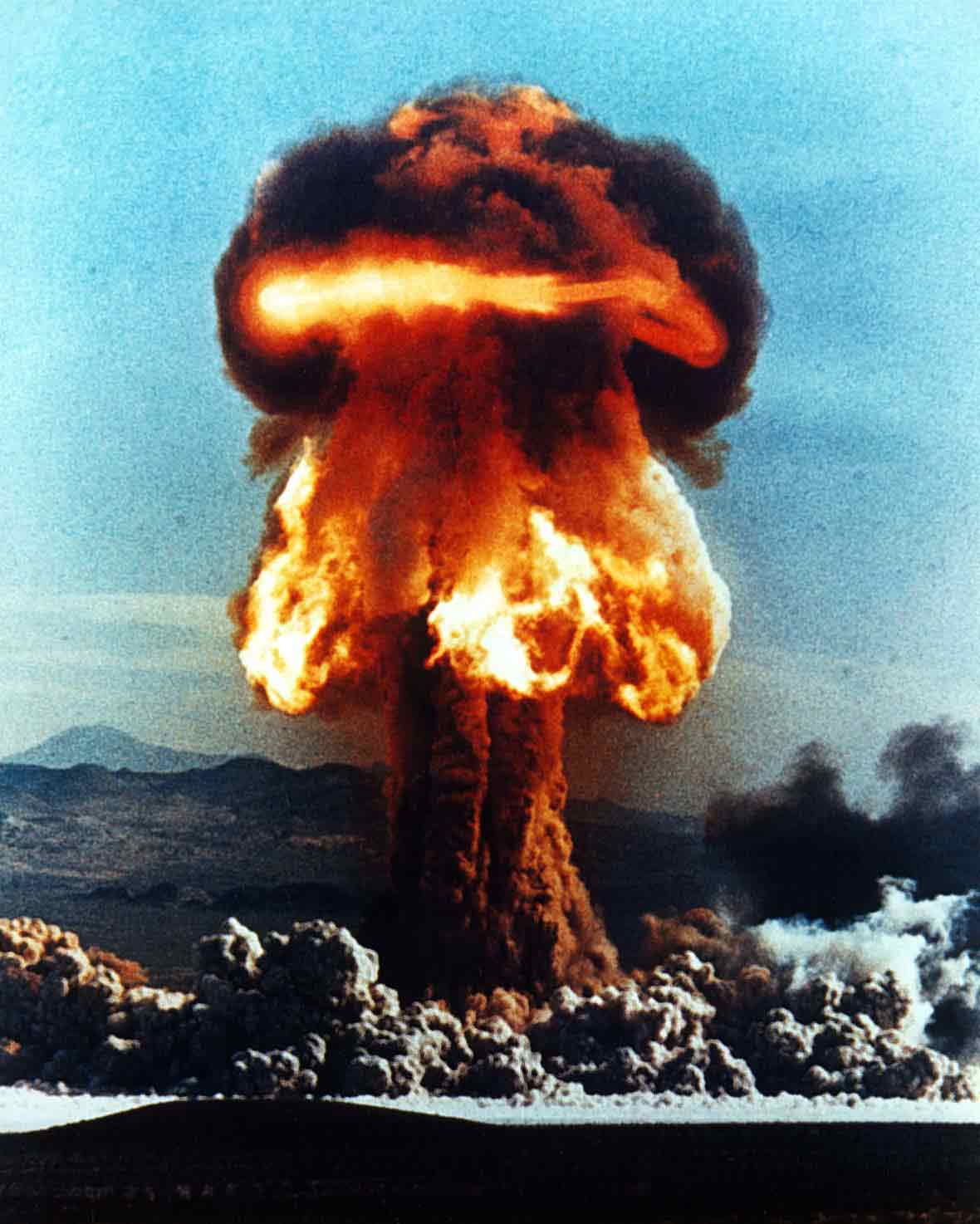
On the anniversary of the dropping of the atomic bomb on Hiroshima on August 6, 1945, John Pilger describes the ‘progression of lies’ from the dust of that detonated city, to the wars of today – and the threatened attack on Iran.

The Lies Of Hiroshima Are The Lies Of Today
By John Pilger

06/08/08 “ICH” — – When I first went to Hiroshima in 1967, the shadow on the steps was still there. It was an almost perfect impression of a human being at ease: legs splayed, back bent, one hand by her side as she sat waiting for a bank to open. At a quarter past eight on the morning of August 6, 1945, she and her silhouette were burned into the granite. I stared at the shadow for an hour or more, then walked down to the river and met a man called Yukio, whose chest was still etched with the pattern of the shirt he was wearing when the atomic bomb was dropped.

He and his family still lived in a shack thrown up in the dust of an atomic desert. He described a huge flash over the city, “a bluish light, something like an electrical short”, after which wind blew like a tornado and black rain fell. “I was thrown on the ground and noticed only the stalks of my flowers were left. Everything was still and quiet, and when I got up, there were people naked, not saying anything. Some of them had no skin or hair. I was certain I was dead.” Nine years later, when I returned to look for him, he was dead from leukaemia.

A shadow on steps such as Pilger describes above

In the immediate aftermath of the bomb, the allied occupation authorities banned all mention of radiation poisoning and insisted that people had been killed or injured only by the bomb’s blast. It was the first big lie. “No radioactivity in Hiroshima ruin” said the front page of the New York Times, a classic of disinformation and journalistic abdication, which the Australian reporter Wilfred Burchett put right with his scoop of the century. “I write this as a warning to the world,” reported Burchett in the Daily Express, having reached Hiroshima after a perilous journey, the first correspondent to dare. He described hospital wards filled with people with no visible injuries but who were dying from what he called “an atomic plague”. For telling this truth, his press accreditation was withdrawn, he was pilloried and smeared – and vindicated.

The day after Hiroshima was obliterated, President Truman voiced his satisfaction with the “overwhelming success” of “the experiment”.

The atomic bombing of Hiroshima and Nagasaki was a criminal act on an epic scale. It was premeditated mass murder that unleashed a weapon of intrinsic criminality. For this reason its apologists have sought refuge in the mythology of the ultimate “good war”, whose “ethical bath”, as Richard Drayton called it, has allowed the west not only to expiate its bloody imperial past but to promote 60 years of rapacious war, always beneath the shadow of The Bomb.

The most enduring lie is that the atomic bomb was dropped to end the war in the Pacific and save lives. “Even without the atomic bombing attacks,” concluded the United States Strategic Bombing Survey of 1946, “air supremacy over Japan could have exerted sufficient pressure to bring about unconditional surrender and obviate the need for invasion. Based on a detailed investigation of all the facts, and supported by the testimony of the surviving Japanese leaders involved, it is the Survey’s opinion that … Japan would have surrendered even if the atomic bombs had not been dropped, even if Russia had not entered the war and even if no invasion had been planned or contemplated.”

The National Archives in Washington contain US government documents that chart Japanese peace overtures as early as 1943. None was pursued. A cable sent on May 5, 1945 by the German ambassador in Tokyo and intercepted by the US dispels any doubt that the Japanese were desperate to sue for peace, including “capitulation even if the terms were hard”. Instead, the US secretary of war, Henry Stimson, told President Truman he was “fearful” that the US air force would have Japan so “bombed out” that the new weapon would not be able “to show its strength”. He later admitted that “no effort was made, and none was seriously considered, to achieve surrender merely in order not to have to use the bomb”. His foreign policy colleagues were eager “to browbeat the Russians with the bomb held rather ostentatiously on our hip”. General Leslie Groves, director of the Manhattan Project that made the bomb, testified: “There was never any illusion on my part that Russia was our enemy, and that the project was conducted on that basis.” The day after Hiroshima was obliterated, President Truman voiced his satisfaction with the “overwhelming success” of “the experiment”.

Since 1945, the United States is believed to have been on the brink of using nuclear weapons at least three times. In waging their bogus “war on terror”, the present governments in Washington and London have declared they are prepared to make “pre-emptive” nuclear strikes against non-nuclear states. With each stroke toward the midnight of a nuclear Armageddon, the lies of justification grow more outrageous. Iran is the current “threat”. But Iran has no nuclear weapons and the disinformation that it is planning a nuclear arsenal comes largely from a discredited CIA-sponsored Iranian opposition group, the MEK – just as the lies about Saddam Hussein’s weapons of mass destruction originated with the Iraqi National Congress, set up by Washington.

The role of western journalism in erecting this straw man is critical. That America’s Defence Intelligence Estimate says “with high confidence” that Iran gave up its nuclear weapons programme in 2003 has been consigned to the memory hole. That Iran’s president Mahmoud Ahmadinejad never threatened to “wipe Israel off the map” is of no interest. But such has been the mantra of this media “fact” that in his recent, obsequious performance before the Israeli parliament, Gordon Brown alluded to it as he threatened Iran, yet again.

This progression of lies has brought us to one of the most dangerous nuclear crises since 1945, because the real threat remains almost unmentionable in western establishment circles and therefore in the media. There is only one rampant nuclear power in the Middle East and that is Israel. The heroic Mordechai Vanunu tried to warn the world in 1986 when he smuggled out evidence that Israel was building as many as 200 nuclear warheads. In defiance of UN resolutions, Israel is today clearly itching to attack Iran, fearful that a new American administration might, just might, conduct genuine negotiations with a nation the west has defiled since Britain and America overthrew Iranian democracy in 1953.

In the New York Times on July 18, the Israeli historian Benny Morris, once considered a liberal and now a consultant to his country’s political and military establishment, threatened “an Iran turned into a nuclear wasteland”. This would be mass murder. For a Jew, the irony cries out.

The question begs: are the rest of us to be mere bystanders, claiming, as good Germans did, that “we did not know”? Do we hide ever more behind what Richard Falk has called “a self-righteous, one-way, legal/moral screen [with] positive images of western values and innocence portrayed as threatened, validating a campaign of unrestricted violence”? Catching war criminals is fashionable again. Radovan Karadzic stands in the dock, but Sharon and Olmert, Bush and Blair do not. Why not? The memory of Hiroshima requires an answer.

www.johnpilger.com

Source / Information Clearing House

The Rag Blog

Posted in RagBlog | Tagged , , | Leave a comment

MEDIA : The Mythical Obama Bias


Trust me, John McCain doesn’t know what bad press looks like
by Eric Boehlert / August 5, 2008

Did you know the big bad media are beating up on John McCain?

For weeks, the campaign’s media debate centered on whether the press was being too kind to Sen. Barack Obama — whether it was fawning over the Democrat’s historic run and drowning him in rapturous coverage. (Recent studies and analysis have cast that claim into doubt.)

But now the narrative has been expanded to include the laughable notion that, following a string of McCain campaign stumbles, including botched staging and questionable photo-ops, the press has suddenly turned on McCain and is mocking the Republican. That the same press corps that branded McCain a maverick and for years worshipped his loose-talking demeanor, has now soured on the senator. Meaning, the love is gone.

The New York Observer trumpeted that trend last week when it published a front-page article detailing the transformation from McCain-as-media-hero to “McCain-as-marginalized-victim” who’s suffering “rough treatment” from journalists. The Observer piece came complete with an illustration that showed the press as a two-by-four-wielding playground bully setting his sights on a vulnerable and childlike McCain. (Run Johnny, run!)

Aside from asking for the world’s smallest violin, I’d like to make the point that rather than bemoaning the type of press attention McCain has been attracting, most recent Democratic candidates for president, who were pummeled and even savaged by the press, would pay for the kind of respectful coverage McCain has accumulated this summer. They would be rejoicing if the press ever treated them as kindly and as softly as it has McCain this campaign.

Let me put it another way: When McCain gets regularly portrayed in the press as a serial liar the way Al Gore was in 2000, then he can complain about the press. When McCain is portrayed as an angry lunatic the way Howard Dean was in 2003, then he can complain. When McCain’s war record is dragged through the mud while the press looks on for weeks too frightened to call out the partisan accusers, the way John Kerry’s military record was, then he can complain. When McCain’s campaign is defined by his haircut the way John Edwards’ was, then he can complain. When McCain is portrayed as a cackling witch the way Hillary Clinton was this winter, then he can complain. When McCain is portrayed as arrogant and presumptuous the way Obama is today, then he can complain.

But pretending that when the press simply chronicles McCain’s disjointed campaign means that reporters and pundits have somehow turned on the candidate — that they are attacking him and piling on — is just ludicrous.

It’s true the McCain campaign has received some unkind press notices in recent weeks, but that’s because the McCain campaign has been very poorly run. As The Atlantic’s conservative blogger Ross Douthat conceded last week, “John McCain is running a staggeringly inept campaign.”

That’s what Republican boosters were saying about the Arizona senator. But simply acknowledging the campaign’s missteps, however gingerly the traditional media have done it in recent weeks, does not mean the press is being nasty to the candidate or attacking the GOP.

What’s happened in recent White House campaign cycles is that people have become so accustomed to the press openly mocking the Democrat that when that pattern is altered, however slightly, as it’s been in 2008, it’s perceived to be a massive shift.

Since the media are simply not trashing the Democratic nominee as aggressively as in campaigns past, conservatives are claiming that’s being unfair. They liked the old model where the press effortlessly adopted GOP spin about Democratic candidates being phony and untrustworthy. That worked for the GOP. Today, that model has been modestly tweaked, and the GOP is crying foul.

That’s expected. But it was distressing to see the New York Observer buy into the spin about the media turning on McCain. After all, the evidence to support the meme is quite thin. Yes, partisan Republican Grover Norquist, the head of Americans for Tax Reform, assured the Observer that McCain “got slapped upside the head” by the media. But in terms of pinpointing actual instances of mockery, the Observer didn’t seem to have much to work with. It did cite this recent cable chatter scene:

“On a recent segment on Fox News’ The Beltway Boys … Morton Kondracke, countered a little later with this: “McCain did not have a great week. His visual was riding around in a golf cart with old George Bush the First.” Mr. Kondracke waved his hands in the air, comically mimicking Mr. McCain at the wheel of a golf car. Mr. [Fred] Barnes crossed his arms and chuckled.

That was the Observer’s strongest piece of evidence of the media “mockery” — of the “rough treatment” — that McCain has had to endure? Kondracke waved his hands and Barnes chuckled.

Oh, brother. I mean, how does McCain make it through the days with that kind of media venom flowing in his direction?

I can’t help thinking if Gore wouldn’t have preferred suffering that kind of “mockery” as opposed to having MSNBC’s Chris Matthews announce that Gore was so desperate to be president in 2000 that he would gladly “lick the bathroom floor” to get elected. Go read the Daily Howler’s 2000 archives for a catalog that’s as long as a fire station grocery list of the jarring insults and attacks the press leveled against Gore, who, at times, was portrayed in the press as pathological. And then compare those attacks to the light-as-a-feather mockery that McCain has supposedly had to deal with lately and tell me which is tougher.

It’s the same reason that I bet Clinton would have gladly been the target of a Fox News anchor’s chuckle rather than having The New York Times print a news section analysis of her laugh and then watch lots of well-paid, deep-thinking pundits and reporters at The Washington Post, The Boston Globe, San Francisco Chronicle, Seattle Post-Intelligencer, Cincinnati Post, National Public Radio, Time.com, Reuters, Associated Press, Politico, ABC, CNN, MSNBC, and Fox News, among others, pontificate about her humorous outbursts.

Indeed, way back in November 2007, months before the press really let loose on her candidacy, Greg Sargent amassed a sort of Greatest Hits of the media’s phony attacks on Clinton. Read the list and try to think of a single event in the last two months in which the press, which we’re told has turned on poor John McCain, ever concocted nonsense like this and targeted the GOP front-runner:

* Hillary’s alleged failure to tip the Iowa waitress

* Hillary’s phony southern drawl

* The supposed 20-year-plan by Hillary and Bill to take over the world, or at least deliver them both the Presidency, as alleged by Jeff Gerth and Don Van Natta and denied by the one person who supposedly had first-hand knowledge of their dastardly plot

* The baseless claim that Hillary eavesdropped on political opponents in 1992

* The bogus media claim that Bill Clinton accused Hillary’s Dem rivals of “swiftboating” her

* The media’s hyping of Hillary’s supposed refusal to release Presidential records, a tale that was taken apart in today’s Washington Post and which wasn’t matched by any similar media outrage about Rudy [Giuliani’s] refusal to release his Mayoral papers.

P.S. Don’t forget the great cleavage debate of 2007.

Yet we’re supposed to believe the bullying press is now mocking McCain? Give us a break.

You’ll also note that with the Democratic trend with Gore, Dean, Kerry, Clinton, Edwards, and Obama, the caustic coverage candidates have had to endure almost always revolved around questions of character; being a liar, a phony, unhinged, or arrogant.

By contrast, there has not been a single, sustained press narrative pushed by the media during this entire campaign season that has ridiculed or called into question McCain’s character. Not one. For the press, that kind of character exploration of McCain remains taboo. But when covering Democrats, character assassination remains routine.

Meanwhile, I can’t help wondering if the press is being tagged as mean and nasty simply because reporters belatedly challenged one of McCain’s many campaign lies. Because they decided to come out of their Bush-era shell and actually engaged in a rare bout of fact-checking, or what used to be called reporting, when a Republican tried to smear the character of his Democratic opponent.

The lie McCain peddled in a television ad was that Obama canceled a trip to visit wounded U.S. soldiers in Germany because the Pentagon told him he couldn’t bring reporters along with him. After some initial hesitation, NBC, along with The New York Times and The Washington Post, among others, finally reported that McCain’s central allegation was not supported by the facts.

On the front page on July 30, the Post’s Michael Shear and Dan Balz reported that McCain continued to make the allegation, “despite no evidence that the charge is true.” That might seem like a simple thing. And unfortunately the press still allowed McCain’s planted lie to dictate campaign coverage last week. But for the Beltway media amidst a White House campaign, the Post’s reporting was different.

As the Daily Howler noted:

“Shear’s report represents a major change in the mainstream press culture of the past sixteen years. In this report, the Washington Post, on its front page, directly challenges the latest slimy “character” charge against the latest Dem White House hopeful. This represents a major change in the way this newspaper does business.”

Quite simply, the Republican Party cannot afford to have the press become aggressive fact-checkers out on the trail. So in an attempt to intimidate the press back into the semi-crouch that has defined campaign journalism for the last decade, conservatives whine about how mean and nasty the media are for attacking McCain.

But the far-fetched claim just doesn’t hold up to scrutiny. In fact, it directly contradicts very recent testimonials from starry-eyed journalists on the McCain beat. “Covering McCain is a blast,” wrote Ana Marie Cox, in a recent issue of Radar. “He genuinely likes reporters: He’ll joke with us about our drinking habits, playfully request our cell phones in the middle of a call and tell some unsuspecting editor or parent that the phone’s owner has just been hauled off to rehab, and engage in gleefully sarcastic banter about both our colleagues and his.”

And on MSNBC last week, Time’s Mark Halperin, sounding like somebody putting off making an unwanted dentist appointment, assured viewers that, “McCain deserves scrutiny and he’ll get some.” Halperin couldn’t quite say when that pending scrutiny of McCain would take place. (Stay tuned.)

The truth is that the press not only has not turned on McCain but it continues to act as a key campaign ally in a way it does not for Democrats.

I’m trying to imagine back during the 2004 campaign, when the debate about Iraq was raging: What if candidate Kerry had sat down for an interview on the CBS Evening News and promptly made an egregious factual error regarding the timeline of events there? Does anybody really think that rather than air Kerry’s blunder, and in fact trumpet the misstep as news, that CBS would have cut away from his botched answer and replaced it with three separate spliced-together statements made by Kerry, one of which was the answer to a different question, and then not tipped off viewers that the interview had been heavily edited? Does anybody think CBS would have extended Kerry that courtesy?

That’s exactly the kind of oversized life preserver Katie Couric’s Evening News threw McCain when he bungled the timeline of the U.S. military’s surge in Iraq during a CBS interview. In an extraordinary act of kindness, Couric and company covered for McCain — and violated CBS’ ethical guidelines in the process.

Yet today we’re told the press has turned on the GOP candidate and that it’s mocking John McCain?

Trust me, if the press had turned on Al Gore like that in 2000, he’d be finishing up his second term as president right now.

Source / Media Matters

The Rag Blog

Posted in RagBlog | Tagged , , , , , , , | Leave a comment