Faiz :
Playing High School with 5000 Nuclear Warheads

photo of gunboat

One of the Iranian gunboats from the incident

To Provoke War: Cheney Considered Proposal To Dress Up Navy Seals As Iranians And Shoot At Them

By Faiz | August 1, 2008

Speaking at the Campus Progress journalism conference earlier this month, Seymour Hersh — a Pulitzer-Prize winning journalist for The New Yorker — revealed that Bush administration officials held a meeting recently in the Vice President’s office to discuss ways to provoke a war with Iran.

In Hersh’s most recent article, he reports that this meeting occurred in the wake of the overblown incident in the Strait of Hormuz, when a U.S. carrier almost shot at a few small Iranian speedboats. The “meeting took place in the Vice-President’s office. ‘The subject was how to create a casus belli between Tehran and Washington,’” according to one of Hersh’s sources.

During the journalism conference event, I asked Hersh specifically about this meeting and if he could elaborate on what occurred. Hersh explained that, during the meeting in Cheney’s office, an idea was considered to dress up Navy Seals as Iranians, put them on fake Iranian speedboats, and shoot at them. This idea, intended to provoke an Iran war, was ultimately rejected:

HERSH: There was a dozen ideas proffered about how to trigger a war. The one that interested me the most was why don’t we build — we in our shipyard — build four or five boats that look like Iranian PT boats. Put Navy seals on them with a lot of arms. And next time one of our boats goes to the Straits of Hormuz, start a shoot-up.

Might cost some lives. And it was rejected because you can’t have Americans killing Americans. That’s the kind of — that’s the level of stuff we’re talking about. Provocation. But that was rejected.

Watch it:

Sy Hersh and Faiz Shakir at Campus Progress Journalism Conference

Hersh argued that one of the things the Bush administration learned during the encounter in the Strait of Hormuz was that, “if you get the right incident, the American public will support” it.

“Look, is it high school? Yeah,” Hersh said. “Are we playing high school with you know 5,000 nuclear warheads in our arsenal? Yeah we are. We’re playing, you know, who’s the first guy to run off the highway with us and Iran.”

Source, including additional transcript / Information Clearing House

The Rag Blog

Posted in RagBlog | Tagged , , , | Leave a comment

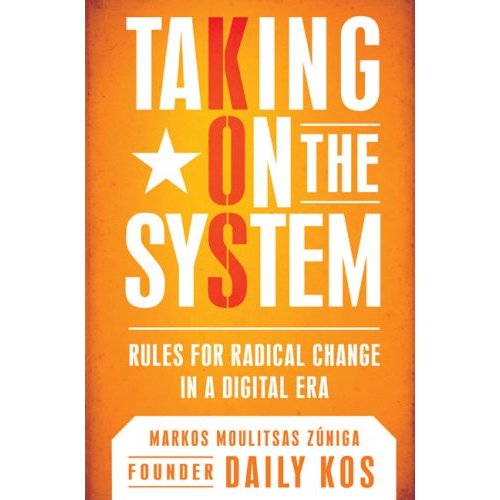
BOOKS : Markos Moulitsas’ ‘Taking on the System’


“Rules for Radicals” Meets the 21st Century
by Paul Hogarth / July 31‚ 2008

Markos Moulitsas’ new book, Taking On the System, is not really about political blogs. One would expect the founder of Daily Kos to write about the netroots (and his book offers plenty of anecdotes about how they’ve changed politics), but it’s really a guide for how ordinary people can make an impact in the 21st Century. Moulitsas writes about how the Internet has democratized the process – making old gatekeepers like party bosses, media moguls and even record companies less powerful and relevant than before. But modeling himself after the late Saul Alinsky, Moulitsas offers plenty of pragmatic advice for political activists – like “stay on message,” “how to handle your enemies,” and “pick your battles” – that was applicable in an earlier era. In the 21st Century, however, more can play this game. Taking On the System is a resource for progressives hopeful about November – but anxious about how to keep that momentum going in an Obama Administration

The impact Daily Kos and other blogs have had is so well established that anyone picking up Taking On the System will probably be familiar with it already. But what Moulitsas argues is that he’s really no one special: any citizen can use the Internet to bypass the traditional gatekeepers who once decided which political candidates were legitimate, what wisdom was conventional and even which songs became hits.

Activists don’t need to hold press conferences and hope the media shows up – they can create their own media with a blog. Political candidates getting started don’t have to kowtow to the same rich donors – if they have a compelling grass-roots message, the netroots will embrace them. Even musicians don’t need to be “discovered” by recording executives to make it big – now they can use social networking sites like MySpace.

It’s not about destroying the gatekeepers, says Moulitsas. It’s about using the Internet (along with a compelling product) so you can simply by-pass them. “Technology has unlocked doors and facilitated a genuine democratization of our culture,” he writes. You don’t need anyone’s permission to start an online movement: it was ordinary people who stepped out of their comfort zone to recruit Jim Webb for the US Senate, create MoveOn, and launch an annual blogger convention that culminated with Netroots Nation.

What activists need to understand, said Moulitsas, is what technology medium is most effective in their time period at getting out a message that will influence conventional wisdom. Gandhi used newsreels to push the narrative that the British were exploiting the Indian people. Television helped dramatize the civil rights movement in the 1960’s that galvanized a country to its cause. But the era of mass visual rallies that grab attention on the evening news are over, he says. Another thousand people in the street just isn’t news today.

In fact, Moulitsas is very critical of anti-war activist Cindy Sheehan – because she too quickly fell into the obsolete model of ‘60s protest no longer conducive for the digital era. After activists spent years marching in the streets against the Iraq War without changing public opinion, Sheehan’s plea to meet President Bush in Crawford, Texas put on a human face that most Americans could relate to. But once Camp Casey became a circus for every left-wing group, it devolved into the same type of ineffectual protest we’ve all seen before.

The book’s passage on Camp Casey is likely to infuriate Code Pink (the first group that set up camp with Sheehan), which Moulitsas describes their set-up as “neon pink banners, tables and paraphernalia, in the manner of a corporate sponsor at a sports facility.” But his point is well taken: Sheehan’s failure to keep a disciplined message allowed the protest to become yet another anti-war rally that the public had long since seen time and again.

Moulitsas also criticizes Sheehan because she violated a cardinal rule of activism: keep your ego in check. Sheehan failed to understand that, while she was an important part of the anti-war movement, it was more than just about her. “This wasn’t the world of the ‘60s where we needed Walter Cronkite and visible antiwar national leaders to captivate media coverage,” he writes. “In today’s fragmented world thousands of people were doing their part, aided by the tragic reality of Iraq, toward changing public opinion.”

Bloggers are not likely to be egomaniacs, argues Moulitsas, because “there’s virtually no danger of living in a bubble surrounded by sycophants. Every time I write anything on my own site, I have dozens of people telling me what an idiot I am.” I’m a bit skeptical about that point. While bloggers do face criticism every day, blogs can also foster a “navel-gazing” atmosphere of self-congratulation and inflated importance. Even with a democratized activism online where anyone can be a “leader,” those who strive to be effective can’t take themselves too seriously. It’s important to stay grounded with the offline world.

One place where Moulitsas will get in trouble with local Bay Area activists is on the battle for a transgender-inclusive ENDA. Urging progressives to take a long-term approach and pick their battles, Moulitsas faults the “all-or-nothing” line that LGBT activists took against the Human Rights Campaign for pushing an anti-discrimination law on sexual orientation – but not gender identity. His general advice on incremental progress is sound, but he failed to consider specific facts around ENDA that didn’t make it all that simple.

First, Moulitsas says transgenders “had come late to the battle” – which is simply untrue. Three years before Stonewall, it was trannies who staged the Compton Cafeteria Riots in San Francisco. Second, an incremental strategy may have earned the trust of the LGBT community – if the Human Rights Campaign did not have such an “inside-the-Beltway” track record of endorsing Republican legislators. Moulitsas actually mentions HRC’s tendency to do so when he criticizes environmental and pro-choice groups for doing the same thing (an utterly doomed strategy) – but he never makes the connection as to how this practice played a role with ENDA.

Nevertheless, Moulitsas has written a compelling book that illustrates the democratizing impact that digital media has had on political activism, and offers sound advice for how to navigate this medium for your cause. His passage on crafting a narrative and handling your opponents is especially instructive in our fast-moving news cycle where bloggers must stay on the ball, and he gives plenty of anecdotal examples that keep it entertaining.

Taking On the System hits the bookstores on August 20th, and is now available for pre-order online. It should be equally successful – if not more so – than Moulitsas’ first book, which was also worth reading.

Source / BeyondChron / Next Left Notes

Find Taking On the System at Amazon.com.

The Rag Blog

Posted in RagBlog | Tagged , , , , , , , | Leave a comment

Introducing DisneyIraq : The Unhappiest Place on Earth

An American financier is pitching a vast theme park in Baghdad, not out of kindness, but as he says, “for profit.”

‘I’m not here because I think you’re nice people. I think there’s money to be made’
By Scott Thill / August 1, 2008

An American financier is pitching a vast theme park in Baghdad, not out of kindness, but as he says, “for profit.”

“I’m a businessman. I’m not here because I think you’re nice people. I think there’s money to be made,” explained Llewellyn Werner in his pitch for a vast recreational complex to be built in, of all places, Baghdad. “I also have this wonderful sense that we’re doing the right thing — we’re going to employ thousands of Iraqis. But mostly everything here is for profit.”

It has come to this. We’re not even pretending anymore. As the years, memories and excuses have fallen away like dead skin, America’s invasion of Iraq has revealed itself for what it truly is: a consumerist pipe dream. The Great American Mall of the Middle East. Disneyland in the desert.

And since we’re already giving away billions in duffel bags, why not throw another billion or two down the money pit? Where there’s funding, there is fire. And in the case of the Baghdad Zoo and Entertainment Experience (BZEE), there may also be firefights. If you can ignore the bullets, IEDs, power outages and, well, the entire occupation, you might just have yourself a good time.

“In Southern California, there’s drive-bys and everything else,” reasoned Ride and Show Engineering Executive Vice President John March, whose company has been contracted to develop the site, which is adjacent to the Green Zone and fast-tracked by the Pentagon. “So there’s danger everywhere. I think the key thing is this will be tremendous for Baghdad,” he explained to Fox News chatterhead Bill Hemmer.

If by “tremendous” he means a huge target, then March, who refused to participate in this article, is dead right. It is also financially tremendous for C3, the hedge fund holding company that Werner oversees: Already given a green light from the Pentagon and an endorsement from Gen. David Petraeus, Werner secured a 50-year lease on what used to be acreage containing Baghdad’s looted and left-for-dead zoo for “an undisclosed sum,” according to the UK’s Times Online. He is quickly building everything from a skate park, museum, concert arena and rides to future diversions. So far, Werner has collared $500 million from his elusive investors, who are practically impossible to find (a rarity in the Internet age) and secured joint partnerships across Iraq for a variety of projects. The million-dollar skate park is scheduled to open this month, and further hotel and housing developments will follow, especially since Werner has exclusive rights to them.

And although they may be managed by Iraqis, their profits belong to America. Just like most of country’s oil reserves.

“Even the idea of bringing U.S.-style escapism entertainment to the hell of Baghdad is absurd,” explains author and journalist Dahr Jamail, who, unlike the majority of his peers, has actually ventured outside the Green Zone without being embedded in a military detail. “Just watch how much of this infrastructure even gets built.”

That’s just the beginning of the problems, explains journalist Sharon Weinberger, who covers the Pentagon and other disaster capitalist complexes for Wired’s Danger Room. (Full disclosure: I cover music for Wired’s Listening Post.) The BZEE may get built after all, but who’s to say it’ll be left standing when the smoke clears?

“Even if they do pull this off, then the park’s immediate survival, like any private business, is going to depend on stability and the ability of the Iraqi government to control violence and ensure public safety,” Weinberger says. “If the situation in Baghdad deteriorates, I think the idea that the park will somehow be spared violence is, sadly, naive at best.”

What seems most naive, however, is the idea that any American business venture launched in the miasma of Iraq’s reconstruction is dealing in good faith. From Halliburton to Bechtel and on to Blackwater and beyond, the place has been an epicenter of fraud and corruption, and that’s just the so-called private sector. Our collective public enterprise has been as daunting a failure: So far, the war has cost hundreds of billions in dollars and hundreds of thousands of lives. By the time it’s all over, those numbers could skyrocket, and the last thing anyone is going to want is a Los Angeles hedge fund looking to stash its money in a private-public partnership that serves no real purpose.

Even though Werner landed the acreage with the blessing of Iraqi politicians and officials, it was not them who shut down the nation’s state-owned factories after the invasion. That was L. Paul Bremer, a U.S. official in charge of the pillage. In other words, if America and its business partners want the BZEE bad enough, they will get it. No questions asked.

And it is leading to further criticism that American economic interests are living in Disneyland, rather than looking to build one in the most dangerous metropolis in the entire Middle East.

“The Bush junta has already attempted to impose a neo-liberal economic Disneyland upon the Iraqi people,” Jamail asserts, “but they have flatly rejected the neurosis of its brand-conscious, failed capitalism. The two geographies meet nowhere in my imagination, nor in reality. The not-so-Green Zone is barely inured from the death, destruction and suffering which surrounds it. The point is that no gated community is safe from mortars and rockets. I believe we are looking at the next evolution of the gated community, albeit grossly failed.”

With one caveat: Failure is merely the end of this economic stratagem, not its beginning. It has all the earmarks of a successful scam, from its suspicious fast-tracking all the way down to its undisclosed sums changing hands over territories that once belonged to someone else and may indeed be taken back by force shortly after the ink on the contracts dries. It is enough for some economic players to merely get something this compromised off the ground; success is a mere side effect to the financial interchange, which will have already taken place and been pocketed once the BZEE is judged an unmitigated disaster. Just like the invasion itself.

Milo Minderbinder would be proud. It’s like his chocolate-covered cotton, only vastly more lethal.

“I think I’d file this under ‘zoo allegory,'” Weinberger concludes. “People are fascinated by the effects of wars on zoos. Think of Emir Kusturica’s 1995 movie, ‘Underground,’ or Marjan, the one-eyed lion of the Kabul zoo. Right now, people are following this as a ‘News of the Weird’ story, but I hope you or someone revisits it in a few years. If the Baghdad Zoo and Entertainment Experience is thriving and Iraqis are visiting, then it will be a wonderful testament to the country’s progress. If, however, it’s an empty space, then it will be a testament to a larger self-delusion.”

Source / AlterNet

The Rag Blog

Posted in RagBlog | Tagged , , , , | Leave a comment

Travelers’ Laptops May Be Detained At Border

No suspicion required under Homeland Security policies
By Ellen Nakashima / August 1, 2008

Federal agents may take a traveler’s laptop computer or other electronic device to an off-site location for an unspecified period of time without any suspicion of wrongdoing, as part of border search policies the Department of Homeland Security recently disclosed.

Also, officials may share copies of the laptop’s contents with other agencies and private entities for language translation, data decryption or other reasons, according to the policies, dated July 16 and issued by two DHS agencies, U.S. Customs and Border Protection and U.S. Immigration and Customs Enforcement.

“The policies . . . are truly alarming,” said Sen. Russell Feingold (D-Wis.), who is probing the government’s border search practices. He said he intends to introduce legislation soon that would require reasonable suspicion for border searches, as well as prohibit profiling on race, religion or national origin.

DHS officials said the newly disclosed policies — which apply to anyone entering the country, including U.S. citizens — are reasonable and necessary to prevent terrorism. Officials said such procedures have long been in place but were disclosed last month because of public interest in the matter.

Civil liberties and business travel groups have pressed the government to disclose its procedures as an increasing number of international travelers have reported that their laptops, cellphones and other digital devices had been taken — for months, in at least one case — and their contents examined.

The policies state that officers may “detain” laptops “for a reasonable period of time” to “review and analyze information.” This may take place “absent individualized suspicion.”

The policies cover “any device capable of storing information in digital or analog form,” including hard drives, flash drives, cellphones, iPods, pagers, beepers, and video and audio tapes. They also cover “all papers and other written documentation,” including books, pamphlets and “written materials commonly referred to as ‘pocket trash’ or ‘pocket litter.’ “

Reasonable measures must be taken to protect business information and attorney-client privileged material, the policies say, but there is no specific mention of the handling of personal data such as medical and financial records.

When a review is completed and no probable cause exists to keep the information, any copies of the data must be destroyed. Copies sent to non-federal entities must be returned to DHS. But the documents specify that there is no limitation on authorities keeping written notes or reports about the materials.

“They’re saying they can rifle through all the information in a traveler’s laptop without having a smidgen of evidence that the traveler is breaking the law,” said Greg Nojeim, senior counsel at the Center for Democracy and Technology. Notably, he said, the policies “don’t establish any criteria for whose computer can be searched.”

Customs Deputy Commissioner Jayson P. Ahern said the efforts “do not infringe on Americans’ privacy.” In a statement submitted to Feingold for a June hearing on the issue, he noted that the executive branch has long had “plenary authority to conduct routine searches and seizures at the border without probable cause or a warrant” to prevent drugs and other contraband from entering the country.

Homeland Security Secretary Michael Chertoff wrote in an opinion piece published last month in USA Today that “the most dangerous contraband is often contained in laptop computers or other electronic devices.” Searches have uncovered “violent jihadist materials” as well as images of child pornography, he wrote.

With about 400 million travelers entering the country each year, “as a practical matter, travelers only go to secondary [for a more thorough examination] when there is some level of suspicion,” Chertoff wrote. “Yet legislation locking in a particular standard for searches would have a dangerous, chilling effect as officers’ often split-second assessments are second-guessed.”

In April, the U.S. Court of Appeals for the 9th Circuit in San Francisco upheld the government’s power to conduct searches of an international traveler’s laptop without suspicion of wrongdoing. The Customs policy can be viewed here..

Source / Washington Post

Thanks to Shelia Cheaney / The Rag Blog

Posted in RagBlog | Tagged , , , , , , | Leave a comment

Arresting Report From Roving Reporter

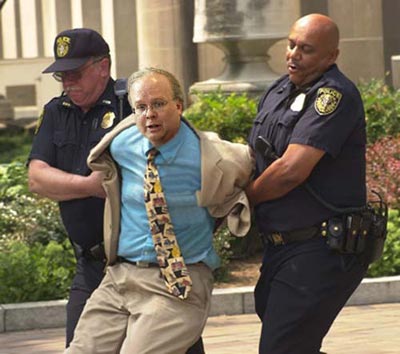
Karl Rove arrested. Image by Fo’teau Shoppe.

Four Iowan Citizens Arrested for Trying to Arrest Karl Rove
July 30, 2008

You didn’t read about this in the mainstream media – wouldn’t want to encourage anyone, would they? This news, however, is certainly huge. Four Iowans were arrested on July 25th for attempting to make a Citizen’s Arrest of Karl Rove in Des Moines at the Wakonda Country Club.

Rev. Chet Guinn, a Methodist minister, and Catholic Workers Edward Bloomer, Kir Brown, and Mona Shaw were arrested at the gate of the Country Club and cited for trespassing. They were citing Iowa Code provisions for Citizen’s Arrests and Federal Statute violations against Rove.

Karl Rove refused to cooperate with a Congressional subpoena in the Valerie Plame CIA leak investigation. He’s also been linked to a federal bribery case against former Governor Don Siegelmen. He was given a subpoena to testify before a House Committee on the matter and refused to testify, citing “executive privilege.” A Congressional subcommittee voted that executive privilege does not protect him from testifying; however he has still not come forward and the matter is unresolved.

Rove had a “strategic communications” task force that helped write and coordinate speeches for senior Bush administration officials that emphasized the supposed nuclear threat of Iraq. Rove was involved in administration energy policy meetings at the same time that he held more than $100,000 of stock in Enron, Boeing, General Electric, and Pfizer.

Source / OB Rag

The Rag Blog

Posted in RagBlog | Tagged , , , | Leave a comment

Democrats and Labor : Wal*Mart Running Scared

Of all companies to be whining about money. WAL*MART the so-called American company with 600 factories in CHINA and zero in America, they have the audacity to be pushing this line on their underpaid front-line employees.

While Lee Scott and the Waltons live in huge mansions and travel with bodyguards, paid for by the labor of their employees, these folks have the audacity to “fear” their employees into voting AGAINST their own pocketbook.

This is the same company that encourages its underpaid workers to seek out gov’t assistance.

This company is as tolitarian as any country could be. If you are a manager or supervisor at WAL*MART, you are expected to “goose-step”…

truthtolies / Daily Kos / August 1, 2008

Wal-Mart Warns of Democratic Win
By Ann Zimmerman and Kris Maher / August 1, 2008

Wal-Mart Stores Inc. is mobilizing its store managers and department supervisors around the country to warn that if Democrats win power in November, they’ll likely change federal law to make it easier for workers to unionize companies — including Wal-Mart.

In recent weeks, thousands of Wal-Mart store managers and department heads have been summoned to mandatory meetings at which the retailer stresses the downside for workers if stores were to be unionized.

According to about a dozen Wal-Mart employees who attended such meetings in seven states, Wal-Mart executives claim that employees at unionized stores would have to pay hefty union dues while getting nothing in return, and may have to go on strike without compensation. Also, unionization could mean fewer jobs as labor costs rise.

The actions by Wal-Mart — the nation’s largest private employer — reflect a growing concern among big business that a reinvigorated labor movement could reverse years of declining union membership. That could lead to higher payroll and health costs for companies already being hurt by rising fuel and commodities costs and the tough economic climate.

The Wal-Mart human-resources managers who run the meetings don’t specifically tell attendees how to vote in November’s election, but make it clear that voting for Democratic presidential hopeful Sen. Barack Obama would be tantamount to inviting unions in, according to Wal-Mart employees who attended gatherings in Maryland, Missouri and other states.

“The meeting leader said, ‘I am not telling you how to vote, but if the Democrats win, this bill will pass and you won’t have a vote on whether you want a union,'” said a Wal-Mart customer-service supervisor from Missouri. “I am not a stupid person. They were telling me how to vote,” she said.

“If anyone representing Wal-Mart gave the impression we were telling associates how to vote, they were wrong and acting without approval,” said David Tovar, Wal-Mart spokesman. Mr. Tovar acknowledged that the meetings were taking place for store managers and supervisors nationwide.

Wal-Mart’s worries center on a piece of legislation known as the Employee Free Choice Act, which companies say would enable unions to quickly add millions of new members. “We believe EFCA is a bad bill and we have been on record as opposing it for some time,” Mr. Tovar said. “We feel educating our associates about the bill is the right thing to do.”

Other companies and groups are also making a case against the legislation to workers. Laundry company Cintas Corp., which has been fighting a multiyear organizing campaign by Unite Here, relaunched a Web site July 14 called CintasVotes. The site instructs visitors to take action by telling members of Congress to oppose the legislation.

“We feel it’s important that our employee partners fully understand the implications that the Employee Free Choice Act could have on their work environment and benefits,” said Heather Trainer, a Cintas spokeswoman.

Business-backed organizations are also running ads aimed at building opposition to the bill, including the Coalition for a Democratic Workplace, which counts several hundred industry associations as members. Another group, the Employee Freedom Action Committee, is run by former tobacco lobbyist Rick Berman. The groups, which aren’t affiliated with each other, say they have a total of $50 million in funding. Neither will disclose which companies or individuals have provided funding.

The U.S. Chamber of Commerce has made defeat of the legislation a top priority. In the past six months, it has flown state and local Chamber members to Washington to lobby members of Congress. On Thursday, the Chamber began airing a television ad in Minnesota and plans to run ads in other states as part of a broader campaign.

The bill was crafted by labor as a response to more aggressive opposition by companies to union-organizing activity. The AFL-CIO and individual unions such as the United Food and Commercial Workers have promised to make passage of the new labor law their No. 1 mission after the November election.

First introduced in 2003, the bill came to a vote last year and sailed through the Democratic-controlled House of Representatives, but was blocked by a filibuster in the Senate and faced a veto threat by the White House. The bill was taken off the floor, and its backers pledged to reintroduce it when they could get more support.

The November election could bring that extra support in Congress, as well as the White House if Sen. Obama is elected and Democrats extend their control in the Senate. Sen. Obama co-sponsored the legislation, which also is known as “card check,” and has said several times he would sign it into law if elected president. Sen. John McCain, the likely Republican presidential nominee, opposes the Employee Free Choice Act and voted against it last year.

Wal-Mart’s labor-relations meetings are led by human-resources managers who received training from Wal-Mart on the implications of the Employee Free Choice Act.

Fine Legal Line

Wal-Mart may be walking a fine legal line by holding meetings with its store department heads that link politics with a strong antiunion message. Federal election rules permit companies to advocate for specific political candidates to its executives, stockholders and salaried managers, but not to hourly employees. While store managers are on salary, department supervisors are hourly workers.

However, employers have fairly broad leeway to disseminate information about candidates’ voting records and positions on issues, according to Jan Baran, a Washington attorney and expert on election law.

Both supporters and opponents of the Employee Free Choice Act believe it would simplify and speed labor’s ability to unionize companies. Currently, companies can demand a secret-ballot election to determine union representation. Those elections often are preceded by months of strident employer and union campaigns.

Under the proposed legislation, companies could no longer have the right to insist on one secret ballot. Instead, the Free Choice, or “card check,” legislation would let unions form if more than 50% of workers simply sign a card saying they want to join. It is far easier for unions to get workers to sign cards because the organizers can approach workers repeatedly, over a period of weeks or months, until the union garners enough support.

Employers argue that the card system could lead to workers being pressured to sign by pro-union colleagues and organizers. Unions counter that it shields workers from pressure from their employers.

On June 30 the National Labor Relations Board ruled that Wal-Mart illegally fired an employee in Kingman, Ariz., who supported the UFCW and illegally threatened to freeze merit-pay increases if employees voted for union representation. The decision came eight years after the organizing campaign failed, and four years after the case was originally heard.

“We’ve always maintained the termination was not related to the union and that there was nothing unlawful about an answer provided an associate about merit pay,” said Mr. Tovar, the Wal-Mart spokesman. “Following the decision, we were considering offering reinstatement, but that is on hold, since the [union] appealed the decision.”

Unions consider the Employee Free Choice Act as vital to the survival of the labor movement, which currently represents 7.5% of private-sector workers, half the percentage it did 25 years ago. The Service Employees International Union said the legislation would enable it to organize a million workers a year, up from its current pace of 100,000 workers a year.

The Underdogs

The business-backed lobbying groups are running ads in states where a win by a Democratic Senate candidate would boost support for the legislation in the Senate, saying the loss of secret ballots exposes workers to bullying labor bosses. In one, they use an actor from the “Sopranos” TV series about mob life to hammer home their point.

Business groups say they’re the underdogs since they will be outspent by unions by a wide margin. Labor has pledged to spend $300 million on the election and securing passage of the Employee Free Choice Act, compared with under $100 million by business groups, according to Steven Law, chief legal officer of the U.S. Chamber of Commerce. The Chamber’s strategy is to focus on the Senate, where labor needs eight more supporters of the legislation to reach the 60 votes needed to overcome a filibuster.

“This is a David-and-Goliath confrontation, but we believe we’ll have enough stones in the sling to knock this out,” said Mr. Law.

Wal-Mart is a powerful ally. Through almost all of its 48-year history, Wal-Mart has fought hard to keep unions out of its stores, flying in labor-relations rapid-response teams from its Bentonville, Ark., headquarters to any location where union activity was building. The United Food and Commercial Workers was successful in organizing only one group of Wal-Mart workers — a small number of butchers in East Texas in early 2000. Several weeks later, the company phased out butchers in all of its stores and began stocking prepackaged meat. When a store in Canada voted to unionize several years ago, the company closed the store, saying it had been unprofitable for years.

Labor has fought back with a campaign to portray Wal-Mart as treating its workers poorly. The UFCW helped employees file a series of complaints about the company’s overtime, health-care and other policies with the National Labor Relations Board. Dozens of class-action lawsuits were filed on behalf of workers, many of which are still winding their way through the courts.

Wal-Mart has been trying to burnish its reputation by improving its worker benefits and touting its commitment to the environment. On the political front, it’s hedging its bets, spreading its financial contributions on both sides of the political divide.

Twelve years ago, 98% of Wal-Mart’s political donations went to Republicans. Now, as the Democrats seem poised to gain control in Washington, 48% of its $2.2 million in political contributions go to Democrats and 52% to Republicans, according to the Center for Responsive Politics, a nonpartisan organization that tracks political giving.

Source / Wall Street Journal

Go here to tell the FEC to investigate Wal-Mart.

The Rag Blog

Posted in RagBlog | Tagged , , , , , , , | 1 Comment

Singin’ on Thursday – Roy Zimmerman

“Thanks For the Support” by Roy Zimmerman

Available for download at royzimmerman.com. Recorded on 9/11/07 at “Mark Pitta and Friends,” 142 Throckmorton Theatre in Mill Valley, CA.

The Rag Blog / Posted August 1, 2008

Posted in RagBlog | Tagged , | Leave a comment

Justice for the King’s Men May Be Served


White House Aides Can Be Subpoenaed
By David Stout / August 1, 2008

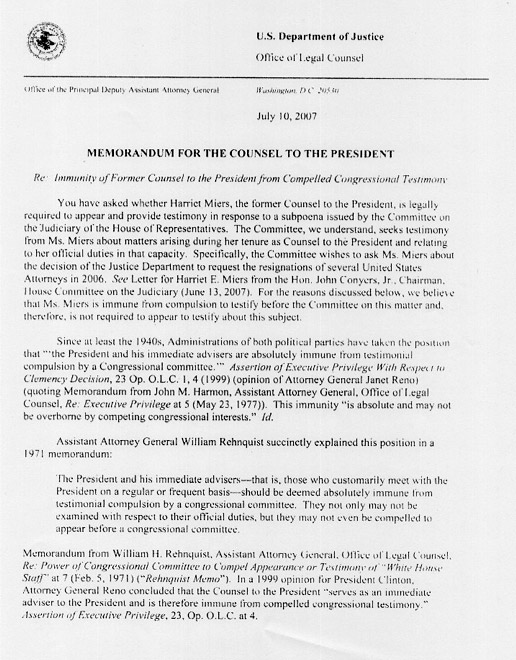
WASHINGTON — President Bush’s top advisers cannot ignore subpoenas issued by Congress, a federal judge ruled on Thursday in a case that involves the firings of several United States attorneys but has much wider constitutional implications for all three branches of government.

“The executive’s current claim of absolute immunity from compelled Congressional process for senior presidential aides is without any support in the case law,” Judge John D. Bates ruled in United States District Court here.

Unless overturned on appeal, a former White House counsel, Harriet E. Miers, and the current White House chief of staff, Joshua B. Bolten, would be required to cooperate with the House Judiciary Committee, which has been investigating the controversial dismissal of the federal prosecutors in 2006.

While the ruling is the first in which a court has agreed to enforce a Congressional subpoena against the White House, Judge Bates called his 93-page decision “very limited” and emphasized that he could see the possibility of the dispute being resolved through political negotiations. The White House is almost certain to appeal the ruling.

It was the latest setback for the Bush administration, which maintains that current and former White House aides are immune from congressional subpoena. On Wednesday, the House Judiciary Committee voted along party lines to recommend that Karl Rove, a former top political adviser to President Bush, be cited for contempt for ignoring a subpoena and not appearing at a hearing on political interference by the White House at the Justice Department.

Although Judge Bates did not specifically say so, his ruling, if sustained on appeal, might apply as well to Mr. Rove and his refusal to testify.

The House has already voted to hold Ms. Miers and Mr. Bolten in contempt for refusing to testify or to provide documents about the dismissals of the United States attorneys, which critics of the administration have suggested were driven by an improper mix of politics and decisions about who should, or should not, be prosecuted.

Judge Bates, who was appointed to the bench by President Bush in 2001, said Ms. Miers cannot simply ignore a subpoena to appear but must state her refusal in person. Moreover, he ruled, both she and Mr. Bolten must provide all non-privileged documents related to the dismissals.

Ms. Miers and Mr. Bolten, citing legal advice from the White House, have refused for months to comply with Congressional subpoenas. The White House has repeatedly invoked executive privilege, the doctrine that allows the advice that a president gets from his close advisers to remain confidential.

In essence, Judges Bates held that whatever immunity from Congressional subpoenas that executive branch officials might enjoy, it is not “absolute.” And in any event, he said, it is up to the courts, not the executive branch, to determine the scope of its immunity in particular cases.

“We are reviewing the decision,” Emily Lawrimore, a White House spokeswoman, said. Before the decision was handed down, several lawyers said it would almost surely be appealed, no matter which way it turned, because of its importance.

Democrats in Congress issued statements in which they were quick to claim victory in the struggle with the administration over the dismissals of the federal prosecutors and other occurences in the Justice Department, and that they looked forward to hearing from the appropriate White House officials.

“I have long pointed out that this administration’s claims of executive privilege and immunity, which White House officials have used to justify refusing to even show up when served with congressional subpoenas, are wrong,” said Senator Patrick J. Leahy, Democrat of Vermont who is chairman of the Senate Judiciary Committee.

Mr. Leahy’s House counterpart in the House had a similar reaction.

“Today’s landmark ruling is a ringing reaffirmation of the fundamental principle of checks and balances and the basic American idea that no person is above the law,” said Representative John D. Conyers, the Michigan Democrat who is chairman of the House Judiciary Committee.

Source / New York Times

The Rag Blog

Posted in RagBlog | Tagged , , | Leave a comment

American Bridge Is Falling Down ….


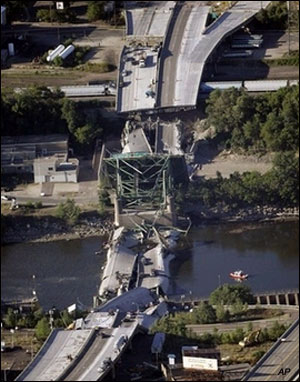
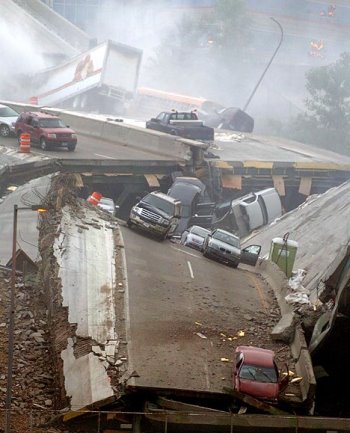
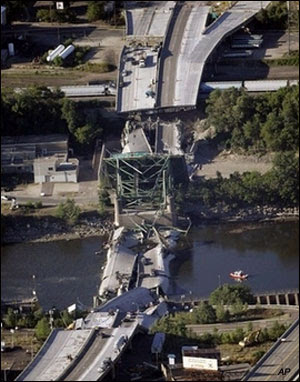
The Year of Driving Dangerously: A construction expert blasts America’s lack of infrastructure action one year after the I-35W Bridge collapse
By Barry LePatner / July 31, 2008

Nervous that so little progress has been made since last summer’s tragic Minneapolis bridge collapse? You should be. Barry B. LePatner offers solutions for our nation’s infrastructure catastrophe—and points an accusing finger at the “leaders” who are playing politics as usual.

New York — It is hard to believe a year has passed since the tragic I-35W Bridge collapse in Minnesota, but it’s true. August 1st marks the first anniversary of an event that showed how vulnerable America’s infrastructure truly is. And if you’d assumed that since then federal and stategovernment officials have burned the midnight oil trying to solve the problem, well, you’d be wrong. Construction attorney Barry LePatner says that the past year of inaction—which, incidentally, also saw more than 30 Midwest levee breaks that caused billions of dollars in damage and numerous bridge closings that resulted from inspections that followed the I-35W collapse—proves that our infrastructure wake-up call has fallen on deaf ears.

“There’s a quote from the recent I-35W Bridge investigative report that reads, ‘When a bridge collapses, so does public faith in government,'” says LePatner, coauthor of Structural & Foundation Failures (McGraw-Hill, 1982, coauthored with Sidney M. Johnson, P.E.) and author of Broken Buildings, Busted Budgets: How to Fix America’s Trillion-Dollar Construction Industry(The University of Chicago Press, October 2007, ISBN-13: 978-0-226-47267-6, ISBN-10: 0-226-47267-1, $25.00). “I completely agree.

“Unfortunately, it seems no one in our government is bothered by the fact that the public no longer trusts our so-called leaders to keep us safe,” he adds. “Bureaucrats and politicians were ignoring our infrastructure problems before the collapse, and a year later they’re continuing to ignore them. Meanwhile, Americans continue to drive across thousands of bridges that are not only in need of serious repair, but that were never designed for the amount of traffic we inflict on them now in the first place.”

Take, for example, the State of Colorado. The Colorado Department of Transportation has acknowledged that the cost to replace or rehabilitate 125 state bridges rated in poor condition is $1.4 billion. Yet, the state’s DOT says it has the same number of bridges today in poor condition that it did in 1996. Moreover, bridge repair funding, a critical element in reducing the number of bridges that are considered structurally deficient, has been reduced from $32 million in 2007 to $18 million for 2009.

Consider a story out of Georgia in which reports identifying several bridges as hazardous were thrown away. Why? Because the official in charge of the reports said handling the problem would have required too much paperwork and involve too many people.Stories like this one are clear indications that Minnesota isn’t the only state that has had its political head in the sand regarding its infrastructure problems.

“Clearly, government at all levels is falling down on the job we’ve hired them to perform,” says LePatner. “The problems associated with the nation’s infrastructure were easy to ignore until the I-35W Bridge collapse. At that point we saw what can happen when unsafe infrastructure stays in use without the necessary repairs. But our politicians are masters at avoiding these problems. For example, the latest reports from Minnesota clearly show that as early as 1999 photographs depicting bowed or warped gusset plates were warning signs of impending disaster nearly ten years before the collapse. And when the levees broke in the Midwest, responsibility was passed between government entities but no one—not the Army Corps of Engineers, not FEMA, not state officials—wanted to take responsibility.”
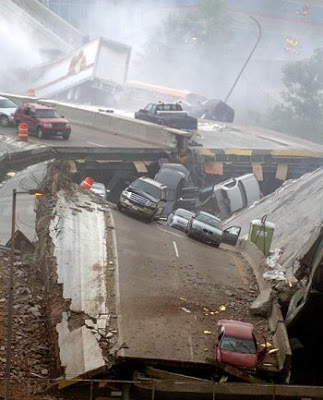

We must, must, must start taking steps, right now, to shore up America’s infrastructure, asserts LePatner. Not to do so is to invite more death and destruction. Every engineer in the field of bridge design can testify that the corrosive effects of inadequate maintenance of our bridges and tunnels will only get worse—they are not self-healing. And while the problem is far too massive and widespread to repair overnight, we can take steps now to start chipping away at it. Here are a few of his suggestions:

Insist that politicians stop ignoring the problem. “For decades, reams of engineering analysis and reports have highlighted the deteriorating nature of our infrastructure and the costs of remediation—costs that increase exponentially as every year passes,” says LePatner. “Every politician has received these reports. Most push them aside for a successor to handle, or agree to provide only a fraction of the necessary funds requested by their experts. As a result, the problem has snowballed to staggering proportions. Estimates vary on how much remediation of America’s infrastructure is needed, but most experts agree the cost is well into the hundreds of billions.

“It’s time for our nation’s politicians to be honest with the public about just how bad the infrastructure situation is,” he continues. “That means acknowledging that many of our state roads and bridges are in desperate shape. State officials at every level must stop ignoring the damning aspects of reports they receive that show the need for repairs.”

Overhaul shoddy inspection methods that are letting thousands of dangerous bridges slip through the cracks. Here’s some sobering food for thought: There are 12,000 bridges in our country whose designs are similar to the I-35W Bridge, and, according to statistics from a 2007 U.S. Department of Transportation/Research and Innovative Technology Administration report, there are over 72,000 bridges that are labeled “structurally deficient” and over 81,000 bridges identified as “functionally obsolete.” All of which need detailed inspections to ensure their safety. That same report shows a total of 600,022 bridges in the U.S. and Puerto Rico. That means 26 percent of all state bridges are on lists indicating they need direct attention. According to LePatner, the state of the infrastructure system in the U.S. today results from having been poorly managed and underfunded for years.

“Today, there are no uniform state-mandated minimum standards for the maintenance of bridges and roads,” says LePatner. “Inspections of bridges are to occur every two years by federal requirements, but when carried out, these are often subjective visual observations that fail to use the latest technology to detect cracks and corrosion that may be invisible. The federal government provides $2 billion in maintenance costs annually for 600,000 bridges that fall within its purview. This works out to a paltry $3,500 per bridge, far too little to cover an adequate bridge inspection. The long and short of it is that in addition to more funding, the inspection process itself needs to be examined and brought up to 21st century standards in order to get our infrastructure system back on track.”

Stop cutting funds where they are needed most. Here’s the ugly truth: There wasn’t enough money available to make necessary repairs before the economy went south and now the situation is even more dismal. Many states are cutting costs wherever possible and some of those cuts have a direct impact on infrastructure safety. For example, one popular money-saving tactic is to make staff cuts, and because engineers make a lot of money, they are among the first ones to go. Guess who’s responsible for detecting infrastructure problems and figuring out how to solve them? That’s right: engineers. “I understand the desire to cut costs, but government officials should consider the increased costs that will occur if an infrastructure disaster happens on their watch,” says LePatner.

“Every day that repairs go unmade the costs balloon,” he continues. “A recentreport from the American Council of Engineering Companies shows that California alone estimates that it is losing $15 billion or more a year in loss of production due to the lack of necessary spending to repair the state’s infrastructure. State governments should take into account how much they are losing by avoiding these repairs. Money is being lost whether there is a disaster or not; the only thing that differs is how muchmoney is lost. Politicians and officials should take this into consideration when they make short-term budget cuts that make infrastructure repairs even more difficult.”

Support a national infrastructure bank.”The current infrastructure in our country is wholly inadequate to handle the demands of a 21st century economy […] We run the risk of being left behind by our international competitors if we do not begin to modernize our national infrastructure.”That is a quote from a speech given by Senator Chris Dodd on August 1, 2007, when he held a press conference along with Senator Chuck Hagel to introduce their plan for repairing and updating the nation’s infrastructure, the National Infrastructure Bank Act of 2007. In an eerie coincidence later that same day, the I-35W Bridge collapsed and the grim reality of the condition of our infrastructure became apparent to the whole nation.

According to the report released by Dodd and Hagel at the time, the Infrastructure Bank would be “an independent entity of the government” and would be “tasked with evaluating and financing capacity-building infrastructure projects of substantial regional and national significance. Infrastructure projects that come under the Bank’s consideration are publicly-owned mass transit systems, housing properties, roads, bridges, drinking water systems, and wastewater systems.”

“Unfortunately, the Infrastructure Bank Act hasn’t gotten far in Congress, but it does serve as a tiny step in the right direction,” says LePatner. “Of course, funding the Bank will be a big challenge. State and federal budgets are stretched thin. One option might be the issuance of bonds similar to the mechanism used by the New York & New Jersey Triborough Bridge and Tunnel Authority to construct the bridges and tunnels connecting those states. A second method may be encouraging public/private partnerships, which would invite equity funds with deep pockets to fund infrastructure repairs in return for tolls.”

Make sure money meant for infrastructure actually goes toward infrastructure. Since its inception, money collected as part of the federal gas tax has been used to build and repair the nation’s roadways. Over the years, though, Congress has started reaching into that pot to fund other less critical transportation projects not connected to our roadways.And the Los Angeles Times and the Wall Street Journal recently reported that the federal highway trust fund faces another hard reality: As consumers drive less and buy more fuel-efficient cars, the amount of money going into the fund is decreasing. In fact, the U.S. Congress recently passed legislation to deposit $9 billion into the fund to avoid defaults in the highway program.

“Until a National Infrastructure Bank can be established, members of Congress must ensure that all gas tax money goes toward the repair and maintenance of our nation’s roadways,” says LePatner. “The same goes for tolls that are currently being collected on roadways throughout the country. While this gas tax money is just a drop in the barrel compared to what it will take to get our nation’s infrastructure back on track, making sure it’s actually used for its intended purpose will at least buy us a little time.”

Change the 2005 National Transportation Act. Since the 2005 National Transportation Act, states are allowed to do what they choose with the federal funds allotted to them. In other words, for the very first time the federal government has stepped back from establishing national guidelines for the design and maintenance of our critical infrastructure facilities. Rather than giving a state a certain amount of money and saying, “Bridge A” needs repairs and you must use this money to fix it, the federal government is basically saying, Here’s some money; use it at your discretion.
“As a result, the powers that be—who are basically politicians constantly vying for re-election—prefer to spend that money on more ‘glamorous’ things that get noticed by the public,” says LePatner. “Simply put, they get far more political mileage from beautifying an old park than from making repairs on a bridge or roadway. We need national standards for our bridges and roadways. We can’t have highway systems that are maintained under 50 different sets of standards. It just isn’t working.”

Force politicians and other government officials to act on expert recommendations given to them.Our nation’s infrastructure is frequently inspected, but recommendations for repairs are often ignored or held up due to lack of funding. The I-35W Bridge is a prime example. According to a recent investigative report commissioned by the Minnesota Department of Transportation and compiled by the firm Gray Plant Mooty, MnDOT hired outside consultants to a) assess the fatigue life and fatigue cracking in the bridge and b) determine whether it was necessary to add “redundancy” to the bridge, providing extra support to the original structure, as a safety precaution. Neither was accomplished. According to the report: “MnDOT initially recognized the need for redundancy but later focused on the fatigue analysis. Ultimately, the Bridge did not receive any materially different treatment than it had historically and redundancy was not added to the Bridge.”

“It turns out that bent gusset plates were photographed and filed away in 1999 but none of the inspectors or MnDOT officials who looked at the photo noticed,” says LePatner. “The bending of multiple plates is what may eventually be deemed a contributing cause of the collapse. If the repairs and inspections above had been carried out as planned, perhaps the bent gusset plates would have been noticed and the bridge could have been closed to protect the public. Fixing infrastructure problems that could lead to loss of human life is compulsory, not optional. We should create an independent system that requires that monies are used as designated and which then ensures that projects get completed as planned. It should not be earmarked money or pork barrel spending, but a non-discretionary spending item that must go toward its intended purpose.”

Enact reforms to help us avoid another Big Dig. For those who don’t know, the Big Dig is the most expensive highway project ever. Its original budget, set back in 1985, was just over $2 billion. It was revealed last week that the real cost of the project is going to reach $22 billion with a pay-off set for 2038. According to a recent Boston Globe article, the Big Dig has dealt a considerable financial blow to the state of Massachusetts. The article states, “Big Dig payments have already sucked maintenance and repair money away from deteriorating roads and bridges across the state, forcing the state to float more highway bonds and to go even deeper into the hole […] Massachusetts spends a higher percentage of its highway budget on debt than any other state.”

According to LePatner, the Big Dig epitomizes everything that is wrong with the construction industry, which is rife with cost overruns and missed schedules. The industry itself will have to be reformed before we can start making progress in repairing the nation’s infrastructure. An essential part of that reform will come in the form of better contracts that would 1) be based on 100 percent complete architectural and engineering drawings and specifications, 2) include a fixed price for everything designed and approved by the owner, and 3) apportion all the risks that are expected during construction between the parties.

“Establishing fixed-priced contracts on large infrastructure remediation projects will lead to savings of billions of public dollars,” asserts LePatner. “When you consider the huge numbers of projects that must be completed in order to restore America’s infrastructure, it’s clear that American taxpayers can’t afford a ‘business as usual’ mindset anymore.”

“We must look at our infrastructure problem as a puzzle that can be solved,” says LePatner. “We have all of the pieces in our hands. We have countless reports telling us how dire the situation is; we know the costs related to making and not making the repairs; and we have seen what happens when infrastructure fails. Now is the time to start putting the puzzle together. The public’s safety is at risk on a day-to-day basis. It’s time for our government to do what it’s being paid to do and take aggressive action to protect its people.”

Mr. LePatner is widely recognized as a thought leader in the construction industry. His new book, Broken Buildings, Busted Budgets: How to Fix America’s Trillion-Dollar Construction Industry (The University of Chicago Press), which was reviewed in the Wall Street Journal, has created a national debate among owners, designers, and other key stakeholders.

Submitted to Axis of Logic by the author.

See the related article by Barry LePatner: United States: Failed Levees, Collapsed Bridges: Dealing with crumbling infrastructure problem (includes Axis of Logic editorial comment) and read LePatner’s book: Broken Buildings, Busted Budgets: How to Fix America’s Trillion-Dollar Construction Industry

– Les Blough, Editor

Source / Axis of Logic

The Rag Blog

Posted in RagBlog | Tagged , | Leave a comment

Afghanistan: Peace Without Justice Is Meaningless

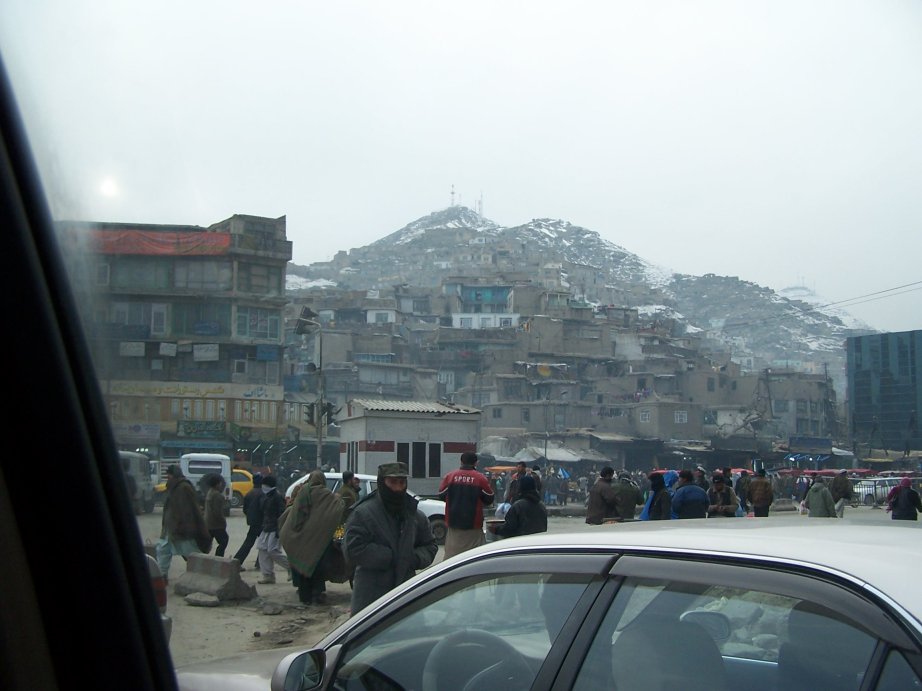
Street Scene in Kabul

“Bleeding Afghanistan”: Interview with Sonali Kolhatkar
By Mike Whitney / July 31, 2008

I think the primary goal of the war was always vengeance, but the neocons also wanted to pave the way for an attack on Iraq.

Mike Whitney: On a recent stopover in France, Barack Obama said, “We must win in Afghanistan. There is no other option.” Recent polls, however, show that public support for the war in Afghanistan has fallen off sharply. In fact, many American’s don’t even know why we are still there. Is there a big difference between what “winning” means to the Bush administration and what it means to the people of Afghanistan? Also, have you seen any indication that the Bush administration intends to keep its promises and establish security, rebuild the country’s infrastructure, spread democracy, remove the warlords, liberate women, and “modernize” Afghanistan or was that all just a public relations smokescreen to promote the invasion?

Sonali Kolhatkar: I’m really not sure what Bush, Obama, and McCain mean when they say they want to win in Afghanistan. And, I’m not sure they know either. It’s probably just a public-relations gimmick to sound “tough on terror.” But, judging from what we’ve seen, they seem to think that “winning” means killing every last “terrorist” in Afghanistan. That sort of thinking is based on false assumptions and it’s an unattainable goal. As far as the Afghans are concerned; I think they would like to see an end to the fighting and a safe Afghanistan where human rights are respected. They also want justice for past crimes. For the US to achieve this, they will have to denounce their proxy soldiers, the Northern Alliance, and support a “justice and accountability” process led by the Afghan people.

The US will also have to address the widespread poverty and provide long-term economic solutions that give Afghans hope for the future. The US will also have to create viable alternatives to the production of heroin, so that poor farmers don’t have to depend on the sale of illicit narcotics to survive. That means Bush will have to support multi-lateral peacekeepers to protect the Afghan people from the Northern Alliance and Taliban. Most importantly, the US will have to end the occupation and withdraw its troops. But of course, that probably won’t happen any time soon. After all, the real goal of the invasion was vengeance for 9/11. All the promises of liberation and democracy were a just “PR-ploy” to make Americans feel better about seeking revenge.

MW: Critics of the invasion say that it had nothing to do with Al Qaida or “liberating” the Afghan people from the Taliban, but with establishing military outposts in a geopolitically strategic part of Central Asia in order to surround China, intimidate Russia, and open up pipeline corridors to the resource-rich Caspian Basin. So, what is Obama up to? Why is he calling for more troops and greater commitment from the other NATO members? Is he serious about spreading democracy and fighting Islamic extremism or is the war on terror just a smokescreen so he can carry out an imperial agenda?

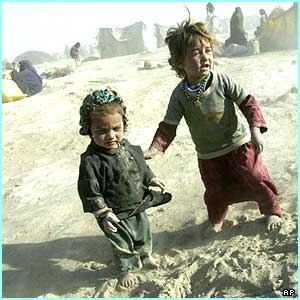
No matter where you go in Afghanistan, there is utter, grinding poverty.

Sonali Kolhatkar: I think the primary goal of the war was always vengeance, but the neocons also wanted to pave the way for an attack on Iraq. Bush wanted to go to Iraq even before 9/11. Unfortunately for him, Al Qaeda was holed up in Afghanistan so he had to invade there first and build support for attacking Iraq. It’s true that the long term goals could be military bases (John McCain said last year that he wanted permanent military bases in Afghanistan), and pipeline corridors (Clinton was most closely linked to supporting pipeline contracts between US corporations like UNOCAL and the Taliban before 2000). But I’m not sure how much Bush cared about those long-term objectives even though future presidents will surely capitalize on them.

As far as Obama’s motives, I think he just wants to get elected. But he knows that he cannot be against all wars, only an unpopular one. He knows that a candidate that is against all wars will not win in November.

He’s talked about withdrawing from Iraq, but that’s because it’s a popular position with the public. But he’s also planning to increase troop levels in Afghanistan because he is not being pressured by the American people. Americans may be unclear about why our troops are there, but they are not organized or speaking out against the Afghanistan war. Obama needs a war like Afghanistan, because it was a haven for Al Qaida and that makes him look “tough on terror.” That will help him win more votes from anti-Iraq war conservatives and independents.

MW: The United States has occupied Afghanistan for seven years now. Has life gotten better for the people or worse? Is there any security beyond the capital of Kabul or are the US and NATO troops stretched too thin? Do the people generally support the ongoing occupation or are they getting frustrated by the lack of progress and want to see the US go?

Sonali Kolhatkar: Initially, life got better for many Afghans, particularly in Kabul. That’s because the Taliban had been routed and the people felt somewhat safe as well as relieved. But as the warlords took over positions of power, attitudes changed. It has gotten much worse, now that the Taliban have returned and the occupation forces are killing more civilians than the Taliban.

Kabul is a bit more secure than the rest of the country. But Kabul is also the warlords’ seat of power. Most of them are even members of Parliament, so people are frequently abused and live in fear.

Beyond Kabul, things vary dramatically depending on where you go. In the parts of the country with the heaviest concentrations of US/NATO troops; Afghans are frequently rounded-up, detained, tortured, bombed, or shot by foreign troops just as in Iraq.

In other parts of the country, where the Taliban are strong; girls schools are blown up, civilians are killed in suicide bombings, and journalists, teachers, and elected officials are harassed or murdered.

Those areas controlled by warlords are ruled with an iron hand, where extreme interpretations of sharia law rule the day, and women suffer rape and degradation.

No matter where you go in Afghanistan, there is utter, grinding poverty. The US occupation has not changed that at all. People are very frustrated, particularly with the US puppet Hamid Karzai. They blame Karzai for the high number of civilian casualties. They also dislike the way he has pardoned some of the warlords and Taliban leaders.


As far as the occupation goes, people were somewhat supportive of it originally, but as conditions have deteriorated, they have begun to see the presence of foreign troops as a big part of the problem. I would say that a majority of Afghans now want the US and NATO to leave as soon as possible.

MW: Is the US military mainly fighting the Taliban or is the the armed-resistance more complex than that? I read recently that the so-called Taliban is actually a confederation of about a dozen disparate groups and tribes that have bonded together with the common goal of ending foreign occupation and that the main reason their ranks are swelling is because of the US military’s indiscriminate killing of civilians? Could you clarify this point?

Sonali Kolhatkar: It’s hard to understand the nature of the anti-US resistance, but it’s a very important issue. Unfortunately,the media coverage only makes it more confusing. The fighters that are called the “Taliban” are actually a mix of “former” Taliban and newly enlisted Pashtun fighters trained in Pakistan. Many of them are just disgruntled Afghan civilians whose families and loved ones have been killed and/or tortured by US/NATO forces. Recruiting is always easy when you can show that foreign soldiers are killing more civilians that the “so-called” enemy. But we should be careful to not glorify the resistance. It is strictly fundamentalist and would not be a good option for Afghans in terms of future leadership. The vast majority of Afghans are moderate Muslims who strongly disagree with the Taliban’s extremist ideology, but they have joined the struggle to bring an end to the occupation. But, of course, their troubles won’t disappear just because the American forces leave. They’ll still be stuck with the Taliban and the warlords. When the Soviet occupation ended in the late 1980s, the US-backed warlords began their reign of terror on the people between 1992 to 1996. That could happen again. These same warlords (or Taliban) could once again spread misery and death across Afghanistan. War is an entropic force that cannot be undone by simply hitting a rewind button.

MW: What will happen if the US military leaves Afghanistan? Is withdrawal the best solution or do you see another, perhaps, less bloody, alternative?

Sonali Kolhatkar: There are always less bloody alternatives, but withdrawal is the first step in a long and complex process. As I’ve said before, Afghanistan’s solutions do not fit neatly on a placard. Perhaps that’s why anti-war activists don’t take a clear stand against this war. The withdrawal of US/NATO forces must be accompanied by other developments, like disempowering the warlords in parliament who have a long history of US-supported impunity. This disempowering must include an “Afghan-led” disarmament of their private militias; removing them from political power, and holding them accountable for their past crimes through criminal prosecution of some sort.

There must also be a “transitional” UN peacekeeping force that maintains security and protects ordinary people the fundamentalists (Taliban and Northern Alliance) But they must make sure that they don’t target civilians.

There must also be economic justice in the form of reparations (matching the money that has been spent on weapons since 1979, dollar-for-dollar) and a plan to build up local industries, create jobs, and provide alternatives to poppy farming.

There must be political justice so that dissidents can come out of the shadows and run for office or participate in the rebuilding their national institutions. When the Afghan people decide that it’s time for the peacekeepers to leave; they should go.

Can such a solution work?

Perhaps. But for this, or any other idea to work, the US occupation must end. That’s the first big step to recovery.

MW: There is a very brave and outspoken woman in the Afghan parliament, named Malalai Joya. She has repeatedly put her own life at risk by denouncing the warlords and calling for an end to the US occupation. She has consistently called out for human rights and real democracy. Has the Bush administration done anything at all to promote or protect courageous women who embody “liberal values” like Malalai Joya?

Sonali Kolhatkar: Women like Malalai Joya are “inconvenient” for the Bush administration. That’s because Joya echoes the will of her people in calling for an end to warlords, AND an end to the US occupation. Bush and his cohorts like to promote the type of women who quietly accept the US narrative and show gratitude for being “saved by the Americans.” In fact, there are very few such women like that in Afghanistan. Joya speaks for millions of Afghan women when she denounces the warlords. And she has repeatedly put herself in danger. She has nearly been killed at least four times! What this means is that women’s rights are available only to women who do not exercise their rights. And it not just Malalai Joya who is putting herself at risk due to her political activism. I have personally worked very closely with the Revolutionary Association of the Women of Afghanistan (RAWA), and they have been saying the same things for years. Still, RAWA cannot operate openly without putting themselves in danger of physical harm; so they must carry out their work underground.

RAWA has NEVER received any offer of help from the US government (although they would refuse it if it anyway to remain politically independent) Like Joya, the women of RAWA are inconvenient – they do not need to be “saved” by America. But they do need a safe Afghanistan and they deserve international solidarity for their brave human rights work.

MW: The invasion of Afghanistan was promoted as a humanitarian intervention to save the Afghans from the brutal Taliban regime. How would you advise people who now think we should take similar action in Darfur to stop the killing there? Is military invasion an acceptable way to address injustice or spread democracy?

Sonali Kolhatkar: I’m not sure I have a definitive answer to that question, but I do think it is one that progressives need to grapple with. Too often, we in the West are very selective when it comes to the causes we support. Only when the US is directly involved do activists choose to oppose a regime. Before the US war in Afghanistan, when the country was being destroyed by the warlords and then the Taliban, it was not seen as a cause worth taking on by American activists. But if the people are being oppressed by someone else, we ignore it. The sad truth is that until progressives come up strategies for dealing with repressive regimes, we’ll always just be reacting to unjust interventions by our government.

Military options are always the worst. Even so, diplomacy can be nearly as corrupt if it means compromising with criminals and warlords and giving them whatever they want in exchange for peace. Peace without justice is meaningless. We could have peace now in Afghanistan if we were willing to give the warlords and Taliban ultimate power. In fact, there was a kind of “peace” under the Taliban. But is that what we want?

If we want real justice we need to figure out a reasonable way to deal with injustice. We need to create alternatives that involve people-to-people solidarity and democracy that can transform society. For example, one way we could have dealt with the Taliban without invading would have been for individual Americans (not our government) to financially and morally support the subversive (and non-violent) work of groups like RAWA. That way, Afghans would have been able to change their country by themselves without foreign intervention and massive destruction. Indeed, RAWA supports change from within and have called on their people to rise up. But their effectiveness has limited by a lack of resources to help them get the word out while organizing underground. Solidarity with groups like RAWA (and there may be similar ones in Darfur) is one long-term, progressive alternative to foreign intervention.

Sonali Kolhatkar is the host and producer of Uprising, a popular radio program through Pacifica Network, that airs on stations around the country. She is also the Co-Director of Afghan Women’s Mission, a US-based non-profit organization that works in solidarity with the Revolutionary Association of the Women of Afghanistan (RAWA). She is the co-author, with James Ingalls, of Bleeding Afghanistan: Washington, Warlords, and the Propaganda of Silence (Seven Stories 2006). More information at http://www.afghanwomensmission.org/ , http://www.rawa.org/.

Source / Information Clearing House

The Rag Blog

Posted in RagBlog | Tagged , , | Leave a comment

Drawn and Quartered

John Deering / The Arkansas Democrat-Gazette

The Rag Blog

Posted in RagBlog | Tagged , , , , | Leave a comment

FILM : Crosby, Stills, Nash, Young and the Protest Song


‘CSNY: Déjà Vu’: A Political Concert Documentary
By Jennifer Maerz / July 30, 2008

Bob Dylan’s “John Brown” is one of the most moving antiwar songs ever recorded. The track avoids sloganeering, resonating an anti–Vietnam War sentiment with a straightforward, human, and very sad story: A mother proudly sends her son off to war, only to receive home a young man missing his hand and an understanding of what he’d been fighting for. Taking on the voice of the soldier, Dylan sings, “And I could not help but think, through the…stink, that I was just a puppet in a play.” The song works so well because the storytelling is subtle; the political message, dagger-sharp.

Of course Dylan wasn’t the only songwriter to give the early antiwar movement a poignant chorus. Crosby, Stills, Nash, and Young stood on those same frontlines, writing songs like 1970’s “Ohio” that put a protest against the Kent State massacre on commercial radio. This week, as the Neil Young–directed political concert documentary CSNY: Déjà Vu hits theaters, we see this ’70s supergroup attempt again to turn the political into the personal, and the personal into a four-part-harmony pop song. But like the response the band has received to this ambitious outing, the film’s results are mixed.

The documentary works when it uses CSNY’s catalog as an excuse to explore personal war stories or concertgoers’ feelings about the place of performers with strong political beliefs. But when Young’s storytelling gets lost in the reductive sermons of a song like “Let’s Impeach the President”—played often throughout the film—it’s hard to see CSNY: Déjà Vu as having any more impact than a giant bumper sticker.

Which raises the question: Who are the best leaders for a war protest? Soldiers, with their battlefield experience, or famous singers, with their public exposure? It’s a tough question to figure out, and, to Young’s credit, CSNY: Déjà Vu doesn’t make the answers very easy. Instead he attempts to bring a chorus of opinions into one movie, a tactic that both empowers and distracts from his vision.

The movie, which Young directed under the name Bernard Shakey, focuses on the 2006 CSNY Freedom of Speech Tour. The band hit the road during midterm elections to perform their classic hits alongside Young’s new protest songs from his Living With War disc. Along with footage of live concerts and recording sessions, the documentary involves the work of television news producer Mike Cerre, who was “embedded” on the tour as he had been with troops in Iraq. Cerre captured the reactions to CSNY’s anti-Bush message from fans, radio DJs, and war veterans, among others. Among the most interesting responses are those of the red-state audiences. You’d think any CSNY fan willing to see the band live would also embrace its peace anthems, but surprisingly the group’s audience includes a very vocal conservative contingent. At one Atlanta show, fans protested with boos, middle fingers, and quips that “Neil Young can stick it up his ass” when CSNY sang Living With War’s didactic impeachment anthem. The song is grating, yes, but it’s shocking that people would walk out in droves, especially during a tour called “Freedom of Speech.”

While the extreme reactions of music fans, critics, and radio personalities are entertaining, the film picks up momentum when it moves beyond CSNY. The fallen-soldier story that worked in the lyrics to Dylan’s “John Brown” works 10 times more powerfully on a movie screen. Young includes thoughtful interviews with the troops, from a deserter who had been hiding out in Canada to musician and former Marine Josh Hisle, who jams with Young in a hotel room. The movie also plays up the déjà-vu theme often, best exemplified in scenes from the Vets 4 Vets support group’s meetings with men and women who had served in Vietnam and Iraq.

No one could accuse Neil Young of jumping on a protest bandwagon for attention, regardless of the cringe factor of some of his recent lyrics. The peace signs on the 62-year-old’s guitar strap are more than just nostalgic symbols. He runs a massive “Living With War” Web site, designed to look like a cross between CNN and USA Today, which catalogs articles about the soldiers in Iraq and Afghanistan, hosts protest songs and videos sent in by the public, and counts down the number of days until Bush is out of office. It also streams, at top volume, “Let’s Impeach the President” (part of the reason it’s hard to remain on the site for very long).

After watching Young’s documentary and poking around his site, I admire the musician’s stamina in supporting soldiers, and at the same time promoting a genuine antiwar belief system. At this point in his career, Young doesn’t even try to disentangle the personal from the political, but he also doesn’t do it with Bono’s ego.

I’ve seen CSNY: Déjà Vu twice, and in the end it’s the personal stories that are hard to shake. If there’s one thing the Vietnam War protest anthems taught us, it’s that you can ignore news feeds and statistics; real insight into bloodshed and the loss of a loved one is the strongest message of all.

Source / Seattle Weekly

The Rag Blog

Posted in RagBlog | Tagged , , , , , , , , | Leave a comment