
The Rag Blog / July 18, 2008
Thorne Webb Dreyer, Editor

RECENT POSTS
The Rag Blog / July 18, 2008
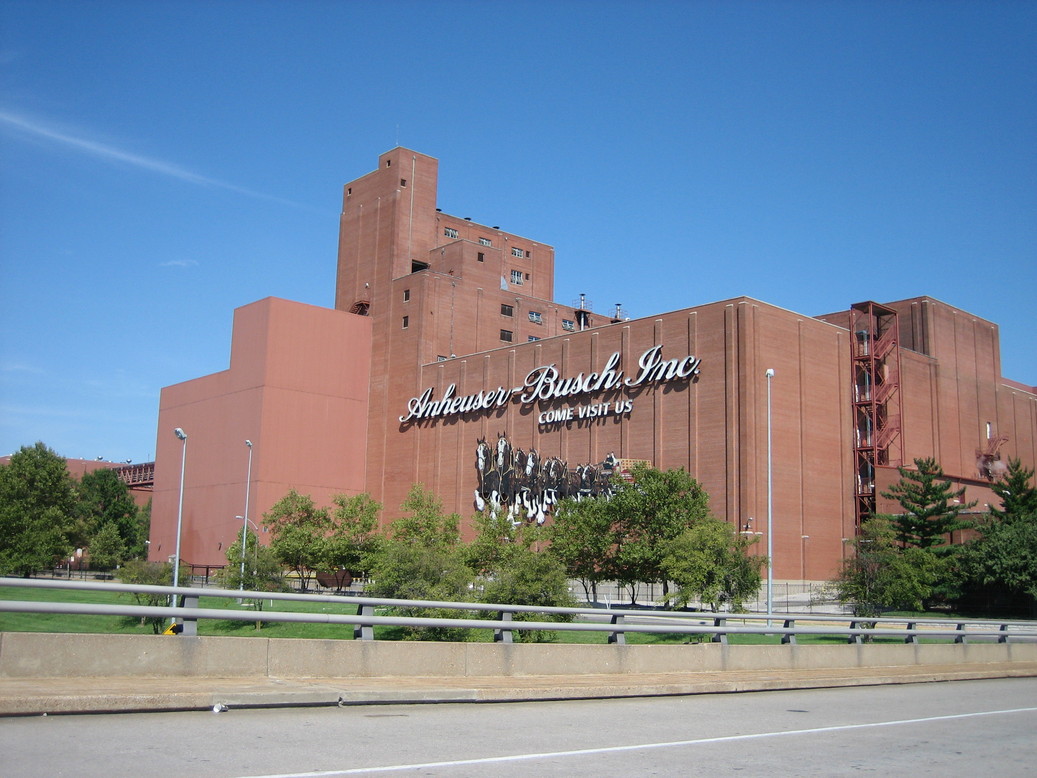
Ok, I admit it. I’m not your usual observer. When I heard that Budweiser had been bought by the Euro-capitalists InBev, I was not concerned.
I don’t care who owns the factories in the U.S. I don’t worry the U.S. heartland is being infiltrated by foreign interests. And certainly, I don’t consider Budweiser a national treasure. The truth is that it’s almost undrinkable.
But my ears perked up when I read how Budweiser’s maker, Anheuser-Bush had roots in St. Louis that went back before the Civil War. Ah, my friends, THERE is a story worth telling. And I’m going to sit back in the damp heat of this Chicago evening, sip on a couple of Fat Tires, and tell it to you, just because I hate patriotic bullshit and because I love revolution.
First, there is nothing American about beer making in St. Louis.
St. Louis in the 1850s was a raw river town situated where the Missouri River and the broad Mississippi met. It was a frontier town in many ways and the jumping off point. It was the “end of the line” for civilization. But it was also one of the first American industrial cities, with one of the heaviest concentration of of factory workers in the country. And these workers were not native-born Americans.
A great many of them came straight from Germany — and formed part of a very large German speaking population that then dominated both the urban and rural landscape from St. Louis to Chicago, to Cincinnati and far into the farmlands of Pennsylvania. And these immigrant workers were a very rowdy and radical bunch. Many were veterans of Europe’s great revolutionary battles of 1848 — the first upheavals when working class and communist revolution emerged as a living threat to the world’s ruling classes.
And, at the same time, surrounding this heavily leftwing, working-class, German-speaking city was a countryside filled with some of the most ugly, racist, pro-slavery forces in the U.S. The Missouri River stretched west from St. Louis, and its shores were lined with slave plantations producing raw materials for twine — a product that shipped downriver to bind the cotton bales of the Mississippi Delta.
The slave owners of Missouri were quite militant. They produced the political gangs called “border ruffians” who crossed the western Missouri border into nearby Kansas territory, where they engaged in armed struggle with abolitionists like John Brown over whether Bloody Kansas would be a slave state or free.
So you can imagine that there was a tension growing through the 1850s between the pro-slavery farmers of the Missouri floodplains and the anti-slavery and often communist workers of St. Louis.
There was a parallel, and little known cultural clash going on at the same time: the German workers arrived as beer drinkers and quite a few of them were first class brewers. There were some Irish among the workers, and they too were fans of the Germans’ sudsy “liquid bread.”
Before long St. Louis was peppered with huge German beer halls, where the often lonely immigrants found community and a feeling of home. For reasons I haven’t yet uncovered, the reactionary political forces of Missouri territory were anti-beer. Maybe they didn’t want this foreign culture to take root. Perhaps they had some early religious prohibitionist logic. But in any case, there was an early political clash when a major push was made to ban beer in St. Louis, and (needless to say) the German workers pushed back.
Here is an irony worth thinking about: In the Mississippi river valley, this important historical clash started between beer lovers and hemp growers. And, believe it or not, revolutionary sympathies go with the beer drinkers.
At a time when social organization among immigrants was primitive, the fight over beer helped spur a sense of common identity among the workers, and gave rise to a number of political newspapers. And the movement that emerged from these circles were increasingly active in the fight over slavery. I have on my bookshelf a rare little book that gathers articles and histories from these German immigrant newspapers — and it is clear how they started to articulate deeply revolutionary views that spoke for a highly conscious and engaged working class population.
You may have studied the civil war a little… I know I have always been fascinated by this first, truly revolutionary war on U.S. soil. And one thing to keep in mind was that the so-called “border states” were a key battle ground as the civil war broke out. There was a strip of these states (from Maryland through West Virginia, Kentucky, to Missouri) that had sizable populations of slave owners and slaves but a general political mood that was divided over the issues of secession and war.
And in this fight over the border states, Maryland had a particular importance because it surrounded the Union capital, so that if it joined the slavery confederation, Washington DC would be harder to defend. And the mood was so bad that Abraham Lincoln was almost killed in Baltimore as he traveled from Illinois to DC to assume the presidency. At the other end of the country, St. Louis has a major strategic importance for the war: It was the major anti-slavery center on the Mississippi. (The next river city, Memphis, was a creature of the Mississippi Delta. It was one of the urban nerve centers of the slave empire — filled with slave markets and holding pens.)
And so, as war broke out, all sides prepared to seize St. Louis by force. And if it had fallen to the slavocracy, it would have been quite hard for the Union’s armies to gain a foothold on the Mississippi, and it would have been that much harder to defeat the South.
On the surface, the politics of St. Louis did not look promising. After 1860, the new governor Claiborne Fox Jackson was clearly a pro-slavery diehard, and the bastard was scheming to secede from the Union and pull the state into slavery’s confederacy.
Step by step the tensions mounted, and started to go from political to military preparations. One focus of preparations was the state armory, the largest warehouse of weapons on the frontier. Whoever controlled those guns would be better able to crush their enemies.
Here again beer enters the story. Because the German workers started to prepare for battle. Led by veterans of the 1848 Revolutions, they started to secretly train themselves in discipline and military tactics. Their plan: to rise up against the state government in armed insurrection, to seize the armory, and defeat the governor’s army.
Where did they do their drills? In the cavernous beer halls of St. Louis. At a given time, they would gather. The doors would be sealed and put under vigilant guard. The tables would be cleared away. And cartloads of sawdust would be scattered deep on the beerhall floors.
And with the sawdust muffling the tramp, tramp, tramp of their feet, the workers prepared themselves for war — learning the unit movements so central to the warfare of that day. Outside, on the streets, the many spies of the governor could not hear what was going on within.
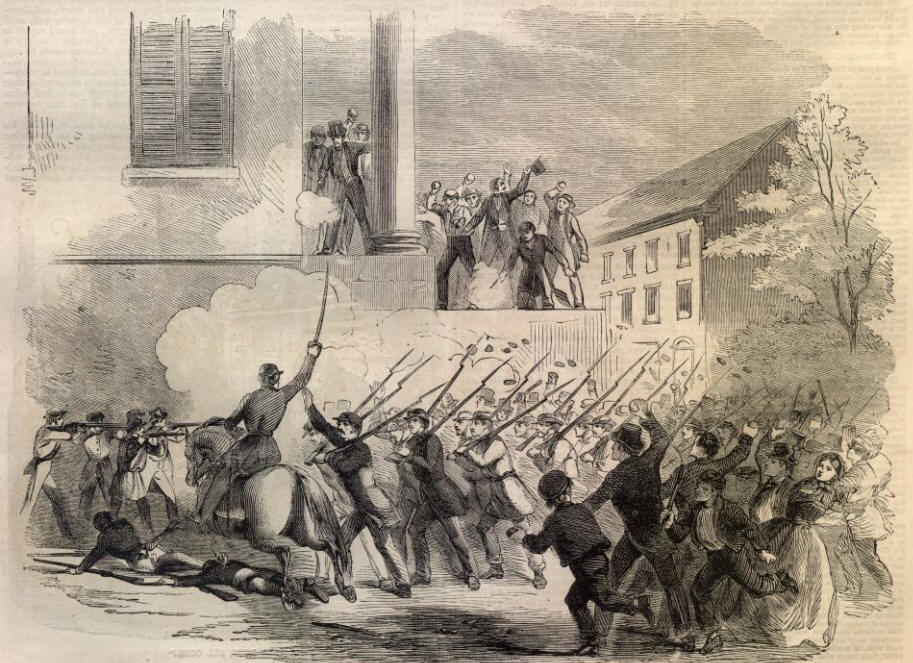
I won’t go into great detail about the heroic and fascinating ways that violence erupted. Led by fearless army officer Nathaniel Lyons the anti-slavery forces struck, and struck hard. They seized St. Louis and the armory. And they shattered the schemes of the slave owners. They routed the Governor’s troops in the early battles. And they bottled up the slaveowners of the Missouri River — cutting them off from the Confederacy.
What followed was one of the most bitter civil wars I have ever studied: Missouri was criss-crossed by vicious pro-slavery death squads that carried out horrific murders and mutilations. Their raiders came dressed in a cloud of human scalps sewn into their clothes and bridles — as they spread terror among those who opposed the sale of human beings. If you have ever wondered where the frontier killer Jesse James got trained, it was as a triggerman for one of the most notorious death squads of the slavocracy.
Hemp made its appearance here too, right in the midst of the fighting: in several key battles the Confederate forces build protective breast works out of the hemp bales pulled from their slave plantations, piling up the bundled hemp harvest to protect themselves from Union bullets.
Fighting against the slavocrats were a complex array of forces, and at their core were new Union army units led by radical Republican John Charles Fremont, recruited heavily from among the German workers of St. Louis. The first known actions of communists in the U.S. was the revolutionary armed struggle of these largely German-speaking forces, led in part by Colonel Joseph Weydemeyer, an energetic communist co-thinker of Karl Marx.
These units militantly emancipated many slaves that fell into their hands. This was in direct contradiction with the policy of President Lincoln who, afraid to offend the leading forces of other border states, insisted in the early days of the civil war that slaves should not be freed, but should be treated as “contraband property.” In this dispute, Fremont was removed from the command of the Missouri armies, and these revolutionary working class forces were dispersed into larger armies in order to better control them.
There are, in my opinion, many lessons and insights within this story. And more in the parts I have left untold.
But I tell this story now just to make a single point:
Anyone who thinks that Budweiser and the beer industry of St. Louis is a story of patriotism, Americanism, of all-American “national treasures,” of a whiteman’s “heartland” of traditional values and conservative xenophobia… Anyone who runs that story just doesn’t know.
The story of beer in St. Louis is a story of communist immigrant workers who didn’t speak English, who hated the mistreatment of kidnapped Africans in the United States, who had little love for America’s institutions, and who were willing to die (and kill!) to end the horrific practices of human slavery.
Deal with it. Pass it on.
Mike Ely is part of the Kasama Project and has helped create the new Revolution in South Asia resource. Mike’s email is m1keely@yahoo.com.
Source / Dissident Voice
The Rag Blog

We expect to post live material from the conference in the coming days. The intrepid Thorne Dreyer is attending NetRoots Nation in Austin and will one day soon resurface to tell us what happened there. Please stay tuned …
Richard Jehn / The Rag Blog
Netroots Nation at the Crossroads: Move Over MoveOn
by Ronnie Cummins / July 18, 2008
“MoveOn is not a movement although it wants to be perceived as one. It is a brilliant and effective fundraising and marketing machine, but 95% or more of their so-called members ignore any particular email appeal. These 3.2 million people on the MoveOn email list are the object of marketing and fundraising campaigns, but they have absolutely no meaningful or democratic control over the decisions of organization, there is no accountability from the leadership to the MoveOn list members, and those of us on the list are unable to organize and communicate amongst ourselves within the list because it can’t be accessed by the grassroots at the local or state level. MoveOn, the Democracy Alliance, and the various liberal think tanks that have arisen to fight the Right are clearly a force able to raise millions of dollars for Democratic candidates and launch PR and messaging campaigns, but none of them are about empowering a populist grassroots uprising.”
John Stauber, Center for Media & Democracy, July 2008
The energy crisis and Peak Oil. Bank failures and economic recession. Climate chaos, crop failure, and unpredictable weather. The health crisis. The food and farming crisis. An endless, murderous, multi-trillion dollar war in Iraq and Afghanistan. The Patriot Act, Homeland Security, an evermore-powerful Shadow Government. An ongoing, pre-meditated assault on Constitutional liberties. An epidemic of social and psychological malaise, hopelessness, and ethical disorientation. Bought and stolen elections and an indentured mass media. Out-of-control politicians, corporations, and technology. Self-destructive hyper-consumerism and the Wal-Martization of the economy. Institutionalized robbery by a billionaire class oblivious to growing poverty and misery… Will we look back on 2008, as the year we tried to change drivers, but still couldn’t stop the car from going over the cliff?
Millions of Americans, especially the “netroots,” those drawing their information and inspiration from the open sources of the internet, are finally connecting the dots between the burning issues, moving beyond limited concerns to radical awareness. A politicized new majority is waking up to the fact that the proverbial “end” is near. We must move beyond “business as usual” and tepid reform. We must link together our burning issues, unite our heretofore-fragmented forces and communities into a qualitatively more powerful current, and press and confront the Fortune 500 and the nation’s thousands of elected public officials — before it’s too late. In these dangerous, careening times we have no choice but to grab the wheel from Democratic Party hacks and fake netroots and grassroots leaders, make a sharp radical turn, and accelerate along the path of grassroots and netroots resistance, from Main Street to Manhattan, from City Hall to the Capitol.
The crazed neo-con project for world domination, aided and abetted by profit-obsessed multinational corporations; countered feebly by the “loyal opposition” of centrist Democrats, single-issue public interest groups, and top-down “progressive” organizations like MoveOn, have brought us to the precipice. Radical crises demand radical remedies. The “road to the right” that the Democrats and Obama are taking is suicidal. Either we mobilize a revitalized Movement to take to the streets and the suites of the corporations and the politicians or we’re going over the cliff. Move over MoveOn. We will not sit by and watch our Netroots Nation devolve into a nation of sheep and lemmings.
Linking Issues & Constituencies: From Protest to Resistance
A potentially world-changing segment of the body politic is finally waking up to the fact that single-issue politics and limited-focus organizing cannot address the current Crisis. Facing a generalized breakdown of the political and economic System and a rapid degradation of global life-support systems, it is obviously insane to keep repeating, “My issue and my organization or my blog is more important than yours,” or to wait for the Democratic Party and its latest middle of the road messiah, Barack Obama, to save us. Watering down our life-or-death concerns and urgency in the mistaken belief that we will attract the “silent majority,” is a dangerous illusion. The doomsday clock is ticking. The climate, food, health, political, economic, and energy crisis already impacting our lives, and the lives of everyone on the planet, will soon become catastrophic.
The multi-trillion dollar war for oil in the Middle East can no longer be separated from the energy crisis nor the climate crisis, nor the growing global food crisis, nor the erosion of Constitutional liberties, nor the lack of funding for health care, housing, jobs, education, clean energy, infrastructure repair, and public services. In order to avoid economic and climate meltdown, and to secure the funds to make our emerging green economy the economy, we must force the Democratic majority in Congress to use their Constitutional power of the purse to cut off all funds for the war, with or without the support of Nancy Pelosi and Barack Obama. “Live Wire” grassroots leaders in our movements for peace, justice, sustainability, health, and democracy must subordinate our tactical or secondary differences, reach out to the disenfranchised majority, connect the dots between the burning issues, and create a massive new netroots and grassroots synergy.
Pledge of Resistance
And lest we forget. We haven’t seen the last of the Bush Cheney gang. Before leaving office, evidence is mounting the maniacs in the White House are preparing to carry out two final maneuvers to derail democracy and advance their insane project for world domination: stealing the 2008 elections with voter suppression and electronic vote theft, and precipitating or fabricating a terror attack or other incident, and then attacking Iran.
What is to be done? Again my friend and fellow activist, John Stauber, hits the nail right on the head:
“If and when populist forces build an email list as big as MoveOn’s — and most of that list was built by MoveOn’s posturing as an ardent anti-war organization, which it is not — and harness it for real grassroots empowerment, that is when we might see some exciting political developments that combine the Netroots and grassroots for fundamental change. I’d love to see a MoveOn-type organization that would actually trust and empower the millions of people on its email list so that the decision making, organizing and money benefit the grassroots and grow power from there upward, one in which the structure at the top is accountable to and elected by the members. It’s hard to have a political democracy when we don’t even have democratic organizations or movements. I’ve talked with some of the leadership of MoveOn about this, but they have no intention to democratize and will remain a top-down marketing and fundraising organization.”
Here are five, immediate steps to head off catastrophe and to begin to build a radical populist alternative to MoveOn:
1. Move beyond single-issue politics and embrace a multi-issue, radical but practical, platform. You can read and comment on the 40-point Grassroots Netroots Alliance (GNA) platform and Candidate Survey at www.GrassrootsNetroots.org.
2. Join up and help GNA build up a multi-million email list, a netroots army of multi-issue progressives and radicals, who understand the need to transform the System and literally overthrow the dictatorship of corporations and indentured politicians. The Grassroots Netroots Alliance (with 200,000 people currently on our email list) is currently approaching a dozen or so large, like-minded networks with comparable lists to jump-start this process.
3. Press the politicians to take a clear stand on all the burning issues. You can send the GNA Candidate Survey to all of your elected officials and candidates for office — local, state, and federal — at www.GrassrootsNetroots.org.
4. As we “press the politicians,” we need to consciously and deliberately integrate electoral insurgency and netroots lobbying with non-electoral resistance — including boycotts, strikes, civil disobedience, and other pressure tactics. In the face of an unprecedented Crisis, we must move beyond polite protest to resistance.
5. Sign the Pledge of Resistance. We must prepare now to roll back the next aggressive moves by the Bush/Cheney gang: stealing the elections and attacking Iran. If you are willing to sign up to take collective action in your community in the weeks following another Republican theft of the elections on November 6, or in the event of an attack upon Iran, send an email to pledgeofresistance@grassrootsnetroots.org.
Ronnie Cummins is National Director of the Grassroots Netroots Alliance.
Source / Common Dreams
The Rag Blog
Records show police spied on activist groups
Danny Jacobs / July 17, 2008
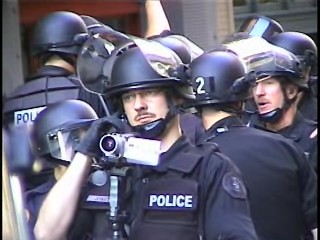
Maryland State Police officers spied on dozens of meetings and rallies held by social activist groups and provided reports to databases accessible by local and federal law enforcement agencies, according to documents obtained by the ACLU of Maryland.
Officers with MSP’s Homeland Security and Intelligence Division covertly spent at least 288 hours primarily at anti-war and anti-death penalty protests between March 2005 and May 2006, according to the redacted documents released Thursday.
The state branch of the American Civil Liberties Union received the documents after filing suit against MSP last month for not releasing the reports under the Maryland Public Information Act. The ACLU originally requested the documents in 2006 in connection with the trial of peace activists arrested during a protest outside of the National Security Agency in Fort Meade.
“It is incomprehensible to investigate the most all-American of activities without a scintilla of evidence that something criminal was going to happen,” said David R. Rocah, a staff attorney with the ACLU of Maryland, during a news conference Thursday.
The ACLU sent a letter to Gov. Martin O’Malley asking for a full investigation of the MSP’s practices, Rocah said. Further legal action will depend on how the state responds, he added.
“It would be extraordinarily surprising if what is revealed today is the full scope,” Rocah said
The governor’s office directed questions to state police officials. Col. Terrence B. Sheridan, superintendent of the Maryland State Police, said in a statement the department does not violate civil liberties of law-abiding protesters or organizations.
“No illegal actions by State Police have ever been taken against any citizens or groups who have exercised their right to free speech and assembly in a lawful manner,” he said. “Only when information regarding criminal activity is alleged will police continue to investigate leads to ensure the public safety.”
Breeding distrust
The reports read like meeting minutes, with attendance figures and recaps of events held by groups including the Pledge of Resistance-Baltimore, the Baltimore Coalition to End the Death Penalty, the Committee to Save Vernon Evans (who was granted a stay of execution by the Maryland Court of Appeals in February 2006), the D.C. Anti-War Network and International Socialist Organization.
On Jan. 28, 2006, for example, an undercover officer attended an anti-death penalty rally in Annapolis.
“There were approximately 70 people at the rally which lasted approximately 1½ hours. The group met at church circle, walked around the Governor’s Mansion and then finished the rally at Lawyer’s Mall with speeches,” according to the report entered Feb. 20, 2006. “No intelligence about any disturbances at upcoming protests in the run-up to the execution was discussed.”
The reports specifically mention they were shared with police officers from Baltimore, Annapolis, Anne Arundel and Baltimore counties and the National Security Agency.
“This isn’t just that local and state police have it. It’s accessible by the national intelligence community,” said Michael German, a policy counsel with the national ACLU based in Washington and a former domestic terrorism official with the Federal Bureau of Investigation.
Similar reports of police spying have occurred in Denver and Northern California, according to the ACLU. German also pointed to the Los Angeles Police Department earlier this year adopting a system of officers reporting suspicious activities in their regular investigative reports, which can later be analyzed.
Rocah, who called MSP’s actions “unacceptable” and “stupefying,” said the problem is not just that spying has occurred but that it led activists to be suspicious of one another.
“It breeds distrust from within, which is exactly the point,” he said.
Maria Allwine, a member of Pledge of Resistance-Baltimore, said members of her group would not turn on each other. The organization is part of a national network that seeks to end the war in Iraq.
“We will not succumb to this,” she said. “We’re going to do what we’re going to do.”
The group holds open meetings Monday nights at the American Friends Service Committee building off York Road. Allwine said she noticed informants at meetings in 2003 and 2004, “provocateurs” who may have been “a little too enamored with the military” or blatantly walked across the street afterward to use their cell phones. The group assumes it’s still being spied on, she added.
The ACLU’s findings were not shocking, Allwine said, but seeing the detailed reports still had an impact.
“I’m profoundly sickened by the extent of this,” she said.
Source / The Daily Record / h/t OB Rag
The Rag Blog
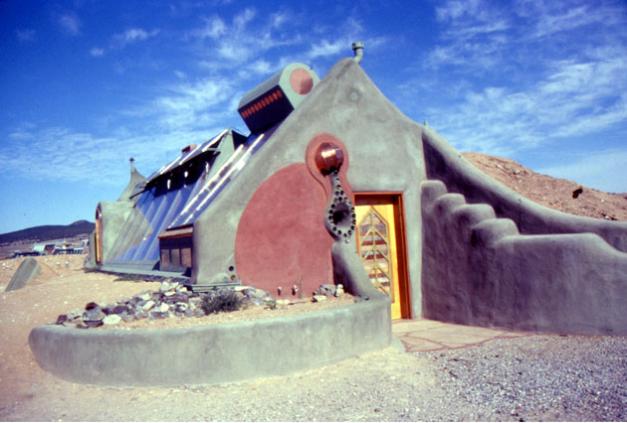
They are eco-friendly, bizarre-looking bolt holes, and have earned the name “earth ships” for the simple reason that they appear to have landed from the future. But these homes are more than just wacky props. They are a blueprint for our future living habits.
The ziggurats – constructed from refuse such as beer cans – are the brainchild of Michael Reynolds, an eco-architect who has spent most of his professional life perfecting the concept, which derives its name from the earth-filled tyres that make up the walls. He built the first example in Taos, New Mexico, in 1988 and, 20 years later, still lives there.
Due to his hard work, there are more than 1,000 “earth ships” across New Mexico, and the word has spread; hundreds more are springing up in the US, in Scotland, Normandy, Spain and even Siberia, and in April 2007, permission was granted to build 16 in Brighton. Now, Reynolds’ life and work are celebrated in Garbage Warrior, a documentary screening in cinemas around the UK.
“Imagine a home that heats itself, that provides its own water, and grows its own food,” says Reynolds. “Imagine that it needs no expensive technology, it recycles its own waste, and it has its own power source. And now imagine that it can be built anywhere, by anyone, out of the things that society throws away.”
The documentary was the idea of Oliver Hodge, a Brighton-based director who met Reynolds in May 2003. The architect and his “crew” had come on a two-week visit to build a prototype earth ship in Brighton. “When I met Mike I was so inspired and I could see that he would be able to create a strong story. I realised that he had won and lost all these battles: that he is a frontline activist for social change.”
In November that year, the filmmaker took a team to Reynolds’ US base. Soon, he realised he had arrived “in the middle of something massive”, so spent the next three years jetting between the UK and New Mexico, following his man around. Reynolds was a perfect subject, says Hodge: “He would do anything for me. Sometimes I even got him up at five o’clock in the morning.”
The film is the latest chapter in Reynolds’ colourful life. He graduated from architecture school in 1968, and soon produced a house made from beer containers, which upset the national bricklayers’ union so much, he had to can it.
Inspired by the nascent green movement, Reynolds came up with a building that promoted several tenets: it should be “off-the-electricity-grid” (which could be achieved by solar power); it should be made from used car-tyres (common landfill material) and incorporate rainwater-recycling facilities, too.
To achieve this vision, he moved in the early Seventies to the desert near Taos, where tolerant planning laws and sympathetic local government enabled him to experiment: some houses looked like castles, others like pyramids. Over the next 25 years, he created an energy-independent community, but his flouting of regulations landed him in hot water: and, in 1997, his communities were shut down.
The documentary joins the architect soon after, and charts his long battle with planners. “In my opinion, the planet situation is so critical we need to be doing anything we can,” he explains. “My rationale is that any little roof leak or system glitch in one of my single family homes, compared to the alternatives, is nothing. To me it’s important to go for it and make a few mistakes.”
Frustrated by his lack of progress, in early 2005 Reynolds heads to the Nicobar Islands in the Indian Ocean, which had been devastated by the Asian tsunami. His hope? That the lack of infrastructure would render the “bureaucratic niceties” irrelevant. “We shoot from the hip,” Reynolds says of the excursion. “We are always out of our depth whenever we go abroad, which happens three or four times a year. It may not be to local codes or ready to sell to a millionaire, but it will be shelter which will keep people comfortable. We have a method.”
Now, back in Taos, the architect is focusing on his latest project, “the Phoenix”. He says it will house a family of four, will keep them alive in “every way”, with its sewage treatment facilities as well as sustainable water, electricity, and food supplies. “There’s no question that after you’ve gone down a trail you might find a better way of going down it,” he concludes. “I would make alterations in my path, but it wouldn’t be that much different. I don’t think it’s possible to do anything without getting into a little trouble.”
‘Garbage Warrior’ is showing now at selected cinemas; www.garbagewarrior.com.
© 2008 The Independent
Source / The Independent
The Rag Blog
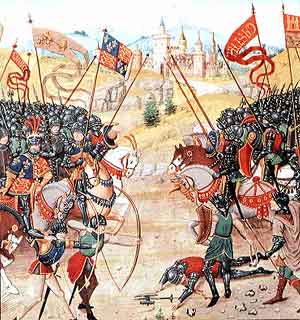
Barack Obama and John McCain continue to argue about war. McCain says to keep the troops in Iraq until we “win” and supports sending more troops to Afghanistan. Obama says to withdraw some (not all) troops from Iraq and send them to fight and “win” in Afghanistan.
For someone like myself, who fought in World War II, and since then has protested against war, I must ask: Have our political leaders gone mad? Have they learned nothing from recent history? Have they not learned that no one “wins” in a war, but that hundreds of thousands of humans die, most of them civilians, many of them children?
Did we “win” by going to war in Korea? The result was a stalemate, leaving things as they were before with a dictatorship in South Korea and a dictatorship in North Korea. Still, more than 2 million people — mostly civilians — died, the United States dropped napalm on children, and 50,000 American soldiers lost their lives.
Did we “win” in Vietnam? We were forced to withdraw, but only after 2 million Vietnamese died, again mostly civilians, again leaving children burned or armless or legless, and 58,000 American soldiers dead.
Did we win in the first Gulf War? Not really. Yes, we pushed Saddam Hussein out of Kuwait, with only a few hundred US casualties, but perhaps 100,000 Iraqis died. And the consequences were deadly for the United States: Saddam was still in power, which led the United States to enforce economic sanctions. That move led to the deaths of hundreds of thousands of Iraqis, according to UN officials, and set the stage for another war.
In Afghanistan, the United States declared “victory” over the Taliban. Now the Taliban is back, and attacks are increasing. The recent US military death count in Afghanistan exceeds that in Iraq. What makes Obama think that sending more troops to Afghanistan will produce “victory”? And if it did, in an immediate military sense, how long would that last, and at what cost to human life on both sides?
The resurgence of fighting in Afghanistan is a good moment to reflect on the beginning of US involvement there. There should be sobering thoughts to those who say that attacking Iraq was wrong, but attacking Afghanistan was right.
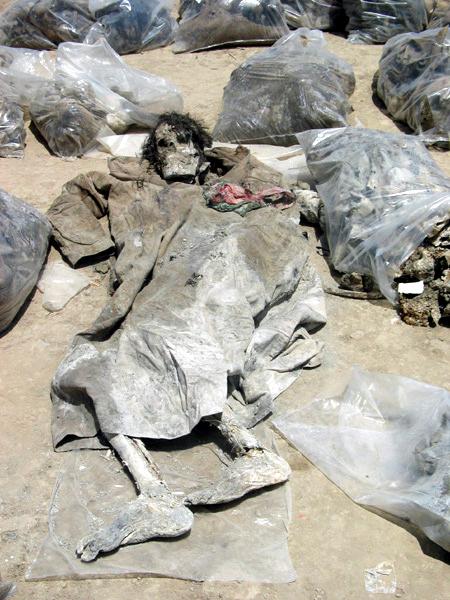
Go back to Sept. 11, 2001. Hijackers direct jets into the World Trade Center and the Pentagon, killing close to 3,000. A terrorist act, inexcusable by any moral code. The nation is aroused. President Bush orders the invasion and bombing of Afghanistan, and the American public is swept into approval by a wave of fear and anger. Bush announces a “war on terror.”
Except for terrorists, we are all against terror. So a war on terror sounded right. But there was a problem, which most Americans did not consider in the heat of the moment: President Bush, despite his confident bravado, had no idea how to make war against terror.
Yes, Al Qaeda — a relatively small but ruthless group of fanatics — was apparently responsible for the attacks. And, yes, there was evidence that Osama bin Laden and others were based in Afghanistan. But the United States did not know exactly where they were, so it invaded and bombed the whole country. That made many people feel righteous. “We had to do something,” you heard people say.
Yes, we had to do something. But not thoughtlessly, not recklessly. Would we approve of a police chief, knowing there was a vicious criminal somewhere in a neighborhood, ordering that the entire neighborhood be bombed? There was soon a civilian death toll in Afghanistan of more than 3,000 — exceeding the number of deaths in the Sept. 11 attacks. Hundreds of Afghans were driven from their homes and turned into wandering refugees.
Two months after the invasion of Afghanistan, a Boston Globe story described a 10-year-old in a hospital bed: “He lost his eyes and hands to the bomb that hit his house after Sunday dinner.” The doctor attending him said: “The United States must be thinking he is Osama. If he is not Osama, then why would they do this?”
We should be asking the presidential candidates: Is our war in Afghanistan ending terrorism, or provoking it? And is not war itself terrorism?
Howard Zinn is author of “A People’s History of the United States.”
© Copyright 2008 Globe Newspaper Company
Source / The Boston Globe
The Rag Blog

Sustainability
By Paul Spencer / July 17, 2008
Here is a diary that was posted on Open Left by Syrith last year. (Some data in my comments were under-stated, and I have better information now.) It is well-said, but, unfortunately, it did not get much play at that time. IMO this is a term that is very important to a segment of our potential base that we rarely reach – or touch might be a better term. In the final analysis, all political organizations and movements are coalitions, and the Sustainability folks are very much our comrades.
Supporters of sustainable resource development are almost a missing link in the left/progressive movement at present. Yet this is a true middle ground that can yield agreement, rather than adversarial relationships, among our likeliest allies. Now – I hope that this doesn’t earn me the nickname of the Supply-Sider of Sustainability, or some such – but I think that the supply/production side has to be embraced, as well as the consumption side, when we try to define the boundaries of sustainability.
Twenty-five years ago in the Gifford Pinchot National Forest (my county is 80% GPNF), the timber harvest was on the order of 400 million board feet per year – primarily of Douglas Fir and Western Hemlock. A percentage of that harvest was “old growth” timber, meaning large-diameter logs with a more-dense cell structure and few knots. Environmentalists led legal challenges to this old-growth logging on the basis of harmful impacts to endangered forest species: e.g., the Northern Spotted Owl. Based on federal Endangered Species legislation, the federal courts stopped almost all such logging – almost in an instant. With their legal strategy realized, the environmental organizations then tied up virtually all federal log sales with litigation – or threats to litigate. The ramifications for loggers and forest-related businesses were close to catastrophic.
OK – a side-bar, if you will – the business situation in the early-1980s was generally poor in the U.S., and this was particularly true in lumber-dependent fields. So – to some degree this industry used this time period and this legal embroglio to write off their old, fully depreciated, and worn-out mills and equipment – much of it built in the 1940s. They could blame the environmentalists – and the government – to take the heat off of their managers and owners for loggers’ job and income losses. Then some mill-owners consolidated operations in new or rebuilt plants with CNC milling equipment designed to optimize use of the smaller 2nd-growth and 3rd-growth logs. When their business improved, they were back to work with ¼ of their former mill employees, producing more product per plant. Wow – win-win-win – write off the antique mills; blame the ‘greens’ and the Feds; build new and automate; and, when the market rises, your work force is trimmed in ways that you could not have imagined under the former conditions.
Back to sustainable harvest – the old logging days, where clear-cut was followed by replanting (somewhat rigorously applied on the federal forest lands), had created plantations of 2nd and 3rd growth forests. In the intervening years of little or no logging, these plantations have been putting on more than 60 million board feet of growth in our county’s share of the federal forests per year – according to silviculturists who work for the federal Forest Service. I suggest that a minimum of 50 million board feet of this annual growth can now be harvested with essentially no negative impact on these forests. (In addition ‘thinning’ operations are needed to improve forest health, increase forest-land biological diversity, and reduce fuel. This activity would substantially increase actual harvest for some years to come, just in order to ‘catch up’ with the suppressed operations from the last 18 years.) Going forward, some of the ‘surplus’ (growth minus harvest) can be mapped into the remaining ‘wilderness’ forests to enlarge their range, which would in any case continue to be off-limits to all logging.
There are other questions/issues associated with this argument, but these are exactly the true province of democratic politics – i.e., the negotiation of threshold levels of agreement between competing interests. For instance, does a clear-cut per se cause harm to the forest ecology? I say ‘definitely not’. Either by harvest or via fire, open space (meadows) will be formed. Elk, bluebirds, voles, coyotes, huckleberries, balsamroot daisies, indian paintbrush, and a host of other organisms depend on the meadow. Douglas Fir is a pioneer species, not a climax species – no meadows, after awhile, Doug Fir becomes an endangered species.
There are other points/issues for scientific study and political negotiation. Does fire suppression in the forest create conditions for worse harm? How far should we allow home-building penetration in the big, contiguous forests? The point for this discussion is that sustainable logging should be – or could be – the rubric that will allow adversarial factions to find a solution, if not quite common ground.
OK – this is just one example of the Sustainability issue/question. It’s a large part out here in the Pacific NW, but maybe it doesn’t resonate for you. But the concept should. Sustainability is the pivot point, and it takes ongoing Science to update and sharpen our understanding of the balance. After that, it’s all about this diary by redstar on the European Tribune.
That’s where we determine distribution of the ‘fruits’ of our efforts.
The Rag Blog

Thanks to Mariann Wizard / The Rag Blog

Some people worry too much about the wrong things. For instance, Bush’s security people have created a watch list with a million names on it. How could that possibly be useful in counter-terrorism, a million names? Most of them are probably just peace activists. Terrorist groups are small and wily. You can’t get at them scattershot this way. But there are some things worth worrying about and doing something about. Dirty bombs, where radioactive material is packed in with a conventional bomb, causing contamination of wide swathes of e.g. a city, now that is a good candidate for action. But while Mr. Bush was fiddling around adding Americans to the watch list on a massive scale, the way celebrities add people to their Facebook friends list, he wasn’t bothering to take care of the important stuff. Emblematic of the gang that couldn’t shoot straight.
Juan Cole / Informed Comment
Report: Gov’t tardy securing radioactive material
By Eileen Sullivan / July 15, 2008
WASHINGTON – The government is taking too long to secure radioactive materials across the country that could get into terrorists’ hands, according to a government report.
Radioactive material used for legitimate purposes in medical equipment and food, for instance, could be used to create an explosive device known as a dirty bomb. Experts believe such an attack would be contained to a small area but could have significant psychological impact and have serious economic consequences because of cleanup problems.
The Sept. 11, 2001, terrorist attacks prompted the government to do a better job of securing nuclear and radiological materials. And nearly seven years later, the Nuclear Regulatory Commission says these materials are much more secure. But congressional investigators say it’s not enough.
According to a Government Accountability Office report released Monday, new requirements to ensure that a person purchasing or carrying radioactive materials has a reason to do so is more than three years behind schedule. In a probe last year that set up a bogus company, investigators said they were able to obtain a license from the Nuclear Regulatory Commission that allowed them to buy enough radioactive material for a small dirty bomb. Officials hope the licensing requirements will prevent this from happening again.
NRC spokesman Neil Sheehan said a pilot program was completed in May, and the commission expects final guidance next month.
Further, a system to track radioactive materials as they are transported across the country has also faced multiple delays. The NRC says the system should be in place at the end of this year, but it will not be a real-time tracking system, such as used by some package delivery services.
The system will report transfers within one business day, Sheehan said. And if material goes missing as it’s transported, an alarm system will notify officials, he said.
On the inspection side, government investigators found that most Customs and Border Protection officers across the country were never told of 2006 radioactive material reporting requirements by the agency’s Washington headquarters. In May 2006, Customs and Border Protection changed its policy to require that officers contact authorities if they detect “more than incidental” amounts of radiation. But this was never communicated to officials in the field.
The GAO also found that there is not enough personal radiation detection equipment for Customs officials at land borders. In 2003, 8,000 out of 18,000 officers and agents had personal radiation detection devices. Currently only about half of the agency’s agents and officers have the equipment because of budget constraints, agency spokesman Lloyd Easterling said.
Getting these materials secured has been a longtime goal of Minnesota Republican Sen. Norm Coleman. Coleman says he’s happy there’s been some progress, but it’s taking too long, and it’s not enough.
“I’m still not convinced they fully grasp the psychological and economic impact that even a small dirty bomb attack would have on the American public,” Coleman said of the NRC.
Source / Yahoo News
The Rag Blog
The Rag Blog / Posted July 16, 2008

Dumping (and dumping on) the Dollar
By Dale C. / The Rag Blog / July 16, 2008Ever wondered what the GOOD side of the weakening dollar is? Or where the trigger might likely come from that could turn the slide into a full-scale global dollar-dumping panic? Or what the good aspects of the change might be if dollars lost their role as the currency most nations hold as their reserves (“savings”)? Or why the Cheneybush burns loudly with faux indignation at an Iranian nuclear weaponization program that US intelligence sources have said doesn’t exist? This article — from a Vienna-based analyst (and apparent Mid-East native) posting on Al Jazeera a few days ago — provides a unique and informative perspective on those and related questions. The comments it got from readers on the Al Jazeera site are at least as interesting as the article, and well worth a look.
Analysis: Blame the dollar
By Massoud Hedeshi, international development expert, in Vienna
The US economic power horse is running out of ideas and cash as it jostles with a massive national debt, housing and financial crises, rising inflation, and a depreciating currency.
This has all contributed to a growing tendency to live off credit amassed through petrodollars and foreign loans, leaving repayment for future generations.
Today, in much of America, communities and suburbs are dealing with a drastic increase in foreclosures and short sales. This has not been helped by the fact that gas is selling at over $1 a litre ($4 a gallon).
Standard monetary tools such as lowering or increasing interest rates can no longer provide quick fixes to the situation for both economic and political reasons.
Raising interest rates would compound the mortgage crisis while lowering it would drive the value of the US dollar abroad even lower.
But exercising control over the money supply could also damage the US economy: increasing the supply would lower the dollar’s value even more, while decreasing supply would exacerbate the loans crisis.
In any case, control over the money supply would be anathema to US economic policy given the country’s ‘addiction’ to deficit financing and run-away consumerism in recent decades.
So the US Federal Reserve is left virtually helpless.
It has, however, tried to help Wall Street by becoming a temporary lender and allow many investment firms the opportunity to avoid bankruptcy. Such an action by the Fed has not happened since the stock market fiascos in the 1930s.
The US government, however, can apply one clear fix to the situation – cut back overspending on a massive scale.
But this option too is off the table in an election year where ‘victory’ is being promised in endless wars on ‘terrorism’.
And it is the recent wars in Afghanistan and Iraq that have contributed the lion’s share to sapping America’s resources.
Plunge of the dollar
Increased energy demands from developing nations fuelled a rise in oil prices [EPA]
As America struggles to avoid recession, the world economic order appears to be heading for a drastic overhaul.
Despite a trend by some economists and politicians to blame the current food and energy commodity price hikes on Opec or overpopulation, there is a clear picture emerging of deep structural problems in the world economy.

According to the US Federal Reserve, the dollar has dropped by around 65 per cent against the Euro, 31 per cent against the British Sterling, 45 per cent against the Canadian Dollar, and by 59 per cent against the Australian Dollar over the eight-year period since June 2000.
While the causes for this slide are debatable (and largely attributed to poor fundamentals in the US economy), the global impact of such a major drop in the value of the dollar is undeniable for two important reasons.
First, most global commodities traders utilise – and favour – the greenback over other currencies, despite a severe decline in its purchasing power.
Secondly, most countries – mainly in east Asia and among the major oil and gas exporters of the Arab Middle East – use the dollar as their reserve currency.
But they are paying the price. Despite their booming economies and elevated public spending, they are experiencing depreciating terms of trade and rising inflation.
More importantly, they have seen the value of their strategic currency reserves drop with the dollar’s waning global strength.
Rising prosperity
The situation is ironically exacerbated by a significant rise in prosperity and consequently in the volume of global trade in recent years.
According to a 2007 Handbook of Statistics published by the United Nations Conference on Trade and Development (Unctad), global merchandise export and import volumes have grown at over 10 per cent a year over the 45-year period 1960-2005 in US dollar terms and based on current prices.
After the economic shocks of 1998 (caused by the Asian financial crisis of the time) and 2001 (following the terrorist attacks on 9/11), export and import growth rates for world merchandise accelerated to almost 17 per cent a year between 2003 and 2006.
Such a huge rise in demand for commodities would inevitably result in inflationary pressure on prices, particularly when the currency used for transactions – the dollar – is consistently losing its underlying value.
Global revolution
Furthermore, there has been significant and robust growth in the economies of developing countries in the past half century.
Developing country export growth outpaced the global average rate by 1 per cent in the 1960-2005 period, and outpaced the developed world by 1.2 per cent over the same period, according to Unctad.
And the differential between developing (including India, China, UAE) and developed nations (such as Japan, US, France, Germany, UK) has increased with time: 1.4 per cent for 1970-2005; 1.4 per cent for 1980-2005; 3.6 per cent for 1990-2005; and 4.8 per cent for the period 2000-2005.
The fall of the Soviet Union and its satellites is also adding to growing market demands and the push for prosperity
Former Warsaw Pact countries, which are now known as ‘economies in transition’, have in recent years outpaced developing countries’ export growth rates by close to 6 per cent over 2000-2005, according to UNCTAD.
This has changed the economic dynamic of north-south and east-west dialogue. Some 50 years ago, 80 per cent of the world’s population lived in low-income countries. Today, that proportion has been turned on its head with four billion – around 65 per cent – living in middle and high-income countries.
What we now have in effect is a quiet global revolution beginning to bear fruit following a 50-year period shift in economic foci and decolonisation.
The impact of decolonisation is not to be underestimated. Those ‘peripheral’ areas of the world – such as India and China – exploited for centuries by a self-serving ‘metropolis’ have developed a self-consciousness emanating from a technological, economic and political revolution.
Dumping the dollar
The growth of global economies – some of which had not been international players until recently – creates a proportional need for energy and food resources and consequently the crises we face today.
As the crises that emanate from growing prosperity develop, they fuel a hunger for increased commodity production, a reduction in waste, and an urgent need to locate alternative energy sources.
However, there is also a need to take immediate measures to protect the growth in global prosperity.
World leaders, particularly among major oil and gas producers and those in East Asia and elsewhere with large foreign currency reserves, are coming under pressure to ditch one of the greatest causes of global inflation today -the fast-declining US dollar.
Though many have been resistant to this idea, sooner or later economic realities will overcome political interests that negate its rationale.
Iran has spearheaded this idea with its own Oil Bourse that trades mainly in Euros and Yen, and by converting its reserves to other currencies.
While Iran is already reaping the benefits of these moves, it however lacks the financial muscle to make a real dent in world trade trends.
The country that is most likely to realise this idea with both impact and impunity – and has some outstanding scores to settle with the US – is Russia.
Mother Russia?
Will Russia use its military and economic muscle to dump the dollar? [AFP]
Why would Russia continue to amass a rapidly deteriorating currency in its reserves at a time when its own economy is stronger than most others? Why indeed would any country want to continue trading in a currency that harms its terms of trade?

The slightest hint of a move by Russia to ditch the dollar substantially would fuel speculation by a number of unstoppably powerful agents: national central banks, currency speculators and those same global corporations that emanated from the West.
They would not betray their profit motive if greater profitability is achieved through trading in other currencies. Even the consistently timid Arab oil exporters would join the fray once a trend is started.
Ironically, the inevitable dumping of the US Dollar is not such good news for the EU in the long run, as the continuing rise of the Euro is detrimental for the continent’s exports, and will weaken European manufacturing almost as rapidly as the Euro’s rise.
Furthermore, reliance on the services sector is no solution either, as rising global prices coupled with the rise of the Euro reduce demand for luxuries-oriented European goods and services – such as designer goods and tourism – even harder.
For these reasons, it is prudent to concentrate on the use of other currencies too.
A positive outcome
We are witnessing the birth pangs of a new, more equal world economic order with the particularly notable rise of Asia (but not just Asia) and with Russia as its most likely midwife.
Despite short-term difficulties ahead, there are good reasons for optimism since greater economic equality leads to a greater rule of law, dialogue, respect and cooperation among nations.
To borrow a classic liberal axiom: greater economic equality leads to greater democracy and the rule of law. This holds as much among more equal nations as it does for individuals ‘competing freely’ in a market.
By extension, we can also add that greater economic equality among nations would lead to greater international dialogue, respect and cooperation in the conduct of international relations.
This should also more successfully reduce the support base for extremism and fundamentalism in the West and the East.
Massoud Hedeshi is an international development consultant.
Source, with comments / al Jazeera English
The Rag Blog
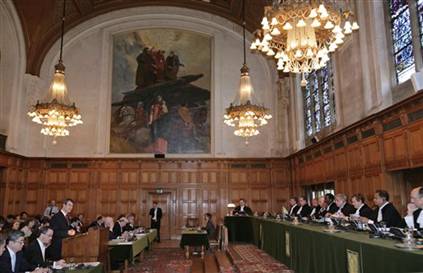
THE HAGUE, Netherlands – The U.N.’s highest court on Wednesday ordered the United States to stay the executions of five Mexicans on Texas death row pending review of their cases.
Mexico had appealed to the World Court to block the executions. At hastily convened hearings last month, Mexico argued that the United States is defying a 2004 International Court of Justice order to review the cases of 51 Mexicans sentenced to death by state courts.
That order was based on the Hague-based court’s finding that the condemned prisoners had been denied the right to help from their consulate following their arrest.
Wednesday’s ruling comes less than three weeks before the first of the death row inmates, Jose Medellin, was scheduled for execution by lethal injection in Texas for taking part in the gang rape and murder of two teenage girls 15 years ago.
At last month’s hearings, Mexico’s chief advocate Juan Manuel Gomez-Robledo told the court the cases had not been systematically reviewed, and the U.S. was “in breach of its international obligations.”
“Extraordinary Lengths”
John Bellinger III, the U.S. legal adviser, said then that the federal government had gone to “extraordinary lengths” to carry out the World Court’s directive and to intercede with the state courts.
Earlier, President Bush issued a directive to the state courts to abide by the decision and also asked Texas specifically to review Medellin’s case ahead of his planned Aug. 5 execution.
Those steps were “highly unusual,” Bellinger said. “It almost never happens that the federal government enters an appearance in state court proceedings.”
However, Texas refused, and in March the U.S. Supreme Court ruled by a 6-3 vote that Bush lacked the authority to compel state courts to comply with the judgment from The Hague.
Secretary of State Condoleezza Rice and Attorney General Michael Mukasey have jointly written to Texas Gov. Rick Perry, urging him to review Medellin’s case, Bellinger said.
Informally known as the World Court, the tribunal is the U.N.’s judicial arm for resolving disputes among nations. Its decisions are binding and final, but it has no enforcement powers.
Source. / AP / truthout
The Rag Blog
Thorne Webb Dreyer, Editor




