Gore Vidal on Obama and Clinton

I knew JFK, says Gore Vidal, and believe me Obama’s the better leader

Gore Vidal, the writer and long-time Clinton supporter, tells why Hillary is insane to keep on fighting

By Melvyn Bragg / May 18, 2008

At 82, Gore Vidal has reached an enviable position: he is an influential man of letters, a political activist, a scion of the New World aristocracy and a friend of the powerful and famous, including the Clintons.

So what does he think of Hillary Clinton’s stated intention to fight on to the bitter end for the Democratic presidential nomination? The reply is instant and searing: “I think her strategy is more or less insane.”

He continues: “I’d always rather liked her. She’s a perfectly able lawyer . . . But this long campaign, this daily search for the grail, has driven her crazy.”

In his view Barack Obama has won; and if the nomination is taken away from him, “I fear what our black population might do. There has never been a revolution of blacks – yet”.

During the Clinton administration, Vidal admired Bill’s understanding of the poor and of black people. His devotion to the Clintons has now been laid aside, however. By clinging on to her campaign, waiting for the small chance that Obama will make a terminal mistake, Hillary has crossed a line, he believes.

As for Obama, Vidal has taken time to warm to him. “I liked the idea of him, but he never managed to get my interest. I was brought around by his overall intelligence – specifically when he did his speech on race and religion.”

In Vidal’s opinion, “he’s our best demagogue since Huey Long or Martin Luther King”.

I ask if he thinks Obama has a similar charisma to that of John F Kennedy, whom Vidal got to know because he was related to his wife, Jackie.

“I never believed in Jack’s charisma,” Vidal says shortly. JFK, he believes, was “one of our worst presidents”; Bobby, his brother, was “a phoney, a little Torquemada”; and their father, Joseph, was “a crook – should have been in jail”.

So much for Camelot. “But Jack had great charm,” he adds. “So has Obama. He’s better educated than Jack. And he’s been a working senator. Jack never went to the office – he wanted the presidency and his father bought it for him.”
There’s no guarantee, of course, that the Democrats will triumph later this year, even if Obama does win the nomination. Does he think Obama can beat John McCain?

His views on the man the Democratic candidate will have to beat are even more brutal than his views on Hillary: “ You could beat McCain! I’ve never met anyone in America who has the slightest respect for him. He went to a private school and came bottom of his class. He smashed up his aeroplane and became a prisoner of war, which he is trying to parlay into ‘war hero’.”

In his view, McCain is “a goddamned fool. He was on television talking about mortgages, and it was quite clear he does not know what a mortgage is. His head rattles as he walks”.

However, in Vidal’s eyes, McCain is just a symptom of the real malaise affecting America today: the cynical subversion of the US constitution. “The Bush people”, he says, “have virtually got rid of Magna Carta and habeas corpus. In a normal republic I would probably have raised an army and overthrown them. It will take a hundred years to put it all back.”

By now he has worked himself up to a crisp fury: “Those neocons, lawyers, the big corporations – worse than that, extremists – want to get rid of the great power of oversight of the executive. See what they’ll try to do to Obama. They’re crooks. They’re just gangsters. They are the enemy of the United States. There’s no such thing as a war on terrorism. It’s idiotic. There are slogans. It’s advertising, which is the only art form we’ve invented and developed. It’s lies.”

Vidal has never been less than fully engaged with the politics of his country – but he seems angrier than I have ever seen him before. This may be because he has returned to live in the States only recently, after spending more than 30 years in Italy. He seems revived and refreshed by his furious reengagement with American politics.

For him, the biggest lie has always been to keep quiet; and the best life-enhancer is to provoke, unsettle, rile – in short, to make people face the truth. He remains a rarity.

Source. / Sunday Times, U.K.

Thanks to Steve Russell / The Rag Blog

Posted in RagBlog | Tagged , , | Leave a comment

The Right Question Is, "Should He Be President?"


What Are We Waiting For? Politicians Promise Change, but Not Necessarily Political Reforms
By Joel Hirschhorn / May 19, 2008

Long before the disastrous George W. Bush administration, I had been waiting for profound, systemic changes in our political system. Perversely, I saw the upside of Bush as motivating more Americans to demand political change. And that happened. But the national yearning for change was co-opted by Ron Paul on the right and Barack Obama on the left while John Edwards with the most authentic populist change message fizzled out early.

It is not enough to want, demand and support change, not when change is more of a campaign slogan than a carefully detailed set of reforms. Critically needed is a firm understanding of what specific changes can restore American democracy and remove the privileged rich plutocrats and corporatists running and ruining our nation.

A huge fraction of Americans have bought into the Obama candidacy because of his polished and effective rhetoric. But Obama does not offer the changes I have been waiting for, or the ones the public needs. A great speaker does not necessarily have the courage or intent to fight for deep political reforms.

Our nation’s Founders did not create the United States of America just with smiles and slick rhetoric; they were bold, risk-taking revolutionaries fighting tyranny. Obama has not defined our domestic tyranny and told us how he will try to abolish it. Obama is no dissident or revolutionary. The change he mostly seeks is moving from senator to president. Not what I have been waiting for.

There is no evidence in Obama’s brief political career that he is a champion for deep political reforms to transfer power from the plutocrats to the people. To the contrary, the more you learn about Obama’s history the more he appears as just another super-ambitious politician making friends, using people and cutting deals to get ahead.

Read the rest of ithere. / Associated Content

The Rag Blog

Posted in RagBlog | Tagged | Leave a comment

Microsoft = Corruption

So says one principled Hungarian fellow. Microsoft chief executive Steve Ballmer reacted by ducking behind a desk when a Hungarian man unleashed a verbal and egg-filled tirade today during a lecture at a Budapest university.

Posted in RagBlog | Tagged , | Leave a comment

The Housing Bubble: Eventually Reality Intrudes

Can’t wait to see ALL of Chillhowee Mountain covered with Commercial Development.

It’s already a buyer’s market in some places…. BIG TIME!

Almost makes one wanna’ be a land baron. Almost.

But then, land barons of the slum-lord variety are only one evolutionary incremental wiggle removed from vultures, and as injured as my self-esteem has been for much of my life, I’m desperately trying to repair what’s left. In honor of that, I’m not sure that falling into the role of a bloody-toothed, evil-smiling, grinning-and-sneering vulture would lend itself to such already difficult efforts toward finding some sense of personal peace in the grand ol’ universe.

Otherwise, it sounds like a heck of a deal; making bank on the desperation, losses, sacrifices, sweat, toil, and destitution of others. How much more Amerikan could one get??

What’d GW call this, again??… Oh yeah.. He called it a ‘slow down.’ As in, “Slow down before you plummet over that cliff, ’cause it’s a LONG drop from there….”

Dirk Nelson / The Rag Blog

P.S.- I’d wager heavily that this same set of circumstances can be found in a number of U.S. communities this evening. And even more tomorrow. ‘Slow down,’ my keister!! This is likely to make the Crash of 1929 look pretty derned friendly when it’s all said and done… That’s my wager, as well.

The $10,000 Atlanta Houses
by Gary North

You read that right. You can buy a house in Atlanta for $10,000.

That’s if you’re a high roller. How about one for $5,900?

Whenever you see something like this, you should think to yourself: “This sounds crazy; so, the government has to be involved.” This may be incorrect, but you will save a lot of time barking up wrong trees by starting with this assumption.

In this case, it’s a conclusion, not just an assumption. I will get to this later on. But first. . . .

A PARALYZED SYSTEM

There are a dozen houses listed by local real estate agents that you can buy for $10,000 per home. You can buy ten times as many if you are willing to pay $20,000.

How can this be? It is true that we are somewhere in the unwinding of a housing market that has suffered from mania. But this is more than unwinding.

There are foreclosures. But how can prices fall this far? Aren’t there any bidders at $10,000? The answer is simple: no. Are these houses abandoned? Probably. Well, abandoned by their original owners. They may not be abandoned by local entrepreneurs in the pharmaceutical trade.

When I first read about this, I noticed that the article did not use the code words that immediately pop into the typical reader’s mind – words associated with the now-illegal bank practice of “redlining.” There are some neighborhoods that are high risk. Yet, even here, people rent. They don’t rent for $50 a month. So, why don’t renters see an opportunity? They could go to the seller – a bank – and offer to buy the place for no money down and then fix it up. If they have any repair skills, they could make a good case. That is surely a better deal for the renter and the banker than having the house sit empty.

Please don’t tell me they aren’t smart enough. Those previously mentioned entrepreneurs are very sophisticated in matters financial. Some gangs demonstrate remarkable abilities to handle positive cash flow. People on the street know what things cost and who is profiting.

Yet the houses are not selling. If I worked for a foreclosing bank or lending agency, I would go to local pastors and suggest an arrangement. I would try to sell them houses as investments. They have money. Failing this, I would encourage them to locate church members who would like a place to own. In short, I would make a deal. I would get the houses off the books. These houses are not doing the foreclosing agencies any good standing empty.

If nothing else, I would go to Habitat for Humanity or the Fuller Center for Housing, both headquartered in Georgia. I would find out if they could do something with the properties, such as buy them, scrap them, and build new houses.

The fact that this has not been done indicates that there is a terrible paralysis in the foreclosure process. This paralysis points to government regulation. It also points to corporate centralization. Nobody at the local level is being offered incentives to get these properties off the books.

This problem is not confined to Atlanta. I speak from recent experience.

I plan to buy a house next year in an Atlanta suburb. If prices fall enough, I will buy more than one. So, I sent my wife to the area in early May to see how the foreclosure market is doing. She found out.

She went to the courthouse steps to view the auction for foreclosed properties. The sellers had all posted minimum bids. One by one, the houses were offered for sale. There was not one bid. This meant that the asking price was the high bid. Every house went back to the foreclosing lender.

These houses were not priced to sell. They were priced to subsidize the local pharmaceutical trade. “You want free rent? You’ve got it!”

One house that caught my attention was foreclosed last December. The bank is unwilling to drop the price below $250,000. So, it keeps buying it back.

I subscribe to RealtyTrac. It costs $50 a month, but it saves me time, which is valuable. It lists some 250 bank-owned properties in the town I am looking at. Some of these properties have been on the banks’ books for over a year. There is an occasional SOLD entry: maybe one out of every 30 houses listed.

As the housing slowdown continues, and as prices slowly fall because a few sellers become desperate, the number of foreclosed houses in inventory will serve as a constant source of houses in competition with sellers of owner-occupied houses. At some point, the banks holding these foreclosed homes off the market will decide to price them to sell.

When that happens, property tax assessors will enter the twilight zone.

In Atlanta, they already have.

Read the rest of it here. / LewRockwell.com

The Rag Blog

Posted in RagBlog | Tagged , , | Leave a comment

Massive Obama Rally in Portland

Fire officials estimated 65,000 packed into a riverside park Saturday, Sept. 18, for a spectacular afternoon rally at a sun-splashed scene on the banks of the Willamette River in Portland. They said an additional 15,000 were left outside and dozens of boaters could be seen floating in the river.

“Wow, wow, wow,” Obama said as he surveyed the audience. “We have had a lot of rallies. This is the most spectacular setting, the most spectacular crowd we have had this entire campaign.” (AP)

Thanks to Carl Davidson / The Rag Blog

Posted in RagBlog | Tagged , | Leave a comment

Moyers on Democracy


Democracy in America Is a Series of Narrow Escapes, and We May Be Running Out of Luck
by Bill Moyers / May 17, 2008

[The following is an excerpt from Bill Moyers’ new book, “Moyers on Democracy“.]

Democracy in America is a series of narrow escapes, and we may be running out of luck. The reigning presumption about the American experience, as the historian Lawrence Goodwyn has written, is grounded in the idea of progress, the conviction that the present is “better” than the past and the future will bring even more improvement. For all of its shortcomings, we keep telling ourselves, “The system works.”

Now all bets are off. We have fallen under the spell of money, faction, and fear, and the great American experience in creating a different future together has been subjugated to individual cunning in the pursuit of wealth and power -and to the claims of empire, with its ravenous demands and stuporous distractions. A sense of political impotence pervades the country — a mass resignation defined by Goodwyn as “believing the dogma of ‘democracy’ on a superficial public level but not believing it privately.” We hold elections, knowing they are unlikely to bring the corporate state under popular control. There is considerable vigor at local levels, but it has not been translated into new vistas of social possibility or the political will to address our most intractable challenges. Hope no longer seems the operative dynamic of America, and without hope we lose the talent and drive to cooperate in the shaping of our destiny.

The earth we share as our common gift, to be passed on in good condition to our children’s children, is being despoiled. Private wealth is growing as public needs increase apace. Our Constitution is perilously close to being consigned to the valley of the shadow of death, betrayed by a powerful cabal of secrecy-obsessed authoritarians. Terms like “liberty” and “individual freedom” invoked by generations of Americans who battled to widen the 1787 promise to “promote the general welfare” have been perverted to create a government primarily dedicated to the welfare of the state and the political class that runs it. Yes, Virginia, there is a class war and ordinary people are losing it. It isn’t necessary to be a Jeremiah crying aloud to a sinful Jerusalem that the Lord is about to afflict them for their sins of idolatry, or Cassandra, making a nuisance of herself as she wanders around King Priam’s palace grounds wailing “The Greeks are coming.” Or Socrates, the gadfly, stinging the rump of power with jabs of truth. Or even Paul Revere, if horses were still in fashion. You need only be a reporter with your eyes open to see what’s happening to our democracy. I have been lucky enough to spend my adult life as a journalist, acquiring a priceless education in the ways of the world, actually getting paid to practice one of my craft’s essential imperatives: connect the dots.

The conclusion that we are in trouble is unavoidable. I report the assault on nature evidenced in coal mining that tears the tops off mountains and dumps them into rivers, sacrificing the health and lives of those in the river valleys to short-term profit, and I see a link between that process and the stock-market frenzy which scorns long-term investments — genuine savings — in favor of quick turnovers and speculative bubbles whose inevitable bursting leaves insiders with stuffed pockets and millions of small stockholders, pensioners, and employees out of work, out of luck, and out of hope.

And then I see a connection between those disasters and the repeal of sixty-year-old banking and securities regulations designed during the Great Depression to prevent exactly that kind of human and economic damage. Who pushed for the removal of that firewall? An administration and Congress who are the political marionettes of the speculators, and who are well rewarded for their efforts with indispensable campaign contributions. Even honorable opponents of the practice get trapped in the web of an electoral system that effectively limits competition to those who can afford to spend millions in their run for office. Like it or not, candidates know that the largesse on which their political futures depend will last only as long as their votes are satisfactory to the sleek “bundlers” who turn the spigots of cash on and off.

The property qualifications for federal office that the framers of the Constitution expressly chose to exclude for demonstrating an unseemly “veneration for wealth” are now de facto in force and higher than the Founding Fathers could have imagined. “Money rules Our laws are the output of a system which clothes rascals in robes and honesty in rags. The parties lie to us and the political speakers mislead us.” Those words were spoken by Populist orator Mary Elizabeth Lease during the prairie revolt that swept the Great Plains slightly more than 120 years after the Constitution was signed. They are true today, and that too, spells trouble.

Then I draw a line to the statistics that show real wages lagging behind prices, the compensation of corporate barons soaring to heights unequaled anywhere among industrialized democracies, the relentless cheeseparing of federal funds devoted to public schools, to retraining for workers whose jobs have been exported, and to programs of food assistance and health care for poor children, all of which snatch away the ladder by which Americans with scant means but willing hands and hearts could work and save their way upward to middle-class independence. And I connect those numbers to our triumphant reactionaries’ campaigns against labor unions and higher minimum wages, and to their success in reframing the tax codes so as to strip them of their progressive character, laying the burdens of Atlas on a shrinking middle class awash in credit card debt as wage earners struggle to keep up with rising costs for health care, for college tuitions, for affordable housing — while huge inheritances go untouched, tax shelters abroad are legalized, rates on capital gains are slashed, and the rich get richer and with each increase in their wealth are able to buy themselves more influence over those who make and those who carry out the laws.

Edward R. Murrow told his generation of journalists: “No one can eliminate prejudices — just recognize them.” Here is my bias: extremes of wealth and poverty cannot be reconciled with a genuinely democratic politics. When the state becomes the guardian of power and privilege to the neglect of justice for the people as a whole, it mocks the very concept of government as proclaimed in the preamble to our Constitution; mocks Lincoln’s sacred belief in “government of the people, by the people, and for the people”; mocks the democratic notion of government as “a voluntary union for the common good” embodied in the great wave of reform that produced the Progressive Era and the two Roosevelts. In contrast, the philosophy popularized in the last quarter century that “freedom” simply means freedom to choose among competing brands of consumer goods, that taxes are an unfair theft from the pockets of the successful to reward the incompetent, and that the market will meet all human needs while government itself becomes the enabler of privilege — the philosophy of an earlier social Darwinism and laissez-faire capitalism dressed in new togs — is as subversive as Benedict Arnold’s betrayal of the Revolution he had once served. Again, Mary Lease: “The great evils which are cursing American society and undermining the foundations of the republic flow not from the legitimate operation of the great human government which our fathers gave us, but they come from tramping its plain provisions underfoot.”

Our democracy has prospered most when it was firmly anchored in the idea that “We the People” — not just a favored few — would identify and remedy common distempers and dilemmas and win the gamble our forebears undertook when they espoused the radical idea that people could govern themselves wisely. Whatever and whoever tries to supplant that with notions of a wholly privatized society of competitive consumers undermines a country that, as Gordon S. Wood puts it in his landmark book The Radicalism of the American Revolution, discovered its greatness “by creating a prosperous free society belonging to obscure people with their workaday concerns and their pecuniary pursuits of happiness” — a democracy that changed the lives of “hitherto neglected and despised masses of common laboring people.”

I wish I could say that journalists in general are showing the same interest in uncovering the dangerous linkages thwarting this democracy. It is not for lack of honest and courageous individuals who would risk their careers to speak truth to power — a modest risk compared to those of some journalists in authoritarian countries who have been jailed or murdered for the identical “crime.” But our journalists are not in control of the instruments they play. As conglomerates swallow up newspapers, magazines, publishing houses, and networks, and profit rather than product becomes the focus of corporate effort, news organizations — particularly in television — are folded into entertainment divisions. The “news hole” in the print media shrinks to make room for advertisements, and stories needed by informed citizens working together are pulled in favor of the latest celebrity scandals because the media moguls have decided that uncovering the inner workings of public and private power is boring and will drive viewers and readers away to greener pastures of pabulum. Good reporters and editors confront walls of resistance in trying to place serious and informative reports over which they have long labored. Media owners who should be sounding the trumpets of alarm on the battlements of democracy instead blow popular ditties through tin horns, undercutting the basis for their existence and their First Amendment rights.

[Texan Bill Moyers is the author of many books including “Moyers on Democracy” (Doubleday, 2008) and the host of the PBS show, Bill Moyers Journal.]

Source. / CommonDreams

The Rag Blog

Posted in RagBlog | 1 Comment

Awash in Way Too Many Radishes


Picture courtesy Mariann Wizard. She writes, “Great colors, no? Kate & I visited the American Botanical Society gardens the other day and they were awash in way too many radishes.”

Posted in Rag Bloggers | Tagged | Leave a comment

When Will We Become So Ashamed We Stop?

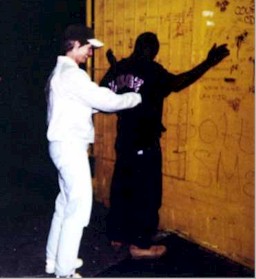
Smiling ex-New Jersey Gov. Christie Todd Whitman goes through the motions of searching suspect Sherron Rolax while accompanying Camden police officers on patrol. (AP Photo)
[For more about the episode pictured above, click here.]

Police make life hell for youth of color
By Kathy Durkin / May 17, 2008

Going to the grocery store, visiting a friend and walking home from work or school are all ordinary, everyday occurrences. But not so for hundreds of thousands of people, mostly from African-American and Latin@ communities, who are stopped, questioned, asked for their I.D., searched and often arrested here in New York—and around the country. It happens to many youth and even to children.

At a time when more white people appear to be rejecting racism at the polls, racial profiling by police departments and other state agencies is on the rise. It is systemic and deeply entrenched in the “criminal justice system” nationwide.

Statistics given in new studies and reports starkly bear this out. But the statistics cannot convey the intimidation, anxiety and anger that so many people, especially Black and Latin@ youth, must live with on a daily basis, nor the effect this can have throughout their lives on them and their families.

In the first quarter of this year, New York City police, by their own report, stopped, questioned and/or searched 145,098 people, more than half of them African Americans. At this alarming rate, a record 600,000 people will be stopped this year.

In the last two years, nearly 1 million New Yorkers were harassed by police in this manner—90 percent of them people of color. That’s 1,300 a day. And it’s legally allowed.

These operations, just in the past two years, have put more than 1 million innocent people, mostly African-American and Latino, into the huge police database; they are subject to future criminal investigations merely by their inclusion there.

Read the rest here. / Axis of Logic

The Rag Blog

Posted in RagBlog | Tagged , , | Leave a comment

Freaky Fish, Episode 3

This is Mike’s sturgeon

Huge “sturgeon ball” in Columbia a mystery
By Michael Milstein / May 18, 2008

PORTLAND — When sonar surveys spotted a vast pile of rubble in the Columbia River below Bonneville Dam a few months ago, officials suddenly worried that part of the dam structure was eroding into the river.

“Everybody said, ‘Oh my gosh, we need to get divers out there right away,’ ” recalled Dennis Schwartz, a fisheries biologist with the Army Corps of Engineers, which oversees the dam.

What they found below the spillways in February was not a giant pile of rock at all, but a humongous pile of thousands upon thousands of sturgeon — some of them 14 feet long or longer — lounging together in frigid water at the bottom of the river.

“We call it the big sturgeon ball,” Schwartz said.

The mountain of white sturgeon contained around 60,000 fish, according to a rough estimate by Michael Parsley, a research fisheries biologist with the U.S. Geological Survey’s Columbia River Research Laboratory in Cook, Skamania County. He described that estimate as “probably conservative.”

Sturgeon ball

It was an aquatic phenomenon nobody had ever seen at such a monstrous scale, offering a startling glimpse into the life of the Columbia’s largest and most ancient fish.

Read the rest here. / Seattle Times

The Rag Blog

Posted in RagBlog | Tagged , | Leave a comment

Singin’ on Sunday – Connie Evingson

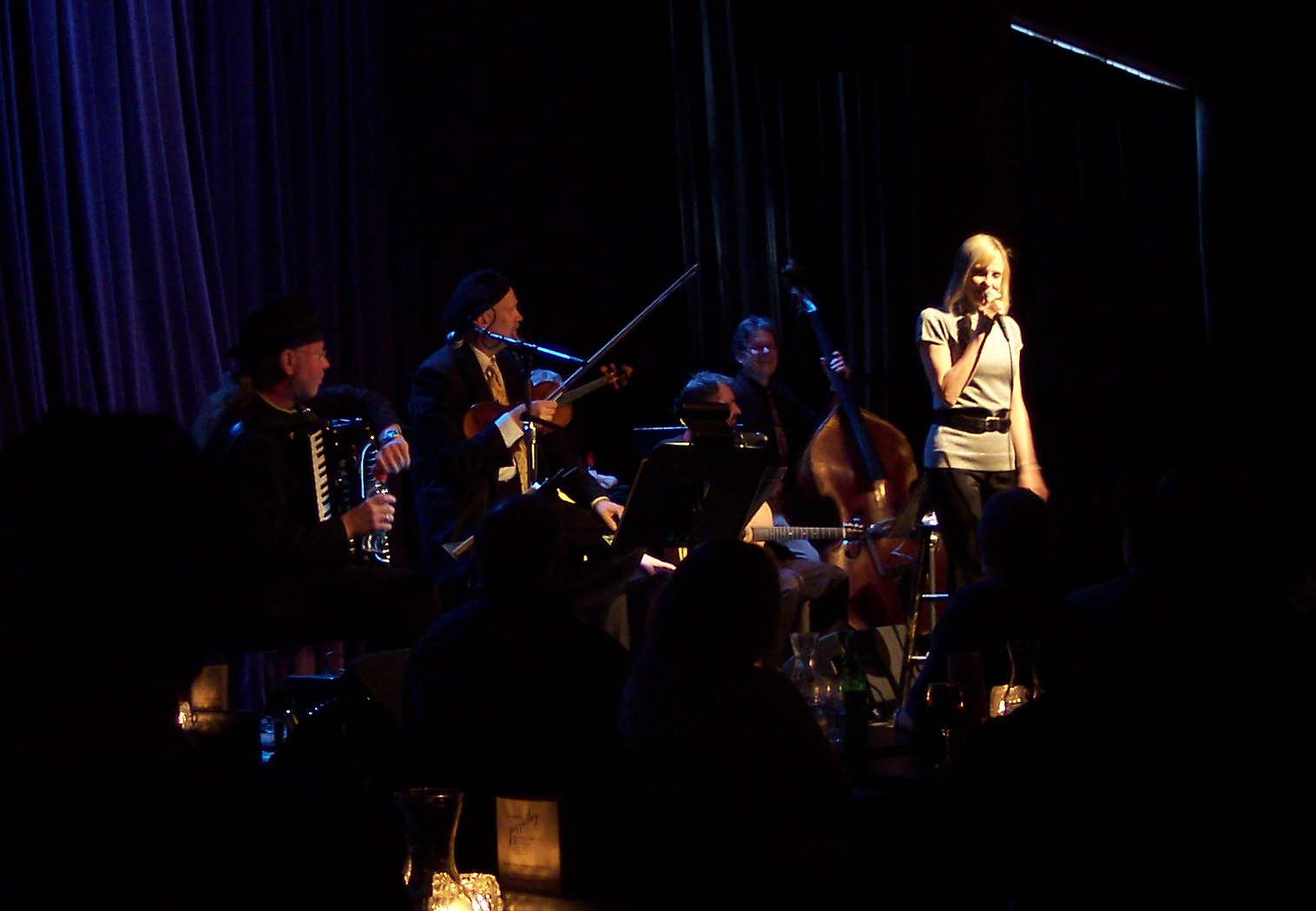
Connie Evingson and Pearl Django at Jazz Alley in Seattle, 30 April 2008.
Photo by Richard Jehn

I was in Seattle a couple of weeks ago at the tail end of a wonderful trip to Austin to meet up with all the other Rag folks, and to attend to some other foolishness (e.g., my 40th high school reunion). I had planned before I left to stop for a night in the Emerald City to see Pearl Django play at Jazz Alley. Also on the bill was a woman I’d never heard of before, Connie Evingson. Well, let me tell ya, this talent is a real heart-stopper. If you ever see her advertised, don’t even think about it, just buy a ticket.

This is a tune from her album Gypsy in My Soul, titled “Nuages.” It is the Clearwater Hot Club backing her on this recording. When she sang this for us on 30 April, I cried. If you’d like to find out more about her, or hear other samples of her singing, here is her Web site.

Richard Jehn / The Rag Blog

Posted in Rag Bloggers | Tagged , | Leave a comment

Blogging for Freedom : Black Activism on the Internet


The Civil Rights Battle Moves From The Streets To The Internet
By Heather Faison

PHILADELPHIA — One of the most important e-mails to land in Kourtney Addison’s inbox was seconds away from being cyber trash.

As her eyes scrolled down the computer screen, the forwarded message read like a scene from a Jim Crow-era documentary. A tree that only Whites could sit under, nooses hung in a schoolyard, a Black teen facing a 22-year sentence for beating a White classmate.

Immediately, she thought it was a joke. “It just seemed so unreal,” she recalled of the story later known as the Jena Six.

“It was just blatant racism.”

Wearing a white T-shirt with the words “Free The Jena 6” painted in red block letters, the Temple University sophomore joined more than 700 students in a demonstration in front of City Hall last September. It was Addison’s first protest. As she pumped her fist in the air letting her oversized cowry shell bracelet drop to her elbow, the 19-year-old was brought to tears by the passion displayed by her peers and the realization that “Dr. King’s dream had not been fully realized yet.”

The events of last year – the Jena Six protest, the firing of racist disc jockey Don Imus and the campaign for Genarlow Wilson, a Georgia teen sentenced to prison for consensual sex with a White classmate – resulted in a rebirth of political activism among African-Americans, unseen in recent years.

Many have wondered who is behind this surge. The leader of this movement is not on CNN or holding press conferences on the evening news. This revolution will not be televised – but you may find it in your e-mail.

Today’s generation is turning technology into activism and using the Internet as a tool to carry its messages. With social media sites and e-mail blasts, a story about an injustice can be sent to millions in one mouse-click, garnering support en masse.

“The early Civil Rights Movement had the mimeograph and the Black press. Today, we have e-mail, blogs, text messaging, online petitions, instant messaging, social networking sites like Facebook and MySpace,” said Chris Rabb, Philadelphia-based Netroots activist.

Netroots (taken from Internet and grassroots) was coined after Internet users ignited the campaign of 2004 presidential candidate Howard Dean through mass e-mails and blogs, bringing him national support and millions in fundraising dollars. Netroots uses the Internet as a platform to voice opinions and draw online users to a particular cause.

Though Netroots activism for African Americans is nascent, says Rabb, “it is by no means a fad.”

Through grassroots petition signing and e-mail campaigns, these online activists raised the profiles of stories such as the Sean Bell shooting, long before the media or Black leaders noticed. Cutting no slack for offenders regardless of race, these individuals successfully challenged BET networks’ negative portrayal of African-Americans and have exposed the faults of Black leaders in their candid blog commentaries.

“Black activists Jesse Jackson and Al Sharpton are pimping the ‘man’ in the name of civil rights,” read a tongue-in-cheek entry from blogger, The Field Negro.

The mobilization strength of African-American bloggers has been the force behind this movement. These individuals share their views and social commentaries on blog sites that allow readers to comment, e-mail or link stories to other sites. While most blogs are created for leisure and better reflect an online diary, a group of bloggers known as the Afrosphere is dedicating its efforts to the progress of African-Americans. This pool of activists successfully motivates its readers to political participation, says Antoinette Pole, a political science professor at Southern Connecticut State University.

In her study “Black Bloggers and the Blogosphere,” which was the first academic examination of this group, Pole found that Black bloggers had a greater desire and ability to encourage readers towards social awareness issues moreso than their White counterparts. Most Black bloggers used their sites to engage political activism by suggesting readers: vote or register to vote in elections, sign petitions supporting a cause, attend a rally or protest and donate to charitable causes.

Since Pole’s November 2005 study, which is included in her upcoming book exploring political participation among bloggers, Black bloggers have grown from a sparse group and have situated themselves at the forefront of civil rights activism.

The number of Black-operated blogs is growing daily with 900 tracked in March by Electric Villager’s Black Blog Rankings (BBR). A giant leap from the 75 blogs accounted for in September 2007.

The sites in the Top Ten Black Blog rankings attract an average of 500 visitors daily.

This network has used its heft to rally around social causes and draw the nation’s attention to overlooked injustices, such as in the town of the once little-known Jena.

Though many have vied for credit, the organization of the mammoth descent in Jena was the property of Black bloggers, wrote Raquel Christie of the American Journalism Review in the first assessment of the media’s response to the story. For months after the fight involving the Jena High School students now known as the Jena Six, the media and traditional civil rights organizations were silent.

While the mainstream media trailed in their coverage – even after Chicago Tribune reporter Howard Witt broke the story nationally – and Black leaders stood oblivious to the Deep South injustice, a network of bloggers and Internet-based civil rights organizations reportedly galvanized more than 220,000 people who signed online petitions and contributed more than $130,000 to the legal defense fund in support of the teenagers months before the protest.

James Rucker, co-founder of colorofchange.org, says his group helped set up the fund and organized a “blog-in” where thousands of interlinked bloggers wrote solely about the story for one day to focus their readers’ attentions to the case.

Playing catch-up along with the media, the Rev. Al Sharpton said it was through the Internet that he found out about the Jena Six story.

The influence of Black bloggers was first realized when their online petitions brought national attention to the case of 14-year-old Shaquanda Cotton who was sentenced to seven years in prison for shoving a school hall monitor in Paris, Texas. Citing racial discrimination, bloggers called a “Day of Action” where they united under the cause and simultaneously posted stories solely about Cotton’s case. The bloggers and their readers began flooding the Texas governor and Texas prison authority with letters and holding protests in front of the courthouse. Their collective effort resulted in Cotton’s release and an examination of the Texas juvenile justice system.

“That one issue kind of coalesced everyone around one central issue; that’s when we began to link to one another,” says Shawn Williams, creator of the blog Dallas South, which is based in Dallas, Texas. “Before that we were all sort of blogging in our own worlds.”

Cotton’s story was the catalyst for what would become the Afrospear, says Williams, which is a blog site for discussion among all bloggers in African Diaspora, to share ideas and plan solutions.

The diverse landscape of the Afrosphere mirrors a movement that transcends labels of class, gender and partisanship. These bloggers discuss a range of insights from conservative politics (Jack and Jill Politics) to Black misogyny (What About Our Daughters) to gay rights (The Republic of T) and are airing out topics once reserved for barber shops and sister circles.

Little technical skill is required to start a blog or engage in the conversations. Compared to the preparation and training needed during the Civil Rights Movement, activists today can fight injustice without extensive knowledge and with little time commitment, allowing everyone to make a contribution, says Rucker.

This culture of inclusion bodes well for closing the digital divide in which African Americans are statistically behind in Internet use and access.

“An increasing percentage of civic-minded Black people are becoming more and more web savvy,” observed Rabb. “At the same time there is a proliferation of web-based resources and other technologies that make it free, easy and powerful for private citizens to amplify their voices and impact in ways unimaginable even during the dot-com craze a decade ago.”

After the Jena Six protest there was an eagerness to coin this political drive the “new civil rights movement.” Though flattered by the comparison, many bloggers avoid that moniker saying that it “puts them in a box” too concentrated on the ways of the past. One precedent they defy in the Afrosphere is the old-age idea that a movement requires a chosen leader.

“There’s no one persona or personality that’s kind of at the center of things,” says Rucker. “I think hopefully we’re able to move beyond centralized personality-based leadership that has plagued us in the past.”

Many bloggers write under an alias to maintain anonymity, which Rabb likens to the Underground Railroad agents who could conduct their missions without ever meeting face-to-face.

This “faceless” leadership is especially appealing to youth who are discovering their voices through Netroots activism. While civil rights veterans are toiling over how this generation would fall in line with the rules set by their forbearers, they have overlooked a charge already in progress.

“The movement may not be as visible as it was in the ’60s, but that’s because the issues we face are not as visible. Racism and things of that nature are institutionalized now,” says Addison.

The events that unfolded last year struck a cord with those in a younger generation, specifically Generation Y, igniting a display of activism and pride. The stories of Mychal Bell (the face of the Jena Six), Genarlow Wilson and the young women of the Rutgers University basketball team, who were object of Imus’ verbal attack, resonated with younger generations. In those cases the victims were the same age as their best friends and classmates, which made them realize that the fight was no longer just their parents’.

For a generation that was introduced to a computer before a pen and a pad, this movement has come to Generation Y’s favorite hangout spot – the Internet. The popular social network Web site Facebook has been instrumental in helping young activists share their opinions with peers and brand their own causes.

When a group of Temple students wanted a Black student union to bridge the gap with the community and create a support system for Black students, they created a Facebook group to rallying the university and the community behind their cause. Addison, an officer in the student organization, says the site has been a viral avenue of communication, with 707 people having joined.

“Because our aim is so wide its imperative that we reach out to a lot of people at one time, so we use the World Wide Web,” says the New Jersey native.

“If each coordinator invites all of their friends on Facebook to an event we’re holding, we can get the word out to literally thousands of people within a matter of minutes.” The Black student union raised $800 for the Jena Six legal fund and organized the Temple protest that went from the campus Bell Tower to the steps of City Hall.

In these tech-rich times, one place these young activists don’t seem to be running to is traditional civil rights organizations. Williams, a one-time NAACP college chapter leader, has seen first hand the exodus of youth from such organizations.

In recent years the NAACP has struggled to increase membership and remain relevant to today’s youth who are more likely to meet with friends over instant messenger than at the library – a common gathering place for NAACP meetings. The organization’s presumed shortcomings have more to do with a digital disconnect than with its “cool factor,” according to Williams.

“A lot of the NAACP chapters are a little bit behind the times,” he says, noting one local chapter that has a blog linked to the Afrosphere. “When it comes to activism and advocacy today, it moves at lightning speed.”

This disconnection can prevent local chapters from furthering their agendas outside of their regional borders, adds Pole.

Efforts by the Louisiana NAACP and local chapters fell short when a rally they organized last March in support of the Jena Six teens drew only a few dozen people. Though well-intended, their outcome paled in comparison to the whirlwind of support that followed as a result of Internet campaigns.

Resources and skill sets from both online efforts and tradition organizations are needed and each could find greater success in a collaborative effort, Mary Frances Berry, a history professor at the University of Pennsylvania, noted in a recent interview with NPR. The former chairperson of the U.S. Commission on Civil Rights suggested that when the NAACP selects its future president, the candidate should be someone who can bridge the gap with online activists.

“They need to get with it, and plug in with these folks. All this energy needs to be mobilized, so that it doesn’t become a one-week show,” says Berry.

And if the old guard refuses collaboration, she stated ominously, “new organizations will simply have to displace them.”

[Heather Faison, a former Black Press fellow at the NNPA News Service, is a copy editor at the Philadelphia Tribune.]

Source. / TransGriot / May 12, 2008

The Rag Blog

Posted in RagBlog | Tagged , , , , | Leave a comment

Quote of the Day : Hobgoblins

The whole aim of practical politics is to keep the populace alarmed (and hence clamorous to be led to safety) by menacing it with an endless series of hobgoblins, all of them imaginary.

H.L. Mencken

Thanks to Doug Zachary / The Rag Blog

Posted in RagBlog | Tagged | Leave a comment