At Holly Beach With You

Holly Beach,LA.

a thousand cheap vacations
with free seagulls and sunburns
all you can step on beach jetsam
and the purifying grit of Gulf waters
a working family’s paradise spree
population you and me

in a couple hundred cobbled cottages
shambled alongside cramped alleys
with ample crawl space for cars
shacks but for location and personality
Aunt Sally’s Sea Side Pelican’s Pouch
Imitation Crab Cake Kitchenette By the
Day or Week No Pets Please Wipe Your Feet

with spawling lopside family-owned general store
Asian mercantile and cajun-fried deli counter
with overripe produce abandoned even by flies
boiled eggs suspended in time’s pungent solution
and even older sausage that could salinate a bathtub
frozen-in-imagination seashell accretion creations
racks of gimme cap signage and road map anthologies
the translucent miracle of Virgin Mary nightlight row

and zinc-nosed oddly shaped thorax people
flopping around in too-loose and too-tight
bulk-sale trunks and undaring two-pieces
dashing gleefully toward the water while
picking their way around fish bones carefully
being examined by an extended dog family
and finally hamming it up gently in the mild surf
rechristening their kids in the refreshing froth
this is fun, you are fun, your name shall be fun

tyke-size plastic pails and shovels
children’s heirlooms
burrow into glinty grains washed smooth
and worn to a dazzle
packed shining into rising mounds
patted expertly into bulging redoubts
that hermit crabs will sidle around
once sunlight subsides and
the spreading edge of horizon
becomes the cooling saline haze of night
removing from sight the distant offshore
platform hulks with their derrick spires
and towering grain elevators at the port
all scattering anew to the limits of thought
vanquished once and again until
partway through the drive home
and especially Monday morning
but now far down the curving shore
just the gas station lights and overhead
the occasional breakthrough star

At Holly Beach With You

Larry Piltz
Indian Cove / Austin, Texas / May 2008

Sunset at Holly Beach.

The Rag Blog

Posted in Rag Bloggers | Tagged , , | 1 Comment

The Needle and the Damage Done


The Days of Wine and Oil-Soaked Roses
by Paul Dean / May 17th, 2008

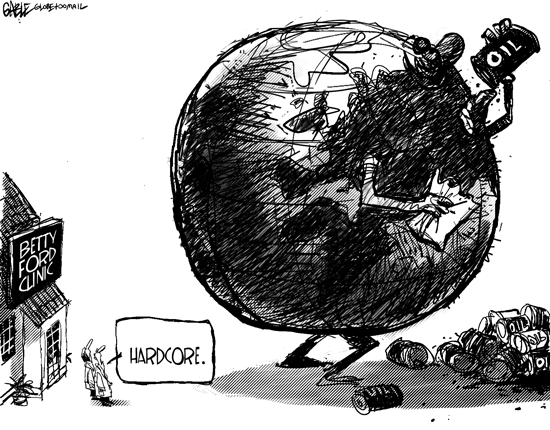
Our valiant Prez once again in a recent interview shared his insight with Americans that we are “addicted to oil.” The solution? Bush says the country needs to commit critical resources to drilling and oil infrastructure, and build more refineries in order to create more supply. Excellent. This kind of talk implies that Bush once again recognizes the critical need to allocate billions more in Federal funds to create even greater subsidies and tax breaks for corporations that are right now reaping record-breaking profits. What did you expect? A real attempt to develop solar, wind and other renewable energy sources?

The president (whose expertise on the subject of addiction is said to have been built upon a solid foundation of direct experience) seems to have proposed a bold strategy here to cure our ills. If we define addiction as a disease, the approach bears scrutiny to see if it can have crossover potential as a cure for other forms of this same disease.

Let’s deal with just the obvious: perhaps America’s Drug Czar should announce that the country has a drug addiction problem, but that we are taking bold steps to increase production of heroin and cocaine, with the goal of providing every addict enough substance to meet demand.

You see where I’m going with this. We’re talking Enron-style, heavyweight Republican outside-the-box stuff, like “gambling therapy” bus tours to Las Vegas casinos for gaming addicts.

Here is a news flash for Mr. Bush: This “addiction” to oil he has only recently discovered was built into our cities and suburbs, into our transportation systems, our agricultural production systems, our manufacturing systems, and our political structure as a matter of deliberate policy over decades. Millions of Americans and citizens of other industrial societies have been acutely aware for more than thirty years that there are and will continue to be huge social, economic and environmental problems associated with our increasing reliance on oil. Many serious questions, which demand real answers, have also arisen from insightful critiques on the negative effects to society of the huge accumulation of capital and political power as a result of the emergence of oil-based multinational corporate economies with near-monopoly power and nearly unlimited wealth. People have for years been questioning what effect oil depletion will have on the availability and affordability of oil as a reliable commodity into the future. These are not trivial questions, especially in light of our increasing societal dependence on the stuff for survival.

Read the rest here. / Dissident Voice

The Rag Blog

Posted in RagBlog | Tagged , | Leave a comment

Manipulating Highly-Educated Doctors


Pharmaceutical Payola — Drug Marketing to Doctors
by Robert Weissman / May 17, 2008

Last week, a Congressional committee properly raked Big Pharma over the coals for misleading advertising of pharmaceuticals.

A hearing of the House Energy and Commerce Committee’s oversight subcommittee focused on advertising campaigns for three drugs, including the remarkable case of Robert Jarvik. Jarvik is featured in endlessly re-run ads for Pfizer’s blockbuster cholesterol drug Lipitor. Known as the inventor of the Jarvik artificial heart, he is not a cardiologist, not a licensed medical doctor and not authorized to prescribe pharmaceuticals. He’s shown in the ads engaged in vigorous rowing activity, but in fact he doesn’t row. Pfizer pulled the ads in February after controversy started brewing.

Among industrialized countries, only the United States and New Zealand permit drug companies to market directly to consumers. It’s a bad idea, it drives bad medicine, and it should be banned.

But although it has the highest profile, direct-to-consumer advertising is a small part of Pharma’s marketing machine. Researchers Marc-André Gagnon and Joel Lexchin conclude in a recent issue of the journal PLOS Medicine that direct-to-consumer ads make up less than a tenth of industry marketing expenditures ($4 billion of $57.5 billion in 2004). And Gagnon and Lexchin’s estimate of $57.5 billion on marketing excludes many industry expenditures that are really driven by marketing, including clinical trials conducted for marketing purposes.

The bulk of the industry marketing effort — more than 70 percent by Gagnon and Lexchin’s calculation — is directed at doctors.

Why?

Because it works.

The companies spend huge amounts paying firms that carefully track what doctors prescribe, and then they use the information to tailor messages to doctors, distribute samples and develop continuing medical education programs.

Gagnon and Lexchin report that Pharma spends more than $20 billion a year on “detailers” — the pharma reps that knock on doctor doors, ply the staff with free coffee and lunches, distribute samples ($16 billion worth), and prod docs to prescribe their drugs.

This is complemented by a host of tactics that in other circumstances might be called bribes.

“Virtually all physicians in America take cash or gifts from the drug companies,” says Melody Petersen, author of Our Daily Meds: How the Pharmaceutical Companies Transformed Themselves into Slick Marketing Machines and Hooked the Nation on Prescription Drugs, and a former New York Times reporter. “A recent survey said 94 percent of physicians took something of value from the drug companies. Some doctors take hundreds of thousands of dollars a year from these companies, and there’s no law that says they can’t.”

Read all of it here. / Common Dreams

The Rag Blog

Posted in RagBlog | Tagged , | Leave a comment

Robert Fisk on Junior’s Words in Israel

Photo by Michael Totten

So Just Where Does the Madness End?
All the monsters buried in the mass graves of the civil war have been dug up

by Robert Fisk / May 17, 2008

I am not sure what was the worse part of this week. Living in Lebanon? Or reading the outrageous words of George Bush? Several times, I have asked myself this question: have words lost their meaning?

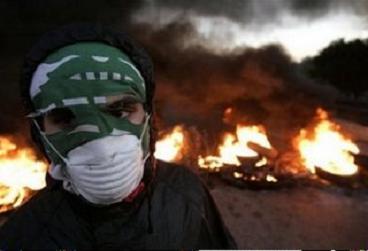
So let’s start with lunch at the Cocteau restaurant in Beirut. Yes, it’s named after Jean Cocteau, and it is one of the chicest places in town. Magnificent flowers on the table, impeccable service, wonderful food. Yes, there was shooting at Sodeco — 20 yards away — the day before; yes, we were already worried about the virtual collapse of the Lebanese government, the humiliation of Sunni Muslims (and the Saudis) in the face of what we must acknowledge as a Hizbollah victory (don’t expect George Bush to understand this) and the danger of more street shooting. But I brought up the tiny matter of the little massacre in northern Lebanon in which 10 or 12 militiamen were captured and then murdered before being handed over to the Lebanese army. Their bodies were — I fear this is correct — mutilated after death.

“They deserved it,” the elegant woman on my left said. I was appalled, overwhelmed, disgusted, deeply saddened. How could she say such a thing? But this is Lebanon and a huge number of people — 62 by my count — have been killed in the past few days and all the monsters buried in the mass graves of the civil war have been dug up.

I chose escalope du veau at the Cocteau — I am sickened by how quickly I decided on it — and tried to explain to my dear Lebanese friends (and they are all dear to me) how much fury I have witnessed in Lebanon.

When Abed drove me up to the north of the country three days ago, bullets were spitting off the walls of Tripoli and one of the customs officials at the Syrian border asked me to stay with him and his friends because they were frightened. I did. They are OK.

But being from the wrong religion is suddenly crucial again. Who your driver is, what is the religion of your landlord, is suddenly a matter of immense importance.

Yesterday morning (and here I will spoil the story by telling the end of it), the schools reopened round my seafront apartment and I saw a woman in a hijab riding a bicycle down the Corniche and I took a call from my travel agent about my next trip to Europe — Beirut airport reopened — and I realised that Lebanon had “returned to normal”.

The roads were open again; the hooded gunmen had disappeared; the government had abandoned its confrontation with Hizbollah — the suspension of the Shia Muslim security chief at the airport (who bought me a bottle of champagne a year ago, I seem to remember — some Hizbollah “agent” he!) and the abandonment of the government’s demand to dismantle Hizbollah’s secret telecommunication system was a final seal of its failure — and I opened my newspaper and what did I read?

That George Bush declared in Jerusalem that “al-Qa’ida, Hizbollah and Hamas will be defeated, as Muslims across the region recognise the emptiness of the terrorists’ vision and the injustice of their cause”.

Where does the madness end? Where do words lose their meaning? Al-Qa’ida is not being defeated. Hizbollah has just won a domestic war in Lebanon, as total as Hamas’s war in Gaza. Afghanistan and Iraq and Lebanon and Gaza are hell disasters — I need no apology to quote Churchill’s description of 1948 Palestine yet again — and this foolish, stupid, vicious man is lying to the world yet again.

He holds a “closed door” meeting with Lord Blair of Kut al-Amara — a man stupendously unfit to run any Middle East “peace”, which is presumably why the meeting had to be “closed door” — but tells the world of the blessings of Israeli democracy. As if the Palestinians benefit from a democracy which is continuing to take from them the land which they have owned for generations.

Do we really have to accept this? Bush tells us that “we consider it a source of shame that the United Nations routinely passes more human rights resolutions against the freest democracy in the Middle East than any other nation in the world”.

The truth is that it is a source of shame that the United States continues to give unfettered permission to Israel to steal Palestinian land — which is why it should be a source of shame (to Washington) that the UN passes human rights resolutions against America’s only real ally in the region.

Read all of it here. / Common Dreams / The Independent

The Rag Blog

Posted in RagBlog | Tagged , , , | Leave a comment

Austin Family Joins War Against Stuff

Like many young couples, Aimee and Jeff Harris spent the first years of their marriage eagerly accumulating stuff: cars, furniture, clothes, appliances, and, after a son, Quinn, 5, and daughter, Nichola, 15 months, came along, toys, toys, toys. Photo by Ben Sklar / NYT.

Chasing Utopia, Family Imagines No Possessions
By Ralph Blumenthal and Rachel Mosteller / May 17, 2008

AUSTIN — Like many other young couples, Aimee and Jeff Harris spent the first years of their marriage eagerly accumulating stuff: cars, furniture, clothes, appliances and, after a son and a daughter came along, toys, toys, toys.

Jeff Harris and his son, Quinn, at home in Austin, Tex. Now they are trying to get rid of it all, down to their fancy wedding bands. Chasing a utopian vision of a self-sustaining life on the land as partisans of a movement some call voluntary simplicity, they are donating virtually all their possessions to charity and hitting the road at the end of May.

“It’s amazing the amount of things a family can acquire,” said Mrs. Harris, 28, attributing their good life to “the ridiculous amount of money” her husband earned as a computer network engineer in this early Wi-Fi mecca.

The Harrises now hope to end up as organic homesteaders in Vermont.

“We’re not attached to any outcome,” said Mrs. Harris, a would-be doctor before dropping out of college, who grew up poverty-stricken in a family that traces its lineage back through the Delanos and President Franklin D. Roosevelt to a Mayflower settler, Isaac Allerton.

Mr. Harris, 30, who dropped out of high school and “rode the Internet wave,” agreed, saying they were “letting the universe take us for a ride.”

They are not alone.

Matt and Sara Janssen, who traded down from their house in Iowa to a studio apartment in Montana and finally an R.V. powered by vegetable oil, now crisscross the country with their 4-year-old daughter, highway nomads living on $1,500 a month.

Not that simplicity need be that spartan. Cindy Wallach and her husband, Doug Vibbert, of Annapolis, Md., moved out of their apartment with an “everything must go” party and, along with their 3-year-old son, now sail and make their home on a 44-by-24-foot catamaran.

“We never wanted four walls and beige carpet,” Ms. Wallach said.

Though it may not be the stuff of the typical American dream, the voluntary simplicity movement, which traces its inception to 1980s Seattle, is drawing a great deal of renewed interest, some experts say.

“If you think about some of the shifts we’re having economically — shifts in oil and energy — it may be the right time,” said Mary E. Grigsby, associate professor of rural sociology at the University of Missouri and the author of “Buying Time and Getting By: The Voluntary Simplicity Movement.”

“The idea in the movement was ‘everything you own owns you,’ ” said Dr. Grigsby, who sees roots of the philosophy in the lives of the Puritans. “You have to care for it, store it. It becomes an appendage, I think. If it enhances your life and helps you do the things you want to do, great. If you are burdened by these things and they become the center of what you have to do to live, is that really positive?”

Juliet B. Schor, a sociology professor at Boston College and author of “The Overspent American,” said the modern “downshifters,” as she called them, owed debts to the hippies and the travel romance of Jack Kerouac.

“Their previous lives have become too stressful,” Dr. Schor said. “They have a lack of meaning because their jobs are too demanding.”

“It’s amazing the amount of things a family can acquire,” said Aimee Harris, who with her husband is giving away nearly all of it.

Mrs. Harris, who with her husband home-schools their son, Quinn, 5, and plans to do the same with their 15-month-old daughter, Nichola, agreed that there was something of the hippies in their quest: “the ideals, the peace and love, the giving and freedom.”

But she said they had no tolerance for idleness or drugs. “Any state that can be induced by drugs, the mind and body are already capable of,” she said.

Mrs. Harris grew up in Wisconsin with her mother and sister. They were so poor, she says, that they nearly froze to death in the winter and had to cook their meals in the fireplace. She developed a weight problem, ballooning to 200 pounds — she has since shed half of it — and suffered for years from the chronic pain disorder fibromyalgia, which she overcame, she says, by improving her diet.

In April, the Harrises began detailing their story on a blog (www.cagefreefamily.com). They were taken aback by some of the hostile responses. “Some people seem to be threatened that they’re not making the same choice,” Mrs. Harris said.

The timing was right, she said. They had been feuding with their landlord over conditions in the simple house they rent in Austin for $1,650 a month, and felt they had to get out.

At first they intended to auction what they owned. But “we were unable to define the worth of something we didn’t want or need,” she said. They finally decided to donate much of it to a children’s home in the Texas Hill Country and the bulk of the rest to an agency for the homeless in Austin.

But, Mrs. Harris said, their calls for pickups have gone unreturned, and they are now rushing to find new recipients. “You wouldn’t think, O.K., I’m going to give away all my fine things, but at the end of the day they’re still in the house,” she said.

Their rings — his gold band and her one-carat diamond — may be “red-paper-clipped,” Mrs. Harris said: bartered for something better that could in turn be bartered for something better still, as in the Internet celebrity Kyle MacDonald’s tale of a paper clip that ultimately produced a house.

“They don’t fit us anymore,” Mr. Harris said. Sure enough, his band was loose on his finger, but that was not what he meant. “They don’t fit our lifestyle,” he explained.

They have already given away some property, Mrs. Harris said, including their big-screen television, presented to a neighbor. It had bad karma anyway, she said: her father had gotten it as an employee of the year just before he was fired.

Their goal, she said, is to retain one personal carton per family member, plus bedding and kitchen utensils. They hope to sell or barter their two vehicles — a new Honda Odyssey minivan and a 2004 Dodge Intrepid — for a school bus or a four-wheel drive.

They are exchanging e-mail with a woman who has a remote cabin available in central Vermont. There is no electricity, Mr. Harris said, just propane power and a wood stove.

“We want to be in clean country with like-minded people with access to clean food,” Mrs. Harris said.

Mr. Harris does have a concern, though. He now telecommutes from his job as a Web systems administrator and is hoping to stay employed through the move. “The question is, Do I have Internet access in the woods?” he said.

They plan to travel first to Wyoming for the Rainbow Gathering, a free-spirited annual outdoor convocation, then head to Vermont.

In her garage strewn with cartons to be given away, Mrs. Harris shook her head. “Stuff, stuff that a family has,” she said.

Then she noticed a box of Christmas decorations, and at least for the moment grew wistful.

“I won’t lie,” she said. “I’ll cry when that goes.”

“When what goes?” Quinn asked.

Mrs. Harris seemed to struggle. “The stuff of our lives,” she said.

Source. / New York Times

Thanks to Jim Retherford / The Rag Blog

Posted in RagBlog | Tagged , , | Leave a comment

The Astounding Power of Empty Words


Military Matters: Iraq state fantasy
By William S. Lind

WASHINGTON — When Iraqi Prime Minister Nouri al-Maliki sent his “army” to fight the Mahdi Army in Basra, U.S. President Bush called it “a defining moment.” It turned out instead to be a confirming moment. It confirmed that there is no state in Mesopotamia — the geographical territory known as the nation of Iraq.

One of the most common signs that America’s leadership is clueless about Fourth Generation war is the language they use.

Fourth Generation war has few if any defining moments. Nor does it have “turning points,” another common Bushism. In his testimony to Congress, U.S. Gen. David Petraeus revealed the limits on his own grasp of 4GW when he said, “We’ve got to continue. We have our teeth into the jugular, and we need to keep it (sic) there.”

Opponents in 4GW have no jugular. 4GW is war of the capillaries. What U.S. forces have their teeth into in Iraq is a jellyfish.

If we are to see Iraq and other Fourth Generation conflicts as they are and not through the looking glass, we need to use words more carefully.

Because there is no state in Iraq, there is also no government. Orders given in Baghdad have no meaning, because there are no state institutions to carry them out. The governmental positions of Iraqi leaders have no substance. Their power is a function of their relationship to various militias, not of their offices. Maliki has no militia, which means he is a figurehead.

The Iraqi “army” and “police” are groupings of Shiite militias that exist to fight other militias and take orders from militia leaders, not the government. Government revenues are slush funds militia leaders use to pay their militiamen. All of these phenomena, and many more, are products of the one basic reality: there is no state.

The failure of Maliki’s “big push” into Basra put Iraq’s statelessness on display. Ordered to do something it did not want to do, the Iraqi “army” fell apart, as militias usually fall apart when given unwelcome directives. Iraqi “soldiers” and “police” went over or went home, in considerable numbers. Those who did fight had little fight in them; the affair reportedly ended with the Mahdi Army controlling more of Basra than it did at the beginning. Maliki, desperate for a cease-fire, had to agree in advance to any conditions Moqtada Sadr cared to impose.

American policy proved even more reckless than that of Maliki. To win in Iraq, U.S. policymakers must see a state re-emerge. That means U.S. forces should stay out of the way of anyone with the potential to recreate a state. Sadr is at or near the head of the list. The Maliki “government” isn’t even on it.

So what did the U.S. government do? Why, it went to war against Sadr on behalf of Maliki, of course. The American leadership cannot grasp one of the most basic facts about 4GW, namely that the splintering of factions makes it more difficult to generate a state. Should the United States have the bad luck to “win” this latest fight and destroy the Mahdi Army, it will move not toward but further away from that goal.

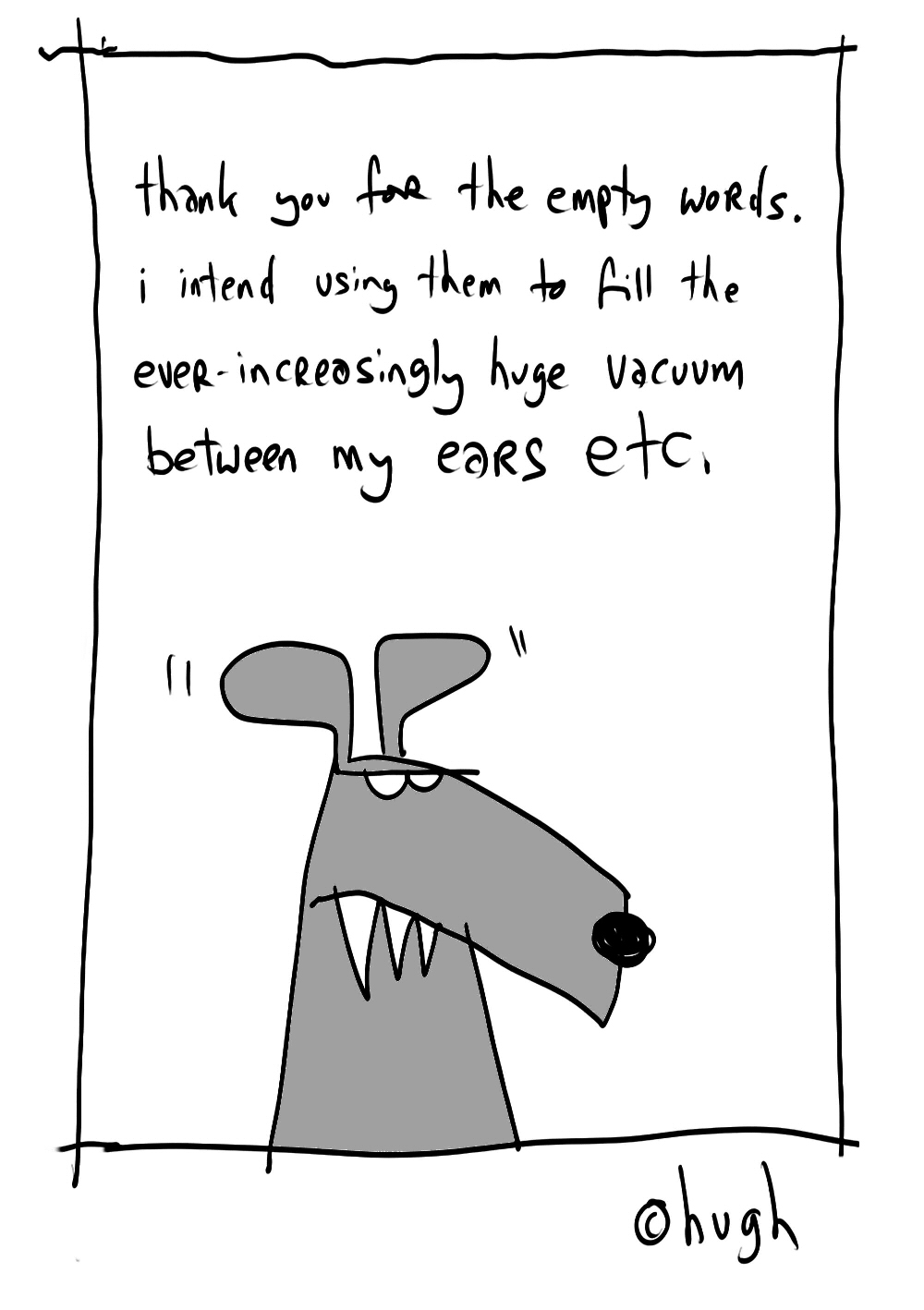
In the end, the Bush administration’s — and the Pentagon’s — insistence that the Iraqi state, government, army and police are real blinds only themselves. Iraqis know they are not. The American public knows they are not. Anyone in Africa or Asia probably knows they are not. Do the members of the U.S. Senate committees on Armed Services and Foreign Relations know less that the average inhabitant of Africa or Asia? So the congressional hearings on Iraq suggest, and such is the power of empty words.

Source / United Press International / April 22, 2008

The Rag Blog

Posted in RagBlog | Tagged , , | Leave a comment

Iraqi Women Are Still Suffering the Most


How picture phones have fuelled frenzy of honour killing in Iraq
By Patrick Cockburn / May 17, 2008

SULAYMANIYAH — A dark pool of dried blood and a fallen red scarf mark the place where Ronak, who had fled to a woman’s shelter in the Kurdish city of Sulaymaniyah when she was accused of adultery by her husband, was shot three times by a man hiding on the roof of a nearby building.

Ronak was wounded by bullets in the neck, side and leg and only survived after a four-hour operation. She was the latest victim of a huge increase across Iraq in the number of “honour” killings of women for alleged immorality by their own families.

Many are burnt to death by having petrol or paraffin poured over them and set ablaze. Others are shot or strangled. The United Nations estimates that at least 255 women died in honour-related killings in Kurdistan, home to one fifth of Iraqis, in the first six months of 2007 alone.

The murder of women who are deemed to have disobeyed traditional codes of morality is even more common in the rest of Iraq where government authority has broken down since the overthrow of Saddam Hussein in 2003.

A surprising reason explaining the massive increase in the number of honour killings is the availability of cheap mobile phones able to take pictures. Men photograph themselves making love to their girlfriends and pass the pictures to their friends. This often turns out to be a lethal act of bravado in a society where premarital or extra-marital sex justifies killing.

The first known case of sex recorded on a mobile leading to murder was in 2004. Film of a boy making love with a 17-year-old girl circulated in the Kurdish capital, Arbil. Two days later she was killed by her family and a week later he was murdered by his.

Read all of it here. / The Independent

The Rag Blog

Posted in RagBlog | Tagged , | 1 Comment

Peak Oil to Food to Steel : The Domino Effect

First of all, we likely have already peaked last year, or are now peaking in world oil production, as currently soaring oil prices should indicate. But see also the following link:

Revision of Depletion Model.

This being the case, it is important to dispel the notion that oil prices can be kept from influencing every other price that is linked to oil, which includes about everything. When cost-push inflation moves from oil to food to steel, you’re in real trouble. And that is what seems to be happening now.

Why? Because stuff made of steel that is powered by oil is what you depend on to provide alternative energy to fix the many problems caused by the lack of cheap oil.
The harder you work to fix the energy problem, the worse it gets. And if that were not enough, people get angry.

Roger Baker / The Rag Blog

High Steel Prices: A Preview of Peak Oil
By Jim Kingsdale / May 16, 2008

I use the phrase “Crunch Time” to denote the period after Peak Oil during which oil prices are so high due to production shortfalls that the normal functioning of economic activity is curtailed. Not only are the poor – and eventually the middle class – kept from buying the oil products they need, but industry’s capacity to ameliorate the problem by making what is needed to free society from the grip of oil is also greatly slowed, thereby extending the Crunch Time.

Such necessary products fall in two categories. First are those consumers can use to free themselves of oil: cars, trucks, and trains that operate on electricity instead of gasoline or diesel. Second is the capital equipment needed to make both such consumer items and to obtain more oil and other energy sources. Steel is one of the inputs to those products.

A hint of Crunch Time is in this report from Brazil and a sample is also described in today’s Wall Street Journal. The headline is, “Fast-Rising Steel Prices Set Back Big Projects.” The article starts, “Relentless increases in the price of steel are halting or slowing major construction projects world-wide and investments in shipbuilding and oil-and-gas exploration.”

Stripped of the human dimension the essential formula is:

global demand growth -> high oil, food and steel prices -> high costs to build rigs and ships -> higher energy prices -> higher oil, food and steel prices

This mechanical process of higher prices cycling up the line and shortages of things needed to make other things compounding the dysfunction is only the start. Then, the human dimension supercharges the process.

As the Journal points out, higher steel prices are now causing strikes in Turkey, cancellation of infrastructure projects in India, and government interventions in the private sector via price controls, nationalizations, and export controls – all of which cause other economic dislocations. Not the least of today’s dysfunctional outcomes is a slowdown now occurring in the production of equipment needed to find and produce oil.

As production slows, companies lay off workers. While layoffs tend to reduce ultimate consumer demand for products, in the short term shortages of manufacturing inputs just increase demand for those inputs further. Thus society’s initial efforts to increase manufacturing capacity turns into an effort to simply maintain capacity – or stop it from freezing up.

As the process of rising costs and slowing production reinforces itself, it gains speed like an ocean storm. As the Journal reports, “Last year, it took six months for steel prices to rise $100 a ton. Now, prices are moving that much in a month.”

The vicious cycle we are seeing today was initially caused by rapid growth and improved living standards in China, India and other poor countries as brought on by globalization. The process was initially demand driven. It can – and eventually it will – be corrected by a significant economic slowdown.

But the real Crunch Time will be caused by Peak Oil, the inability of the world to produce any greater flow of oil. What makes the real Crunch Time so vicious is that a simple recession will not cure the problem. It is likely that human inputs like violence and hoarding will only make the problem of insufficient oil even more acute. That is why today’s mini-Crunch is so tame compared with the Crunch Time that will occur after Peak Oil.

The scenario of shortages reducing society’s ability to function is why the Hirsch Report concluded that in order to have a fairly painless transition from petroleum-based transport to electricity-based transport, the world would need to start to make the transition about 20 years before Peak Oil started. Today, when we no longer have 20 years before Peak Oil, we are getting a small preview of the conditions to which the Hirsch Report was anticipating.

Here is a summary of the conclusions of Hirsch Report:

A scenario analysis was performed, based on crash program implementation worldwide – the fastest humanly possible. Three starting dates were considered:
1. When peaking occurs;

2. Ten years before peaking occurs; and

3. Twenty years before peaking.

The timing of oil peaking was left open because of the considerable differences of opinion among experts. Consideration of a number of implementation scenarios provided some fundamental insights, as follows:

• Waiting until world oil production peaks before taking crash program action leaves the world with a significant liquid fuel deficit for more than two decades.

• Initiating a mitigation crash program 10 years before world oil peaking helps considerably but still leaves a liquid fuels shortfall roughly a decade after the time that oil would have peaked.

• Initiating a mitigation crash program 20 years before peaking offers the possibility of avoiding a world liquid fuels shortfall.”

Here are some excerpts from the WSJ article:

We have not yet seen that prices have peaked, what we have seen is the costs increasing every month,” said ArcelorMittal Chief Executive Lakshmi Mittal on a conference call with reporters.

While still in a position of pricing power, steelmakers are concerned that over time, their high prices will affect sales. “There will be impact on demand, and that is not a good development for the steel industry,” said Aditya Mittal, chief financial officer of ArcelorMittal, on a separate conference call.

As a result, steelmakers are taking steps to cut their costs. To shield themselves from higher raw-material prices, more of them are acquiring their own iron-ore and coal mines or deposits, as well as producers of scrap steel. Nippon Steel Corp. and other Japanese steelmakers announced this month that they would accelerate cost-cutting efforts, which could include layoffs and developing cheaper steel substitutes.

The industry is also consolidating, which should allow producers to become more efficient and gain economies of scale that could ultimately result in more pricing stability and fewer, larger players. In recent months, India’s Tata Steel Ltd. and Essar Steel Holdings Ltd. have made major acquisitions, as have Russia’s Evraz Group SA and Sweden’s SSAB Svenskt Stl AB (SSABF.PK). Even so, the world’s top-five steelmakers still account for just 18% of the world’s steel supplies.

Source. / Seeking Alpha

The Rag Blog

Posted in RagBlog | Tagged , , , | Leave a comment

The Time Has Come for Americans to Blink


Everybody Knows.
By Sheila Samples / May 16, 2008


Everybody knows that the dice are loaded.
Everybody rolls with their fingers crossed.
Everybody knows the war is over.
Everybody knows the good guys lost.
Everybody knows the fight was fixed.
The poor stay poor, the rich get rich.
That’s how it goes. Everybody knows.
– Leonard Cohen – (complete MP3 download)

The fate of millions was sealed the moment Dick Cheney selected himself as The Destroyer whose charge to keep for the next eight years would be — as Capitol Hill Blue’s Doug Thompson so succinctly described George W. Bush — a “criminally insane, pill-popping dry drunk.” I don’t know about that. I’ve seen some drunks in my time — even dry ones — and George Bush appears to be more than a little moist.

Bush was the perfect foil for Cheney. The Scalia-driven 2000 election coup catapulted Bush to the top of the political heap. For the first time in his worthless, impotent, cruelly indifferent life, Bush was suddenly important — the most powerful man on the face of the earth — and all because he had been told to scream, “Jezus! Jezus is my philosopher!” to the swooning masses. Makes one wonder at the rigid consent of those same “believers” for the ensuing slaughter of so many innocents — when murdering even one in the name of Jesus should have sent a collective shriek reverberating throughout the religious universe. (See Matthew 18:14; Mark 9:42; Luke 17:2)

Everybody knows that Bush isn’t remotely qualified to be at the helm of the world’s superpower. He can neither think nor speak coherently, can recognize little other than Texas on a map, has completely torpedoed every business venture he attempted, and admittedly was a hard-partying sot until he was 40. Cheney was another matter. He was a household word. He had been a public servant throughout his career. He served as President Gerald Ford’s chief of staff, earned six terms in the House of Representatives where he ascended to the position of minority whip and, finally, was the elder Bush’s Secretary of Defense.

We trusted Cheney to keep Bush from making rash decisions. Was it not Cheney who, at the conclusion of the 1991 Desert Storm assault, made the assessment that to expand the exercise to include regime change in Iraq was not morally sustainable because of the chaotic bloodletting — the needless toll on our uniformed military?

We were wrong. Had we bothered to check the “other priorities” that allowed Cheney to dodge the draft five times on his rise to power, his chilling congressional voting record, his efforts to enrich the military industrial complex by privatizing defense duties and granting massive contracts to Halliburton, we would have known that Cheney was consumed with lust for power and money. We would have known Cheney had been champing at the bit for more than a decade to impose a new order wherein the American Empire controls the world and its resources.

Had we checked, we would have known Dick Cheney was the wrong babysitter for a kid who gets his jollies by blowing things up.

Cheney Unbound

In 1991, Cheney was in the wrong place at the wrong time. But the upheaval of the following decade, the 1994 Republican takeover of Congress, and the expanding manipulative power of the corporate media created the axis of corruption necessary for a Cheney reign of terror. Cheney was ready, as were the militant warmongers of the Project for the New American Century who had been demanding Saddam Hussein’s head for years. At least 12 of the 18 co-signers of the January 1998 letter to President Bill Clinton, and another letter four months later to then House Speaker Newt Gingrich, demanding the overthrow of Saddam were given key positions on Cheney’s destructive team.

The fix was in. Four days before the 2001 inauguration, PNAC’s deputy director, Thomas Donnelly, wrote a memorandum to “Opinion Leaders,” reminding them that “the task of removing Saddam Hussein’s regime from power still remains…Many in the incoming Bush Administration understand this challenge…”

Four months after the inauguration, the White House issued a press release warning that the threat of terrorist-nations using weapons of mass destruction against the American “homeland” was very real. To counter this danger, Cheney put himself in charge of the entire government — departments of Defense, Justice, Health and Human Services, Energy, Environmental Protection Agency, FEMA, and “other federal agencies,” which would naturally include both FAA and NORAD. A new department — the Office of National Preparedness — was created so Cheney could protect us from catastrophic harm and deal with “consequence” management.

The next four months were busy ones. With malicious indifference, Cheney set about screwing the American people; destroying 225-year Constitutional protections, passing secret laws to seize unlimited executive power, and locking both Congress and the public out of the legislative process. Bush provided cover by regaling us with hilarious “Benny Hill” bits of linguistic derring-do, strutting from one presidential photo op to another, falling off couches and bicycles, choking on pretzels, and attacking brush with a chainsaw at his Crawford ranch.

Cheney in Charge

Then it was 9-11. Suddenly Bush was no longer a spoiled, bumbling, schizophrenic little president. In an instant, he was transformed into a loaded codpiece — The Commander in Chief, The Decider of life and death — a modern-day Caligula towering above mankind with lighted depleted uranium firecrackers gripped in both fists. Cheney could not have picked a more willing accomplice to export death and violence to the four corners of the earth…

With smoke still rising from the ashes of Afghanistan, the drive to topple Saddam, who was demanding Euro for his oil, quickly turned into a crusade. It was Cheney-orchestrated and Cheney-driven. Under the deepening shadows of mushroom clouds, administration neoconservatives teamed up with ecstatic corporate media co-conspirators to terrify an already traumatized public. Cheney, Donald Rumsfeld, Paul Wolfowitz and Douglas Feith launched a separate intelligence unit, the Office of Special Plans, to create the propaganda needed to invade Iraq.

Since Bush can’t be trusted to maintain a single train of thought in one-on-one interviews, he hit the campaign trail with a prepared speech he delivered over and over — is now delivering about Iran — frantically catapulting the propaganda that Saddam was ‘threatening America and the world with horrible poisons and diseases and gases and atomic weapons.” Bush convinced a majority of Americans that the Iraqi dictator was allied with Al Qaeda and provided a “safe haven” for terrorists, and if we didn’t wipe him out, he would strike us again without leaving any fingerprints.”

Cheney’s fingerprints are all over every aspect of the drive for war. For a year and a half, Cheney bullied the entire intelligence apparatus, especially the CIA, into making a false case that Saddam was an immediate nuclear threat. He denigrated the International Atomic Energy Agency (IAEA) report that there was no evidence, sneering that the intelligence was faulty, and IAEA Director-General Mohammed El-Baradei had no credibility where Iraq was concerned.

But it was Secretary of State Colin Powell who rolled the loaded dice at the UN Security Council on February 8, 2003, in a presentation even he admitted was “bullshit.” Powell, who is adept at leaving no fingerprints, but whose shadow lingers over decades of slaughtered innocents, carried the water for his masters one last time. When Powell completed his somber charges that Al-Qaeda was in Iraq running “poison camps” full bore, that Saddam was obtaining magnets for uranium enrichment — charges backed up with photos and vials of poison — we were sold. Because we trusted him.

A Moral Fork in the Road

I don’t want to go off on an Aristotelian rant here, but thanks to Cheney and those around him obsessed with world government, this nation appears to be running on empty where morality, or ethos, is concerned. Values such as compassion, sympathy, prudence, virtue, decency, ethics — cannot thrive in a nation controlled by war criminals who force its citizens into submission through fear, violence and propaganda. How can a society be “just” when natural laws have fallen by the wayside and nobody is held accountable for crimes against God and humanity?

We are under the control of the criminally insane. Cheney has turned the greatest democratic republic ever conceived into a world corporation and anointed himself its Chief Executive Officer (CEO). He has supplanted two centuries of protections afforded by the U.S. Constitution and Bill of Rights with executive orders and secret laws. In their lust for power and riches, Cheney and Bush have managed in just seven grueling, sadistic, morally corrupt years to destroy entire nations, including their own. And they accomplished this in the only way possible. Because we permitted it. Because we lost our moral compass.

So we stand here in the blood-sodden mess of two lost wars. Millions — millions — have been displaced, destroyed, dishonored in Cheney’s quest for oil. Tens of thousands of our own citizens are injured, maimed — 4,077 dead — an entire generation of Americans lost in a depleted uranium wasteland. “So?” Cheney says, “They were all volunteers.” He admitted that losing sons or daughters could “be a burden” on families, but reminded us sternly that “the biggest burden” is on the President, who has to send even more to their deaths.

We’re at the crossroads. We can no longer remain neutral nor mill around in confused acceptance of the genocidal madness into which we have been swept. Thomas Jefferson said, “When once a republic is corrupted, there is no possibility of remedying any of the growing evils but by removing the corruption and restoring its lost principles; every other correction is either useless or a new evil.”

Everybody knows the folly of the treasonous “corrections” made to counter the Iran-Contra evil in the 1980’s and early ’90’s — the flurry of Presidential Christmas-Eve pardons allowing convicted criminals to recede into the shadows only to return and metastasize throughout the current Cheney/Bush administration.

Cheney, Bush and their co-conspirators throughout the three branches of government must be removed. Indicted. Convicted. Imprisoned. Voting records of the 435 members of Congress and 33 Senators up for re-election in 2008 must be vetted, and those who do not reflect the will of the people must go. No exceptions. The remaining 17 Senators must either stand or fall on their voting records. If those who are guilty of the same breach of trust as their cohorts refuse to budge, they must be impeached and removed from office.

They have left us with but one choice, and one last chance to make that choice. We have reached a point in the “course of human events” where it is not only our “right but our duty” to throw off this destructive government and institute one which remembers it “derives its just powers from the consent of the governed.”

The time has come for Americans to blink. Because the Abyss is staring back at us.

Sheila Samples sheilastuff.blogspot.com is an Oklahoma writer and a former civilian US Army Public Information Officer. She is a regular contributor for a variety of Internet sites. Contact her at rsamples@wichitaonline.net.

Source / Information Clearing House

The Rag Blog

Posted in RagBlog | Tagged , , , | Leave a comment

Moron-in-Chief on Obama and Appeasement (Bomb, Bomb Iran Dept.)


Lies of Aggression
By Paul Craig Roberts / May 16, 2008

On May 15, the White House Moron, in a war-planning visit to Israel, justified the naked aggression he and Ehud Olmert are planning against Iran as the only alternative to “the false comfort of appeasement, which has been repeatedly discredited by history.”

But the White House Moron has the roles reversed. It is not Iran that is threatening war. It is George W. Bush. It is not Bush who is appeasing. It is Iran.

Iran has not responded in kind to any of Bush’s warlike moves and provocations. Iran has not sunk a single one of our sitting duck ships and has not given the Iraqi insurgents any weapons that would easily turn the tide of war against the United States.

It is Bush, not Iran, who sounds like Adolf Hitler blustering and threatening. It is Bush’s American Brownshirts, the neocons, who express the view: “What’s the good of nuclear weapons if you can’t use them?”

It is the United States that is funding assassination teams inside Iran and using taxpayer dollars to fund dissident and violent organizations opposed to the Iranian government. Iran is doing no such thing here.

It is members of the Bush regime and U.S. generals who continue to lie through their teeth about Iranian support for insurgents, for which they can supply no evidence, and about Iranian nuclear weapons programs, for which the International Atomic Energy Agency inspectors can find no sign.

It is the U.S. print and TV media that serves the Bush regime as propaganda ministry for its lies of aggression.

All the war crimes that are being planned are being planned by Bush and Olmert.

What would George Orwell make of the Bush regime’s position that anything less than a direct act of naked aggression is appeasement?

The Chicago City Council has passed a resolution “opposing any U.S.
attack on Iran and urging the Bush administration to pursue diplomatic engagement with that nation.” But the White House Moron says diplomacy is appeasement. He learned this false equivalence from the neocon Brownshirts whose control over his administration has made America despised throughout the world, with the exception of Israel.

After broadcasting false claims for weeks from U.S. generals and Bush regime spokespersons that the United States has “definite proof” in the form of captured Iranian weapons that Iranians were “responsible for killing American troops,” the great free American media went silent when Los Angeles Times correspondent Tina Susman reported from Baghdad, “A plan to show some alleged Iranian-supplied explosives to journalists last week in Karbala and then destroy them was cancelled after the United States realized none of them was from Iran.”

A people devoid of a media are sitting ducks for tyrannical government, which is what the United States has.

What is the difference between Hitler’s concocted excuses for his acts of naked aggression and the Bush regime’s plan to use a briefing by Gen. Petraeus, with “captured Iranian weapons” as props, as proof of Iranian complicity in U.S. deaths in Iraq as a means to break down public and congressional resistance to an attack on Iran?

Why has the Bush regime suffered no consequences for this blatant attempt to orchestrate an excuse for another war?

Why have there been no consequences to the regime for the blatant lies it told in order to attack Iraq?

Why has the Bush regime suffered no consequences for its violation of U.S. statutory laws against spying without warrants and against torture?

In the U.S. criminal justice system, three strikes and you are out.

For the Bush regime, is there any limit on its lawless behavior?

How many strikes? A dozen? Thirty? Three hundred?

Is there a limit?

To find out more about Paul Craig Roberts, and read features by other Creators Syndicate writers and cartoonists, visit the Creators Syndicate web page at www.creators.com.

COPYRIGHT 2008 CREATORS SYNDICATE INC.
Source. / Creators Syndicate

Thanks to Roger Baker / The Rag Blog

Posted in RagBlog | Tagged , , , , , | Leave a comment

McCain’s Magic Carpet Ride


John McCain Trades Straight Talk for Unadulterated Fantasy
By Arianna Huffington / May 15,2008

John McCain unveiled his new campaign strategy today: invite the American people to take a magic carpet ride with him to the land of Eternal Sunshine.

In a speech this morning in Ohio — backed up by a companion TV ad — McCain hopped into an imaginary time machine and took us all to the year 2013, offering a sneak peek of what the world will look like at the end of his first term as President.

And what a wonderful world it will be: “The Iraq War has been won”: “Iraq is a functioning democracy”; “al Qaeda in Iraq has been defeated”; Osama bin Laden has been captured or killed; there’s been no major terrorist attack in the U.S.; Iran and North Korea have renounced nuclear weapons; “the size of the Army and Marine Corps has been significantly increased and are now better equipped”; there’s been “a substantial increase” in veterans’ benefits; the genocide in Darfur has been stopped; “the United States has experienced several years of robust economic growth, and Americans again have confidence in their economic future”; “the world food crisis has ended”; “test scores and graduation rates are rising everywhere in the country”; “health care has become more accessible”; Medicare and Social Security have been fixed “without reducing benefits” or “increasing taxes and raising premiums”; America is “well on the way to independence from foreign sources of oil”; “our southern border is now secure” and “illegal immigration has been finally brought under control.” And, oh yeah, there are a lot fewer fat kids trudging their way through PE class.

Sounds pretty great, doesn’t it?

There’s only one problem: it’s pure, unadulterated fantasy. The political equivalent of the trippy tour the Beatles gave us in Lucy in the Sky with Diamonds — only instead of rocking horse people eating marshmallow pies, we have “professional and competent” Iraq Security Forces and an Iraqi government “capable of imposing its authority in every province” and “defending the integrity of its borders.”

Despite starting his speech by saying how important it is for candidates to lay out “what they plan to achieve not with vague language but with clarity,” McCain then proceeded to spin his cotton candy daydream with nary a hint of how his lofty and admirable goals will be accomplished. He’s taking us on a trip to Fantasyland, but at no point does he show us how we’re going to get there.

Sure, he tossed out a few generalized, pie-in-the-sky allusions to “reforms of the [health] insurance market” and “reforms to the way we acquire weapons programs” and a handful of specifics, including “a reduction in the corporate tax rate” and the building of “20 new nuclear reactors.” But when it came to Iraq, he didn’t offer even the vaguest clue about how — after five long years of failure — victory, democracy, the defeat of al Qaeda, the prevention of civil war, the disbanding of militias, and the sudden competence of the Iraqi military will magically be achieved. Rather, one morning four and a half years from now, we’re going to wake up and pigs will be flying, and all will be right with the world.

I get the thinking behind the McCain camp’s strategy. With 82 percent of the public unhappy with the direction of the county, and with 68 percent unhappy with the war, and 75 percent anxious about the economy (which McCain admits he doesn’t understand all that well), there is no way McCain or his fellow Republicans can run on reality or their record over the last seven-plus years, so they have to run on fantasy.

But building castles in the sky — and painting rosy, reality-free scenarios — runs counter to McCain’s brand as a straight talker™ who tells it like it is, even when that means admitting that ending the war or fixing the economy or passing needed reforms won’t be easy.

You know things have gotten bad for the GOP when John McCain, the man who ran a TV ad claiming “One man does what’s best for America. Not what’s easy,” and who told us on the campaign trail “I’ve got to give you straight talk, my friends. This is a tough war we’re in. It’s not going to be over right away. There’s going to be other wars, I’m sorry to tell you… My friends, it’s going to be tough,” is now acting like Mr. Rogers. It’s going to be a beautiful day in the neighborhood. In 2013. I can’t tell you how, boys and girls, but it will be. You just have to trust me.

I’ll admit, I found McCain’s fantasy speech moving and effective, especially the part where he envisions a growth in national service, fueled by young Americans who “understand that true happiness is much greater than the pursuit of pleasure, and can only be found by serving causes greater than self-interest.” I also appreciated his promise to “set a new standard for transparency and accountability,” abstain from Bushian signing statements, and do away with “mindless, paralyzing” partisanship while making the coming campaign “an argument among friends, each of us struggling to hear our conscience and heed its demands.”

Then the pig that was flying overhead fell from the sky, showed me his McCain button, and reminded me that Hamas wants Obama to win.

Source. / The Huffington Post

The Rag Blog

Posted in RagBlog | Tagged , , | Leave a comment

BushCo’s GWOT: Making You Less Secure


The survivors’ stories leave no doubt: Guantánamo Makes Us All Less Safe
By George Monbiot / May 14, 2008

Official accounts reveal with chilling clarity that acts carried out in the name of the war on terror have backfired dreadfully

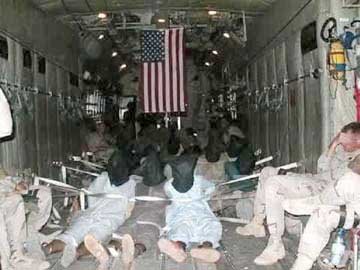
When we learned last week that Abdallah Salih al-Ajmi had blown himself up in Mosul in northern Iraq, the US government presented this as a vindication of its policies. Al-Ajmi was a former inmate of the detention camp at Guantánamo Bay. The Pentagon says his attack on Iraqi soldiers shows both that it was right to have detained him and that it is dangerous ever to release the camp’s prisoners. On the contrary, it shows how dangerous it was to put them there in the first place.

Al-Ajmi, according to the Pentagon, was one of at least 30 former Guantánamo detainees who have “taken part in anti-coalition militant activities after leaving US detention”. Given that the majority of the inmates appear to have been innocent of such crimes before they were detained, that’s one hell of a recidivism rate. In reality, it turns out that “anti-coalition militant activities” include talking to the media about their captivity. The Pentagon lists the Tipton Three in its catalogue of recidivists, on the grounds that they collaborated with Michael Winterbottom’s film The Road to Guantánamo. But it also names seven former prisoners, aside from al-Ajmi, who have fought with the Taliban or Chechen rebels, kidnapped foreigners or planted bombs after their release. One of two conclusions can be drawn from this evidence, and neither reflects well on the US government.

The first is that, as the Pentagon claims, these men “successfully lied to US officials, sometimes for over three years”. The US government’s intelligence gathering and questioning were ineffective, and people who would otherwise have been identified as terrorists or resistance fighters were allowed to walk free, despite years of intense and often brutal interrogation. Should this be surprising? Without a presumption of innocence, without charges, representation, trials, or due process of any kind, there is no reliable means of determining whether or not a man is guilty. The abuses at Guantánamo not only deny justice to the inmates, they also deny justice to the world.

Al-Ajmi, the authorities say, initially confessed in the prison camp to deserting the Kuwaiti army to join the jihad in Afghanistan. He admitted that he fought with Taliban forces against the Northern Alliance. He later retracted this confession, which had been made “under pressure and threats”. When the Americans released him from Guantánamo, they handed him over to the Kuwaiti government for trial, but without the admissible evidence required to convict him. Among his defences was that neither he nor his interrogators had signed his supposed testimony. The Kuwaiti courts, without reliable evidence to the contrary, found him innocent.

All evidence obtained in Guantánamo, and in the CIA’s other detention centres and secret prisons, is by definition unreliable, because it is extracted with the help of coercion and torture. Torture is notorious for producing false confessions, as people will say anything to make it stop. Both official accounts and the testimonies of former detainees show that a wide range of coercive techniques – devised or approved at the highest levels in Washington – have been used to make inmates tell the questioners what they want to hear.

In his book Torture Team, Philippe Sands describes the treatment of Mohammed al-Qahtani, held in Guantánamo and described by the authorities (like half a dozen other suspects) as “the 20th hijacker”. By the time his interrogators started using “enhanced techniques” to extract information from him, al-Qahtani had been kept in isolation for three months in a cell permanently flooded with light. An official memo shows that he “was talking to nonexistent people, reporting hearing voices, [and] crouching in a corner of the cell covered with a sheet for hours on end”. He was abused, exposed to extreme cold and deprived of sleep for a further 54 days of torture and questioning. What useful testimony could be extracted from a man in this state?

The other possibility is that the men who became involved in armed conflict after their release had not in fact been involved in any prior fighting, but were radicalised by their detention. In the video he made before blowing himself up, al-Ajmi maintained that he was motivated by his ill-treatment in Guantánamo. “Twelve thousand kilometres away from Mecca, I realised the reality of the Americans and what those infidels want,” he said. He claimed he was beaten, drugged and “used for experiments” and that “the Americans delighted in insulting our prayer and Islam and they insulted the Qur’an and threw it in dirty places.” Al-Ajmi’s lawyer revealed that his arm had been broken by guards at the camp, who beat him up to stop him from praying.

The accounts of people released from Guantánamo describe treatment that would radicalise almost anyone. In his book Five Years of My Life, published a fortnight ago, Murat Kurnaz maintains that one of the guards greeted him on his arrival with these words. “Do you know what the Germans did to the Jews? That’s exactly what we’re going to do with you.” There were certain similarities. “I knew a man from Morocco,” Kurnaz writes, “who used to be a ship captain. He couldn’t move one of his little fingers because of frostbite. The rest of his fingers were all right. They told him they would amputate the little finger. They brought him to the doctor, and when he came back, he had no fingers left. They had amputated everything but his thumbs.” The young man – scarcely more than a boy – in the cage next to Kurnaz’s had just had his legs amputated by American doctors after getting frostbite in a coalition prison in Afghanistan. The stumps were still bleeding and covered in pus. He received no further treatment or new dressings. Every time he tried to hoist himself up to sit on his pot by clinging to the wire, a guard would come and hit his hands with a billy-club. Like every other prisoner, he was routinely beaten by the camp’s Immediate Reaction Force, and taken away to interrogation cells to be beaten up some more.

Fathers were clubbed in front of their sons, sons in front of their fathers. The prisoners were repeatedly forced into stress positions, deprived of sleep and threatened with execution. As a senior official at the US Defense Intelligence Agency says, “maybe the guy who goes into Guantánamo was a farmer who got swept along and did very little. He’s going to come out a fully fledged jihadist.”

In reading the histories of Guantánamo, and of the kidnappings, extrajudicial detention and torture the US government (helped by the United Kingdom) has pursued around the world, two things become clear. The first is that these practices do not supplement effective investigation and prosecution; they replace them. Instead of a process which generates evidence, assesses it and uses it to prosecute, the US has deployed a process that generates nonsense and is incapable of separating the guilty from the innocent. The second is that far from protecting innocent lives, this process is likely to deliver further atrocities. Even if you put the ethics of such treatment to one side, it is surely evident that it makes the world more dangerous.

Source / Information Clearing House / The Guardian

To learn more, go to The Guantanamo Blog or to Andy Worthington.

The Rag Blog

Posted in RagBlog | Tagged , , | Leave a comment