
U.S.-Colombia Treaty : Yanks Prepare to Party Down

Top, Chiva party bus Cartegena: Party down. Below, “The Yanks are Coming!”

The new Colombian war:
Nature of U.S. incursion still unclear

The new U.S. air base in Palanquero… will ‘expand expeditionary warfare capability’ and ‘improve global reach’ for ‘conducting full spectrum operations…’

By Marion Delgado / The Rag Blog / November 17, 2009

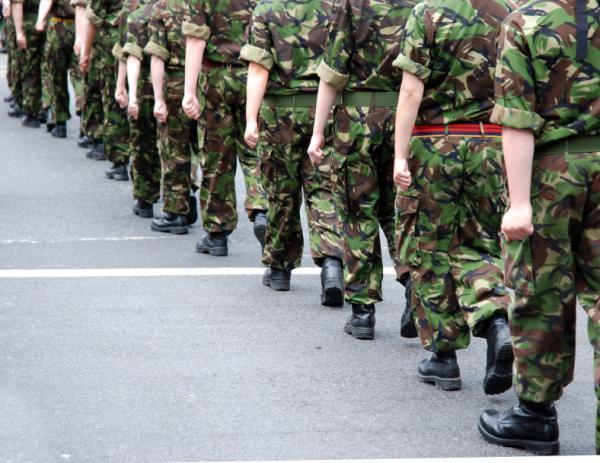
CARTAGENA DE INDIES, Colombia — THEY’RE HERE! A scant nine days after the U.S. and Colombia signed a new military pact, I saw the first of Gawd-knows how many U.S. troops assigned to this country, right in front of my pad. I had gone to the local corner store to sit at one of the couple of tables out front, watch the street life, and sip an Aguila, the local Budweiser type of beer.

I saw them coming fifty meters up the block, four of them, with a local young lady who I recognized in tow. They wore U.S. casual clothes, three had well-shined military footwear, and all had the appropriate haircuts. As they drew closer I could hear their hometown English. They were looking for something, swiveling their heads, searching up and down the block. They stepped into the tienda to ask directions. One of them spoke language school Spanish, devoid of idioms, slang or any discernible accent. He asked where they could catch the Chiva bus.

The Chiva is a “party bus.” For 30,000 COP (about $15) one can board, get a bottle of cheap rum and a Coca-Cola, a drum or set of maracas, and be toured around the city, accompanied by very loud music and a lot of drunken yelling, for about an hour. The clerk pointed across the street and advised them that the bus comes every half hour. The troops looked like they were enjoying their new status. The newly-inked treaty gives U.S. military personnel diplomatic immunity from arrest by Colombian authorities.

While the U.S. Embassy in Bogotá says the new agreement, providing for expanded U.S. access to Colombian military bases, goes into force immediately, a Colombian court ruling finds the agreement is “broad and unbalanced” in favor of the U.S. Indeed: the agreement puts no limits on the number of U.S personnel to be deployed in Colombia or the number of military bases they could use.

The Colombian State Council said in its ruling that the agreement gives the U.S. the power to decide what operations will occur, gives immunity to U.S. troops, allows access to bases beyond the seven named in the agreement’s text, and defers other important questions about military operations to future “operational agreements.” The Council reviewed 15 prior treaties and declarations cited by President Alvaro Uribe’s government as the foundation for the new base pact, and found that none offer a basis for stationing U.S. troops or US. use of Colombian bases.

It concludes that the agreement is a treaty, and therefore must be approved by the Colombian Congress and reviewed by the Constitutional Court. Foreign Minister Jaime Bermúdez, in signing the deal, had said the government would bypass such formalities.

The new U.S. air base in Palanquero, 120 miles north of Bogota, will “expand expeditionary warfare capability” and “improve global reach” for “conducting full spectrum operations,” according to a newly disclosed Pentagon document submitted to the U.S. Congress. The document describes South America as “a critical sub-region of our hemisphere where security and stability is under constant threat from narcotics-funded terrorist insurgencies, anti-US governments, endemic poverty, and recurring natural disasters.” The document seemingly contradicts well-publicized claims by U.S. Ambassador William Brownfield that soldiers based in Colombia will “never, never, never” participate in armed operations, and that the base agreement doesn’t allow operations outside Colombian territory.

The embassy uses the guise of the discredited “drug war” in all of its statements, as if that would add legitimacy to this invasion of Colombia.

President Evo Morales of Bolivar recently criticized this tactic. Morales spoke of his experiences as a coca grower and union leader facing the brunt of U.S. militarization. “I witnessed this,” he said, when describing the repression. “So now we’re narcoterrorists. When they couldn’t call us communists anymore, they called us subversives, and then traffickers, and since the September 11 attacks, terrorists,” Morales said. “The history of Latin America repeats itself.”

Meanwhile in this country, the war heats up. In Departamento Valle del Cauca, whose principal city is Cali, the ARC Pacific Naval Base at Malaga is one of the bases where the U.S. will build its naval port. On the afternoon of November 10, a firefight broke out in the area between a unit of the Revolutionary Armed Forces of Colombia (FARC) and troops allied with the Bogotá government. Nine Bogotá troops were killed and three wounded. There was no report of FARC casualties. This morning, November 12, the army announced a movement of 2,500 troops to the area. They claim that FARC killed three women and a child as well as nine soldiers.

Also today, Uribe claimed that Venezuela had declared war on Colombia! A check with Venezuelan and international television sources produced no confirmation of such a declaration; perhaps it was just a figure of speech on Uribe’s part.

The army also announced the capture of 19 FARC members in the departmentos of Santander, Antioquia, and Meta. Such announcements are an almost daily occurrence.

Taxpayers: Know your U.S. Columbian properties!


Today’s Featured Base: Palanquero

Palanquero is already one of the major air fields in Colombia. The US is spending $46,000,000ºº right this minute to develop it as a fully functioning 135,000 square meter airfield with runways 10,000 feet in length. It will be administered by the U.S. Southern Command. The Colombian Air Force (COLAF) will base high tech communications intercept airplanes there, paid for, of course, by U.S. taxpayers.

  • For previous articles from Columbia by Marion Delgado, go here.

The Rag Blog

Posted in Rag Bloggers | Tagged , , , , | 3 Comments

The Terrorist Trials : Proving We’re a Nation of Laws

Rooftop snipers, armored vehicles and lock-down zones around the courthouse are part of the security plan during the trial of Khalid Shaikh Mohammed and his cohorts. Photo by Schwartz / Daily News.

Are we a nation of laws?
The trial of Khalid Sheikh Mohammed

By Ted McLaughlin / The Rag Blog / November 17, 2009

The Justice Department has finally decided to do the right thing, and bring Khalid Sheikh Mohammed (alleged 9/11 mastermind) and four of his cohorts to justice in a court of law — just like any other vicious criminals. They will be tried and hopefully convicted in a New York criminal court, and it’s about time — it should have happened years ago.

This is not anything unique. Terrorists have been tried in our civilian criminal courts many times in the past. Take for example the original Trade Center bombers (who failed to bring the towers down), the case of Timothy McVeigh and his sidekick, and the case of the Puerto Rican terrorists many years ago. They were all tried and convicted in a civilian court of law.

But those cases were before President Bush suspended the rule of law, and decided he could decide who would get a fair trial and who wouldn’t. Well, he was not only wrong, but he’s no longer president. It looks like the Obama administration believes in the Constitution and the rule of law, and that’s a good thing for everyone in America.

But it does point out a difference between the ultra-right wing and other Americans. Most Americans want to live in a free country governed by the Constitution and rule of law, where everyone (no matter how despised) gets a fair trial governed by the law. But the right wing doesn’t want that. They would prefer to live in a dictatorship where a leader decides who should have rights and who shouldn’t. That’s sad.

No one should have the right to deny a fair trial with constitutional rights to anyone else — not in a truly free country. In America, you don’t get to deny rights to anyone just because you don’t like them or due to the crime they’re accused of committing. By protecting the rights of even the vilest of criminals, we protect those same rights for every single person in this country (and that’s what the Founding Fathers wanted).

Senator Patrick Leahy (D-Vermont) says it well, “We have a judicial system that’s the envy of the world. I don’t think we should run and hide and cower. Let’s use our system.”

Senator Judd Gregg (R-New Hampshire) voiced opposition, saying we shouldn’t give terrorists the rights guaranteed to United States citizens. His stupid statement ignores both American law and American history.

The fairness of our laws and our courts have never been reserved just for American citizens. Foreigners in the United States who violate our laws, have always been granted the same fair trial and constitutional guarantees as American citizens get. In a nation governed by the rule of law, everyone must be treated equally, citizen or not.

I want these terrorists convicted and given harsh sentences as much as anyone. But it must be done in a fair and open trial — both to protect our system of justice and rights, and to convince the world of our fairness and justice.

A truly free country can do no less.

[Rag Blog contributor Ted McLaughlin also posts at jobsanger.]

The Rag Blog

Posted in Rag Bloggers | Tagged , , , , | Leave a comment

Obama Presidency : One Term if by War, Two if by Peace


Barack Obama and the Afghanistan decision:
One (term) if by war, two if by peace

By Harvey Wasserman / November 17, 2009

As the world awaits Barack Obama’s decision on Afghanistan, a lethal myth has spread. It says that standing up to the military will doom him to be a single-term president.

The “one if by peace” myth comes most recently from Garry Wills in the New York Review of Books. Wills mourns that Obama would commit political suicide by pulling out of both Iraq and Afghanistan because “the charges from various quarters would be toxic — that he was weak, unpatriotic, sacrificing the sacrifices that have been made, betraying our dead, throwing away all former investments in lives and treasure.”

Against all that, says Wills, “he could have little defense in the quarters where such charges would originate.”

Coming from an astute observer like Wills, this is a stunning analysis — and dead wrong.

In fact, the only way Obama can begin to think about getting reelected is to leave the Afghan quagmire and do the same from Iraq.

The key phrase here is “the quarters where such charges would originate.”

The battle cries originate with the military which, as Will Rogers once put it, “never saw a war it didn’t like.” General Stanley McChrystal and Defense Secretary Robert Gates have spearheaded an unsavory, unethical media assault to force a quick escalation.

Their core support comes from the Rogue/Rouge Right now shattering the Republican Party. This media-based Palin paramilitary has just driven the GOP to defeat in a New York Congressional district, Republican for more than a century. It’s now assaulting Charlie Crist, the very popular moderate Governor of Florida, and others like him. Any Republican caught whispering that Obama is other than a baby-killing Muslim gay terrorist is being condemned in ways not seen since Salem, 1692.

This might seem good for the Democrats. But Obama can blow it all by escalating in Afghanistan. His core support — a substantial majority of Democrats, and any number of moderate Republicans — wants out. The California Democrats have formalized the message.

National health care and climate change remain hugely important. They are divisive and difficult. And there will be no meaningful progress on either without a drawdown on our overseas adventurism and the larger military budget.

Thus Afghanistan towers above all. The decline of the Democratic Party and the U.S. as a whole dates directly to March, 1965, when Lyndon Johnson escalated the war in Vietnam. The ensuing decade of futility overflowed with agonized analysis and absurd apologia.

In the end, all the U.S. could do was spend, destroy, kill, die and flee.

So, too, Afghanistan. Be the motive geopolitical, anti-terrorist, petrochemical, feminist, humanitarian, or just plain not wanting to “lose,” American bombs from the air and boots on the ground will simply dissolve and disappear in an ocean of shifting sands and ancient enmities.

Whatever his admirers fear might be said about Obama “losing” this hopeless sinkhole will be screamed anyway by the Rogue/Rouge Right, no matter what he does. In their eyes, all ensuing terror attacks, economic downturns, human frailties, stubs of the toe and twists of inscrutable fate will be Barack Obama’s fault, no matter what or why.

Standing down in Afghanistan and Iraq would be truly historic. It could end the epoch — dating to 1492 — when Europe continually marched throughout the Third World. More narrowly, it would acknowledge, at last, America’s inability to shape every corner of the Earth to its overbearing whim.

Perhaps it would finally curb this nation’s addiction to squandering blood and treasure on these absurd, hopeless and ultimately suicidal military excursions.

For Obama and 2012, it might make the dream of meaningful health and energy reform financially feasible. It could prevent the liberal base in this country from shattering, as it did in 1968, opening the door to Nixon, Reagan, Bush and Bush… and now to the likes of Limbaugh, Beck, Palin, and Dobbs.

Few things are guaranteed in politics. But one certainty is that an escalation in Afghanistan will again poison the Democratic Party and leave Barack Obama an empty political husk. The brilliant, good-hearted Garry Wills begs Obama to do the right thing for the sake of morality and sanity.

But if Obama has any hope of guiding a coherent administration for the rest of this term, or of winning a second one, he has no choice. The Graveyard of Great Powers awaits yet another misguided imperial attacker.

Let’s hope, pray, work and fight to make sure that this time, we step aside.

[Harvey Wasserman’s History of the United States is at www.harveywasserman.com, as is Solartopia! Our Green-Powered Earth. He is senior editor of www.freepress.org, where this article also appears.]

The Rag Blog

Posted in Rag Bloggers | Tagged , , , , , | 4 Comments

What Obama Has Done Right : The List of 90


Grading Obama’s presidency:
A list of 90 accomplishments

By Betty Dubose Hamilton / The Rag Blog / November 16, 2009

See ‘A Grade for Obama: First six months’ record,’ by Robert P. Watson, Below.

With his list of 90 accomplishments, Dr. Robert P. Watson of Lynn University in Boca Raton, Florida, has graded Barack Obama on his first six months in office.

I think the list is invaluable even though, as a progressive, I don’t believe things are quite as rosy as Dr. Watson’s inventory might suggest.

For instance, I have been extremely disappointed with the president on health care reform and was completely shocked when he took single payer out of the mix from the very beginning. Even I, an unseasoned political person, did not (and do not) trust health insurance, big pharma, and AMA to make our costs less expensive.

I wholeheartedly agree that defending Obama on effectively false grounds will help neither him nor us. But I believe the list can be helpful, as a starting point for analyzing his presidency so far.

He has certainly disappointed us in a number of areas, but I do think it important that we acknowledge his positive actions. Let’s add to the list as more accomplishments come to light. And if we think certain items are misleading, we can make note of them. We’ll send him The Rag Blog with our additions.

I am saving the list in a file and using appropriate parts for different blogs. For example, in the Lubbock paper there was recently a comment about President Obama not being deserving to be Commander-in-Chief of the military. I went through the list and picked out all of the items that pertained to what he has done for our soldiers and their families and posted them in the comment space. Some of these items I was already aware of, some I was not.

Although I knew that the president had lifted the veil of secrecy (with appropriate family permission) over the returning war dead that had been established by both H. W. Bush and G. W. Bush, I was not aware that the expenses for families of the fallen soldiers are now covered so that they could be at Dover A.F.B. when their loved ones came home (#5). I am also grateful that he is phasing out the “back-door draft” caused by the stop-loss policy that kept soldiers in Iraq-Afghanistan longer than their tours of service (#12).

I believe that numbers 1, 2, and 9 were instrumental in exposing the Medicare fraud recently publicized in Florida. Even though I was aware of the rules limiting lobbyists in the White House (#10, 11), I am glad to be reminded and to have them in a list that I can go to for reference.

I read certain newspapers and blogs religiously, and will use the various items in the list to support my arguments against the propaganda perpetuated by other bloggers who merely repeat pundits’ talking points.

I am so tired of the swiftboat types cherry-picking words and using them as sound bites that I try to back my statements with examples (such as what he has attempted for the military). The sound bite I hear the most in my part of West Texas is that President Obama says we are “no longer a Christian nation.” FactCheck.org has the quote from his speech that says we are “no longer JUST a Christian nation,” but that doesn’t mean a thing to the groups I am addressing.

Note that I’ve added a couple of items at the end.

A grade for Obama:
First six months’ record

By Robert P. Watson

I am always being asked to grade Obama’s presidency. In place of offering him a grade, I put together a list of his accomplishments thus far. I think you would agree that it is very impressive. His first six months have been even more active than FDR’s or LBJ’s — the two standards for such assessments.

Yet, there is little media attention given to much of what he has done. Of late, the media is focusing almost exclusively on Obama’s critics, without holding them responsible for the uncivil, unconstructive tone of their disagreements or without holding the previous administration responsible for getting us in such a deep hole. The misinformation and venom that now passes for political reporting and civic debate is beyond description.

As such, there is a need to set the record straight. What most impresses me is the fact that Obama has accomplished so much not from a heavy-handed or top-down approach but from a style that has institutionalized efforts to reach across the aisle, encourage vigorous debate, and utilize town halls and panels of experts in the policy-making process. Beyond the accomplishments, the process is good for democracy… and our democratic processes have been battered and bruised in recent years.

Let me know if I missed anything in the list (surely I did).

Here is a list of Obama’s accomplishments as of August 2009.

  1. Ordered all federal agencies to undertake a study and make recommendations for ways to cut spending;
  2. Ordered a review of all federal operations to identify and cut wasteful spending and practices;
  3. Instituted enforcements for equal pay for women;
  4. Beginning the withdrawal of US troops from Iraq;
  5. Families of fallen soldiers have expenses covered to be on hand when the body arrives at Dover A.F.B.;
  6. Ended media “blackout” on war casualties; reporting full information;
  7. Ended media “blackout” on covering the return of fallen soldiers to Dover A.F.B.; the media is now permitted to do so pending adherence to respectful rules and approval of fallen soldier’s family;
  8. The White House and federal government are respecting the Freedom of Information Act;
  9. Instructed all federal agencies to promote openness and transparency as much as possible;
  10. Limits on lobbyists’ access to the White House;
  11. Limits on White House aides working for lobbyists after their tenure in the administration;
  12. Ended the previous “stop-loss” policy that kept soldiers in Iraq/Afghanistan longer than their enlistment date;
  13. Phasing out the expensive F-22 war plane and other outdated weapons systems, which weren’t even used or needed in Iraq/Afghanistan;
  14. Removed restrictions on embryonic stem-cell research;
  15. Federal support for stem-cell and new biomedical research;
  16. New federal funding for science and research labs;
  17. States are permitted to enact federal fuel efficiency standards above federal standards;
  18. Increased infrastructure spending (roads, bridges, power plants…) after years of neglect;
  19. Funds for high-speed, broadband Internet access to K-12 schools;
  20. New funds for school construction;
  21. The prison at Guantanamo Bay is being phased out;
  22. US Auto industry rescue plan;
  23. Housing rescue plan;
  24. $789 billion economic stimulus plan;
  25. The public can meet with federal housing insurers to refinance (the new plan can be completed in one day) a mortgage if they are having trouble paying;
  26. US financial and banking rescue plan;
  27. The “secret detention” facilities in Eastern Europe and elsewhere are being closed;
  28. Ended the previous policy; the US now has a no torture policy and is in compliance with the Geneva Convention standards;
  29. Better body armor is now being provided to our troops;
  30. The missile defense program is being cut by $1.4 billion in 2010;
  31. Restarted the nuclear non-proliferation talks and building back up the nuclear inspection infrastructure/protocols;
  32. Reengaged in the treaties/agreements to protect the Antarctic;
  33. Reengaged in the agreements/talks on global warming and greenhouse gas emissions;
  34. Visited more countries and met with more world leaders than any president in his first six months in office;
  35. Successful release of US captain held by Somali pirates; authorized the SEALS to do their job;
  36. US Navy increasing patrols off Somali coast;
  37. Attractive tax write-offs for those who buy hybrid automobiles;
  38. “Cash for clunkers” program offers vouchers to trade in fuel inefficient, polluting old cars for new cars; stimulates auto sales;
  39. Announced plans to purchase fuel efficient American-made fleet for the federal government;
  40. Expanded the SCHIP program to cover health care for 4 million more children;
  41. Signed national service legislation; expanded national youth service program;
  42. Instituted a new policy on Cuba, allowing Cuban families to return “home” to visit loved ones;
  43. Ended the previous policy of not regulating and labeling carbon dioxide emissions;
  44. Expanding vaccination programs;
  45. Immediate and efficient response to the floods in North Dakota and other natural disasters;
  46. Closed offshore tax safe havens;
  47. Negotiated deal with Swiss banks to permit US government to gain access to records of tax evaders and criminals;
  48. Ended the previous policy of offering tax benefits to corporations who outsource American jobs; the new policy is to promote in-sourcing to bring jobs back;
  49. Ended the previous practice of protecting credit card companies; in place of it are new consumer protections from credit card industry’s predatory practices;
  50. Energy producing plants must begin preparing to produce 15% of their energy from renewable sources;
  51. Lower drug costs for seniors;
  52. Ended the previous practice of forbidding Medicare from negotiating with drug manufacturers for cheaper drugs; the federal government is now realizing hundreds of millions in savings;
  53. Increasing pay and benefits for military personnel;
  54. Improved housing for military personnel;
  55. Initiating a new policy to promote federal hiring of military spouses;
  56. Improved conditions at Walter Reed Military Hospital and other military hospitals;
  57. Increasing student loans;
  58. Increasing opportunities in AmeriCorps program;
  59. Sent envoys to Middle East and other parts of the world that had been neglected for years; reengaging in multilateral and bilateral talks and diplomacy;
  60. Established a new cyber security office;
  61. Beginning the process of reforming and restructuring the military 20 years after the Cold War to a more modern fighting force… this includes new procurement policies, increasing size of military, new technology and cyber units and operations, etc.;
  62. Ended previous policy of awarding no-bid defense contracts;
  63. Ordered a review of hurricane and natural disaster preparedness;
  64. Established a National Performance Officer charged with saving the federal government money and making federal operations more efficient;
  65. Students struggling to make college loan payments can have their loans refinanced;
  66. Improving benefits for veterans;
  67. Many more press conferences and town halls and much more media access than previous administration;
  68. Instituted a new focus on mortgage fraud;
  69. The FDA is now regulating tobacco;
  70. Ended previous policy of cutting the FDA and circumventing FDA rules;
  71. Ended previous practice of having White House aides rewrite scientific and environmental rules, regulations, and reports;
  72. Authorized discussions with North Korea and private mission by Pres. Bill Clinton to secure the release of two Americans held in prisons;
  73. Authorized discussions with Myanmar and mission by Sen. Jim Webb to secure the release of an American held captive;
  74. Making more loans available to small businesses;
  75. Established independent commission to make recommendations on slowing the costs of Medicare;
  76. Appointment of first Latina to the Supreme Court;
  77. Authorized construction/opening of additional health centers to care for veterans;
  78. Limited salaries of senior White House aides; cut to $100,000;
  79. Renewed loan guarantees for Israel;
  80. Changed the failing/status quo military command in Afghanistan;
  81. Deployed additional troops to Afghanistan;
  82. New Afghan War policy that limits aerial bombing and prioritizes aid, development of infrastructure, diplomacy, and good government practices by Afghans;
  83. Announced the long-term development of a national energy grid with renewable sources and cleaner, efficient energy production;
  84. Returned money authorized for refurbishment of White House offices and private living quarters;
  85. Paid for redecorations of White House living quarters out of his own pocket;
  86. Held first Seder in White House;
  87. Attempting to reform the nation’s healthcare system which is the most expensive in the world yet leaves almost 50 million without health insurance and millions more underinsured;
  88. Has put the ball in play for comprehensive immigration reform;
  89. Has announced his intention to push for energy reform; and
  90. Has announced his intention to push for education reform.

Oh, and he built a swing set for the girls outside the Oval Office!

[Robert P. Watson, Ph.D. is Coordinator of American Studies at Lynn University in Boca Raton, Florida. This list covers Obama’s presidency through August, 2009.]

Betty DuBose Hamilton’s additions:
91. Signed the Lilly Ledbetter fair pay act.
92. Discovery and publicizing of Medicare fraud, making the public more
aware of not turning a blind eye to such fraud.

[Editor’s Note: This is basically a list of positives and there are many items on this list that progressives will disagree with, will consider to be cosmetic, or will fault for a lack of follow-through — and there are without doubt a lot of negatives not included. But we think this is an impressive list just the same.]

The Rag Blog

Posted in Rag Bloggers | Tagged , | 14 Comments

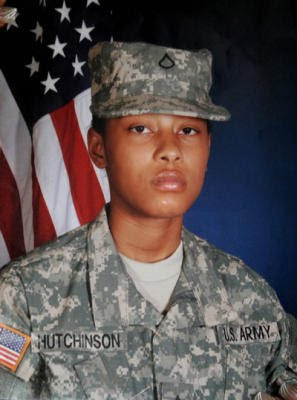
A Morally Bankrupt Military : Spc. Alexis Hutchinson and Pvt. Paul Rich

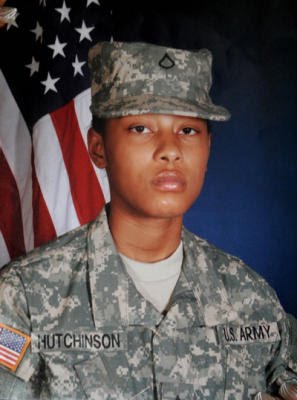
Army Spc. Alexis Hutchinson. Below, Alexis with son Kamani Hutchinson. Photos from Oakland Tribune.

U.S. Army:
Infant to protective services,
mom to Afghanistan

By Dahr Jamail / November 16, 2009

See ‘Morally bankrupt military: When soldiers and their families become expendable,’ by Dahr Jamail, Below.

VENTURA, California — U.S. Army Specialist Alexis Hutchinson, a single mother, is being threatened with a military court-martial if she does not agree to deploy to Afghanistan, despite having been told she would be granted extra time to find someone to care for her 11-month-old son while she is overseas.

Hutchinson, of Oakland, California, is currently being confined at Hunter Army Airfield near Savannah, Georgia, after being arrested. Her son was placed into a county foster care system.

Hutchinson has been threatened with a court martial if she does not agree to deploy to Afghanistan on Sunday, Nov. 15. She has been attempting to find someone to take care of her child, Kamani, while she is deployed overseas, but to no avail.

According to the family care plan of the U.S. Army, Hutchinson was allowed to fly to California and leave her son with her mother, Angelique Hughes of Oakland.

However, after a week of caring for the child, Hughes realised she was unable to care for Kamani along with her other duties of caring for a daughter with special needs, her ailing mother, and an ailing sister.

In late October, Angelique Hughes told Hutchinson and her commander that she would be unable to care for Kamani after all. The Army then gave Hutchinson an extension of time to allow her to find someone else to care for Kamani. Meanwhile, Hughes brought Kamani back to Georgia to be with his mother.

However, only a few days before Hutchinson’s original deployment date, she was told by the Army she would not get the time extension after all, and would have to deploy, despite not having found anyone to care for her child.

Faced with this choice, Hutchinson chose not to show up for her plane to Afghanistan. The military arrested her and placed her child in the county foster care system.

Currently, Hutchinson is scheduled to fly to Afghanistan on Sunday for a special court martial, where she then faces up to one year in jail.

Hutchinson’s civilian lawyer, Rai Sue Sussman, told IPS, “The core issue is that they are asking her to make an inhumane choice. She did not have a complete family care plan, meaning she did not find someone to provide long-term care for her child. She’s required to have a complete family care plan, and was told she’d have an extension, but then they changed it on her.”

Asked why she believes the military revoked Hutchinson’s extension, Sussman responded, “I think they didn’t believe her that she was unable to find someone to care for her infant. They think she’s just trying to get out of her deployment. But she’s just trying to find someone she can trust to take care of her baby.”

Hutchinson’s mother has flown to Georgia to retrieve the baby, but is overwhelmed and does not feel able to provide long-term care for the child.

According to Sussman, the soldier needs more time to find someone to care for her infant, but does not as yet have friends or family able to do so.

Sussman says Hutchinson told her, “It is outrageous that they would deploy a single mother without a complete and current family care plan. I would like to find someone I trust who can take care of my son, but I cannot force my family to do this. They are dealing with their own health issues.”

Sussman told IPS that the Army’s JAG attorney, Captain Ed Whitford, “told me they thought her chain of command thought she was trying to get out of her deployment by using her child as an excuse.” ‘

Major Gallagher, of Hutchinson’s unit, also told Sussman that he did not believe it was a real family crisis, and that Hutchinson’s “mother should have been able to take care of the baby”.

In addition, according to Sussman, a First Sergeant Gephart “told me he thought she [Hutchinson] was pulling her family care plan stuff to get out of her deployment”.

“To me it sounds completely bogus,” Sussman told IPS, “I think what they are actually going to do is have her spend her year deployment in Afghanistan, then court martial her back here upon her return. This would do irreparable harm to her child. I think they are doing this to punish her, because they think she is lying.”

Sussman explained that she believes the best possible outcome is for the Army to either give Hutchinson the extension they had said she would receive so that she can find someone to care for her infant, or barring this, to simply discharge her so she can take care of her child.

Nevertheless, Hutchinson is simply asking for the time extension to complete her family care plan, and not to be discharged.

“I’m outraged by this,” Sussman told IPS, “I’ve never gone to the media with a military client, but this situation is just completely over the top.”

Source / IPS
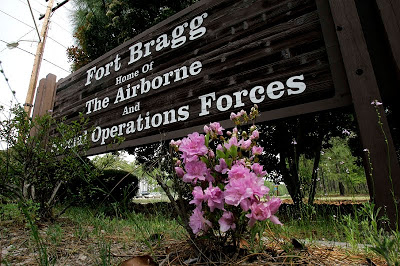
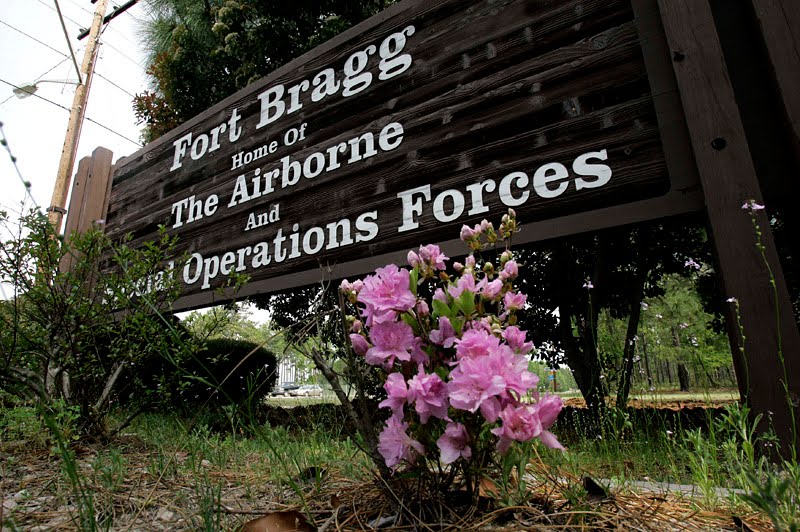
Fort Bragg, N.C. The flowers are a nice touch. Photo by Gerry Broome / AP.

Morally bankrupt military:
When soldiers and their families become expendable

By Dahr Jamail / November 11, 2009

The military operates through indoctrination. Soldiers are programmed to develop a mindset that resists any acknowledgment of injury and sickness, be it physical or psychological. As a consequence, tens of thousands of soldiers continue to serve, even being deployed to combat zones like Iraq and/or Afghanistan, despite persistent injuries. According to military records, over 43,000 troops classified as “nondeployable for medical reasons” have been deployed to Iraq and Afghanistan nevertheless.

The recent atrocity at Fort Hood is an example of this. Maj. Nidal Hasan had worked as a counselor at Walter Reed, hearing countless stories of bloodshed, horror and death from dismembered veterans from the occupations of Iraq and Afghanistan. While he had not yet served in Iraq or Afghanistan, the major was overloaded with secondary trauma, coupled with ongoing harassment about his being a Muslim. This, along with other factors, contributed towards Hasan falling into a desperation so deep he was willing to slaughter fellow soldiers, and is indicative of fissures running deep into the crumbling edifice upon which the US military stands.

The case of Pvt. Timothy Rich also demonstrates the disastrous implications of the apathetic attitude of the military toward its own. Not dissimilar from Major Hasan, who clearly would have benefited from treatment for the secondary trauma he was experiencing from his work with psychologically wounded veterans, one of the main factors that forced Private Rich to go absent without leave (AWOL) was the failure of the military to treat his mental issues.

Rich told Truthout, “In my unit, to go to sick call for mental health was looked down upon. Our acting 1st Sergeant believed that we shouldn’t have mental issues because we were too ‘high speed.’ So I was afraid to go because I didn’t want to be labeled as a weak soldier.”

What followed was more harrowing.

The other problems arose when I brought my girlfriend down to marry her. My unit believed her to be a problem starter so I was ordered not to marry her, taken to a small finance company by an NCO and forced to draw a loan in order to buy her a plane ticket to return home. They escorted her to the airport and through security to ensure that she left. Once the NCO left she turned around and hitchhiked back to Fort Bragg.

Before the unit could discover us, we went to the courthouse and got married. We were then summoned by my Commander, Captain Jones, to his office and reprimanded. He called me a dumb ass soldier and a shit bag for marrying her and told my wife that she was a fool to marry someone as stupid as me. Members of my unit started referring to me as Pvt. Bitch instead of Pvt. Rich. The entire episode caused a lot of strain in our relationship. Unable to cope with all this, I bought two plane tickets and went AWOL with my wife.

Rich was later apprehended when a federal warrant was issued against him. After 11 days in a country jail, he was transported back to Fort Bragg in North Carolina. On August 17, 2008, he was wrongly assigned to Echo Platoon that was part of the 82nd Airborne, whereas his unit was part of the 18th Airborne.

Rich recollects, “I was confused when they assigned me to the 82nd. I was dismissed as a liar when I brought this up with my NCO Sgt Joseph Fulgence and my commander, Captain Thaxton. I ended up spending a year at Echo before being informed that I was never supposed to have been in the 82nd.”

At Fort Bragg, he was permitted to seek mental health treatment and was diagnosed with schizophrenia, psychosis, insomnia and a mood disorder. This, however, did not stop his commander from harassing him. His permanent profile from the doctor restricted him from being on duty before 0800 (8 a.m.) hours, but his commander, Sergeant Fulgence, dismissed the profile as merely a guideline and not a mandatory directive.

The soldier was accused of using mental health as a pretext to avoid duty. So, Rich was up every morning for first formation at 0545 (5:45 a.m.). It wasn’t until he refused to take his medication because it made him groggy in the morning that his doctor called his commander and settled the matter. By then, Rich had already been forced to violate his profile for six months.

During this period, his mental health deteriorated rapidly. The combined effect of heavy medication and restrictions on his home visits resulted in his experiencing blackouts that led him to take destructive actions in the barracks. When he was discovered talking about killing the chain of command, he was put on a 24-hour suicide watch that seemed to have served little purpose, because on August 17 he was able to elude his guards and make his way to the roof of his barracks.

“I climbed onto the roof of the building and sat up there thinking about my family and my situation and decided to go ahead and end my suffering by taking a nose dive off the building,” Rich explained to Truthout.

His body plummeted through the air, bounced off a tree, and he landed on his back with a cracked spine. The military gave him a back brace, psychotropic drugs and a renewed 24-hour suicide watch, measures as effective in alleviating his pain as his failed suicide attempt.

When Truthout contacted him just days after his failed suicide attempt, a fatigued Rich detailed his hellish year-long plight of awaiting a discharge that never came.

I want to leave here very bad. For four months they have been telling me that I’ll get out next week. It got to the point that the NCOs would tell me just to calm me down that I’d be going home the next day. They went as far as to call my wife and requesting her to lie that she was coming to get me the next day. I eventually stopped believing them. I didn’t see an end to it, so I figured I’d try and end it myself.

The noncommissioned officers in his barracks thought it was hilarious that Rich had jumped, and he was offered money for an encore that could be videotaped.

At the time he was in a “holdover” unit, comprised mostly of AWOL soldiers who had turned themselves in or had been arrested. Others in his unit had untreated mental health problems like him or were suffering from severe PTSD (post-traumatic stress disorder) from deployments in Iraq and or Afghanistan.

According to Rich, every soldier in his platoon was subjected to abusive treatment of some kind or the other. “It even got to the point when our 1st Sergeant Cisneros told us that if it were up to him we all would all be taken out back and shot, and that we needed to pray to our gods because we were going to pay (for our actions).”

Tim’s wife Megan had to bear his never-ending ordeal in equal measure. She witnessed the military’s callousness up close. She informed Truthout,

Since February of this year, Tim’s unit had been telling him he would be out in two weeks. After two weeks when he asked, they would repeat the same thing. At times he would get excited and start packing his belongings and I would try to figure out how to get him home to Ohio. He would call me crying in relief because he thought we were going to be together again real soon. The military forced me to lie to him too. When he realized they did not mean to release him he grew very destructive during his black out spells. Eventually he simply gave up on coming home.

Megan first realized there was a problem with the way the military was treating her husband when she noticed him doing and saying things that were out of character for him, like apologizing for not being a good husband and father and being openly suicidal. He had also begun to self-medicate with alcohol, an increasing trend among soldiers not receiving adequate mental-health treatment from the military.

She revealed to Truthout,

He had quit for the girls and me but it seems like he could not handle the stress and needed an escape. This caused a huge problem between us and we began to argue about it. He became severely depressed, pulled away from me, and started to do things he normally doesn’t do, such as giving away his money and belongings, and telling the recipients that he wouldn’t need those things in hell.

She sensed that her husband would be in trouble if he were to stand up for himself, so she began to advocate on his behalf. Her attempts to do so met with fresh abuse from his commanders. The chain of command banned her from the company barracks and had her escorted off post. The couple was commandeered into Sergeant Fulgence’s office where they were chastised. The sergeant referred to Megan as “a bad mother” and “a bitch.” When Megan attempted to leave the office in protest, the sergeant ordered her to stay and listen to what he had to say.

This was followed by an encounter with the commander of the platoon, Commander Thaxton. The commander in this case ordered Tim to shut up, and threatened him with confinement. He demanded that Megan explain what kind of mother would bring her child to a new location without a place to live. She tried telling him that the AER loan was for her to come to Fort Bragg since they had lost their house after Tim’s arrest and loss of job.

Although the paperwork for the loan clearly stated that it was for her travel, food and lodging at Fort Bragg, the commander insisted it was for an apartment. When Tim intervened to say that the $785 would not be sufficient to pay rent and bills, especially since he wasn’t being paid his wages and his wife couldn’t work because of the baby, and according to Tim, both Sergeant Fulgence and Captain Thaxton “had a nice laugh over that” and dismissed the duo, referring to them as “juvenile dumb-asses.”

After Tim returned from being AWOL and was brought up on charges, he went through 706 (a psychology board) that declared him mentally incompetent at the time of his being AWOL. It took a painfully long amount of time for the charges to be dismissed without prejudice. The soldier believes that his superiors deliberately refused to do the requisite paperwork for his clearance and subsequent resumption of his pay.

He told Truthout,

Every time I came on base I got arrested even though I was on active duty again. Then my wife and I got an AER loan for her to come down to Fort Bragg. When she got there and my pay continued to be withheld, the AER money ran out and my wife and child had to sleep in the van we owned. When my unit found out they called the Military Police and ordered me to give custody of my daughter to my father.

When Tim refused to do that, they punished him by confining him to the barracks and barring his wife from entering the base. To add insult, the chain of command took away his van keys and said that neither he nor Megan was allowed use it.

The nightmare ended when the military finally released Pvt. Timothy Rich, and by default, Megan. He was discharged and “allowed” to enter the ranks of US citizens searching for jobs and health care. Their traumatic journey to that starting point is what distinguishes them from their civilian counterparts.

Rich’s advice to anyone thinking of joining the military today: “Don’t join. Everything they advertise and tell you about how it’s a family friendly army is a lie.”

Sgt. Heath Carter suffered a similar fate at the hands of an indifferent military command. Upon return from the invasion of Iraq, he discovered that his daughter Sierra was living in an unsafe environment in Arkansas under the care of his first wife, who had full custody of the child. Heath and his new wife, Teresa, started consulting attorneys in order to secure custody of Sierra, who also suffered from a life-threatening medical condition.

Precisely during this time, the military chose to keep changing Carter’s duty station from Fort Polk, Louisiana, to Fort Huachuca, Arizona, then to Fort Stewart, Georgia. Not only did these constant transfers make it difficult for Carter to see his daughter, they also reduced his chances of gaining custody of Sierra. Convinced that this was a matter of life and death for his daughter, he requested compassionate reassignment to Fort Leavenworth, Missouri, about two hours from his first wife’s home in Arkansas.

His appeals to the military command, the legal department, chaplain and even to his congressman failed, and the military insisted that he remain at Fort Stewart, Georgia. Having run out of all available avenues, in May 2007 he went AWOL from Fort Stewart and headed home to Arkansas where he fought for and won custody of Sierra, and was able to literally save her life by obtaining needed medical care for her.

However, on January 25 of this year, Carter was arrested at his home by the military police, who flew him back to Fort Stewart where he has been awaiting charges for the past eight months. Being a sergeant, he is in a regular unit and not in a holdover, but that does not help his cause. Initially, his commander told him it would take a month and a half for him to be sent home. Several months later, it was decided he would receive a court-martial.

Carter feels frustrated,

Now I have to wait for the court martial. It’s taken this long for them to decide. If we had known it would take this long, my family could have moved down here. Every time I ask when I’ll have a trial, they say it is only going to be another two weeks. I get the feeling they are lying. They have messed with my pay. They’re trying to push me to do something wrong.

His ordeal has forced Carter to reflect on the wars. He admits that, although his original reason for going AWOL was personal and he had otherwise been proud of his missions, he sees things in Iraq differently today. “I don’t think there is any reason for us to be there except for oil.”

Yet, both Private Rich and Sergeant Carter were offered deployments to Afghanistan amid their struggles. It is soldiers like these that the military will use to fill the ranks of the next “surge” of troops into Afghanistan, which at the time of this writing, appears to be as many as 34,000 troops.

The stage is set for more tragic incidents like the recent massacre at Fort Hood.

[Dahr Jamail, an independent journalist, is the author of The Will to Resist: Soldiers Who Refuse to Fight in Iraq and Afghanistan, (Haymarket Books, 2009), and Beyond the Green Zone: Dispatches From an Unembedded Journalist in Occupied Iraq, (Haymarket Books, 2007). Jamail reported from occupied Iraq for nine months as well as from Lebanon, Syria, Jordan and Turkey over the last five years. This report was originally published by Truthout.]

Source / Dahr Jamail’s Mideast Dispatches

The Rag Blog

Posted in RagBlog | Tagged , , , , , | 15 Comments

Hot Oil! Narco Pirates Smuggle Mexican Petrol into Texas

Hot oil? Petroleum “pipa” with the mark of the Zetas, the infamous drug cartel branching out into petro-piracy. Photo from NarcoGuerra Times.

HOT OIL!

Union crooks, drug cartels and U.S. corporations are stealing billions of bucks of Mexican petroleum.

By John Ross / The Rag Blog / November 16, 2009

MEXICO CITY — In a catchy photo op staged this past August, officials of the U.S. Department of Homeland Security are pictured handing over a four foot-long government check for $2.4 million USD to Mexican finance ministry officials as recompense for shipments of stolen Mexican oil smuggled into Texas right under the noses of U.S. customs enforcement officers and sold to Trammo Petroleum, a Houston transnational with branch offices in China, Brazil, Egypt, France, the U.K., and Switzerland.

Part of the shipment of purloined petroleum was then sold off to a German BASF subsidiary in Port Arthur for $2.4 million. According to the New York Times, the deal was brokered by one Josh Crescenzi, Rio Grande Valley supervisor for Continental Fuels and a bundler for former Texas oilman George Bush during his 2004 election campaign who is now in a federal protected witness program. Trammo CEO Donald Schroeder has pleaded guilty to receiving stolen property and will be sentenced in December.

The Texas case is, in fact, the tip of a sinkhole that involves tens of millions of barrels of stolen Mexican oil worth billions of greenback dollar bills, U.S. customs enforcement, corrupt oil union officials, dozens of mysteriously “disappeared” oil workers, and a dread drug cartel.

Mexican authorities calculate that more than 2,000,000 barrels are stolen from PEMEX, the national petroleum monopoly, each year by workers, company insiders, and organized crime. A 2007 New York Times investigation estimated that a billion dollars worth of Mexican oil was being siphoned from PEMEX annually through fraud, theft, and clandestine “tomas” (“takes”) drilled into company pipelines. Thousands of gallons of jet fuel allegedly wound up in the tanks of drug cartel jets carrying cocaine in from Colombia for transshipment to the U.S.

PEMEX numbers (questionable at best) reveal that more than 1.5 million barrels were sucked out of the oil giant’s pipelines in the first nine months of 2009 alone. A Mexican government investigation into one network of oil thieves operating in the Burgos sector along the border in Coahuila and neighboring Nuevo Leon states yielded 740,000 pesos in cold, hard cash and evidence of $46,000,000 USD in stolen oil sales, presumably to U.S. buyers.

The modus operandi of the petrol pirates is simplicity itself: “chupaductos” (“duct suckers”) are attached to perforated pipelines and the oil pumped into tanker trucks or “pipas” that sometimes bear the PEMEX logo. Pipa drivers are provided with phony documentation from the Mexican Environmental Secretariat (SEMARNAP) attesting that the contents of the loads they are moving are liquid petroleum waste — the documentation is apparently good enough to satisfy the curiosities of U.S. customs inspectors.

Some of the stolen crude is processed at clandestine refineries into gasoline that is sold in both Mexico and the U.S. Gas stations in central Mexico, particularly in Puebla state, are ready customers for the hot oil if a recent article in the daily El Universal is to be believed. Major trucking and bus companies buy the purloined gasoline without any questions asked. A May 16th, 2008 raid by federal police agents at offices in Acolman, Mexico state resulted in the confiscation of documentation for dummy companies created to distribute the product.

PEMEX bulletins reported by El Universal establish that nearly half the stolen petroleum (48%) is sucked from pipelines that supply the country’s six major refineries — Mexico, which has limited refining capabilities, sends most of its crude to Texas to be converted into gasoline that is then re-imported for domestic use.

22% of the “tomas” are tapped from two oil ducts feeding the Hector Lara refinery in Cadareyta, a city of 75,000 in central Nuevo Leon. Local papers report that PEMEX has shut down 33 “takes” in the Cadareyta pipeline network so far this year, most recently this past August 30th along the national highway in San Juan, one of dozens of tiny communities that pertain to the municipality. The perforated duct measures 24 inches around which experts say translates to a lot of petroleum.

Who is stealing Cadareyta’s oil? One PEMEX investigation suggests the involvement of organized crime, most pertinently the Zetas, a ruthless band of narco traffickers, who began life as the dreaded enforcers for the Gulf Cartel. Noted for their expertise in beheading their rivals, the original Zetas were Mexican Army officials trained in drug war strategies at the Center for Special Forces in Fort Bragg, North Carolina.

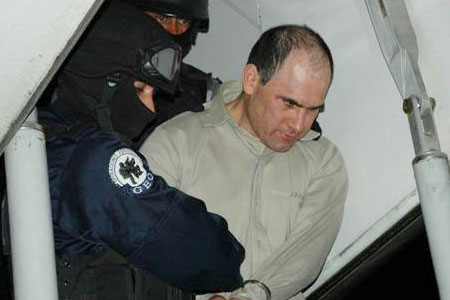
Osiel Cardenas Guillen, reputed kingpin of Mexico’s notorious Gulf cartel, faces 30 years in a U.S. prison. Photo from U.S. News and World Report.

Bored with protecting the interests of Osiel Cardenas, the Gulf Cartel capo who is now facing 30 years in the U.S. super-maxi penitentiary in Florence, Colorado, the Zetas have gone into business for themselves and are now assigned full-blown cartel status by Mexican drug fighters. More than a dozen Zeta offshoots now operate throughout Mexico and the cartel is diversifying into extortion, kidnapping, pirate goods, and the sale of stolen oil.

With 2000 members, Section 49 of the Sindicato Mexicano de Petroleros de la Revolucion Mexicana (STPRM) which holds the contract for the Cadareyta refinery is notorious for corruption and gangsterism. Up until 2007, the section was controlled by ten brothers named Vega, disciples of STPRM boss Carlos Romero Deschamps. In fact, Hilario Vega, then in his third term as secretary general of Section 49, was considered Romero Deschamps’ heir apparent when leadership of the union devolves to northern sections of the STPRM in 2012.

One ex-Cadayreta worker, Tony Cantu, interviewed by the New York Times‘ Tim Weiner, testified that the Vegas were perfectly capable of killing dissidents to protect their concession — Cantu now lives in Houston. Hermen Macias, a Cadareyta newspaper editor who dared to cross the Vegas, claims he was repeatedly threatened with death before the union bosses began to mysteriously disappear.

The Vega brothers’ enterprise began to unravel some 30 months ago when, on May 16th 2007, David Vega, AKA “El Ganso” (“The Goose”) left a union meeting in high spirits with three fellow oil workers — the four reportedly had been plotting strike tactics if then-upcoming negotiations with the PEMEX refinery division fell through. But David Vega and his three companions never returned home. One unidentified eyewitness to their forced disappearance or “levanton” (“pick-up” in narco parlance) reported that the petroleros were waylaid by a commando of men dressed in black uniforms with no insignias and bullet-proof vests and carrying automatic weapons with grenades strapped to their belts — an outfit that fits the Zeta dress code — and spirited off in several large black cars.

The morning after the “levanton,” Hilario Vega, the long-time Section 49 boss, received a phone call instructing him to rendezvous with the kidnappers in the parking lot of a Cadareyta Wal-Mart mega-store if he wanted to see his brother alive again. According to his son Josue Vega, Hilario complied and was never seen again.

Some news stories suggest that there were over 100 “levantones” in Cadareyta in 2007 — the number is imprecise because many families failed to report the disappearances of their loved ones to the police who did not seem very interested in clearing up the cases anyway — if recent criminal enterprise is any teacher the cops may well have been involved in the crimes themselves. Although an unspecified number of kidnapping victims were eventually allowed to return home, leftist Mexican senator Rosario Ibarra, the founder of the EUREKA Mothers of the Disappeared group, holds a list of 38 refinery workers who remain missing. Ibarra, whose own son, Jesus, a member of the 23rd of September Communist League, was disappeared by government agents in 1976, is a native of nearby Monterrey.

The indifference of local authorities, state and federal prosecutors, Section 49, and the national leadership of the STPRM at the disappearances of 38 oil workers, has been nothing short of sensational. Despite a resolution of the Mexican Senate urged by Ibarra and calling for a thorough investigation, the Federal Prosecutors’ Office (PGR) insists it has no new information on the kidnappings and the investigation remains frozen in the cold case file. Even clues supplied by witnesses, such as the license numbers of vehicles used in the “levantones,” have evaporated, according to Hilario’s son Josue.

The younger Vega complains that, disillusioned by the PGR’s lethargy, he contracted a billboard near the Cadareyta airport to display photos of his father and other missing petroleros but the billboard company canceled the contract on the pretext that it constituted “political advertisement.” Candidates of Mexico’s two most powerful parties, the PRI and the PAN, often advertise on billboards outside the Cadareyta airport.

Two and half years after the mystery “levantones,” Hilario Vega’s replacement as the interim secretary general of Section 49, Jose Izaguirre, has issued no public statement about his predecessor’s disappearance. Izaguirre, who is under federal investigation for selling refinery jobs, makes no bones about his candidacy to become permanent secretary general of the section.

The silence of accomplices extends to STPRM boss of all bosses Romero Deschamps who the surviving Vegas inevitably refer to as “Don Carlos.” “Don Carlos and my father were friends for life,” affirmed Josue Vega in a recent Internet interview.

Carlos Romero Deschamps succeeded the legendary STPRM czar Joaquin Hernandez Galicia in 1989 after the omni-powerful “La Quina” was arrested and stripped of office on orders from then-president Carlos Salinas in a murderous raid on Hernandez Galicia’s stronghold in Ciudad Madero Tamaulipas state — the body of a police agent freshly gunned down in Ciudad Juarez was purportedly flown into Madero so that La Quina could be charged with murder.

Hernandez Galicia had incurred the now-reviled ex-president’s wrath by endorsing leftist Cuauhtemoc Cardenas, the son of Lazaro Cardenas who nationalized Mexico’s oil industry back in the 1930s, from whom Salinas embezzled the 1988 presidential election. La Quina reportedly opposed Salinas’s plans to re-privatize PEMEX and also had financed a slim volume — A Killer In Los Pinos (the Mexican White House) — that revealed how Carlos and his black sheep brother Raul shot and killed an Indian servant during a childhood game of Cowboys & Indians.

The PRI’s Carlos Romero Deschamps isn’t afraid to send in the muscle. Photo from La Economia.

Carlos Romero Deschamps is a veteran mover and shaker in the ranks of the once-and-future ruling PRI party that after 71 years in power was finally deposed in the 2000 presidential elections by Vicente Fox’s rightist PAN party. In a doomed scheme to stymie Fox’s bid, the STPRM was used as a pipeline to funnel $110,000,000 USD in illegal contributions from PEMEX operating funds into the campaign coffers of losing PRI candidate Francisco Labastida, the so-called PEMEXgate scandal. Although PEMEX director Rogelio Montemayor was forced to flee Mexico to escape prosecution for the scandal, Romero Deschamps, then a PRI senator, enjoyed immunity that exempted him from prosecution (the “fuero“) because he was a member of congress.

The PAN’s unexpected triumph in 2000 taught Romero Deschamps which side of the coin the money was posted on and he soon closed ranks with Fox’s successor Felipe Calderon in his designs to re-privatize PEMEX. During 45 Senate debates on Calderon’s privatization bill, Romero Deschamps was a perpetual no-show despite the key role played by the STPRM in the nationalization process — a strike by petroleros against the transnational “Seven Sisters” that then controlled Caribbean oil fields resulted in Cardenas’s expropriation and nationalization of Mexico’s petroleum industry in 1938. PEMEX was created soon after.

Both PEMEX and the STPRM soon fell under the control of the PRI from whose ranks corrupt union leadership emerged. By the oil boom and bust of 1976-82, corruption had become institutionalized and with 90,000 dues-paying members (and another 30,000 contract workers), the union has long been a PRI cash cow.

Like La Quina, Romero Deschamps is not reluctant to send in muscle to silence detractors. As recently as early October, “Don Carlos” dispatched his goons to attack dissident petroleros peacefully protesting outside the STPRM’s Mexico City headquarters. Rivals disappear — the suspected fate of the Cadareyta workers is a case in point — and some suffer an overdose of lead.

Despite plunging PEMEX revenues as major offshore oilfields like Cantarell play out, Romero Deschamps and his cronies continue to be handsomely rewarded by the Calderon regime for their “cooperation.” For years, investigators have sought to determine the dimensions of the pay-offs with which PEMEX buys the STPRM’s allegiances. Recent revelations by the Federal Institute for the Freedom of Information (IFAI) indicate that between 2005 and 2007, management gifted Romero Deschamps and the union’s executive board with over a billion pesos — 1,273,588,029 of them to be exact.

In 2007 alone, the oil union boss received 139 million pesos for “expenses.” 75 million were issued for two STPRM “fiestas” and 532 million for “travel.” Although the destination of these trips was not spelled out, Romero Deschamps, like his predecessor La Quina, seems to spend more time at the craps tables in Las Vegas than he does at STPRM headquarters.

[John Ross will present his latest cult classic El Monstruo — Dread and Redemption in Mexico City (“a lusty corrido about a great betrayed city” — Mike Davis) at Modern Times, 888 Valencia Street in San Francisco’s La Mision this Wednesday November 18th at 7 p.m. The masses are cordially invited. Ross is scouting venues in the midwest, south, and east coast for his winter-spring 2010 Monster Tour. Write him at johnross@igc.org with ideas.]

The Rag Blog

Posted in RagBlog | Tagged , , , , , | Leave a comment

By Betty Dubose Hamilton / The Rag Blog / November 16, 2009

With the following list, Dr. Robert P. Watson of Lynn University in Boca Raton, Florida, graded Barack Obama on his first six months in office.

I think the list is invaluable. Let’s add to it as more accomplishments come to light. We’ll send him The Rag Blog with our additions.

I am saving the list in a file and using appropriate parts for different blogs. For example, in my local paper in Brownfield, Texas, there was recently a comment about President Obama’s not being deserving to be Commander-in-Chief of the military. I went through the list and picked out all of the items that pertained to what he has done for our soldiers and their families and posted them in the comment space. Some of these items I was already aware of, some I was not.

Although I knew that President Obama had lifted the veil of secrecy (with appropriate family permission) over the returning war dead that had been established by both H. W. Bush and G. W. Bush, I was not aware that the expenses for families of the fallen soldiers are now covered so that they could be at Dover A.F.B. when their loved ones came home (#5). I am also grateful that he eliminated the “back-door draft” caused by the stop-loss policy that kept soldiers in Iraq-Afghanistan longer than their tours of service (#12).

I believe that numbers 1, 2, and 9 were instrumental in exposing the Medicare fraud recently publicized in Florida. Even though I was aware of the rules limiting lobbyists in the White House (#10, 11), I am glad to be reminded and to have them in a list that I can go to for reference.

I read certain newspapers and blogs religiously, and will use the various items in the list to support my arguments against the propaganda perpetuated by other bloggers who merely repeat pundits’ talking points.

A Grade for Obama:
First Six Months’ Record

By Robert P. Watson

I am always being asked to grade Obama’s presidency. In place of offering him a grade, I put together a list of his accomplishments thus far. I think you would agree that it is very impressive. His first six months have been even more active than FDR’s or LBJ’s — the two standards for such assessments.

Yet, there is little media attention given to much of what he has done. Of late, the media is focusing almost exclusively on Obama’s critics, without holding them responsible for the uncivil, unconstructive tone of their disagreements or without holding the previous administration responsible for getting us in such a deep hole. The misinformation and venom that now passes for political reporting and civic debate is beyond description.

As such, there is a need to set the record straight. What most impresses me is the fact that Obama has accomplished so much not from a heavy-handed or top-down approach but from a style that has institutionalized efforts to reach across the aisle, encourage vigorous debate, and utilize town halls and panels of experts in the policy-making process. Beyond the accomplishments, the process is good for democracy… and our democratic processes have been battered and bruised in recent years.

Let me know if I missed anything in the list (surely I did).

Here is a list of Obama’s accomplishments as of August 2009.

  1. Ordered all federal agencies to undertake a study and make recommendations for ways to cut spending;
  2. Ordered a review of all federal operations to identify and cut wasteful spending and practices;
  3. Instituted enforcements for equal pay for women;
  4. Beginning the withdrawal of US troops from Iraq;
  5. Families of fallen soldiers have expenses covered to be on hand when the body arrives at Dover A.F.B.;
  6. Ended media “blackout” on war casualties; reporting full information;
  7. Ended media “blackout” on covering the return of fallen soldiers to Dover A.F.B.; the media is now permitted to do so pending adherence to respectful rules and approval of fallen soldier’s family;
  8. The White House and federal government are respecting the Freedom of Information Act;
  9. Instructed all federal agencies to promote openness and transparency as much as possible;
  10. Limits on lobbyists’ access to the White House;
  11. Limits on White House aides working for lobbyists after their tenure in the administration;
  12. Ended the previous “stop-loss” policy that kept soldiers in Iraq/Afghanistan longer than their enlistment date;
  13. Phasing out the expensive F-22 war plane and other outdated weapons systems, which weren’t even used or needed in Iraq/Afghanistan;
  14. Removed restrictions on embryonic stem-cell research;
  15. Federal support for stem-cell and new biomedical research;
  16. New federal funding for science and research labs;
  17. States are permitted to enact federal fuel efficiency standards above federal standards;
  18. Increased infrastructure spending (roads, bridges, power plants…) after years of neglect;
  19. Funds for high-speed, broadband Internet access to K-12 schools;
  20. New funds for school construction;
  21. The prison at Guantanamo Bay is being phased out;
  22. US Auto industry rescue plan;
  23. Housing rescue plan;
  24. $789 billion economic stimulus plan;
  25. The public can meet with federal housing insurers to refinance (the new plan can be completed in one day) a mortgage if they are having trouble paying;
  26. US financial and banking rescue plan;
  27. The “secret detention” facilities in Eastern Europe and elsewhere are being closed;
  28. Ended the previous policy; the US now has a no torture policy and is in compliance with the Geneva Convention standards;
  29. Better body armor is now being provided to our troops;
  30. The missile defense program is being cut by $1.4 billion in 2010;
  31. Restarted the nuclear non-proliferation talks and building back up the nuclear inspection infrastructure/protocols;
  32. Reengaged in the treaties/agreements to protect the Antarctic;
  33. Reengaged in the agreements/talks on global warming and greenhouse gas emissions;
  34. Visited more countries and met with more world leaders than any president in his first six months in office;
  35. Successful release of US captain held by Somali pirates; authorized the SEALS to do their job;
  36. US Navy increasing patrols off Somali coast;
  37. Attractive tax write-offs for those who buy hybrid automobiles;
  38. “Cash for clunkers” program offers vouchers to trade in fuel inefficient, polluting old cars for new cars; stimulates auto sales;
  39. Announced plans to purchase fuel efficient American-made fleet for the federal government;
  40. Expanded the SCHIP program to cover health care for 4 million more children;
  41. Signed national service legislation; expanded national youth service program;
  42. Instituted a new policy on Cuba, allowing Cuban families to return “home” to visit loved ones;
  43. Ended the previous policy of not regulating and labeling carbon dioxide emissions;
  44. Expanding vaccination programs;
  45. Immediate and efficient response to the floods in North Dakota and other natural disasters;
  46. Closed offshore tax safe havens;
  47. Negotiated deal with Swiss banks to permit US government to gain access to records of tax evaders and criminals;
  48. Ended the previous policy of offering tax benefits to corporations who outsource American jobs; the new policy is to promote in-sourcing to bring jobs back;
  49. Ended the previous practice of protecting credit card companies; in place of it are new consumer protections from credit card industry’s predatory practices;
  50. Energy producing plants must begin preparing to produce 15% of their energy from renewable sources;
  51. Lower drug costs for seniors;
  52. Ended the previous practice of forbidding Medicare from negotiating with drug manufacturers for cheaper drugs; the federal government is now realizing hundreds of millions in savings;
  53. Increasing pay and benefits for military personnel;
  54. Improved housing for military personnel;
  55. Initiating a new policy to promote federal hiring of military spouses;
  56. Improved conditions at Walter Reed Military Hospital and other military hospitals;
  57. Increasing student loans;
  58. Increasing opportunities in AmeriCorps program;
  59. Sent envoys to Middle East and other parts of the world that had been neglected for years; reengaging in multilateral and bilateral talks and diplomacy;
  60. Established a new cyber security office;
  61. Beginning the process of reforming and restructuring the military 20 years after the Cold War to a more modern fighting force… this includes new procurement policies, increasing size of military, new technology and cyber units and operations, etc.;
  62. Ended previous policy of awarding no-bid defense contracts;
  63. Ordered a review of hurricane and natural disaster preparedness;
  64. Established a National Performance Officer charged with saving the federal government money and making federal operations more efficient;
  65. Students struggling to make college loan payments can have their loans refinanced;
  66. Improving benefits for veterans;
  67. Many more press conferences and town halls and much more media access than previous administration;
  68. Instituted a new focus on mortgage fraud;
  69. The FDA is now regulating tobacco;
  70. Ended previous policy of cutting the FDA and circumventing FDA rules;
  71. Ended previous practice of having White House aides rewrite scientific and environmental rules, regulations, and reports;
  72. Authorized discussions with North Korea and private mission by Pres. Bill Clinton to secure the release of two Americans held in prisons;
  73. Authorized discussions with Myanmar and mission by Sen. Jim Webb to secure the release of an American held captive;
  74. Making more loans available to small businesses;
  75. Established independent commission to make recommendations on slowing the costs of Medicare;
  76. Appointment of first Latina to the Supreme Court;
  77. Authorized construction/opening of additional health centers to care for veterans;
  78. Limited salaries of senior White House aides; cut to $100,000;
  79. Renewed loan guarantees for Israel;
  80. Changed the failing/status quo military command in Afghanistan;
  81. Deployed additional troops to Afghanistan;
  82. New Afghan War policy that limits aerial bombing and prioritizes aid, development of infrastructure, diplomacy, and good government practices by Afghans;
  83. Announced the long-term development of a national energy grid with renewable sources and cleaner, efficient energy production;
  84. Returned money authorized for refurbishment of White House offices and private living quarters;
  85. Paid for redecorations of White House living quarters out of his own pocket;
  86. Held first Seder in White House;
  87. Attempting to reform the nation’s healthcare system which is the most expensive in the world yet leaves almost 50 million without health insurance and millions more underinsured;
  88. Has put the ball in play for comprehensive immigration reform;
  89. Has announced his intention to push for energy reform; and
  90. Has announced his intention to push for education reform.
  91. Oh, and he built a swing set for the girls outside the Oval Office!

    [Robert P. Watson, Ph.D. is Coordinator of American Studies at Lynn University in Boca Raton, Florida. This list covers Obama’s presidency through August, 2009.]

    Betty DuBose Hamilton’s additions:
    91. Signed the Lilly Ledbetter fair pay act.

    92.Discovery and publicizing of Medicare fraud, making the public more
    aware of not turning a blind eye to such fraud.

    [Editor’s Note: This is basically a list of positives and there are many items on this list that progressives will disagree with, will consider to be cosmetic, or will fault a lack of follow through — and there are without doubt a lot of negatives not included. But we think this is a useful list just the same.]

    Type rest of the post here

    Source /

    The Rag Blog

Posted in RagBlog | Leave a comment

Cannabis Café : Getting High in Portland

Portland’s Cannabis Cafe opened on Friday the 13th of November, 2009. Photo from The Portland Mercury.

Dutch-style pot shop:
Cannabis Café
is medical marijuana salon

…the cafe comes almost a month after the Obama administration told federal attorneys not to prosecute patients who use marijuana for medical reasons or dispensaries in states which have legalized them.

By Dan Cook / November 15, 2009

PORTLAND, Oregon — The United States’ first marijuana cafe opened on Friday, posing an early test of the Obama administration’s move to relax policing of medical use of the drug.

[Actually, according to The Oregonian, it’s the second marijuana cafe; On Oct. 1, Steve Geiger opened Highway 420, a small lounge at the back of his pipe shop at 6418 S.E. Foster Road in Portland.]

The Cannabis Cafe in Portland, Oregon, is the first to give certified medical marijuana users a place to get hold of the drug and smoke it — as long as they are out of public view — despite a federal ban.

“This club represents personal freedom, finally, for our members,” said Madeline Martinez, Oregon’s executive director of NORML, a group pushing for marijuana legalization.

“Our plans go beyond serving food and marijuana,” said Martinez. “We hope to have classes, seminars, even a Cannabis Community College, based here to help people learn about growing and other uses for cannabis.”

The cafe — in a two-story building which formerly housed a speak-easy and adult erotic club Rumpspankers — is technically a private club, but is open to any Oregon residents who are NORML members and hold an official medical marijuana card.

Members pay $25 per month to use the 100-person capacity cafe. They don’t buy marijuana, but get it free over the counter from “budtenders”. Open 10 a.m. to 10 p.m., it serves food but has no liquor license.

There are about 21,000 patients registered to use marijuana for medical purposes in Oregon. Doctors have prescribed marijuana for a host of illnesses, including Alzheimer’s, diabetes, multiple sclerosis and Tourette’s syndrome.

On opening day, reporters invited to the cafe could smell, but were not allowed to see, people smoking marijuana.

“I still run a coffee shop and events venue, just like I did before we converted it to the Cannabis Cafe, but now it will be cannabis-themed,” said Eric Solomon, the owner of the cafe, who is looking forward to holding marijuana-themed weddings, film festivals and dances in the second-floor ballroom.

No prosecution

The creation of the cafe comes almost a month after the Obama administration told federal attorneys not to prosecute patients who use marijuana for medical reasons or dispensaries in states which have legalized them.

About a dozen states, including Oregon, followed California’s 1996 move to adopt medical marijuana laws, allowing the drug to be cultivated and sold for medical use. A similar number have pending legislation or ballot measures planned.

Pot cafes, known as “coffee shops”, are popular in the Dutch city of Amsterdam, where possession of small amounts of marijuana is legal. Portland’s Cannabis Cafe is the first of its kind to open in the United States, according to NORML.

Growing, possessing, distributing and smoking marijuana are still illegal under U.S. federal law, which makes no distinction between medical and recreational use.

Federal and local law enforcement agencies did not return phone calls from Reuters on Friday seeking comment on the Portland cafe’s operations.

“To have a place that is this open about its activities, where people can come together and smoke — I say that’s pretty amazing.” said Tim Pate, a longtime NORML member, at the cafe.

Some locals are hoping it might even be good for business.

“I know some neighbors are pretty negative about this place opening up,” said David Bell, who works at a boutique that shares space with the cafe. “But I’m withholding judgment. There’s no precedent for it. We don’t know what to expect. But it would great if it brought some customers into our store.”

[Writing by Bill Rigby; editing by Mohammad Zargham]

Source / Reuters / Yahoo News

NORML’s Executive Director Madeline Martinez at Portland’s Cannibis Cafe. Photo from The Portland Mercury.

But it was not all cheers outside the grand opening.

“Despite the hype, opening night seemed like kind of a bust,” a blogger with Portland Mercury deadpanned. “As I stood at the back of the line talking with Ian, a long-time cardholder who was up for the idea of a sociable ‘medicating’ environment (‘Do you like to sit and drink in your house?’ he said. ‘It’s nice to get out.’), people kept ditching out from the front of the line, shaking their heads. ‘Why would I want to smoke with a bunch of people I don’t know?’ grumbled an old man in a black cowboy hat, striding away. ‘Save your money and buy a bag!’ shouted a twenty-something dude as he left.”
[….]
The new café is something of a test for the Obama administration’s policy that it will respect individual states’ medical marijuana laws. During his presidential campaign, Obama had promised to stop raids on medical dispensaries that were operating within state law.

“I think the basic concept of using medical marijuana for the same purposes and with the same controls as other drugs prescribed by doctors, I think that’s entirely appropriate,” the president said.

Laws in California and Colorado, which also allow medical marijuana, do not make provisions for anything other than dispensaries. Oregon has about 21,000 medical marijuana patients.

Stephen C. Webster /the raw story

Highway 420 in Portland, which has a small lounge for medical marijuana patients.

Thanks to Mariann Wizard / The Rag Blog

Posted in RagBlog | Tagged , , , , , , , , | 3 Comments

Dr. Stephen R. Keister : Health Care, Congress and the Inquisition


It’s pure torture:
Reviewing the House Health Care plan

By Dr. Stephen R. Keister / The Rag Blog / November 15, 2009

See ‘Healthcare-NOW on the House Health Care bill,’ Below.

In his excellent review in TheRag Blog, Alex Knight discussed Silvia Federici’s new book Calaban and the Witch: Women, the Body and Primitive Accumulation.

Caliban and the Witch is a study of women accused of witchcraft, and their ultimate fate of being burned at the stake, in Europe and America during the 16th and 17th Centuries. It details the collusion between state and church in relegating women to a secondary place in society. The author notes:

“Frederici goes on to show how female sexuality, which was seen as a source of women’s potential power over men, became an object of suspicion and came under sharp attack by the authorities. The assault manifested in new laws that took away women’s control over the reproductive process, such as the banning of birth control measures, the replacement of midwives by male doctors, and the outlawing of abortion and infanticide. Federici calls this an attempt to turn the female body into ‘a machine for the reproduction of labor,’ such that women’s only purpose in life was supposedly to produce children.’”

In my morning newspaper an Associated Press dispatch:

“WASHINGTON — The call came in from Rome, just as House Speaker Nancy Pelosi and her top lieutenants were scrambling to round up scarce votes to pass their sweeping health overhaul. Cardinal Theodore E. McCarrick, the former archbishop of Washington, was on the line for Pelosi, calling to discuss adding strict abortion restrictions to the House bill. It was just one element of an intensive lobbying effort orchestrated by the nation’s Catholic bishops, who have emerged as a formidable force in the health care negotiations. They used their clout with millions of Catholics and worked behind the scenes in Congress to make sure the abortion curbs were included in the legislation — and they are now pressing to keep them there.”

Thus, the last minute motion by Rep. Bart Stupak that places a strict anti-abortion clause in the House health care bill. Rep. Stupak, as revealed by Rachael Maddow. is a member of The Family, a group of extreme right wing fundamentalist protestants that inhabit 311 C Street and many other residential facilities in and around Washington, D.C.

(Be sure and read Jeff Sharlet’s The Family: The Secret Fundamentalism at the Heart of American Power, and Sherman DeBrosse’s Rag Blog article on this subject.)

The Stupak Amendment goes much further than the long standing Hyde Amendment which forbids federal funds to cover abortions. This one “mandates that no federal funds can be used to pay for an abortion or ‘cover any health care plan’ that includes coverage of abortion, except in cases where the mother’s life is in danger or the pregnancy was the result of rape or incest. Rachael Morris, writing in Mother Jones, continues:

“The first part of the amendment isn’t new. The 1976 Hyde Amendment already prevents the use of federal dollars to pay for most abortions. Where pro-lifers won big was on the second part which would significantly limit the availability of private insurance plans to cover the procedure. That’s because Stupak’s amendment doesn’t just apply to the public option. The House health care bill will also provide subsidies to help people and small businesses purchase plans at an exchange. This represents a lucrative new market for insurers: anyone earning less than $88,000 for a family of four qualifies for assistance, as well as certain small companies. But to gain access to these new customers, insurers will have to drop abortion from their plans.”

In short this indicates that even if you pay for the plan with your own money, abortion coverage will be excluded.

Another excellent piece on the subject was Barbara J. Berg’s Rag Blog article entitled “The House Health Care bill: Compromising away women’s rights”.

An already farcical “health care” bill has been made even more absurd by the forces that oppose a woman’s right to chose. Again we are faced here — in a nation founded on the belief that there shall be no established state religion — with forces wishing to impose medieval theological values on our society. Will the next step be a return of the Inquisition?

A personal note. I am an 88-year old secularist who feels, as my friends know, that one’s religion should have nothing to do with friendship. I prefer to judge a person by his/her ethical character and intellect. I find religious proselytizing to be objectionable, whether it be from Christian, Buddhist, Jew or atheist. I ask of others that they not try to force their beliefs upon me as I will not force mine upon them. That is not to say that I do not enjoy listening to, or joining in, an intelligent discussion of theology, just as I am content to listen to physicists discuss the theory of thermodynamics. We can always learn, and some of my best informal teachers have been Jesuits or Rabbis.

Not only does the Pelosi health care bill face self immolation with the introduction of theological fiat, but it has deserted the concept of a public option for all. The Socialist Worker from Nov. 3, 2009, points out that

“According to a Congressional Budget Office study of the House bill, only 6 million Americans would be enrolled in the public option by the time it is fully phased in, in 2019. That’s just 2% of the 282 million Americans younger than 65 (who are not covered by Medicare). The CBO explains that the low numbers are in large part because the plan would typically have premiums that are somewhat higher than the average premiums for the private plans.”

In other words, as pointed out in The Nation, the rates would not be tied to Medicare rates but tied to those of the big insurance companies. That is a big victory for the insurance industry and it will undermine the ability of the public option to compete and create pressure for reduced costs. Also, the bill eliminates the state single payer option, that is alive and well in Pennsylvania for instance, while forcing most people to buy private insurance.

Force them to buy insurance! As The New York Times points out:

“A survey by the Commonwealth Fund found that 73% of the adults who tried to buy insurance on the open market over a three-year period never bought a plan — because they could not afford it, could not find a plan that met their needs, or were turned down. Pending legislation would help some of them by preventing rejections or high charges based on health status and by setting minimum benefit requirements. But many people who might find the premiums too high will face an agonizing choice: buy insurance or pay a penalty of hundreds or even thousands of dollars per family if they still decide to forego insurance.”

Never has there been a greater boon to the profits of the insurance industry than the House health care bill, and one can be assured there will be little effort in the Senate to correct this. In my previous columns in The Rag Blog I have referred to an article by Karl Manheim, a professor at Loyola Law School in Los Angeles questioning the constitutionality of legislating the mandatory purchase of health insurance.

The advocates of the bill keep making the point that the insurance carriers will be required to insure those with preexisting conditions. Great, we insure those folks — but in view of the fact that the prime purpose of the health insurance industry is profit for the executives and stockholders, and not patient care, the insurance industry will merely raise rates for the current subscribers. In the House bill there are absolutely no price controls on the insurance industry.

Another cry I hear comes from the elderly, who fear that the legislation will take money “from my Medicare.” I have found this difficult to understand; however, recently while watching the series of ads on TV I have come to the realization that these poor folks are discussing Medicare Advantage plans — private insurance plans that incorporate the name of Medicare, but which actually are not administered by the Medicare program.

These plans were a creation of the Bush administration, circa 2003, to privatize Medicare (since they had failed in privatizing social security), and thus, under the first rule of neoliberal economics, to deplete the Medicare trust fund. In short, the elderly are conned into signing up for these programs, they sign their Medicare rights over to a private insurance company, and are covered by the rules and regulations of that specific insurance company.

The private insurance companies are currently being paid, for each subscriber, the estimated amount that it would require to attend to that person under Medicare per se, plus an extra 17%. The current house legislation now anticipates reducing that 17% overpayment in an effort to preserve Medicare in the future.

By a slight of hand the insurance carriers convince the subscribers that they are receiving an enhanced program, while indeed, the purpose, once again, is to increase insurance company profits. An example: these plans promise “dental care,” perhaps a yearly dental examination or cleaning. Watch what happens when a $1000 gold tooth capping is suggested!

The carrier allows choice of physician, but from a group of physicians on their panel. Many physicians refuse Medicare advantage patients, because of the low fees paid initially (the remainder is compensated by a higher co-payment than under Medicare, payed by the subscriber). Or if the doctor accidentally treats a patient from a specific Advantage program, and receives payment, he is thereafter, without signing a contract, considered under contractual obligation to that insurance company.

Under regular Medicare I can go to the Mayo Clinic if desired, and without question; However, if the Medicare advantage subscriber mentions the Mayo Clinic he will probably be told that it is “out of area” and cannot be paid. A local contracting substitute will be approved. One will encounter the same problem in requesting specialist consultation.

The Advantage program permits only specified “specialists,” and only those referred by the primary physician who is possibly being rewarded by the insurance carrier at year’s end, for avoiding specialist consultations. Under regular Medicare I can see any specialist I desire, though I might have to wait for an appointment. A Google search will show a significant number of Medicare fraud cases against the Advantage carriers.

As noted in Market Watch, “Following a series of Medicare Advantage sales scandals, seven companies — United health Care, Humana, WellCare, Universal American Financial, Coventry Health Care, Sterling Life Insurance, and Blue Cross Blue Shield of Tennessee –voluntarily suspended their marketing of private fee-for-service programs.” We might note that they are back in business…

Another big issue with The Republicans is “medical liability.” As a physician, I agree that this must be addressed; however, I am not sure that it should be included in a health care bill. I think Congress should take a close look at the Canadian system of handling malpractice claims on a national basis. Both physicians and trial lawyers seem to find it equitable.

Also, I find little in the summaries of the House Bill regarding the specifics of physician payment. As pointed out by both the American College of Physicians and Physicians for a National Health program, the United States is in severe need of more primary care doctors, internists, family practitioners and pediatricians. This matter is not addressed nor is reasonable payment for these specialties given in depth consideration.

In short, a current review of the House legislation offers little encouragement. It fails to address the matter of 45,000 deaths a year from lack of medical attention, or the high rate of child poverty and excessive death rate for children — especially as contrasted with the Western European nations. It does not address the matter of long term care as opposed to that provided in Western Europe. To date it would appear that those Americans who looked for something really better have been sold out to the great corporations once again.

Finally, to those who feel that this is a first step, the political reality of the Obama administration’s handling of the economy, of much of our foreign policy, of civil rights, of gay issues, does not bode well for a more liberal consensus in the congress in the near future. It would seem that presently the White House is playing directly into the hands of the tea-baggers.

[Dr. Stephen R. Keister lives in Erie, Pennsylvania. He is a retired physician who is active in health care reform. His writing appears regularly on The Rag Blog.]

Healthcare-NOW on the House Health care bill

It simply throws more money into a dysfunctional and unsustainable system, with only a few improvements at the edges, and it augments the central role of the investor-owned insurance industry.

On Saturday, November 7, 2009, the House passed H.R. 3962, the Affordable Health Care for America Act, to much celebration by the Democratic party. Healthcare-NOW!’s view, however, is that the House bill is a gift to the insurance industry at the further expense of the people of this nation.

The bill’s advocates claim it will cover an additional 36 million people, subsidize the cost of insurance for families up to 400% above the poverty level, increase Medicaid coverage to 150% above the poverty level, close the Medicare donut hole by 2019, place a surcharge on individuals making more than $500,000 and couples making more than $1,000,000, will end rescissions and pre-existing conditions.

What the Democrats fail to mention is the bill leaves millions of people uninsured, allows medical bankruptcies to persist, criminalizes and fines the uninsured, increases the number of underinsured, does nothing to contain the sky rocketing costs, blocks women from their reproductive rights, transfers massive public funds to private insurance companies strengthening their control over care, protects pharmaceutical companies’ superprofits at patient expense, fails to reclaim the 31% of waste in our system, expands Medicaid without regard to the state budget crises, discriminates based on immigration status and age, and sets up several levels of care covering less for those without the ability to pay. Those who have coverage will increasingly find care unaffordable and will go without. The whole system will inevitably fail from being fiscally unsustainable.

So is the House bill better than nothing?

“I don’t think so,” writes Marcia Angell, M.D. , former editor of the New England Journal of Medicine. “It simply throws more money into a dysfunctional and unsustainable system, with only a few improvements at the edges, and it augments the central role of the investor-owned insurance industry. The danger is that as costs continue to rise and coverage becomes less comprehensive, people will conclude that we’ve tried health reform and it didn’t work. But the real problem will be that we didn’t really try it. I would rather see us do nothing now, and have a better chance of trying again later and then doing it right.”

Given that the bill does nothing to contain or reduce rising costs or end the private health insurance industry’s dominance, we hoped that the Progressive Caucus would stand strong. But they did not. All but two of H.R. 676’s cosponsors voted for H.R. 3962 — Rep. Eric Massa [D-NY] and Rep. Kucinich [D-OH].

Rep. Massa stated, “At the highest level, this bill will enshrine in law the monopolistic powers of the private health insurance industry, period. There’s really no other way to look at it.”

Despite telling single-payer advocates that Congressman Weiner’s single-payer amendment could not go to vote because it would open the floodgates for regressive amendments on abortion and immigrant access, the Democratic leadership allowed votes on both. Prior to the vote on H.R. 3962, the Stupak Amendment passed that will prevent women receiving tax subsidies from using their own money to purchase private insurance that covers abortion and in many cases will prevent low-income women from accessing abortion entirely.

“The House of Representatives has dealt the worst blow to women’s fundamental right to self-determination in order to buy a few votes for reform of the profit-driven health insurance industry,” writes Terry O’Neill, President of National Organization for Women. “We must protect the rights we fought for in Roe v. Wade. We cannot and will not support a health care bill that strips millions of women of their existing access to abortion.”

Healthcare-NOW! fought to win a fair and open debate on healthcare reform including the merits of a single-payer system. This has not yet happened, but the advocacy for this system has greatly impacted the debate in meaningful ways.

We need to continue to build the grassroots movement for single-payer, not-for-profit, national healthcare. We look forward to much brain-storming at our upcoming national strategy conference in St. Louis this weekend, and the opportunity to move forward with renewed energy, creative ideas, and resolve.

Meanwhile, we have the opportunity NOW to continue to support the Sanders’ Single-Payer Amendment to be introduced in the U.S. Senate, Congressman Kucinich’s efforts to get the state single-payer amendment back in when the House and Senate bills are reconciled, and the efforts of the Mobilization for Health Care for All.

Healthcare-NOW

The Rag Blog

Posted in Rag Bloggers | Tagged , , , , , | 1 Comment

Bitter Tears : The Untold Story of Johnny Cash

Top, Cash’s album, “Bitter Tears,” met with opposition from the music industry. Below, Pima Indian Ira Hayes, celebrated by Johnny Cash, helped raise the flag at Iwo Jima, an act caught in the famous photograph by Joe Rosenthal. Hayes died a broken man at 33. Oil print by Pima Indian and former Marine, Urshel Taylor.

The bitter tears of Johnny Cash:

Protest singer and Native American activist,
And his feud with the music industry

By Antonino D’Ambrosio / November 15, 2009

In July 1972, musician Johnny Cash sat opposite President Richard Nixon in the White House’s Blue Room. As a horde of media huddled a few feet away, the country music superstar had come to discuss prison reform with the self-anointed leader of America’s “silent majority.” “Johnny, would you be willing to play a few songs for us,” Nixon asked Cash. “I like Merle Haggard’s ‘Okie From Muskogee’ and Guy Drake’s ‘Welfare Cadillac.'” The architect of the GOP’s Southern strategy was asking for two famous expressions of white working-class resentment.

“I don’t know those songs,” replied Cash, “but I got a few of my own I can play for you.” Dressed in his trademark black suit, his jet-black hair a little longer than usual, Cash draped the strap of his Martin guitar over his right shoulder and played three songs, all of them decidedly to the left of “Okie From Muskogee.” With the nation still mired in Vietnam, Cash had far more than prison reform on his mind.

Nixon listened with a frozen smile to the singer’s rendition of the explicitly antiwar “What Is Truth?” and “Man in Black” (“Each week we lose a hundred fine young men”) and to a folk protest song about the plight of Native Americans called “The Ballad of Ira Hayes.” It was a daring confrontation with a president who was popular with Cash’s fans and about to sweep to a crushing reelection victory, but a glimpse of how Cash saw himself — a foe of hypocrisy, an ally of the downtrodden. An American protest singer, in short, as much as a country music legend.

Years later, “Man in Black” is remembered as a sartorial statement, and “What Is Truth?” as a period piece, if at all. Of the three songs that Cash played for Nixon, the most enduring, and the truest to his vision, was “The Ballad of Ira Hayes.” The song was based on the tragic tale of the Pima Indian war hero who was immortalized in the Iwo Jima flag-raising photo, and in Washington’s Iwo Jima monument, but who died a lonely death brought on by the toxic mixture of alcohol and indifference and alcoholism. The song became part of an album of protest music that his record label didn’t want to promote and that radio stations didn’t want to play, but that Cash would always count among his personal favorites.

The story of Cash and “Ira Hayes” began a decade before the meeting with Nixon. On the night of May 10, 1962, Cash made a much-anticipated New York debut at Carnegie Hall. But instead of impressing the cognoscenti, Cash, who had begun struggling with drug addiction, bombed. His voice was hoarse and hard to hear, and he left the stage in what he described as a “deep depression.” Afterward, he consoled himself by heading downtown with a folksinger friend to hear some music at Greenwich Village’s Gaslight Café.

Protest balladeer Peter La Farge introduced Cash to his “The Ballad of Ira Hayes.”

Onstage was protest balladeer Peter La Farge, performing “The Ballad of Ira Hayes.” A former rodeo cowboy, playwright, actor and Navy intelligence operative, La Farge was also the son of longtime Native activist and novelist Oliver La Farge, who had won a Pulitzer Prize for his 1930 Navajo love story, “Laughing Boy.”

The younger La Farge had carved out an intriguing niche in the New York folk revival scene by devoting himself to a single issue. “Pete was doing something special and important,” recalls folksinger Pete Seeger. “His heart was so devoted to the Native American cause at a time that no one was really saying anything about it. I think he went deeper than anyone before or since.”

Cash never pretended that music could stay immune from social, but he tried his best to “not mix in politics.” Instead he talked about the things that unite us like the dignity of honest work. “If you were a baker,” he told writer Christopher Wren in 1970, “and you baked a loaf of bread and it fed somebody, then your life has been worthwhile. And if you were a weaver, and you wove some cloth and your cloth kept somebody warm, your life has been worthwhile.”

Raised in rural poverty on the margins of America, Cash empathized with outsiders like convicts, the poor and Native Americans. But his identification with Indians was especially deep — even delusional. During the depths of his early ’60s drug abuse, he convinced himself, and told others, that he was Native American himself, with both Cherokee and Mohawk blood. (He would later recant this claim.)

At the Gaslight, once he had listened to “Ira Hayes’ and La Farge’s other Indian protest tunes, including “As Long as the Grass Shall Grow” and “Custer,” Cash was hooked. “Johnny wanted more than the hillbilly jangle,” Peter La Farge would write later about meeting Cash at the Gaslight. “He was hungry for the depth and truth heard only in the folk field (at least until Johnny came along).

The secret is simple, Johnny has the heart of a folksinger in the purest sense.” In fact, Cash had written an Indian folk protest ballad of his own in 1957. “I wrote ‘Old Apache Squaw,'” Cash later explained to Seeger. “Then I forgot the so-called protest song for a while. No one else seemed to speak up for the Indian with any volume or voice [until Peter La Farge].”

Cash, like many in the 1960s, could see that everything that was certain, rigid and hard was breaking apart. Social movements were blossoming. But the thunderous American choir that was singing “We Shall Overcome” and “We Shall All Be Free” drowned out the cry of the loose-knit Native movement. As Martin Luther King and other leaders steered their people toward legislative victories that would further integrate them into a society they were locked out of, the rising tide of Native youth activists wanted something different.

“In my mind, Native people could not have a civil rights movement,” American Indian Movement activist and musician John Trudell says. “The civil rights issue was between the blacks and the whites and I never viewed it as a civil rights issue for us. They’ve been trying to trick us into accepting civil rights but America has a legal responsibility to fulfill those treaty law agreements. If you’re looking at civil rights, you’re basically saying ‘all right treat us like the way you treat the rest of your citizens’. I don’t look at that as a climb up.”

Rather than pursue assimilation into the American system, Native American activists wanted to maintain their slipping grip on sovereignty and the little land they still possessed.

By the early ’60s, the burgeoning National Indian Youth Council (NIYC) was attempting to stake its own claim for their equal share of justice. With the expansion of fishing treaty violations and the breach of two major land treaties that led to the loss of thousands of acres of tribal land in upstate New York for the Tuscarora and Allegany Seneca (the story behind La Farge’s “As Long as the Grass Shall Grow”), the NIYC, led by Native activists like Hank Adams, responded by adapting the sit-in protest. Rechristened as the “fish-in,” the NIYC disputed the denial of treaty rights by fishing in defiance of state law. Fish-ins were held in New York and the Pacific Northwest.

The fish-in tactic worked in helping build some public support, but it did little to stop the treaty violations. Instead, the U.S. government ramped up its efforts to crush any momentum the Native movement was building. Oftentimes their tactics were brutal and violent. “This was the time of Selma and there was a lot of unrest in the nation,” remembers Bill Frank Jr. of Washington state’s Nisqually tribe. “Congress had funded some big law enforcement programs and they got all kinds of training and riot gear-shields, helmets. And they got fancy new boats. These guys had a budget. This was a war.”

By 1964, the Native American cause had attracted the interest of another celebrity. On March 2 the NIYC gained national attention as actor Marlon Brando joined a Washington state fish-in. Already an outspoken supporter of the civil rights movement, Brando’s very public support and subsequent arrest for catching salmon “illegally” in Puyallup River helped to boost the Native movement.

Brando’s involvement with the Native cause had begun when he contacted D’Arcy McNickle after reading the Flathead Indian’s book “The Surrounded,” a powerful novel depicting reservation life in 1936. Brando’s involvement in Native issues led to government surveillance that lasted decades. His FBI file, bursting with memos detailing possible means of silencing the actor, quickly grew to more than 100 pages.

Marlon Brando arrested at fish-in in support of Native American treaty rights. Clip from Bellingham Herald, March 2, 1964

Three days after Brando’s arrest in Washington, Cash, fresh off the biggest chart success of his career, the single “Ring of Fire,” and having just finished recording a very commercial album called “I Walk the Line,” began recording another, very different album.

When Cash left Sun Studios for Columbia in the late 1950s, he believed his rising star would give him the creative capital to produce and record something a little outside the pop and country mainstream — albums of folk music and live prison concerts. He was alternating folky albums like “Blood Sweat and Tears,” a celebration of the working man, with commercial discs laden with radio-ready singles. “Ring of Fire,” which had reached No. 1 on the country charts and had crossed over to pop, had bought him the permission of Columbia to make an album of what he called “Indian protest songs.”

In the two years since Cash had first met La Farge and listened to “The Ballad of Ira Hayes,” Cash had educated himself about Native American issues. “John had really researched a lot of the history,” Cash’s longtime emcee Johnny Western recalled. “It started with Ira Hayes.”

As Cash explained, “I dove into primary and secondary sources, immersing myself in the tragic stories of the Cherokee and the Apache, among others, until I was almost as raw as Peter. By the time I actually recorded the album I carried a heavy load of sadness and outrage.”

But Cash felt a special kinship with Ira Hayes. Both men had served in the military as a way to escape their lives of rural poverty longing to create new opportunities. Plus, both suffered from addiction problems; Cash and his pills and Hayes with alcohol. He decided to anchor the album with “The Ballad of Ira Hayes.” And since the song had provided the spark for Cash’s vision, it just felt right that he should learn more about the song’s subject.

Cash contacted Ira Hayes’ mother and then visited her and her family at the Pima reservation in Arizona. Before Cash left the Pima Reservation, Hayes’ mother presented him with a gift, a smooth black translucent stone. The Pima call it an “Apache tear.” The legend behind the opaque volcanic black glass is rooted in the last U.S. cavalry attack on Native people, which took place on Apaches in the state of Arizona.

After the slaughter, the soldiers refused to allow the Apache women to put the dead up on stilts, a sacred Apache tradition. Legend says that overcome by intense grief, Apache women shed tears for the first time ever, and the tears that fell to the earth turned black. Cash, moved by the gift, polished the stone and mounted it on a gold chain.

With the Apache tear draped around his neck, Cash cut his protest album. He recorded five of La Farge’s songs, two of his own, and one he’d co-written with Johnny Horton. All were Native American themed. “When we went back into the studio to record what became ‘Bitter Tears,'” Cash bassist Marshall Grant says, “we could see that John really had a special feeling for this record and these songs.”

Yet the album’s first single, “Ira Hayes,” went nowhere. Few radio stations would play the song. Was the length of the song, four minutes and seven seconds, the problem? Radio stations liked three-minute tracks. Or maybe disc jockeys wanted Cash to “entertain, not educate,” as one Columbia exec put it.

“I know that a lot of people into Johnny Cash weren’t into ‘Bitter Tears,’ ” explains Dick Weissman, a folksinger, ex-member of the Journeymen and friend of La Farge. “They wanted a ‘Ballad of Teenage Queen’ not ‘The Ballad of Ira Hayes.’ They wanted ‘Folsom Prison.’ They didn’t want songs about how American’s mistreated Indians.”

The stations wouldn’t play the song and Columbia Records refused to promote it. According to John Hammond, the legendary producer and Cash champion who worked at Columbia, executives at the label just didn’t think it had commercial potential. Billboard, the music industry trade magazine, wouldn’t review it, even though Cash was at the height of his fame, and had just scored another No. 1 country single with “Understand Your Man” and No. 1 country album with “I Walk the Line.”

One editor of a country music magazine demanded that Cash resign from the Country Music Association because “you and your crowd are just too intelligent to associate with plain country folks, country artists and country DJs.” Johnny Western, a DJ, singer and actor who for many years was part of Cash’s road show, recalls a conversation with “a very popular and powerful DJ.” According to Western, the DJ was “connected to many of the music associations and other influential recording industry groups. He had always been incredibly supportive of John.”

Western and the DJ started discussing Cash’s new album and the “Ira Hayes” single. “He asked me why John did this record. I told him that John and all of us had a great feeling for the American Indian cause. He responded that he felt that the music, in his mind, was un-American and that he would never play the record on air and had strongly advised other DJs and radio stations to do the same. Just ignore it until John came back to his senses, is what he told me.”

“When John was attacked for ‘Ira Hayes’ and then ‘Bitter Tears,'” explains Marshall Grant, “it just ripped him apart. Hayes was forced to drink by the abuse and treatment of white people who used and abandoned him. To us, it meant Hayes was being tortured and that’s the story we told and it’s true.”

When “Bitter Tears” and its single did not get the attention he felt they deserved, Cash insisted on having the last word. He composed a letter to the entire record industry and placed it in Billboard as a full-page ad on Aug. 22, 1964.

“D.J.’s — station managers — owners, etc.,” demanded Cash, “Where are your guts?” He referred to his own supposed half Cherokee and Mohawk heritage and spoke of the record as unvarnished truth. “These lyrics take us back to the truth… you’re right! Teenage girls and Beatle record buyers don’t want to hear this sad story of Ira Hayes… This song is not of an unsung hero.” Cash slammed the record industry for its cowardice, “Regardless of the trade charts — the categorizing, classifying and restrictions of air play, this not a country song, not as it is being sold. It is a fine reason though for the gutless [Cash’s emphasis] to give it a thumbs down.”

Cash demanded that the industry explain its resistance to his single. “I had to fight back when I realized that so many stations are afraid of Ira Hayes. Just one question: WHY???” And then Cash answered for them. “‘Ira Hayes’ is strong medicine … So is Rochester, Harlem, Birmingham and Vietnam.”

As Cash later explained, “I talked about them wanting to wallow in meaninglessness and their lack of vision for our music. Predictably enough, it got me off the air in more places than it got me on.” In reality, however, as Cash noted in his letter, “Ira Hayes” was already outselling many country hits. Ultimately, thanks in part to aggressive promotion by Cash, who personally promoted the song to disc jockeys he knew, “Ira Hayes” reached No. 3 on the country singles charts, and “Bitter Tears” peaked at 2 on the album charts.

Johnny Cash touring Wounded Knee with the descendants of those who survived the 1890 massacre in December of 1968. Courtesy of John L. Smith / from Salon.com.

Later, long after “Bitter Tears,” and after he’d won his battle with drugs, Cash would dial back his claims of Indian ancestry. But he never wavered from his support for the Native cause. He went on to perform benefit shows on reservations — including the Sioux reservation at Wounded Knee in 1968, five years before the armed standoff there between the FBI and the American Indian Movement — to help raise money for schools, hospitals and other critical resources denied by the government.

In 1980, Cash told a reporter: “We went to Wounded Knee before Wounded Knee II [the 1973 standoff] to do a show to raise money to build a school on the Rosebud Indian Reservation” and do a movie for “Public Broadcasting System called ‘Trail of Tears.'” He joined with fellow musicians Kris Kristofferson, Willie Nelson and Robbie Robertson to call for the release of jailed AIM leader Leonard Peltier.

Since Cash first recorded “The Ballad of Ira Hayes” in 1964, many musicians have recorded their own versions. Kris Kristofferson is one of those musicians. He summed up the spirit behind Cash’s now nearly forgotten protest album in his eulogy for Cash, who died in 2003. Cash, he said, was a “holy terror… a dark and dangerous force of nature that also stood for mercy and justice for his fellow human beings.”

Four years before his famous concert at Folsom Prison, four years before the American Indian Movement formed, and at the pinnacle of his commercial success, Cash insisted on producing an uncommercial, deeply personal protest record that was as close as he could come to truth. He would always cherish it. “I’m still particularly proud of ‘Bitter Tears,'” Cash would say near the end of his life, while talking about the topical music he recorded in the 1960s. “Apart from the Vietnam War being over, I don’t see much reason to change my position today. The old are still neglected, the poor are still poor, the young are still dying before their time, and we’re not making any moves to make things right. There’s still plenty of darkness to carry off.”

[Antonino D’Ambrosio is the author of A Heartbeat and a Guitar: Johnny Cash and the Making of Bitter Tears. This article was first published by Salon.com on Nov. 8, 2009. Research assistance was provided by the Investigative Fund of the Nation Institute.]

Source / Salon.com

Johnny Cash: ‘The Ballad of Ira Hayes’

Also see:

Thanks to Thomas Cleaver / The Rag Blog

Posted in RagBlog | Tagged , , , , , , , , , , , | 9 Comments

Furor in Colombia : The Yanks are Still Coming

Venezuela Pres. Hugo Chavez addresses rally in Caracas, Friday, Nov. 13, 2009, protesting U.S.-Columbia military agrement. Photo by Fernando LLano / AP.

The U.S. Invasion of Colombia:
Touching all the bases

By Marion Delgado / The Rag Blog / November 15, 2009

CARTEGENA DES INDIES, Colombia — The furor over a newly-signed agreement between the U.S. and Colombian governments continues, with denunciation of what was signed on Oct. 30 from all sides.

I must say “what was signed” because as of now it is being called many different things. There is a category four bullshit storm blowing across most of South America. “What it is” seems as much in doubt as “what is in it.” At various times it is described as a U.S. pact, an agreement, the pact, security pact, or as an addendum to an existing agreement; each description is then negated by a critic or a supporter and a substitute term inserted.

Last August, U.S. Secretary of State Hilary Clinton said, “The United States does not have and does not seek bases inside Colombia.” Maintaining that line this week, State Department spokesman Ian Kelly told reporters the agreement “doesn’t provide us with any kind of bases in Colombia. It provides us with an opportunity to cooperate with Colombia in some issues related to counternarcotics and interoperability in that regard.”

However, that doesn’t quite jibe with a U.S. Defense Department document that stated the U.S. military will not only have access to Colombian military bases, but also be able to use major international civilian airports. While we will attach to existing bases, we will build our own sections. This is already started with a $46 million dollar expansion of a runway at Palanquero Air Base in Puerto Salgar, Cundinamarca. June 15th the U.S. State Department authorized a contract worth almost a half million dollars to expand warehouses at Tolemaida.

According to reported provisions, U.S. military personnel and defense contractors will also enjoy diplomatic immunity in Colombia. But President Alvaro Uribe’s conservative government says there will be “no impunity” for any crimes committed by the U.S. military, insisting the agreement commits Washington to investigate and punish such cases. “The agreement includes such important things [as]… no U.S. jurisdiction or courts martial in Colombia, or that Colombia may participate in investigations conducted against American officials,” added Colombian Foreign Minister Jaime Bermudez.

Immunity for U.S. soldiers in Colombia raises hackles because a U.S. soldier and contractor reportedly raped a 12-year-old Colombian girl inside Tolemaida military base in 2006, dumping her outside the gates in the morning. The two alleged rapists remain free and returned to the U.S. without facing any charges. U.S. soldiers in Colombia reportedly committed 37 acts of sexual abuse from 2006 to 2007.

U.S. Ambassador to Colombia William Brownfield, one of the signatories, said the pact “updates” and “modernizes” agreements already in place between the two countries, signed in 1952, 1962, and 1974. The new 10-year deal allows the U.S. military to use seven bases in strategically located Colombia, which shares borders with Venezuela, Ecuador, Brazil, Peru, and Panama, and boasts both Pacific and Caribbean-Atlantic ports.

The agreement caused early concern not only among neighboring countries, but among inhabitants of Colombia, because its details were not known, nor was the Colombian Congress consulted. An August meeting of concerned South American countries called the previous U.S.-Colombia agreement “extra-regional interference” and an act of imperialism. The Colombian government refused to give details of the agreement because it was not signed yet and because it was “a reserved matter according its sovereignty.”

After the signing, Bermudez said the exact text of the agreement would be announced in one week, in a letter to foreign ministers of the nations concerned. Well, that was last week’s news; it didn’t happen. Now Bermudez promises to release it to the countries “involved,” this week.

As of November 9, 2009, four Colombian bases had been confirmed as part of the new deal. They are:

  1. Apiay Air Force, assigned to Colombian Air Force Aerial Combat Command 2 also hosts members of the Colombian Army and Colombian Navy; it is located near the city of Villavicencio, Departmento (state) Meta, in central Colombia;
  2. Malambo Naval Airbase, near Puerto Salgar, Departamento Atlántico, on the Caribbean Coast; South of the city of Baranquilla in Departmento Atlantico;
  3. Palanquero Air Base in, Departamento Cundinamarca; half way between Bogotá and Medellín; and
  4. The Pacific Naval Base at Bahía Malaga, Departamento Valle del Cauca, equidistant from the borders of both Panama and Ecuador. It is home to the Colombian Pacific fleet.

Three bases yet to be confirmed but strongly suspected by this writer to be included are:

  1. Tolemaida, the Army training base at Nilo, Departamento Cudinamarca. You can Google-Earth it and take a look for yourselves 4 degrees 14’ 38” N and 74 degrees 38’ 43” W;
  2. Larandia Air Force Base, located in Caquetá, southern Colombia, shared by the Colombian National Army, the Colombian National Police (DAS), and the Colombian Air Force; and
  3. The naval base in Cartagena, Departmento Bolívar, home to the Armada Republica de Colombiana (ARC) Atlantic fleet.

The U.S. and Uribe both say the agreement will help Colombia deal more effectively with drug gangs and left wing rebel groups. One problem with that is that Hugo Chavez’ neighboring Venezuela and the Revolutionary Armed Forces of Colombia (FARC) are characterized (FARC by the U.S. government; the Venezuelan government in Congress; and both, routinely, by Uribe’s government) as both terrorists and drug dealers.

The FARC has responded to the newly-inked agreement. In a communiqué to Colombian military of honor and the people in general, FARC urges them to defend Colombia’s sovereignty and Latin American dignity, both “deeply tarnished with disgrace, blood, corruption and servility by President Alvaro Uribe.”

The group says that, without even blushing, since he lacks any dignity, Uribe accepted the installation by the Empire of seven military bases in Colombia in an act of high treason, “a poisoned dagger plunged into the body of the Latin American Homeland, with its tip hurting the very heart of [the continent].”

The guerrillas add that the only objective of the agreement is to thwart the democratic, pro-integration process of the peoples who, led by the Bolivarian Alliance of the Peoples of Our Americas (ALBA), have continued the unfinished liberation project started by Simon Bolivar, South America’s Liberator.

Asi es en Colombia hoy…

Also see:

The Rag Blog

Posted in Rag Bloggers | Tagged , , , , | 1 Comment

Graphic

Posted in RagBlog | Leave a comment