Experts Weigh in on the Financial Services Crisis


Bailout Burnout
By Lila Shapiro / September 29, 2008

Yesterday the house rejected Paulson’s $700 billion rescue plan 228-205. Today, Congress breaks for Rosh Hashanah. Between the finger pointing (It’s Nancy’s fault!!!!), and the mavericking, it’s hard to get a grasp on what the hell is happening. We here at TPM world headquarters profess no expertise in high-end economics so we’ve rounded up the reactions of various economists we trust and respect. The verdict: there has got to be a better way. Or, in Adam Levitin’s words, “So what did Congressional leadership do with this bailout bill? Put lipstick on a pig. I wonder how many Congressmen who voted for the bill know just how impotent the executive compensation, oversight, and homeowner protection provisions are. There’s a reasonable bailout bill that could be passed. But this wasn’t it.”

Robert Reich, former Secretary Of Labor and UC Berkeley professor

Don’t expect easier sailing in the Senate. Fewer than a third of the Senate is up for reelection on November 4, but they’re all hearing from angry constituents.

Prediction: A scaled-down bill will be enacted by the end of the week. It will provide the Treasury with a first installment of $150 billion. Treasury can use it to back Wall Street’s bad debts with lend no-interest loans of up to two years, until the housing market rebounds. Or to invest in Wall Street houses directly, in exchange for stocks and stock warrants. There will be strict oversight. Congressional leaders will promise further installments, but with conditions calling for limits on salaries and relief to distressed homeowners.

David Cay Johnston, Pulitzer Prize winning economic journalist

Maybe we will also get answers to some hard questions. Like:

–Why was the CEO of Goldman Sachs in the room when government officials decided to bailout the insurer AIG, especially since Goldman has about $20 billion, half of its shareholder equity, at risk on AIG? Keep in mind that Treasury Secretary Paulson is the immediate former CEO of Goldman.

–Why was Lehman Brothers, a Goldman competitor, the only Wall Street firm in trouble so far left to collapse on its own? The Wall Street Journal reports today that it was the collapse of Lehman (which because of its structure may not have been an attractive firm for purchase) that “triggered cash crunch around the globe.”

–Has Treasury obtained from every bank the amount of its illiquid assets, which would tell us if the problems are concentrated at a few banks or are pervasive?

–Would a temporary provision in the bankruptcy code, allowing people with toxic mortgages to get their loans rewritten or pursued to foreclosure, be a cheaper and better alternative?

Disclosure, transparency, options–those should be the issues in the next few days.

Dean Baker, co-director of the Center for Economic and Policy Research

This isn’t about begging for a sliver of equity as a concession for a $700 billion bailout, this is about constructing a bank rescue the way that business people would do it. We have an interest in a well-operating financial system. There is zero public interest in giving away taxpayer dollars to the Wall Street banks and their executives.

Jeffrey Miron, Visiting Professor in the Department of Economics at Harvard University

This bailout was a terrible idea. Here’s why.

The current mess would never have occurred in the absence of ill-conceived federal policies. The federal government chartered Fannie Mae in 1938 and Freddie Mac in 1970; these two mortgage lending institutions are at the center of the crisis…The fact that government bears such a huge responsibility for the current mess means any response should eliminate the conditions that created this situation in the first place, not attempt to fix bad government with more government.

The obvious alternative to a bailout is letting troubled financial institutions declare bankruptcy. Bankruptcy means that shareholders typically get wiped out and the creditors own the company.

Further, the current credit freeze is likely due to Wall Street’s hope of a bailout; bankers will not sell their lousy assets for 20 cents on the dollar if the government might pay 30, 50, or 80 cents.

Nouriel Roubini, professor of Economics at NYU

It is obvious that the current financial crisis is becoming more severe in spite of the Treasury rescue plan (or maybe because of it as this plan it totally flawed). The severe strains in financial markets (money markets, credit markets, stock markets, CDS and derivative markets) are becoming more severe rather than less severe in spite of the nuclear option (after the Fannie and Freddie $200 billion bazooka bailout failed to restore confidence) of a $700 billion package: interbank spreads are widening (TED spread, swap spreads, Libo-OIS spread) and are at level never seen before; credit spreads (such as junk bond yield spreads relative to Treasuries are widening to new peaks; short-term Treasury yields are going back to near zero levels as there is flight to safety; CDS spread for financial institutions are rising to extreme levels (Morgan Stanley ones at 1200 last week) as the ban on shorting of financial stock has moved the pressures on financial firms to the CDS market; and stock markets around the world have reacted very negatively to this rescue package (US market are down about 3% this morning at their opening).

Floyd Norris, chief financial correspondent of The New York Times

The banking industry is in trouble with or without this bailout. Its efforts to change accounting rules to hide its problems are sad and appalling. The defeated bill would have authorized the Securities and Exchange Commission to suspend the mark-to-market rule, which forced the banks to admit how badly they had gambled and lost. The S.E.C. has already yielded to political pressure and barred short-selling in financial stocks, so it is possible it would yield to the accounting pressure as well.

“Truth is the first casualty,” is an old line to describe war reporting. It could also apply financial reporting at a time of crisis.

James Galbraith, senior scholar with the Levy Economics Institute and chair of the board of Economists for Peace and Security

In short, as I said at the beginning, the bill is a vast improvement over the original Treasury proposal. Given the choice between approving or defeating the bill as it stands, I would urge supporting the bill. I do so without illusions. There need be no pretense that it will solve our underlying financial and economic problems. It will not. The purpose, in my view, is to get the financial system and the economy through the year, and into the hands of the next administration. That is a limited purpose, but a legitimate purpose. And it may be the most that can be accomplished for the time being.

Read all of it here. / Talking Points Memo

Thanks to Diane Stirling-Stevens / The Rag Blog

Posted in RagBlog | Tagged , , | 1 Comment

Ron Ridenour: Sounds of Venezuela, Part I

This is the first of an eleven-part series from long-time activist, traveller, and author Ron Ridenour. He very kindly asked us to publish this wonderful story of his experiences in Latin America titled Sounds of Venezuela. We will publish a new episode daily for the next 10 days. We hope you enjoy it.

Richard Jehn / The Rag Blog

Una hamburguesa!? Un sandwich? NO!! Un “Pepito”!!!
En “La Calle del Hambre” (Caracas). Photo credit: dvanguardia

Click here to view the entire series.

Sounds of Venezuela
Part I: Hunger Street
By Ron Ridenour / The Rag Blog / September 30, 2008

I lived at the end of Hunger Street.

My ubiquitous nose quivered with smells of grilled meats smothered in spicy sauces. The warm humid air urged enticing odors inwardly as I passed the row of food stands on the short street, La Calle de Hambre, walking with bags in hands towards the wooden house behind the mango tree budding green.

My mission: absorb the new Venezuela vibrating with change, advancing essential life conditions for the multitudes of poor, rebuilding the vast fallowed lands, bringing pride throughout this magnificent undulating land; bringing strife, as well, from the national rich and powerful, and spewing sulfur from Bushland.

A wonderful revolutionary guide was provided. Diego found me a humble room in the family house where I lived for two months amongst a lively variety of insects, reptiles and rodents; ducking under falling plaster, falling asleep between hair-raising car alarms ticked off by black cats.

Diego warned me right off: Don’t go out alone after dark; always keep your gate and door locked; beware of speaking as a revolutionary; use deodorant on your smelly armpits.

This former soldier side-kick of rebellious commandant Hugo Chavez—a man of the people—took me into people’s real lives. Diego, his suave, tight-lipped smile hovering above a bushy black mustache, showed the way into their homes, their offices, work places, land cooperatives, into their schools, even into the mayor’s office.

Rosa León, The Rose Lioness, won La Victoria’s 2004 mayor election with 56% of the votes in which 54 political parties participated as well as three independent candidates. (Only 40% of the voting population, however, went to the polls.) Her party, the Venezuela Revolutionary Movement (MVR), led with 39% in the nine-party leftist coalition. Her rival, Mayor Luis Blanco and his nine-party coalition, lost with 27% of the vote.

I cite these uncontested figures as an example of how democratic and fair the many elections have been since Hugo Chavez first won the presidency. There have been a dozen elections since 1998 for presidency and or the legislature, state and local posts, and national referendums. The only one Chavez lost was the referendum in December 2007—by one percent of the vote—which would have deepened the transfer of power and benefits for the working class; and it would have allowed any president to run for that office continuously, as is the case in many European democracies.

León won a legislative seat in this state of Aragua, in 2000, upon graduating with a law degree at age 23. She had gained the respect of the dashing uproar President Hugo Chavez when she campaigned for his presidency and then defended it when he was forcibly removed in a coup d´état, in April 2002, backed by most mass media and the US.

Once elected mayor of the Municipality of Ribas, Rose embarked on her mission of “turning power over to the people,” “…creating equity, cooperation, liberty and social justice.” She sought to benefit the vast numbers of poor and disadvantaged in this municipality of 140,000. Some projects began to take seed within the budding grass roots democracy. Others floundered. Some never began. Many grew disillusioned. The Lioness was in trouble.

And in comes old revolutionary gringo Ron!

A community worker introduced me to Rosa at the 23rd of January celebration in the barrio by the same name. That day, half-a-century ago, tens of thousands of the poor in Caracas stormed the streets to oust one of the Pentagon’s favorite dictators, General Marcos Pérez Jiménez. Leftist political parties protested too; unionists struck. The mass forced Jiménez’ to flee; the bourgeoisie consolidated to maintain power. The left remained ineffective. Some took the decisive step to engage in guerrilla warfare, including the Communist party (PCV), but that failed. Soldier Chavez tried a military rebellion in 1994. That failed. In 1996, upon his early release from prison, Chavez forged a broad coalition of the poor and progressives to engage in parliamentary process, which succeeded in 1999.

The streets of this poor barrio, like hundreds more throughout the nation bearing the honorable name, filled with people chatting, some held forth hands and good advice to the young mayor. There were police too. Many were unarmed women with fair public rapport.

Rosa gave me a warm handshake. We agreed to an interview in a few days. In the intervening time, I visited a Mission Ribas in which hundreds of thousands throughout the nation, who had not been able to go to school, learn basic reading, writing, arithmetic skills. I spoke with social workers, voceros (spokespersons) of the new community councils, and people on the streets. I heard praise and complaints of the revolutionary process. Most were still quite enthused by President Chavez but most were also so critical of Rosa León that many asserted they would not vote for her again in the next elections (November 23, 2008) for 23 state governors and 335 municipal mayors. The majority of elected leaders are supporters of the Bolivarian Revolution. The right-wing feels hopeful in scaling down Chavez backed elected leaders.

The Bolivarian Revolution’s mainstay is its 20 missions, which President Chavez launched beginning in July 2003. Mission Robinson eradicated illiteracy with the use of Cuban techniques and personnel. In two years, 99% of the 1.5 million illiterates had learned to read and write and Venezuela declared itself “Territory Free of Illiteracy”. The other missions seek to end poverty, implement social welfare programs, reduce environmental degradation, provide comprehensive and community heath care, construct new housing for the poor, restore communal land titles and human rights to Venezuela’s numerous indigenous communities, expropriate and redistribute lands to the poor, and foster an economy that brings “a quality and dignified life for all.”

Some 70,000 Cuban experts assist these missions, as well as in other areas.

Life of most Venezuelans has clearly improved during the Chavez years. According to governmental statistics, 2007, indications include: social consumption per person has increased by 300%; GNP has sky-rocketed by 100% with about 10% annual growth; poverty has fallen from 51% to 25%.

But people complain and, perhaps, even more so when their living conditions are improving but are yet insufficient. In La Victoria rumors have it that Rosa has a helicopter and is afraid to be in some areas. The rich and right-wing, even some workers and poor people, blame Rosa for everything from not ending the corruption chronic among local politicians and civil servants, the high murder and theft rates, to the omnipresent potholes.

The Rag Blog

Posted in Rag Bloggers | Tagged | 2 Comments

Wall Street Bailout and the Republican Right : Far from Populist Heroes!

Sandra Hines, of Detroit, who said she lost her home after 40 years, speaks at the Spirit of Detroit statue to protest the government bailout of financial institutions on Thursday, Sept. 25, 2008 in Detroit. Photo by Rashaun Rucker / Detroit Free Press.

The real reason conservatives led the fight against the bailout deal
By Joshua Holland / September 30, 2008

On Monday, the Bush administration’s massive Wall Street bailout went down to a narrow defeat in the House. After the 228-205 vote, markets crashed, and the usual partisan finger-pointing followed. According to the Washington Post, Speaker Nancy Pelosi “maintained that Democrats ‘delivered on our side of the bargain’ by getting 60 percent of House Democrats to support a bill that was built around the Bush administration’s proposal, whereas 67 percent of House Republicans voted against it.”

At first glance, it may appear that the 133 House Republicans who broke with their party’s leadership did so out of principle — that they bravely stood up against a massive cash transfer to those most responsible for precipitating the financial crisis in the first place. They appeared to be gambling a lot in taking that principled position, despite the fact that the bailout had drawn fire from across the political spectrum. The conventional wisdom, after all, has gelled around the idea that only an unprecedented cash infusion into the ailing banking system will stave off a potential Next Great Depression. The message many rebellious conservatives sent was that it takes courage to roll the dice with the world’s economy six weeks before an election, even if the public was deeply skeptical of the measure (the reality is that almost none of the lawmakers who face tight races this fall voted for the bailout, fearing a backlash from voters; Congress is not known for courage or principle on the eve of an election).

And there’s no question that the bill they and 95 of their Democratic colleagues killed was an extremely bad one, even if some token nods to “Main Street” had been added to help it go down lawmakers’ throats more smoothly. Democrats abandoned a key provision — one vehemently opposed by lenders — to allow bankruptcy judges to modify mortgages that are in the process of foreclosure, and they accepted only token limits on executive compensation for companies that would be rescued under the plan (PDF). Worst of all was a vaguely worded provision that might have allowed the Treasury to buy up bad paper at the price at which it was originally booked, rather than at those securities’ largely unknowable but deeply diminished current value. That would have essentially given a small investor class an opportunity to recover its losses at the expense of the American taxpayer (and future taxpayers, as the bailout would be financed through debt).

But a deeper look reveals another picture of the legislative fight that has occupied Washington since George W. Bush first proposed the bailout. Unlike most House Democrats, who voted against the bill in an attempt to send the plan back to the drawing board to get a deal that might better protect taxpayers and homeowners, House conservatives torpedoed the measure in order to advance their own alternative “bailout,” one that’s an ideologically motivated back door to bailing out Wall Street without doing anything for Main Street.

The plan is notably light on detail, even for campaign season, when politicians are loath to discuss the fine points of any proposal. But based on what can be gleaned from media reports, the heart of the “alternative” scheme is for the government to sell insurance for securities based on bad loans, rather than buy up the paper directly. Supposedly, the premiums would be high enough to assure that Joe and Jane taxpayer don’t get fleeced.

On its face, that idea seems both fiscally sound and decidedly conservative, in the traditional sense of the word.

But remember what the immediate problem we face is all about. The financial industry is weighed down by an enormous shit pile of bad paper — mortgage-backed securities, complex derivatives and insurance-like instruments that were supposed to make all these “creative” investment vehicles somewhat sound. That shit pile, impossible to value accurately, is threatening the whole economy, as lenders hunker down and hold onto their cash reserves in an attempt to ride out the storm of foreclosures, and that’s making it tough for businesses and consumers to get credit they need to expand their operations or buy new gizmos.

That’s not a situation that lends itself to a government-backed insurance policy. If the premiums aren’t deeply subsidized by the American public, they’ll be out of reach of troubled banks by definition — after all, if they had enough cash to cover their bad debts, which will ultimately be the job of the insurer (that’s you, me and the people we know), then they wouldn’t find themselves on the brink of collapse to begin with. That means the government would still end up effectively buying up the banks’ worthless paper piece by piece as the underlying assets on which that paper is written go belly-up. Think of it as the government selling fire insurance for houses that are already ablaze.

So the point was not to spare the taxpayer the expense of Wall Street’s shit pile. By offering an alternative plan, House conservatives abandoned a negotiating process that was, at heart, about trying to modify the disastrous Bush-Paulson plan so that it didn’t just bail out the financial sector’s movers and shakers without getting some concessions for working America.

The other two tenets of the alternative plan are worse still.

In keeping with the tradition of a party that has one policy solution to all economic ills — cutting taxes on the wealthy — the conservatives who bucked their leaders also suggested cutting capital gains taxes, even if only on a temporary basis. It’s a triumph of ideology over common sense. We’ve seen stock markets tanking, as investors flee like rats from a sinking ship, seeking safer ground in commodities, which have gone through the roof (oil prices have been moderated somewhat by expectations of a long slowdown that would cut demand). A tax holiday on capital gains would only encourage those investors with steely nerves (and gains) who are staying in the market to join the herd, getting out while it’s tax-free to do so. That can only send the already sky-high prices for food, energy and everything else even higher into the stratosphere. Ordinary working people would end up paying on both sides of the deal — getting soaked for Wall Street’s Reckless Lending Insurance and then paying through the nose to put food on the table.

Adding insult to injury is the third leg of the “alternative” bailout plan: more deregulation of the financial sector.

That’s nothing short of breathtaking in its audacity. It was a lax regulatory environment that brought us to the verge of collapse in the first place. Exotic security-backed loans — loans that didn’t conform to the standards in place for banks that held deposits, including subprime loans, mortgages given to people who misstated their income and loans with heavy prepayment penalties and huge balloon payments — are, as one would expect, faring far worse than the kinds of traditional loans that are regulated by the Federal Housing Authority or backed by Fannie Mae. Regulations passed by Congress only three months ago, as the depth of the meltdown had become clear, made “coercing a real estate appraiser to misstate a home’s value” and “making a loan without regard to borrowers’ ability to repay the loan from income and assets other than the home’s value” a no-no; if similar commonsense regulations had been in place over the past decade, the run-up of the real estate market wouldn’t have been as frenzied, and we wouldn’t see the skyrocketing number of foreclosures we’re witnessing today.

Again, none of this is to suggest that Americans should shed a tear for the demise of the compromise deal struck between Treasury Secretary Paulson and the Bush administration — it was a bad deal that deserved to go down in flames. But it’s also becoming increasingly evident that some sort of intervention is necessary to prevent the crisis from spreading through the entire global economy. Rather than pugnaciously cling to a failed ideology by heaping lucre on the wealthiest in the hope that it trickles down to the rest of us, Congress should be going back to the drawing board and coming up with a bailout plan rooted in a modicum of economic justice.

The House conservatives who have proven to be such a fly in the ointment are trying to go the other way — cooking up a plan that will only deepen Main Street’s pain in the name of saving it from Wall Street’s predations.

Source / AlterNet / Progressives for Obama

Thanks to Carl Davidson / The Rag Blog

Posted in RagBlog | Tagged , , , , , , | Leave a comment

Apocalypse Soon? : The World Keeps Getting Hotter

Eden adjusted by climate change 2005 by James Gleeson.

Carbon is building up in the atmosphere at a much faster pace then previously thought
By Juliet Eilperin / September 26, 2008

The rise in global carbon dioxide emissions last year outpaced international researchers’ most dire projections, according to figures being released today, as human-generated greenhouse gases continued to build up in the atmosphere despite international agreements and national policies aimed at curbing climate change.

TyIn 2007, carbon released from burning fossil fuels and producing cement increased 2.9 percent over that released in 2006, to a total of 8.47 gigatons, or billions of metric tons, according to the Australia-based Global Carbon Project, an international consortium of scientists that tracks emissions. This output is at the very high end of scenarios outlined by the Intergovernmental Panel on Climate Change (IPCC) and could translate into a global temperature rise of more than 11 degrees Fahrenheit by the end of the century, according to the panel’s estimates.

“In a sense, it’s a reality check,” said Corinne Le Quéré, a professor at the School of Environmental Sciences at the University of East Anglia and a researcher with the British Antarctic Survey. “This is an extremely large number. The emissions are increasing at a rate that’s faster than what the IPCC has used.”

The new statistics also underscore the growing contribution to the world’s “carbon budget” from rapidly industrializing countries such as China, India and Brazil. Developing nations have roughly doubled their carbon output in less than two decades and now account for slightly more than half of total emissions, according to the new figures, up from about a third in 1990. By contrast, total carbon emissions from industrialized nations are only slightly higher than in 1990.

“What’s happening is the major developed countries’ plans are converging for emissions growth that will stop and be able to come down significantly,” said James L. Connaughton, who chairs the White House Council on Environmental Quality. “But that’s being completely overtaken now by the increasing greenhouse gas emissions in developing counties. It underscores the need for a broader and more aggressive effort by the major economies to come together.”

It is unclear how much industrialized countries will be able to reduce their carbon output in the years to come, regardless of whether developing nations seek to restrain their greenhouse gas emissions. The federal government predicts that U.S. fossil fuel consumption will increase, not decrease. Japan, Canada and several other countries that committed to reducing their carbon emissions under the 1997 Kyoto Protocol have fallen far behind in meeting their targets.

Moreover, new scientific research suggests Earth is already destined for a greater worldwide temperature rise than previously predicted. Last month, two scientists from the Scripps Institution of Oceanography and the University of California at San Diego published research showing that even if humans stopped generating greenhouse gases immediately, the world’s average temperature would “most likely” increase by 4.3 degrees Fahrenheit by the end of this century. Writing in the journal Proceedings of the National Academy of Sciences, they based their calculations on the fact that new air-quality measures worldwide are reducing the amount of fine particles, or aerosols, in the atmosphere and diminishing their cooling effect.

The IPCC has warned that an increase of between 3.2 and 9.7 degrees Fahrenheit could trigger massive environmental changes, including major melting of the Greenland ice sheet, the Himalayan-Tibetan glaciers and summer sea ice in the Arctic. The prediction that current emissions put the planet on track for a temperature rise of more than 11 degrees Fahrenheit, Le Quéré said, means the world could face a dangerous rise in sea level as well as other drastic changes.

Richard Moss, vice president and managing director for climate change at the World Wildlife Fund, said the new carbon figures and research show that “we’re already locked into more warming than we thought.”

“We should be worried, really worried,” Moss said. “This is happening in the context of trying to reduce emissions.”

The new data also show that forests and oceans, which naturally take up much of the carbon dioxide humans emit, are having less impact. These “natural sinks” have absorbed 54 percent of carbon dioxide emissions since 2000, a drop of 3 percent compared with the period between 1959 and 2000.

Connaughton argued that the Bush administration’s “major economies” meetings, a series of talks among both developed and rapidly industrializing nations, have moved the world closer toward achieving significant cuts in greenhouse gases because the group is developing a common measurement system for emissions and is exploring how different industrial sectors can commit to worldwide reductions.

“We are unquestionably moving toward each other,” he said of the industrialized and developing countries, “but there’s a ways to go.”

But Moss, who characterized the latest round of negotiations as “a lot of talk but not much action,” said the administration cannot expect emerging economies to constrain their carbon emissions when the United States has yet to adopt binding targets for cutting its greenhouse gases. He noted that since 1990, the United States has released about 30 gigatons of carbon into the atmosphere, compared with China’s seven gigatons and India’s one.

“We really do have to start showing some leadership and start doing some changes ourselves,” he said. “If we did that, China and India, which are developing rapidly, would be willing to come along.”

Source / Washington Post

The Rag Blog

Posted in RagBlog | Tagged , , | 1 Comment

The Era of American Dominance Is Over


A shattering moment in America’s fall from power
By John Gray / September 28, 2008

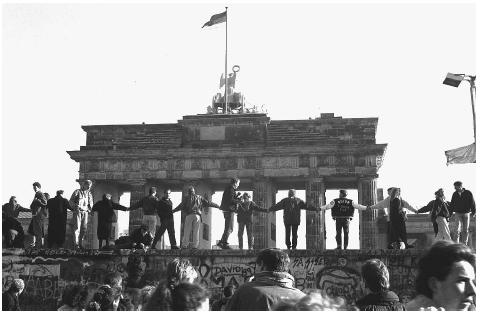
The global financial crisis will see the US falter in the same way the Soviet Union did when the Berlin Wall came down. The era of American dominance is over

Our gaze might be on the markets melting down, but the upheaval we are experiencing is more than a financial crisis, however large. Here is a historic geopolitical shift, in which the balance of power in the world is being altered irrevocably. The era of American global leadership, reaching back to the Second World War, is over.

You can see it in the way America’s dominion has slipped away in its own backyard, with Venezuelan President Hugo Chávez taunting and ridiculing the superpower with impunity. Yet the setback of America’s standing at the global level is even more striking. With the nationalisation of crucial parts of the financial system, the American free-market creed has self-destructed while countries that retained overall control of markets have been vindicated. In a change as far-reaching in its implications as the fall of the Soviet Union, an entire model of government and the economy has collapsed.

Ever since the end of the Cold War, successive American administrations have lectured other countries on the necessity of sound finance. Indonesia, Thailand, Argentina and several African states endured severe cuts in spending and deep recessions as the price of aid from the International Monetary Fund, which enforced the American orthodoxy. China in particular was hectored relentlessly on the weakness of its banking system. But China’s success has been based on its consistent contempt for Western advice and it is not Chinese banks that are currently going bust. How symbolic yesterday that Chinese astronauts take a spacewalk while the US Treasury Secretary is on his knees.

Despite incessantly urging other countries to adopt its way of doing business, America has always had one economic policy for itself and another for the rest of the world. Throughout the years in which the US was punishing countries that departed from fiscal prudence, it was borrowing on a colossal scale to finance tax cuts and fund its over-stretched military commitments. Now, with federal finances critically dependent on continuing large inflows of foreign capital, it will be the countries that spurned the American model of capitalism that will shape America’s economic future.

Which version of the bail out of American financial institutions cobbled up by Treasury Secretary Hank Paulson and Federal Reserve chairman Ben Bernanke is finally adopted is less important than what the bail out means for America’s position in the world. The populist rant about greedy banks that is being loudly ventilated in Congress is a distraction from the true causes of the crisis. The dire condition of America’s financial markets is the result of American banks operating in a free-for-all environment that these same American legislators created. It is America’s political class that, by embracing the dangerously simplistic ideology of deregulation, has responsibility for the present mess.

In present circumstances, an unprecedented expansion of government is the only means of averting a market catastrophe. The consequence, however, will be that America will be even more starkly dependent on the world’s new rising powers. The federal government is racking up even larger borrowings, which its creditors may rightly fear will never be repaid. It may well be tempted to inflate these debts away in a surge of inflation that would leave foreign investors with hefty losses. In these circumstances, will the governments of countries that buy large quantities of American bonds, China, the Gulf States and Russia, for example, be ready to continue supporting the dollar’s role as the world’s reserve currency? Or will these countries see this as an opportunity to tilt the balance of economic power further in their favour? Either way, the control of events is no longer in American hands.

The fate of empires is very often sealed by the interaction of war and debt. That was true of the British Empire, whose finances deteriorated from the First World War onwards, and of the Soviet Union. Defeat in Afghanistan and the economic burden of trying to respond to Reagan’s technically flawed but politically extremely effective Star Wars programme were vital factors in triggering the Soviet collapse. Despite its insistent exceptionalism, America is no different. The Iraq War and the credit bubble have fatally undermined America’s economic primacy. The US will continue to be the world’s largest economy for a while longer, but it will be the new rising powers that, once the crisis is over, buy up what remains intact in the wreckage of America’s financial system.

There has been a good deal of talk in recent weeks about imminent economic armageddon. In fact, this is far from being the end of capitalism. The frantic scrambling that is going on in Washington marks the passing of only one type of capitalism – the peculiar and highly unstable variety that has existed in America over the last 20 years. This experiment in financial laissez-faire has imploded.While the impact of the collapse will be felt everywhere, the market economies that resisted American-style deregulation will best weather the storm. Britain, which has turned itself into a gigantic hedge fund, but of a kind that lacks the ability to profit from a downturn, is likely to be especially badly hit.

The irony of the post-Cold War period is that the fall of communism was followed by the rise of another utopian ideology. In American and Britain, and to a lesser extent other Western countries, a type of market fundamentalism became the guiding philosophy. The collapse of American power that is underway is the predictable upshot. Like the Soviet collapse, it will have large geopolitical repercussions. An enfeebled economy cannot support America’s over-extended military commitments for much longer. Retrenchment is inevitable and it is unlikely to be gradual or well planned.

Meltdowns on the scale we are seeing are not slow-motion events. They are swift and chaotic, with rapidly spreading side-effects. Consider Iraq. The success of the surge, which has been achieved by bribing the Sunnis, while acquiescing in ongoing ethnic cleansing, has produced a condition of relative peace in parts of the country. How long will this last, given that America’s current level of expenditure on the war can no longer be sustained?

An American retreat from Iraq will leave Iran the regional victor. How will Saudi Arabia respond? Will military action to forestall Iran acquiring nuclear weapons be less or more likely? China’s rulers have so far been silent during the unfolding crisis. Will America’s weakness embolden them to assert China’s power or will China continue its cautious policy of ‘peaceful rise’? At present, none of these questions can be answered with any confidence. What is evident is that power is leaking from the US at an accelerating rate. Georgia showed Russia redrawing the geopolitical map, with America an impotent spectator.

Outside the US, most people have long accepted that the development of new economies that goes with globalisation will undermine America’s central position in the world. They imagined that this would be a change in America’s comparative standing, taking place incrementally over several decades or generations. Today, that looks an increasingly unrealistic assumption.

Having created the conditions that produced history’s biggest bubble, America’s political leaders appear unable to grasp the magnitude of the dangers the country now faces. Mired in their rancorous culture wars and squabbling among themselves, they seem oblivious to the fact that American global leadership is fast ebbing away. A new world is coming into being almost unnoticed, where America is only one of several great powers, facing an uncertain future it can no longer shape.

• John Gray is the author of Black Mass: Apocalyptic Religion and the Death of Utopia (Allen Lane).

Source / The Observer

The Rag Blog

Posted in RagBlog | Tagged , , | Leave a comment

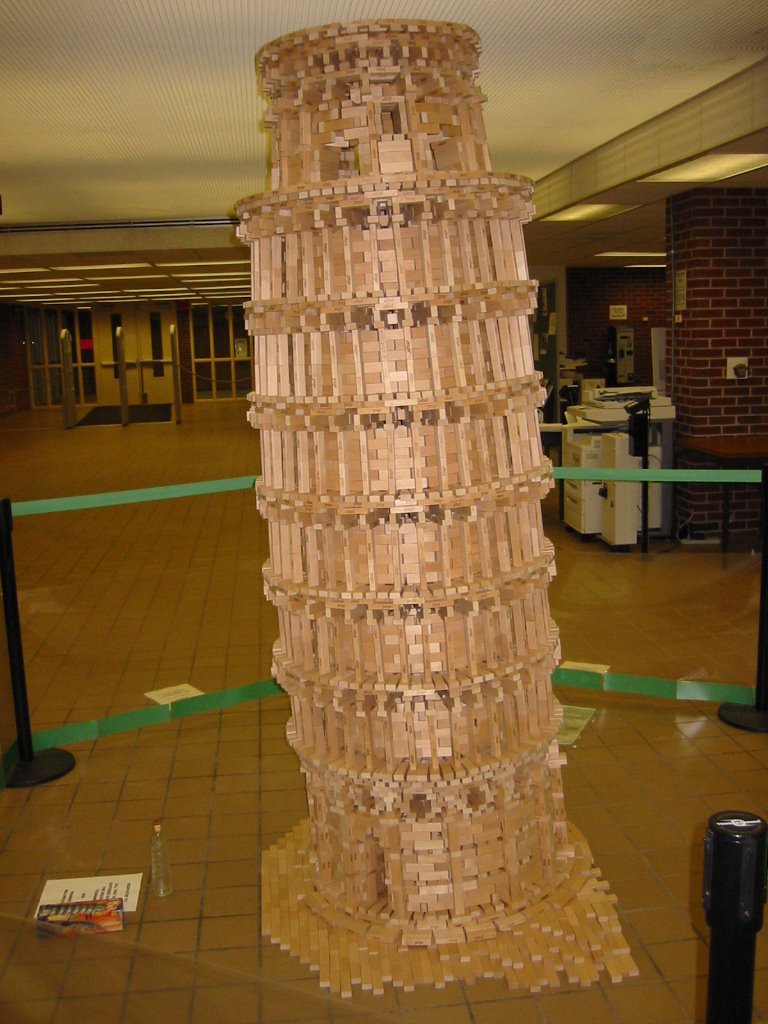
Larry Piltz : Bush’s Final Jenga Surprise


Jingo Bush Pulls Out the Last Piece and the Tower Comes Tumbling Down
By Larry Piltz / The Rag Blog / September 30, 2008

1st Jenga piece: The 9/11 Attacks – Bush, with his “9/10 mentality” and bring-it-on, laissez-faire national security policy, dared fate and the 9-11 attacks to occur by ignoring the CIA’s red alerts, canceling already ongoing follow-the-money al Qaeda investigations, and replacing the successful previous North American air defense protocol with one answering ultimately to blithering Reichsmarshall Cheney only, effectively leaving America’s chin open.

2nd Jenga piece: A Divided Homeland – Bush, wielding egregious lies, convoluted logic, a sadistic cynicism, and blatant fearmongering, divided and conquered the American people and hyperpartisanized the politics of the country, when its unity and solidarity would actually have been the very best weapon against terrorism, a foolish and sinister Bush intention and legacy that may never end.

3rd Jenga piece: The Unnecessary Iraq Tragedy – Bush wasn’t emotionally developed or smart enough to resist his Mad Adventure in Iraq, the beginning in earnest of the withering of the United States, militarily and financially. Bye bye, hyperpower status. Bye bye, unipolar world. Move over and make room, England, France, Holland, and Spain. Hey, China, save a seat for us on the moon, and can we hitch a ride?

4th Jenga piece: Afghanistan II – Bush largely abandoned Afghanistan, intentionally ignored it, starved it of attention and aid, and was quite smugly satisfied with the successful narco-state there that he and his local allied warlords crafted, thereby enabling the inevitable rise of the expanded Neo-Taliban, seemingly as if an endless terror war was what Bush had in mind all along. Nah, couldn’t be, could it?

5th Jenga piece: The Destabilization of Nuclear Pakistan – Bush sided with the dictator despite the Pakistani general’s permissiveness with al Qaeda’s top leadership, undermining Pakistani democracy, and, now that the dictator’s out, is undermining the new democratically elected president with cross-border attacks. Does Bush want an excuse to commandeer Pakistan’s nukes? Well, he’s creating one.

6th Jenga piece: Bush’s Nuclear Cold War with Putin’s Russian Soul – Bush has expedited the arming and training of the militaries of the new proxy “democracies” on Russia’s borders and has corrupted their politicians with the temptation of NATO membership, and Bush “looked the other way” as Georgia invaded and devastated Russian border ally Lower Ossetia. Remember how great the first Cold War was? Don’t worry. It’s never too late for nuclear winter!

7th Jenga piece: The Very Bad Awful Horrible Wall Street Scam & Sting – Wall Street’s big-time Ponzi-pyramid scheme will impoverish the federal government for at least two decades to come, but it’s all in a presidency’s work for the lazy-faire Bush, who brought us the first six Jenga pieces. This Nightmare on Main Street is the Mother of All Fleeces and could have been avoided had Bush’s intention had not been to help drown the federal government in the proverbial bathtub. We don’t need no stinking oversight!?

8th Jenga piece: Believe It Or Not It’s The Iran War Oh My God – Here we go, batten your hatches, because now Bush is going to attack Iran. The new ballistic missile-tracking radar is in place in Israel just in time for October, the expanded carrier/amphibious fleet is in place in and around the Persian Gulf, Subservient Saint Genius Petraeus is newly in charge of the entire Theater of War, and McCain’s campaign has screwed things up so badly that an October Surprise has become not an option but a requirement to keep intact the whole giant con game against America by the mostly Republican branch of the oligarchy. Watch for a CIA false-flag operation in the Gulf. Watch your back. It could be after the election, though.

With Bush’s pulling of the 8th Jenga piece, when Iran implements its justified counter-operations, the whole fantastic tower would come down. The economy would crash, and martial law will burn the elections. It would be bye bye, democracy, and hello, end of the Republic as we think we’ve known it. My only consolation, though mixed for his sake, is that Gore Vidal may still be around to see his prediction literally come true. But I’d bet even he didn’t see it happening all under one president. J-J-J-Jenga!

The Rag Blog

Posted in Rag Bloggers | Tagged , , , , | 4 Comments

Retired Physician : Our Health Care System an Outrage


‘The insurance industry, and the Republican Party, over the years have sold the public a bill of goods’
By S. R. Keister / The Rag Blog / September 30, 2008

I have been reading Vincent Bugliosi’s “The Prosecution of George W. Bush for Murder”. Mr. Bugliosi is very, very angry, a justifiable anger, perhaps akin to Zola’s anger when he penned “‘J’Accuse.” Perhaps in today’s world there should be increased justifiable anger. Perhaps if the nation would become aroused we, the citizens of The United States, could accomplish something with well directed, intelligently utilized anger. Perhaps we could awaken the dumbed down citizen who spends his/her time before a TV set, believing every word, to stand up for their own interests instead of believing in the propaganda that they are inundated with.

I am very, very angry. I am angry that I am an old retired physician with a malignancy. But I am especially angry at the state of health care in this country, a system of which I was proud when I started practice in the 1950s, but which, by the perfidy of the insurance and pharmaceutical industries has become one of the least desirable in the free world. Our health care currently ranks 25th in the world according to The Commonwealth Fund. I cringe when I see notices on public bulletin boards announcing a fund raiser at a fire hall for a child who needs money for a kidney transplant. Only in the United States!

I am angry when I hear seemingly intelligent folks say, “I wouldn’t want ‘socialized medicine’,” yet they accept Medicare or government retirement health care and are too stupid to realize that they are receiving “socialized medicine.” The insurance industry, and the Republican Party, over the years have sold the public a bill of goods. Most every Western European nation, Australia, and Canada have government subsidized health care, with 100% of the population covered. I have personally had contact with the system in the U.K. and have had friends treated, both in and out of hospital, in France, Italy, and Norway and they attest to excellent care. Interestingly, in most instances, as guests in the countries, the costs were minimal if any.

The capitalist profits of doom ask the uninformed citizen; “Do you want to wait long weeks for medical care?” and “Do you want ‘the government’ dictating your health care? Of course this is balderdash worthy of P.T.Barnum. In most other industrialized western nations, one waits no longer for medical care than one does in the United States. Here or there certain procedures or appointments require a wait. A total knee replacement may get done sooner here, but emergency care is more immediately accessible abroad.

Europe has more physicians per 100,000 population than does the USA. They have more hospital beds and more CT Scanners, and their medical education is free, or nearly free, to students that academically qualify. In no nation with universal health care does the “government” determine choice, save in exceptional instances. One is totally free to choose one’s physician, dentist, or pharmacy. The insurance industries’ propaganda sources can always dig up, or manufacture, exceptions which are foisted on the credulous public as the normal experience.

Another facet of the health care mess in this country is how the public has been purposefully confused as re: “non-profit” institutions. The average American in some way has confused “non-profit” with “charitable institutions”. Of course, most charitable institutions are non profit. BUT ‘non-profit’ insurers, most hospitals, many retirement homes, are non-profit only in the sense that they are profit making institutions without stock holders. They have tax concessions, can pay their executives extreme salaries, and list their ‘profits’ as ‘surplus’. Again, it makes me very angry to see the American public completely duped by the big business enterprises in the United States. I am angry at the way our elderly are scammed in ‘retirement homes’, ‘assisted care facilities’, utilizing their savings to make unseemly profits for the corporations managing same. Only in the USA ! Why then, if we take such good care of our elderly, does the United States have shorter life spans than much of the industrialized world? Perhaps the same reasons that we have one of the highest infant mortality rates, and child poverty rates, of any nation in the Western World. I feel that I have reason to be angry.

I am angry, as well, at the fact that a majority of American physicians sit lethargically by and do nothing to change the situation. Perhaps it is that fact, thanks to the HMOs demanding that they care for more patients than in many instances is humanly possible, and the need to spend hours filling out insurance forms, that time for social action is limited. Perhaps, sadly, a few feel that income will be threatened by a change in the system. In any event, I have throughout my career noted that most doctors vote against their own best interests. Sort of a lemming effect. For instance, when Medicare was first introduced, most physicians opposed the plan, but in the long run most found it to be a boon. Perhaps, and I say this, in part, with tongue in cheek, they are too busy answering questions from patients who have noted a new drug on TV.

The USA and New Zealand are the only nations that advertise prescription drugs on TV, no doubt grossly increasing the prescription costs at the drug stores. Our politicians accept this, no-doubt because the vast majority are prostitutes to the drug and insurance industries. This creates a special anger within me. The public must realize that the current government not only wants to privatize Social Security, but is attempting to turn over Medicare, by default, to the private insurance industry via “Medicare Advantage Plans”. Another con game not understood by the elderly subscribers, who are sold the bill of goods that this is for their benefit, but in the long run is really for the insurance industry, its executives, and stock-holders. The Medicare “Prescription Plan D” was purely a gift of billions of dollars of taxpayer money to the insurance and pharmaceutical companies disguised as a program to benefit the elderly. A less corrupt congress could have written a plan with better coverage, at much less cost to the tax-payer and the patient.

As summer phases into autumn one will be exposed to further libelous garbage produced by the insurance companies. Remember three things:

1.) The insurance industry is there for the profits of its owners and stockholders, just like any other business.

2.) Polls show a preponderance of the public for single payer, universal health care, ergo any politician that does not support his/her constituents is either (a) Totally disinterested in the voters needs and desires, or (b) is taking baksheesh from the insurance industry

3.). In anyone’s group of acquaintances one will find a chronic complainer. Such folks are meat for the insurance industry, as with a little financial inducement they will be happy to make commercials demeaning good health care, lies and exaggerations are no problem. So if you hear how bad Canadian care is consider that you are doubtlessly being scammed by a chronic unhappy, fault finding, dissident who will do the job of destroying the truth better than professional actors, who may be utilized as well. Remember the actors on TV who libeled Hillary Clinton’s program in 1993 and she was espousing something far removed from single payer care.

I have had a bit of personal contact with foreign health care. Some 18-20 years ago my late wife and I were in Edinboro, Scotland. She became ill. Nearby was The Royal Infirmary. We headed for the emergency department (in Europe most nations do not have ERs as we know them but have two departments, one for the unassigned person who becomes ill and one for ambulance cases and such). We were directed to the former where a nice lady behind a desk asked us our names, where we were staying, and took a quick look at our passports. She directed us to an office where a young doctor spent an hour with us, prescribed, wished us a nice visit. When we departed I stopped at the desk to pay and was told that as guests in the UK that we were covered by National Health and there was no charge. Similarly, I know a young adult lady who was visiting in the Rhone delta area of France, her hostess cut a nasty gash on her hand, the family doctor was called, he came to the house with a portable suture kit and sewed up the lacerated hand. The charges were covered by the National Health Plan. She did not have to sit for two hours in an ER, fill out endless papers, sign many insurance, and other, forms, and be hurried through the procedure.

I find that putting this on paper helps my anger. What the psychiatrists call “ventilation therapy”. But, with your forbearance, what do we do?

1.) Join in a joint effort on the Federal level to have Congress pass HR 676. a bill for single payer, universal health care. There is information regarding this from Physicians for a National Health Program. This group of 15,000-plus idealistic, humane doctors has been at this for 20 years and has recently been joined by the 125,000 member American College of Physicians,

2.) Check with your Congressional and Senatorial candidates and vote for the one that will support HR 676. If they refuse they do not give a damn about you.

For Pennsylvania citizens there is another alternative, a universal health care plan for The Commonwealth. Health Care for All Pa. Again if you want decent health care check whether your state senate or Legislative candidate supports this.

Unfortunately neither presidential candidate overtly supports universal, single payer health care. I would hope that Sen. Obama, once in office, will listen, especially if he has a progressive House and Senate. I would expect no action from Sen. McCain as he has announced that he wants to privatize Social Security and has long been a friend of the big corporations and insurance industry. He also seems a bit vague as re: geography, the Middle East, and international affairs. In the meantime please when possible make yourselves known to Sen.Obama.

Thank you for your forbearance and please let us unite in an effort to prevail. I note that the insurance industry is about to start a propaganda program of gigantic proportions to persuade the public that the United States has the ‘best health care in the world’.

The Rag Blog

Posted in Rag Bloggers | Tagged , , , , , | 1 Comment

Republican Election Tampering? No Way!

Republican consultant Michael L. Connell is refusing to testify or produce documents related to alleged 2004 election tampering.

Republican IT consultant subpoenaed about 2004 election hanky panky
By Larisa Alexandrovna and Muriel Kane / September 29, 2008

COLUMBUS — A high-level Republican consultant has been subpoenaed in a case regarding alleged tampering with the 2004 election.

Michael L. Connell was served with a subpoena in Ohio on Sept. 22 in a case alleging that vote-tampering during the 2004 presidential election resulted in civil rights violations. Connell, president of GovTech Solutions and New Media Communications, is a website designer and IT professional who created a website for Ohio’s secretary of state that presented the results of the 2004 election in real time as they were tabulated.

At the time, Ohio’s Secretary of State, Kenneth J. Blackwell, was also chairman of Bush-Cheney 2004 reelection effort in Ohio.

Connell is refusing to testify or to produce documents relating to the system used in the 2004 and 2006 elections, lawyers say. His motion to quash the subpoena asserts that the request for documents is burdensome because the information sought should be “readily ascertainable through public records request” – but also, paradoxically, because “it seeks confidential, trade secrets, and/or proprietary information” that “have independent economic value” and “are not known to the public, or even to non-designated personnel within or working for Mr. Connell’s business.”

According to sources close to the office of Clifford Arnebeck, one of the Ohio attorneys who brought the case, Arnebeck intends to ask the court to compel Connell to testify. An emergency conference with the judge, originally scheduled for Monday, is to be rescheduled.

King Lincoln Bronzeville Neighborhood Association v. Blackwell

The case, known as King Lincoln Bronzeville Neighborhood Association v. Blackwell, was filed against Kenneth J. Blackwell on Aug. 31, 2006 by Columbus attorneys Clifford Arnebeck, Robert Fitrakis and others. It initially charged Blackwell with racially discriminatory practices — including the selective purging of voters from the election rolls and the unequal allocation of voting machines to various districts — and asked for measures to be taken to prevent similar problems during the November 2006 election.

On Oct. 9, 2006, an amended complaint added charges of various forms of ballot-rigging as also having the effect of “depriving the Plaintiffs of their voting rights, including the right to have their votes successfully cast without intimidation, dilution, cancellation or reversal by voting machine or ballot tampering.” A motion to dismiss the case as moot was filed following the November 2006 election, but it was instead stayed to allow for settlement discussions.

The case took on fresh momentum earlier this year when Arnebeck announced in July that he was filing to “lift the stay in the case [and] proceed with targeted discovery in order to help protect the integrity of the 2008 election.” The new filing was inspired in part by the coming forward as a whistleblower of GOP IT security expert Stephen Spoonamore, who said he was prepared to testify to the plausibility of electronic vote-rigging having been carried out in 2004.

Arnebeck’s hope was that in the course of the discovery procedure it would be possible to subpoena Michael Connell, former White House Deputy Chief of Staff Karl Rove, and others to obtain additional information and improve the focus of the case. The stay was lifted Sept. 19, 2008 by an order from Magistrate Judge Terrence P. Kemp of the United States District Court for the Southern District of Ohio, and a subpoena was served to Connell on the following Monday, Sept. 22.

Allegations against Connell

The interest in Mike Connell stems from his association with a firm called GovTech, which he had spun off from his own New Media Communications under his wife Heather Connell’s name. GovTech was hired by Ohio Secretary of State Kenneth Blackwell to set up an official election website at election.sos.state.oh.us to presented the 2004 presidential returns as they came in.

Connell is a long-time GOP operative, whose New Media Communications provided web services for the Bush-Cheney ’04 campaign, the US Chamber of Commerce, the Republican National Committee and many Republican candidates. This in itself might have raised questions about his involvement in creating Ohio’s official state election website.

However, the alternative media group ePlubibus Media further discovered in November 2006 that election.sos.state.oh.us was hosted on the servers of a company in Chattanooga, TN called SmarTech, which also provided hosting for a long list of Republican Internet domains.

“Since early this decade, top Internet ‘gurus’ in Ohio have been coordinating web services with their GOP counterparts in Chattanooga, wiring up a major hub that in 2004, first served as a conduit for Ohio’s live election night results,” researchers at ePluribus Media wrote.

A few months after this revelation, when a scandal erupted surrounding the firing of US Attorneys for reasons of White House policy, other researchers found that the gwb43 domain used by members of the White House staff to evade freedom of information laws by sending emails outside of official White House channels was hosted on those same SmarTech servers.

Given that the Bush White House used SmarTech servers to send and receive email, the use of one of those servers in tabulating Ohio’s election returns has raised eyebrows. Ohio gave Bush the decisive margin in the Electoral College to secure his reelection in 2004.

IT expert Stephen Spoonamore says the SmartTech server could have functioned as a routing point for malicious activity and remains a weakness in electronic voting tabulation.

According to Spoonamore’s Sept. 17 affidavit, the “computer placement, in the middle of the network, is a defined type of attack.” Spoonamore describes this as a “Man in the Middle Attack” or MIM.

“It is a common problem in the banking settlement space,” he writes. “A criminal gang will introduce a computer into the outgoing electronic systems of a major retail mall, or smaller branch office of a bank. They will capture the legitimate transactions and then add fraudulent charges to the system for their benefit.”

“Any time all information is directed to a single computer for consolidation, it is possible, and in fact likely, that single computer will exploit the information for some purpose,” he adds. “In the case of Ohio 2004, the only purpose I can conceive for sending all county vote tabulations to a GOP managed Man-in-the-Middle site in Chattanooga before sending the results onward to the Sec. of State, would be to hack the vote at the MIM.”

Hold letters were sent out in July to parties in the case, informing them of their obligation not to destroy relevant documentation. One such letter went to Attorney General Michael Mukasey, asking him to advise the federal government of its responsibility to preserve emails from Rove.

Arnebeck explained, “We expressed concern about the reports that Mr. Rove destroyed his emails and suggested that we want the duplicates that should exist [be put] under the control of the Secret Service and be sure that those are retained, as well as those on the receiving end in the Justice Department and elsewhere, that those documents are retained for purposes of this litigation, in which we anticipate Mr. Rove will be identified as having engaged in a corrupt, ongoing pattern of corrupt activities specifically affecting the situation here in Ohio.”

More recently, Newsweek’s Michael Isikoff has revealed that John McCain’s presidential campaign paid nearly a million dollars for web services to a firm called 3eDC, created and partly owned by McCain campaign manager Rick Davis. According to an archived version of a 3eDC webpage from 2007, that firm’s five “strategic partners” included not only Connell’s New Media Communications but also Campaign Solutions – a firm run by Connell’s sometimes-partner, Rebecca Donatelli – and a component of SmarTech called AirNet.

The Origin of the Case

The roots of the King Lincoln Bronzeville case go back to the case of Moss v. Bush, which Arnebeck, Fitrakis and other attorneys filed immediately after the 2004 presidential election. In that filing, they challenged the results of the Ohio voting on the basis of numerous irregularities and allegations of fraud and sought to depose President George W. Bush, Vice President, Dick Cheney, and then-White House Deputy Chief of Staff, Karl Rove, as well as Secretary Blackwell.

That case was dropped by the plaintiffs in January 2005, after the US Senate accepted the casting of Ohio’s electoral votes for George W. Bush. Two weeks later, Ohio’s Republican Attorney General James Petro attempted to sanction and fine the attorneys for what he described as a “frivolous filing,” but they were supported by Rep. John Conyers (D-MI) – then the ranking member of the House Judiciary Committee – who had already held a hearing at which Arnebeck and Jesse Jackson testified concerning the suppression of minority votes. Those same concerns are now at the heart of King Lincoln Bronzeville.

Source / The Raw Story

Thanks to Jim Baldauf / The Rag Blog

Posted in RagBlog | Tagged , , | Leave a comment

NUTRITION : The Pros and Cons of "Organic" Food Revisited

Yesterday The Rag Blog posted an article by Roger Baker in which he contended that the types of food you eat can be more important than eating food labeled “organic.” [NUTRITION: Are Organic Foods Just a Marketing Trend? by Roger Baker / The Rag Blog / September 29, 2008.]

In the article below, Roger expands on this argument.

It is obviously important to distinguish between what is trendy and what is genuinely better nutrition, and this question strikes a vein of contention with many of those committed to health and sustainability.

The Rag Blog urges it’s readers to join in this discussion. Please post your opinions by clicking on “comments” below.

Thorne Dreyer / The Rag Blog / September 30, 2008

There’s ‘organic’ and then there’s what passes as ‘organic’
By Roger Baker / The Rag Blog / September 30, 2008

When you call something “organic” you may have to make a distinction whether you are referring to what passes for organic under the official USDA certification process under the Bush administration or something else entirely:

ALERT – USDA Announcement: Foods Carrying the USDA ‘95% Organic’ Seal Are Now Allowed to Contain Factory Farmed Intestines, PCBs, and Mercury / Organic Consumers Association.

The organic foods industry has become a hugely profitable concentrated business in the last decade. Go to this link and look to the right column “Who owns what” to show how a few giants now dominate the industry.

All About Organics – OCA’s Organic Resource Center / Organic Consumers Association.

Then go below to read how organic does not mean sustainable but may often be less sustainable due to energy inputs like transportation. As energy costs rise, farming will have to become more local and labor intensive, which are probably good trends, and will discourage meat consumption, but that has little to do with organic labeling.

The intelligent focus, I think, should probably be more on the KINDS of foods and their health implications and the sustainability of production and energy inputs rather than what can get organic certification nowadays under weakened federal standards. There is not much science involved these days to allow consumers to evaluate alternatives, so it ends up like arguing religion:

Organic food ‘no benefit to health’ / Guardian, U.K.

Also the term organic does not really mean the use of no pesticides, but primarily seems to imply a lack of chemical fertilizers:

History of the National Organic Program / Rainbow Grocery.

. . .What originally started as a system of farming, whereby the soil and the ecosystem around the plants cultivate a healthy environment, now big business farmers can purchase the organisms and other organic inputs that allow them to qualify as USDA Organic without developing a sustainable ecosystem. Rick and Kristie Knoll don’t need to purchase healthy organisms for their soil, or bugs that will eat the pests on their plants because the land they’ve developed already hosts a natural organic ecosystem. They also don’t chlorinate their salad greens or use sodium nitrate, practices that are acceptable by the new USDA standards.

And there are other issues beyond pests and soil conditions. “Most of the original organic farmers are out of business. Nobody is thinking about what cheap prices means to the farmers,” said Knoll. Paying workers a livable wage and offering affordable healthcare is often unheard of in agribusiness, but is another important goal of sustainable farmers. Food miles or how far a product travels before it reaches the retailer and eventually the consumer is another major concern. . .

Here is the conclusion from one recent review:

The findings of this study have revealed that the trend in the level of significance with respect to vitamin C, calcium and potassium in organically and follow a regular and consistent pattern. It was observed in this study that there were no significant differences in vitamin C content between organically and conventionally grown cabbage, Cos lettuce and carrots while significant differences were observed in organically and conventionally grown Valencia oranges with the organic Valencia oranges showing a higher values.

From the results as well as other previous findings, it is very evident that there is still controversy on nutritional superiority of organic and conventional produce because there are numerous confounding factors that make it difficult to establish a standardized environment in which to produce the two food sources. It is therefore highly recommended that future studies on organically and conventionally grown produce should attempt to address confounding factors such as climate, soil type, crop type, fertilizer application, post harvest handling and others before valid conclusions can be made.

Research Paper / African Journal of Biotechnology

I think the jury is still out on nutrients due to the many factors involved in soil types, etc.

Meanwhile it is clear, to me at least, that eating healthy kinds of foods like lots of grains, vegetables, and fruits is more important health-wise than the typical choice between organic and inorganic foods. The “organic” choice is largely cultural — and very controversial and heated as I have learned. I think things are going to have to move in that direction, but driven less by corporate influence and more by energy economics.

As the energy crisis worsens in the next decade, food will become more expensive, the number of farmers will have to increase, human labor and carbon rich soils will have to be substituted for fuel and nitrogen fertilizer and pesticides, and agriculture will have to become more local. More foods will be eaten in season, and the big organic food corporations will have to decline in influence after expanding hugely in recent years.

The number of farmers will have to increase because farmers are now aging and the average age of farmers is now over 55 and only about 6% are under 35 so farming knowledge is itelf disappearing. We have only 3-4 million farmers for a population of 300 million, or slightly over 1%. Meanwhile, water supplies are shrinking and the planet is warming.

But mainly world oil production is peaking. So is natural gas, meaning that nitrogen fertilizer made from gas will decrease agri productivity. And the mechanized farm equipment and shipping ability will decrease and thus require more human labor and more local production.

All this is spelled out in detail in Richard Heinberg’s latest book “Peak Everything”, Chapter 2, titled “Fifty Million Farmers”. Heinberg thinks the only alternative that will possibly feed the nation is for local gardening everywhere like we had in the USA during the world wars. Maybe suburban lawns will have to be farmed.

Already rising energy prices are raising the cost of food. From 20% of our national income in 1950 to a recent low of 10%, which is probably as low as it can go.

In 1900, 40% of the USA population farmed, but now with cheap mechanized energy to operate equipment it is close to 1%. After the Soviet Union cut off the oil to Cuba, the farming population in Cuba had to rise to 15-25%. If we extrapolate to the USA, this means about 50 million farmers, which is where Heinberg gets his estimate.

Of course meat production is a wasteful use of corn and soybeans compared to direct human consumption, so the nature of our diet will have to change too. Trucking food to distant processing facilities will have to be largely eliminated too. When the price of oil rises to $200 a barrel and higher, it will change the economy. There are probably good analysis pieces about this on The oil Drum and Energy Bulletin.

As well as references in Paul Robert’s book “The End of Food” (he is hip to peak oil; see page 222-225) and Heinberg’s chapter 2 references.

“The End of Food” is a good source on many of the current trends (largely unhealthy and unsustainable) within what has become an increasingly corporate-dominated food industry that kills many by promoting poor food choices, the organic issue aside.

[Also read Roger’s earliter article, NUTRITION: Are Organic Foods Just a Marketing Trend? by Roger Baker / The Rag Blog / September 29, 2008.]

The Rag Blog

Posted in Rag Bloggers | Tagged , , , | 6 Comments

Bush’s Bailout Tanks; What Austin Thinks

Congress failed to pass the economic bailout plan today: the pundits are atwitter, the stock market has tanked, the politicos are pointing fingers, and the doomsday prophets are taking center stage. And George the Decider has added a final (one assumes!) exclamation point to his disastrous tenure.

Last Thursday a protest demonstration against the bailout took place outside the offices of Sen. John Cornyn in downtown Austin. Below is a fine video report from Ric Sternberg and an article by The Rag Blog’s Mariann Wizard.

Thorne Dreyer / The Rag Blog / September 29, 2008

Bailout Protest: Austin, Texas, Sept. 25, 2008, by Ric Sternberg

Austin to Congress: No blank check!
By Mariann Wizard / The Rag Blog / September 29, 2008

A more-or-less spontaneous and spur-of-the-moment protest took place in Austin Thursday, September 25, against a federal bailout of failing banks and mortgage lenders, at 5 pm in front of the offices of Texas Senator John Cornyn (R), as similar protests large and small materialized all over the country, and the news media reported that Congressional Republicans, feeling the fire from conservative constituents, were balking at the Bush bailout plan, citing overwhelming negative response from the home folks.

Probably 20 of us gathered at 6th & Lavaca, with the largest (as in “only”!) identifiable group Ron Paul supporters. Their signs said “NO BAIL-OUT” just like those of later-arriving leftists (MDS, Texans for Peace, and Iraq Vets Against the War) that I know of; sorry if I missed others) and unaffiliated outraged citizens.

Response from drivers was very good, lots of honking and waving — one guy passed at least 6 times, honking like crazy!! — flashing the peace sign, texting their pals, shouts of encouragement. Passersby — scarce on this corner; tactically a lousy location!! — were also friendly and responsive. One couple I chatted with — some kind of Yankee accents I cn’t identify — were at first kind of defensive, upon seeing my sign (NO BLANK CHECK FOR BANKS * EQUITY FOR TAXPAYERS * BAIL OUT AMERICANS, NOT MULTI-NATIONAL THIEVES), with the man asking, “Whattaya gonna do? Let ’em all fail?” But since there are so many good answers as to what should be done, with equity for taxpayers number one on my list, it took only a minute to defuse the defensiveness and get them agreeing that the Bush plan is a fiasco, although the woman was clearly nervous about lingering among the weirdos for long.

A young guy was there with a huge, amazing drum. I told him it reminded me of when the LBJ Library was dedicated, with all the rich and powerful eating b-b-q and drinking champagne under striped tents on the hill, ringed by 10,000 hairy hippies led by Vietnam Veterans Against the War, when every metal trash can in a 10-block radius became a drum, and was beaten into a 6-inch-thick metal pancake.

I would add, just in order not to disappoint you who know me, that taxing and regulating cannabis (“marijuana”) in the same way that tobacco and alcohol sales are regulated and taxed, would add bring in a LOT of tax revenues, and bring a lot of jobs out of the black market. In addition, the research that could then be done on hemp biomass fuel, the nutritional benefits of hempseed, and the medicinal qualities of cannabis flowers (and these are all being researched and, increasingly, used in other countries, make no mistake!) would have benefits far outstripping the merely economic (eg, the end of world hunger).

We should agitate to keep up the protests, the phone calls, and the demands for a PRINCIPLED buy-out of failing corporate giants. We should clearly enunciate what those PRINCIPLES must be. And we should try to build principled bridges with every concerned citizen, regardless of their affiliation.

We have an unprecedented opportunity to stimulate class consciousness (people who work for a living // people who live off workers’ labor) and class-based demands. How can we proceed, in the next few days, to use this unexpected parting gift from Bush & Co? “Be Specific!”

The Rag Blog

Posted in Rag Bloggers | Tagged , , , , , , , , , , , | Leave a comment

Americans Cannot Vote Their Way Out of This Mess

Delusion is the opiate of the masses. Credit: open source.

Eat Your Cats and Dogs
By Joel Hirschhorn / September 29, 2008

Nations come and go, rise and fall as elites and the wealthy make victims of most citizens and plutocracies prevail. Current dogma is that we live in the greatest nation on Earth. Perhaps in terms of ideals there is some truth to that. But with another trillion dollars that we now must borrow at higher costs because of the meltdown of the financial sector, solidifying our position as the greatest debtor nation, Americans have little to be proud of. Our government and politicians as well as the corporate state have failed us. What do our young people and future generations have to look forward to? Be prepared to eat your cats and dogs.

Still more lies and deceptions will surely hit us as the fear-selling two-party plutocracy works hard to convince us prior to the coming election that things have turned better. In reality, there is no reason whatsoever for thinking that the nation is back on the right track. Of all the many narcotic delusions filling people’s heads the most dangerous and self-defeating is that we can vote our way out of this mess. Everyone needs to understand that Democrats in Congress have played a major role in delivering the nation into the abyss we now find ourselves in.

If Barack Obama had an ounce of honesty and courage he would have boldly told his first debate audience that he was going to modify his spending plans and focus on reducing the nation’s debt. And why did he not express deep sadness that the current bailout was repeating a long history of making a mockery of capitalism, with government refusing to let most large companies fail? When corporate fat cats know that they can continue to rape the country and walk away with tons of money, all we really have is corporate socialism. So why did we not hear Obama talk about his commitment to put corporate criminals in prison? Not dozens, but hundreds of Wall Street thieves and lying bank officials should be dragged publicly in handcuffs into the justice system. Why can’t Obama talk this way?

Don’t get me wrong. John McCain is even worse. Newsweek has reported that McCain, in his last mission before becoming a prisoner of war, ignored the warning that an enemy missile had locked onto his plane and instead of taking evasive action decided to keep flying straight ahead to complete his mission. Is it not clear that McCain will fly the nation straight into oblivion if he thinks his conception of our national mission should be adhered to, no matter what the costs are?

Back to my point: Americans cannot vote their way out of this mess. Their only real opportunity this year is to vote AGAINST the two-party plutocracy by voting for any of the four third-party presidential candidates. We need the world to see tens of millions of votes protesting the failures of both major parties. This electoral rebellion would keep faith with Thomas Jefferson’s correct view that America would need a revolution every generation or so. To keep voting for Democrats and Republicans just makes gullible and delusional citizens co-conspirators in the vast criminal conspiracy that is our political system.

Keep that sickening image of Americans, many sleeping in the cars, unable to afford pet food and their own food in mind when you go to vote. We are not merely on the wrong track. We are on track for people being forced to eat their cats and dogs.

[Contact Joel S. Hirschhorn through www.delusionaldemocracy.com.]

Source / Associated Content

The Rag Blog

Posted in RagBlog | Tagged , | 2 Comments

Why Not "Give Aid Rather Than Harassment"?

Nickelsville residents George Williamson, left, John Clark and Aaron Colyer socialize in a tent next to a new no-trespassing sign that was staked into the ground several hours earlier by the Seattle Department of Transportation. Photo: Chris Joseph Taylor/Seattle Times

A Pink Housing ‘Bubble’ I Could Get Into
By Diane Stirling-Stevens / September 26, 2008

This article reminded me of something that I organized in 1993 down in Dana Point, California. I was helping the homeless by bringing them used clothing (and discarded clothing I found in dumpsters throughout the area). I would take the discarded clothing to my condo’; wash it, put it into my motor-home, and take it to Delaney Beach where there were about 20 to 30 homeless people who milled around on a regular basis.

I would open up the motor-home; told all of them to go in (just like a mobile clothing shop), and pick out clothing that fit them. It was wonderful to get actively involved one-on-one with each and every individual. I would listen to their stories about how they became homeless; we would build bon-fires on the beach, make coffee, and sit around sharing the conditions by which they no longer had a roof over their head.

Not one of the people I listened to were in any way ‘professional vagrants’ – they’d all been employed fallen on hard times, and were in limbo and anxious to find jobs.

I decided to bring my typewriter to the beach; used the generator to power up both my computer and my electric typewriter, and started re-writing their resumes so they could start job-hunting.

I also had (in storage) two grand pianos; stored after I’d lost my home because of a contractor who owed me $128,000 but couldn’t pay it because he’d recently filed bankruptcy. I decided to sell one of the grand pianos for $8,000, and used that money to help the homeless find a place to sleep and shower each night. I rented just one hotel room near the beach – it was $120/night. I negotiated a monthly rate for $2900, and during that month each and every person was able to shower; use their food stamps to get food which all of them shared, and I kept them in clean clothing by going to my home to do the laundry. They took their resumes; climbed on busses, and searched for jobs. The agreement was that all of them would put back 10% of anything they might earn for the next 3 months, into a common fund to buy another night at the hotel and keep providing for the rest of those who were not successful.

It was one of the most exciting times in my life as I saw how powerful the commitment was to have everyone succeed; it became a strong family, and one by one individuals were finding work and putting back into the ‘fund’ we’d developed. Because I couldn’t afford to put more than the $8,000 into the program, I knew at some point in time the money would be depleted but hoped everyone would be on their feet by the time I ran out of funds.

All but 3 were either employed full-time or part-time when my funds ran dry. Still, those 3 were sheltered by the rest of the group as each found housing, and opened up their doors to those 3 who had yet to find jobs or a place to live. I remained involved by doing the laundry; finding more clothes in the dumpsters, and by the time I relocated to another part of the state, no one was in dire need.

When I read through this article, I noticed how colorful the tents are and feel it could be an invitation to the rest of the community to get involved in a similar way. Rather than removing these people; threatening these people, I see these pink ‘bubbles’ as a signal for the city to start appropriate food and clothing drives to give aid rather than harassment.

I used to live in the Seattle area, and I so wish I did now because I’d be down there trying to lend a hand and ideas to these people. Potentially you, and any readers of your blog, might see what they might do to make suggestions similar to what I did in California 15 years ago – I saw it work with great success, and believe there should even be a campaign (no pun intended) to get Bill Gates and Microsoft involved. There should be a campaign to end the ‘pain’ of this camp; pink tents are signaling a need that can be answered without burdening any one individual or entity severely.

Here’s the article:

Homeless play waiting game in Nickelsville
By Erik Lacitis, Seattle Times staff reporter / September 26, 2008

The 5 p.m. deadline came and went on Thursday, and no city workers or cops arrived to sweep away Nickelsville, its 150 illegal fuchsia tents and its 100 or so residents.

Most everyone at the encampment expected that sometime this morning, the city would evict the encampment’s residents and arrest those who won’t leave voluntarily.

Nickelsville is spread over a grassy area, parts overgrown with Scotch broom, near West Marginal Way Southwest and Highland Park Way Southwest.

Seattle Mayor Greg Nickels’ office said it won’t say in advance when the sweep will take place.

Earlier Thursday afternoon, workers with the Seattle Department of Transportation posted 2-by-1-½ foot “NO TRESPASSING” signs that promised those in violation could be charged with criminal trespass. The bulk of the land where the encampment is situated is owned by the SDOT.

As the workers put the signs in the ground, a couple of Seattle police offers stood by and watched. There were no confrontations.

The 150 tents were set up by the homeless and volunteers in the predawn hours Monday.

On Thursday evening, about 200 of the homeless and volunteers milled around. Some, like volunteer Joe Taylor, 23, who’s just starting on his master’s degree in engineering at the University of Washington, became de facto foremen. Taylor led a group of men putting together a small camp-administrative office using two-by-fours and wood from pallets.

He said he knew the structure might only last a day.

“I kind of designed it to be taken down,” said Taylor.

Some of the volunteers, such as Lindsay Andersen, 25, a program assistant at the Alzheimer’s Association in Seattle, had to learn on the job how to use a hammer or a pry bar to pull apart a pallet.

Andersen is 5-foot-2 and weighs 120 pounds. “My arms aren’t very strong,” she said.

If the cops arrived, she said, “I’m bailing.” Jail time doesn’t look that good on a résumé, she said.

There was an air of resignation at the camp about what will happen next.

Aaron Colyer, 28, was using donated pink paint to put color on a large wood structure now surrounding his tent and propping it off the ground.

He and volunteers had nailed it together on Thursday. He was listening to a Christian radio station as he painted.

Colyer said that when the city arrives to evict, “I’ll just sit on my porch, listening to the radio. If they want to take me to jail, let them take me to jail.”

Erik Lacitis: 206-464-2237 or elacitis@seattletimes.com.

Copyright © 2008 The Seattle Times Company

Source / Seattle Times

The Rag Blog

Posted in RagBlog | Tagged , , | 2 Comments