A World Premiere from Larry Piltz

Just Got Back (From Iraq and Nam)

“Just Got Back”, an unprecedented Music Video, uses stunning unaired original photos from the Vietnam War, of Vietnam Veterans protesting 1972 Republican convention in Miami, of 1990s war-devastated Iraq, and of a modern thriving 2008 Vietnam, to show that life does return to normal in a land invaded and occupied by an aggressive military empire once that empire’s military adventurism is finished and its armies have long been withdrawn. Also depicted is the plight of the empire’s indentured conflicted soldiery.

“Just Got Back”, the song, uses humor and irony, soaring idealism and practical expressionism to point the way to how to immediately improve the world – simply abandon military adventurism, a peaceful pragmatism.

The video was put together independently by someone else, with only my initial loose coaching, and I’d be curious to know if it makes sense to you. I get it, but I think that could partly be because I really really want to. Even so, I see the narrative as both effective literally in a good number of places, but with a huge subliminal subcontext that’s necessary to hold the whole thing together – the challenge having been to make a ‘story’ using widely disparate photos from across four decades, and then make them conform to symbolic and literal prose imagery embedded in lyrics mostly written in 1984. It’s only a rough cut with a smoother and less zoomy version to follow.

Rag Blog would get the worldwide exclusive as far as I know (though I suppose there could be a tribe somewhere in Utter Phlegmland that has erected a fetish genuflection cult around it; hmm, wonder if I’d get royalties for that).

Larry Piltz / The Rag Blog

The Rag Blog

Posted in Rag Bloggers | Tagged , , , | 3 Comments

Houston : In the Aftermath of Ike

Trees lay on the ground early Saturday morning in downtown Houston. The city suffered very minor damage and those who stayed were breathing a sigh of relief as dawn broke. Photo by Andrew Locke / MSNBC.com.

‘We now have a real understanding of how much we depend on electricity’
By Connie Clark / The Rag Blog / September 23, 2008

HOUSTON — Life would seem to be back to normal for most of us, except for the traffic. About 40% of our area power is still down (and signals dark) which evidently created an unusually big traffic issue, even on the freeways for some unexplained reason. Conscripted from my office to field operations work, I’ve spent five days straight driving around, locating damaged signal heads cables and poles to dispatch repairs, so that when power is restored, the signal could be put back in operation quickly. This turns out to be an important task remaining to restore civility here.

The east side of the county, still largely without power, seemed to be hit a little harder (the dirty side of the storm). They will recover just fine, but I did see a lot of power lines down on the ground which will delay the recovery. Power to neighborhoods where trees have fallen on the power lines is the last to get restored. Thousands of places. That includes the east side, the piney woods north side and River Oaks in the middle of town. There are, as you may know, huge, grand live oak trees in that neighborhood and the piles of tree debris is massive there. Landscape and tree trimming services are happy contractors these days, sucking up a lot of cash. Otherwise, hurricane damage is evident in the shabby billboards, and collapsed wimpy metal roofs over some of the gas station and convenience store pumps across town. The curfew of 12 midnight is still in effect. We’re paying average price for gas with more stations open, no lines. $3.49 to $3.69.

Folks here are surprisingly still very patient with the inconvenience of no power. I know some must be on the brink. Neighbors are helping neighbors with long extension cords I hear. We now have a real understanding of how much we depend on electricity. Grocery stores and gas stations closed, water supply systems not operational. No lights, no food refrigeration, no AC, no TV or internet and for a while sketchy cell phone service. Our lives not to even speak of some of the disabled or elderly are so tied up with all that. My neighbor who stayed home for several days without electricity said that it got bad at dark, 7 pm to 10 pm was just nothing, just sit in the dark with her dog. When would we do that any other time without being forced to?

Galveston is another story of course, but not hopeless. The City behind the seawall is already coming back – big clean up effort and historic district homeowners will return Wednesday. The Strand’s got a lot of muck to clean out due to the 8 foot of water, so businesses are anxious to get started. Gaidos restaurant, an old one located right on Seawall Boulevard is already open for business. Some beach homes on the west beach area were wiped out, but others suffered repairable damage.

The Bolivar Peninsula has little left of it. One fairly new beach house still standing out there has shown that it is possible to build to withstand a hurricane. My personal wish is that Bolivar become a wildlife sanctuary. That particular area is one of the best birding spots in the country. It is in the flyway of neotropic migrating birds as well as a year-round home for many coastal birds. In the fall, the flats welcome huge numbers of various shore birds. We should just let them have the little peninsula. Unfortunately youthful beach goers a few years ago identified Crystal Beach as the last beach in the Galveston area to not restrict drinking, and it is popular for that. And then there are developers.

It had been 25 years since our last hurricane (Alicia), and many Houstonians were not here then. They now know what a hurricane really does. I’m glad of that, because we could get another one a lot sooner than 25 years.

And, here is an electric-less anecdote:

Saturday morning am, after staying up all night monitoring the storm’s awesome winds, Randy and I needed coffee so we could carry on with neighborhood street debris clean up. No power, so no coffee maker. But, of course we could boil hot water on the gas stove and just pour over coffee in the filter. Old style, should work just fine. However, all our coffee is in the form of beans, that need an electric coffee grinder. Rats!

Randy drove all over the newly windblown area looking for coffee. No luck. That’s when we decided we’d better just leave town until things got better.

The Rag Blog

Posted in Rag Bloggers | Tagged , , , | Leave a comment

Houston TV Web Sites Draw World Viewers to Ike Coverage

‘The four local stations in Houston used the Internet to extend their reach, streaming their exhaustive coverage online and drawing viewers around the world’
By Brian Stelter / September 21, 2008

See ‘Coping with Ike by using a full charge of ingenuity’ by Dwight Silverman, below.

In the aftermath of Hurricane Ike, the national media’s attention was quickly diverted by the financial crisis and the presidential election last week. But the four local stations in Houston used the Internet to extend their reach, streaming their exhaustive coverage online and drawing viewers around the world by providing an alternative to the chatter on cable news.

“The reach of local broadcasters has never been greater,” Keith Connors, the news director for KHOU, the CBS affiliate in Houston, said in a telephone interview Saturday night. He said the station’s Web site had seen “incredible amounts of streaming.”

The Houston stations have barely had time to catch their breath since Ike made landfall early on the morning of Saturday, Sept. 13, and knocked out power to most of the Houston metropolitan area. They have extended their local newscasts to update viewers on damage assessments, power outages and relief efforts.

“I’ve told our people to approach this as a public utility,” Mr. Connors said.

National networks quickly moved from Ike to the Wall Street quake last week. “I’m hearing from friends around the U.S. that surprisingly little information about Ike is being broadcast or printed,” Skip Valet, the news director for KPRC, the NBC affiliate in Houston, wrote in an e-mail message to the “NBC Nightly News” anchor Brian Williams last Wednesday. Mr. Williams reprinted the message on his blog Thursday, and on Friday said he would travel to Texas soon.

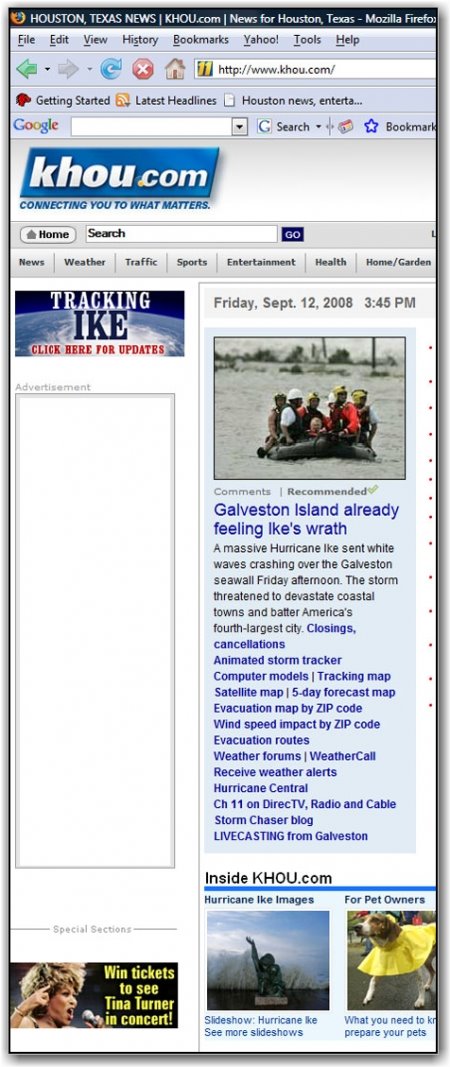
As the hurricane approached on Friday, Sept. 12, the KHOU Web site drew more than 8 million page views and 250,000 views of the channel’s live stream. The next day, the site recorded about 9.2 million page views and 225,000 streams.

The video viewing continued, to a lesser degree, last week. The station received e-mail messages from viewers in Australia, Belgium, India, Norway, Saudi Arabia and elsewhere, thanking them for the video stream. Houston evacuees also said they watched the online streams to stay informed.

At KPRC, Mr. Valet said the station’s Web site had averaged five million page views a day “as people watch all of the wall-to-wall coverage.”

Source / New York Times

Coping with Ike by using a full charge of ingenuity
By Dwight Silverman / September 22, 2008

We live in the Age of Machines.

Machines do the jobs humans won’t. They cook our food, they clean our clothes, they transport us, they facilitate communication, they entertain.

They all require energy of some sort, and in the Houston area, for many people that energy went away on Sept. 13. Hurricane Ike rolled in and stopped the machines, or at the very least, made them less available for many who lost power or couldn’t find gasoline.

It’s almost trite to say that an event like Ike changes a community, that those who live it come away with a different perspective. But trite is true in this case. Houston and its surrounding communities will never be the same.

I’ve built my life around technology, and I was reminded again of its fragility. As have many of my friends and neighbors, I’ve been scrambling to find power when not at work to keep my devices charged, and to find available Internet connections to get things done.

For example, I have to chuckle at the early mythology of the Internet as having been designed to withstand an atomic attack (something that, by the way, is not true). Anyone who is still waiting for Comcast or AT&T to bring broadband back to their Southeast Texas neighborhoods understands how laughable that is. Take away the electricity that powers it and break the wires that carry its data, and the Internet vanishes.

‘City of MacGyvers’

I’ve been impressed, though, at the way people have been making do. In an essay last week, Kyrie O’Connor — deputy managing editor for features and pop-culture blogger — called Houston “a city of MacGyvers,” a reference to the TV character known for his ability to make a thermonuclear bomb out of saltines and fishing line. Indeed, we have been nothing if not resourceful. I asked the commenters in my TechBlog to provide some examples of their geek coping skills.

From Stevemb: “My car’s battery has proven to be a vital power source. To deal with the lack of electricity and still remain ‘plugged in’ without an expensive generator, I’ve come to rely on a 12 volt DC power inverter — and Verizon’s broadband access on our Smartphone. The inverter provides 2 AC plugs, which are split off to provide juice to my laptop’s AC adapter. The other plug either runs a regular lamp with a low wattage fluorescent bulb, our TV or even a fan.”

From Marc Nathan: “Knowing that we would be out of power, I paid most of my monthly bills on Friday afternoon and loaded all of my account numbers onto a USB thumb drive that I kept on my key chain. This was in the hopes that I could find a Wi-Fi point somewhere if it came down to that.”

From Cheri Lindsey: “I found that Kroger and Jack in the Box have free Wi-Fi. So I plugged my laptop into the car outlet to charge and sat in the parking lot in order to get online and tell our loved ones we were all right. We also charged our cell phones and iPod in my car. I drive a Honda, so it wasn’t even using much gas to do that. It made me feel that I wasn’t wasting gas in order to be productive and communicating with the family.”

From Lynda: “Put gas in all three vehicles and stocked up on junk food. We used the same trusty 400w inverter that got us through Alicia. Resurrected the HD antenna and put it on the roof Saturday afternoon. We actually watched all the hurricane coverage in high definition. Had a 12-volt fan to run at night so we could sleep. The inverter wasn’t enough to run the fridge, so we started cooking stuff Sunday night. Who would have guessed that you could bake chocolate chip cookie dough on the propane grill? … We both have Verizon broadband cards so we had Internet.”

Some plans fizzle

David Neal found an uninterruptible power supply useful: “Beyond generators and inverters, you can also use a UPS. Go buy a $150-$200 data-center quality UPS, charge it at work and drag it home each night. This will give you enough power to run a fan or two and keep cool until power is restored. And unlike a generator, you’ll be able to use it when the power returns!”

Of course, not everyone’s plans worked out so well. From Brian Perez: “I thought I was prepared for the storm. Plenty of gas and extra. Spam enough to feed an army for weeks. Batteries out the wazoo. Camping equipment and my trusty American Redcross crank radio. Day one went great. Then the iPhone 3g started running out of juice, and I found out too late my car charger was ‘incompatible’. Antenna fell off the radio. And I didn’t clean out the fridge. Big mistake.”

Automobiles and inverters

Note the common thread in these comments, which were typical of the 30 or so I received? They all used some form of tech to solve the problem being being without other kinds of tech. Automobiles and inverters are the way to go if you don’t have a generator.

But even that is a thin lifeline. Your car must be working, and gas must be available. Gasoline station pumps require electricity to work. And tank trucks must be able to get to the gas stations to supply them.

Key parts of modern society are built on technologies that falter too easily. We can cope so long as we know it’s temporary, or if some components of the technological house of cards remain standing. If Ike had been much worse, much more would have been lost.

Are we ready for that?

Source / Houston Chronicle

The Rag Blog

Posted in RagBlog | Tagged , , , , , , | 1 Comment

Choice of Palin: "All the More Insidious and Cynical"

Although this opinion piece was published almost three weeks ago, I thought it appropriate to re-post it today since it just came to our attention, and because it is so powerful and incisive.

Richard Jehn / The Rag Blog

Eve Ensler

Drill, Drill, Drill
By Eve Ensler

I am having Sarah Palin nightmares. I dreamt last night that she was a member of a club where they rode snowmobiles and wore the claws of drowned and starved polar bears around their necks. I have a particular thing for Polar Bears. Maybe it’s their snowy whiteness or their bigness or the fact that they live in the arctic or that I have never seen one in person or touched one. Maybe it is the fact that they live so comfortably on ice. Whatever it is, I need the polar bears.

I don’t like raging at women. I am a Feminist and have spent my life trying to build community, help empower women and stop violence against them. It is hard to write about Sarah Palin. This is why the Sarah Palin choice was all the more insidious and cynical. The people who made this choice count on the goodness and solidarity of Feminists.

But everything Sarah Palin believes in and practices is antithetical to Feminism which for me is part of one story — connected to saving the earth, ending racism, empowering women, giving young girls options, opening our minds, deepening tolerance, and ending violence and war.

I believe that the McCain/Palin ticket is one of the most dangerous choices of my lifetime, and should this country chose those candidates the fall-out may be so great, the destruction so vast in so many areas that America may never recover. But what is equally disturbing is the impact that duo would have on the rest of the world. Unfortunately, this is not a joke. In my lifetime I have seen the clownish, the inept, the bizarre be elected to the presidency with regularity.

Sarah Palin does not believe in evolution. I take this as a metaphor. In her world and the world of Fundamentalists nothing changes or gets better or evolves. She does not believe in gl obal warming. The melting of the arctic, the storms that are destroying our cities, the pollution and rise of cancers, are all part of God’s plan. She is fighting to take the polar bears off the endangered species list. The earth, in Palin’s view, is here to be taken and plundered. The wolves and the bears are here to be shot and plundered. The oil is here to be taken and plundered. Iraq is here to be taken and plundered. As she said herself of the Iraqi war, ‘It was a task from God.’

Sarah Palin does not believe in abortion. She does not believe women who are raped and incested and ripped open against their will should have a right to determine whether they have their rapist’s baby or not.

She obviously does not believe in sex education or birth control. I imagine her daughter was practicing abstinence and we know how many babies that makes.

Sarah Palin does not much believe in thinking. From what I gather she has tried to ban books from the library, has a tendency to dispense with people who think independently. She cannot tolerate an environment of ambiguity and difference. This is a woman who could and might very well be the next president of the United States. She would govern one of the most diverse populations on the earth.

Sarah believes in guns. She has her own custom Austrian hunting rifle. She has been known to kill 40 caribou at a clip. She has shot hundreds of wolves from the air.

Sarah believes in God. That is of course her right, her private right. But when God and Guns come together in the public sector, when war is declared in God’s name, when the rights of women are denied in his name, that is the end of separation of church and state and the undoing of everything America has ever tried to be.

I write to my sisters. I write because I believe we hold this election in our hands. This vote is a vote that will determine the future not just of the U.S., but of the planet. It will determine whether we create policies to save the earth or make it forever uninhabitable for humans. It will determine whether we move towards dialogue and diplomacy in the world or whether we escalate violence through invasion, undermining and attack. It will determine whether we go for oil, strip mining, coal burning or invest our money in alternatives that will free us from dependency and destruction. It will determine if money gets spent on education and healthcare or whether we build more and more methods of killing. It will determine whether America is a free open tolerant society or a closed place of fear, fundamentalism and aggression.

If the Polar Bears don’t move you to go and do everything in your power to get Obama elected then consider the chant that filled the hall after Palin spoke at the RNC, ‘Drill Drill Drill.’ I think of teeth when I think of drills. I think of rape. I think of destruction. I think of domination. I think of military exercises that force=2 0mindless repetition, emptying the brain of analysis, doubt, ambiguity or dissent. I think of pain.

Do we want a future of drilling? More holes in the ozone, in the floor of the sea, more holes in our thinking, in the trust between nations and peoples, more holes in the fabric of this precious thing we call life?

[Eve Ensler, the American playwright, performer, feminist and activist is best known for ‘The Vagina Monologues.’]

Source / Huffington Post / Posted September 5, 2008.

Thanks to Betsy Gaines / The Rag Blog

Posted in RagBlog | Tagged , | Leave a comment

FILM : Ben McKenzie in ‘Johnny Got His Gun’

Cindy Thomas of the Fort Hood Support Network with Ben McKenzie after the premiere of “Johnny Got His Gun” in Austin. Photo by Alice Embree / The Rag Blog.

Johnny Got His Gun ‘is a starkly powerful film based on a 1939 antiwar novel by Dalton Trumbo’
By Alice Embree / The Rag Blog / September 23, 2008

“Johnny Got His Gun” opens in Austin September 26th at the Dobie Theatre. It is a starkly powerful film based on a 1939 antiwar novel by Dalton Trumbo. The sole actor is Austin native Ben McKenzie, best known for his role as a high school heartthrob in the television show, O.C.

See this movie. See it because Ben McKenzie is a fine actor. See it because Dalton Trumbo, one of the blacklisted Hollywood 10, writes a compelling story. Let it stir memories of what a simply staged production can evoke. Buy a ticket because a portion of the ticket price supports the Fallen Patriot Fund for injured soldiers returning from Iraq and Afghanistan.

Johnny Got His Gun has a sparse palette – a bench and a chair, occasional background lights for a pavilion or a night sky. It has only Ben McKenzie acting. His talent fills the screen. Softening his gaze so that we see his girlfriend in his eyes, erupting in rage, dissolving in despair. Diving under the bench, we watch him re-live artillery shelling. Reacting to a pinch and the metal blade that takes off a limb. Nursing his missing arm. A slight lift of his torso and we see the nurse changing his bedsheet. Within the limitations of this austere stage set, we experience his limitations and his racing mind. Through McKenzie’s acting, we feel the pain of a World War I amputee and know that while almost a century separates that pain from that of a roadside bomb victim in Baghdad, it is the same, universal loss – the cost of war.

“Johnny Got His Gun” premiered at the Paramount in Austin Monday night. The audience included friends of Ben McKenzie and his family and peace activists along with young people brought there by Ben McKenzie’s star power. I wondered what the younger contingent thought when they silenced their cell phones to see a movie with no special effects and few laugh-lines. We have become so accustomed to multi-sensory experience, so wired to on-screen movement, that the sheer simplicity of this production is shocking.

Other characters were present only through the description of Joe Bonham, a quadruple amputee with catastrophic injuries to his face. The film traps you in a small space in the same way Joe Bonham is trapped. “It evokes the isolation of major injury,” said a GI rights counselor after the film. Cindy Thomas, Army spouse, put it more simply to the director, “It reminded me of Walter Reed.”

I asked Ben McKenzie how he came to act in this movie. He said that the director, Rowan Joseph, approached him about the project. It was a powerful script and he thought he could reach a younger generation with its message.

Dalton Trumbo wrote his award-winning novel prompted by a news story about an American soldier hit by an artillery shell during World War I. As the soldier regains consciousness, he struggles to mark time and find ways to communicate. He asks to be put on display in the halls of Congress and in front of Parliaments as a living example of the true cost of war.

Trumbo, called before the House Un-American Activities Committee (HUAC) in 1947, was blacklisted and spent nearly a year in prison. He wrote under pseudonyms until the 60s. In 1971, as another war raged, he directed a screen adaptation of “Johnny Got His Gun,” starring Timothy Bottoms and Jason Robards.

We live in an era of sanitized war. Unlike the Vietnam era, most of us are shielded from the experience because there is no draft. There is virtually no television coverage of the war. Peace activists struggle to break through the ether. Hopefully, with Ben McKenzie as a draw, “Johnny Got His Gun” will bring the human cost of war to a new and wider audience.

[For more about Johnny Got His Gun, go here.]

The Rag Blog

Posted in Rag Bloggers | Tagged , , , , | 1 Comment

Urgent Confidential E-Mail From Minister of Treasury Paulson


From: Minister of the Treasury Paulson

Subject: REQUEST FOR URGENT CONFIDENTIAL BUSINESS RELATIONSHIP

Dear American:

I need to ask you to support an urgent secret business relationship with a transfer of funds of great magnitude.

I am Ministry of the Treasury of the Republic of America. My country has had crisis that has caused the need for large transfer of funds of 800 billion dollars US. If you would assist me in this transfer, it would be most profitable to you.

I am working with Mr. Phil Gram, lobbyist for UBS, who will be my replacement as Ministry of the Treasury in January. As a Senator, you may know him as the leader of the American banking deregulation movement in the 1990s. This transactin is 100% safe.

This is a matter of great urgency. We need a blank check. We need the funds as quickly as possible. We cannot directly transfer these funds in the names of our close friends because we are constantly under surveillance. My family lawyer advised me that I should look for a reliable and trustworthy person who will act as a next of kin so the funds can be transferred.

Please reply with all of your bank account, IRA and college fund account numbers and those of your children and grandchildren to wallstreetbailout@treasury.gov so that we may transfer your commission for this transaction. After I receive that information, I will respond with detailed information about safeguards that will be used to protect the funds.

Yours Faithfully
Minister of Treasury Paulson

The Rag Blog

Posted in RagBlog | Tagged | 4 Comments

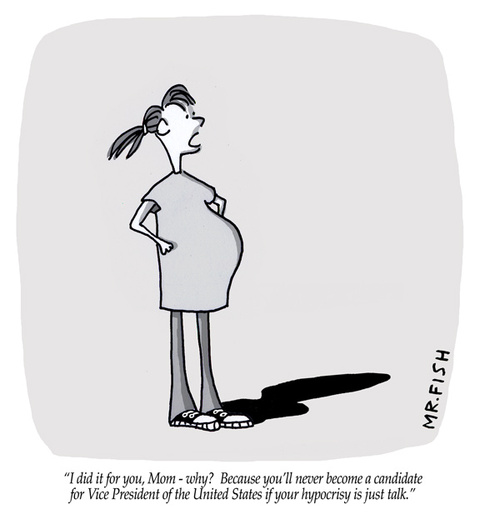
I Did It For You, Mom…

Thanks to Harry Edwards / The Rag Blog

Posted in RagBlog | Tagged , , | Leave a comment

Signs of a Sick Society, Episode XXXIX

And given my firm belief that the worst, by far, is yet to come, our generous and kind society should become really thoroughly fucked up in the coming days. It is clear that our government is generously responsible for a lot of these sorts of results, given the amount of fear-mongering that has taken place since September 11, 2001. Everyone participating in this selfish nonsense should be ashamed.

Richard Jehn / The Rag Blog

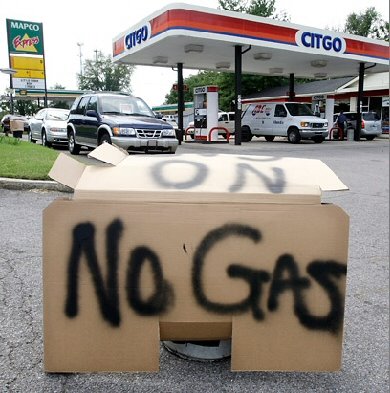
Panic buying left many gas stations empty in Nashville, Tenn., on Friday after false rumors over gas shortages ran rampant through the city. Photo: Mark Humphrey, AP.

Nashville Gas Runs Dry as Rumor Spreads
September 22, 2008

Call it a self-fulfilling prophecy: An estimated three-fourths of gas stations in the Nashville, Tennessee, area ran dry Friday, victim of an apparent rumor that the city was running out of gas.

“Everybody has just gone nuts,” said Mike Williams, executive director of the Tennessee Petroleum Council.

He said he has no idea about the origin of a rumor that there was going to be no gas in Nashville. One reporter called him, saying she had heard that Nashville would be without gas within the hour, he said.

Hearing the rumor, drivers rushed to fill their cars and trucks.

CNN called 13 Nashville gas stations at random. Only two reported having gas, and one said it was almost out. The stations said they were being told they would not get more until Monday or Tuesday.

Katie Givens Kime, visiting from Atlanta, Georgia, was trying to fill up her tank for the trip home when she ran into trouble — when she was already low on gas.

“We panicked and looked online,” she said. “And holy cow, there is no gas in the city. … It has definitely gripped the city, for sure.”

One store clerk told her there was no way she could get gas to go back home, she said.

Williams said some drivers were following gas trucks to see where they were headed, and lines at some stations were a mile long. Fuel was continuing to enter the city, however, as pipelines were working and barges were coming in.

He likened it to Southerners rushing out to stock up on bread and milk when they hear it might snow. As stations began running low, the situation snowballed, he said.

One station reported selling as much gas Friday as it usually does in a weekend, Williams said.

The phenomenon seemed to be isolated to the Nashville area, he said.

Givens Kime said she found a station online that still had gas and waited more than an hour to pump it.

“People were freaked out,” she said. A “renegade bunch” of men helped direct traffic to and from the pumps, even taking drivers’ cash inside for them. She described people filling cans and other containers as well as cars.

She said that the station was not engaging in price gouging but that “emotions were running very high” among drivers.

© 2008 Cable News Network.

Source / America On Line

The Rag Blog

Posted in RagBlog | Tagged , | 1 Comment

Why Do We Get It Wrong All the Time Now?

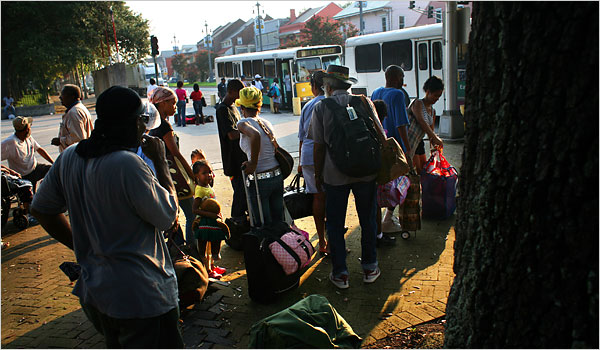
New Orleans residents gathered at an evacuation pick-up station in the Seventh Ward prior to Gustav’s landfall. Photo: Richard Perry/The New York Times

‘Never Again,’ Again
September 20, 2008

Hurricane Gustav gave the state of Louisiana a test for which it had three years to prepare. There were thousands of poor, sick, disabled and elderly people who could not get out on their own. They needed to be rescued with dispatch, and sheltered in safety and dignity.

One simple test. The state flunked.

Three years to the week after Hurricane Katrina’s landfall, Louisiana executed a fundamentally unfair evacuation plan and did it badly. It relied on dividing the population into separate streams: People with their own cars were directed to shelters run by parishes, churches and the Red Cross. People with medical problems not requiring hospitalization were taken to special shelters. Sex offenders had a shelter to themselves.

All those without a car or a ride were taken on state buses to four state-run warehouses. It was in these shelters, including two abandoned stores, a Wal-Mart and a Sam’s Club, that thousands of working-poor New Orleanians got a sickening reminder of Katrina.

Evacuees said they had had no idea where they were going; bus drivers would not tell them. When they arrived, there were not enough portable toilets, and no showers. For five days there was no way to bathe, except with bottled water in filthy outdoor toilets. Privacy in the vast open space — 1,000 people to a warehouse, shoulder-to-shoulder on cots — was nonexistent. The mood among evacuees was grim, surrounded as they were by police officers and the National Guard, with no visitors or reporters allowed.

“We didn’t want to evacuate into a prison,” Lethia Brooks told the New Orleans Workers’ Center for Racial Justice, an organization that accompanied the evacuees, inspected the shelters and collected hundreds of stories into a report sharply critical of the state’s response.

Gustav ended up being no Katrina, and the week of suffering was not as severe as the deathly mayhem of three years ago. But residents had every right to expect far better treatment than they received. After a week of indignities in crowded, unsanitary shelters, many returned home with their fragile finances in turmoil. They had been forced to buy extra basics while out of their homes, and September rent was due.

The secretary of Louisiana’s Department of Social Services, which was responsible for the shelters, resigned after this scandal and one involving problems with food stamp distribution.

Now, many poor residents are vowing “never again,” as in, “Never again will we get on the bus to be warehoused. We’ll ride out the next storm.” In New Orleans, disaster is never far away, and government incompetence cannot be allowed to undermine a swift, sure evacuation. Gov. Bobby Jindal’s administration should move quickly on a better plan that does not expose the poor to differential, substandard treatment.

Source / The New York Times

The Rag Blog

Posted in RagBlog | Tagged , , | Leave a comment

"Equal Opportunity": Just Another Fairy Tale


A note of appreciation from the rich
By Author Unknown / September 21, 2008

Let’s be honest: you’ll never win the lottery.

On the other hand, the chances are pretty good that you’ll slave away at some miserable job the rest of your life. That’s because you were in all likelihood born into the wrong social class. Let’s face it — you’re a member of the working caste. Sorry!

As a result, you don’t have the education, upbringing, connections, manners, appearance, and good taste to ever become one of us. In fact, you’d probably need a book the size of the yellow pages to list all the unfair advantages we have over you. That’s why we’re so relieved to know that you still continue to believe all those silly fairy tales about “justice” and “equal opportunity” in America.

Of course, in a hierarchical social system like ours, there’s never been much room at the top to begin with. Besides, it’s already occupied by us — and we like it up here so much that we intend to keep it that way. But at least there’s usually someone lower in the social hierarchy you can feel superior to and kick in the teeth once in a while. Even a lowly dishwasher can easily find some poor slob further down in the pecking order to sneer and spit at. So be thankful for migrant workers, prostitutes, and homeless street people.

Always remember that if everyone like you were economically secure and socially privileged like us, there would be no one left to fill all those boring, dangerous, low-paid jobs in our economy. And no one to fight our wars for us, or blindly follow orders in our totalitarian corporate institutions. And certainly no one to meekly go to their grave without having lived a full and creative life. So please, keep up the good work!

You also probably don’t have the same greedy, compulsive drive to possess wealth, power, and prestige that we have. And even though you may sincerely want to change the way you live, you’re also afraid of the very change you desire, thus keeping you and others like you in a nervous state of limbo. So you go through life mechanically playing your assigned social role, terrified what others would think should you ever dare to “break out of the mold.”

Naturally, we try to play you off against each other whenever it suits our purposes: high-waged workers against low-waged, unionized against non-unionized, Black against White, male against female, American workers against Japanese against Mexican against…. We continually push your wages down by invoking “foreign competition,” “the law of supply and demand,” “national security,” or “the bloated federal deficit.” We throw you on the unemployed scrap heap if you step out of line or jeopardize our profits. And to give you an occasional break from the monotony of our daily economic blackmail, we allow you to participate in our stage-managed electoral shell games, better known to you ordinary folks as “elections.” Happily, you haven’t a clue as to what’s really happening — instead, you blame “Aliens,” “Tree-hugging Environmentalists,” “Niggers,” “Jews,” Welfare Queens,” and countless others for your troubled situation.

We’re also very pleased that many of you still embrace the “work ethic,” even though most jobs in our economy degrade the environment, undermine your physical and emotional health, and basically suck your one and only life right out of you. We obviously don’t know much about work, but we’re sure glad you do!

Of course, life could be different. Society could be intelligently organized to meet the real needs of the general population. You and others like you could collectively fight to free yourselves from our domination. But you don’t know that. In fact, you can’t even imagine that another way of life is possible. And that’s probably the greatest, most significant achievement of our system — robbing you of your imagination, your creativity, your ability to think and act for yourself.

So we’d truly like to thank you from the bottom of our heartless hearts. Your loyal sacrifice makes possible our corrupt luxury; your work makes our system work. Thanks so much for “knowing your place” — without even knowing it!

Source / Information Clearing House

The Rag Blog

Posted in RagBlog | Tagged , , , | Leave a comment

David Sirota : The $700 Billion Questions

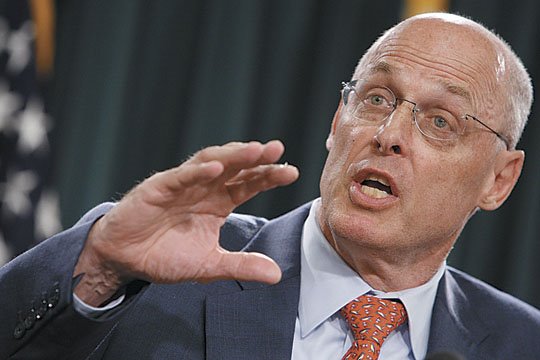
Treasury Secretary Henry Paulson, with friend. Paulson detailed what he called “a comprehensive approach” to repairing financial markets on Friday, Sept. 19. (Hold on to your wallet.)

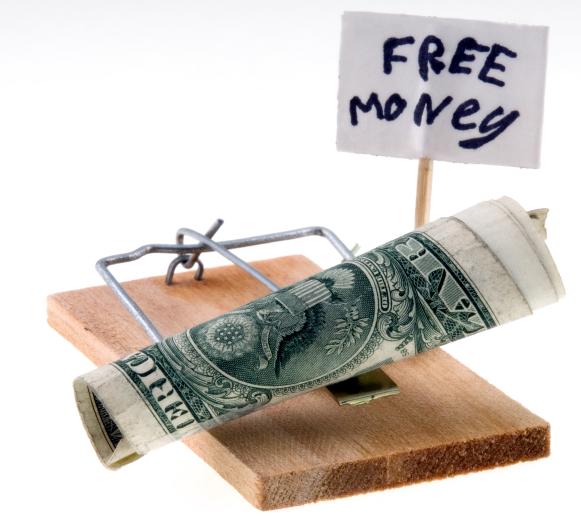
Using the shock doctrine, Wall Street and Washington’s wrecking crew aim to get the most expensive free lunch in American history
By David Sirota / September 22, 2008

If a museum in the next superpower nation ever commemorates the decline of the last great superpower, it will make the two-and-a-half page bill introduced this week the center of the display.

Just as they do today at the National Archives’ Declaration of Independence exhibit, tourists in the future—perhaps in Beijing, perhaps somewhere else—will line up to see a framed draft of this week’s White House legislation demanding Congress surrender its power of the purse, and give an unelected appointee—in this case, Treasury Secretary Henry Paulson—the power to hand over $700 billion of taxpayer money to “any financial institution,” “without limitation…on such terms and conditions as determined by [him].” In a nation priding itself on separating powers between the branches of government, the bill explicitly states that decisions by Paulson may not even “be reviewed by any court of law or any administrative agency.”

Whether the bill passes or not, the drafting of it—even the mere thinking of it—is the single most clear sign that all of the major tenets of American democracy are on the auction block these days: from constitutional checks and balances, to legislative and judicial oversight to electoral accountability itself.

In the immediate aftermath of what could be the starting gun of a second Great Depression, the public this week will face a wave of propaganda from Washington. Using the same playbook that succeeded in passing the Patriot Act and the Iraq War authorization with almost no questions, politicians will inevitably invoke love of country, fear, loathing and red-alert emergency—all designed to ram this bill into law as fast as possible, with as little scrutiny as possible. Put in book terms, we will see Thomas Frank’s wrecking crew using Naomi Klein’s shock doctrine to justify a bigger free lunch than David Cay Johnston ever imagined.

Here are five key questions we should all be asking:

1) What will prevent the bill from allowing both parties to use the guise of purchasing worthless mortgages to further enrich their largest campaign donors?

Other than a top-line limit of $700 billion, the White House proposal includes not a single reference to how much taxpayers can be forced to pay private investment firms for their worthless mortgages. To the untrained eye, the omission may seem like a minor oversight, but it is almost certainly deliberate not just as a power grab, but in its potential to convert the Treasury Department into a Tammany Hall graft machine with international reach.

Paulson came directly to government from Goldman Sachs, and with these new powers, he could posture as the 21st century’s Boss Tweed, completely free to pay inflated prices for those mortgages as a means of financially rewarding his former Wall Street colleagues who created this mess. And in his initial round of interviews this weekend, he made barely any effort to stem concerns that this is precisely his plan of action. When asked how he would “decide what to buy and what to pay,” he stumbled through an evasive answer, saying “Well, we’re going to have some professional asset managers and some real experts working with us, and we’ll use a — you know, we’re working through the processes.”

Sure, he would have to report semiannually to a presumably Democratic Congress. But that offers almost no safeguard either, as Democrats are just as awash as Republicans in campaign contributions from the companies that would benefit from government overbuying.

Since the deregulatory splurge of the 1990s began, the financial industry has donated almost $600 million to both parties—splitting their donations almost 50-50. That includes an astounding $9.8 million to Democratic presidential nominee Barack Obama, and $6.8 million to Republican nominee John McCain. On top of that is another $500 million dollars in lobbying expenditures in the last decade.

Thanks to the proposal’s omissions, those expenditures could generate a $700 billion return on worthless mortgage investments—well above the 100-to-1 ratio of return on investment that lobbying expenditures typically reap corporate clients in Washington. Alas, in the Halliburton age, such government-corporate profiteering would be anything but rare.

2) How are Americans and investors supposed to feel confident that the crisis will be solved, if the very people who engineered the crisis are being relied on to solve it?

McCain and Obama are campaigning hard on the concept of “change,” and both are playing that message off the Wall Street meltdown. Yet, in brandishing their “change” credentials on economic issues, both are relying on the same cadre of Wall Street and Washington insiders who engineered today’s crisis.

According to Mother Jones, McCain’s campaign is run by at least 83 staffers who have recently lobbied for the financial industry. Their clients included AIG, Lehman Brothers, Merrill Lynch, Fannie Mae, Freddie Mac, and Citigroup, i.e.. all the major corporations that caused the financial implosion, and who stand to gain from the bailout.

Likewise, McCain’s economic guru is Phil “nation of whiners” Gramm. He is the vice-chairman of the investment bank UBS, which according to the Politico.com wrote down “more than $18 billion in exposure to subprime loans and other risky securities and is considering cutting as many as 8,000 jobs.” As a Texas senator, Gramm spearheaded Congress’s radical deregulatory agenda in the 1990s, including authoring the bill repealing the Glass-Steagall Act (i.e., the Depression-era law preventing consolidation that many experts say could have prevented, or at least softened, the current emergency).

Obama, meanwhile, has long relied on Gramm’s boss, UBS chairman Robert Wolf, as one of his top economic advisers and fundraisers. Worse, during his emergency meeting to discuss the crisis last week, five of the nine people he said would be directing his response have played a role in the crisis they claim expertise in fixing. They are:

** Former Clinton Treasury Secretaries Robert Rubin (now an executive at Citigroup, which is embroiled in the meltdown) and Lawrence Summers, who the Politico notes both “supported and helped negotiate the bill [repealing Glass-Steagall].”

** William Daley, the Clinton administration architect of corporate-friendly trade pacts like NAFTA and now a top official at J.P. Morgan Chase.

** Gene Sperling, the top economic adviser in the Clinton White House that deregulated Wall Street.

** Paul O’Neill, the former Bush Treasury Secretary, who despite occasionally criticizing the White House, is a lockstep conservative on economics.

Other than Joseph Stiglitz, Obama included not a single progressive, nor even one of the many visionaries like economist Dean Baker, who has for years been predicting exactly this kind of meltdown. Indeed, the one major labor-affiliated economist officially affiliated with his campaign, Jared Bernstein, “was not part of the crisis meeting,” according to the Washington Post.

Just as the media establishment still grants more credibility to humiliated Iraq war proponents than the original—and now vindicated—war critics, both party standard-bearers are telling Americans that the best people to solve the economic conundrum are those who had a hand in creating it. How, exactly, should this fox-in-the-henhouse situation inspire any confidence in Americans or investors that our political leaders are serious about fixing the problem?

3) How is this meltdown a failure of “oversight” if it has almost nothing to do with illegality?

Most politicians and pundits are bewailing the lack of “oversight” that allegedly led us to the brink of disaster. The rhetoric suggests that the real perpetrators were negligent regulators failing to enforce—or “overseeing”—existing laws. And while there’s certainly a bit of that, CBS’s Bob Schieffer said it best when he reported that, “This is not the work of those who broke the law, it is the work of those operating within the law—those who pushed the law to the limit, making loans the law allowed but common sense dictated should not have been made.”

Substituting a debate about “oversight” for a debate about regulation isn’t merely a semantic error, nor a harmless accident. It allows incumbents to avoid culpability for their votes that gutted existing regulations and helps challenger candidates make a deceptive argument claiming the only change necessary is the specific officeholder, not the system of free-market fundamentalism itself. They get to make a self-servingly partisan case while eschewing the wrath of their regulation-averse business donors.

Crushed, of course, is the potential election mandate. Candidates elected on pledges to beef up “oversight” have only to staff agencies with new faces to fulfill their campaign promises, rather than doing the hard work of passing much-needed new laws.

4) When did a crisis suddenly mean that giving away taxpayer cash to campaign donors is laudably apolitical, but spending taxpayer money on taxpayers is inappropriately “political?”

During initial meetings with Congress about the bailout, Treasury Secretary Henry Paulson rejected “calls to include tighter regulations, corporate reforms or limits on executive compensation as part of the measure,” according to the Associated Press. He also stated his opposition to using a fraction of the money to help homeowners struggling with their bills, shore up the social safety net, or stimulate job growth through public infrastructure spending.

Almost universally, his position was praised by lawmakers and reporters as a judicious and apolitical one worthy of bipartisan praise. At the same time, demands to make sure taxpayers get something for their money were labeled unacceptably “political,” divisive and extraneous.

“What you heard last evening is one of those rare moments, certainly rare in my experience here, is Democrats and Republicans deciding we need to work together quickly,” Banking Committee Chairman Chris Dodd gushed to the New York Times after meeting with Paulson.

Fox News Sunday anchor Chris Wallace praised the White House proposal as “clean” and berated those who he said were trying to “Christmas tree” the bill with relief for homeowners, prompting Sen. John Kyl (R-Ariz.) to enthusiastically agree.

“There is a crisis in our country,” Kyl said. “We’ve got to come together as House and Senate, Democrat and Republican, and deal with this crisis as Americans, for the American people, and not try to bring on all of our political agendas.”

Senate Minority Leader Mitch McConnell (R-Ky.) echoed the sentiment, telling Politico.com that he does not want the bailout to become a vehicle for other “partisan plans and pet projects.”

This framing comes directly from the financial industry itself. The Wall Street Journal reports that congressional leaders are already meeting with lobbyists from the nation’s largest banks, securities firms and insurers “whose message to lawmakers was clear: Don’t load the legislation up with provisions not directly related to the crisis, or regulatory measures the industry has long opposed.”

So, handing over $700 billion of taxpayer money to Wall Street speculators with no conditions whatsoever is now so supposedly apolitical that reporters and politicians take offense at any suggestion otherwise. Meanwhile, proposing to better regulate Wall Street or help ordinary citizens in exchange for that bailout is an unacceptably partisan “political agenda” inappropriate at a time of “crisis in our country”—as if the wage, housing, and health care crisis afflicting workers, homeowners and families is far less critical to the national welfare than the crisis hitting millionaire speculators.

5) How are we going to pay for this?

In the Bush age of unending deficits, even considering affordability strikes some as silly and old fashioned. But we’re talking about adding $700 billion to the national debt—or $2,000 for every man, woman and child in America. Moreover, if, as bailout proponents say, the ultimate goal of a bank rescue is to keep the credit markets liquid and interest rates under control, then adding $700 billion to the interest-rate-exacerbating national debt seems an odd economic analgesic, to say the least. This is to say nothing about the insanity of responding to what is inherently a debt crisis by simply firing up the national credit card and incurring more debt.

To date, Sen. Bernie Sanders (I-Vt.) is the only lawmaker who has laid out a specific plan to both re-regulate the financial markets and responsibly finance a bailout. He proposes to impose a 10 percent surtax on those making over $500,000 a year, raising roughly $300 billion. “The people who can best afford to pay and the people who have benefited most from Bush’s economic policies are the people who should provide the funds for the bailout,” he said.

How that fiscal conservatism is met on Capitol Hill will expose the real motives—and interests—behind the bailout package.

[David Sirota is a senior editor at In These Times and a bestselling author whose newest book, “The Uprising,” was released in May 2008. He is a fellow at the Campaign for America’s Future and a board member of the Progressive States Network — both nonpartisan organizations. His blog is at www.credoaction.com/sirota.]

Source / In These Times

The Rag Blog

Posted in RagBlog | Tagged , , , , , , , | Leave a comment

…Two Ringy Dingy : For a Bailout, Press ‘One’ . . .

Ah, for the good old days. Wait a minute. When were the good old days?

‘If you’re calling because you insured billions of dollars’ worth of undocumented, nonperforming mortgages, press or say “two”‘
By Alan Neff

“Hello! You’ve reached the United States Treasury’s automated bailout hotline. Please listen carefully, because our options have recently changed. If you’re too big to fail, press or say ‘one.’ If not, hang up and dial 1-800-FOR-FEMA.’ “

“One.”

“Great! You’ve selected Option One. If you’re a bank, press or say ‘one.’ If you’re a brokerage firm, press or say ‘two.’ If you’re an insurance company, press or say ‘three.’ “

“Three.”

“You’ve selected Option Three, which means you’re an insurance firm. Did I get that right?”

“Yes.”

“Okay, let’s drill down a little further. If you’re calling because you’re besieged by class-action lawsuits brought by take-no-prisoners plaintiffs’ attorneys because your large corporate policyholders committed innumerable mass toxic torts, press or say ‘one.’ If you’re calling because you insured billions of dollars’ worth of undocumented, nonperforming mortgages, press or say ‘two.’ “

“Two. No, wait, one. I mean, uh, both.”

“I’m sorry. I didn’t understand. Let’s try something else. If you’re the CEO of an insurance company with a servile compensation committee that gave you an irrevocable golden parachute, press or say ‘one.’ If you’ve served on corporate boards with Henry Paulson, press or say ‘two.’ If you believe in strict market Darwinism for every company but yours, press or say ‘three.’ “

“Three.”

“If you want your check automatically deposited into your company’s bank account, press or say ‘one.’ If you want cash in small, unmarked, used, nonsequential bills delivered to a branch office in Zurich or the Cayman Islands, press or say ‘two.’ “

[Silence. Thinking. Surge of fiduciary energy.]

“One.”

“Okay. Please enter the amount you want using the number keys. Use the star sign for a decimal point and press pound when you’ve finished.”

[Lengthy series of numbers entered, followed by the pound sign.]

“Wow! You are in trouble! Your funds should clear in three business days. When you have another claim, call back. Thank you for calling, and have a great day!”

[Alan Neff is a lawyer and novelist. He lives in Chicago.]

Source / Washington Post / Posted Sept. 18, 2008

Thanks to Duncan Echelson / The Rag Blog

Posted in RagBlog | Tagged , , , , | Leave a comment