HEALTH CARE : How Hospitals Are Killing E.R. Patients

King’s County ER in New York City where patient Esmin Green died due to negligence. Photo by uberzombie.

Waiting Doom: A ‘systematic and widespread danger’
By Zachary F. Meisel and Jesse M. Pines / July 24, 2008

Last month, Esmin Green, a 49-year-old mother of six, tumbled off her chair and onto the floor of the Kings County psychiatric E.R. waiting room in New York City.

Members of the hospital staff saw her lying there but did nothing for about an hour. When Green was finally brought into the E.R., she was dead. An autopsy revealed that she died from a pulmonary embolism, which occurs when a blood clot forms in the leg, breaks off, and travels to one or both lungs. This can also kill long-haul airplane passengers who sit in one spot for hours: The blood sits stagnant in their legs for so long that it clots. You could say that Green, too, had been on a plane ride of sorts. She’d waited for a psychiatric-unit bed to open up for more than 24 hours, roughly the same time as a trip from New York to Tanzania.

The surveillance video of Green collapsing and lying untended, as hospital staff at Kings County fail to respond to her collapse, is inexcusable by any stretch. And so Nancy Grace, for one, focused on the negligence. But what’s largely missing from this story is the likely cause of Green’s pulmonary embolism. The answer lies in a far more systematic and widespread danger in hospital care: E.R. waits. Why was Green sitting and waiting while blood pooled in her legs? Despite increasing evidence that crowded E.R.s can be hazardous to your health, hospitals have incentives to keep their E.R. patients waiting. As a result, there has been an explosion in E.R. wait times over the past few years, even for those who are the sickest.

A major cause for E.R. crowding is the hospital practice of boarding inpatients in emergency departments. This happens when patients who come to the E.R. need to be admitted overnight. If there are no inpatient beds in the hospital (or no extra inpatient nurses on duty that day) then the patient stays in the E.R. long past the completion of the initial emergency work. This is what happened to Green, and it has become widespread and common. The problem is that boarding shifts E.R. resources away from the new patients in the waiting room. While E.R. patients wait for inpatient beds, new patients wait longer to see a doctor. As more new patients come, the waits grow. And an E.R. filled with boarding patients and a full waiting room is an unhappy E.R.: The atmosphere is at once static and chaotic. If you or a loved one has waited for hours in an E.R., you know what we mean. The environment can be unsafe and even deadly. A recent study found that critically ill patients who board for more than six hours in the E.R. are 4 percent more likely to die.

What hospital would promote such a practice? Potentially, those that profit more from boarding, particularly in poorer communities with high numbers of uninsured and Medicaid patients. Imagine you run a hospital. There are two competing sources for inpatient beds. The first source is patients who come in through direct and transfer admissions. They are more likely to come with private insurance and need procedural care, both of which maximize profits. The second source is E.R. patients, who are more likely to be uninsured or have pittance-paying Medicaid and less likely to need high-margin procedures. Do the math: If you fill your hospital with the direct and transfer admissions and maroon the E.R. patients for long periods, you make more money.

In effect, then, E.R. boarding allows hospitals to insulate themselves from the burgeoning needs of the poor. E.R.s are safety nets: By law, we who work in them see any and all patients, regardless of their ability to pay. But as more E.R. beds are devoted to boarders, the E.R. has less space for new patients, which keeps a lid on the number of un- and underinsured. So unless you are having a heart attack and can jump the line, your emergency—though it may still be serious—may wait for so long that you give up and go home. Bad for you, good for the hospital’s bottom line. E.R. boarding also tamps down nursing costs, again not to your benefit. Hospitals generally maintain strict patient-to-nurse ratios for inpatients. But many hospitals don’t apply the same rules to the E.R. because they can’t control the number of patients who come in that way. Sometimes the nursing ratio in the E.R. can be as high as 8-to-1. That’s unacceptable in inpatient units, but just stack ’em in the E.R. hallways and suddenly it’s OK.

What about the staff upstairs, who take care of the admitted patients once they leave the E.R.? Their incentives are misaligned, too. Put yourself in an inpatient nurse’s shoes. You are overworked, and your current patients need attention. You get a call from the E.R., saying that a patient like Green is ready to come upstairs. The bed is clean and ready. But you have 20 more things to do before your shift ends in two hours, and you won’t get paid an extra cent if you accept Green to the empty bed. Can’t she wait just a bit more in the E.R.? When the next nurse comes on fresh, you tell yourself, she can admit the new patient. You won’t get in trouble for stalling because no one really measures how long patients stay in the E.R.. So you tell the E.R. nurse that the bed isn’t ready yet. This practice of “bed-hiding” is more common than you think.

What can be done about all this? We think the answer is that hospitals should have to disclose and take responsibility for how long E.R. patients—that is, you—wait for beds. But, not surprisingly, hospitals have lobbied hard to not be held accountable for E.R. crowding and boarding. If they won’t measure and eliminate E.R. boarding on their own, then the federal Centers for Medicare & Medicaid Services, which pays many hospital patients’ bills, or the Joint Commission, which accredits hospitals, should take this on.

And let’s also hold congressional hearings on E.R. boarding. In England, the National Health System now has a rule that 98 percent of patients have to spend less than four hours in the E.R.. Apparently, the son of a member of parliament spent too long in an E.R., we’ve heard. Esmin Green wasn’t well-connected. But her death should serve as a similar prompt to fix the problem of endless waiting.

Meanwhile, if you have to go the E.R., you can vote with your feet. When you are really sick, of course, go to the closest E.R. or call an ambulance. But if you can wait long enough to choose, go to the E.R. where they don’t make patients wait or board for long periods. Yes, we know—since hospitals don’t publicize E.R. waits or boarding, you’ll have to go by word of mouth. If, despite your efforts, you or your grandmother is forced to lie in the E.R. all night, complain directly to the hospital administrators who actually have the power to fix the problem. But don’t count on any major changes. As long as hospitals profit more from boarding and aren’t forced to admit to doing it, your trip to the E.R. will be as long as a flight to Africa—but without the in-flight movie and far more risky.

Zachary F. Meisel is a practicing emergency physician and a Robert Wood Johnson Foundation clinical scholar at the University of Pennsylvania.

Jesse M. Pines is a practicing emergency physician and an assistant professor of emergency medicine and epidemiology at the University of Pennsylvania School of Medicine.

Source / Slate

The Rag Blog

Posted in RagBlog | Tagged , | Leave a comment

Lammas Seasonal Message – Kate Braun


“Here we come rejoicing Bringing In The Sheaves”

By Kate Braun / The Rag Blog / July 25, 2008

Friday, August 1, is Lammas, also named Harvest Home, Lughnasach, and First Harvest. On this date we will be feeling the effects of the new moon and the solar eclipse, although the eclipse won’t be visible in North America (areas of greatest visibility: parts of eastern Asia, parts of eastern Europe, northern Alaska and Canada). The name “Lammas” comes from “Loaf Mass”, reflecting the custom of reserving the first harvesting of grain to make the loaf that is used in this day’s celebration. Friday is Freya’s day; Freya is also called the Giver of the Loaf. It is good to honor her by name on this feast day.

New moons are times to formulate and announce plans yet to be fulfilled; eclipses are times of change; Lammas will be a good occasion to define and set goals for the future. Keep in mind that there are still many retrogrades in effect and that the cumulative effect of these retrogrades is to urge us to take care of unfinished business as well as to pay more attention to our weaknesses so that we can turn them into strengths. The longest journey begins with a single step; use this opportunity to take that first step.

Lammas is a fire festival. Celebrate it by using the colors red, gold, orange, yellow, and bronze in your decorations and dress; by serving breads, apples, berries, squash, lamb, ale, and fruit wine; by giving thanks as you share food; by engaging in activities that promote abundance. Ideally, the type of fire used for this celebration is a fire into which you may toss offerings: a fireplace, backyard grill, cauldron. On this day we recognize the power of Mother Earth’s energies, the life she gives that gives us life. You and your guests should take time at the beginning of your feast to verbally express thanks for the good things in your lives, for the lessons you are learning, for whatever there is in your life that is worth being thankful for.

If you bake, bake a loaf of bread in the shape of a person and at the beginning of the meal, beginning with yourself and going sunwise (clockwise) around the table, tear off a piece of the breadman and feed it to the person sitting next to you while saying “May you never go hungry” or “May food be always on your table” or words to that effect. An alternative to this ritual is to substitute a large gingerbread man for the breadman. Each celebrant should be sure to save a bit of the ginger/breadman to toss into the ceremonial fire when the breadman has completed his journey around the table and is no more. This is a prosperity ritual: by reducing food to ashes and giving the ashes to Mother Earth, you are feeding her as she has fed you; this lays the foundation for more food (prosperity) in the future. Be sure the ashes of your offerings are cold before you disperse them in your garden, though. At the end of your feasting, before you leave the table, thank Mother Earth again. Thank her for the food you have eaten, the company you have enjoyed, the lessons she is teaching you, the joy that you know awaits.

Sharing leftovers is another ritual of increase you and your guests may enjoy. Just be sure each guest takes home some of someone else’s leftovers.

Don’t forget the fairies, especially the garden fairies, in your celebrations. Like Mother Earth, garden fairies work with us to keep our flora healthy. Like Mother Earth, it is polite to remember them and thank them for their efforts. Fairies don’t need much: a doll’s tea set will suffice to set out a Fairy Feast of wine, bread, and fruit. Include a flower and your garden fairies will be honored and pleased.

Reminder/update: the August Metaphysical Fair will be on August 16 & 17, 2008, at the Radisson Hotel, 6000 Middle Fiskville Rd., Austin, TX 78752. $7.00 at the door, good for both days. 10 AM – 6 PM Saturday, Aug. 16; 11 AM – 6 PM Sunday, Aug. 17. This date is per the hotel due to a scheduling conflict. If you put this fair on your calendar for Aug. 9 & 10, please change the dates.

Tarot by Kate 512-454-2293
http://www.tarotbykateinaustin.com/
kate_braun2000@yahoo.com


The Rag Blog

Posted in Rag Bloggers | Tagged , , , | 1 Comment

McCaskill Takes On Military Industrial Complex

A Governmental Accountability Office report has found that Defense Contract Audit Agency officials and major defense contractors successfully pressured Pentagon auditors to hide damaging facts about the performance and costs of weapons systems. Photo by Joseph Kaczmarek / AP.

Freshman senator files scathing report
By Matt Renner / July 25, 2008

A scathing report accusing government auditors of corruption, issued by the government’s top investigative body, prompted a freshman senator to call for firings “by nightfall” on Thursday.

In her first term, Senator Claire McCaskill (D-Missouri), a former prosecutor and Missouri state auditor, has taken the lead in figuring out whether the US military gets what it pays for from contractors

In an impassioned speech on the floor of the Senate, McCaskill outlined the findings of a Government Accountability Office (GAO) report, which found that Defense Contract Audit Agency (DCAA) officials and major defense contractors successfully pressured Pentagon auditors to hide damaging facts about the performance and costs of weapons systems.

The DCAA has “gotten caught in what could be the biggest auditing scandal in the history of this town, and I’m not exaggerating here. I will guarantee you, as auditors around the country learn about this, they’re going to have disbelief and raw anger that this agency has impugned the integrity of government auditors everywhere by these kinds of irresponsible actions,” McCaskill said.

McCaskill fired off letters to Secretary of Defense Robert Gates and DCAA Director April G. Stephenson, demanding accountability and a full explanation of the issues the GAO report raised. In a July 11 letter, Stephenson said that DCAA did not agree with the “totality” of the report but was addressing some of the issues raised.

The GAO, the top nonpartisan governmental investigative body in Washington, DC, looked at 14 audits performed by the 4,000-member DCAA, the internal government audit team that is supposed to oversee contracting for the Department of Defense (DoD) and other government agencies. Zero of the 14 audits met government standards.

The report, titled “DCAA Audits: Allegations That Certain Audits at Three Locations Did Not Meet Professional Standards Were Substantiated,” was based on over 100 interviews with current and former auditors and a review of the 13 sets of “working papers” – the documentation auditors use to backup their conclusions.

The report found, in every case, the working papers did not support the conclusions of the auditors – a clear violation of auditing principles. In addition, the investigation revealed that supervisors at the DCAA “dropped findings and changed audit opinions,” and that the DCAA did not allow auditors sufficient time to do thorough work.

According to GAO investigators, “[W]e also found that contractor officials and the DoD contracting community improperly influenced the audit scope, conclusions, and opinions of some audits – a serious independence issue.” In GAO speak, this means private companies and people in the Pentagon conspired to conceal wasteful and fraudulent activity by contractors at the cost of the US taxpayer.

Among the findings of the report:

* The DCAA resident auditor made an agreement with an unnamed aerospace contractor (determined to be Boeing based on the facts contained in the report), one of the five largest government defense contractors, that “limited the scope” of the audit and would allow the contractor to correct problems that were found before the final audit opinion was issued. [Bullet]The resident auditor replaced uncooperative auditors and intimidated others into making unsubstantiated assessments that benefited contractors at the expense of the government. [bullet]Supervisors assigned complex auditing tasks to underqualified subordinates, resulting in incomplete audits.

* DCAA officials threatened staff members with retaliation for speaking with GAO investigators.

* The director of a cost-estimating system for a major defense contractor threatened the DCAA he would “escalate” the issue “to the highest level possible” in the government and within the company in question if the DCAA would not green-light the billing system it identified as problematic.

* The DCAA failed to revisit contracts that were negotiated by a corrupt (and later convicted) Air Force official.

* Mistakes, incompetence or intentional deception by the DCAA has essentially built in defective price-estimating systems that may artificially inflate contract estimates for years to come.

The GAO investigation itself was interfered with. In a letter to top members of Congress, the GAO stated: “we noted a pattern of frequent management actions that served to intimidate the auditors and create an abusive environment … As a result, some auditors were hesitant to speak to us.” Nick Schwellenbach, National Security investigator for the nonpartisan government spending watchdog group, Project on Government Oversight (POGO), said that the GAO report “demonstrates that the government’s system of contractor oversight is rotten because the independent government agencies that are supposed to look out for the taxpayers are corrupted,” adding “we have senior members inside the DCAA who are retaliating against their own members in favor of the private contractors.”

Schwellenbach pointed out that DCAA auditors oversee contracting at a number of different government agencies including NASA, and that NASA’s inspector general has previously criticized the DCAA’s work. “This looks like it could go even deeper,” Schwellenbach added.

“You know, the Department of Defense has been on the high risk list of this government for more than a decade. Scandal after scandal has rolled out of the Department of Defense on contracting … I took a trip to Iraq just on contract oversight with an auditor’s eye, meeting with the people that oversee the contracts in Iraq … I think we burned up more than $150 billion in just pure contracting abuse,” McCaskill said during her speech, adding, “and all this time that we have been wasting hundreds and billions of dollars, the fox was in the chicken coop.”

Source / truthout

The Rag Blog

Posted in RagBlog | Tagged , , , , , | Leave a comment

Racism At FOX News : Rapper Nas Delivers the Goods

Hip-hop artist Nas joins members of MoveOn.org and ColorofChange.org to deliver a speech to supporters protesting FOX News coverage of Barack Obama in front of News Corp. headquarters, Wednesday, July 23, 2008 in New York. Photo by Mary Altaffer / AP
.

The other day I signed a MoveOn.org petition protesting racism in reporting on the Obamas by FOX News. All in a day’s work.

But MoveOn was nice enough to report back to me with a play-by-play account of my signature’s epic journey – from my humble computer; to Kinko’s, where it was printed out; to rapper Nas, who gave a speech; to FOX News headquarters, where it was refused; and to the Colbert Report, where it and 199,000 others were presented to Colbert Nation.

Nice of them to keep me informed. (Watch the videos below.)

Thorne Dreyer / The Rag Blog / July 25, 2008

Big news! Your petition signature telling FOX to stop their racist smears against the Obamas had a really exciting day on Wednesday. Here’s what happened:

1:00 p.m. Your signature was printed off at a New York City Kinko’s along with 620,126 others—filling 19 big boxes.

2:00 p.m. The signatures were piled in front of FOX’s national headquarters at 6th Avenue and 48th Street.

3:15 p.m. Hip hop star Nas (whose new album had just risen to #1 on the Billboard charts hours earlier) joined over 100 activists and delivered the petitions to FOX on behalf of ColorOfChange, MoveOn, and Brave New Films.

3:30 p.m. FOX refused to accept the petitions. (Sometimes, the truth hurts.)

4:00 p.m.—9:00 p.m. News of FOX’s racism and the star-studded petition delivery made its way around the world—with stories in Rolling Stone, Billboard, USA Today, Associated Press, Reuters, India Express, Huffington Post, MTV, OpenLeft, and over 200 other places.

11:30 p.m. Stephen Colbert welcomed Nas as his guest on the Colbert Report and dedicated over half of his show to FOX’s racism. The boxes containing our signatures were stacked prominently on Colbert’s set in place of his normal interview table and chairs—and he conducted the entire interview surrounded by petitions! Then, Nas performed his new song “Sly Fox,” which is all about FOX’s racism.

12:00 a.m. Several MoveOn staffers, jaws dropped open, got on the phone and engaged in several rounds of, “Wow!” 🙂

Since then, the news has kept spreading around the world. You sent a message to FOX, and that message was very much received!

And the fight’s not over. Together, we’ve denied FOX the legitimacy that would come by hosting Democratic presidential debates, and we got a company to stop advertising on Bill O’Reilly. This week’s delivery made an impact, and we’ll continue to push back together against FOX’s racism and their smears against Obama.

Colbert Report: Nas responds to Bill O’Reilly like the gangsta that he is — with a petition.

Rapper Nas Delivers Fox News Petition

Source / MoveOn.org

The Rag Blog

Posted in RagBlog | Tagged , , , , , , , , | Leave a comment

Slammed: Welcome to the Age of Incarceration

The US holds 1 in 4
of the world’s prisoners.

What happens when you lock up 1 in every 100 American adults?
By Jennifer Gonnerman

The number first appeared in headlines earlier this year: Nearly one in four of all prisoners worldwide is incarcerated in America. It was just the latest such statistic. Today, one in nine African American men between the ages of 20 and 34 is locked up. In 1970, our prisons held fewer than 200,000 people; now that number exceeds 1.5 million, and when you add in local jails, it’s 2.3 million—1 in 100 American adults. Since the 1980s, we’ve sat by as the numbers inched higher and our prison system ballooned, swallowing up an ever-larger portion of the citizenry. But do statistics like these, no matter how disturbing, really mean anything anymore? What does it take to get us to sit up and notice?

Apparently, it takes a looming financial crisis. For there is another round of bad news, the logical extension of the first: The more money a state spends on building and running prisons, the less there is for everything else, from roads and bridges to health care and public schools. At the pace our inmate population has been expanding, America’s prison system is becoming, quite simply, too expensive to sustain. That is why Kansas, Texas, and at least 11 other states have been trying out new strategies to curb the cost—reevaluating their parole policies, for instance, so that not every parolee who runs afoul of an administrative rule is shipped straight back to prison. And yet our infatuation with incarceration continues.

There have been numerous academic studies and policy reports and journalistic accounts analyzing our prison boom, but this phenomenon cannot be fully measured in numbers. That much became apparent to me when, beginning in 2000, I spent nearly four years shadowing a woman who’d just been released from prison. She’d been locked up for 16 years for a first-time drug crime, and her absence had all but destroyed her family. Her mother had taken in her four young children after her arrest, only to die prematurely of kidney failure. One daughter was deeply depressed, the other was seething with rage, and her youngest son had followed her lead, diving into the neighborhood drug culture and then winding up in prison himself.

The criminal justice system had punished not only her but her entire family. How do you measure the years of wasted hours—riding on a bus to a faraway prison, lining up to be scanned and searched and questioned, sitting in a bleak visiting room waiting for a loved one to walk in? How do you account for all the dollars spent on collect calls from prison—calls that can cost at least three times as much as on the outside because the prison system is taking a cut? How do you begin to calculate the lessons absorbed by children about deprivation and punishment and vengeance? How do you end the legacy of incarceration?

This is not to say that nobody deserves to go to prison or that we should release everyone who is now locked up. There are many people behind bars who you would not want as your neighbor, but in our hunger for justice we have lost perspective. We treat 10-year sentences like they’re nothing, like that’s a soft penalty, when in much of the rest of the world a decade behind bars would be considered extraordinarily severe. This is what separates us from other industrialized countries: It’s not just that we send so many people to prison, but that we keep them there for so long and send them back so often. Eight years ago, we surpassed Russia to claim the dubious distinction of having the world’s highest rate of incarceration; today we’re still No. 1.

If awards were granted to the country with the most surreal punishments, we would certainly win more than our share. Thirty-six straight years in solitary confinement (the fate of two men convicted in connection with the murder of a guard in Louisiana’s Angola prison). A 55-year sentence for a small-time pot dealer who carried a gun during his sales (handed down by a federal court in Utah in 2004). Life sentences for 13-year-olds. (In 2005, Human Rights Watch counted more than 2,000 American inmates serving life without parole for crimes committed as juveniles. The entire rest of the world has only locked up 12 kids without hope of release.) Female prisoners forced to wear shackles while giving birth. (Amnesty International found 48 states that permitted this practice as of 2006.) A ban on former prisoners working as barbers (on the books in New York state).

America is expert at turning citizens into convicts, but we’ve forgotten how to transform convicts back into citizens. In 1994, Congress eliminated Pell grants for prisoners, a move that effectively abolished virtually all of the 350 prison college programs across the country. That might not seem like a catastrophe, until you consider that education has been proven to help reduce recidivism. (This was the conclusion of a recent paper by the Urban Institute, which reviewed 49 separate studies.) As the New York Times’ Adam Liptak has pointed out, our prisons used to be models of redemption; de Tocqueville praised them in Democracy in America. Many prisons still call themselves “correctional facilities,” but the term has become a misnomer. Most abandoned any pretense of rehabilitation long ago. Former California governor Jerry Brown even went so far as to rewrite the state’s penal code to stress that the primary mission of that state’s prisons is punishment.

Our cell blocks are packed with men and women who cannot read or write, who never graduated from high school—75 percent of state inmates—who will be hard-pressed to find a job once they are released. Once freed, they become second-class citizens. Depending on the state, they may be denied public housing, student loans, a driver’s license, welfare benefits, and a wide range of jobs. Perhaps there is no more damning statistic than the fact that within three years, half will be convicted of a new crime.

Recently, there have been some hopeful signs. In April, the Second Chance Act was finally signed into law; it will provide federal grants to programs that help prisoners reenter society. But our punishment industry—which each year spends millions lobbying federal and state lawmakers—has grown so massive and so entrenched that it will take far more than one piece of legislation to begin to undo its far-reaching effects.

Just look at our felony disenfranchisement laws, which prohibit 5.3 million people from voting—including 13 percent of African American men. These numbers actually underestimate the scope of the problem, as many ex-prisoners believe they cannot vote even if they can. And so the legacy of our prison boom continues: We’ve become a two-tier society in which millions of ostensibly free people are prohibited from enjoying the rights and privileges accorded to everyone else—and we continue to be defined by our desire for punishment and revenge, rather than by our belief in the power of redemption.

[Contributing writer Jennifer Gonnerman’s book, Life on the Outside, was a 2004 National Book Award finalist. This article appears in the July/August issue of Mother Jones.]

Source / Mother Jones

The Rag Blog

Posted in RagBlog | Tagged , , , | Leave a comment

Alleged Rove Threat Brings Immunity Request


Rove Threatened GOP IT Guru If He Does Not ‘Take the Fall’ for Election Fraud in Ohio, Says Attorney
By Brad Friedman / July 24, 2008

Karl Rove has threatened a GOP high-tech guru and his wife, if he does not “‘take the fall’ for election fraud in Ohio,” according to a letter sent this morning to Attorney General Michael Mukasey, by Ohio election attorney Cliff Arnebeck.

The email, posted in full below, details threats against Mike Connell of the Republican firm New Media Communications, which describes itself on its website as “a powerhouse in the field of Republican website development and Internet services” and having “played a strategic role in helping the GOP expand its technological supremacy.”

Connell was described in a recent interview with the plaintiff’s attorneys in Ohio as a “high IQ Forrest Gump” for his appearance “at the scene of every [GOP] crime” from Florida 2000 to Ohio 2004 to the RNC email system to the installation of the currently-used Congressional computer network firewall.

Connell and his firm are currently employed by the John McCain campaign, as well as the RNC and other Republican and so-called “faith-based” organizations.

In a phone call this afternoon, Arnebeck could not publicly reveal specific details of the information that triggered his concern about the threats to Connell. The message to the IT man from Rove is said to have been sent via a go-between in Ohio. That information lead Arnebeck to contact Mukasey after he found the reports to be credible and troubling.

“If there’s a credible threat, which I regard this to be,” he told The BRAD BLOG, “I have a professional duty to report it.”

Attempts to reach Connell for comment late this afternoon were not successful.

The disclosure from Arnebeck comes on the heels of a dramatic announcement last week, made at a Columbus press conference, announcing Arnebeck’s motion to lift a stay on the long-standing King Lincoln Bronzwell v. Blackwell federal lawsuit, challenging voting rights violations in the 2004 Presidential Election in Ohio.

The motion was made following the discovery of new information, including details from a Republican data security expert, leading Arnebeck towards seeking depositions of Rove, Connell, and other GOP operatives believed to have participated in the gaming of election results in 2004. A letter [PDF] was sent to Mukasey at the same time last week, asking him to retain email and other documents from Rove…

“Mr. Rove’s e-mails from the White House to the Justice Department, the FBI, the Pentagon, Congress and various federal regulatory agencies are obviously relevant to the factual issues that we intend to address in this case,” Arnebeck wrote last week to the Attorney General. “We are concerned about reports that Mr. Rove not only destroyed e-mails, but also took steps to destroy the hard drives from which they had been sent.”

In his email to Mukasey today, Arnebeck writes: “We have been confidentially informed by a source we believe to be credible that Karl Rove has threatened Michael Connell, a principal witness we have identified in our King Lincoln case in federal court in Columbus, Ohio, that if he does not agree to ‘take the fall’ for election fraud in Ohio, his wife Heather will be prosecuted for supposed lobby law violations.”

“This appears to be in response to our designation of Rove as the principal perpetrator in the Ohio Corrupt Practices Act/RICO claim with respect to which we issued document hold notices last Thursday to you and to the US Chamber of Commerce Institute for Legal Reform,” the Ohio attorney writes, before going on to link to The BRAD BLOG’s coverage of his press conference last week and requesting “protection for Mr. Connell and his family from this reported attempt to intimidate a witness.”

The complete, short email, sent today from Arnebeck to AG Mukasey, follows in full below…

Sent: Thursday, July 24, 2008 10:51 AM
To: AskDOJ@usdoj.gov
Subject: Report of Rove threats against witness Michael Connell

Dear Attorney General Mukasey:

We have been confidentially informed by a source we believe to be credible that Karl Rove has threatened Michael Connell, a principal witness we have identified in our King Lincoln case in federal court in Columbus, Ohio, that if he does not agree to “take the fall” for election fraud in Ohio, his wife Heather will be prosecuted for supposed lobby law violations.This appears to be in response to our designation of Rove as the principal perpetrator in the Ohio Corrupt Practices Act/RICO claim with respect to which we issued document hold notices last Thursday to you and to the US Chamber of Commerce Institute for Legal Reform. See: http://www.bradblog.com/?p=6189 and http://www.archive.org/d…tionFraudInOhioCourtCase.

I have informed court chambers and am in the process of informing the Ohio Attorney General’s and US Attorney’s offices in Columbus for the purpose, among other things, of seeking protection for Mr. Connell and his family from this reported attempt to intimidate a witness.

Concurrently herewith, I am informing Mr. Conyers and Mr. Kucinich in connection with their Congressional oversight responsibilities related to these matters.

Because of the serious engagement in this matter that began in 2000 of the Ohio Statehouse Press Corps, 60 Minutes, the New York Times, Wall Street Journal, C-Span and Jim VandeHei, and the public’s right to know of gross attempts to subvert the rule of law, I am forwarding this information to them, as well.

Cliff Arnebeck, Attorney
###-###-####
Cell ###-###-####

cc: Robert Fitrakis, Esq.
Henry Eckhart, Esq

Source / The Brad Blog

Rove Threat to Blackmail GOP IT Mastermind Triggers Immunity Request to Ohio AG by Election Lawyers
by John Michael Spinelli / July 24, 2008

COLUMBUS, OHIO — The little story about how the GOP cyber-gamed the Ohio presidential election in 2004 is growing by the day, spurred on to greater heights Thursday when an Ohio election attorney asked the Ohio Attorney General to provide immunity protection to Mike Connell, the GOP IT mastermind who built various computer systems they say not only won Ohio for President Bush in 2004 but led to many other wins for Republicans over the years of the Bush Administration.

A key figure in the grand strategy of the Grand Old Party to build a cyber system that could assure permanent control by Republicans of key offices, state and federal, is Mike Connell, an Ohio native some refer to as a “High IQ Forrest Gump” for his brilliance in masterminding the construction of various computer systems associated with election procedures and data security, including the so-called firewall in Congress.

Source. / ePluribus Media

The Rag Blog

Posted in RagBlog | Tagged , , , , , | Leave a comment

HEALTH CARE : Bone Density Drugs Can Do More Harm Than Good


Big Pharma Pushes Drugs That Cause Conditions They Are Supposed to Prevent
By Martha Rosenberg / July 24, 2008.

Yet again, women are the industry’s main targets.

Like gastroesophageal reflux and bipolar disease, osteopenia began to inflict millions when a drug to treat it was patented.

“Osteopenia, or the risk of developing osteoporosis, was concocted as a disease at a World Health Organization osteoporosis conference in Rome in 1992 that was sponsored by two drug companies and a drug company foundation,” writes Susan Kelleher in the Seattle Times.

Using the bone density measurements or “T scores” of a 30-year-old woman as a standard, the new condition, osteopenia, had “boundaries so broad they include more than half of all women over 50,” writes Kelleher. And it didn’t hurt that 10,000 bone density measuring machines appeared in doctors’ offices to detect the new disease — only 750 existed in 1995 — many owned and financed by Merck, whose anti-bone-thinning drug Fosamax came online in 1995.

No wonder doctor visits for thinning bones increased by 5 million from 1994 to 2003, according to the Associated Press.

Of course, selling “prevention” to at-risk patients is a pharma gold mine.

It keeps patients on meds for decades through fear, alarmist marketing and after-this-because-of-this reasoning — since a patient doesn’t know if she would have gotten the disease anyway.

So even when reports of Fosamax-related jaw problems called osteonecrosis surfaced — 1,000 cases have been documented — and even when a study in the Archives of Internal Medicine this year found that Fosamax doubled women’s risk of irregular heartbeat, which can cause clots and strokes, few doubted its primary action of protecting women’s bones.

But now, like hormone replacement therapy, which also exploited women’s fear of aging and social marginalization, Fosamax appears to cause the conditions it’s supposed to prevent.

Since 2006, articles in the New England Journal of Medicine, Journal of Orthopedic Trauma, Journal of Bone and Joint Surgery, Journal of Clinical Endocrinology & Metabolism and Aging Clinical and Experimental Research have suggested the anti-bone turnover action of bisphosphonate drugs like Fosamax can in some cases cause fractures.

Oops.

While preventing bone loss that is caused by the process of bone turnover or remodeling, bisphosphonate drugs can fossilize and petrify a bone so it breaks spontaneously and with minimal trauma — like chalk. It will not heal properly.

Thighbones of patients on bisphosphonates have “simply snapped while they were walking or standing,” following “weeks or months of unexplained aching,” reports the New York Times.

Like other fast-tracked-to-Wall-Street drugs that are effectively “tested” on the first users, adverse reports about bisphosphonates came from patients and practitioners long before they came from the FDA or manufacturers.

Bisphosphonate patients have documented excruciating pain from Fosamax since 2001 and GlaxoSmithKline’s Boniva since 2006 on askapatient.com, many calling the drugs “poison” and saying they were forced into wheelchairs.

But only in March did the FDA alert health care professionals to the “severe, sometimes incapacitating, musculoskeletal pain” that bisphosphonate drugs could cause in their patients and caution them to consider whether musculoskeletal pain “might be caused by the drug” rather than the bone condition.

Not only is the pain that bisphosphonate patients report “not in their heads” — imagine 1,257 men on askapatient.com saying their doc dismissed their constant pain and symptomology — it is emblematic of what is really going on.

“There is actually bone death occurring,” Dr. Phuli Cohan told Mallika Marshall, M.D., a medical reporter for Boston’s WBZ-TV News in May. “People don’t want to believe that this is happening, but it is a side effect of the medicine,” she said.

Dr. David Hunter of New England Baptist Hospital concurs that bisphosphonates can cause “dead bone syndrome” and that patients should have a “drug holiday to allow bone cells to rejuvenate,” reports Marshall.

Even drug reps on the industry chat room cafepharma are skeptical about bisphosphonates.

“They over-suppress the bone and ‘may’ cause subtrochanter fractures. … It’s the next hot button,” wrote one anonymous poster on a thread titled “Is Boniva dead?” sparked by a rumor that Boniva pitchwoman Sally Fields had fallen and broken a bone.

Nor do bisphosphonates exit the body quickly when patients quit taking them, according to a 2006 study in the Journal of the American Medical Association — rather, they remain for years.

(Patients “need not take costly bone-building drugs such as Fosamax for life to reap the medicine’s protective benefits,” was the News & Observer’s upbeat interpretation of the drug’s tenacity.)

Will bisphosphonates be the next hormone replacement therapy? Another example of women getting the diseases they were supposed to avoid, thanks to misogynistic marketing?

Is there a market for 10,000 used bone density measuring machines?

Source / AlterNet

The Rag Blog

Posted in RagBlog | Tagged , , , , | 1 Comment

ECONOMICS : John McCain Has Embraced Republican Orthodoxy

The Enforcer: Ronald Reagan brought laissez-faire economics to government.

Laissez-Faire Economics? It’s a Code Word for One-Sided Interventions
By Steven Conn

Steven Conn is a professor of history at Ohio State University and a writer for the History News Service.

As he refines his economic message on the campaign trail this summer, Republican John McCain has made it clear that, previous positions notwithstanding, he has now embraced the Republican economic orthodoxy: eliminate regulation, cut taxes on corporations and the wealthy, and the free and unfettered market will take care of everything.

This economic formula was fashioned most thoroughly by economist Milton Friedman in the mid-20th century, and brought to the federal government by Ronald Reagan. Friedman and his current devotees have looked to the late 19th century for their model of how an economy should work. They have imagined that era as a golden age of free-market competition and laissez-faire government. Many of these Friedmanites want us to return to that golden age.

The problem is that these free marketeers have their history exactly wrong. The Gilded Age, as Mark Twain and Charles Dudley Warner archly called it, was certainly not a period of a genuinely free market or of laissez-faire government. Government at a variety of levels and in many ways intervened regularly in the economy. It did so, however, on behalf of big business. Take just a few examples:

Railroads were among the biggest enterprises of the industrial age. After the Civil War, much of their expansion came because of government land grants. In fact, in the trans-Mississippi West, railroads received roughly 185 million acres of public land free in exchange for laying track. Free public land, therefore, lay at the foundation of the railroad industry.

The courts did their part to help big business as well. In a series of cases, most importantly the 1886 decision in Santa Clara County v. Southern Pacific Railroad, the Supreme Court used the 14th amendment, written originally to protect the rights of newly freed slaves, to define corporations as “persons.” As such, they thus enjoyed the same constitutional protections as individual citizens. The effect of these decisions was to put corporations largely beyond the reach of any state legislature or Congress that might regulate their abuses.

Nowhere was the laissez-faire ethos flouted more than over the question of labor unions and strikes. During the 1890s, as the Supreme Court was refashioning the 14th amendment to protect corporations, it used the 1890 Sherman Antitrust Act to undermine many union activities, ruling that unions constituted illegal “cartels.” When workers went on strike, big business repeatedly called upon the armed force of the state — local police, state guards, federal troops. They got it.

Far from “leaving alone,” government intervened in the economy during the late 19th century over and over, but almost always in one direction, on behalf of private businesses and against the interests of citizens, consumers and workers.

So it is today in our new Gilded Age. Banks and mortgage companies, which lobbied to have regulations in their industry loosened, came to Washington expecting to be bailed out when the real estate bubble popped. And they were, even as millions of Americans faced foreclosure without any help from government. Oil companies want access to even more public land, and large-scale agribusiness lobbies successfully for tariffs on lower-cost ethanol from Brazil.

Even Free-Marketer-in-Chief George Bush has benefited from the public intervention in the private market. When he sold his stake in the Texas Rangers, Bush profited handsomely because the value of the team increased dramatically when a new stadium was built. The citizens of Arlington, Tex., subsidized that stadium to the tune of nearly $200 million. They have seen almost none of the revenue returned to them.

Since the late 19th century, those who have called for laissez-faire government have never really wanted government to stay out of the economy. Rather, they believe that the power of government ought to be used to promote business interests, whether suppressing strikes one hundred years ago, or propping up the mortgage industry today.

Over the next several months, we ought to have a vigorous debate over the direction of the nation’s economic policies. When we do, we ought to acknowledge that there never was a golden age of laissez-faire economics. Government has been and will always be involved in the economy. The real question we need to ask is: on whose behalf?

Source / History News Network / Posted July 21, 2008

Thanks to Steve Russell / The Rag Blog

Posted in RagBlog | Tagged , , , , , | Leave a comment

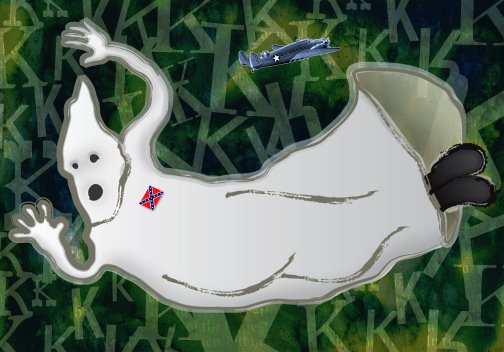
O’Reilly Attacks Gore For Attending Netroots Nation

Drahn Design.

‘The same as if he stepped into the Klan gathering’

On Saturday, July 19, former Vice President Al Gore made a surprise appearance at the Netroots Nation convention in Austin, Texas. In his speech, Gore praised the gathering of progressives, saying that they are part of an effort to “reclaim the integrity of American democracy.”

While the attendees of Netroots Nation received Gore with enthusiasm, his appearance has caused Fox News’s Bill O’Reilly to declare that Gore has “gone off the deep end.”

On his radio show today, O’Reilly claimed that Gore was now associating himself with the most “hateful group in the country.” “And I’m including the Nazis and the Klan in here,” said O’Reilly.” He then claimed that attending Netroots Nation was “the same as if he stepped into the Klan gathering”:

O’REILLY: Al Gore now is done. He’s done. Ok. He is not a man of respect, he doesn’t have any judgment. The fact that he went to this thing is the same as if he stepped into the Klan gathering. It’s the same. No difference. None. K, he loses all credibility with me. All credibility.

It’s no surprise that O’Reilly is attacking Netroots Nation given his previous verbal assaults on its predecessor YearlyKos. Before the YearlyKos conference last year, O’Reilly compared it to “a David Duke convention.”

But O’Reilly exposes the hyperbolic shallowness of his name calling when he claims that “these Daily Kos people” are worse than “the Nazis and the Klan,” but then assures his audience that they won’t “come to your house and hurt you.”

Note to O’Reilly: The Nazis and the Klan actually hurt people.

Transcript:

O’REILLY: Ok, now he shows up on Saturday at the most hateful, there is not — and I’m including the Nazis and the Klan in here — there is not a more hateful group in the country than these Daily Kos people. Now, will they come to your house and hurt you? I don’t know, probably not. But, do they want to hurt you? Do they say terrible things about Tony Snow when he dies? All day long. Ok. Hateful hateful hateful. The rhetoric that they use and the rhetoric that the Klan and the Nazis use are the same rhetoric. It’s hate. Everyone knows that.

Now why would you go to a convention sponsored by these people when you know that currently on the Kos is stuff about Tony Snow, it’s good that he’s dead, he’s in hell, all of that. But Gore did, Gore went there. So did Nancy Pelosi. That disqualifies Gore from any serious consideration by me in the future. Al Gore now is done. He’s done. Ok. He is not a man of respect, he doesn’t have any judgment. The fact that he went to this thing is the same as if he stepped into the Klan gathering. It’s the same. No difference. None. K, he loses all credibility with me. All credibility.

Source / Think Progress / Posted by Matt / July 21, 2008

The Rag Blog

Posted in RagBlog | Tagged , , , , , , , , , | 1 Comment

Quote of the Day – George Orwell

War is a way of shattering to pieces, or pouring into the stratosphere, or sinking in the depths of the sea, materials which might otherwise be used to make the masses too comfortable, and hence, in the long run, too intelligent.

George Orwell

Thanks to Diane (a TRB reader) / The Rag Blog / Posted July 24, 2008

Posted in RagBlog | Tagged , | 1 Comment

Thursday’s Snapshot


Thanks to Mariann Wizard / The Rag Blog / Posted July 24, 2008

Posted in RagBlog | Tagged | Leave a comment

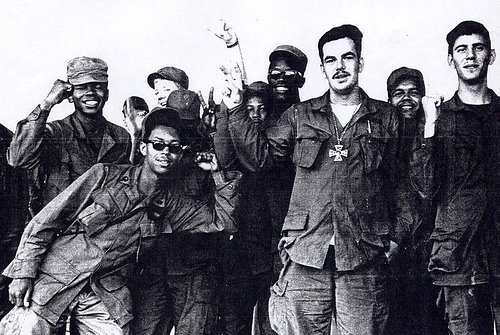
BOOKS : Carl Oglesby’s ‘Ravens in the Storm’

Last updated July 29, 2008


Former SDS president reflects on that organization’s stormy history at the leading edge of the sixties New Left
By Mariann G. Wizard / The Rag Blog / July 24, 2008

When I joined UT Students for a Democratic Society in the spring of 1965, a bright-eyed freshman on the fast track to scholastic probation, SDS’ national president was one Carl Oglesby, whose name was on my membership card. That was the only SDS membership card I ever had, so short-lived was the organization, and so quick the onset of its disabilities, until I got a new one last year, signed by Austin Movement for a Democratic Society Treasurer Alice Embree. Alice was a seasoned leader of the 60s UT SDS chapter – just one year older than me – when I joined. Now, 43 years later, Oglesby’s Ravens in the Storm (Scribner, New York, 2008) is a compelling personal memoir of the Sixties. While he draws no parallels between the frustrations of that era and those of the present day, peace activists will have no trouble seeing them; as in the later 1960s, anti-war protests feel increasingly fruitless as the Iraq war rockets on.

Oglesby recalls SDS in 1965 as a nonviolent, egalitarian-in-principle but elitist-in-composition group, primarily concerned with ending racism and poverty, and confronted, as he says, by Vietnam: “a terrible accident burning in the road, an event without logic but inescapably right there in front of us. We just had to… do what we could.” As the war escalated, the work of demonstrating, educating, and converting, all that peace activists could “reasonably” do, came to seem much too slow. Up against a wall of increasingly hostile administrations, the temptations of violent “direct action,” spiced with the rhetoric of the embattled Black liberation movement who we could find no way to concretely aid, became a siren song for some.

While Oglesby’s belief that the antiwar movement of the 60s, if it had not been destroyed from within and without, could have eventually forced an end to the war is an attractive idea to mature, peace-loving activists today, it is also entirely debatable, falling prey to the fact that “the Movement” was indeed destroyed. Carl identifies the extreme lack of organization, embraced by SDS at all levels, as a pre-existing deficiency allowing the group’s destruction to proceed with little effective opposition. (Bags of chapter mail are described, unopened, in a “filthy pigpen” of a National Office; I saw it even so. SDS never had any money, or accountable decision-making.) Still apparently considering himself a small-d democrat, however, he fails to acknowledge that scientific analysis might have been helpful, and seems to take the aberrant “theories” and worse behavior of the Weatherman faction as somehow representative of the “Old Left” and its outmoded anti-capitalist ideas. He knows better, but this may simply reflect an acute awareness of how far from revolutionary US society in the 1960s really was. Surely we at least learned that the Vietnam conflict was no accident, despite its burning horror, and that subsequent wars have not been accidents, either, but inevitable consequences of our economic system!

In contrast to other SDS memoirists, Oglesby never mentions the “prairie power” changes of 1966 and ’67, which set aside SDS’ founding, Ivy League-based, left-cognizant leadership for a “new guard” of state college-based, left-naïve, populist/anarchist anti-leaders. Indeed, what seemed a significant change at the time was but small change a year later, with the coming of Progressive Labor and, after them, the Revolutionary Youth Movement-slash-Weather nihilists. Still, it strikes a jarring note to see Greg Calvert’s new working class theory, which caused great upheaval and turbulence within SDS when introduced, casually co-opted into “old guard” SDS philosophy. (“[A]n increasingly high-tech economy was turning [the ‘middle class’] into a new proletariat and making its brainpower central to production. The original SDS had seen its natural constituency as this ‘new working class’…”) Another error is his naming the 1968 Columbia University strike as the birthplace of the free university movement, “a signature product of SDS”. UT SDS had spawned a Free University in Austin in 1966, led by philosophy grad student Dick Howard, and it wasn’t invented here!

Overall, this is a complex and astoundingly non-judgmental history of stormy times, when, Oglesby writes, SDS more closely resembled the raven than the traditional dove of peace, the history of which, he points out, cannot be known while government reports of penetration, spying, and dirty tricks against the movement remain secret. The many thousands of pages of documents released to persistent activists under Freedom of Information Act guidelines are so heavily redacted that, although “the Justice Department admitted to having mounted 2,370 specific separate actions against us…, we still don’t know what a single one of them was.” Oglesby takes advantage of government spy records where possible, as aides-de memoire.

Writing about his stunning “expulsion” from SDS, in Austin, TX, during a March, 1969 meeting of the National Council, in a closed meeting of SDS’ National Interim Committee, he uses transcripts of the Federal Bureau of Investigation’s high-quality recording of the event to provide verbatim excerpts from his unannounced “trial”, apparently on charges of not being a “committed Marxist-Leninist” in an avowedly democratic organization. The emergent Weather, personified by Bernardine Dohrn, comes off in these pages, despite Dohrn’s once apparently warm relationship with Oglesby, as a closed-minded, arrogant, delusional sect with no more grasp of Marxist analysis than a murder of crows. Without the FBI transcripts, Oglesby’s account, even if exactly the same, would no doubt seem outrageously exaggerated.

Austin chapter meetings by 1969 had become incredibly painful, unproductive, venomous confrontations between “regular” SDSers and minions of PL, spiked with anarchist sound and fury, and meetings had never been particularly effective decision-making opportunities. Influential “regulars” were leaving town, following the University’s dismissal of philosophy professor Larry Caroline, and in the face of the continuing escalation of a war – at home as well as abroad – they had spent the previous four or five years, like Oglesby, fighting body and soul. Reading of his dismissal by the group he had once led, I was nagged by a faint memory, confirmed in Robert Pardun’s recollection of the same events (Prairie Radical, 2001, Shire Press, Los Gatos, CA). Pardun, by 1969 a two-time former national SDS officer and leading “prairie power” organizer, highly respected for his cogent thinking and consistent principles, was living in Austin, working as a welder. Increasingly alienated from the warring SDS chapter, Bob briefly attended the first day of the Austin NC meeting and walked out, with most other Texas members, when attempts by Greg Calvert and Carol Neiman to calm the RYM/PL sloganeering match were rebuffed. Then, he says:

The second evening of the [NC] meeting, Bernardine Dohrn and several other RYM people came to my house to ask me to help in their fight for control of SDS. That meant supporting either RYM or PL – but… I didn’t agree with either side. After they left, I thought they considered me to be a “sell-out”. But that was part of the problem. The way they saw it, I was either for them or against them and I didn’t like the kind of politics that went with that mentality. After they left I decided to boycott the rest of the [NC] meeting with my Texas SDS friends.

Re-reading Bob’s account, I recognized my earlier nagging feeling as a twinge of guilt, since I was one of the Texas SDSers urging Bro. Pardun to blow off the meeting and come get high. On the third day of the NC, Oglesby’s secret trial took place, clearly part of the “fight for control” Dohrn and friends had proposed to Pardun the night before. What might have happened if those who agreed with Oglesby that “ordinary Americans,” with the help of our returning brothers from the meat grinder of Vietnam, could at last force an end to the war, had known that he was on trial by people widely seen as fools? Could they have rescued him from the Kafkaesque proceeding, and perhaps rescued SDS as well? Probably not; the rot was by then too far advanced. COINTELPRO’s unrelenting attacks were sapping the Movement’s local resources everywhere, diverting everything increasingly into legal defense work and reactions to unanticipated attacks. The Weathermen, in contrast, “really believed that the revolution was on its way… They produced a theater of the absurd and called it the revolution.”

It’s tempting, but unfair, to compare Oglesby’s mature work with former Chicago Seven defendant Tom Hayden’s 1988 Reunion: A Memoir (Random House, New York, aptly reviewed at the time by the Washington Monthly. Ravens is by far the better read, but then, twenty years’ added perspective can’t help but work wonders. Oglesby’s fleeting mentions of Hayden do not cast the author of the Port Huron Statement, SDS’ founding document, in a flattering light, but do acknowledge his influence, contrasting oddly with Hayden’s almost total neglect of fellow U. Michigan SDSer Oglesby in his work. Oglesby’s account of an almost hysterical Hayden’s response to Nixon’s invasion of Cambodia in 1970 is strikingly at odds with Hayden’s impersonal recollections. The moderate former leaders agree on many things, e.g., both saw anti-PL activist and SDS’ 1968-69 National Secretary Mike Klonsky as an arrogant and somewhat thick-headed thug. (Klonsky’s post-SDS response to the Cambodian civil war, another “terrible accident burning in the road”, was to proclaim support for Pol Pot’s genocidal Khmer Rouge.)

If the personal memoir of a pacifistic individual can be said to be a page-turner, Carl Oglesby has written one. There is enough new here, and enough uniquely recalled, to surprise even those who lived through the same years, involved in some of the same groups and swept along by the same currents. But all the memoirs to date, and they are fast becoming legion, don’t change the fact that the rise and fall of the radical youth movement of the Sixties remains a cipher, locked in an acronym, wrapped in black ops.

[For a timely and provocative article based in part on Oglesby’s book, see Bill Kauffman’s “When the Left was Right”, in the May 19, 2008 American Conservative.]

Mariann is a frequent contributor to The Rag Blog. With fellow Austin activist Alice Embree, she contributed to Students for a Democratic Society: A Graphic History (2008, Pekar H, ed. Buhle P., Hill & Wang, New York). She was a contributor to No Apologies: Texas Radicals Celebrate the ’60s (1992, ed. Janes D., Eakin Press, Austin), as was Bob Pardun. With Larry Waterhouse, she co-wrote Turning the Guns Around: Notes on the GI Movement (1971, Praeger, New York).

Find Ravens in the Storm at Amazon.com.

A response from Mike Klonsky:

This campaign to renew and refight the old SDS divisions, 40 years later (for some, it was their only moment in the sun), has been pretty well orchestrated as part of the anti-Obama, guilt-by-association tidal wave. It’s what Stanley Fish called, “the new McCarthyism.” It’s been mainly focused on Bill Ayers, as if anyone under 40 gives a hoot about Obama and Ayers.

I would think that Oglesby’s book would be one of the tools of choice in this campaign. It starts with the big lie that he was “drummed out of SDS” (as if…). His descriptions of SDS meetings and his caricature of me, Bernardine and other former SDS leaders, are delusional and would be laughable if not repeated by the professional anti-commies old and new.

As we all know, Oglesby, who early on played an important role in opposing the war in Vietnam, left the left to become the darling of the CATO institute and the libertarians. He did all that without ever changing his politics and world outlook. Shows what a big tent SDS was before the ’69 split. No one was ever expelled by the SDS leadership, nor could they be. As you know, there was no formal membership in SDS. If you said you were in–you were in. Certainly not Oglesby. Now he sounds like a doddering old fool with delusions of grandeur about his own role and pissed because no one would listen to him or follow his admittedly silly political directions.

His dialogue is obviously phony, stilted and manufactured. He writes over and over about my facial expressions in meetings held 40 years ago–as if he could really remember every furrowed brow and each grimace. Not only remember, but draw big political conclusions from each. This is the stuff of stereotypes and anti-left propaganda.

Half the time, I’m sure he is mixing me up with someone else.

Wizard’s and Kauffman’s stuff is typical of the old and new defenders of the “moderate” SDS, who are now trying to ingratiate themselves (“we weren’t really leftists, sir”) and clean up their own pasts to fit these more conservative times.

I don’t think that stuff has any more play now than it did in the are-you-now-or-have-you ever-been ’50s. But the least they (she) could do was get her facts straight when she tries to debase me and others.

Since we are somehow being connected in the right-wing blogs and media, to Obama (if only we had that kind of influence…) it puts us in a difficult position. Should we respond to each and every bit of slander and name calling and keep the issue alive in the campaign? (BTW, whose quote is that about Cambodia?)

Should we come out now and defend what should be defended from 40 years ago, revisit the roles of each faction, from PL to Weather, new working class, to the Prairie Dogs? Should I engage people like Wizard about my and her views back then (and now)? Actually I barely knew her and she doesn’t know this teacher she calls “thug” at all. Or should I (we) wait until after November to do any or all of that?

Wizard and Oglesby of course can print whatever the hell they want anywhere they can. That kind of stuff will always be well received in some quarters.

Our latest book offers a different kind of narrative, dealing as it does with the current struggle to save and defend democratic education today–as we tried to defend it against similar (segregationist) forces 40 years ago.

Now Kauffman tells us that George Wallace and his ilk weren’t such bad guys after all. He was only a “decentralizer” and just a poor anti-bureaucrat fighting big gov-a-mint.

Oglesby projects and projected similar views. Of course he had a snowball’s chance in hell of convincing SDSers in ’68 to join forces with corporate anti-communist, anti-regulation types. (Maybe he really meant laughed out, as opposed to drummed out of SDS.)

Well, Wallace is long gone, but his ideas are strongly embedded in today’s department of education and are now being being given new life in the McCain campaign. So I’ll focus my attention on them for the time being, rather than on the ex-radicals-now-moderates like Wizard and Oglesby.

Mike Klonsky / The Rag Blog / July 27, 2008

[Mike Klonsky was active in the Students for a Democratic Society in the sixties. An educator, author, school reform activist, and director of the Small Schools Workshop, he lives in Chicago. Along with Susan Klonsky, he is the author of Small Schools: Public School Reform Meets the Ownership Society.]

More comments:

Comrades:

I was unaware of Oglesby’s book until I read Wizard’s review, which in general I liked. Klonsky’s response, it seems to me, is in keeping with personality, if not with the politics for which he was known when he called himself, however wishfully, a Marxist.
Having read both posts I am left with questions about the one from Klonsky. He indicates that we shouldn’t discuss what we think for fear of its possible (if improbable) consequences on the presidential campaign. I am left wondering: 1. Has the October League become the November League? 2. Has Chairman Klonsky become an acolyte of the figure he apparently regards as Chairman Obama? 3. Has the redder-than-thou figure we knew now become more-reformist-than-thou?

Dick J. Reavis / July 27, 2008

Interesting that Klonsky ignores Tom Hayden in his response — since my only comment about Klonsky, in my review of Oglesby’s book, was to point out that both Hayden and Oglesby, despite many differences, appeared (at least when their memoirs were published; Hayden’s in 1988) to agree on Klonsky’s role. As for dialogue being manufactured, in the critical scene of Oglesby’s trial, expulsion, or whatever-you-callit; “shunning”?; from SDS, Oglesby says it comes straight from transcribed FBI tapes. If Klonsky has a gripe with that, he can take it up with Oglesby.

On the other hand, while I was reminded by Carl’s book of Klonsky’s later support for Cambodia’s Pol Pot regime, the comment is my own (that’s why it’s not in quotation marks, du’h) — is the allegation incorrect?

The fact that Klonsky attacks the reviewer of a book with which he apparently disagrees — and I assure you, our lack of acquaintance is mutual! — illustrates Bob Pardun’s comment, quoted in my review, that the proto-Weather faction demanded that everyone be “either for them or against them”. There’s never been any individual or organization with whom I agreed on every detail of every situation; not even during 10 years in the CPUSA (there, Mike, proof of my revisionism!). Overall, sometimes I’m right, and sometimes I’m not — just like everybody else. I’ve been a somewhat effective community activist ONLY because I’ve been willing and able to work with all kinds of people on common issues, through building consensus, and using basic principles like honesty, openness, equal opportunity for all to speak and be heard, fact-based accountability, attention to teeny-tiny details, consistency, and moderation (e.g., helping people who think they hold totally opposite views discover their commonalities) — few of which were ever practiced by any factions of the original SDS! Demanding that folks agree with me in all details of some cockamamie, self-aggrandizing, “revolutionary” posture never worked out all that well for me in practice! This doesn’t prevent me, btw, from holding a class analysis; moderation provides a fine base for seeing class interests. (Or maybe it’s just that Zen thing.)

Really, it is not my desire, and I really have no interest, in re-opening the wounds of 40 years past. But then, I’m not taking a leadership role in a new national organization, as are Bernardine Dohrn, Bill Ayers, and, I suppose, Mike Klonsky, although I haven’t heard much about his involvement in the new SDS and/or Movement for a Democratic Society. If I were trying to do so, and if I had been a leader in a disastrous, adventuristic, self-immolating episode of the New Left, I would certainly expect to have all of that stuff exhumed. That Mike seems surprised that this is happening now to him and his friends (and I give a rat’s ass about the Obama connection, if any) shouldn’t surprise anyone; he’s one of the guys whose analysis told him the revolution was coming in 1969, instead of a stiff wind of repression. Mistakes were made by all.

The only reason I’ve been reading all these old SDS guys’ memoirs recently, btw — and I want to read Kathy Wilkerson’s; somehow I’m expecting more from her — is because I see some current efforts retracing old footprints that led to a bad place in the sand. Thankfully, so far, these are not the desperate prints of Weather; that would be even worse; they are the footprints of Hayden and Oglesby, and even dear Pardun, whose influence I proudly acknowledge; but I don’t want to go there again. I want to go to the place where we win.

Mariann G. Wizard / July 27, 2008

Right on Mike.

I thought about running this on NLN but…

The sectarianism that has characterized and crippled the new MDS in particular doesn’t need me fanning the flames, I’ve done that previously and lived to regret it. I take responsibility for it and won’t be doing it again.

I winced when I saw the huge cc list on this post (I trimmed it substantially) – as it is highly unlikely any good can come of this – as you, Mike, allude to in your missive. It’s a classic double bind – if you don’t respond, the smear stands. If you do respond, it’s a fucking trap. I think you managed to do a good job of responding without fueling the fire but for the reasons mentioned above I am going to have your back – but in spirit only.

Anywho, great response Mike. It’s always good to hear your “voice”!

PS, I am glad I didn’t waste my money on Carl’s book. 😉 / July 28, 2008

Thomas Good
Next Left Notes

From an historical standpoint, I found the Wizard-Klonsky exchange interesting. For one thing, I’ve read Oglesby’s book and have my own thoughts about it. My input is that when we’re rehashing the past, we ought to be very explicit in limiting it to that sort of academic exercise. Otherwise, why refight the battles of 40 years ago unless there are clear and obvious lessons that can be applied to current activism? And, if and when applying those lessons, personal attacks are best left to those like Sean Hannity (or as David Graeber suggested, those pretending to be Sean Hannity).

We’ve got more than enough to do in the here-and-now. No matter if we’re for Obama, or a progressive 3rd party candidate, or a nonvoting anarchist position, this country is at a crossroads. We need to work on having the maximum effective impact on promoting a progressive agenda, and there is some very good work pointing us in that direction, with Tom’s Nextleftnotes, Thorne and company’s Rag Blog, and MDS chapter organizing. If the past can help us, that’s terrific, but regardless, we need to continue pulling it together, generate some excitement and develop some momentum. What Bob Dylan said about the hour being late is a whole lot more true now than when he first sang that song.

J. Jurie / July 28, 2008

I read Ravens in the Storm and feel it was the best piece of fiction that I’ve read about the movement. I feel awful saying that. I would not write this except that I think it’s important to support Mike. I understand his outrage even while I wish it wasn’t necessary.

I love and respect Carl Oglesby. I am one of the many who sat riveted each time he spoke whether it was in front of thousands or while playing pitcher and catcher in Ann Arbor; I don’t remember what year that was. He still writes beautifully and I was once again riveted. Unfortunately I know that a least some of what I read is untrue. Among other things I recognized that the years he recorded for some events couldn’t be true. For instance in 1967 I was both a student and working for New York Regional SDS. Bernadine was employed by the National Lawyers Guild. I used to house sit hers and Hamish Sinclair’s apartment and do his janitorial work when they traveled. That year Bernadine was an “adult” advisor to some of us as PL was just beginning its effort to take over the New York region. In his chapter 1966 – 1967 Carl quotes a dialogue with a very revolutionary and dogmatic Bernadine. This is certainly not the Bernadine that I knew during that time.

I don’t think, as Michael writes, that the dialogue is obviously phony, stilted and manufactured.” I last saw Carl in the late 90’s. It was obvious even then that dementia was beginning to grab hold. Maybe what seems memories are dreams, fantasies. That sad part is that someone published this book without authenticating the work.

I don’t know if it’s fair to write about the personal deterioration of a friend. I write this because I sense that this book causes anguish to Michael. It’s not fair to be anguished because some treat this book as history and are not privy to the sad truth about this author. Maybe we think it’s like The Man Who Shot Liberty Valence; maybe when legend supersedes truth it’s time to print the legend. I don’t think so.

For some of us the memory of this great man needs to survive this book.

Paul Millman / July 29, 2009

My impulse control has slipped badly, I can’t resist the temptation to respond. But as I admonished yesterday I’ll add the caveat that what I say here is strictly historical.

First, I read and was disappointed by Oglesby’s “Ravens in the Storm.” I won’t go into great detail with why, suffice it to say I didn’t find it anywhere close to his best writing. A vivid memory I have from the 60’s is sitting in a library reading Oglesby’s essay “The Vietnam Crucible.” At that age (I believe I was 17 when it appeared) I was already aware of Manifest Destiny, even of imperialism, and very much opposed to the war in Vietnam. Still, it was a revelation and it stirred me deeply. His portrayal of the relentless pursuit of greed and expansion was of a snake swallowing its own tail.

From that point on I looked for and eagerly read everything Oglesby wrote. His call for corporate allies to help end the war made a great deal of sense to me then, still does. I had no illusions they’d help make the revolution, still don’t. Didn’t get the drift he did either. I consider his “Notes on a Decade Ready for the Dustbin” one of the two best short assessments of the end of the 60’s (Eleanor Langer wrote the other).

Where it seems Oglesby began to lose analytic acuity was with the Yankee and Cowboy War. Following his earlier analysis of corporate liberalism, it was a logical=2 0next step to attempt a description of different factions within the ruling class, but he took it too far in speculative directions.

I’ve never met or seen Oglesby in person. When I first encountered his writings I was young and very naive. Probably still am (naive, that is).

Regardless, his earlier work made a lasting impression on me. For better or worse, I wouldn’t be who I am today if not for his persuasive words those many years ago. “Containment and Change” and the “New Left Reader” will retain their prized places in my library.

Jay D. Jurie

The Rag Blog

Posted in Rag Bloggers | Tagged , , , , , , , , , , , , , , | 10 Comments