Lamar W. Hankins : Questions Ted Cruz Won’t Answer

Texas Sen. Ted Cruz, the inquisitor. Photo by Jim Watson / AFP / Getty Images.

Questions that Rafael Edward
‘Ted’ Cruz won’t answer

Cruz’s performance has been described by various commentators and reporters as disgraceful, appalling, embarrassing, slanderous, impertinent, uncivil, moralistic, swaggering, belligerent, nasty, disrespectful, and demagoguing.

By Lamar W. Hankins | The Rag Blog | February 25, 2013

As a smart guy who went to Princeton and Harvard, Republican Sen. Ted Cruz of Texas must have missed the courses that taught how to do research. Some of the questions he asked former Sen. Chuck Hagel in recent hearings before the Senate Committee on Armed Services, which considered Hagel’s nomination to head up the Pentagon, demonstrated the most embarrassing ignorance, if not mendacity, that has been heard recently in the Senate. For now, I’ll attribute Cruz’s questions and comments to the former.

To demonstrate how questions can be used to cast aspersions on someone’s character, consider the following questions for Sen. Cruz.

Question: Mr. Cruz, do you now or have you ever associated with anyone involved, directly or indirectly, with the Cuban American National Foundation?

Question: Are you aware that the Cuban American National Foundation has been implicated as a terrorist organization because of its alleged support for planning and funding terrorist attacks within Cuba, including a September 1997 bombing that killed an Italian tourist in Havana?

Question: Have you ever been associated with or supported the Cuban-born anti-Castro terrorist Luis Posada Carriles, who claimed in 1998 that he received financial support from the Cuban American National Foundation for a bombing campaign carried out in 1997 in Cuba, and who has also been linked with the 1976 bombing of Cubana Airlines flight 455, which killed 73 passengers (all of whom were civilians)?

Question: Are you aware that several ranking members of the Cuban American National Foundation have been the subject of major drug trafficking prosecutions, including that of Gaspar Jiménez and Rolando Mendoza?

Question: Do you now support the extradition to Venezuela of the Cuban-born exile Luis Posada Carriles based on the terrorist activities he is alleged to have committed there?

These questions have more justification than those Sen. Cruz (R-TX) asked of Chuck Hagel during his confirmation hearings.. The aspersions Cruz cast against Hagel at the hearings were as close to McCarthyism as anything we have heard in recent years, as Cruz suggested that Chuck Hagel had received money from terrorist groups that have opposed Israel. Cruz wanted to know if Hagel had received speaking fees to address a group called “Friends of Hamas.” What led to these allegations is a comedy of right-wing error and dishonesty that would be tragic if the players had credibility with anyone except Cruz’s Tea Party friends.

New York Daily News reporter Dan Friedman explained on February 19 that he was the inadvertent source for the crazy (and false) right-wing notion that Hagel had received money from terrorist groups:

When rumors swirled that Hagel received speaking fees from controversial organizations, I attempted to check them out. On Feb. 6, I called a Republican aide on Capitol Hill with a question: Did Hagel’s Senate critics know of controversial groups that he had addressed? Hagel was in hot water for alleged hostility to Israel. So, I asked my source, had Hagel given a speech to, say, the “Junior League of Hezbollah, in France”? And: What about “Friends of Hamas”?

The names were so over-the-top, so linked to terrorism in the Middle East, that it was clear I was talking hypothetically and hyperbolically. No one could take seriously the idea that organizations with those names existed — let alone that a former senator would speak to them. Or so I thought.

On February 9, a story at the website Breitbart.com suggested that the White House was ducking providing information about sources of Hagel’s foreign income because one of the sources of money was “Friends of Hamas.” It claimed that the White House refused to deny that information. The author, Ben Shapiro, tweeted about the matter to 40,000 people.

The story was then picked up by RedState.com and the National Review’s The Corner. Fox News host Mike Huckabee commented on the matter while visiting Israel. Lou Dobbs, the gloating host of a business show on Fox, Andrew McCarthy of the National Review, and right-wing talk show host Hugh Hewitt all spread the false and malevolent information.

The allegation, in the form of a question, based on a fictitious name of a nonexistent group went viral. And none other than Sen. Ted Cruz used the completely false story to support his vote in committee against Hagel. The smear of Hagel was complete, for it supported the claim that he was anti-Israel. Republicans used it to justify a filibuster against a vote in the Senate on Hagel’s nomination, though it has been predicted that the nomination will be approved during the last week in February.

Cruz’s smear of Hagel also included an attack on Hagel’s patriotism. Cruz claimed that Hagel is anti-military. But even John McCain could not abide this attack. He upbraided Cruz by vouching for Hagel’s patriotism. After all, Hagel is a war hero who served his country with courage as an infantry squad leader, was wounded twice in Vietnam (for which he received two Purple Hearts), and has fought for the needs of veterans and military families ever since.

Cruz’s performance has been described by various commentators and reporters as disgraceful, appalling, embarrassing, slanderous, impertinent, uncivil, moralistic, swaggering, belligerent, nasty, disrespectful, and demagoguing. In an attempt to praise Cruz, Republican Sen. David Vitter from Louisiana, said that Cruz has a “really sharp sort of disciplined legal mind.” I guess honesty and integrity are not part of a “sort of disciplined” thought process.

Cruz appears to be just the sort of politician Texans still oriented toward the John Birch Society love to vote for, which is why they get elected again and again. But such politicians poison the political system with their mendacity, contributing to the cynicism of many voters. Only 48.9 % of eligible Texans participated in the 2012 election in which Cruz won his Senate seat. Cruz attracted the votes of less than 28% of the eligible voters, which is enough to win in this political culture.

When over 51% of eligible voters are so repelled by both major political parties that they won’t bother to vote, there is something terribly wrong in the land. I’ve often attributed this malaise to inadequate emphasis on the duties of citizenship, but it is difficult to convince disillusioned voters that the candidates of the major parties can make a difference in their lives or in the governance and direction of the country.

Until the major parties, or third parties still developing, talk and act convincingly about the need to change our civic culture, voters who sit on the sidelines will continue to allow the Ted Cruzes of the state to win by default.

A few politicians moved in that direction this past election by promoting the narrative that we are a country built on a social contract that means the government serves the needs of all the people so that commerce can flourish and no one is left behind because of inequality, misadventure, misfortune, or intentional exploitation by the powerful. They understand that those who succeed do so because of the help provided by a government that builds and maintains the infrastructure for us all, and because of the opportunities that some of us have, but not all of us enjoy, due in large part to the accident of birth.

But most Texans will require more to believe that our political, social, and economic systems now rigged in favor of the powerful can change. They have no reason to believe that our laws mean much when the powerful are not prosecuted for their misdeeds and crimes. Contrary to the common shibboleth, we are not a nation based on laws and the enforcement of those laws when the powerful are seldom held to answer for their transgressions, as in the Wall Street debacle of the past decade.

So long as corporations can dominate the country and pollute our earth, water, and skies with impunity, leaving the mess for the rest of us to clean up, or live and die with, there is little reason for non-voters to give up their disillusionment. These corporations make huge profits and slough off their polluting by-products for the rest of us to pay, so their executives and stock-holders can benefit.

All who open their eyes and minds can see that the deck is stacked against those who are not wealthy and powerful. Equality of opportunity and justice are just figments of the imagination, achieved only rarely in reality. People like Ted Cruz will always take advantage of such a system, destroying lives and reputations if necessary to achieve their goals.

And Cruz will never answer the questions posed above because he believes that terrorism against Castro’s Cuba is always justified, as is terrorism committed by the U.S. and Israel. But it is his view that no other country or group should be allowed to take such actions to achieve their interests.

Ted Cruz is a man for all Tea Party seasons, who believes that extremism based on lies is no vice.

[Lamar W. Hankins, a former San Marcos, Texas, city attorney, is also a columnist for the San Marcos Mercury. This article © Freethought San Marcos, Lamar W. Hankins. Read more articles by Lamar W. Hankins on The Rag Blog.]

The Rag Blog

Posted in Rag Bloggers | Tagged , , , , , , , | 2 Comments

Bob Feldman : Texas Civil Rights Movement Wins Big Victories, 1954-1973

White and African American students from Austin area colleges sit in at a segregated lunch counter on Congress Avenue in Austin, April 1960 as part of a concerted effort to integrate lunch counters. Image from Austin History Center.

The hidden history of Texas

Part 13: 1954-1973/1 — Civil rights efforts to desegregate schools, public facilities, have wide success.

By Bob Feldman | The Rag Blog | February 25, 2013

[This is the first section of Part 13 of Bob Feldman’s Rag Blog series on the hidden history of Texas.]

Between 1953 and 1964, the percentage of non-agricultural workers in Texas who were unionized dropped from 16.8 to 13.3 percent; but the number of labor union members in 1964 in Texas  — around 375,000 — remained about the same as it had been in 1953. As F. Ray Marshall’s Labor in the South observed:

The main losses in Texas were the OCAW, which had 31,000 members in 1955 and about 20,000 in 1964; and UAW, whose membership had declined from 16,057 in 1955 to about 14,000 in 1964; the carpenters, who had 27,321 members in Texas in 1957 and about 15,000 in 1964; the packinghouse workers, who had 2,035 members in 1955 and 1,200 in 1964; and the textile workers who had 720 members in 1955 and only 185 in 1964.

The main unions to gain membership in Texas between 1960 and 1964 were the American Federation of Government Employees, the National Association of Letter Carriers, the state, county and municipal employees; the International Brotherhood of Electrical Workers and the Amalgamated Meat Cutters.

Yet between 1947 and 1973, the number of factories in Texas increased from 7,128 to 14,431; and the number of factory workers in Texas exceeded 730,000 by 1972.

By 1960, the number of African-Americans who still lived in rural Texas had dropped to 256,750 and the number of African-American tenant farmers and sharecroppers in Texas had dropped to 3,138, while the number of African-Americans in Texas who still owned their own farms had declined from 52,751 in 1940 to 15,041 by 1960.

And “by 1960 only 8 percent of all black workers in Texas remained in rural areas — a sharp decline from the 32 percent of two decades before,” according to Alwyn Barr’s Black Texans. But, in contrast, the “urban black population in Texas grew from 428,110 in 1940 to 905,089 in 1960,” according to the same book.

Although “Texas Attorney General John Ben Shepperd made a concerted effort to drive the NAACP out of Texas by suing the association” in 1956, according to Merline Pitre’s In Struggle Against Jim Crow, after the 1954 U.S. Supreme Court decision ruled that racial segregation in U.S. public school systems was unconstitutional, African-American civil rights activists in Texas continued to protest against racism within Texas society during the 1950s and 1960s; and — despite the political opposition of some white Texans who wanted to preserve legalized segregation in the state — were able to win some of their anti-racist demands between 1954 and 1973.

As Black Texans recalled, “protests by local black organizations and court cases brought the integration of publicly owned restaurants, golf courses, parks, beaches and rest rooms in Houston, Beaumont, and other Texas cities during the 1950s.” In 1954, for example, Houston ’s public golf course and public library were desegregated; and between 1954 and 1956 all major Texas cities ended racial separation on their city buses.

Yet, “at Texarkana College in 1955 — a crowd of whites prevented blacks from enrolling” and “White Citizens Councils, an anti-desegregation group…appeared in Texas during the summer of 1955 and soon claimed a membership of 20,000,” according to Randolph Campbell’s Gone To Texas, with 250 delegates attending its 1955 convention.

And, “although enrollment at UT was fully integrated by 1956, blacks were banned from varsity athletics and relegated to segregated and substandard dormitories;” and “Austin in the early 1950s was still segregated in most respects — restaurants, hotels, movie theaters, drug stores, public schools, parks, swimming pools, hospitals, housing and public transportation,” according to David Humphrey’s Austin: An Illustrated History.

Barton Springs, for example, “was off limits to blacks as late as 1959” and “some residents saw in [former Austin Mayor] Tom Miller’s plans for an interstate highway  just an extension of the wall of separation,” according to the same book. [I-35, in effect, created a barrier between downtown Austin and mostly African-American East Austin.]

Near Fort Worth, “forceful opposition to school integration at Mansfield” also developed in the fall of 1956 “when over 250 whites stopped the entry of black pupils into formerly white schools” and then-Democratic Texas Governor Shivers “used Texas Rangers, not to disperse the mob, but to remove the students,” according to Black Texans; and “Mansfield schools remained segregated for at least two more years,” despite the 1954 U.S. Supreme Court ruling, according to the same book.

Houston also still had the largest racially segregated public school system in the United States in 1957. And while Southern Methodist University (SMU) administrators finally began allowing African-American applicants to attend this college in 1955, Texas Tech, Rice University , Baylor University, and Texas Christian University administrators apparently didn’t allow African-American applicants to become students on their campuses until 1960.

So, not surprisingly, anti-racist civil rights protests and demonstrations by both students and non-students in Texas continued during the 1960s. As Black Texans recalled:

In the early 1960s black and white students from Texas Southern University in Houston, the University of Texas in Austin, and other colleges across the state began to protest restaurant and theater segregation. Bishop and Wiley college students in Marshall undertook one of the first series of non-violent demonstrations in Texas during the spring of 1960. Prairie View students with limited white support boycotted Hempstead merchants in the fall of 1963.

Local chapters of the NAACP and the Congress of Racial Equality (CORE) also picketed, petitioned and boycotted against segregation in Austin, Houston, and San Antonio… In El Paso, where Negroes formed only 2 percent of the population, the city desegregated public accommodations by ordinance… In some smaller East Texas towns, such as Huntsville and San Augustine, sit-ins and protests remained necessary even in 1965 to bring integration of public accommodations…

Since University of Texas “dormitories were still segregated” and African-American students at UT were “still excluded from varsity athletics” in 1960, in Austin during the spring of 1960 “black and white students protested UT’s dormitory and athletic policies” and also “picketed nearby restaurants” and “staged sit-ins at downtown [Austin] lunch counters, according to Austin: An Illustrated History. But the same book also observed:

Most downtown eateries stood pat… Demonstrations accelerated in December [1960] when groups of 100 to 200 UT students participated in “stand-ins” at the two movie theaters on the Drag…Hundreds of demonstrators celebrated Lincoln’s birthday in 1961 with stand-ins at both movie houses on the Drag and the State and Paramount theaters downtown… In September [1961] the two theaters on the Drag agreed to integrate… Sit-ins at a white dormitory brought disciplinary probation to several participants… Finally, the regents gave in on integrated housing in 1964…

At UT in Austin (whose student body included only around 200 African-American students in 1961), the Students for Direct Action campus group (which was founded in the fall of 1960) also picketed in 1962 at “the Forty Acres Club, a newly-opened private “whites-only” faculty club often used for university meetings and entertaining official university visitors,” according to the 1988 “History of Student Activism at the University of Texas at Austin (1960-1988)” thesis by Beverly Burr that was posted on the UT Watch website.

And in the fall of 1962 student activists on UT’s campus also founded the Negroes for Equal Rights (NER) and Campus Interracial Committee [CIC] campus civil rights  groups which were successful in pressuring the University of Texas administration to finally hire its first African-American faculty member (an assistant professor of civil engineering named Ervin Perry) in May 1964; and to finally allow African-Americans to become members of the UT faculty’s Forty Acres Club in March 1965.

Yet despite the early 60s civil rights protests in Austin, as late as the fall of 1963, Austin’s 24,413 African-American residents “were still barred from half or more of Austin’s white-owned restaurants, hotels, and motels and from business schools and bowling alleys,” “9 out of 10 black elementary-age children attended schools that were at least 99 percent black” and “discrimination in employment and housing was common,” according to Austin: An Illustrated History.

So, not surprisingly, Austin’s NAACP chapter held a six-day civil rights filibuster at an April 1964 meeting of Austin’s City Council to demand that it pass an anti-discrimination ordinance; and Joan Baez even appeared at a“freedom hootenanny” in the front of Austin’s City Hall before an audience of 200 local civil rights movement supporters on the first day of this Austin NAACP civil rights filibuster.

[Bob Feldman is an East Coast-based writer-activist and a former member of the Columbia SDS Steering Committee of the late 1960s. Read more articles by Bob Feldman on The Rag Blog.]

The Rag Blog

Posted in Rag Bloggers | Tagged , , , , , , , | Leave a comment

Alan Wieder : Race to the Bottom

Image from Diary of a Public School Teacher.

Race to the bottom:
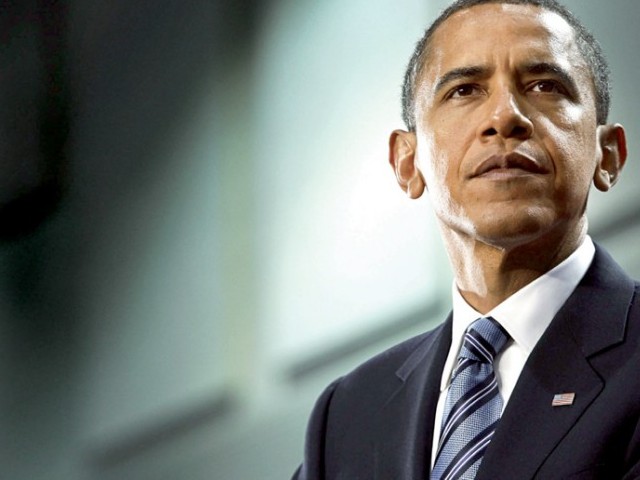
Educating Obama

Inspiration and curiosity and breadth and depth in learning are often usurped by crowded and underfunded schools, high stakes testing, zero tolerance and incarceration, and the demonization of teachers.

By Alan Wieder | The Rag Blog | February 21, 2013

At about the same time that President Obama was reelected, The Oregonian in Portland ran an article in which a suburban Beaverton teacher told a reporter that she had 64 students in her high school biology class.

There are endless issues that need to be pressed as President Obama enters his second term. Some progressives are hopeful because there is no third term — and supposedly no further political ambitions. Considering both history and the associations that the President chooses, hopefulness from the left doesn’t represent reality.

However, there is both the need and the responsibility to put pressure on the President for social, political, and economic justice. One area where the Obama administration has been especially deficient is public education. Initially taking their cue from Bush’s No Child Left Behind, they have magnified the push for non-egalitarian, class, race, and gender biased education via their own program, Race to the Top.

Obama, through his appointment of Arne Duncan as Secretary of Education, has endorsed the post-neocon educational reform movement, or what some critics refer to as the “educational deformers.” Administration policy is akin to privatization because the deformers view education as a commodity.

Bill Ayers elegantly stated the present educational reality in his recent open letter to the President:

The landscape of “educational reform” is currently littered with rubble and ruin and wreckage on all sides. Sadly, your administration has contributed significantly to the mounting catastrophe. You’re not alone: The toxic materials have been assembled as a bipartisan endeavor over many years, and the efforts of the last several administrations are now organized into a coherent push mobilized and led by a merry band of billionaires including Bill Gates, Michael Bloomberg, Sam Walton, and Eli Broad.

Unfortunately, Obama administration educational policy corresponds directly with the President’s choice of Wall Street over Main Street, in spite of his contradictory assertions during his battle with Romney and his recent State of the Union address. For school children and teachers, it means that inspiration and curiosity and breadth and depth in learning are often usurped by crowded and underfunded schools, high stakes testing, zero tolerance and incarceration, and the demonization of teachers.

In These Times published an article by Leonie Haimson that is wonderfully titled, “Educate All Kids Like Sasha and Malia.” Haimson argues that the current administration is “pauperizing, standardizing, digitizing and privatizing education” even though the President would never do the same to his own daughters.

She warns that although Obama has criticized “teaching to the test,” his administration has done just that by demanding teacher evaluation through student test scores. In addition, Haimson argues that punitive policies like school closings and mass teacher firings condemn poor children to unequal education.

Barack and Michelle Obama’s children attend the Friends School and they went to the University of Chicago Lab School before he became President. Both of these institutions honor teachers and provide a teaching and learning environment that includes small classes, abundant resources, and opportunities for exploration and experimentation by teachers and students. Standardized testing is not a religion and teachers are respected rather than demonized.

But the schools that President Obama’s children attend are not the model for his Department of Education or the deformers that they have embraced. The irony is so great because the President and everyone else understand that good teaching and student learning have nothing to do with privatizing schools or high stakes testing or any of the other false measures that the federal government has foisted upon state legislatures. Government educational policy is economic and ideological — not evidential — in spite of government and deformer assertions to the contrary.

Another article that speaks to this issue is “How to Destroy Education While Making a Trillion Dollars” by Robert Freeman. The author stresses three assertions.

First, lower the costs so you can jack up the profits. Since the overwhelming cost in education is the salaries of the teachers, this means firing the experienced teachers, for they are the most expensive. Replace them with “teachers” who are young, inexperienced, and inexpensive. Better yet, waive requirements that they have to have any training, that is to say, that they be credentialed. That way, you can get the absolute cheapest workers available. Roll them over frequently so they don’t develop any expectation that they’ll ever make a career out of it.

Second, make the curriculum as narrow, rote, and regimented as you can. This makes it possible for low-skilled “teachers” to “teach.” All they need do is maintain order while drilling students in mindless memorization and robotic repetition. By all means avoid messy things like context, nuance, values, complexity, reflection, depth, ambiguity — all the things that actually make for true intelligence.

Third, Proliferate franchised, chartered McSchools with each classroom in each McSchool teaching the same thing on the same day in exactly the same way. Develop the lesson literally once, but distribute and reuse it thousands of times with low-cost proctors doing the supervision.

Thankfully, teachers and their allies are fighting for smaller class sizes, limited standardized tests, enhanced arts programs, equitable financing, and strong teacher contracts that protect intellectual freedom, collegiality, and collaboration, as well as bread and butter issues.

And one had to have been in exile the past month not to be aware of the brave stand of teachers in Seattle who have refused to administer the statewide standard examination. Less known is the recent boycott of standardized testing by students, with the support of their parents, in Portland. The latter is lead by a student at Lincoln High School.

Everyone cites teaching and learning in Finland because it is a country where teachers are empowered. But there are great teachers throughout the United States who are ready to lead based on very different values and outcomes than those the Obama administration supports. They are the people who teach America’s children while simultaneously and selflessly fighting for progressive teaching and learning. Education is not a commodity.

Maybe our protests and our actions should remain naïve. Maybe we should be pounding Barack and Michelle Obama, as well as the current administration with Leonie Haimson’s words:

“Educate All Kids Like Sasha and Malia.”

[Alan Wieder taught at the University of South Carolina for over 20 years and wrote academically on racism and education. His forthcoming book, Ruth First and Joe Slovo in the War Against Apartheid will be available in June through Monthly Review Press in the United States and Jacana Media in South Africa.]

The Rag Blog

Posted in Rag Bloggers | Tagged , , , , , | 1 Comment

RAG RADIO / Thorne Dreyer : Musician and Journalist Hector Saldaña of The Krayolas

Hector Saldaña, left, and David  Saldaña of The Krayolas in the KOOP studios in Austin, Texas, Friday, February 15, 2013. Photos by William Michael Hanks / The Rag Blog.

Rag Radio podcast:
Hector Saldaña with David Saldaña
of San Antonio’s rockin’ Krayolas

By Rag Radio | The Rag Blog | February 21, 2013

Music journalist and rock musician Hector Saldaña, founder of San Antonio’s pioneering rock band The Krayolas, was Thorne Dreyer’s guest Friday, February 15, 2013, on Rag Radio. Hector was joined by his brother David in singing three songs on the show.

Rag Radio is a syndicated radio program produced at the studios of KOOP 91.7-FM in Austin, Texas.

Listen to or download our interview with Hector Saldaña, here:


In 1975, Hector and David Saldaña co-founded The Krayolas — the historic San Antonio-based ’70s “power pop” garage band that was hailed as the “Tex-Mex Beatles.” Hector is The Krayolas’ chief songwriter and plays rhythm guitar and harmonica for the group and is also senior staff writer and music columnist at the San Antonio Express-News. David, who joined his brother in live performance on the show, is also a songwriter who sings and plays drums, percussion, and keyboards with the group.

The Krayolas started out in the bedroom when Hector was 18 and David was “almost 17,” (“so we had to sneak him into nightclubs”) and then, according to Hector, they graduated to the garage. “When we came up it was the Cosmic Cowboy era and we sort of wanted to be like the Who and the Beatles and the Kinks all rolled into one. From the beginning we were always a rock and roll band,” Hector told the Rag Radio audience.

From left: Thorne Dreyer, Hector Saldaña,
David Saldaña, Tracey Schulz.

The Krayolas got out of the garage and started playing “in a place called the Warehouse Club, and a couple of little dives” in San Antonio. Then they won a “battle of the bands” sponsored by a local radio station, “and the prize was to go play with Chuck Berry in Dallas at Six Flags.” And The Krayolas were off and running. They became “genuine, Mexified, San Antonio rock ‘n’ roll stars.” “Our heyday,” Hector says,” was from the early ’70s to about 1988,” when the members of the group decided to move on to other things.

Then, in 2007, after a 21-year hiatus — “when Augie Meyers was kind enough to produce an album for us” — the brothers brought the band back to life. The Krayolas have had four critically-acclaimed albums since coming out of hibernation, and just released a fifth — Canicas — featuring legendary Tejano accordionist Flaco Jiménez.

In their new incarnation, The Krayolas became regulars on Sirius XM’s “Kick Out the Jams!” with Dave Marsh and “Little Steven’s Underground Garage.” They’ve been featured on NPR’s “All Things Considered,” PRI’s “Whad’Ya Know?” with Michael Feldman, on NBC News, and in publications like Texas Monthly and The Village Voice.

In 2012, The Krayolas issued “Tex-Mex 21st Century,” a digital album released exclusively through Amazon.com as a free download. It was ranked No. 1 on the Latin Digital Albums chart for an unprecedented 24 weeks, and was also No. 1 on Amazon’s International Digital Album chart and No. 13 on its Top Digital Albums chart.

“All of a sudden we were on charts next to Shakira and Coldplay,” Hector said. “If you think of music as a whole universe of twinkling stars, out there in the middle of the night in West Texas, maybe somebody can stumble upon you.”

Hector Saldaña, left, and David Saldaña of The Krayolas on Rag Radio, February 15, 2013. Video by William Michael Hanks /The Rag Blog.

But, Hector reflected, “I always say, thanks to the Internet, now we’re unknown all over the world, not just here.” They’re certainly known at the influential South by Southwest music festival where they play official showcase concerts every year, and this year is no exception. The Krayolas were also in Austin to perform at KOOP’s gala 18th Birthday Party at Antone’s Nightclub.

According to Dave Marsh, The Krayolas are “as close as you get to The Who sing Bob Dylan”; Mark Deming calls them “one of the American Pop Underground’s best-kept secrets for more than three decades”; The Austin Chronicle‘s Margaret Moser says they have “Doug Sahm-like strength that not only crosses borders, but binds cultures”; and, according to Joe Nick Patoski, they are “the most San Antonio-sounding pop artists since Sir Doug himself,” referring to legendary San Antonio rocker, the late Doug Sahm, and his Sir Douglas Quintet.

Rag Radio has aired since September 2009 on KOOP 91.7-FM, an all-volunteer cooperatively-run community radio station in Austin, Texas. Hosted and produced by Rag Blog editor and long-time alternative journalist Thorne Dreyer, a pioneer of the Sixties underground press movement, Rag Radio is broadcast every Friday from 2-3 p.m. (CST) on KOOP, and is rebroadcast on Sundays at 10 a.m. (EST) on WFTE, 90.3-FM in Mt. Cobb, PA, and 105.7-FM in Scranton, PA.

The show is streamed live on the web by both stations and, after broadcast, all Rag Radio shows are posted as podcasts at the Internet Archive.

Rag Radio is produced in association with The Rag Blog, a progressive internet newsmagazine, and the New Journalism Project, a Texas 501(c)(3) nonprofit corporation. Tracey Schulz is the show’s engineer and co-producer.

Rag Radio can be contacted at ragradio@koop.org.

Coming up on Rag Radio:
THIS FRIDAY, February 22, 2013:
Documentary filmmaker and activist Anne Lewis.

The Rag Blog

Posted in Rag Bloggers | Tagged , , , , , , , , | Leave a comment

Jean Trounstine : After 18 Years on Death Row

Damien Echols. Photo by Larry D. Moore / Wikimedia Commons.

Damien Echols:
After 18 years on Death Row

Being on death row and in solitary confinement has got to be one of the most inhumane experiences we put prisoners through — and we justify it by calling them ‘the most dangerous prisoners alive.’ But what of those who later turn out to be innocent?

By Jean Trounstine | The Rag Blog | February 20, 2013

Texas carried out the most executions of any state in 2012 — 15 — with Arizona, Oklahoma, and Mississippi tying for second place at six apiece. As of May 2012, the total number of Texas prisoners in administrative segregation, also known as solitary confinement, totaled 8,407.

Death row and solitary, a brutal combination. Twenty-three out of 24 hours locked in a small cell with a cot and a toilet. Barely any human contact. Knowing you’re going to die.

Two weeks ago, I went to an event at Brandeis University in Waltham, Massachusetts, to hear Damien Echols talk about his 18+ years in solitary confinement. Echols is one of the so-called “West Memphis Three,” all from West Memphis, Arkansas, and falsely convicted for the brutal murders of three boys in 1993. All sentenced to death.

Following a high-profile, celebrity-backed campaign to free the three prisoners, Echols and his two co-defendants were released from prison in August 2011. They agreed to a rare plea bargain that essentially had them plead to guilt and not sue the state in exchange for immediate freedom.

It’s a story made for a movie — and there is one and there will be another. Plus many celebs helped with the case that includes stories to make your skin crawl — false accusations of Satanism, police corruption, i.e. the works. Altogether another tragic indictment of our system.

But that’s not what stirred me to write this blog.

A few days later I came across an article about Echols going back to Tennessee for the first time since he was released from prison in 2011. For whatever reasons, he was invited to talk at a… (ready?) — technology conference. Now, granted, just having Damien Echols come to your conference could add to the draw, but asking him to talk about his reactions to technology since he got out of prison seems at once fascinating and almost a little cruel.

How overwhelming must it be to get out and find yourself in this world where everything goes so fast you hardly have time to breathe!

The West Memphis Three, June 1993.

And juxtapose this with what Echols said at the talk and writes about in his new book Life After Death – he eventually learned to spend up to six hours a day in prison meditating. He bludgeoned his body to stand or sit in cold and heat and pushed himself through the physical pain. He escaped the bars mentally, found himself through deep soul searching, got a modicum of peace. He said that his spiritual practice as well as his wife, Lorri Davis, who fought for his freedom and whom he married while in prison, saved his life.

So imagine after solitary confinement for 18 years, walking into the Apple Store. The computers. The cell phones. The tweets and whistles. Twitter, Echols says, he likes, because it feels like he’s writing poetry. Texting too, a language unto itself. But learning it in a heartbeat?

And what about the other bombardments of the techno-savvy 21st century? Apps? Blogs? Flicker? All the ins and outs of the technological world, not to mention discovering that you can securely (sometimes) use credit cards online and drive straight through those freeway toll booths with Easy Pass. What seems commonplace to us, natural, we actually learned step by step, year by year.

I remember how Dolly, one of the women I taught who spent 15 years at Framingham Women’s Prison in Massachusetts, said that the scariest thing after release was looking at the prices of shoes in the mall. She said she started shaking and couldn’t stop.

Yes, there’s reuniting with your loved ones. There’s the joy of seeing green grass, the ocean, or a blanket of snow across a mountain. And surely, hot fudge in the free world is as blessed as a bath. But the shock of having been years behind the eight ball, the feeling that you are always trying to catch up, has to take time to deal with, and maybe more years to get over.

So while we (and I speak as much of myself here as you) might envy Echols for having a New York Times bestseller or for having the likes of Johnny Depp and Peter Jackson support him with their fame and opportunities, the truth of Echols’s life is not celebrity or fame, but the hard darkness of coming out of the most repressive world in this country where we keep people in intolerable conditions. Coming into the light from darkness — it is no wonder that Damien Echols must wear dark glasses.

[Jean Trounstine is an author/editor of five published books and many articles, professor at Middlesex Community College in Massachusetts, and a prison activist. For 10 years, she worked at Framingham Women’s Prison and directed eight plays, publishing Shakespeare Behind Bars: The Power of Drama in a Women’s Prison about that work. She blogs for Boston Magazine and takes apart the criminal justice system brick by brick at jeantrounstine.com where she blogs weekly at “Justice with Jean.” Find her contributions to The Rag Blog here.]
The Rag Blog

Posted in Rag Bloggers | Tagged , , , , , , | Leave a comment

BOOKS / Ron Jacobs : Iran and the Coup of Coups

Abrahamian’s ‘The Coup’:
Shah of Shahs on the Peacock Throne

As Abrahamian tells the reader, in the eyes of London and DC, there was no room for genuine negotiations in their dealings with the Mossadegh government. The struggle was about control of Iran’s resources and regional geopolitical power.

By Ron Jacobs | The Rag Blog | February 20, 2013

[The Coup: 1953, the CIA, and the Roots of Modern U.S.-Iranian Relations by Ervand Abrahamian (2013: The New Press); Hardcover; 304 pp; $26.95.]

If there is one nation whose political situation has been omnipresent and important to the history of the past 75 years, it would be Iran. Much to the dismay of those imperial powers that have tried to subdue and manipulate them, Iran’s people have refused to go along.

Islamic revolutionaries or leftist revolutionaries, military men and civilians, it doesn’t matter. The imposition of foreign restrictions and regimes have consistently failed to withstand the desire of the Iranians to be free of foreign domination. Britain, Russia, and the United States; all have tried and all have failed to make Iran do their bidding for more than a generation. None have tried harder than the United States, which took over from Great Britain after World War II.

What ranks as the most flagrant attempt to impose Washington’s will on the people of Iran has to be the 1953 coup engineered by Kermit Roosevelt and the Central Intelligence Agency (CIA). This coup, which overthrew the elected leader of Iran, Mohammad Mossadegh, continues to define the relationship between Washington and Tehran. Furthermore, it ranks as one of the twentieth century’s top examples of colonialist arrogance underpinned by dismissive racism and outright contempt for the subject people and their will.

Until recently the story of that chapter of history was told in the West by those who traditionally frame history — the victors. In other words, the history of the 1953 U.S. coup in Iran was told by the CIA and its media supplicants. Like with most other tales told by these elements, the overthrown government was characterized as dictatorial, unpopular, communistic, and even fanatic. Therefore, goes the narrative, the CIA did the Iranian people a favor, just like they did in Guatemala around the same time.

In the year 2000, The New York Times published a series of articles based on classified documents detailing the workings of that coup. After receiving heavily redacted files which were written as a summary of the coup by a CIA operator, the Times re-summarized the material.

Even though a good deal of information was missing, and the Times itself had cheered the coup when it occurred, this series began to provide Western readers with a glimpse at exactly how intimately involved Washington was in the overthrow of the Mossadegh government. Furthermore, the Times report indicated that a primary reason for the coup was control of Iran’s fossil fuels, not any threat of communism (as had been previously reported) and not because Mossadegh was a fanatic dictator.

Still, there were several aspects of the story that were missing. Some of these were filled in with the publication of Kermit Roosevelt’s self-glorifying history of the coup titled Countercoup: The Struggle for the Control of Iran. Most however, were not, largely because Roosevelt remained convinced that the coup he engineered was the right thing to do for Iran and the world at large. Therefore, he ignored remarks and findings that claimed something else.

A new book changes all that. Titled The Coup: 1953, the CIA, and the Roots of Modern U.S.-Iranian Relations, the book is authored by the Iranian scholar Ervand Abrahamian. A learned historian, his 2008 book A History of Modern Iran provides a reappraisal of modern Iranian history unfamiliar to most U.S. readers. The Coup does that and more.

Indeed, it takes the familiar history — a history that is primarily lies — and debunks almost every bit of it. Mossadegh was not a communist; the Tudeh (Iranian Communist party) did not control the government and did not intend to overthrow Mossadegh; the Islamists under Imam Khatani did get bought off by the CIA; and the coup was not only cheered, but supported by a comprador class of Iranians concerned primarily with their wealth and not with the nation or the Iranian people.

As Abrahamian tells the reader, in the eyes of London and DC, there was no room for genuine negotiations in their dealings with the Mossadegh government. The struggle was about control of Iran’s resources and regional geopolitical power. Reading this argument, I was reminded of the lack of compromise from Washington and London prior to the 2003 invasion of Iraq. If one recalls, no matter what they said publicly, Bush and Blair were not interested in making a deal with Iraq; their governments wanted complete control.

Abrahamian also dispels the myth that the crisis and eventual coup were the fault of the Iranians, a premise put forth by observers as venerated as Daniel Yergin, the author of the classic work on oil politics of the mid-twentieth century, The Prize. Instead, through his reading of recently discovered documents and his own insights, Abrhamian makes it clear the crisis was engineered and brought to its fruition by Washington, DC.

While reading the last section of this book describing the procedure leading up to the actual coup, the reader might well be struck by how little has really changed when it comes to the West’s dealings with Iran. In fact, when reading about the British-backed and enforced oil embargo against Iran after the Iranians nationalized the industry, one cannot help but compare that historic attempt to destroy Iran’s economy to the current embargo led by Washington.

Abrahamian describes sanctions, ultimatums presented as negotiations, lies about the Iranian leadership, and CIA subterfuge. It is almost like reading today’s New York Times and its coverage of U.S.-led operations against the current Iranian government. Not only is this book important because of its presentation of history. It is also important because it might be predicting the future.

[Rag Blog contributor Ron Jacobs is the author of The Way The Wind Blew: A History of the Weather Underground. He recently released a collection of essays and musings titled Tripping Through the American Night. His latest novel, The Co-Conspirator’s Tale, is published by Fomite. His first novel, Short Order Frame Up, is published by Mainstay Press. Ron Jacobs can be reached at ronj1955@gmail.com. Find more articles by Ron Jacobs on The Rag Blog.]

The Rag Blog

Posted in Rag Bloggers | Tagged , , , , , , , , | 1 Comment

Alan Waldman : ‘The Barbarian Invasions’ is a Moving, Funny, Smart, Superb Canadian Film

Waldman’s film and TV
treasures you may have missed:

Denys Arcand’s French-Canadian gem won Oscar and 40 other international honors.

By Alan Waldman | The Rag Blog | February 20, 2013

[In his weekly column, Alan Waldman reviews some of his favorite films and TV series that readers may have missed, including TV dramas, mysteries, and comedies from Canada, England, Ireland, and Scotland. Most are available on DVD and/or Netflix, and some episodes are on YouTube.]

The great 2003 movie The Barbarian Invasions justifiably won the Best Foreign Film Oscar and was nominated for 66 other awards (including Best Screenplay Oscar) from 33 bodies in 14 countries. Writer-director Denys Arcand was nominated for or won 32 Best Picture awards, six Best Director honors and five Best Screenplay statuettes. The outstanding cast was showered with awards, with five noms or wins going to Marie-Josée Croze, three to Rémy Girard, two to Stéphane Rousseau, and one each to Pierre Curzi and Dorothée Berryman.

This is a fine sequel to Arcand’s 1986 art-house hit The Decline of the American Empire, returning much of the first film’s cast. In Invasions a Montreal college professor is dying of cancer. His wealthy son, from whom he is semi-estranged, flies to Montreal from London to find his father bitter and lonely in an overcrowded hospital room. He pulls strings to buck red tape and get papa a large empty room and then persuades several of his old pals to come and be with him. When pain becomes intense, he arranges for the junkie daughter of an ex-mistress to get him heroin for relief.

This is a wonderful movie: intelligent, rich in character, witty, moving, and beautifully shot — particularly at a lakeside house where he goes to die, surrounded by those he loves. The script is constantly surprising and never maudlin. The changing relationship between father and son is terrific.

More than 92.3% of the 18,999 viewers rating it at imbd.com gave it thumbs-up. Peter Travers of Rolling Stone called it “a feast of smart, sexy, glorious talk.”

I loved this film when I first saw it in 2003 and when I watched it again via Netflix this week. Once more I marveled, I laughed, I cried, and I crawled on my belly like a reptile.

[Oregon writer and Houston native Alan Waldman holds a B.A. in theater arts from Brandeis University and has worked as an editor at The Hollywood Reporter and Honolulu magazine. Read more of Alan Waldman’s articles on The Rag Blog.]

The Rag Blog

Posted in Rag Bloggers | Tagged , , , , , | Leave a comment

Harry Targ : Celebrate the ‘Historical Revisionists’ / 2

Paul Sweezy and Paul Baran, shown photographed in Cuba, wrote about a new era of monopoly capitalism.  Image from Fotopages.

Celebrate the ‘Historical Revisionists’ / 2

Revisionists argued that while security, ideologies, personalities of elites, and even human nature had some role to play in shaping policy, all of these forces were influenced in the end by economics. And economic interest shaped how political power was used.

By Harry Targ | The Rag Blog | February 19, 2013
Second of a two part series.

The writings of 1960s historians who became known as the “revisionists” challenged traditional interpretations of the interests, goals, and ideology underpinning United States foreign policy. Historians such as William Appleman Williams, Joyce and Gabriel Kolko, Gar Alperowitz, Lloyd Gardner, Thomas Paterson, and others who were discussed in the first part of this series, offered a compelling explanation for sixties activists and those that followed them about why United States foreign policy was as it was.

First, the revisionists saw fundamental connections between economics and politics. Whether the theoretical starting point was Adam Smith or Karl Marx, these historian looked to the underlying dynamics, needs, and goals of the economic system as sources of policy. And, these writers began with the assumption that economic interest infused political systems and international relations.

Revisionists argued that while security, ideologies, personalities of elites, and even human nature had some role to play in shaping policy, all of these forces were influenced in the end by economics. And economic interest shaped how political power was used.

Second, the behavior of dominant nation-states, from the seventeenth through the twentieth century, was propelled by trade, investment, financial speculation, the pursuit of slave or cheap labor, and access to vital natural resources. Economic gain, in the end, drove the system of international relations. Sometimes economic gain required cooperation; other times it necessitated war.

Third, since the use of the word “capitalism,” in the depth of the Cold War, signified that the user was some kind of Marxist, the reality that capitalism had been the dominant economic system from the fifteenth century on was ignored by most scholars.

As more and more historians and social scientists employed the political economy point of view developed by the revisionists, it became apparent that as the economic system of capitalism changed over time, international relations also changed. Capitalist enterprises and their supporting states accumulated more and more wealth, expanded at breakneck speed, consolidated both economic and political power, and from time to time built armies to facilitate further colonization and control on a global basis.

Analysts, borrowing from Marx, wrote about the evolution of capitalism using analyses about the accumulation of capital and newer forms of the organization of labor. Some theorists wrote about the rise of capitalism out of feudalism, highlighting how primitive accumulation was based on the enslavement of peoples, the conquest of territories, and the primacy of the use of brute force.

The slave system led to increased production and the rise of a global economy based on trade. Capitalists traversed the globe to sell the products produced by slave and wage labor. This era of commercial capitalism was followed by the emergence of industrial capitalism. New production techniques, particularly a factory system that brought workers together under one roof for mass production, increased pressure to promote the sale of products in domestic and global markets.

By the 1870s, in a number of capitalist countries the accumulation of capital, in products and profit created enormous surpluses. These required new outlets for sale, additional ways to put money capital to work, and ever expanding concentrations of capital in manufacturing and financial institutions.

Late-twentieth century theorists wrote about a new era of monopoly capitalism. Inspired by Lenin’s famous essay on imperialism, Paul Baran and Paul Sweezy argued in Monopoly Capital that a global economic system had developed in which most economic activities were controlled by small numbers of actors, multinational corporation, and banks.

Subsequently some theorists made a compelling case for the view that the new capitalism of the twenty-first century had become truly global, leading to the declining salience of the nation-state system from which it was launched.

It was the research contributions of the historical revisionists of the 1960s that overcame the historical amnesia about the connections between economic interests and international relations. In addition to analyses of economic and political trends they uncovered concrete cases of links between economics and politics. These included the influence of huge U.S. and British oil companies on the U.S.-managed overthrow of Mohammed Mossadegh in Iran in 1953 and the coup in Guatemala in 1954 after President Arbenz threatened to nationalize lands owned by the U.S.-based United Fruit Company.

The revisionists found long-term patterns of economic domination and foreign policy. They also uncovered the aforementioned specific cases where particular economic elites influenced foreign policy towards countries like Iran and Guatemala. And revisionists saw that the globalization of capitalism was threatened by the spread of nationalism and forms of socialism as a world force.

Fourth, the political economy approach regarded class structure as central to the understanding of the foreign policy of any nation. Since every society has class divisions, some classes dominate the political system at the expense of others.

In capitalist societies, those who own or control the means of production dominate the political life of the country. Therefore, while conventional analysts prioritize states as the most important actors in world affairs, political economists saw states and classes as inextricably connected. Most international relations scholars saw states as important to world affairs but it was political economists/historical revisionists who demonstrated the connection between states and classes.

Finally, revisionist historians who wrote from the lens of classes controlling the foreign policy process tended to take a “hegemonic” view of that control. Their analysis of the concentration of economic and political power was a critical contribution to theory and practice. However, they often did not factor resistance into their theoretical frame. The end result was a perspective implied by many that the United States was omniscient, all powerful, unbeatable, and unchangeable in its conduct.

After the Cuban Revolution and the Vietnam War some analysts began to write particularly about the challenges that the hegemonic power the United States faced in the world, even from the Global South. But, in the main the historical revisionists developed a way of understanding international relations that was top down.

Many theorists and activists, therefore, remained intellectually ill-equipped to identify forces that resisted and constrained the drive for economic, political, and military hegemony throughout modern history. Lacking the more nuanced view of the drives for dominance and the resistance to it, activism sometimes shifted from radical enthusiasm to despair.

But in the end, contemporary analysts and activists owe a special debt of gratitude to those “historical revisionists” who offered a political economy explanation of why the United States role in the world (and before it other imperial powers) has been the way it was.

Those of us who analyze the United States and the international system should add to the important theoretical contribution of the revisionists recognition of patterns of resistance as they occur on a global basis and constitute an integral component of the way international relations works.

[Harry Targ is a professor of political science at Purdue University and is a member of the National Executive Committee of the Committees of Correspondence for Democracy and Socialism. He lives in West Lafayette, Indiana, and blogs at Diary of a Heartland Radical. Read more of Harry Targ’s articles on The Rag Blog.]

The Rag Blog
Posted in Rag Bloggers | Tagged , , , , , | 1 Comment


Type rest of the post here

Source /

The Rag Blog
Posted in RagBlog | Leave a comment
Harvey Wasserman : Our Atomic Dominoes Are Falling

Falling dominoes. Image from ANS Nuclear Cafe.

Two reactors down, others teetering:
Our atomic dominoes are falling

This latest stretch of shutdowns does not mean the death of the industry. Both Georgia and Florida are being assaulted with legislation that would allow utilities to build new reactors while ratepayers foot the bill.

By Harvey Wasserman | The Rag Blog | February 19, 2013

Two more atomic dominoes have hit the deck.

At least a half-dozen more teeter on the brink, which would take the U.S. reactor count under 100.

But can we bury them before the next Fukushima erupts? And will we still laugh when Fox “News” says there’s more sun in Germany than California?

Wisconsin’s fully licensed Kewaunee reactor will now shut because it can’t compete in the marketplace. Florida’s Crystal River will die because its owners poked holes in the containment during a botched repair job.

UBS and other financial experts say Entergy is bleeding cash at Vermont Yankee. After blacking out the Super Bowl, Entergy has no problem stiffing a state that has sued to shut its only reactor. But in the face of being crushed by renewables and gas, the money men may finally pull the plug.

The same could happen to New York’s Fitzpatrick and Ginna reactors, as well as the two at Indian Point, which need water permits and more from an increasingly hostile state. New Jersey’s Oyster Creek, slammed by Hurricane Sandy, and Nebraska’s Ft. Calhoun, recently flooded, are also on the brink.

The list of crippled, non-competitive and near-dead reactors lengthens daily. Few are more critical than San Onofre Units Two and Three, perched on an ocean cliff in the earthquake-tsunami zone between Los Angeles and San Diego.

More than 8 million people live within a 50-mile radius of where San Onofre’s owners botched a $600 million steam generator replacement. As radiation leaked, they may have lied to federal regulators, prompting U.S. Senator Barbara Boxer (D-CA) and Representative Ed Markey (D-MA) to demand an investigation.

After being down more than a year, Unit Three will almost certainly never reopen. Unit Two may well stay shut at least through the summer. If a rising grassroots movement can bury them both, it will mark a huge turning point in a state where renewables are booming with new revenue and jobs.

Which gets us to the Murdochian weather report. A recent “Fox & Friends” was mystified by Germany’s popular (and very profitable) decision to phase out nukes while turning to solar, wind, increased efficiency, and other Solartopian technologies.

Finally, Shibani Joshi figured it out: “They’re a small country, and they’ve got lots of sun. Right? They’ve got a lot more sun than we do.”

The staggering laugh line that cold, dark Germany has more sunlight than a nation stretching from Hawaii to California to Florida could come only from an industry at dangerous odds with the planet on which it malfunctions.

This latest stretch of shutdowns does not mean the death of the industry. Both Georgia and Florida are being assaulted with legislation that would allow utilities to build new reactors while ratepayers foot the bill.

And some activists concerned about global warming still dream of carbon-free reactors they hope might some day alleviate the situation. But they miss the reality that such plants will likely never exist. Every promise this industry has made — from “too cheap to meter” to “reactors don’t explode” to “radiation is good for you” — has turned toxic.

They also forget that a fragile pool laden with enough fuel rods to poison countless millions still sways 100 feet in the air at Fukushima. It remains horrifically vulnerable to seismic activity that could send it crashing down to a permanently contaminated earth.

Overall the industry’s back is dangerously to the wall. We know it will squeeze every last cent from these dying reactors with less and less care for safety, especially since the federal government still insures them against the financial consequences of a major catastrophe. Every day they operate heightens the odds on something truly apocalyptic to follow in the wake of Three Mile Island, Chernobyl, and Fukushima.

Meanwhile they continue to spew out huge quantities of heat and waste. They divert precious capital from the proven green technologies that are now revolutionizing our energy economy in the only ways that can possibly save us from climate chaos.

This may yet become the first year in decades that the U.S. has fewer than 100 operating commercial reactors. It will also be the biggest year worldwide for the booming Solartopian industries that are transforming how we get our energy, create our jobs and grow our economy.

Lets just make sure we win that transition before the next reactor disaster does its worst.

[Harvey Wasserman edits www.nukefree.org. His Solartopia! Our Green-Powered Earth is at www.solartopia.org, along with Harvey Wasserman’s History of the United States. His Solartopia Green Power and Wellness Show is at www.prn.fm. Read more of Harvey Wasserman’s writing on The Rag Blog.]

The Rag Blog

Posted in Rag Bloggers | Tagged , , , | Leave a comment

Lamar W. Hankins : Selling Cremation Door-to-Door

Neptune Society mailer. Image from Boing Boing.

Consumer beware!
Selling cremation door-to-door

I was treated to a sales pitch full of misleading or outright false claims, all to get me to pay more than double the cost for a simple cremation in the Austin area.

By Lamar W. Hankins /The Rag Blog / February 19, 2013

SAN MARCOS, Texas — I just had the opportunity to be a “secret shopper” — from the convenience of my dining room table.

Over the years, I have occasionally received solicitations from funeral homes or cremation services to encourage me to “pre-arrange” funerals or cremations. In recent months, I received two such solicitations from the Neptune Society. I responded to the last one, sending back their card and checking the box that indicated I wanted to receive more information.

That information came through a phone call a couple of weeks ago asking if one of their representatives could visit me in my home. I said “yes” and a nice fellow showed up. His card identified him as an “Austin Area Counselor,” for Neptune Society, “America’s Most Trusted Cremation Services.” I was treated to a sales pitch full of misleading or outright false claims, all to get me to pay more than double the cost for a simple cremation in the Austin area.

It was obvious that he knew nothing about me, or he probably would not have made the 45-minute drive to my home from his Austin location. I have spent the last 20 years as a volunteer advocate for funeral consumers with the Austin Memorial & Burial Information Society (AMBIS), as well as 18 years working as a volunteer with the national organization with which AMBIS is an affiliate, Funeral Consumers Alliance (FCA), and writing about the funeral business.

The counselor and I spent an hour and a half discussing pre-arrangement options that Neptune offers. The best one, from Neptune’s perspective, is being offered right now at a $150 discount, so the cost to me would be only $2,255.

Leading up to my request to know the price of the service was about an hour of information about the plan, and information he had gathered about what a few other funeral homes in the Austin area charge. The counselor had no way of knowing that just four days earlier, Nancy Walker (President of the AMBIS board) and I had finished surveying the prices of funerals and cremations for the 51 funeral services located in the Austin area.

It is noteworthy that the counselor mentioned that Neptune is owned by SCI, the largest funeral provider in the world. Based on his inflection and the look on his face, I think I was supposed to be impressed by this. But I have written about SCI many times over the last 20 years, discussed legal problems with SCI’s legal staff, and had my own battles with them on behalf of my family over cemetery plots. Their world-wide activity and reputation was not news to me.

It surprised me that Neptune uses the outrageous charges at SCI facilities to show how much better its prices are — its counselor cited rates at several SCI locations that were much higher than Neptune’s. But it wasn’t a fair comparison; in most cases, what the counselor showed me were prices for elaborate cremation and related services, not Direct Cremation prices. Direct Cremation is universally defined as a simple cremation without a viewing or ceremony.

When the counselor did show me a price from other providers for Direct Cremation, he pointed out that there were many hidden costs not covered by their prices (e.g., refrigeration, crematory fee). But all of his examples were for prices higher than Neptune’s.

For a few people, the best part of Neptune’s plan is that it includes — for $474 — a “Transportation and Relocation Plan.” This is worthwhile if you are traveling overseas and die on the trip, but the contract for transportation services is not with Neptune. Instead Neptune is a third-party seller for the Medical Air Services Association (MASA). Based on the contract, it appears that MASA will transport the body to the nearest licensed crematory and will return the cremated remains as per the Neptune agreement.

The counselor tried to convince me that the transport agreement was also very useful in the event I died while on a trip to the Texas coast (about a three and a half hour drive). He explained that a funeral home at the coast would have to take custody of my body and be paid for shipping it back to Austin for cremation. He did not know that I knew this was complete nonsense.

If I die down at the coast, my chosen cremation provider in the Austin area could merely arrange for a funeral home, mortuary service, or crematory in the area where I died to handle the cremation for a low wholesale trade price — probably about $400 — and send the cremated remains to the Austin area funeral service. My family would pay my chosen provider’s cost for direct cremation and receive my cremated remains.

I’ve had personal experience with this. When my brother died 12 years ago, an Austin funeral home arranged his cremation in the county of his death, and my parents, who lived in that county, picked up his cremated remains directly from the local funeral provider where he died, paying the Austin funeral home for the entire cost.

Next, the counselor tried to shock me by saying that funeral prices double every seven to 10 years. I happen to have funeral cost surveys that AMBIS has done for many years, so I compared the costs from 2000 with those in 2012. Direct cremation averaged $1,468 in our 2000 survey. In 2012, the average cost was $1,899 – a 29% increase, not twice the cost from12 years earlier. Of course, a lot of those increased costs can be attributed to SCI funeral homes. Their cremation costs rose about 62% during this same period.

In addition, the counselor told me that cremation in Central Texas averages $2,700-plus, which is just not true. The 2013 AMBIS annual survey just published and available online shows the average cost of cremation for the 51 funeral providers priced is $2,053, nearly $650 less than the counselor claimed.

Of course, the counselor also did not tell me that I do not have to pay the average price. I can get Direct Cremation for as little as $695 from two providers, and for $775 or less from three others. This compares favorably with 2000 prices, which were $725 from two providers and $740 from another. So competition has made the lowest-cost Direct Cremation less in 2013 than in it was in 2000.

But those were not the only misleading statistics the counselor gave me. He told me that most funeral homes have two price increases yearly. Because we do an annual survey, we know that this is not true for most funeral homes. A handful have annual price increases, but many go two or three years without increases. In my experience, the number of increases has more to do with the general economy and the popularity of cremation, which takes business away from funeral services, than with any other factors.

However, one funeral director told me recently that SCI was the best thing that ever happened to him. Because of SCI’s high prices, he can charge more and still offer a better deal than SCI funeral homes. Most of the Cook-Walden chain, which is owned by SCI, charges $2,740 for Direct Cremation at four of its five locations.

I was a bit startled when the counselor told me that Clark Howard, the radio consumer advisor, recommends the Neptune Society. For many years, Howard was a member of the Honorary Advisory Board of the Funeral Consumers Alliance (FCA), for which I spent about eight years serving as a member of its board of directors, including four as President. To my knowledge, Howard has never endorsed pre-paying for funerals or cremation. A search of his website turned up no mention of the Neptune Society. One entry by Howard in 2010 had this to say:

Pre-paying for funerals not a Clark Smart option

RIP-OFF ALERT: The Wall Street Journal reports some 20 million people have pre-paid for funerals to relieve their survivors of the obligation at the time of their death. While that sounds good in theory, pre-paying for a funeral in practice has involved bad purchases, theft of funds, insolvency and other assorted gotchas.

What exactly are the problems? To begin, Americans move a lot. Where you live at age 50 — when people typically start pre-paying for funerals — may not be where you’ll be living at the time of death. Unfortunately, when you move in the future, the way pre-paids work is that you forfeit much of the money.

Second, your end-of-life wishes may change over time. It used to be that only one in four people opted for cremation. That’s become about one in three in recent years.

Meanwhile, future projections show that cremation may soon become the dominant method of disposition, perhaps because a cremation can be much cheaper than a traditional burial.

Another problem has been outright theft of money by shady funeral home operators — despite state efforts to crack down on shenanigans. . . .

So what should you do? Clark prefers that you pre-plan (but not necessarily pre-pay) through a local non-profit memorial society. Visit Funerals.org for more info.

That link is to the FCA website.

To help understand better Clark Howard’s advice, it is instructive to look at what happens to the $2,255 the Neptune Society charges during their special promotion:

  • $730 goes into a trust and is not touched until you die and the cremation is actually done;
  • $1,051.11 (includes some state taxes) is taken outright by the Neptune society and the customer is given several items of merchandise when the contract is signed. That merchandise includes a wooden “memento chest” which houses a wooden urn, a photo keepsake, 25 “Thank You” cards, and a “Neptune Information Book,” all of which costs Neptune no more than about $200 wholesale. This means that Neptune can immediately pocket about $750 (the tax must be paid);
  • $474 is allocated for the transportation plan, all of which, presumably, will be divided between MASA and Neptune at the sale of the pre-paid plan.

It appears, then, that at least half of the funds paid for the pre-arrangement contract can be spent by Neptune, perhaps years before it performs any service other than providing the merchandise to the purchaser. A purchaser of such prepaid services could lose a substantial amount of money if the purchaser’s plans change a year or two later.

However, Neptune does offer a unique benefit at no additional cost. If the purchaser has a child or grandchild who dies before that person’s 21st birthday, Neptune will provide an identical cremation for the deceased child or grandchild. It is difficult to find the data on deaths of those under 21 years of age in the U.S., but it is unlikely that this should be a major incentive for purchasing a pre-paid cremation, though it may have emotional appeal for some.

The counselor made the customary pitch that paying in advance will give both me and my family peace of mind, and everything will be paid for. However, the contract identifies 12 items that may require additional payments at the time of death, such as placement of obituaries, flowers, and other service-related expenses. It is simply wrong to mislead families with a sales pitch that is belied by the very contract used in the transaction.

The total contract and related documents run to 13 pages, all of which need to be carefully reviewed. The counselor told me that Neptune gives customers a full 30 days to change their minds. However, I could find nothing about this 30-day rescission promise in any of the contract documents.

Neptune’s counselor offered another tidbit of false information, as well. He claimed that one of the funeral services in San Marcos required a casket for cremation, rather than the less expensive cardboard container used by Neptune. However, the price lists for all three funeral homes in San Marcos offer a cardboard container for Direct Cremation. Besides, both federal and state regulations bar funeral homes from requiring a casket for cremation.

The bottom line regarding pre-paid funeral and cremation contracts is the same today as it was 20 years ago when I started doing funeral consumer advocacy work. Only those in very unusual or special circumstances — someone with no family or friends to make disposition arrangements, or someone who is making final arrangements before becoming eligible for Medicaid — actually need to pre-pay for burial or cremation. As always — Buyer Beware!

[Lamar W. Hankins, a former San Marcos, Texas, city attorney, is also a columnist for the San Marcos Mercury. This article © Freethought San Marcos, Lamar W. Hankins. Read more articles by Lamar W. Hankins on The Rag Blog.]

The Rag Blog

Posted in Rag Bloggers | Tagged , , , , | 2 Comments

BOOKS / Jonah Raskin : Marjorie Heins’ ‘Priests of Our Democracy’

Priests of Our Democracy:
Marjorie Heins on Academic Freedom
and the Red Scare of the ’50s

“There were only a few exceptions to university collaboration in the Cold War heresy hunt.” — Marjorie Heins

By Jonah Raskin | The Rag Blog | February 18, 2013

[Priests of Our Democracy: The Supreme Court, Academic Freedom, and the Anti-Communist Purge by Marjorie Heins (February 2013: New York University Press); Hardcover; 384 pages; $35.]

Noted civil Liberties lawyer, teacher, and author Marjorie Heins discussed Priests of Our Democracy and the larger issue of academic freedom in our society with Rag Blog editor Thorne Dreyer on Rag Radio, Friday, February 8, 2013. Listen to or download Dreyer’s interview with Marjorie Heins, here.

In 1952, U.S. Supreme Court Justice Felix Frankfurter called teachers “the priests of our democracy” and noted that it was their special task “to foster those habits of open-mindedness and critical inquiry which alone make for responsible citizens.”

Frankfurter was an odd character, indeed, as Marjorie Heins shows in her fact-filled, balanced, and yet thought-provoking book about the battles for academic freedom that have been waged for decades in and out of classrooms, courtrooms, and in front of local and national investigating committees.

The battles go on; almost every week a book is banned by a school board somewhere in the U.S., though book bannings often don’t make it onto network news.

In an early chapter in which she profiles the members of the Supreme Court in the period after World War II, Heins chronicles Frankfurter’s epic journey from Austria, where he was born in 1894, to Ellis Island, the gateway to America, and from there to Harvard Law School and then to Washington, D.C. where he sat on the bench along with Hugo Black, once a Ku Klux Klan member, and William Douglas who came down on the side of the First Amendment and Freedom of Speech throughout his long judicial career.

It was an exceptional court by all accounts.

In 1952, when Frankfurter called teachers “priests,” priests were held in much higher esteem than they are today by the American public, and so were teachers. For the past 60 years, the church and academia have both lost much of the prestige and status that they once enjoyed in part because of scandals that have often involved sex and money. Remember Jerry Sandusky? Now, both academia and the church routinely go about cleaning their respective houses; they have to if they want to remain in business.

Once upon a time, teachers — including many that Heins writes about — believed that they were on a holy mission to foster “open-mindedness and critical inquiry.” Some of them were communists, others were pacifists, Quakers, Trotskyites, and plain old subversives.

They were often the best of teachers, so Heins suggests, and they were often the teachers most beloved by their students. But parents, politicians, and priests, too, viewed them with suspicion, accused them of heresy, disloyalty, and treason, along with minor crimes and misdemeanors.

Perhaps parents, priests in the Catholic Church, and virulently anti-communist politicians were jealous of the genuine bonds that existed between teachers and pupils and felt that they had to destroy them. Far more than ideology was at work here; pettiness, pride, and ego rose to the surface.

In the first nuclear age, The United States went berserk, though not everyone did, of course. Justice Douglas remained relatively sane and so did Justice Frankfurter. Their sanity is part of the picture that Heins paints. In the White House, Harry Truman lost his grip even as he tightened the screws; in 1945 he approved the dropping of atomic bombs on Japan, and in 1947 he made loyalty oaths obligatory for federal employees. The U.S. seemed to want to do what the Soviet Union had done under Stalin — “purge” anyone and everyone suspected of failing to worship the leader.

Justice Felix Frankfurter.

As Marjorie Heins — a long time civil liberties lawyer — shows Americans obsessed about loyalty and disloyalty in the era of President Harry Truman, Senator Joseph R. McCarthy, and a young California Congressman named Richard R. Nixon who made loyalty the name of the political game that catapulted him into the national spotlight.

Nixon, Truman, McCarthy, and dozens of local Nixon’s, Truman’s and McCarthy’s, demanded that the priests of the democracy prove their undying, unswerving fealty, and name the names of those whom they suspected of disloyalty — or whom they just didn’t like.

Heins writes about the activities of the House Un-American Activities Committee (HUAC) and those of the Rapp-Coudert Committee that operated in New York State and brought about the dismissal of outstanding teachers at City College of New York such as Philip Foner and his twin brother, Jack, both brilliant historians and both Old Lefties, though they were young lefties in the 1940s. Heins has a fondness for Old Lefties like the Foners and for the tireless lawyers of the Old Left such as Victor Rabinowitz and Leonard Boudin.

The historical period reeks with flamboyant characters and colorful cases. It has fascinated writers and scholars for decades, and no doubt will go on fascinating writers and scholars such as Heins who see it as a time that was put aside explicitly to hunt for heretics and then to purge them as unhealthy, unsavory, and un-American.

In Priests of Our Democracy, a suspenseful drama unfolds in which diabolical men persecute mostly good men and women, and in which the nine justices on the Supreme Court make momentous rulings that affect the lives of hundreds if not thousands of school teachers. Unfortunately, the justices were often too slow to act; they too were caught up in the hysteria of the period, and were cowed by politicians who were determined to root out so-called subversives. Political climate is a powerful thing, and Heins does an excellent job of mapping it.

To read this book is to live, or relive, the era of the Cold War, when American society as a whole reverted to the kind of Medieval thinking and acting that was prevalent during the fifteenth-century Spanish Inquisition. Indeed, historians such as Cedric Belfrage have called the phenomenon just that — “an Inquisition.” Hollywood screenwriter Dalton Trumbo labeled it “the time of the toad” and Columbia Professor Eric Bentley, a scholar of Berthold Brecht, borrowed from the language of the investigators themselves and counted it up as a disastrous “thirty years of treason.”

Others, such as playwright Arthur Miller — once Marilyn Monroe’s husband — likened it to a “witch-hunt” in his 1953 play The Crucible that lost him his career as a budding playwright for many years. Defending those accused of witchcraft and subversion was dangerous and guilt by association ruined many a career.

The virtue of Heins’s book is that it focuses on largely unknown, unsung teachers and librarians such as Harry Adler, Oscar Shaftel, Vera Shlakman, George Starbuck — who complained about “them damn loyalty oaths” — and Leon Josephson, an ex-communist and the lawyer for Harlem’s biracial nightclub, Café Society, where the likes of Billie Holiday and Lena Horne performed.

The Priests of Our Democracy mostly describes the anti-communist “crusade” (there’s another metaphor for you) that took place in and around New York in the 1950’s, and in and among the city’s Jewish population. Jews, many of them the sons and daughters of immigrants, tended to be union members and to believe in union solidarity.

Priests of Our Democracy also offers sections about earlier purges in American history — during the Civil War and the Red Scare of the 1920s — when politicians demanded absolutely loyalty from citizens. Then, too, crusades and inquisitions took place in other parts of the country, including New Hampshire and the State of Washington.

Heins is passionate about her subject, but levelheaded, too. She doesn’t romanticize communism, communists, the Old or the New Left of which she once was a part. Her research is compelling, the richness of the details absorbing, and the photos endearing. The index is excellent and the bibliography — which includes the pioneering work of Ellen Schrecker, author of No Ivory Tower: McCarthyism and the Universities — is helpful. Heins credits the work of pioneering authors in her field.

Sen. Joseph McCarthy.

She points out the lingering affects of McCarthyism, the witch-hunts, and the purges — whatever you want to call them — on American culture as a whole. History, she understands, doesn’t move in a straight line and rarely follows the path of progress. “There were only a few exceptions to university collaboration in the Cold War heresy hunt,” she writes in a chapter she calls “The Laughing Stock of Europe.”

In her conclusion, she describes what she calls “the continuing vacuum in American political discourse” which she attributes to the purges, investigating committees, betrayals, and punishments. American teachers, Heins shows, paid a heavy price if and when they refused to play the game of conformity. Booted out of academia, they scrambled to survive at all kinds of jobs.

They were also, she points out, a resilient and a resourceful group of people who were proud that they refused to knuckle under to the demagogic anti-communists who posed as idealists but who aimed to promote themselves and their careers. Some fired and discharged teachers were exonerated, and even honored — decades later.

I lived through the period of the 1950s and remember it well. My aunts worked for the pubic school system in New York and were investigated as Communists. My father, who was a lawyer, defended them and succeeded in preventing the board of education from firing them.

My college roommate, Eric Foner, now an illustrious historian, is the son of Jack Foner, and the nephew of Philip Foner. I spent my college days in the company of the Foners who continued to conduct research, write, and teach. It would be fair to say that they were my mentors and role models.

Many of my own teachers at Columbia had been radicals in the 1930s; by the 1950s they were no longer on the Left and no longer Marxists. In fact, they wanted to convert us to Freud and to Freudian concepts and to have us understanding that the U.S. was the best of all possible worlds.

I recommend this book to students, scholars, and citizens who care about academic freedom and about the fate of public discourse in America. I also recommend Priests of Our Democracy to those who worry that the war against terror has become in part a war against civil rights and civil liberties at home. Several states, including Ohio brought back loyalty oaths in the wake of 9/11.

When I first went to work for the State of California as a college teacher I had to sign a loyalty oath. I did so without protest. I wanted the job. The muckraking reporter, Jessica Mitford — whom I knew in Oakland — didn’t sign the oath when she was asked. She took on the oath itself and the administrators who enforced it as a matter of moral principle. She had far more resources than I and her husband, Bob Treuhaft, was an outstanding civil liberties lawyer. I might have asked my own father to take my case — and he would have been happy to do so — but he died long before I was hired.

The Priests of Our Democracy is also meant for those who work for colleges and corporations and at hospitals, radio stations, and elsewhere and who feel that in order to keep their jobs they have to censor themselves. Heins offers a telling quotation from Edwin Harold Eby, a lefty professor, who spoke for many Americans when he said, “If I was going to make a living in the U.S. I had to shut up — that was part of the job.”

Self-censorship is, as Marjorie Heins knows, perhaps the most effective and noxious kind of censorship on the face of the earth, and, unfortunately, it’s alive and well today from New York to Moscow and from Cairo and Los Angeles to Shanghai and Caracas.

[Jonah Raskin is a professor emeritus at Sonoma State University, where he taught First Amendment law. He is a regular contributor to The Rag Blog and the author of For the Hell of It: The Life and Times of Abbie Hoffman, and American Scream: Allen Ginsberg’s Howl and the making of the Beat Generation. Read more articles by Jonah Raskin on The Rag Blog.]

The Rag Blog

Posted in Rag Bloggers | Tagged , , , , , , , , , , , | Leave a comment