Lamar W. Hankins : ALEC and the Right Wing Agenda

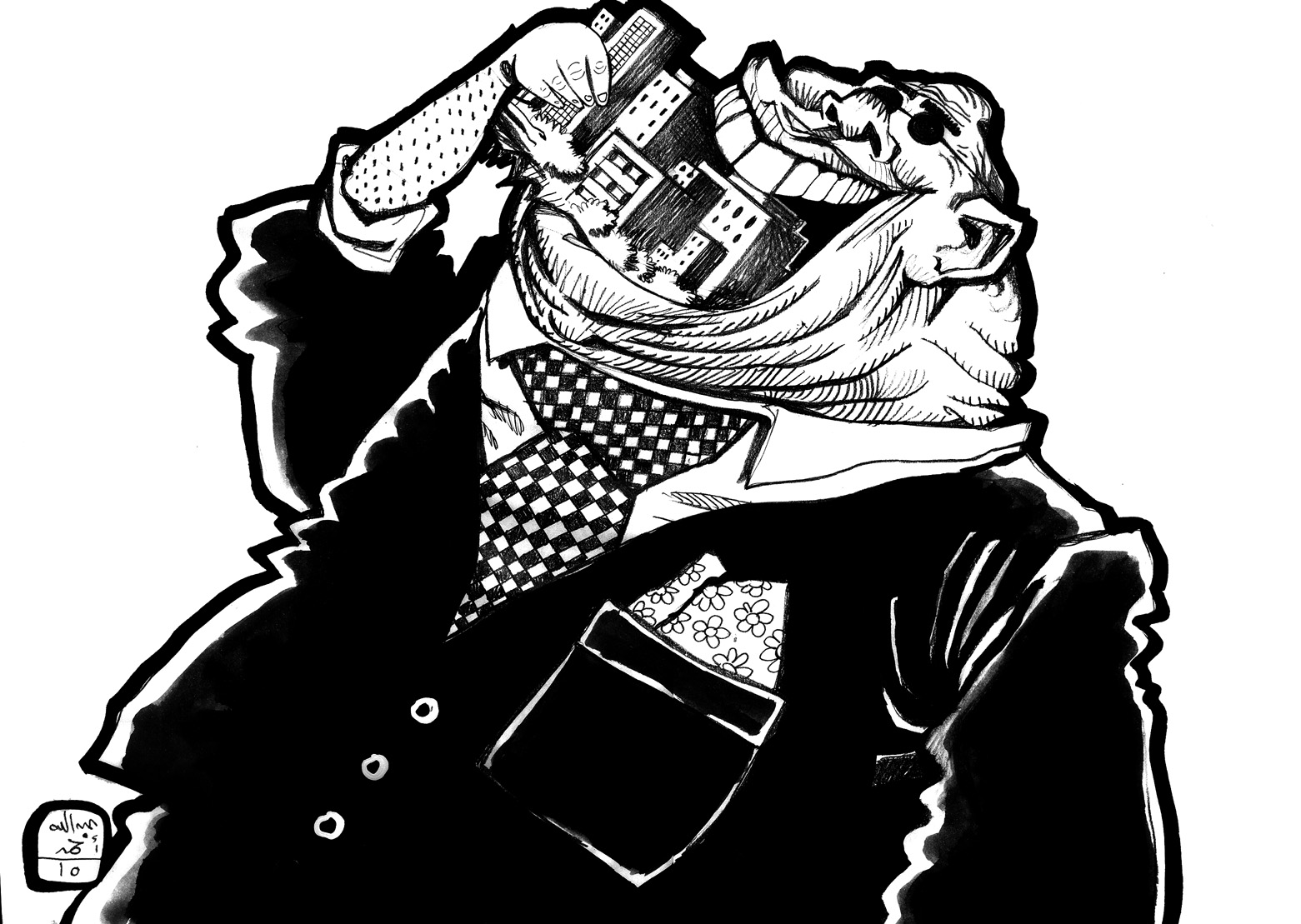
Graphic from alecwatch.org.

The ALEC agenda:

How the right-wing molds
legislators to shill for corporations

By Lamar W. Hankins | The Rag Blog | February 28, 2012

“[Any law proposed by businessmen] ought always to be listened to with great precaution… It comes from an order of men, whose interest is never exactly the same with that of the public, who have generally an interest to deceive and even to oppress the public, and who accordingly have, upon many occasions, both deceived and oppressed it.” — Adam Smith in Wealth of Nations

In 1973, a group of state legislators from around the country met with some right-wing ideologues to form the American Legislative Exchange Council (ALEC) to promote policies favorable to limited government, free markets, federalism, and individual liberty, as they understood these concepts.

These are the same concepts that underlie the neoconservative and libertarian agenda that has become well known recently in Wisconsin and Ohio, and which permeate the actions of legislators throughout the U.S., including in the Congress.

One of the key founders of ALEC was Paul Weyrich, co-founder of the right-wing think tank Heritage Foundation, promoter of direct mail fundraising for right-wing causes, and the first right-winger to cultivate and recruit evangelical activists to support social conservative causes.

With Jerry Falwell, Weyrich founded the Moral Majority, a name he invented. Weyrich was one of the key right-wing leaders who worked to develop conservatism into the powerful force it is today after the defeat of Barry Goldwater in 1964 and the disappointment with Richard Nixon’s too-moderate presidency.

But Weyrich, who died in 2008, would not support Goldwater or Nixon were they alive today. They were too moderate for Weyrich’s tastes.

In the late 1980’s, ALEC saw an opportunity to move beyond policy and education by producing model legislation to promote its right-wing, pro-corporate agenda. ALEC organized itself into a number of task forces to write and promote legislation in many areas of public life. It describes itself this way:

For more than 35 years, ALEC has been the ideal means of creating and delivering public policy ideas aimed at protecting and expanding our free society. Thanks to ALEC’s membership, the duly elected leaders of their state legislatures, Jeffersonian principles advise and inform legislative action across the country.

Literally hundreds of dedicated ALEC members have worked together to create, develop, introduce and guide to enactment many of the cutting-edge, conservative policies that have now become the law in the states. The strategic knowledge and training ALEC members have received over the years has been integral to these victories.

This description is not an exaggeration. ALEC task forces have broad mandates in the areas of Civil Justice; Commerce, Insurance, and Economic Development; Communications and Technology; Education; Energy, Environment, and Agriculture; Health and Human Services; International Relations; Public Safety and Elections; and Tax and Fiscal Policy.

ALEC is funded largely by corporations and corporate leaders, so it should come as no surprise that its model legislation benefits corporate interests to the exclusion of the public interest. As Progress Texas, a membership organization focused on holding elected officials responsible to the people, explains:

ALEC is made of more than 300 corporate and 2,000 legislative members who work behind closed doors to approve “model” legislation designed to increase corporate profits at public expense. These corporate-approved bills are then introduced in states like Texas, where lobbyists of many of those same corporations also write checks donating to the political campaigns of lawmakers who advance their agenda in the Texas Legislature. The typical cycle is as follows:

  1. Corporate lobbyists and conservative legislators approve ‘model’ legislation
  2. Corporations donate money to receptive legislators to help them win their elections
  3. Legislators file and pass the bills drafted by their corporate counterparts in ALEC
  4. Repeat

More than 80% of the corporate representatives on ALEC’s board are lobbyists for corporations, such as Altria/Phillip Morris USA, Bayer, Corrections Corporation of America, ExxonMobil, GlaxoSmithKline, Humana, Johnson & Johnson, Koch Industries, Reynolds, State Farm, United Healthcare, and Wal-Mart. Around 200 pieces of legislation initiated by ALEC are passed into law each year in legislatures around the country.

ALEC chart from Daily Kos.

At least one house of the Texas Legislature in 2011 approved ALEC-model bills that were vetted and endorsed by a small number of corporations, including the photo ID bill, the women’s sonogram bill, and the sanctuary cities bill (which would have denied state funds to local governments that prohibit peace officers and employees of special districts from inquiring into the status of a person arrested or detained for the investigation of crime).

Progress Texas reports that ALEC’s

legislative leadership is comprised almost entirely of Republicans and also corporations, and ALEC receives 98% of its funding from corporations, foundations, and sources other than legislative (membership) dues. ALEC corporations and their corporate representatives will give money to state legislators, in one of three ways: directly to candidates, to statewide ballot campaigns, and/or directly to Republican committees. In the past 20 years, ALEC corporations or their employees have donated $228.3 million to campaigns, $202.1 million to candidates, and an additional $85.8 million to Republican Party committees, totaling $516.2 million.

To find out which legislators and corporations are involved with influencing and funding legislators in your state, go to the ALEC Exposed website. ALEC Exposed is a project of the Center for Media and Democracy, a non-profit investigative reporting group that focuses on “exposing corporate spin and government propaganda.”

At the ALEC Exposed website, you can learn how ALEC plans to undermine public school systems throughout the U.S. by turning them over to corporations, to limit your legal right to seek damages for injuries caused by corporations, to turn government-run prisons into private prisons, to limit access to the ballot box by ordinary citizens, to dismiss the effects of second-hand smoke on non-smokers and block anti-tobacco laws, to limit the ability of states to raise or collect taxes, to limit the ability of public-sector workers to organize together to improve worker benefits, to create new give-aways to big business, to give tax breaks to the wealthiest Americans, to undermine environmental protections, to limit the ability of local governments to manage land use, to further distort the harshness of the criminal justice system by incarcerating more people for longer sentences, and a host of other legislation that will fatten corporate coffers and diminish the lives of ordinary citizens.

Although ALEC has built itself into a powerful tool of right-wing and corporate interests for nearly 40 years, its influence can be combated if people are aware of its largely hidden activities. ALEC Exposed helps ordinary citizens become aware of ALEC activities and provides the knowledge needed to combat its influence on our lives.

[Lamar W. Hankins, a former San Marcos, Texas, city attorney, is also a columnist for the San Marcos Mercury. This article © Freethought San Marcos, Lamar W. Hankins. Read more articles by Lamar W. Hankins on The Rag Blog.]

Also see:

The Rag Blog

Posted in Rag Bloggers | Tagged , , , , | Leave a comment

Legendary Commander Cody guitarist, singer, and songwriter Bill Kirchen has been called a “Titan of the Telecaster.” Kirchen, who headlined Austin community radio station KOOP’s recent benefit concert at Antone’s was our guest on Rag Radio. In Thorne Dreyer’s colorful profile, Kirchen — a founder of the iconic Sixties country-rock band, Commander Cody and His Lost Planet Airmen — recounts his storied career with lively (and very funny) reflections on everything from his high school classmate Iggy Pop to Austin’s iconic Armadillo World Headquarters. The post includes a link to the podcast.

Posted in RagBlog | Leave a comment

Ted McLaughlin : Dems are Better for the Stock Market

Chart from Bloomberg Businessweek.

Against conventional wisdom:
Stock market does
better under Democrats

By Ted McLaughlin / The Rag Blog / February 27, 2012

The Republicans claim to be the party that best benefits Big Business and Wall Street. And Wall Street (along with the corporate moguls of Big Business) seems to have bought into that idea — so much so that they are donating millions of dollars to super PACs supporting Republican candidates.

In January, the Republican super PACs revealed they had received about $47 million — much of it from the finance and investment industry (Wall Street). From these numbers, it is quite obvious that Wall Street believes it would be best served by returning a Republican to the White House.

But this conventional wisdom that says the stock market is best served by having a Republican in the White House is simply not true. And it’s not just a little bit untrue, it’s a whole lot untrue. Bloomberg News took a look at how the stock market has performed under both Republican and Democratic presidents. What they found was that the stock market performed much better under Democratic presidents. They looked at the last 50 years, since the presidency of John Kennedy — and this is what they found:

  • The sum of $1,000 “invested in a hypothetical fund that tracks the Standard & Poor’s 500 index only when Democrats are in the White House would have been worth $10,920” just a few days ago. That’s a gain of about 992% in 23 years.
  • That same $1,000 “invested in a fund that followed the S&P 500 under Republican presidents… would have grown to $2,087 on the day George W. Bush left office.” That’s a gain of about 109% in 28 years.
  • Even adding in the presidency of Dwight Eisenhower doesn’t bring the Republicans near the gain experienced under Democrats. That would increase the return under Republicans to $4,796. That’s a gain of about 380% in 36 years — far less than half of the gain under Democrats in only 23 years
  • The annualized return for the 23 years under Democratic presidents is about 11%.
  • If that $1,000 were invested in a fund following the Dow Jones Industrial Average (instead of the S&P 500), the return under Democratic presidents would be $7,550. That’s a gain of about 655% over the 23 years.
  • If that $1,000 were invested in a fund following the Dow Jones Industrial Average under Republican presidents, the return would be $2,716. That’s a gain of about 172% over the 28 years.

This blows conventional thinking out of the water. We have always been told that the Democrats were better for the poor and working classes, while the Republicans were better for the investor class. But these figures show that Democratic administrations are better for everyone — including the rich.

So why do the Wall Street bankers favor the Republicans? Because they aren’t as bright as many think they are. They are only thinking about tax policy — not in what is better for them in the long run. They think the lower taxes for the rich touted by Republicans would result in them having more money than under Democratic presidents with the current tax rate. But is that true?

Let’s examine the figures using the current 35% top tax rate for Democratic administrations and a 28% tax rate (proposed by Romney) for Republican administrations, and see which would be best:

  • The S&P 500 figure under Democrats had a gain of $9,920. Taxed at a maximum rate of 35%, this would leave the investor with $6448 after taxes.
  • The S&P 500 figure under Republicans had a gain of $1,087. Taxed at the smaller rate of 28% this would leave the investor with $783 after taxes.
  • The DJIA figure under Democrats had a gain of $6,550. Taxed at a rate of 35% this would leave the investor with $4,257.50 after taxes.
  • The DJIA figure under Republicans had a gain of $1,716. Taxed at the smaller rate of 28% this would leave the investor with $1,235.52 after taxes.

As is easily apparent, Wall Street investors would be much better off with a Democrat in the White House — even if they had to pay a higher tax rate. They would still have more money in their bank accounts. And this would be true even if the Democrats eliminated the 15% capital gains tax rate (the rate that current stock gains would be taxed at).

The fact is that all classes in our society would be better off financially with Democrats in the White House — whether poor, rich, or somewhere in between. That leads me to wonder — why would anyone vote Republican?

[Ted McLaughlin also posts at jobsanger. Read more articles by Ted McLaughlin on The Rag Blog.]

The Rag Blog

Posted in Rag Bloggers | Tagged , , , , | Leave a comment

BOOKS / Roger Baker : Richard Heinberg’s ‘The End of Growth’


Another ‘inconvenient truth’:
Richard Heinberg’s The End of Growth

“The central assertion of this book is both simple and startling: economic growth as we have known it is over and done with.” — Richard Heinberg, introduction to The End of Growth

By Roger Baker | The Rag Blog | February 23, 2012

[The End of Growth: Adapting to Our New Economic Reality, by Richard Heinberg (New Society publishers, 2011); Paperback, 336 pp., $17.95.]

The End of Growth comes as a useful successor and updated sequel to Heinberg’s 2004 book, The Party’s Over, an important book that led the way by comprehensively describing the economic impact of peaking oil and how that peak would necessarily constrain growth, and then going on to explain how closely peak oil is related to other global resource limits.

Other Heinberg books along the same lines include Powerdown, and Peak Everything.

The new book is clearly written and deserves a much wider audience than it is likely to get, because the news is not that which most people want to hear. Public policy leaders need to read the book because it documents the transition to a stagnating global economy without any easy policy remedy.

Bad news is a hard sell. We can see this by what happened to Al Gore. His warnings about climate change in An Inconvenient Truth were greeted in the U.S. with inaction and denial. This suggests that widespread acceptance of the current situation is also likely to have to wait. Things may have to deteriorate enough that the public consciousness finally reaches a tipping point, leading to a demand for radical action in response to a widely perceived crisis.

There is a huge amount of good reporting and analysis currently available to collect and put together in this sort of book which reviews the global situation from the standpoint of a rapidly growing literature on global resource limits. We can now see a lot more details and tradeoffs and plausible outcomes than we could when The Party’s Over was written.

There are many acknowledgements at the front of the book; this book was carefully written and reviewed for accuracy by a number of experts in the rapidly growing peak oil community, and the book is documented with hundreds of references. Not all of Heinberg’s recommendations, in particular the Personal Rapid Transit proposal, seem plausible, but most of the advice offered seems sound. Political will is the primary barrier to smart transition.

The book is not shy about describing the daunting problems of a global transition to using less energy, but it clearly tries to be as hopeful as the facts permit. The last chapter, “Life After Growth,” recommends a number of appropriate responses and community level solutions.

With less energy to squander, we are necessarily going to be driving less, but we can still do a lot more social networking, as well as developing new local, practical, and pragmatic solutions to our problems. Even though a future without growth seems bleak, the book points out the benefits of understanding the situation and responding appropriately so that we can make the best of a crisis that appears to to be introducing the most challenging period in all of human history.

The economic theory that maximizing the gross domestic product, or GDP, is a meaningful index of social progress, is thoroughly debunked. This old economic expansionist credo was that the more the economy expands its reach, and the more material goods the system produces, the happier we will all be as a result.

According to this way of thinking, wars and planned obsolescence are socially productive. It is probably no accident that those who benefit most from this outlook are those who own the means of production. By contrast, a focus on leisure time and better social relationships, which may equally be sources of happiness, don’t show up in the economic data, and thus don’t count as progress.

Most of the economic transition recommendations appropriate to a non-growth economy seem like good advice. The last chapter, “Life After Growth,” recommends a number of appropriate responses and community level solutions. With less cheap energy to squander on discretionary driving, we are probably going to have to do a lot more social networking and developing local, practical, and lawyer-free pragmatic solutions to our problems. For example Heinberg describes “Common Security Clubs,” and the importance of replacing the current consumerist sources of happiness with other neglected social sources.

Heinberg’s talents extend considerably beyond writing teaching and lecturing. Heinberg began as a teacher and writer who arrived at an ideal time to help popularize progressive environmental thinking about the implications of global resource limits and tie it all together.

He has been a key force in helping to organize the Post Carbon Institute into a think tank with a large pool of respected associate fellows. Post Carbon Institute has now become a highly regarded source of peak oil preparedness information. Writing books is one way to spread the word, lecturing is another, and sponsoring multi-media videos centered on energy issues is another.

Post Carbon also sponsors the Energy Bulletin, with an excellent editor, Bart Anderson, who provides a daily digest of news centered on energy, and also offers useful coverage of topics like the Occupy Movement. [The coming of the Internet has created a new golden age for editors and analysts; it is like a new meritocracy benefiting those who are skilled at the collecting, editing, and attractive repackaging of content to facilitate easy public access.]

This book is not for everyone. Traditional liberals who believe in the application of Keynesian economic stimulus policy as the best route to economic recovery will be disappointed by this book. So will many sincere environmentalists and socialists. They tend to promise an end to hard times by reform involving a change in better leaders within the current inherently expansionist economic structure of capitalism, or else a resumption of past growth via socialist reorganization.

Has the time arrived for the Peak Oil
message to be widely accepted?

Just as polls show even less public support for belief in global warming than a decade ago, those who warn of peaking oil, water, or food are inclined to generate natural disbelief. We live in an expansionist society with a culture deeply in denial of natural limits. We tend to deny limits that cannot somehow be circumvented by continuing scientific progress, or by the help of market-driven substitutes for scarce resources.

These are concepts that most Americans who grew up after WWII will find naturally hard to believe. One of the hardest ideas to abandon is that the steady scientific and technical benefits of the last century — and the easier and longer life that seemed to be the result — cannot be extended indefinitely, even with the help of sufficiently good social management of some kind.

The proof of this prevailing cultural outlook is the regular improvement in living standards seen by most Americans throughout their lifetimes. From the depths of the great depression, say about 1932 until about 2007, a period of 75 years, it seemed that in the USA, for those willing to work, a formula for permanent prosperity had been discovered.

There were already academic warnings that there were natural limits to growth such as the Club of Rome book The Limits To Growth. The energy crisis of the 1970’s, with a lot of agreement in the popular and scientific press, supported King Hubbert’s prediction of a global oil peak.

The nation was rather prepared to sacrifice under the Carter administration. From that time of missed opportunity for a transition until now, we have had a prevailing resource limit denial culture. The current election year strategy revolves around campaign promises that propose that there are neglected polices that, if only implemented, would lead to jobs and economic recovery. No politician is willing to risk defeat by failing to promise a recovery and a brighter future. The public seems to understand that we are in a crisis, but not much about its causes.

The facts argue that we are in now deep into the crisis that James Kunstler outlined in his book, The Long Emergency. In such times we really need leaders who help us break through our denial, who can lead us to make the difficult sacrifices appropriate for times of war, as soon as possible before our ability to respond is paralyzed by a shrinking capacity to respond.

Widespread blindness toward resource limits like auto-addictive suburbia, plus ignoring unsustainable trends, have led us toward what Heinberg terms “a perfect storm of converging crises,” a situation so encompassing that it demands a fresh and radical solution.

With peaking oil now widely accepted as fact by many experts, it appears the tide may be turning. The global production of cheap conventional oil, the stuff we used to help win WWII, is known to have already peaked in 2005, according to widely accepted IEA data. Given this fact, the evidence is compelling that only the addition of costlier and harder to access oil, plus equally costly alternative fuels like ethanol, have filled the gap and prevented a global decline in global fuel production since that time.

About the best we can now expect is to keep global fuel production from all sources level at about 90 million barrels per day, despite an ever-rising global population that depends on this fuel for survival.

In reality, a widespread public consciousness of implications of the end of cheap oil will probably have to be come about in large part as the result of the frustration caused by higher gas prices. This is likely to happen as soon as this summer. Higher gasoline prices can be seen and understood by everyone. Unfortunately, the way things play out, the economic relationships are not always easy to see, because high fuel prices depress the economy enough to lower oil demand. This temporarily lowers the oil price until the economy recovers enough to tighten up the market again.

Where things stand now

It has been about six months since The End of Growth was written. How are its main conclusions holding up? Rather well it, appears.

On January 26, 2012, Nature magazine, a top scientific journal, ran an article, “Oil’s Tipping Point Has Passed,” which documented the arrival of an alarming new phase of oil price economics extending from about 2005 (when the global production of cheap conventional oil peaked) to 2011. During this latest period, global oil production has no longer been responding as previously to rising oil prices with an increase in output. This has profound economic implications which limit growth, as the article describes here:

What does this mean for the global economy, which is so closely tied to physical resources? Of the 11 recessions in the United States since the Second World War, 10, including the most recent, were preceded by a spike in oil prices. It seems clear that it wasn’t just the “credit crunch” that triggered the 2008 recession, but the rarely-talked-about “oil-price crunch” as well. High energy prices erode family budgets and act as a head wind against economic recovery.

The last year has been one of global social rebellion, and this may not be a coincidence. When the price of the oil that powers the world economy rises by a factor of five in only about a decade, it reduces profit throughout the global economy. That causes the system to become meaner and more exploitative of labor to compensate and restore profit. World leaders at their yearly meeting at Davos recently expressed their belief that the prevailing system of global finance capital may be in serious trouble.

The Occupy Movement hasn’t yet questioned the concept of economic growth. However it has challenged the concept of corporate-led consumerism with its trend to concentrated wealth, and to favor a tiny elite, while failing to distribute the benefits widely enough to prevent widespread discontent.

The Saudis alone produce enough of the total world oil production, about 10 million barrels a day, that their oil production is vital to hold the global price down, even to its currently elevated level of $120 per barrel for Brent crude oil, now the global price benchmark standard.

As part of a sobering new economic reality, the Saudis have lost much incentive to expand their oil production to hold down its price. On the contrary, the Saudis are effectively raising the oil price by actually cutting oil production in a tight market. The Saudis now maintain that $100 a barrel is a fair price for their oil, which they now argue that they need to conserve for the benefit of their own future.

Peak Oil Consulting economist Chris Skrebowski has recently suggested that the global economy is now caught up in a sort of economic feedback oscillation tied to oil prices. Whenever the economy recovers a bit, especially in the U.S. where fuel costs are relatively unshielded by taxes, and after a delay, it causes a rise in the price of oil until its rising price kills the recovery.

Higher oil prices subtract from and depress consumer spending in other areas. Another factor is that whenever reserve production capacity that still exists is added in response to a rising oil price, this added capacity tends to deplete faster than the big old fields, meaning that such newly added spare capacity is increasingly ineffective at holding oil prices down.

The thinking about peak oil used to be focused more on geology than economics. Recently it has become more clearly understood that there is no natural limit to global petroleum production. There is a natural economic limit that says that you must always produce substantially more fuel than you have invested in its production; a factor commonly referred to as “energy return on energy investment.”

In the petroleum industry this ratio of recovery to investment has been getting worse for decades; the remaining oil production sweet spots have become very hard to find, and they are often in politically unstable areas. Skrebowski suggests that the global oil production limit is really economic in character. What is worse, the numbers provide good indications that drilling will soon become unprofitable due to this declining return on investment.

The fact that Brent oil is currently selling for $120 a barrel is partly psychological, due to fear and speculation surrounding political turmoil in the Mideast. Although a lack of political stability can drive the oil price up, it does not follow that a return to stability could lower the price and improve the overall situation very much.

China and India are increasingly able to outbid the industrialized world, with its higher embedded labor costs, for the globally limited amount of economically recoverable oil. This means that, in the new global economy, only a weakening of global oil demand due to its rising oil price can restrain increasing demand.

Oil has become like the new gold — a new limiting factor tied to the physical world that is uniquely capable of disciplining the world of finance capital by setting an ultimate limit to its economic growth.

[Roger Baker is a long time transportation-oriented environmental activist, an amateur energy-oriented economist, an amateur scientist and science writer, and a founding member of and an advisor to the Association for the Study of Peak Oil-USA. He is active in the Green Party and the ACLU, and is a director of the Save Our Springs Association and the Save Barton Creek Association in Austin. Mostly he enjoys being an irreverent policy wonk and writing irreverent wonkish articles for The Rag Blog. Read more articles by Roger Baker on The Rag Blog.]

The Rag Blog

Posted in Rag Bloggers | Tagged , , , , | 3 Comments

RAG RADIO / Thorne Dreyer : Bill Kirchen is a ‘Titan of the Telecaster’

Bill Kirchen performs at the KOOP Surfin’ 17-A-Go-Go benefit at Antone’s in Austin, Feb. 4, 2012. Photo courtesy Ted and Linda Branson / KOOP / The Rag Blog.

Rag Radio:

Commander Cody’s Bill Kirchen
is a ‘Titan of the Telecaster’

By Thorne Dreyer | The Rag Blog | February 23, 2012

Bill Kirchen is “a devastating culmination of the elegant and the funky…” — Nick Lowe

Grammy nominated guitarist, singer, and songwriter Bill Kirchen was named a “Titan of the Telecaster” by Guitar Player Magazine and The Washington Post‘s Mike Joyce said, “The folks who make Fender Telecasters ought to stop what they’re doing and cut Bill Kirchen a fat check.”

Bill Kirchen was the guitarist with the legendary Commander Cody and His Lost Planet Airmen from 1967 to the mid 1970s. The band “mixed country music, rockabilly, and blues, on a foundation of boogie-woogie piano,” and Kirchen’s signature licks drove the group’s classic single, “Hot Rod Lincoln,” into the Top Ten.

Kirchen, who is now based in Austin and tours internationally, headlined a rousing benefit for community radio station KOOP at Antone’s nightclub in Austin on Saturday, February 4, 2012, playing to a packed and enthusiastic crowd. Bill Kirchen was also Thorne Dreyer’s guest on Rag Radio, Friday, February 17. He discussed his historic and colorful career and sang four songs, backing himself on the acoustic guitar. Listen to it all here:

Commander Cody Guitarist Bill Kirchen
on Rag Radio with Thorne Dreyer, Friday, Feb 17, 2012


Bill Kirchen’s career has spanned more than 40 years during which time he has worked with an all-star cast, including Nick Lowe, Emmylou Harris, Doug Sahm, and Elvis Costello. His work has fused rock ‘n’ roll and country music, drawing on blues and bluegrass, Western swing from Texas, and California honky-tonk.

He grew up in Ann Arbor, Michigan, where Commander Cody was formed in 1967, spent time on the West Coast, lived in Washington, D.C. for 20 years, and now lives and performs in, and tours out of Austin.

Kirchen started playing the banjo “during the great folk scare of the Sixties,” but soon turned to the acoustic guitar, “fingerpicking to Mississippi John Hurt.” “I wanted to play acoustic blues,” he told the Rag Radio audience, “but got seduced by the electric guitar.” He obtained his first Telecaster in an impulsive trade with a co-worker when he was working as a motorcycle messenger — and he played that same guitar for 40 years, “until I wore it down to the nub.”

He liked the Telecaster “because it’s real simple. It’s a slab on a stick, with two pickups, two knobs, one switch. It couldn’t be simpler.” But it was one of the original electric guitar styles and was used by several of Kirchen’s favorite players at the time. “I wrote a love song to the Telecaster when I was here in Austin a couple of years ago,” he said. “It was called ‘The Hammer of the Honky Tonk Gods.'”

Kirchen went to high school in Ann Arbor with Bob Seger and Iggy Pop. He didn’t know Seger but says that “Jim Osterberg became Iggy Pop right before my very eyes.” When Iggy was playing with a blues band called the Prime Movers, he was known for singing the blues song, “I’m a Man” (“That’s spelled M-A-N”). But suddenly Pop instead started singing, “I’m a Tricycle” (“That’s spelled T-R-I…”). That’s when, according to Kirchen, “We knew something was afoot.”

“John Sinclair got me my first gig with my first band,” Kirchen said. Sinclair, a “mover and shaker” in the Detroit and Ann Arbor music scenes, was the leader of the White Panther Party and manager of the revolutionary rockers, the MC5.

Commander Cody and His Lost Planet Airmen was founded in 1967 in Ann Arbor and the band, which was a pioneer in the country rock genre, went on to become one of the iconic bands of the era.

In the beginning, “it was an art school kind of a wacky, admittedly stoned, local Ann Arbor thing. Initially it had a floating cast,” he said. They assigned George Frayne the role of “Commander Cody,” a name that was inspired by a 1950’s film serial. “He had a lot of charisma,” Kirchner says. “He was a big lantern-jawed, barrel-chested, Nick Fury-type of guy. And he played great boogie-woogie piano.”

(George Frayne later became an art professor and a widely-exhibited painter, and another original member of Commander Cody, John Tichy, earned a PhD in mechanical and aerospace engineering and became a respected scholar.)

Kirchen says that Commander Cody “turned on a whole generation of people to country music, to hard core blood and guts country music and Western swing that they did not have access to.” They were joined in the country rock/Western swing genre by bands like the New Riders of the Purple Sage and Austin’s Asleep at the Wheel, with whom they frequently worked.

Bill Kirchen says he was attracted to country music because “it had adult themes and, to me, a deeper emotional content. But don’t get me wrong,” he adds. “I’m a big fan of mindless, slack-jawed, ham-fisted rock and roll. It’s a beautiful thing. Seriously, I love it.”

Kirchen is often referred to as a “rockabilly” guitarist. “We certainly did play a bunch of rockabilly,” he says “and I certainly was informed by that, and I know a few rockabilly licks… But I always thought that [term] was a little bit limiting… Especially when rockabilly became in America a kind of… dress-up gig.”

But he definitely is the “self-crowned, self-annointed ‘King of Dieselbilly.'” “I can play anything I want,” he told us, “because I invented the genre.”

When he was touring as noted British musician Nick Lowe’s guitar player, “he’d have me do one song a night, and I’d do ‘Tombstone Every Mile,’ a truck-driving song. And he’d introduce me with this fantastic, aristocratic British accent: ‘Ladies and gentlemen, now Bill Kirchen, the King of Dieselbilly.’ And it just stuck with me. I am the King of Dieselbilly.”

Lowe, incidentally, has called Bill Kirchen “a devastating culmination of the elegant and the funky, a really sensational musician with enormous depth.”

Kirchen played at least twice a year at Austin’s vintage Armadillo World Headquarters with Commander Cody. Calling the Armadillo one of the great music venues, Kirchen said, “That was a cool scene, man. If you couldn’t have fun at the Armadillo, go home!”

They played the Armadillo with Greezy Wheels and Maria Muldaur, and Waylon Jennings opened for them “right before he blew up and became huge.” They recorded a live album at the Armadillo, and were featured at the famed club’s legendary final show, the “Last Dance at the Dillo.”

Kirchen loves living and working in Austin. “It’s a very open environment. In many ways, not just music. It’s a very creative town. It’s a little oasis in the middle of Texas.” And it is packed with musicians: “You kick a can and three musicians, three guitar players, will rush out from under the can, clutching their Grammies and their Stratocasters.”

Living in Austin gives Kirchen a unique opportunity to work with musicians he respects. “I got to go and sit in a bunch with the great Alvin Crow who I knew back from his Pleasant Valley days, back when I played here with Cody.”

And “the Flatlanders live here: Jimmie Dale [Gilmore] and Butch [Hancock]… I used to get to play with them out in California. That’s a fantastic group of original Texans, what a bunch of characters.”

And he just did a gig with blues pianist Marcia Ball — “who is a treasure” — at the Armadillo Christmas Bazaar.

He has been touring regularly — and all over the place. “We played Palestine, which was so cool… and we played up in Lapland, north of the Arctic circle. As you can imagine, less happens in Lapland than in Palestine.”

Kirchen’s latest CD, Word To The Wise on Proper American, features duets with many of the artists he’s worked with over the years, including Elvis Costello, Nick Lowe, Maria Muldaur, and Dan Hicks.

Bill Kirchen closed the Rag Radio show with a song he wrote when he was living in nearby Buda, Texas, before moving to Austin. “I wrote this song when I was walking my dog,” he said. “And you know how dogs are, they’re just happy to be alive. So I wrote a ‘good to be alive,’ song, encouraged by his enthusiasm.”

In the song, Kirchen affirms that,

I’m gonna live each day like there’s no tomorrow
Crank up the love, turn down the sorrow
Get my ducks in a row… one more day…

But if living truly is a terminal disease
All I’m askin’ for is a brief reprise
And I can rattle and roll… one more day…

[Thorne Dreyer, a pioneering Sixties underground journalist, edits The Rag Blog, hosts Rag Radio, and is a director of the New Journalism Project. He can be contacted at editor@theragblog.com. Read more articles by and about Thorne Dreyer on The Rag Blog.]

Bill Kirchen in the studios of KOOP in Austin, Friday, Feb. 17, 2012. Photo by Carlos Lowry / The Rag Blog.

Rag Radio, which has aired since September 2009 on KOOP 91.7-FM, a cooperatively-run all-volunteer community radio station in Austin, Texas, features hour-long in-depth interviews and discussion about issues of progressive politics, culture, and history.

Hosted and produced by Rag Blog editor Thorne Dreyer, Rag Radio is broadcast every Friday from 2-3 p.m. (CST) on KOOP and streamed live on the web. After broadcast, all episodes are posted as podcasts and can be downloaded at the Internet Archive.

Rag Radio is also rebroadcast on Sundays at 10 a.m. (EST) on WFTE, 90.3-FM in Mt. Cobb, PA, and 105.7-FM in Scranton, PA. Rag Radio is produced in the KOOP studios, in association with The Rag Blog, a progressive internet newsmagazine, and the New Journalism Project, a Texas 501(c)(3) nonprofit corporation.

Tracey Schulz is the show’s engineer and co-producer.

Coming up on Rag Radio:

Feb. 24, 2012: Activism in Austin: Representatives of Occupy Austin, Million Musicians March for Peace & a new Austin workers’ cooperative.
March 2, 2012: Music writer Margaret Moser and screen actor Sonny Carl Davis on the movie, Roadie, the Austin Music Awards, and SXSW.

March 9, 2012: Singer-songwriter & author Bobby Bridger on the lasting impact of Native-American culture on American society.

[Our show with journalist & labor activist David Bacon, originally scheduled for Feb. 4, 2012, has been rescheduled for March 16, 2012.]

The Rag Blog

Posted in Rag Bloggers | Tagged , , , , , , , , | 1 Comment

SPORT / Mariann G. Wizard : Enter the Dragon, Jeremy Lin


Jeremy fan at the Knicks game against the Toronto Raptors, Feb. 14, 2012. Photo by Mike Cassese / Reuters.

Enter the Dragon:
NBA lucks out in New Year
with Knicks’ Jeremy Lin-sanity

By Mariann G. Wizard | The Rag Blog | February 23, 2012

When professional basketball first started in the 1920s, as with other professional sports organizations, there were separate leagues for black and white teams. The U.S. then was a black-and-white country, with a black-and-white population, newspapers, and viewpoints characterizing public life. The advent of black-and-white television in the early 1950s merely reinforced a message of separation.

When professional basketball consolidated in the National Basketball Association (NBA), however, it didn’t take long for the sport to become largely dominated by black players. Throughout the 1980s and 90s, many teams fielded all-black fives, even if a white guy or two sat on the bench or played a few minutes in trash time, and to some extent this limited the league’s popularity. This year’s All-Star starters are all black, and apparently there are some white so-called sports fans who can’t get past that. Their loss.

In an era when few successful white college players seemed interested in turning pro (medicine or law being even more profitable?), the league turned to the international arena for player diversity. There have been hundreds of international players from over 60 countries in the NBA and its predecessors since Italian Hank Biasatti, the first, in 1946, but they were rare until the late 1990s.

Since the early 2000s, the league has taken on a strong international flavor. Generally acknowledged as the greatest foreign-born star was Hakeem Olajuwon, the Houston Rockets’ center who was a dominating force in the league from 1984-2002. Hakeem was the first foreign-born MVP, was a 12-time all-star and the leader of two NBA championship teams, and is now included in most short lists of the best players in the history of the game.

Other stars like Dirk Nowitzki of Germany (the first European-born MVP), Steve Nash (Canada), Manu Ginobili (Argentina), and Tony Parker (France) have helped make the game a more complete rainbow.

Not only European players like Hedo Turkoglu (Turkey), Zrydunas Ilgauskas (Lithuania, formerly Soviet Union), and Vlade Divac (SFR Yugoslavia, now Serbia), but other African stars like Dikembe Mutombo (Democratic Republic of the Congo), Michael Olowokandi (Nigeria), and Luol Deng (originally from Sudan, now South Sudan; now a British citizen) taught sports announcers to pronounce anything without stumbling over it, and annually added to their home countries’ cred on national teams.

Several have become naturalized U.S. citizens. Quite a few teams can put five players on the floor, none of whom were born in the United States.

Add to this mix an up-and-coming generation of multi-ethnic stars — Delonte West and Blake Griffin are but two — and the NBA and its fan base may arguably be claimed to be the least racist or nationalistic in pro sports. Only soccer is played by more diverse peoples in more different places, but soccer fans tend to be somewhat more “emphatic” in their local or national loyalties. When conflicts in some NBA players’ home countries have burst out, players have to a man been advocates for peace, or at least have kept silent.


The Knicks’ Jeremy Lin, playing against the Sacramento Kings at Madison Square Garden, Feb. 15, 2012. Photo by Chris Trotman / Getty Images.

Of course the NBA’s official efforts towards diversity are motivated by the bottom line. More fans in more places equals more jerseys and T-shirts sold, sold-out games in international venues (with international expansion a strong motivator) and in under-.500 team arenas, and more profits overall. Expanding global markets and an increasingly diverse U.S. population demand player diversity.

Since the old black-and-white days in the U.S., the growth of the Hispanic population has been a game-changer in hundreds of ways. In NBA cities like San Antonio, Miami, LA, Dallas, Phoenix, and others with large Hispanic populations, regular promotions now cater to Spanish-speaking fans. In 2010 a 15-night league-sponsored “Noche Latina” promotion sought to raise Hispanic attendance figures.

A fair number of Spaniards, nine Puerto Ricans, and three Mexicans have made it to the NBA, along with a handful of other Hispanics, but the U.S. Hispanic population overall has been slow to warm to the sport. Now there are signs of change, as exciting homegrown players like brothers Robin and Brook Lopez, and international stars like brothers Paul and Marc Gasol, and Rudy Fernandez (all three from Spain) and J.J. Barea (Puerto Rico) show that brown men can jump.

Among the NBA’s efforts at international outreach, the mixed success of Chinese players has been fascinating. Only five Chinese players have been in the league since Wang Zhizhi in 2001. Yao Ming, who came to the NBA in 2002 and retired in 2011 after persistent knee injuries, was the most ballyhooed player in the history of the game before he ever arrived.

The exceptionally tall Han Chinese, son of two Olympians, made a valiant effort to become an effective defender and to master the slippery English language, and although in many ways he never fulfilled expectations on the court, he became an effective spokesman and, in China, a household icon.

In every fan vote for All-Star players while Yao was active, his totals exceeded those of all other players combined. But enthusiasm for Yao in mainland China may not have translated into enthusiasm for the NBA and basketball as a whole, at least not yet.

Five Asian-Americans had also played in the league with no discernible national or international impact. But the arrival of undrafted Harvard economics grad Jeremy Lin on the scene in late January, as an off-the-bench and then starting point guard for the New York Knicks, has raised a new banner of Chinese basketball frenzy.

Born in LA to immigrant Taiwanese parents, Lin is as all-American as his new Knicks teammate J.R. Smith, as Magic or Bird, as Rasheed Wallace or Kevin McHale. Lin grew up playing ball in addition to all the stereotypical brainy things Asian-American kids are supposed to do. Today his brilliant court leadership, reminiscent of a younger Steve Nash, has unleashed a wave of “Lin-sanity” from coast to coast and in China and Taiwan.

For NBA owners and executives, the “Lin effect” is an unlooked-for blessing in a season that started out ugly, with a long-running labor dispute between millionaire players and billionaire owners, and that will only manage an abbreviated 62-game season by scheduling unprecedented back-to-back-to-back games and eliminating the practice of every team playing at least once on every other team’s court.

Many fans barely hoped for something worth watching before the All-Star break, before Lin’s hard-charging, smart, winning play set cynical old New York on fire. A stagnant dispute between Madison Square Garden, Inc. and Time-Warner Cable Television was quickly resolved, allowing Knicks home games again to be televised in the state, when irate fans deluged both companies with demands to, “Settle!” Meanwhile, in “Chinatowns” all over the country and abroad, Asian-Americans gather to watch big-screen teevees in homes, schools, auditoriums, etc., cheering a new star.

If there is still an American melting pot, it is in the school yards and gyms of the nations, where a racist or belittling remark can be effectively countered by sinking a three from beyond the arc, weaving between four bigger players to the net, or passing across court for the easy basket. In the 1980s, kids of every color, all over the world, wanted to “be like Mike.” Today they’re free to want to be like D-Wade, like Dirk, like Hakeem “the Dream,” like Luis Scola, and at last, like Jeremy.

[Mariann G. Wizard, a Sixties radical activist and contributor to The Rag, Austin’s underground newspaper from the 60s and 70s, is a poet, a professional science writer specializing in natural health therapies, and a contributing editor to The Rag Blog. Read more articles and poetry by Mariann G. Wizard at The Rag Blog.]

The Rag Blog

Posted in Rag Bloggers | Tagged , , , , | 1 Comment

Rag Radio : Bill Kirchen is ‘Titan of the Telecaster’

Bill Kirchen performs at the KOOP Surfin’17-A-Go-Go benefit at Antone’s in Austin, Feb. 4, 2012. Photo courtesy Ted and Linda Branson / KOOP / The Rag Blog.

‘Titan of the Telecaster’:
Commander Cody’s Bill Kirchen on Rag Radio

By Thorne Dreyer / The Rag Blog / February 23, 2012

Grammy nominated guitarist, singer, and songwriter Bill Kirchen was named a “Titan of the Telecaster” by Guitar Player Magazine and The Washington Post’s Mike Joyce said, “The folks who make Fender Telecasters ought to stop what they’re doing and cut Bill Kirchen a fat check.”

Bill Kirchen was the guitarist with the legendary Commander Cody and His Lost Planet Airmen from 1967 to the mid 1970s. The band “mixed country music, rockabilly, and blues, on a foundation of boogie-woogie piano,” and Kirchen’s signature licks drove the group’s classic single, “Hot Rod Lincoln,” into the Top Ten.

Kirchen, who is now based in Austin and tours internationally, headlined a rousing benefit for community radio station KOOP at Antone’s nightclub in Austin on Saturday, February 4, playing to a packed and enthusiastic crowd. Bill Kirchen was also Thorne Dreyer’s guest on Rag Radio, Friday, February 17, 2012. He discussed his historic and colorful career and sang four songs, backing himself on the acoustic guitar. The interview can be heard here:

Commander Cody Guitarist Bill Kirchen
on Rag Radio with Thorne Dreyer, Friday, Feb 17, 2012

Bill Kirchen’s career has spanned more than 40 years during which time he has worked with an all-star cast, including Nick Lowe, Emmylou Harris, Doug Sahm, and Elvis Costello. His work has incorporated rock ‘n’ roll and country music, drawing on blues and bluegrass, Western swing from Texas, and California honky-tonk.

He grew up in Ann Arbor, Michigan, where Commander Cody was formed in 1967, spent time on the West Coast, lived in Washington, D.C. for 20 years, and now lives and performs in, and tours out of Austin.

Kirchner started playing the banjo “during the great folk scare of the Sixties,” but soon turned to the acoustic guitar, “fingerpicking to Mississippi John Hurt.” I wanted to play acoustic blues,” he told the Rag Radio audience, “but got seduced by the electric guitar.” He played one Telecaster guitar for 40 years, “until I wore it down to the nub.”

He liked the Telecaster “because it’s real simple. It’s a slab on a stick, with two pickups, two knobs, one switch. It couldn’t be simpler.” But it was one of the original styles of electric guitar, and the one most of his favorite players used. “I wrote a love song to the Telecaster when I was here in Austin a couple of years ago,” he said. “It was called ‘The Hammer of the Honky Tonk Gods.'”

Kirchen grew up in Ann Arbor, where he went to high school with Bob Seger and Iggy Pop. He didn’t know Seger but says that “Jim Osterberg became Iggy Pop right before my very eyes.” When Iggy was playing with a blues band called the Prime Movers, he was known for singing the blues song, “I’m a man” (“that’s spelled M-A-N”). But suddenly Pop instead started singing, “I’m a tricycle” (“that’s spelled T-R-I…”). That’s when, according to Kirchen, “We knew something was afoot.”

Commander Cody and his Lost Planet Airmen was founded in 1967 in Ann Arbor and the band, which was a pioneer in the country rock genre, went on to become one of the iconic bands of the era. In the beginning, “it was an art school kind of a wacky, admittedly stoned, local Ann Arbor thing. Initially it had a floating cast,” he said. They assigned George Frayne the role of “Commander Cody,” a name that was inspired by a 1950’s film serial. “He had a lot of charisma,” Kirchner says. “He was a big lantern-jawed, barrel-chested, Nick Fury-type of guy. And he played great boogie-woogie piano.”

Kirchen says that Commander Cody “turned on a whole generation of people to country music, to hard core blood and guts country music and Western swing that they did not have access to.” They were playing Western swing, “and then Asleep at the Wheel came along later and did the same thing.”

He says he was attracted to country music because “it had adult themes and, to me, a deeper emotional content. But don’t get me wrong,” he adds. “I’m a big fan of mindless, slack-jawed, ham-fisted rock and roll. It’s a beautiful thing. Seriously, I love it.”

Kirchen is often referred to as a “rockabilly” guitarist. “We certainly did play a bunch of rockabilly,” he says “and I certainly was informed by that, and I know a few rockabilly licks… But I always thought that [term] was a little bit limiting… Especially when rockabilly became in America a kind of … dress-up gig.”

But he definitely is the “self-crowned, self-annointed King of ‘Dieselbilly.'” “I can play anything I want,” he told us, “because I invented the genre…” When he was touring as noted British musician Nick Lowe’s guitar player, “he’d have me do one song a night, and I’d do “Tombstone every Mile,” — a truck-driving song. And he’d introduce me with this fantastic, aristocratic British accent: ‘Ladies and gentlemen, now Bill Kirchen, the King of Dieselbilly.’ And it just stuck with me. I am the King of Dieselbilly.”

Lowe, incidentally, has called Bill Kirchen “a devastating culmination of the elegant and the funky, a really sensational musician with enormous depth.”

Kirchen played several times a year at Austin’s Armadillo World Headquarters with Commander Cody. They recorded a live album at the Armadillo, and were featured at the famed venue’s legendary final show, the “Last Dance at the Dillo.”

Kirchen loves living and working in Austin. “It’s a very open environment. In many ways, not just music. It’s a very creative town. It’s a little oasis in the middle of Texas.” And it is packed with musicians: “You kick a can and three musicians, three guitar players, will rush out from under the can, clutching their Grammies and their Stratocasters.”

Living in Austin gives Kirchen a unique opportunity to work with musicians he respects. “I got to go and sit in a bunch with the great Alvin Crow who I knew back from his Pleasant Valley days, back when I played here with Cody.” And “the Flatlanders live here: Jimmie Dale [Gilmore] and Butch [Hancock]… I used to get to play with them out in California. That’s a fantastic group of original Texans, what a bunch of characters.” And he “just did a gig with [blues pianist] Marsha Ball at the [Armadillo] Christmas Bazaar — who is a treasure.”

He has been touring regularly — and all over the place. “We played Palestine, which was so cool… and we played up in Lapland, north of the Arctic circle. As you can imagine, less happens in Lapland than in Palestine…”

Kirchen’s latest CD, Word To The Wise on Proper American, features duets with many of the artists he’s worked with over the years, including Elvis Costello, Nick Lowe, Maria Muldaur, and Dan Hicks.

Bill Kirchen closed the Rag Radio show with a song he wrote when he was living in nearby Buda, Texas, before moving to Austin. “I wrote this song when I was walking my dog,” he said. “And you know how dogs are, they’re just happy to be alive. So I wrote a Good to be Alive, song, encouraged by his enthusiasm.”

In the song, Kirchen affirms that,

I’m gonna live each day like there’s no tomorrow
Crank up the love, turn down the sorrow
Get my ducks in a row… one more day…

But if living truly is a terminal disease
All I’m askin’ for is a brief reprise
And I can rattle and roll… one more day…

Bill Kirchen in the studios of KOOP in Austin, Friday, Feb. 17, 2012. Photo by Carlos Lowry / The Rag Blog.

Rag Radio, which has aired since September 2009 on KOOP 91.7-FM, a cooperatively-run all-volunteer community radio station in Austin, Texas, features hour-long in-depth interviews and discussion about issues of progressive politics, culture, and history.

Hosted and produced by Rag Blog editor Thorne Dreyer, Rag Radio is broadcast every Friday from 2-3 p.m. (CST) on KOOP and streamed live on the web. After broadcast, all episodes are posted as podcasts and can be downloaded at the Internet Archive.

Rag Radio is also rebroadcast on Sundays at 10 a.m. (EST) on WFTE, 90.3-FM in Mt. Cobb, PA, and 105.7-FM in Scranton, PA. Rag Radio is produced in the KOOP studios, in association with The Rag Blog, a progressive internet newsmagazine, and the New Journalism Project, a Texas 501(c)(3) nonprofit corporation.

Tracey Schulz is the show’s engineer and co-producer.

[Thorne Dreyer, a pioneering Sixties underground journalist, edits The Rag Blog, hosts Rag Radio, and is a director of the New Journalism Project. He can be contacted at editor@theragblog.com. Read more articles by and about Thorne Dreyer on The Rag Blog.]

Coming up on Rag Radio:

Feb. 24, 2012: Activism in Austin: Representatives of Occupy Austin, Million Musicians March for Peace & a new Austin workers’ cooperative.
March 2, 2012: Music writer Margaret Moser and screen actor Sonny Carl Davis on the movie, Roadie, the Austin Music Awards, and SXSW.

March 9, 2012: Singer-songwriter & author Bobby Bridger on the lasting impact of Native-American culture on American society.

[Our show with journalist & labor activist David Bacon, originally scheduled for Feb. 4, 2012, has been rescheduled for March 16, 2012.]

The Rag Blog

Posted in Rag Bloggers | Tagged , , , , , , , , | Leave a comment

BOOKS / Roger Baker : Richard Heinberg’s ‘The End of Growth’


Another ‘inconvenient truth’:
Richard Heinberg’s The End of Growth

“The central assertion of this book is both simple and startling: economic growth as we have known it is over and done with.” — Richard Heinberg, introduction to The End of Growth

By Roger Baker | The Rag Blog | February 23, 2012

[The End of Growth: Adapting to Our New Economic Reality, by Richard Heinberg (New Society publishers, 2011); Paperback, 336 pp., $17.95.]

The End of Growth comes as a useful successor and updated sequel to Heinberg’s 2004 book, The Party’s Over, an important book that led the way by comprehensively describing the economic impact of peaking oil, how that peak would necessarily constrain growth, and then went on to explain how closely peak oil is related to other global resource limits. Other Heinberg books along the same lines include Powerdown, and Peak Everything.

The new book is clearly written and deserves a much wider audience than it is likely to get, because the news is not that which most people want to hear. Public policy leaders need to read the book because it documents the transition to a stagnating global economy without any easy policy remedy.

Bad news is a hard sell. We can see this by what happened to Al Gore. His warnings about climate change in An Inconvenient Truth were greeted in the U.S. with inaction and denial. This suggests that widespread acceptance of the current situation is also likely to have to wait. Things may have to deteriorate enough that the public consciousness finally reaches a tipping point, leading to a demand for radical action in response to a widely perceived crisis.

There is nowadays a huge amount of good reporting and analysis available to collect and put together in this sort of book which reviews the global situation from the standpoint of a rapidly growing literature on global resource limits. We can now see a lot more details and tradeoffs and plausible outcomes than we could when The Party’s Over was written.

There are many acknowledgements at the front of the book; this book was carefully written and reviewed for accuracy by a number of experts in the rapidly growing peak oil community, and the book is documented with hundreds of references. Not all of Heinberg’s recommendations, in particular the Personal Rapid Transit proposal, seem plausible, but most of the advice offered seems sound. Political will is the primary barrier to smart transition.

The book is not shy about describing the daunting problems of a global transition to using less energy, but it clearly tries to be as hopeful as the facts permit. The last chapter, “Life After Growth,” recommends a number of appropriate responses and community level solutions.

With less energy to squander, we are necessarily going to be driving less, but we can still do a lot more social networking, as well as developing new local, practical, and pragmatic solutions to our problems. Even though a future without growth seems bleak, the book points out the benefits of understanding the situation and responding appropriately so that we can make the best of a crisis that appears to to be introducing the most challenging period in all of human history.

The economic theory that maximizing the gross domestic product, or GDP, is a meaningful index of social progress, is thoroughly debunked. This old economic expansionist credo was that the more the economy expands its reach, and the more material goods the system produces, the happier we will all be as a result.

According to this way of thinking, wars and planned obsolescence are socially productive. It is probably no accident that those who benefit most from this outlook are those who own the means of production. By contrast, a focus on leisure time and better social relationships, which may equally be sources of happiness, don’t show up in the economic data, and thus don’t count as progress.

Most of the economic transition recommendations appropriate to a non-growth economy seem like good advice. The last chapter, “Life After Growth,” recommends a number of appropriate responses and community level solutions. With less cheap energy to squander on discretionary driving, we are probably going to have to do a lot more social networking and developing local, practical, and lawyer-free pragmatic solutions to our problems. For example Heinberg describes “Common Security Clubs,” and the importance of replacing the current consumerist sources of happiness with other neglected social sources.

Heinberg’s talents extend considerably beyond writing teaching and lecturing. Heinberg began as a teacher and writer who arrived at an ideal time to help popularize progressive environmental thinking about the implications of global resource limits and tie it all together.

He has been a key force in helping to organize the Post Carbon Institute into a think tank with a large pool of respected associate fellows. Post Carbon Institute has now become a highly regarded source of peak oil preparedness information. Writing books is one way to spread the word, lecturing is another, and sponsoring multi-media videos centered on energy issues is another.

Post Carbon also sponsors the Energy Bulletin, with an excellent editor, Bart Anderson, who provides a daily digest of news centered on energy, and also offers useful coverage of topics like the Occupy Movement. [The coming of the Internet has created a new golden age for editors and analysts; it is like a new meritocracy benefiting those who are skilled at the collecting, editing, and attractive repackaging of content to facilitate easy public access.]

This book is not for everyone. Traditional liberals who believe in the application of Keynesian economic stimulus policy as the best route to economic recovery will be disappointed by this book. So will many sincere environmentalists and socialists. They tend to promise an end to hard times by reform involving a change in better leaders within the current inherently expansionist economic structure of capitalism, or else a resumption of past growth via socialist reorganization.

Has the time arrived for the Peak Oil
message to be widely accepted?

Just as polls show even less public support for belief in global warming than a decade ago, those who warn of peaking oil, water, or food are inclined to generate natural disbelief. We live in an expansionist society with a culture deeply in denial of natural limits. We tend to deny limits that cannot somehow be circumvented by continuing scientific progress, or by the help of market-driven substitutes for scarce resources.

These are concepts that most Americans who grew up after WWII will find naturally hard to believe. One of the hardest ideas to abandon is that the steady scientific and technical benefits of the last century — and the easier and longer life that seemed to be the result — cannot be extended indefinitely, even with the help of sufficiently good social management of some kind.

The proof of this prevailing cultural outlook is the regular improvement in living standards seen by most Americans throughout their lifetimes. From the depths of the great depression, say about 1932 until about 2007, a period of 75 years, it seemed that in the USA, for those willing to work, a formula for permanent prosperity had been discovered.

There were already academic warnings that there were natural limits to growth such as the Club of Rome book The Limits To Growth. The energy crisis of the 1970’s, with a lot of agreement in the popular and scientific press, supported King Hubbert’s prediction of a global oil peak.

The nation was rather prepared to sacrifice under the Carter administration. From that time of missed opportunity for a transition until now, we have had a prevailing resource limit denial culture. The current election year strategy revolves around campaign promises that propose that there are neglected polices that, if only implemented, would lead to jobs and economic recovery. No politician is willing to risk defeat by failing to promise a recovery and a brighter future. The public seems to understand that we are in a crisis, but not much about its causes.

The facts argue that we are in now deep into the crisis that James Kunstler outlined in his book, The Long Emergency. In such times we really need leaders who help us break through our denial, who can lead us to make the difficult sacrifices appropriate for times of war, as soon as possible before our ability to respond is paralyzed by a shrinking capacity to respond.

Widespread blindness toward resource limits like auto-addictive suburbia, plus ignoring unsustainable trends, have led us toward what Heinberg terms “a perfect storm of converging crises,” a situation so encompassing that it demands a fresh and radical solution.

With peaking oil now widely accepted as fact by many experts, it appears the tide may be turning. The global production of cheap conventional oil, the stuff we used to help win WWII, is known to have already peaked in 2005, according to widely accepted IEA data. Given this fact, the evidence is compelling that only the addition of costlier and harder to access oil, plus equally costly alternative fuels like ethanol, have filled the gap and prevented a global decline in global fuel production since that time.

About the best we can now expect is to keep global fuel production from all sources level at about 90 million barrels per day, despite an ever-rising global population that depends on this fuel for survival.

In reality, a widespread public consciousness of implications of the end of cheap oil will probably have to be come about in large part as the result of the frustration caused by higher gas prices. This is likely to happen as soon as this summer. Higher gasoline prices can be seen and understood by everyone. Unfortunately, the way things play out, the economic relationships are not always easy to see, because high fuel prices depress the economy enough to lower oil demand. This temporarily lowers the oil price until the economy recovers enough to tighten up the market again.

Where things stand now

It has been about six months since The End of Growth was written. How are its main conclusions holding up? Rather well it, appears.

On January 26, 2012, Nature magazine, a top scientific journal, ran an article, “Oil’s Tipping Point Has Passed,” which documented the arrival of an alarming new phase of oil price economics extending from about 2005 (when the global production of cheap conventional oil peaked) to 2011. During this latest period, global oil production has no longer been responding as previously to rising oil prices with an increase in output. This has profound economic implications which limit growth, as the article describes here:

What does this mean for the global economy, which is so closely tied to physical resources? Of the 11 recessions in the United States since the Second World War, 10, including the most recent, were preceded by a spike in oil prices. It seems clear that it wasn’t just the “credit crunch” that triggered the 2008 recession, but the rarely-talked-about “oil-price crunch” as well. High energy prices erode family budgets and act as a head wind against economic recovery.

The last year has been one of global social rebellion, and this may not be a coincidence. When the price of the oil that powers the world economy rises by a factor of five in only about a decade, it reduces profit throughout the global economy. That causes the system to become meaner and more exploitative of labor to compensate and restore profit. World leaders at their yearly meeting at Davos recently expressed their belief that the prevailing system of global finance capital may be in serious trouble.

The Occupy Movement hasn’t yet questioned the concept of economic growth. However it has challenged the concept of corporate-led consumerism with its trend to concentrated wealth, and to favor a tiny elite, while failing to distribute the benefits widely enough to prevent widespread discontent.

The Saudis alone produce enough of the total world oil production, about 10 million barrels a day, that their oil production is vital to hold the global price down, even to its currently elevated level of $120 per barrel for Brent crude oil, now the global price benchmark standard.

As part of a sobering new economic reality, the Saudis have lost much incentive to expand their oil production to hold down its price. On the contrary, the Saudis are effectively raising the oil price by actually cutting oil production in a tight market. The Saudis now maintain that $100 a barrel is a fair price for their oil, which they now argue that they need to conserve for the benefit of their own future.

Peak Oil Consulting economist Chris Skrebowski has recently suggested that the global economy is now caught up in a sort of economic feedback oscillation tied to oil prices. Whenever the economy recovers a bit, especially in the U.S. where fuel costs are relatively unshielded by taxes, and after a delay, it causes a rise in the price of oil until its rising price kills the recovery.

Higher oil prices subtract from and depress consumer spending in other areas. Another factor is that whenever reserve production capacity that still exists is added in response to a rising oil price, this added capacity tends to deplete faster than the big old fields, meaning that such newly added spare capacity is increasingly ineffective at holding oil prices down.

The thinking about peak oil used to be focused more on geology than economics. Recently it has become more clearly understood that there is no natural limit to global petroleum production. There is a natural economic limit that says that you must always produce substantially more fuel than you have invested in its production; a factor commonly referred to as “energy return on energy investment.”

In the petroleum industry this ratio of recovery to investment has been getting worse for decades; the remaining oil production sweet spots have become very hard to find, and they are often in politically unstable areas. Skrebowski suggests that the global oil production limit is really economic in character. What is worse, the numbers provide good indications that drilling will soon become unprofitable due to this declining return on investment.

The fact that Brent oil is currently selling for $120 a barrel is partly psychological, due to fear and speculation surrounding political turmoil in the Mideast. Although a lack of political stability can drive the oil price up, it does not follow that a return to stability could lower the price and improve the overall situation very much.

China and India are increasingly able to outbid the industrialized world, with its higher embedded labor costs, for the globally limited amount of economically recoverable oil. This means that, in the new global economy, only a weakening of global oil demand due to its rising oil price can restrain increasing demand.

Oil has become like the new gold — a new limiting factor tied to the physical world that is uniquely capable of disciplining the world of finance capital by setting an ultimate limit to its economic growth.

[Roger Baker is a long time transportation-oriented environmental activist, an amateur energy-oriented economist, an amateur scientist and science writer, and a founding member of and an advisor to the Association for the Study of Peak Oil-USA. He is active in the Green Party and the ACLU, and is a director of the Save Our Springs Association and the Save Barton Creek Association in Austin. Mostly he enjoys being an irreverent policy wonk and writing irreverent wonkish articles for The Rag Blog. Read more articles by Roger Baker on The Rag Blog.]

The Rag Blog

Posted in Rag Bloggers | Tagged , , , , | Leave a comment

Richard Raznikov : Vaginal Penetration in Virginia

The GOP’s uterus inspection device. Image from Little Green Footballs.

Vaginal penetration in Virginia:
Just lie back and enjoy it

By Richard Raznikov | The Rag Blog | February 22, 2012

Yes, I do appear to be outraged much of the time, but to paraphrase Robert F. Kennedy, there is much to be outraged about.

Today, it will be tough to beat the Virginia legislature, although I would very much like to, preferably with a baseball bat. The “conservative” Republicans who dominate it have finally exposed their innermost feelings. They want to get government off their backs — and into women’s vaginas.

By an overwhelming number, and including women, they have passed legislation requiring any woman seeking an abortion to submit to an ultrasound procedure in which she is vaginally penetrated.

By a vote of 64-34, legislators rejected an amendment which would have given women the right to decline the procedure, or a doctor the right to decline to perform it.

The Governor, Bob McDonnell, who is hoping for a spot as Romney’s running mate, said that he will sign the bill.

I don’t know why we’re fighting the Taliban in Afghanistan when they’re busy at work right here in this country.

Consider this comment from legislator C. Todd Gilbert: “In the vast majority of these cases, these (abortions) are matters of lifestyle convenience.”

Democrat David Englin, who opposed the bill, said a Republican lawmaker told him that women had “already made the decision to be vaginally penetrated when they got pregnant.”

In other words, once a woman has decided to have sexual intercourse in Virginia, she has consented to being raped by the state. Of course, once she has consented, it’s not actually rape. Maybe it’s a matter of “lifestyle convenience.”

To be fair about it, there are at least a couple of Republicans who do not grope their aides, sexually harass constituents, or rape interns in the back seat of their taxpayer-paid automobiles out behind the local 7-Eleven — these would be the Republican women.

Astonishingly, one Kathy J. Byron, a sponsor of the bill, actually said, “if we want to talk about invasiveness, there’s nothing more invasive than the procedure she’s about to have.”

Presumably, Byron sees little difference between one sort of penetration and another. Maybe she’d like to try that logic on her male colleagues who, once having had their prostates probed by their physician, may be said to have consented to being sodomized by the Governor.

Bet that video on YouTube would go viral in 50 seconds.

[Rag Blog contributor Richard Raznikov is an attorney practicing in San Rafael, California. He blogs at News from a Parallel World. Find more articles by Richard Raznikov on The Rag Blog.]

The Rag Blog

Posted in Rag Bloggers | Tagged , , , , , , , | 1 Comment

Ron Jacobs : Creeping Fascism? Ask the Cop on the Corner

Police state shown busily creeping. Image from The End of the World.

Ask the cop on the corner:
Creeping fascism

The infant U.S. police state is no longer learning to crawl; it has learned to walk and will soon be stomping its boots in a neighborhood near you.

By Ron Jacobs / The Rag Blog / February 22, 2012

The list contines to grow. The National Defense Authorization Act (NDAA). The essentially unprovoked police attacks on protesters, bystanders, and journalists at Occupy protests around the nation. The continuing murder of (mostly young and black) men by police departments around the nation with few or no legal repercussions to the murderers.

The growing surveillance state and the denial of basic freedoms via emergency legislation in cities facing political protest usually from the left. The permanence of that legislation even after the protests have ended. The continuing pursuit of “material support” charges against antiwar and solidarity activists involved in work against U.S. and Israeli policies.

The infant U.S. police state is no longer learning to crawl; it has learned to walk and will soon be stomping its boots in a neighborhood near you.

Anyone following the Occupy protests since last fall is well aware of the response of the authorities. It can best be characterized as brutal and with little regard for civil liberties. This is the case even though many of the protesters were/are white-skinned and from middle class backgrounds.

It is fair to say that this demographic fact gave the protesters more press coverage while it also prevented the police from carrying out even more brutal attacks. Young black and Latino men going about their daily lives generally have more to fear from the police than the Occupy protesters. That being said, it is useful to take a look at some recent comments regarding Occupy Oakland, the police attacks on the group, and the response of officials and others.

In short, the response to the Oakland protesters’ commitment to defend themselves against police attacks has caused some potential rifts in the Occupy movement. Those rifts have been covered well across the media universe. It is not my intent to continue those discussions here.

Instead, I would like to paste a quote from a professor at John Jay College of Criminal Justice that goes a long way towards explaining law enforcement’s perception of the Occupy movements tactics. This quote first appeared in a San Francisco Chronicle article on February 11, 2012, discussing the police tactic of kettling.

For those unfamiliar with the tactic, it essentially involves surrounding a group of protesters in an area where they have no escape, then arresting them all. Sometimes the arrests are preceded by a series of gas attacks and various physical attacks by the police.

The professor quoted is named Maria Haberfeld. Ms. Haberfeld’s career path is not one that suggests a strong belief that police should protect protesters’ civil rights and liberties. She was born in Poland and immigrated to Israel as a teenager.

According to her profile on the John Jay website, Haberfeld served in a special counter-terrorist unit of the IDF that was created to prevent terrorist attacks in Israel. After that, she served in the Israel National Police and then the U.S. Drug Enforcement Administration. None of these agencies are known for their commitment to civil liberties. Indeed, most of their work is undertaken in what can be best termed as a murky legal and moral environment.

When asked to comment on the recent police tactics against Occupy protesters intent on squatting an abandoned building in Oakland — tactics that provoked a melee between well-armed police and unarmed protesters — Haberfeld was quoted when describing the protesters’ intent: “It almost falls into the description of a terrorist threat.”

Suffice it to say that, with a perception of protesters as terrorists, the police would certainly feel free to prevent such a protest from succeeding. In fact, there are probably some in law enforcement that feel they should be able to use live ammunition in such cases.

Funeral of Ramarley Graham at Crawford Memorial United Methodist Church in the Bronx, Saturday, Feb. 18, 2012. Photo by Anthony DelMundo / New York Daily News.

Recently, a young African-American man was shot and killed by the police in the bathroom of his apartment in the Bronx. The young man, Ramarley Graham, was 18 years old. The police involved in the incident explained their actions by claiming Graham had a gun and that he ran from the police because he was selling marijuana.

The NYPD’s own investigators did not find a gun and video footage of Graham walking into his apartment building show an 18-year-old kid walking calmly up the sidewalk and to the building’s entrance. Then, a group of police with guns drawn are shown kicking down the door and entering the building. Within minutes, Graham was killed while his grandmother was in another room in the same apartment.

Graham’s murder was the third fatal shooting of a black man in New York City in a week. A week!

New York is not alone in this epidemic of murder. Police shot over 40 people in Chicago in 2011, with at least 16 fatalities among the shooting victims. This evidence, while anecdotal, is representative of the role police play in the police state. The fact that most of the killings are considered justifiable lends further evidence to the argument that the police state is growing.

If there were not a campaign directed from the highest political offices in Manhattan against marijuana smokers and providers in New York City, the likelihood of Graham’s death diminishes greatly. As it has for decades, the “war on drugs” continues to provide authorities with an excuse to surveil, arrest, imprison, and sometimes kill poor and working-class residents of the United States.

Chicago is also the site of a number of police state exercises. Foremost among them is the continuing investigation of antiwar and solidarity activists by the U.S. Department of Justice. For those who might not remember, on September 24, 2010, the FBI raided several houses and a couple offices in Minneapolis/St. Paul, Chicago, and North Carolina under the guise of looking for proof that the people living in those houses were involved with organizations that “lent material support to terrorists.”

On February 1, 2012, Northern Illinois Assistant U.S. Attorney Barry Jonas told the press that the “investigation is continuing” into the case. The assignment of Jonas to the case is telling, primarily because of his earlier role in the prosecution of the Holy Land Foundation defendants.

This prosecution focused on five officials of what was once the largest Muslim charity in the U.S. The foundation’s mission was to provide humanitarian aid to the people of Palestine and other countries. In 2001 its offices were raided and five people associated with the charity were indicted in 2004.

The first trial ended with a hung jury. The second trial ended with convictions and the defendants were sentenced up to 65 years in prison. One of the individuals who is being investigated, Jess Sundin, told the press: “That Barry Jonas is now involved in our case is an ominous development. He is famous for one of the most appalling attacks on civil and democratic rights in the past decade — the prosecution of the Holy Land Five.”

According to Mick Kelly of FightBack News, the Holy Land Five prosecution “included secret witnesses — the defense never got to find out who the witnesses were — the use of hearsay evidence, and the introduction of evidence that had nothing to do with the defendants in the case, such as showing a video from Palestine of protesters burning an American flag, as a means to prejudice the jury.”

One assumes that this is permissible in the post-911 Patriot Act world we now live in. The fear of terrorism trumps all and the State is not afraid to stoke that fear in order to maintain its power.

Cops at Chicago Occupy protest, Nov. 17, 2011. Photo by misterbuckwheattree / Flickr / Chicagoist.

The other instance of the police state assault on civil rights and liberties can also be found in Chicago. This May, the city is hosting the NATO/G8 summit meetings. This meeting of the capitalist rulers of the world and their biggest armed force will make Chicago the site of what will hopefully be some of the largest protests against the imperial intentions of Washington since earlier in this century.

The stated intention of organizers to protest is being met with a concerted attack on the protesters and their motives from the establishment media and politicians, while the city of Chicago is changing its laws to prevent the protests from attracting the thousands they can potentially draw. Like Charlotte, N.C., and Tampa, FL — the sites of the 2012 major U.S. party political conventions — the city of Chicago has put a series of ordinances into place that will make it easier for the police and other law enforcement agencies to attack the protests and limit their effectiveness.

Furthermore, these ordinances will not disappear after the so-called “state of emergency” brought on by the events in these cities is over. Instead, they will become permanent, essentially restricting the right to protest forever.

Having politically come of age in the Nixon era, I naturally compare the current situation with the assault on civil rights and liberties in the United States that occurred then.

An incomplete list from that time includes the indictment of dozens of organizers on conspiracy (most notably the Chicago 8, Panther 21, and Harrisburg 7) and other charges; the brutal attacks on protesters in demonstrations large and small; the assassinations of Black Panthers, Latinos, and American Indian Movement members; the murders by law enforcement at People’s Park, Kent and Jackson State, Attica, and in African-American and Latino urban areas across the nation; the prosecution of Angela Davis, Bobby Seale, and Ericka Huggins; etc.

You get the point. The repression was clear and it was everywhere. Yet, it was not always successful. Why? Primarily because there was a mass movement that fought it. The highlights of this movement were its successes: the acquittals of Angela Davis, Bobby and Ericka, and the Panther 21, and the failure of the prosecution in the case of the Harrisburg 7.

The failures of the moment against repression were unfortunately too frequent, but those successes remain important, both for the very fact of their success and as examples of the potential of a mass movement against repression.

Repression can be fought and defeated. The place to begin lies in front of us.

[Ron Jacobs is the author of The Way The Wind Blew: A History of the Weather Underground. He recently released a collection of essays and musings titled Tripping Through the American Night. His latest novel, The Co-Conspirator’s Tale, is published by Fomite. His first novel, Short Order Frame Up, is published by Mainstay Press. This article was also published at CounterPunch. Ron Jacobs can be reached at ronj1955@gmail.com. Find more articles by Ron Jacobs on The Rag Blog. ]

The Rag Blog

Posted in Rag Bloggers | Tagged , , , , , , , | Leave a comment

Harry Targ : Hoosier Teach-In and the Question of Historical Narratives

Members of Occupy Purdue demonstrate on Dec. 11, 2011. Photo by Steven Yang / The Exponent.

Hoosier teach-in:
Narratives of labor and elections pose
big questions for Occupy movement

By Harry Targ | The Rag Blog | February 22, 2012

WEST LAFAYETTE, Indiana — Last week a group of Hoosier Occupiers met in a “teach-in” format to discuss how movements for change can and should relate to the labor movement and the working class at large.

The event, hosted by Occupy Purdue, was held in a community center in West Lafayette, Indiana. An extended panel included a faculty member from African American Studies on campus, a Unite-Here organizer, an activist from the International Brotherhood of Electrical Workers, and representatives from the International Socialist Organization and the Committees of Correspondence for Democracy and Socialism.

The panel moderator skillfully questioned panelists and encouraged what became rich and thorough discussion and debate with attendees who were not designated panel speakers but shared the interest and much of the experience of those who were the panelists.

Virtually everyone recognized the problems and strengths of the movements that sprung up last summer, saw the necessity to move ahead with new ideas about organizing and educating many publics, and believed in the necessity of building a broad working class movement. Most felt that the working class constitutes the vast majority of people, whether they are in unions or not.

The knowledge, experience, and passion of all who attended this event were palpable and gave reason to be hopeful about the possibilities for progressive change in the months and years ahead. While teach-in participants agreed on most things, tensions were noted in at least three areas that so often surface as progressive movements are launched. While these tensions may not be easily resolvable, they need to be part of the consciousness of participants as they develop their day-to-day programs.

The first issue has to do with historical narratives. Many participants told historical stories that justified advocacy for particular strategies for building a mass movement. These narratives were stories about the origins of political movements, their participants, the issues they engaged in, the outcomes of their activities, and their connection to the projects that contemporary activists are pursuing.

Teach-in narratives addressed class, race, and gender. Some emphasized workers and class struggle, others talked about labor militancy and the construction of labor unions, and still others emphasized the deleterious consequences of racism and sexism in the labor movement.

There was also a current among the story-tellers about how organized labor had betrayed the working class with the implication that the movements of the 21st century must distinguish between workers in general and workers in unions.

One narrative addressed the issue of race and the organized labor movement in the United States. Historical examples of organized labor’s racist practices included reference to exclusionary clauses requiring that Black and white union locals be segregated or that only limited numbers of African-Americans ever became labor movement leaders.

Beginning a narrative of class and race by identifying certain key dates, for example, the founding of the American Federation of Labor, the rejection by white workers of integrated unions in the packinghouses of Chicago in 1919, or the racism that impaired the campaign to organize the South in “Operation Dixie,” can make this point.

On the other hand, if the class and race narrative begins with the anti-racism of the Knights of Labor and the Industrial Workers of the World in the 1880s, or the struggles around slogans of “Black-White Unite and Fight” in CIO organizing drives of industrial workers in the 1930s, or left unions going South after World War II to organize integrated unions, or the significant support given the foundation of the Southern Christian Leadership Council (SCLC) by the United Auto Workers and the United Packinghouse Workers of America (both affiliated with the new AFL-CIO), then the story is different.

The point here is that the adoption of one or another narrative of the past has consequences for political activism today and tomorrow. Activists today do not need to accept one narrative over another. They just must recognize that each narrative tells part of the story that is critical for today’s work.

To some degree the discussion on race and class at the teach-in reflected the recognition that in this case, there are different narratives about class, race, and labor. Maybe in the end activists are best served by learning the lessons from very different narratives.

A second issue that inevitably comes up at every movement-building discussion has to do with relations between the left and elections. On the one hand, electoral work is taxing, absorbing time and money. Passions are energized by electoral work and oftentimes the candidates selected only minimally satisfy the goals electoral activists are seeking. Sometimes compromises are carried out by candidates progressives support that are on balance net losses for the people.

In the history of the two-party system of the United States, there usually has been limited ability for progressive voices to be heard. Progressives are mired in the classic “lesser of two evils,” conundrum. This problem is exacerbated by the transformation of the electoral system into a sports contest. The media identifies certain “stars” who become the subject of 24/7 news coverage as personalities with little or no attention to political issues.

However, elections, at state and local as well as national levels, do matter to large portions of the working class. For example, as a result of the 2010 elections, union rights have been reduced through passage of Right-to-Work and anti-collective bargaining laws. The loss of Medicaid coverage for women who seek reproductive health services from Planned Parenthood will have disastrous consequences for large numbers of customers. Defunding of public institutions and services — education, libraries, transportation — hit working people the hardest.

And elected officials get to appoint full-time judges from district courts to the Supreme Court. It is clear that one of the least observed outcomes of the “Reagan Revolution” is the life-time appointments of federal judges that have ruled in ways that have destroyed worker, citizen, and women’s rights. The criminal “justice” system has qualitatively advanced the prison-industrial complex during the last decade.

The contradictory character of elections suggests that the left may need a variegated strategy that addresses participation or non-participation at state and local levels as well as at the national level; that works for and against key critical candidates; that campaigns around issues relevant to class, race, and gender; and that uses the electoral arena to politicize and mobilize the vast majority.

Of course, in certain political and geographic spaces, organizing third parties might serve many of these purposes.

The final issue that activists struggle over has to do with who they are. It is often the case that activists have developed an intellectual pedigree. They have read theory and history, and many come out of movements that provide important experiences.

At the same time, there are much larger numbers of workers and others who share the basic values of the most active and who have an experiential pedigree. For a variety of reasons, large numbers of politically alert and conscious workers have not engaged in political struggles on a regular basis. But many of these workers are members of organizations that in the main have articulated progressive agendas: from the National Association for the Advancement of Colored People, to the American Federation of Labor and Congress of Industrial Organizations, to the National Organization of Women, to the Sierra Club.

In the end activists, who are the most committed in the sense of time and resources, should be sympathetic to the existing mass organizations. In other words, activists need to work with their brothers and sisters in a whole array of organizational contexts to build networks and break down barriers between different political voices.

Activists need to shed their own sense of superiority while they work with non-movement activists to reduce broad stereotypes and forms of suspiciousness among those in the popular organizations.

So this wonderful encounter in West Lafayette brought together activists from around the state; people of different ages and backgrounds; reflected class, race and gender; and raised directly and by inattention issues critical to building a progressive future. It was clear from the dialogue that narratives, elections, and political identities, in one way or another, constitute continuing hurdles which may be difficult to resolve but should be critically examined.

[Harry Targ is a professor of political science at Purdue University who lives in West Lafayette, Indiana. He blogs at Diary of a Heartland Radical — and that’s also the name of his new book which can be found at Lulu.com. Read more of Harry Targ’s articles on The Rag Blog.]

The Rag Blog

Posted in Rag Bloggers | Tagged , , , , , , | 1 Comment

Danny Schechter : We Are Drowning Here

“Drowning Man,” by David Galletly / 2headedsnake.

We are drowning here:
War, banks, and dumbed-down media

“At a time like this, scorching irony, not convincing argument, is needed. Oh had I the ability, and could reach the nation’s ear, I would, pour out a fiery stream of biting ridicule, blasting reproach, withering sarcasm, and stern rebuke.” — Frederick Douglass, 1852

By Danny Schechter / The Rag Blog / February 21, 2012

Oil prices are rocketing. Iranian warships are moving into the Mediterranean to shadow the U.S. warships already there. Propaganda news is growing with rumors of Al Qaeda links with Iran, and, then, less speculative news about real links between the terror groups and the armed opposition in Syria.

As Rolling Stone’s Matt Taibbi puts it, the smell of war is in the air and on the air, “You can just feel it: many of the same newspapers and TV stations we saw leading the charge in the Bush years have gone back to the attic and are dusting off their war pom-poms.”

CLG adds: “Officials in key parts of the Obama administration are increasingly convinced that sanctions will not deter Tehran from pursuing its [alleged] nuclear program, and believe that the U.S. will be left with no option but to launch an attack on Iran or watch Israel do so.”

The timing now seems to be for war in October, just before the next presidential election. Does that mean that the White House believes that war fever will generate more support for an embattled Commander in Chief? Orwell was right in his classic 1984: “The object of the war is not to make or prevent conquests of territory, but to keep the structure of society intact.”

Here in the “homeland,” the FBI busts a “terrorist” on his way, we are told, to blow up the Congress. Turns out he was supplied with phony weapons by the FBI itself, a specialist in entrapment. The G-Men supposedly became suspicious when they heard that this young Moroccan, living illegally in Virginia, told someone who told someone that the war on terror was a war on Muslims. That’s probably a majority view in the Middle East, but to them it was menacing and proof of evil intent.

After their puppet “suspect” was in custody, they reassured one and all that the Congress was never at risk. (Nor, now, is the FBI’s next appropriation!)

What a relief! Congress has survived to fight another day in its own war — a partisan war without end. For the most part, the political logjam continues and not just because of warring ideologies.

Unseen and only rarely commented upon by pundits who know how to cover political horse races but not political skullduggery is the role that big money plays behind the scenes. That is kept out of sight and out of mind.

Bill Moyers and Michael Winship write:

Watching what’s happening to our democracy is like watching the cruise ship Costa Concordia founder and sink slowly into the sea off the coast of Italy, as the passengers, shorn of life vests, scramble for safety as best they can, while the captain trips and falls conveniently into a waiting life boat.

We are drowning here, with gaping holes torn into the hull of the ship of state from charges detonated by the owners and manipulators of capital. Their wealth has become a demonic force in politics. Nothing can stop them. Not the law, which has been written to accommodate them. Not scrutiny — they have no shame. Not a decent respect for the welfare of others — the people without means, their safety net shredded, left helpless before events beyond their control.

Yes, “we are downing here.”

But it is not just money per se that is the problem, but those one-percenters that are manipulating it as a weapon to drive our democracy into the dumper.

Charles Pierce names and shames them in the pages of Esquire, writing about

the undeniable fact that, over the course of a decade, a bunch of cheats, thieves, and suited mountebanks stole most of the national economy and then wrecked whatever was left of it. But what’s most extraordinary about the whole thing is that, after they swindled their swindles and heisted their heists, and got paid off by the rest of us for having looted our national economy, they all kept doing the same things they were doing before. These included extravagant bonuses and, of course, continued crimes of capital that ought to be capital crimes.

Wow!

On the same day I read, Joe Nocera in The New York Times saying it’s not important to punish the banks. So clearly the liberal media is in large part in cahoots with the right wing message points, avoiding any structural analysis, while pushing for mild “reforms” unlikely to reform anything.

One consequence of our corporate news system, according to Richard Flanders in The Atlantic is that Americans are being steered into becoming even more conservative.

Even with the president’s approval rating showing signs of life and the Republicans busily bashing themselves over the head — “one is a practicing polygamist and he’s not even the Mormon,” retired Supreme Court Justice Sandra Day O’Connor recently quipped about her party’s two frontrunners — America continues to track right, according to polling data released by the Gallop Organization this week.

Americans at this political moment are significantly more likely to identify as conservative than as liberal: conservatives outnumber liberals by nearly two to one. Forty percent identify as conservative, 36 percent as moderate, and 21 percent liberal.

Most upsetting is that the people who are suffering the most are stuck in the Alice in Wonderland world of conservative ideology.

This study concludes. “The ongoing economic crisis only appears to have deepened America’s conservative drift — a trend which is most pronounced in its least well off, least educated, most blue collar, most economically hard-hit states.”

The public becomes dumber in part because our media is a dumbing-down machine. No wonder, alternative voices are brushed to the margins by our not-so-free press. This past week, I was interviewed by RT and Al Jazeera, but none of the U.S. TV news networks I used to work for will have me on. It’s not a personal thing: I am not alone.

Yes, MSNBC has added two progressive hosts, but in the morning, on weekends, when viewing is lowest. Fox, meanwhile, dumped Judge Napolitano and his sometime sensible and outspoken libertarian show. Can’t have that, can we?

It’s time for Occupy Wall Street to add media reform to its emerging agenda. The media war is as real as any other, and unless we fight that one, we will lose all the others. Politics is a war of ideas, of different narratives in collision.

It’s not enough to chant, “We are the 99%.” We have to explain who rules America and how to change it.

One way to do it is educate the country about how many of the same interests that own the banks own the media. Perhaps that’s why most media outlets are not reporting that unemployment increased this month and that underemployment is up to 19%.

Writes Rex Nutting on Market Watch:

Everyone knows that the Great Recession has inflicted tremendous damage to the lives and fortunes of millions of Americans. But what you may not know is that most of the suffering is still to come.

We’re not even halfway done with this mess.

A mess it is, a “mistake” it isn’t.

That’s why activists can’t give up.

If there was ever a time for progressives to unite around some coherent 10-point plan that can be used to reach potential supporters and broaden the movement for change, this is it. The aspiration should be to build a coalition that can win, to “occupy the mainstream.” Sadly, here as in Greece, where the economic crisis is at a boiling point, a headline in the Financial Times sums up a key obstacle to fighting back:

Greek Left Has Most Support But is Fragmented

What say you, unions, churches, minorities, students, workers, activists, feminists, and occupiers? Do we work together or lose apart? Assuming that the GOP self-destructs, do we really think that more ‘Bama can make the difference that needs making?

[News Dissector Danny Schechter writes the News Dissector blog and edits the new Mediachannel1.org. His new book is Occupy: Dissecting Occupy Wall Street. (ColdType.net). Email Danny at dissector@mediachannel.org. Read more by Danny Schechter on The Rag Blog.]

The Rag Blog
Posted in Rag Bloggers | Tagged , , , , , | Leave a comment