Rage Against the Machine : Diebold and the Massachusetts Election

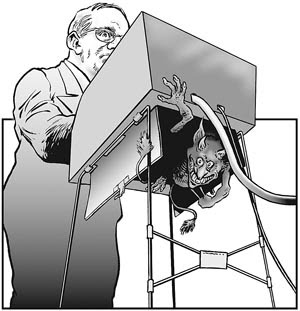
Illustration by Doug Potter / The Austin Chronicle.

Hacking the vote:
Will Diebold steal the Senate?

As Bay Staters vote to fill Ted Kennedy’s Senate seat, most will be marking scantron ballots to be run through easily hackable electronic counters made by Diebold/Premier.

By Bob Fitrakis and Harvey Wasserman / The Rag Blog / January 18, 2010

The same types of machines that helped put George W. Bush in the White House in 2000, and “reelect” him in 2004, may now decide who wins the all-important “60th Senate seat” in Massachusetts. The fate of health care and much much more hang in the balance.

As Bay Staters vote to fill Ted Kennedy’s Senate seat, most will be marking scantron ballots to be run through easily hackable electronic counters made by Diebold/Premier.

A paper ballot of sorts does come through these machines. But the count they generated was seriously compromised in the Florida 2000 election that put George W. Bush in the White House. Similar machines played a critical role skewing the Ohio 2004 vote count to fraudulently reelect him.

In 2004 in Lucas County (Toledo) Ohio, incorrectly calibrated Diebold scantron machines left piles of uncounted ballots in heavily black districts in the inner city.

The Free Press also found that on optiscan machines in Miami County, Ohio the reported totals were significantly higher than the actual number of people who signed in to vote.

Ironically, the cheated candidate in that election was Massachusetts’ now-senior Senator John Kerry. Kerry is circulating email appeals warning that this election is a “jump ball” in which “shady right-wing organizations and out of state conservatives have descended upon the state in droves.”

But Kerry himself has infamously said nothing about the theft of the 2004 election. Neither he, the Democratic Party, nor the Obama Administration have done anything to change a system in which elections can be stolen by the very well-funded Republican-owned companies that make and administer the vote-counting machines. A dozen election protection groups from around the country have now issued an “orange alert” warning that the Massachusetts vote count could be “ripe for manipulation.”

Thus Kerry’s new colleague could be “selected” by the same means that deprived him of the White House.

According to Selectman Dan Keller of the western town of Wendell, some Massachusetts communities — including his — do have hand-counted paper ballots.

But most of the state relies on Diebold scantron counters which can be manipulated in numerous ways, including by switching calibrations and moving ballots from precinct-to-precinct or county-to-county, thus reversing intended votes from one candidate to another.

According to Brad Friedman at BradBlog LHS Associates sells and services many of the machines being used in this special election. Though the vast majority of elected officials in Massachusetts are Democrats, control of the vote count can be a grey area where voting machines are involved, especially given Sen. Kerry’s six-year stupor over the stolen 2004 election, a record of inaction amply matched by the Democratic Party and Obama Administration.

According to Friedman, LHS “has admitted to illegally tampering with memory cards during elections,” and has a Director of Sales and Marketing who has been “barred from Connecticut by their Secretary of State.”

The stakes in this election cannot be overstated. The deceased Senator Kennedy’s seat holds the key to a filibuster-breaking 60-seat Democratic majority in the Senate. State Attorney-General Martha Coakley, the Democratic candidate, is a supporter of the Obama health care plan, and an opponent of atomic power.

Coakley’s opponent, conservative Republican State Senator Scott Brown, has been running a Tea Bagger-style “populist” campaign.

Poll results differ substantially as the campaign winds down, but all show a close race. Thus Diebold, a thoroughly tainted player with deep Republican roots, could hold the key to the election by shifting the outcome in just a few key precincts.

After internet-based reporting broke the story of the stolen 2004 election, thousands of election-protection activists turned out to monitor the 2008 vote count. Among other things, careful exit polling was done to provide a close reality check on official vote counts. Poll monitors interviewed voters and carefully scrutinized voting procedures and how ballots were handled and counted.

Often overlooked are voter registration manipulations, which were used in Ohio and elsewhere to strip hundreds of thousands of voters of their right to cast a ballot. In Ohio alone, more than 300,000 legally registered voters were electronically removed from the voter rolls between the 2000 and 2004 elections. Most were in heavily Democratic urban areas.

In 2008, the Free Press found that the number of purged Ohio voters jumped to more than a million.

Thus the fact that the electoral apparatus in Massachusetts is apparently in the hands of Democrats may not matter. Private vendors like LHS and Diebold have the actual control over the final numbers.

In Massachusetts, a recount only occurs if the final results are less than half of one percent, and as election reform activist John Bonifaz points out, Massachusetts does not require random audits of the computerized vote counting machines to compare the computer results to the optical scan ballots marked by the voters. Bonifaz notes that in the Al Franken-Norm Coleman Minnesota Senate race in 2008, “everything was ultimately hand-counted.” The problem in Massachusetts hinges on whether the race is close enough to trigger a recount, which candidates can petition for within 30 days.

Exit polls remain the gold standard for election integrity throughout the democratic world. But in Ohio in 2004, the exit polls indicated that the election results were reversed and that Kerry actually won. Jonathan Simon, election integrity expert, points out that the exit polls in 2008 in Minnesota “had Franken winning by 10%! This is a huge disparity, not remotely reflected by the recount.”

“Could the exit poll have been that badly off? Or could a large number of ballots, 200,000 or so, have been swapped out before the recount? Here is where the chain of custody, or lack thereof, comes in. These ballots were not exactly under heavy surveillance during the month-long period between election day and recount completion,” Simon said.

What will matter in Massachusetts is how thoroughly election-protection advocates are able to scrutinize voter certification, access, and ballot security. Billions of dollars — and much more — are riding on the outcome of this election. Those who believe it cannot or would not be stolen are simply in denial.

Given the Democratic party’s astonishing lack of leadership on so many issues, it is entirely possible that Scott Brown could legitimately beat Martha Coakley in this election.

But it is also possible that the outcome could be manipulated by the companies in control of the registration rolls and vote counts. It will be up to citizen election protection activists to make sure that doesn’t happen yet again.

[Bob Fitrakis and Harvey Wasserman broke many of the major stories surrounding the theft of the 2004 election, and have co-authored four books on election protection, which appear at www.freepress.org, where they are publisher and senior editor, and where this story also appears.]

The Rag Blog

Posted in Rag Bloggers | Tagged , , , , , , , , , , | 4 Comments

Texas Songwriter Vince Bell : One Man’s Music

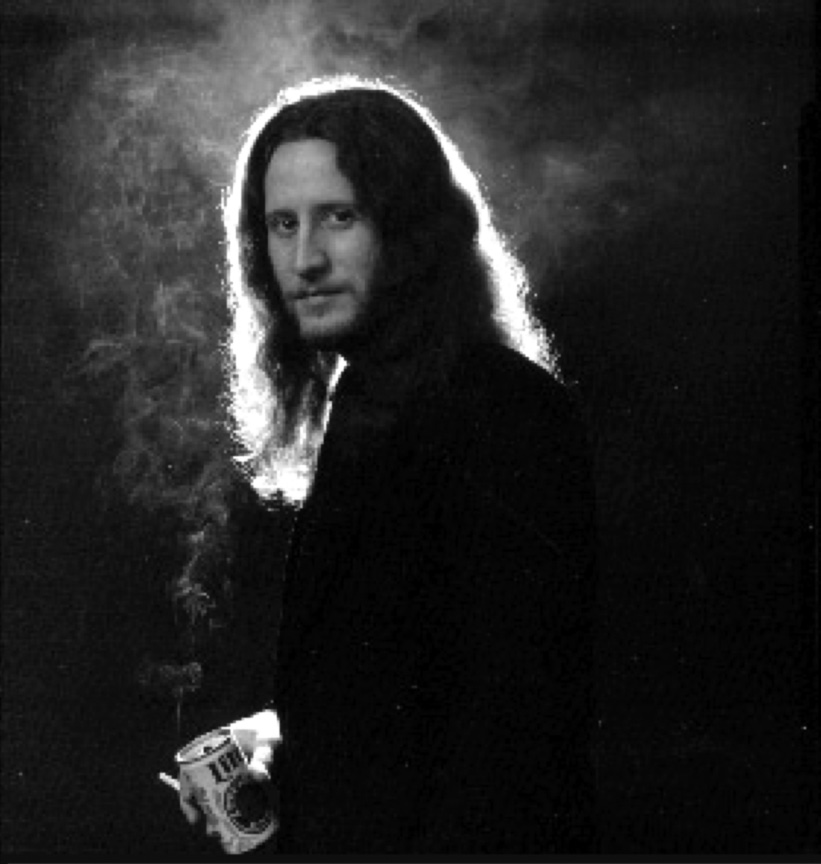
Vince Bell. Photo by David Byboth.

One Man’s Music:
Three-Day Ride to the Kitchen

By Vince Bell / The Rag Blog / January 18, 2010

Legendary Texas singer/songwriter Vince Bell will be Thorne Dreyer’s guest on Rag Radio, Tuesday, January 12, 2-3 p.m. CDT, on KOOP 91.7 FM in Austin. For those outside the listening area, go here to stream the show.

[The following is Chapter IX of One Man’s Music: The Life and Times of Texas Songwriter Vince Bell, by Vince Bell, published April 2009 by the University of North Texas Press as the third in the North Texas Lives of Musicians Series, following biographies of Townes Van Zandt and Blaze Foley.]

In late 1976 I decided on a move to Austin to work as a singer/songwriter for Moon Hill Management. It was just in time for the Progressive Country days, and I was booked all over Texas doing half-music, half-comedy shows wherever they would pay me. It seemed my songs could keep me in places I could barely negotiate on my own. With my unsophisticated voice like a high-school quarterback, every little bit helped. But after enough years of choir-boy vocals, Bob Dylan taught us in the ’60s that the voice didn’t have to matter as much as the message did.

Craig Hillis from Moon Hill picked me up outside the Greyhound bus station the day I moved to that capital town. With me was my bag with everything I had in the world. Right beside my bag was the guitar in the case with the grommets missing, the alligator linen covering all but gone. Craig liked the songs he had heard on the confusion of tapes made in the cabin off Lake Tahoe and was impressed when he saw the hard-livin’ acoustic come out of the frayed case. We became the closest of friends. After sleeping on a couple of couches, I rented a two-room grandmother house behind a funeral home on North Lamar. I was across the road from another popular radio station, KOKE, and no more than a couple of blocks from Moon Hill.

The routine each day was to walk or bike to the booking agent. I’d stand around, cup of coffee in hand, with road managers of several other acts and other artists funneling into meetings with the business manager, Larry Watkins, or the publisher, Tom White. My goal was always to find work. Sometimes if you didn’t squeak like a rusty gate, you didn’t work like a musician.

I had seen plenty of my home state on my own, but I probably saw more of Texas during the early Austin years than I ever cared to know was there. Some of it was in Louisiana, Arkansas, and Colorado. With nothing but me and the six-string, like sacrificial lambs, we would warm up for bands at the 500- to 1,500-seat concerts, then traipse off and do our own nights at smaller clubs.

I was billed at the Armadillo World Headquarters and all of the joints in the Austin and Houston areas at one time or another, and in clubs named Steamboat Springs in multiple locations, to Liberty Lunch and Gruene Hall. I was booked more than once at the Austin Opera House, the Texas Opry House, Hofheinz Pavilion, Auditorium Shores, the Special Events Center, Cullen Auditorium, Liberty Hall, and at 110-degree summer outdoor shows at racetracks all over the state from Fredericksburg to Nacogdoches. I performed more times than I can recall in Dallas and San Antonio. Was born in the one city and never had one good gig in the other until the next century.

It was always such a challenge to show up before the big, seven-piece band that was the main bill and duke it out with a front row filled with impatient entertainment shoppers. They never wanted anything to do with the opener because the opener was a no-name and probably wasn’t any good anyway. Nor did they care to wager their cover charge to find out. Nothing between me and that brain trust but six strings on a wooden box. Now that’s swingin’ without a net. I’d usually wax like a romantic about things I had no business trying to wax about in the first place. Live and learn.

This is where the comedy part of a one-man, one-guitar show could save your dusty butt. Steven Fromholz and I spent a decade together pulling that off in the least amusing places, like a tacky Central Texas fern bar for trendy chicks in a shopping mall next to a department store near an army base. Did I forget anything?

Lyle Lovett, Steven Fromholz, Vince Bell, and James Gilmer at Feb. 28, 2000, rehearsal for Austin City Limits. Photo from stevenfromholz.com.

“Frogboltz,” as we all called him in lighter moments, was my closest friend in music during these late ’70s Austin years. Steven was already a legend, and I was very proud when we were first booked together. As a writer of music and lyrics he was one of the finest. We became very compatible on and off stage. We shared meals, we shared tequila, we shared friends, and sometimes we even drove to the dates together, laughing and burning along the way. I babysat his daughter Felicity when I needed a couple of extra bucks. Steven was urbane, very eloquent, graceful, and capable as a performer. Out on the mirage of the mesquite plains there was no one bigger-hearted.

“It was the ‘Great Progressive Country Scare’ of the mid-’70s,” says Steven,

“where the hippie met the redneck over a cold beer with a joint. That was the fan base we played to. You took those long-haired hippie weirdos, and you had the rednecks, and they got together—they all liked Willie Nelson and they all liked to drink a cold beer—and you ended up with a bunch of great big, broad-shouldered, long-haired, kick-ass hippies.

“We were on the road all the time, playing music, drinking whiskey, and smoking pot. I had had a hit with my song ‘I’d Have to Be Crazy’ on Willie’s album and it was rockin’ and rollin.’ When I wasn’t out playing with the band, I did a lot of work with Vince, all over Texas, because I really loved his music. We were young—hell, I was barely 30, and Vince was 26, 27. We all wanted to play, and we played everything we knew and made up shit, too. As Willie said, ‘If we hadn’t been able to play music, we’d all be stealing cars, all be hoodlums in jail. We’re all too lazy to work.’

“Moon Hill was managing everyone in town. They had me under contract, Michael Murphy, Asleep at the Wheel. They put Vince and me together on dates all over the circuit: Austin, Houston, the Pink Flamingo in Wichita Falls, The Irish Pub in Pueblo, Colorado, the old Poor David’s in Dallas. Those were the halcyon days, and it didn’t get any better than Poor David’s. Wall-to-wall people. Wall-to-wall women, what a view—God almighty! You couldn’t move in the room, people were sitting on the floor. Smokey. And we’d just kill them. Me and VB would just kill them. We used to tear that place down.

“We made some great music, too. One of the best songs I’ve ever heard is Vince’s ‘Sun & Moon & Stars.’ We used to get together, usually drunker than hell in the motel room after the gig, and I’d make Vince sing that song. It’s what friends are all about, and it’s said so well in that song.”

Vince, in the day.

Those were years when the weekend days were Monday and Tuesday ’cause we were probably playing and then driving the old pickup back from somewhere between Shreveport and El Paso on Friday, Saturday, and Sunday. Those musicians’ off-days were the laundry days, when Steven and I would sit against the same dirty window in the same rundown, un-air-conditioned Laundromat at 29th and Guadalupe in Austin. Fromholz could really fold those contour sheets.

Then there were the better times. Prior to my own gigs in Evergreen, Winter Park, and Steamboat Springs, Colorado, Delbert McClinton and I did a date at a joint called The Hungry Farmer in Boulder. I was the solo opener for him and his band. The next morning he invited me to his motel room to play a few of my songs. While I tuned to an A440 tuning fork, we talked like Texans far from home. He confided that he once showed “one a’ them Beatles” some licks on the harmonica. I was fascinated to hear him. No doubt, that was Lennon.

I played him a song. At least a little surprised, he said, “Just a minute, I got to go put a shirt on.”

What a great guy, I thought.

So I played him another.

Vince Bell’s songs have been performed and recorded by such diverse talents as Little Feat, Lyle Lovett and Nanci Griffith, and he has had a ballet set to his work. His song “Sun & Moon & Stars” is featured on Lyle Lovett’s new CD, Natural Forces.

Vince has released five critically acclaimed CDs, and is the author of an autobiography, One Man’s Music: The Life and Times of Texas Songwriter Vince Bell, chronicling his amazing comeback after a devastating car accident in 1982. From the autobiography he wrote a 50-minute, one-man play — One Man’s Music: A Monologue with Song — which includes six of his songs. Simultaneously he released his fifth CD, One Man’s Music: The Songs.

Vince Bell returns to Austin to perform his new play four times as part of the FronteraFest 2010 Long Fringe at the Blue Theater at 916 Springdale in East Austin. Performances are as follows:

Saturday, January 23 at 8:00 p.m.
Monday, January 25 at 7:00 p.m.
Tuesday, January 26 at 9:00 p.m.
Saturday matinee, January 30 at 2:15 p.m.

For show time and ticket information, go to hydeparktheatre.org

The Rag Blog

Posted in Rag Bloggers | Tagged , , , , , , , | 1 Comment

Texas’ Dr. Death : Executing the Mentally Retarded

Daniel Plata, a mentally retarded criminal saved from execution in Texas, is shown in picture on a bookshelf at his home. Photo by Michael Stravato / The Texas Observer.

Cruel and unusual in Texas:
Executing the mentally retarded

‘When you have junk science in a case, it’s like pouring poison into a punch bowl,’ — Attorney Kathryn Kase

By Yana Kunichoff / January 18, 2010

Amy Goodman of Democracy Now! interviews The Texas Observer‘s Renée Feltz. See Video below.

An investigative report reveals that Texas continues to execute mentally retarded prisoners despite a U.S. Supreme Court ban. The state has been basing its decisions on unreliable mental health testimony by a court-appointed psychologist.

In a series of articles in The Texas Observer, Renée Feltz reported the mistakes made by George Denkowski in psychiatric evaluations of a number of patients — and how catching a similar mistake saved the life of Daniel Plata.

“To those of us familiar with the right way to do these things,” said Jerome Brown, a Texas psychologist, “it is very apparent that what he’s doing is wrong.” Brown was referring to the medical evaluations Denkowski did of inmates deemed potentially mentally ill.

In a Supreme Court ruling in 2002, Atkins v. Virginia, it was decided that “executions of mentally retarded criminals are cruel and unusual.” The impetus behind this decision was that, although mentally disabled people can distinguish between right and wrong, their ability to control impulsive behavior or learn from mistakes was curtailed.

To decide whether a defendant suffered from a severe enough level of mental disability, the court ruled that persons with an IQ score of 70 or below could legally be considered to have below-average intellectual abilities and “deficits in adaptive behavior” since before the age of 18. This ruling exempted Daryl Atkins, the defendant, from death row.

One of the men focused on in the investigative series, Daniel Plata, was saved from Death Row by an investigation into methods used by the prosecution’s appointed psychologist, George Denkowski, to determine whether Plata was mentally capable and it was therefore legal to execute him.

Plata, whose mother said his brain had been denied oxygen at birth because of an umbilical cord tied around his neck that led a nurse to assume he would have cognitive difficulties, was interviewed by Denkowski, who then concluded that Plata had a score of 77, high enough to be deemed sufficiently psychologically aware to execute.

However, the article points to Denkowski making assumptions during the test (specifically of the English-language ability of Plata, a Mexican immigrant), making non-procedural changes such as rewording test questions he asked the defendant, and giving Plata more points than some answers merited. Each of the sessions was videotaped by Plata’s attorney.

Denkowski has thus far testified in nearly two-thirds of the appeals related to a death row prisoner’s mental ability in Texas — 29 cases. He found the defendants mentally disabled only eight times.

Robert Morrow, an attorney familiar with Denkowski’s cases, said that he [Denkowski] had an “almost Dr. Death status” among defense lawyers, and “Denkowski pretty much thought that if you had engaged in criminal behavior you were not retarded.”

Though Denkowski concluded that Plata was not mentally retarded, a psychologist hired by Plata’s lawyer did find him to be, and after hearing the case U.S. District Court Judge Brock Ellis ruled that Plata is “a person with mild retardation” and should be removed from Death Row.

Not all the inmates interviewed in Texas’s system have been so lucky. Only 13 men have been removed from Death Row in Texas since 2002 because of their low mental development — 28 percent of cases appealed under the Atkins ruling, while the national rate is 40 percent.

“I suppose you could imagine that Texas Death Row inmates are smarter than everyone else,” said Sheri Lynn Johnson, a professor at Cornell Law School who co-directs its Death Penalty Project, “but I’d be surprised.”

An additional eight states have passed laws that make use of the clinical definition for mental retardation in the Atkins case — Texas has not been one of them. In 2001, the Texas legislature passed a law allowing life sentences for mentally retarded people who have committed capital crimes. However, Gov. Rick Perry did not allow the measure to pass, saying it amounted to a “backdoor attempt to ban the death penalty.”

Since Ellis’s decision to disregard Denkowski’s decision in Plata’s case, Jerome Brown, another Texas psychologist, filed a complaint with the Texas State Board of Examiners of Psychologists.

Brown, who worked with defendants in five cases where Denkowski worked for the prosecution, said the techniques used by Denkowski ultimately amounted to “essentially junk science. It is science that appears to be scientific, but it doesn’t have any background of validation to it.”

The state Board of Examiners of Psychologists recognized Brown’s complaint, and said that Denkowski had made “administration, scoring and mathematical errors” in three cases, including the Plata case. Denkowski has a hearing scheduled for February 16 in Austin, Texas, at which he risks losing his license.

The cases of Steven Butler and Joel Escobedo, inmates now on Death Row, have been put aside until the results of Denkowski’s hearing are known, and there are several other requests for appeals.

The Harris County District Attorney’s Office [said it] no longer works with Denkowski since his evaluation of Plata was overturned.

Plata’s lawyer, Kathryn Kase, said all of Denkowski’s cases should be reviewed. “When you have junk science in a case, it’s like pouring poison into a punch bowl,” she said. “You aren’t going to get the poison out. So you have to pour out the punch, clean the bowl, and start all over again.”

Source / truthout

  • See “Cracked: Despite a U.S. Supreme Court ban, Texas has continued to send mentally retarded criminals to death row,” By Renée Feltz / The Texas Observer / January 8, 2010
  • Go here for The Texas Observer’s interactive graphic featuring Dr. George Denkowski’s 29 “Atkins” cases.

Democracy Now!’s Amy Goodman interviews
The Texas Observer’s Renée Feltz

The Rag Blog

Posted in RagBlog | Tagged , , , , , | Leave a comment

Martin Luther King in the Age of Obama : Why We Can’t Wait

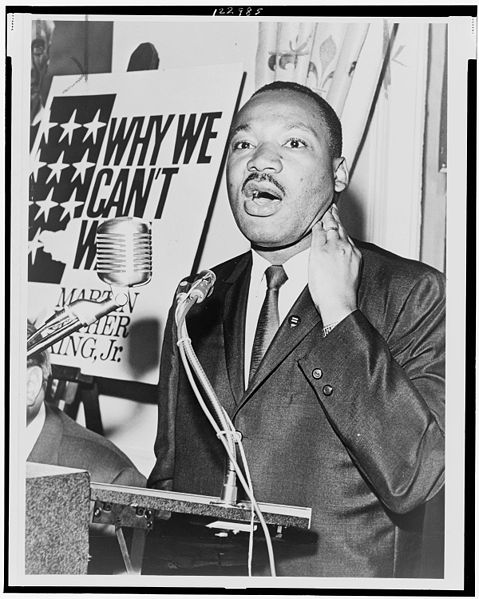
Martin Luther King, Jr., June 8, 1964. Photo by Walter Albertin / World Telegraph and Sun / Library of Congress / Wikimedia Commons.

Elections do not deliver social change:
Reading Dr. King in the Age of Obama

By Billy Wharton / The Rag Blog / January 18, 2010

Albert Boutwell’s election as Birmingham, Alabama’s mayor in 1963 might have signaled the end of the modern civil rights movement. As a moderate Democrat, Boutwell promised to temper the harsh repression unleashed by the city’s notorious chief of police and his mayoral opponent Eugene “Bull” Connor.

Mainstream leaders of the Black community were told to wait it out — let the storm pass and incremental changes could begin. Dr. Martin Luther King Jr. refused to wait. Instead, he launched Plan “C” (confrontation), a large-scale protest campaign that broke the back of Southern segregation.

Today, Barack Obama is held up as the logical outcome of the movement King led. Such a claim avoids a basic fact of American history. Elections do not deliver much in the way of social change. More often they provide sleeping pills — skillfully crafted illusions meant to de-mobilize, to dull the senses and to prevent serious demands for justice from emerging. King understood this process well.

One can assume that if King were faced with two active wars, 48 million people without health care and more than 20 million unemployed, he would be able to see through the illusions being offered at the top of the state. The good news is that a new movement for justice need not start from scratch — it can learn the lessons of history. The Civil Rights movement offers nearly all the instincts necessary for movement building — a skepticism about elections, an unquenchable desire for grassroots mobilization, and a firm conviction that the movement is operating on the side of justice.

King’s small essay entitled “New Day in Birmingham” should be seen as a blueprint to the pivotal Birmingham campaign. In it, he rails against the request by the white population to accept “polite segregation.” He views the election of Boutwell as less a sympathetic act by white voters, than an expression of how little they understood about the aspirations of the Black community.

When the hardcore segregationists dug in and filed a lawsuit to maintain themselves in office, even greater pressure was applied to the Black community to wait. The judicial process was then held up as the ultimate arbiter of justice. A simple formula was offered — the polite segregationists would prevail in court, Connor and his allies would be removed, and peace would be restored to Birmingham. According to mainstream commentators, all the established Black leaders needed to do was keep agitators like King out.

Instead of backtracking, King and the movement entered the city and launched 65 nightly meetings held at various churches in the Black community. Each was aimed at mobilizing the base of the community and exerting enough moral force to stiffen the will of local leaders. Freedom songs with provocative titles such as “Ain’t Gonna Let Nobody Turn Me ‘Round” captured “the soul of the movement.”

All along, King and others understood that, “we possessed the most formidable weapon of all — the conviction that we were right.” Mass meetings were the method to build what King called a “special army” of civil rights protesters armed with soul force not military force. Those unwilling or unable to participate in mass arrests still had a place in the movement, contributing to the organizational structure by answering a phone or running an errand. Community building and movement building were tightly linked.

Despite the energy generated by the mass meetings, King identified two challenges that threatened to stifle Plan C. “The Negro in Birmingham,” he argued, “had been skillfully brainwashed to the point where he accepted the white man’s theory that he, as a Negro, was inferior.”

The consciousness of inferiority bred a social paralysis fueled by fear. Authorities from Birmingham to Washington sensed this weakness and used it to market the idea that the proposed demonstrations were “ill-timed” and organized by outside agitators. Critics claimed to agree with the cause of civil rights, but to disagree with the tactics of this movement. This was a time, they proposed, for patient negotiations not impulsive escalation.

King cut through this Gordian knot with a simple, yet powerful argument. “It was ridiculous,” he wrote, “to speak of timing when the clock of history showed that the Negro had already suffered one hundred years of delay.” To the charge of being an outsider, he remarked that any American seeking to enhance the cause of freedom and justice ceased to be an interloper.

The pressure to abandon the mobilization, the precarious position of the hardcore segregationists, and the increasingly boisterous demands and bold acts from the Black community created a volatile situation. Small-scale sit-ins at white churches and segregated libraries began and a large march accompanied the opening of the voter registration drive.

On April 10, 1963, the final fuse was lit as the segregationists were granted an injunction to prevent the protests from going forward. The movement was faced with a difficult choice. Never before had they violated a court injunction, yet King knew that the segregationists had vowed to employ a “century of litigation” to force an end to the mobilizations. Things became even bleaker two days later as a court stripped the movement’s bondsman’s ability to issue bonds for bail. All bail would have to be paid in cash.

After another round of community consultations, King opted to escalate the campaign into its final phase. Connor responded by unleashing the police armed with dogs and fire hoses, to repress demonstrators, thus producing scenes of brutality that have come to define the Southern part of the Civil Rights movement.

King was arrested almost immediately and placed in solitary confinement for more than 24 hours. While in jail, King issued his “Letter from a Birmingham Jail,” now a seminal document in American history. On July 2, 1964, President Lyndon Baines Johnson signed the Civil Rights Act.

Such mighty historical moments were made possible by people “more concerned about reaching our righteous aims than about saving our skins.” No compromise would do, no election result could de-mobilize and no judicial decision could reverse the conviction that they, and not the segregationists or Northern liberals who preached patience, were operating in the name of justice on the right side of history.

Today, Americans suffering from the effects of a massive financial crisis would do well to familiarize themselves with the version of Dr. King that appears in the pages of “New Day in Birmingham.” This is no McDonalds “I Have a Dream” commercial. This is Martin Luther King Jr. as a militant, a self-described extremist for justice, and a brilliant activist dedicated to community building in the service of social change.

What this country needs most right now is a new “Plan C” that confronts the increasingly unbearable problems of lack of health care, homelessness and unemployment. The Civil Rights Movement is proof positive that no election or any judicial decision, no matter how slick the public relations scheme, can replace the powerful ability of regular people to create movements that change history and society for the better. Eventually, the time for waiting will end.

[Billy Wharton is the co-chair of the Socialist Party USA and the editor of The Socialist and the Socialist WebZine.]

The Rag Blog

Posted in Rag Bloggers | Tagged , , , , , , | Leave a comment

Willie Mitchell and Mary Daly : Partners in Demise

Above, Willie Mitchell with his axe and, below, Mary Daly with hers (a labrys, a traditional symbol of the Goddess).

Intertwined obit:
Soul man and radical feminist leave the stage

By Carl R. Hultberg / The Rag Blog / January 17, 2010

Life has a strange way of intertwining existences in ways that defy human reason. Like puns or anagrams that seem to reveal hidden meanings, passings away are also open to interpretation. Like the tea leaves, our leavings are also readable.

What I mean to say is that people die in pairs, creating accidental(?) marriages, pairings on the obituary page. Jacqueline Kennedy Onassis and George Balanchine. Farrah Fawcett and Michael Jackson. Despite all our efforts on our own behalf, dying, like jury duty, puts us back in the mix.

Who will we end up sitting next to on the bench outside St. Peter’s office in Heaven (or equivalent)? Even atheists and agnostics may have to admit to some degree of posthumous mortification looking back at their obits in the newspapers.

So who are the latest couple to have left together to go to tell their human stories to Whomever? None other than Willie Mitchell and Mary Daly. Who? Let’s just say this may be one of the oddest obit couples ever, or perhaps we are distilling ourselves somehow as Humanity.

Willie Mitchell was the trumpeter, bandleader and producer who brought us the third (and final) wave of sweet soul music from Memphis. As you probably know, Memphis sits at the top of the Mississippi Delta, the gateway from the Deep South to the North. The city that brought us Elvis (like Willie Mitchell from neighboring Mississippi), Sun Records (Elvis, Carl Perkins, Jerry Lee Lewis, Johnny Cash, Howling Wolf), Stax Records (Booker T & the MGs, Otis Redding, Isaac Hayes). Originally it was W.C. Handy, another trumpeter/bandleader who “discovered” the Blues in Memphis. That would have been about a hundred years ago.

Willie Mitchell had a sweet band but he was looking to break into record production. He found an awkward kid from Michigan who had a great voice but still hadn’t found his style. Al Green could sound like Marvin Gaye, or Wilson Pickett. Willie Mitchell’s advice was simple: try sounding like Al Green.

The result, “Let’s Stay Together” (from 1971) on Hi Records is perhaps the sweetest soul song ever laid down. Willie Mitchell continued as Al Green’s producer/mentor for years during the periods when Al (like Little Richard) switched from sacred to secular styles. Willie Mitchell produced sweet soul music after the assassination of Dr. Martin Luther King (also in Memphis).

That was a miracle.

His deathmate couldn’t have been more different. Mary Daly was the quintessential radical lesbian separatist. Instead of “Let’s Stay Together” her message was surely: men stay away. She was a white Jesuit theologian who, once she had been granted tenure at Boston College, defied the Catholic Church to create a woman-based Wicca movement within the university’s teaching environment. It took decades for the school to finally get rid of her.

By that time she had published many books in her own super creative woman language, an alternative to male dominant Indo-European usages. Words like “hag” and “crone” took on new meanings. You can be sure that if this had been the Middle Ages and not the 1960s, Mary Daly would have burned at the stake. Or maybe been dunked to death. Instead she was able to teach a separatist feminist course at a formerly all male seminary and totally exclude men from her classes.

Yes, this was one tough woman.

In some ways her life was reminiscent of that of Anne Lee, who created the Shaker Church in America as a feminist/separatist experiment in the 1780s. Ms. Lee was beaten to death by angry Massachusetts witch hunters but her movement flourished for almost 100 years.

Mary Daly lived to see her defiance of the Catholic Church and her open lesbianism flow into the mainsteam. Perhaps not a remnant of the original all-embracing matriarchy from the ancient past, more like another quasi-male intellectual academic bent on self-differentiation. Still, Mary Daly hit a note that resonated with many other women totally sick of the male world. May their Circle someday open up for all of us…

You’d have to say that Mary Daly and Willie Mitchell represented two totally honest aspects of our life. Hopefully as they journey together through eternity, born in the same year, leaving two days apart, forever wedded together, their spirits can find a way to reinspire us to do both things: stay together, and relearn how to truly respect women.

[Carl R. Hultberg’s grandfather, Rudi Blesh, was a noted jazz critic and music historian, and Carl was raised in that tradition. After spending many years as a music archivist and social activist in New York’s Greenwich Village, he now lives in an old abandoned foundry in Danbury, New Hampshire, where he runs the Ragtime Society.]

The Rag Blog

Posted in Rag Bloggers | Tagged , , , , , , , , , | 1 Comment

Larry Ray : Haiti’s Horror Hits Home


Disasters past and present:
Haiti’s horror hits home

By Larry Ray / The Rag Blog / January 17, 2010

GULFPORT, Mississippi — Many of my fading memories of destruction, death and total loss have come back into sharp focus as I watch the constant news reports from Haiti. The video of dazed, thirsty, injured, and frustrated disaster victims who have lost everything is still painfully familiar.

The photo above is not of the magnitude 7.3 earthquake damage in Haiti. It is a NOAA photo of my hometown on the Mississippi gulf coast taken just after hurricane Katrina slammed ashore almost five years ago pushing a 30 foot storm surge fron the Gulf of Mexico over our coastal communities. The tidal surge pushed back up into inland bays, rivers and bayous forcing water into houses up to their ceilings just a few blocks from my home. I was grateful to have only lost a side roof.

Along the beach front, homes and belongings, large buildings, automobiles, and those souls unable to escape the wind and rising water were smashed and broken apart in the powerful deep wind driven tidal swirl. The splintered debris washed inland or was sucked back out into the Mississippi Sound. Stark, bare foundations are all that remained of stately homes, churches and businesses for more than 50 miles along the coast. Only a few centuries-old Oak trees remained, still defiantly claiming their positions.

Haiti’s earthquake took 300 years to slowly build up sufficient energy for the fault zone beneath the island to finally vault violently upward. Mighty seismic ripples heaved up and down, racing outward with energy said to equal 35,000 atomic bombs. In a blink, structures in and around the capitol city of Port-au-Prince were leveled or perilously damaged.

Thousands died instantly, and untold thousands more were buried beneath impenetrable debris. As I write this it has been five days since the quake hit at about ten o’clock in the evening. The epicenter was beneath one of the island’s most populated areas.

While Haiti’s death and destruction happened in less than one minute, those of us who rode out Katrina in our homes were hammered for 11 hours with heavy rain and sustained winds reaching more than 140 miles an hour. Hurricane Katrina was the largest natural disaster in the history of the United States with damage estimates well in excess of $150 billion. At least 1,836 people lost their lives in the actual hurricane along the Mississippi gulf coast and in resulting floods in New Orleans from levee failures. Haiti’s death toll will reach the tens, perhaps hundreds of thousands.

While trying to compare the victims in Haiti with the American victims of Hurricane Katrina may seem a real stretch, there are, nonetheless, some valid commonalities. Regardless of skin color, rich or poor, educated or not, thirst is thirst and hunger is hunger. Broken bones and painful injuries feel the same in Haiti today as they felt here five years ago when roads were blocked and help had to be coordinated while we waited, doing the best we could do.

The desperation and suffering in New Orleans, where effective rescue and help was very slow in coming, was more like what we are seeing in Haiti today. Across New Orleans, survivors sought shade and drinkable water in the sweltering August heat for days on end. Many large residential sections of the city were flooded beneath a dark putrid swill that reached the rooftops and remained for days.

National news coverage quickly shifted from the much more extensive hurricane damage along the entire Mississippi Coastline to the crisis in New Orleans. Flooding in large areas of the bowl shaped city, below sea level, did not result directly from the hurricane, but from inadequate protective levees too long ignored by our Federal Corps of Engineers, and the politicians who approve and fund their projects. But the media suffered little deprivation. The undamaged French Quarter and Bourbon Street were open in a matter of days. There was no flooding or serious damage in the metro center of the city.

But after the dead are buried, debris is removed, and urgent aid is finally provided, there is a huge difference in long term recovery between Haiti and America.

A majority of Haitian citizens live on one dollar a day and governmental control was only recently becoming effective after decades of dictatorial rule and unchecked violence. There is no concept of FEMA in Haiti. Violence and sporadic looting has reportedly broken out in parts of Port-au-Prince.

People have not had food or water for almost five days. The dead are putrefying in the streets. Tons of food, water and medical aid from the USA and around the world are piling up at the only airport waiting for Haitian bureacrats, the UN, and many other countries to agree on an aid distribution plan. Desperation is spreading in the streets of Port-au-Prince.

We must remember that violence also broke out in New Orleans after several days when it was clear that no immediate help was coming. Lawlessness, frustration, hunger and opportunistic looting broke out. Shameless racial barriers went up with blacks seeking safety, food and water being turned back by white sheriff’s officers on the bridges crossing the Mississippi river over to the basically undamaged West Bank.

It was not a pretty picture. One Parish President near New Orleans was screaming and weeping on national TV because of the seeming total lack of coordinated federal assistance. Some New Orleans police officers helped themselves to several Cadillacs from a local dealership and did not return them for weeks till the cars were finally located and the cops identified. Haitian looting will not be surprising.

Then there are the political promises too often quickly forgotten after the debris is cleared away and the news media have left in their TV trucks. I can still see Jackson Square in the partially darkened New Orleans French Quarter all professionally illuminated under careful White House direction so George W. Bush could go on national television to make promises. He promised that government would “do whatever it takes” to help those in the Katrina disaster area completely recover assuring us he “would not forget you.”

Mr. Cheney walked the streets of Gulfport with local officials nodding and promising. Ultimately, government FEMA money did help many individuals here. But the inflexible, poorly managed bureaucracy allowed wide scale fraud to flourish while red tape prevented many from getting needed help.

Basically, strong local leadership has led us to a notable recovery in our major coastal cities. Mr. Bush’s well staged promises have had little to do with our hard earned recovery so far. The $11.3 trillion national debt he left us only makes things more difficult for everyone.

Truth is that many smaller towns up the coast west of here are still begging for a grocery store. Whole sewer and water systems are being rebuilt, keeping streets torn up. Detours are legion. Doctors and many other professionals who left have not returned. But a new kind of life goes on.

New Orleans, however, still has huge problems with entire sections of the city nothing but block after block of sagging mildew and varmint infested homes surrounded by overgrown weeds. The leadership vacuum there is palpable. What happened to millions of recovery dollars for Louisiana and particularly New Orleans remains a mystery.

So now try to imagine the total rebuilding that Haiti faces. The horrible irony is that Haiti was finally enjoying an end to violence through effective police protection and people were united for the first time in recent memory. Schools had opened, street markets were busy, and long-shuttered clothing manufacturing factories had just opened again. Name brand companies from around the globe were visiting almost daily to take advantage of Haiti’s well trained sewing and fabric cutting work force. Then in an instant it was all gone.

The world is being extremely generous with millions of dollars pouring in daily to help Haiti. Promises to rebuild the country are coming from many nations. Can the downtrodden Haitians, raised in a failed state, surrounded for decades with the cruel realities of oppression and poverty believe these promises? It is difficult for the very poor to do. But this could be the rebirth of a vital Haiti if strong leadership and close supervision insure all the promises are kept.

My next article will visit what has happened to the promises and money designated for the poor here in Mississippi after Katrina. It is not a nice story.

[Retired journalist Larry Ray is a Texas native and former Austin television news anchor. He also posts at The iHandbill.]

The Rag Blog

Posted in Rag Bloggers | Tagged , , , , , , | Leave a comment

Honduras : Micheletti Becoming ‘Second Pinochet’?

‘Congressman for Life’ Roberto Micheletti. Art by Brazilian cartoonist Carlos Latuff / IndyBay.

Honduran coup consolidating power:
Micheletti named ‘Congressman for Life’

By David Holmes Morris / The Rag Blog / January 17, 2010

As violent repression continues, the powers that be in Honduras have taken symbolic and substantive steps to consolidate the coup d’état that deposed President Manuel Zelaya last June 28.

The unicameral legislature has voted to name de facto president Roberto Micheletti congressman for life, thus granting him immunity forever from prosecution for crimes committed in connection with the coup. Micheletti was president of the legislature at the time that body named him to replace Zelaya in an act defenders of the coup insist was a constitutional presidential succession.

Bolivian President Evo Morales said the Honduran legislature has thus made Micheletti a “second Pinochet.” Augusto Pinochet, the bloody dictator who ruled Chile after the coup of 1973, had himself declared “senator for life” in 1989.

The legislature left consideration of the question of a general amnesty for actions taken in relation to the coup to the incoming government, thus avoiding the question of legal action against Zelaya for his alleged crimes, which the golpistas claim as justification for deposing him.

Meanwhile, the Honduran National Association of Industrialists held a private ceremony recently at the home of wealthy businessman Adolfo Facussé to honor Micheletti as a “true patriot” and “the first hero of Honduras in the 21st century.” As he accepted the plaque the group presented him, Micheletti told the audience, which included General Romeo Vásquez Velásquez and other military commanders, that he had never doubted he had the support of the armed forces and the police but “most importantly, God was with us.”

Vásquez Velásquez, head of the joint chiefs of staff, led the group of soldiers that abducted Zelaya on June 28 and delivered him to the airplane that flew him to Costa Rica. And Adolfo Facussé is widely thought to have instigated the coup and to have helped finance it. He and other members of the Honduran oligarchy are reported to have distributed sizeable cash payments to military commanders and other government officials immediately before Zelaya was kidnapped.

The legislature has further guaranteed Micheletti’s safety by providing personal body guards from the armed forces or the national police or, if government personnel become unavailable, from private security firms, for the rest of his life. Micheletti’s family will also have body guards. Some 50 other members of the golpista government will be given similar protection, including the attorney general, the six top commanding officers of the armed forces, 17 ministers of the Micheletti regime and their 17 vice-ministers, and the president of the supreme court, the body that provided the legal pretext for the coup.

Despite pressure from inside Honduras and outside the country, Micheletti has refused to relinquish office until January 27, when the legitimate president’s term officially ends and President-elect Porfirio Lobo takes office. In the meantime, Manuel Zelaya, the constitutionally elected president, remains in the Brazilian embassy, where he has been in refuge since entering the country secretly last September. Zelaya has rejected offers of political asylum, insisting he be treated as the legitimate head of the government.

The United States, Costa Rica, Colombia, Panama and Peru are the only countries in the world so far to pledge to recognize the Lobo presidency as legitimate.

In San Pedro Sula, the country’s second largest city, a new street leading to a branch of the National Autonomous University has been named Roberto Micheletti Boulevard.

In other actions, the legislature has voted to withdraw the country from the Alternativa Bolivariana de las Américas (ALBA – The Bolivarian Alternative for the Americas), proponents of the move arguing that it violates the principles of self-determination and non-intervention. Honduras’s membership in the regional affiliation was proposed by Zelaya and was initially approved by the legislature, including then legislative president Roberto Micheletti, but was attacked by conservatives adamantly opposed to the leftist governments of Latin America making up ALBA and particularly to the Venezuelan government and President Hugo Chávez, bête noire of the Honduran right. Membership in ALBA was one of the factors that brought about the coup.

Tiempo, the only mainstream newspaper in the country opposed to the golpista government, says withdrawal from ALBA will cost the country 100 million dollars in bonds purchased by Venezuela from the Honduran National Bank of Agricultural Development, 100 tractors, money to teach literacy, technical support for development of a government television channel, scholarships for medical training and funds to establish enterprises to produce generic drug.

And the minimum wage for Honduran workers, another sore point for the right, appears likely to remain at the level established in January 2009 when a 60 percent increase sponsored by Zelaya took effect, at 5,500 lempiras a month, about 290 U.S. dollars, for urban workers, and 4,055 lempiras, or $215.00 , for rural workers. After negotiations between union leaders and business owners broke down last week, the final decision will be left to the incoming president, Porfirio Lobo, who is more likely to decree a reduction than an increase. The unions had initially proposed a 30 percent increase.

[San Antonio native David Holmes Morris is an army veteran, a language major, a retired printer, a sometime journalist, and a gay liberationist.]

The Rag Blog

Posted in Rag Bloggers | Tagged , , , , , , | 3 Comments

Rag Blog Scoop about ‘Cognitive Infiltration’ Stirs up Internet Storm

Marc Estrin exhibits the tag line to his exclusive Rag Blog article about Obama advisor Cass Sunstein that has received much attention in the blogosphere.

Estrin’s exclusive about Obama confidant
Triggers alarm about controversial scheme

By Thorne Dreyer / The Rag Blog / January 16, 2010

The Rag Blog broke a story on January 11 entitled “Got Fascism?: Obama Advisor Promotes ‘Cognitive Infiltration’” that has stirred up an internet storm.

The article, written for The Rag Blog by novelist Marc Estrin, reveals a previously unreported and highly controversial strategy for fighting dissension and “extremism” — especially targeted at those adhering to “conspiracy” theories — originated by Obama appointee and long-time Obama friend and colleague Cass Sunstein in a 2008 scholarly journal.

The material published in The Rag Blog was in turn covered by Daniel Tencer at The Raw Story on January 13. It was followed up by Glenn Greenwald in an extensive article published by Salon.com entitled “Obama confidant’s spine-chilling proposal,” that has been updated several times since and even received a response from Paul Krugman. Greenwald’s Salon.com article was also distributed by CommonDreams.

Both Tencer and Greenwald credited The Rag Blog and Marc Estrin with breaking the story. Marc Estrin’s original article has been reposted extensively on domestic and international websites, and The Rag Blog has received thousands of referral hits from the Raw Story, Salon.com, and CommonDreams postings and from the republishing of our original story around the internet.

Visits to The Rag Blog have come from links placed on a wide variety of sites and from across the political spectrum, but the story has especially caught on with conspiracy buffs and among some on the ultra-right.

(In December The Rag Blog published an article about a Supreme Court decision that let stand a lower court ruling declaring torture, in the words of the author, “an ordinary, expected consequence of military detention” — a ruling that in effect denied even suspected enemy combatants the protection that comes with being classified a “legal entity.” The Rag Blog posting of that article (a story that did not originate with us) also drew extensive attention including a front page link on The Raw Story — much of it again from the conspiracy fringe — and resulted in thousands of visits to The Rag Blog.)

In his original Rag Blog feature Estrin wrote:

In a recent scholarly article, [Cass Sunstein] and coauthor Adrian Vermeule take up the question of “Conspiracy Theories: Causes and Cures.” (J. Political Philosophy, 7 [2009], pp. 202-227). This is a man with the president’s ear. This is a man who would process information and regulate things. What does he here propose?

[W]e suggest a distinctive tactic for breaking up the hard core of extremists who supply conspiracy theories: cognitive infiltration of extremist groups, whereby government agents or their allies (acting either virtually or in real space, and either openly or anonymously) will undermine the crippled epistemology of believers by planting doubts about the theories and stylized facts that circulate within such groups, thereby introducing beneficial cognitive diversity. (Page 219.)

Estrin reflected:

We expect such tactics from undercover cops, or FBI. There the agents are called “provocateurs” — even if only “cognitive.” One learns to smell or deal with them in a group, or recognize trolling online. But even suspicion or partial exposure can “sow uncertainty and distrust within conspiratorial groups [now conflated with conspiracy theory discussion groups] and among their members,” and “raise the costs of organization and communication” — which Sunstein applauds as “desirable.” “[N]ew recruits will be suspect and participants in the group’s virtual networks will doubt each other’s bona fides.” (p.225).

Glenn Greenwald wrote for Salon.com:

Cass Sunstein has long been one of Barack Obama’s closest confidants. Often mentioned as a likely Obama nominee to the Supreme Court, Sunstein is currently Obama’s head of the Office of Information and Regulatory Affairs where, among other things, he is responsible for “overseeing policies relating to privacy, information quality, and statistical programs.”

In 2008, while at Harvard Law School, Sunstein co-wrote a truly pernicious paper proposing that the U.S. Government employ teams of covert agents and pseudo-“independent” advocates to “cognitively infiltrate” online groups and websites — as well as other activist groups — which advocate views that Sunstein deems “false conspiracy theories” about the Government. This would be designed to increase citizens’ faith in government officials and undermine the credibility of conspiracists. The paper’s abstract can be read, and the full paper downloaded, here.

Sunstein advocates that the Government’s stealth infiltration should be accomplished by sending covert agents into “chat rooms, online social networks, or even real-space groups.” He also proposes that the Government make secret payments to so-called “independent” credible voices to bolster the Government’s messaging (on the ground that those who don’t believe government sources will be more inclined to listen to those who appear independent while secretly acting on behalf of the Government).

This program would target those advocating false “conspiracy theories,” which they define to mean: “an attempt to explain an event or practice by reference to the machinations of powerful people, who have also managed to conceal their role.” Sunstein’s 2008 paper was flagged by this blogger [The Rag Blog‘s Marc Estrin], and then amplified in an excellent report by Raw Story‘s Daniel Tencer…

And from Daniel Tencer at The Raw Story:

Sunstein’s article, published in the Journal of Political Philosphy in 2008 and recently uncovered by blogger Marc Estrin, states that “our primary claim is that conspiracy theories typically stem not from irrationality or mental illness of any kind but from a ‘crippled epistemology,’ in the form of a sharply limited number of (relevant) informational sources.”

By “crippled epistemology” Sunstein means that people who believe in conspiracy theories have a limited number of sources of information that they trust.

Therefore, Sunstein argued in the article, it would not work to simply refute the conspiracy theories in public — the very sources that conspiracy theorists believe would have to be infiltrated.

Sunstein, whose article focuses largely on the 9/11 conspiracy theories, suggests that the government “enlist nongovernmental officials in the effort to rebut the theories. It might ensure that credible independent experts offer the rebuttal, rather than government officials themselves. There is a tradeoff between credibility and control, however. The price of credibility is that government cannot be seen to control the independent experts.”

Sunstein argued that “government might undertake (legal) tactics for breaking up the tight cognitive clusters of extremist theories.” He suggested that “government agents (and their allies) might enter chat rooms, online social networks, or even real-space groups and attempt to undermine percolating conspiracy theories by raising doubts about their factual premises, causal logic or implications for political action.”

“We expect such tactics from undercover cops, or FBI,” Estrin writes at the Rag Blog, expressing surprise that “a high-level presidential advisor” would support such a strategy.

Estrin notes that Sunstein advocates in his article for the infiltration of “extremist” groups so that it undermines the groups’ confidence to the extent that “new recruits will be suspect and participants in the group’s virtual networks will doubt each other’s bona fides.”

Sunstein has been the target of numerous “conspiracy theories” himself, mostly from the right wing political echo chamber, with conservative talking heads claiming he favors enacting “a second Bill of Rights” that would do away with the Second Amendment. Sunstein’s recent book, On Rumors: How Falsehoods Spread, Why We Believe Them, What Can Be Done, was criticized by some on the right as “a blueprint for online censorship.”

Sunstein “wants to hold blogs and web hosting services accountable for the remarks of commenters on websites while altering libel laws to make it easier to sue for spreading ‘rumors,'” wrote Ed Lasky at American Thinker.

[Versions of The Rag Blog‘s story about Cass Sunstein are also up on Daily Kos, OpEd News, and Information Clearing House, along with numerous other blogs and news aggregators.]

[Thorne Dreyer is editor of The Rag Blog.]

The Rag Blog

Posted in Rag Bloggers | Tagged , , , , , , , , , , , , | 5 Comments

Marc Estrin : GREED — A Bedtime Story


GREED — A Bedtime Story

By Marc Estrin / The Rag Blog / January 26, 2010

I won’t bore or appall you with the toxic sludge spewing out of the mouths of our CEOs justifying — sans apology — their behaviors, salaries and bonuses. Especially during this week of Haitian horrors.

I will, however, offer you a bedtime story that relates to both. This, a chapter from an unpublished novel, When the Gods Come Home to Roost. George tells it to Demi’s 10-year old daughter, Zoe:

“Zoe, Zoe, puddin an pie,
Tonight, a story that will make you cry…
And though you may eat God knows what
Never again will you eat your snot.”

“I don’t eat my snot, you big bugboo.”
“Oh yes, you do. I saw you. And I saw you pick your head and eat it.”
“Get out.”
“You looked at it, and popped it in your mouth.”
“Get out. Ma, he’s disgusting. Find another one.”
“They’re too hard to come by,” Demi said, and kissed George on the ear. ” Into bed, and the big bad man will tell you a story. I’ll be up as soon as I finish the dishes.”

“Once upon a time, there was a mighty king who scorned the gods. His name was Erysichthon.”
“Erysickthon?”
“You got it.”
“I’ll call him Sickie.”
“And a sickie he was, no tree-hugger he. Sickie once went wild in a sacred grove belonging to Demeter — slashing all the trees with his sword, wounding each of them, lopping off their branches.”
“Why?”
“Good question. Because he was a king and could do what he liked?”
“Because he was a bully,” I think. “The trees couldn’t fight back.”
“Well, we’ll just see about that,” said George. “So he whacked and whacked until he came to a towering oak, centuries old, hung with messages and garlands, the centerpiece of many a dance. It would take a dozen people, holding hands, to circle it.
“But did Sickie care? He ordered his slaves to chop it down, to fell the sacred tree. Not one would do it. So he grabbed the axe himself, raised it up and screamed, ‘This tree may be the goddess’s. This tree may be Demeter herself — too bad!’ and his axe bit hard into the tree’s great body, and it trembled and groaned, and its leaves grew pale, and it started to bleed — red blood.”
“Do trees have blood?”
“Not most of them — and like you, everybody was stunned. Justus, his most beloved servant tried to stop him. His head rolled at Sickie’s feet, and bumped up against the tree. As the murderer turned back to the trunk a voice came from deep in the wood. ‘Hear me now in this hour of my death, Erysichthon, hear me well: You will be punished as no man has ever been.’
“And the oak tree fell, slowly, its huge canopy laying low the trees around. Then all the spirits of the forest went mourning to Demeter, mourning and complaining, complaining and demanding revenge — the monster’s death.
“The lovely goddess nodded, and her nodding caused the fields of grain to tremble. A simple death was too kind an end to such cruel arrogance. Goddess of abundance, she would strangle him in threads through her antipode — the tortured goddess Famine.”
“What’s that — antipode? Like her opposite?”
“You got it. So off Demeter flew on wingèd dragons, over the bleak Caucasus mountains, to the outer rim of icy Scythia, a dismal land where nothing grows, a land of pallid cold and fear. She looked for Famine, her negation, and found her in a stony field, digging her nails into the scrawny grass, and gnawing at its roots. Her hair was matted, her face was pale, her eyes were hollow. A living skeleton she was, with swollen joints and leprous skin.
“’Famine,’ she called, keeping her distance, ‘I must ask of you a favor. Would you be warmed for one night in a royal bed?’ Famine hungrily agreed. She followed behind Demeter’s chariot, blown by the wind, and came to Erysichthon’s palace in the dead of night.
“There he was, asleep. She crawled into the bed, and wrapped her skeleton self around him. She breathed into his ears, her dry tongue searched out the wet corners of his mouth, she warmed her hands between his thighs, and planted hunger deep within him. Then back she flew from the land of harvests to her sterile, fruitless home.”
“This is a yucky story.”
“What do you think will happen?”
“He’ll be hungry all the time?”
“Let’s see. Can you guess what he started dreaming of?”
“Food.”
“Smart girl. He chewed on the air, and ground his teeth, and swallowed, swallowed…”
“Spit.”
“And when he awoke, he was hungrier than he’d ever been.”
“Famished.”
“Ravenous! Unquenchable hunger. He ordered banquets, and at the banquets he dreamed of banquets. He ate enough food to feed his whole town, his entire country, he spent his treasure, and sold off all he owned for food till there was only one thing left to sell.”
“What?”
“His daughter.”
“Why didn’t he eat her?”
“You don’t eat daughters. And she was a very special daughter. Mestra, she was called, and so beautiful that she was loved by the god Poseidon who gave her the gift of changing shape at will. What a business they had — a con game. Sickie would sell her as a slave, and she would turn into a fishing girl. ‘Where’s my slave?’ the sucker would ask. ‘I paid good money for her, and there’s no one here but this fishing girl.’ And then the fishing girl would be sold to another rich chump, and all there was was a milkmaid, or a cow, or a bird.”
“Et cetera, et cetera…”
“You got it, Zoekins. A good scheme, huh? More food for her father — till finally there was no more.”
“Did he starve?”
“Not exactly. He tore apart his own body with his sharp teeth, and ate his shrinking self alive.”
“Did he eat his teeth?”
“No. The teeth were all that were left.”
“Were the teeth hungry?”
“No, they don’t have stomachs.”
“Oh.”
“What do you think the moral of this story is?”
“Don’t eat yourself up.”
“George,” Demi asked, “Why do you tell such stories?” She was standing in the doorway.
“I’m attending to her education.”

NPR reports that Goldman Sachs, Morgan Stanley and JPMorgan Chase combined have set aside $47 billion for bonuses. Haiti’s entire GDP is $7 billion.

The Rag Blog

Posted in Rag Bloggers | Tagged , , , , , | Leave a comment

Texas : Rick Perry Throws Kids Under the (School) Bus

Image from ConnectAmarillo.

Governor Perry ignores student needs:
Turns down $700 mission in fed funds

Among the Republican leadership in Texas, politics is much more important than educating children or solving social problems.

By Ted McLaughlin / The Rag Blog / January 16, 2010

Governor Rick Perry and the Texas State Board of Education can brag all they want to about how wonderful Texas schools are, but there are a couple of statistics that show what a big lie they are telling. First, Texas ranks near the bottom of all the states in funding its public education.

The second statistic shows the result of that underfunding. Texas schools only graduate 65.3% of high school students. That’s right. Of all the students that enter a Texas high school, more than a third of them will not graduate. This means Texas is dumping hundreds of thousands of uneducated (or minimally educated) students on society every year. This has to have a deleterious effect on many social problems like crime, poverty, unemployment, etc.

But among the Republican leadership in Texas, politics is much more important than educating children or solving social problems. Consider the purely political move made by the governor this last week (he is up for re-election this year and has a strong opponent in the Republican primary). In a move designed to appeal to his ultra-right-wing-teabagger base, Gov. Perry has turned down $700 million dollars from the federal government for Texas schools.

That money would have been Texas’ share of the $4.35 billion Race To The Top funds provided by the federal government to improve schools nationwide. (Alaska has also refused to apply for their share of the funds.) Perry said the funding program “smacks of a federal takeover of our public schools” because it would mean Texas would have to adopt federal standards for schools.

This, of course, would appeal to the nutty teabaggers who make up a majority of the Texas Republican Party. These people oppose all federal government programs except for the military — they do love their obscene little wars. So to get the votes of these nuts, Perry has shown he is willing to throw Texas school children under the proverbial bus.

Even more shocking is the fact that the Republican-dominated State Board of Education supports Perry’s political move in rejecting the $700 million. These board members, who are tasked with providing Texas children with the best possible education, are also willing to put their personal politics above helping the school children of the state.

The State Board of Education has now passed a resolution supporting Gov. Perry which says, “The State Board of Education opposes any effort to implement national standards and national tests and believes the authority to determine what Texas students will be taught in Texas public schools should reside with the State Board of Education.”

It is ridiculous to think that Texas is afraid of having to meet national school standards — standards that will be met in 48 other states. We should not be afraid to meet these standards because we should have already adopted standards that exceed those national standards. But we haven’t, and it shows in our schools.

The board members are afraid that those standards would prohibit their efforts to inject their religious and political beliefs into the school curriculum. The board is currently only one vote away from requiring the teaching of creationism in science classes, and they hope to get that vote in the next election. Science barely won the last skirmish, but the battle is far from over here in Texas.

Currently, the board is in the process of trying to install a revisionist view of history into the school curriculum. They want to make heros out of zeros such as “Tail Gunner” Joe McCarthy, anti-feminist Phyllis Schlafly and ethically-challenged ex-Speaker Newt Gingrich, while minimizing the contributions of true heroes like Cesar Chavez. [See “Textbooks in Texas: Rehabilitating Joe McCarthy?” on The Rag Blog.]

With people like Gov. Perry and the current State Board of Education in charge, is it any wonder that Texas schools are in trouble?

[Rag Blog contributor Ted McLaughlin also posts at jobsanger.]

The Rag Blog

Posted in Rag Bloggers | Tagged , , , , , , | Leave a comment

Texas : Rick Perry Throws Kids Under the (School) Bus

Image from ConnectAmarillo.

Governor Perry ignores student needs:
Turns down $700 million in fed education funds

Among the Republican leadership in Texas, politics is much more important than educating children or solving social problems.

By Ted McLaughlin / The Rag Blog / January 16, 2010

Governor Rick Perry and the Texas State Board of Education can brag all they want to about how wonderful Texas schools are, but there are a couple of statistics that show what a big lie they are telling. First, Texas ranks near the bottom of all the states in funding its public education.

The second statistic shows the result of that underfunding. Texas schools only graduate 65.3% of high school students. That’s right. Of all the students that enter a Texas high school, more than a third of them will not graduate. This means Texas is dumping hundreds of thousands of uneducated (or minimally educated) students on society every year. This has to have a deleterious effect on many social problems like crime, poverty, unemployment, etc.

But among the Republican leadership in Texas, politics is much more important than educating children or solving social problems. Consider the purely political move made by the governor this last week (he is up for re-election this year and has a strong opponent in the Republican primary). In a move designed to appeal to his ultra-right-wing-teabagger base, Gov. Perry has turned down $700 million dollars from the federal government for Texas schools.

That money would have been Texas’ share of the $4.35 billion Race To The Top funds provided by the federal government to improve schools nationwide. (Alaska has also refused to apply for their share of the funds.) Perry said the funding program “smacks of a federal takeover of our public schools” because it would mean Texas would have to adopt federal standards for schools.

This, of course, would appeal to the nutty teabaggers who make up a majority of the Texas Republican Party. These people oppose all federal government programs except for the military — they do love their obscene little wars. So to get the votes of these nuts, Perry has shown he is willing to throw Texas school children under the proverbial bus.

Even more shocking is the fact that the Republican-dominated State Board of Education supports Perry’s political move in rejecting the $700 million. These board members, who are tasked with providing Texas children with the best possible education, are also willing to put their personal politics above helping the school children of the state.

The State Board of Education has now passed a resolution supporting Gov. Perry which says, “The State Board of Education opposes any effort to implement national standards and national tests and believes the authority to determine what Texas students will be taught in Texas public schools should reside with the State Board of Education.”

It is ridiculous to think that Texas is afraid of having to meet national school standards — standards that will be met in 48 other states. We should not be afraid to meet these standards because we should have already adopted standards that exceed those national standards. But we haven’t, and it shows in our schools.

The board members are afraid that those standards would prohibit their efforts to inject their religious and political beliefs into the school curriculum. The board is currently only one vote away from requiring the teaching of creationism in science classes, and they hope to get that vote in the next election. Science barely won the last skirmish, but the battle is far from over here in Texas.

Currently, the board is in the process of trying to install a revisionist view of history into the school curriculum. They want to make heros out of zeros such as “Tail Gunner” Joe McCarthy, anti-feminist Phyllis Schlafly and ethically-challenged ex-Speaker Newt Gingrich, while minimizing the contributions of true heroes like Cesar Chavez. [See “Textbooks in Texas: Rehabilitating Joe McCarthy?” on The Rag Blog.]

With people like Gov. Perry and the current State Board of Education in charge, is it any wonder that Texas schools are in trouble?

[Rag Blog contributor Ted McLaughlin also posts at jobsanger.]

The Rag Blog

Posted in Rag Bloggers | Tagged , , , , , , | Leave a comment

Haiti : Anger and Courage in the Ruins

Haiti: Surveying the damage. Photos from AFP (top) and Reuters.

As aid efforts flounder,
Haitians rely on each other

By Ansel Herz / January 15, 2010

PORT-AU-PRINCE — The roof of Haiti’s national penitentiary is missing. The four walls of the prison rise up and break off, leaving only the empty sky overhead.

The gate to the jail in downtown Port-Au-Prince is wide open; the prisoners and police are all gone. Bystanders walk freely in and out, stepping over the still-hot smoldering remains of the facility’s ceiling.

The 7.0 magnitude earthquake on Tuesday afternoon broke it to pieces.

“I don’t know if he’s alive or not alive,” said Margaret Barnett, whose son was a prisoner. “My house is crushed down. I’m just out in the street looking for family members.”

“Where is the help?” she asked. The former government employee spits the question again and again, hands on her hips. “Where is the help? Is the U.N. really here? Does America really help Haiti?”

In the absence of any visible relief effort in the city, the help came from small groups of Haitians working together. Citizens turned into aid workers and rescuers. Lone doctors roamed the streets, offering assistance.

The Red Cross estimates that 45,000 to 50,000 people were killed in Tuesday’s earthquake, with some three million others left homeless and in need of food and water.

At the crumbling national cathedral, a dozen men and women crowded around a man swinging a pickax to pry open the space for a dusty, near-dead looking woman to squeeze through and escape.

The night of the quake, a group of friends pulled bricks out from under a collapsed home, clearing a narrow zig-zagging path towards the sound of a child crying out beneath the rubble.

Two buildings over, Joseph Matherenne cried as he directed the faint light of his cell phone’s screen over the bloody corpse of his 23-year-old brother. His body was draped over the rubble of the office where he worked as a video technician. Unlike most of the bodies in the street, there was no blanket to cover his face.

Central Port-Au-Prince resembles a war zone. Some buildings are standing, unharmed. Those that were damaged tended to collapse completely, spilling into the street on top of cars and telephone poles.

In the day following the quake, there was no widespread violence. Guns, knives and theft weren’t seen on the streets, lined only with family after family carrying their belongings. They voiced their anger and frustration with sad songs that echoed throughout the night, not their fists.

“Only in the movies have I seen this,” said 33-year-old Jacques Nicholas, who jumped over a wall as the house where he was playing dominoes tumbled. “When Americans send missiles to Iraq, that’s what I see. When Israel do that to Gaza, that’s what I see here.”

Late at night, Nicholas heard false rumors that a tsunami was coming and he joined a torrent of people walking away from the water.

Nobody knows what to expect. Some people said Haiti needs a strong international intervention — a coordinated aid effort from all the big countries. But there was no evidence on the streets of any immediate cavalry of rescue workers from the United States and other nations.

“My situation is not that bad,” said Nicholas, “but overall the other people’s situation is worse than mine. So it affects me. Everybody wants to help out, but we can’t do nothing.”

Haitians are doing only what they can. Helping each other with their hands and the few tools they can find, they lack the resources to coordinate a multi-faceted reconstruction effort.

U.N. agencies and humanitarian organizations on the ground are struggling to help survivors of the quake, but many are hindered by large-scale damage to their own facilities, as well as lack of heavy equipment to clear rubble.

Logistics remained the main obstacle on Friday, according to news reports, with damage to the main airport, impassable roads and problems at the docks continuing to bottleneck the outpouring of international relief workers and basic supplies.

The United Nations is issuing a flash appeal Friday for more aid as part of a coordinated immediate response and long-term reconstruction plan.

A popular radio host here reminded everyone that the strength of the Haitian people cannot be underestimated, posting on his Twitter: “We can re-build! We overcame greater challenges in 1804” — the year Haiti threw off the yoke of colonial slavery in a mass revolt.

As the days tick by and the bodies pile up, it will take bold vision and hard work on that scale for Haiti to recover from Tuesday’s tremors.

[Ansel Herz, a former Austin activist, is a multimedia journalist and web designer based in Port-Au-Prince, Haiti. He blogs at Mediahacker. This article was distributed by IPS.]

The Rag Blog

Posted in RagBlog | Tagged , , , , | Leave a comment