Scientists : Dolphins are ‘Non-Human Persons’

Bottlenose dolphin Delphin and her baby Dolly at a zoo in Duisburg, western Germany. Photo by AP.

Behavior studies:
Dolphins are second smartest animal

‘The neuroanatomy suggests psychological continuity between humans and dolphins and has profound implications for the ethics of human-dolphin interactions.’ — Lori Marino, zoologist

By Jonathan Leake / January 10, 2010

Dolphins have been declared the world’s second most intelligent creatures after humans, with scientists suggesting they are so bright that they should be treated as “non-human persons.”

Studies into dolphin behavior have highlighted how similar their communications are to those of humans and that they are brighter than chimpanzees. These have been backed up by anatomical research showing that dolphin brains have many key features associated with high intelligence.

The researchers argue that their work shows it is morally unacceptable to keep such intelligent animals in amusement parks or to kill them for food or by accident when fishing. Some 300,000 whales, dolphins and porpoises die in this way each year.

“Many dolphin brains are larger than our own and second in mass only to the human brain when corrected for body size,” said Lori Marino, a zoologist at Emory University in Atlanta, Georgia, who has used magnetic resonance imaging scans to map the brains of dolphin species and compare them with those of primates.

“The neuroanatomy suggests psychological continuity between humans and dolphins and has profound implications for the ethics of human-dolphin interactions,” she added.

Dolphins have long been recognized as among the most intelligent of animals but many researchers had placed them below chimps, which some studies have found can reach the intelligence levels of three-year-old children. Recently, however, a series of behavioral studies has suggested that dolphins, especially species such as the bottlenose, could be the brighter of the two. The studies show how dolphins have distinct personalities, a strong sense of self and can think about the future.

It has also become clear that they are “cultural” animals, meaning that new types of behaviour can quickly be picked up by one dolphin from another.

In one study, Diana Reiss, professor of psychology at Hunter College, City University of New York, showed that bottlenose dolphins could recognize themselves in a mirror and use it to inspect various parts of their bodies, an ability that had been thought limited to humans and great apes.

In another, she found that captive animals also had the ability to learn a rudimentary symbol-based language.

Other research has shown dolphins can solve difficult problems, while those living in the wild co-operate in ways that imply complex social structures and a high level of emotional sophistication.

In one recent case, a dolphin rescued from the wild was taught to tail-walk while recuperating for three weeks in a dolphinarium in Australia.

After she was released, scientists were astonished to see the trick spreading among wild dolphins who had learned it from the former captive.

There are many similar examples, such as the way dolphins living off Western Australia learnt to hold sponges over their snouts to protect themselves when searching for spiny fish on the ocean floor.

Such observations, along with others showing, for example, how dolphins could co-operate with military precision to round up shoals of fish to eat, have prompted questions about the brain structures that must underlie them.

Size is only one factor. Researchers have found that brain size varies hugely from around 7oz for smaller cetacean species such as the Ganges River dolphin to more than 19lb for sperm whales, whose brains are the largest on the planet. Human brains, by contrast, range from 2lb-4lb, while a chimp’s brain is about 12oz.

When it comes to intelligence, however, brain size is less important than its size relative to the body.

What Marino and her colleagues found was that the cerebral cortex and neocortex of bottlenose dolphins were so large that “the anatomical ratios that assess cognitive capacity place it second only to the human brain”. They also found that the brain cortex of dolphins such as the bottlenose had the same convoluted folds that are strongly linked with human intelligence.

Such folds increase the volume of the cortex and the ability of brain cells to interconnect with each other. “Despite evolving along a different neuroanatomical trajectory to humans, cetacean brains have several features that are correlated with complex intelligence,” Marino said.

Marino and Reiss will present their findings at a conference in San Diego, California, next month, concluding that the new evidence about dolphin intelligence makes it morally repugnant to mistreat them.

Thomas White, professor of ethics at Loyola Marymount University, Los Angeles, who has written a series of academic studies suggesting dolphins should have rights, will speak at the same conference.

“The scientific research . . . suggests that dolphins are ‘non-human persons’ who qualify for moral standing as individuals,” he said.

[This article was first published in The Sunday Times of London, on January 3, 2110. Additional reporting by Helen Brooks.]

Source / Times Online

Thanks to Jim Baldauf / The Rag Blog

Posted in RagBlog | Tagged , , , , , , | 3 Comments

Republican Attack Machine : Controlling the Spin


Republican assault on the truth:
A winning strategy for an off-year election

The Democrats appear to be clueless in the face of a relentless propaganda campaign that relies upon what were once psychological tools to be used against enemy populations.

By Sherman DeBrosse / The Rag Blog / January 10, 2010

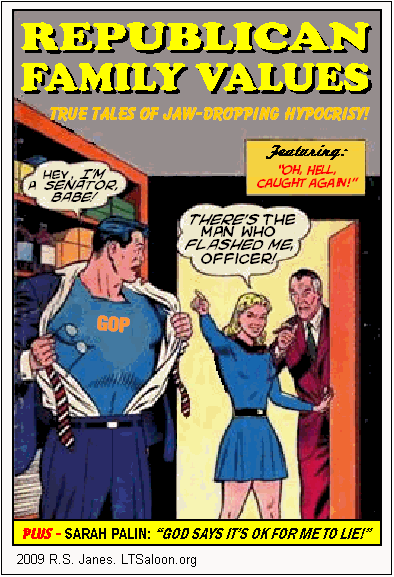
Last weekend, the GOP attacked President Barack Obama as a poor leader in the war on terror. They have no information to support their claims, but the attack is well-planned, magnified by the media, and was almost unchallenged by the Democrats. So successful were the Republicans at ginning up outrage against President Obama that he had to go on television to bear full responsibility for the failure.

Initially, the Obama administration handled the Christmas bombing attempt above Detroit in a clueless manner, and this invited the concerted Republican attack.

This situation bears all the earmarks of the spin wars the Democrats lost hands down over health care and the economy.

Avuncular Former New Jersey Governor Thomas Kean led off saying Obama’s plate was too full and that he was distracted with things like health care when he should have been “focused” upon improving the operations of the Transportation Safety Administration. Kean is the same fellow who deftly presided over the 911 Commission coverup.

Kean’s comment on Obama being distracted from his anti-terrorism duties became the leading sound bite for the rest of the news cycle. But what proof is there that Obama has not been “focused” and spending time on terrorism? Absolutely none! If fact, Obama was attacking Al Qaeda bases in Kuwait a month before the Christmas plane bombing attempt occurred.

Then Senator Jim DeMint attacked the president for not doing enough about terrorism. This is the same man who voted against increasing funding for TSA and Homeland Security. He also put a hold on the nomination of Erroll Southers’s nomination to head TSA. Hence, De Mint is responsible for making TSA leaderless at this critical time. He blocked Southers because he wants a pledge that the TSA workers will not be allowed to join a union. One interviewer gently reminded the South Carolina extremist about his funding vote.

Democrats have said little about the “hold” and have not mentioned all the other holds on Obama’s judicial nominees. No one mentioned that the Republicans had seven years to fine tune the air safety mechanism, and Republican writer Katherine Parker moved to head off that line of reasoning by writing that it is all Obama’s problem and fault now.

A third line of attack was led by Dick Cheney, who is actually growing in popularity. Somehow he thinks that rhetoric wins battles with terrorism. Because Obama will not use the term “war on terrorism,” Cheney says Obama was soft on terrorism. The implication was that if Cheney were still VP he would have sniffed out the Detroit jockey shorts bomb plot just as he pulled together the dots on 9/11.

A few commentators actually showed clips in which Obama used the term ”war.” The issue, of course, is that the Islamic world equates “war on terrorism” with “war on Islam.” Every time the term was used, the terrorists got more recruits. Cheney and his ilk do not care about this; they have an arguing point and they are determined to defend the Bush legacy and defame Obama even if it is by helping Al Qaeda recruit more killers and suicide bombers.

Then, a few days later, Senator Jon Kyl said he feared for the nation’s safety while Janet Napolitano was Secretary of Homeland Security. John McCain stood at his side to add gravity to this pronuncimento. Somehow her misstatement after the event proved she was an inept administrator. Say it enough times and it makes perfect sense to the average bloke.

That evening CNN’s resident grouch Jack Cafferty invited viewers to answer whether she should be fired, and he received a flood of emotional rants, most of them were ad hominem in nature.

The Republicans are absolutely shameless, but also very effective. From January 20, 2009, on they focused on the 2010 off-year elections — an occasion when few vote. Their endless charges have heated up their base and converted many independents. In a few weeks, they convinced many that the Obama Administration was responsible for the near success of the Christmas underwear bombing at Newark. Obama had to shoulder all the blame himself.

There was a great deal of evidence that George W. Bush had plenty of warning about 9/11, but he was never required to bear any blame. There is a lesson here.

Most of us would agree that Republican policies under George W. Bush were neither successful nor good for ordinary folks. Yet, over the last12 months, the Gallup organization has found that the nation has moved to the right with a consistent 40% conservative, 36% moderate, and 21% liberal. Somehow, realities have not sunk in. Perception management has triumphed. Is it any wonder that, despite having a fairly good policy year, Obama’s “strongly approve” rating dropped from 43% to 26%

In 1981, Ronald Wilson Reagan began the practice of using psychological warfare techniques on or against the American people. At the time, this was called “public diplomacy.” Make no mistake about it, this amounts to pouring poison into the stream of democratic discourse.

He spent over $100 million doing this. Psychological warfare techniques were manipulations of information that targeted the populations of other countries. Typically, they were distortions of information to play upon people’s superstitions, ignorance, and fears. But Reagan directed these powerful tools against the American people to sell his illegal secret war in Central America. George W. Bush used the same tools and spent even more public money doing this.

Dr. Joseph Goebbels mastered the art of the Big Lie. Repeat it often enough and people will believe it. Since those dark days, cognitive science has made massive strides. The tools the Republicans now deploy make Goebbel’s artifices look like playthings; and today’s strategists match or exceed in skills those of the Nazi propagandist.

A key understanding is that most brain functions are dominated by emotions, not by logical reasoning. The trick is to reprogram people’s memories with what you want them to recall, doing it in a way that will engage their emotions. Once this is accomplished, they will believe what you want them to believe.

The GOP has learned this lesson as well as much about shaping collective mindsets. From the advertising world, they have come to excel at message control, with most of their people reading off the same page at the same time. They have so outdistanced the Democrats that cognitive scientists sometimes refer to their “cognitive Madisonianism.” The reference here is not to the great James Madison, who would deplore what they are doing to disrupt the marketplace of ideas and democracy itself. The reference is to the purveyors of illusions on Madison Avenue.

George Lakoff has written about how the Democrats must learn some of their lessons for the good of the Republic. Some think adopting these techniques damages our political process. But we are getting down to a choice between two evils. The lesser evil is a situation in which both parties use these unfair and dastardly tools. The greater evil is that one party ignores them while the party most attached to privilege, the corporate world, militarism, and right-wing populism excels in their use.

In addition to mastering cognitive science, the GOP strategists seem to understand more about political science than the Democrats. Many of us mistakenly think that independents are folks in the middle who carefully study and weigh issues. There are a few independents who are like that. But the vast majority of them are all over the spectrum, frequently changing postures.

They do not like politics, refuse to study issues, and are very impatient. These folks usually see things in simple terms and adhere to the conventional wisdom. Some studies show that they are a little more inclined to stereotypical thinking about Blacks than most Americans. It is likely that some of them sense at some level that the middle class is not likely to recover lost ground and need a target at which to vent their anger.

Realizing that, the GOP was easily able to quickly convince a majority of independents that Obama was responsible for our economic woes and that his health care plans were socialistic. Remember, thsee “independents” have short memories and are not at all analytical. Moreover, the independents will not blame the Republicans for obstructionism. They do not follow politics enough to recognize this.

It even appears that they have rewired their own memories and reversed long held convictions. Most in 2003 would never believe that the GOP would become the party that favors torture and denying enemies essential due process. When the first reports of torture broke in 2004, conservatives insisted that those who brought the news were lying liberals who hated America. In time, the vast majority of Republicans came to embrace torture. They are now enraged that KSM and the Christmas bomber will be sent to federal courts.

Their propaganda machine has been so effective that it has essentially wiped out decades of Republican commitment to civil liberties and human rights. Yes, a few like John McCain, have managed to straddle these questions, but the party has essentially abandoned a noble heritage.

The Democrats appear to be clueless in the face of a relentless propaganda campaign that relies upon what were once psychological tools to be used against enemy populations. If the Democrats think that, without a lot of help, the voters will see through the artful GOP propaganda campaigns, they are in for a rude awakening. Byron Dorgan of North Dakota and Chris Dodd have already headed toward the exit, and one southern Blue Dog has rushed to complete his transformation into a Republican.

Some very good scholars — two at Yale — have been worrying about what would happen if the present slow recovery evaporates, with unemployment getting worse and the prospects for the middle class looking even worse. Their fear is that there could be a lurch to the far left and even incidents of violence.

From what we know about the capabilities of Republican strategists; the opposite would occur. Indeed the masses could stampede into some kind of Tea Baggers’ Valhala, with a mild exclusionist movement that would result in the removal of many liberals from teaching, journalistic, and ecclesiastical positions and a rush toward prudent silence among Hollywood types and other entertainers. Look for more creationist literature in the book stalls at National Parks.

[Sherman DeBrosse is a retired history teacher. Sherm spent seven years writing an analytical chronicle of what the Republicans have been up to since the 1970s. The New Republican Coalition : Its Rise and Impact, The Seventies to Present (Publish America) can be acquired by calling 301-695-1707. On line, go here.]

Source /

The Rag Blog

Posted in Rag Bloggers | Tagged , , , , , | 14 Comments

Mexico : Anarchists Celebrate Mexican Revolution With Real Fireworks

Celebrating the 100th anniversary of the Mexican Revolution in Mexico City. (Some went a little further in their observance: See story below.) Photo from La Jornada.

A real blast:
Bombs, resistance mark
100th
anniversary of Mexican Revolution

By John Ross / The Rag Blog / January 10, 2010

MEXICO CITY — Every hundred years on the tenth year of the century, Mexico seems to explode in social upheaval. In 1810, the war of liberation from the Spanish Crown unleashed a genocidal decade-long conflict. In 1910, the overthrow of dictator Porfirio Diaz triggered a fratricidal bloodbath. In recent months, dire expectations that 2010 would signal similar violence have been running high in this distant neighbor country, mired as it is in a grinding depression where 80% of Mexico’s 107,000,000 citizens subsist in and around the poverty line.

It is now the tenth of January 2010 and no new revolution has broken out — yet.

Nonetheless, the New Year was welcomed in here with a blast of revolutionary fireworks: bank bombings in Mexico City, surrounding Mexico state, and San Luis Potosi in the distant north, blew out a dozen ATM machines. Walls were scorched and windows shattered by firebombs at three auto showrooms in the greater metropolitan area and the government palace in the Mexico City delegation (borough) of Milpa Alta (an explosive device failed to ignite in Ixtapalapa, the capital’s most conflictive demarcation).

Incendiary attacks also struck a Telmex branch office, the Mexican phone monopoly owned by Carlos Slim, the richest tycoon in Latin America. A slaughterhouse and a police car were also firebombed. In Tijuana on the northern border, an anarchist group claimed to have machine-gunned three municipal police vehicles and a private security patrol car to welcome in 2010 in addition to “expropriations” at seven OXXO convenience stores during one of which a police officer (“placa”) was killed.

“It was either him or us,” lamented a communiqué from the purported perpetrators who signed off as “another anonymous anarchist action” in a document posted January 2 on “Conspiracy of Fire,” a direct action electronic clearing house.

The spate of bombings by anarchist cells was similar to a string of 15 such incidents in Mexico City and Guadalajara timed to coincide with Mexican Independence Day last September. A student activist at the National Autonomous University was jailed briefly by federal police for several of the fiery assaults in September and released.

Among the groupings that claimed responsibility for the actions that took place between December 31 and January 2 were the Propaganda Of The Deed Brigade which posted a declaration of war on the Conspiracy of Fire page that read in part,

With this document, we declare a war that will not end until all business people, the Bourgeois, militaries, governments, and all kinds of totalitarian power are exterminated.

What has happened today is just a small demonstration that we have lost our fear and our hatred of the system has grown. They can no longer kill or jail us with impunity. We are not afraid. Un Ojo por Un Ojo! (‘An Eye for an Eye’).”

The document and two other communiqués taking responsibility for the bombings made explicit reference to the exorbitant cost of government celebrations of both the centennial of the revolution and the bi-centennial of independence and noted that “although we do not believe in absolute dates, 2010 will be a year of struggle and a platform of preparation for what is to come…” — the 1910 uprising led by Francisco Madero was only the opening gong of a series of revolutions that finally fizzled out in 1919 with the assassination of the revolutionary martyr Emiliano Zapata.

Among the heroes lauded in the communiqués were historical anarchist leaders Praxides G. Guerrero and Ricardo Flores Magon, the Great Zapata, the Centaur of the North Francisco Villa, and Lucio Cabanas, the 1970s guerrillero leader of the Party of the Poor. Conspicuously absent from the list was Subcomandante Marcos who 16 years ago this January 1st gave voice to the Zapatista rebellion in Chiapas in the very first hour of the North American Free Trade Agreement.

Other participants in the New Year’s Eve Molotov cocktail party were the Simon Radowisky Brigade, named for a little-known Ukrainian-Argentinean anarchist who died in Mexico in 1956 while at work in a toy factory he was trying to organize, and the “May 25th 1910 Committee of Adjudication” which takes its name from the date that Praxides G. Guerrero fell in Janos, Chihuahua, the first anarchist to give up his life in the Mexican Revolution — the anarchist-led insurrection in Chihuahua preceded Madero’s revolution by six months.

Meanwhile, in Chiapas where mass psychosis that the Zapatistas would rise again January 1 has reigned for months, the Mayan rebels’ caracoles, or public centers, were shut down tight for the first time in 15 anniversary markings of that historic rebellion.

But the Zapatista Army of Liberation is hardly the only armed indigenous force for which rebellion in 2010 is an option. The Conspiracy of Fire page features an analysis of revolutionary prospects attributed to the TAGIN or National Indigenous Guerilla Triple Alliance that predicts “the calendar of conflict will spread throughout the country in the next 12 months,” claiming that 70 armed organizations have joined forces for concerted action in 2010. The article is illustrated by photos of armed guerilleros taken at a press conference held in Guerrero last summer by “Comandante Ramiro” (Omar Solis) of the ERPI (“Revolutionary Army of The Insurgent People”) — several months later, Ramiro’s body was recovered from a clandestine grave in the high sierra of that conflictive state.

While boasts of renewed revolution fly, President Felipe Calderon, now halfway through his calamitous six years in office, sought to put a happy face on the disasters his administration of Mexico has inflicted upon the country. Speaking from sunny Acapulco where the beaches were buckling under the weight of buxom bikini-clad tourists while the rest of the country shivered in the glacial cold, Calderon urged his compatriots to celebrate “this Year of the Patria (Fatherland) with happiness, working together in each home. This year we will write pages of glory and live the flame of our values that make us proud to be Mexicans (sic).”

In what could only have been an effusion of irony, the beaming president wished his bankrupt constituents a “Prosperous New Year.” Many observers (this writer was not alone) wondered what country Calderon thought he was addressing.

The COPAMEX, Mexico’s most influential business federation, was significantly more guarded in greeting the New Year, warning Mexicans to avoid violence in celebrating the duel centennials.

Despite veiled threats from the business sector, Mexico’s working class is in an uproar. A New Year’s Day zafarancho (riot) outside a power generating substation in Mexico state between displaced members of the Mexican Electricity Workers Union (SME) trying to prevent scabs from taking their jobs, and heavily armed federal police, left a dozen injured and the nearby pyramids of Teotihuacan, the City of the Gods, wreathed in tear gas fumes.

The confrontation marked the first violence in what has been largely a peaceful resistance movement ever since Calderon shut down the Luz y Fuerza power company last October putting 42,000 workers on the street, and suggests that an increasingly frustrated rank and file is prepared to raise the ante. On January 5 and again on the 6th, bands of SME workers stormed through the old quarter of Mexico City after the explosions of electrical transformers in the neighborhood brought out detachments of federal police.

Sabotage is rumored.

It is not mere coincidence that both the confrontation at Teotihuacan and many of the anarchist bombazos took place in Mexico state, which is governed by Enrique Pena Nieto, the presidential front-runner in 2012. Pena Nieto is a luminary of the resurgent Party of the Institutionalized Revolution (PRI) that ruled Mexico for seven decades until it was displaced from power in 2000 by Calderon’s rightist PAN party. The PRI won a landslide majority in the lower house of congress in 2009 mid-term elections and is expected to sweep all 12 governors’ races up for grabs in 2010.

In a remarkable reprise of the social unrest that detonated after runaway inflation excited hungry masses to rise up against the Diaz dictatorship 100 years ago, an abrupt jump in gasoline and diesel prices that kicked in on the final day of 2009 has set off a chain reaction of protests in Mexico City and the provinces.

On the first workday of 2010, 2000 truck drivers shut down key national highways for seven hours to protest the hikes — in Puebla, the drivers were joined by 500 electricistas from nearby Necaxa, the so-called “cradle” of Luz y Fuerza and the SME. The success of the blockade in Puebla, Hidalgo, and Veracruz states has inspired truckers’ association director Edmundo Morales to call for a national strike. Participation of the SME at the barricades may well be a precursor of increased worker solidarity in the coming year.

In Tepic, Nayarit, bus drivers protested the increase in fuel prices by parking their vehicles, paralyzing that provincial capital. Massive protests in Mexico City by independent unions and farmers’ organizations are expected later in the month.

The price surge viscerally wounds a popular economy that was grievously lacerated in 2009. The Calderon government’s annual daily minimum salary increase is less than 5% for 2010 and fails to match 6% inflation. The 2.60 peso a day “raise” does not even buy a ride on the Mexico City Metro that ferries millions of workers to their jobs each day.

On New Year’s morning, the leftist Mexico City government of Mayor Marcelo Ebrard raised the heavily subsidized Metro ticket price from two to three pesos a ride. The back of the ticket now reminds riders that the real cost is nine pesos.

A survey of public markets reported by the left daily La Jornada calculates a 30% rise in the basic food basket in the first week of 2010, largely due to fuel and electricity rate increases — tortillas, the essential nourishment for 26,000,000 Mexicans living in extreme poverty, leaped 10% a kilo throughout central Mexico.

Much like Obamaland, where the President crows about recovery in a jobless economy, Calderon pledged in a nationally-televised New Year’s message that 2010 will be a “year of recuperation” for Mexico although his predictions of 3% growth seems delusionally rosy — in 2009, the Gross National Product contracted 7% and growth was negative.

Unemployment, as measured by the government’s obfuscated system, is at a 15 year high of 6.8% — in the real world 6.8% translates to 40% of the work force not working, according to social economist Julio Boltvinik. 100,000 jobs are reportedly being lost each month (nearly 50,000 went down the tubes in October when Calderon fired the Luz y Fuerza workers.) But there is light at the end of the tunnel: according to the Wall Street Journal, a half million Mexican workers have found employment in the illicit drug industry.

The much-respected Economist Intelligence Unit’s yearly ratings of political instability take into account the socio-political dynamic in 165 countries. In 2010, Mexico places in the upper third of nations at risk of violent political upheaval. Whether this is an indicator of resurgent revolution here in 2010 is a story…

To Be Continued

[During the next three months, John Ross will travel the U.S. from sea to stinking sea with his new cult classic El Monstruo: Dread and Redemption in Mexico City which the New York Post (!) recently recommended as a “gritty, pulsating” read. For suggested venues (particularly in the Chicago and St. Louis areas) write johnross@igc.org.]

The Rag Blog

Posted in Rag Bloggers | Tagged , , , , , , , , | Leave a comment

Richard Lee

FUCK A DUCK
ANYTHING FOR A BUCK

By Richard Lee / The Rag Blog / January 10, 2010

BOCAS DEL TORO, Panama — I’m watching the financial channel here in Panama, in Spanish, in the middle of the night. On this particular night the financial pundits and talking heads are taking turns for some reason reminiscing about the March 2008 Bear Stearns bailout with U.S. taxpayer dollars.

At first Bear Stearns looked like it was alright, but they were engaged in a common business scam, borrowing money using accounts receivable as collateral. Most businesses do this and as long as there is sufficient cash flow to pay the vig, or interest due, they get away with it.

Accounts receivable has two faces, or two meanings, in one sense it is a number in the company books that shows what the company is owed. Then there is the real accounts receivable, money owed to the company that they will actually receive some time in the future. The former, the one in the books, is usually much larger than the latter.

Sometimes the company gets found out. And the people who are lending them money demand that they use the real accounts receivable numbers. This happened to Bear Stearns. It happened long ago to Billy Sol Estes. Most of you don’t remember him, but you do remember Enron. Their accounts receivables were from companies that didn’t exist except on paper.

When Bear Stearns tried to roll over their short term paper, based on home loans that they claimed were receivable, it came to light that the loans weren’t receivable at all and the collateral on the loans (the homes themselves) weren’t worth what they said they were. The lenders refused to lend them more operating capital. And they began to go down the tubes.

J.P. Morgan offered to bail them out. Morgan offered them two bucks a share for the company. Morgan would then be the proud new owner of Bear Stearns accounts receivable, which wouldn’t really be receivable. This would leave Morgan holding the bag, an empty bag, making them vulnerable in the near future.

Something had to be done, the big corporations in the lending business were setting themselves up like a row of dominos, and the first one was starting to tip over. Two dollars a share was probably generous. Bear Stearns was unable to continue to operate so in reality they were worth zip, squat, nada, they were bankrupt.

Uncle Sugar offered to jump in and take J.P. Morgan’s back; in effect pony up the money, two dollars a share, to cover Morgan’s bid for a worthless company. Whoa, wait a minute said Morgan, if the Fed was going to pass out free taxpayers’ money, then why not get while the getting was good. Next morning Morgan announced that they had made a mistake, seems the worthless company, Bear Stearns, was really worth ten dollars a share. The Fed went for it and promptly put up five times the original bailout money.

Well it was late and my mind was wandering, first it sounded like, “keep watching the show, there is no one behind the curtain.” Then it wandered to “fuck a duck, anything for a buck.” And I remembered the poster and how it all came down and all alone in my Panama hotel, stretched out nude on the bed, I began to laugh, and the more I remembered about it the more I laughed. I’ve got a big shit-eating grin right now because I can’t wait to tell you this story.

Come on back with me now. This is Boston, it’s 1970. I’m living on Erie Street that runs out of Central Square in Cambridge. Sometimes I sell underground papers, and do some high level panhandling around Harvard Square, and sometimes around Boston City Hall, to pay the rent and keep food in my stomach, plus something to roll in the quiet moments.

But my real occupation is plotting the demise of U.S. imperialism. This was a very real struggle in those days and it seemed like it had possibilities. Like every great struggle it had many fronts. One of the fronts in that moment was the Troika Free Poster Factory. I was there at the beginning; actually I was a part of the beginning.

The Museum of Fine Arts in Boston had a school. It was a small school, a few students who showed artistic promise attended, most if not all on scholarships provided by the Museum. A group of these fledgling artists, the politically aware and therefore anti-war ones, formed a small collective within the MFA School to do something about the horrible Nixonian blood fest in Vietnam.

Their politics motivated them to harness the means at hand and when they saw an opportunity, they acted. The school provided the tools for the artists to do their thing; paint and canvas, sculpting clay, knives, chisels, air brushes, silk screens, a copy camera and a dark room. Probably a lot more that I don’t know about or don’t remember.

I knew about the copy camera. I also knew that in the evenings there was usually no one around and a door that wasn’t locked. I had more or less of an ID factory going over on Beacon Hill, just down the alley from Suffolk Law School, behind the State House.

Also in this alley was the State Print Shop whose trash I regularly sorted through to garner State paper that I could use to bolster ID sets needed by deserters, anti-war fugitives, and people who needed to get out of the country. I found blank licenses for all sorts of trades, blank ID’s, official letterheads and envelopes, and sometimes rubber stamps or embossing discs in the print shop trash.

One of the important pieces of ID in those days was a Draft Card. Every male citizen between the ages of 18 and 50 had to carry around a draft card; it was the only ID that was required by federal law. I couldn’t just “find” these, although I suppose a regular visit to the trash behind some draft board offices might yield one. Since this was a common piece of ID, I needed lots of them. Some friends in Texas had a printing press and were willing to run some off, but they needed a negative with which to make a plate.

I borrowed a nice clean draft card from a young man who had made the mistake of registering for the draft, and in the evening set out for the MFA School to use the copy camera. As usual the door was unlocked and no one was around when I slipped in and made my way to the camera and dark room.

I spent a while trying to get the right 100% size, and to locate the film and get it loaded correctly on the vacuum back of the camera, and to get the exposure and developing right. I’d done some film developing but most of this I was trying to accomplish by trial and error. While I was still puzzling my way through, the door opened and two students came in. It’s a small student body, everyone knows everyone, and they didn’t know me.

For a few seconds we stood looking at each other: they were wondering who I was, I was wondering if I should bolt out onto Huntington Avenue and escape to a friend’s pad over on Hemingway Street. The newcomers were a guy and a woman; they didn’t look dangerous. I decided to hold my ground. I needed that negative.

The woman spoke first. “What are you doing?” She didn’t sound angry or suspicious, more like inquisitive.

“I’m trying to get this camera to work.”

They stepped closer. “What are you trying to do?”

“I need to make a negative of this at a hundred percent, but it’s not working out too well.”

“Maybe I can help,” she said, coming closer, peering at the settings on the camera. The guy came over too; he was looking down at the draft card. It took a moment, but pretty quickly it all became clear to him, he tugged at her sleeve and nodded toward the draft card. Then she was looking at it too and then at me, back again to the card.

All three of us stood looking at the card; they were trying to make up their minds, and I gave them the time, maintaining the silence. They looked at each other. They looked at the card. Silently they came to an agreement about what to do. I waited, eyeing the door, ready to move.

She reached up, saying, “You’ve got to crank this up ‘til the two arrows meet.” The guy nodded his assent, about the arrows and about the card, and about what I was doing. I stopped looking at the door. We had a conspiracy going. She moved the card and adjusted the focus, we killed the lights and he cut a piece of film, we took the shot, they introduced me to the “bump” light, the guy took the film into the dark room.

With the light back on she introduced herself. She was Pamela, Pam. He was Matt. She never asked what I was going to do with the negative, she didn’t need to. We talked about the school and about Boston and about the war. We each knew that this was a fortunate meeting of destiny. Matt joined us while we waited for the film to dry.

They went to demonstrations and had done some artwork for some anti-war leaflets; they wanted to do more. They helped me opaque out the typed in information on the negative. We went over to the Greek coffee shop and talked ‘til late. We made plans to get together in a couple of days. It didn’t yet have a name, but the idea was pregnant; soon there would be a birth. We would call it the Troika Free Poster Factory.

The next time we got together, they brought three other MFA School students and I brought a friend who had an idea. He wanted to make a poster, it was somewhere in his head, it was his vision of the government. He wanted to depict them as sycophant weirdos in a way that he saw them. It was coming up to election time, but there was no hope that anything would change, kind of like now.

We tossed his idea around, and in doing so, Troika was born. We had a name and set to work on our symbol. In this case it was a flag or banner that we would silk screen, everyone contributing a part, a color, a design, according to their feeling for it.

We also defined how we would operate. We wouldn’t take people’s ideas and do the work for them, but would work together with them, teach our skills, use our means, and allow people the opportunity to express themselves. Posters would be produced by their authors, no names would be allowed and no organizations would be noted. Simply a person’s artistic idea produced as a poster, anonymously, and with a view that would be anarchist and anti-war.

The first poster began to take shape that night; the artwork would be in the form of a photo depicting my friend’s view. When I moved into the Erie Street place, I found a metal box full of fishing lures, or plugs. There were three or four dozen of them, wooden or plastic plugs, three or four inches long, painted in various colors and each with eyes on one end looking like some underwater bug, all had fish hooks in various places.

With the help of some modeling clay, we stood the plugs on end, in even rows and files, with all their eyes looking in the same direction. We took a picture with black and white film and printed it at the MFA darkroom. The posters for the most part were formatted to fit 17 by 22-inch poster boards. The copy camera blew our photo up to fill the top two-thirds of the space. Below, we art-typed the words “The government has been elected.”

From that we fabricated a silk screen, putting on the emulsion, burning and developing the image. We printed a couple of dozen copies, and my friend hung them around town, where they drew puzzled looks but left a strong impression. By the time we finished that one, we had a half dozen more posters in the works. I don’t remember them all, but I do remember that they were all poignant and expressed, in an artistic way, the feelings of many anti-war people.

This brings us, in a long, round-about way, to the poster I was thinking about that caused me to start laughing while watching the financial news, in Spanish, naked on my hotel room bed, one night in Panama.

This poster was the inspiration of my friend Carl. We got hold of one of many renditions of “Leda and the Swan.” Leda, in Greek mythology, was impregnated by the “god” Zeus while he was disguised as a swan. We made this poster a little bigger, probably 22 by 35 inches, and silk screened it on white 20-pound paper, coated on one side. In the center of this poster were Leda and the Swan getting it on, done in black ink. Above Leda and Swan in red ink it said, “FUCK A DUCK” and below the graphic it said, “ANYTHING FOR A BUCK.” That in itself has a certain amount of humor in it. But there is more to it.

We printed a couple of dozen copies. At night, armed with a half dozen cans of condensed milk, we left Central Square and, skulking up Mass Ave toward Harvard Square, began “hanging” them on storefront windows. There is nothing like condensed milk to attach paper to glass, it puts Elmer’s Glue to shame. It’s damn near permanent.

By the time we got to the little coffee shop (gone now) in Harvard Square, we were down to our last poster. After a couple of cups of coffee and cigarettes, we stepped out to look for a good location. We were directly across from Coolidge Bank. This was the bank that had the contract to issue welfare checks to the poor in the Boston area; they were unfriendly and arrogant to the people who came there to cash their meager stipends. What better spot?

I stood chickie (lookout) while Carl church-keyed open a can of milk and splashed it on the window of Coolidge Bank, then, working together, we put the poster up and rubbed it in real good. We walked back toward Erie Street, admiring our work along the way, and called it a night.

The next morning I panhandled my way from Central Square to Harvard Square looking for breakfast and cigarette money and maybe a start on a small bag of weed. Along the way I saw all the FUCK A DUCK posters we had distributed on the windows of shops and stores.

At Harvard Square I noticed a small crowd in front of Coolidge Bank. There were about five cops fondling their night sticks, a couple of dudes in suits and half a dozen gawkers all gathered in concentric semi circles around the window with our poster. In the center, one of the guys in suits was directing the other suit, who was trying to remove the poster by picking at the corner with his fingernails, making little headway.

The picker was picking, the manager suit was directing, the cops were tsk-tsking, and the gawkers were giggling. I sauntered up to stand at the back of the gawk circle.

Finally the picker had picked enough to grab the corner with his fingers, and, giving a tug, he pulled off the bottom six or so inches that had the words, ANYTHING FOR A BUCK. Now everyone became a gawker. They all stared for about ten seconds. Then the manager suit said to the picker suit, “Let’s go, we got the important part.” With that the cops headed back to sit on their fat asses in their respective squad cars, the suits went into Coolidge Bank, and the giggling gawkers stayed for one last look at the Swan doing Leda under the words, FUCK A DUCK.

Down in Panama, I laughed a little harder, picturing the suits at J.P. Morgan grabbing the check from Uncle Sam’s fingers and saying, “Let’s go. We got the important part!”

FUCK A DUCK, ANYTHING FOR A BUCK!!

Type rest of the post here

Source /

The Rag Blog

Posted in RagBlog | Leave a comment

Rewind and Restart : How the Dems (Could Have) Made ‘Health Care’ Happen


(A New Years fantasy)

Once more from the top:
An alternative scenario for health care reform

By Zoltan Zigedy / The Rag Blog / January 10, 2010

In February of 2009, with his poll numbers and public expectations exceptionally high, President Obama announces that he supports the House health care reform bill with the most co-sponsors: HR 676, the universal, single payer plan. He notes that this has always been his answer to fixing the broken, for-profit system that now fails patient needs and burdens our economy.

Immediately, the health care industry and big Pharma go into full attack mode, condemning the bill as “socialism.” Obama meets with Democratic House leadership and emphasizes that “the American people need this bill and we will give it to them. This victory will pave the way for an overwhelming victory in the 2010 elections!”

House conservative Democrats join Republicans in attacking the House bill, citing industry generated polls and conservative pundits in arguing that the “American people do not want a government plan, but one that leaves health care in the hands of the private market.” The health care industry and its friends rush multi-million dollar attack ads into play, much as they did during the Clinton administration.

In the early spring, Obama holds a town hall meeting, nationally televised, in which he brings together, from around the country, hundreds of people who have been victimized by lack of insurance, poor insurance, coverage denials, and obscene health care costs. In a major address, Obama cites the tens of thousands who die every year from a lack of insurance coverage. He declares this as criminally tragic as the September 11 attacks. Also, he emphatically states that placing petty concerns above delivering adequate health care to all is unpatriotic.

That same week, House leader Nancy Pelosi publicly announces that HR 676 must be passed and she will hold Democrats’ feet to the fire with all the resources available to the Democratic Party, including election funding, committee seats, and primary challenges. CNN reports live on a conference of pollsters, health care providers, doctors, nurses, and economists who discuss the bill thoroughly, followed by a full endorsement. National media coverage is extensive. The Sunday morning gasbags devote their shows to the bill, grilling opponents in light of the Administration offensive.

As the Senate takes up a health care bill, progressive Democrats call for a rally in support of the bill to take place in DC in the summer. They pressure the House leadership to endorse the rally. The AFL-CIO, NOW, MoveOn, and all other liberal groups endorse the rally.

While seemingly endless debate goes on in the Senate, hundreds of thousands pour into DC to hear a wide range of speakers, musicians, and Congressional leaders in support of the Senate counterpart bill introduced by Senator Sanders. The crowd stirs with the spreading rumor that the President may well appear. Near the end, the crowd roars as President Obama briefly appears, thanking the demonstrators.

The Democratic Senate leadership, stiffened by the unprecedented rally, announces that they will bring the bill quickly to the floor. Senator Reid — the Senate Democratic leader — announces that this bill is as significant as any legislation since the Voting Rights Act. He wants his place in history to be identified with this vote. Administration staffer Rahm Emanuel reportedly caucused with Senate Democrats and says: “I don’t give a s*** about Lieberman. And Ben, you better get your ass on board or there will be hell to pay. You can’t even imagine the hell we’ll bring down on you. I want this f***in’ bill passed with ALL the D’s supporting it.” Emanuel denies this report.

The Republicans and a few Democrats howl in indignation. Fox news vilifies the House and Senate Democrats with wild charges of socialism and fascism. Harry Reid speaks in the Senate, holding a copy of the Constitution: “Maybe you folks in the Republican Party should read this. Americanism has never been to side with the bullies, and the insurance industry, their rich executives, big Pharma, and their consultants and lobbyists are bullies, forcing their profits ahead of the needs of the American people.” The media is shocked by his bold leadership.

Desperate Republican leaders announce a filibuster with the intent of forestalling a majority vote. The President goes on television with a sober, reasoned plea to have the bill passed. When asked by the press about the threatened filibuster, Obama replies with a wry smile: “Bring it on!”

As the Republican filibuster continues into the fall with Republican Senators droning on and on to an empty Senate chamber, public anger grows and grows. Late night comedians devote most of their shows to parodies of Senators quoting Glen Beck and Rush Limbaugh. Constant picket lines of doctors, nurses, and victims of the broken U.S. health care system surround Senate office buildings. Media commentators question this tactic, blaming the Republicans for bringing legislation to a halt. Polls show Republican favorable ratings at an all time low.

Senator Reid is quoted as chiding a Republican colleague: “Don’t stop now. Keep it up until the interim elections!” Senator Reid denies saying this.

Late in November, Republican leaders huddle, recognizing that continuing to filibuster will destroy any chances of survival after the November 2010 elections. They quickly agree to call it off.

In early December, the Senate passes its version of Medicare for all by a vote of 51 to 25, with many Republicans nervously abstaining.

President Obama goes on national television, thanking all of those who worked so tirelessly and intensely to achieve an efficient, universal, and comprehensive health care plan that will rival any system in the world. He assures the American people that all the failings of the current system, referring to World Health Organization’s parameters, will be reversed and the U.S. will become a widely admired leader in delivering the best health care to its people. He promises to sign a final bill before Christmas, stating that he hopes that the new legislative act will serve as a long overdue but welcome gift to us all. “Happy holidays!” he concludes.


Of course this is a fantasy. We do not have the health care bill that we could have had. In fact, almost nothing in this fantasy is true. The President didn’t get behind the House bill with the most co-sponsors, the Democratic leadership didn’t fight hard for real change, there were no tough back room threats, the media didn’t give serious advocates a megaphone, there was no attempt by political leaders to engage and rally the base, political leaders did not show courage, and Democrats did not call the Republican bluff.

I ask my liberal friends and soft-left comrades that they try, in the New Year, to understand why things went so awry. I ask that they turn away from the comforting notion that we live with an economic and political system that can deliver democracy, justice, and equality by our simple participation in the permitted rituals. I ask that, in the New Year, they desist from finding scapegoats for this disaster that should shame us all: whether it be Obama’s betrayal, Blue Dog treachery, or that rotten renegade, Lieberman. It’s the system. Seriously, it’s the system…

[For more from Zoltan Zigedy, visit ZZ’s blog.]

Thanks to Jeffrey Segal / The Rag Blog

Posted in Rag Bloggers | Tagged , , , , , | Leave a comment

Rewind and Restart : How the Dems (Could Have) Made ‘Health Care’ Happen


(A New Years fantasy)

Once more from the top:
An alternative scenario for health care reform

By Zoltan Zigedy / The Rag Blog / January 10, 2010

In February of 2009, with his poll numbers and public expectations exceptionally high, President Obama announces that he supports the House health care reform bill with the most co-sponsors: HR 676, the universal, single payer plan. He notes that this has always been his answer to fixing the broken, for-profit system that now fails patient needs and burdens our economy.

Immediately, the health care industry and big Pharma go into full attack mode, condemning the bill as “socialism.” Obama meets with Democratic House leadership and emphasizes that “the American people need this bill and we will give it to them. This victory will pave the way for an overwhelming victory in the 2010 elections!”

House conservative Democrats join Republicans in attacking the House bill, citing industry generated polls and conservative pundits in arguing that the “American people do not want a government plan, but one that leaves health care in the hands of the private market.” The health care industry and its friends rush multi-million dollar attack ads into play, much as they did during the Clinton administration.

In the early spring, Obama holds a town hall meeting, nationally televised, in which he brings together, from around the country, hundreds of people who have been victimized by lack of insurance, poor insurance, coverage denials, and obscene health care costs. In a major address, Obama cites the tens of thousands who die every year from a lack of insurance coverage. He declares this as criminally tragic as the September 11 attacks. Also, he emphatically states that placing petty concerns above delivering adequate health care to all is unpatriotic.

That same week, House leader Nancy Pelosi publicly announces that HR 676 must be passed and she will hold Democrats’ feet to the fire with all the resources available to the Democratic Party, including election funding, committee seats, and primary challenges. CNN reports live on a conference of pollsters, health care providers, doctors, nurses, and economists who discuss the bill thoroughly, followed by a full endorsement. National media coverage is extensive. The Sunday morning gasbags devote their shows to the bill, grilling opponents in light of the Administration offensive.

As the Senate takes up a health care bill, progressive Democrats call for a rally in support of the bill to take place in DC in the summer. They pressure the House leadership to endorse the rally. The AFL-CIO, NOW, MoveOn, and all other liberal groups endorse the rally.

While seemingly endless debate goes on in the Senate, hundreds of thousands pour into DC to hear a wide range of speakers, musicians, and Congressional leaders in support of the Senate counterpart bill introduced by Senator Sanders. The crowd stirs with the spreading rumor that the President may well appear. Near the end, the crowd roars as President Obama briefly appears, thanking the demonstrators.

The Democratic Senate leadership, stiffened by the unprecedented rally, announces that they will bring the bill quickly to the floor. Senator Reid — the Senate Democratic leader — announces that this bill is as significant as any legislation since the Voting Rights Act. He wants his place in history to be identified with this vote. Administration staffer Rahm Emanuel reportedly caucused with Senate Democrats and says: “I don’t give a s*** about Lieberman. And Ben, you better get your ass on board or there will be hell to pay. You can’t even imagine the hell we’ll bring down on you. I want this f***in’ bill passed with ALL the D’s supporting it.” Emanuel denies this report.

The Republicans and a few Democrats howl in indignation. Fox news vilifies the House and Senate Democrats with wild charges of socialism and fascism. Harry Reid speaks in the Senate, holding a copy of the Constitution: “Maybe you folks in the Republican Party should read this. Americanism has never been to side with the bullies, and the insurance industry, their rich executives, big Pharma, and their consultants and lobbyists are bullies, forcing their profits ahead of the needs of the American people.” The media is shocked by his bold leadership.

Desperate Republican leaders announce a filibuster with the intent of forestalling a majority vote. The President goes on television with a sober, reasoned plea to have the bill passed. When asked by the press about the threatened filibuster, Obama replies with a wry smile: “Bring it on!”

As the Republican filibuster continues into the fall with Republican Senators droning on and on to an empty Senate chamber, public anger grows and grows. Late night comedians devote most of their shows to parodies of Senators quoting Glen Beck and Rush Limbaugh. Constant picket lines of doctors, nurses, and victims of the broken U.S. health care system surround Senate office buildings. Media commentators question this tactic, blaming the Republicans for bringing legislation to a halt. Polls show Republican favorable ratings at an all time low.

Senator Reid is quoted as chiding a Republican colleague: “Don’t stop now. Keep it up until the interim elections!” Senator Reid denies saying this.

Late in November, Republican leaders huddle, recognizing that continuing to filibuster will destroy any chances of survival after the November 2010 elections. They quickly agree to call it off.

In early December, the Senate passes its version of Medicare for all by a vote of 51 to 25, with many Republicans nervously abstaining.

President Obama goes on national television, thanking all of those who worked so tirelessly and intensely to achieve an efficient, universal, and comprehensive health care plan that will rival any system in the world. He assures the American people that all the failings of the current system, referring to World Health Organization’s parameters, will be reversed and the U.S. will become a widely admired leader in delivering the best health care to its people. He promises to sign a final bill before Christmas, stating that he hopes that the new legislative act will serve as a long overdue but welcome gift to us all. “Happy holidays!” he concludes.


Of course this is a fantasy. We do not have the health care bill that we could have had. In fact, almost nothing in this fantasy is true. The President didn’t get behind the House bill with the most co-sponsors, the Democratic leadership didn’t fight hard for real change, there were no tough back room threats, the media didn’t give serious advocates a megaphone, there was no attempt by political leaders to engage and rally the base, political leaders did not show courage, and Democrats did not call the Republican bluff.

I ask my liberal friends and soft-left comrades that they try, in the New Year, to understand why things went so awry. I ask that they turn away from the comforting notion that we live with an economic and political system that can deliver democracy, justice, and equality by our simple participation in the permitted rituals. I ask that, in the New Year, they desist from finding scapegoats for this disaster that should shame us all: whether it be Obama’s betrayal, Blue Dog treachery, or that rotten renegade, Lieberman. It’s the system. Seriously, it’s the system…

[For more from Zoltan Zigedy, visit ZZ’s blog.]

Thanks to Jeffrey Segal / The Rag Blog

Posted in Rag Bloggers | Tagged , , , , , | 3 Comments

Marc Estrin : The Execution of an Elephant

Topsy the elephant:
Executed by Thomas Alva Edison

By Marc Estrin / The Rag Blog / January 9, 2010

[Noted author and activist Marc Estrin will be contributing to The Rag Blog on a regular basis.]

Wait! Do not activate that video — unless you have a stomach immune to moral indigestion. Let me tell you the story first, and then you decide if you want to click the mouse that clicks the video that clicks off the elephant.

This week marked the anniversary of the electrocution of Topsy the Elephant at Coney Island on January 4, 1903. Not the accidental electrocution, but the intentional one, by one of our American heros, Thomas Alva Edison. And for purposes no higher than winning a commercial battle with his nemesis, George Westinghouse.

I reported this incident in a chapter of my novel The Lamentations of Julius Marantz. Julius, our sweetheart, has taken the D train from Manhattan out to his homeland, Coney Island, to submit to a well-earned and inevitable suicide. But since it is a long ride, I thought my readers would like something to entertain themselves along the way. So I included a chapter called “A Study of History,” which treats five FUQs — Frequently Unasked Questions — concerning the playland and its visitors. Here are the last two:

4. And What about Edison? Did he come too?

At last, a native American. Yes, yes he came, eight years before Freud he came — accompanied by Westinghouse and Faraday, and Adam Smith, and Death. They came to electrocute an elephant. Forty-four years before Julius was born, they came to electrocute an elephant named Topsy.

Elephants — the highest form of animal, symbols of strength and astuteness, emblems of wisdom, of eternity, of moderation and pity, removers of obstacles, charismatic beasts suggesting the power of Buddha: miraculous aspiration, analysis, intention, and effort. Their trunks are capable of both uprooting trees and picking the smallest of leaves, thus suggesting that humans develop their powers in both the gross and spiritual worlds.

Massive and gray, they resemble dark clouds of refreshing rain. Indra’s mighty elephant digs with its tusks, and reaches its trunk deep into the earth, sucking up water, and spraying it into clouds which bring forth rain. Elephants thus link the heaven above with the chthonic below, and symbolize the mist that separates formed worlds from the unformed.

Their tusks, both digging tools and weapons, linking the beast again to things supra- and sub-terranean. Elephants were named for their tusks, from elefas, the Greek for ivory. Achilles sword, in Pope’s Homer, had a handle “with steel and polished elephant adorned.”

They are loyal and affectionate, the elephants. Older calves help younger siblings, adults their sick or wounded comrades. They demonstrate ideals. It is said that mothers of great masters will dream of them at birth.

Most easily trained of all the beasts, they rarely forget. And when their great patience is exhausted, they have a remarkable memory for wrongs done them, and many stories are told of elephant revenge.

Mice do not scare them.

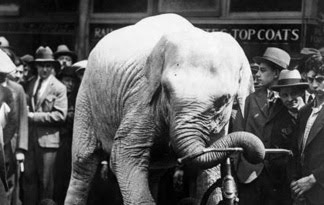
Topsy the elephant.

Topsy was 30, and weighed three tons. She began as a worker, hauling the beams and blocks that became the Island. When the parks were built, she turned entertainer, doing tricks, in pink tutu, for gawking faces. Towards the end, she became quite blind, having worn her eyes out looking at America — and seeing nothing.

But she did see the drunken trainer who put his cigarette out against her tongue and laughed. She picked him up, threw him against the wall, then smashed his head quite easily underfoot. And thus she became “a rogue,” a “man-killer,” and her sentence was death.

Topsy was given a bale of carrots laced with cyanide, and scarfed them down without effect. Another helping, please? The park owners saw a chance to be tough on crime, and also make a profit. For every scratch, an itch: they announced that the murderous rogue elephant would be publicly hanged. “No, no!” cried the ASPCA. Too cruel and inhuman.

“No, no!” cried Thomas Alva Edison. Hadn’t New York State just replaced the gallows with a new, humane, electric chair? “I’ll come and help.”

There was more to this than met the eye.

In Topsy-time the Wizard of Menlo Park was engaged in his own death-struggle with George Westinghouse for control of America’s electrical infrastructure. His DC system, he claimed, was safe, while Westinghouse’s was deadly. To prove it, he’d been publicly electrocuting cats and dogs for years. It was he who had convinced the state to use Westinghouse’s AC for their electric chair. So much, and no more, had he accomplished: an electrocuted criminal was widely referred to as “being Westinghoused.”

So what an irresistible photo-op here! How better to demonstrate the danger of his enemy’s system, than to roast a full-grown elephant? Dr. Edison brought a team of technicians, and a film crew. On July 4th, 1903, before a cheering, patriotic crowd of thousands, Topsy was led to a special platform, the cameras rolled, and the switch to Coney’s powerful electrical plant was thrown. Topsy’s short-lived hell-on-earth lasted only 10 seconds. At six thousand volts. She convulsed, her hide began to smoke, and she collapsed. Applause. “It’s a take.” The great man showed the film to audiences across the nation to win his point, if not his contracts, and to help forge the created non-conscience of his race.

Whither reeleth our sweetheart?
He sang to himself, in cadence count
E non voglio più servir,
No, no, no, no, no,
E non voglio più servir, hitting on vir a low Eb — abysmal depth, and the base tone of creation.
Non serviam.

George Orwell had warned him some time ago: “We have now sunk to a depth at which the restatement of the obvious is the first duty of civilized men.”

Whither hobbles he, wandering among these ghosts?

To the towering parachute jump which — six years before he was born — was transferred from the “Lifesavers’ Exhibit” at the New York World’s Fair, the site right next to the Centaurs. He liked the parachute jump. It reminded him of his father. “It packs more thrills than any wings-in-sky interlude since Icarus,” the old guides used to say. It reminded him that it takes longer to rise than to fall. Its rising and falling came to an end in ’68, on a nearly vacant lot, in a moribund park on Coney Island. And now, there, in front of him, it rusted.

For Hegel, the Enlightenment meant a struggle between reason and what he called “the night of the world,” that chaotic mix of hatred and irrationality which can destroy humanity and what it builds, but which is paradoxically the source of its enormous energy.

For Hegel, human history revolves around the attempt to negate the negativity of “the night of the world,” and turn it to productive thought and action. He would have liked to have said, “Where there is id there shall be ego.”

Final question: Which tense do you want to live in?

“I want to live in the imperative of the future passive participle,” our sweetheart said, “in the ‘what ought to be.'”

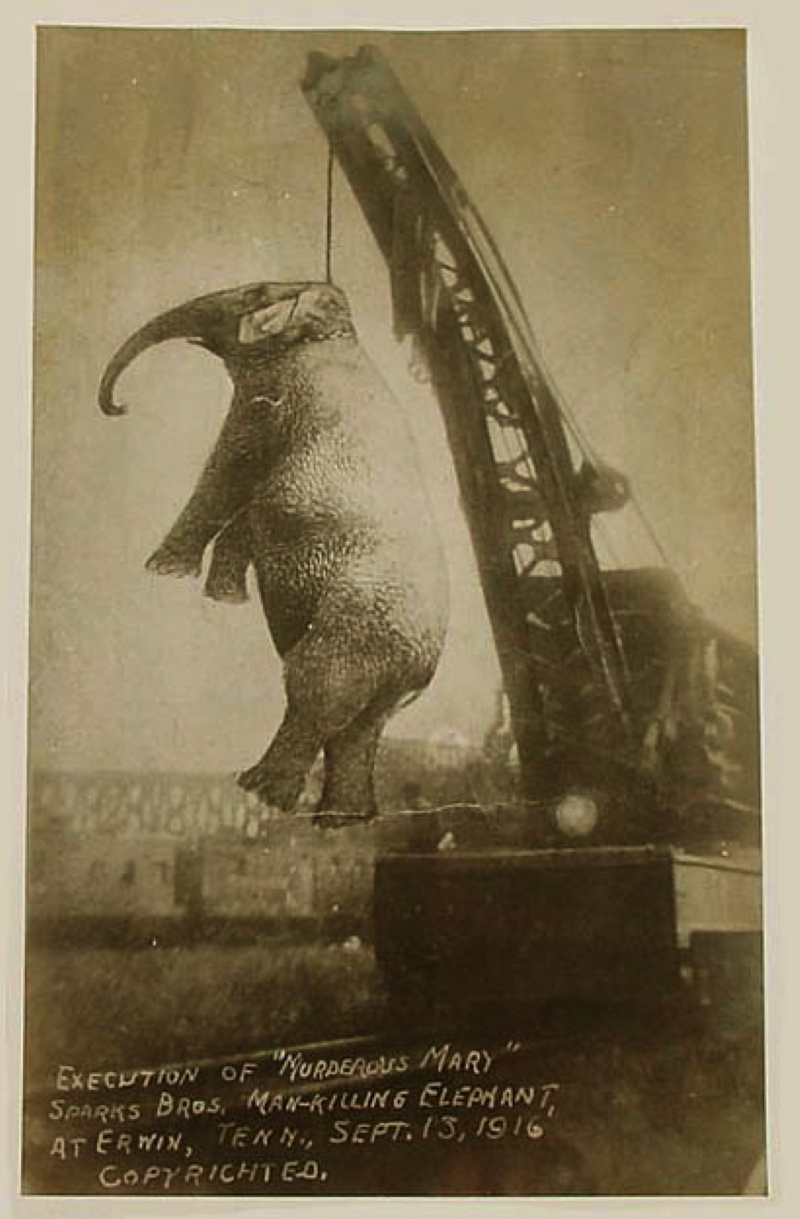
They hanged “Murderous Mary.”

The execution of Mary

While googling for a photo of Topsy I came across an even more disturbing graphic of another elephant execution — that of “Murderous Mary” 11 years later, for similar motives of profit. Mary, killed her keeper in a mood known only to an elephant, but apparently quickly passing. The crowd began chanting “Kill the elephant!” and a local blacksmith pumped two dozen rounds into her with little effect. Fear spread (or was spread), as it easily does, into the business community, and nearby towns threatened to ban the show if Mary was in it.

I’m sure Mary’s owner was conflicted over his decision, but it’s likely that the loss of his investment in Mary would be less than a potentially ruinous blacklisting, and he decided, like Edison, to kill Mary in public. Not soft on elephant-terrorists he.

Mary was sent by rail to Erwin, Tennessee, where 2,500 people paid to see her hanged like the murderer she was. Wikipedia’s taciturn obit goes like this: “The elephant was hanged by the neck from a railcar-mounted industrial crane. The first attempt resulted in a snapped chain, causing Mary to fall and break her hip as dozens of children fled in terror. The severely wounded elephant died during a second attempt and was buried beside the tracks.”

[Marc Estrin is a writer and activist, living in Burlington, Vermont. His novels, Insect Dreams, The Half Life of Gregor Samsa, The Education of Arnold Hitler, Golem Song, and The Lamentations of Julius Marantz have won critical acclaim. Insect Dreams was recently published in German by Parthas Verlag, Berlin. His memoir, Rehearsing With Gods: Photographs and Essays on the Bread & Puppet Theater (with Ron Simon, photographer) won a 2004 theater book of the year award. Two novels, The Annotated Nose, and Skulk appeared in November 2008, and The Good Doctor Guillotin in September 2009. He is currently working on a novel about the dead Tchaikovsky.]

The Rag Blog

Posted in Rag Bloggers | Tagged , , , , , , , | 5 Comments

Immigration Reform : It’s Time for Political Courage

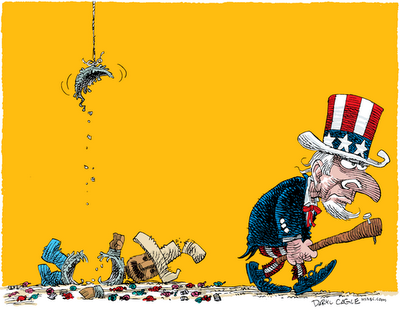
Cartoon by Daryl Cagle / MSNBC.com

Democrats must show some courage:
Immigration laws need real reform

Closing the border and deporting undocumented workers would actually hurt our economy. Over a 10 year period it would mean the loss of $2.6 trillion in GDP.

By Ted McLaughlin / The Rag Blog / January 9, 2010

Now that the Democrats are nearly through passing a very disappointing health care bill (I won’t call it reform because it contains very little real reform), what is next on their agenda? Most people believe it will be immigration reform. I hope so, because our immigration laws need some real reform since the current laws are just not working for the benefit of anyone, except maybe the racist fearmongers.

In the hope that the Democratic majority might actually find some political courage, let’s examine what the best kind of reform would be. Actually, there are three options. Put all our efforts toward closing the borders and deporting undocumented workers, put in some kind of temporary worker program, or provide undocumented workers with a path toward citizenship and institute a more flexible immigration policy. Let’s see just what each of these options would do for the United States.

The Republicans and their racist teabagging base are definitely in camp #1. They want to close down the borders and deport undocumented workers and they don’t care what it costs. This is born of fear and racism. They see our southern border as an entry point for terrorists, even though there is absolutely no evidence that terrorists have ever used this crossing point.

There are several easier ways to get into the U.S., including the airports and seaports. These would simply require some paperwork (false or otherwise). Then there is the Canadian border. It is longer and much less guarded, and does not have a life-threatening desert to cross.

But there is not just the fear, but also a racist factor that motivates the “close the border” crowd. There are currently 11.9 million undocumented immigrants in this country. Of those, 56% are from Mexico, 22% from other Latin American countries, 13% are Asian and about 3% are Canadian or European. I’ll bet if the figures were switched and 78% were Canadian or European and 3% were Hispanic, there wouldn’t be a huge cry to close our borders.

The truth is that closing the border and deporting undocumented workers would actually hurt our economy. Over a 10 year period it would mean the loss of $2.6 trillion in Gross Domestic Product (GDP). It would seriously damage American business and cause untold pain to many immigrant families. In addition, it would cause the deaths of many immigrants trying to enter the country by forcing them into more dangerous crossing places and ways. Between 1994 and 2008, 5,607 people have died trying to enter the United States.

But perhaps the best reason to not choose the “close the border and deport” method is that it simply does not work. Since 1992, the number of Border Patrol agents has jumped by 390% — from 3,555 (1992) to 17,415 (2009). At the same time, the number of undocumented immigrants has grown from 3.5 million in 1990 to 11.9 million in 2008. Sounds like we’ve been wasting our money to me. The cost of each immigrant captured has also gone up — from $272 for each apprehension in 1992 to a staggering $3,102 for each one in 2008.

Recently the number of undocumented workers coming into the country has slowed, but it has nothing to do with increased border security (which has already been shown to not work). No, it is due to the drying up of jobs in the United States. But that’s a tough solution to undocumented immigration since it also hurts American citizens and businesses as well.

Setting up a temporary worker program would only be marginally better than the unworkable “close the border and deport” program. It would mean a gain to GDP of about $792 billion over a ten year period. However, it would not solve the problem of the 11.9 million undocumented workers currently in this country, so it would just be a band-aid solution.

By far the best solution is to provide a path to citizenship for those already here and institute a more flexible immigration policy. According to both the Center for American Progress and the American Immigration Council, this would mean a boost to GDP of at least $1.5 trillion over a 10 year period. And that boost would help all Americans, not just immigrants.

The undocumented workers would no longer be in an “underground” economy and would be covered by labor laws. Their wages would increase and drive up wages for everyone. It would also open up other avenues, such as education, so they could improve themselves, and by doing so, improve our country.

America has always been a country that thrived on immigration. Those willing to leave everything behind and go to a new country are not the timid and meek, but the brave and resourceful who are willing to work hard for an opportunity to succeed. Those are the kind of people needed to help America succeed. They should be accepted and encouraged to succeed and added to what is currently a shrinking tax base.

I expect the Democrats will probably not have the courage to take this path though. They will probably try to provide some kind of path to citizenship, but then screw it up by trying for bipartisanship by wasting a lot more money trying to close the borders. Then after they have a mess of a bill (like with health care), the Republicans will abandon them. After all, they are the party of NO.

Then the Democrats will try to convince us that the hybrid mess they’ve come up with is real immigration reform. It won’t be, any more than the current mess they’re pushing is real health care reform.

I would like to think they have the political courage to do immigration reform the right way, but I’ve been watching them for the last year. We’ll be lucky to wind up with a modest improvement.

[Rag Blog contributor Ted McLaughlin also posts at jobsanger.]

The Rag Blog

Posted in Rag Bloggers | Tagged , , , , | 4 Comments

Decade of Deceit : Our Leaders and their Lies


A catalog of calumny:
The Decade of Deceit

Lie: a false statement made with deliberate intent to deceive.

By Sid Eschenbach / The Rag Blog / January 9, 2010

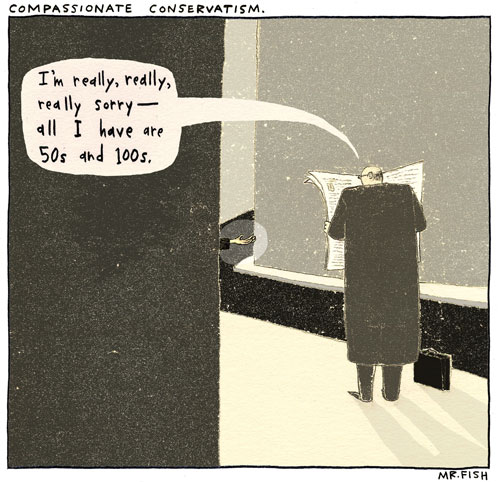
Bookended by two lies, George Bush’s “Compassionate Conservatism” and Barack Obama’s “Change We Can Believe In,” the first decade of the 21st century should go down in history as the decade when we all, collectively and individually, occasionally from the left and generally from the right, repeatedly admired the emperor’s new clothes — only to discover that, like the original meme, there was no reality behind the image.

It’s difficult to say whether this decade is remarkable for the scope and impact of the frauds perpetrated, or whether we are simply more aware of them, as the onions of information are peeled open by modern technologies that allow greater access and quicker diffusion than ever before. Whichever it is, the lies told in this first decade of the 21st century are whoppers, among which the following deserve special mention.

  • The lie of fair elections

How many deceptive or completely false ideologies, facts and policies did we fall for in the decade? Well, it started with the election of George Bush and the electoral coup perpetrated in Florida. Not only did he not win the election, but we were forced to accept an argument that it could and should be settled by the Supreme Court instead of an actual recount — a body that has acknowledged that it had no jurisdiction in the matter — and the decision of which is so fraught with problems that it is legally barred from being used in any other case in the future. Yet we, the American people, accepted the deceit.

Alan Dershowitz stated at the time:

“[T]he decision in the Florida election case may be ranked as the single most corrupt decision in Supreme Court history, because it is the only one that I know of where the majority justices decided as they did because of the personal identity and political affiliation of the litigants. This was cheating, and a violation of the judicial oath.”

Well after the election, in 2001, a New York Times study showed that, had a full recount been adopted and had over-votes been tallied correctly in all of Florida, Gore would have picked up an additional 8,285 votes, far more than needed to win Florida and thus the national election.

With the ascension to the presidency of George Bush we should have learned that the United States is not Reagan’s “beacon on the hill” — an idealized country as we imagined it to be and were taught that it was in our high school civics classes.

Rather, and under certain conditions, that the fight for succession of power in the American republic is as crude and ruthless as in any other, determined not through the “free and fair” elections upon which we have constructed our virtuous self-image, but by the machinations of political and economic elites. It is an ugly truth, but those are the real colors of the Emperor’s New Clothes.

Cartoon by Mr. Fish / truthdig.

  • The lie of ‘compassionate conservatism’

Yes, one might ask, what exactly would that be? The idea that these two historically contradictory concepts could be pandered to a public desperate to believe, to see the emperor’s new clothes where there are none, is silly enough in it’s own right. However, the real deceit was greater, for “compassionate conservatism” was in reality nothing more but a great deal less than the old concept of “noblesse oblige,” the idea that society’s most privileged would, out of their sense of entitled wealth, be kind and compassionate to those less fortunate and well beneath them.

Further, it’s part and parcel of another fantasy peddled to the gullible public, that “free” market economics better helped the poor than government social intervention. The reality is that it served and serves to sanctify greed, as it’s used as a prop for the selfish, a salve for those who only think of themselves in their frantic rush for riches — allowing them to believe that the battle for their personal success in fact helps the least among us.

In the same way, this salve allowed the political leadership to talk of helping the poor and socially handicapped, without really doing anything to help them at all other than pass the ball to the private sector to resolve more competently than, they asserted, government could.

Former President Clinton summed it up well when he said that the message of compassionate conservatism was: “I want to help you. I really do. But you know, I just can’t.” All up, it comprised the basis for George Bush’s appeal to a religious, conservative and ignorant poor while simultaneously energizing the richest, strongest, best educated and most privileged members of society — politically a very potent and entirely fraudulent marriage of conceptual and social opposites.

Like Professor Dershowitz did in the previous example, this deception was also pointed out — but to no avail, given the public’s manifest desire to believe in the emperor’s new clothes. One commentator, Joe Conason, wrote in 2003 that “so far, being a ‘compassionate conservative’ appears to mean nothing very different from being a hardhearted, stingy, old-fashioned conservative.”

All this, of course, fell on the deaf ears of a faithful religious public that, in furtherance of their need to feel good about themselves, believed that there actually was such a thing as “compassionate conservatism” and that they were a part of it. The historical facts, unfortunately, have proven otherwise.

The fact that it was a transparently duplicitous political ploy used to convert the selfish rich and the religious poor to the Republican cause was demonstrated in 2001, when after the events of September the 11, it was rarely if ever mentioned.

  • The lie of Iraq

“I cannot tell you everything that we know. But what I can share with you, when combined with what all of us have learned over the years, is deeply troubling. What you will see is an accumulation of facts and disturbing patterns of behavior. The facts on Iraq’s behavior demonstrate that Saddam Hussein and his regime have made no effort — no effort — to disarm as required by the international community. Indeed, the facts and Iraq’s behavior show that Saddam Hussein and his regime are concealing their efforts to produce more weapons of mass destruction.”

With these words describing the supposed “facts” about Iraq from (a later repentant) Secretary of State Colin Powell began the aggressive selling of a particularly heinous lie, the justification to invade a nation as a necessary and moral act.

It is the ultimate irony that a combination of fear and ego drove Saddam Hussein to facilitate this crime through his own perfidy, hiding the fact that he didn’t possess any weapons of mass destruction at all, that he was not nearly as powerful as he wanted others to believe — and thus wasn’t particularly more or less dangerous than any other unstable megalomaniac in any part of the world.

This fact, however, doesn’t dismiss a simple and core truth — recently admitted by then British Prime Minister Tony Blair — that had WMD not been available as an argument to justify invasion, he simply would have “deployed different arguments” to justify an inevitable, pre-arranged and concerted military action.

This statement, the absolute height of arrogance and cynicism, is proof of what has been alleged from the beginning of this entire tragic endeavor; that lying and deceiving the people is a legitimate tactic because the ends justify the means: that getting rid of the Hussein regime was more important than the truth itself.

Unfortunately, Powell’s words were not the last, but among the first in a long parade of lies told to justify and explain the Iraq War:

  • “We believe that Saddam has reconstituted nuclear weapons,”
  • “Saddam supports and protects Al Qaida,”
  • “We will be greeted as liberators,”
  • “It will be paid for out of Iraqi oil monies,”
  • “It will only cost $50-$60 billion dollars,”
  • “Waterboarding is not torture,”
  • “The United States does not torture,”
  • “People in Iraq must understand that I view those practices as abhorrent,”
  • “Major combat operations are over.”

All these and many more lies were told — so many over so long a time that it became standard and accepted operating procedure to lie to the people “for their own good.” Never in modern American history have so many blatant lies been told in the name of national security, lies generally accepted as truth by an easily manipulated public, lies that lead to over 100,000 civilian Iraqi deaths, 35,000 American dead and wounded, and an expense to the nation of what will probably end up exceeding $2.5 trillion dollars — and lies that are still defended today by those guilty of telling them.

  • The lie of post-industrial prosperity

“Free trade lifts all boats,” said the Friedmanites. “Free trade (NAFTA) will cause a giant sucking sound as jobs go south,” said Ross Perot. Twenty years later, it’s clear that the second was the truth and the first was the lie, used again and again by the ersatz American capitalists as they moved manufacturing en masse to countries that provide relatively unprotected and low cost labor.

While they did this, Americans continued to believe the lie that it was just the “bad” jobs that were being outsourced, leaving the “high-paying creative jobs” to the highly paid and presumptively creative American workforce.

Of course, this is a fantasy closely related to any sightings of the emperor’s new clothes, and in the end whether the CEO’s believed it or not is irrelevant. The simple fact is that there is no known economic state of post-industrial prosperity. No nation has ever achieved it, and none ever will.

This lie is possibly more pernicious than others of the decade because, unlike the others, it’s entirely possible that the American political, financial and manufacturing leadership don’t really know that they’re telling a whopper. It’s unclear as to whether they understand the end result of a policy that exports jobs and imports goods, just as it’s unclear whether the industrialized nations will wake up before they are overwhelmed and marginalized by the newly industrialized states of China and India.

What is clear, however, is that until the U.S. and to a lesser degree the E.U. change their trade policies to protect their industrial sectors, there can and will be no real “recovery” based upon the jobs held by a large middle class.

Strangely, if this industrial “readjustment” continues and overcapacity continues to be an economic fact of life (and there is absolutely nothing emerging out of the Obama administration to suggest that it won’t), it matters little to the national economy whether the goods are imported or not, and the reason for this is efficiency.

In the face of the advantages enjoyed by goods produced in cheap labor and low regulatory environments, all surviving businesses in the high labor high regulatory environments will have one thing in common — extraordinarily high efficiencies. What that means to employment is that where there once were 100 workers, now there are 10 or less producing the same amount or more goods.

Normally, of course, increases in productivity are accompanied by increases in wages. But not in this case. Wages will stay flat OR FALL while productivity increases — not a particularly salubrious outcome for the industrialized nations. The reason for this, of course, is that in the absence of a policy that might level the playing fields between rich, industrialized and regulated economies and poor, developing and un-regulated economies demand it.

Unfortunately, given the wholesale adoption of the free trade lie, that is the best possible outcome for the industrialized nations — flat to sinking wages combined with high unemployment for the foreseeable future.

The Corporate Egregore: the corporation as legal entity. Image from Nowarchy.

  • The lie of free speech

At the core of all good lies is a kernel of truth, and the “truth” at the nexus of money and “free speech” has that element in spades. In a nation that treats corporations as individuals and gives them the same rights as individual citizens, the ability of corporations and groups of corporations to dominate the context, process, and outcomes of political discourse is unfettered. That is because of the legal “truth” — the fact that we consider their corporate rights as “individuals” to be equal to the rights of individual persons.

This dangerous conflation, of course, gives them an unrivaled advantage over real, human “individuals,” simply due to the huge financial advantages they enjoy. If we continue to ignore this problem, continue not to remedy this structural flaw that lies at the very heart of the American political and legal system, this abuse of the right to “free speech” will continue to distort, debase and corrupt the legislative system designed over 225 years ago by the founding fathers.

The recent health care debate is just the latest in a long line of corporate shaped policy outcomes paid for “fair and square” by donations from corporations to the men and women who write law in the halls of American democracy. The lie at the heart of the argument, of course, is that corporations are individuals and should enjoy the same rights of individuals — including the right of “free speech.”

In decision after decision, most recently in 2007 (Federal Election Commission v. Wisconsin Right to Life, Inc.), the courts have upheld corporate rights to participate in the political process based upon their first amendment rights — a canard at best, a farce at worst — but it is that legal obstacle that has, to date, successfully hobbled real campaign reform.

Among similar fantasies sold to a credulous public, the idea that restrictions on corporate financial intervention in the political process somehow threaten the foundations of the citizen’s right to free speech is as silly as the argument that banning automatic weapons is the first step to disarming the citizenry — but that is indeed the argument that is made, and with, at least in public, a straight face.

The healthcare debate may not have settled the debate over healthcare, but it should have settled any serious debate over who writes legislation in the modern version of the Great American Experiment, and it is not the legislator nor the citizen, but rather the best lobbyists that corporate “free speech” money can buy.
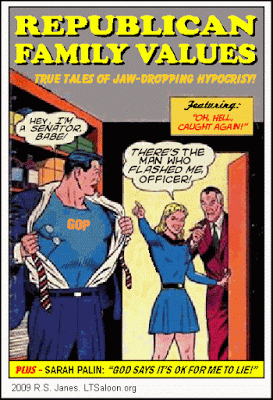
Art by R.S. Janes/ LTSaloon.

  • The lie of family values

It’s more than coincidental that those who preach most loudly about moral virtue are not only the most “virtue” challenged, but also have built into their system of beliefs a very convenient catch-all when they are found in their tawdry affairs: confession and redemption. Hypocrisy in any form is worthy of contempt, but to be able to “fall from grace” and find “redemption and forgiveness” so easily is the absolute nadir of disgusting irony.

President Clinton never made a case that he was a paragon of virtue, and yet his transgression was fodder for four years of “investigation” and then impeachment. Of course, those who pursued his scalp most vigorously always said “It’s not about the sex,” when, of course, it always was.

A short list of these hypocrites would include Newt Gingrich, Jim Bakker, Mark Foley, Ted Haggard, Larry Craig, Bob Allen, Glen Murphy Jr., David Vitter, Helen Chenoweth, Mark Sanford, John Ensign, some 20 odd bishops and cardinals of the Catholic Church, Jimmy Swaggart and some two dozen other major evangelical figures — all men who lied as they preached, creating one more false narrative among many others in the decade of deceit. The recent (second) divorce of Carl Rove, long an advocate for “traditional marriage” and family values, is just more of the same duplicity, the “do as I say not as I do” talk show nonsense for which he is appropriately nicknamed “The Architect.”

One of the most valuable cultural values that emerged out of the Enlightenment is a value that was and is at the heart of Western Civilizations greatness: the belief that we all ultimately had to answer before our protestant god for our human errors. Whether one is religious or not, from a sociological point of view it’s easy to see the virtue of this belief, as — unlike with the Catholics (through confession and forgiveness) — it became much harder to say one thing and practice another.

Hypocrisy was controlled. One did what one said one believed and would do. Integrity became a virtue — and it is this virtue that we are in the process of collectively losing, a fact demonstrated by the parade of hypocritical “family values” politicians spouting “family values” while they practice another kind of value altogether.

  • The lie of financial security

A popular television commercial used to promote a Wall Street business with the slogan, “We make money the old fashioned way — we earn it!” Unfortunately, no one really knew how right they were, as it turned out that the “new fashioned way” was to create money out of thin air, through financial sleight of hand.

The recent near catastrophic collapse of the entire financial superstructure upon which the planet as a whole depends is nothing less than the logical outcome of the real world application of Milton Friedman economics. Mr. Friedman could not conceive of good government, legitimate taxation, or necessary regulations. On the other hand, he could not believe that the “market” could fail, that businesses could act against their own long-term interests, or that the efficient market hypothesis was wrong. Unfortunately, it turns out he was wrong on all counts, and September of 2008 proves the case.

Beyond the big time “legal” hustles of financial “blind’em with bullshit” wizardry, — the “legitimate” public scams of making governments pay you off to the tune of billion –, the decade also played host to some of the greatest and many of the lesser con men in the world of “private investment.”

Bernie Madoff and Allen Stanford are just at the top of a pile of multi-billion dollar scam artists who preyed upon those desperate to be counted among the rich and famous, willing to entrust obvious liars with hundreds of billions of dollars in exchange for a few percent more on their “investments.”

In their case, the credulous paid for their own credulity. Unfortunately, the damage was not limited to just those individuals who had “skin in the game,” because society as a whole sustained a solid body blow, a strike to the heart of a social system based, in its ultimate expression, on trust.

When we stop trusting, we stop lending. When we stop trusting, we stop investing. We stop working to “get ahead” because it’s all seen as a sham — there is no ahead, but rather merely a series of chimeras created by a system built on deception — and this is not any way to run an economy. It remains to be seen if we have learned anything from this latest discovery that the financial wizard’s new clothes are no more credible than the emperor’s new clothes, but only time will tell. One thing is sure: when the citizenry stop believing in both their economic and their political systems, it’s serious and something serious will happen as a result.
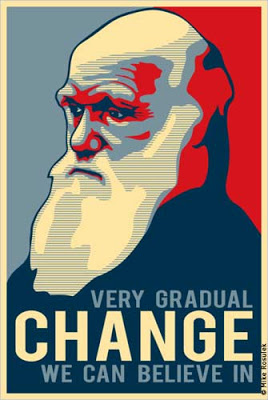
Graphic by Mike Rosulek / mikero.com.

  • The lie of change we can believe in

Due to the realization by a great many people of the truth of the forgoing, a societal thirst for change emerged that came to be embodied by a senator from Illinois, Barack Obama. He was swept into power on the strength of a promise, that real change could be affected in the political, economic and social fabric of the American society. Unfortunately, this too is a lie.

This is a most interesting lie because it’s not like all the others, lies told in full knowledge of their value to deceive. The lie of “Change We Can Believe In” was not delivered to be a lie — it just turned out that way. In the process, it turned up a greater lie yet: that fundamental change through electoral outcomes is possible.

The healthcare battle stands as testament to the impossibility of significant change from electoral outcomes. The paralysis of government is all too easily achieved by those opposed to change. A transformative president’s demonstrable inability to change the quality and the outcomes of national dialogues in what was once the great American Experiment, the first government of the people, by the people and for the people, uncovers a startling truth: that what has become an American Empire has become so massive that the laws of political and economic inertia cannot be either quickly or easily overcome — even by a popular president pursuing policy changes backed by the majority of the people.

That may, as many argue, be the ultimate virtue of good governance; it’s inability to be easily or quickly swayed by individuals or groups, however strong. Stability, even for all the wrong reasons, can be seen as a virtue. However, the laws of evolution within nature are immutable: biology teaches us that for species to survive they must change, adapt… or die — and this is surely also true for social systems. If the American socio-political and economic system is unable to right itself, to review, learn and correct the errors of the last 30 years, it will quickly cease to be the dominant planetary culture. And that is not a lie; it is a fact.

The lies told by those who have dominated the public square over the past 10 years have not only brought the world to the edge of economic chaos, but continue to promote the polices that got us to that point in the first place. It remains to be seen if we have collectively learned anything over this decade that will allow us to THINK FOR OURSELVES, to say “The emperor has no clothes,” and thus begin to restructure society so that we can actually deliver on what is promised — not just continue to console ourselves by going along with those who want to believe what they are told, to see clothes where there are none, to accept the lies.

[Sidney Eschenbach, 61, lives and works in Guatemala. His thoughts regarding developmental economics and trade are based on decades of development work in Latin America at various levels, community, corporate and national.]

The Rag Blog

Posted in Rag Bloggers | Tagged , , , , , , , | 4 Comments

BOOKS/ Jonah Raskin : Michael Pollan’s ‘Food Rules’


We can decide what we want to eat!
Michael Pollan: America’s new Food Czar

By Jonah Raskin / The Rag Blog / January 8, 2010

[Food Rules: An Eater’s Manual, by Michael Pollan. (Penguin, Trade Paperback, December 29, 2009, 112 pp, $11.00.]

A few years ago, Berkeley, California, super chef Alice Waters of Chez Panisse fame suggested that Michael Pollan and Eric Schlosser run for president and vice president, respectively. That didn’t happen, of course, and who knows what might have occurred if they had campaigned for public office. Perhaps the American public would know more about industrial farming and about the fast food industry than it does now.

Schlosser, the author of Fast Food Nation, has largely disappeared from view for the moment. But Pollan, who has written half-a-dozen books, is more visible than ever before. In fact, he seems to have taken it upon himself to become America’s new food czar. On The Daily Show the first week of January he was certainly acting like the food czar and repeated his familiar mantra to Jon Stewart. “Eat food. Not too much. Mostly plants,” he said.

In his latest book, Food Rules, which has just been published in a mass market, paperback edition, he sets out 64 rules about eating and diet. Pollan probably has as much of a right as anyone else in America to tell eaters what to put into their bodies and what to avoid.

In Botany of Desire (2001), he described the fascinating history and evolution of four plants — apples, marijuana, tulips, and potatoes — and their integral connections to human wants and needs. In Omnivore’s Dilemma (2006), he exposed the pernicious place of corn in agribusiness, and the noxious dependency on corn syrup. He also poked holes in the halo that Whole Foods, the nation-wide food chain, was trying to wear, as though it was a spiritual institution, not a business for profit.

Then, in In Defense of Food (2008), subtitled “An Eater’s Manifesto,” Pollan took on “nutritionism,” and what he calls “the Western Diet.” At the end of that book, he offered 23 suggestions about eating properly, such as “Avoid Food Products that Make Health Claims,” “Shop the Periphery of the Supermarket and Stay Out of the Middle,” and “Eat Mostly Plants, Especially Leaves.”

For his latest book, Food Rules (2010), he has taken his original two dozen suggestions, and boiled them down to their essence. He has also added 41 additional suggestions, such as “Serve a proper portion and don’t go back for seconds,” and stirred them all together to produce a small stew of a book. Food Rules is largely nifty packaging, or rather repackaging. It doesn’t add much that’s new. Pollan’s publisher, Penguin, has also distilled his 64 rules to 10, and has printed them on bookmarks available in stores.

It’s true that Pollan has a certain healthy sense of humor about his rules. “Food Rules” is after all a playful title, and on the last page the author urges readers and eaters to “Break the Rules Once In a While.” Still, Pollan seems to take himself much too seriously. Do Americans really need 64 rules? Probably not! Who is going to remember all 64 and abide by them? Not many people.

Moreover, Pollan doesn’t see that for nearly every one of his rules there are valid exceptions. Sometimes seconds are very much in order. Sometimes it even feels good to pig out at least once in a while. Granted, leaves — lettuce leaves and spinach leaves — are good for us. But so are root vegetables. Yams, carrots, turnips, and parsnips are wonderful, nutritious and tasty.

Rules, even food rules, have always been broken; perhaps they’re made to be broken. Pollan’s 64 rules surely will be broken time and again, and while some eaters no doubt appreciate guidelines, the American diet probably won’t really improve until Americans take charge of their own eating habits and don’t turn to so-called experts for advice. The country doesn’t need drug czars or food czars, whether they’re self-appointed or appointed to office by a president.

Pollan can be very astute about the food industry, but at times he can also be blind, as when he suggests that Americans “buy a freezer,” and also “pay more, eat less.” The trouble with those two suggestions is that increasingly Americans can’t afford to buy a freezer or to pay more for food.

More Americans are hungry today than they have been in the last decade. Hunger is afoot in the land. More Americans are also relying on food stamps. In the light of those hard realities, Pollan’s suggestions seem like they’re aimed at the middle and upper classes — and are meant for people who can afford freezers.

He’s certainly not as oblivious to hunger as the 18th-century person who said, “Let them eat cake.” (Historians say it probably wasn’t Marie Antoinette.) But sometimes Pollan’s food rules can seem silly, and oblivious to the needs and wants of hungry Americans dependent on food stamps for their very survival.

[Jonah Raskin is the author of Field Days: A Year of Farming, Eating, and Drinking Wine in California (University of California Press).]

Find Food Rules: An Eater’s Manual, by Michael Pollan on Amazon.com.

The Rag Blog

Posted in Rag Bloggers | Tagged , , , , , , , | 3 Comments

Cancer Survival : Reform Opponents Play the Numbers Game

Graphic from DragonArtz Design.

Cancer survival and health care reform:
Selective statistics paint distorted picture

By Barbara O’Brien / The Rag Blog / January 7, 2010

One argument you may hear against health care reform concerns cancer survival rates. The United States has higher cancer survivor rates than countries with national health care systems, we’re told. Doesn’t this mean we should keep what we’ve got and not change it?

Certainly cancer survival rates are a critical issue for people suffering from the deadly lung mesothelioma cancer. So let’s look at this claim and see if there is any substance to it.

First, it’s important to understand that “cancer survival rate” doesn’t mean the rate of people who are cured of a cancer. The cancer survival rate is the percentage of people who survive a certain type of cancer for a specific amount of time, usually five years after diagnosis.

For example, according to the Mayo Clinic, the survivor rate of prostate cancer in the United States is 98 percent. This means that 98 percent of men diagnosed with prostate cancer are still alive five years later. However, this statistic does not tell us whether the men who have survived for five years still have cancer or what number of them may die from it eventually.

Misunderstanding of the term “survivor rate” sometimes is exploited to make misleading claims. For example, in 2007 a pharmaceutical company promoting a drug used to treat colon cancer released statistics showing superior survival rates for its drug over other treatments.

Some journalists who used this data in their reporting assumed it meant that the people who survived were cured of cancer, and they wrote that the drug “saved lives.” The drug did extend the lives of of patients, on average by a few months. However, the mortality rate for people who used this drug — meaning the rate of patients who died of the disease — was not improved.

But bloggers and editorial writers who oppose health care reform seized these stories about “saving lives,” noting that this wondrous drug was available in the United States for at least a year before it was in use in Great Britain. Further, Britain has lower cancer survival rates than the U.S. This proved, they said, the superiority of U.S. health care over “socialist” countries.

This is one way propagandists use data to argue that health care in the United States is superior to countries with government-funded health care systems. They selectively compare the most favorable data from the United States with data from the nations least successful at treating cancer. A favorite “comparison” country is Great Britain, whose underfunded National Health Service is struggling.

It is true that the United States compares very well in the area of cancer survival rates, but other countries with national health care systems have similar results.

For example, in 2008 the British medical journal Lancet Oncology published a widely hailed study comparing cancer survival rates in 31 countries. Called the CONCORD study, the researchers found that the United States has the highest survival rates for breast and prostate cancer.

However, Japan has the highest survival for colon and rectal cancers in men, and France has the highest survival for colon and rectal cancers in women. Canada and Australia also ranked relatively high for most cancers. The differences in the survival data for these “best” countries is very small, and is possibly caused by discrepancies in reporting of data and not the treatment result itself.

And it should be noted that Japan, France, Canada and Australia all have government-funded national health care systems. So, there is no reason to assume that changing the way health care is funded in the U.S. would reduce the quality of cancer care.

The Rag Blog

Posted in Rag Bloggers | Tagged , , , , , | 3 Comments

Our Patriarchal History : The All-Conquering Cowboy


Cowboys and Indians:
History’s relentless cattle drive

…the thing we know as ‘history’ is just the continuing mechanism of the Indo-European cowboys stealing the livestock, the culture, and whatever else they want from what’s left of the Goddess driven producers of plenty.

By Carl R. Hultberg / The Rag Blog / January 7, 2010

Out on the broad grasslands, the mounted cattle herders come into contact with the Stone Age foragers long tied to the land. Some of these indigenous people may have also adopted the horse as a form of transportation, but they do not domesticate other animals; they hunt and fish, do a little scratch agriculture and move on.

The tough cattle drivers are also nomadic, using great wagons to haul their lives about. The cow punchers are not part of the established farming settlements, though they borrow what they need from that culture and, of course, are known to steal cattle. The farmers are momma’s boys, Goddess worshippers, their harvests and livestock easy prey for the ruthless, sky God worshipping cowboys. Yes, this is a very old, familiar story.

But this old West show is really the story of Western humanity, still today acting out an endless range war.

The original horse-mounted cattle driving people were from the Steppes of Russia and the Ukraine. Their predatory activities, aimed at the pioneer matrilinial farming cultures operating from the Danube to the Dnieper river valleys circa 3800 BCE became what we know as ancient history which slowly evolved, eventually producing our modern culture.

The language of these original Russian cowboys, reconstructed as Indo-European, was the basis for most Western languages as well as Persian and Indian Sanskrit. Indo-European thought permeates our literatures and philosophies through the structure of their language. Their gods and mythologies led to our Western religious ideas. They were where we came from.

As the original all-conquering Patriarchs, everything about the Indo-Europeans, especially their birthplace, has been highly sought after by modern male competitors. Ever since the British discovered the Vedas and the common Indo-European language factor when they conquered parts of India in the 1700s. The Nazis searched for the legendary Hunza people in Tibet in the 1930s, hoping to find the long lost blue eyed, blonde haired proto German race. The skinheads in Idaho still cling to these ridiculous racist theories, calling themselves Aryans hardly noticing that the inhabitants of the Islamic Republic in Iran are doing the same thing. (Iranian = Aryan.)

Maybe — in the eyes of the male God — being part of the original all conquering European mantribe, the Indo-Euros, could be as good as, or even possibly trump, being one of the original Israelites, for whom He wrote the big Book. That seems to be the way the male mind works. If there is any legitimacy to the male dominant cultures we see in operation around the world, it must be through an original connection to the first male race, the one olde man God made His original covenant with. Primitive. To this day, extremely primitive.

But thanks to the studies of archeology and linguistics, we now know that instead of just one basic human principal and one basic unified human experience, there are actually three human types and three separate human histories.

The first human type was the forager. He and she traveled all over the world eating roots, wild fruits, and grains, trapping and killing animals, fishing for their food. These people were relatively easy to get along with. They had no basic responsibilities other than keeping up with the cycles of Nature. Labor was divided between the sexes on a fairly equal basis. Men hunted and fished, creating biodegradable technologies and personal clan animal loyalties to facilitate those activities. Women gathered wild foods, prepared meals, raised children and developed technologies like weaving, potmaking, knotting. People existed and evolved like this for 100,000s of years.

At some point, probably in the Middle East, agriculture was developed. Also certain animals were domesticated. Although it is probably safe to say these were female cultural innovations, being part of the gathering non-hunting part of the male/female labor divide, we can probably never be sure. What is known is that as early as 8000 BCE farmers, the second great human type, were operating in Anatolia (modern Turkey), moving into Greece and eventually, a few thousand years later, into the Balkan regions of Europe. If there ever was a Goddess worshipping culture among human beings, these inhabitants of Old Europe would have been it.

Images of female authority and bounty are everywhere in the archeological evidence. Although we assume they possessed no written language, they none the less used their knowledge of Nature and proto-science to create many new varieties of domesticated plants and animals. The same ones we use today to sustain us.

So farmers were very different from the foragers they had evolved from. Instead of the life free from all obligations except understanding Nature, the farmer had a slew of responsibilities. Just preserving seed grain and young livestock for future use or trade was an enormous shift in human behavior from the immediacy of hunting and gathering.

Maintaining foodstock genetic modification projects that spanned generations of husbanders and cultivators would seem impossible without written records, from our modern competitive points of view.

But then again, we have been trained through our languages to think like the male dominant Indo-European usurpers, the third type of people, not the original Goddess worshipping pioneer farmers.

The Indo-Euros were a hybrid. Their horse and cattle currency (the first) became our world of stocks and bonds. Their attempt to create a stable culture based on useful elements within the Goddess farming experience without surrendering their male dominance and male lineage projection is still the script to the movie we all get to act in every day.

There just has to be a way to be a successful ruthless competitor promotion driven materialist spiritual community service oriented family man (or its female equivalent). The proverbial square peg in the round hole. Got a bigger hammer?

If only we could find the original homeland of the Indo-Europeans, maybe then we’d come to understand what it was in their vision that set us on this course of endless animal sacrifice, male dominance, materialist competition, human warfare, and eco-destruction. The trouble is all we have left from the I-E is the language they bequeathed to us. And, of course, the way of thinking that goes with it. What we would find if we discovered the original “Aryan” homeland could only be that the Indo-Europeans and the male reverent way of thinking they passed on to us are the explanation for why we will always find it difficult to contemplate female origins for human culture.

What was it we were talking about? I got distracted while dreaming about Conan the Barbarian again. The hope for humanity is that we will finally stop worshipping the Cowboy and go back to worshipping the Cow. The male urge to strut and kill has a natural outlet. It is called hunting and it goes back just about as far as we do as a world presence.

But this has gone way beyond hunting, and the male domain is now the entire experiential base of humanity. The human female urge to nurture and protect no longer has a viable outlet. There are few if any surviving female lineages. We are all patrilieal cowboy predators now.

Yet are there still situations where the historic benefits of our original female enculturation remain apparent? A garden, or perhaps a kitchen or a school. The naked statue of Woman as Justice, still holding the scales outside the courthouse, the judges with their wigs and robes. Faint echoes.

The cowboy tries to straddle the impossible horse. The foreknowledge of the Matriarchs is now an endless field of plunder and exploitation. The farm is a factory that poisons the people, the animals and the land. Industries that derived from simple home technologies now strip the world of its resources and create endless piles of useless waste. The land, the air and the sea are all fished clean purely for the male ideal of perfect domination.

Population continues to peak as Patriarchs create people solely as possessions, even if they are ultimately unwanted and must be abandoned, incarcerated or exterminated. The ill advised biproducts of unadulterated human male animal success are everywhere.

Men refuse to agree. How can they? They are not designed to agree, only to compete for favor. So how can men and the women who think like them be satisfied controlling the species when they know, unconciously, what they do will ultimately crush Humanity?

When do we finally dare break free from the staring contest with Conan the Indo European and look at last at the Neolithic villages where the Motherlode of humanity’s wealth and knowledge was actually first unEarthed?

Look again at the terra cotta figurines of the large ancient women… now what do you see?

[Carl R. Hultberg’s grandfather, Rudi Blesh, was a noted jazz critic and music historian, and Carl was raised in that tradition. After spending many years as a music archivist and social activist in New York’s Greenwich Village, he now lives in an old abandoned foundry in Danbury, New Hampshire, where he runs the Ragtime Society.]

The Rag Blog

Posted in Rag Bloggers | Tagged , , | 6 Comments