Alice Embree on El Salvador : Reflections on a People’s Victory, Part 3: Face of Victory

‘Venceremos!’ he shouted, and asked that we put his picture on the internet. Photo by Alice Embree / The Rag Blog.

The face of victory

It was in the small, dusty town of Rosario de Mora that I witnessed the historic election in El Salvador.

By Alice Embree / The Rag Blog / May 13, 2009

[This is the third in a four-part series on El Salvador by The Rag Blog’s Alice Embree, who was part of Committee in Solidarity with the People of El Salvador (CISPES), an international team observing the March 15, 2009, Salvadoran elections. For a live report, join the author and others at Monkey Wrench Books in Austin on Wednesday, May 13, at 7 p.m. For the previous articles in this series, go here.]

It was in the small, dusty town of Rosario de Mora that I witnessed the historic election in El Salvador. Our seventy-member CISPES delegation was trained as election observers by an organization called FUNDASPAD. In the air-conditioned splendor of the San Salvador Radisson, we presented our passports, were photographed and given credential badges. FUNDASPAD issued each of us a vest, cap, and canvas tote bag with the election code and observer rules. We were among 4,000 international observers that included delegations from the Organization of American States (OAS) and the European Union (EU). Although the election was largely invisible to U.S. media, the rest of the world knew history was in the making.

Decked out in our tan attire designating us as “Observacion Internacional de Eleccion 2009,” we were divided into teams. My four-person team was assigned to Rosario de Mora. Rosario had one election center in a school with sixteen voting tables. We would each have four tables to watch. Annie from Portland was designated our leader because of her Spanish skill and previous observer experience. We paid a visit to the town the day before the election and introduced ourselves to both FMLN and ARENA representatives. Then we were allowed to see the school. Annie expressed concern about an elevated ramp entrance close to a voting booth location because someone could look down to see people as they voted. The next day the arrangement of tables was slightly altered in response to the concern.

On election day, March 15, we left San Salvador at 3 a.m., dropping one team in nearby San Tomas, and proceeding down the winding, bumpy rural road to Rosario. We introduced ourselves to the police stationed at the polls and were allowed to stash our water bottles in their classroom headquarters. At 4:30 a.m. we entered the election site. Across the street, there was already a buzz of activity at the FMLN headquarters and by 5:00 all of the designated FMLN election workers were lined up in table order ready to enter.

In the U.S. we are accustomed to machines and a few, often older, election workers overseeing several booths. It was humbling to observe the low-tech system and the degree of citizen involvement. They had cardboard ballot booths and ballot boxes. There was nothing flashy about the material, but the election workers in Rosario were dedicated. It was as though everyone knew they were involved in an historic decision.

In the January municipal and legislative referendum, more parties had been represented, but the presidential election had only two candidates. Each voting table had four election workers seated — a president, secretary and two “vocals” to check the registry list. They alternated roles; an FMLN president at odd-numbered tables, ARENA president at even-numbered tables. Each table could have four vigilantes or election observers. Those seated at the table didn’t wear party designations, but the vigilantes had on their party colors – red FMLN vests and red, white and blue ARENA vests.

At 5:00, the election workers entered. It was dark and poorly lighted. Boxes were distributed to each table. With flashlights, the election workers checked that the material was all present — ballots, markers, ink to mark fingers, a cardboard booth and blue cardboard ballot box to assemble, the “pardon,” or registry list for each table.

At 7:00 the voters began to arrive. It got packed after church with families and children in their Sunday best. Vote buying had been reported in previous elections at a site several blocks from the polls. We had been told to be vigilant about people trying to photograph their ballots — an indication that they were getting paid and needed proof.

People walked or came in the backs of pick up trucks to vote. The elderly often stood baffled by the canvas curtains on the cardboard booth, trying to figure out if they should put their head through or over the curtains. This was a new feature recommended by the OAS to ensure privacy. These were my images: dedicated election workers, people who couldn’t read or write placing their inked finger near their registry picture, a blind man escorted by his grandchild. With our slick election machines, we are distanced from that simple act of placing a mark on a ballot.

The transparency of the count at each table was also impressive. The ballots were removed from the box by the table president, shown to everyone at the table and placed with an FMLN representative or with an ARENA representative. Sometimes the mark was unclear, an “X” in the middle that didn’t touch either party insignia or touched both. Votes could be nullified if they weren’t clear. Everyone would enter the debate, occasionally heated, until it was resolved.

Since each party was represented equally, there had been concern over resolving disputes. But, disputes were always resolved after vigorous debate. Rosario de Mora wasn’t expected to go to the FMLN. Out of the nearly 5,000 votes cast, 53% went to ARENA. But four tables went to the FMLN. As the counts were finalized for those four tables, a huge cheer would go up at the table and be picked up by FMLN workers at all the other tables.

After the counts were completed, the election workers at each table entered them on to the “Actas,” the official results. Unused ballots were stamped to invalidate them. We observed the faxing of the sixteen “Actas,” checking the totals we had written down at each table against the pages faxed to make sure there were no substitutions. The election workers began to clean up the schoolyard.

It was a long day. We called in to FESPAD at designated times with our status reports, responding to a series of questions on timeliness, training, credentials, lines, observer and police presence and approximate vote totals. We checked totals each hour to make sure ballot numbers matched registry tallies. We offered occasional “observations” when we saw minor infractions. The EU sent two observers who stayed for two hours. The OAS had an observer there most of the day. Our team stayed from 4:30 a.m. until the results were faxed and we left when the ballots were taken from the schoolyard to be escorted by police to San Salvador.

At about 7:00 p.m., two hours after the polls closed, we were getting our backpacks and water bottles ready to leave. By then, election news was filtering in to the FMLN party headquarters across the street. They knew where they were winning and how large the turnout was.

An FMLN “vigilante,” or observer, in his red FMLN vest told us that the FMLN had won. “Venceremos!” he shouted, literally jumping with excitement. That day we were neutral election observers. All I could do was take his picture and he wanted me to put it on the Internet. For me, his exuberant joy is the face of victory.

Also see Alice Embree on El Salvador : Reflections on a People’s Victory, Part 1 by Alice Embree / The Rag Blog / May 11, 2009

And Alice Embree on El Salvador : Reflections on a People’s Victory, Part 2: Organizing by Alice Embree / The Rag Blog / May 12, 2009

The Rag Blog

Posted in Rag Bloggers | Tagged , , , , | 1 Comment

Mesmo’s Meanderings : Bud Shrake, Acapulco Gold, Mad Dogs and the Raw Deal

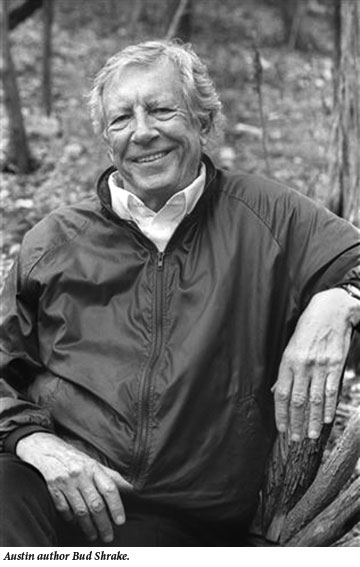
Texas literary legend Bud Shrake, 77, passed away on May 8, 2009, in Austin. Photo from The Texas Observer.

Bud Shrake, 77, a seminal literary figure (“a lion of Texas letters,” according to the Austin American-Statesman) and an Austin underground icon, died Friday, May 8, in Austin, after a long battle with lung cancer.

Funeral services yesterday in Austin drew an overflow crowd of luminaries and amigos; Willie Nelson sang at Bud’s funeral and Jerry Jeff Walker performed at his gravesite. Shrake was buried next to former Texas Gov. Ann Richards, his long time companion.

For Bob Simmons’ Rag Blog article on his friend Bud Shrake’s life and death, go here.

For an enticing set of rowdy and illicit memories, read Gerry Storm’s account, below.

Thorne Dreyer / The Rag Blog / May 13, 2009

‘Back in ’68 Joe Brown and I were stranded in the Big Apple with several suit cases of Acapulco Gold… Bud not only bought a couple of pounds but connected us with his gang at Elaine’s, the posh discothèque where we spent the evenings peddling the load by the pound and drinking.’

By Gerry Storm / The Rag Blog / May 13, 2009

I first met Bud in New York City in the autumn of 1968. He was a sports reporter at the time, one of the rising stars in this field, employed by Sports Illustrated (to which I was a subscriber). I had lived in Dallas in the early ’60’s and followed his writing in both the Times Herald and Morning News.

I still recall a travelogue he wrote in about 1964 for SI extolling the beauty and virtues of Austin and the Hill Country, not a word about sport but such a work of love for a place that I immediately started thinking about moving there. In 1965 I did so. He was right, it was quite a place. At the time I could not have imagined that I would meet him one day and claim him as a good friend.

But back in ’68 Joe Brown and I were stranded in the Big Apple with several suit cases of Acapulco Gold. Our buyer had pulled a cross on us and we were in trouble, far away from home in a strange place, nearly broke, and carrying around a dangerous load. Joe called Bud who invited us to his swank high rise apartment where we stayed for several days as we moved the load. Bud had not only bought a couple of pounds but connected us with his gang at Elaine’s, the posh discothèque where we spent the evenings peddling the load by the pound and drinking. One of the lessons I learned was not to get into a drinking contest with pros like Bud and Joe. Needless to say I was very impressed with Bud the man and happy to add he and his lovely wife Doatsy to my list of new friends.

Our next encounters centered on the Mad Dogs, Bud’s drinking, doping, and social club in West Lake Hills. This was 1969 and I was playing drums with Shiva’s Head Band and renting a house in the super suburb. Members of the club who lived in the vicinity included Gary (Jap) Cartwright, Billy Lee Brammer, and Paula Sarnoff (most often the hostess for the wild parties which brought us together). And there were always visitors at our flings, some of them quite well known in literary circles as well as professional athletes.

During this time there was no public hangout for the likes of us in Austin and our band desperately needed a place to play. Eddie Wilson was the band’s manager and he had located the building that would become the Armadillo, but we could not afford to lease the place and convert it into a rock and roll dance hall. I took our plight to Bud, introduced him to Eddie and he wrote us a fat check which enabled us to launch the place. We sealed the deal with a shaker of martinis. Some of you may recall that Bud had a couple of rooms, one with a bar, reserved in the original ‘dillo, Bud’s private lair, Bubba meets Elaine’s.

I turned down an offer to manage the place and moved to Marin County soon afterward. My plans called for me to escape from the rock scene, not manage a club. This adventure lasted there for seven years, mostly in West Marin, one of the best times of my life. While there I met Peter Boyle who had just worked on Bud and Jap’s original flick, “Mad Dogs! You’re one of the Mad Dogs from Texas? Man, that movie was the most fun I’ve ever had. Those guys were unbelievable. You don’t happen to have any of that Austin weed do you?”

When I returned to Austin in 1976 the rumblings which led to Eddie’s ouster from the Armadillo were in place and he was looking to open a restaurant. Sure enough the Raw Deal was born, with Bud’s sponsorship and Eddie’s drive. Later the place was “sold” to Jim Smitham and Fletcher Boone and Eddie set about creating Threadgill’s, a real restaurant but not nearly as much fun.

The Raw Deal evolved into, as might be expected considering the personalities involved, quite a unique place. I especially liked the original little joint down across the creek from the police station. Bud and I spent many a night closing the place and draining whatever bottle(s) he had brought along. I didn’t know at the time that he had a degree in philosophy in addition to his English studies. His mind was quite profound. In addition to the obvious, Bud was the funniest man I have ever known.

Ultimately both he and Jap were informed by their physicians that they had to either stop drinking or die. Both of them were in pretty bad shape. You can’t have that much fun without paying a price. The ease with which they went onto and stayed on the wagon was remarkable. Give up booze? Nothing to it, only been doing it for 50 years. The quality of their work and their humor seemed to be unaffected. But there was a negative slant to their abstinence as well, as we never saw them around any more and the quality of the parties slid backward. I hadn’t seen him for many years although I had read his books and seen his movies.

And so it went. When I heard that he had cancer I thought seriously about driving to Austin to bid him farewell. Unfortunately I too had (have) the disease and was in no shape for such a cruise. Besides, what would we have done? Now that I have had a few days to digest his parting there is no sadness. There goes one of the good ones. I am sure that he handled death the same way he always handled adversity, with a quip and a grin. Although I care next to nothing about golf I am going to read “The Little Red Book” and expect to be entertained royally one more time.

[Gerry Storm, aka Mesmo, is a former Austin musician, activist and union leader who now lives in rural New Mexico where he contributes to The Rag Blog when he feels like it . His interests combine the political with the spiritual. ]

Please see Bud Shrake, 77 : This Texas Tall Tale is a Literary Legend by Bob Simmons, introduction by Thorne Dreyer (with links to other obits) / The Rag Blog / May 11, 2009

Also see

The Rag Blog

Posted in Rag Bloggers | Tagged , , , , , , , | 1 Comment

Rabbi Arthur Waskow : American Jews, Middle East Peace and a Crisis of Values

Rabbi Arthur Waskow, pictured at the North America Conference of Rabbis for Human Rights held in Washington, D.C., in December 2008.

If the U.S. insists on peace in the Middle East, will there be a crisis over values and identity within American Jewish life?

By Rabbi Arthur Waskow / The Rag Blog / May 13, 2009

Is the American Jewish community headed for a deep internal split over our values and commitments if the U.S. and Israeli governments collide over whether to be serious about a two-state peace settlement?

The Israeli-Palestinian collision, since Hamas rocket attacks on parts of Israel and the Israeli bombing and invasion of Gaza, has now reached a crisis point. It has become both a special case of the collision between some elements of Islam and some elements of the West — and a burning source of anger on both sides that makes harder any peaceful resolution of issues between the West (especially the U.S.) and some Muslim states and organizations.

On both sides of these divides, there are some who itch for outright war, and some who seek peaceful relationships. The U.S. was attacked on its own soil by a group claiming legitimacy as Muslim, though the overwhelming majority of Muslim teachers and leaders in the world have rejected that claim. The U.S. government is now militarily occupying two majority-Muslim states (Iraq and Afghanistan), is openly attacking villages and regions in another (Pakistan), is constantly hinting at both war and diplomacy with a fourth (Iran), and is closely allied with a state –- Israel–that is militarily occupying and blockading a fifth mostly-Muslim people — Palestine.

It is not hard to see why many Americans view Muslims and Islam as “the enemy,” and why many Muslims view the U.S. government as “the enemy.”

In this situation, the Israel-Palestine relationship is a source of great danger to the U.S. as well as to both colliding peoples. The new American president has asserted a strong American interest in peacefully resolving that conflict. But he, and all of us, face deep intransigence and a propensity to violence both in the Israeli government and in the leadership of the Palestinian people.

Most Americans and most Israelis have gotten used to a relationship in which the U.S. government mouths a wish for peace but does almost nothing to press Israeli policy toward necessary steps for making peace. U.S. policy has been carrots for Israel, sticks for Palestine. Neither has worked.

It is not yet clear whether President Obama is ready to use pressure against Israeli policies of occupation and blockade. If he does, there will be not merely a deep political crisis within the American Jewish community, but a deep identity crisis: can American Jews whose values seek peace and who admire Obama break with an Israeli government that refuses to take the crucial steps for peace? What would such a collision mean for the comfortable assumption of most American Jews that there is no conflict between their commitment to liberal values and American interests, and their commitment to Israel?

One step even deeper into the values crisis: Forget about U.S. policy. If the Israeli government’s behavior and policy diverge further and further from the values of peace and justice rooted in prophetic and rabbinic teaching, will American Jews choose to support Israeli government policy anyway, or pursue their ethical commitments?

There is no real contradiction between commitment to Israel and support for a U.S. peacemaking policy. It is clear that no American policy will abandon support and protection for Israel. But to make peace, it will be necessary to end the Israeli occupation of the West Bank and East Jerusalem, the settlement of hundreds of thousands of Israelis there, and the blockade of civilian goods from entering Gaza.

By now, so many Israeli Jews and American Jews have gotten so used to the sense of control and the economic benefits of occupation and settlement that many will think that dismantling the occupation is an attack on Israel. They may react that way even if part of the proposed peaceful solution is a great advance in Israeli security through a full peace treaty between Israel, a new Palestine, and all Arab states.

Obama is extraordinarily adept at changing atmospherics in foreign affairs; but it is not so clear he will carry through with policy change if the going gets rough and the opposition gets rancorous. For example, to persuade the Israeli government to dismantle Israeli settlements on Palestinian land it might be necessary for the U.S. to threaten to cancel military aid equal in dollars to the amount the Israeli government spends in supporting and subsidizing the settlements. Would Obama be willing to take on that political firestorm?

If so, it will be important for some American Jews to take public independent positions despite the bitter attacks that would be likely to come from the right and center of “established” American Jewish life.

Already I know of rabbis, professors, and other people who have been bitterly attacked for expressing such views as calling for an independent investigation of charges that both Israelis and Palestinians committed war crimes during the battle over Gaza. Those attacks have intensified because some in established Jewish organizations see that a crisis is looming, and are fearfully trying to circle the wagons before it erupts.

That is why it is important to build support for the five “pro-peace, pro-Israel” organizations and the one rabbinic Israel-connected human-rights group that have already built a solid base in the American Jewish community, among Jews who take seriously their commitment to Israel. I am NOT saying these organizations do or would adopt the kind of position I have just described. But they come with an independent mindset that will be crucial in a crisis.

The six are:

1. J Street, a lobbying group that has in one year built a strong base of contributors and a strong network of connections on Capitol Hill. Its emergence and swift creation of a strong Email constituency has rattled the established Jewish organizations more than any of the other groups, since it poses a direct challenge to AIPAC.

2. Brit Tzedek v’Shalom (Jewish Alliance for Justice & Peace). Grass-roots organization with a number of chapters, a rabbinic cabinet, and a program for bringing members to lobby Congress on special occasions.

One recent Brit Tzedek initiative is a pledge, as follows:

WE’VE GOT YOUR BACK, MR. PRESIDENT

Dear President Obama,

Please know that I share your sense of urgency to bring peace to the Middle East. Therefore, I pledge:

  • to back your committed and persistent leadership in support of a negotiated two-state solution
  • to work within my communities and within the Congress to build thepolitical will for you to take decisive and bold steps
  • to make it known that an American President who dedicates himself to establishing a durable Israeli-Palestinian peace acts in the best interests of Israelis, Palestinians, the United States and our allies
  • to support you in staying the course through difficult times and to celebrate your successes.

In Hebrew, the words for wind and for spirit are one and the same—ruach. As you work for peace, I promise that the ruach of the American Jewish people and our friends in the pro-Israel community will be at your back.

To sign, go here.

3. Americans for Peace Now. Grew out of and mostly beyond connections to Shalom Achshav, which used to be the strongest of Israeli peace groups. APN does not sponsor chapters, has focused on educational work around the constant growth of Israeli settlements on the West Bank, and has some connections with Obama administration foreign-policy staff.

4. Israel Policy Forum, a think tank that grew out of the Israeli Labor Party while it was still committed to peacemaking. IPF now has a more explicit, forceful, and iconoclastic position than the others in urging US insistence that Israel move toward peace.

5. Meretz USA, closely connected to the small Israeli political party that remains peace-oriented. Meretz in Israel approved the invasion of Gaza; Meretz USA criticized it.

6. Rabbis for Human Rights/ North America. RHR/NA both supports the human rights work of RHR in Israel and carries out its own work for human rights in America, focused on ending the use of torture. It is constrained by its focus on human rights and its connections to RHR in Israel to walk very carefully on (or to avoid) broader peace questions.

For the sake of America, Israel, and Palestine, this is important work.

[Rabbi Arthur Waskow, a regular contributor to The Rag Blog, is director of The Shalom Center. Rabbi Waskow is co-author of The Tent of Abraham, author of Godwrestling — Round 2, Down-to-Earth Judaism, and a dozen other books on Jewish thought and practice, as well as books on U.S. public policy. The Shalom Center voices a new prophetic agenda in Jewish, multireligious, and American life. To receive the weekly on-line Shalom Report, click here.]

The Rag Blog

Posted in Rag Bloggers | Tagged , , , | 1 Comment

If We Can’t Have a Good Laugh, What Do We Have?

Source / Cracked.com

Thanks to Leslie Sklar / The Rag Blog

Posted in RagBlog | Tagged , , | 3 Comments

Alice Embree on El Salvador : Reflections on a People’s Victory, Part 2: Organizing

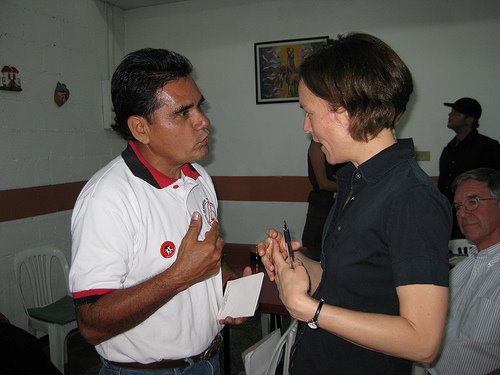
SETA organizer from El Salvador talks with SEIU organizer from the U.S. SETA is the Salvadoran water workers union leading the fight against privatization. Photo by Alice Embree / The Rag Blog.

Our delegation heard from CONPHAS representatives, students, human rights organizations, legal rights advocates and publishers of popular education materials. These representatives were eloquent in their understanding of the neo-liberal policies of globalization.

By Alice Embree / The Rag Blog / May 12, 2009

[This is the second in a four-part series on El Salvador by The Rag Blog’s Alice Embree, who was part of Committee in Solidarity with the People of El Salvador (CISPES), an international team observing the March 15, 2009, Salvadoran elections. For a live report, join the author and others at Monkey Wrench Books in Austin on Wednesday, May 13, at 7 p.m. For the first article in this series, go here.]

Our CISPES delegation received a crash course in El Salvadoran history and then was introduced to the ingredients of popular victory. As we traveled via bus to meet with university students, this song blared through the speakers:

No, no, no basta rezar
Hacen falta muchas cosas
Para consequir la paz.

No, no, no, praying’s not enough
There’s a lot of work to be done
To gain peace.

The upbeat song by the Venezuelan group Los Guaraguao was popular on the FMLN radio. It was an appropriate theme song for the tireless organizing that had been undertaken. The FMLN battled through the eighties in a civil war with many victories and defeats. They took much of the capital, San Salvador, in a 1989 military offensive. Under a U.N.-brokered peace accord, they put down their weapons. Many of the progressive peace accord provisions were not implemented or enforced under ARENA rule. The deck was clearly stacked against the FMLN. Election financing, the press and the electoral apparatus of voter registration were in the hands of ARENA and their wealthy allies. And a system of fraud had been perfected and utilized repeatedly. It included vote-buying and busing foreigners from adjacent countries to the polls with false registration cards.

The FMLN didn’t rest or just pray. They organized ceaselessly and they maintained a unified front –- a feat virtually unheard of on the left, or for that matter, in any kind of politics. They gained delegates in the legislative assembly and won municipal elections, but ARENA held on to executive power.

Key to the March 15 electoral success was a coalition of social and popular movement groups called Concertacion Para un Pais Sin Hambre y Seguro (CONPHAS). The coalition included organizations from the informal sector, market vendors, organized labor, and environmental activists fighting river pollution from foreign-owned mines. The concept is similar to a U.S. Jobs With Justice coalition. Under the umbrella of Jobs With Justice, unions, advocates and political groups with distinct agendas come together and agree to mutual support. CONPHAS is like Jobs With Justice on steroids –- a coordinated effort with a sophisticated political analysis, a diverse organizing strategy and a clear goal of changing government. The social movements and the Frente Sindical Salvadoreno (FSS), or Salvadoran Union Front, working together through CONPHAS, were important FMLN allies.

Our delegation heard from CONPHAS representatives, students, human rights organizations, legal rights advocates and publishers of popular education materials. These representatives were eloquent in their understanding of the neo-liberal policies of globalization. Equipo Maiz, a publishing house specializing in popular education, is a case in point. Their work is based on the education model of the Brazilian Paulo Freire. Pamphlets are illustrated with cartoon images but cover subjects like CAFTA, globalization, neo-liberalism, and community planning. While the subject matters are complex, the presentation is intentionally accessible and non-academic. Equipo Maiz does more than publish. Since 1983, they have convened workshops and theater productions throughout the country to further popular education.

At the Fundacion de Estudios Para la Aplicacion del Derecho (FESPAD), economist Raul Moreno addressed our delegation. Insightful and funny, Moreno speaks about the new face of exploitation — neo-liberalism. He dissects the elements and explains how the pieces work together. First, neo-liberalism relies on the use of the Central American Free Trade Agreement (CAFTA), or Tratado del Libre Comercio (TLC) in Spanish, to create a legal framework that subjugates a country’s sovereignty. With this legal framework in place, there comes a push for privatization for public services such as water and health and for development through mega-projects –- super-highways for data and goods –- that serve the interests of transnational corporations. A third part of the strategy has been to ramp up the repressive apparatus of the state. Legislation modeled on the Patriot Act has been passed under the guise of fighting terrorism and then used against activists protesting water privatization.

Both Moreno and the water-workers union (SETA) spelled out the way the privatization agenda has been furthered. It should be familiar to anyone with experience in public sector organizing. First, public sector funding is cut so services are compromised. Then an agenda of “decentralization” is pushed. The privatization battles are waged community-by-community, making national opposition more difficult. (Does this sound like education vouchers and charter schools?) International Monetary Fund (IMF) loans are conditioned on privatization and pursuit of mega-projects, with the puppet strings attached to corporate interests. It was chilling to hear the process described so vividly in El Salvador. It was like looking into the mirror image of a globalization strategy that pushes privatization of public services in the United States and ships off U.S. jobs and industrial capacity to unregulated maquilas all over the world.

Our delegation met with representatives from many different sectors. What emerged from these exchanges were the points of unity motivating the FMLN and the social movements that supported them. They shared frustrations, a sophisticated analysis and a common agenda. And they were tireless organizers. The breadth and depth of their organization was stunning. It was as though an ocean swell had gathered strength to become a massive wave.

Please see Alice Embree on El Salvador : Reflections on a People’s Victory, Part 1 by Alice Embree / The Rag Blog / May 11, 2009

Also see:

The Rag Blog

Posted in Rag Bloggers | Tagged , , , , | 2 Comments

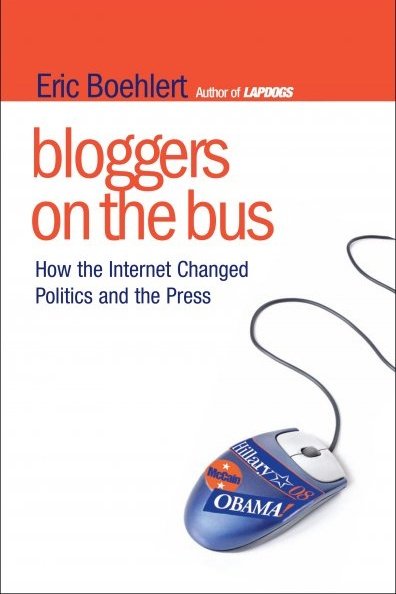
BOOKS / Eric Boehlert’s ‘Bloggers on the Bus’

It’s a very fast, entertaining read, and since it focuses (almost) exclusively on the liberal blogosphere it mostly avoids the sense of triumphalism you might get in a more partisan book.

By Kevin Drum

If you’re interested in the political blogosphere and the netroots in general, Eric Boehlert’s Bloggers on the Bus is a great read. It’s built around potted sketches of some of the best known liberal bloggers (Atrios, Digby, Jane Hamsher, John Amato, Arianna Huffington, Glenn Greenwald, and others) and some of the blogosphere’s greatest campaign hits during 2008 (the Obama MySpace debacle, the John Hagee meltdown, the Sarah Palin eruption, the great sexism debate), and Boehlert really does a terrific job of diving in and explaining how everything unfolded. I followed almost all of this stuff pretty obsessively in real time, but I still learned lots of details I’d never heard of before.

It’s a very fast, entertaining read, and since it focuses (almost) exclusively on the liberal blogosphere it mostly avoids the sense of triumphalism you might get in a more partisan book. Which is a good thing since it ends with this:

The bad news for liberal bloggers was that as the Obama campaign unfolded, as his new commuhity-based coalition was being built and celebrated, it became obvious that bloggers were never really invited to the party. Liberal bloggers simply never became active partners with Obama in the way they had been with the Dean insurgency four years earlier, and the way they had been with scores of Democratic politicians in skirmishes throughout the Bush years. Why? Mostly because Obama didn’t seem to want the bloggers around.

That’s true, isn’t it? For all the hype, the liberal blogosphere in 2008 had its biggest impact in state and local races, just as it did in 2004. It’s true that it was much more successful in pushing stories into the mainstream media than it was four years ago, but in terms of being active in the Obama campaign itself, it wasn’t. And that was primarily a choice made by Obama himself, who apparently felt that the raw partisanship of the blogosphere was something he wanted to keep at arm’s length.

There were a couple of things missing from the book that struck me. The first is specific: the Jeremiah Wright firestorm, which begged to be included in any book about the 2008 campaign, but which Boehlert inexplicably never mentions. The second is more general: Boehlert does a good job of showing how the blogosphere managed to gain attention for stories that might otherwise have gone unnoticed, but at times his account feels too blinkered. The mainstream media played a pretty big role in all this too, and even in a book about the blogosphere this deserves a little more attention. At the very least, there should have been a chapter devoted to the relationship between blogs and the MSM.

But these are nits. If you’re looking for a blog’s eye view of Campaign ’08, Bloggers on the Bus is a terrifically readable and carefully reported book. Highly recommended.

Source / Mother Jones / Posted May 5, 2009

The Rag Blog

Posted in RagBlog | Tagged , , , , , , | Leave a comment

Larry Piltz : These Future Days

“A” is for Android / James “Jimbot” Demski / Idiot Box Artwork.

These Future Days

I’ve got a clock that runs on water
my dog takes Chinese herbs
I live next door to my dear wife’s house
and I’m not a bit perturbed
my car is half electric
and could run on mayonnaise
it’s said there’s nothing new under the sun
try telling that to my solar shotgun
then tell me you’re not amazed
to be alive in these future days

my computer’s built in Iceland
my printer in Monaco
my software’s written in some nice land
I print out on trees from Idaho
my money’s purple paisley
it has chips that make it smart
It tells me that I should spend it
on a wheelbarrow from Wal-Mart
oh tell me you’re not amazed
what life’s like in these future days

my doctor is an android
her clinic’s on the moon
she mostly treats the paranoid
and swears she’ll see me soon
my lawyer lives in the ocean
his lawyer lives up a tree
they swear they’ll file a motion
to do something about me
cause they think I’m too unphased
to appreciate these future days

my job’s become elastic
and I’m stretched way too thin
though I’m 14% plastic
I know now when to say when
my eyeballs are half vinyl
and I see you’re looking good
are you sure your answer’s final
cause I’m 30 percent wood
I’m so glad this issue’s raised
In these heady future days

my hard drive reads the paper
tells me what I should know
a Nobel Prize went to a man
who could kiss his own elbow
the Oscar went to China
along with Meryl Streep
though no one could be finer
I’m not losing any sleep
we won’t always be in this haze
that’s just life in these future days
I’ll take life in these future days

Larry Piltz / The Rag Blog

Indian Cove
Austin, Texas
May 12, 2009

The Rag Blog

Posted in Rag Bloggers | Tagged , , , | 4 Comments

UT Medical Branch Researcher on Take from Pharma?

Republican U.S. Sen. Charles Grassley challenges researcher’s connections to Pharma. Photo from RFE/RL.

HHS probes researcher’s ties to drugmakers

[Sen.] Grassley claims that [Karen] Wagner got more than $160,000 from GlaxoSmithKline over five years, and she only reported $600 to the university… [while] she was working on a big study of Glaxo’s antidepressant Paxil…

By Tracy Staton / May 11, 2009

Yet another academic researcher is under scrutiny, thanks to Sen. Charles Grassley.

The Department of Health and Human Services Inspector General is probing Karen Wagner, a researcher with the University of Texas [UT Medical Branch at Galveston], after the senator raised questions about her acceptance of payments from drugmakers. Had she properly disclosed all her financial connections with pharma? Grassley asked back in September. Then, last Tuesday, Grassley reported Wagner to the IG, the Dallas Morning News reports.

UT officials say Wagner has been under investigation for about two weeks, and that she’s continuing to work throughout the probe. UT’s Board of Regents has also been notified. “We’ve taken all reasonable steps and will continue to do so,” Vice Chancellor Barry Bergdorf told the News. The fact that Grassley made the report to the inspector general “is probably of concern to Dr. Wagner,” he added.

Grassley has put a spotlight on relationships between drugmakers and academia (not to mention drugmakers and doctors, drugmakers and medical societies, drugmakers and [fill in the blank]…). In this case, Grassley claims that Wagner, director of child and adolescent psychiatry at UT Medical Branch in Galveston, got more than $160,000 from GlaxoSmithKline over five years, and she only reported $600 to the university.

Over the same period, she was working on a big study of Glaxo’s antidepressant Paxil — a study that later caught plenty of flak for allegedly accentuating the positive and downplaying risks of suicidal thoughts and behavior.

Source / Fierce Pharma

Also see A UT System researcher’s ties to drug firms is questioned / Dallas Morning News / May 9, 2009

Thanks to Duncan Echelson / The Rag Blog

Posted in RagBlog | Tagged , , , , | Leave a comment

David Zeiger : Open Letter to Michael Moore from a Madoff Victim

Bernie Madoff and his investors: of an ilk? Photo by Don Emmert / AFP / Getty Images.

An Open Letter to Michael Moore

I was stunned to see you take a broad, uninformed swipe at everyone who invested money with [Bernie] Madoff. You say he ‘stole $65 billion from some already quite wealthy people,’ referring to his victims as his ‘own kind.’

By David Zeiger / The Rag Blog / May 11, 2009

See ‘Bernie Madoff, Scapegoat,’ by Michael Moore, Below.

Dear Mike,

I read with much interest your piece “Bernie Madoff, Scapegoat” for Time Magazine. While I welcomed your main premise — that Madoff is a scapegoat and not more than a scab on the open, puss-filled, legal wound called the “American Financial System” — I was stunned to see you take a broad, uninformed swipe at everyone who invested money with Madoff. You say he “stole $65 billion from some already quite wealthy people,” referring to his victims as his “own kind.” Then you go on to make the incredible claim that most of these supposedly very rich people knew full well (or at least suspected) that they were part of a fraud and, essentially, hoped it would just go on forever. So they should stop their whining and just give all their stolen luchre back.

That’s quite an argument. Let me say first of all, for full disclosure, that most of my family was among those supposedly “already quite wealthy people” who lost everything to Madoff. In our case, it was Stan Chais, one of his top “feeders,” who gave over all of our life savings to him. But somehow I don’t quite see us fitting your definition of people on his “side of the tracks,” as you so casually claim. Yes, like the vast majority of the thousands of Madoff’s investors, we weren’t poor. Far from it. My father was a businessman who manufactured parts for airplanes and did quite well with his small company that he started in the fifties (as I always joked, he was the white man for the white time). He was a lifelong progressive liberal, who took great pride in hiring blacklisted writer friends in the fifties, fighting against the Vietnam War in the sixties, and leading the campaign for Pete Seeger to receive the Kennedy Center Honor in the nineties.

And yes, back in the late eighties he quite willingly joined Stan Chais’s “investment” group-seeking stability and good, not massive profits. And that’s what he got for over twenty years, in the hands of a man who he, a smart businessman, trusted completely. And he brought all of his family and many of his friends into the fold because it was just too good to pass up. That included school teachers, artists, writers, doctors, lawyers, and one struggling documentary filmmaker (you remember what that was like). Maybe not the salt of the earth, but a far cry from the “one percenters” you have thrown us in with.

And if you go to the New York Times web site, you will find the letters from several hundred of Madoff’s victims to the judge hearing the case — all with very similar stories, often with quite progressive backgrounds, mostly elderly people who had invested all of their retirement savings with him, many now penniless.

But, you claim, it should have been obvious to all of these supposedly intelligent people that the interest they were receiving was impossibly high and they were part of a fraud. Why, according to you, “Some have admitted they did have an inkling ‘something was up.'” But you fail to mention that the people who didn’t have an inkling “something was up” were the very ones most “intelligent” people look to for guidance-the SEC, who as recently as 2006 were telling the world that Madoff was right as raindespite the compelling evidence that they alone were privy to. Blaming Madoff’s victims for not seeing what was being denied by every available source is absurd.

But whether they knew or not, if they took any money out they should give it back, right? “If I buy a stolen car from the guy down the street, the police will take that car from me regardless of whether I knew it was stolen.” That’s logical, but what if that guy was in my garage stealing my other car at the same time? That’s how Ponzi schemes work, and the relatively few who made huge profits from it don’t negate that reality.

Let’s be honest and take your argument a step further. Hundreds of thousands of people over the last 20 years were conned into buying homes with sub-prime mortgages, all of which were pumped up and turned into massive boondoggles by the schemes called derivatives and credit default swaps (which make Madoff look like a rank amateur). They were, in essence, built on stolen “profits.” So now should the people who bought those houses be made to give them back? You know full well that there are those making that argument, and in fact thousands are today being forced out of their houses by foreclosure. Are they getting their just deserts?

Of course you would never say that, but what’s the difference here? Yes, there is an economic gap between people who invested with Madoff and people who bought houses with sub-prime mortgages, but the con is essentially the same, is it not?

Here’s a thought: Given the quite liberal bent of many of Madoff’s investors, I’d be willing to bet the little money I have left that somewhere, somehow, funds that had gone through Bernie’s hands and came out bigger helped finance one of your films. I’m not being facetious here. I’m a big fan. But as you so cogently point out, in the Alice in Wonderland world of American finance the veil between “legal” and illegal is infinitely porous. And after all, if you buy a stolen car!

In hindsight, every argument my father made in defense of this fund was glaringly and horrendously wrong. But that’s easy to say now. I think I’m a pretty smart guy, and I wasn’t even the one who got us into this thing, but even after Madoff was exposed I was still claiming it was impossible for Stan Chais to be part of such a scheme. Stan, and the man he was serving, turned out to be con men of the highest order, and my dad had huge blinders on that led him to the slaughter. Yes, we all “benefited” — for a while and to varying degrees — from this scheme (that is, before we lost everything). But putting us up there with the head of Goldman Sachs and Bank of America? Please!

Yours in the spirit of healthy debate,
David Zeiger

P.S. I am producing a film about my family’s situation, titled Ponzi & Me (catchy title, don’t you think?). If you would like to invest in it, I can guarantee a return of 15-20%.

Filmaker Michael Moore says Bernie Madoff’s victims were, in essence, in on the con.

Michael Moore’s Article:

Bernie Madoff, Scapegoat

Elie Wiesel called him a “God.” His investors called him a “genius.” But, proving correct that old adage from the country and western song, you never really know what goes on behind closed doors.

Bernie Madoff, for at least 20 years, ran a Ponzi scheme on thousands of clients, among them the people you and I would consider the best and brightest. Business leaders, celebrities, charities, even some of his own relatives and his defense attorney were taken for a ride (this has to be the first time a lawyer was hosed by the client).

We’re clearly in one of those historic, game changing years: up is down, red is blue and black is president. Aside from Obama himself, no person will provide a more iconic face of this end-of-capitalism-as-we-know-it year than Bernard Lawrence Madoff.

Which is too bad. Yes, he stole $65 billion from some already quite-wealthy people. I know that’s upsetting to them because rich guys like Bernie are not supposed to be stealing from their own kind. Crime, thievery, looting – that’s what happens on the other side of town. The rules of the money game on Park Avenue and Wall Street are comprised of things like charging the public 29% credit card interest, tricking people into taking out a second mortgage they can’t afford, and concocting a student loan system that has graduates in hock for the next 20 years. Now that’s smart business! And it’s legal. That’s where Bernie went wrong – his scheming, his trickery was an outrage both because it was illegal and because he preyed on his side of the tracks.

Had Mr. Madoff just followed the example of his fellow top one-percenters, there were many ways he could have legally multiplied his wealth many times over. Here’s how it’s done. First, threaten your workers that you’ll move their jobs offshore if they don’t agree to reduce their pay and benefits. Then move those jobs offshore. Then place that income on the shores of the Cayman Islands and pay no taxes. Don’t put the money back into your company. Put it into your pocket and the pockets of your shareholders. There! Done! Legal!

But Bernie wanted to play X-games Capitalism, run by the mantra that’s at the core of all capitalistic endeavors: Enough Is Never Enough. You have the right to make as much as you can, and if people are too stupid to read the fine print of their health insurance policy or their GM “100,000-mile warranty,” well, tough luck, losers. Buyers beware!

It would be too easy – and the wrong lesson learned – to put Bernie on TIME’s list all by himself. If Ponzi schemes are such a bad thing, then why have we allowed all of our top banks to deal in credit default swaps and other make-believe rackets? Why did we allow those same banks to create the scam of a sub-prime mortgage? And instead of putting the people responsible in the cell block in Lower Manhattan, where Bernie now resides, why did we give them huge sums of our hard-earned tax dollars to bail them out of their self-inflicted troubles? Bernard Madoff is nothing more than the scab on the wound. He’s also a most-needed and convenient distraction. Where’s the photo on this list of the ex-chairmen of AIG, Merrill Lynch and Citigroup? Where’s the mug shot of Phil Gramm, the senator who wrote the bill to strip the system of its regulations, or of the President who signed that bill? And how ’bout those who ran the fake numbers at the ratings agencies, the lobbyists who succeeded in making sleazy accounting a lawful practice, or the stock market itself – an institution that’s treated like the Holy Sepulchre instead of the casino that it is (and, like all other casinos, the house eventually wins).

And what of Madoff’s clients themselves? What did they think was going on to guarantee them incredible returns on their investments every single year – when no one else on planet Earth was getting anything like that? Some have admitted they did have an inkling “something was up,” but no one really wanted to ask what it was that was making their money grow on trees. They were afraid they might find out it had nothing to do with gardening. Many of Madoff’s victims have told investigators that, over the years, they have made much more than the original investment they gave Bernie. If I buy a stolen car from the guy down the street, the police will take that car from me regardless of whether I knew it was stolen. If I knew it was stolen, then I go to jail for receiving stolen property. Will these “victims” give back their gains that were fraudulently obtained? Will the head of Goldman Sachs reveal what he was doing at the meetings with the Fed chairman and the Treasury secretary before the bailout? Will Bank of America please tell us what they’ve spent $45 billion of our TARP money on?

That’s probably going too far. Better that we just put Bernie on this list.

[David Zeiger, a contributor to The Rag Blog, is an award-winning film producer and director whose highly–acclaimed film Sir! No Sir! documented the little-known GI resistance to the Vietnam War. His production company is Displaced Films.]

The Rag Blog

Posted in Rag Bloggers | Tagged , , , , | 2 Comments

Bud Shrake, 77 : This Texas Tall Tale is a Literary Legend

Bud Shrake speaks at Texas Book Festival in November, 2008. Photo by Bob Simmons / The Rag Blog.

Edwin “Bud” Shrake died Friday, May 8, of lung cancer, at the age of 77.

A towering figure in Texas literature — due equally to his lanky frame and his deft literary touch — Bud Shrake was best known in broader circles as co-author of Harvey Penick’s Little Red Book, the best-selling sports tome of all time, and as the long-time paramour of the equally legendary Ann Richards, the late great governor of Texas.

Shrake, who spent his early days as a sportswriter in Fort Worth and later as an editor at Sports Illustrated, penned 11 highly-acclaimed novels and several screenplays, and, along with “maddog” cohorts Dan Jenkins, Gary Cartwright, Larry L. King and Billy Lee Brammer, forever transformed the Texas literary landscape. He was also a biographer and confederate of Willie Nelson.

A bon vivant and widely alleged ne’er-do-well, a legendary good guy and a mainstay of the famed Austin hipster underground, Bud Shrake will be greatly missed.

The Rag Blog’s Bob Simmons was a friend and a colleague.

Thorne Dreyer / The Rag Blog / May 11, 2009

‘He was an example to me that one could be from Texas and be literate, a man of words and letters, and still be a man, not a dried fusty academic or withdrawn Mr. Peepers too introverted to have a rip-snorting good time.’

By Bob Simmons / The Rag Blog / May 11, 2009

What I remember most about Bud Shrake was the easy grace of the man.

I met Bud 1n 1964 when I was a callow college student and was lucky enough to hang out with some attractive and racy women who were fellow students at the University of Texas. (Oh, out there on West Enfield somewhere.) Bud, being a young journalist who had recently separated from his wife in Dallas, had come to visit Austin (was he living in Dallas or and only visiting Austin on a regular basis? The small point eludes me.) But I do recall how at ease and confident he seemed to be, even in the company of those poised young women who always made me feel so self-consciously inept.

Maybe it came from his being so tall. I always thought that the advantage of not having to look up at anyone might give one a head start in the arena of social competition. If so, Bud was the living proof of that theory. He was also an example to me that one could be from Texas and be literate, a man of words and letters, and still be a man, not a dried fusty academic or withdrawn Mr. Peepers too introverted to have a rip-snorting good time. Bud told great stories. He laughed and smiled frequently. He was democratic in that he didn’t care if you were somebody important, as long as you had something to say that interested him. And he was interested in lots of things. Bud may have been a big guy, but was big in more important ways than just size.

I hadn’t lived in Dallas during his sports column days, so I didn’t know what to expect from knowing him. At first I thought he was going to be a jock wannabe who ran around sniffing lockers looking for a little scandal or hero worship fodder. Hardly. Bud was a real writer, and “sports” was just something that he discovered people would pay him a decent salary to cover. He would have made a great political writer, but I suspect the topic bored him. So, from his days at Paschal High School in Ft.Worth on, Bud took on the job of the human spectacle and tried to make some sense of it, recording and explaining ourselves to our selves. It was his portraits of people that you remember from his work.

Bud loved Austin. I think to him it was the perfect mix of weirdness, sophistication, and connection to a past that was still with us. He never seemed to want to “live” anywhere else, though there was plenty of visiting going on. In his earlier years Bud had traveled often and far, but he couldn’t seem to shake that Texas thing, and somehow he decided, or fate decided, that he was going to be a voice that could and would “explain” Texas to the rest of the world. Why not him? Nobody else knew it as well as he did from top to bottom, from inside and out.

Who else had ridden shotgun with H. L. Hunt, or had driven under the triple underpass in Dallas with Bunker Hunt and asked “OK Bunker. Out with it. What happened here?” And to have Bunker throw his hands up off the steering wheel and say. “No,way!” Who else knew the Murchisons, partied with Darrell Royal, played golf with Willie and dated the Governor of the State? There were deeper scholars of Texas history like Robert Caro, J. Frank Dobie, or T.R. Fehrenbach, but no one actually lived inside of so much current Texas history as Edwin Shrake, the man who had gone out with girls from Jack Ruby’s Carousel Club, and had rubbed shoulders with every major Texas athlete and writer from the thirty year span of 1960 to 1990.

Bud seemed to look at everything with a neutral but appraising eye. He was not a man of obvious opinions. Back then I didn’t know his politics, though from the friends he chose and who chose him, one would suspect that he would not have felt comfortable at Republican fundraisers or with Dick Nixon apologists. Bud made his prejudices known by how he painted the people he saw and knew. Reading Blessed McGill or But Not For Love would tell you a lot about how he felt about the world.

When he first came to Austin to socialize he ran with the Scholz Garten crowd, radical journalists, academics, satirists, and literati who liked the wilder side of life and the chemicals that went with them. Bud was no druggie, but he seemed to like the people that had that inclination. (Perhaps they provide better literary material?) He was more a cigarettes and alcohol kind of guy, probably part of what led to his early demise. (Is 77 early?) It’s hard not to hate tobacco when you see all the best being taken down by it. But Bud mixed easily with all those folks. They were proud to have him around. Who wouldn’t have been? We young would-be bohemians felt just like Wallis Simpson when he came to one of our parties. “He picked us! He came to our party.” Who was Wallis Simpson? Oh go look it up.

Bud also had an eye for beautiful women. And they an eye for him. In perhaps 1966 I saw him in New York at our old friend Bill Beckman’s house down in the Lower East Side. He had only recently married a gorgeous woman with the improbable name of Doatsy, a name you could play with if you dared. I think they came down to Bill’s house to soak up some bohemiana. Beckman had a string of semi-famous people strolling though his apartment in those days. Larry L. King, Ed Sanders, Allan Ginsburg, and all kinds of beatnik poets and artists. It was a fun hovel to visit. To say that Bud mixed well uptown and downtown would be an understatement.

It was there that I heard the story of Bud being high on LSD walking around New York one night and being stuck up at gunpoint by two robbers. One of the gunmen demanded of Bud, “Give me all your money.” Bud said that the demand had seemed really comprehensive, and since the guy was so insistent, and he was in a highly sensitive state, he was cooperative. “All my money? All my money? Well, I can’t give you all my money right now. Some of it is at home. Some of it is in the bank. We can go to my house and I have several hundred dollars there, and I can get my checkbook and write you a check for the rest.” He looked at the robbers very earnestly with a wild-eyed acid stare. The gunman reportedly said, “This guy ain’t right.” And they promptly left him standing there with his billfold and the cash he had still on him. Could it be? With Bud, you never knew. And never mind the time he invited the street bum up to the fancy East Side party with him. Easy grace.

His books were great, His magazine pieces and reporting were the best writing one could hope for in a journalism context, and his personal style under pressure was wonderful to behold. I saw him as a walking admonition. I had a long way to go just to deserve to be in the same room. I remember once when he was under deadline for a Sports Illustrated story that he proved you could write a story that would make an editor smile and actually never even attend the event. “I didn’t need to be there. I knew what happened.”

Now I just wish that he would call in from a place far from his funeral, and that he was not actually going to be present. “I’d prefer to not be there,” he might say.

Also see Mesmo’s Meanderings : Bud Shrake, Acapulco Gold, Mad Dogs and the Raw Deal by Gerry Storm / The Rag Blog / May 13, 2009

And see Bud Shrake Obituaries:

The Rag Blog

Posted in Rag Bloggers | Tagged , , , , , , | 3 Comments

Alice Embree on El Salvador : Reflections on a People’s Victory, Part 1

Supporters show their colors during campaign rally before elections in El Salvador. Photo by Alice Embree / The Rag Blog.

The left victory of Mauricio Funes in El Salvador is part of a wave of change transforming Latin America in recent years.

By Alice Embree / The Rag Blog / May 11, 2009

[This is the first in a four-part series on El Salvador by The Rag Blog’s Alice Embree, who was part of an international team observing the March 15, 2009, Salvadoran elections. For a live report, join the author and others at Monkey Wrench Books in Austin on Wednesday, May 13, at 7 p.m.]

I arrived in El Salvador on March 7, the day of the final FMLN campaign mobilization before the election a week later. As we made our way down to the rally, we were soon immersed in a sea of red shirts, hats and banners spread across the broad avenue for a stretch of ten blocks.

Polls had shown the FMLN presidential slate in the lead against the ruling ARENA party. Mauricio Funes, the presidential candidate, had been a popular journalist. Salvador Sanchez Ceren, the vice-presidential candidate was a revolutionary hero who served as an FMLN comandante under the name Leonel Gonzalez.

The campaign slogan posted on billboards assured “Un Cambio Seguro.” The slogan conveyed the sense of both a sure and safe change. The FMLN slate had wide cross-generational appeal. ARENA had proven over its two decades in power to be the party dedicated to the consolidation of wealth, with no solutions for the vast majority. Still, experience with previous election fraud was cause for vigilance. Ultimately, it was the vigilance and the breadth and depth of mass organizing that translated those red banners into a victory on March 15, 2009.

The left victory in El Salvador is part of a wave of change transforming Latin America in recent years. President Mauricio Funes will be sworn in on June 1 with lots of leftist company from Luiz Inacio Lula de Silva in Brazil, Rafael Correa in Ecuador, Evo Morales in Bolivia, Daniel Ortega in Nicaragua and, of course, Hugo Chavez in Venezuela. Many of these presidents have won by healthy margins for second terms. And Cristina Fernandez de Kirchner of Argentina, Michele Bachelet in Chile and others, while more centrist, also represent historic change in South America.

I was part of a delegation to El Salvador sponsored by the Committee in Solidarity with the People of El Salvador (CISPES). Our seventy-person delegation was one of the largest that CISPES had ever sponsored during its three decades of solidarity work. I had been involved in Chilean solidarity work in the 70s and participated in CISPES demonstrations in the 80s. But, this was my first trip to Central America and the delegation was a crash course in El Salvadoran history.

El Salvador is a small country of about seven million, bordered by Guatemala and Honduras and the Pacific Ocean to the south. It inspired the slogan, “El Salvador is Spanish for Vietnam” in the 80s as the U.S. poured in billions of dollars of aid and training to put down an armed insurgency. El Salvador was a Reagan experiment in “low-intensity conflict,” a rehearsal for neo-cons. But, the low intensity referred to U.S. boots on the ground. Low intensity meant no U.S. draft and an emphasis on outsourcing the conflict through counter-insurgency training and the supply of arms.

For anyone mobilizing against the extreme right-wing government in El Salvador, the intensity was anything but low as peasants were massacred with U.S. munitions and aircraft. A memorial wall has an entire panel devoted to the sites of massacres and many more panels bear the names of 30 thousand dead and disappeared. Those names represent something less than half of those that died in the conflict.

This March presidential election, after other parties dropped out, now offered two radically different choices. On the left, there was the FMLN. The party’s full name is Frente Faribundo Marti para la Liberacion Nacional, created as a united front in 1980 and named after Faribundo Marti, a leader of an indigenous peasant uprising in 1932. On the right, was ARENA, Alianza Republicana Nacionalista, or nationalist Republican Alliance, founded by the architect of Archbishop Romero’s 1980 assassination. [See Alice Embree’s Rag Blog article, Remembering Archbishop Oscar Arnulfo Romero.]ARENA had held the presidency since 1989, deferring to the Bush free trade agenda and promoting an agenda of corporate globalization and privatization of public services.

The choices were clear-cut. ARENA brought supporters in rented buses to a soccer stadium event. The FMLN supporters came in the back of pick-up trucks with red banners to a street rally. ARENA intended to continue a path paved by the Central American Free Trade Agreement into corporate globalization. It didn’t take a political science degree to see which party represented working class aspirations.

Also see

The Rag Blog

Posted in Rag Bloggers | Tagged , , , | Leave a comment

Need for Palestinian State Remains the Key Issue in the Middle East

The Palestinian symbol of the right of return. Many Palestinians still have the keys to their former homes in lands from which they were expelled.

The Problem is Statelessness
By Juan Cole / May 11, 2009

King Abdullah II of Jordan revealed to the Times of London that the Obama administration may attempt a comprehensive peace treaty between Israel and the entire Muslim world. The latter would recognize Israel and grant El Al overflight rights. Israel in return would have to freeze settlement activity and move smartly toward a two-state solution and the establishment of a Palestinian state, with Israeli settlers removed from the West Bank. The status of Jerusalem would be left for later negotiations.

Abdullah warned that if rapid progress is not made, another war will probably break out in the region within 18 months to two years.

In my view, the central problems in the Israeli-Palestinian conflict are the statelessness of the Palestinians in the Occupied Territories and in their diaspora, the continued military occupation or blockade by the Israelis, and the rapid expansion of Israeli colonies, which are usurping Palestinian land and rights.

Until the statelessness of the Palestinians is understood and seen as the central problem that it is, there can be no real progress on the issues. Statelessness was an attribute of slaves in premodern times. The Jews of Europe in the 1930s and 1940s were the primary victims of the crime of stripping people of their citizenship in a state. It is monstrous that Palestinians should be stateless all these decades after 1948. Make no mistake; it is Israel that deprived them of statehood, which the 1939 British White Paper pledged to them, and which other League of Nations Mandates, such as French Syria and Lebanon and British Iraq, achieved.

A stateless person ultimately has no rights, since it is states that guarantee rights. A stateless person may be robbed, raped, and sometimes even killed with impunity. Stateless children are often deprived of schooling. Since the property of the stateless is ambiguous with regard to its legal status, the stateless are at risk for extreme poverty. The contemporary world is a world of states, and falling between the cracks because you lack citizenship in any state is a guarantee of marginality and oppression.

Apologists try to shift the blame for Palestinian statelessness from Israel to someone else. But it won’t work. The original tort of derailing Palestinian independence was Israel’s, and Israel has been the main force preventing the declaration of a Palestinian state, so it is Israel that must step up here. Other countries cannot be expected to solve a problem created by the Israelis, nor do most of the countries in the region havethe economic efflorescence or governmental stability to do so.

It seems obvious what needs to be done to end Palestinian statelessness. If a Palestinian state isn’t created in short order, the world is in for decades of Apartheid and political decay and consequent trouble, including terrorism and further wars. At the end of this process likely Israel will be forced to absorb the Palestinians as its own citizens, i.e. you end up with a one-state solution. The reason that there is more talk about the latter now is that it does at least resolve the central problem, of Palestinian statelessness, a problem that cannot be solved in any other way once a Palestinian state is forestalled by the massive Israeli colonization of the West Bank. (Actually I should say “Israeli and American,” since a third of the Israeli squatters in the West Bank are Americans).

If Obama really is making this push for a comprehensive settlement, it is an enormous undertaking and its success is by no means assured (to say the least). He will have to be tough with Netanyahu and Lieberman, who will try to sabotage any such move. At least, the Obama administration is demonstrating some independence, and is no longer doing extensive advance briefings for Israeli officials on US diplomacy in the region.

Source / Informed Comment

The Rag Blog

Posted in RagBlog | Tagged , , | Leave a comment