Genetically Modified Crops and the Coming Capitalist Consensus

“GMO giant Monsanto is steamrolling India:” A Greenpeace protester sprays milk-based paint on a Monsanto research soybean field near Atlantic, Iowa. AP photo.

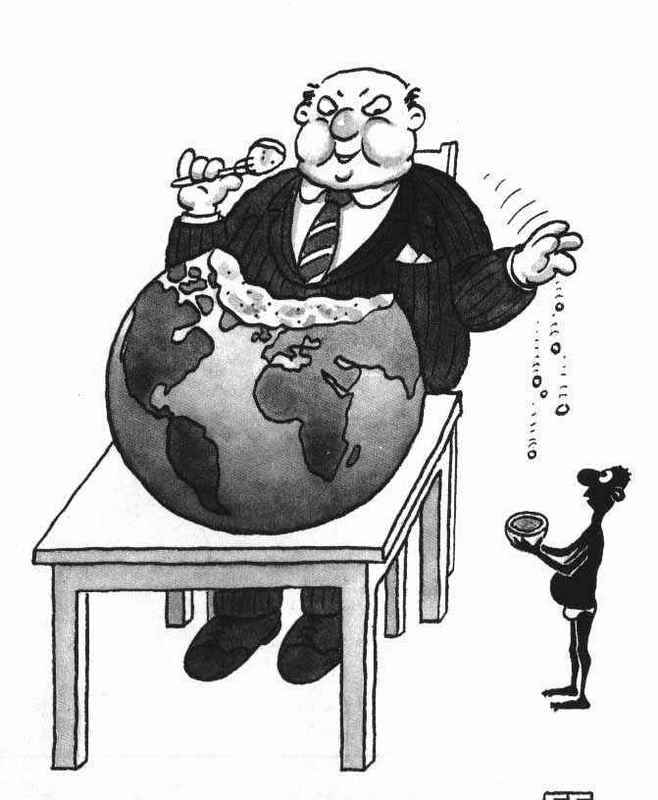
These folks are pushing Genetically Modified crops (GMO’s) onto the Third World in the name of ending hunger, much as the Rockefellers did with the ‘Green Revolution’ that was used to open world markets to chemical and hybrid agriculture.

By Scott Pittman / The Rag Blog / February 3, 2009

Walden Bello has written a chilling essay about “The Coming Capitalist Consensus” [see below] for Foreign Policy In Focus.

This is one of the most succinct articles I have read on what we face right now. This is the beguiling rhetoric that has been brewing for the past five to eight years. If you notice, you have Bill Gates, and George Soros listed as part of this pack; they are joined by the Rockefeller brothers in Arkansas, The World Bank and other Capitalist cheerleaders.

The first so called revolutions killed millions of villagers around the world, just as now the GMO giant Monsanto is steamrolling India into the second go round of “squeezing blood from a turnip” which has resulted in unprecedented suicides among farmers who have lost their farmland to bad debt incurred from this unholy technology.

No one has talked to the farmers of India or of Africa as Gates and the Rockefellers put their millions to work convincing the various governing bodies in those countries to get on board the gravy train. They have managed to get Kofi Annan to sign on. This whole campaign is driven with the cynical appeal to world hunger which is a perfect neoliberal slogan to convince the ignorant and environmental poseurs of the campaign’s good intentions.

While we are focused on major bank greed and bailouts the uber rich are plotting control of the world’s food! What is really unsettling about this is that I think that Gates, and perhaps Soros think that they are doing a good thing. Being rich, unfortunately, doesn’t mean you have to be smart. The World Bank, on the other hand, knows exactly what it’s doing.

[ScottPittman, a former Austin activist and contributor to The Rag in Sixties Austin, is director of the Permaculture Institute.]

The Coming Capitalist Consensus
By Walden Bello

Not surprisingly, the swift unraveling of the global economy combined with the ascent to the U.S. presidency of an African-American liberal has left millions anticipating that the world is on the threshold of a new era. Some of President-elect Barack Obama’s new appointees – in particular ex-Treasury Secretary Larry Summers to lead the National Economic Council, New York Federal Reserve Board chief Tim Geithner to head Treasury, and former Dallas Mayor Ron Kirk to serve as trade representative – have certainly elicited some skepticism. But the sense that the old neoliberal formulas are thoroughly discredited have convinced many that the new Democratic leadership in the world’s biggest economy will break with the market fundamentalist policies that have reigned since the early 1980s.

One important question, of course, is how decisive and definitive the break with neoliberalism will be. Other questions, however, go to the heart of capitalism itself. Will government ownership, intervention, and control be exercised simply to stabilize capitalism, after which control will be given back to the corporate elites? Are we going to see a second round of Keynesian capitalism, where the state and corporate elites along with labor work out a partnership based on industrial policy, growth, and high wages – though with a green dimension this time around? Or will we witness the beginnings of fundamental shifts in the ownership and control of the economy in a more popular direction? There are limits to reform in the system of global capitalism, but at no other time in the last half century have those limits seemed more fluid.

President Nicolas Sarkozy of France has already staked out one position. Declaring that “laissez-faire capitalism is dead,” he has created a strategic investment fund of 20 billion euros to promote technological innovation, keep advanced industries in French hands, and save jobs. “The day we don’t build trains, airplanes, automobiles, and ships, what will be left of the French economy?” he recently asked rhetorically. “Memories. I will not make France a simple tourist reserve.” This kind of aggressive industrial policy aimed partly at winning over the country’s traditional white working class can go hand-in-hand with the exclusionary anti-immigrant policies with which the French president has been associated.

Global Social Democracy

A new national Keynesianism along Sarkozyan lines, however, is not the only alternative available to global elites. Given the need for global legitimacy to promote their interests in a world where the balance of power is shifting towards the South, western elites might find more attractive an offshoot of European Social Democracy and New Deal liberalism that one might call “Global Social Democracy” or GSD.

Even before the full unfolding of the financial crisis, partisans of GSD had already been positioning it as alternative to neoliberal globalization in response to the stresses and strains being provoked by the latter. One personality associated with it is British Prime Minister Gordon Brown, who led the European response to the financial meltdown via the partial nationalization of the banks. Widely regarded as the godfather of the “Make Poverty History” campaign in the United Kingdom, Brown, while he was still the British chancellor, proposed what he called an “alliance capitalism” between market and state institutions that would reproduce at the global stage what he said Franklin Roosevelt did for the national economy: “securing the benefits of the market while taming its excesses.” This must be a system, continued Brown, that “captures the full benefits of global markets and capital flows, minimizes the risk of disruption, maximizes opportunity for all, and lifts up the most vulnerable – in short, the restoration in the international economy of public purpose and high ideals.”

Joining Brown in articulating the Global Social Democratic discourse has been a diverse group consisting of, among others, the economist Jeffrey Sachs, George Soros, former UN Secretary General Kofi Annan, the sociologist David Held, Nobel laureate Joseph Stiglitz, and even Bill Gates. There are, of course, differences of nuance in the positions of these people, but the thrust of their perspectives is the same: to bring about a reformed social order and a reinvigorated ideological consensus for global capitalism.

Among the key propositions advanced by partisans of GSD are the following:

  • Globalization is essentially beneficial for the world; the neoliberals have simply botched the job of managing it and selling it to the public;
  • It is urgent to save globalization from the neoliberals because globalization is reversible and may, in fact, already be in the process of being reversed;
  • Growth and equity may come into conflict, in which case one must prioritize equity;
  • Free trade may not, in fact, be beneficial in the long run and may leave the majority poor, so it is important for trade arrangements to be subject to social and environmental conditions;
  • Unilateralism must be avoided while fundamental reform of the multilateral institutions and agreements must be undertaken – a process that might involve dumping or neutralizing some of them, like the WTO’s Trade-Related Intellectual Property Rights Agreement (TRIPs);
  • Global social integration, or reducing inequalities both within and across countries, must accompany global market integration;
  • The global debt of developing countries must be cancelled or radically reduced, so the resulting savings can be used to stimulate the local economy, thus contributing to global reflation;
  • Poverty and environmental degradation are so severe that a massive aid program or “Marshall Plan” from the North to the South must be mounted within the framework of the “Millennium Development Goals”;
  • A “Second Green Revolution” must be put into motion, especially in Africa, through the widespread adoption of genetically engineered seeds.
  • Huge investments must be devoted to push the global economy along more environmentally sustainable paths, with government taking a leading role (“Green Keynesianism” or “Green Capitalism”);
  • Military action to solve problems must be deemphasized in favor of diplomacy and “soft power,” although humanitarian military intervention in situations involving genocide must be undertaken.

The Limits of Global Social Democracy

Global Social Democracy has not received much critical attention, perhaps because many progressives are still fighting the last war, that is, against neoliberalism. A critique is urgent, and not only because GSD is neoliberalism’s most likely successor. More important, although GSD has some positive elements, it has, like the old Social Democratic Keynesian paradigm, a number of problematic features.

A critique might begin by highlighting problems with four central elements in the GSD perspective.

First, GSD shares neoliberalism’s bias for globalization, differentiating itself mainly by promising to promote globalization better than the neoliberals. This amounts to saying, however, that simply by adding the dimension of “global social integration,” an inherently socially and ecologically destructive and disruptive process can be made palatable and acceptable. GSD assumes that people really want to be part of a functionally integrated global economy where the barriers between the national and the international have disappeared. But would they not in fact prefer to be part of economies that are subject to local control and are buffered from the vagaries of the international economy? Indeed, today’s swift downward trajectory of interconnected economies underscores the validity of one of anti-globalization movement’s key criticisms of the globalization process..

Second, GSD shares neoliberalism’s preference for the market as the principal mechanism for production, distribution, and consumption, differentiating itself mainly by advocating state action to address market failures. The kind of globalization the world needs, according to Jeffrey Sachs in The End of Poverty, would entail “harnessing…the remarkable power of trade and investment while acknowledging and addressing limitations through compensatory collective action.” This is very different from saying that the citizenry and civil society must make the key economic decisions and the market, like the state bureaucracy, is only one mechanism of implementation of democratic decision-making.

Third, GSD is a technocratic project, with experts hatching and pushing reforms on society from above, instead of being a participatory project where initiatives percolate from the ground up.

Fourth, GSD, while critical of neoliberalism, accepts the framework of monopoly capitalism, which rests fundamentally on deriving profit from the exploitative extraction of surplus value from labor, is driven from crisis to crisis by inherent tendencies toward overproduction, and tends to push the environment to its limits in its search for profitability. Like traditional Keynesianism in the national arena, GSD seeks in the global arena a new class compromise that is accompanied by new methods to contain or minimize capitalism’s tendency toward crisis. Just as the old Social Democracy and the New Deal stabilized national capitalism, the historical function of Global Social Democracy is to iron out the contradictions of contemporary global capitalism and to relegitimize it after the crisis and chaos left by neoliberalism. GSD is, at root, about social management.

Obama has a talent for rhetorically bridging different political discourses. He is also a “blank slate” when it comes to economics. Like FDR, he is not bound to the formulas of the ancien regime. He is a pragmatist whose key criterion is success at social management. As such, he is uniquely positioned to lead this ambitious reformist enterprise.

Reveille for Progressives

While progressives were engaged in full-scale war against neoliberalism, reformist thinking was percolating in critical establishment circles. This thinking is now about to become policy, and progressives must work double time to engage it. It is not just a matter of moving from criticism to prescription. The challenge is to overcome the limits to the progressive political imagination imposed by the aggressiveness of the neoliberal challenge in the 1980s combined with the collapse of the bureaucratic socialist regimes in the early 1990s. Progressives should boldly aspire once again to paradigms of social organization that unabashedly aim for equality and participatory democratic control of both the national economy and the global economy as prerequisites for collective and individual liberation.

Like the old post-war Keynesian regime, Global Social Democracy is about social management. In contrast, the progressive perspective is about social liberation.

[Walden Bello is a columnist for Foreign Policy In Focus, a senior analyst at the Bangkok-based Focus on the Global South, president of the Freedom from Debt Coalition, and a professor of sociology at the University of the Philippines.]

Source / Foreign Policy in Focus / Originally posted Dec. 24, 2008.

The Rag Blog

Posted in Rag Bloggers | Tagged , , , , | Leave a comment

Ragblogapalooza!

If you’re down Austin way…

Please come by and say Hey.
RAGBLOGAPALOOZA: A benefit for The Rag Blog
Featuring The Melancholy Ramblers
Tuesday, Feb. 3, 6-9 pm
Scholz Garten, 1607 San Jacinto St., Austin

Click on image to enlarge.

Poster designed by James Retherford / The Rag Blog

The Rag Blog

Posted in Rag Bloggers | Tagged , | Leave a comment

Loving: She’ll Be Comin’ ‘Round the Mountain


Cartoon by Charlie Loving / The Rag Blog

Posted in RagBlog | Tagged , , | 1 Comment

Foodie Friday: The Bacon Explosion

I know, I know – I’m two days late. So, I forgot, but this is so worth spreading around that I’m posting it anyway. Just think – 5,000 calories and 500 grams of fat in one little dish !! It’s utterly mind-boggling – pork, pork, and more pork !! Only in America ….

Richard Jehn / The Rag Blog

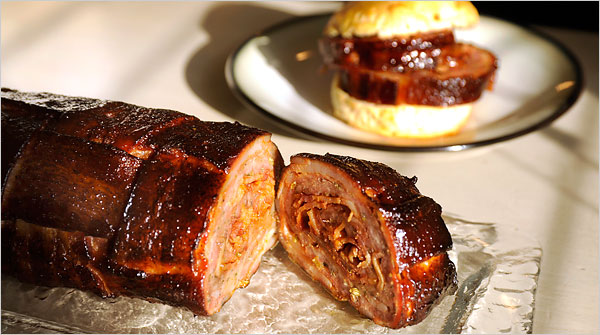
The Bacon Explosion is a rolled concoction that can be baked or cooked in a smoker. Photo: Don Ipock for The New York Times.

Take Bacon. Add Sausage. Blog.
By Damon Darlin / January 27, 2009

FOR a nation seeking unity, a recipe has swept the Internet that seems to unite conservatives and liberals, gun owners and foodies, carnivores and … well, not vegetarians and health fanatics.

Certainly not the vegetarians and health fanatics.

This recipe is the Bacon Explosion, modestly called by its inventors “the BBQ Sausage Recipe of all Recipes.” The instructions for constructing this massive torpedo-shaped amalgamation of two pounds of bacon woven through and around two pounds of sausage and slathered in barbecue sauce first appeared last month on the Web site of a team of Kansas City competition barbecuers. They say a diverse collection of well over 16,000 Web sites have linked to the recipe, celebrating, or sometimes scolding, its excessiveness. A fresh audience could be ready to discover it on Super Bowl Sunday.

Where once homegrown recipes were disseminated in Ann Landers columns or Junior League cookbooks, new media have changed — and greatly accelerated — the path to popularity. Few recipes have cruised down this path as fast or as far as the Bacon Explosion, and this turns out to be no accident. One of its inventors works as an Internet marketer, and had a sophisticated understanding of how the latest tools of promotion could be applied to a four-pound roll of pork.

The Bacon Explosion was born shortly before Christmas in Roeland Park, Kan., in Jason Day’s kitchen. He and Aaron Chronister, who anchor a barbecue team called Burnt Finger BBQ, were discussing a challenge from a bacon lover they received on their Twitter text-messaging service: What could the barbecuers do with bacon?

At the same time, Mr. Chronister wanted to get attention for their Web site, BBQAddicts.com. More traffic would bring in more advertising income, which they needed to fund a hobby that can cost thousands of dollars.

Mr. Day, a systems administrator who has been barbecuing since college, suggested doing something with a pile of sausage. “It’s a variation of what’s called a fattie in the barbecue community,” Mr. Day said. “But we took it to the extreme.”

He bought about $20 worth of bacon and Italian sausage from a local meat market. As it lay on the counter, he thought of weaving strips of raw bacon into a mat. The two spackled the bacon mat with a layer of sausage, covered that with a crunchy layer of cooked bacon, and rolled it up tight.

They then stuck the roll — containing at least 5,000 calories and 500 grams of fat — in the Good-One Open Range backyard smoker that they use for practice. (In competitions, they use a custom-built smoker designed by the third member of the team, Bryant Gish, who was not present at the creation of the Bacon Explosion.)

Mr. Day said his wife laughed the whole time. “She’s very supportive of my hobby,” he said.

The two men posted their adventure on their Web site two days before Christmas. On Christmas Day, traffic on the site spiked to more than 27,000 visitors.

Mr. Chronister explained that the Bacon Explosion “got so much traction on the Web because it seems so over the top.” But Mr. Chronister, an Internet marketer from Kansas City, Mo., did what he could to help it along. He first used Twitter to send short text messages about the recipe to his 1,200 Twitter followers, many of them fellow Internet marketers with extensive social networks. He also posted links on social networking sites. “I used a lot of my connections to get it out there and to push it,” he said.

The Bacon Explosion posting has since been viewed about 390,000 times. It first found a following among barbecue fans, but quickly spread to sites run by outdoor enthusiasts, off-roaders and hunters. (Several proposed venison-sausage versions.) It also got mentions on the Web site of Air America, the liberal radio network, and National Review, the conservative magazine. Jonah Goldberg at NationalReview.com wrote, “There must be a reason one reader after another sends me this every couple hours.” Conservatives4palin.com linked, too.

So did regular people. A man from Wooster, Ohio, wrote that friends had served it at a bon voyage party before his 10-day trip to Israel, where he expected bacon to be in short supply. “It wasn’t planned as a send-off for me to Israel, but with all of the pork involved it sure seemed like it,” he wrote.

About 30 people sent in pictures of their Explosions. One sent a video of the log catching fire on a grill.

Mr. Day said that whether it is cooked in an oven or in a smoker, the rendered fat from the bacon keeps the sausage juicy. But in the smoker, he said, the smoke heightens the flavor of the meats.

Nick Pummell, a barbecue hobbyist in Las Vegas, learned of the recipe from Mr. Chronister’s Twittering. He made his first Explosion on Christmas Day, when he and a group of friends also had a more traditional turkey. “This was kind of the dessert part,” he said. “You need to call 911 after you are done. It was awesome.”

Mr. Chronister said the main propellant behind the Bacon Explosion’s spread was a Web service called StumbleUpon, which steers Web users toward content they are likely to find interesting. Readers tell the service about their professional interests or hobbies, and it serves up sites to match them. More than 7 million people worldwide use the service in an attempt to duplicate serendipity, the company says.

Mr. Chronister intended to send the post to StumbleUpon, but one of his readers beat him to it. It appeared on the front page of StumbleUpon for three days, which further increased traffic.

Mr. Chronister also littered his site with icons for Digg, Del.icio.us and other sites in which readers vote on posts or Web pages they like, helping to spread the word. “Alright this is going on Digg,” a commenter wrote minutes after the Explosion was posted. “Already there,” someone else answered.

Some have claimed that the Bacon Explosion is derivative. A writer known as the Headless Blogger posted a similar roll of sausage and bacon in mid-December. Mr. Chronister and Mr. Day do not claim to have invented the concept.

But they do vigorously defend their method. When one commenter dared to suggest that the two hours in the smoker could be slashed to a mere 30 minutes if the roll was first cooked in a microwave oven, Mr. Chronister snapped back. “Microwave??? Seriously? First, the proteins in the meats will bind around 140 degrees, so putting it on the smoker after that is pointless as it won’t absorb any smoke flavor,” he responded on his site. “This requires patience and some attention. It’s not McDonald’s.”

Source / The New York Times

The Rag Blog

Posted in RagBlog | Tagged , | 3 Comments

Sunday Snapshot : Present, Absent, Dead

Palestinian boy Mohammed Kutkut, 14, right, covers his face as he sits next to the name sign of his killed friend Ahed Qaddas in the Fakhoura boys school in Jebaliya, northern Gaza strip, Saturday, Jan. 24, 2009. AP Photo/Anja Niedringhaus.

Source / Yannone

The Rag Blog

Posted in RagBlog | Tagged , , | Leave a comment

Greenwald: The Socioeconomic and Racial Inequities in Our Justice System


The definition of a “two-tiered justice system”
By Glenn Greenwald / January 28, 2009

Aside from the intrinsic dangers and injustices of arguing for immunity for high-level government officials who commit felonies (such as illegal eavesdropping, obstruction of justice, torture and other war crimes), it’s the total selectivity of the rationale underlying that case which makes it so corrupt. Defenders of Bush officials sing in unison: We shouldn’t get caught up in the past. We shouldn’t be driven by vengeance and retribution. We shouldn’t punish people whose motives in committing crimes weren’t really that bad.

There are countries in the world which actually embrace those premises for all of their citizens, and whose justice system consequently reflects a lenient approach to crime and punishment. The United States is not one of those countries. In fact, for ordinary citizens (the ones invisible and irrelevant to Ruth Marcus, Stuart Taylor, Jon Barry and David Broder), the exact opposite is true:

Homeless man gets 15 years for stealing $100

A homeless man robbed a Louisiana bank and took a $100 bill. After feeling remorseful, he surrendered to police the next day. The judge sentenced him to 15 years in prison.

Roy Brown, 54, robbed the Capital One bank in Shreveport, Louisiana in December 2007. He approached the teller with one of his hands under his jacket and told her that it was a robbery.

The teller handed Brown three stacks of bill but he only took a single $100 bill and returned the remaining money back to her. He said that he was homeless and hungry and left the bank.

The next day he surrendered to the police voluntarily and told them that his mother didn’t raise him that way.

Brown told the police he needed the money to stay at the detox center and had no other place to stay and was hungry.

In Caddo District Court, he pleaded guilty. The judge sentenced him to 15 years in prison for first degree robbery.

Under federal law, “the simple possession of just 5 grams of crack cocaine, the weight of about two sugar packets, subjects a defendant to a mandatory five-year prison term.” In Alabama, the average sentence for marijuana possession — an offense for which most Western countries almost never imprison their citizens — is 8.4 years. Until recently, the state of Florida “impose[d] mandatory-minimum sentences of 25 years for illegally carrying a pillbox-worth of drugs such as Oxycontin” and still imposes shockingly Draconian mandatory sentences even for marijuana offenses.

Our political class has embraced mandatory minimum sentencing schemes as a way to eliminate mercy and sentencing flexibility for ordinary people who break the law (as opposed to Bush officials who do). The advocacy group Families Against Mandatory Minimums details just some of the grotesque injustices here, including decades of imprisonment for petty drug dealing which even many judges who are forced to impose the sentences find disgraceful. Currently in the U.S., close to 7,000 people are serving sentences of 25 years to life under our merciless “three-strikes-and-out” laws — which the Supreme Court upheld as constitutional in a 5-4 rulingincluding half for nonviolent offenses and many for petty theft.

As I’ve noted many times before, the United States imprisons more of its population than any other country on the planet, and most astoundingly, we account for less than 5% of the world’s population yet close to 25% of the world’s prisoners are located in American prisons. As The New York Times‘ Adam Liptak put it in an excellent and thorough April, 2008 article, revealing how self-absorbed and hypocritical are the cries for mercy, understanding and “moving on” being made by media stars and political elites on behalf of lawbreaking Bush officials:

Indeed, the United States leads the world in producing prisoners, a reflection of a relatively recent and now entirely distinctive American approach to crime and punishment. Americans are locked up for crimes — from writing bad checks to using drugs — that would rarely produce prison sentences in other countries. And in particular they are kept incarcerated far longer than prisoners in other nations. . . .

Whatever the reason, the gap between American justice and that of the rest of the world is enormous and growing.

It used to be that Europeans came to the United States to study its prison systems. They came away impressed.

“In no country is criminal justice administered with more mildness than in the United States,” Alexis de Tocqueville, who toured American penitentiaries in 1831, wrote in “Democracy in America.”

No more.

Far from serving as a model for the world, contemporary America is viewed with horror,” James Whitman, a specialist in comparative law at Yale, wrote last year in Social Research. “Certainly there are no European governments sending delegations to learn from us about how to manage prisons.”

Prison sentences here have become “vastly harsher than in any other country to which the United States would ordinarily be compared,” Michael Tonry, a leading authority on crime policy, wrote in “The Handbook of Crime and Punishment.”

Indeed, said Vivien Stern, a research fellow at the prison studies center in London, the American incarceration rate has made the United States “a rogue state, a country that has made a decision not to follow what is a normal Western approach” . . . .

The American character — self-reliant, independent, judgmental — also plays a role.

America is a comparatively tough place, which puts a strong emphasis on individual responsibility,” Whitman of Yale wrote. “That attitude has shown up in the American criminal justice of the last 30 years.”

And that’s to say nothing of the brutal and excessive tactics used by our increasingly militarized police state (Digby’s writing on the use of tasers is indispensable) and the inhumane conditions that characterize our highly profitable prison state.

Under all circumstances, arguing that high political officials should be immunized from prosecution when they commit felonies such as illegal eavesdropping and torture would be both destructive and wrong [not to mention, in the case of the latter crimes, a clear violation of a treaty which the U.S. (under Ronald Reagan) signed and thereafter ratified]. But what makes it so much worse, so much more corrupted, is the fact that this “ignore-the-past-and-forget-retribution” rationale is invoked by our media elites only for a tiny, special class of people — our political leaders — while the exact opposite rationale (“ignore their lame excuses, lock them up and throw away the key”) is applied to everyone else. That, by definition, is what a “two-tiered system of justice” means and that, more than anything else, is what characterizes (and sustains) deeply corrupt political systems. That’s the two-tiered system which, for obvious reasons, our political and media elites are now vehemently arguing must be preserved.

* * * * *

See also this post from earlier today on the superb 60 Minutes report on expanding West Bank settlements.

UPDATE: Last week, GOP Senators threatened to hold up Eric Holder’s confirmation as Attorney General unless he vowed, in advance, that he would not prosecute any Bush officials for having ordered or perpetrated the torture of detainees. Today, Holder’s nomination was approved by the Senate Judiciary Committee by a vote of 17-2, and according to The Washington Times, Sen. Kit Bond is claiming that Holder “assured him privately that Mr. Obama’s Justice Department will not prosecute former Bush officials involved in the interrogations program.” This story depends upon the credibility of both The Washington Times and Sen. Bond, so who knows if it’s really true, but would anyone be surprised if it were true?

Several people in comments have highlighted the socioeconomic and racial inequities in our justice system, which are both numerous and substantial. But that’s a separate issue. It’s one thing for a wealthy defendant to have a higher chance of acquittal in a criminal trial because a private lawyer can devote more time and resources to the case than a public defender can, or for an African-American defendant to have a higher chance of conviction because of juror bias. But it’s another thing entirely for a small class of people — political leaders — to be granted immunity in advance from prosecution of any kind, even when they commit grave felonies in the course of their duties.

UPDATE II: Marcy Wheeler expresses some insightful skepticism about the Bond report. As Washington Times reporters go, the one who is reporting Bond’s comments (Eli Lake) is relatively reliable, at least as far as this sort of reporting is concerned, so it’s possible, as Marcy says, that Bond is distorting Holder’s comments (it’s also possible that Holder sent the clear signals to Bond that Holder knew Bond wanted to hear while maintaining plausible deniability that he made such a commitment, which would obviously be improper). In any event, something caused virtually all of the Committee Republicans to vote to confirm Holder today, and Holder should obviously be asked about this claim from Bond.

UPDATE III: Both Sen. Leahy and Sen. Whitehouse express serious doubts about the Bond/Washington Times report, noting (correctly) that it would be a highly improper act (to put it mildly) for a Senator to demand, and for a nominated Attorney General to agree, that no prosecutions will be pursued in a specific case in exchange for the Senator’s support for the nomination. That said, it’s hardly inconceivable that Holder said things to Bond which, by design or effect, implicitly conveyed to Bond the assurances he wanted to hear, or at least enabled Bond to be convinced that he got those assurances. Either way, it is Holder who should be asked very clearly whether he made the statements to Bond that Bond claims he made.

UPDATE IV: At his new Washington Post blog, Greg Sargent reports that a Holder aide — rather emphatically — denies that Holder made any such comments to Bond: “Eric Holder has not made any commitments about who would or would not be prosecuted. He explained his position to Senator Bond as he did in the public hearing and in his responses to written questions.” Greg notes that Holder’s public comments explicitly left open the possibility of prosecutions and, referring to my statement above that “something caused virtually all of the Committee Republicans to vote to confirm Holder today,” Greg writes: “It seems unlikely that Bond’s version of events is it, however.” I agree; it is unlikely.

Source / Salon

The Rag Blog

Posted in RagBlog | Tagged , , | 1 Comment

Hirschhorn: The Greed Tax

Great idea, but this is definitely a post-revolution happening. At the least, I have mailed this article to my member of Congress and both Senators, telling them I believe this is a proposal that reflects true justice. We’ll see what comes of that!!

Richard Jehn / The Rag Blog


Tax Solution to Wretched Greed
By Joel S. Hirschhorn / January 30, 2009

A law should be immediately passed that imposes a new special federal income tax of 99 percent on all income in excess of $500,000 annually for single taxpayers and $1 million for couples, starting for 2008 income. Call it a greed tax.

By now most Americans have experienced extreme disgust upon hearing about the nearly $20 billion in bonuses given to people in New York City’s financial sector at the end of 2008. After sending the nation into the current economic black hole there is no way of comprehending the audacity of financial company executives in giving themselves and their colleagues shameful rewards for abysmal and disgraceful performance. Other than screaming and moaning about all this dishonorable behavior what should the Obama administration and Congress do?

Here is the solution that the overwhelming majority of Americans should demand: A law should be immediately passed that imposes a new special federal income tax of 99 percent on all income in excess of $500,000 annually for single taxpayers and $1 million for couples, starting for 2008 income. Call it a greed tax. Call it justice. Call it getting even for too many years of uncontrolled greed that has given the nation nothing but economic injustice and inequality, and given capitalism a very bad name. Call it a sensible way to raise federal revenues to help offset the cancerous national debt.

Considering that nearly all of the people who received the 2008 bonuses also received high salaries and even larger bonuses in previous years, and the many billions of dollars of federal dollars going into bailouts of companies, there should be no qualms about such a greed tax. For example, in the two previous years a total of about $70 billion in bonuses were received by these greedy financial sector elites.

Even outside the financial sector, executives also received obscene bonuses in 2008 despite terrible performance. The compensation research firm Equilar, for example, reports that the average performance-based bonuses for top executives, other than the chief executive, at 132 companies with revenues of more than $1 billion increased by 14 percent, to an average of $265,594, in the 2008 fiscal year, in addition to high salaries.

As just one of countless examples of greed, consider that the CEO of Hewlett-Packard, Mark Hurd, received $42.5 million in 2008 pay. He had received over $20 million in signing inducements in 2005. During his tenure some 40,000 jobs have been eliminated at H-P. And consider this nice little perk: In 2008 the company also paid out about $181,000 for his business meals.

And then there is the case of Robert Rubin at Citigroup. During his nine years there the company lost over $65 billion. What did Rubin earn? He pocketed $126 million. What did he say when he left? “I bet there’s not a single year where I couldn’t have gone somewhere else and made more.”

Enough already. Drastic action is needed to achieve some justice. With all the attention on the Obama stimulus plan based on spending money the nation does not really have or can afford, it is appropriate to use this proposal to raise more revenues. Tax greed!

Source / Nolan Chart

The Rag Blog

Posted in RagBlog | Tagged , , | 2 Comments

Singin’ on Sunday: James McMurtry

We Can’t Make It Here

Thanks to Rabbit’s Illusions / The Rag Blog

Posted in RagBlog | Tagged , , | 2 Comments

Cleaning Up the Guantanamo Mess: Worthington Provides Some Valuable Details


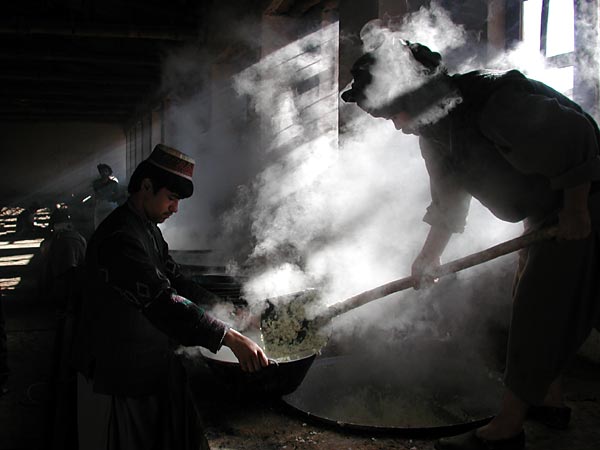
How Cooking For The Taliban Gets You Life In Guantánamo
By Andy Worthington / February 01, 2009

Those of us who prefer justice to arbitrary and unaccountable detention without charge or trial were delighted when, last week, Barack Obama fulfilled a long-stated promise and issued a presidential order stating that Guantánamo will be closed “as soon as practicable, and no later than one year from the date of this order,” and establishing an immediate review of the cases of the remaining 242 prisoners to work out whether they can be released.

A year is a long time, of course, if you’re unfortunate enough to have been imprisoned in Guantánamo for up to seven years with no way of asking why you’re being held, but some of us were prepared to give the new President the benefit of the doubt, and to consider that perhaps he didn’t want to make a rash promise that he might find himself unable to fulfill, such as pledging to close the wretched place in a matter of months.

Recent events, however, have demonstrated that, although President Obama has set in motion a policy that addresses the prisoners’ future, their long desire to have an opportunity to question the basis of their detention is currently being addressed not in the White House but in the District Courts, following an epic, four-year struggle between the Supreme Court and Congress to grant them their wish. Since the justices of the Supreme Court decisively ended this struggle last June, by ruling that Congress had acted unconstitutionally when it stripped the prisoners of the habeas corpus rights that the Supreme Court had granted them in June 2004, a raft of previously marooned habeas cases has been making its way through the District Courts.

Justice and the habeas reviews

Although frequently becalmed by pleas from the Justice Department, whose lawyers have had the nerve to claim, after seven years, that they are having trouble rustling up any evidence, a handful of these cases have actually made it to the point where a judge has ruled on their merits. The results have been a vindication for those who have struggled for years to get the prisoners a day in court, and, of course, for the prisoners themselves, because in 23 of the 27 cases reviewed to date, the judges have dismissed the government’s evidence for being empty and unsubstantiated — in one case comparing it to a nonsense poem by Lewis Carroll, the author of Alice’s Adventures in Wonderland — and have ordered the prisoners to be released.

Sadly, the impact on the prisoners has so far failed, for the most part, to match the significance of the rulings. In the case that drew comparisons with Lewis Carroll — that of Huzaifa Parhat, a Uighur from China’s oppressed Xinjiang province — the government lodged a miserable and unprincipled appeal to stop Parhat and his 16 compatriots from settling in the United States, after District Court Judge Ricardo Urbina ruled in October that their continued detention in Guantánamo was unconstitutional. In November, Judge Richard Leon, an appointee of George W. Bush, ordered the release of five Bosnians of Algerian origin, after he concluded that the government had failed to establish that, as alleged, they had intended to travel to Afghanistan to fight U.S. forces, but to date only three of the men have been repatriated, and the other two still languish in Guantánamo, as the Bosnian government wrangles over their status. The last case is that of Mohammed El-Gharani, a Chadian national and Saudi resident who was just 14 years old when he was seized in a raid on a mosque in Pakistan. Two weeks ago, Leon comprehensively demolished the government’s supposed evidence against El-Gharani, but he too remains stranded, pending a possible appeal.

To be or not to be (an enemy combatant)

In many ways, however, these prisoners are the lucky ones. In four other cases, the scales of justice have tipped the other way, into an alarming arena in which it has become apparent that the Supreme Court failed to address whether, in cases where the government is judged to have produced sufficient evidence to indicate that prisoners were “enemy combatants,” it is justifiable to continue holding them indefinitely.

The problem, as these other four cases have revealed, is that, according to the definition accepted by Judge Leon, an “enemy combatant” does not have to be someone who actually engaged in terrorism or in combat against the United States, but rather someone who was “part of or supporting Taliban or al-Qaeda forces, or associated forces that are engaged in hostilities against the U.S. or its coalition partners,” which “includes any person who has committed a belligerent act or has directly supported hostilities in aid of enemy armed forces” (emphasis added).

What this means in reality is that Judge Leon ruled in November that Belkacem Bensayah, the sixth Bosnian Algerian, was an “enemy combatant” not because he had been involved in a specific al-Qaeda plot, and not because he had raised arms against the United States in Afghanistan or anywhere else, but because the government provided what Leon regarded as “credible and reliable evidence,” establishing that he “planned to go to Afghanistan to both take up arms against US and allied forces and to facilitate the travel of unnamed others to Afghanistan and elsewhere,” and that he was “link[ed]” to a senior al-Qaeda operative (identified elsewhere as the mentally troubled training camp facilitator Abu Zubaydah, whose specific links to al-Qaeda have been questioned by the FBI).

This may be sufficient evidence to put Bensayah on trial, although it is surely not adequate to warrant his indefinite detention in Guantánamo, but in the cases of the other three men the noose-like nature of the “enemy combatant” definition was even more pronounced. On December 30, Judge Leon ruled that two more prisoners — the Tunisian Hisham Sliti and the Yemeni Muaz al-Alawi — were also correctly detained as “enemy combatants;” in Sliti’s case because, despite being a cynical and dissolute drug addict, he was associated with individuals connected to al-Qaeda, and, in al-Alawi’s case, because, although he had traveled to Afghanistan before the 9/11 attacks and was not alleged to have raised arms against U.S. forces, he “stayed at guest houses associated with the Taliban and al-Qaeda … received military training at two separate camps closely associated with al-Qaeda and the Taliban and supported Taliban fighting forces on two different fronts in the Taliban’s war against the Northern Alliance.”

Cooking for the Taliban

This ruling in particular cried out for an immediate overhaul of the “enemy combatant” definition, but yesterday the absurdity of holding prisoners as “enemy combatants” who were associated with the Taliban before the 9/11 attacks but never raised a finger against the United States was highlighted even more forcefully when Judge Leon ruled, in the case of the Yemeni Ghaleb Nasser al-Bihani, that he too was an “enemy combatant.”

Leon based his ruling on the fact that the government had established, primarily through interrogation, that al-Bihani had worked as a cook for the Taliban. Concluding that it was “not necessary” for the government to prove that he “actually fire[d] a weapon against the U.S. or coalition forces in order for him to be classified as an enemy combatant,” Leon declared, “Simply stated, faithfully serving in an al-Qaeda-affiliated fighting unit that is directly supporting the Taliban by helping prepare the meals of its entire fighting force is more than sufficient to meet this Court’s definition of ‘support.'” He added, “After all, as Napoleon was fond of pointing out, ‘An army marches on its stomach.'”

Al-Bihani listened to Leon’s ruling in a teleconference call from Guantánamo, but was cut off before hearing Leon’s line about Napoleon. His lawyers, Shereen J. Chalick and Reuben Camper Cahn, of the Federal Defenders of San Diego, said that they would take a rush transcript of the ruling to al-Bihani, adding that he would be “disappointed” with the decision, but the reality, I can reveal, is that al-Bihani gave up on U.S. justice many years ago.

“I am definitely an enemy combatant”

In 2004, at his Combatant Status Review Tribunal at Guantánamo — a toothless administrative review that was designed, essentially, to confirm that, on capture, he had been correctly designated an “enemy combatant” — al-Bihani was acutely aware of Guantánamo’s failings, and addressed all the issues raised yesterday by Judge Leon. Firstly, he admitted that he had traveled to Afghanistan in April or May 2001 “to fight the jihad with the Taliban” against Ahmed Shah Massoud (the leader of the Northern Alliance), and added, “There is nothing wrong with that in our religion. Is it acceptable for Americans and not for us?”

He then disputed an allegation that he “was an associate of the Taliban and/or al-Qaeda,” pointing out that he had admitted “many times” that he was with the Taliban, but that the statement as it stood “suggests that you are [not] giving me a choice between Taliban and al-Qaeda,” and also denied an allegation that he participated in hostilities against the United States, explaining, “I went to Afghanistan before the Americans. If I wanted to fight the Americans I would have gone there after the Americans arrived.”

It was, however, at the conclusion of his hearing that he demonstrated what can now be seen as a prescient awareness of the inescapable bind in which he found himself. With evident sarcasm, he stated, “I am definitely an enemy combatant. There is no question about that. I am sure that you will find me as an enemy combatant. Nobody has been found to not be an enemy combatant. Everybody has been found to be an enemy combatant. I am certain that I will be found to be an enemy combatant.”

If you want a final demonstration of the ongoing absurdity of Guantánamo, compare the case of Salim Hamdan to that of Ghaleb al-Bihani. Last August, Hamdan, a driver for Osama bin Laden, was tried at Guantánamo in the Military Commissions conceived by Vice President Dick Cheney and his advisers, sentenced and sent home in November to serve the last few weeks of a five-month sentence delivered by a military jury. Hamdan is now a free man, whereas al-Bihani, a man who never met Osama bin Laden, let alone driving him around, has just been told, by a judge in a U.S. federal court, that the government is entitled to hold him forever because he cooked dinner for the Taliban.

If President Obama is genuinely concerned with justice, he needs to act fast to tackle this squalid state of affairs, which does nothing to undo the previous administration’s disdain for and mockery of the laws on which the United States was founded.

[Andy is the author of The Guantánamo Files: The Stories of the 774 Detainees in America’s Illegal Prison. His website is: www.andyworthington.co.uk.]

Source / ZNet

The Rag Blog

Posted in RagBlog | Tagged , , , | Leave a comment

Turkish PM Calls Gaza What It Was : ‘Killing’

Turkish Prime Minister Recep Tayyip Erdogan is seen during a session at the World Economic Forum in Davos, Switzerland, on Thursday, Jan. 29, 2009. Photo: AP Photo/Michel Euler.

See video of Erdogan’s remarks below.

Turkish PM greeted by cheers after Israel debate clash
By Robert Tait / 30 January 2009

Recep Tayyip Erdogan argued with Israeli president over Gaza offensive, before storming out

Turkey’s prime minister, Recep Tayyip Erdogan, arrived home to a tumultuous reception of cheering crowds early today after storming out of a debate in Davos over Israel’s recent offensive in Gaza.

Hours after clashing with the Israeli president, Shimon Peres, in angry scenes at the normally sedate world economic forum, he was welcomed at Istanbul’s Ataturk airport by thousands of supporters waving Turkish and Palestinian flags and chanting “Turkey is proud of you”. Sympathisers also left bouquets of flowers at his official residence.

The outpouring of support displayed the domestic political capital Erdogan gained from his performance at the Swiss resort, where he told Peres: “When it comes to killing, you know very well how to kill.” He then walked off the stage, declaring that he would never return to Davos, after claiming he had not been allowed to speak by the debate moderator, the Washington Post columnist David Ignatius.

Erdogan also accused Peres of raising his voice and claimed the Israeli statesman had been allowed more speaking time than himself and the panel discussion’s two other participants, the UN secretary general Ban Ki-moon, and Amr Moussa, secretary general of the Arab League.

Peres had earlier made an impassioned defence of Israeli actions in Gaza, asking Erdogan: “What would you do if you were to have in Istanbul every night a hundred rockets?” Erdogan responded by saying: “President Peres, you are older than me and your voice is very loud. The reason for you raising your voice is the psychology of guilt … I know very well how you hit and killed children on the beaches.”

The prime minister’s wife, Emine – who this month organised a Women For Peace In Palestine lunch for the wives of Islamic dignitaries – also became involved, bursting into tears after telling reporters that “everything Peres said was a lie”.

Erdogan’s outburst was his most high-profile in a series of outspoken attacks on Israel’s Gaza operations. He had previously called the offensive – in which around 1,300 Palestinians died – a “crime against humanity” and demanded Israel’s expulsion from the UN.

His stance has shocked Israeli officials — used to considering Turkey as their closest regional ally — but played to the pro-Palestinian sentiments of the overwhelmingly Muslim Turkish public. Mass demonstrations in favour of Hamas have been staged in Istanbul and other cities.

Such sympathies have prompted suggestions that Erdogan’s rhetoric has been mainly for domestic political consumption and aimed at wooing voters at forthcoming municipal elections in March. Jewish groups have also voiced fears that the government’s fierce anti-Israeli criticism is fuelling antisemitism The row with Peres overshadowed a dispute between the government and the International Montetary Fund that had seen Erdgoan accuse the fund of setting unacceptable conditions, after negotiations were suspended over a proposed loan to help Turkey weather the economic recession.

On arriving at Ataturk airport, he depicted his Davos walk-out in nationalist terms, telling journalists: “This was a matter of the esteem and prestige of my country. I could not have allowed anyone to poison the prestige and in particular the honour of my country.”

He also denied his comments were aimed at the Israeli people or Jews in general. A world economic forum spokesman said Peres spoke with Erdogan on the phone after the debate and expressed his respect for Turkey.

However, some observers believe Erdogan has sacrificed Turkish foreign policy, especially Turkey’s self-appointed role as a regional mediator.

Before the Gaza hostilities Turkey had been mediating in negotiations between Israel and Syria. There are also fears that the pro-Israel lobby in the US will back moves to recognise the massacres of Armenians by Ottoman forces in the first world war as genocide, a move Turkey vehemently opposes.


Turkish prime minister in angry clash with Israeli president Shimon Peres over ‘very wrong’ offensive against Palestinian territory

Source / The Guardian

The Rag Blog

Posted in RagBlog | Tagged , , , | 1 Comment

Loving’s Take on the Wall Street Bailouts

Cartoon by Charlie Loving / The Rag Blog

Posted in RagBlog | Tagged , , | Leave a comment

Iraq Elections May Change the Political Landscape

ON ALERT: An Iraqi soldier checks security at a polling station in the southern city of Basra. Photo: Matt Cardy/Getty Images.

Iraq elections: Security tight for provincial vote
By Tina Susman / January 31, 2009

There is a curfew on cars in cities, and Baghdad’s airport is shut as officials prepare for Saturday’s vote, which many hope will redress sectarian grievances by giving Sunni Arabs seats on councils.

Reporting from Baghdad — In elections expected to significantly alter the country’s political equation, Iraqis today began choosing new provincial councils to replace the current ones, blamed for fueling years of sectarian strife.

Late Friday, vehicular curfews took effect in cities, Baghdad’s airport was closed and borders were sealed, signs of security concerns that remain high despite a major drop in violence in recent months. Polling stations were ringed with razor wire and under 24-hour police guard. At one site, police Lt. Dhia Khadim bragged that voters had to undergo six searches before casting their ballots.

“It’s essential,” Khadim said as a rooster crowed nearby and wind sent dust swirling about the courtyard of the school serving as polling place.

Saad Hassan was the first in line to vote at a polling station in east Baghdad’s Sadr City, the Shiite stronghold of anti-U.S. cleric Muqtada Sadr. He woke up at 6 a.m., prayed, and brought his family with him, walking in the dim and dusty light of the early morning through an area that less than a year ago was engulfed in fighting between Shiite militiamen and U.S. and Iraqi security forces.

“We are sick of the religious figures, which brought only chaos to our country,” Hassan said after voting for a secular party.

Koudir Oudah Kahdum voted at the same station, but for the Islamic Dawa Party of Prime Minister Nouri Maliki. As with many Iraqis, memories of Saddam Hussein’s dictatorship swayed his decision. “It was Maliki who implemented his execution,” Kahdum said, referring to Hussein’s hanging in 2006. Maliki “is a brave man and our hero,” he said. “He deserves that we vote for him again and again.”

At stake are 440 seats on 14 provincial councils, the equivalent of U.S. state legislatures.

The current councils are dominated by Shiites and ethnic Kurds, even in areas where Sunni Arabs dominate, a result of a boycott of the 2005 elections by Sunni Arab parties. The lopsided councils and Sunnis’ lack of power served to exacerbate sectarian and ethnic tensions that had boiled over into violence and have continued to hinder political progress.

The elections are seen as a barometer of Iraq’s ability to remain relatively calm as U.S. military forces scale back their presence. A smooth process could also boost President Obama’s desire to accelerate the U.S. troop withdrawal, something he has said he wants to achieve within 16 months. That places U.S. military commanders in Iraq in a delicate situation. They are eager to highlight Iraq’s improved security and point to the elections as a milestone, but they also warn against a hasty withdrawal of the 140,000 American troops here.

“I think over-focus on a single event is always dangerous, be it positive or negative,” said Army Brig. Gen. Daniel B. Allyn, one of the top U.S. commanders in Iraq, speaking of the elections as a measure of Iraq’s future stability.

“Iraq is on a journey. It’s on a journey toward sovereign nationhood,” he said, noting that with nearly 14,500 candidates vying for council seats, most would lose. “That’s a lot of disappointed people, like about 14,000 of them.”

U.N. Special Envoy Staffan De Mistura said he was confident that there would not be a return to violence as occurred after the 2005 elections, because this time Sunni Arab parties are taking part. In addition, he said, Iraq has overcome what he called the Samarra syndrome — the eruption of sectarian violence after a major attack, such as the 2006 bombing of a Shiite shrine in Samarra. The attack led to a steep rise in Shiite-Sunni violence that displaced hundreds of thousands of people and left the capital carved into sectarian-based neighborhoods.

For that reason, Abu Walid Jabouri said Friday, he did not trust any of the more than 300 parties in the fray to overcome the perils of sectarianism.

“I will go to the poll, but I will not write anything. I will just draw a line across the ballot,” said Jabouri, out for an afternoon stroll with his wife and young daughter.

In 2005, Mohammed Hussein supported the Iraqi National Accord, a secular party headed by former Prime Minister Iyad Allawi. With security his main concern now, Hussein wasn’t sure which way to vote. He planned to decide at the last minute, at the booth.

“We want whoever rules us to be secular, but we also want security,” he said, acknowledging that Maliki had impressed him with his crackdown on Shiite militias.

Maliki is hoping the crackdown will help seal a Dawa victory in Baghdad and the southern provinces, where the rival Supreme Islamic Iraqi Council holds sway. Strong showings would help Maliki consolidate power across the country before national elections this year that will determine whether he remains prime minister.

[Times staff writers Ned Parker in Najaf and Monte Morin in Baghdad and a special correspondent in Baghdad contributed to this report.]

Source / Los Angeles Times

H/t Juan Cole / The Rag Blog

Posted in RagBlog | Tagged , , | Leave a comment