McCain’s Latest Bogeyman : Respected Scholar Rashid Khalidi

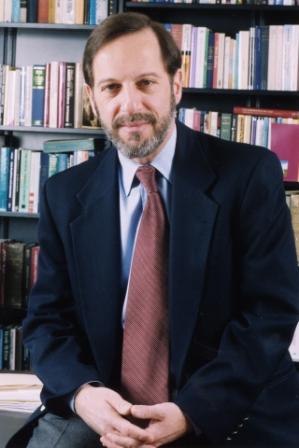
The McCain campaign’s latest bogeyman, historian Rashid Khalidi.

‘McCain’s and Palin’s attacks on Khalidi are frankly racist.

‘He is a distinguished scholar, and the only objectionable thing about him from a rightwing point of view is that he is a Palestinian.’
By Juan Cole / October 30, 2008

See three related Videos, Below.

Also see ‘McCain Gave Money to Khalidi’ by Matthew Yglesias, Below

The increasingly sleazy John McCain, who once promised to run a clean campaign, has now attacked my friend Rashid Khalidi and attempted to use him against Barack Obama. Khalidi is an American scholar of Palestinian heritage, born in New York and educated at Yale and Oxford, who now teaches at Columbia University. He directed the Middle East Center at the University of Chicago for some time, and he and his family came to know the Obamas at that time. Knowing someone and agreeing with him on everything are not the same thing.

Scott Horton has a fine, informed and intelligent discussion of the issue. Likewise Barnett Rubin (“My Friend the Neo-Nazi”) and Chapati Mystery suddenly alarmed about the Hyde Park crowd.

I know it may seem a novel idea to people like McCain and Palin, but it would be worthwhile actually reading Khalidi’s book on the Palestinian struggle for statehood. (I urge bloggers interested in this issue to link to his book, which the American reading public should know).

At the least, read a whole essay Khalidi has written.

Far from being a knee-jerk nationalist, Khalidi has been critical of the decisions of the Palestinian leadership at key junctures in modern history.

McCain’s and Palin’s attacks on Khalidi are frankly racist. He is a distinguished scholar, and the only objectionable thing about him from a rightwing point of view is that he is a Palestinian. There are about 9 million Palestinians in the world (a million or so are Israeli citizens; 3.7 million are stateless and without rights under Israeli control in the West Bank and Gaza; and 4 million are refugees or exiled in the diaspora; there are about 200,000 Palestinian-Americans, and several million Arab-Americans, many living in swing vote states). Khalidi was not, as the schlock rightwing press charges, a spokesman for the Palestine Liberation Organization. He was an adviser at the Madrid peace talks, but would that not have been, like, a good thing?

Much of the assault on Khalidi comes from the American loony Zionist Right, which quietly supports illegal Zionist colonies in the West Bank and the ethnic cleansing of the remaining Palestinians. They have been tireless advocates of miring the US in wars in Iraq and Iran to ensure that their dreams of ethnic cleansing are unopposed. They are a tiny, cranky but well-funded group that has actively harassed anyone who disagrees with them (at one point, cued by Daniel Pipes, they cyberstalked Khalidi and clogged his email mailbox with spam for weeks at a time). All opinion polling shows that most American Jews are politically liberal, overwhelmingly vote Democrat, and support trading land for peace to resolve the Israeli-Palestinian conflict. Khalidi is their political ally in any serious peace process, which many have recognized.

Former Israeli Prime Minister Ehud Olmert has repudiated the “Greater Israel” fantasy that drives the Middle East Forum, the Washington Institute for Near East Policy, Commentary, the Jewish Institute for National Security Affairs, the Hudson Institute, the American Enterprise Institute and other well-funded sites of far-right thinking on Israel-Palestine that have become, with the rise of the Neoconservatives, highly influential with the US Republican Party. Olmert’s current position is much closer to Khalidi’s than it is to the American ideologues.

That McCain should take his cues from people to the right of the Neoconservatives shows fatal lack of judgment and signals that if he is elected, he will likely pursue policies that are very bad for Israel, forestalling a genuine peace process (which would involve close relations with Palestinians!)

McCain even compared the gathering for Khalidi that Obama attended to a “neo-Nazi” meeting! I mean, really. This is the lowest McCain has sunk yet.

McCain is bringing up Khalidi in order to scare Jewish voters about Obama’s associations, and it is an execrable piece of McCarthyism and in fact much worse than McCarthyism since it is not about ideology but rather has racial overtones. Not allowed to pal around with Arab-Americans, I guess. What other ethnic groups should we not pal around with, from McCain’s point of view? Is there a list? Are some worse than others?

Ironically, as the Huffington Post showed, while John McCain was chairing the International Republican Institute, he gave over $400,000 to Rashid Khalidi’s Center for Palestine Research and Studies for work in the West Bank.

Here is Lou Dobbs letting McCain have it over this piece of hypocrisy.

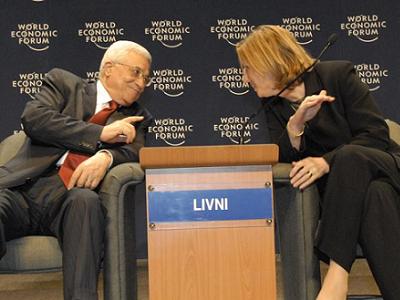
The rightwing American way of speaking about these issues is bizarre from a Middle Eastern point of view. Lots of real living Israelis have close ties to actually existing Palestinians. There are 12 Palestinian members of the Israeli Knesset, and they have helped keep the Kadima government in power. Here is PLO leader Mahmoud Abbas with current Israeli Prime Minister Tzipi Livni; Livni has repeatedly negotiated with the PLO as foreign minister of Israel. McCain’s entire line of attack assumes that Palestinian equals “bad” and ignores Israel’s and the Bush administration’s support for the PLO against Hamas.

PLO leader Mahmoud Abbas with current Israeli Prime Minister Tzipi Livni.

As the Young Turks pointed out, before the ‘straight talk express’ became the ‘mealy-mouthed train wreck,’ McCain advocated direct negotiations with Hamas when it was in control of the Palestinian Authority after the 2006 elections.

Source / Informed Comment

McCain Gave Money to Khalidi
By Matthew Yglesias / October 29, 2008

One of the many recent rightwing freakouts is about the idea that the media is covering up some kind of close relationship between Barack Obama and Rashid Khalidi and this in turn shows, I guess, that the US is going to adopt a left-wing Arab nationalist perspective toward the Israeli-Palestinian conflict.

But Sam Stein reports:

In regards to Khalidi, however, the guilt-by-association game burns John McCain as well.

During the 1990s, while he served as chairman of the International Republican Institute (IRI), McCain distributed several grants to the Palestinian research center co-founded by Khalidi, including one worth half a million dollars.

A 1998 tax filing for the McCain-led group shows a $448,873 grant to Khalidi’s Center for Palestine Research and Studies for work in the West Bank. (See grant number 5180, “West Bank: CPRS” on page 14 of this PDF.)

The relationship extends back as far as 1993, when John McCain joined IRI as chairman in January. Foreign Affairs noted in September of that year that IRI had helped fund several extensive studies in Palestine run by Khalidi’s group, including over 30 public opinion polls and a study of “sociopolitical attitudes.”

Not that there’s anything wrong with that! But it does expose some pretty massive hypocrisy on the part of the right-wing. Meanwhile, the real truth about Obama’s approach to Israel policy is that though there have been some promising signs, there have also been many moments when Obama’s been disappointingly timid on this issue. It’s an issue that calls for a dramatic substantive departure from the conventional wisdom — the tragedy of the matter, as everyone says, is that everyone more-or-less knows what a final status agreement would look like. But it is an issue that calls for boldness and the taking of some political risks under circumstances where there’s little political upside. I hope Obama’s got what it takes, and some days I even think he does. But anyone who thinks there’s a real risk of Khalidi controlling US policy toward Israel is living on some other planet.

Source / Think Progress

The Rag Blog

Posted in RagBlog | Tagged , , , , , | Leave a comment

FILM / ‘Milk’ : The Man Who Set America Straight About Gay Rights

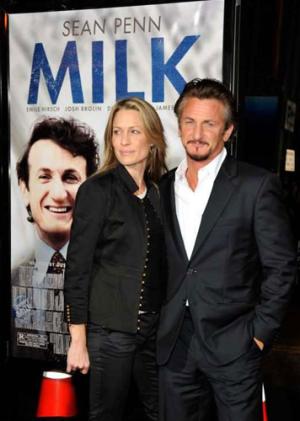
Sean Penn stars as Harvey Milk in the Hollywood biopic. Photo from Getty Images.

The release of a Hollywood biopic about Harvey Milk, America’s first openly gay elected politician, could not be more timely.
By Guy Adams / October 30, 2008

Video: See trailer from ‘Milk,’ Below.

The streetcars are being renamed and the red carpets rolled out in the Castro district of San Francisco for the world premiere of Milk, the latest film to break Hollywood’s long-running taboo over homosexuality.

A roar of approval greeted Sean Penn and Josh Brolin as they swept past several hundred people who had gathered on Tuesday to applaud the biopic of Harvey Milk, America’s first openly gay elected politician who was assassinated in a corridor of the nearby City Hall 30 years ago.

Many in the crowd also used the occasion to protest, waving signs urging “Vote No on Proposition Eight”. The measure would eliminate same-sex marriage in California if it were to be passed next week, and the battle serves as a topical reminder of how much still stands in the way of the movement that has elevated Milk to iconic status.

The colourful event brought considerable star power to Castro Street, the main street through the most famous gay and lesbian district in San Francisco, where Milk’s reign as city supervisor was cut short after he was shot and killed along with the Mayor, George Moscone, having served only 11 months in office.

The actors Emile Hirsch, Diego Luna, and the director Gus Van Sant – the man behind the 1997 film Good Will Hunting – were joined by local politicians, together with Milk’s old friends and contacts, many dressed as Seventies drag queens.

Yet it also highlighted a serious and pressing case of history repeating itself. Three decades ago, Harvey Milk was responsible for leading the campaign against a ballot measure that seems eerily reminiscent of Proposition Eight.

Proposition Six would have banned gays from teaching in California on the grounds that homosexuals were, at the time, considered more likely to be motivated by paedophilia. Milk’s against-the-odds success in defeating the ballot measure is still seen as one of the most inspiring victories in the gay rights movement.

“Harvey Milk was prophetic, a pioneer of gay rights at a time when people needed it most,” said Peter Novak, a researcher on Milk’s career at the University of San Francisco, who also had a role as an extra in the film. “He was articulate and founded a defence for the movement that continues to this day. His death was also a significant moment in recognising what was at stake in the struggle for equality. He used to say: ‘if a bullet should enter my brain, let it destroy every closet door,’ and he knew his death would propel the gay rights movement forward.”

Milk, who is played by Penn in the film, was assassinated by a right-wing former city supervisor called Dan White (Brolin), who was upset by the premature demise of his own political career.

Having been brought up in New York, Milk served in the US Navy, and became politically active after moving to San Francisco in the early Seventies. A gift for speechmaking that has seen him widely compared to Barack Obama, helped him to forge links with the local electorate, trade unions, and the city’s Asian community. He was elected to office at the third time of asking in 1977.

The new film, which charts Milk’s life, comes almost a quarter of a century after Rob Epstein’s The Times of Harvey Milk won an Academy Award for best documentary.

The new film features a scene in which Penn enjoys a long French kiss with his co-star, James Franco. In a recent interview, Franco revealed that shortly after the scene was shot, Penn text-messaged his former wife Madonna saying: “I just popped my cherry kissing a guy. I thought of you, I don’t know why.” The singer texted back: “Congratulations!”

Although Milk’s career as an elected official lasted only 11 months, he pioneered several major pieces of equal rights legislation. His anti-Proposition Six campaign culminated in an Obama-like appeal for gay people and civil rights advocates to contribute “just one dollar” to fight the measure. Yet it came to an end on 27 November, 1978, in a wood-panelled corridor of San Francisco’s City Hall. Appropriately enough, this is where thousands of local gay couples have been married in the months since California’s Supreme Court voted to make same-sex weddings legal.

Dan White had resigned after a political dispute with Milk and other supervisors, claiming that his salary was not enough to carry out the job. A few days later, he changed his mind and asked Moscone to rescind the resignation. When that request was refused, he blamed the Mayor and Milk in equal measure.

Though he hadn’t previously shown signs of violence, the refusal affected White badly. A few days later, he broke through a downstairs window of City Hall to avoid metal detectors and killed Milk and Moscone with hollow-pointed bullets from a revolver.

At the trial, White was sentenced to seven years for involuntary manslaughter, having convinced the jury he had carried out the killing on a whim as he hadn’t slept for days and had been bingeing on junk food. It is now seen as one of the worst miscarriages of American justice.

His successful use of the so-called “Twinkie defence,” named after the snack that White blamed for his state of mind, meant that the plea of “diminished capacity” was later expunged from Californian law. The sentence caused small-scale riots, and inspired the gay rights movement to secure Milk’s legacy.

Today, the tale will again be thrust to the centre of the public’s consciousness. “Harvey Milk is a true American hero,” Van Sant told reporters on the red carpet on Tuesday. “He’s a great example of a man representing his community and city.”

Gavin Newsom, San Francisco’s Mayor, who pioneered same-sex marriage in California, and helped to install a bust of Milk at City Hall, announced that a streetcar used in the filming would be renamed in Milk’s honour, saying: “This story couldn’t have happened anywhere else.”

In Hollywood, the film’s nationwide release later this month is sparking widespread debate over how its production company, Focus Features, will try to sell to middle America a title which contains several explicitly homosexual scenes.

Only a small number of advertisements have been bought, and the film’s trailer has received limited showings. Producers have kept it away from film festivals and are restricting media screenings, in a strategy aimed to make it become a “word of mouth” success like the 2005 film Brokeback Mountain starring Heath Ledger and Jake Gyllenhaal.

They may still face an uphill struggle. “At a recent Vegas test-screening for a middle-class, straight audience, several senior citizens tried to leave after a gay love scene in the early moments, but couldn’t because they were trapped in the middle of a row,” according to the Hollywood Reporter this week. “The seniors eventually said they were happy that they stayed but, like independent voters in an election contest, these are the very viewers that Focus must woo.”

A week before one of the most crucial ballots in the history of gay rights in the USA, the marketing conundrum inspired by Milk’s biopic provides the movement he prematurely left behind with a graphic reminder of the troubles it still faces.

“You know, the fact that we are still at a stage where you cannot market this as a mainstream film shows how far we still have left to come,” said Mr Novak.

Milk the legend

* Born in 1930, Milk was popular at school and studied at New York State Teachers College.

* He served in the navy during the Korean War and then worked as a banker.

* He became the first openly gay city official in California in 1977.

* Milk fought anattempt in 1978 to ban gay teachers.

* He was shot dead later that year.

Source / The Independent, U.K.

Thanks to CommonDreams / The Rag Blog

Posted in RagBlog | Tagged , , , , , , , , | 1 Comment

David Sedaris : Undecided? You’ve Got to be Kidding…

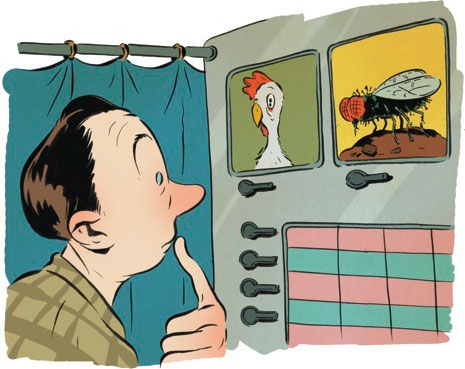
Illustration by Zohar Lazar / New Yorker.

‘I look at these people and can’t quite believe that they exist.’
By David Sedaris

I don’t know that it was always this way, but, for as long as I can remember, just as we move into the final weeks of the Presidential campaign the focus shifts to the undecided voters. “Who are they?” the news anchors ask. “And how might they determine the outcome of this election?”

Then you’ll see this man or woman— someone, I always think, who looks very happy to be on TV. “Well, Charlie,” they say, “I’ve gone back and forth on the issues and whatnot, but I just can’t seem to make up my mind!” Some insist that there’s very little difference between candidate A and candidate B. Others claim that they’re with A on defense and health care but are leaning toward B when it comes to the economy.

I look at these people and can’t quite believe that they exist. Are they professional actors? I wonder. Or are they simply laymen who want a lot of attention?

To put them in perspective, I think of being on an airplane. The flight attendant comes down the aisle with her food cart and, eventually, parks it beside my seat. “Can I interest you in the chicken?” she asks. “Or would you prefer the platter of shit with bits of broken glass in it?”

To be undecided in this election is to pause for a moment and then ask how the chicken is cooked.

I mean, really, what’s to be confused about?

When doubting that anyone could not know whom they’re voting for, I inevitably think back to November, 1968. Hubert Humphrey was running against Richard Nixon, and when my mother couldn’t choose between them she had me do it for her. It was crazy. One minute I was eating potato chips in front of the TV, and the next I was at the fire station, waiting with people whose kids I went to school with. When it was our turn, we were led by a woman wearing a sash to one of a half-dozen booths, the curtain of which closed after we entered.

“Go ahead,” my mother said. “Flick a switch, any switch.”

I looked at the panel in front of me.

“Start on the judges or whatever and we’ll be here all day, so just pick a President and make it fast. We’ve wasted enough time already.”

“Which one do you think is best?” I asked.

“I don’t have an opinion,” she told me. “That’s why I’m letting you do it. Come on, now, vote.”

I put my finger on Hubert Humphrey and then on Richard Nixon, neither of whom meant anything to me. What I most liked about democracy, at least so far, was the booth—its quiet civility, its atmosphere of importance. “Hmm,” I said, wondering how long we could stay before someone came and kicked us out.

Ideally, my mother would have waited outside, but, as she said, there was no way an unescorted eleven-year-old would be allowed to vote, or even hang out, seeing as the lines were long and the polls were open for only one day. “Will you please hurry it up?” she hissed.

“Wouldn’t it be nice to have something like this in our living room?” I asked. “Maybe we could use the same curtains we have on the windows.”

“All right, that’s it.” My mother reached for Humphrey but I beat her to it, and cast our vote for Richard Nixon, who had the same last name as a man at our church. I assumed that the two were related, and only discovered afterward that I was wrong. Richard Nixon had always been Nixon, while the man at my church had shortened his name from something funnier but considerably less poster-friendly—Nickapopapopolis, maybe.

“Oh, well,” I said.

We drove back home, and when asked by my father whom she had voted for, my mother said that it was none of his business.

“What do you mean, ‘none of my business’?” he said. “I told you to vote Republican.”

“Well, maybe I did and maybe I didn’t.”

“You’re not telling me you voted for Humphrey.” He said this as if she had marched through the streets with a pan on her head.

“No,” she said. “I’m not telling you that. I’m not telling you anything. It’s private—all right? My political opinions are none of your concern.”

“What political opinions?” he said. “I’m the one who took you down to register. You didn’t even know there was an election until I told you.”

“Well, thanks for telling me.”

She turned to open a can of mushroom soup. This would be poured over pork chops and noodles and served as our dinner, casserole style. Once we’d taken our seats at the table, my parents would stop fighting directly, and continue their argument through my sisters and me. Lisa might tell a story about her day at school and, if my father said it was interesting, my mother would laugh.

“What’s so funny?” he’d say.

“Nothing. It’s just that, well, I suppose everyone has a different standard. That’s all.”

When told by my father that I was holding my fork wrong, my mother would say that I was holding it right, or right in “certain circles.”

“We don’t know how people eat the world over,” she’d say, not to him but to the buffet or the picture window, as if the statement had nothing to do with any of us.

I wasn’t looking forward to that kind of evening, and so I told my father that I had voted. “She let me,” I said. “And I picked Nixon.”

“Well, at least someone in the family has some brains.” He patted me on the shoulder and as my mother turned away I understood that I had chosen the wrong person.

I didn’t vote again until 1976, when I was nineteen and legally registered. Because I was at college out of state, I sent my ballot through the mail. The choice that year was between Jimmy Carter and Gerald Ford. Most of my friends were going for Carter, but, as an art major, I identified myself as a maverick. “That means an original,” I told my roommate. “Someone who lets the chips fall where they may.” Because I made my own rules and didn’t give a damn what anyone else thought of them, I decided to write in the name of Jerry Brown, who, it was rumored, liked to smoke pot. This was an issue very close to my heart—too close, obviously, as it amounted to a complete waste. Still, though, it taught me a valuable lesson: calling yourself a maverick is a sure sign that you’re not one.

I wonder if, in the end, the undecideds aren’t the biggest pessimists of all. Here they could order the airline chicken, but, then again, hmm. “Isn’t that adding an extra step?” they ask themselves. “If it’s all going to be chewed up and swallowed, why not cut to the chase, and go with the platter of shit?”

Ah, though, that’s where the broken glass comes in.

Source / The New Yorker / Posted Oct. 17, 2008

Thanks to Thomas Cleaver / The Rag Blog

Posted in RagBlog | Tagged , , | 2 Comments

Koff. Wheeze. Doncha’ Know?

Photo by Skylor Williams / The Rag Blog.

The Rag Blog

Posted in RagBlog | Tagged , , | 1 Comment

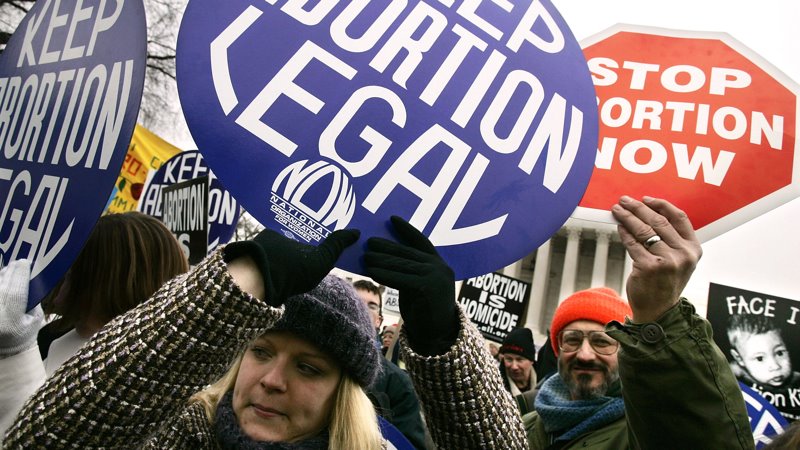
Concerning Mark Twain’s ‘War Prayer’ and the ‘Right to Life.’

Photo by Alex Wong / Getty Images.

‘In every presidential election for the past several decades we hear a hue and cry from the citizens who represent the “right to life” movement.’
By Dr. S. R. Keister
/ The Rag Blog / October 30, 2008

See ‘The War Prayer’ by Mark Twain, Below.

Frequently over the past seven years I have read and re-read Mark Twain’s “War Prayer” and was impressed by the parallel of the congregation in that bit of Twain’s masterful later writing, and the attitudes of the American public at large at the present time. As I recall, Twain wrote this essay during the Philippine Insurrection and the publication was held up for many years because the publishers deemed the then unrecognized masterpiece to be “unpatriotic.” One wonders now how many living Americans even know of the Philippine Insurrection and the development of “waterboarding” as a technique of interrogation at that time.

But I digress……..

In every presidential election for the past several decades we hear a hue and cry from the citizens who represent the “right to life” movement. Let us look further into this appellation in its political context.

In the late 1940’s I was a resident in a Pittsburgh hospital. Part of the three year program was a year working in pathology, where I, as the other residents, was required to do the autopsies. In that one year I did three post-mortems on women who had died of septic, i.e.”coat-hanger” abortions. All three had died a terrible death of sepsis from the gas-gangrene bacillus. Antibiotics were then in their infancy; hence, there was no specific treatment. These corpses lying on the autopsy table were distended from the gas in the tissues, they were a dark blue color, with black spots of gangrene mottling their skin. As one cut into the tissues there was a hiss as the fetid gas was released. Why? Why? Why?

After the Roe v Wade Decision I felt that at last there was some degree of justice for a woman caught in an untenable situation. After all, abortion was nothing new, as it in all probability had a history going back to when early man was in the hunter-gatherer period and was able to sharpen a twig with his bronze knife. I did not recall any specific admonitions in Matthew 5-7 regarding abortion; although, there was a steady reference therein to the sanctity of life and the admonition not to kill. Later, in the Middle Ages, largely in the 14th and 15th Centuries, during the period of the Papal Schism, the recurrences of the Black Death, the various and many internecine wars, there was depopulation of the face of Europe. More serfs were needed to work the baron’s fields, more men-at-arms needed for the various armies.

Thus, edicts were put forth to regenerate the population, i.e. edicts to encourage conception or to avoid the interruption of pregnancy.

I wish to underline that I am not philosophically in favor of abortion. Abortion is not a substitute for contraception. I do feel that abortion is justified in the event of rape, incest, or in situations where continued pregnancy will prejudice the life or health of the mother. In Western Europe, where there is ongoing learning regarding sexuality in the schools’ ciricula, i.e. health & hygiene, biology, and social studies, there is a much lower incidence of teen pregnancy, abortions, sexually transmitted diseases. There is, however, an underlying cultural difference between us and the Europeans, and that is their lack of the anti-intellectualism inherent to the United States. They accept education and do not relegate ‘sex-education’ to the parents who by-in-large do not know the difference between a Fallopian Tube or vas deferens and have no comprehension of the physiology of insemination. Thus I feel that Sen. Obama, with his program to reduce the needs for abortion, makes sense. If a woman is not put in a situation that forces her to make a decision, society will be largely absolved of the overall problem. If she chooses to carry the pregnancy to term, help will be provided for her and the infant. Never will she be told “not to have an abortion” and thereafter be left in limbo for the long term.

The major problem I have with the “right to life” movement, is the fact that it has nothing to do with the right to life. These folks, who I am sure, are absolutely sincere in their thinking, are in reality a movement to preserve the fetus. I find a few of them demonstrating against capital punishment, but totally invisible at antiwar rallies. I do not find them in the front-lines demonstrating for the child once born — rallies against child poverty, child abuse or for child health insurance. I do not find them complaining aloud about the bombing of thousands of Iraqi children. I do find them at Sara Palin rallies where the audience in general behaves as a crowd at a bull baiting or public flogging. Here they are enveloped in the mass that cries with delight when the candidates call for the bombing of Iran, or military action against Russia.

Why the inconsistency?

In the Inferno Dante placed the hypocrites in the sixth circle of the lower ranges of Hell, where they walked slowly along in fine golden capes and hoods lined with lead.

It would seem that the Republican Party leadership does not want to interfere with the Roe v Wade decision, for as long as it is the law it can be used to whip up the energy of that 30% of the population that has interest in the sanctity of the fetus, thus, assuring their attendance at the polls. If this were no longer an issue, where would all of this energy be directed? Surely not into the anti-imperialist movement or for the preservation of civil rights.

In the total morass of Republican politics today I am reminded of the statement by Josef Goebbels: “There was no point in seeking to convert the intellectuals. For intellectuals would never be converted and would anyway always yield to the stronger and this will always be ‘the man in the street.’ Arguments must therefore be crude, clear and forcible, and appeal to emotions and instincts, not to the intellect. Truth was unimportant and entirely subordinate to tactics and psychology.”

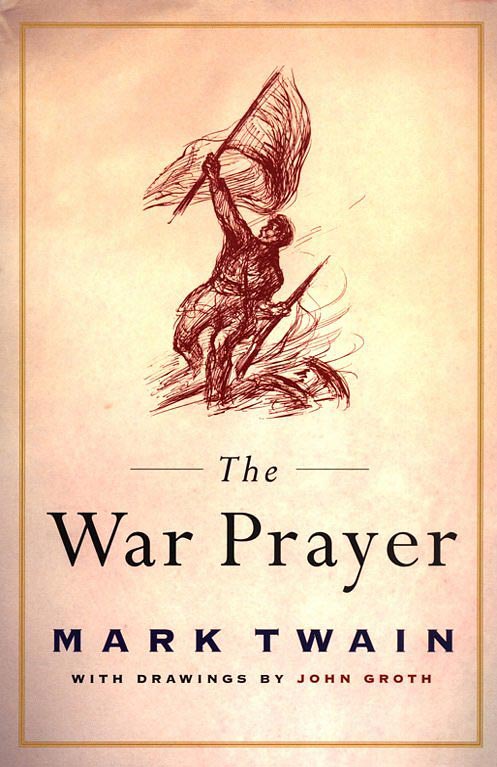
The War Prayer
By Mark Twain

It was a time of great and exalting excitement. The country was up in arms, the war was on, in every breast burned the holy fire of patriotism; the drums were beating, the bands playing, the toy pistols popping, the bunched firecrackers hissing and spluttering; on every hand and far down the receding and fading spread of roofs and balconies a fluttering wilderness of flags flashed in the sun; daily the young volunteers marched down the wide avenue gay and fine in their new uniforms, the proud fathers and mothers and sisters and sweethearts cheering them with voices choked with happy emotion as they swung by; nightly the packed mass meetings listened, panting, to patriot oratory which stirred the deepest deeps of their hearts, and which they interrupted at briefest intervals with cyclones of applause, the tears running down their cheeks the while; in the churches the pastors preached devotion to flag and country, and invoked the God of Battles beseeching His aid in our good cause in outpourings of fervid eloquence which moved every listener. It was indeed a glad and gracious time, and the half dozen rash spirits that ventured to disapprove of the war and cast a doubt upon its righteousness straightway got such a stern and angry warning that for their personal safety’s sake they quickly shrank out of sight and offended no more in that way.

Sunday morning came — next day the battalions would leave for the front; the church was filled; the volunteers were there, their young faces alight with martial dreams — visions of the stern advance, the gathering momentum, the rushing charge, the flashing sabers, the flight of the foe, the tumult, the enveloping smoke, the fierce pursuit, the surrender! Then home from the war, bronzed heroes, welcomed, adored, submerged in golden seas of glory! With the volunteers sat their dear ones, proud, happy, and envied by the neighbors and friends who had no sons and brothers to send forth to the field of honor, there to win for the flag, or, failing, die the noblest of noble deaths. The service proceeded; a war chapter from the Old Testament was read; the first prayer was said; it was followed by an organ burst that shook the building, and with one impulse the house rose, with glowing eyes and beating hearts, and poured out that tremendous invocation

*God the all-terrible! Thou who ordainest! Thunder thy clarion and lightning thy sword!*

Then came the “long” prayer. None could remember the like of it for passionate pleading and moving and beautiful language. The burden of its supplication was, that an ever-merciful and benignant Father of us all would watch over our noble young soldiers, and aid, comfort, and encourage them in their patriotic work; bless them, shield them in the day of battle and the hour of peril, bear them in His mighty hand, make them strong and confident, invincible in the bloody onset; help them to crush the foe, grant to them and to their flag and country imperishable honor and glory —

An aged stranger entered and moved with slow and noiseless step up the main aisle, his eyes fixed upon the minister, his long body clothed in a robe that reached to his feet, his head bare, his white hair descending in a frothy cataract to his shoulders, his seamy face unnaturally pale, pale even to ghastliness. With all eyes following him and wondering, he made his silent way; without pausing, he ascended to the preacher’s side and stood there waiting. With shut lids the preacher, unconscious of his presence, continued with his moving prayer, and at last finished it with the words, uttered in fervent appeal, “Bless our arms, grant us the victory, O Lord our God, Father and Protector of our land and flag!”

The stranger touched his arm, motioned him to step aside — which the startled minister did — and took his place. During some moments he surveyed the spellbound audience with solemn eyes, in which burned an uncanny light; then in a deep voice he said:

“I come from the Throne — bearing a message from Almighty God!” The words smote the house with a shock; if the stranger perceived it he gave no attention. “He has heard the prayer of His servant your shepherd, and will grant it if such shall be your desire after I, His messenger, shall have explained to you its import — that is to say, its full import. For it is like unto many of the prayers of men, in that it asks for more than he who utters it is aware of — except he pause and think.

“God’s servant and yours has prayed his prayer. Has he paused and taken thought? Is it one prayer? No, it is two — one uttered, the other not. Both have reached the ear of Him Who heareth all supplications, the spoken and the unspoken. Ponder this — keep it in mind. If you would beseech a blessing upon yourself, beware! lest without intent you invoke a curse upon a neighbor at the same time. If you pray for the blessing of rain upon your crop which needs it, by that act you are possibly praying for a curse upon some neighbor’s crop which may not need rain and can be injured by it.

“You have heard your servant’s prayer — the uttered part of it. I am commissioned of God to put into words the other part of it — that part which the pastor — and also you in your hearts — fervently prayed silently. And ignorantly and unthinkingly? God grant that it was so! You heard these words: ‘Grant us the victory, O Lord our God!’ That is sufficient. the *whole* of the uttered prayer is compact into those pregnant words. Elaborations were not necessary. When you have prayed for victory you have prayed for many unmentioned results which follow victory–*must* follow it, cannot help but follow it. Upon the listening spirit of God fell also the unspoken part of the prayer. He commandeth me to put it into words. Listen!

“O Lord our Father, our young patriots, idols of our hearts, go forth to battle — be Thou near them! With them — in spirit — we also go forth from the sweet peace of our beloved firesides to smite the foe. O Lord our God, help us to tear their soldiers to bloody shreds with our shells; help us to cover their smiling fields with the pale forms of their patriot dead; help us to drown the thunder of the guns with the shrieks of their wounded, writhing in pain; help us to lay waste their humble homes with a hurricane of fire; help us to wring the hearts of their unoffending widows with unavailing grief; help us to turn them out roofless with little children to wander unfriended the wastes of their desolated land in rags and hunger and thirst, sports of the sun flames of summer and the icy winds of winter, broken in spirit, worn with travail, imploring Thee for the refuge of the grave and denied it — for our sakes who adore Thee, Lord, blast their hopes, blight their lives, protract their bitter pilgrimage, make heavy their steps, water their way with their tears, stain the white snow with the blood of their wounded feet! We ask it, in the spirit of love, of Him Who is the Source of Love, and Who is the ever-faithful refuge and friend of all that are sore beset and seek His aid with humble and contrite hearts. Amen.

(*After a pause.*) “Ye have prayed it; if ye still desire it, speak! The messenger of the Most High waits!”

It was believed afterward that the man was a lunatic, because there was no sense in what he said.

[Twain apparently dictated it around 1904-05; it was rejected by his publisher, and was found after his death among his unpublished manuscripts. It was first published in 1923 in Albert Bigelow Paine’s anthology, Europe and Elsewhere.

The story is in response to a particular war, namely the Philippine-American War of 1899-1902, which Twain opposed.
Transcribed by Steven Orso.]

Source / Midwinter.com

The Rag Blog

Posted in Rag Bloggers | Tagged , , , , , , , | Leave a comment

Gore Vidal : John McCain in the Echo Chamber

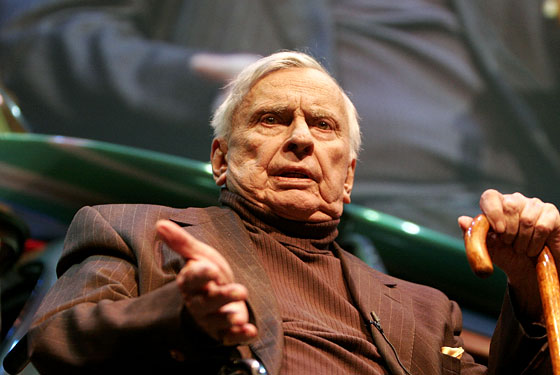
Gore Vidal in 2007. Photo courtesy of Getty Images.

‘Even from the corpse of the Republican Party, which Abraham Lincoln left somewhat hastily in the 19th century, this was an unusually sickening display.’
By Gore Vidal

October proved to be the cruelest month, for that was the time that Sen. McCain, he of the round, blank, Little Orphan Annie eyes, chose to try out a number of weird lies about Barack Obama ostensibly in the interest of a Republican Party long overdue for burial.

It is a wonder that any viewer survived his furious October onslaught whose craziest lie was that Obama wished to become president in order to tax the poor in the interest of a Democratic Party in place, as he put it in his best 1936 voice, to spend and spend because that’s what Democrats always do. This was pretty feeble lying, even in such an age as ours. But it was the only thing that had stuck with him from those halcyon years when Gov. Alfred M. Landon was the candidate of the Grand Old Party, which in those days was dedicated to erasing every policy of Franklin Delano Roosevelt, whose electoral success was due to, they thought, Harry Hopkins’ chilling mantra, “we shall … spend and spend and elect and elect.” Arguably, the ignorant McCains of this world have no idea what any of this actually signifies; Hopkins’ comment is a serious one, and serious matters seldom break through to cliché-ridden minds.

Although I am no fan of the television of my native land, I thought that an election featuring two historic novelties—the first credible female candidate for president and the first black nominee—would be great historic television, yet I should have been suspicious whenever I looked at McCain’s malicious little face, plainly bent on great mischief. Whenever Obama made a sensible point, McCain was ready to trump it with a gorgeous lie.

When Obama said that only a small percentage of the middle class would suffer from income tax during his administration, McCain would start gabbling the 1936 Republican mantra that this actually meant that he would spend and spend and spend in order to spread the money around, a mild joke he has told for the benefit of a plumber who is looking forward to fiscal good fortune and so feared the tax man, using language very like that of long-dead socialists to reveal Obama’s sinister games.

Advice to Obama: No civilized asides are permitted in McCain Land, where every half-understood word comes from the shadowy bosses of a diabolic Democratic Party, eager to steal the money of the poor in order to benefit, perversely, the even poorer.

So October (my natal month) was no joy for me, as the degradation of our democratic process was being McCainized. McCain is a prisoner of the past. Later, in due course he gave us the old address book treatment: names from Obama’s past, each belonging to a potential terrorist. Even from the corpse of the Republican Party, which Abraham Lincoln left somewhat hastily in the 19th century, this was an unusually sickening display.

Happily, physicists assure us that there is no action without reaction.

There were still a few bright glimmers of something larger than a mere candidate of the Republican Party, but Mr. McCain seems to be in the terminal throes of a self-love that causes him to regard himself as a great American hero. From time to time, he likes to shout at us, “I have fought in many, many wars,” and, “I have won many of them,” but he has, so far, never told us which were the ones that he has actually won, since every war that he has graced with his samurai presence seems to have been thoroughly lost by the United States. Consistency is all-important to the born loser as well as to the committed liar.

So what little fame he has rests on the fact that he was taken a prisoner of war by the Vietnamese—hardly a recommendation for the leadership of the “free world”—and thus aware of the meagerness of his own curriculum vitae, for his vice presidential choice he then turned radically, in the age of the awakening to power of women, to an Alaskan politician; a giggly Piltdown princess out of pre-history.

Her qualification? She has once been mayor (or was it “mare”?) of an Alaskan village and later governor of what had been known as “Seward’s Icebox,” named for Lincoln’s secretary of state, William Seward, who had over the misgivings of many bought all that ice from Russia.

One does get the impression that the senator from Arizona is living in a sort of echo chamber of nonsensical phrases, notions and unreality.

To further add insult to injury, as it were, he describes himself as a “maverick,” which one critic in the audience assures him he is not, anyway, like the great Maury Maverick, a New Deal congressman from Texas who was so dedicated to freedom that he allowed his cattle to roam unbranded, freely on the range—a tribute to a time when Texans were freer than now in the post-Bush era.

The critic in the audience said that he was no maverick in the usual sense on the ground that he was simply a sidekick. That just about sums it up: Sidekick to the only president we have ever had who lacked any interest in governance.

As we are going through a religious phase in this greatest of all great nations, I am reminded of Chancellor Bismarck’s remark about us Americans in the 19th century when he said: “God looks after drunks, little children and the United States of America.”

Amen.

Source / truthdig / Posted Oct. 27, 2008

The Rag Blog

Posted in RagBlog | Tagged , , , , , , , | 1 Comment

Exxon Mobil’s Exxcellent Adventure : Biggest Profit in U.S. History


‘The latest quarter’s net income equaled $1,865.69 per second, nearly $400 a second more than the prior mark.’
By Aaron Smith / October 30, 2008

NEW YORK — Exxon Mobil Corp. set a quarterly profit record for a U.S. company Thursday, surging past analyst estimates.

Exxon Mobil (XOM, Fortune 500), the leading U.S. oil company, said its third-quarter net profit was $14.83 billion, or $2.86 per share, up from $9.41 billion, or $1.70, a year earlier. That profit included $1.45 billion in special items.

The company’s prior record was $11.68 billion in the second quarter of 2008.

The latest quarter’s net income equaled $1,865.69 per second, nearly $400 a second more than the prior mark.

The company said its revenue totaled $137.7 billion in the third quarter.

Analysts had expected Exxon to report a 40% jump in earnings to $2.38 per share, or net income of $12.2 billion, and a 28% surge in revenue to $131.13 billion, according to a consensus of estimates compiled by Thomson Reuters.

Exxon’s stock price slipped by nearly 2% in morning trading.

The company’s earnings were buoyed by oil prices, which reached record highs in the quarter before declining. Oil prices were trading at $140.97 a barrel at the beginning of the third quarter, and had fallen to $100.64 at the end.

Compare that to 2007, when prices traded at $71.09 a barrel at the beginning of the third quarter, and rose to $81.66 by the end.

Exxon’s special charges include the gain of $1.62 billion from the sale of a German natural gas company. It also includes the $170 million charge in interest related to punitive damages from the Valdez oil spill off the Alaskan coast in 1989.

The Irving, Texas-based company said it lost $50 million, before taxes, in oil revenue because of Hurricanes Gustav and Ike. The company expects damages related to these hurricanes to reduce fourth-quarter earnings by $500 million.

Despite the surge in profit, Exxon said oil production was down 8% in the third quarter, compared to the same period last year.

The company also said it is spending more money to locate new sources of oil. Exxon said it spent $6.9 billion on oil exploration in the third quarter, a jump of 26% from the same period last year.

Phil Weiss, analyst for Argus Research, said he doesn’t expect Exxon to break any more profit records in future quarters.

“I don’t expect the fourth quarter to be nearly as good as the third because of lower oil prices,” said Weiss.

He also said that demand for gasoline is falling, which could impact Exxon and other oil companies.

Earlier Thursday, Europe’s leading oil company, Royal Dutch Shell PLC (RDSA), reported a 22% gain in net profit for the third quarter, to $8.45 billion. The company said sales rose 45% to $132 billion.

Exxon is the second-largest company in the Fortune 500 in terms of annual sales, behind Wal-Mart Stores (WMT, Fortune 500).

Exxon’s stock price has fallen about 20% so far this year, The S&P 500, of which it is a member, has fallen about 36%.

Source / CNNMoney.com

Thanks to Ramsey Wiggins / The Rag Blog

Posted in RagBlog | Tagged , , , , | 1 Comment

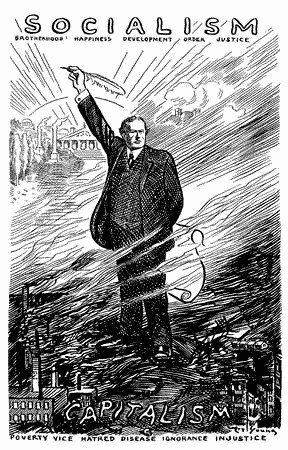
Socialism, Capitalism : What’s in a Name?

With all the accusations and platitudes being bandied about, David Hamilton’s observations about politco-economic nomenclature and the times we’re in just might be a useful addition to the discussion.

Thorne Dreyer / The Rag Blog

‘The pure socialist and laissez faire capitalist approaches are extreme poles of a continuum and our reality is closer to the center.’
By David P. Hamilton / The Rag Blog / October 30, 2008

The categories commonly used, socialist and capitalist, have little relationship to current reality. Everyone from Milton Friedman to Fidel Castro believes in a mixed economy, part public and part private. The traditional terms paint a world in black and white that actually has only infinite shades of gray. Were Barack Obama and John McCain running for the presidency of France, Obama would be the Socialist Party candidate and McCain the “Gaullist”. Socialism is the strengthening of the commons and that is a general theme of the Obama campaign.

Socialist policies might include a progressive income tax, nationalizations of essential services (e.g., electricity or railroads), pensions for the elderly (Social Security), government investment in major industries, universal health care, free public education, support for unions or any program that enhances the public sector’s ability to protect the interests of the society as a whole.

Conversely, we are all capitalists in that we support the right of individuals to exercise their entrepreneurial ambitions, within government established regulations. I might want to open a restaurant and no one would deprive me of that right provided I met health standards and paid my taxes. The petty bourgeoisie is not the enemy.

It would help advance discussion if we recognized that the pure socialist and laissez faire capitalist approaches are extreme poles of a continuum and our reality is closer to the center. Of course, the US has historically been the economy most radically oriented toward the laissez faire poll, the “American model”. But what has really taken an ideological hit in the recent financial crisis is precisely this “American model”. Look for Obama to reorient us more toward the economic model that is characteristic of the social democracies of the EU.

The Rag Blog

Posted in Rag Bloggers | Tagged , , | Leave a comment

Hey John : You’re No Maverick. And We Can Prove it!

Who’s the Original Maverick?

With this video from Robert Greenwald and Brave New Films, the saga of rustler John McCain — the faux maverick — and his skulduggery continues as we reexamine the Texas family that forged the Maverick brand.

Featuring The Rag Blog’s Fontaine Maverick, Maury Maverick, Terrellita Maverick and Sam Houston Clinton.

More from The Rag Blog on the Maverick family of Texas:

* Austin’s Fontaine Maverick Tells CNN Why McCain and Palin are no Mavericks / Video / The Rag Blog / Oct. 9, 2008

* McCain a Faux Maverick : Stealing a Texas Tradition by Paul in Austin / The Rag Blog / Sept. 13, 2008

* Fontaine Maverick : John McCain is no Maverick! by Fontaine Maverick / The Rag Blog / August 31, 2008

And * This Maverick The Real Deal by Joe Holley / The Rag Blog / March 1, 2008

Thanks to Carlos Lowry / The Rag Blog

Posted in RagBlog | Tagged , , , , , | Leave a comment

Surprise! : Banks to Use Bailout Bucks for Mergers

The Rag Blog reported yesterday, in a story titled Salary Bonuses Constitute 10% of the Bailout that pay and bonus deals for corporate bigwigs account for about ten percent of the government bailout package.

Here’s more good news: Big banks appear poised to use bailout funds to gobble up smaller banks. Hey, that’s not what they told us the money was for. I’m so confused…

Thorne Dreyer / The Rag Blog / October 30, 2008


‘The banks, both privately and publicly, aren’t talking about helping the economy. They’re talking about helping themselves.’
By Paul Kiel / October 27, 2008

The Treasury Department’s capital injection program is well underway, with more than $150 billion total now promised to around 30 banks. So far, the evidence suggests many of those banks will use the cash to buy up weaker banks.

That’s not how the program was sold. Banks were going to use the money to lend, Treasury Secretary Hank Paulson announced earlier this month. “This increased lending will benefit the U.S. economy and the American people,” he said. The banks were supposed to “strengthen their efforts to help struggling homeowners who can afford their homes avoid foreclosure.”

But the banks, both privately and publicly, aren’t talking about helping the economy. They’re talking about helping themselves.

Joe Nocera writes in the New York Times that it’s the “dirty little secret of the banking industry” that the taxpayer money won’t be used to expand lending. And, listening in on an employee conference call at JP Morgan Chase, he heard an executive tell it straight:

“Twenty-five billion dollars is obviously going to help the folks who are struggling more than Chase… What we do think it will help us do is perhaps be a little bit more active on the acquisition side or opportunistic side for some banks who are still struggling. And I would not assume that we are done on the acquisition side just because of the Washington Mutual and Bear Stearns mergers. I think there are going to be some great opportunities for us to grow in this environment, and I think we have an opportunity to use that $25 billion in that way and obviously depending on whether recession turns into depression or what happens in the future, you know, we have that as a backstop.”

Translation: The weaker banks will use the money to plug their holes, while the stronger banks have the option of using the money to fund takeovers of weaker banks or simply holding on to the money as a cushion in tough times.

The government’s investment in the banks, of course, comes with few strings attached and no requirement on how the money can be used.

About 20 regional banks have signed up for the bailout program, joining the eight big banks that signed up earlier this month. The government has reportedly decided not to name the latest round of banks, fearing that investors would quickly punish a bank that’s omitted. The banks themselves have been left to announce their participation. (We’re putting together a list of the bailed-out banks and will post that later in the day).

The Wall Street Journal reports this morning on a number of regional banks that have announced their participation. And judging from their announcements, they have a similar take as JP Morgan Chase on how they’ll be using the money:

Capital One spokesperson Tatiana Stead said the investment “puts us in a stronger position to take advantage of opportunities that may emerge from the current banking environment.”

Other banks gave similar sentiments, with SunTrust Chairman and Chief Executive James M. Wells III saying the extra money will allow his company to expand, though the current climate calls for elevated capital levels even if expansion wasn’t being eyed.

Capital One is getting $3.55 billion in taxpayer money. SunTrust is getting $3.5 billion.

There is one notable exception to the no-lending trend. The CEO of Ohio-based Huntington Bancshares ($1.4 billion in bailout bucks) says that the money will allow the company “to expand our lending efforts to both existing and new customers throughout our Midwest footprint.”

One bank, PNC, has already used its government money to fund a takeover. Last Friday, PNC made two announcements: It was buying National City for $5.58 billion, and it was getting $7.7 billion as part of the capital injection program. The government clearly played a key role in the deal. National City, weakened by mortgage losses, was forced to find a seller, the Washington Post reports, after the government turned down its request to join the program.

Treasury officials first announced that “one purpose of this plan is to drive consolidation” last week. If that’s the case, it’s going forward with little public debate.

Source / ProPublica

Thanks to Jim Retherford / The Rag Blog

Posted in RagBlog | Tagged , , , , , | Leave a comment

A Heartbeat Away from Tuesday


‘This coming Tuesday as we vote for a new American president and vice president there will be many voters who haven’t read the fine print about John McCain.’
By Larry Ray
/ The Rag Blog / October 29, 2008

It seems that some sub-prime mortgage holders who are losing their homes and some American voters unfortunately have a great deal in common. Both groups have been eager to figuratively sign the dotted line for something they may not have carefully thought through. Both have been manipulated and persuaded to do something that ultimately could cause them and the whole country great difficulty.

We all know the sub-prime story by now. Big name mortgage bankers and high rolling financial giants roared along in recent years with very little oversight. Mathematicians created convoluted, complex mortgage “products” few people could understand, and slick agents sold them like cotton candy to unwitting fiscal diabetics. Folks lined up to buy quarter-million dollar homes for nothing down and low monthly payments. Few bothered to read the fine print. Lots of folks who already had huge credit card debt were already primed for the sub-prime sweets. And then one morning everyone woke up from the dream and started screaming, asking how this could have happened.

This coming Tuesday as we vote for a new American president and vice president there will be many voters who haven’t read the fine print about John McCain and his frighteningly unqualified vice presidential choice, Sarah Palin. Barak Obama’s supporters have gathered by the hundreds of thousands across America to hear his positive message and detailed plans for our future and have made an informed and enthusiastic decision to vote for him.

In addition to loyal hard core conservatives, many other Americans are going to vote for the the McCain ticket and just hope for the best. Period. The big mortgage wheeler dealers fudged the truth and promised great things, all with no oversight and no one calling their hand as they peddled their flawed mortgages.

McCain’s “Straight Talk” has not been straight at all. In his campaign’s waning days his vague promises and negative attacks change from campaign stop to campaign stop. Repeated media debunking of his wild claims and negative attacks have not stopped him from shamelessly aspursing them week after week as if they were true. Lots of folks actually believe the endless fantastic, false information spread about Obama. Or they certainly want to believe it, just like folks with no money wanted to believe they could own a huge expensive house with no money down.

One last time, for the good of America, we should seriously consider the points below before casting our votes Tuesday:

Seventy-two-year-old Senator McCain has successfully held back from the public a complete look at his medical records that could reveal the current state of his third remission for deadly melanoma cancer. We need to know for sure if he if fit and healthy. Is he hiding something?

Senator McCain’s record shows that in spite of what he says, he will, in the end, bow to the old guard Republican “base” and will continue Bush’s ruinous fiscal policies.

Sarah Palin, McCain’s chosen Vice Presidential candidate, has cynically refused to produce any of her medical records. This intellectually void, power hungry and dismally uninformed lightweight would become president of the United States should Senator McCain become incapacitated or die.

This is not buy-one-get-one-free, folks. Political foreclosure on America with Sarah Palin in charge is too grim to even imagine. But a vote for the McCain ticket includes that possibility. Better stop and read not only the fine print but the already glaring large print before voting Republican.

[Retired journalist Larry Ray is a Texas native and former Austin news anchor. He also posts at The iHandbill.]

The Rag Blog

Posted in Rag Bloggers | Tagged , , , | Leave a comment

Most Basic Iraqi Infrastructure Doesn’t Function

A woman collects an aid package from the Iraqi Red Crescent in Baghdad. The Red Cross says it cannot provide basic services indefinitely.

Warning on ‘dire’ Iraq conditions
By Imogen Foulkes / October 29, 2008

The Red Cross is warning that despite some improvements in security in Iraq, the condition of the country’s infrastructure remains dire.

In a statement issued from their headquarters in Geneva, the Red Cross said it was particularly concerned about poor water supplies.

It estimates that over 40% of Iraq’s civilian population still has no access to clean mains water.

The organisation says that the health of millions Iraqis is at risk.

The International Committee of the Red Cross (ICRC) describes the condition of Iraq’s health, water and sanitation services as dire – failing to meet the needs of a large part of the population.

Following this summer’s outbreak of cholera, Beatrice Megevand Roggo, Red Cross Head of Operations for the Middle East, said she was especially concerned about the lack of clean water supplies.

Ms Megevand Roggo said even the most basic infrastructure in Iraq is not functioning.

The Red Cross agrees security has improved recently in some parts of Iraq and this has allowed the organisation to expand its operations.

But, the ICRC insists, it can not be expected to provide basic services indefinitely.

“There is only so much a humanitarian organisation can do,” said Ms Megevand Roggo.

“Their own responsibility is also something that matters a lot – you cannot only count on humanitarians to solve the problems of a country like Iraq.”

That is a clear message to the government in Baghdad, and to the coalition forces.

Now that, five-and-a-half years after the overthrow of Saddam Hussein, the violence has finally begun to abate; the authorities should not wait too long to start providing the simple necessities of normal life.

Source / BBC News

And there’s this:

Is Iraq trash burn causing chronic ailments?
By Matthew D. LaPlante / October 28,2008

Hill officer’s memo says smoke plume makes Balad Air Base a toxic base

The great plume of black smoke that rises above the burn pit at Balad Air Base in northern Iraq is such an invariable part of the horizon that software engineers writing a program to help fighter pilots navigate their way onto the base made it a central part of the digitally simulated skyline.

Now the burn pit has become the central part of a conversation about what obligations the military has to keep its members healthy during war.

A memo being circulated at military bases across the country, written by an officer from Hill Air Force Base, calls the pit an “acute health hazard” – one that may have increased the risk of chronic problems for hundreds of thousands of service members and contractors who have done tours of duty at the largest base in Iraq.

As they have taken steps to end the practice, Air Force officials claim it doesn’t pose a health risk.

The critical memo was written by environmental engineer Darrin Curtis, who served with the 332nd Expeditionary Medical Group at Balad from September 2006 to January 2007. He expressed his dismay with the burning of toxic chemicals, plastics and other toxic waste – including, according to some reports, amputated limbs from the base hospital – and the lack of any apparent concern for the health of those breathing in the smoke.

Curtis wrote that health risks associated with smoke inhalation and respiratory exposure to toxic fumes produced by the burn could result in chronic ailments for service members at a base already ripe with other wartime hazards, including frequent rounds of indirect fire that earned the facility the nickname “Mortaritaville.”

“It is amazing that the burn pit has been able to operate without restrictions over the past few years without significant engineering controls put in place,” Curtis wrote, according to a copy of the memo posted by former soldier Aaron Rognstad on his Website, www.blogflack.blogspot.com.

Rognstad, a former soldier in the Colorado National Guard who served two tours of duty at Balad, told The Salt Lake Tribune he was aghast at what was going into the pit. “They were even burning the plastic trays we would eat our lunch on,” he said. “And we were breathing in all that plastic.”

Rognstad said some days at the base were worse than others. “Sometimes, when it would rain, it would rain ash on us,” he said. “We were all pretty shocked by that but what can you do, really?”

Hill Air Force Base declined to make Curtis available for an interview, saying that any questions to the lieutenant colonel – who has a doctorate in environmental engineering and nearly two decades of experience conducting health risk assessments, according to the memo – would have to be censored through the office of the Secretary of the Air Force, “so you get the Air Force perspective.”

And that perspective is that the process is safe. Air Force spokesman James Garcia said that there are “no short- or long-term health risks, and no elevated cancer risks are likely among personnel deployed to Balad.”

Nonetheless, Garcia said, the Air Force’s ultimate goal is to eliminate all open burning through controlled incineration and an active recycling program.

The Balad burn pit, its signature smoke plume and its omnipresent stink are well known to anyone who has even stepped foot on the base. In his blog, www.madeadifference.blogspot.com, Air Force surgeon Christopher Coppola, who served with Curtis in the 332nd, described a “column of dingy gray smoke rising from the burn pit,” which released a constant “perfume of burning vinyl, cardboard, and body parts.”

“Shame it is upwind from the hospital,” Coppola wrote, ” guess they just wanted the particles to act as an irritant to help my post-op patients cough more vigorously and expand their lungs after surgery.”

Coppola told The Tribune on Tuesday that “I did think the military would do something about it,” following his most recent visit to Balad, which ended earlier this year.

But given the number of military members on the base, and the dangers he believes are associated with such free burns, Curtis wrote that the practice should have been ended long ago.

“Burn pits may have been an acceptable practice in the past, however today’s solid waste contain materials that were not present in the past, that can create hazardous compounds,” Curtis wrote. “Open burning may only be practical when it is the only available option and should be only used in the interim until other ways of disposal can be found. This interim fix should not be years, but more in the order of months.”

Source / Salt Lake Tribune

Thanks to Juan Cole / The Rag Blog

Posted in RagBlog | Tagged , | Leave a comment