FBI Grabbing More Power While They Still Can


Relax, We’re Only Assessing You
Jacob Sullum / August 21, 2008

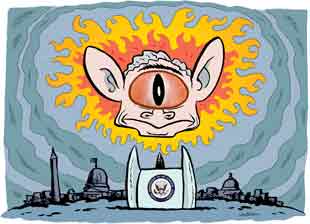
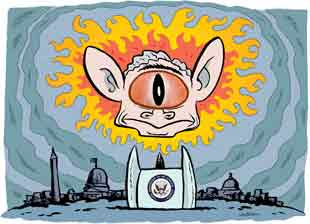
Sen. Russell Feingold (D-Wis.) and several of his colleagues are worried about new guidelines for FBI investigations that Attorney General Michael Mukasey is on the verge of approving. Yesterday, in a letter to Mukasey, they raised several concerns:

The guidelines permit the FBI to use a variety of intrusive investigative techniques to conduct “assessments” of possible criminal activity, national security threats or foreign intelligence collection—without any initial factual predication. We are concerned about the extent to which such authority might, for example, permit the FBI to conduct long-term physical surveillance of an innocent American citizen; interview such an individual’s neighbors and professional colleagues, including based on a “pretext” or misrepresentation; recruit human sources to provide information on that individual; or conduct commercial database searches on that individual—all without any basis for suspicion….We are particularly concerned that the draft guidelines might permit an innocent American to be subjected to such intrusive surveillance based in part on race, ethnicity, national origin, religion, or on protected First Amendment activities.

The guidelines permit the collection of foreign intelligence information inside the United States, through both “assessments” and predicated “full investigations,” with little explicit protection for information gathered about United States persons. The definition of “foreign intelligence” is broad, and covers any information relating to the activities of a foreign government, organization or person. We are concerned about the extent to which the FBI may be permitted to gather or use information about Americans under the rubric of foreign intelligence gathering when there is no suspicion of a crime, threat to national security, or any other wrongdoing.

The Bush administration has argued that FBI agents should not need grounds for suspicion to use commonly available investigative tools such as Web searches. While there is something to be said for that argument, one could also argue that law enforcement officials should be more restrained in their use of such tools than ordinary citizens, since the consequences of their curiosity have the potential to be much more serious. In any case, “long-term physical surveillance” is not something ordinary citizens can do without risking arrest for trespassing, stalking, or harassment. Likewise, FBI interviews, even when officially consensual, have a coercive aspect to them that is absent from, say, a chat with a neighbor. And if “commercial database searches” include examining sensitive information such as credit reports, which ordinary citizens can legally obtain only if they are engaging in or considering certain kinds of transactions with the subjects of the reports, that is another example of special government powers that should not be exercised willy-nilly.

This story is a good excuse to quote Feingold’s comments at a June 25 hearing about border searches of laptop computers, where he castigated the Bush administration for withholding information about the frequency of the practice:

Once again, this administration has demonstrated its perverse belief that it is entitled to keep anything and everything secret from the public it serves and their elected representatives, while Americans are not allowed to keep any secrets from their government. That’s exactly backwards. In a country founded on principles of liberty and democracy, the personal information of law-abiding Americans is none of the government’s business, but the policies of the government are very much the business of Congress and the American people.

Source / Hit & Run

Thanks to Diane Stirling-Stevens / The Rag Blog

Posted in RagBlog | Tagged , , | Leave a comment

Fleeting Glimpses by A. Traveler

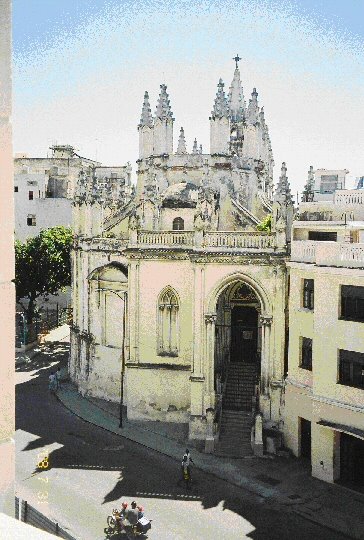
Catedral, Calle de la Reina.

Before the Golden Arches Invade the Pearl of the Caribbean…
by A. Traveler / The Rag Blog / August 21, 2008

Six days in one city isn’t enough to form opinions of a country that has fired one’s imagination for over 50 years; there are only fleeting impressions.

Almost everything in Ciudad Habana, from the light fixtures at the hotels, to the ceilings in the restaurants, to the intricate plaster moldings on practically every house and public building, would attract wild bidding in the Antique listings on eBay. Beautiful things abound, made by craftsmen long retired or deceased, carefully maintained and cared-for, yet used as casually as paper plates at a picnic. History is present on every corner, and the central city is a living museum.

Ornate ironwork atop doorway, Obispo Street.

But not everything is old, and the new things are brilliant, Euro-inspired, yet harmonious additions to a bustling, active city. Everybody knows about the classic old cars – and they are sweet! – but the majority of vehicles on the roads are sleekly modern imports, including plenty of hybrids. Friendly neighbor Venezuela is providing the petrofuel.

Glass wall of Museum of Cuban Art reflects renovated Victorian across the street, in baby pink and lemon yellow.

View from Museum of the Revolution shows disparate eras of transportation and construction. The small tower is part of a Spanish-era fortification.

While hero worship is alive and well in Cuba, there is much less seen of Fidel’s image and much more of Che, and of Camilo Cienfuegas, than one might expect. Little is seen anywhere of Raul Castro, who, unlike Venezuela’s Hugo Chavez, seems disinclined to re-enact Fidel’s marathon speeches. Anti-Bush propaganda around town focuses as much on Papa Bush as on Junior, but never becomes anti-American – unless you consider the fact that the US dollar trades as just over 80% of the Cuban peso as anti-American… People are friendly, outgoing, glad to see US visitors, and willing to go the extra mile to help you without expecting a gratuity – except for the ever-present mariachi and would-be mariachi, who surely deserve to be paid if they must play Guantanamera yet again!

As in so many “foreign countries”, the farther the well-behaved visitor strays from tourist areas, the less likely one is to be noticed at all. While the island’s Spanish is softer, and even faster, than the more familiar Mexican variety, it is still Spanish after all, and the good old reliable polite phrases will see you through most interactions. (Of course, many Cubans speak excellent English, should it inconvenience you too greatly to make an effort to flatter your hosts.)

All of today’s Cubans are, so they say, of Spanish and/or African descent, since indigenous peoples present when Signor Columbus arrived were “rapidly exterminated”. That this should have happened so rapidly as to preempt any later aspirations to native blood, such as many in the US claim from the Cherokee princess great-grandmother we all think we had, boggles the mind of descendants of later genocidal invaders of the hemisphere.

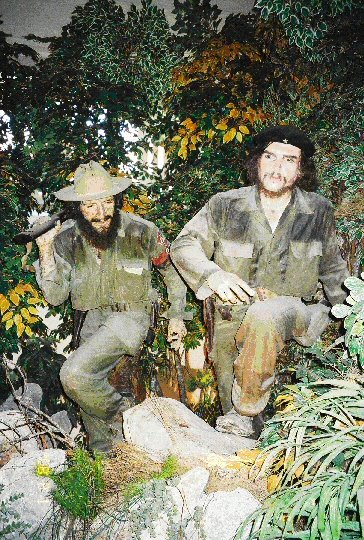
Camilo and Che in “natural history” Sierra setting at Museum of the Revolution. Cienfuegos was the only one of Fidel’s companions ever photographed dancing.

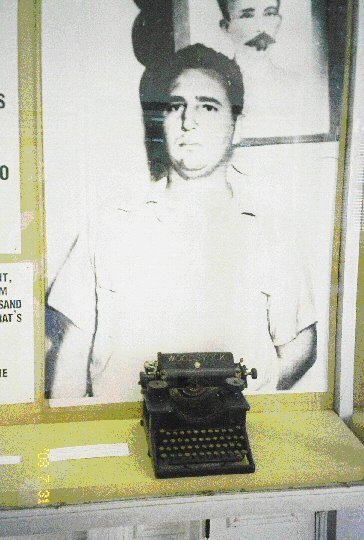
Fidel’s typewriter, also at the Museum of the Revolution: it’s a Woodstock!

Outside the Granma boathouse. Fidel’s tank from the Bay of Pigs (above), and engine from a US spy plane which the US denied existed (below).


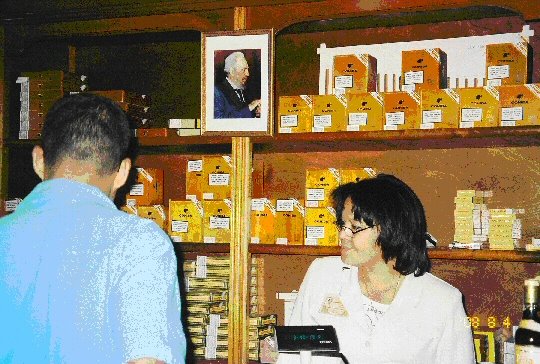
Everyone in Havana can get you Cohiba cigars “at a wonderful price”. (“Don’t be a sucker!”) The best rum, Canay, isn’t available in duty-free shops. One concludes rapidly that, no matter where he did it, Hemingway surely did drink! Even in sizzling August, the city hums with tourists from all over the world. Restaurant cuisine is bland and unimaginative – there’s not yet a Cordon Bleu school! – but not entirely pork, rice, and beans. Sometimes there is no chicken, but there are vegetables and fruits a’plenty, and good fish if you look for it. There aren’t many fat Cubans, but they generally look healthy, and there are lots of plump, well-outfitted babies. The shops have good-looking clothes and people are in there buying stuff. In six days, I saw only four outright beggars, three of them clearly professionals.

El Lider oversees sales at the Romeo y Julieta factory.

Two of Cuba’s principal products on parade.

It was just a glimpse, but I’m glad to have seen this much of revolutionary Cuba before the remnants of the ineffectual US “blockade” fall and “progress” brings la isla its greatest challenges yet.

Here is a little bonus: “Comandante Che Guevera” as performed by Havana’s “Trio Ruvela.”


The Rag Blog

Posted in Rag Bloggers | Tagged , | Leave a comment

Small Victories Reap Small Rewards


New York settles suit with antiwar activists for $2M
August 20, 2008

The city has agreed to pay $2 million to settle a lawsuit that claimed antiwar activists were unjustly arrested five years ago, city officials said.

The suit was filed by 52 activists against the Iraq war who were arrested in April 2003 outside the Manhattan offices of a military contractor.

“This settlement was reached without any admission of liability on behalf of the city and the individual defendants,” said Susan Halatyn, a spokeswoman for the city’s Law Department. “Although defendants believe that they would ultimately have prevailed at a trial, the costs of going forward weighed in favor of a settlement at this time.”

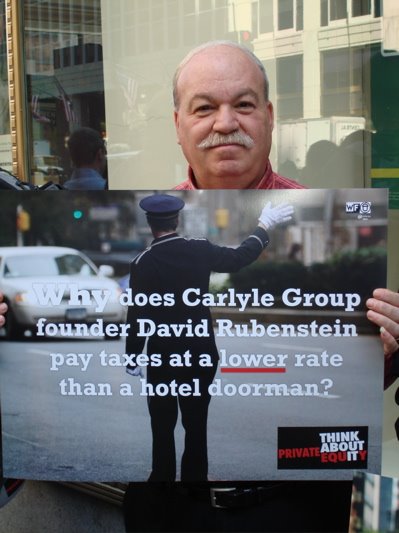
The antiwar group demonstrated April 7 in front of the building for the Carlyle Group, an investment house, on Fifth Avenue. During the protest, they were arrested on various violations, including disorderly conduct, city officials said.

According to the city’s Law Department, both parties determined that it would be best to settle rather than incur more costs at what was expected to be a lengthy trial.

Each of the 52 plaintiffs will share equally in $950,000, with the remainder of the settlement to cover their lawyers’ fees, officials said.

Source / Newsday.com

The Rag Blog

Posted in RagBlog | Tagged , , | Leave a comment

Tom Hayden : McCain, Neocons and the Georgia War Conspiracy

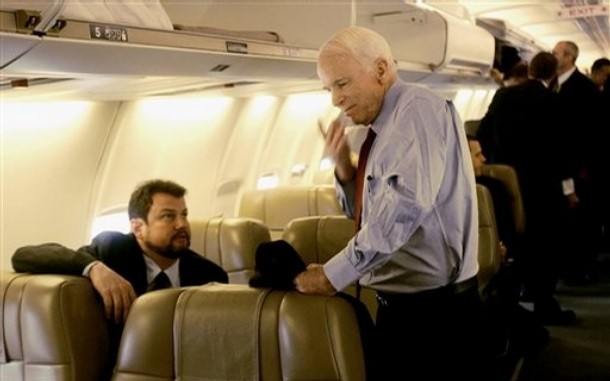
John McCain consults with lobbyist/foreign policy advisor Randy Scheunemann.

‘This is not a conspiracy theory but a conspiracy fact, stated as boldly as possible before it is too late’
By Tom Hayden / August 20, 2008

Barack Obama and the Democrats are heading towards trouble in November because of a new Cold War with the Russians triggered largely by a top John McCain adviser and the same neo-conservative clique who fabricated evidence to lobby for the Iraq War.

This is not a conspiracy theory but a conspiracy fact, stated as boldly as possible before it is too late.

Because they are still mired in what Obama himself calls “old thinking”, the Democratic hierarchy and the mainstream media will have to be challenged to recognize the Georgia Conspiracy by the the faithful and clear-headed rank-and-file and the blogosphere.

Here are the short-term essentials:

*After border skirmishes similar to the 1964 Tonkin Gulf affair, on August 7-8, Georgia’s president Mikheil Saakashvili of Georgia invaded the autonomous breakaway region of South Ossetia with his US-trained army. The Russians responded with massive force, quickly routing Saakashvili’s forces.

* McCain has traveled to Georgia, nominated his “close friend” Saakishvili for a Nobel Prize in 2005, and was the first American leader “to blast Russia” last April when Vladimer Putin issued a sharp warning against NATO membership for Georgia and the Ukraine, supported by the US. [NYT, Aug. 18, 2008]

* The Bush administration was divided along familiar lines, with the pro-Georgia hawks centered in vice-president Cheney’s office, allied with McCain. The former group were foreign policy “realists” while the latter were enthusiasts for spreading “democracy” from Iraq to the Russian border.

* Randy Scheunemann, McCain’s foreign policy adviser was “registered foreign agent” for Saakashvili’s government from at least 2004, when Saakashvili came to power, until May 15, 2008, when he technically severed his ties to Orion Strategies, his lobbying firm. At that point, Orion had earned at least $800,000 in lobbying fees from Georgia. [W Post, Aug. 13, 2008]

* Saakashvili, with Scheunemann advising him, campaigned on a platform of taking back South Ossetia and Abkhazia.

* Scheunemann was Georgia’s lobbyist when Saaskashvili sent troops to retake two separatist enclaves, Ajaria in 2004 and the upper Kodori Gorge in Abhkazia in 2006, over strong Russian objections.

* Saaskashvili tarnished his democratic credentials by sending club-wielding riot police against unarmed demonstrators protesting his abrupt purging of the police, civil servants and universities in 2007, a replay of Paul Bremer’s decision to privatize Iraq in 2003.

Until now Scheunemann has been less-visible but no less important than any of the top neo-conservatives who drove America into Iraq and now are lobbying for a new Cold War and a McCain presidency.

He was the full-time executive director of the Committee for the Liberation of Iraq. He helped draft the 1998 Iraq Liberation Act which authorized $98 million for the “Iraq lobby” led by Ahmad Chalabi which disseminated bogus intelligence in the lead-up to war. He also worked for Donald Rumsfeld as a consultant on Iraq. He joined the board of the Project for the New American Century.

Scheunemann traveled with McCain to Georgia in 2006. Seeking to repeat his 1998 Iraq jackpot, he lobbied for an unsuccessful measure co-sponsored by McCain that year, the NATO Freedom Consolidation Act which would have sent $10 to Georgia.

He claims to have invented the phrase “rogue state rollback” for a 1999 McCain speech, an echo of the right-wing Cold War strategy of rolling back the Soviet Union. He has been a paid lobbyist or consultant for such presumed beneficiaries of “roll back” as Latvia, Macedonia, and Romania, as well as Georgia. Not to miss another opportunity, his firm has represented the “Caspian Alliance”, a consortium of oil and gas producers in the region.

It is unclear at this writing what links Scheunemann, as Georgia’s paid lobbyist, may have to the Western oil interests who in 2005 built the Baku-Tbilisi-Ceyhan pipeline through Georgia, a project intentionally designed to “bypass Russia” and implement an “American strategy to put a wedge between Russia and the Central American countries that had been Soviet republics.” [NYT, Aug. 14] The BTC consortium includes BP, Chevron, Conoco, and the state of Azerbejian. As conceived, the system also would attempt to link eventually with Israel’s pipeline system as well. [Ha’aretz, Jan. 17, 2008]]. Using the justification of pipeline protection, US Special Forces in 2005 trained 2,000 Georgian troops in anti-terrorism techniques. [Turkish Weekly, May 27, 2005] Scheunemann has been a lobbyist for BP America, and Sec. Condoleeza Rice, of course, has longstanding ties with Chevron, which even named a super-tanker after her.

But as evidence of the serious tensions within Republican circles, Schuenemann attacked Rice for “appeasement” of Russia over Georgia as recently as 2006. [Financial Times, Oct. 21, 2006] Now it appears that the Shuenemann-McCain faction has succeeded in pulling the US into an unwinnable military situation which is overflowing with political dividends for McCain and the Republicans.

In a nutshell, here is what should be said: the same Republican neo-cons who fabricated the reasons for going to war in Iraq are back, and now they have been paid to trigger a new Cold War with Russia that benefits John McCain. These are dangerous, expensive unwinnable games being played with American lives to benefit Republican politicians and their oil company friends.

These are not words you are going to hear from Barack Obama or anyone in the Democratic hierarchy. Looking back, they agree that the Iraq invasion was a colossal misjudgment. Privately, most of them feel that Georgia’s adventurism provoked the current conflict. But politically, they are pledged to be positioned as tough against terrorism and Russian communism, tougher than the Republicans.

This should be a red line for peace movement supporters of Barack Obama. We can live to fight another time on his proposals on Afghanistan and Pakistan. Nor can we play into McCain’s game plan, not with the Supreme Court at stake and a stronger-than-Obama Democratic majority poised to take over Congress. But this new Cold War is now, heating up by the day, and Obama could be its first political victim. It is even possible that McCain, alerted to the complicated dangers at home and abroad, will propose a “diplomatic solution” after he has squeezed as much benefit out of the Cold War revival that he can, to be resumed after he becomes president and tries to incorporate the Ukraine into NATO.

Until a leading Democrat summons the courage and vision, the peace movement and netroots will have to lead the battle against this attempt to reward the very people who brought us Iraq with another lease on power.

First, it will be necessary for millions of people to re-educate themselves in the history and perils of the Cold War. Fortunately, we don’t have to repeat the communism/anti-communism debates that divided America and defeated Democrats for decades. No one defends Russia as a democratic example. The real question is as old as 1917 or 1945: can and should the US attempt to strangle Russia through reckless pro-Western privatization schemes combined with installing military bases – now including Pershing missiles – on its western and southern borders. And the question is as old as 1967: why was John McCain bombing Vietnam in the belief that it was a pawn of the Soviet Union? Why did our government and a majority of Americans fall for the same misleading pretext for that war?

The Republicans and neo-conservatives should be asked this puzzling question: whatever happened to your triumphal claim that Ronald Reagan won the Cold War by destroying the “evil empire”? Evidently they were seeking nothing more than Russia’s natural resources and complete subjugation by NATO. There was no limit to what their superpower mentality thought possible.

Among those who caused this current debacle too were the Democratic Party’s “humanitarian hawks”, who promoted the NATO military intervention in the Balkans with the dream of creating an independent Kosovo in Russia’s historic sphere of influence. That war would have been a disaster if the US [under Clinton] had sent ground troops. But Russia pulled back its support of Belgrade after three months of US bombing. That was perceived as Russia’s weakness and the birth of a new “uni-polar” world. Then came the giddy enlistment of former Soviet-bloc countries in NATO – the “new Europe”, as Rumsfeld hailed them. The Russians were clear in warning that they could recognize places like South Ossetia if the West could carve out Kosovo, but the superpower was deafened by the delirium of success. It was to be “the new American century”, a resumption of the march to the free-market millennium first announced on the Time cover at the beginning of the Cold War.

The initial goal of the principled rank-and-file peace movement should be to devise a persuasive message against the reckless adventurism of the resurgent McCain/neoconservative crusade and bombard the “realist” foreign policy school, from think tanks to editorial boards to senior members of Congress, with questions that widen the current climate of debate.

If Obama had a paid lobbyist for a foreign country on his Senate staff, what would the Republican outcry be?

If John McCain is above the special interest lobbies, why is he harboring Scheunemann? Is it enough to go off the Georgia payroll and over to the McCain campaign payroll during a regional war you helped set off?

Is Scheunemann as reckless as Saakashvilishi and McCain, in his own way? Besides his work for the Iraq lobby and the Georgia government, Scheunemann was the lobbyist for the National Rifle Association and the Sporting Arms and Ammunitions Manufacturers, and just nutty enough to be arrested for possession of an unregistered shotgun in the US Capitol – after a duck-hunting trip, of course. [Washington Times, Feb. 5, 1997.]

Obama supporters should step up their criticism of his hawkish mimicry of McCain, and consider lessen their support though still voting for him, unless he distinguishes himself from McCain on the immediate crisis.

At the very least, Obama can stop going out of his way to celebrate McCain as a great American war hero, which only reinforces McCain’s strongest rationale for victory. And Obama’s surrogates might delicately suggest that McCain shoots before he thinks. McCain was the pointman pushing the neo-conservative war against “islamo-fascism”, centered in Baghdad, months before the Bush Administration revealed its intentions. While Obama urged caution about a “dumb war”, McCain was supporting Ahmad Chalabi’s “misleading assertions” about weapons of mass destruction and Iraq-al-Qaeda ties that didn’t exist. [NYT, Aug. 17]

The broad peace movement has to awaken a burning memory from below. Everyone recalls George Bush declaring “Mission Accomplished”, but does anyone recall John McCain standing on another aircraft carrier on January 2, 2002, yelling to young Navy pilots like himself during Vietnam, “Next up, Baghdad!” #

TOM HAYDEN is the author of Ending the War in Iraq [Akashic] and Writings for a Democratic Society [City Lights].

Source / The Huffington Post / Progressives fro Obama

The Rag Blog

Posted in RagBlog | Tagged , , , , , , , , | Leave a comment

Danny Young : ‘Mayor of South Austin’ Dead at 67

Danny Young, washboard player with the Cornell Hurd Band, owner of the Texicalli Grille, and Mayor of South Austin. Photo by Carlos Lowry / The Rag Blog.

Washboard ace, neighborhood activist: ‘On Wednesday, a mighty whiff of the Old Austin spirit disappeared’
By Michael Corcoran / August 21, 2008

Someone called Danny Young “the Mayor of South Austin” and it stuck like an arrow because Young’s warm, gregarious personality and passion for Texas music lit up the whole 78704 Zip Code. The big-hearted neighborhood activist was the friendliest guy you could ever meet… and he met everyone who ever walked into his Texicalli Grille.

Danny Roy Young, who also played rub board in Cornell Hurd’s band for years, died of a heart attack Wednesday. He was 67. The stream of shocked phone calls and sad emails from friends started circulating at about 9 p.m. More details will be known Thursday morning.

“What a guy!” Susan Antone wrote in an email. “He was a class act always and a great friend. He’ll be sorely missed.”

A native of Kingsville, where his parents ran a diner, Young and his wife Lu moved to Austin in 1975 and opened the first location of Texicalli Grille (the signature Texicalli sandwich was named after Gene Autry’s “Mexicalli Rose”) on South Lamar Boulevard. He became the unofficial mayor of South Austin in the mid-1980s, when the city planned to widen South Lamar and put in a continuous median, to make it more of a thoroughfare. Fearing an expansion would change the soul of the neighborhood, Young organized other affected business owners, who gathered petitions, took their concerns to City Hall, and eventually got the expansion project dropped.

“It used to be, ‘All them Bubbas live over there with toilets in their front yards.’ And there’s still some of that,” Young said of South Austin in a 2002 American Statesman profile. “But it’s the most beautiful, supportive community. It doesn’t matter if you have long or short hair, Skoal in your back pocket or a joint in your shirt pocket; here people really care about people.”

Nobody spread the love like Danny Young, who tooled around town in Big Lu-Lu, a 1954 Chevy station wagon, waving at friends and playing a mix of music ranging from conjunto to blues to zydeco to western swing.

Young retired in 2006 at age 65 and sold the Texicalli, which brought funky charm to an old Taco Bell on East Oltorf Street in 1989. The restaurant, known for its Texan twist on the Philly cheesesteak, closed in July 2007 because of rising rents.

A storyteller, rabble rouser and minor league baseball fanatic, Young loved to hold court at a big, round table at the poster-covered Texicalli, where musicians, artists and neighborhood eccentrics used to gather to complain about government and “progress.”

“In South Austin, we do things the way we want, and we hope you like it,” Young told former Statesman columnist Don McLeese in 1996. “But if you don’t, we’ll do it anyway.”

On Wednesday, a mighty whiff of the Old Austin spirit disappeared. They’ll never be another Danny Young; you can be sure of that. On stage he kept the rhythm on a metal washboard he played wearing leather gloves with Mercury dimes glued to the fingertips. But it was the pulse of Danny Young’s personality, his love of life and music and conversation, that helped give the ‘04 it’s beat.

Source / Austin360

The Rag Blog

Posted in RagBlog | Tagged , , , , , | 5 Comments

George W. Bush : Feeding the Beast


In order to weaken federal agencies, the Bush administration has expanded them to the point of collapse
By Christopher Moraff

When President Bush exits the White House in January, he will leave behind a federal government in shambles.

Since his first term, Bush has pressed forward with a radical view of the executive branch. Beyond adopting autocratic positions on foreign policy and taking broad liberties to subvert the Bill of Rights, Bush has waged a quieter — and perhaps more damaging — war at home against the very agencies under his charge.

From formaldehyde-soaked FEMA trailers, tainted pharmaceuticals and politically motivated firings of U.S. attorneys, to allegations of retaliation against government whistleblowers and an exodus of career officials from key regulatory positions, the Bush administration has lorded over a highly politicized and increasingly ineffective federal bureaucracy.

Policy analysts and legal scholars paint a picture of an executive intent on controlling every aspect of the federal bureaucracy, in particular the agencies tasked with regulating industry and commerce.

Taken as a whole, the president’s rejection of international law and his consolidation of administrative oversight are representative of a decades-long effort by conservatives to implement a so-called “unitary executive theory” — a euphemism for virtually unlimited presidential power.

But for such a creation to succeed, the executive must assert its influence over all aspects of government, from the top down, through the ranks of the roughly 3 million civilian employees that today work in government jobs at more than 100 agencies and sub-agencies.

Even his detractors say this is something Bush has been especially adept at.

“Despite their ineptitude in a lot of other areas and how poor they are at governing, one of the things the Bush administration has been very good at is using administrative mechanisms to control policy outcomes,” says Rick Melberth, director of regulatory policy at the nonpartisan watchdog group OMB Watch.

Bush didn’t invent this theory, but regulatory experts say his administration has worked harder than any other to perfect it.

“I have worked on regulatory issues inside the Beltway since 1976, and have watched five presidents come and go,” says Rena Steinzor, president of the Center for Progressive Reform and a professor at University of Maryland Law School. “The Bush administration is the most hostile and aggressive toward these agencies by a couple of orders of magnitude, making the Reagan era look relatively benign.”

Steinzor says the next president will face a daunting task in putting the house back in order: “No matter who is elected in November, it will take years to repair this damage.”

The damage is evident in almost every federal agency and characterized most visibly by dwindling morale among career civil servants. None have suffered more than those in the scientific community, which has been forced to confront a growing cadre of inexperienced political appointees bent on pursuing a pro-business agenda.

An April survey conducted by the Union of Concerned Scientists found that nearly two-thirds of responding Environmental Protection Agency (EPA) scientists said they experienced political interference with their work.

“Politics is injected and elevated into decisions where science and rational judgment should prevail,” Melberth says. “Politics supersedes scientific and technical information that is critical to protecting our environment and health and safety at home and in the workplace.”

What’s more, research by political science professor David E. Lewis of Vanderbilt University shows that politicization results in lower agency competence and that political appointee-run programs earn systematically lower grades in most management areas.

Says Lewis: “Many of the politicization scandals in this administration came from cases where unqualified or inexperienced people got into key jobs … often with the power to hire others or control information flows.”

Congress seeks answers

Since the Democrats took back Congress in 2006, numerous hearings have examined the extent to which political policy has penetrated rulemaking.

Rep. Henry Waxman (D-Calif.), chair of the House Committee on Oversight & Government Reform, has been investigating the growth and influence of political appointees in federal agencies — in particular their interference with scientific research. Among the committee’s findings is that — despite Republicans’ oft-stated disdain for bloated government — the number of such appointees has actually expanded under Bush.

During his first term, federal jobs available to political appointees rose 15 percent, according to the 2004 edition of the “Plum Book,” which Congress publishes after each presidential election to list open positions.

In fact, in the first five years of the Bush administration, the total number of political appointees grew by 307 — or 12 percent — according to a 2006 report released by Waxman’s committee. At the same time, the number of Schedule C appointees — who are exempt from confirmation or qualification review — increased 33 percent during Bush’s first term.

In one of the more egregious examples, Bush appointed George Deutsch as NASA press officer in 2005. Deutsch, a then 24-year-old former Bush campaign staffer with no relevant scientific training, fell under fire almost immediately for attempting to censor the agency’s scientists. Most notably, he instructed senior scientists to refer to “the Big Bang” as a “theory,” and he tried to restrict scientists’ access to the media. He resigned in 2006 when it was revealed that he had lied on his resume about graduating from college.

But as the federal workforce has grown larger, it hasn’t gotten more done. Just the opposite: An analysis conducted by the Washington Post at the end of Bush’s first term found that since he took office, federal agencies had begun roughly one-quarter fewer regulations than President Clinton and 13 percent fewer than Bush’s father during their first terms.

Paul Light, a Brookings Institution fellow and author of A Government Ill Executed: The Decline of the Federal Service and How to Reverse It, refers to this tactic as the “thickening” of government.

“Despite the president’s promise to bring business-like thinking to the federal government, the Bush administration has overseen, or at least permitted, a significant expansion of both the height and width of the federal hierarchy,” Light says. “There have never been more layers at the top of government, nor more occupants at each layer.”

For Bush, the slowing of the federal machine has been less about manipulating regulatory output and more about sabotaging the machine itself.

Rep. Danny Davis (D-Ill.), who chairs the subcommittee that oversees the federal workforce, says that while he respects the authority of the executive branch to follow and implement certain policy initiatives, the Bush administration may have crossed an ethical line.

“We’ve been particularly concerned that some of the scientific community is being co-opted by political manipulation, and that policy is being presented as fact,” Davis says.

At the end of July, Rep. John Conyers (D-Mich.) — chair of the House Judiciary Committee — held a hearing to take inventory of what he called the Bush “imperial presidency.” He noted a laundry list of administration shenanigans: improper politicization of the Justice Department and the U.S. attorneys’ offices; misuse of executive branch authority (including unitary executive theory); misuse of presidential regulatory authority; and improper retaliation against administration critics.

A brief history of the unitary executive

The modern concept of a unitary executive was formalized during President Reagan’s first term, largely through the efforts of then-Attorney General Ed Meese. At its heart, the theory asserts the supremacy of the executive branch and the role of president as chief executive officer with unilateral authority over the workings of the regulatory functions of government.

Reagan codified this so-called “centralized regulatory review” through two sweeping executive orders that essentially gave the White House the power over regulatory policy — from inception to planning to final implementation.

In 1981, Reagan issued Executive Order No. 12291, which gave the newly created Office of Information and Regulatory Affairs (OIRA) the power to review all federal regulations, and introduced cost-benefit analysis and risk assessment to the regulatory process. A division of the Office of Management and Budget (OMB) — the executive agency charged with overseeing all federal agencies — OIRA became a liaison between regulatory officials and the Office of the President.

At the start of his second term, Reagan issued another executive order, No. 12498, that took centralized review even further, requiring regulatory agencies to submit an annual statement of “policies, goals and objectives” to ensure agency plans were in line with administration objectives.

OMB Watch’s Melberth says that under Reagan, the agency became known as a “black hole” where proposed regulation disappeared, never to be seen again.

“The power to coordinate information collection and to review proposed final regulations in a policy office of the White House made OMB the equivalent of a political censor over agency actions,” he says.

Melberth, a former law professor, says it got worse during George H.W. Bush’s presidency, when regulatory review was placed under the authority of the Council on Competitiveness, which Melberth describes as a “highly centralized reviewing authority, cloaked in secrecy.”

When Bill Clinton took office in 1993, Melberth says Clinton eased some of the restrictions of the previous Republican administrations, issuing Executive Order 12866, which limited centralized review to the most significant rules. Clinton also mandated that each agency head appoint a regulatory policy officer who would report directly to the agency head, a relationship that would undergo significant changes during the second Bush administration.

When Bush was elected president in 2000, conservatives saw an opportunity to put the unitary executive back in place. In January 2001, Robert Moffit, director of the conservative Heritage Foundation’s Center for Health Policy Studies and a former Reagan OMB official, was finishing a policy paper articulating the bureaucratic vision of a unified executive. The president must “protect his right to select appointees based not only on their managerial prowess but also on their commitment to his policy agenda and their ability to advance, articulate and defend it,” Moffit wrote.

In a list of objectives, Moffit insisted that Bush should resist advice to leave careerists in top spots during the first days of his administration; increase the number of Schedule C (nonconfirmed) appointments; hire noncareer personnel on the basis of their commitment to his policy agenda; and protect his appointive power against congressional encroachments.

Lastly, Moffit suggested the administration review noncareer-to-career conversions in order to prevent Clinton appointees from integrating into career positions. Ironically, as Bush prepares to leave office, his own appointees are reportedly engaged in exactly this behavior.

Bush quickly put this plan into action. In 2002, he made changes to Clinton’s Executive Order 12866, giving more oversight authority to the OMB. In a congressional report that year, OIRA referred to itself as “the gatekeeper for new rulemakings.”

Throughout his tenure, Bush has used legal sleights-of-hand to apply the unitary executive and circumvent legislative authority, such as issuing “signing statements,” which are written comments issued by a president at the time of signing legislation that signal his intent to ignore certain aspects of it. He rejected long-held international standards on the treatment of detainees. And he showed utter disregard for the Bill of Rights, exemplified by his domestic spying program that authorized the National Security Agency to eavesdrop on U.S. citizens and foreign nationals in the United States.

But Melberth says that when it comes to regulatory matters, the Bush administration’s masterstroke was its ability to open doors to elite, corporate interests with little regard for the consequences.

“One of the things this administration is going to be most known for is that they provided a lot of special access for business interests,” Melberth says. “They’ve allowed an unprecedented level of involvement by private interests in creating political policy with regard to regulation, with regard to rules — their energy policy, their greenhouse gas policy, all of that.”

In January 2007, Bush tightened his grip on the federal bureaucracy when he issued Executive Order 13422, which made three particularly worrisome changes to the Clinton-era document.

First, the order mandated that a regulatory policy officer (RPO) approve all new regulations. Second, it made these RPOs presidential appointees. (They were previously chosen by the agency head.) And third, the new language requires agencies to identify the “specific market failure” that any new regulation will address.

In other words, before a new regulation can be adopted, it must be shown that free market forces are somehow failing to address the problem, and then an administration policy officer must approve it.

By controlling regulatory officers, Brookings’ Light says the Bush administration has put a “political watchdog” on the inside. With the stroke of a pen, Bush has effectively usurped control of all government rulemaking.

Less than four months after signing Executive Order 13422, Bush appointed Susan Dudley as head of OIRA during a congressional recess in April. (The consumer group Public Citizen had spent the previous year fighting the appointment, decrying Dudley as an “anti-regulation zealot.”)

Dudley’s background made her a strange choice. Prior to her nomination, she directed the Regulatory Studies Program at the Mercatus Center, a free-market think tank that advocates limited government regulation. In a 2005 Mercatus policy brief, Dudley referred to regulations as “a hidden tax on Americans.”

The think tank — which receives funding from ExxonMobil — has been criticized for downplaying the risks associated with global warming. Several months after Dudley’s appointment, Mercatus issued a white paper defending Executive Order 13422.

Seven months before her recess appointment, Public Citizen, together with OMB Watch, issued a 68-page report on Dudley, highlighting positions she has taken against the Occupation Safety & Health Administration (OSHA), the EPA and the Securities & Exchange Commission (SEC).

“Not since OIRA was created … has there been a less appropriate nominee,” Gary D. Bass, OMB Watch executive director, said in the report.

Supporters of Dudley’s appointment, including Heritage Foundation’s Senior Fellow on Regulatory Policy James Gattuso, vigorously defended her, while simultaneously confirming the basic premise of her critics’ concern.

“Dudley’s work shows that she is not so much prejudiced against regulation as wary of it,” he wrote in a 2006 Heritage Foundation paper. “Dudley will bring to the job a wariness of new rules and an expertise in analyzing rules’ likely effects, both of which are appropriate, even essential.”

Untangling the knot

Whoever takes over the White House will face the monumental task of undoing some 30 years of bureaucratic layering that has seen the number of political appointees grow from 400 in 1961, to roughly 3,000 today. In a recent article for the Politico, Light warned that unless the next president begins fixing government, he will preside over “a string of meltdowns that will make the federal response to Hurricane Katrina look like a minor mistake.”

Many legal scholars, including Frederick Schwarz Jr., senior counsel of NYU Law School’s Brennan Center for Justice, say the problems extend beyond the Bush administration. They argue that the executive branch needs a complete overhaul.

Schwarz recommends establishing an investigatory commission — similar to the Church Committee of the ’70s that looked into illegal intelligence activities — to begin the process of unraveling the bureaucracy.

Vanderbilt’s Lewis agrees. He says the first thing a new president should do is commission a study of the federal personnel system to recommend how best to keep flexibility while also maintaining control and fairness.

“I would promote more career professionals into key positions. Not enough use is being made of civil servants,” says Lewis. “The civil service was created to provide expert and continuous management of government. The increase in appointees has hurt both the cultivation of expertise and the continuity of management.”

Unfortunately, what was already an unwieldy machine before Bush took office has since been completely broken. And by many accounts, in its last months, the administration is seeking to make it worse.

Some appointees are scrambling to push through last-minute regulation changes. At the end of July, the Washington Post reported on the Labor Department’s effort to push through rules making it harder to regulate workers’ on-the-job exposure to chemicals and toxins.

Others are working their way into career positions. Known as “burrowing,” this has some legislators worried. In a recent letter to Attorney General Michael Mukasey, Sens. Charles E. Schumer (D-N.Y.) and Dianne Feinstein (D-Calif.) urged officials at the Justice Department to ensure that political appointees not improperly fill jobs intended for nonpartisan professionals.

“We don’t need ideological stowaways undermining the work of the next administration,” Schumer wrote.

Their concerns are well-founded. On July 28, the Justice Department Inspector General concluded an investigation that found agency political appointees — including former aide Monica Goodling — engaged in misconduct and broke civil service laws by hiring and firing agency personnel based on political philosophy.

Whether Sens. John McCain (R-Ariz.) or Barack Obama (D-Ill.) have the political will to reform the federal bureaucracy remains to be seen. For her part, University of Maryland’s Steinzor believes things can only get better.

“The history of these issues demonstrates that, at some point, the pendulum reaches a limit in its rightward swing,” she says. “I think that point passed about two years ago, and that it has already begun to swing back. How long it will take to traverse the arc is the real question.”

Christopher Moraff is a writer and photographer who frequently contributes to In These Times, The American Prospect online and Common Sense magazine. He currently serves as a features correspondent for The Philadelphia Tribune and is associate editor of the finance magazine the Monitor, where he specializes in covering corporate fraud. He lives and works in Philadelphia.

Source / In These Times / Posted August 18, 2008

The Rag Blog

Posted in RagBlog | Tagged , , , , | Leave a comment

Orlando : Ale and High Water

Beer storm: Photo by Ghostbuster 2.

‘If a hurricane came through we can handle it. We will make sure that Manatee and Sarasota counties have beer…’
By J. Jurie / The Rag Blog / August 20, 2008

ORLANDO — Tropical storm Fay has been a very slow moving event. Arriving Monday night, it’s still here tonight (Tuesday). The better part of today was overcast but relatively calm and not that much rain. The only “damage” has been a fair number of palm fronds blown down in the yard. I’d be surprised if where I am there’s been more than three or four inches of rain. Quite a bit different in Brevard County, just to the east by about 20-25 miles, where they’ve borne the brunt so far. There, some areas have officially reported over 16 inches of rain the past two days, with unofficial reports of as much as 25 to 30 inches. Needless to say, there has been some flooding, but no serious injuries or fatalities reported.

It is unofficially rumored that Florida Gov. Charlie Crist has hired former Florida Secretary of State Katherine Harris and former FEMA Director Michael Brown to draft improved public sector disaster response procedures.

Although unrelated, one private initiative showcases Florida’s innovative leadership in emergency preparedness:

According to a Bradenton Herald article (Richard Dymond, “New Developments Put Ranch in High Spirits,” June 29, 2008, pp. 1A & 3A) about a new beer distributorship near Florida’s gulf coast: “The massive $18 million distributorship includes 150,000 square feet of warehouse on 22 acres…The new warehouse, built of steel and preformed concrete walls, will hold 500,000-plus ca ses of beer and other products.” Said the warehouse inventory manager: “The warehouse is also hurricane-hardened. If a hurricane came through we can handle it. We will make sure that Manatee and Sarasota counties have beer…”

But will they be able to ensure the beer is cold?

The Rag Blog

Posted in RagBlog | Tagged , , | Leave a comment

HEALTH : The Homeopathic Crowd Meets Academic Medicine

Echinacea purpurea: Academic studies say it doesn’t work.

‘To dismiss alternative medicine too quickly is to miss a central question: What is the role of health care?’
By Kent Sepkowitz

Few things rankle doctors more than alternative (aka complementary, integrative, holistic, homeopathic, naturopathic) medicine. First came the misery inflicted by the ever-expanding celebrity of practitioners like Andrew Weil and Gary Null (and, for a while, even Radovan Karadzic). And now there is the arrival at the NIH feeding trough of the alternative medicine crowd, angling for a mouthful of the same research dollars that currently fund investigations like “the structural basis for translation termination on the 70S ribosome.”

Though initially caught flat-footed, academic medicine rallied, as it always does when big bucks are on offer. After decades of belittling the alternative folk as a bunch of snake-oil salesmen and sleazeballs, academic medical centers suddenly realized that—guess what—they were big fans of the approach all along. Yale University is one of the latest brand-name institutions to go through the change. Last year, it joined 40 other medical schools in the Consortium of Academic Health Centers for Integrative Medicine, and began the awkward dance that has characterized such mergers.

Viewed one way, the migration of alternative medicine to the academic mainstream is a fine example of the might of popular will. After all, a 2004 survey revealed that 36 percent of adults in the United States have used alternative medicine at one time or another. If megavitamins and prayer are included, the proportion rises to 62 percent.

A darker view, though, is held by hard-core old-schoolers. Some of their objections are hyperventilation: They massage people! To make theme feel better! More seriously, they cast the encroachment of alternative medicine onto academic turf as a threat to American health because it’s diverting money for research and care from traditional approaches. For the last six years, alternative medicine has received about 1 percent of the $28 billion annual NIH budget, or $300 million a year. That’s the same amount that efforts to combat stroke, improve food safety, and further develop gene therapy each receive. A Brit, lamenting a similar resource shift in his country, has equated this to murder, writing that had money “spent on refurbishing the Royal Homeopathic hospital” been used instead for effective though expensive drugs to treat breast cancer, hundreds of lives a year would be saved.

Who should prevail in this struggle between naturalistic healers and ass-kickers with syringes full of chemotherapy? In a sense, neither side. Both have much to offer and plenty to be embarrassed about. To date, neither has established an all-encompassing operation so wondrous that it should demand monogamy from patients. So far, though, the problem with pairing the two disciplines at your corner medical center is that it mostly serves to diminish each: The West looks spent and flabby, a bully gone to seed, while the East seems like a kid with a new car and no clue how to drive.

The enforcers of the Western orthodoxy are the preening evidenced-based medicine crowd, those notorious killjoys who operate on the almost amusing premise that every square inch of medicine is built upon reason, the product of a rationally ordered stainless-steel world. If no evidence, they insist, then no truth. And if no truth, get thee out of my medical center. They briskly have swept away the entire alternative field, viewing chelation, St. John’s wort, and music therapy, for example, as interchangeably absurd.

But to consider the issue more closely, we have to define alternative medicine with greater care. A 2004 government report divided the field into four big pieces: 1) biologically based practices, including herbs, special diets, and megavitamins; 2) energy medicine, which embraces the concept of magnetic fields; 3) manipulative and body-based practices such as massage and yoga; and 4) mind-body medicine, including prayer and meditation.

Costly attempts to demonstrate efficacy, paid for with taxpayer dollars, have been launched in each of the four areas. To date, as recently detailed, the results have been awful. Take the example of echinacea, an herb used by 40 percent of all natural product gobblers, who take it to ameliorate the symptoms of the common cold. Echinacea was rushed into numerous clinical trials. The result: The research shows that it doesn’t work. Or even sort of work.

Rather than admit that they’re discouraged or embarrassed by this cold, hard evidence, the alterna-crowd has claimed (OK, whined) that academic-type studies by definition are stacked against them. They consider the bedrock of Western medicine—the randomized, placebo-controlled, double-blind clinical trial—too hard-edged and difficult to implement, just the sort of cruel-hearted gaming of people and disease that so characterizes most things Western. With echinacea and other botanicals, they make the additional complaint that the various trials used the wrong preparation of the magic herb. This problem is indeed critical and slows the pace of assessing various alternative remedies. Unlike standard pharmaceuticals, the production of which is fiercely regulated (another example of the sharp-elbowed West), production of echinacea and its cousins is more laid back. This helps the producer who can sell his wares with little interference, but it’s a bit of a nightmare when it comes to mounting a costly clinical trial. If one guy’s preparation does or doesn’t work, does that mean another echinacea will or won’t work, too? The looseness of the alternative approach is part of its appeal—but also hinders it from finding sure footing in the academic realm.

At the same time, to dismiss alternative medicine too quickly is to miss a central question: What is the role of health care? Is the enterprise aimed only at preventing and treating illness, or should it also try to make us feel better? Treating an illness Western-style can mean chopping off a leg, giving chemotherapy, hooking someone up to dialysis. All of this is done to score the touchdown of American medicine: extension of survival by a week, a month, a year, anything. No doctor wants a patient to suffer, but in the Western view the long-term goal of survival comes first. The focus of many Eastern approaches, on the other hand, is on feeling better now rather than lasting longer. And this is something altogether different.

The two goals—treatment and prevention on the one hand and making patients feel better on the other—really are often at odds. And in the future, they surely will diverge further as Western medicine becomes even more technologically sophisticated. A treatment with stem-cell or gene therapy isn’t going to be like drinking a glass of orange juice in the morning. The disruption and discomfort the therapies likely will inflict may make today’s medicine seem mild. The best response to the über-tech may be an equal and opposite move toward the more benign alternative realm.

Alternative medicine needs money and many years to find its way, and despite the early setbacks for echinacea and other treatments, it would be a mistake to call off the federal investment. Such an absolutist stance ignores the observations of thousands of people over thousands of years as well as the true pace of medical progress, which is at best herky-jerky and aimless. That’s not to say that alternative medicine is the equal of Western medicine, or will prove to be, many millions of research funds later. As Steve Jobs discovered, a special organic diet will not cure pancreatic cancer, whereas a six-hour surgery might. As brutal as Western medicine is, it remains a wonder of the modern world. So let’s hope that the two sides can find room for each other: The West needs the East’s soothing calm to round out its prickliness, while the East needs the West’s thuggish urge to push ahead and prove results. I think that’s called yin and yang.

Source / Slate / Posted August 13, 2008

The Rag Blog
Posted in RagBlog | Tagged , , , | 2 Comments

BOOKS : Jim Hightower Raising Hell


‘Texas has produced some of the most arresting progressive voices of the last generation. Working against the state’s Rightward flow, they have harkened to its populist tradition’
By Jonathan Rowe / August 20, 2008

There is something to be said for writing in a hostile political environment. You can’t coast on prevailing opinion. You have to use your wits.

This is one reason Texas has produced some of the most arresting progressive voices of the last generation. Working against the state’s Rightward flow, they have harkened to its populist tradition. They are funny and a little outrageous. They have swagger, and tell stories.

The late Molly Ivins was an exemplar. So too is Jim Hightower, who followed Ivins at the Texas Observer (what a run) and like her is a high-spirited practitioner of the art of givin’ em hell.

Hightower grew up in Texas. He served two terms as the elected state commissioner of agriculture. (He was unseated in a campaign run by Karl Rove.) Now he’s a radio commentator and syndicated columnist, with a knack for the backcountry zingers that cut the big shots down to size. “If ignorance ever goes over forty dollars a barrel,” he has said, “I want drilling rights to George Bush’s head.”

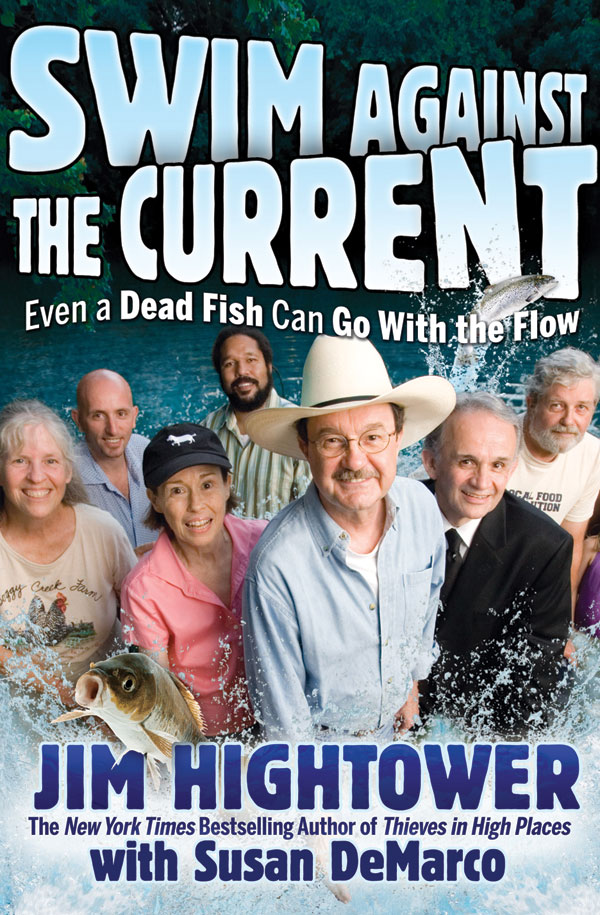
Most of Hightower’s work has aimed at corporate miscreants and their enablers in high places. Now, in Swim Against the Current, he’s writing (with his partner Susan DeMarco) about Americans who are bucking the system and making a difference.

Reader’s Digest is the nation’s number two publication (after the AARP magazine) for a reason. We like stories about people who overcome adversity, and who don’t wait for government help. Ronald Reagan understood this. Hightower does too, though from a different standpoint.

In Swim, he and DeMarco show that self-help can be about “we” as well as “me.” They tell the story of Chris Johnson, for example, a young pharmacist in Johnson, Texas, who left a lucrative job at a chain pharmacy to start his own that sells low cost meds to people without insurance. “I knew how much the drugs really cost us and that the profit margins were obscene,” he says. “Now I’m back doing what I went into pharmacy to do—helping people.”

There’s not much policy talk here, and no lists of what the next president should do. Instead, we meet ordinary (in a sense) people like Johnson who are trying to live their values and make a difference. Another example is Organic Valley, a farmers’ co-op in Wisconsin that refused to bow to Wal-Mart’s price demands and lived to tell about it. Another is the Union Cab Company in Madison, Wisconsin, created by former drivers for the anti-union Checker Cab.

Hightower understands the difference between authentic enterprise and corporate elephantiasis. He also understands the kinship between the entrepreneur—especially the socially motivated one—and raucous, Alinsky-style community action. ACORN members in Gary, Indiana, for example, brought a greedy utility company to heel by lining up to pay their bills in pennies. They are bucking the system, much as Chris Johnson is.

Most of the stories in Swim suggest clip files rather than on-the-ground reporting. Still, I was glad to learn about these people. The inspirational mode does pose a problem for Hightower, though: how to get off the zingers at the bad guys when he’s talking about the good ones.

His solution is frequent resort to straw men, in the form of unnamed pundits, experts, and corporadoes who serve as polemical foils. The device becomes formulaic; he’d do better to tell his stories straight. More significant is the tendency to gloss over difficulties. We need inspiration, yes. But we also need to learn how people deal with setbacks. The Organic Valley co-op almost fell apart, for example. Hightower mentions this but doesn’t dig into it. Yet it’s the part we most need to understand if we are going to try to follow their example.

Then there’s Whole Foods. It’s an easy target. I’d prefer a world of independent local merchants, too. But the chain really has brought critical mass to organics, and not just on behalf of factory farms. In his discussion of Organic Valley, Hightower lets drop that one of the co-op’s major customers is … yes, Whole Foods. What are we to make of that?

Finally, I wish that Hightower had been more willing to ask his readers to look into the mirror. He has a long section, for example, on evangelical environmentalists, in particular Reverend Rich Cizik of the Evangelical Environmental Network. Hightower is right to challenge those on the Left who dismiss Christian activists out of hand. The tone is admiring and respectful.

But there is a self-satisfaction too, that someone such as Cizik has seen the environmental light. Does Cizik have a light that we need to see as well? Do the fellowship of the churches, the spiritual depth of the gospel text, the call to service rather than convenience, offer something that secular environmentalists could learn from? Discomfort is the nerve ending of growth. While we give the corporadoes hell, maybe we need to cultivate a little for ourselves.

[Jonathan Rowe wrote this review as part of A Just Foreign Policy, the Summer 2008 issue of YES! Magazine. Jonathan Rowe is a YES! contributing editor, a fellow at the Tomales Bay Institute, and co-director of West Marin Commons.]

Source / YES Magazine

Find Swim Against the Current at Amazon.com.

The Rag Blog

Posted in RagBlog | Tagged , , , , , | Leave a comment

Gilding the Lilly : The Lies of Cindy McCain

On the stump: Cindy McCain speaks to reporters in Birmingham, Mich. Her arm was sprained when an enthusiastic supporter vigorously shook her hand. Photo by Mary Altaffer / AP.

Mother Teresa told me to do it…
By Alexandra Marks / August 20, 2008

Gilding the lily is nothing new to politics. From the 1840s when William Henry Harrison claimed to have been born in a log cabin (it was actually a Virginia plantation) to Ronald Reagan’s reminiscing about flying over Germany in World War II (he did, but only in a movie), politicians have taken perfectly good stories and embellished them.

This campaign is no exception. During the primaries, Hillary Rodham Clinton had to back away from claims she “ducked sniper fire” in Bosnia in 1996. Mitt Romney found himself having to explain how he “saw my father march with Martin Luther King,” when it turned out his father never marched with the Rev. Mr. King.

The latest embellishments come from the McCain camp. Cindy McCain has repeatedly referred to herself as an “only child.” This week came news that she actually has two half sisters, although apparently she had very little contact with them.

The McCain campaign had also put out the story that Mother Teresa “convinced” Cindy to bring home two orphans from Bangladesh in 1991.

Mrs. McCain, it turns out, never met Mother Teresa on that trip. (Once contacted by the Monitor, the campaign revised the story on its website.)

Such exaggerations may simply be the product of a faulty memory or a desire to be “better” than one is in a political culture that requires larger-than-life idols. But with the advent of the fact-checking obsessed blogosphere – and a media racing to keep up – such self-aggrandizement doesn’t last as long as it once did.

“It’s all about myth-making,” says Darrell West, the director of governance studies at the Brookings Institution in Washington. “Politicians love to turn their stories into great epics, and sometimes they have to embellish to smooth out the story line.”

“But now there are too many professional and amateur fact-checkers,” he says. “And there are hundreds if not thousands of bloggers who have detailed knowledge on specialized information, so you really can’t get away with stretching the truth anymore.”

The story about Mother Teresa “convincing” Mrs. McCain to bring home two children from an orphanage in Bangladesh has been retold many times. Initially, the “About Cindy McCain” page on the McCain campaign website read: “Mother Teresa convinced Cindy to take two babies in need of medical attention to the United States. One of those babies is now their adopted daughter, 16-year-old Bridget McCain.”

The media picked up the theme. A story earlier this year on ABC’s “Good Morning America” stated, “With Mother Teresa’s encouragement she brought her fourth child, Bridget, home.” An April 2008 Wall Street Journal profile states that Mother Teresa “implored” Cindy to bring the girls to the United States. Other articles say Cindy did it “at the behest” of Mother Teresa.

But a source who was with McCain on that 1991 trip, and who asked that his name not be used because of prior legal dealings with the McCain family, says that Mother Teresa was not at the orphanage when Cindy decided to bring the two girls home.

A 1991 article in the Arizona Star at the time of the adoption only mentions that the children were from an orphanage that was started by Mother Teresa. It does not mention a meeting with Mother Teresa or her asking McCain to bring the girls to the US.

According to biographies of Mother Teresa, in 1991 she was in Mexico where she developed medical problems. From there, she went to a hospital in La Jolla, Calif.

A McCain source acknowledged that Cindy McCain did not meet Mother Teresa during the 1991 trip to Bangladesh but said McCain did meet her later on, although the source could not say when or where. The campaign has since reworded the reference to the adoption on its website.

In another instance, McCain told the Chicago Tribune earlier this year that on one of her medical missions to Vietnam she was in “the very hospital – and in the very room – where her husband was brought after being shot down and then beaten by a mob during the war.”

A 1992 Washington Times story recounts a different version: “Mrs. McCain asked to see the operating room and her husband’s cell, but was turned down. She took the rejection philosophically. ‘It’s 27 years later. Let’s go on,’ Mrs. McCain said.”

The McCain campaign again declined to comment on the discrepancy.

On background, a source close to Mrs. McCain confirmed that she was denied entry. But, the source added: “At some point thereafter, she toured the hospital and did coincidentally end up in the senator’s room.”

“Everybody tells white lies, but in the political world it’s a little different because it raises the question that if people lie about little things, are they also going to lie about big stuff that really matters?” says Mr. West.

Misremembering and stretching the truth is without doubt a bipartisan phenomenon. Twenty years ago, Sen. Joe Biden (D) of Delaware’s presidential campaign faltered when it was learned that he had lifted passages from a speech by then-British Labor Party leader Neil Kinnock and that he’d also said he’d done better in law school than he actually had.

Earlier this year, Barack Obama’s campaign admitted that he overstated his father’s connection to the Kennedy family.

In speeches, Obama had said the Kennedy family provided funding for the 1959 airlift that brought his father from Kenya to the United States for an education. But according to research done by The Washington Post, the Kennedy clan didn’t contribute to the airlift efforts until 1960, a year after his father was already studying in Hawaii. When The Washington Post brought the discrepancy to the attention of the Obama campaign it readily acknowledged there was a mistake.

“You always have to look for a pattern,” says political analyst Larry Sabato, at the University of Virginia. “If it happens once, you can say it’s a memory problem, but if there’s a pattern there, there’s a problem.”

Source / Christian Science Monitor

And that’s not all: The ‘only child’ myth

When Cindy McCain talks about growing up, she usually refers to herself as an “only child” — a phrase that ignores the existence of her half sisters.

“It’s terribly painful,” Kathleen Hensley Portalski said yesterday. “It is as if she is the ‘real’ daughter. I am also a real daughter.”

Sibling Revelation: An Overlooked Branch of Cindy McCain’s Family Tree / Washington Post / August 20, 2008

Also see Made Men: How Cindy Hensley invented John McCain. / New Republic / August 20, 2008

The Rag Blog

Posted in RagBlog | Tagged , , | Leave a comment

Joe Lieberman : Associated Press Gets One Right!

Joe Lieberman and friend.

This typo tells the tale…
By Greg Sargent / August 19, 2008

Whoopsie! Check out this inadvertent description of Joe Lieberman in an Associated Press story on the Veepstakes…

His top contenders are said to include Minnesota Gov. Tim Pawlenty and former Massachusetts Gov. Mitt Romney. Less traditional choices mentioned include former Pennsylvania Gov. Tom Ridge, an abortion-rights supporter, and Connecticut Sen. Joe Lieberman, the Democratic vice presidential prick in 2000 who now is an independent.

A stopped clock is right twice a day and all that…

Source / TPM Election Central

[Note: The link to this AP story tells us it’s “no longer available.”]

Thanks to Harry Edwards / The Rag Blog

Posted in RagBlog | Tagged , , | 1 Comment

We Just Buy the Leaders with Money


Are You Ready For Nuclear War?
By Paul Craig Roberts / August 19, 2008

Pervez Musharraf, the puppet installed by the US to rule Pakistan in the interest of US hegemony, resigned August 18 to avoid impeachment. Karl Rove and the Diebold electronic voting machines were unable to control the result of the last election in Pakistan, the result of which gave Pakistanis a bigger voice in their government than America’s.

It was obvious to anyone with any sense–which excludes the entire Bush Regime and almost all of the “foreign policy community”–that the illegal and gratuitous US invasions of Afghanistan and Iraq, and Israel’s 2006 bombing of Lebanon civilians with US blessing, would result in the overthrow of America’s Pakistani puppet.

The imbecilic Bush Regime ensured Musharraf’s overthrow by pressuring their puppet to conduct military operations against tribesmen in Pakistani border areas, whose loyalties were to fellow Muslims and not to American hegemony. When Musharraf’s military operations didn’t produce the desired result, the idiotic Americans began conducting their own military operations within Pakistan with bombs and missiles. This finished off Musharraf.

When the Bush Regime began its wars in the Middle East, I predicted, correctly, that Musharraf would be one victim. The American puppets in Egypt and Jordan may be the next to go.

Back during the Nixon years, my Ph.D. dissertation chairman, Warren Nutter, was Assistant Secretary of Defense for International Security Affairs. One day in his Pentagon office I asked him how the US government got foreign governments to do what the US wanted. “Money,” he replied.

“You mean foreign aid?” I asked.

“No,” he replied, “we just buy the leaders with money.”

It wasn’t a policy he had implemented. He inherited it and, although the policy rankled with him, he could do nothing about it. Nutter believed in persuasion and that if you could not persuade people, you did not have a policy.

Nutter did not mean merely third world potentates were bought. He meant the leaders of England, France, Germany, Italy, all the allies everywhere were bought and paid for.

They were allies because they were paid. Consider Tony Blair. Blair’s own head of British intelligence told him that the Americans were fabricating the evidence to justify their already planned attack on Iraq. This was fine with Blair, and you can see why with his multi- million dollar payoff once he was out of office.

The American-educated thug, Saakashkvili the War Criminal, who is president of Georgia, was installed by the US taxpayer funded National Endowment for Democracy, a neocon operation whose purpose is to ring Russia with US military bases, so that America can exert hegemony over Russia.

Every agreement that President Reagan made with Mikhail Gorbachev has been broken by Reagan’s successors. Reagan’s was the last American government whose foreign policy was not made by the Isreali-allied neoconservatives. During the Reagan years, the neocons made several runs at it, but each ended in disaster for Reagan, and he eventually drove the modern day French Jacobins from his government.

Even the anti-Soviet Committee on the Present Danger regarded the neocons as dangerous lunatics. I remember the meeting when a member tried to bring the neocons into the committee, and old line American establishment representatives, such as former Treasury Secretary Douglas Dillon, hit the roof.

The Committee on the Present Danger regarded the neocons as crazy people who would get America into a nuclear war with the Soviet Union. The neocons hated President Reagan, because he ended the cold war with diplomacy, when they desired a military victory over the Soviet Union.

Deprived of this, the neocons now want victory over Russia.

Today, Reagan is gone. The Republican Establishment is gone. There are no conservative power centers, only neoconservative power centers closely allied with Israel, which uses the billions of dollars funneled into Israeli coffers by US taxpayers to influence US elections and foreign policy.

The Republican candidate for president is a warmonger. There are no checks remaining in the Republican Party on the neocons’ proclivity for war. What Republican constituencies oppose war? Can anyone name one?

The Democrats are not much better, but they have some constituencies that are not enamored of war in order to establish US world hegemony. The Rapture Evangelicals, who fervently desire Armageddon, are not Democrats; nor are the brainwashed Brownshirts desperate to vent their frustrations by striking at someone, somewhere, anywhere.

I get emails from these Brownshirts and attest that their hate-filled ignorance is extraordinary. They are all Republicans, and yet they think they are conservatives. They have no idea who I am, but since I criticize the Bush Regime and America’s belligerent foreign policy, they think I am a “liberal commie pinko.”

The only literate sentence this legion of imbeciles has ever managed is: “If you hate America so much, why don’t you move to Cuba!”

Such is the current state of a Reagan political appointee in today’s Republican Party. He is a “liberal commie pinko” who should move to Cuba.

The Republicans will get us into more wars. Indeed, they live for war. McCain is preaching war for 100 years. For these warmongers, it is like cheering for your home team. Win at all costs. They get a vicarious pleasure out of war. If the US has to tell lies in order to attack countries, what’s wrong with that? “If we don’t kill them over there, they will kill us over here.”

The mindlessness is total.

Nothing real issues from the American media. The media is about demonizing Russia and Iran, about the vice presidential choices as if it matters, about whether Obama being on vacation let McCain score too many points.

The mindlessness of the news reflects the mindlessness of the government, for which it is a spokesperson.

The American media does not serve American democracy or American interests. It serves the few people who exercise power.

When the Soviet Union collapsed, the US and Israel made a run at controlling Russia and the former constituent parts of its empire. For awhile the US and Israel succeeded, but Putin put a stop to it.

Recognizing that the US had no intention of keeping any of the agreements it had made with Gorbachev, Putin directed the Russian military budget to upgrading the Russian nuclear deterrent. Consequently, the Russian army and air force lack the smart weapons and electronics of the US military.

When the Russian army went into Georgia to rescue the Russians in South Ossetia from the destruction being inflicted upon them by the American puppet Saakashvili, the Russians made it clear that if they were opposed by American troops with smart weapons, they would deal with the threat with tactical nuclear weapons.

The Americans were the first to announce preemptive nuclear attack as their permissible war doctrine. Now the Russians have announced the tactical use of nuclear weapons as their response to American smart weapons.

It is obvious that American foreign policy, with is goal of ringing Russia with US military bases, is leading directly to nuclear war. Every American needs to realize this fact. The US government’s insane hegemonic foreign policy is a direct threat to life on the planet.

Russia has made no threats against America. The post-Soviet Russian government has sought to cooperate with the US and Europe. Russia has made it clear over and over that it is prepared to obey international law and treaties. It is the Americans who have thrown international law and treaties into the trash can, not the Russians.

In order to keep the billions of dollars in profits flowing to its contributors in the US military-security complex, the Bush Regime has rekindled the cold war. As American living standards decline and the prospects for university graduates deteriorate, “our” leaders in Washington commit us to a hundred years of war.

If you desire to be poor, oppressed, and eventually vaporized in a nuclear war, vote Republican.

Dr. Roberts was Assistant Secretary of the US Treasury in the Reagan Administration. He is a former Associate Editor of the Wall Street Journal, a 16-year columnist for Business Week, and a columnist for the Scripps Howard News Service and Creator’s Syndicate in Los Angeles. He has held numerous university professorships, including the William E. Simon Chair in Political Economy, Center for Strategic and International Studies, Georgetown University and Senior Research Fellow, Hoover Institution, Stanford University. He was awarded the Legion of Honor by the President of France and the US Treasury’s Silver Medal for “outstanding contributions to the formulation of US economic policy.”

Source / Information Clearing House

The Rag Blog

Posted in RagBlog | Tagged , , | Leave a comment