This Is How the United States Has Always Run Its Dirty Little Wars

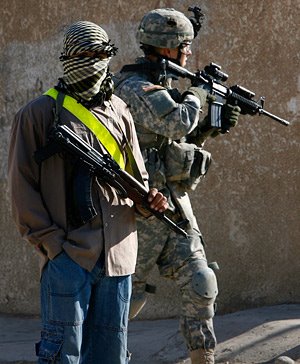
A U.S. Army soldier with the 101st Airborne Division walks past a member of the Iraqi CLC (Concerned Local Citizens) guard during a patrol in Baiji Dec. 27, 2007.

‘We Were Basically Hiring Terrorists’
By Anna Badkhen / August 6, 2008

The U.S. signed up legions of sketchy Iraqi fighters to help stop sectarian violence. Now, most may lose their security jobs — but remain armed and angry.

BAGHDAD, Iraq — Donning pale yellow shirts with Iraqi flags stitched on the chest, Alah al-Janabi and Mahmoud al-Samorai stood recently in the blistering sun at the crowded entrance to the bustling Dora Market. Al-Janabi, 30, proudly displayed a shiny black pistol on his hip; al-Samorai, 25, slung his Kalashnikov assault rifle over his shoulder as he patted down a shopper entering the market. Nine months ago, the two men joined the Sons of Iraq — the U.S.-funded, mostly Sunni organization of 103,000 armed guards that functions as part neighborhood security watch and part paramilitary force, and has been instrumental in tamping down violence in Iraq.

What these men did prior to this work — when sectarian militias and Iraqi security forces fought pitched battles through the Dora neighborhood, killing and wounding scores of people — is unclear. When asked, the two looked at each other and shrugged. “There were no jobs,” al-Samorai finally said. Maybe he and his colleague hid in their homes while sectarian fighting raged outside. But it is also possible that they fought alongside the Sunni militias, as did many Sons of Iraq members, according to American forces that patrol the area.

“When the SOIs stood up, we were basically hiring terrorists,” said Lt. Justin Chabalko, using the military acronym for the Sons of Iraq. Chabalko’s 2-4 Infantry Battalion of the 4th Brigade, 10th Mountain Division frequently patrols the Dora Market.

The Sons of Iraq was formed in 2007, when Sunni tribal leaders, tired of violence and disillusioned with Islamic fundamentalists such as al-Qaida in Iraq, encouraged tribal members — including some former militia members — to guard Sunni and mixed neighborhoods against takeover by sectarian gangs. The Americans touted the creation of the Sons of Iraq as a major diplomatic success and agreed to finance the organization, paying each member a monthly salary of $300, despite the protests from the Shiite-dominated Iraqi government, which never liked the idea of legitimizing the Sunni-dominated fighting force.

The force helped quell the Sunni insurgency in Baghdad and in Iraq’s tribal heartlands, such as the restive Anbar province. But what a year ago looked like a brilliant solution to sectarian violence is now looking like a time bomb. Many of the force’s members once fought alongside al-Qaida in Iraq and other Sunni insurgency organizations against American troops and the predominantly Shiite Iraqi security forces. And now, a joint U.S.-Iraqi government plan to disband the force could put up to 80,000 men out of work — and leave them armed and disgruntled.

As Iraq becomes safer, the Sons of Iraq are less essential to security. Under a draft plan by U.S. forces and the Iraqi government, 20 percent of the force will be gradually folded into Iraqi security forces, after careful screening and additional training. The rest, Americans say, will be offered basic vocational training, which would allow them to take up such jobs as janitors, secretaries, electricians and plumbers. As of June, approximately 17,000 Sons of Iraq members have joined Iraqi security forces.

But conversations with the Sons of Iraq members and their leaders suggest that the majority of them do not want to do anything that does not involve carrying weapons, traditionally an honorable status in Iraqi society.

“A lot of them would prefer doing that because it gives them power of carrying a weapon and providing security,” said Capt. Emiliano Tellado, a member of the 2-4 Infantry Battalion.

Potentially, 80,000 armed and trained fighters could soon find themselves unemployed, or employed in jobs they do not want — and angry at the American forces and Iraqi government because they didn’t get picked for service in the security forces.

Al-Janabi and al-Samorai applied for jobs in the Iraqi police nine months ago for the first time, and reapplied twice since. They have not heard back from the Iraqi government, and they could well be among the many thousands who don’t get to join Iraqi security forces. But both dismissed the idea that they would lay down their guns and take up other work tools.

“That is not my job,” al-Samorai responded, firmly.

“I want to defend my people,” said al-Janabi.

A key question is, to what extent have members of the Sons of Iraq such as these severed their past allegiances. Working as U.S.-paid neighborhood guards was supposed to rehabilitate those who once fought against American and Iraqi forces, said Capt. Brett Walker, the spokesman for the 2-4 Infantry Battalion. Over time, approximately 18,000 Shiite members joined the force as well, working mostly in Shiite and mixed neighborhoods and ostensibly bringing some sense of sectarian rapprochement.

But some of the organization’s Sunni members may still be cooperating with sectarian militias, acknowledged Tellado. Even if the Sons of Iraq continues to function in its current format, the organization is a wild card as far as its members’ loyalties are concerned.

Several months ago, the 2-4’s soldiers detained one Sons of Iraq leader who was once associated with al-Qaida in Iraq, Tellado said. “He had a bad background, and it finally caught up with him,” he explained. “There was a possibility that he was still active” in the extremist Sunni organization. The man is now in Camp Bucca, a giant American detention center in southern Iraq.

“Sometimes they don’t reform,” Tellado said.

Chabalko said that some Sons of Iraq in his area use their positions “as an opportunity to play both sides of the fence, usually the guys at checkpoints.” American soldiers say that Sunni members of the force extorted money from Shiite civilians and attacked people they believed were members of Shiite militias.

In Baghdad’s religiously mixed Risala neighborhood in May, U.S. Army medics treated a man who had been beaten and kicked in the face and torso by Sons of Iraq, who believed that the man was an informant for the Mahdi army, the militia loyal to the anti-American cleric Muqtada al-Sadr. The man survived because the local Sons of Iraq leader, Karim al-Gortani, happened by and ordered them to stop, said U.S. Army Capt. Sean Chase, whose soldiers treated the man. Chase suspects that Gortani, a former Iraqi army colonel under Saddam Hussein, at one point was either a member of al-Qaida in Iraq or Jaish al-Islami, another Sunni extremist group.

In Dora, where 450,000 people live, the Sons of Iraq have not carried out any overt acts of violence, U.S. soldiers say — at least not to the Americans’ knowledge. But that could be because Dora, a middle-class neighborhood that is home to many former officials of Saddam Hussein’s government, is almost homogenously Sunni.

Yet, even here the Sons of Iraq have a potential nemesis — the Iraqi National Police, a SWAT-like organization that patrols Dora. On many streets, members of the two armed groups man checkpoints together, but there is little amicability between them. “At first there was no open conflict, but there was open verbal conflict,” Tellado recalls.

In order to create a rapport between the Sunni guards and the Shiite officers, who also enjoy little trust from Dora’s Sunni population, the Americans have made the Sons of Iraq formally subordinate to the police force.

“On payday, I hand the money over to the [National Police] supervisor, and he hands the money to the SOI leader, and that guy hands the money to SOI members,” Tellado said. “It literally takes place in the same room.”

American military leaders understand the fragility of the peace between the Sons of Iraq and Shiite security forces, and the importance of keeping the Sunni force happy. “We’re gonna continue to pay the SOI guys until the government takes over or until they transition into other jobs,” said 4th Infantry Division Lt. Col. Steven Stover, the spokesman for American troops in Baghdad.

“These Sons of Iraq will eventually go away, and now the most important thing is to find jobs for all those individuals,” Lt. Col. Timothy Watson, the 2-4 commander, recently told a gathering of Sunni leaders in Dora. “It’s just as important providing jobs as it is security.”

Nonetheless, local leaders say the Sons of Iraq remains suspicious of the policemen. Hashem Ajili, one of the senior neighborhood leaders in northern Dora, said American presence is crucial to mediate any potential conflicts between the two groups.

“Currently the relations are getting better — with the support of coalition forces,” Ajili said. If the Americans leave, will the two groups be at each other’s throats? Ajili smiled, and responded diplomatically: “If the coalition forces go back to the States, I am afraid I don’t know what will happen between those two elements.”

Eddie Bello, an Iraqi-born cultural advisor to the American military in Iraq, was more specific. “It is like sitting on a volcano,” he said. “You never know when it will explode.”

[Anna Badkhen has reported from Iraq, Afghanistan, Chechnya, Somalia, the West Bank and Gaza. She lives in Massachusetts with her husband, David Filipov, and their two sons.]

Source / Salon

The Rag Blog

Posted in RagBlog | Tagged , | Leave a comment

The Republicans : Stupid is as Stupid Does

Stephen Colbert’s ‘caricature of right-wing blowhards is so eerily accurate.’

Intelligent analysis? Real men don’t do that.
By Steve Benen / August 8, 2008

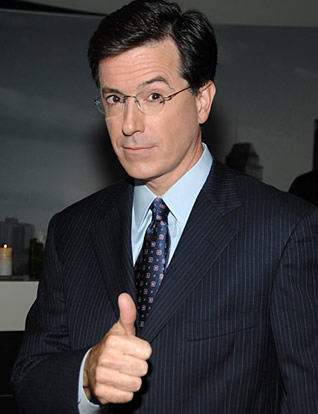
The Colbert Report is hilarious because Stephen Colbert’s caricature of right-wing blowhards is so eerily accurate. Colbert doesn’t believe in “reading books,” he believes in his “gut.” He listens to his “rage.” He admires the “Alpha Dog of the Week.”

And why does Colbert sound like so many of today’s Republican Party leaders? Because, as Paul Krugman explained extremely well today, the GOP has “become the party of stupid.”

What I mean … is that know-nothingism — the insistence that there are simple, brute-force, instant-gratification answers to every problem, and that there’s something effeminate and weak about anyone who suggests otherwise — has become the core of Republican policy and political strategy. The party’s de facto slogan has become: “Real men don’t think things through.”

In the case of oil, this takes the form of pretending that more drilling would produce fast relief at the gas pump. In fact, earlier this week Republicans in Congress actually claimed credit for the recent fall in oil prices: “The market is responding to the fact that we are here talking,” said Representative John Shadegg.

What about the experts at the Department of Energy who say that it would take years before offshore drilling would yield any oil at all, and that even then the effect on prices at the pump would be “insignificant”? Presumably they’re just a bunch of wimps, probably Democrats. And the Democrats, as Representative Michele Bachmann assures us, “want Americans to move to the urban core, live in tenements, take light rail to their government jobs.”

I’ve been troubled by the anti-intellectualism that dominates Republican thought for a while now, but Krugman’s summary is perfect. Today, the right too often looks at reason as an enemy to reject.

Global warming is creating a climate crisis? The evidence comes from a bunch of chart-reading egg-heads. Tax cuts don’t pay for themselves? Only if you pay attention to reality, which has a well-known liberal bias.

The problem, of course, is a whole lot of voters seem to agree that real men really don’t think things through.

Source / The Carpetbagger Report

The Rag Blog

Posted in RagBlog | Tagged , , , | Leave a comment

Worldwide Protests On Eve of China Olympics

Tibetans protest in India ahead of Olympics.

Demonstrations ‘pressure Beijing over its rule of Tibet and heavily Muslim Xinjiang province, the arrests of dissidents, Internet censorship and concerns about Chinese foreign policy’
August 8, 2008

PARIS – Police banned demonstrations outside the Chinese embassy in Paris on Thursday but critics of China’s human rights record stepped up protests elsewhere in the world to mark the start of the Beijing Olympics.

Police in the French capital said they did not want a repeat of the “violent disturbances” that broke out in April when the Olympic torch passed through Paris, when activists angry at China’s crackdown in Tibet disrupted the route.

They banned any protests outside the embassy on Thursday and Friday, when the Games officially open, including a demonstration planned Friday by a coalition including media watchdog Reporters Without Borders.

RSF is challenging the ruling in court, and a separate rally at the Trocadero plaza near the Eiffel Tower will still go ahead as planned at 1:00 pm (1100 GMT) Friday, to coincide with the Olympic opening ceremony in Beijing.

China has painted the Games as a celebration of three decades of economic reforms and hopes the event will showcase a rapidly modernising country.

But activists across the world are using the Games
A total of 127 athletes, including more than 40 competing in the Games, have called on China’s President Hu Jintao to seek a peaceful solution to the Tibet issue and improve the rights situation, according to an open letter posted online.

In Washington, scores of activists protested in front of the Chinese embassy, shouting “Beijing Olympics, Genocide Olympics,” “China lie, People die” and “Stop the killing in Tibet, Stop the Killing in East Turkestan.”

“The Beijing Games is supposed to reflect peace and human rights but the Chinese government is continuing its crackdown on our innocent people, detaining and executing them,” charged Rebiya Kadeer, the exiled leader of Uighurs in Xinjiang, a vast area that borders Central Asia.

Uighurs, a Turkic-speaking people, have expressed anger at what they say has been decades of repressive communist Chinese rule in Xinjiang.

Security was tight with policemen and police cars lined up in front of the embassy.

Jo Jinhae, a 21-year old North Korean who fled to the United States, was on her sixth day of a hunger strike Thursday in front of the embassy, protesting Beijing’s forced repatriation of North Korean refugees from China.

“The human rights abuses of North Korean refugees must stop,” said Jo, who had been jailed four times in North Korea after being repatriated from China. She said she had been informed her three brothers had died on repatriation.

In Ottawa, some 300 protestors demonstrated against rights violations for a second consecutive day in front of the Chinese embassy.

Five people had briefly chained themselves to the gates of the embassy the previous day.

On Thursday, they were joined by a former beauty queen and members of Parliament, as well as groups pressing for Tibet independence, democracy in Myanmar, peace in Sudan and press and religious freedoms.

“The plethora of different groups here represents a plethora of different causes, each of them a category of human rights abuses in China,” MP and former attorney general Irwin Cotler told AFP.

In India, home to more than 100,000 Tibetan refugees including the Dalai Lama, about 1,000 Tibetans staged a march in New Delhi, carrying Tibetan flags and shouting “Say no to Beijing Olympics” and “No Olympics in China.”

In neighbouring Nepal about 600 Tibetans were detained after they clashed with police while protesting in Kathmandu, police and eyewitnesses said.

About 1,500 Tibetan exiles had gathered in the city to demonstrate against the Chinese crackdown in Tibet. The clashes broke out after monks and nuns praying and chanting mantras refused to disperse.

In Beijing itself, three US Christians were forcefully dragged from Tiananmen Square — scene of a 1989 massacre of pro-democracy protesters — as they prayed publicly, according to a statement on their behalf.

On Wednesday, two US and two British activists had staged a dramatic protest in the city, unveiling giant “Free Tibet” banners near the stadium where the Games will open– a move that got them immediately deported, their group said.

In London the Free Tibet campaign was due to hold a protest in front of the Chinese embassy on Friday. They planned to unveil Tibetan flags there at 1208 GMT — the moment when the Olympics officially kick off.

© 2008 Agence France Presse

Source / AFP / CommonDreams

The Rag Blog

Posted in RagBlog | Tagged , , , , , , , | 1 Comment

Holding Ourselves Responsible for the Crimes Our Government Perpetrates Around the World


The Prophetic Challenge: ‘Few Are Guilty, but All Are Responsible’
By Robert Jensen / August 7, 2008

One of the common refrains I heard from progressive people in Pakistan and India during my month there this summer was, “We love the American people — it’s the policies of your government we don’t like.”

That sentiment is not unusual in the developing world, and such statements can reduce the tension with some Americans when people criticize U.S. policy, which is more common than ever after the illegal invasions and occupations of Afghanistan and Iraq.

I used to smile and nod when I heard it, but this summer I stopped agreeing.

“You shouldn’t love the American people,” I started saying. “You should hate us — we’re the enemy.”

By that I don’t mean that most Americans are trying to come up with new ways to attack people in the Global South. Instead, I want to challenge the notion that in a relatively open society such as the United States — where most people can claim extensive guarantees of freedom of expression and political association — that the problem is leaders and not ordinary citizens. Whatever the reason people in other countries repeat this statement, the stakes today are too high for those of us in the United States to accept these kinds of reassuring platitudes about hating-the-policy but loving-the-people of an imperial state. It is long past time that we the people of the United States started holding ourselves responsible for the crimes our government perpetrates around the world.

This is our prophetic challenge, in the tradition of the best of the prophets of the past, who had the courage to name the injustice in a society and demand a reckoning.

In the Christian and Jewish traditions, the Old Testament offers us many models — Amos and Hosea, Jeremiah and Isaiah. The prophets condemned corrupt leaders but also called out all those privileged people in society who had turned from the demands of justice that the faith makes central to human life. In his study of The Prophets, the scholar and activist Rabbi Abraham Joshua Heschel concluded:

Above all, the prophets remind us of the moral state of a people: Few are guilty, but all are responsible. If we admit that the individual is in some measure conditioned or affected by the spirit of society, an individual’s crime discloses society’s corruption. In a community not indifferent to suffering, uncompromisingly impatient with cruelty and falsehood, continually concerned for God and every man, crime would be infrequent rather than common.1

In our society, crimes by leaders are far too common. George W. Bush and Dick Cheney, as individuals, are guilty of their crime against peace and war crimes in Iraq that have resulted in the death of hundreds of thousands, just as Bill Clinton and Al Gore before them are guilty of the crime against humanity perpetrated through an economic embargo on Iraq that killed hundreds of thousands of innocents as well. These men are guilty, beyond any doubt, and they should be held accountable. But would those kinds of crimes be as frequent if the spirit of society were different? For that, we all are responsible.

In assessing that responsibility, we have to be careful about simplistic judgments, for the degree of responsibility depends on privilege and power. In my case, I’m white and male, educated, with easy access to information, working in a professional job with a comfortable income and considerable freedom. People such as me, with the greatest privilege, bear greatest responsibility. But no one escapes responsibility living in an imperial state with the barbaric record of the United States (in my lifetime, we could start with the list of unjust U.S. wars, direct and through proxies, against the people of Latin America, southern Africa, Southeast Asia, the Middle East, resulting in millions of victims). Bush and Clinton couldn’t carry out their crimes in this relatively open and democratic society if we did not allow it.

To increase the chance that we can stop those crimes, we also have to be precise about the roadblocks that keep people from acting responsibly: A nominally democratic political system dominated by elites who serve primarily the wealthy in a predatory corporate capitalist system; which utilizes sophisticated propaganda techniques that have been effective in undermining real democracy; aided by mass-media industries dedicated to selling diversions to consumers more than to helping inform citizens in ways that encourage meaningful political action.

We must hold ourselves and each other accountable, with a realistic analysis not only of how we have ended up in this dire situation but also a reasonable assessment of how different people react to the spirit of our society.

Some in the United States celebrate this unjust system and seek to enrich themselves in it; they deserve the harshest critique and condemnation. Many others simply move with the prevailing winds, taking their place in the hierarchy without much thought and little challenge; they should be challenged to rise above their willed ignorance and passivity. Some others resist, through political organizing or in quieter ways; they should be commended, with the recognition that whatever they have done it hasn’t been enough to end the nation’s imperial crimes. And we must remember that there are people in the United States suffering under such oppressive conditions that they constitute a kind of internal Third World, targeted as much as the most vulnerable people abroad.

Of course those are crudely drawn categories that don’t capture the complexity of our lives. But we should draw them to remind ourselves: Those of us with privilege are responsible in some way. If we want to speak in a prophetic voice, as I believe we all can and should, we must start with an honest assessment of ourselves and those closest to us. For example, I consider myself part of the anti-empire/anti-war movement, and for the past decade I have spent considerable energy on those efforts. But I can see many ways in which I could have done more, and could do more today, in more effective fashion. We need not have delusions of grandeur about what we can accomplish, but we do need to avoid a self-satisfied complacency.

That kind of complacency is far too easy for those of us living in the most affluent nation in the history of the world. For those of us with privilege, political activism typically comes with very few costs. We work, and often work hard, for justice but when the day is done many of us come home to basic comforts that most people in the world can only dream of. Those comforts are made possible by the very empire we are committed to ending.

Does this seem hard to face? Does it spark a twinge of guilt in you? I hope that it does. Here we can distinguish the guilt of those committing the crimes — the formal kind of guilt of folks such as Bush and Clinton — from the way in which a vaguer sense of guilt reminds us that we may not be living up to our own principles. That kind of guilty feeling is not a bad thing, if we have not done things that are morally required. If there is a gap between our stated values and our actions — as there almost surely is for all of us, in varying ways to varying degrees — then such a feeling of guilt is an appropriate moral reaction. Guilt of that kind is healthy if we face it honestly and use it to strengthen our commitment to justice.

This is our fate living in the empire. We must hold ourselves and each other accountable, while knowing that the powerful systems in place are not going to change overnight simply because we have good arguments and are well-intentioned. We must ask ourselves why we don’t do more, while recognizing that none of us can ever do enough. We must be harsh on ourselves and each other, while retaining a loving connection to self and others, for without that love there is no hope.

People often say this kind of individual and collective self-assessment is too hard, too depressing. Perhaps, but it is the path we must walk if we wish to hold onto our humanity. As Heschel put it, “the prophets endure and can only be ignored at the risk of our own despair.”2 To contemplate these harsh realities is not to give in to despair, but to make it possible to resist.

If we wish to find our prophetic voice, we must have the courage to speak about the crimes of our leaders and also look at ourselves honestly in the mirror. That requires not just courage but humility. It is in that balance of a righteous anger and rigorous self-reflection that we find not just the strength to go on fighting but also the reason to go on living.

[A version of this essay was delivered as a sermon to the Henry David Thoreau Unitarian Universalist Congregation of Fort Bend County, Texas, August 3, 2008.]

1. Abraham J. Heschel, The Prophets (New York: Harper & Row, 1962), p. 16. [↩]
2. Ibid., p. xiii. [↩]

Robert Jensen is a professor of journalism at the University of Texas at Austin and author of Citizens of Empire: The Struggle to Claim Our Humanity. His latest book is Getting Off: Pornography and the End of Masculinity (South End Press, 2007). He can be reached at: rjensen@uts.cc.utexas.edu. Read other articles by Robert, or visit Robert’s website.

Source / Dissident Voice

The Rag Blog

Posted in RagBlog | Tagged , , | 1 Comment

Roger Baker :
‘The Fed’s Next Move is Down’

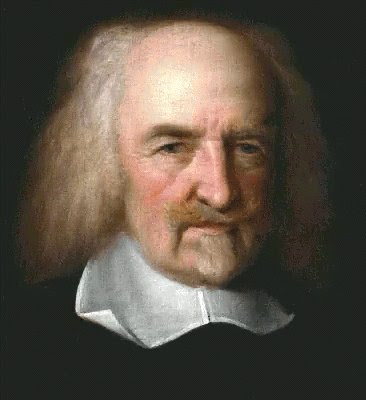
painting of thomas hobbes

Thomas Hobbes. Laying out the Hobbsian choice.

See “The Fed’s next move is down” by John Browne below.

‘The odds thus favor inflation to keep the party going’

By Roger Baker | The Rag Blog | August 8, 2008

This guy lays out the facts of the Hobbsian choice pretty clearly. When the ruling oligarchy of banks get in trouble, they have their puppets at the fed print up more money. The odds thus favor inflation to keep the party going rather than facing (immediately) the hangover of a deep depression.

Of course the same result could be achieved much more directly and honestly if the government would simply raise taxes enough to raise the cash to bail out the banks in a similar way.

But the obviousness of this redistribution of wealth to favor the banks would cause the public to rebel, so the fed chooses the sneaky route of concealed taxation through inflation to buy time.

The Fed’s next move is down
By John Browne / August 8, 2008

The US Federal Reserve this week surprised no one by leaving its key rates unchanged and gave no indication that the committee was preparing to raise or lower rates any time in the foreseeable future. As always, the market reactions were much more interesting and unpredictable. In this case, bond markets barely changed, the US stock market jumped, and euro futures strengthened slightly against the US dollar.

Although few monetary hawks felt that there was any reasonable chance for an inflation-fighting rate hike this week, there was hope that lone dissenter on the rate-setting Federal Open Market Committee, Richard Fisher, would be joined by other committee members in voting against the current round of liquidity injections. No such luck there.

For now at least, Mr Fisher is still a one-man band. The rest of the committee still shows no stomach to really take on inflation (despite this week’s alarming consumer price index report) and plenty of willingness to push back on the gathering recession. As a result, my feeling is that the next rate move will be down.

Last summer, I predicted on CNBC’s Kudlow Show, that the Fed would lower rates from 5.25 to near 1.00% and that the US dollar would continue in relative decline. I was scoffed at and ridiculed. Well, I believe that the Fed statement indicates that rates will soon head south, towards 1.00% or even lower.

On July 3 this summer, I predicted, again on Kudlow’s show, that oil would soon drop in price, due to demand destruction. Again, I was ridiculed. On the very next business day, oil began to fall. Two days later it reached the peak, from which it has since fallen dramatically as the recession of which I have long warned has become clearer.

I say these things not to boast, but to lend weight to my arguments and warning of impending hyper-stagflation. Facing the prospect of both inflation and recessionary forces, the Fed is boxed in.

As a student of the Great Depression, Bernanke has correctly, in my view, sensed that whereas inflation does the greatest long-term economic damage, it is recession that his political masters most fear. He is also aware that it was the raising of interest rates that turned the 1930 recession into the Great Depression of 1933, which lasted until World War II.

Depression, especially in a highly leveraged world that is accustomed to prosperity, would likely result in serious civil strife. Politically, it must be avoided no matter what the economic or financial costs. Despite “spin-talk” to the effect that the Fed is pursuing a dual mandate to both fight inflation and promote growth, in reality they are simply trying to promote growth pure and simple. This is the reality that few market analysts or journalists dare to mention.

With 5 million American homes vacant, the Big 3 auto giants heading towards bankruptcy and some US$4 trillion already wiped off of American home values, things look bad for American consumer demand. With consumer spending accounting for 72% of GDP, this should ensure recession. To try to change this outcome, the Fed stands ready to implement the most inflationary monetary policy in its history.

Looking ahead, Nouriel Roubini, the former Clinton White House economist, forecasts credit losses will amount to some $2 trillion. So, while the Fed has applied Band-Aids to the financial crisis, the evidence is that internally, financial institutions are still bleeding fast.

The latest fall in commodity prices has given Bernanke the wiggle room that he has hoped for desperately these past months. The pullback in oil and other commodities will give him the golden opportunity to lower interest rates further to avoid the looming recession from morphing into depression.

Investors should expect falling worldwide interest rates. Short-term government bonds in inherently strong currencies, like Swiss francs, remain attractive. As hyper-stagflation and acute financial stress becomes manifest, gold will likely rise significantly.

[John Browne is senior market strategist, Euro Pacific Capital. Euro Pacific Capital commentary and market news is available at www.eurpac.net It has a free on-line investment newsletter.]

Copyright 2008 Euro Pacific Capital.

Source / Asia Times

Posted in Rag Bloggers | Tagged , , , , | 1 Comment

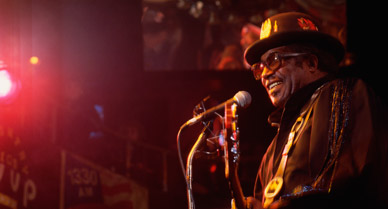
Bo Diddley : Who Do You Love?

Bo Diddley. Photo © Neal Preston/CORBIS.

Bo Diddley’s beat changed the course of rock music. And his lyrics evoked a history that reached all the way to Africa.
By Ned Sublette

This article appears in the August issue of Smithsonian magazine.

I helped Bo Diddley find a drummer once.

It was in 1971. I was 19, reading underground comics one sleepy afternoon at Roach Ranch West, a spacious, hippie-stuff shop in Albuquerque, when a black man wearing a big black hat walked in and said: “I’m Bo Diddley.”

It was, in the argot of the day, a cosmic moment. Could this really be Bo “47 miles of barbed wire” Diddley stepping out of the blue, announcing his presence in a remote desert city? Was I hallucinating?

No, it really was that founding father of rock ‘n’ roll. He had relocated his family from Southern California to Los Lunas, New Mexico, after being shaken up by a big earthquake, and he wanted to play a free show.

“Do you know any drummers?” he asked.

It happened that there was a drummer in the Roach Ranch at that very moment—Mike Fleming, who played with a local cover band called Lemon. I pointed him out. They spoke, and Bo Diddley said he’d be back later. Somebody called the local Top 40 station to announce the show.

Bo Diddley played that night to a packed-out back room at Roach Ranch West, with his wife and three daughters singing with him and Mike Fleming on drums. I sat on the floor in front of the improvised stage, close enough for him to sweat on me, studying him as he pulled a variety of sounds out of his cranked-up rhythm guitar to drive the audience wild. He wasn’t doing an oldies show, he was doing funky new material. I shouted and shouted for “Who Do You Love.” Which, finally, he played.

Ellas McDaniel, professionally known as Bo Diddley, died June 2 at the age of 79. He is remembered above all for his signature rhythm. Tell any drummer, in any bar band anywhere, to play a Bo Diddley beat, and he’ll know what to do.

But Bo Diddley was so much more than a beat. He was a transforming figure. After him, music was different. His debut single, “Bo Diddley” (1955), announced that the whole game had changed. He showed how you could build a whole pop record around a rhythm and a rhyme. You didn’t even need chord changes.

He put the beat front and center. To make that work, he chose the most compelling beat he could: the two-bar rhythm that Cubans know as clave. All the Chicago blues guys dipped into rumba blues, but this was another take on it. The Latin connection was so strong that Bo Diddley used maracas as a basic component of his sound. But sidekick Jerome Green didn’t play maracas like a Cuban, and Bo Diddley didn’t play that rhythm like a Cuban; he swung it, like an African-American who’d been playing on street corners in Chicago. And Bo Diddley’s way of expressing that two-bar feel, known across a wide swath of Africa, was in turn a fountainhead for the development of rock ‘n’ roll, which would repeatedly cross Afro-Cuban and Af-rican-American rhythmic sensibilities.

Cover bands play the Bo Diddley beat formulaically. But in Bo Diddley’s hands, the beat was alive. He did something different with it every time he recorded it. It’s the difference between copying and creating.

He was born Ellas Bates in McComb, Mississippi, not far from the Louisiana border, on December 30, 1928. His teenage mother was unable to care for him, and he never knew his father, so the future Bo Diddley was adopted by his mother’s cousin Gussie McDaniel, who gave him her last name and moved him to Chicago when he was about 7. There he was present at the creation of one of the great American musics: the electric Chicago blues.

The city was full of African-Americans looking for work and escaping the poverty, discrimination and lynchings of the Jim Crow South, and they constituted a strong local audience for music. More than a decade younger than Muddy Waters, and almost 20 years younger than Howlin’ Wolf, Ellas McDaniel was a punk kid by comparison. “We used to be three dudes going down the street with a washtub, a little raggedy guitar and another cat with maracas,” he told writer Neil Strauss in 2005. “Bo Diddley,” his first record, went to No. 1 on the rhythm and blues chart without denting the pop chart. He appeared on “The Ed Sullivan Show” on November 20, 1955—almost a year before Elvis Presley did. But Sullivan got mad at him for playing “Bo Diddley” instead of his one-chord cover version of “Sixteen Tons” (then the top recording in the nation, but by Tennessee Ernie Ford) and never had him back.

A generation of white kids first heard the Bo Diddley beat through cover songs and knockoffs, such as the Everly Brothers’ 1957 hit “Bye Bye Love.” Buddy Holly’s “Not Fade Away” (1957), originally a B-side but his most-covered song over the years, was based on Bo Diddley’s “Mona.” The entire British Invasion generation felt Bo Diddley’s impact. He played dates in the United Kingdom in 1963 with Little Richard, the Everly Brothers and, making their first tour, the Rolling Stones. Bo Diddley’s material was a basic building block of the Stones’ sound. In 1964, their version of “Not Fade Away,” in a style that was more Diddley than Holly, became their first U.S. single.

Bo Diddley revolutionized the texture of pop music. He put the rhythm in the foreground, stripping away the rest, and customized the space with tremolo, distortion, echo and reverb, to say nothing of maracas. The way he chunked on the lower strings was a primary model for what was later known as rhythm guitar. He had lots of space to fill up with his guitar, because his records had no piano and no bass. Which also meant no harmonic complications.

Hanging on a single tone, never changing chords—the writer Robert Palmer called that the “deep blues,” something that reached from Chicago back to the front-porch style of Missis- sippi and Louisiana. Howlin’ Wolf and Muddy Waters recorded one-chord songs before Bo Diddley did, but he made them central to his repertoire.

Both sides of Bo Diddley’s first single were one-chord tunes. “I’m a Man,” the B-side, cut at the same March 2, 1955, session as “Bo Diddley,” was just as potent, with a marching, swinging, one-bar throb that hit a bluesy chord insistently every fourth beat. It was a rewrite of Muddy Waters’ “Hoochie Coochie Man,” and Waters in turn reworked “I’m a Man” into one of his biggest hits, the one-chord “Mannish Boy,” the stretched-out highlight of Martin Scorsese’s concert film The Last Waltz.

The very name Bo Diddley implies a single chord, though he disclaimed having known the term “diddley bow” when he began using his stage name. The diddley bow, a single strand of wire nailed at both ends to a board, was a fundamental African musical instrument of the down-home American South. Bo Diddley played guitar as if it was a diddley bow with frets, barring up and down with his index finger—he did not play with a bottleneck—while chopping the rhythm with his right hand.

He was a key figure in the invention of psychedelic guitar. He found new ways to mess with the sound, making rhythm out of everything the pickups could detect. At first he couldn’t afford an electric guitar; he used spare parts to electrify his acoustic one. He built his own tremolo device, creating a complex sound pattern when he played rhythm chords through it. “Down Home Special” (1956), with its railroad-chug guitar, echo, distorted vocal, rhythmic train whistle sound effect and wash of maracas, all in a minor-key blues, was ten years ahead of its time. The now-classic, much-abused Pete Townshend string scrape—running the edge of the guitar pick down the length of the wrapped wire of the low E string—was lifted from Bo Diddley’s 1960 proto-garage classic “Road Runner.”

The first instrument Bo Diddley played as a child was the violin—along with the banjo, a common African-American instrument in the 19th and early 20th centuries—and he may have been the first person to play a blues violin solo in a rock ‘n’ roll context. With echo, of course.

Bo Diddley was an inspired poet with a consistent voice. His lyrics sounded spontaneous and tossed off, but they were coherent. Whatever the improvised circumstances of a song’s creation, it resonated with all kinds of meanings, evoking a mysterious reality lurking beneath daily life that reached back to Africa via Mississippi. If Bo Diddley was comical, he was a jester who’d seen something horrifying. In the first four lines of “Who Do You Love” (think of it as “Hoodoo You Love”) he walks 47 miles of barbed wire, uses a cobra for a necktie and lives in a house made of rattlesnake hide.

The lyrics of “Bo Diddley” owed something to “Hambone,” Red Saunders’ 1952 Chicago-made rhythm novelty hit, which in turn referred to a popular lullaby: Hush little baby, don’t say a word / Papa’s gonna buy you a mockingbird / And if that mockingbird don’t sing / Papa’s gonna buy you a diamond ring. But Bo Diddley ditched the bird and went straight to the ring, creating one of the iconic verses of rock ‘n’ roll:

Bo Diddley buy baby diamond ring,
If that diamond ring don’t shine,
He gonna take it to a private eye

By the third verse, he was singing about a hoodoo spell: Mojo come to my house, a black cat bone.

Bo Diddley had been the name of an old vaudeville comedian who was still kicking around on the chitlin circuit when Ellas McDaniel recorded “Bo Diddley.” The song’s lyrics originally referred to an “Uncle John.” Bandmate Billy Boy Arnold claimed to have been the one who suggested replacing those words with the comedian’s name. It was an on-the-spot decision, he said, and it was the producer and label owner Leonard Chess who put out the record “Bo Diddley” using Bo Diddley as the artist’s name.

It was positively modernist: a song called “Bo Diddley” about the exploits of a character named Bo Diddley, by an artist named Bo Diddley, who played the Bo Diddley beat. No other first-generation rock ‘n’ roller started out by taking on a mystical persona and then singing about his adventures in the third person. By name-checking himself throughout the lyrics of his debut record, Bo Diddley established what we would now call his brand. Today this approach to marketing is routine for rappers, but Bo Diddley was there 30 years before. He was practically rapping anyway, with stream-of-consciousness rhyming over a rhythm loop.

At a time when black men were not allowed overt expressions of sexuality in mainstream popular music, Bo Diddley, like his Chicago colleagues, was unequivocally masculine. But that did not make him antifeminist: he was the first major rock ‘n’ roll performer—and one of the few ever—to hire a female lead guitarist, Lady Bo (Peggy Jones), in 1957, and he employed female musicians throughout his career.

“I’m a Man” was recorded the year after the Supreme Court ruled in Brown v. Board of Education. Anyone who hears that song as mere machismo misses a deeper reading of it. It was just 60 years before Ellas Bates was born that the 14th Amendment acknowledged as human beings people who had previously had the legal status of cattle, and who had been forbidden to learn to read and write: I’m a man / I spell M! A! N!

In case you didn’t get what he was driving at, he spelled it out for you. His lyrics evoked a history that the white cover bands could never express: Africa, slavery, the failure of Reconstruction, Jim Crow, peonage, discrimination.

The Yardbirds had a U.S. hit in 1966 with what was by the standards of British rock a very good version of “I’m a Man,” but they changed the third verse, because they wouldn’t even try to step up to the African-American legend alluded to in the original:

I’m goin’ back down
To Kansas to
Bring back the second cousin,
Little John the Conqueroo

High John the Conqueror was a root that root doctors used. You might come back to Chicago from down South with some in your pocket. But in African-American lore, John the Conqueror was also an African king sold into slavery. Bo Diddley was claiming kinship to a king.

Bo Diddley made records for decades, improvising lyrics as he went along, creating a body of work that has yet to be appreciated in full. He had a long life, and a good life. He should have had a better one. He complained bitterly that he had been screwed on the money his songs generated. He had to keep working to pay the bills, still traveling around in his 70s.

He played for President and Mrs. Kennedy, as well as for the inauguration of George H. W. Bush. The day after Bo Diddley died, Senator Barack Obama clinched a major party’s nomination for president. The general election won’t be held until November, but in the meantime we can measure the distance African-Americans have traveled in the half-century since Bo Diddley made those records we still play.

Talk about your 47 miles of barbed wire.

[Ned Sublette’s most recent book is The World That Made New Orleans: From Spanish Silver to Congo Square. He lives in New York City.]

Source / Smithsonian

Also see Go Bo Diddley / “Rock Pioneer Bo Diddley Dies at 79” / The Rag Blog / June 2, 2008

Mesmo’s Desert Digest : The Beat Goes On / “Bo Diddley, Professor Longhair and Drumming the Clave Beat,” by Gerry Storm / The Rag Blog / June 26, 2008

Thanks to Thomas Cleaver / The Rag Blog

Posted in RagBlog | Tagged , , , , , , | 1 Comment

Grits for Breakfast :
Texas Appeals Court Takes New Look at Use of Post-Conviction DNA Evidence

photo of Rodney Ellis

Texas State Sen. Rodney Ellis gave opening remarks at first meeting of “Criminal Justice Intergrity Unit.” Photo by Harry Cabluck / AP.

‘We know the criminal justice system needs reform,’

By Grits for Breakfast | The Rag Blog | August 7, 2008

There was a time not so long ago when the Texas Court of Criminal Appeals didn’t think too highly of post-conviction DNA evidence, but not anymore. Yesterday, on the heels of Texas’ 34th DNA exoneration since 2001, the Texas Court of Criminal Appeals held the first meeting of a new “Criminal Justice Integrity Unit” created to identify and promote reforms aimed at preventing false convictions identified through DNA exonerations. (Conflict alert: I attended the event in my capacity working for the Innocence Project of Texas.)

The actual meeting was held in the same chambers where the CCA hears oral arguments. It was an odd little event – more focused on presentations (two by Barry Scheck from the national Innocence Project) than process – but presumably yesterday was just an introductory affair. The CJIU will meet again on Sept. 25 and between then and now Judge Barbara Hervey, who chaired the group, said she’d be calling members privately to hand out assignments.

Declaring “we know the criminal justice system needs reform,” Judge Hervey said that “first and foremost the goal of this unit is to educate,” citing so-called Fund 540 grant money the CCA controls that pays for training judges. She suggested several times, however, that the group would make specific legislative suggestions, and intimated that some of her colleagues – four of whom attended – were already further along toward supporting some of the most important proposals than court observers might expect.

Hervey rattled off several issues – including eyewitness ID, recording interrogations, funding innocence clinics, making it easier to file innocence writs in non-DNA cases and a couple others – while acknowledging the major task would be narrowing down the agenda to something do-able. Judge Hervey also promoted a “pet” idea to create a mobile oversight lab to travel around doing surprise spot checks at Texas forensic labs, suggesting the Forensic Science Commission would be an appropriate entity to operate such a mobile unit and be the official custodian of results.

In his opening remarks, Sen. Rodney Ellis cited these data regarding the first 33 Texas DNA exonerations:

Erroneous eyewitness ID: 82%
False or fraudulent forensics: 18%
Junk science (testifying to untrue science): 24%
Unreliable informant testimony: 15%
False confessions: 9%
Prosecutors withheld exculpatory material: 12%

San Antonio District Judge Sid Harle raised an important issue regarding evidence preservation, particularly biological evidence of the type that has spawned so many DNA exonerations. He surveyed judges from every jurisdiction in Texas and found that all but one jurisdiction was following current law – the court reporter is custodian of most evidence until appeals are over, then the district clerk stores it after that and sets their own retention policies. However, said Harle, most jurisdictions had the district clerk instead of the court reporter hold biological evidence even pending appeal.

From this discussion, it seems likely that many district clerks are ill equipped for preserving biological evidence and most aren’t doing so for any length of time. The reason so many DNA exonerations have happened in Dallas is simply that the evidence was kept. Harle also said District Clerks may not retain or have policies for handling biological evidence that’s not admitted in court. In most jurisdictions they toss it, regardless of the fact that ten years or even ten weeks from now some new technology may be invented, like DNA testing, that allows a more probative review of the evidence.

Barry Scheck, co-director of the NY Innocence Project, gave two notable presentations that I may discuss later in more detail – one on how innocence commissions operate in other states (and related entities in the UK and Canada) and one on the ins and outs of current research on eyewitness ID reform.

Finally, I thought Rep. Jim McReynolds hit the nail on the head when he declared that what we’re seeing in most innocence cases are “system errors,” or places where existing process safeguards failed to adequately protect the innocent. Eyewitnesses who wrongfully accused someone did not intentionally do so, for example, nor did scientists who testified to forensics later proven to be “junk” act in bad faith. However 20/20 hindsight tells us that there simply weren’t enough checks and balances to prevent wrongful convictions. More are needed.

The event had a positive vibe, if an indeterminate agenda. Some of the topics and solutions discussed ran counter to the direction the Court of Criminal Appeals has been headed this last decade, and one took away the feeling that an emerging consensus could be forming even within those august chambers around the need to fix some of this stuff. This time next year, perhaps we’ll look back and think of yesterday’s meeting as a tipping point for establishment opinion and a precursor to successfully addressing some of these topics in the 81st Texas Legislature. Time will tell.

I suppose this event is a step in the right direction. It is also indicative of how political the Court of Criminal Appeals has become that the judges feel a necessity to put on a public show, perhaps to generate some political support for that emerging consensus you mentioned.

If these judges were not such political creatures, they would do what judges do on the civil side, and what CCA judges in the past have done: They would, upon being presented with an appeal that has the appropriate law and facts at work, issue an opinion addressing and maybe correcting the problems which they have identified.

This Court cannot do that, in large part because the individual judges have, in their political campaigns, public (out of Court) comments, and some case opinions, so stoked the right-wing fires of guilt and retribution that the judges are concerned about getting burned at the next election.

But, there is more than one way to skin a cat. So this way may be the only way to get some reforms started.

Doran Williams / August 7, 2008

Source / Grits for Breakfast


Posted in RagBlog | Tagged , , , , , | 1 Comment

If There Were a God, We’d Be in Them Ourselves


The Home of the Craven
By Jerome Doolittle / August 7, 2008

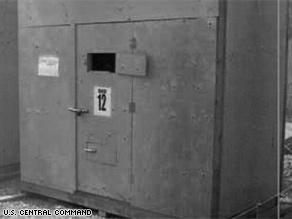
WASHINGTON — The U.S. military is segregating violent Iraqi prisoners in wooden crates that in some cases are not much bigger than the prisoners.

As a boy I was a great reader of the English adventure writer Percival Christopher Wren. He is remembered today only as the author of the book on which the movie Beau Geste was based, but he wrote many more books about the French Foreign Legion.

Life was hard in Wren’s Foreign Legion. Mess up and you spent the day with a rock-filled pack on your back, double-timing around the parade ground in the North African sun.

Really mess up and the sergeants put you in a stress position called the crapaudine, or locked you inside a box no bigger than a refrigerator where you would stay until you went mad.

I was terrified and yet fascinated. Could people be so cruel to one another? Did such evil really exist outside of books? Later I learned that it once had — in the chain gangs of our own South, where it was called the “hot box.” Imagine a citizenry so primitive, so low, so depraved, so ignorant, so devoid of humanity, as to permit such things!

The chain gangs were history by then, although fairly recent history. But before long, as fear of various Others made us not brave and strong but small and mean, the chain gangs came back. The cancer of prisons spread and metastasized. The land of the scared was becoming the home of a vast corporate gulag.

All the while we sat by and cheered, fat and ignorant and frightened, until now now we have at last what Jimmy Carter in his innocence once promised us — a government as good as the American people themselves.

Now we have our very own hot boxes in our very own colonies and most of us must be just fine with that. After all, none of this is the fault of Dick Cheney and George W. Bush, those nasty amoral morons who rule in our name. If our vote could be won by compassion, humility, the rule of law and a preference for peace, they would hide their disgust and try to deliver. No, the draft-dodging duo is the effect, not the cause.

The cause is those nasty amoral morons who put our two warhogs in the White House, and who then, after taking a good, long, four-year look at the results, chose to leave them there.

We built those boxes, and if there were a God in heaven we would be in them ourselves.

Source / Bad Attitudes

The Rag Blog

Posted in RagBlog | Tagged , , | 1 Comment

Paris Does John and Maybe Barack, Too

See Paris Hilton Responds to McCain Ad and more funny videos on FunnyOrDie.com

See more funny videos at Funny or Die

Source / Bad Attitudes

The Rag Blog

Posted in RagBlog | Tagged , | 1 Comment

Quote and Picture of the Day – Zoriah

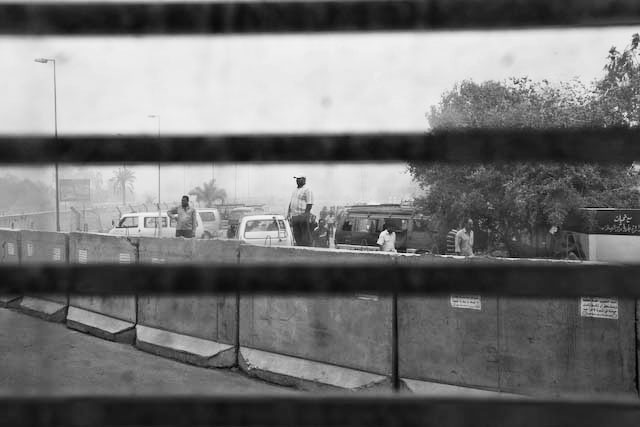
Zoriah Miller writes of being a passenger in an armored vehicle convoy travelling through Iraq.

I have come to realize that it is like being in jail, with a window looking out onto another jail. Zoriah, Photojournalist


Source / ZORIAH

The Rag Blog / Posted August 7, 2008

Posted in RagBlog | Tagged , , | Leave a comment

Houston Cong. Ted Poe : ‘Our Country Cannot Deceive Its Citizens’

Hah, hah …. Who is Ted Poe trying to kid? Living in Amerikkka is one gigantic deception, dude !!! Just where do you think you’ve been all your life?

Richard Jehn / The Rag Blog


Threats, Lies and Audiotape
By Amy Goodman / August 6, 2008

It was like an action movie. A young man held at night in a hotel, threatened with prison. He is to be shipped off to war in the morning. His friends desperately trying to find him. The “down” button on the elevator had been disabled. He considered jumping from the window. When his friends arrive, they encounter military personnel patrolling the grounds. One sneaks in, gets his friend out, and they drive off into the night. This was real life for 17-year-old Eric Martinez, a student at Aldine High School in a poor neighborhood of Houston. He responded to an Army recruitment pitch, called the delayed enlistment program.

But then, as 17-year-olds are wont to do, Eric changed his mind. When the recruiter came to his house and threatened his mother, she went to the recruiting station to meet with the officer in charge: “She talked to Sgt. Marquette and told him that I didn’t want to go, and that’s it. And Marquette said that I had to go, and if I didn’t, that I’d have a warrant for my arrest, and I wouldn’t be able to get no government loans or nothing like that. So, my mom doesn’t really know anything about it, so she believed it, and she told me. And I believed it, too, because I didn’t know much about it either.” It was then that they took Eric to the hotel.

Martinez’s friend, Irving Gonzalez, knew he was next. He had signed up for the same program. As the oldest of four children of a single mother, Irving’s impulse was to help his family survive, get the signing bonus and gain access to a college education. He then wanted to get out of the program, to pursue college directly. He called the recruiter, Sgt. Glenn Marquette. Desperate, he had the call recorded.

Sgt. Marquette: “This is what will happen. You want to go to school? You will not get no loans, because all college loans are federal and government loans. So you’ll be black-marked from that. As soon as you get pulled over for a speeding ticket or anything with the law, they’re gonna see that you’re a deserter. Then they’re going to apprehend you, take you to jail … you will do your time, as you deserve. All that lovey-dovey ‘I want to go to college’ and all this? Guess what. You just threw it out the window, because you just screwed your life.”

Irving and two others were the ones who sneaked Eric out of the hotel.

After the story broke, Marquette was suspended, and the military says it is conducting an investigation, but neither Martinez nor Gonzalez has been contacted. Recent history does not bode well. In 2005, Sgt. Thomas Kelt, who like Marquette worked at the Greenspoint Recruiting Station in Houston, left a phone message for potential recruit Chris Monarch, saying if he didn’t show up at the recruiting station that afternoon: “We’ll have a warrant, OK? So give me a call back.” The story went national. The military conducted a daylong “stand down” on recruitment to retrain their recruiters. They said they removed Kelt. In fact, he was promoted to head up a nearby recruiting center.

I asked Douglas Smith, spokesman for the U.S. Army Recruiting Command in Kentucky, about why Kelt wasn’t punished. Smith replied that Kelt had received a “negative administrative action … just because someone has done something wrong doesn’t mean that they get the death penalty.”

But there’s a difference between the death penalty and a promotion. When I asked Smith what the penalty was, he replied, “I’m not allowed to tell you.”

Smith and the rest of the military may dodge reporters’ questions, but they can be subpoenaed before Congress to testify under oath.

Texas Congressman Ted Poe, a Republican, said: “Our country cannot deceive its citizens. Since the Army hasn’t taken the initiative, now Congress may have to get involved.” Another Texas congressman, Democrat Gene Greene, whose kids went to Aldine High and whose wife taught there for years, agrees. With no end in sight in Afghanistan and Iraq, recruiters must be prevented from using desperate and aggressive measures to lure our nation’s young people — the poorest and most vulnerable — into the line of fire.

Amy Goodman is the host of “Democracy Now!,” a daily international TV/radio news hour airing on more than 700 stations in North America.

© 2008 Amy Goodman

Source / Truthdig

The Rag Blog

Posted in RagBlog | Tagged , | Leave a comment

A Twenty-First Century Cancer on the Presidency


Did Dick Cheney Give Bush Plausible Deniability?
by Johanna Neuman

“Cheney’s been very effective in setting up his deniability and always being the failsafe for Bush. Unless they start waterboarding the vice president, which is not too likely, he is the man, the trail ends right there.”

Dick Cheney was an assistant at the White House when Watergate was unfolding. By the time the scandal forced Richard Nixon to resign the presidency in 1974, the young Wyoming Republican had returned to the private sector. The new president, Gerald Ford, called him back. Cheney became deputy to Chief of Staff Donald Rumsfeld, seen here on right when the two were named on Nov. 7, 1975. And when Rummy left (to run the Pentagon, but that’s another story), Ford promoted Cheney. At 34, Richard Bruce Cheney became the youngest person ever to serve as White House chief of staff.

In his new book “The Way of the World,” author Ron Suskind argues that Cheney concluded from his perch at the White House during those years that Nixon fell not because of his abuse of government — he asked agencies such as the IRS and the FBI to shadow his enemies. Or because of the break-in of the Watergate offices of the Democratic National Committee by criminals with ties to CREEP (The Committee To Re-Elect the President). Or even because of the cover-up.

Suskind believes Cheney concluded that Nixon had been “overbriefed” and that his aides had failed to give him “plausible deniability.” And so, a la Suskind, that is what Cheney set out to give George W. Bush.

Asked about it last night on Keith Olberman’s “Countdown” on MSNBC, John Dean, White House counsel in the Nixon presidency, said Cheney has been so successful at this that it will prevent impeachment proceedings against Bush.

“Cheney’s been very effective in setting up his deniability and always being the failsafe for Bush. Unless they start waterboarding the vice president, which is not too likely, he is the man, the trail ends right there.”

Dean, the one who told Nixon there was “a cancer on the presidency,” was convicted of obstruction of justice and admitted supervising hush payments to the break-in defendants. The author of a book called “Worse Than Watergate,” Dean argues that the sins of the earlier Nixon era “didn’t kill anyone,” whereas those of the current administration include torture and war.

© 2008 The Los Angeles Times

Source / Los Angeles Times / h/t Common Dreams

The Rag Blog

Posted in RagBlog | Tagged , , | 1 Comment