Vincent Bugliosi : Indict Bush for Murder

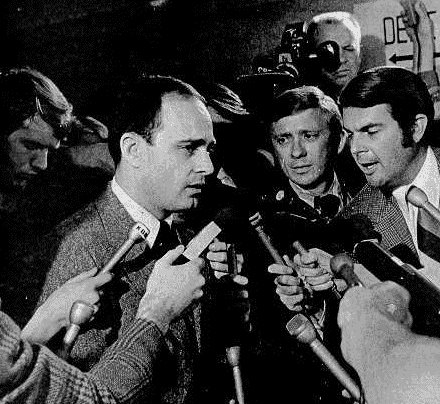
Vincent Bugliosi during his prosecution of Charles Manson, January, 1971. Photo by Curt Gunther.

Holds Bush responsible for
deaths of more that 4,000 GIs

Vincent Bugliosi has written three New York Times #1 best sellers.

He has also had twenty-one successful murder prosecutions.

He believes beyond any shadow of a doubt that George W. Bush can be, and should be, indicted for the crime of murder for the death of over 4,000 US servicemen.

In spite of his sterling reputation and his undeniable success as an author no US publisher would issue his book and he has been largely ignored by the US news media.

A fascinating interview with Alex Jones.

To see the inteview with Vincent Bugliosi, go to Brasscheck TV.

Thanks to telebob / The Rag Blog

Posted in RagBlog | Tagged , , , , , , | 1 Comment

Seeking a Permanent Presence in Iraq


‘Legalizing’ the U.S. Occupation
by Phyllis Bennis / June 16, 2008

In recent weeks, the Bush administration has intensified its longstanding effort to make the U.S. occupation of Iraq permanent. Its first choice is to coerce the U.S.-backed Iraqi government to sign an ostensibly “bilateral” agreement – what the White House would like to call a “status of forces agreement” (SOFA). The administration is pushing to meet the July 31 deadline that was earlier agreed to for that agreement. There are new indications of Iraqi resistance to the proposed agreement – both U.S. occupation-backed Prime Minister Nuri al-Maliki and the influential Shi’a cleric Ayatollah Ali al-Sistani have recently indicated strong opposition. But the U.S. effort to impose a “security agreement” remains in force.

The reason for the Bush administration’s urgency is that the current United Nations mandate expires on December 31st of this year. That mandate, which the U.S. forced on a reluctant but unwilling-to-resist Security Council, transformed the U.S.-British occupation army into a UN-approved “multi-national force.” It provided a veneer of international legitimacy over what would otherwise be understood to be a thoroughly illegal occupation. That veneer that will be stripped away on January 1, 2009, making the U.S. occupation officially illegal and leaving the 150,000 or so remaining U.S. occupation troops without immunity from Iraqi law

The Proposed Agreement

The Bush administration claims that the agreement it’s trying to impose is not a treaty, and thus does not require Senate ratification. They are trying to equate this imposed Iraqi agreement with SOFA agreements the U.S. maintains with other countries – the countries that host the Pentagon’s 1000+ foreign bases. But those other countries – such as Germany and Japan – are not at war. Those SOFA agreements do not give U.S. troops the right to arrest German or Japanese citizens and hold them indefinitely without charges; they do not give U.S. troops and U.S.-paid mercenaries complete immunity from local laws; they do not give the U.S. the right to supervise German or Japanese police or defense ministries; and crucially, they do not allow U.S. troops to launch military attacks within their countries or against other countries without even pretending to consult with the local government.

The U.S.-proposed agreement with Iraq would allow all of that, and more. Although the text has not been made public, numerous leaks (primarily in the Arab and especially British press) have indicated that the agreement would include:

* U.S. troops would remain in Iraq indefinitely, with numbers to be determined by the U.S., and with troops and military contractors immune from accountability under Iraqi criminal or civil law.

*U.S. troops could launch military attacks in Iraq without consulting the Iraqi government.

*The U.S. would maintain its 58+ military bases in Iraq, including the five huge mega-bases, indefinitely.

*Iraq’s defense, interior and national security ministries and all Iraqi arms purchases would be kept under U.S. supervision for ten years.

*The U.S. can determine that any act by other country [read: Iran] constitutes a “threat” to Iraq, and exercise the right to respond to “protect” Iraq.

*The U.S. will maintain control of Iraqi airspace.

(We should note that all the Bush administration plans for maintaining the U.S. economic occupation of Iraq -through control of oil funds, trade practices, privatization and more -remain in place. However, because of the Dec. 31 UN mandate expiration deadline, the current debate has focused only on the so-called “security” agreement, not on the continuing U.S. goal of a second, broader “treaty” between the U.S. and Iraq.)

So far the Iraqi government, facing massive popular and parliamentary opposition, has indicated it will not accept the terms. On June 12 Maliki expressed direct opposition to some aspects of the text. Iraq’s parliament, also elected and kept in power by the occupation but which has somewhat closer ties to the population, has opposed the agreement even more strenuously. A wide range of parliamentarians sent a letter to Congress stating their willingness to “ratify agreements that end every form of American intervention in Iraq’s internal affairs and restore Iraq’s independence and sovereignty over its land.” Nadeem al-Jaberi, one of the Iraqi parliamentarians visiting Washington last week told a congressional hearing that “the anarchy and chaos in Iraq is linked to the presence of the occupation, not withdrawal from Iraq.”

And in response to the Iraqi resistance, the Bush administration is reportedly now holding $50 billion of Iraqi oil money – deposited in the Federal Reserve Bank of New York because of earlier sanctions arrangements – hostage to the Irag’s agreement to sign on.

If Iraq Rejects the Agreement – Plan B

There is a good chance that unless the administration significantly cuts back the content of the agreement (possible but unlikely to be sufficient) it will be rejected by the Iraqi government led by Prime Minister al Maliki. His opposition stems largely from concern over his close-to-zero public credibility, which is likely to disappear altogether if he signs on with Washington. And with provincial elections coming in the fall, Iraqi parties are tripping over each other to win popularity by claiming to oppose the U.S. occupation.

But whatever the motivation, if the Iraqi government ultimately refuses to sign a new agreement, the consequence would be that on January 1, 2009 all U.S. and “coalition” troops and mercenaries would be in Iraq without legal authorization. The occupation would be officially illegal. And crucially for U.S. domestic political purposes, U.S. troops and mercenaries would become vulnerable to Iraqi law.

That would be a good thing – the occupation is illegal, and recognizing that should force the U.S. to bring home all the troops and mercenaries and to close the bases, because there would be no legal basis for them remain occupying Iraq. But that is unlikely.

It is clear that both Bush and both of his potential successors intend to keep tens of thousands (or more) U.S. troops in Iraq for years to come. To prevent the possibility that the occupation would be recognized as illegal, Plan B is already in the works. That would involve the Iraqi government returning to the UN Security Council under U.S. sponsorship to ask for an extension of the existing UN mandate – despite the current mandate’s explicit recognition that it would be the last one.

Several countries on the Council – including South Africa, Libya, Indonesia, and possibly Viet Nam, along with permanent members Russia and China – likely have some hesitation about the UN being asked once again to provide legitimacy for the U.S. occupation of Iraq and immunity for U.S. occupation soldiers, including immunity for war crimes. But there is little reason to think any of those countries – with the possible exception of South Africa – would be willing to stand up and resist U.S. pressure to give the occupation UN approval.

European Union countries currently on the Council – Britain, France, Italy, Croatia and Belgium – are likely to follow the British lead of continuing occupation, despite France’s history of opposition. (All are now led by right-wing governments eager to maintain close U.S. ties.)

In the U.S. there is significant congressional opposition to the Bush administration’s proposed bilateral treaty. Much of it focuses on the right of Congress to be consulted on the agreement, and the claim (unlikely at best) that it would tie the hands of the next president. There is some substantive opposition as well (to officially “permanent” bases, for instance, although not to the Pentagon’s cleverly-titled “enduring” bases, and unfortunately not to maintaining large numbers of troops in Iraq). Some important opponents of the proposed U.S.-Iraq agreement – unfortunately including Rep. Bill Delahunt who has played a great role in holding hearings on the danger of such an agreement – have taken the view that the only danger is in a bilateral agreement being taken without U.S. congressional approval. They therefore support extension of the UN mandate as a way of protecting U.S. troops from being held accountable to Iraqi law – deeming that more important than the call to simply bring them all home.

But in fact the danger of the U.S. succeeding once again at imposing its will on the United Nations, as it has so often throughout sixty-three years of UN history, is a greater danger. The UN stood up to U.S. pressure once – in the run-up to the 2003 U.S. invasion of Iraq – because member governments and the Security Council itself faced massive direct public pressure from social movements around the world, demanding that the UN stand up for its own Charter, its own integrity and independence, and against the U.S. war.

The question now is how to make that happen again.

Source. / Institute for Policy Studies

Thanks to Carl Davidson / The Rag Blog


Posted in RagBlog | Tagged , , , , , , | Leave a comment

Drug War a Bust? Bring it to Mexico! That’s the Ticket!

Paresh Nath / National Herald, India.

And nada for treatment…
Plan Mexico : A Half Billion to the Military
By Maya Schenwar / June 13, 2008

As Congress gears up to fund another year of war and occupation in Iraq and Afghanistan, it is also readying a nearly half-billion-dollar aid package that would initiate a Colombia-like drug war in Mexico. The majority of funds would fuel the Mexican military, known for rampant human rights abuses and participation in organized crime.

In May, the House and the Senate both approved versions of the drug-fighting legislation, dubbed “Plan Mexico,” tucked into the “Global War on Terror” supplemental spending bill. The House Foreign Affairs Committee simultaneously passed a bill authorizing $1.1 billion for Mexico over the next three years

The Bush administration propelled the plan forward this spring, with the president calling it “an important project to help implement a dual strategy to deal with crime and drugs” that will “benefit the people of Mexico and the United States.”

Yet, according to human rights advocates, the plan prioritizes companies over people, lining the pockets of American defense contractors while putting both political dissidents and ordinary Mexican civilians at risk. Government documents leaked to the nonprofit Center for International Policy provide an idea of what the specifics of the plan will look like: more than half the funds would pay for technology and personnel to bolster the Mexican military’s counternarcotics operations. The initiative would ignore the US’s own involvement in the transport and sale of drugs.

Plan Mexico allots no money for drug treatment and rehabilitation.

According to human rights activist Harry Bubbins, the Plan accelerates a dangerous militarization of Mexican society, and places the US at the helm of a foreign mission it can’t achieve on its own soil. Bubbins works as communications director for Friends of Brad Will, a human rights advocacy group named after the US journalist who was shot during a teacher’s strike in Oaxaca, Mexico in 2006.

“With hundreds of millions of dollars going to helicopters, there is a real concern that the civilian population will be targeted in Mexico, while US corporations like Blackwater profit at the expense of a sound foreign policy,” Bubbins told Truthout.

Much of the Plan Mexico funding included in the supplemental will never leave the United States. It will go toward the purchase of Bell helicopters, CASA maritime patrol planes, surveillance software, and other goods and services produced by US private defense contractors.

The bulk of the money that does get to Mexico will fund the counternarcotics arm of its Army, air force and navy, as well as its police force.

A glance at government figures calls into question the efficacy of pouring money into the Mexican Army’s coffers to quash drug crime.

A study by the Mexican government showed that about 90 percent of illegal guns seized in Mexico come from the United States. Most of those firearms’ owners are drug traffickers. And according to US State Department reports last year, Mexican military personnel are often intertwined with drug rings, with many law enforcement personnel “acting directly on behalf of organized crime and drug traffickers”. Oversight within the military, according to the report, is next to nonexistent.

Larry Birns, director of the nonprofit Council on Hemispheric Affairs, describes an incident in which a high-up official in the Mexican Drug Enforcement Administration came to Washington to be honored by the Bush administration for his efforts. At the airport on his way back to Mexico, the official was arrested – for drug trafficking.

“You have this kind of opera buffa taking place every day,” Birns told Truthout.

Funding the military in an attempt to stop drug crime isn’t just ineffective, Birns says – it’s dangerous.

Involving the military in the drug war has been linked to a rise in human rights violations, according to the 2007 Mexican National Commission on Human Rights report, which recommends withdrawing the Army from its civilian regulatory duties.

No matter what its project, the Mexican military and police should not be on anyone’s short list of agents to rein in crime, according to Laura Carlsen, program director of the Americas Program at the Center for International Policy. Carlsen is currently advocating for a group of women raped and sexually abused by law enforcement officials in the town of San Salvador Atenco. The Mexican government has refused to substantively investigate the Atenco case.

“It is undeniable and a serious concern that Mexican security forces have committed grave human rights violations and continue to do so, and that the justice system fails to prosecute these crimes,” Carlsen told Truthout.

The military and police force’s human rights abuses run particularly rampant when it comes to political dissidents. According to a February 2008 report by the International Civil Commission on Human Rights, arrest and imprisonment of peaceful protesters, movement leaders and even family members of activists are commonplace. “It is normal for those who are arrested to be subjected to torture and physical abuse,” the report states.

One of the most publicized examples of violent political suppression occurred in 2006, when the Mexican security forces unleashed a backlash against civil protest in Oaxaca, with mass detentions, acts of torture and killings, including the murder of Brad Will.

When internal law enforcement becomes more militarized, for missions like drug-fighting, human rights abuses often worsen, according to Bubbins. That’s the case in Colombia, the US’s pet drug war zone where, Bubbins says, “government-sanctioned violence against union organizers and government critics is on the rise.”

According to Carlsen, Mexico’s current military-led drug war directly fuels political repression, even without added US funds.

“We are already seeing how the drug war launched by [Mexican President] Calderon affects leaders of grassroots movements and dissidents,” she said. “In Chihuahua, when the Army moved in, it arrested social leaders on five-year-old warrants for blocking the international bridges – a common form of protest there and often used to protest NAFTA measures.”

Carlsen also reports that, since Calderon amped up the Army’s counternarcotics drive, Zapatista communities have experienced a sharp rise in military incursions. She describes the strategies used to fight the “drug war” as particularly well-suited for violently putting down protesters.

“This model, as we have seen, in Colombia is easily and inevitably adapted to fighting internal dissidence,” Carlsen said. “We can expect an increase in repression of social movements if Plan Mexico is approved.”

Although the version of Plan Mexico included in the supplemental contains provisions for human rights “monitoring,” these measures are mainly nominal, according to Birns, who noted, “The US is so eager to woo Mexico in terms of NAFTA and immigration – there’s not going to be vigilant scrutiny here.”

Moreover, the human rights provisions will likely be toned down: Mexican government officials said last week that they’d refuse US aid if it were laden with any conditions. At a meeting with the officials in Monterray, Senator Chris Dodd promised that the US would drop any restriction that “smacks of certification,” and both parties appeared willing to compromise on a less vigilant human rights clause.

It’s not surprising that Mexico should be affronted by a US effort at regulation on this front, according to Carlsen: unlike the US, Mexico has signed almost all international human rights pacts. The US keeping an eye on the Mexican Army isn’t the answer to the danger of abuses and corruption, she said.

US officials don’t appear to have a Plan B for keeping Plan Mexico money from fueling violence and crime, judging by Assistant Secretary for Western Hemisphere Affairs Thomas Shannon’s statements on a press conference call last fall.

“There are kind of levels of trust that we need to build with Mexico in this regard, and we can’t allow ourselves to be dominated by fear of what might happen,” Shannon said.

Source. / truthout

Thanks to Gerry Storm / The Rag Blog

Posted in RagBlog | Tagged , , | Leave a comment

Austin Diversity Shows It’s Colors

Diversity cowboys. Photos by Jamie Josephs and Caroline Crocker / The Rag Blog.

Austin Gay Pride: 2008
By Jamie Josephs / The Rag Blog / June 16, 2008

It was hot and sweaty but the Austin Pride 08 Festival at Auditorium Shores was a great success and seemed to come off without a hitch thanks to the Equality Texas organizers, lots of wonderful volunteers and Micah King, the main man.

Thousands of people from Austin, Texas and the world paid $15 at the gate to attend Austin’s Gay Pride festival. Approximately 130 vendors attended with variety ranging from BookWoman to Norml to Hawaiin Smoothies. Lots of good food, interesting music and a sense of family made everyone seem emotionally bouyant at this 7th annual Gay Pride Festival.

Quite a few non-profits had booths with lots of educational info and freebies. The music was as diverse as the gender preferences of the crowd in attendance. The Austin Pride Festival, as opposed to others including San Francisco’s, is a family event. All vendors and organizations involved agree to keeping all activity and demeanor family-friendly with no ludeness tolerated.

The people who wandered into my Peace Peddler booth were friendly, charming and quite conversant. An incredible parade followed the musical headliner’s performance which ended at 7pm. Mechell Ndegeocello, 7 time Grammy nominated bass player/vocalist brought down the house at the end of the day. If you didn’t attend you should plan to next year. Its a wonderful slice of Austin culture and being there renewed some of my faith that tolerance to diversity really can exist.

Thong man with cat.

Whether on foot, bicycle, motorcycle or convertible, droves of people in colorful outfits marched from Auditorium Shores to Fourth Street, many playing dance music and tossing out candy to a crowd that stretched up the South First Street bridge and into downtown.

“We’re just letting people know we’re here, and this is who we are,” said Dale Atkinson, a marcher and volunteer with AIDS Services of Austin.

Dressed in cowboy boots and a dress partially made of Hershey bar wrappers, Heath Riddles rode in a pickup covered in blue plastic, streamers and purses.

Austin American-Statesman / June 15, 2008

The Rag Blog

Posted in Rag Bloggers | Tagged , , , | 2 Comments

BushCo: Increasing the Incidence of Terrorism


America’s prison for terrorists often held the wrong men
By Tom Lasseter / June 15, 2008

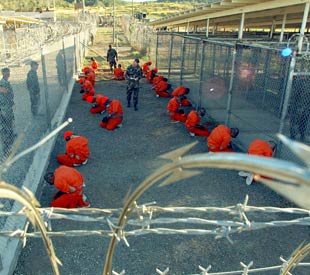
GARDEZ, Afghanistan — The militants crept up behind Mohammed Akhtiar as he squatted at the spigot to wash his hands before evening prayers at the Guantanamo Bay detention camp.

They shouted “Allahu Akbar” — God is great — as one of them hefted a metal mop squeezer into the air, slammed it into Akhtiar’s head and sent thick streams of blood running down his face.

Akhtiar was among the more than 770 terrorism suspects imprisoned at the U.S. naval base at Guantanamo Bay, Cuba, after the Sept. 11, 2001, terrorist attacks. They are the men the Bush administration described as “the worst of the worst.”

But Akhtiar was no terrorist. American troops had dragged him out of his Afghanistan home in 2003 and held him in Guantanamo for three years in the belief that he was an insurgent involved in rocket attacks on U.S. forces. The Islamic radicals in Guantanamo’s Camp Four who hissed “infidel” and spat at Akhtiar, however, knew something his captors didn’t: The U.S. government had the wrong guy.

“He was not an enemy of the government, he was a friend of the government,” a senior Afghan intelligence officer told McClatchy. Akhtiar was imprisoned at Guantanamo on the basis of false information that local anti-government insurgents fed to U.S. troops, he said.

An eight-month McClatchy investigation in 11 countries on three continents has found that Akhtiar was one of dozens of men — and, according to several officials, perhaps hundreds — whom the U.S. has wrongfully imprisoned in Afghanistan, Cuba and elsewhere on the basis of flimsy or fabricated evidence, old personal scores or bounty payments.

McClatchy interviewed 66 released detainees, more than a dozen local officials — primarily in Afghanistan — and U.S. officials with intimate knowledge of the detention program. The investigation also reviewed thousands of pages of U.S. military tribunal documents and other records.

This unprecedented compilation shows that most of the 66 were low-level Taliban grunts, innocent Afghan villagers or ordinary criminals. At least seven had been working for the U.S.-backed Afghan government and had no ties to militants, according to Afghan local officials. In effect, many of the detainees posed no danger to the United States or its allies.

The investigation also found that despite the uncertainty about whom they were holding, U.S. soldiers beat and abused many prisoners.

Prisoner mistreatment became a regular feature in cellblocks and interrogation rooms at Bagram and Kandahar air bases, the two main way stations in Afghanistan en route to Guantanamo.

While he was held at Afghanistan’s Bagram Air Base, Akhtiar said, “When I had a dispute with the interrogator, when I asked, ‘What is my crime?’ the soldiers who took me back to my cell would throw me down the stairs.”

The McClatchy reporting also documented how U.S. detention policies fueled support for extremist Islamist groups. For some detainees who went home far more militant than when they arrived, Guantanamo became a school for jihad, or Islamic holy war.

Of course, Guantanamo also houses Khalid Sheikh Mohammed, the alleged mastermind of the Sept. 11 attacks, who along with four other high-profile detainees faces military commission charges. Cases also have been opened against 15 other detainees for assorted offenses, such as attending al Qaida training camps.

But because the Bush administration set up Guantanamo under special rules that allowed indefinite detention without charges or federal court challenge, it’s impossible to know how many of the 770 men who’ve been held there were terrorists.

A series of White House directives placed “suspected enemy combatants” beyond the reach of U.S. law or the 1949 Geneva Conventions’ protections for prisoners of war. President Bush and Congress then passed legislation that protected those detention rules.

However, the administration’s attempts to keep the detainees beyond the law came crashing down last week.

The Supreme Court ruled Thursday that detainees have the right to contest their cases in federal courts, and that a 2006 act of Congress forbidding them from doing so was unconstitutional. “Some of these petitioners have been in custody for six years with no definitive judicial determination as to the legality of their detention,” the court said in its 5-4 decision, overturning Bush administration policy and two acts of Congress that codified it.

One former administration official said the White House’s initial policy and legal decisions “probably made instances of abuse more likely. … My sense is that decisions taken at the top probably sent a signal that the old rules don’t apply … certainly some people read what was coming out of Washington: The gloves are off, this isn’t a Geneva world anymore.”

Like many others who previously worked in the White House or Defense Department, the official spoke on the condition of anonymity because of the legal and political sensitivities of the issue.

McClatchy’s interviews are the most ever conducted with former Guantanamo detainees by a U.S. news organization. The issue of detainee backgrounds has previously been reported on by other media outlets, but not as comprehensively.

McClatchy also in many cases did more research than either the U.S. military at Guantanamo, which often relied on secondhand accounts, or the detainees’ lawyers, who relied mainly on the detainees’ accounts.

The Pentagon declined to discuss the findings. It issued a statement Friday saying that military policy always has been to treat detainees humanely, to investigate credible complaints of abuse and to hold people accountable. The statement says that an al Qaida manual urges detainees to lie about prison conditions once they’re released. “We typically do not respond to each and every allegation of abuse made by past and present detainees,” the statement said.

LITTLE INTELLIGENCE VALUE

The McClatchy investigation found that top Bush administration officials knew within months of opening the Guantanamo detention center that many of the prisoners there weren’t “the worst of the worst.” From the moment that Guantanamo opened in early 2002, former Secretary of the Army Thomas White said, it was obvious that at least a third of the population didn’t belong there.

Of the 66 detainees whom McClatchy interviewed, the evidence indicates that 34 of them, about 52 percent, had connections with militant groups or activities. At least 23 of those 34, however, were Taliban foot soldiers, conscripts, low-level volunteers or adventure-seekers who knew nothing about global terrorism.

Only seven of the 66 were in positions to have had any ties to al Qaida’s leadership, and it isn’t clear that any of them knew any terrorists of consequence.

If the former detainees whom McClatchy interviewed are any indication — and several former high-ranking U.S. administration and defense officials said in interviews that they are — most of the prisoners at Guantanamo weren’t terrorist masterminds but men who were of no intelligence value in the war on terrorism.

Read all of it here. / McClatchy Washington

The Rag Blog

Posted in RagBlog | Tagged , | Leave a comment

Iraq Moratorium #10 – June 20th

They’ll be flipping pancakes for peace Friday, June 20, at the Midwest Renewable Energy Expo in Wisconsin.

They’ll hold a teach-in on torture on the train to San Jose, where a picket and vigil will target a Boeing subsidiary accused of providing logistics for those “extraordinary rendition” flights.

Church bells will ring in Massachusetts. Activists will leaflet commuters in San Francisco Bay area, Brooklyn, and Takoma Park MD. Street corner vigils are planned in dozens of communities across the country, large and small.

It’s all part of the Iraq Moratorium, a monthly event that asks people to break their daily routines and do something to show that they want to Iraq war and occupation to end.

Nearly 100 events in 82 communities are listed on the Moratorium website, bringing the total to more than 1000 since the Moratorium began last September.

The Iraq Moratorium does not believe that one size fits all. It asks people to act, but in whatever way they choose.

The whole idea is to do something — anything — to show opposition to the war, whether it’s wearing an armband or writing members of Congress or donating to a peace group working to end the war and occupation.

The group’s website includes tools for organizing and ideas about how individuals can observe the Moratorium.

Bill Christofferson
For the Iraq Moratorium
http://www.IraqMoratorium.org/

The Rag Blog

Posted in RagBlog | Tagged , , | Leave a comment

They Flatter You, Flummox You, Fool You

Ralph Nader calls for civic engagement Wednesday in Tacoma.
Janet Jensen/The News Tribune

Ralph Nader says, vote for ‘none of the above’
By Niki Sullivan, Jun 14, 2008

Ralph Nader says if not him, then vote for ‘none of the above’

May 15th, 2008 – Ralph Nader is still running for president. But in Tacoma on Wednesday, his pitch for another option on the ballot was just as impassioned.

“‘None of the above’ will get more people out to the polls!” he said.

Nader said a “none of the above” option on ballots would help break up what he called the “two-party dictatorship” because it would bring more voters out and, if their noncandidate won, another election would have to be held 30 days later.

“How many people would like that?” he asked a crowd of about 90 at Tacoma Community College. The majority of hands shot up.

During his two-hour engagement, Nader spoke about everything from the Iraq war – “You go to fight terrorists and you create more of them” – to the state of the nation – “We’re fed a line of propaganda. … This isn’t the greatest country in the world.”

It’s the antithesis of the messages of hope and prosperity he said other candidates are peddling.

“They flatter you, flummox you, fool you,” he said of Barack Obama, Hillary Rodham Clinton and John McCain.

And that’s his goal.

“Am I making you a little indignant? If I don’t, I’m not communicating,” he said.

He encouraged the crowd, a mix of students and community members, to learn about civic engagement and work to end political apathy.

“If you don’t turn on politics, politics is going to turn on you,” he said to cheers.

He also railed against corporations, telling the crowd that corporate influence in politics has crossed the line.

“Time and time again, they side with big business,” he said of lawmakers.

He said he’s the one candidate who’s been “of the people, by the people and for the people for 40 years.”

His message was strong, but he didn’t top it with much pressure to vote for him. Instead, he encouraged audience members to “at least let Obama, McCain and Clinton know what you want.”

This time around, Nader said, he expects to get more votes than the 3 million cast for him in 2000. Nader is widely blamed by Democrats for siphoning votes from Democrat Al Gore that year, enabling Republican George W. Bush to win the White House.

“This time, we’re going to do much better,” he said.

Donald Mize, a retiree from Gig Harbor, hopes Nader is right.

“We need a president that’s a part of the people, not an impersonal figure,” Mize said. He’s voted for Nader in the past, and volunteered last week for his campaign, phoning voters in Oregon.

Mize plans to become even more involved in the campaign in advance of the November elections because “the other chowderheads don’t seem to give a (expletive) about us,” he said. “Nader all the way!”

Others were more curious than supportive. Aaron DeVore, a 21-year-old University of Puget Sound student, rode his bike to TCC just to hear what Nader had to say.

“I really admire all the stuff that Nader has done,” he said. Still, DeVore has no intention of voting for him: He’ll cast his first presidential vote for Obama.

DeVore also said he was concerned that Nader continues to run for president, potentially draining votes from the Democratic ticket.

“It’s painful to see,” DeVore said.

Portland lawyer Greg Kafoury told the crowd that a candidate such as Nader “comes around once a century.”

“Think of this campaign – there’s corporate Republicans and corporate Democrats. That’s not the answer,” he said, before coaxing financial donations from the crowd to Nader’s campaign.

Nader took questions from the crowd and signed books briefly before leaving for a campaign event in Seattle.

Niki Sullivan: 253-597-8603

blogs.thenewstribune.com/politics

Ralph Nader

Hometown: Winsted, Conn.

Education: Princeton (1955) and Harvard Law School (1958)

Background: He wrote “Unsafe at Any Speed,” an indictment of the auto industry’s safety failures, in 1965. He’s credited with helping to create the Consumer Product Safety Commission, the Safe Drinking Water Act, the Freedom of Information Act and the Occupational Safety and Health Administration.

Elections: He ran as a presidential write-in candidate in 1992 and 1996, but says he didn’t “officially” run until 2000. He also ran in 2004.

Contact: niki.sullivan@thenewstribune.com

Source / News Tribune

The Rag Blog

Posted in RagBlog | Tagged | 2 Comments

This Is Just the Beginning of Stories Like This


Tightening a Belt with No Notches Left
by Nicole Colson / June 14, 2008

Clip coupons. Stop eating at restaurants. Grow a vegetable garden. Learn to do without.

Everywhere you look, the mainstream media–finally waking up to the economic reality facing millions of poor and working-class Americans are suddenly full of “helpful” suggestions for those feeling the squeeze of rising food prices.

But are platitudes about how best to tighten our belts the answer?

Food inflation is at its worst in more than 17 years today, with prices having risen nearly 5 percent in the past year. The price of staple products is climbing event faster–milk and dried beans are up more than 17 percent; cheese is up 15 percent; rice and pasta 13 percent, and bread 12 percent.

With the official unemployment rate jumping by a half percentage point in May–the biggest one-month increase in 22 years–gas prices climbing to more than $4 a gallon nationally, and a growing number of families hit by skyrocketing mortgages, things are looking exceptionally bleak for many working and poor families across the U.S.

In a new USA Today poll, 54 percent of those surveyed say their standard of living is no better today than five years ago. “Fewer Americans now than at any time in the last half century believe they’re moving forward in life,” concluded a recent report by the Washington, D.C.-based Pew Research Center.

That includes their access to food. According to the U.S. Department of Agriculture, 10 percent of U.S. households today are either at risk of, or experiencing, hunger.

One bleak sign: Hormel, the company that produces the canned pork product Spam, reported a 14 percent jump in profits for the last quarter, largely because of a spike in sales of their exceedingly cheap product.

Anita Rhodes, a single mother of three living in Oakland, Md., who makes $374 every two weeks, recently told National Public Radio that she has been forced to begin shopping at a local grocery store selling expired food and damaged goods at discount prices. “The things there are all way, way past their due date, but I tried it,” Rhodes said. “The first box [of cereal] I opened had bugs in it.” She returned the box to the store to get her money–$1–back, because she couldn’t afford not to.

The family has been forced to cut out paper towels, bottled water, chips, cookies, candy and toiletries. “I don’t even look at roast right now, just because it’s so expensive. I looked at a chuck roast, and it was $15.”

According to Rhodes, if things prices continue to rise, she may be forced to take more drastic action. “I can shoot a deer,” she says. “I can do that. I can shoot a turkey. So I will feed my kids one way or another.”

And it’s not just people in rural areas who are being forced to make such choices. High school senior Brighton Early, who lives in Los Angeles, told NPR that she has gotten used to “finding flexibility” in her weekly shopping trips with her mother.

When shopping at the regular grocery store became too expensive, Early and her mother started getting their food at the local Chevron gas station–where the cashier gives them a 40 percent discount on leftover apples and bananas. As she wrote in an essay:

To ensure the best selection possible, my mother and I pile into our 20-year-old car and pull up to the food mart at 5 p.m. on the dot, ready to get our share of slightly overripe fruits.

Chevron shopping started like this: One day my mother suddenly realized that she had maxed out almost every credit card, and we needed groceries for the week. The only credit card she hadn’t maxed out was the Chevron card, and the station on Eagle Rock Boulevard has a pretty big mart attached to it…

Grocery shopping at Chevron has its drawbacks. The worst is when we have so many items that it takes the checker what seems like hours to ring up everything. A line of anxious customers forms behind us. It’s that line that hurts the most–the way they look at us. My mother never notices–or maybe she pretends not to.

I never need to be asked to help the checker bag all the items. No one wants to get out of there faster than I do. I’m embarrassed to shop there, and I’m deathly afraid of running into someone I know. I once expressed my fear of being seen shopping at Chevron to my mother, and her eyes shone with disappointment. I know that I hurt her feelings when I try to evade our weekly shopping trips.

As food prices rise, many families are being forced to ask for help in the form of government assistance and food stamps.

In some places, applications for food stamps have doubled in the last year. According to federal statistics, in March alone, some 27.9 million Americans received food stamps–up 1.5 million, or 5.7 percent, from a year earlier. Nearly half of households receiving food stamp benefits have one or more working adults.

And with food stamp benefits averaging just $1 per person per meal, many recipients who found the benefits pitifully small during the “boom” are now finding it nearly impossible to stretch what little they get.

Debby Missimi, director of food services for Family and Community Services, which offers hot meals and runs food pantries in Kent and Ravenna, Ohio, told the Akron Beacon Journal, ”When people think about the hungry, they think of a homeless person walking down the street without food. With this economy, that’s not the case. It could be your neighbor. It could be someone in your family. It could be someone who sits next to you in church. In this economy, the face of hunger has changed.”

Laura Diaz, a mother of four, whose husband works as a machinist in Chicago, got $332 in food stamps to feed her family–for the entire month of June. Her husband’s paycheck, she told NPR, goes almost entirely to pay for the family’s mortgage. And while she would like to work, without a high school diploma, she fears there’s no way she would be able to make enough to even pay for child care.

The money isn’t enough to make it through to the end of the month, so Diaz volunteers at, and receives assistance from, Casa Catalina–a neighborhood food pantry that serves more than 300 families each day.

According to America’s Second Harvest, the largest food bank in the U.S., demand across the U.S. is up 15 percent to 20 percent over last year, and many food banks are having difficulty coping. CBS News recently reported that virtually all food banks in a recent survey said demand was growing–and more than 80 percent said they were unable to meet that rising demand.

“Having a job isn’t enough anymore,” Marcia Paulson, spokeswoman for Great Plains Food Bank in North Dakota, recently told Reuters. “Having two or three jobs isn’t enough anymore.”

“Milk is just as much as gas prices these days,” a tearful Stephanie Smith told CBS News as she waited to pick up food with her daughter at a mobile food pantry in Dover, Tenn.–where the number of families signing up has almost doubled since October.

Smith was forced to leave her minimum wage job when her salary could no longer cover the cost of child care and her commute to work. “This is hard, to have your kids watch their parents go through this,” she added.

Unfortunately for Smith and the hundreds of others who have come to rely on the Dover food pantry, the state money that funded it is due to run out this month–and has not been renewed.

Olga Medina, who works full time providing home care for the elderly in Douglas, Ariz., told Reuters that her $1,100 monthly paycheck is no longer enough to support her, her parents and her sick child. To make ends meet, she now looks for milk, fruit and vegetables in dumpsters outside of her local supermarket each week. One day last month, she waited in line with 147 others outside the Douglas Area Food Bank for a grocery handout because she had no bread.

“We have to put up with a lot of humiliation just to survive,” she said, putting on a pair of sunglasses to hide tears. “It’s not dignified, but we are hungry, and hunger is ugly.”

Nicole Colson writes for Socialist Worker.

Source / Dissident Voice

The Rag Blog

Posted in RagBlog | Tagged , , | Leave a comment

Women Know When They’re Being Hit On


Angry Clinton Women ♥ McCain?
By Frank Rich / June 15, 2008

Ten years ago John McCain had to apologize for regaling a Republican audience with a crude sexual joke about Hillary and Chelsea Clinton and Janet Reno. Last year he had to explain why he didn’t so much as flinch when a supporter asked him on camera, “How do we beat the bitch?” But these days Mr. McCain just loves the women.

In his televised address on Barack Obama’s victory night of June 3, he dismissed Mr. Obama in a single patronizing line but devoted four fulsome sentences to praising Mrs. Clinton for “inspiring millions of women.” The McCain Web site is showcasing a new blogger who crooned of the “genuine affection” for Mrs. Clinton “here at McCain HQ” after she lost. One of the few visible women in the McCain campaign hierarchy, Carly Fiorina, has declared herself “enormously proud” of Mrs. Clinton and is barnstorming to win over Democratic women to her guy’s cause.

How heartwarming. You’d never guess that Mr. McCain is a fierce foe of abortion rights or that he voted to terminate the federal family-planning program that provides breast-cancer screenings. You’d never know that his new campaign blogger, recruited from The Weekly Standard, had shown his genuine affection for Mrs. Clinton earlier this year by portraying her as a liar and whiner and by piling on with a locker-room jeer after she’d been called a monster. “Tell us something we don’t know,” he wrote.

But while the McCain campaign apparently believes that women are easy marks for its latent feminist cross-dressing, a reality check suggests that most women can instantly identify any man who’s hitting on them for selfish ends. New polls show Mr. Obama opening up a huge lead among female voters — beating Mr. McCain by 13 percentage points in the Gallup and Rasmussen polls and by 19 points in the latest Wall Street Journal-NBC News survey.

How huge is a 13- to 19-percentage-point lead? John Kerry won women by only 3 points, Al Gore by 11.

The real question is how Mr. McCain and his press enablers could seriously assert that he will pick up disaffected female voters in the aftermath of the brutal Obama-Clinton nomination battle. Even among Democrats, Mr. Obama lost only the oldest female voters to Mrs. Clinton.

But as we know from our Groundhog Days of 2008, a fictional campaign narrative, once set in the concrete of Beltway bloviation, must be recited incessantly, especially on cable television, no matter what facts stand in the way. Only an earthquake — the Iowa results, for instance — could shatter such previously immutable story lines as the Clinton campaign’s invincibility and the innate hostility of white voters to a black candidate.

Our new bogus narrative rose from the ashes of Mrs. Clinton’s concession to Mr. Obama, amid the raucous debate over what role misogyny played in her defeat. A few female Clinton supporters — or so they identified themselves — appeared on YouTube and Fox News to say they were so infuriated by sexism that they would vote for Mr. McCain.

Now, there’s no question that men played a big role in Mrs. Clinton’s narrow loss, starting with Barack Obama, Bill Clinton and Mark Penn. And the evidence of misogyny in the press and elsewhere is irrefutable, even if it was not the determinative factor in the race. But the notion that all female Clinton supporters became “angry white women” once their candidate lost — to the hysterical extreme where even lifelong Democrats would desert their own party en masse — is itself a sexist stereotype. That’s why some of the same talking heads and Republican operatives who gleefully insulted Mrs. Clinton are now peddling this fable on such flimsy anecdotal evidence.

The fictional scenario of mobs of crazed women defecting to Mr. McCain is just one subplot of the master narrative that has consumed our politics for months. The larger plot has it that the Democratic Party is hopelessly divided, and that only a ticket containing Mrs. Clinton in either slot could retain the loyalty of white male bowlers and other constituencies who tended to prefer her to Mr. Obama in the primaries.

This is reality turned upside down. It’s the Democrats who are largely united and the Republicans who are at one another’s throats.

Yet the myth of Democratic disarray is so pervasive that when “NBC Nightly News” and The Wall Street Journal presented their new poll results last week (Obama, 47 percent; McCain, 41 percent) they ignored their own survey’s findings to stick to the clichéd script. Both news organizations (and NBC’s sibling, MSNBC) dwelled darkly on Mr. Obama’s “problems with two key groups” (as NBC put it): white men, where he is behind 20 percentage points to Mr. McCain, and white suburban women, where he is behind 6 points.

Since that poll gives Mr. Obama not just a 19-point lead among all women but also a 7-point lead among white women, a 6-point deficit in one sliver of the female pie is hardly a heart-stopper. Nor is Mr. Obama’s showing among white men shocking news. No Democratic presidential candidate, including Bill Clinton, has won a majority of that declining demographic since 1964. Mr. Kerry lost white men by 25 points, and Mr. Gore did by 24 points (even as he won the popular vote).

“NBC Nightly News” was so focused on these supposedly devastating Obama shortfalls that there was no mention that the Democrat beat Mr. McCain (and outperformed Mr. Kerry) in every other group that had been in doubt: independents, Catholics, blue-collar workers and Hispanics. Indeed, the evidence that pro-Clinton Hispanics are flocking to Mr. McCain is as nonexistent as the evidence of a female stampede. Mr. Obama swamps Mr. McCain by 62 percent to 28 percent — a disastrous G.O.P. setback, given that President Bush took 44 percent of the Hispanic vote in 2004, according to exit polls. No wonder the McCain campaign no longer lists its candidate’s home state of Arizona as safe this fall.

There are many ways that Mr. Obama can lose this election. But his 6-percentage-point lead in the Journal-NBC poll is higher than Mr. Bush’s biggest lead (4 points) over Mr. Kerry at any point in that same poll in 2004. So far, despite all the chatter to the contrary, Mr. Obama is not only holding on to Mrs. Clinton’s Democratic constituencies but expanding others (like African-Americans). The same cannot be said of Mr. McCain and the G.O.P. base.

That story is minimized or ignored in part because an unshakable McCain fan club lingers in some press quarters and in part because it’s an embarrassing refutation of the Democrats-in-meltdown narrative that so many have invested in. Understating the splintering of the Republican base also keeps hope alive for a tight race. As the Clinton-Obama marathon proved conclusively, a photo finish is essential to the dramatic and Nielsen imperatives of 24/7 television coverage.

The conservative hostility toward McCain heralded by the early attacks of Rush Limbaugh, Ann Coulter and James Dobson is proliferating. Bay Buchanan, the party activist who endorsed Mitt Romney, wrote this month that Mr. McCain is “incapable of energizing his party, brings no new people to the polls” and “has a personality that is best kept under wraps.” When Mr. McCain ditched the preachers John Hagee and Rod Parsley after learning that their endorsements antagonized Catholics, Muslims and Jews, he ended up getting a whole new flock of evangelical Christians furious at him too.

The revolt is not limited to the usual cranky right-wing suspects. The antiwar acolytes of Ron Paul are planning a large rally for convention week in Minneapolis. The conservative legal scholar Douglas Kmiec has endorsed Mr. Obama, as have both the economic adviser to Newt Gingrich’s “Contract With America,” Lawrence Hunter, and the neocon historian Francis Fukuyama. Rupert Murdoch is publicly flirting with the Democrat as well. Even Dick Cheney emerged from his bunker this month to gratuitously dismiss Mr. McCain’s gas-tax holiday proposal as “a false notion” before the National Press Club.

These are not anomalies. Last week The Hill reported that at least 14 Republican members of Congress have refused to endorse or publicly support Mr. McCain. Congressional Quarterly found that of the 62,800 donors who maxed out to Mr. Bush’s campaign in 2004, only about 5,000 (some 8 percent) have contributed to his putative successor.

It was just this toxic stew of inadequate fund-raising and hostility from the base — along with incompetent management — that capsized the McCain campaign last summer. Now the management, at least, is said to be new and improved, but the press is still so distracted by the “divided Democrats” it has yet to uncover how that brilliant McCain team spent weeks choreographing the candidate’s slapstick collision with a green backdrop and self-immolating speech in prime time two weeks ago.

The only figure in the McCain camp who has candidly acknowledged any glitches is his mother, the marvelous 96-year-old Roberta McCain. Back in January she said that she didn’t think her son had any support in the G.O.P. base and that those voters would only take him if “holding their nose.”

The ludicrous idea that votes from Clinton supporters would somehow make up for McCain defectors is merely the latest fairy tale brought to you by those same Washington soothsayers who said Fred Thompson was the man to beat and that young people don’t turn up to vote.

Source. / New York Times

The Rag Blog

Posted in RagBlog | Tagged , , , , , , | Leave a comment

It Is Time the Wishful-Thinkers Grew Up Politically


In The Great Tradition: Obama Is A Hawk
By John Pilger / June 14, 2008

In his latest column for the New Statesman, John Pilger reaches back into the history of the Democratic Party and describes the tradition of war-making and expansionism that Barack Obama has now left little doubt he will honour.

In 1941, the editor Edward Dowling wrote: “The two greatest obstacles to democracy in the United States are, first, the widespread delusion among the poor that we have a democracy, and second, the chronic terror among the rich, lest we get it.” What has changed? The terror of the rich is greater than ever, and the poor have passed on their delusion to those who believe that when George W Bush finally steps down next January, his numerous threats to the rest of humanity will diminish.

The foregone nomination of Barack Obama, which, according to one breathless commentator, “marks a truly exciting and historic moment in US history”, is a product of the new delusion. Actually, it just seems new. Truly exciting and historic moments have been fabricated around US presidential campaigns for as long as I can recall, generating what can only be described as bullshit on a grand scale. Race, gender, appearance, body language, rictal spouses and offspring, even bursts of tragic grandeur, are all subsumed by marketing and “image-making”, now magnified by “virtual” technology. Thanks to an undemocratic electoral college system (or, in Bush’s case, tampered voting machines) only those who both control and obey the system can win. This has been the case since the truly historic and exciting victory of Harry Truman, the liberal Democrat said to be a humble man of the people, who went on to show how tough he was by obliterating two cities with the atomic bomb.

Understanding Obama as a likely president of the United States is not possible without understanding the demands of an essentially unchanged system of power: in effect a great media game. For example, since I compared Obama with Robert Kennedy in these pages, he has made two important statements, the implications of which have not been allowed to intrude on the celebrations. The first was at the conference of the American Israel Public Affairs Committee (Aipac), the Zionist lobby, which, as Ian Williams has pointed out, “will get you accused of anti-Semitism if you quote its own website about its power”. Obama had already offered his genuflection, but on 4 June went further. He promised to support an “undivided Jerusalem” as Israel’s capital. Not a single government on earth supports the Israeli annexation of all of Jerusalem, including the Bush regime, which recognises the UN resolution designating Jerusalem an international city.

His second statement, largely ignored, was made in Miami on 23 May. Speaking to the expatriate Cuban community – which over the years has faithfully produced terrorists, assassins and drug runners for US administrations – Obama promised to continue a 47-year crippling embargo on Cuba that has been declared illegal by the UN year after year.

Again, Obama went further than Bush. He said the United States had “lost Latin America”. He described the democratically elected governments in Venezuela, Bolivia and Nicaragua as a “vacuum” to be filled. He raised the nonsense of Iranian influence in Latin America, and he endorsed Colombia’s “right to strike terrorists who seek safe-havens across its borders”. Translated, this means the “right” of a regime, whose president and leading politicians are linked to death squads, to invade its neighbours on behalf of Washington. He also endorsed the so-called Merida Initiative, which Amnesty International and others have condemned as the US bringing the “Colombian solution” to Mexico. He did not stop there. “We must press further south as well,” he said. Not even Bush has said that.

It is time the wishful-thinkers grew up politically and debated the world of great power as it is, not as they hope it will be. Like all serious presidential candidates, past and present, Obama is a hawk and an expansionist. He comes from an unbroken Democratic tradition, as the war-making of presidents Truman, Kennedy, Johnson, Carter and Clinton demonstrates. Obama’s difference may be that he feels an even greater need to show how tough he is. However much the colour of his skin draws out both racists and supporters, it is otherwise irrelevant to the great power game. The “truly exciting and historic moment in US history” will only occur when the game itself is challenged.

http://www.johnpilger.com/

Source / Information Clearing House

The Rag Blog

Posted in RagBlog | Tagged , , | Leave a comment

We, the People, Have Been Ambushed


When Will the People Fight Back? Oil and Racism
By Reza Fiyouzat / June 15, 2008

It is customary to run into brazenly racist commentary coming out of the U.S. liberals and right-wingers alike, especially when it comes to the question of oil. Besides the occasional surreal headlines about congressional members suing OPEC, it is normal to read headlines urging OPEC member countries to increase production. It is as if we were at a restaurant, trying to get more service. ‘Hey waiter! More drinks over here!’

The more liberal ones, of course, take it to another level. In the context of ‘oil shortages’, when the right wingers assert that more internal exploration/extraction is needed, the inevitable liberal knee-jerk reaction is, ‘Of course not! Leave our wildlife alone!’

Shocking bulletin to Western ‘environmentalists’: ‘Oil Producing’ countries too have environments.

As it relates to the issue of oil, there is proliferation of a language and mentality that is racist to the core. The two variations, militarism and capitalistically defined ‘environmentalism’, are espoused by the right and the liberal wings respectively. The line of thinking starts out with something like this: Those damned Ay-rabs (say, Saudis) are holding us hostage (or, insert any other OPEC member the State Dept and media lackeys are bullying that day); and concludes with: So, we must reduce our dependence on foreign oil (with the adjective ‘foreign’ intoning a four-letter word). By all means, do!

But … Hostage to what? Hostage to our needs, hostage to our way of life. That’s about the gist of it. The attitude is as narcissistic as it is racist.

Is There a Shortage?

A component of the liberal racist argument is the quantitative comparisons of proven worldwide oil reserves. In an inverse pissing game, they paint a picture of an abundance of oil those, say, Saudis are ‘sitting on’ (260 billion barrels), compared to the measly sum available underneath the U.S. (a mere 21 billion; weep, weep!). This ’21 billion barrels’ is the figure usually given for the amount of oil available in the U.S.; Wikipedia gives this number, as do numerous mainstream and even some leftist journalists and writers. However, this is an erroneous figure.

According to a report prepared by the Dept of Interior, for the U.S. Congress, dated February 2006, the amount of actually recoverable oil available to the U.S. exploiters is more than five times the ‘official’ 21 billion barrels. “The total endowment of technically recoverable oil and gas on the [U.S. Outer Continental Shelf] is comprised of known resources—i.e., cumulative production, and estimates of remaining proved and unproved reserves and reserves appreciation—plus estimates of undiscovered resources. The estimate of the total hydrocarbon endowment … is 115.4 billion barrels of oil (Bbo) and 633.6 trillion cubic feet of gas,” (from the Executive Summary, p. vi-vii, emphasis added).

For comparison, the current proven reserves the Iraqis are ‘sitting on’ is likewise 115 Bbo.

Additionally, according to a 2004 report prepared by the Dept of Energy’s Office of Naval Petroleum and Oil Shale Reserves, “The vast extent of U.S. oil shale resources, amounting to more than 2 trillion barrels, has been known for a century. […] The huge resource base has stimulated several prior commercial attempts to produce oil from oil shale, but these attempts have failed primarily because of the historically modest cost of petroleum with which it competed. With the expected future decline in petroleum production historic market forces are poised to change and this change will improve the economic viability of oil shale,” (emphasis added). The market forces clearly are a-changing, so shale oil is no longer such an uneconomic energy source after all.

There are therefore vast amounts of available oil that consumers in the U.S. can start tapping into, thereby cutting their urge to wage wars of possession for energy resources of others. As you see, you do have your own oil, and lots of it, too. Just dig it up!

So, why is all this oil kept underground? As relates to oil, what are the strategic interests of the U.S. ruling classes? The view from the Third World is not complicated. The good singer once sang: God blessed the child who’s got his own. Well, the U.S. ruling classes sure have got their own, but what they really want is to keep their own. And the reason for that is: If the resources of other societies in the periphery are depleted first, the center can continue to hold its central place, strategically. It is really very simple.

Other understated facts:

1) Non-OPEC countries produce 60% of the oil available on the world market. Canada, for example, is the biggest exporter of oil to the U.S. Yet, do you ever read any headlines demanding the Canadians increase their oil production, or threatening to sue Canada for withholding higher levels of oil production and driving up the prices? Not very likely!

2) The real demand for oil has not increased at the same rate (or, in proportional percentages) as the increases in oil prices. Even given the increased demand (due to ‘insatiable appetites’ of the economies of India and China), surely the global gross output of products cannot have jumped by so much as to explain the rate of the increases in oil prices. The world aggregate production is the key, not merely the Chinese and Indian GNP growth. The production sites for specific commodities may have changed locations, hence the increase in demand for oil in some locations, but the world capitalist system as a whole has not increased its production levels by an amount that can explain the rise in energy costs.

3) Most oil companies secure their inventories through long-term contracts, such as five, ten- to thirty-year contracts, and at set prices. This means that the handful of monopolies that control about 70-80% or more of the distribution networks (the key element in control of oil prices) are getting their supplies mostly at prices set ten, twenty or even thirty years ago.

From the above, you can easily guess what shall be concluded: the oil price rises are a classic, right out of the playbook, gigantic scam.

Smile for the cameras, you’ve been had!

Read all of this remarkable analysis here. / CounterPunch

The Rag Blog

Posted in RagBlog | Tagged , , | Leave a comment

Serving Time As a Profit Center for Our Economy


“I’m a Goddamned Magnet for Bad Luck”:
Old Dogs and Hard Time

By Joe Bageant / June 13, 2008

Late at night through my window by the computer I can see my neighbor Stokes bicycling at 10 pm to the local convenience store to buy groceries. Not only is that an expensive way to feed one’s self, but it is the only way for old Stokes to cop some grubs without getting thrown in jail. Seriously. As a convicted sex offender, he is not allowed to come in proximity with young women in a supermarket checkout line. Nor is he allowed to visit a park, or even his own grandchild, even though he is not a child molester by the court’s own admission. He is not allowed to drink a beer. In fact, he is not even allowed to read Playboy Magazine.

A dozen or so years ago Stokes, now 66 with a gray ponytail, an altogether gentle soul who labors under the illusion he looks like Willie Nelson, (and even has a framed photo of Willie on his wall to invite comparison). Got caught by police in a, shall we say, “a vehicular sexual incident” with a married woman. They were both drunk, big deal. That happens in beer joints. To make a long story short, by the time they got to court the lady’s testimony was that it was all against her will, which being a married woman, solved a lot of problems for her. That resulted in Stokes being convicted as a sex offender while his public defender all but slept through the trial.

To make matters worse, Stokes had an unregistered handgun stashed in his car. Stupid, I know, but rednecks are often like that, and I’d be willing to bet there are more unregistered handguns guns than registered ones around here. This may horrify urban liberals, but legal or not, it is the common practice of tens of thousands of people down here in the southern climes of our great nation. Not to mention common nationwide to many thousands more cab drivers, night clerks, hotel parking valets, bill collectors, repo men, single women and god only knows how many others. At any rate, thanks to the gun which he never touched, Stokes was prosecuted for armed abduction for sexual purposes, and did ten years.

He’s been out for years now. But he was released into an entirely different world than he left — one which seems scripted by Adam Smith and Hanging Judge Roy Bean. As a convicted felon, he has been released from prison to serve a new sentence … to serve time as a profit center for our economy. In truth, he has been one from the day he was charged.

First off, he was a profit center for the prison where he served his time. Now it is fairly common knowledge that America’s burgeoning system of privatized prisons, “super jails,” and related services has been a boon for corporations such as Corrections Corporation of America, Geo Group (formerly Wackenhut Corrections Corp.) and their investors. Prisoner leasing programs such as Florida’s which rents out prison labor for less than 50 cents an hour to private industry in the name of “job training,” make building more prisons an attractive option for state governments and investors. It also makes recidivism desirable, since it assures the prison labor pool. Somewhere between 1% and 2% of Americans are behind bars, locked up at any given time, and as many more on probation or under state monitoring, obviously capitalist style punishment is a solid financial investment.

Now I am not about to screech here that our prison system is anywhere near that created by Uncle Joe Stalin. We do not have nine million people in it and we do not get sent there for being late for work at the factory, our factories having been outsourced. However, after 1929 Stalin’s prison camps were transformed to an economic machine. And in order to fulfill the camps’ economic goals, more and more prisoners were required, just as more prisoners are required to fulfill the investor goals of Corrections Corporation of America, Geo Group. In any case, convictions are profitable and the more of them there are the more money both private interests and the state take in.

That in itself is way the hell past just being strange. But throw in the term sex offender and get on the registered sex offender list (which seems to be mostly filled with Johns who solicited prostitutes, though you’d never know it by the way they name the offense) and it all gets really weird. Chilling even. This is partly because of the taboo and stigma associated, but mostly for the bizarre monitoring rules, and the money involved in enforcement. For example Stokes, must pay a couple hundred a month for counseling, group therapy and so on, until they tell him he can stop doing so. This therapy mainly amounts to listening to the stories of more serious offenders such as child molesters even though he is not one, but being treated by law as if he were. Such is the fate of being legally shackled to any of dozens of types of “certified sex offender treatment providers,” an ever expanding industry they tell me.

He also must pay for registration as an offender, blood, saliva, fingerprints, palm prints, police registration of his internet address (within 30 minutes of obtaining it) and so on with the Department of State Police and the Sex Offenders Registry, providing a new photo, address, etc., for 10 years, effectively the rest of Stokes’ life, not to mention registering with the local cops wherever he lives. After five years he may petition the court for relief from having to re-register monthly. He cannot leave the state. He is supposed to inform employers of his status as a sex offender. So he cannot get a normal job and subsists on handyman work. In the end he generates about $400 a month for one post-incarceration entity or another, whether he has a job or not.

Stokes’s designated handlers tell him that the system would smile upon him if he would get more formal 8-5 employment, something that could be more easily tracked and taxed. Would that it were so easy for a 66-year-old man in this country. So he replies, “I’m retired dammit. I got the same right to live on my social security, if I can manage to, as anyone else.”

Yes, but it’s not much of a life for someone who once worked a skilled job setting up lights and stage gear in large arenas and performance venues. Now he lives in a basement workshop of an overcrowded apartment building/rooming house, in a space that is supposed to pass for an apartment but doesn’t even come close. For that privilege he pays $600 a month, and is allowed to work off part of it off by the landlord as a handyman.

Stokes tells me he could get out from under much of this by, and here’s the legal wording, “satisfying the court’s criteria for clear and convincing evidence that due to his physical condition the person no longer poses a menace to the health and safety of others.”

“You could cut your dick off,” I suggested.

“Sometimes I wish I had,” he sighs.

In any case, I am pretty dammed convinced parole is a racket, just like incarceration has become a racket, just as everything in this whole goddamned country is a racket in disguise, from home mortgages to health care. If it is vital to ordinary citizens, it’s a racket. But fear is the biggest racket of all. Even our rightful fear of sex offenders gets harnessed to the objectives of the corporate and political elites, woven into the weft and warp of the national delusion we call “the fabric of our society.” The freedom loving one that currently has 2.2 million of its own citizens locked up and another 2 million walking around under strict post-incarceration supervision and monitoring.

At this writing there are supposed to be 117 registered sex offenders in this burg of 24,000 from which I write, Winchester, Virginia, yet only 61 in the surrounding county which has a population of 73,000. Let me make a wild speculation here and say there may be a difference in the way justice is administered in the two localities.

As if Stokes’ needed to catch any more bad breaks, Stokes’ situation got worse. It seems he had the outrageous gall to get himself a dog. Stokes came upon a rather large black female mutt recently, who looked like she had a little retriever in her, according to Stokes, though I could never see it. She was bone skinny, partially blind and being neglected and abused by an old alcoholic woman down the street.

That dog, named Beulah, just loved Stokes. He lovingly fed her, and she stayed by his side constantly and obediently. But she kept getting skinnier and skinnier no matter how much he fed her. For a while we speculated it was worms, but I’ve seen enough dogs to know something worse was at work. Stokes spent money he didn’t have on expensive worm medicine. But he surely did not have $150 for a vet and tests and in a nation where uninsured folks are let to die slowly because they cannot pay cash, there was damned sure no more mercy for dogs.

Mercy too has been privatized and costs money. Meanwhile old Beulah is hanging out in the back yard in a friendly fashion, wreak and sick as he is, sniffing and getting petted by all who come her way. Dogs are like that. Uncomplaining and decent unto death. I’ve had several who passed that way. She was old and getting ready to die, sure as god made little green apples. Broke as Stokes is, this certainly was not going to be a veterinarian administered death, with a canine Kevorkian attending. And being a paroled felon, for damned sure Stokes was not going to produce a gun and shoot her, which is the way old dogs such as we saw animals put out of misery back in our day.

A situation like that is bound to draw the animal control officer’s attention and rightfully so given the outward appearance of the situation. So Stokes was busted. An examination showed that Beulah had diabetes. Seems they’ll get a vet to examine a dog to get a conviction but not to save a dog’s life. Whereupon Stokes was charged with animal abuse by the animal control office of our city police department. “You should never have let that dog get in this condition; you should have taken her to a veterinarian!” Now Stokes has a court appearance on the docket for animal cruelty. And of course no money for a lawyer. That’s where the compassion of a lonely old man for another sentient being will get you. Smack dab in the jaws of our justice system.

I hold middle class America responsible for this deformed thing we now call justice. And I’ve wanted to write an article about the sex abuse crime industry scam in this country, and proposed it to several magazines. Every one of them said that sex abusers are too unsympathetic as characters for them to publish. I pointed out that these are real people, not characters in a fictional work. The editors added that they were afraid the public might mistake such a story as being supportive of real sex offenders.

Governments and states exist to control people, and for no other reason. If justice is achieved somewhere in the process, it’s an added bonus. But control above all else is necessary for modern civilization to exist. Population grows by the minute, increasing social pressure on humanity.

More rules and more control are required to keep order. Order is defined as the way we think others should behave – or imagine them to misbehave. We support the state’s police machinery and massive incarceration of our fellow citizens, so long as they are being imprisoned for the right reasons. They should pay. Every action in a capitalist world must produce money. So they should pay in cash.

Last week I was in Minneapolis, and spent a couple of nights getting drunk with a friend, an apartment building owner, who in his younger years did hard time for burglary. Things were somewhat different then, he avowed. In the fifties and sixties a prisoner may or may not have worked off his “debt to society.” But in these times, he says, “The system demands that you just deliver payment in cash. It’s more efficient. But not fundamentally different. Back then, the rich still profited for our crimes more than we did. We stole $10,000 worth of stuff. Next day in the paper we found that the guy we burglarized claimed it $30,000 worth for insurance purposes. Getting robbed was a winning situation for him. He made 20-K on us.”

It’s also is a winning situation for the 20 percent of Americans in what we call the middle class – those actually living the middle class life as advertised by the commercial and financial state’s marketing department. It works well for Stokes’ psychologist, his piss tester, his lie detector service contractor, the people with the sex offender website contract, and all good citizens with investments on Wall Street. The psychologist needs money to send his kid on the private school trip to Italy this summer. The contractor providing the sex abuser services just built a summer down on the Eastern Shore of Virginia. The state police officer running the sex abuser monitoring program will retire in six years – his investments need to earn another $50,000 in that time.

But hold on!

Honest to God, as I conclude writing this — and I swear on a stack of friggin Bibles — a police prowl car and two of the department’s animal control officers in a police truck just parked in front of Stokes’ place across my driveway. They get out after rifling through some papers on a clipboard and talking on cell phones.

Now they have walked over to Stokes’ back door. He comes out and they sit him down in a lawn chair while they stand over him, hands on hips, lips moving under dark sunglasses. And the neighbors are all peeking out their blinds, watching the cops accost the registered sex offender (once he was on the internet registry, word got around here fast). They are probably looking at the animal control officers’ truck and thinking: “Oh my gawd! Bestiality too?)

Anyway you look at it, this cannot be good. Not for Stokes, not for you or me or anyone else less than enamored with the idea of a police state.

And Stokes? As he told me only yesterday, “I’m a goddamned magnet for bad luck.”

No he’s not. He’s just one more anonymous human profit center to be squeezed, one more grape to be crushed in a grotesque blood and money press that has no mercy.

Joe Bageant is author of the book, Deer Hunting With Jesus: Dispatches from America’s Class War. (Random House Crown), about working class America. He is also a contributor to Red State Rebels: Tales of Grassroots Resistance from the Heartland (AK Press). A complete archive of his on-line work, along with the thoughts of many working Americans on the subject of class may be found on ColdType and Joe Bageant’s website, joebageant.com.

Source. / CounterPunch

The Rag Blog

Posted in RagBlog | Tagged , | 2 Comments