Nuke Loan Guarantees : Obama’s Atomic Blunder

Simpsons nuclear plant mogul Mr. Burns likes it!

8.3 billion in nuclear guarantees:
Obama throws good money after bad

By Harvey Wasserman / The Rag Blog / February 17, 2010

As Vermont seethes with radioactive contamination and the Democratic Party crumbles, Barack Obama has plunged into the atomic abyss.

In the face of fierce green opposition and withering scorn from both liberal and conservative budget hawks, Obama has done what George W. Bush could not — pledge billions of taxpayer dollars for a relapse of the 20th Century’s most expensive technological failure.

Obama has announced some $8.3 billion in loan guarantees for two new reactors planned for Georgia. Their Westinghouse AP-1000 designs have been rejected by the Nuclear Regulatory Commission as being unable to withstand natural cataclysms like hurricanes, tornadoes and earthquakes.

The Vogtle site originally was to host four reactors at a total cost of $600 million; it wound up with two at $9 billion.

The Southern Company which wants to build these two new reactors has cut at least one deal with Japanese financiers set to cash in on American taxpayer largess. The interest rate on the federal guarantees remains bitterly contested. The funding is being debated among at least five government agencies, and may well be tested in the courts. It’s not clear whether union labor will be required and what impact that might have on construction costs.

The Congressional Budget Office and other analysts warn the likely failure rate for government-back reactor construction loans could be in excess of 50%. Energy Secretary Stephen Chu has admitted he was unaware of the CBO’s report when he signed on to the Georgia guarantees.

Over the past several years the estimated price tag for proposed new reactors has jumped from $2-3 billion each in some cases to more than $12 billion today. The Chair of the NRC currently estimates it at $10 billion, well before a single construction license has been issued, which will take at least a year.

Energy experts at the Rocky Mountain Institute and elsewhere estimate that a dollar invested in increased efficiency could save as much as seven times as much energy as one invested in nuclear plants, while producing 10 times as many permanent jobs.

Georgia has been targeted largely because its regulators have demanded ratepayers put up the cash for the reactors as they’re being built. Florida and Georgia are among a handful of states taxing electric consumers for projects that cannot come on line for many years, and that may never deliver a single electron of electricity.

Two Florida Public Service Commissioners, recently appointed by Republican Governor Charlie Crist (now a candidate for the U.S. Senate), helped reject over a billion dollars in rate hikes demanded by Florida Power and Light and Progress Energy, both of which want to build double reactors at ratepayer expense. The utilities now say they’ll postpone the projects proposed for Turkey Point and Levy County.

In 2005 the Bush Administration set aside some $18.5 billion for reactor loan guarantees, but the Department of Energy has been unable to administer them. Obama wants an additional $36 billion to bring the fund up to $54.5 billion. Proposed projects in South Carolina, Maryland, and Texas appear to be next in line.

But the NRC has raised serious questions about Toshiba-owned Westinghouse’s AP-1000 slated for Georgia’s Vogtle site, as well as for South Carolina and Turkey Point. The French-made EPR design proposed for Maryland has been challenged by regulators in Finland, France, and Great Britain. In Texas, a $4 billion price jump has sparked a political upheaval in San Antonio and elsewhere, throwing the future of that project in doubt.

Taxpayers are also on the hook for potential future accidents from these new reactors. In 1957, the industry promised Congress and the country that nuclear technology would quickly advance to the point that private insurers would take on the liability for any future disaster, which could by all serious estimates run into the hundreds of billions of dollars.

Only $11 billion has been set aside the cover the cost of such a catastrophe. But now the industry says it will not build even this next generation of plants without taxpayers underwriting liability for future accidents. Thus the “temporary” program could ultimately stretch out to a full century or more.

In the interim, Obama has all but killed Nevada’s proposed Yucca Mountain nuclear waste dump. He has appointed a commission of nuclear advocates to “investigate” the future of high-level reactor waste. But after 53 years, the industry is further from a solution than ever.

Meanwhile, the Nuclear Regulatory Commission has reported that at least 27 of America’s 104 licensed reactors are now leaking radioactive tritium. The worst case may be Entergy’s Vermont Yankee, near the state’s southeastern border with New Hampshire and Massachusetts. High levels of contamination have been found in test wells around the reactor, and experts believe the Connecticut River is at serious risk.

A furious statewide grassroots campaign aims to shut the plant, whose license expires in 2012. A binding agreement between Entergy and the state gives the legislature the power to deny an extension. U.S. Senator Bernie Saunders (D-VY) has demanded the plant close. The legislature may vote on it in a matter of days.

Obama has now driven a deep wedge between himself and the core of the environmental movement, which remains fiercely anti-nuclear. While reactor advocates paint the technology green, the opposition has been joined by fiscal conservatives like the National Taxpayer Institute, the Cato Institute, and the Heritage Foundation.

Reactor backers hailing a “renaissance” in atomic energy studiously ignore France’s catastrophic Olkiluoto project, now $3 billion over budget and three years behind schedule. Parallel problems have crippled another project at Flamanville, France, and are virtually certain to surface in the U.S.

The reactor industry has spent untold millions lobbying for this first round of loan guarantees. There’s no doubt it will seek far more in the coming months. Having failed to secure private American financing, the question will be: in a tight economy, how much public money will Congress throw at this obsolete technology.

The potential flow of taxpayer guarantees to Georgia means nuclear opponents now have a tangible target. Also guaranteed is ferocious grassroots opposition to financing, licensing, and construction of this and all other new reactor proposals, as well as to continued operation of leaky rustbucket reactors like Vermont Yankee.

The “atomic renaissance” is still a very long way from going tangibly critical.

[Harvey Wasserman is Senior Advisor to Greenpeace USA and the Nuclear Information and Resource Service. His Solartopia! Our Green-Powered Earth is at www.solartopia.org.]

The Rag Blog

Posted in Rag Bloggers | Tagged , , , , , , | 3 Comments

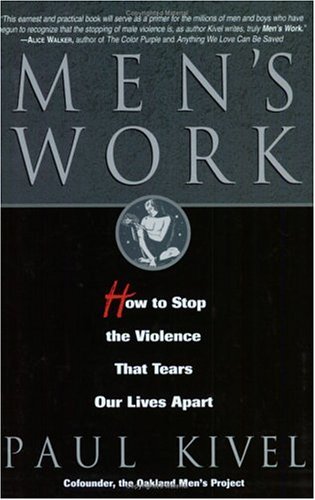
“Men’s Work: How to Stop the Violence That Tears Our Lives Apart.” Paul Kivel, cofounder of the Oakland Men’s project, drew on decades of experience in the movement to end male violence in producing this book that talks about patriarchial male abuse and how men can start to heal. He also addresses the societal aspects of violence engendered by the military, prisons, and capitalism itself.

Posted in RagBlog | Leave a comment

Stayin’ Alive : Learning About our Bodies

Apples and oranges: Rats have substantially different physiological systems.

Stayin’Alive:
What do we know about our bodies,
And how do we know it?

By Mariann G. Wizard / The Rag Blog / February 16, 2009

[Stayin’ Alive is a periodic column on Complementary and Alternative Medicine by Rag Blogger Mariann G. Wizard, a professional science writer with a wide-ranging knowledge of natural health therapies. Readers may suggest topics for future columns; use the Comments section below the article.]

In establishing a self-health care continuum that successfully incorporates both conventional Western medicine (CWM) and complementary and alternative medicine (CAM) elements, the best tool would be a solid understanding of how our own bodies work. Many people believe that they possess such knowledge; many more believe that even if they don’t, their health care provider (HCP) does, or that Medical Science in general must have the facts.

“Nuts!” to all that.

To the contrary, I would venture to say, for example, that most folks’ understanding of their digestive system resembles the indigestion remedy ads of the 1950s: a hole at each end, a long tube connecting them, and a holding tank, or “tummy,” nestled cozily in the middle, where mysterious fluids ebb and flow.

As far as imagining that your HCP has a much better understanding, that is also a dubious assumption. HCPs are highly educated and well-informed about many things, but the how and why of healthy functioning aren’t much stressed in their education; it’s more about how to respond to the illnesses and dysfunctions we all-too-frequently sprout.

As for Medical Science, sometimes it must seem to the attentive reader that we are still living in the Middle Ages, if not Middle Earth! Many amazing things may be seen and “proven” in laboratory (in vitro) studies, where everything happens in a test tube or Petri dish.

In screening labs all over the world, substances are tested for antibiotic, anti-inflammatory, and/or anti-cancer effects, among other actions. Many hundreds of natural substances, most from plants, exert such effects in vitro. Among them, as one small example, rosmarinic acid, from the common herb rosemary, has very potent antibiotic effects in vitro.

However, this has not yet translated into an effective antibiotic medicine.

Similarly, animal tests (in vivo) may illuminate many biologically active substances; however, they are unreliable predictors of how a substance will act on humans. Rodents and rabbits, used in the great majority of in vivo studies, have substantially different physiological systems than humans. The only animals, really, that are close enough to human beings to make in vivo studies reliably predictive of a chemical’s effects on us are other primates: chimpanzees, orangutans, monkeys, etc.

We have no compunction, as a species, about sacrificing hundreds of thousands of rats and rabbits annually in the name of Science, even breeding special research animals who are born with or develop specific disease conditions, e.g., cancer.

Primates, fortunately for them, do not reproduce quickly enough, or in sufficient numbers, to make similar research on them cost-effective, and we may stroke our “humanitarian” side as Masters of Nature, with strict controls on primate medical research, requirements for “humane” treatment, and laws limiting trafficking in their lives, although these latter seem, from preservationists’ reports, to be rather loosely observed in some areas.

The essential irrelevance of animal research to advance Medical Science as applied to humans is probably the strongest argument against such research. A cancer drug that “works” in mice doesn’t necessarily produce the same effects in human beings.

Human clinical research is much more strictly limited, with international protocols and standards of informed consent, exclusion of subjects with certain risk factors, and the option to drop out if a trial medication produces unacceptable adverse effects. Randomized, placebo-controlled human trials (RCTs), the “gold standard” of clinical research that can lead, in the U.S. and in many other countries, to official approval of a new medication, are thus extremely expensive and, as has been pointed out in previous columns, are generally only conducted by pharmaceutical companies seeking approval for a single, newly-synthesized chemical compound for use in a specific condition or conditions.

More and more, as our frontiers of knowledge expand, researchers are better able to see the great unknown in which they operate. Within the human body, thousands of compounds are created, used, activated and de-activated, altered, broken down and disposed of, all without our conscious volition. We are, each of us, amazing biochemical factories. Responses throughout our bodies occur in linked but mutable ways, often involving “cascades” of reactions, like a string of black-cats popping on the 4th of July.

In the U.S., pharmaceutical companies seeking drug approval provide evidence of effectiveness and safety that meets Food and Drug Administration (FDA) standards. And, while there are hundreds of ways to design RCTs, hundreds of different “outcomes” that may be measured, and hundreds of ways to statistically analyze the results, there is no agency blueprint for constructing a study design that would or could apply in every case.

Nor is there any true national or international agenda for research, in terms of priority diseases to combat, or studies that should be conducted. It is all done on a somewhat laissez-faire basis, with scientists trying to research along their own interests, and funders defining those interests with dollars.

By the time Medical Science gets down to the level of a busy CWM practitioner, it is usually in the form of a pharmaceutical company salesman with new drug samples, or a Physicians’ Desk Reference (PDR), with information on every approved drug available, its indications, dosage, and known adverse effects or contraindications.

By the time it gets down to us, the Patient, it’s an advertisement for a new product that promises relief of what ails us; how it works is often the least of our concerns. We simply assume that somebody knows, and take our medicine.

Unfortunately, knowing how a compound behaves toward disease organisms, for example, doesn’t necessarily convey how it behaves toward healthy tissue, or what other effects it may exert over time. The periodic recall of formerly-FDA-approved drugs that have been found, sometimes years later, to cause unacceptable “side effects” is a constant reminder of the huge void in which Medical Science is still but a flickering candle throwing shadows on the walls.

Women’s health

Our slow climb from ignorance to knowledge has hardly been uninterrupted. In 1973, Our Bodies, Ourselves: A Book by and for Women (Boston Women’s Health Book Collective) showed women of all ages with photographs and accurate diagrams of their own intimate body parts and instructions for self-examination that had previously been available, without the straightforward text, only in the rawest men’s sex mags.

[Austin bookseller Susan Post (Book Woman, 5501 N. Lamar, Austin) recommends Our Bodies, Ourselves as a great high school graduation gift. Newer companion volumes cover girls’ and teens’ health issues, pregnancy and childbirth, and menopause.]

For many generations “Nice girls” were strongly discouraged from curiosity about what they looked like “down there,” how the female organs functioned (other than to regularly “bleed”), and, certainly, from knowing how to self-identify and treat common conditions like yeast or urinary tract infections. Breast self-exams? We weren’t supposed to play with the melons, either, especially not rubbing them firmly with soap-slippery fingers in rapid concentric circles!

Yet at one time, worldwide, women were primary keepers of much medical knowledge: herbalists, midwives, wetnurses, gardeners, cooks, preparers of the dead. Man, perhaps because of his interests in hunting and herding, seems historically to have gravitated more towards dentistry, surgery, and bonesetting. However, much herbal knowledge, and common remedies, are shared by both sexes in almost every “primitive” society.

“Witches,” or traditional healers, both female and male, have been persecuted particularly since the rise of Christianity, and continue to be persecuted in Africa today, but what Friedrich Engels called the “world historical defeat of matriarchy” happened long before Jesus’ birth. We won’t go into all that now; it’s too long and sad a tale.

As a result of “all that,” however, health issues specific to women have often been relegated to second-class status in CWM. Even today, women are under-represented in clinical trials, and even in some population-based (epidemiological) studies that track broad health trends.

For example, there are epidemiological studies showing that Asian men who adopt a Western-style diet, both in Asia and in the West, tend to develop Western-style cardiovascular and other problems at a higher rate than those who eat a traditional Asian diet, but little research has asked if the same trend exists in women.

And, while heart disease is the number-one killer of men and women worldwide, it is much more studied in men than in women. Only recently has it been recognized that women’s heart attack symptoms differ substantially from men’s, and that many women’s heart attacks are not recognized as such.

CAM research is a little better. Herbalists frankly acknowledge their debt to “wise women” of past eras. But ethnomedical researchers, seeking new therapeutic compounds and/or practices, tend to focus on interviews and field expeditions with traditional male healers. Unless a female healer is especially renowned, her knowledge is likely to be relegated to the dustbin of “folk or household remedy.”

Some CAM clinical studies, as in CWM, focus on men alone. Of course, there are legitimate reasons for this in some cases — for example, in studying benign prostate hyperplasia (BPH), women participants would have little to contribute — but clinical knowledge tends to build up, over time, more knowledge of men’s health.

However, modern pharmaceutical companies and medical specialists have taken to heart women’s quest for health, and a growing number of products and services are targeted to women consumers. Dear Sisters, please keep in mind that, just because a product’s ads imply that the entire company is founded on love and respect for women, features pink bows, and contributions to women’s health research, that doesn’t necessarily mean it does what it says, or only what it says. Don’t be conned by a cute, savvy marketing campaign.

On a more positive note, a growing body of research shows that the health of any community’s female members is a strong predictor of the health of all. Healthy women tend to produce healthy children and nurture healthy men, boys, and girls.

How others see it

By now, some of my readers are surely bubbling over with vexation at my debunking the infallibility of CWM. “At least,” they may be thinking, “Western science has identified all of the human organs, unlike nonsensical psuedo-systems such as traditional Chinese medicine (TCM)!”

I have to admit, when I first began reading articles on TCM for Austin’s American Botanical Council, I was quite flabbergasted by some of the concepts it involves. The most difficult to swallow was TCM’s apparent ignorance of the stomach and other organs in favor of an “upper burner,” “middle burner,” “lower burner,” etc. I mean, even if the study of anatomy never got around to dissection, any meat-eating society ought to be able to identify a mammal’s “liver and lights,” right?

My bafflement came from looking at TCM with CWM-educated eyes. TCM is, first and foremost, a philosophy of health, in which structure is less important than function, and “balance” between and among an infinite variety of biological events and processes is the essence of health.

In my own crude way, I’ve come to see TCM’s upper burner “organ” as corresponding to the oxygen/carbon dioxide cycle of CWM’s heart, lungs, and circulatory system; the “middle burner” as corresponding to digestion and extraction of nutrients in CWM’s stomach and small intestine; and the “lower burner” as corresponding to the waste removal functions of CWM’s large intestine, kidneys, bladder, etc. I’m probably wrong in the specifics of my grasp. But I’m convinced I’m on the right path!

It’s somewhat analogous, I think, to being able to identify and/or trouble-shoot a carburetor, and being able to identify and/or trouble-shoot an internal-combustion engine. One may lead you to the other, but the other will never lead you to the One!

The tendency to focus on one aspect or effect — to look at one tree instead of the forest — may be the main weakness of CWM as a system of medicine. Laboratory research and RCTs tend to illuminate only a few of what may be many variable effects of a medication. Single-molecule medicines are the standard, with the thousands of molecules present in any herbal remedy, for example, being perceived as potentially problematic rather than potentially synergistic or balancing.

Literally thousands of standard multi-herb formulas are recognized in TCM and in other CAM systems such as India’s traditional Ayurveda (one of several recognized systems of medicine on the subcontinent). These routinely contain at least three different herbs; many boast a dozen or more. Analyzing their effects scientifically presents major challenges, although both China and India are strongly committed to such research, in the hope that some traditional formulas may reward those who can obtain approval for their use on a prescription basis.

Frankly, I can’t help but think that the profusion of multi-herb formulas must challenge TCM practitioners as well. Success demands that they be able to see both the forest of possibilities and the individual “tree” presenting with pain or other symptoms; then to select, and in many cases personalize, the formula that will be most helpful in restoring systemic balance. Tell you what, we’ll see if any practitioners of this fine art can explain it for a future column, OK?

Whoooooo are we? Who, who, who, whooo??

As human beings, most particularly in the West, we learn to see ourselves as unique individuals; each of us a perfect snowflake in the blizzard of life. When we get sick, we become even more determinedly individualistic, each of us asking, “Why me?” Yet there is more and more evidence that our question should be, “Why us?”

For every cell in what you think of as your body, you contain, or carry, ten (10) single-celled organisms: bacteria, fungi, and whatever else is out there in the unicellular universe. And the majority of these are not invaders, parasites, or attackers, but symbiotic organisms without which you could not live, or would experience a far inferior quality of life. (I’ll admit to wondering if that 1:10 ratio is somehow related to the reported “fact” that we use only 10% of our brains. Are our symbiotes using the other 90%??? Goddess, I hope so!)

Really, everybody should know by now about the symbiotic organisms that live in our digestive tracts, performing functions that our bodies cannot perform without their presence. Yet we abuse these little critters unmercifully, eating foods that don’t nourish them, and periodically dosing them with killer chemicals – ANTI-BIOTICS, get it??

After any course of antibiotics, it is both wise and kind to restore one’s natural microflora balance with a course of probiotics. Why aren’t these routinely recommended or even prescribed at the same time antibiotics prescriptions are written? Why doesn’t the pharmacist counsel us to ingest probiotics after the antibiotics are done? The simplest way to support your gut symbiotes is to eat yogurt, and/or other fermented foods with active cultures.

Besides our gut, the skin, our largest organ, is next-most-populated with micro-critters. This was brought home to me forcefully and embarrassingly last summer, when a persistent butt-oriented rash defied a round dozen over-the counter and CAM products, prescribed antibiotics and antifungals, the services of five HCPs, recommended soaps and cleansers, sitz baths, antihistamines, and a recommended herbal tea, and led your humble health writer to the brink of despair; yea, to the brink of triggering her high-deductible health insurance!

Robert W. Cline, M.D., of Central Texas Colon and Rectal Surgeons, in the nicest way imaginable, finally clued me that cleanliness is not next to godliness where the sun don’t shine. I had, you see, been using flushable moist wipes — I told you it was embarrassing! — and was killing off beneficial microflora that are vital to keeping the skin of rectum, anus, and adjoining areas proof against harmful organisms, to which they are routinely exposed in doing their duty.

The wipes I used contained vitamin E and aloe vera – two natural skin protectors – and I’d been using them for quite some time before problems developed, so it didn’t occur to me that I was causing the rash. By depleting my skin’s natural oils, I was depriving my microflora of their habitat. Three days after I stopped using the moist wipes, I could sit down again!

According to Dr. Cline’s “butt lecture,” the cure for 95% of pruritis ani (itchy anus) — is to stop overzealous cleaning. Wash with warm water and pat dry; that’s all ya need.

One problem with this sort of experience is that any number of the remedies I tried may have been sufficient to treat the various infections and what-not I may or may not have had, but I kept on ignorantly repeating the underlying, undiagnosed cause, so none of them had a chance to work.

So, whattaya gonna do?

So, given that human health, disease prevention, and treatment, regardless of which system of medicine one chooses, are full of unanswered questions and unsolved mysteries, how is an average, non-medically educated person supposed to take care of him-or-herself?

First and foremost, know what it feels like to feel your best, and be aware of your own health practices. If you are accustomed to eating whatever you like, and begin to notice frequent indigestion or an unwanted change in your weight, start keeping a detailed food diary, writing down every single thing you eat and any symptoms you experience.

Stay away from foods you suspect may be disagreeing with you and see if symptoms clear up. Allergies to wheat, gluten, milk products, eggs, and other foods may emerge at any age. The very act of keeping a food diary has been found to improve weight control.

On the other hand — and there is always an “other hand” — be aware of what nutrients you may be giving up if you delete a certain food from your diet, and take care to replace it with other foods or supplements. I have what is these days called a lactose intolerance — in my opinion, adult mammals are not meant to drink milk as a beverage! — so I’m careful to get calcium and vitamin D from other sources.

Do you feel less energy than you think you should? Have more insomnia? Unless symptoms arise suddenly or involve pain, I would try to observe and be conscious of possible causes for a couple of weeks, anyway, before visiting a HCP.

Stress — unrelieved activation of a biological response — depletes energy, yet can also cause sleeplessness. Stress contributes to many common illnesses, including heart disease, irritable bowel syndrome, depression, and, probably, cancer. Increasing pleasurable physical activity, getting a therapeutic massage, or giving yourself a long, pampered week-end of rest and wellness can make a strong positive contribution to restoring overall health.

Be aware when stress, changeable weather, air-borne allergens, or other conditions may tax your immune system. I’ve found in recent years that a few cups of tasty echinacea tea, sweetened with honey or agave nectar, really bolster my immune system in cold and flu season.

If a couple of weeks of solid rest, healthy eating, and adequate exercise don’t make a difference in your feelings of well-being, consider having a complete physical exam. Whether by a general practitioner (GP), TCM doctor, naturopath, or other qualified HCP, a complete exam should measure baseline parameters and health status, and identify areas of concern. And we’ll talk more about getting one in yet another future column!

For now, take good care of yourselves!

Image from aussie claus.

Self-health tip:
Miracle cures and fads don’t work

Human beings are funny. We have rational minds, but often ignore what our minds know in favor of what our emotions (or our symbiotes???) desire.

In health care, if it sounds too good to be true, it probably is.

Americans spend millions every year on diet fads, in a vain attempt to shed pounds. Currently, there is only one FDA-approved product for weight loss. It is quite costly, and not reimbursed by insurance plans.

The only proven way to lose weight, and to keep off excess weight, is to consume fewer calories than are expended in activity. Even the new over-the-counter pharmaceutical operates on this principle, preventing digestive absorption of some fat calories.

“Miracle cures” are touted for diabetes, arthritis, cardiovascular complaints, and about every ailment known to mankind, and have been for thousands of years. In general, it’s best to keep in mind that someone who is trying to sell you a product is not the most objective source of information on that product’s efficacy. (To me, a real “miracle cure” would be one without a price tag!)

This same philosophy can be applied to the hoped-for miracle of “health care reform” in the U.S.! There is no quick cure for what ails us. The only way to reduce health care costs, and to keep them down, is to consume fewer acute health care services, preventing serious problems through positive practices.

As the population ages — over 22,000 Americans are now over 100 years of age, with the number increasing every year — preventive health care will become more and more vital to prevent a break-down of the health care system. If we’re going to live to see 100, don’t we want to be healthy as long as possible?

The biggest thing fueling the popularity of “miracle cures,” as well as of proven CAM treatments, is CWM’s lack of success in treating chronic illnesses and disorders. Fact-based research into what works and why could begin to show a way out of the maze of competing claims, but when almost all medical research is funded by pharmaceutical manufacturers, is it any wonder that our most popular medical fads all seem to involve a novel synthetic pill?

As for dietary supplements, there is not any one vitamin, mineral, or herb that can cure the hundreds of conditions for which claims are implied by unscrupulous internet marketers. As we can and really should learn from TCM, Ayurveda, and other non-Western health system, true health rests on balance, and over-reliance on any one substance simply isn’t healthy.

— mgw

The Rag Blog

Posted in Rag Bloggers | Tagged , , , , , | 3 Comments

BOOKS / Men’s Work : Stopping the Violence


Men’s Work:
The movement to end male violence

By Alex Knight / The Rag Blog / February 16, 2010

[Men’s Work: How to Stop the Violence That Tears Our Lives Apart, by Paul Kivel. (Ballantine Books, 2nd Edition, 1998), 382 pp, $14.95.]

Paul Kivel, cofounder of the Oakland Men’s Project, has given all men (and those concerned about them) a tremendous gift in the form of this inspirational book. Valentine’s Day having just passed, this is a good time for us to accept this gift so that we might heal our relationships with the ones we love and with ourselves.

Men’s Work draws on Kivel’s decades of experience in the movement to end male violence, along with his life experiences as a father, son, partner, and friend, to speak about the trauma and feelings of powerlessness men experience in our capitalist, patriarchal society. He describes how men reproduce this system by hurting women, trans folks, children, and themselves.

He explains that this crisis cannot be solved by locking up male offenders, because this will only cause more violence and trauma. Instead, Kivel has devoted his life to helping men understand the roots of their behavior so that they might change, to become more caring and compassionate. One helpful way he approaches these roots is through the “Act Like a Man” box, which shows how patriarchal masculinity limits and hurts men:

Men….. Men are…
yell at people….. aggressive
have no emotions….. responsible
get good grades….. mean
stand up for themselves…. bullies
don’t cry….. tough
don’t make mistakes….. angry
know about sex….. successful
take care of people….. strong
don’t back down….. in control
push people around….. active
can take it….. dominant over women

All men have received this male training, and know that when they step outside these boundaries they will face abuse, scorn, name-calling, accusations of homosexuality or femininity, or violence. The fear of this abuse is ultimately what keeps us inside the Box.

Paul relates,

It is not an irrational fear. This fear in me was built by getting beaten up after school by some older kid in the neighborhood who didn’t like me, by being teased and called names because sometimes I cried after I got beaten up. This fear was built by all the times my dad put me down because I wasn’t good enough in sports., at school, or whatever he decided was the standard that day.”

Hearing a man brave enough to tell these kinds of stories was empowering and validated my own experiences.

The book also includes a wealth of activities that the Oakland Men’s Project developed to help men think about violence, masculinity, abuse, and privilege, so that they might change their behavior. For those who are organizing men’s groups or accountability processes, these activities are fantastically useful examples.

Men’s Attitudes and the Cost to Women:

Stand up silently if you have ever…

  • interrupted a woman by talking louder than she
  • not valued a woman’s opinion about something because she was a woman
  • made a comment in public about a woman’s body
  • discussed a woman’s body with another man
  • been told by a woman that you are sexist
  • been told by a woman that she wanted more affection and less sex from you
  • lied to a woman with whom you were intimate about a sexual relationship with another woman
  • left care for birth control up to the woman with whom you had a sexual relationship
  • used your voice or body to scare or intimidate a woman
  • hit, slapped, shoved, or pushed a woman
  • had sex with a woman when you knew she didn’t want to

There are many more example activities and scenarios that are helpfully fleshed out by real-life experiences of Paul and other men from the Oakland Men’s Project facilitating them in schools, groups of child sex offenders, and elsewhere. This way we get a realistic picture of how difficult, but also inspiring, it is when individual men learn and grow from their experiences.

On the other hand, I think what makes Men’s Work best is that it puts the actions of individual men within a systemic context. We understand that changing individuals’ behaviors, while important, is not enough to end patriarchy as a whole. We also must tackle the violence carried out by institutions such as the military, prisons, and capitalism.

Paul states, “When we advocate local and national politics that encourage war, prevent people from meeting basic needs, or destroy the environment, we are supporting violent behavior.” He also incorporates an intersectional analysis of race, class, sexuality, and age, so that we understand that male violence is not only used to hold up some generic colorless classless patriarchy, but a system that hurts people differently according to where they stand in society.

As feminist men and those working towards gender equality, we need to develop strategies to tackle our own individual patriarchal behaviors and attitudes, while also working against the patriarchal system as a whole. This kind of strategy is not really laid out in Men’s Work, but at least the book provides us a political context in which this work could be possible.

The one major criticism I have of the book is that it’s not inclusive of trans or gender non-conforming issues. The language is limited pretty much to “men” and “women” all throughout. There is also a lot of language that basically assumes heterosexuality, which of course is not inclusive of those of us who are queer or pansexual.

This book was originally written in 1991, and in some ways it seems to still be a part of the “Second Wave” of feminism which viewed “men” as the perpetrators and “women” as the victims of patriarchy. Obviously it is not that simple, because anyone can abuse anyone. As a male survivor of various forms of abuse, I know this firsthand.

Nevertheless, I don’t think this unfortunate limitation prevents Men’s Work or its analysis from remaining useful. The reality is that MOST abuse IS perpetrated by male-socialized people, and therefore men need to step up and take responsibility for ending this abuse.

Perhaps the greatest tragedy in our training is that we literally lost our souls. We became so cut off from our feelings that we no longer connected with other people, with life, or with the natural world. We became protective and controlling, unable to participate in the giving and receiving of love, intimacy, and relationship.

For me what ultimately makes this book necessary is that it talks about how men need to heal. We all suffer tremendously from patriarchy, including men (not more than women or trans folks, just differently), and therefore we all stand to gain from its overthrow. Paul Kivel writes in plain, everyday language that giving up male privilege will benefit men by opening up infinite possibilities, to understand and express emotions, to love, to live without fear and abuse, and to tap into a spiritual wholeness that we yearn for and need.

Thank you, Paul! Check it out, men everywhere!

[Alex Knight is an organizer and writer in Philadelphia. He is currently organizing with Philly Students for a Democratic Society (SDS) and working with others to mobilize Philadelphia for the US Social Forum this June 22-26 in Detroit. He also maintains the website endofcapitalism.com and is in the process of writing a book called The End of Capitalism. He can be reached at activistalex@gmail.com]

The Rag Blog

Posted in Rag Bloggers | Tagged , , , , , | 1 Comment

Nation’s Biggest Polluter : Texas Sues the EPA!

Houston: Texas likes its greenhouse gases. Photo by David J. Phillip / AP.

Protecting the corporate interests:
Texas sues EPA over greenhouse gas regulations

By Ted McLaughlin / The Rag Blog / February 16, 2010

There is no doubt at all that the state of Texas is by far the biggest polluter in the United States. It is such a bad polluter that it makes other large state polluters like California, New York, Ohio, and Illinois look like paragons of cleanliness by comparison. In fact, if Texas were a country it would be the seventh largest polluter in the entire world.

For the eight environmentally devastating years of the Bush administration, Texas had a protected status thanks to Texan George Bush and pseudo-Texan Dick Cheney. They refused to let the Environmental Protection Agency (EPA) declare greenhouse gases as pollution or put any kind of onerous restrictions on Texas polluters. But with the election of Barack Obama that has changed.

Last year, the EPA finally came to its senses and declared greenhouse gases to be pollution. That means their production can now be restricted and the EPA can finally take serious steps to clean up the massive pollution problem in Texas.

This gave the state leadership in Austin a choice. They can act in concert with the EPA and actually make Texas a safer and healthier place for its citizens (especially children with conditions like asthma) and provide a better future for the country and world by controlling and cutting back on greenhouse gases. Or they can fight the ruling and protect corporate polluters.

To anyone familiar with the state’s Republican leadership, it was certainly no mystery which choice the state would make. A quick look at how ineffective and utterly useless the Railroad Commission (which controls oil and gas production) and the Commission on Environmental Quality (which controls other pollution, including radioactive waste) are would tell anyone what the answer would be.

Texas Republican leaders, from the elected officials to those appointed by them, were long ago bought and paid for by the corporations. They are always going to act to protect the corporate polluters, regardless of how much that destroys the quality of life for ordinary citizens.

On Tuesday, Governor Rick Perry, Attorney General Greg Abbott, and Agriculture Commissioner Todd Staples once again pledged their fealty to their corporate masters by announcing they had filed suit against the EPA to overturn the greenhouse gases decision. These global climate change deniers say the EPA decision is based on “bogus conclusions” and would cause “billions of dollars of economic damage in Texas.”

Governor Perry declared, “The EPA’s misguided plan paints a big target on the backs of Texas agriculture and energy producers and the hundreds of thousands of Texans they employ.” The governor would like for everyone to believe that the poor energy producers would go out of business and cost Texas thousands of jobs if they had to clean up the pollution they are currently filling the air with.

That’s a ridiculous assertion. These are the same corporations that are reaping record windfall profits in the middle of a serious recession. They can easily afford to use cleaner technologies and renewable energy sources. In addition, moving to greener energy would undoubtably create many more jobs than the clean-up would cost.

The environmental groups Public Citizen and the Sierra Club have delivered a symbolic “citizen citation” to Governor Perry, demanding that he “cease and desist endangering the health of breathers, the economy and the climate in Texas.” While I approve of their action, I doubt it will have much effect on the state’s Republican leaders.

I enjoy political theater as much as anyone, but what is really needed is to replace these Republican leaders with Democrats in the coming general election. I’m not sure replacing Perry with leading Democrat Blue Dog Bill White will do much good, since he is a corporate-owned conservative in Democratic clothing, but replacing others could do a lot of good.

This nonsensical lawsuit could be stopped by replacing the Attorney General with Democrat Barbara Radnofsky, and replacing the Agriculture Commissioner with either Kinky Friedman or Hank Gilbert — all of whom are progressives who will fight to clean up the Texas environment (and Texas politics).

I wish I could say there’s a good chance of that happening this November, but I don’t think there is. In the last couple of decades, Texas voters have proven to be easily deluded by the Republicans. Republicans know they can get most Texas voters to vote against their own interests by addressing fringe issues that don’t really affect most Texans but appeals to their bigotry (homosexual, minority, and immigrant rights) and their religious fundamentalism (gay and lesbian marriage, prayer in schools, and intelligent design).

I’m afraid we’re probably going to have to rely on the courts to rein in the corporate polluters, and that’s not good news either. I expect the state (and the polluters) will appeal all the way to the Supreme Court. That conservative court has already declared the corporations to be “people” with the right to spend as much as they want in political campaigns to protect their interests. From there, it’s just a small step to giving them the right to pollute as well.

I wish I could be more positive about this issue, but frankly the future looks pretty dim for citizens and the environment and very bright for the corporate polluters.

[Rag Blog contributor Ted McLaughlin also posts at jobsanger.]

The Rag Blog

Posted in Rag Bloggers | Tagged , , , , , , , | 2 Comments

Ray Reece : A Luddite’s Prayer to Gaia

“Space Junk” by Todd M. Bacastow / academics.uww.edu.

Stop the (lunar) madness:
A Luddite’s prayer to Gaia

By Ray Reece / The Rag Blog / February 16, 2010

In the New York Times Online of 11 February, columnist Ross Douthat writes disapprovingly in his blog of his suspicion that Barack Obama is hellbent on terminating the U.S. “manned spaceflight” program administered by NASA. He quotes a chap named Christopher Caldwell to the effect that the “decision to abandon moon exploration has ‘decline’ written all over it.” Meaning the decline of the American empire.

Douthat bitterly adds that “the decision in question belongs to all of us, and not just to Barack Obama. The administration wouldn’t be cutting the manned spaceflight program if Americans were still enthusiastic about going to the stars — if space exploration still occupied a privileged place in our imagination, if our jocks still wanted to be astronauts and our nerds still wanted to build rockets. Obama is simply bowing to our culture’s priorities.”

I was so thrilled by this speculation that I fired off a comment on Douthat’s post. I saw the next day that my comment was #83 out of 87, and not a single reader had “recommended” it. Thus did I taste oblivion again as a sender of dispatches to America’s media paragons. And I asked myself: Is it not for such reasons as this that we freethinkers and malcontents have brave new alternatives like The Rag Blog? I offer herewith my slightly edited comment on Ross Douthat’s post that day.

A few months ago, when NASA divulged its intent to resurrect its manned lunar program, indeed to establish a permanent humanoid “colony” on the moon, I gnashed my teeth and rent my clothes. I had the same reaction to photos I saw of a dust plume rising from the spot on the moon where NASA deliberately crashed a toxic rocket, ostensibly in search of ice on the moon, i.e. water, wherewith to quench the thirst of the future colonists.

The prospect of NASA’s humanoids setting their leaden feet on Mars is equally repugnant to me. I pray to Gaia, the Greek goddess of the biosphere, that Ross Douthat is correct in his assumption that the U.S. manned spaceflight program is now in its death throes. I pray to Gaia that Russia and China don’t scramble to fill the void. I pray to Gaia that the “space tourism” enterprises of ego-maniacs like Richard Branson crash on the rocks of global economic contraction.

The launching of humanoids into space, starting with Sputnik in 1957, has always been above all a manifestation of Homo sapiens’ insatiable lust to dominate, intimidate and conquer. Likewise, most of NASA’s criminally expensive efforts in space have simply been extensions of the same American imperialist impulse that wiped out the Indians, enslaved the Africans, incinerated the Japanese at Hiroshima and Nagasaki, killed 2 million Vietnamese a couple decades later, invaded Iraq on the warpath to oil reserves, and led the way in laying waste to so much of planet Earth and its biosphere that the survival of Homo sapiens itself is now in question.

Withal, I pray to Gaia that Barack Obama’s attempt to phase out NASA’s manned spaceflight program, if that’s what he’s doing, will be but the first of many steps toward a healthier, saner, more civilized world. Instead of gigantism, like the idiotic “space shuttle,” let there be human scale. Instead of arrogance, let there be humility. Instead of bluster and hubris, let there be quiet reverence for all living things. Instead of competition and conquest, let there be fellowship, let there be sharing, let there be love and peace in the universe.

[Ray Reece is affiliated with the World Coalition for Local and Regional Self-Reliance. He is a former columnist for The Budapest Sun and author of The Sun Betrayed: A Report on the Corporate Seizure of U.S. Solar Energy Development, among other published works. His most recent book is Abigail in Gangland, a novel. He is currently based in Cagli, Italy.]

The Rag Blog

Posted in Rag Bloggers | Tagged , , , | 2 Comments

The Health Care Wars : Viewing the Battlefield

From the teabag front: A resident of south Florida holds a sign protesting health care reform. Photo by Carlos Barria / Reuters.

The health care fight goes on:
Teabaggers, downsizing, and the ‘Party of No’

By Dr. Stephen R. Keister / The Rag Blog / February 15, 2010

The AP recently reported that the Democrats are discussing a smaller health care bill. The Massachusetts senatorial election has given our elected representatives an opportunity to reflect and perhaps consider a more concise, more progressive, health care bill — especially considering that many in the House take strongs issue with the Senate’s legislative monstrosity.

Rep. Jackie Spier, D-Calif., describes the Senate bill as “toxic.” It’s a bill that could easily have been written by the Republican Party in deference to their corporate supporters. It was, of course, sponsored and voted for by a group of cowardly Democrats who place their relection above the needs and desires of their constituency.

In the meantime we can step back and view the battlefield. Foremost in the public view at the moment are the teabaggers, who follow their corporate-financed pied pipers at every turn. I have had conversations with several Europeans who are thunderstruck by the antics of these folks. I am asked, “Where but in America would masses of people publicly exhibit such pride in their ignorance?” I have been tempted to answer with the words of Pascal:

Man would fain to be great and sees that he is little; would fain to be happy and sees that he is miserable; would fain to be perfect and sees that he is full of imperfections; would fain be the object of love and esteem of men, and sees that his faults merit only their aversion and contempt. The embarrassment wherein he finds himself produces in him the most unjust and criminal passions imaginable, for he conceives a mortal hatred against that truth which blames him and convinces him of his faults.

Instead, I merely point to the puerile, testosterone driven commercials shown during the Super Bowl Game. The agencies that produce these horrid ads must imagine the average I.Q. of the viewer to be in the low 80s. Sadly, perhaps they are right.

The game goes on with President Obama’s scheduled “open” meeting with the Republicans regarding health care — if they accept his invitation to appear on CSPAN. We only hope that the President will be resolute and open with the “Party of No” rather than once again descending to the absurdity of “bipartisanship” with the demagogues who are out to destroy his presidency.

Hopefully, he and his staff will finally remember that the people elected him to represent their interests and not those of the corporations. And hopefully, Mr. Obama will give unqualified support to the labors of the House of Representatives, and will include a “Medicare for All” option. Looking back in time, it took courage and foresight for the people’s representatives to pass the Social Security and Medicare bills. But then, they did not cower like whipped dogs or pay deference to the blue dog-types. Instead, they followed their moral and ethical beliefs.

Of course, the Republicans would love to do away with these programs in the name of “fiscal responsibility.” The American people did not elect Obama and a progressive Congress to merely defer to every wish of the Liebermans, the Bayhs, and the Lincolns. Yes, we might lose the final vote but it will show the American people who their representatives are and which of our Senators and/or Representatives are in Washington to accept baksheesh from their corporate sponsors.

The Raw Story reported that the Democrats might even be ready to drop the proposed ban on pre-existing conditions, making such a provision only applicable to those under the age of 19. This would further weaken the farcical Senate bill which at least now provides insurance for those with pre-existing conditions — but at three times the cost of those not so judged. Remember, as well, that the Senate Bill provides financing by taxing the middle classes, rather than the wealthy, and that much of the coverage will not take effect for 3-4 years.

Recent polling by Health Care for America Now, as reported by The Huffington Post, showed that 64% oppose a mandate requiring the purchase of PRIVATE insurance, as is included in the Senate bill; however, 60% support a mandate if it allows for the purchase of private OR public insurance. 63% of likely voters supported an option to buy into a government-run Medicare-like program. Even 23% of Republicans approved of such plan.

Once again I must stress that most of the discussion about health care reform has largely excluded the physicians; our political leaders have not listened to those who actually care for the sick, instead paying deference to the health insurance and pharmaceutical industries. Some might counter that the AMA was consulted. But I will again point out that the vast majority of physicians are not affiliated with the AMA, which traditionally has represented the interests of the pharmaceutical and insurance industries.

I recommend that everyone read a letter from Quentin Young of the Physicians for a National Health Program that was distributed by Common Dreams, written from the viewpoint of the physicians. Dr. Young discusses at length the need for Medicare for All. And it is important — as has been emphasized by the American College of Physicians — that any proposed bill, as well as the Medicare budget, provide for adequate fees for primary care physicians, including general practitioners, internists, and pediatricians.

As to the bogus abortion issue, I have followed Physicians for a National Health Program since their founding in 1988. Never in their literature have I seen the word “abortion” mentioned in any context. PNHP has been purely interested in addressing physical and emotional illnesses like cancer, heart disease, diabetes, and pneumonia. Any health care bill should be written to provide for the ill and the infirm. Let us consider the contentious issue of abortion in another forum and not allow it to distract from the very real and pressing matters at hand.

On the reform scene, there has been encouraging news and discouraging news. The California and Connecticut legislatures passed bills providing for universal health care within their states; however, in each instance a Republican governor has overturned the public’s will by vetoing the legislation. Pennsylvania appears on the brink of passing a universal health plan — the Democratic State Committee unanimously approved such — and there appears to be support in the state legislature and Governor Rendel has indicated he will sign it.

The fight for real health care reform goes on; there is still have much work to be done.

[Dr. Stephen R. Keister, a regular contributor to The Rag Blog, lives in Erie, PA. He is a retired physician who is active in health care reform.]

The Rag Blog

Posted in Rag Bloggers | Tagged , , , | 2 Comments

Dick J. Reavis: ‘Catching Out’ in the Secret World of Day Laborers

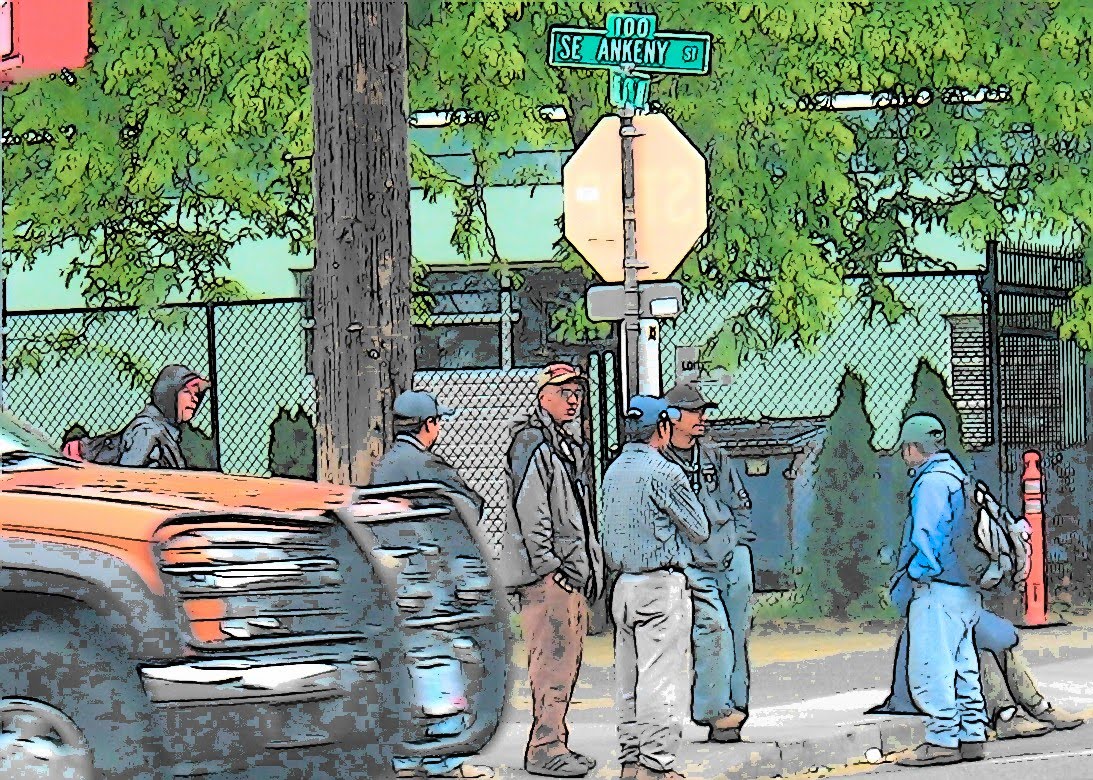
Image from Portland Indymedia.

Researching my new book on the job:
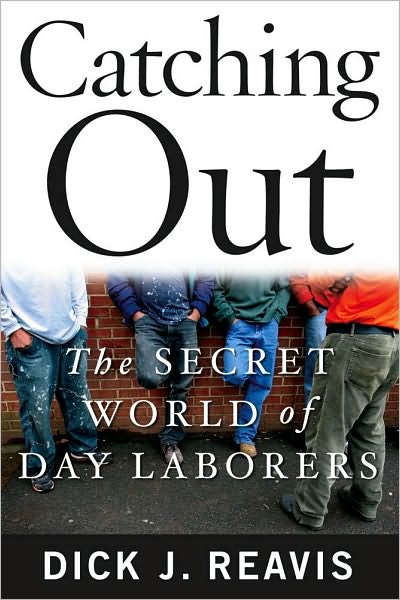
Catching Out: The Secret World of Day Laborers

By Dick J. Reavis / The Rag Blog / February 15, 2010

Author/activist/educator and Rag Blog contributor Dick Reavis will be Thorne Dreyer’s guest on Rag Radio, Tuesday, February 16, 2-3 p.m. (CST) on KOOP 91.7 FM in Austin. For those outside the listening area, go here to stream the show.

They will discuss Dick’s new book, Catching Out: The Secret World of Day Laborers, and his earlier book — Ashes of Waco: An Investigation — about the assault on the Branch Davidian compound in Waco. They will also talk about Dick’s experiences in the Sixties when he was active in the civil rights movement and with the Students for a Democratic Society (SDS), and wrote for Austin’s undergound newspaper, The Rag.

On a blazing and humid day about 18 months ago I was working on a day labor crew. Five of us from the day labor hall and two guys from a landscaper’s regular crew were digging up dead yellow sod and putting down new green sod in the expansive backyard of a million-dollar home.

We were thirsty. One of us, a young black man whom I’ll call Maceo, asked the boss man to bring a water cooler.

“But where will I get it?” the landscaper asked.

“At Lowe’s!” Maceo exclaimed!

The boss man complied, after a fashion. He left and came back in about an hour with a cooler. It was filled with lukewarm water. We were thirsty. All of us gathered around.

Maceo took a taste and demanded ice.

The boss man reached for his cell phone, called the labor hall and said that he was firing Maceo.

That didn’t seem fair to me. The kid was only demanding what every outdoor worker needs in the broiling sun: cool, clear water.

I looked at my peers. No hierarchy existed among us, but one of our number, who we called “Real Deal,” stood out as our leader. He could out-booze and outwork all of us, and he had been “catching out” at the labor hall for 11 years — longer than anyone, even its managers. I knew that if Real Deal threw down his shovel, we’d all join in. If also knew that if I — the only white on the crew and a worker with frailties so notorious that I’d been nick-named “Pops” — did it, I’d be alone.

Real Deal had led a spontaneous rebellion on a construction site about a month before, and I knew he could do it again.

But for reasons I couldn’t discern, he didn’t throw down his shovel that morning. Maybe it was because the owner of the house had given him some Ibuprofen. Strong as he was, Real Deal’s back hurt, too.

The water cooler tale is one of the day-on-the-job stories — not exactly about class struggle! — that I tell in my book, Catching Out: The Secret World of Day Laborers, which goes on sale Tuesday, February 16. Every page is about the daily life of the some two to three million men and women who go to labor halls — with names like Able Body and Labor Nation — each morning, hoping to “catch out,” or be dispatched to a job. Sometimes the jobs are good for six months, but more often, they last only a day or two.

I am a former reporter, now turned professor. I started my day labor career at 62, mainly because it looked to me like when I retire — if ever that day comes! — I’ll be a few dollars short. I’d done day labor when I was younger and I had enjoyed it because dispatchers had sent me onto sites and into shops and trades that I’d otherwise have never known. I’d have been ignorant about how blue-collar workers live, and as Marx said (though I can think of a few exceptions), “ignorance never helped anybody.”

By the time I finished two summers on my day labor crew, I knew that the notes I’d taken would make a book, and I believed it should be written. We as a nation waste millions of words a year on celebrities, sports stars, and lying politicians, but nobody had ever written a book about the lives of Americans like the honest, if sometimes unmanageable, men and women with whom I had spent working days.

I am now 64 and I think it’s prudent to presume that this will be my last book. It certainly will be the only one I write about day labor. Most manual workers develop either back or knee troubles, or both, in their 50s, and the result is that by 60, they hurt too much for strenuous tasks. I was able to join them thanks only to my relatively benign white-collar past. When my former labor peers turn 55 and 60, unless they can qualify for disability payments — only 40 percent of applicants do — they’ll will have to wait longer than me to retire, even to a precarious old age.

This is life in the United States, a country in which most people believe that manual labor is boring, repetitive, and unskilled, undeserving of handsome pay and company-sponsored old age programs. My book tells a lot of stories which I think are interesting in themselves, but if it has a message, it is only this: all of that stuff that people believe about blue-collar workers ain’t true.

[A native Texan, Dick J. Reavis teaches journalism at North Carolina State University. An award-winning journalist, educator and author, Reavis was active with SDS and the New Left in the Sixties. He wrote for Austin’s underground newspaper, The Rag, and later was a senior editor at Texas Monthly magazine. His book, The Ashes of Waco: An Investigation, about the siege and burning of the Branch Davidian compound, was published by Simon and Schuster and may be the definitive work on the subject. His latest book is Catching Out: The Secret World of Day Laborers.

Dick will read from and sign copies of Catching Out at MonkeyWrench Books in Austin at 7 p.m., Saturday, Feb. 27, and at Sedition Books in Houston at 7:30 p.m. on Sunday, Feb. 28.]

Catching Out: The Secret World of Day Laborers by Dick J. Reavis; Simon & Schuster, $23.99; 352 pp.

Though a writer and English professor by trade, [Dick] Reavis found himself taking on the role of a day laborer to help supplement his retirement and savings. Appearing at the local labor hall to “catch out,” that is, get picked for a job, Reavis, who wrote about illegal immigrants in his first book, Without Documents, becomes one of the millions of Americans who work all manner of manual labor gigs and are, economically and socially, “living on the edge,” as he lugs boxes, digs ditches, and hauls debris with fellow workers.

Despite each of the jobs being unrelated, the book is held together by Reavis’s central focus on the plight of a working class that has no health insurance, for the most part must rely on others for transportation, and, in many cases, may not even have a home to return to at the end of a long day. Also to his benefit, Reavis allows his colleagues — hard drinkers like Real Deal, shirkers like Tommy, softies like Office Skills, and hard workers like Sung — to take center stage in his tales, which run the gamut from humorous to heartrending.

This ability to bring the small successes, daily struggles, and measured dreams of these “down-at-heels” working stiffs makes the book’s final chapter, in which Reavis outlines the legal and economic reforms needed to help day laborers get fair wages and treatment, overwhelmingly persuasive.

Publisher’s Weekly / November 30, 2009

The Rag Blog

Posted in Rag Bloggers | Tagged , , , , , , | 2 Comments

Messina Earthquake of 1909 : The U.S. and the ‘Great White Fleet’

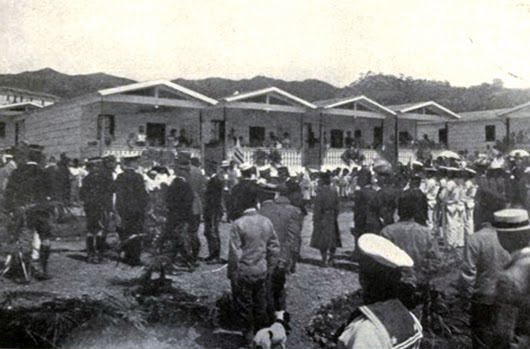
“The Great White Fleet” Comes to the rescue in Italy, 1909.

American ships, sailors and soldiers:
A history of sea power and disaster relief

By Larry Ray / The Rag Blog / February 14, 2010

America’s leading role in emergency assistance following last month’s devastating earthquake in Haiti and the huge numbers of U.S. Navy ships, sailors, and soldiers sent to help has been lauded worldwide.

But there is always one critical jackass who gets it all wrong and tries to take the good guys to task.

The jackass in this case is a well known Italian politician, Guido Bertolaso. He is Italy’s national civil defense director and their special envoy to Haiti. A few days after the Haiti quake Mr. Bertolaso made a quick visit and immediately issued scathing criticism of the effectiveness of the entire relief effort to the international press before his superiors could call him quickly back home.

He particularly singled out the U.S.-led efforts calling them a “pathetic” failure. His blistering remarks included an observation that America, “… when confronted by a situation of chaos, tends to confuse military intervention with what should be an emergency operation, which cannot be entrusted to the armed forces.”

You bet Guido. You seem to know even less about your own country’s history than many politicians your age here in America know about ours. The irony is that you must have missed reading about the big historic commemoration in Italy in 2009 recognizing relief efforts for a terrible Italian earthquake in 1909.

The huge celebration singled out America and its military for our help and generosity in Messina 100 years ago. You know, Messina, Guido, down in Southern Italy? Coverage of the celebration was in all the Italian newspapers.

So, here’s a quick history lesson for everyone about the effectiveness of the American military in earthquakes. I found a scholarly article by Prof. Jeff Matthews, an expat scholar, historian and teacher who has lived with his wife in Naples, Italy for decades. His English language, web based, “Around Naples Encyclopedia,” has a worldwide following.

His latest article, reprinted below, spurred me to report on this historic connection between today’s American military help in Haiti and our much earlier help in Italy.

Mr. Bertolaso’s own government has loudly denounced his wrong-headed criticisms of the USA. Perhaps they can get him to bone up on things like the history below. . . before he heads out again as their international envoy, civil defense expert and spokesperson.

American relief troops in Messina, Italy, 1908.

The Great White Fleet and the Messina earthquake

On July 27, 1909, the New York Times reported that “The first baby born in a new house in Messina was named Theodore Roosevelt Lloyd Belknap Palmieri!” This was Mr. & Mrs. Palmieri’s tribute to those American politicians and diplomats who had organized the relief effort in aid of the city of Messina, Italy, devastated by a powerful earthquake on the morning of December 28, 1908.

The quake killed about 60,000 people and destroyed much of the city. (Some estimates of the number of dead are as high as 200,000.) In the months following the quake, U.S. aid was considerable and — to explain the “new house” in the above quote — included the building of 1,500 frame houses. The rest of the name: Teddy Roosevelt was U.S. president at the time of the quake; Lloyd C. Griscom was the U.S. ambassador to Italy; and Reginald Rowan Belknap was the US Naval Attaché in Italy. [See American House Building In Messina And Reggio: An Account Of The American Naval And Red Cross Combined Expedition (1910) by Reginald Rowen Belknap, pub. G. P. Putnam’s Sons, New York and London.]

One of 1,500 sturdy wooden frame homes built in Messina with U.S. aid.

The early aid was immediate and direct. It came in the form of ships from the U.S. Great White Fleet, which was circumnavigating the globe and, at the time of the quake, found itself in the “home stretch,” as it were, of a cruise of 43,000 miles — 16 modern warships, employing 15,000 men — in a brash display of young U.S. sea power.

The cruise lasted from December 1907 through February 1909 and was under the command of Admiral Charles S. Sperry. The Great White Fleet went from Hampton Roads, Virgina, around South America and up to San Francisco; then, across the Pacific to Australia, the Philippines and Japan, and then across the Indian Ocean, through the Suez Canal, west across the Mediterranean, through the Straits of Gibraltar and back home across the Atlantic.

The fleet was in Egypt when it received news of the Messina earthquake. The flagship, Connecticut, with support vessels, arrived in Messina on January 9, 1909, with thousands of pounds of food, medicine and temporary shelters for survivors. About 17,000 persons were pulled from the rubble, their lives saved by the heroic efforts of the combined search and rescue crews of the U.S. ships and of vessels of other nations that were near Messina at the time of the quake.

The U.S. ships docked at the port of Naples during operations, and their presence is noted in the January issues of il Mattino, the Naples daily newspaper. The fleet stayed until late January and then left for home. In January, 2009, 100 years after the fact, ceremonies were held in Messina to commemorate the international effort that helped the city through the tragedy. I really do wonder what happened to Theodore Roosevelt Lloyd Belknap Palmieri. I hope he had a fine life.

— Jeff Matthews / Around Naples Encyclopedia

[Retired journalist Larry Ray is a Texas native and former Austin television news anchor. He also posts at The iHandbill.]

The Rag Blog

Posted in Rag Bloggers | Tagged , , , , , | 2 Comments

Marc Estrin: Hearts and Minds : A Valentine’s Day Love Offensive

Israeli school children are shown writing messages on shells meant for targets in Lebanon. The incident took place July 17, 2006, near the northern Israeli border. The messages reportedly included hearts, a star of David, and the words “From Israel with Love.” Photo from AFP.

Hearts and flowers, hearts and minds:
Valentine’s Day love offensive

By Marc Estrin / The Rag Blog / February 14, 2010

Today is February 14th, so let me wish you a happy Firebombing of Dresden Day… whoops, no, I meant to say Valentine’s Day, and I hope you all have sent your sweeties messages that will win over their hearts and minds.

That’s what this lovely young Israeli girl is doing for her Lebanese friends. “From Israel with love,” she is writing. That’s what Gen. Stanley McChrystal is currently doing in Marjah as you read. His 15,000 troops have blocked off all roads so that no messages will get lost, and pre-valentines have been dropped instructing the population not to try leaving.

The idea behind this largest love-offensive in a decade is to win the hearts and minds of the local Afghanis, so that the Taliban can be replaced with democratic leaders sent in from Kabul. Even Hallmark couldn’t match that.

And speaking of Dresden, I’m sure many of you have read Kurt Vonnegut’s masterpiece, Slaughterhouse Five. If not, grab a copy right away. You won’t forget it. It’s a riot.

But even Kurt — who was there — didn’t really understand why all those people were getting burned and suffocated to death. An excellent article backgrounding the affair appeared recently on the Global Research website.

It seems there was almost no military necessity for this enormous operation by February, 1945. Rather, the barbarous wiping out of the population was directed at our allies, the Soviets, to warn them not to get too uppity with their post-war victor claims. The Russkis needed to witness the application of this kind of air-strike by the US and Britain which could just as easily be turned on them.

Six months later, the US alone would put on a similar show at Hiroshima and Nagasaki. The cover story would be the same — we need to do this to end the war — like the massive final blasting at our own fireworks displays. But the real story (victims aside) was to intimidate our Soviet friends with our love-power and solidarity.

Hearts and flowers, hearts and minds. May our beloveds beware.

[Marc Estrin is a writer and activist, living in Burlington, Vermont. His novels, Insect Dreams, The Half Life of Gregor Samsa, The Education of Arnold Hitler, Golem Song, and The Lamentations of Julius Marantz have won critical acclaim. His memoir, Rehearsing With Gods: Photographs and Essays on the Bread & Puppet Theater (with Ron Simon, photographer) won a 2004 theater book of the year award. He is currently working on a novel about the dead Tchaikovsky.]

The Rag Blog

Posted in Rag Bloggers | Tagged , , , , , , | 1 Comment

VERSE / Larry Piltz : You Asked Us To Believe

“Library” by Bernard Zackheim, 1933. Detail from a mural at the Coit Tower in San Francisco. It was part of a series of murals produced under the auspices of the New Deal’s Public Works Art Project. The massive effort stirred up controversy due to the inclusion by some of the 26 participating artists of what were interpreted as leftist images.

You Asked Us To Believe
(Oh Yes You Can)

Fear Wins read the headlines
on the papers on the windows
as the sun rose on the anger
of a nation at the headlines

Where’s the savior who’s in favor
of the humans and the being
and the freeing of the nation
from the bread lines and their danger

There’s a moment in the waiting
in the hoping amid the wondering
when time turns into motion
into the surge of a mighty ocean

Hear me now
you asked us to believe
in something more
than what we thought we could achieve
so we carried you
right through that open door
into the sun
now please don’t make us grieve
that open door
we can do more
you asked us to believe
we can do more
so hear me now
oh yes you can
oh yes we can
we can do more

It’s been an eon in the making
and we’re tired of fear and quaking
when time stops but for its moment
to observe just what will foment
what will you do for the people
you of the people
you by the people
will you mount up
or preach a sermon
when the people
are called vermin
cause they’re hungry
and they’re desperate
will your peace
be one that’s separate

There’s a champion in the headlines
in the bread lines in the life lines
with a deadline and a dateline
but whose dream will be the byline
will Love Wins read the headlines
in the sunshine will it be mine
and the nation’s claim to glory
when history writes its story

So hear us now
you made the world believe
in something more
that it’s dreamt it can achieve
we’ll carry you
push right on through that door
it can be done
so help us celebrate
that open door
we can do more
oh yes you can
oh yes we can
you’ve helped us to believe
we can do more
Oh yes you can
Oh yes we can
right through that open door
we can do more
Oh yes we can

Larry Piltz / The Rag Blog

Indian Cove
Austin, Texas
February 13, 2010

[Note: This poem is a song.
Anyone capable of helping
get it produced and recorded
please speak up in the comments.
Thanks. – L.P.]

The Rag Blog

Posted in Rag Bloggers | Tagged , , , , , | 1 Comment

The Christian Right : Our Founding Fathers Would be Appalled

George Washington, the Father of our Country, is memorialized in marble — totally ready to toga — on the U.S. Capitol grounds (circa 1899). The statue is now in the Smithsonian. Photo from the Library of Congress / Boston College Magazine.

Today’s Christian fundamentalists would have
Despised Washington, Franklin, and crew

By Harvey Wasserman / The Rag Blog / February 13, 2010

“God made the idiot for practice, and then He made the school board.” —Mark Twain

Tomorrow’s New York Times Sunday Magazine highlights yet another mob of extremists using the Texas school board to baptize our children’s textbooks.

This endless, ever-angry escalating assault on our Constitution by crusading theocrats could be obliterated with the effective incantation of two names: Benjamin Franklin, and Deganawidah.

But first, let’s do some history:

  1. Actual Founder-Presidents #2 through #6 — John Adams, Thomas Jefferson, James Madison, James Monroe and John Quincy Adams — were all freethinking Deists and Unitarians; what Christian precepts they embraced were moderate, tolerant, and open-minded.
  2. Actual Founder-President #1, George Washington, became an Anglican as required for original military service under the British, and occasionally quoted scripture. But he vehemently opposed any church-state union. In a 1790 letter to the Jews of Truro, he wrote: The “Government of the United States, which gives to bigotry no sanction, to persecution no assistances, requires only that they who live under its protection, should demean themselves as good citizens.” A 1796 treaty he signed says “the government of the United States of America is not, in any sense, founded on the Christian religion.” Washington rarely went to church and by some accounts refused last religious rites.
  3. Washington was also the nation’s leading brewer, and since most Americans drank much beer (water could be lethal in the cities) they regularly trembled before the keg, not the altar. Like Washington, Jefferson, and Madison, virtually all American farmers raised hemp and its variations.
  4. Jefferson produced a personal Bible from which he edited out all reference to the “miraculous” from the life of Jesus, whom he considered both an activist and a mortal.
  5. Tom Paine’s Common Sense sparked the Revolution with nary a mention of Jesus or Christianity. His Deist Creator established the laws of Nature, endowed humans with Free Will, then left.
  6. The Constitution never mentions the words “Christian” or “Jesus” or “Christ.”
  7. Revolutionary America was filled with Christians whose commitment to toleration and diversity was completely adverse to the violent, racist, misogynist, anti-sex theocratic Puritans whose “City on the Hill” meant a totalitarian state. Inspirational preachers like Rhode Island’s Roger Williams and religious groups like the Quakers envisioned a nation built on tolerance and love for all.
  8. The U.S. was founded less on Judeo-Christian beliefs than on the Greco-Roman love for dialog and reason. There are no contemporary portraits of any Founder wearing a crucifix or church garb. But Washington was famously painted half-naked in the buff toga of the Roman Republic, which continues to inspire much of our official architecture.
  9. The great guerrilla fighter (and furniture maker) Ethan Allen was an aggressive atheist; his beliefs were common among the farmers, sailors, and artisans who were the backbone of Revolutionary America.
  10. America’s most influential statesman, thinker, writer, agitator, publisher, citizen-scientist and proud liberal libertine was — and remains — Benjamin Franklin. He was at the heart of the Declaration, Constitution, and Treaty of Paris ending the Revolution. The ultimate Enlightenment icon, Franklin’s Deism embraced a pragmatic love of diversity. As early America’s dominant publisher he, Paine, and Jefferson printed the intellectual soul of the new nation.
  11. Franklin deeply admired the Ho-de-no-sau-nee (Iroquois) Confederacy of what’s now upstate New York. Inspired by the legendary peacemaker Deganawidah, this democratic congress of five tribes had worked “better than the British Parliament” for more than two centuries. It gave us the model for our federal structure and the images of freedom and equality that inspired both the French and American Revolutions.

It’s no accident today’s fundamentalist crusaders and media bloviators (Rev. Limbaugh, St. Beck) seek to purge our children’s texts of all native images except as they are being forceably converted or killed.

Today’s fundamentalists would have DESPISED the actual Founders. Franklin’s joyous, amply reciprocated love of women would evoke their limitless rage. Jefferson’s paternities with his slave mistress Sally Hemings, Paine’s attacks on the priesthood, Hamilton’s bastardly philandering, the grassroots scorn for organized religion — all would draw howls of righteous right-wing rage.

Which may be why theocratic fundamentalists are so desperate to sanitize and fictionalize what’s real about our history.

God forbid our children should know of American Christians who embraced the Sermon on the Mount and renounced the Book of Revelations… or natives who established democracy on American soil long before they saw the first European… or actual Founders who got drunk, high, and laid on their way to writing the Constitution.

Faith-based tyranny is anti-American. So are dishonest textbooks. It’s time to fight them both.

[Harvey Wasserman’s History of the United States is at www.harveywasserman.com, along with Passions of the Potsmoking Patriots by “Thomas Paine.” This article is written in honor of the spirit of Howard Zinn.]

The Rag Blog

Posted in Rag Bloggers | Tagged , , , , , , , , | 5 Comments