
 Thanks to Karen Lee Wald / The Rag Blog
Thorne Webb Dreyer, Editor

RECENT POSTS
Thanks to Karen Lee Wald / The Rag Blog
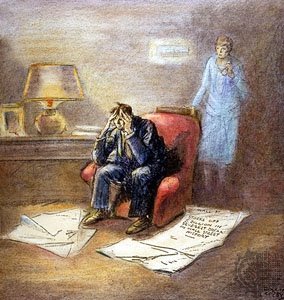
This will clue you in about how sick the economy really is. The current economic contraction was initiated by a loss of confidence in the sub-prime mortgage loans that were bundled and issued as international securities by the deregulated US investment banks. From there, things started to unravel.
At this point, even megadoses of federal stimulation are having little effect in restoring confidence and reflating the collapsing bubble of US capital investment. In fact the bank bailouts are likely making things worse by papering over massive amounts of bad loans, keeping the toxic debt on the books at an inflated price. Bailing out the banks didn’t work, and dropping interest rates to zero didn’t work, so now the feds are about to see if injection large amounts of federal Keynesian stimulation via grassroots spending will finally restimulate spending without igniting uncontrollable inflation. The restimulation effort is comparable trying to drive a car that has a steering wheel with a lot of play; you don’t know when your efforts will take hold or which way you will be headed when they do.
As the global economy contracts in a chain reaction of deflation, even what were previously seen as sound long term capital investments now look shaky. All production aimed at discretionary consumer spending is in question as the global economy restructures and accommodates to slower growth, less energy, and more essential needs.
The economic contraction is global whereas the fed’s injections of cash liquidity are primarily national. Therein lies an obvious policy mismatch. We are addicted to foreign credit and Chinese manufactured goods and imported oil. Our economic crisis and its solution are, and must be, international.
The following snips are extracted from the first part of Doug Noland’s much longer and generally excellent weekly economic analysis.
“…To this point, a barrage of unprecedented monetary and fiscal policy responses has restrained the forces of systemic collapse…
With private sector credit growth now struggling mightily, public finance was forced to really take up the slack. Federal government debt expanded at a 39.2% pace, playing a decisive role in generating sufficient system-wide credit expansion…
With even an unsustainable $2.0 trillion annual pace of federal borrowings failing to reverse the downward economic spiral, the
Federal Reserve last week was compelled to signal in no uncertain terms that policymakers “will employ all available tools to promote the resumption of sustainable economic growth and to preserve price stability.”…The dilemma for the Fed (and markets) is that while such an enormous amount of credit would do little more than somewhat steady our maladjusted bubble economy, it would at the same time perpetuate the massive flow of dollar finance out to the global financial system. In short, the Fed’s determination to reflate ensures continued monetary disorder. And I would further argue that ongoing monetary disorder – and associated corruption to various market pricing mechanisms – will impede system adjustment and extend the lengths of US and global downturns and restructuring periods…
Factoring in other financial outflows, the rest of world would be called upon to purchase another trillion or so of our financial claims next year – and for years on end…
At the end of the day, I expect the dollar to suffer from its relative dismal position with respect to both financial flows and our economy’s deep structural maladjustment. Years of egregious credit and spending excesses have left an economic structure uniquely dependent upon, on the one hand, huge ongoing public sector credit injunctions and, on the other, huge unending imports. This is a terrible predicament for a currency…”
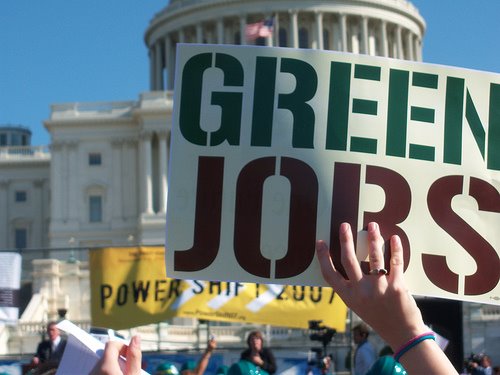
The debate has centered on two competing principles: the desire to spend money on what President-elect Barack Obama calls “shovel-ready projects,” such as highway and bridge construction, vs. spending on more environmentally conscious projects, such as grids for wind and solar power.
By Paul Kane and Michael D. Shear / December 24, 2008
In one of the first internal struggles of the incoming Obama administration, environmentalists and smart-growth advocates are trying to shift the priorities of the economic stimulus plan that will be introduced in Congress next month away from allocating tens of billions of dollars to highways, bridges and other traditional infrastructure spending to more projects that create “green-collar” jobs.
The debate has centered on two competing principles in the evolving plan: the desire to spend money on what President-elect Barack Obama calls “shovel-ready projects,” such as highway and bridge construction, vs. spending on more environmentally conscious projects, such as grids for wind and solar power.
Lawmakers opposed to the emerging-technology projects accuse their colleagues of using the financial crisis to push through pricey policy proposals that they say would do little to boost the economy in the immediate future.
“If we’re going to call it a stimulus package, it has to be stimulating and has to be stimulating now. I think there are members of our caucus who are trying to create a Christmas tree out of this,” said Rep. Baron P. Hill (Ind.), incoming co-chairman of the Blue Dog Coalition, a caucus of 51 fiscally conservative House Democrats.
The largest beneficiary of the shovel-ready construction projects would be labor unions. There are fewer of the green-collar jobs, a key focus of House Speaker Nancy Pelosi (D-Calif.). These projects often have the long-term potential to revolutionize the economy but tend to lack the short-term bounce of old-fashioned infrastructure work. Not as many of them involve union labor.
Labor leaders have refrained from criticizing other stakeholders in the infrastructure debate, saying that the stimulus legislation will provide plenty of money to fund quick-starting pavement projects and environmentally friendly efforts. “It shouldn’t be one or the other,” said Anna Burger, chairman of Change to Win, a union group. “In fact, we do have crumbling roads and bridges that need to be repaired. It’s not about pitting one against the other. It’s about how we find a sustainable economy.”
They also see opportunities for their membership in long-term “green” projects. “We’re committed to green jobs and rapid transit and all the rest of it,” said Terence M. O’Sullivan, head of the Laborers’ International Union of North America.
Senior aides in the new administration and the congressional leadership privately predict that they will be able to please both camps but suggest that there have been delays in identifying enough of the environmentally friendly projects to reach a dollar level that will truly jump-start the economy.
Talks over the stimulus plan, which could cost $675 billion to $850 billion, heated up over the past week as an unofficial outline emerged of what the bill would fund. About $200 billion would probably go toward middle-class tax cuts and tax credits for tuition and small businesses, while another $200 billion is under consideration to help mitigate the soaring costs of Medicaid and education. Up to $350 billion, or more, could go toward investments covering infrastructure, tax credits for renewable energy, increased funding for food stamps and the creation of an extensive technological health database.
Democratic negotiators plan to reconvene around New Year’s Day to try to hash out the final details of the plan before the 111th Congress starts Jan. 6, with a goal of passing a bill out of the House and Senate shortly after Obama is sworn in Jan. 20. At a meeting of Obama’s transition team yesterday, Vice President-elect Joseph R. Biden Jr. vowed that the proposal would not become a “Christmas tree” for lawmakers’ policy earmarks. He defended it against the criticism on the left that too much of its focus would be on old-fashioned projects.
“We’ve let our infrastructure crumble for a long, long time from water to roads to bridges. It makes sense to invest in them now,” Biden said.
But environmentalists and their allies view old-fashioned highway construction as encouraging longer commutes and increasing the energy-consumption crisis of the past year. “They’re going to put a bunch of money through a broken system to stimulate the economy. That doesn’t make sense to me,” said Colin Peppard, a transportation expert for Friends of the Earth.
Peppard’s group recently began a “Road to Nowhere” campaign, saying that new roads would lead to “new pollution — keep the economic stimulus clean.”
Rep. James L. Oberstar (D-Minn.), chairman of the House Transportation and Infrastructure Committee, has circulated a 41-page memo seeking $85 billion worth of projects over the next two years. The largest chunk of that money, more than $30.2 billion, would go toward highway funds, while $12 billion would go to local public transportation funds. An additional $14.3 billion would go toward “environmental infrastructure,” with most going to a clean-water fund.
The emerging proposal has become such a magnet for lawmakers that more than 50 staffers crammed into a standing-room-only meeting last Friday night in the basement of the Capitol to hear senior aides lay out the parameters of the infrastructure package. Aides described it as a meeting to both pitch the proposal and to solicit ideas for inclusion in the package, particularly for the harder-to-find environmentally friendly projects.
Smart-growth advocates are happy that the percentage of funds in Oberstar’s proposal devoted to roads is not the 80-20 split in the current highway funding formula, but they still see a system tilting toward old-fashioned projects. “It’s been a lot of business as usual,” said David Goldberg, spokesman for Transportation for America.
Goldberg’s group has studied infrastructure proposals from 15 states and found that 75 percent of their requests are for roadway construction, and of that, the overwhelming majority of money would fund new projects in outer suburbs that have been hard hit by the mortgage crisis. “We’re building all this stuff for where the economy isn’t anymore,” he said.
But the green-collar proposals have also come under fire. Hill, the incoming Blue Dog co-chairman, said he opposes including these proposals and the medical technology project in the stimulus plan, suggesting that “somewhere down the road” they be considered under the normal legislative process.
Sen. Ben Nelson (D-Neb.), who supports both medical technology and wind farm projects, said it may take longer to pump the money into those projects, but said that is why Obama set out a two-year plan. In that time span, Nelson said, a “smart grid” could be funded that would connect wind farms and solar-power hot spots around the country, delivering power in a cleaner fashion.
Bill Samuel, the chief lobbyist for the AFL-CIO, said that many of his members could be put to work building or repairing schools or expanding rail systems. “We support all of that,” he said. “There has to be some balance. I think it’s not fair to say we’re all about roads.”
The battle has Democratic negotiators on Capitol Hill trying to decide how to spend the money — and whom to please. Said Peppard: “One minute they want to spend it quickly, the next minute they want to spend it well.”
[Washington Post staff writers Lori Montgomery and Shailagh Murray contributed to this report.]
Source / Washington Post
Thanks to Carl Davidson / The Rag Blog


Americans now losing their homes to the mortgage crisis and the millions more, like us, who have fallen prey to the healthcare crisis in this nation are losing far more than just an address or an extra bedroom or a driveway or a lifestyle.
By Donna Smith / December 24, 2008
A little box arrived from Chicago last week to my temporary digs here in Washington, DC. Inside were some of the trinkets of Christmases long past. Ornaments that used to hang on trees surrounded by mounds of gifts, plush Mickey Mouse stockings I used to fill with fruit and candy and little toys when my sons were younger, and a candle holder – absent the candle, of course, which had long since been burned on a holiday table brimming with food and with good cheer.
The box holds what is left of those middle class holiday memories. The box has become the only link to a home-for-the-holidays Christmas I can never again share with my children or my grandchildren. You see, like millions of other Americans, we lost our home. And with that loss goes not only the physical security of home and hearth but also the generational ties to stability and security and the sense of well-being that come with being home… with having a home to come to and a home in which to frame the happenings of our lives. We are the new economic refugees of this society. And no bail-outs are pending.
Who among us has not spent a time longing for the comforts of home? And that universal longing has little to do with square footage or amenities and much more to do with a place of comfort and clarity and sameness and steadiness that helps soften the twists and turns of life that we all must experience. But for those of us who become unwilling nomads with no permanent place to stash our stuff, home became a more elusive place – and not really a physical place at all, but a feeling, a memory, a fleeting image of happier days gone by.
Americans now losing their homes to the mortgage crisis and the millions more, like us, who have fallen prey to the healthcare crisis in this nation are losing far more than just an address or an extra bedroom or a driveway or a lifestyle. We are losing the boundaries of our lives – those intimate details of everyday living that make home a safe place to land and place to retreat when daily pressures are too great and – most vivid during this season – a place where our children and grandchildren can return for generational sharing and all the ups and downs that brings to a family.
One of the most heart-breaking losses we’ve felt in recent years as we tried in vain to cling to some semblance of middle class reality as health crises crushed us is the loss of holidays, the loss of traditions, the loss of intimacy and the loss of respect from our own children who see no home to come to – and no reason to interrupt more exciting holiday pursuits when we can no longer play host to any sort of Smith family soiree with the same sort of meaning.
Oh, folks will try to say that home is wherever the people you love are gathered, but don’t believe it. Our lack of financial stability and the lack of that home in which to gather have damaged far more than just the edges of our lives. When pushed, the grown kids say they don’t come to visit because we’re not grounded – “There isn’t exactly a place where we all grew up and you kept to come home to, is there?” asked one of our sons. No, son, there isn’t. So, this year, like the past few years, he’ll gather his children (our beautiful grandchildren) and take them to another state and another grandma’s house that sits on land that the family has owned for many years and to a home with a whole basement converted to play space that holds literally thousands of dollars worth of toys. No, son, I cannot offer that.
I can offer the little toy box I faithfully move from apartment to apartment and a place at my feet to play. I can offer love beyond what I could explain. But I cannot offer stability of place and the home I so hoped to have until I died – or at least until I could no longer handle the physical constraints of home ownership. But the things I have left to own are not things, and our culture thrives on the ownership of things. So, I am the grandma without enough. And my wonderful husband, the man who gave his body and being to creating a home for us for so many years, is now the grumpy grandpa without enough stuff and without a house.
This is what millions of Americans now losing their homes and their jobs are going to go through all too soon. The unbending cruelty of judgment that comes from having lost one’s home in the United States – or worse yet, having gone bankrupt in America.
You see, say what you will about forgiveness and love and peace on earth, but we Americans judge one another by our stuff and our attainment of things. Those who don’t have a lot must not have wanted it badly enough, we think, or we didn’t work smartly enough. And those who attain homeownership and then lose homes or go bankrupt just managed poorly, lived beyond their means, didn’t tighten the belt enough… on and on and on we go with our judgments. I just heard it again this week on a mainstream media news program… people who go bankrupt, they mused, are gaming the system somehow and need to learn to behave better. Going bankrupt was viewed as sinful and irresponsible. These old and ugly views are part of our middle class DNA. I know, because I was taught the same way.
But then the bottom falls out. Health insurance leaves you bare to huge financial burdens. Job loss strips your ability to have enough cash coming in to covers the basics, savings dries up, all the bartering and begging to stay afloat begins to give way, and the wealth it took years to build is gone overnight.
And with that wealth goes a great deal more in personal costs. Some relationships are damaged beyond repair while others are twisted and tinged with guilt, shame or anger. And the holidays are packed away in little boxes of trinkets where peace on earth and joy to the world still can dwell, if but for an instant.
Home for the holidays? Never again. It takes years to recover from bankruptcy or foreclosure and for some of us, there are not enough working years left to do so; the big banking interests we just helped bail out will view us as too risky for a very long time. And our government will not challenge that reality. The best we economic refugees can hope for is that we can hang on to that little box of ornaments, stockings and candleholders as we move from lease to lease to lease making sure our rent is paid and we are warm. There really is no place like home for the holidays, and for many Americans, that Norman Rockwell sort of holiday setting will never again be possible.
When home is no longer home for so many, the generational and cultural foundations are crumbling in ways that will forever alter our national being. The ground truly is shifting beneath our feet as 2009 dawns. And this year, home is even more elusive for many. For some of us, it’s carried in a little box.
[Donna Smith is a community organizer for the California Nurses Association and National Co-Chair for the Progressive Democrats of America Healthcare Not Warfare campaign.]
Source / CommonDreams

Leaked: ‘The energy crisis is real. It is worldwide. It is a clear and present danger to our nation. These are facts and we simply must face them.’
By Steve Russell / The Rag Blog / December 24, 2008
So it looks like a copy of Barack Obama’s inauguration speech has been leaked.
Here’s an excerpt…
“Energy will be the immediate test of our ability to unite this nation, and it can also be the standard around which we rally. On the battlefield of energy we can win for our nation a new confidence, and we can seize control again of our common destiny. Our excessive dependence on OPEC has already taken a tremendous toll on our economy and our people. It’s a cause of the increased inflation and unemployment that we now face. This intolerable dependence on foreign oil threatens our economic independence and the very security of our nation.
The energy crisis is real. It is worldwide. It is a clear and present danger to our nation. These are facts and we simply must face them.”
Now for the truth…
What you just read is not an excerpt from a leaked version of Obama’s inauguration speech. It’s an excerpt from a speech made by President Jimmy Carter on July 15, 1979.
Shortly afterward, President Reagan ripped the solar panels off the White House roof. Literally and figuratively.
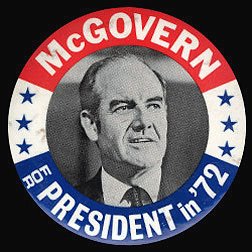
Jerome Doolittle here pulls a Hunter Thompson gem out of the historical hat. It reminds us once again of the utter brilliance that was Hunter S. Thompson, how absolutely on target he was no matter how bizarre his poesy and hyperbole.
Thompson’s words here in any event tend more to the understatement than to the hyperbolic. And they are so freaking appropriate to Dubya and our times that we once more are reminded of the grand old saw: the more things change the more they… well, you know the drill.
Thorne Dreyer / The Rag Blog / December 23, 2008
How Low? (Indeed…)
By Jerome Doolittle / December 21, 2008
This was Hunter S. Thompson’s last dispatch from the presidential campaign of 1972. Try substituting George W. Bush for Nixon and John Kerry for McGovern. It isn’t a perfect fit, but it’s close enough for government work.
This may be the year when we finally come face to face with ourselves; finally just lay back and say it — that we are really just a nation of 220 million used car salesmen with all the money we need to buy guns, and no qualms about killing anybody else in he world who tries to make us uncomfortable.
The tragedy of all this is that George McGovern, for all his imprecise talk about ‘new politics’ and ‘honesty in government,’ is really one of the few men who’ve run for President of the United States in this century who really understands what a fantastic monument to all the best instincts of the human race this country might have been, if we could have kept it out of the hands of greedy little hustlers like Richard Nixon.
McGovern made some stupid mistakes, but in context they seem almost frivolous compared to the things Richard Nixon does every day of his life, on purpose, as a matter of policy and a perfect expression of everything he stands for.
Jesus! Where will it all end? How low do you have to stoop in this country to be President?
It all ended on November 4 of 1972, when our nation of used car salesmen relected Richard Nixon in a landslide, George McGovern carrying only Massachusetts and the District of Columbia.
This in spite of the fact that almost a month before election day the Washington Post had led the paper with a story that began as follows:
FBI agents have established that the Watergate bugging incident stemmed from a massive campaign of political spying and sabotage conducted on behalf of President Nixon’s reelection and directed by officials of the White House and the Committee for the Re-election of the President.
That’s how low you have to stoop.
Source / Bad Attitudes
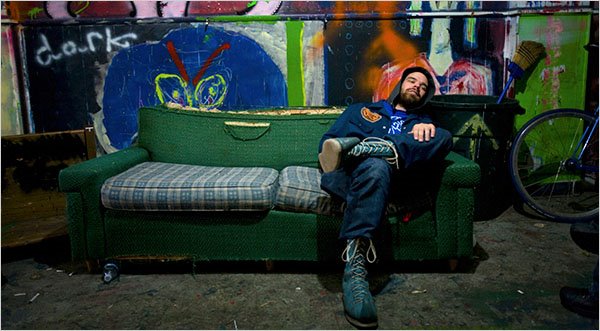
CLEVELAND — Five years ago, young Muslims across the United States began reading and passing along a blurry, photocopied novel called “The Taqwacores,” about imaginary punk rock Muslims in Buffalo.
“This book helped me create my identity,” said Naina Syed, 14, a high school freshman in Coventry, Conn.
A Muslim born in Pakistan, Naina said she spent hours on the phone listening to her older sister read the novel to her. “When I finally read the book for myself,” she said, “it was an amazing experience.”
The novel is “The Catcher in the Rye” for young Muslims, said Carl W. Ernst, a professor of Islamic studies at the University of North Carolina at Chapel Hill. Springing from the imagination of Michael Muhammad Knight, it inspired disaffected young Muslims in the United States to form real Muslim punk bands and build their own subculture.
Now the underground success of Muslim punk has resulted in a low-budget independent film based on the book.
A group of punk artists living in a communal house in Cleveland called the Tower of Treason offered the house as the set for the movie. The crumbling streets and boarded-up storefronts of their neighborhood resemble parts of Buffalo. Filming took place in October, and the movie will be released next year, said Eyad Zahra, the director.
“To see these characters that used to live only inside my head out here walking around, and to think of all these kids living out parts of the book, it’s totally surreal,” Mr. Muhammad Knight, 31, said as he roamed the movie set.
As part of the set, a Muslim punk rock musician, Marwan Kamel, 23, painted “Osama McDonald,” a figure with Osama bin Laden’s face atop Ronald McDonald’s body. Mr. Kamel said the painting was a protest against imperialism by American corporations and against Wahhabism, the strictest form of Islam.
Noureen DeWulf, 24, an actress who plays a rocker in the movie, defended the film’s message.
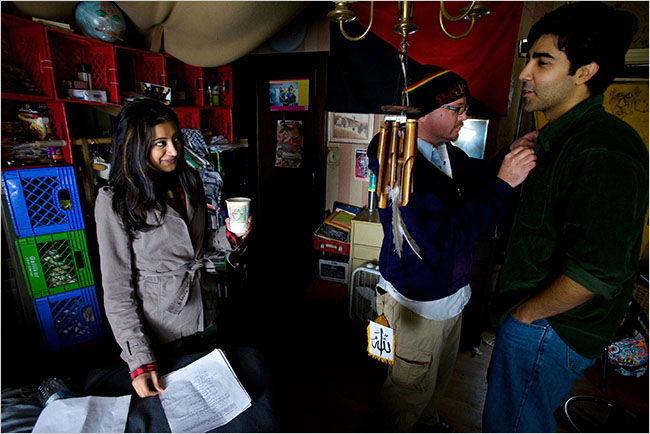
“I’m a Muslim and I’m 100-percent American,” Ms. DeWulf said, “so I can criticize my faith and my country. Rebellion? Punk? This is totally American.”
The novel’s title combines “taqwa,” the Arabic word for “piety,” with “hardcore,” used to describe many genres of angry Western music.
For many young American Muslims, stigmatized by their peers after the Sept. 11 attacks but repelled by both the Bush administration’s reaction to the attacks and the rigid conservatism of many Muslim leaders, the novel became a blueprint for their lives.
“Reading the book was totally liberating for me,” said Areej Zufari, 34, a Muslim and a humanities professor at Valencia Community College in Orlando, Fla.
Ms. Zufari said she had listened to punk music growing up in Arkansas and found “The Taqwacores” four years ago.
“Here was someone as frustrated with Islam as me,” she said, “and he expressed it using bands I love, like the Dead Kennedys. It all came together.”
The novel’s Muslim characters include Rabeya, a riot girl who plays guitar onstage wearing a burqa and leads a group of men and women in prayer. There is also Fasiq, a pot-smoking skater, and Jehangir, a drunk.
Such acts — playing Western music, women leading prayer, men and women praying together, drinking, smoking — are considered haram, or forbidden, by millions of Muslims.
Mr. Muhammad Knight was born an Irish Catholic in upstate New York and converted to Islam as a teenager. He studied at a mosque in Pakistan but became disillusioned with Islam after learning about the sectarian battles after the death of Muhammad.
He said he wrote “The Taqwacores” to mend the rift between his being an observant Muslim and an angry American youth. He found validation in the life of Muhammad, who instructed people to ignore their leaders, destroy their petty deities and follow only Allah.
After reading the novel, many Muslims e-mailed Mr. Muhammad Knight, asking for directions to the next Muslim punk show. Told that no such bands existed, some of them created their own, with names like Vote Hezbollah and Secret Trial Five.
One band, the Kominas, wrote a song called “Suicide Bomb the Gap,” which became Muslim punk rock’s first anthem.
“As Muslims, we’re not being honest if we criticize the United States without first criticizing ourselves,” said Mr. Kamel, 23, who grew up in a Syrian family in Chicago. He is lead singer of the band al-Thawra, “the Revolution” in Arabic.
For many young American Muslims, the merger of Islam and rebellion resonated.
Hanan Arzay, 15, is a daughter of Muslim immigrants from Morocco who lives in East Islip, N.Y. In the months after the Sept. 11 attacks, pedestrians threw eggs and coffee cups at the van that transported her to a Muslim school, she said, and one person threw a wine bottle, shattering the van’s window.
At school, her Koran teacher threw chalk at her for requesting literal translations of the holy book, Ms. Arzay said. After she was expelled from two Muslim schools, her uncle gave her “The Taqwacores.”
“This book is my lifeline,” Ms. Arzay said. “It saved my faith.”
Source / The New York Times
Thanks to Betsy Gaines / The Rag Blog
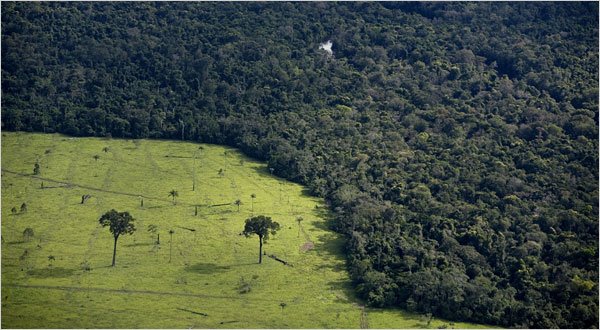
RIO DE JANEIRO — Twenty years ago, a Brazilian environmental activist and rubber tapper was shot to death at his home in Acre State by ranchers opposed to his efforts to save the Amazon rain forest.
After his death at age 44, Francisco Alves Mendes, better known as Chico, became a martyr for a concept that is only now gaining mainstream support here: that the value of a standing forest could be more than the value of a forest burned and logged in the name of development.
This month, Brazil took what environmentalists hope will be a big step forward in realizing Mr. Mendes’s vision. The government of President Luiz Inácio Lula da Silva introduced ambitious targets for reducing deforestation and carbon dioxide emissions in a nation that is one of the world’s top emitters of this heat-trapping gas.
The plan promises to make Brazil a more influential player in global climate-change discussions, helping to push the United States and the European Union to agree to emissions cuts and head off the adverse effects of climate change. It could also encourage more pledges from wealthy countries seeking to essentially pay Brazil to preserve the forest for the good of all humanity.
But some environmentalists question whether the new targets, which would reduce Brazilian deforestation by 72 percent by 2017, are achievable in a country that has shown few signs of adjusting its development model as a major food provider to the world, especially in the midst of a global economic crisis.
To achieve the first phase of planned cuts, Brazil would have to reduce deforestation next year by 20 percent, to less than 4,000 square miles. That would be the lowest amount per year ever recorded in Brazil, said Paulo Adario, the Amazon campaign director for Greenpeace in Brazil.
Brazil’s economy is centered on the export of agricultural products, like soybeans and beef, and commodities like iron ore.
“The Brazilian model is to be the food supplier to the world and a big supplier of ethanol,” Mr. Adario said. “The economy will continue to move in the same basic direction. There is no magic in Brazil.”
Up until now, Brazil’s economic choices have driven much of the deforestation in the Amazon, he said. In the late 1960s and the 1970s, the military government encouraged landless families to settle in the region. Road-building, land speculators and ranchers followed, and the forests fell at a quickening pace.
The burning and decomposition of trees produce carbon dioxide, a greenhouse gas.
Mr. Mendes organized tappers to confront crews and flew abroad to confront lenders paying for roads. His efforts to stop logging in an area planned for a forest reserve led to his death. Since his killing, on Dec. 22, 1988, more than 20 reserves have been created, protecting more than eight million acres.
Mr. Mendes was an early advocate of the idea that people who live in the forest could create livelihoods from sustainable forest resources, rather than the one-time economic benefit of cutting down trees. Carbon financing, the compensation of forest dwellers for pursuing sustainable industries, would provide an added incentive, which is vital given the uncertain markets for natural rubber and other non-timber forest products.

“The notion that we in the north will help pay for that climate service is an important development and represents the mainstreaming of the concept that Chico Mendes and those like him were pioneers in creating,” said Richard H. Moss, the head of climate change programs at the World Wildlife Fund in Washington.
The killings of Mr. Mendes and of Sister Dorothy Stang, a 73-year-old Catholic nun who was gunned down in 2005 for speaking out against logging in the Amazon, ratcheted up international pressure on Brazil to find ways to limit forest clearing without sacrificing development.
“Brazil was always on the defensive when it came to the question of climate change,” said Carlos Minc, Brazil’s environment minister. “And now it has completely changed, passing a bolder plan than India and China.”
Mr. Minc said the plan would help meet a demand of some of the more developed countries, including the United States, which has said it would not agree to firm emissions targets until less-developed countries that produce significant amounts of greenhouse gases do the same.
Deforestation produces more than a fifth of human-generated carbon dioxide by some estimates. Some 75 percent of Brazil’s carbon dioxide emissions come from deforestation, Mr. Minc said.
Brazil’s plan would sharply slice those emissions, reducing them by some 4.8 billion tons by 2018. Some environmentalists contend that deals involving compensation for forest protection could weaken climate agreements in many ways. They also say the plan leaves the most difficult targets to the government that will follow Mr. da Silva’s. His term ends in 2010.
Still, it is viewed by some scientists and climate experts as major step forward. “For the first time we have out in the open very clear goals for reduction in deforestation,” said Walter Vergara, the lead climatologist for Latin America at the World Bank.
The global recession could end up being a godsend by lowering demand for agricultural goods.
But it could also slow the flow of technology needed to make industries more efficient and limit pledges from foreign governments like Norway, Sweden and Germany, whose payments would help preserve the forest. So far, those countries have not suggested that they would reduce their contributions, Mr. Minc said.
“The global recession and the climate crisis don’t necessarily have to be adversaries, with one competing for the resources of the other,” Mr. Minc said.
Source / The New York Times
Thanks to Betsy Gaines / The Rag Blog
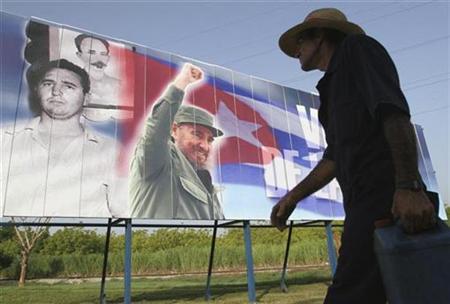
Pastors for Peace leader Rev. Lucius Walker spoke of these 50 years of practicing solidarity as what Jesus Christ would have wanted the human race to emulate: constant support for the poor, the hungry, the thirsty, the sick, the exploited and imprisoned.
By Ron Ridenour / The Rag Blog / December 23, 2008
[This is the first of a two-part series on the 50th anniversary of the Cuban Revolution by Rag Blog contributor Ron Ridenour.]
Half a century after revolutionary guerrillas victoriously entered Havana, state and grass roots organizations are preparing liberation activities over the entire country. Thousands of solidarity activists and supporters from around the world are joining in. Besides celebrating, many want to know what’s next: will Cuba go the way of China or will its socialist roots develop stronger?
I worked for Editorial Jose Marti and Prensa Latina (1987-96), and have been here on extensive visits in 2006 and currently. I have written five books about Cuba and hundreds of articles. To understand the Cuban revolution is a life study. For the present, I intend to narrate my impressions of some of its reality. A definitive description or analysis is beyond my capacity.
“Ser internacionalista es sladar nuestra propia deuda con la humanidad.” (To be internationalist is to settle our own debt with humanity.)
This is a billboard, the first I remember seeing upon arrival in 1987, that expresses the morality with which this revolution began and its performance in nearly half the planet. In a recent Cuban education channel broadcast, Walker wished that his country — the USA — would take up Cuba’s living example.
The revolution’s solidarity ethic started at home. From the first, racism was officially abolished everywhere. Small farmers and would-be farmers were given up to five caballerias (13.42 hectares per caballeria) of land to till as promised during the armed struggle against US-backed dictator Batista. The new president, Raul Castro, has just extended this by one or two caballerias for the most productive. The rest of the land, bought from private owners (national and international), was turned into large state collectives and smaller cooperatives. In recent years, almost all the collectives have been converted into more productive cooperatives, both private and state run.
Illiteracy was soon eliminated by 100,000 educated youths teaching 23% of the nation’s illiterates. Promptly, all children were attending school free of charge whereas before 44% of primary school-aged children did not attend school and only 17% of secondary school-aged children did. In these 50 years nearly one million students have graduated from universities. Today, there are nearly 100,000 students who study full time in 65 universities, plus some 400,000 who study at university level in 3,150 localities in all 169 municipalities. Under Batista there were 20,000 students attending the three state and one private universities.
A nation-wide health care system was immediately underway, free of charge. Statistical results show its significance for each and every Cuban. In 1959, infant mortality was at 78.8 per 1000 births; in 2007, it was down to 5.5. Life expectancy was 62 years. Today it stands at 77. There was only one doctor for every 1,800 inhabitants, in 1959, after half the 6,000 doctors had fled upon the revolutionary victory and following the elimination of private practice. But only a few in the population of 5.5 million were being served. Today, with 75,000 graduated doctors since the revolution and with 11.5 million people, the rate is one to 150. However, nearly half of those doctors are on foreign missions in 68 countries, and several hundred have fled to other countries seeking greater economic opportunities. This places a greater burden on some 30,000 doctors within the country who must care for a greater numbers of patients.
Cuba produces 12 of the 13 vaccines it inoculates each child with. The nation has an exceptional modern biotechnology industry and has developed unique medicines and vaccines, including the world’s only meningitis B vaccine.
The revolution is also renowned for its excellent sports and culture programs, for its superb athletes, musicians, film makers, detective novel authors, ballet and other dancers.
The nation’s workers and farmers were also set on a solidarity course to serve and produce not just for their benefits but for the entire nation. In the early 1960s, two forms of economic systems were experimented with. One was led by the revolutionary idealist Che Guevara, the other by Carlos Rodriguez, a leader of the Communist Party, which had not joined the armed struggle. In the efforts to create the “new man” in economic production and in the political decision-making process there were some advances but many setbacks, about which I will address in a second story.
International Solidarity
The export of “human capital,” as the state characterizes its humanitarian missions, began in 1963 in Africa and Latin America, later in the Caribbean and other parts of the world, by assisting peoples’ health and educational needs as well as helping to remove them from the domination of exploitative imperialism. Cuba provides more medical humanitarian international aid than all the UN countries deployed through the World Health Organization.
Today, nearly 100,000 medical personnel, teachers, sports instructors, technicians and advisors are serving in 104 countries. In the medical arena alone, over 10 million people, in 68 countries, have been treated just this decade. Millions of people have been aided in a score of countries hit by natural disasters, such as, in 2006, Pakistan, a US war ally. The new Cuban-created Operation Miracle has cured upwards to half a million blind patients in 25 countries just since 2004. With Venezuela’s oil profits, and Cuba’s doctors and those it is training in Venezuela, the Venezuela-Cuba plan is to cure 10 million Latin Americans within a decade. Their blindnesse is mostly caused by malnutrition, and this plan coincides with progressive programs to increase national food production through cooperatives and small farming.
Presidents Fidel Castro and Hugo Chavez began discussing the creation of a regional socio-economic and political alliance based upon mutual aid and bartering soon after the right-wing coup attempt in Venezuela, in 2002. The Bolivarian Alternative for Latin America (ALBA) took root in 2005. Today, with six countries — Nicaragua, Bolivia, Honduras and Dominican — several billion dollars worth of joint projects are underway. This also includes inexpensively sold oil from Venezuela to these countries and the newly formed Petro Caribe alliance.
These socialist oriented programs and alliances were conceived of by Fidel when he received Chavez fresh out of jail two years after his imprisonment for leading the insurrection, in 1992.
“The coming century for us is the century of hope, the century of the resurrection of the Bolivarian dream, the dream of Marti, the Latin American dream.”
President Raul Castro cited his brother’s words in his speech, this December 15th, at a ceremony in Venezuela. In honor of ALBA’s accomplishments and is future agenda. Raul concluded with: “The dreams of yesterday begin to become reality.”
Other important aspects of Cuba’s generous solidarity are its military assistance to other peoples in maintaining or acquiring their sovereignty. This is especially the case in Angola and with important side affects for Namibia and South Africa. Between 1975 and 1990, Cuba sent 300,000 soldier volunteers to Angola to help defeat the invading apartheid government of South Africa, backed by the US. They sought to impose brutal counterrevolutionary groups in power, who would do the empire’s biding.
Raul Castro referred to Cuba’s African role at the December summit meeting of 33 Latin American and Caribbean nations meeting in Brazil. Once the future of Angolan sovereignty became guaranteed, the liberation of Namibia was assured, and this added significantly to the internal struggle for black South Africans’ liberation soon following the release of Nelson Mandela from prison. Mandela came to Havana to express his gratitude for Cuba’s solidarity.
This unique summit in Brazil was especially important for Cuba. Of the various Latin American alliances, Rio Group is an important political forum and it embraced Cuba as a member. Fidel Castro was not able to attend but because of the historic role he played as Cuba’s key leader, and elected president between 1976 until 2007 when, due to ill health, he stepped down and his brother won the elections, he received the strongest applause of all from the forum. The historical role played by Cuba in promoting Latin American sovereignty and integration, and the concise and sharp speeches of President Raul Castro, occupied Brazil’s, Mexico’s and most of Latin Americas front pages during the summit.
The joyous mood of Latin America’s leaders expressed the new liberating wind blowing throughout this continent. Their message is: it will not be stilled by the empire now entering its decay.
Beyond exporting solidarity and its key role in continental integration, Cuba offers extensive and advanced educational opportunities free of charge to tens of thousands of foreign students in Cuba. In recent years, an entire medical school (ELAM) is dedicated to educating foreign students from some 30 countries, including poor US citizens.
However, there are many Cubans who are not so happy about their nation engaging in the world’s most extensive solidarity policies. There is an increasing gap between the new rich and the new poor within the double economy—one in pesos and one in convertible currency. The low-cost subsidized rationed goods are too sparse to meet the very basic needs of daily life. Most earn their living in pesos and this creates divisions in the population, and even animosity within the medical profession since doctors at home earn only pesos while the foreign mission “volunteers” earn pecuniary rewards that permit many to return home with luxurious hardware and other goods not possible to obtain on the peso economy.
Cuba is the home of my heart, all the more reason to be truthful of its warts. One cannot truly love a people nor have confidence in them if one hides from real problems and shortcomings. That is the subject of the next piece.
[Ron Ridenour, a regular contributor to The Rag Blog, is an award-winning writer and author whose special interest is Latin America. Ridenour was a sixties activist who wrote and edited for that decade’s underground press. He now lives in Denmark and also posts at http://www.ronridenour.com/.]

See ‘Why Gay Marriage is the Wrong Issue’ by Bob Ostertag, Below.
This is a message for my brothers and sisters who have fought so long and so hard for gay rights and liberty. We have spent a long time climbing up this mountain, looking at the impossible, changing a thousand year-old paradigm. We have asked for the right to love the human of our choice, and to be protected equally under the laws of this great country.
The road at times has been so bloody, and so horrible, and so disheartening. From being blamed for 9/11 and Katrina, to hateful crimes committed against us, we are battle weary. We watched as our nation took a step in the right direction, against all odds and elected Barack Obama as our next leader. Then we were jerked back into the last century as we watched our rights taken away by prop 8 in California. Still sore and angry we felt another slap in the face as the man we helped get elected seemingly invited a gay-hater to address the world at his inauguration.
I hadn’t heard of Pastor Rick Warren before all of this. When I heard the news, in its neat little sound bite form that we are so accustomed to, it painted the picture for me. This Pastor Rick must surely be one hate spouting, money grabbing, bad hair televangelist like all the others. He probably has his own gay little secret bathroom stall somewhere, you know. One more hater working up his congregation to hate the gays, comparing us to pedophiles and those who commit incest, blah blah blah. Same ‘ole thing. Would I be boycotting the inauguration? Would we be marching again?
Well, I have to tell you my friends, the universe has a sense of humor and indeed works in mysterious ways. As I was winding down the promotion for my Christmas album I had one more stop last night. I’d agreed to play a song I’d written with my friend Salman Ahmed, a Sufi Muslim from Pakistan. The song is called “Ring The Bells,” and it’s a call for peace and unity in our world. We were going to perform our song for the Muslim Public Affairs Council, a group of Muslim Americans that tries to raise awareness in this country, and the world, about the majority of good, loving, Muslims. I was honored, considering some in the Muslim religion consider singing to be against God, while other Muslim countries have harsh penalties, even death for homosexuals. I felt it was a very brave gesture for them to make. I received a call the day before to inform me of the keynote speaker that night… Pastor Rick Warren. I was stunned. My fight or flight instinct took over, should I cancel? Then a calm voice inside me said, “Are you really about peace or not?”
I told my manager to reach out to Pastor Warren and say “In the spirit of unity I would like to talk to him.” They gave him my phone number. On the day of the conference I received a call from Pastor Rick, and before I could say anything, he told me what a fan he was. He had most of my albums from the very first one. What? This didn’t sound like a gay hater, much less a preacher. He explained in very thoughtful words that as a Christian he believed in equal rights for everyone. He believed every loving relationship should have equal protection. He struggled with proposition 8 because he didn’t want to see marriage redefined as anything other than between a man and a woman. He said he regretted his choice of words in his video message to his congregation about proposition 8 when he mentioned pedophiles and those who commit incest. He said that in no way, is that how he thought about gays. He invited me to his church, I invited him to my home to meet my wife and kids. He told me of his wife’s struggle with breast cancer just a year before mine.
When we met later that night, he entered the room with open arms and an open heart. We agreed to build bridges to the future.
Brothers and sisters the choice is ours now. We have the world’s attention. We have the capability to create change, awesome change in this world, but before we change minds we must change hearts. Sure, there are plenty of hateful people who will always hold on to their bigotry like a child to a blanket. But there are also good people out there, Christian and otherwise that are beginning to listen. They don’t hate us, they fear change. Maybe in our anger, as we consider marches and boycotts, perhaps we can consider stretching out our hands. Maybe instead of marching on his church, we can show up en mass and volunteer for one of the many organizations affiliated with his church that work for HIV/AIDS causes all around the world.
Maybe if they get to know us, they wont fear us.
I know, call me a dreamer, but I feel a new era is upon us.
I will be attending the inauguration with my family, and with hope in my heart. I know we are headed in the direction of marriage equality and equal protection for all families.
Happy Holidays my friends and a Happy New Year to you.
Peace on earth, goodwill toward all men and women… and everyone in-between.
Source / The Huffington Post
Why Gay Marriage is the Wrong Issue
By Bob Ostertag / December 21, 2008It’s just plain sad what the gay and lesbian movement has come to. November 4 was so extraordinary, so magical. The whole world seemed to come together. Except for gays and lesbians in California. We were supposed to feel crushed over Proposition 8. And now the whole scenario is gearing up to repeat itself on January 20: the whole world will celebrate the inauguration of the first black American president and the end of the George Bush insanity – the whole world except gays and lesbians who will be protesting Rick Warren’s presence at the inaugural.
How is it that queers became the odd ones out at such a momentous turning point in history? By pushing an agenda of stupid issues like gay marriage.
“Gay marriage” turns the real issues of equal rights for sexual minorities upside down and paints us into a reactionary little corner of our own making. Yes, married people get special privileges denied to others. Denied not to just gays and lesbians, but to all others. Millions of straight people remain unmarried, and for a huge variety of reasons, from mothers whose support networks do not include their children’s fathers, to hipsters who can’t relate to religious institutions. We could be making common cause with them. We could be fighting for equal rights for everyone, not just gays and lesbians, but for all unmarried people. In the process we would leave religious institutions to define marriage however their members see fit.
That’s how you win at politics, isn’t it? You build principled coalitions that add up to a majority, and try not to hand potent mobilizing issues to your opposition in the process.
We have done the opposite. Instead of tearing down the walls of privilege enjoyed by the nuclear family, we are demanding our own place at the married couples’ table (leaving all those other unmarried people out in the cold).
I know the idea of gay liberation is ancient by today’s standards, but it wasn’t so long ago that a lot of gay and lesbian activism began from the premise that the queer perspective was one that could offer a particular contribution to a more just society as a whole. My how times change.
Is this really where decades of struggle for sexual freedom ends? With the state granting its blessing to homosexual nuclear families emerging from City Hall, husband-and-husband or wife-and-wife, with the photographer and the rice and the whole bit, finally having become just like them?
Not for me. Not for my family, with its various men, each of whom I love in a different way, a child, and two moms. Not that my family is any sort of queer norm. But that’s the beautiful thing about queer culture: there is no norm. We piece together our families, holding on to those relationships that work.
The fact is most of us won’t marry even if we have the right to. We are putting all our resources into winning a right that only the few of us in long-term conventional couple relationships will enjoy. What’s more, we are creating a social climate in which young queers are encouraged to recast their vision of the relationships they seek to favor the married couple. This is not only a loss for the vibrancy of queer culture, it is a disservice to young people who will not be well served by their nuclear family ambitions. Just consider the high number of gay and lesbian divorces (yes, the rate is already high despite the fact that we have not even fully won the right to marry yet).
It is no secret that marriage isn’t working for straight people. That’s why religious institutions are so up in arms about it. The institution of marriage is in crisis. On what basis does anyone imagine it is going to work better for queers?
Through years of queer demonstrations, meetings, readings and dinner table conversations, about gay bashing, police violence, job discrimination, housing discrimination, health care discrimination, immigration discrimination, family ostracism, teen suicide, AIDS profiteering, sodomy laws, and much more, I never once heard anyone identify the fact that they couldn’t get married as being a major concern. And then, out of the blue, gay marriage suddenly became the litmus test by which we measure our allies. We have now come to the point that many unthinkingly equate opposition to gay marriage with homophobia.
Rick Warren is now the flash point, the one all our political allies, even Barack Obama, are supposed to denounce because he doesn’t pass gay marriage the litmus test.
I disagree with Rick Warren on many things. To start with, he believes that 2000 years ago God sent his only Son to die on a cross so that mankind would not perish but have everlasting life. To me, that’s weird. I don’t know how to even begin to address an idea that far out. And he believes that everyone who does not accept Jesus as their savior will go to hell. He doesn’t single out gays and lesbians in particular. To me, the weirdest thing there is not that he thinks queers will go to hell, but that he believes in hell at all. But mainline Protestants believe in hell too. So do Catholics, who also add purgatory and limbo.
Steve Waldman, founder of Belief.net (where you find the most thoughtful exchanges on present day religion), did an extended interview with Warren which has been hyped all over the blogosphere as an example of why we should all be screaming for Obama to disinvite Warren from the inaugural. The quote that got all the attention was when Warren said gay marriage would be on a par with marriage for incest, pedophilia and polygamy. And yes, I think that’s off-base. Not up there are the scale of the whole God-sent-his-only-Son-to-die-on-a-cross bit, but weird nonetheless. But let’s look the rest of the interview, the parts that didn’t get as much attention as that one line:
Q: Which do you think is a greater threat to the American family – divorce or gay marriage?
A: [laughs] That’s a no brainer. Divorce. There’s no doubt about it.
Q: So why do we hear so much more – especially from religious conservatives – about gay marriage than about divorce?
A: Oh we always love to talk about other sins more than ours. Why do we hear more about drug use than about being overweight? [Note: Warren is quite overweight.]
Q: Just to clarify, do you support civil unions or domestic partnerships?
A: I don’t know if I’d use the term there but I support full equal rights for everybody in America. I don’t believe we should have unequal rights depending on particular lifestyles so I fully support equal rights.
Q: What about partnership benefits in terms of insurance or hospital visitation?
A: You know, not a problem with me.
I have an idea: let’s accept equal rights for all. Equal rights are the issue when it comes to national politics. That’s Obama’s position, and I think he has it right.
Then, for those of you who are truly concerned with marriage above and beyond the issue of rights, you should go to your church, or synagogue, or mosque, and have that battle. In your community of fellow believers. I wish you all the best. And the rest of us can move on to things that matter to everyone, regardless of religious beliefs. Like, say, global warming.
Which brings us back to Rick Warren. Warren is the shiny new star of American evangelicalism. Just one of his many books has sold over 20 million copies. And his books, like his ministry, are all about rallying evangelicals to battle global warming, poverty, and AIDS. He rarely mentions culture war issues like gay marriage. And it is not just talk, he puts his money where his mouth is. As Waldman points out in a blog right here on the Huffington Post,
Warren has used his fame and fortune primarily to help the most destitute people in the world. He reverse tithes, giving away 90% and keeping 10%. Please contemplate all the religious figures who have gotten rich off their flock and pocketed the money… he’s worked hard to get other conservative evangelicals to care more about poverty…
Just a reminder to all those gays and lesbians who never look beyond their cultural ghetto: we’ve got some serious problems going on in the world today that need to be addressed now. Global warming in particular can’t wait. For thirty years Evangelical Christians have been the anchor that has pulled this country to the right, giving us first Reaganism and then Bushism. Wars in Nicaragua, El Salvador, Iraq, Afghanistan, etc. And a decade of world-threatening climate change denialism.
At a minimum, 80 million Americans identify as evangelicals, and up to double that depending on how you define evangelical. They are the largest single religious group in the country, and the fastest growing. They are not going away. Somehow, some way, queers are going to have to share this country with all these people.
I am delighted that there is a new generation of evangelicals that thinks the biggest issue isn’t homosexuality but global climate change, AIDS, and poverty. And who “don’t believe we should have unequal rights depending on particular lifestyles.” I am so ready to make common cause with them. I couldn’t care less about what they think of gay marriage.
Source / The Huffington Post
Thanks to Jim Retherford / The Rag Blog
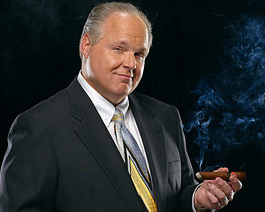
‘I am just wondering — as I say, it can’t be proven — I’m just wondering if a lot of this was by design to create economic panic.’
By Amanda Terkel / December 22, 2008
Today, the New York Times had an article about how right-wing talk radio is gearing up to aggressively go after President-elect Obama over the next four years. Rush Limbaugh demonstrated his commitment to this crusade today on his radio show by blaming Democrats — especially Sen. Chuck Schumer (D-NY) — for starting the current economic crisis.
Here’s how Limbaugh’s conspiracy theory goes: Schumer caused a run on IndyMac bank in California this summer, in order to create a feeling of financial panic amongst the public. Democrats then capitalized on this panic with electoral wins in the White House and Congress. The purpose of gaining this power, according to Limbaugh, was to nationalize U.S. industries:
LIMBAUGH: Who’s benefiting? Aside from the people being bailed out. The Democrat party and Barack Obama are benefiting.
They got elected, they increased their numbers in the House, they increased their numbers in the Senate, they got the White House now, and they’ve got a crisis that people think can only be fixed with the all-mighty and powerful government interceding to save this or to save that, when in fact, the government is going to nationalize the automobile industry. It’s going to nationalize some banks. It’s going to nationalize the mortgage industry, and may end up nationalizing the automobile industry.
Listen here.
The economic crisis certainly wasn’t created within a five-month period, as these conservatives are claiming. As the New York Times wrote yesterday, the current situation was, in fact, long fueled by President Bush’s economic policies:
From his earliest days in office, Mr. Bush paired his belief that Americans do best when they own their own home with his conviction that markets do best when let alone. […]
As early as 2006, top advisers to Mr. Bush dismissed warnings from people inside and outside the White House that housing prices were inflated and that a foreclosure crisis was looming. And when the economy deteriorated, Mr. Bush and his team misdiagnosed the reasons and scope of the downturn; as recently as February, for example, Mr. Bush was still calling it a “rough patch.”
CAP’s Tim Westrich has more on how the “root cause of the financial mess is the hands-off approach towards mortgage and finance markets by the Bush administration, and its lack of action when a disaster was imminent.” (HT: TP reader DK)
Transcript:
LIMBAUGH: Back to this October surprise. I am just wondering — as I say, it can’t be proven — I’m just wondering if a lot of this was by design to create economic panic. Remember now — the Iraq war had dominated everything, and the economy was said to no longer be an issue in the campaign for the first time. Corruption, other things were — ethics (well, the Republicans had those problems) — but the economy wasn’t. They wanted to create economic crisis, a mindset of this.
So Chuck Schumer starts a run — a $1.3 billion run on IndyMac, and then all of a sudden, look what we learn! All these mortgages are worthless. All the mortgage derivatives and the mortgage-backed assets are worthless. Everything was worthless. There was no there there. Every institution, every guy in the institution was an empty suit. We had to bail out this, we had to bail out that; it didn’t help. I just wonder if what was a planned attempt to scare people economically — starting a run on the bank, doing this, that, and the other thing — has spun so far out of control, it’s gone so far beyond what the intention was, just to win an election, that nobody knows what to do about it.
The only mitigating argument against is that the number one, the primary beneficiary of this — and you have to look that even in an economic collapse like ours there are beneficiaries — Who’s benefiting? Aside from the people being bailed out. The Democrat party and Barack Obama are benefiting.
They got elected, they increased their numbers in the House, they increased their numbers in the Senate, they got the White House now, and they’ve got a crisis that people think can only be fixed with the all-mighty and powerful government interceding to save this or to save that, when in fact, the government is going to nationalize the automobile industry. It’s going to nationalize some banks. It’s going to nationalize the mortgage industry, and may end up nationalizing the automobile industry. […]
So the Obama team and the Democrat party are benefiting tremendously from this, even if it has spun out of control. It’s spun out of control, but they’ll make due with a new crisis they created a la Rahm Emanuel. But the reason I think it has spun a little out of control and gone a little further than they intended is that even the Obama people are saying, “Hey, it’s going to be really bad for a really long time.”
Source / Think Progress
Thorne Webb Dreyer, Editor




