Sherman DeBrosse : Our Economic Trainwreck

‘The financial crisis involves a great deal more than shaky home mortgagers. The key problem is that our financial markets have been deregulated and, lacking policing, have engaged in a massive speculative binge.’

By Sherman DeBrosse / The Rag Blog / December 12, 2008

[This is the first of a three-part series on the economy by The Rag Blog’s Sherman DeBrosse.]

Almost 70 years ago, the Great Depression began after the stock market collapsed. This time, a recession came first in December, 2007. Then a mortgage crisis in 2008 triggered a meltdown of the financial system. After the collapse of Lehman Brothers on Sept. 15, the markets entered uncharted territory, and it soon became clear that financial houses held trillions in worthless paper. Moreover, bad paper from America had poisoned markets abroad.

Overwhelmed by their own debts and bad assets, banks and financial houses protectively dried up all credit. This development deepened the recession. At this juncture, a third blow to the domestic economy looms large and could push the economy into a deep pit. It depends on how many more bankruptcies there are and whether the Big Three automakers are allowed to go under.

We were months into the economic collapse of 2008, and we still do not quite know what has hit us. Four years ago, Paul Krugman warned that the housing bubble carried with it the seeds of disaster. There were bad sub-prime loans and home owners refinanced their homes to get extra cash to spend. The sub-prime market fell apart in the summer of 2007, and the larger mortgage market collapsed this year.

This is clearly the worst financial crisis since 1929, there are more safety nets in place now than in 1929, so it is unlikely that the current bad times will match the Great Depression. Cushions are in place such as Social Security and insured savings. Another difference is that even conservatives know that the people expect government to act to improve conditions. Had the GOP had another ten years to stamp out the New Deal heritage, this public expectation might have been considerably diminished.

It is difficult to determine how many people have lost or will lose their jobs as a result of the economic melt-down. So far, more than 2 million have lost their jobs this year. Productivity dropped to a 26 year level. We cannot trust our unemployment figures because we only include in the work force those officially looking for work. If unemployment benefits are not extended, those whose benefits have run out simply disappear from the equation. The Bureau of Labor Statistics recognizes this and generates another estimate of real unemployment, which stood at 9.2 % in April, and must be much higher now.

We are told that as many as 3 million home mortgages are in danger of forfeiture. Assume that each has lost $100,000 in value, and we would have about $300,000,000, 000 in lost value. Even if my estimate of loss per home is wrong by half, we would still be looking at a mortgage bail-out of $600,000,000. The fact is that much more is involved than mortgage defaults.

The problem is that in the financial casino, it is possible to take $600 of bad mortgages and create trillions of bad assets. Of course, traders also have used other bad assets to create still other bad securities. Wall Street had built an elaborate and very fragile house of cards built on speculation which was made far less stable when the mortgage crisis occurred.

The mortgages were bundled and turned into collateralized debt obligations (CDOs); they were securitized, and sold as investments. Then other instruments, that derived their worth from the CDOs, were created and traded. These securities that derive their value from other securities are called derivatives, and, at first, they were designed to spread risk. They could be stacked on top of one another. Soon, ways were found to use them for gambling. This is how bubbles are created, and soon, a mortgage based bubble was created. A huge housing bubble was created; then it burst. Now 12 million home owners have mortgages valued at more than their home were worth. Only the people who created it, profited. It could be that they did nothing illegal due to legislation passed in 1999 and 2000. Lax enforcement of whatever regulatory legislation there was added to the problem.

One kind of transaction called credit default swaps was intended to protect against default on the bundled mortgages. The amount of value assigned to these swaps, before they began to come apart, was $62 trillion. Swaps also involve other securities, and are essentially bets on whether the issuers can make good on their obligations. Warren Buffett called the swaps and similar instruments “financial Weapons of mass destruction.”

A very serious problem with securitizing these mortgages and other loans occurs at the local level, where it becomes difficult for people to renegotiate their mortgages when they are held by some far distant bank. Often in the past, a motel owner or gas station proprietor could go to the local bank to renegotiate the terms of his mortgage in rough times. The same is true of commercial paper, which also gets securitized. This time around, these people will have great problems keeping their businesses open by renegotiating the terms of their loans. Focusing mainly on Wall Street problems will not address these Main Street problems and will eventually increase the former.

When the crisis came, many Republicans blamed it on Jimmy Carter and the Democrats who wanted to help minorities own their own homes. The idea was that 1977 legislation against blue-lining somehow forced bankers to make bad loans. No sensible person can believe that the largest part of bad home loan debt was incurred by blacks and Hispanics. That’s a very powerful argument for people who don’t like Blacks and Hispanics. Most of these folks will not look into the problem any further, even if they lost half their stocks and bonds portfolio.

The financial crisis involves a great deal more than shaky home mortgagers. The key problem is that our financial markets have been deregulated and, lacking policing, have engaged in a massive speculative binge. Now the taxpayer is being asked to pay for the damages. We have spent more than two trillion dollars patching up the financial system, and the government is said to be potentially liable for from $7.76 to 8.5 trillion, according to Bloomberg. That includes what has already been provided. CitiBank alone was just given a second loan and the promise to guarantee $300 billion of its questionable debt. There is no guarantee that the liability for casino capitalism will be capped at between $7.76 billion and 8.5 trillion. Most of this debt came not from sub-prime borrowing or other weak mortgage. It is a product of casino capitalism.

[Sherman DeBrosse, the pseudonym for a retired history professor, is a contributor to The Rag Blog and also blogs at Sherm Says and on DailyKos.]

The Rag Blog

Posted in Rag Bloggers | Tagged , , , , | 2 Comments

Foodie Friday: Buckwheat Pancakes


Staff of Life
By Janet Gilles / The Rag Blog / December 12, 2008

I have been cooking pancakes a lot lately. Really, you need them every meal if you are avoiding wheat flour bread from the Evil Empire. Last Sunday night, these buckwheat pancakes were a great hit, served to arriving guests on a plate I kept refilling with fresh pancakes. I could make about eight 4 or 5 inch pancakes at a time in a lovely very heavy skillet. Accompanied by shredded roast chicken in a beautiful bowl, chopped green onions and with both Hoisan and salsa on the side, arriving guests ate the pancakes almost as soon as they hit the platter. No washing necessary afterwards as they had also eaten their plates! Buckwheat pancakes are thin and flexible and delicious, like corn tortillas used to be. This of course was before Nixon re-engineered the farm program to maximize bushels, accidentally minimizing taste, destroying the protective lands along the rivers, and totally eliminating nutrients from half the food supply.

Remember when Mexican restaurants gave out corn tortillas instead of chips?? Back then, tortillas were delicious They were still delicious in Mexico for awhile after that, before we also drove their farmers and their diverse corn crops off the land as they could no more compete with the billions of dollars in federal subsidies our industrial farmers receive annually, anymore than our own farmers could.

So I am cooking with the ancient grains that have proven their worth over time. Not the recently developed ones whose only achievement is large numbers of bushels per acre, combined with an almost total lack of any benefit to human consumption, beyond calories. And in this country, even the poor do not need calories.

Remember, an excellent buffet needs a fresh hot bread. The crowning touch.

Buckwheat Pancakes

• 2 cup buttermilk
• 2 eggs
• 6 tablespoons butter, melted
• 2 teaspoons maple syrup
• 3/4 cup sorghum flour
• 3/4 cup buckwheat flour
• 1 teaspoon salt
• 2 teaspoons baking soda

Directions

1. In a medium bowl, whisk together the buttermilk, eggs, syrup and melted butter.

2. In another bowl, mix together sorghum flour, buckwheat flour, salt and baking soda. Pour the egg mixture into the dry ingredients, holding back a few dry tablespoons to make sure you get a thin batter as flours vary in absorption.

3. Stir until the two mixtures are just incorporated. Add a little more flour mixture if it needs it.

4. Heat a griddle or large frying pan to sizzling, and place 1 tablespoon of butter, margarine or oil into it. Let the butter melt before spooning the batter into the frying pan, form 4 inch pancakes out of the batter. Once bubbles form on the top of the pancakes, flip them over, and cook them on the other side for about 3 minutes. Continue with this process until all of the batter has been made into pancakes.

5. Then sit down and have a lovely meal.

The Rag Blog

Posted in Rag Bloggers | Tagged | 1 Comment

Gender Equity at UT-Austin : Still a Lot of Work to be Done

Gender equity on campus: Still a little behind?

‘Across colleges and ranks women’s salaries are lower than men’s by thousands of dollars, even when qualifications are the same.’

By Mercedes Lynn de Uriarte / The Rag Blog / December 12, 2008

A comprehensive report examining gender issues at the University of Texas at Austin gives evidence that UT defies US EEO legislation in its treatment of women.

Across colleges and ranks women’s salaries are lower than men’s by thousands of dollars, even when qualifications are the same. This not only harms women in the present, but because contributions to retirement are based on a capped percentage of one’s salary, it harms women in the future as well.

Gender Equity Task Force Report Recommends Creation Of Plan to Eliminate Faculty Gender Inequity

AUSTIN, Texas — The Gender Equity Task Force, created by the provost of The University of Texas at Austin in March 2007, has recommended in its report that the university develop and enact a 5-10 year gender equity plan to “reduce or eliminate faculty gender inequity—specifically with respect to hiring, promotion, salaries and governance.”

The report, presented to Provost Steven Leslie, found gender gaps at The University of Texas at Austin in areas of faculty representation, promotion and attrition for faculty advancing through the ranks, salary and leadership. It also noted concerns about the “climate” for women faculty on campus, departmental governance structures, a lack of clear knowledge by faculty and administrators about “family-friendly policies” on campus, and a need to improve the situation of senior women faculty members. The report said senior women at the university are more likely to feel isolated and less recognized for their professional achievements and that they receive significantly lower salaries than do their male colleagues.

“I asked the task force to conduct a deep and thorough assessment of gender equity and work environment on our campus and they delivered one of the most probing and data-driven reports I have seen in all of higher education,” said Leslie, who formed the task force a few weeks after he took office as provost of the university. “There are some recommendations that we will be able to address soon and others that will take a while to work through, but we will begin immediately to tackle the recommendations.”

In forming the committee, Leslie asked the 22-member group to consider what work “remains to be done in order to make The University of Texas at Austin an inviting and productive place for women faculty members in all areas.” Leslie’s creation of the task force was consistent with an announcement by the university’s new president, William Powers Jr., that recruitment and retention of a diverse student body and faculty body would be a core area of emphasis for his presidency.

“I applaud the work of the Gender Equity Task Force,” said Powers. “Its members have performed a valuable service for the university by identifying issues we must address to support the professional growth of our faculty. In order to compete for, recruit and retain the very best faculty, we must be committed to policies, programs and leadership built on fairness, equity and equal opportunity.”

The co-chairs of the task force are Professors J Strother Moore, chair of the Department of Computer Science, and Gretchen Ritter, a professor of government and director of the Center for Women’s and Gender Studies. The committee included faculty members from Architecture, Business, Communication, Education, Engineering, Fine Arts, Law, Liberal Arts, Natural Sciences, Pharmacy, Public Affairs and Social Work. Two deans, a vice provost, a graduate student, a staff member and a vice president also were members of the committee.

“Promoting gender equity is central to the university’s mission of becoming the nation’s leading public university,” said Ritter. “Recruiting faculty from all sectors of the population allows us to draw on a broader pool of talent in building academic excellence. If we fail to recruit and retain women faculty in all fields, then we deny ourselves the opportunity to benefit from the talent and insights of half of the population.”

“Gender discrimination is pervasive in our society, including in higher education,” said Moore. “The university should be applauded for confronting such a problem head-on. As advances in fields like computer science shape our economy and our society, it is essential that women and minorities be recruited into those fields as scientific leaders.”

Leslie has appointed Vice Provost Judith Langlois as administrative leader to oversee the next phase of implementing Gender Equity Task Force recommendations. He said Langlois, the Charles and Sarah Seay Regents’ Professor of Developmental Psychology, is highly regarded on campus for her vision and ability to get things done.

The findings of the Gender Equity Task Force will be presented to the university’s Faculty Council during a meeting in January, and will be discussed in a panel discussion with the Faculty Women’s Organization in February 2009.

Key recommendations of the task force report propose that the provost develop and enact a 5-10 year gender equity plan to reduce or eliminate faculty gender inequity—specifically with respect to hiring, promotion, salaries and governance. The task force said the plan should include a time line, an annual budget, ongoing accountability mechanisms and a budget justification. The committee said specific goals should be set with the dean of each school and college in the areas discussed. It also recommended that a Gender Equity Plan for the university, which should include goals and timetables for each school and college, be finalized and announced by the fall 2009.

The recommendations included hiring initiatives such as creating a provost’s opportunity fund for hiring and retention of faculty who contribute to intellectual diversity by, for instance, increasing the proportion of women in fields in which they are underrepresented. The report said progress toward gender equity in hiring by field should be benchmarked against the proportion of women faculty members at the top 20 research universities in a given field. The task force also suggested the provost’s office oversee a proposed program of training schools and colleges on the best practices for recruiting and retaining a diverse faculty. The report also recommended that a dual-career assistance office be created with the Division of Diversity and Community Engagement to aid hiring efforts.

In the area of retention and promotion, the report said deans and chairs should be required to report and explain significant gender differentials in retention and promotion rates. It said gender equity should be part of the annual reviews for deans and department chairs and that the availability of supplemental resources for hiring and retention under the provost’s opportunity fund should be tied to a demonstrated commitment to the promotion of gender equity by deans and chairs.

Recommendations on salary included a proposal that a “best-practice model” be established for awarding merit raises, endowed chairs and professorships in a gender equitable fashion. The report said that, on average across the university in 2007, female professors earned $9,028 less than men. Among non-tenure-track faculty, on average, female faculty members earned $4,507 less than their male counterparts, the report said.

The task force found women constitute a slightly smaller proportion of the tenured and tenure-track faculty at the university than they do at doctoral institutions nationwide. It said women constitute 19 percent of the full professors, 25 percent of the tenured faculty, and 39 percent of the university’s tenure track faculty. In comparison, at doctoral institutions nationwide, women constitute 26 percent of the tenured faculty and 41 percent of the tenure-track faculty. The report said American Association of University Professors data for 2006 show the university ranked 11th out of 12 peer institutions in the percentage of women ranked as full professors.

The “climate” survey included reports of harassment and discrimination and more than 14 percent of women faculty members said they have been subjected to sexual harassment. Women faculty members also were much more likely than male faculty members to report they have experienced discrimination related to gender, race, age or family status.

Addressing the “leadership gap,” the report said women are underrepresented as department chairs, who can provide discretionary resources for faculty and are influential in hiring, salary and promotion decisions. It also noted that only 9 percent of the university’s endowed chairs are held by women, even though women constitute 19 percent of the full professors at the university.

The Gender Equity Task Force was convened at a moment when concerns about gender equity in higher education had risen nationally. Many of The University of Texas at Austin’s peer institutions over the last decade have conducted studies similar to the one conducted by the task force, finding similar problems and issues that were addressed to result in “substantial progress in recent years in increasing the level of gender equity within their faculties,” the report said.

The report said that, wherever possible, the task force endeavored to compare data from The University of Texas at Austin with information from the 11 public research universities typically treated as the university’s peer group. These include: the University of California, Berkeley; the University of California, Los Angeles; the University of Illinois, Urbana-Champaign; Indiana University, Bloomington; Michigan State University; the University of Michigan; the University of Minnesota, Twin Cities; the University of North Carolina, Chapel Hill; Ohio State University; the University of Washington, Seattle; and the University of Wisconsin at Madison.

Read the final report of the Gender Equity Task Force (PDF). [Download Adobe Reader.]

Source / University of Texas at Austin / Originally released Nov. 3, 2008

The Rag Blog

Posted in Rag Bloggers | Tagged , , , , | 2 Comments

Bailout Bust : Southern Republicans Strike Out at Unions

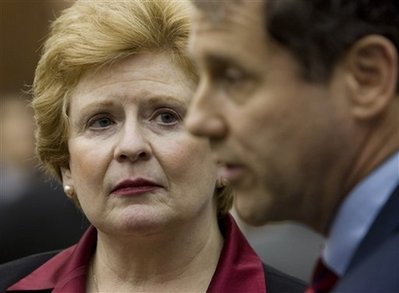
Sen. Debbie Stabenow, D-Mich, left, listens to Sen. Sherrod Brown, D-Ohio, speaking about the Senate’s rejection of an emergency $14 billion loan bailout for US auto companies, Thursday, Dec. 11, 2008, on Capitol Hill in Washington. Photo by Haraz N. Ghanbari / AP.

The Republican Party, now the Party of ‘Southernism,’ always aimed at killing the UAW in this ‘bailout.’ As low as the wages are that the UAW agreed to in their 2007 contract, they are not as low as the non-union wages paid by Toyota, Honda, Hyundai and Mercedes-Benz in their factories spread through the Old Confederacy, land of the ‘right to work.’

By Thomas Cleaver / The Rag Blog / December 12, 2008

See ‘From the front lines in the class war’ by Steve Russell. and ‘Auto bailout talks collapse as Senate deadlocks over wages’ by Paul Kane, Below.

Republicans killed the auto bailout Thursday night when Democrats refused to agree to the Big Three automakers being required to achieve wage parity with Japanese car factories in the South by the end of the 2009.

Well, now we have the real deal, out on the table for all to see.

The Republican Party, now the Party of “Southernism,” always aimed at killing the UAW in this “bailout.” As low as the wages are that the UAW agreed to in their 2007 contract, they are not as low as the non-union wages paid by Toyota, Honda, Hyundai and Mercedes-Benz in their factories spread through the Old Confederacy, land of the “right to work.”

The Southern Republicans who control the party now are terrified of the Employee Free Choice Act, which will be passed next year, and which would give the UAW a strong tool to break the back of the Southern reactionaries who have always dominated the Southern economy. Unionism might have brought the thing the old slaveocracy (however it’s disguised itself in the past 140 years) has always, always feared: that the lower classes in the South might finally open their eyes and start acting in their own best economic interests, which would mean the end of Southernism. They’re so afraid of this, they’re willing to see the country fall apart, which is the course they have set us on.

From the front lines in the class war

So, last night after prime time, senate Repugs killed the Detroit bailout over….the guys on the line making too much money.

This is the most flagrant shell heaved at the working class since Reagan claimed the way to balance the budget was to make people who waited tables pay all the taxes due on their tips.

No, the Dems did not even come close to having the votes for cloture. But I, for one, would have loved the symbolism of a real live filibuster running over Christmas where the major issue is American workers making too much money!

The last blows of the negotiation, if I am correctly informed, was the Repugs demanding that the UAW take wage cuts immediately that are currently contracted to hit in 2010.

The UAW agreed provided they be given a seat on the GM board.

So you can see the union was hell bent on class warfare, eh?

Steve Russell / The Rag Blog / December 12, 2008

Auto bailout talks collapse as Senate deadlocks over wages
Without a deal, carmakers face bankruptcy threat

By Paul Kane / December 12, 2008

An eleventh-hour effort to salvage a proposed $14 billion rescue plan for the auto industry collapsed late last night as Republicans and Democrats failed to agree on the timing of deep wage cuts for union workers, killing the legislative plan and threatening America’s carmakers with bankruptcy.

“We’re not going to get to the finish line. That’s just the way it is. There’s too much difference between the two sides,” Senate Majority Leader Harry M. Reid (D-Nev.) announced after 10 p.m., concluding a marathon negotiating session that ended in gridlock. Reid warned that financial markets could plummet when trading opens this morning.

“I dread looking at Wall Street tomorrow. It’s not going to be a pleasant sight,” he said.

The legislation would have provided emergency loans to General Motors and Chrysler, which have said they face imminent collapse without federal help. The high-stakes talks broke down over when the wages of union workers would be slashed to the same level as those paid to nonunion workers at U.S. plants of foreign automakers such as Toyota and Honda.

Sen. Bob Corker (Tenn.), the lead GOP negotiator, said the sides were on the brink of a deal on the amendment he had offered. Representatives from the United Auto Workers — who were present for most of the negotiations — would not agree to a specific date, Corker said.

“We offered any day — any day — in 2009,” Corker said.

Minutes after the talks failed, the Senate voted on the bailout measure that had been approved Wednesday by the House on a largely party-line vote, 237-170. In the Senate, the vote was 52-35, eight votes short of the 60 needed to override a Republican filibuster. Of those voting yes, 10 Republicans joined 42 Democrats.

“It’s disappointing that Congress failed to act tonight,” the White House said in a statement. “We think the legislation we negotiated provided an opportunity to use funds already appropriated for automakers and presented the best chance to avoid a disorderly bankruptcy while ensuring taxpayer funds only go to firms whose stakeholders were prepared to make difficult decisions to become viable.”

GM said last night it was “deeply disappointed” that negotiations failed to produce an agreement. “We will assess all of our options to continue our restructuring and to obtain the means to weather the current economic crisis,” the company said in a statement.

A Chrysler spokeswoman said the company would “continue to pursue a workable solution to help ensure [its] future viability.”

The Senate closed out its legislative session for the year but will stay open for pro forma sessions until the next Congress begins Jan. 6. Reid and Senate Minority Leader Mitch McConnell (R.-Ky.) agreed that the auto rescue would not happen this year.

Stock markets in Asia tumbled on the news. Japan’s benchmark Nikkei average fell more than 6 percent in midday trading, while stocks in Hong Kong slipped more than 7 percent.

Auto industry executives and lawmakers supportive of the industry have said they hope that the Federal Reserve might step in with a loan or that Treasury Secretary Henry M. Paulson Jr. might provide emergency funding from the government’s financial rescue program. But Paulson and others in the Bush administration — which had urged the Senate to pass the bailout measure approved by the House — have argued that the rescue program is intended to stabilize the financial services industry and should not be used for other purposes.

“That is the only viable option available at this time,” House Speaker Nancy Pelosi (D-Calif.) said in a statement after the Senate vote.

In discussions with the White House this week, congressional Democrats again raised the idea of funding the automaker bailout out of the rescue program. White House spokesman Tony Fratto said yesterday before the talks collapsed that the administration “has not engaged” lawmakers on the proposal.

The failed negotiations came despite a plea earlier in the day from President-elect Barack Obama for passage of the legislation to spare GM or Chrysler from having to file for bankruptcy protection, a prospect that has grown real enough for both firms to hire lawyers to deal with such a scenario. Chrysler acknowledged last week that it was working with Jones Day; last night, sources said GM had hired Weil, Gotshal & Manges, as well as turnaround veterans William Repko of Evercore Partners, Arthur Newman of Blackstone Group and Jay Alix.

It wasn’t clear whether GM, in particular, could survive until January. If the industry can hang on that long, Reid said last night, the legislation would be revived next year — when a Democratic majority in the Senate might be large enough to defeat any GOP filibuster attempts.

Corker and Sen. Christopher J. Dodd (D-Conn.), chairman of the Banking Committee, had led negotiations all afternoon and into the evening trying rescue the faltering proposal.

“Nothing is agreed to until everything is agreed to,” said Dodd, who appeared to be somewhat optimistic as he exited the negotiations after 8 p.m.

The negotiations were based on a plan advanced by Corker, the most junior member of the Banking Committee. His proposal sought to reduce the wages and benefits of union workers by requiring the automakers’ total labor costs to be “on par” with Honda and Toyota.

The two sides agreed to most other issues, including those requiring automakers to reduce their debt obligations by at least two-thirds through an equity swap with bondholders. Payouts to workers who are laid off or temporarily furloughed would have been terminated.

Ford, unlike General Motors and Chrysler, has said it does not need bridge loans at this point and would not need to agree to those conditions.

But no agreement could be reached on the wage reductions. “It sounds like UAW blew up the deal,” Sen. Jim DeMint (R-S.C.) said afterward.

The initial agreement in the House called for the government to issue the loans to GM and Chrysler as early as next week and for President Bush to immediately name a “car czar” to oversee the bailout. The companies would be required by March 31 to cut costs, restructure debt and obtain concessions from labor sufficient to report a positive net present value.

If the firms failed to make progress toward that goal, the agreement would have required the car czar to revoke the loans and develop a new plan that could have included the option of seeking Chapter 11 bankruptcy protection. If the companies had failed to agree on steps to guarantee their long-term survival, they would have been denied additional federal assistance.

Corker — a freshman senator who a few years ago was mayor of Chattanooga — was a strong opponent of the House plan to save the automakers.

He and other Republicans had revolted against the earlier plan because they thought it did not go far enough in forcing contracts on the UAW. GM officials have told Congress, for instance, that under the most recent contract, labor costs would be about $62 per hour in 2010 — $30 per hour in wages and slightly more than that in benefits to current workers and retirees. That’s about $14 per hour more than at Toyota’s U.S. plants.

Some Republicans said they doubted that the automakers could remain viable and return to profitability. Others, frustrated with the Treasury’s financial rescue program, were skeptical of approving another bailout.

The Corker plan was the last chance at passing any legislation for the auto industry, senators said.

“Absent that,” said Sen. Jon Kyl (R-Ariz.), the minority whip, “nothing’s going to pass.”

[Washington Post staff writers Kendra Marr, David Cho and Steven Mufson contributed to this report.]

Source / Washington Post

The Rag Blog

Posted in Rag Bloggers | Tagged , , , , , | 1 Comment

Homophobic Hip Hopper Trick Trick Promotes Anti-Gay Violence

Gay hater Trick Trick opens for Ice Cube at Texas clubs.

“He goes both ways. Either way he’s gay. Ain’t no other way to say, he’s a f**king faggot so I’m lettin’ off my AK. Bust ’em in his forehead. He ain’t worth lettin’ live. A man and man shouldn’t raise another man’s kids!

Trick Trick lyrics.

December 11, 2008

Homophobic HipHop artist Trick Trick is on a multi-city tour of Texas this week, with stops in Houston, Dallas and Austin. [Trick Trick opens for Ice Cube at Austin’s Mohawk Sunday, Dec. 14.]

In an interview with AllHipHop.com , Trick Trick stated:

“I’ma go on the record right now with this. Homosexuals are probably not gonna like this album. I don’t want your faggot money any g**d*** way. I don’t like it [homosexuality]. Carry that sh*t somewhere else. It’s just that every time that you turn on the TV, that sissy sh*t is on…and they act like its f**king okay. The world is changing for the worst (sic) when sh*t like that happens. And I address that issue. I address it hard as hell.” [Asterisks not added by The Rag Blog.]

Free speech is free speech. Trick Trick has a right to make his own personal views about gay people heard. But, where is the line between free speech and inciting acts of violence?

Trick Trick’s lyrics target gay people:

“He goes both ways. Either way he’s gay. Ain’t no other way to say, he’s a f**king faggot so I’m lettin’ off my AK. Bust ’em in his forehead. He ain’t worth lettin’ live. A man and man shouldn’t raise another man’s kids!”

Do these lyrics cross the legal line? Could these lyrics incite someone to commit a violent act?

Free speech facilitates the exchange of ideas. The threat of violence halts any free exchange of ideas.

These lyrics seek to justify violence against gay people. These lyrics are exactly the type of threats and intimidation that incite violence against people based on actual or perceived sexual orientation or gender identity/expression.

These lyrics are beyond reprehensible.

Trick Trick is the opening act for the popular Ice Cube. For its part, the Austin venue, The Mohawk, has issued the following statement on its website.

Although we are monster fans of Ice Cube and his records over the years, we personally do not support the views of his opening act, Trick Trick, when it comes to gay rights and more simply put, human rights. Openers generally come with the package on big events like this, and to be honest, we didnt even check this guy out until last week. He is clearly an idiot.

At the Mohawk, as it always has been, and will always be a policy of ALL ARE WELCOME. This includes geeks, politicians, homosexuals, heterosexuals, teachers, students, hipsters, punks, freaks, squares, bankers, lawyers, artists, metal heads, moms, dads, sons and daughters…and yes…sometimes even assholes like Trick Trick. I don’t think he will feel too welcome at this event though, and I hope he doesn’t. His personal statements are counter to the culture that has developed at the Mohawk, so my guess is he will be there for the electricity on stage, get heckled, and leave.

As you know, as a music venue, we can’t get in the business of policing free speech or projecting our personal religious or political beliefs on shows because we would probably have to cancel half of what is booked if we really looked into certain lyrics, records, etc. Essentially, everything we know about great music is that it comes from the freedom to scream, yell, speak your mind, and sometimes…piss people off. We don’t like or agree with everything we hear, but we love the fact that this country allows everyone to speak freely and without abandon. It is that ideal that makes music great.

With that said, as a live music venue we don’t believe in censorship…but as individuals, we feel like Trick Trick crosses a very important line and it’s not OK with us. As for me, I will be showing up when the headliner begins and not before.

AS FOR ICE CUBE…WE FRIGGIN LOVE THAT KID AND ARE STOKED TO SEE HIM ON OUR STAGE.

Thanks to Equality Texas.

The Rag Blog

Posted in RagBlog | Tagged , , , , , , | 4 Comments

Joseph E. Stiglitz on the Economic Crisis : Capitalist Fools

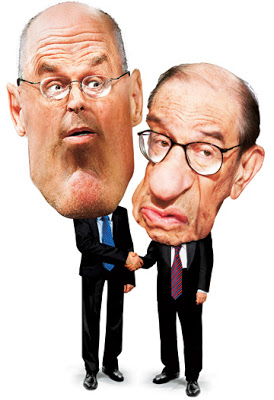
Treasury Secretary Henry Paulson and former Federal Reserve Board chairman Alan Greenspan bookend two decades of economic missteps. Photo illustration by Darrow / Vanity Fair.

Behind the debate over remaking U.S. financial policy will be a debate over who’s to blame. It’s crucial to get the history right, writes a Nobel-laureate economist, identifying five key mistakes—under Reagan, Clinton, and Bush II—and one national delusion.

By Joseph E. Stiglitz

[This article appears in the January issue of Vanity Fair magazine. Joseph E. Stiglitz, a Nobel Prize winning economist, is a professor at Columbia University.]

There will come a moment when the most urgent threats posed by the credit crisis have eased and the larger task before us will be to chart a direction for the economic steps ahead. This will be a dangerous moment. Behind the debates over future policy is a debate over history—a debate over the causes of our current situation. The battle for the past will determine the battle for the present. So it’s crucial to get the history straight.

What were the critical decisions that led to the crisis? Mistakes were made at every fork in the road—we had what engineers call a “system failure,” when not a single decision but a cascade of decisions produce a tragic result. Let’s look at five key moments.

No. 1: Firing the Chairman

In 1987 the Reagan administration decided to remove Paul Volcker as chairman of the Federal Reserve Board and appoint Alan Greenspan in his place. Volcker had done what central bankers are supposed to do. On his watch, inflation had been brought down from more than 11 percent to under 4 percent. In the world of central banking, that should have earned him a grade of A+++ and assured his re-appointment. But Volcker also understood that financial markets need to be regulated. Reagan wanted someone who did not believe any such thing, and he found him in a devotee of the objectivist philosopher and free-market zealot Ayn Rand.

Greenspan played a double role. The Fed controls the money spigot, and in the early years of this decade, he turned it on full force. But the Fed is also a regulator. If you appoint an anti-regulator as your enforcer, you know what kind of enforcement you’ll get. A flood of liquidity combined with the failed levees of regulation proved disastrous.

Greenspan presided over not one but two financial bubbles. After the high-tech bubble popped, in 2000–2001, he helped inflate the housing bubble. The first responsibility of a central bank should be to maintain the stability of the financial system. If banks lend on the basis of artificially high asset prices, the result can be a meltdown—as we are seeing now, and as Greenspan should have known. He had many of the tools he needed to cope with the situation. To deal with the high-tech bubble, he could have increased margin requirements (the amount of cash people need to put down to buy stock). To deflate the housing bubble, he could have curbed predatory lending to low-income households and prohibited other insidious practices (the no-documentation—or “liar”—loans, the interest-only loans, and so on). This would have gone a long way toward protecting us. If he didn’t have the tools, he could have gone to Congress and asked for them.

Of course, the current problems with our financial system are not solely the result of bad lending. The banks have made mega-bets with one another through complicated instruments such as derivatives, credit-default swaps, and so forth. With these, one party pays another if certain events happen—for instance, if Bear Stearns goes bankrupt, or if the dollar soars. These instruments were originally created to help manage risk—but they can also be used to gamble. Thus, if you felt confident that the dollar was going to fall, you could make a big bet accordingly, and if the dollar indeed fell, your profits would soar. The problem is that, with this complicated intertwining of bets of great magnitude, no one could be sure of the financial position of anyone else—or even of one’s own position. Not surprisingly, the credit markets froze.

Here too Greenspan played a role. When I was chairman of the Council of Economic Advisers, during the Clinton administration, I served on a committee of all the major federal financial regulators, a group that included Greenspan and Treasury Secretary Robert Rubin. Even then, it was clear that derivatives posed a danger. We didn’t put it as memorably as Warren Buffett—who saw derivatives as “financial weapons of mass destruction”—but we took his point. And yet, for all the risk, the deregulators in charge of the financial system—at the Fed, at the Securities and Exchange Commission, and elsewhere—decided to do nothing, worried that any action might interfere with “innovation” in the financial system. But innovation, like “change,” has no inherent value. It can be bad (the “liar” loans are a good example) as well as good.

No. 2: Tearing Down the Walls

The deregulation philosophy would pay unwelcome dividends for years to come. In November 1999, Congress repealed the Glass-Steagall Act—the culmination of a $300 million lobbying effort by the banking and financial-services industries, and spearheaded in Congress by Senator Phil Gramm. Glass-Steagall had long separated commercial banks (which lend money) and investment banks (which organize the sale of bonds and equities); it had been enacted in the aftermath of the Great Depression and was meant to curb the excesses of that era, including grave conflicts of interest. For instance, without separation, if a company whose shares had been issued by an investment bank, with its strong endorsement, got into trouble, wouldn’t its commercial arm, if it had one, feel pressure to lend it money, perhaps unwisely? An ensuing spiral of bad judgment is not hard to foresee. I had opposed repeal of Glass-Steagall. The proponents said, in effect, Trust us: we will create Chinese walls to make sure that the problems of the past do not recur. As an economist, I certainly possessed a healthy degree of trust, trust in the power of economic incentives to bend human behavior toward self-interest—toward short-term self-interest, at any rate, rather than Tocqueville’s “self interest rightly understood.”

The most important consequence of the repeal of Glass-Steagall was indirect—it lay in the way repeal changed an entire culture. Commercial banks are not supposed to be high-risk ventures; they are supposed to manage other people’s money very conservatively. It is with this understanding that the government agrees to pick up the tab should they fail. Investment banks, on the other hand, have traditionally managed rich people’s money—people who can take bigger risks in order to get bigger returns. When repeal of Glass-Steagall brought investment and commercial banks together, the investment-bank culture came out on top. There was a demand for the kind of high returns that could be obtained only through high leverage and big risktaking.

There were other important steps down the deregulatory path. One was the decision in April 2004 by the Securities and Exchange Commission, at a meeting attended by virtually no one and largely overlooked at the time, to allow big investment banks to increase their debt-to-capital ratio (from 12:1 to 30:1, or higher) so that they could buy more mortgage-backed securities, inflating the housing bubble in the process. In agreeing to this measure, the S.E.C. argued for the virtues of self-regulation: the peculiar notion that banks can effectively police themselves. Self-regulation is preposterous, as even Alan Greenspan now concedes, and as a practical matter it can’t, in any case, identify systemic risks—the kinds of risks that arise when, for instance, the models used by each of the banks to manage their portfolios tell all the banks to sell some security all at once.

As we stripped back the old regulations, we did nothing to address the new challenges posed by 21st-century markets. The most important challenge was that posed by derivatives. In 1998 the head of the Commodity Futures Trading Commission, Brooksley Born, had called for such regulation—a concern that took on urgency after the Fed, in that same year, engineered the bailout of Long-Term Capital Management, a hedge fund whose trillion-dollar-plus failure threatened global financial markets. But Secretary of the Treasury Robert Rubin, his deputy, Larry Summers, and Greenspan were adamant—and successful—in their opposition. Nothing was done.

No. 3: Applying the Leeches

Then along came the Bush tax cuts, enacted first on June 7, 2001, with a follow-on installment two years later. The president and his advisers seemed to believe that tax cuts, especially for upper-income Americans and corporations, were a cure-all for any economic disease—the modern-day equivalent of leeches. The tax cuts played a pivotal role in shaping the background conditions of the current crisis. Because they did very little to stimulate the economy, real stimulation was left to the Fed, which took up the task with unprecedented low-interest rates and liquidity. The war in Iraq made matters worse, because it led to soaring oil prices. With America so dependent on oil imports, we had to spend several hundred billion more to purchase oil—money that otherwise would have been spent on American goods. Normally this would have led to an economic slowdown, as it had in the 1970s. But the Fed met the challenge in the most myopic way imaginable. The flood of liquidity made money readily available in mortgage markets, even to those who would normally not be able to borrow. And, yes, this succeeded in forestalling an economic downturn; America’s household saving rate plummeted to zero. But it should have been clear that we were living on borrowed money and borrowed time.

The cut in the tax rate on capital gains contributed to the crisis in another way. It was a decision that turned on values: those who speculated (read: gambled) and won were taxed more lightly than wage earners who simply worked hard. But more than that, the decision encouraged leveraging, because interest was tax-deductible. If, for instance, you borrowed a million to buy a home or took a $100,000 home-equity loan to buy stock, the interest would be fully deductible every year. Any capital gains you made were taxed lightly—and at some possibly remote day in the future. The Bush administration was providing an open invitation to excessive borrowing and lending—not that American consumers needed any more encouragement.

No. 4: Faking the Numbers

Meanwhile, on July 30, 2002, in the wake of a series of major scandals—notably the collapse of WorldCom and Enron—Congress passed the Sarbanes-Oxley Act. The scandals had involved every major American accounting firm, most of our banks, and some of our premier companies, and made it clear that we had serious problems with our accounting system. Accounting is a sleep-inducing topic for most people, but if you can’t have faith in a company’s numbers, then you can’t have faith in anything about a company at all. Unfortunately, in the negotiations over what became Sarbanes-Oxley a decision was made not to deal with what many, including the respected former head of the S.E.C. Arthur Levitt, believed to be a fundamental underlying problem: stock options. Stock options have been defended as providing healthy incentives toward good management, but in fact they are “incentive pay” in name only. If a company does well, the C.E.O. gets great rewards in the form of stock options; if a company does poorly, the compensation is almost as substantial but is bestowed in other ways. This is bad enough. But a collateral problem with stock options is that they provide incentives for bad accounting: top management has every incentive to provide distorted information in order to pump up share prices.

The incentive structure of the rating agencies also proved perverse. Agencies such as Moody’s and Standard & Poor’s are paid by the very people they are supposed to grade. As a result, they’ve had every reason to give companies high ratings, in a financial version of what college professors know as grade inflation. The rating agencies, like the investment banks that were paying them, believed in financial alchemy—that F-rated toxic mortgages could be converted into products that were safe enough to be held by commercial banks and pension funds. We had seen this same failure of the rating agencies during the East Asia crisis of the 1990s: high ratings facilitated a rush of money into the region, and then a sudden reversal in the ratings brought devastation. But the financial overseers paid no attention.

No. 5: Letting It Bleed

The final turning point came with the passage of a bailout package on October 3, 2008—that is, with the administration’s response to the crisis itself. We will be feeling the consequences for years to come. Both the administration and the Fed had long been driven by wishful thinking, hoping that the bad news was just a blip, and that a return to growth was just around the corner. As America’s banks faced collapse, the administration veered from one course of action to another. Some institutions (Bear Stearns, A.I.G., Fannie Mae, Freddie Mac) were bailed out. Lehman Brothers was not. Some shareholders got something back. Others did not.

The original proposal by Treasury Secretary Henry Paulson, a three-page document that would have provided $700 billion for the secretary to spend at his sole discretion, without oversight or judicial review, was an act of extraordinary arrogance. He sold the program as necessary to restore confidence. But it didn’t address the underlying reasons for the loss of confidence. The banks had made too many bad loans. There were big holes in their balance sheets. No one knew what was truth and what was fiction. The bailout package was like a massive transfusion to a patient suffering from internal bleeding—and nothing was being done about the source of the problem, namely all those foreclosures. Valuable time was wasted as Paulson pushed his own plan, “cash for trash,” buying up the bad assets and putting the risk onto American taxpayers. When he finally abandoned it, providing banks with money they needed, he did it in a way that not only cheated America’s taxpayers but failed to ensure that the banks would use the money to re-start lending. He even allowed the banks to pour out money to their shareholders as taxpayers were pouring money into the banks.

The other problem not addressed involved the looming weaknesses in the economy. The economy had been sustained by excessive borrowing. That game was up. As consumption contracted, exports kept the economy going, but with the dollar strengthening and Europe and the rest of the world declining, it was hard to see how that could continue. Meanwhile, states faced massive drop-offs in revenues—they would have to cut back on expenditures. Without quick action by government, the economy faced a downturn. And even if banks had lent wisely—which they hadn’t—the downturn was sure to mean an increase in bad debts, further weakening the struggling financial sector.

The administration talked about confidence building, but what it delivered was actually a confidence trick. If the administration had really wanted to restore confidence in the financial system, it would have begun by addressing the underlying problems—the flawed incentive structures and the inadequate regulatory system.

Was there any single decision which, had it been reversed, would have changed the course of history? Every decision—including decisions not to do something, as many of our bad economic decisions have been—is a consequence of prior decisions, an interlinked web stretching from the distant past into the future. You’ll hear some on the right point to certain actions by the government itself—such as the Community Reinvestment Act, which requires banks to make mortgage money available in low-income neighborhoods. (Defaults on C.R.A. lending were actually much lower than on other lending.) There has been much finger-pointing at Fannie Mae and Freddie Mac, the two huge mortgage lenders, which were originally government-owned. But in fact they came late to the subprime game, and their problem was similar to that of the private sector: their C.E.O.’s had the same perverse incentive to indulge in gambling.

The truth is most of the individual mistakes boil down to just one: a belief that markets are self-adjusting and that the role of government should be minimal. Looking back at that belief during hearings this fall on Capitol Hill, Alan Greenspan said out loud, “I have found a flaw.” Congressman Henry Waxman pushed him, responding, “In other words, you found that your view of the world, your ideology, was not right; it was not working.” “Absolutely, precisely,” Greenspan said. The embrace by America—and much of the rest of the world—of this flawed economic philosophy made it inevitable that we would eventually arrive at the place we are today.

Source / Vanity Fair

Thanks to Jim Retherford / The Rag Blog

Posted in RagBlog | Tagged , , , , , | Leave a comment

Senate Report on Torture : Blood on Rummy’s Hands

Rummy the Impaler. Photo by Roger L. Wollenberg / UPI

Senate places blame on Rumsfeld:
‘The abuse of detainees in U.S. custody cannot simply be attributed to the actions of “a few bad apples” acting on their own.’

By Joby Warrick / December 11, 2008

WASHINGTON – A bipartisan Senate report released today says that former Defense Secretary Donald Rumsfeld and other top Bush administration officials are directly responsible for abuses of detainees at Guantanamo Bay, Cuba, and charges that decisions by those officials led to serious offenses against prisoners in Iraq and elsewhere.

The Senate Armed Services Committee report accuses Rumsfeld and his deputies of being the principal architects of the plan to use harsh interrogation techniques on captured fighters and terrorism suspects, rejecting the Bush administration’s contention that the policies originated lower down the command chain.

“The abuse of detainees in U.S. custody cannot simply be attributed to the actions of ‘a few bad apples’ acting on their own,” the panel concludes. “The fact is that senior officials in the United States government solicited information on how to use aggressive techniques, redefined the law to create the appearance of their legality, and authorized their use against detainees.”

The report, released by Sens. Carl Levin, D-Mich., and John McCain, R-Ariz., and based on a nearly two-year investigation, said that both the policies and resulting controversies tarnished the reputation of the United States and undermined national security. “Those efforts damaged our ability to collect accurate intelligence that could save lives, strengthened the hand of our enemies, and compromised our moral authority,” it said.

The panel’s investigation focused on the Defense Department’s use of controversial interrogation practices, including forced nudity, painful stress positions, sleep deprivation, extreme temperatures and use of dogs. The practices, some of which had already been adopted by the CIA at its secret prisons, were adapted for interrogations at Guantanamo Bay and later migrated to U.S. detention camps in Afghanistan and Iraq, including the infamous Abu Ghraib prison.

“The Committee’s report details the inexcusable link between abusive interrogation techniques used by our enemies who ignored the Geneva Conventions and interrogation policy for detainees in U.S. custody,” McCain, himself a former prisoner of war in Vietnam, said in a statement. “These policies are wrong and must never be repeated.”

White House officials have maintained the measures were approved in response to demands from field officers who complained that traditional interrogation methods weren’t working on some of the more hardened captives. But Senate investigators, relying on documents and hours of hearing testimony, arrived at a different conclusion.

The true genesis of the decision to use coercive techniques, the report said, was a memo signed by President Bush on Feb. 7, 2002, declaring that the Geneva Convention’s standards for humane treatment did not apply to captured al-Qaida and Taliban fighters. As early as that spring, the panel said, top administration officials, including National Security Adviser Condoleezza Rice, participated in meetings in which the use of coercive measures was discussed. The panel drew on a written statement by Rice, released earlier this year, to support that conclusion.

In July 2002, Rumseld’s senior staff began compiling information about techniques used in military survival schools to simulate conditions that U.S. airmen might face if captured by an enemy that did not follow the Geneva conditions. Those techniques – borrowed from a training program known as Survival, Evasion, Resistance and Escape, or SERE – included waterboarding, or simulated drowning, and were loosely based on methods adopted by Chinese communists to coerce propaganda confessions from captured U.S. soldiers during the Korean war.

The SERE program became the template for interrogation methods that were ultimately approved by Rumsfeld himself, the report says. In the field, U.S. military interrogators used the techniques with little oversight and frequently abusive results, the panel found.

“It is particularly troubling that senior officials approved the use of interrogation techniques that were originally designed to simulate abusive tactics used by our enemies against our own soldiersand that were modeled, in part, on tactics used by the Communist Chinese to elicit false confessions from U.S. military personnel,” the report said.

Defenders of the techniques have argued that such measures were justified because of al-Qaida’s demonstrated disregard for human life. But the panel members cited the views of Gen. David Petraeus, now the head of U.S. Central Command, who in a May, 2007 letter to his troops said humane treatment of prisoners allows Americans to occupy the moral high ground.

“Our values and the laws governing warfare teach us to respect human dignity, maintain our integrity, and do what is right,” wrote Petraeus, who at the time was the top U.S. commander in Iraq. “Adherence to our values distinguishes us from our enemy.”

Source / CommonDreams

The Rag Blog

Posted in RagBlog | Tagged , , , , , , | Leave a comment

Bush Throws Polar Bears Under the Bus

Polar bear reacts to today’s news.

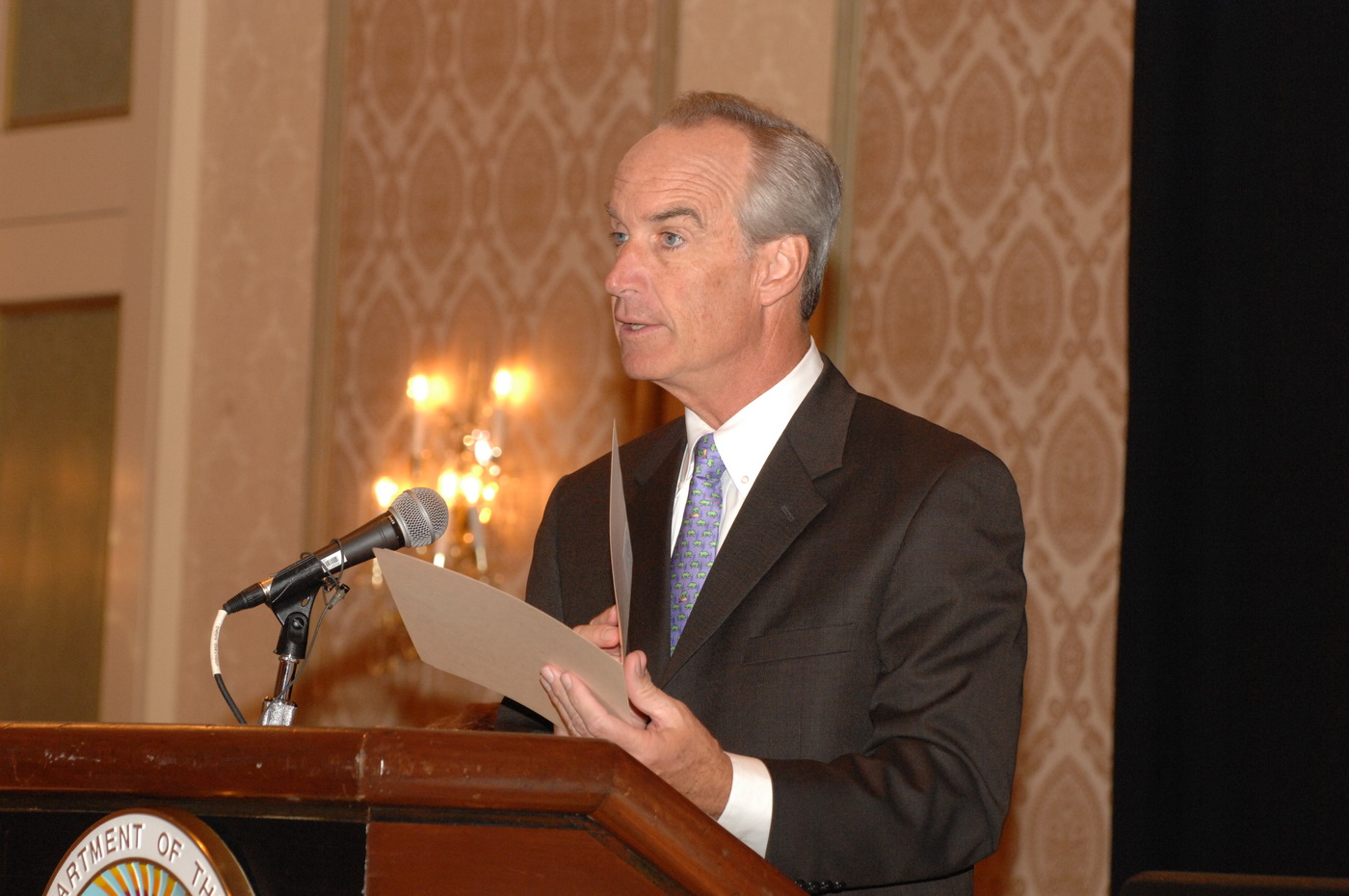
Interior Secretary Dirk Kempthorne announces revisions to Endangered Species Act.

‘To finally admit that the science compels the listing of the polar bear as threatened due to global warming, but then deny it the protections the Endangered Species Act should provide is nothing other than irresponsible and shameful.’ — Defenders of Wildlife’s Jamie Rappaport Clark.

By Erin McCallum / December 11, 2008

See ‘Bush revises protections for endangered species’ by Dina Cappeillo, Below.

WASHINGTON – The U.S. Fish and Wildlife Service (FWS) announced today that it will deny the polar bear the appropriate and necessary protections of the Endangered Species Act (ESA).

“This rule makes a mockery of the Endangered Species Act, our nation’s most important wildlife protection law,” said Defenders of Wildlife executive vice president, Jamie Rappaport Clark. “The polar bear doesn’t have time for political maneuvers. Its habitat is melting away, its food is becoming scarce and the science is clear that the cause is global warming – yet the rule this administration released today affirms that little will be done to save the species from sure extinction.”

Defenders of Wildlife has already filed suit in federal court contesting the legality of a previous, “interim final” version of this rule, and will challenge this new final rule as well to ensure that the polar bear, which was listed as “threatened” under the ESA on May 14, 2008 receives the full protections that other species receive under the ESA.

“We are forced to challenge this rule because it denies vital protections to the polar bear that it needs to survive,” said Clark.

Listing polar bears as threatened should help protect polar bear habitat from threats such as oil and gas development, which the Bush administration is aggressively pursuing in the Chukchi Sea north of Alaska and has even proposed in the pristine Arctic National Wildlife Refuge, which provides the primary land denning habitat for the species. Instead, the administration has made it clear with its 4(d) rule that the ESA will not provide any additional protections from these and other harmful activities than those that already exist under the Marine Mammal Protection Act (MMPA), and will provide no protection whatsoever against emissions of greenhouse gases that are causing the rise in global temperatures that directly threaten the polar bear.

Specifically, the 4(d) rule eliminates some of the necessary protections for the polar bear and its habitat under the ESA, based on the incorrect assertion that the polar bear is already adequately protected under other laws, such as the MMPA. Furthermore, the rule states that the ESA’s protections against “incidental take” – death or harm to polar bears caused by human activities such as oil and gas development – do not apply at all if those activities occur outside of Alaska.

“It’s really not surprising that the Bush administration, with its longstanding resistance to taking any responsible action against global warming, would think of a stunt like this in its waning days in office” said Clark. “To finally admit that the science compels the listing of the polar bear as threatened due to global warming, but then deny it the protections the Endangered Species Act should provide is nothing other than irresponsible and shameful.”

History:

The polar bear is the largest of the world’s bear species and is distributed among nineteen Arctic subpopulations – two of which, the Chukchi and the Southern Beaufort Sea populations, are located within the United States.

Polar bears are threatened with extinction from global warming, which is melting the Arctic sea ice where polar bears hunt for ringed and bearded seals, their primary food source.

The U.S. Geological Survey published a series of reports predicting that loss of summer sea ice—crucial habitat for polar bears—could lead to the demise of two-thirds of the world’s polar bears by mid-century, including all of Alaska’s polar bears.

[Defenders of Wildlife is dedicated to the protection of all native animals and plants in their natural communities. With more than 1 million members and activists, Defenders of Wildlife is a leading advocate for innovative solutions to safeguard our wildlife heritage for generations to come.]

Source / Defenders of Wildlife

Bush revises protections for endangered species
By Dina Cappeillo / December 11, 2008

WASHINGTON -— Just six weeks before President-elect Barack Obama takes office, the Bush administration issued revised endangered species regulations Thursday to reduce the input of federal scientists and to block the law from being used to fight global warming.

The changes, which will go into effect in about 30 days, were completed in just four months. But they could take Obama much longer to reverse.

They will eliminate some of the mandatory, independent reviews that government scientists have performed for 35 years on dams, power plants, timber sales and other projects, a step that developers and other federal agencies have blamed for delays and cost increases.

The rules also prohibit federal agencies from evaluating the effect on endangered species and the places they live from a project’s contribution to increased global warming.

Interior Department officials described the changes as “narrow”, but environmentalists saw them as eroding the protections for endangered species.

Interior officials said federal agencies could still seek the expertise of federal wildlife biologists on a voluntary basis, and that other parts of the law will ensure that species are protected.

“Nothing in this regulation relieves a federal agency of its responsibilities to ensure that species are not harmed,” said Interior Secretary Dirk Kempthorne in a conference call with reporters.

Current rules require biologists in the Fish and Wildlife Service and National Marine Fisheries Service to sign off on projects even when it is determined that they are not likely to harm species. The rule finalized Wednesday would do away with that requirement, reducing the number of consultations so that the government’s experts can focus on cases that pose the greatest harm to wildlife, officials said.

But environmentalists said that the rule changes would put decisions about endangered species into the hands of agencies with a vested interest in advancing a project and with little expertise about wildlife. Several groups planned to file lawsuits immediately.

“This new rule is essentially a changing of the guard for determining how government projects will affect endangered species,” said Francesca Grifo, director of the Scientific Integrity Program at the Union of Concerned Scientists. “Instead of expert biologists taking the first look at potential consequences, any federal agency, regardless of its expertise, will now be able to make decisions that should be determined by the best available science.”

Between 1998 and 2002, the Fish and Wildlife Service conducted 300,000 consultations. The National Marine Fisheries Service, which evaluates projects affecting marine species, conducts about 1,300 reviews each year.

The reviews have helped safeguard protected species such as bald eagles, Florida panthers and whooping cranes. A federal government handbook from 1998 described the consultations as “some of the most valuable and powerful tools to conserve listed species.”

Obama has said he would work to reverse the changes. But because the rule takes effect before he is sworn in, he would have to restart the lengthy rulemaking process. Congressional lawmakers have also vowed to take action, perhaps through a rarely used law that allows review of new federal regulations.

In a related development, the Bush administration also finalized on Wednesday a special rule for the polar bear, a species that was listed as threatened in May because of global warming. The rule would allow oil and gas exploration in areas where the bears live, as long as the companies comply with the Marine Mammal Protection Act.

Source / AP

View final 4(d) rule here.

Also see Interior Publishes Final Narrow Changes to ESA Regulations, Clarifies Role of Global Processes in Consultation / US Dept of the Interior / Dec. 11, 2008

The Rag Blog

Posted in RagBlog | Tagged , , , , , , | 1 Comment

HEALTH CARE / Western Medicine and the Dilemma of Life’s End

One version of life’s end: Charon the ferryman.

I do not write these observations as a medical ethics expert, but merely as an 87 year old retired physician, a secularist, with cancer of the prostate; thus, with some insight into what lies ahead.’

By Dr. Stephen R. Keister / The Rag Blog / December 11, 2008

The mythology of Classical Greece involved the end of life concept that one awaited on the banks of the River Styx for old Charon’s barge to carry one across to the Elysian fields. Unfortunately the 3,000 or more years of the Abrahamic Religions creates a much more complex problem for the current resident of the United States to face, especially in these times of economic uncertainty, as I will explain. These problems are not being discussed, save in very brief reports, by the mainstream media; however, I fear, that many of use who have not faced, or sublimated, the concerns to be addressed will suddenly be faced by harsh realities.

I do not write these observations as a medical ethics expert, but merely as an 87 year old retired physician, a secularist, with cancer of the prostate; thus, with some insight into what lies ahead. If one is interested in medical ethics I would suggest James Drane Phd’s excellent book “More Humane Medicine.” I would also suggest that one carefully read a release from the New Zealand Catholic Bioethics Center, June 2001 where Pope Pius XII’s address to the 1957 Congress of Anesthesiologists regarding the prolonging of life by “extraordinary means” is summarized by the medico-moralist, Gerard Kelly; “ordinary means” are all medicines, treatments, and operations, which offer a reasonable benefit and which can be obtained and used without excessive expense, pain, or other inconvenience. “Extraordinary means” are all medicines, treatments, and operations, which cannot be obtained or used without excessive expense, pain, or other inconvenience, or which, if used, would not offer a reasonable hope of benefit.”

Pope Pius XII further clarified these terms when he said: “But normally one is held to use only ordinary means — according to circumstances of persons, places, times, and culture — that is to say, means that do not involve any grave burden for oneself or another. A more strict obligation would be too burdensome for most people and would render the attainment of the higher, more important good too difficult.” (The “higher goal” he speaks of is “eternal life.”)

This as background for an article noted in the Dec. 3, 2008, issue of The Independent from Ruislip, England regarding a gentleman with widely disseminated cancer of the kidney. His physician advised a new chemotherapeutic agent manufactured by Pfizer, which might prolong his life for up to six months at a cost of $54,000. The problem is that the National Institute For Health and Clinical Excellence approved only $22,750 of the cost of that drug. Thus, a wide discussion in the U.K. as to the price of medication and “how much is life worth.” A debate relative to the ethical/moral needs of prolonging ones person’s life as opposed to depleting a not inexhaustible health insurance fund for treatment of hundreds of folks for the transient benefit of a few.

What if we had an analogous situation in the United States? How would it be resolved. If one is among the 50 million folks in the United States without insurance there would be no problem as the consideration would never arise. If one were insured, or were covered under the grossly flawed Medicare Prescription Plan, I am sure that the insurance carrier would question the medication as an “experimental procedure” and look for an out, and as to the Medicare Drug Plan the carrier would agree to pay a portion after a large deductible.” The Dec. 3, 2008 New York Times listed the amount spent on medications in 24 nations and the United States led the list at $6,714 per capita.

Why do we spend so much for medications? Recently I noted that the pharmaceutical industry spent a half billion dollars on TV advertising of medications to promote sleeping last year. Merely watch TV and every other ad, so it seems, is for a pharmaceutical, the most popular being those medications to aid in obtaining an erection. The price of prescription drugs in this country is a national disgrace, but too extensive to address fully here, thus, if interested, I would suggest buying Marcia Angell, M.D.s book: The Truth About The Drug Companies, How They Deceive Us and What to Do About It. Dr. Angell dispels the fact that most of the pharmaceutical expense goes for “research” when indeed it goes for advertising, lobbying, and executive salaries. We are one of two western democracies that permit advertising of prescription medications.

With the ongoing collapse of the economy our present problems are going to become gargantuan. There are hundreds of thousands of elderly in nursing or old folks homes, supported by their or their childrens IRAs or 401Ks which are disappearing it seems near overnight. We reach a breaking point in the near future, what do we do? Go on Medicaid? Not feasible as the fund is underfunded at present, and the payments to the institution are discounted to a point that financial survival of the facility would be impossible. As unemployment increases, where do once working folks go for care? The already overburdened emergency rooms, of course? The hospitals in most states are required to take in emergency admissions, thus in a populace without insurance who pays the hospital bills, and how do the hospitals survive? Perhaps the various European government overseen health care programs might begin to look good to the powers that be in the United States.

But I digress… Returning to the gentleman from Ruislip. If indeed he is in severe discomfort, and has only six months to live, the hospice services could come into play. We locally have two excellent hospice services for the terminally ill, working with diligence, kindness, empathy, and professional excellence. My personal preference would be to be kept comfortable and at rest rather than being given chemotherapy drugs with all manner of nasty side-effects. This, in turn, raises another immediate issue and that is that one should have an advance directive, or living will, and a power of attorney for medical care granted to a relative or close friend. My living will specifies that I receive no CPR, dialysis, treatment on a ventilator, and no un-needed surgical procedures. I am aghast at the great number of my intelligent friends who do not have living wills.

Finally another alternative available in only the states of Oregon and Washington is “death with dignity” or assisted suicide. This has been in place in Oregon for some years, and as I understand it, works quite well in spite of the many shrill denunciations by the same folks who oppose abortion in the event of rape or incest, or get into a lather regarding “gay marriage.” “Death with dignity” is also available in The Netherlands and Belgium. Switzerland has even opened a new euthanasia clinic in Berne, i.e. The EX International Clinic, competing with another clinic in Zurich, i.e. Dignitas, which offers “assisted suicides based on Christian principles.” The Independent of Dec. 8, 2008 has a full accounting of their offerings. And one can go sightseeing before checking in! For more on this subject I would suggest reading Final Exit, by Derek Humphrey or seeing his website, assistedsuicide.org.

In any event, I fear, the day of reckoning is not far away. We have, largely because of our mobile society, warehoused our elderly in this country, but the money is running out. We have tolerated health care, not worthy of a third world country, at the dictates of the insurance industry, the neo-liberal (supply side) economists, and their prostituted politicians. There is little time ahead to do something constructive, and perhaps it is too late. One hopes that the public arises, throws off its blinders, ignores the propaganda of the insurance and pharmaceutical industries that overwhelm us on TV, and demands that the Obama administration enact single payer, universal health care, as noted in HR 676 and is underwritten by Physicians For A National Health Program. Beware PhARMA is starting a TV propaganda blast, prior to the Obama inauguration, supporting the current Medicare Drug plan which has already made them and the insurance companies a vast amount of money. The lies and misrepresentation will be mind-boggling.

I see some hope to the response at the Door and Window factory in Chicago. The employees fought back, the community organized and supported the workers, the Liberal Media made themselves heard. Seemingly progress has been made. In the 1890’s the citizens led by Eugene Dens prevailed, as they did in the 1930s with the leadership of those such as John L. Lewis and Phillip Murray. Perhaps, just perhaps, the American people will awaken, cast off the propaganda of big business and the current Republican party and take America back. We owe it to our elderly, our poor, our helpless, and our children.

The Rag Blog

Posted in Rag Bloggers | Tagged , , , | 2 Comments

Convictovich…


Cartoon by Ralph Solonitz / The Rag Blog

The Rag Blog

Posted in Rag Bloggers | Tagged | Leave a comment

Politics in El Salvador : Echos of Nicaragua

Special to The Rag Blog

‘The Salvadoran Right has capitalized on the chaos in Nicaragua to further their negative campaign to defame the left-wing Farabundo Martí National Liberation Front (FMLN) party.’

By Leah Wilson / The Rag Blog / December 11, 2008

See ‘Open Letter to Nicaragua Solidarity Activists’ by Chuck Kaufman, Below.

SAN SALVADOR, El Salvador — The results of Nicaragua’s municipal elections on November 9, 2008, and the post-election violence and calls of fraud have saturated El Salvador’s newspapers throughout November.

The Salvadoran Right has capitalized on the chaos in Nicaragua to further their negative campaign to defame the left-wing Farabundo Martí National Liberation Front (FMLN) party and its presidential candidate Mauricio Funes and vice-presidential candidate Salvador Sánchez Cerén who have a 13 point lead over the governing right-wing Nationalist Republican Alliance (ARENA) party. As ARENA — which has had an openly close relationship with the Bush administration and implemented neoliberal and repressive policies under the Bush camp’s guidance — realizes the likelihood of El Salvador taking a left turn in the presidential elections in March 2009, they have stepped up the efforts of their campaign.

Fuerza Solidaria is doing much of the dirty work. It’s an organization that was founded by right wing Venezuelan Alejandro Peña Esclusa with the sole purpose of stopping the leftward turn that many Latin American countries have decided to take. The primary message of their print, TV, and pamphlet campaign is the same US-interventionist rhetoric seen in every Salvadoran election: if the FMLN wins, your relatives living in the US will be deported and remittances sent home from the US (which amount to over $3 billion dollars a year and sustain the Salvadoran economy) will come to an end. So far, the US government has made no attempts to clarify the lies being propagated using their name, despite declarations of neutrality for the 2009 elections.

The violence, chaos and accusations of fraud that followed Nicaragua’s November elections, along with the United States’ freezing of Millennium Fund social project money for Nicaragua after the elections, has added a new dimension to the campaign against the FMLN. While Fuerza Solidaria has played a part in this new effort, it is primarily the right-wing owned media that have taken the lead. I am including an open letter from the US-based solidarity organization Nicaragua Network that contains more information on the Nicaraguan government and the actual events of November 9 and the aftermath — something you will not find in the mainstream media.

La Prensa Gráfica and the Diario de Hoy (unaffectionately known as the Diablo de Hoy by many Salvadorans) are two of the most widely circulated dailies in El Salvador. They are also owned by right-wing businessmen who consistently do the work of the ARENA party in their coverage of national and international events. Throughout the month of November, articles highlighting the violence in Nicaragua were combined with references to the FMLN’s historic ties to Nicaragua’s governing Sandinista Front for National Liberation (FSLN) party. Accusations of FMLN participation in the post-election violence were rampant, often substantiated by photos of one person wearing an FMLN T-shirt in a group of masked Sandinistas and testimonies of journalists who supposedly saw cars with Salvadoran license plates. The story of the freezing of Millennium Fund money, of which El Salvador is currently a recipient, was also front-page news.

So, currently in El Salvador I found myself thinking a lot about Nicaragua. I knew that the Salvadoran Right’s use of the chaos there was just part of their campaign tactics (which judging by the polls have proved mostly ineffective in swaying the opinions of the people of El Salvador); however, I wanted a better analysis of Nicaragua outside of the El Salvador lens. In my efforts to make sense of the Nicaragua elections and better understand the very complex political situation there, I read lots of materials; but the open letter pasted below from the Nicaragua Network not only gave me that clarity that cannot be found in the mainstream media, but it helped me better understand the nature of international solidarity in general and Central American solidarity specifically.

Open Letter to Nicaragua Solidarity Activists
By Chuck Kaufman / December 9, 2008

[Chuck Kaufman is national co-coordinator of the Nicaragua Network.]

The Nicaragua Network has received many notes and emails about our coverage of Nicaragua in recent months. Some think we’re too supportive of the government of President Daniel Ortega, while others think we are too critical. Still others have written to thank us for what they consider to be balanced information in a highly polarized situation. We welcome the dialogue and constructive criticism and are encouraged that so many people are still paying attention to Nicaragua and the US role in that small, poor country.

In my more than 21 years on the national staff of the Nicaragua Network, it has never been more difficult to determine the best way to present the information and analysis we provide to solidarity activists in the United States. In the 1980s we saw our mission to be to explain to the US solidarity community the actions of the Sandinista government in the context of the brutal US-manufactured contra war and economic sabotage. That resulted in the appearance of uncritical support of the Sandinistas on our part.

In the era of the neoliberal governments, news and analysis was easy. We opposed neoliberalism, US domination, and the efforts to wipe out the gains of the Sandinista revolution. Today our work is more difficult because there are both positive and negative aspects of the current government’s political project, and there are divisions within Sandinismo about how to move forward. Our staff and board have had many long phone and email conversations in an effort to sharpen and balance our analysis.

Many people came to their love of Nicaragua after the 1990 electoral defeat of the Sandinistas, and thus have no experience with the Sandinista revolutionary period. This is especially true in the Sister City movement which began in the 1980’s but it is the only sector of Nicaragua solidarity to add significant new members after the 1990 electoral defeat. I have the greatest respect for the sister city groups; they are the ones who have stuck with their partners in Nicaragua through thick and thin while many of those whose solidarity was motivated primarily by ideology have long since moved on to other progressive causes. I am not for a moment implying that people in sister city groups are apolitical; a conversation with our board, most of whom represent sister city groups, would dispel that error quickly.

Still, it is hard for anyone who joined the solidarity movement after 1990 to understand the historical importance of the FSLN to those of us who traveled to – and supported – Nicaragua in the 1970s and 1980s. After 1990, the neoliberal Nicaraguan governments worked hard to eradicate the memory of the Sandinista revolution and the Sandinista struggles to protect the Nicaraguan people from attacks by the US-sponsored contras. Our government and corporate media worked equally hard to eradicate those memories in the United States. However, many of us in the Nicaragua Network haven’t forgotten.

I think it would be useful, both for new and older solidarity activists, if we review the roots of the Nicaragua Network to better understand the context in which we develop our current information and analysis.

The Nicaragua Network was born 30 years ago this coming February 24 at a conference in Washington, DC. A number of major cities already had solidarity committees working to support the Sandinista armed liberation movement. They decided they needed national coordination to make their work more effective. So, the Nicaragua Network was formed first and foremost to provide solidarity support to the Sandinista Front for National Liberation (FSLN) and its struggle to overthrow, by force of arms, the brutal US-backed Somoza dictatorship.

The Sandinista triumph on July 19,1979 was met with joy not only in Nicaragua but here in the United States as well. The wedding of the Sandinista socialist program with liberation theology’s “preferential option for the poor” created what Oxfam-Great Britain later called “the threat of a good example.” The Empire was quick to strike back. I don’t need to go into the whole history of the illegal and immoral contra war and the relentless efforts by the US government and the corporate media to vilify and delegitimize the Sandinista government, both before and after it became a duly elected representative democracy in 1984.

The campaign of misinformation, disinformation, and outright lies was enthusiastically waged by the US corporate media, led by the Washington Post and New York Times. I was surprised when someone referred us to an article in the New York Times to demonstrate the Nicaragua Network’s bias. When have we ever been able to believe a word about Nicaragua that was printed in the New York Times? When reporters like Raymond Bonner tried to report factually and impartially from Central America, they were demoted or fired. Bonner eventually received an apology, but the New York Times bias never changed.

So yes, there is no question that the Nicaragua Network has its own bias. Our bias is in favor of democratic socialism (not to be confused with social democracy) and a preferential option for the poor. We don’t hide it, and we make no apologies. While the government of President Daniel Ortega may fall short in the area of democratic socialism, it is our judgment that it is demonstrating a proven preferential option for the poor. We view the mission of the Nicaragua Network to be to stop the US government from once again denying Nicaraguans the opportunity to achieve greater economic and social justice. The most fundamental mission of the Nicaragua Network is to stop our government from intervening in Nicaragua’s internal affairs.

As evidence of the Ortega government’s preferential option for the poor, I would cite as an example that it will have eliminated illiteracy by July 2009 and the majority of municipalities have already been declared free of illiteracy. That is due, in part, to the fact that the first action of the new government was to eliminate school fees. This bold action enabled more than 100,000 additional children to attend school. During the neoliberal years, many parents weren’t able to send their kids to school because of school fee policies dictated by the IMF and World Bank. For adult literacy the Sandinista government has implemented the Cuban literacy program “Yes, I Can!” and even extended it to the Miskito and Mayagna (Sumo) indigenous languages.

That is just one example. The free health clinics are once again staffed and stocked with medicine so that patients receive medicine, rather than prescriptions they couldn’t afford to fill under the right-wing governments of 1990-2007. Cooperation with Cuba and Venezuela has given several thousand people back their sight after cataract surgery, and free operations in the hospitals have saved uncounted lives. The Sandinista government has also resurrected the small and medium farming sector, the historic backbone of Nicaragua’s economy, which wasn’t even in the National Development Plan Ortega inherited from his predecessor Enrique Bolaños.

The Zero Hunger program has provided 32,709 poor families with animals, seeds, fertilizer, etc. so they could become food self-sufficient and sell their surplus. Zero Usury has provided low interest loans to small farmers and merchants so they can earn a livelihood and feed their families. Houses for the People is putting roofs over the heads of families that previously lived in shacks built of anything they could find. Project Love is working to eliminate the tragedy of child labor. The subsidized food distribution centers are all that stand between some families and malnutrition. The Sandinista government is taking steps to feed, clothe and house its people despite skyrocketing food costs and the greatest crisis in capitalism in 80 years. I think these programs mean something; and what they mean for the lives of real people is more important than the howls and outrage among the political class in Nicaragua and abroad.

Do we think the Ortega government is perfect? No, and even a casual reading of the information and analysis we have produced over the nearly two years of his presidency will demonstrate that fact. We continue to criticize Sandinista support for criminalizing therapeutic abortion. We have criticized violent excesses of Sandinista supporters during the recent electoral process. And we have cautioned that the effort to monitor foreign funding of nongovernmental organizations not be used as an excuse to persecute women’s rights groups.

But, do we think the Ortega government is better than another right-wing, neoliberal government beholden to US masters? Absolutely. Just imagine how much worse the people of Nicaragua would be suffering in the current economic crisis if US-favored Eduardo Montealegre had become president in January 2007 instead of Daniel Ortega. How much worse off in the current economic crisis would poor Nicaraguans be in the absence of the anti-poverty programs of the current Sandinista government? The answer should be self evident.

I personally find it hard to get excited about the claims by the right-wing of fraud in the recent municipal elections. I think the claims are much greater than the reality. Of course, the US advisers and funders of the right-wing parties know all about stealing elections. Maybe they assume that all elections are as crooked as the ones in Florida and Ohio. My analysis is that the FSLN received more votes than the opposition. The biggest stink was made about the mayoral election in Managua, but an independent poll right before the election showed FSLN candidate Alexis Arguello with a 5 point lead, and that’s what he won by. Frankly, I think the supporters of Ivy League trained oligarch Eduardo Montealegre just can’t believe that a barrio born former boxer beat him. I’m delighted, and I can’t imagine why any U.S. solidarity activist would want to see Montealegre, the corrupt banking buddy of the Bush regime, as mayor of Nicaragua’s capital city.

The FSLN played by the European-US “liberal democracy” rules in 1984, 1990, 1996, 2001, and 2006. In 1984 the US forced the major opposition candidate out of the race, when it was obvious he would lose, so they could claim the election was not legitimate. In 1990, the US spent more per voter on the Nicaraguan election than Democrats and Republicans combined spent per voter on the 1988 US presidential election.

In 1996 the election was blatantly stolen by the Constitutional Liberal Party with US technological assistance as well as funding. Jimmy Carter and Oscar Arias told Ortega he had to accept the fraudulent results to prevent a civil war. He did, just as he accepted the 1990 returns resulting in the first peaceful turnover of power from one political party to another in Nicaragua’s history. The result of the 1990 election doomed Nicaraguans to 17 years of hunger, poverty, and the loss of nearly everything they had gained from ousting the Somoza dictatorship.

Is it any wonder if some in the FSLN might have been determined not to suffer losses in this year’s municipal election, or that certain international election observers, who had certified previous fraudulent elections as “free and fair,” were not invited to observe this one? (There were other certified international observers, however, and the political parties had poll watchers just like in US elections.) I find it hard to fault the logic even if I don’t approve of all the methods. And if the fraud was as blatant as the charges claim, why won’t the Constitutional Liberal Party present its “evidence” to the Supreme Electoral Commission where they hold an equal number of seats as the Sandinistas? Sure, some of the media events were impressive and disturbing, but that’s not the same as following the constitutionally mandated mechanisms for proving fraud.

The FSLN won the majority of municipalities in the previous election and, by all account; most of the Sandinista mayors did a good job. With the additional boost of the Ortega government’s anti-poverty programs over the last two years, I don’t find it surprising at all that they made further gains this year. The surprise would be if they hadn’t.

One of the tried and true tactics of the so-called democracy building programs of the National Endowment for Democracy (NED) and US Agency for International Development (USAID) is to manipulate polls, quick counts, and the corporate media to cast doubts on the legitimacy of elections. Look at the Ukraine election of 2003, where they succeeded, and the Venezuelan recount vote of 2004, where they failed, to see similarities to the reactions to the Nicaraguan municipal elections of 2008.

What does surprise me is that some people in the US continue to fail to recognize the treachery of our government and credulously read and listen to the US corporate media. How many times must it be proven that the US government and corporate media lack any commitment to democracy when the outcome doesn’t conform with their perceived “interests” before some people learn to read the propaganda?

So the Nicaragua Network will continue to expose and oppose US intervention in Nicaragua and elsewhere. We will continue to support governments that show a preferential option for the poor. And we’ll continue to oppose right-wing neoliberalism wherever it rears its ugly head. We’ll continue to fight disinformation by putting out true information about the Sandinista government’s anti-poverty programs, and we’ll continue to criticize its excesses of authoritarianism.

We won’t get the balance right in each and every case, but I firmly believe that if you examine the body of our work from the perspective of our historical mission, on the whole we are right where we should be. We welcome constructive criticism when solidarity activists believe we are off the mark and we always welcome dialogue.

The Rag Blog

Posted in Rag Bloggers | Tagged , , , , , , | 1 Comment

Charlie Loving: And Now Chicago …

Cartoon by Charlie Loving / The Rag Blog

Posted in Rag Bloggers | Tagged | 1 Comment