World Willing to Pay More for Alternative Energy

These wind turbines at a USDA research lab in Texas generate power for submersible electric water pumps. Photo credit:US Department of Agriculture

CLIMATE CHANGE: World Willing to Pay More for Green Energy
By Wolfgang Kerler / November 19, 2008

NEW YORK – A new poll by WorldPublicOpinion.org, a global network of research centres, finds that a majority of people in 21 nations support greater use of alternative energies like wind and solar and modifications to make buildings more energy efficient, even if costs more in the short term.

“People perceive that oil is running out and that it is necessary to take steps right away to replace it as a source of energy,” Steven Kull, director of WorldPublicOpinion.org, told IPS. “They really think in the long run.”

An average of 77 percent of respondents thought policy-makers should require utilities to invest more in alternative energy, with country results ranging from 50 percent support in Russia to 89 percent in South Korea.

With an average agreement of 74 percent, almost the same enthusiasm was shown for greater efforts to make buildings more energy efficient. The lowest support, 54 percent, was found in the Palestinian Territories, while an overwhelming 89 percent of French and British want to see stronger commitments by their governments.

In contrast, fewer than half of the nations polled favour more emphasis on nuclear energy, coal or oil to meet energy demands in the future. Only in Kenya, Argentina, Jordan and Nigeria did researchers find more than 50-percent support for building new coal- and oil-fired power plants.

However, the average support for new coal and oil-fired plans lies at 40 percent, while only 33 percent say coal and oil should be deemphasised. With 40 to 30 percent, a question on the construction of new nuclear power plants found very similar results. Still, overall support for alternative energies is much higher.

“It is quite remarkable that there is such unanimity around the world that governments should address the problem of energy by emphasising alternative energy sources and greater efficiency,” Kull said. “Equally remarkable is how little the governments around the world are following the public’s lead.”

Confronted with a possible short-run cost increase for greener energy, an average of 69 percent of respondents still thought their governments should take this step.

Asking businesses to use energy more efficiently found an average agreement of 58 percent — compared to 38 percent against it — even if it leads to higher product prices.

An extra charge to buy models of appliances and cars that are not energy efficient also found majority support, with 48 percent in favour to 39 percent against on average.

“It is striking that support for alternative energies and energy efficiency slips only modestly when the cost is highlighted,” Kull commented. “People are definitely willing to do more than they are doing right now.”

In all participating nations, more people share the opinion that the shift towards alternative sources of energy would save money in the long run, resulting in an average support of 66 percent for this position. Only 21 percent expect a lasting economic decline because of the high costs an energy shift may bring.

However, Kull warned against overly high expectations by stressing that “support is not limitless”.

In countries where governments had already taken action against climate change and for energy efficiency — such as Germany and Italy — the number of people willing to pay more for renewable energy was slightly lower than in countries where such measures have not been high on the government’s agenda so far.

Another finding of the poll is that people in oil-exporting countries like Russia, Azerbaijan and Indonesia are more critical of alternative energies than people from oil-importing countries.

As a possible explanation, Kull mentioned that “these countries of course benefit from the use of oil and might be afraid that alternative energies could lead to devaluation of their product.” Besides, “the energy problem is less pressuring” in oil-producing countries, he said.

Some 20,790 respondents from 21 nations were interviewed by researchers participating in the WorldPuplicOpinion.org project between Jul. 15 and Nov. 4. The list of countries included some of the largest nations like China, India, the United States, Indonesia, Nigeria and Russia.

Interviews were also conducted in Argentina, Azerbaijan, France, Germany, Great Britain, Italy, Jordan, Kenya, Mexico, the Palestinian Territories, Poland, South Korea, Thailand, Turkey, and Ukraine. Furthermore, research centres talked to respondents in Taiwan, Hong Kong, and Macau.

Source / IPS News

The Rag Blog

Posted in RagBlog | Tagged , | Leave a comment

Richard C. Cook :
Financial Crime Scene: Fingering the Perps

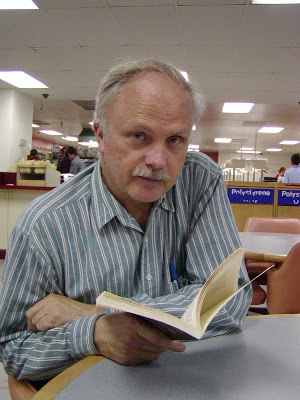
Photo of Richard C. Cook

Richard C. Cook, a former federal analyst, is an advocate for economic democracy.

This is a very well-written and provocative article by a longtime Treasury Department analyst. It was originally delivered as a speech on Nov. 15, 2008, the first day of the G20 economic summit, at George Mason University in Fairfax, Virginia.

Read it and get the rope.

James Retherford | The Rag Blog | November 20, 2008

To try to fix the crisis through bailing out the system, we are now seeing in the U.S. and Europe levels of government borrowing that have not been experienced since World War II. The purpose is to recapitalize a financial system that has destroyed itself through its own greed and folly.’
By Richard C. Cook

The G20 is meeting today in Washington , D.C. , to discuss the world financial crisis, its causes, and what can be done about it. But this won’t help the people of the U.S. who have been victimized by their own financial system.

The stated objectives are to find ways to stabilize and reduce speculation in the financial markets and make financial transactions more transparent, more efficient, and more international in scope. But this is also a revolt by the nations of the world against over-reliance on the U.S. dollar as the world’s reserve currency. What we are likely to see over time is a multi-currency regime that includes the Euro and one or more Asian currencies as well.

But the conference will not address the real causes of why the world is heading into a global recession or why the U.S. economy in particular is in such dire straits.

Nor will the meeting result in redress of the staggering level of bankers’ criminality abetted by the U.S. government in the creation of the financial bubbles whose collapse is underway.

The real problem is that the world is locked into a debt-based financial system run by the world’s banks, where the only way currency can be entered into circulation is through lending. It’s been massive amounts of completely irresponsible lending which have leveraged the bubbles against much smaller amounts of tangible value.

The GDP of the entire world is $55 trillion. This is dwarfed by speculative lending in the derivatives markets of ten times that amount–$525-$550 trillion. No nation has clean hands in this travesty. The governments of the world and the central banks have allowed it to come into being.

Within the U.S., reliance on money-creation through bank lending has been the problem since the creation of the Federal Reserve System in 1913. At that point the U.S. monetary system was privatized. The case has been the same with all the other nations which have private banking systems that control their central banks. The granddaddy is the Bank of England which dates from 1694.

The creation of the Federal Reserve System marked the start of a century of world war. This is hardly a coincidence. Indeed, the central banking system encourages wars and lives off them, because it is war and the threat of war that is most profitable to a system where the more money governments borrow the more profits the banks make.

All this started with World War I, which was largely financed by the British, French, German, and the U.S. banks. Events have continued in that vein through today, where the nations of the world are armed to the teeth and global finance capitalism tries to increase its control everywhere to the detriment of workers, national economies, and the environment.

To try to fix the crisis through bailing out the system, we are now seeing in the U.S. and Europe levels of government borrowing that have not been experienced since World War II. The purpose is to recapitalize a financial system that has destroyed itself through its own greed and folly. But all this does is defer the bill to future generations who have to pay the enormous compounded interest charges this borrowing entails. Interest on the national debt in the 2009 federal budget is over $500 billion. Every man, woman, and child in the nation is a victim of this crime.

The situation is so bad that many people believe the U.S. may even be in danger of defaulting on its gigantic national debt sometime in 2009.

Meanwhile, the failed financial system is dragging down the world’s producing economy with it, and the bailouts won’t change that situation. Combined with the financial crash has been a collapse in consumer “demand.” In other words, consumers, who are maxed out on their credit, no longer can borrow enough to keep the wheels of the economy turning.

But the reason they must borrow for consumption is that earnings are not sufficient for people to buy what they need to live. This is why in the U.S. there has been an outcry, including with the Obama campaign, for new government job-creation programs. Every day there is another proposal by progressives for new government spending, which, of course, will have to be financed by even more government debt.

So when are we going to learn how to introduce purchasing power without debt? How did we ever come to believe that the only way to create money is through a bank inventing it out of thin air? In the past few weeks we have had a number of Nobel-prize winning economists chip in with their suggestions of what to do, but none have addressed the obvious question of what the alternatives may be to bankers’ debt-based currency.

If we look at history, we see other ways governments have used their powers to create money. Indeed, until the Federal Reserve Act of 1913, the U.S. was a kind of laboratory of alternative methods of money-creation.

If we go back to colonial days, the American colonies used a variety of means to introduce currency into circulation. In Virginia , plantation owners received tobacco certificates when they deposited their product at public warehouses. The certificates then circulated as currency.

In Pennsylvania the government ran a land bank which paid cash to land-owners for liens on property. The interest paid for the costs of government without any taxation of citizens.

In Massachusetts, Pennsylvania, and elsewhere, governments spent paper money directly into circulation. The money received value by then being accepted by those governments, after it circulated within the economy, in payment of taxes.

Other forms of currency were Spanish dollars, Indian wampum, and IOUs. There was also a flourishing barter trade.

The system worked. By 1764, the American colonies formed one of the most prosperous trading regions on the planet. When asked why, Benjamin Franklin said it was because of colonial scrip—i.e., their paper money. When the British Parliament outlawed it through the Currency Act of 1764, an economic depression followed. It was the underlying cause of the Revolutionary War.

During that war, the Continental Congress issued the famous Continental Currency. What likely caused that money to inflate was extensive British counterfeiting, not being used to excess by our national government.

Once the nation became independent, a U.S. mint was founded so individuals could bring in gold or silver and have it stamped into coinage free of charge. New discoveries as with the California and Yukon gold rushes or better methods of extraction from ores resulted in economic booms. From then until coinage lost its value after the Federal Reserve System was established, precious metals were a major part of the U.S. monetary system that included not only coinage but also gold and silver certificates.

In 1791 and again in 1816 Congress passed legislation for the First and Second Banks of the United States . These banks were dupicates of the Bank of England whose purposes were to fasten on the U.S. the same type of debt-based monetary system that was the driving force for the British Empire . Presidents Thomas Jefferson, James Madison, Andrew Jackson, and Martin van Buren were among those who saw these banks as a Trojan Horse for financier tyranny. The split between pro- and anti-bank forces was the origin of the two-party system within the United States .

When Jefferson became president in 1800 he refused to borrow from the bank and balanced the federal budget for eight consecutive years by cutting military expenditures. Andrew Jackson took similar action in 1833 when he withdrew federal funds from the bank and paid off the entire national debt. It was recognized back then that fiscal responsibility was an effective means for keeping the government out of the control of the bankers and their political friends.

When the Civil War broke out in 1861, President Abraham Lincoln refused to borrow from the banks. Instead he financed the war through income and excise taxes, sale of war bonds directly to citizens, and issuance of the famous Greenbacks. This came about in 1862 when Congress authorized the government to spend $450 million in paper Greenbacks directly into circulation. Congress also introduced tangible value into the economy by what was then the very wise policy of transferring huge amounts of public land to the railroads and to citizens under the Homestead Act.

During the late 19th century, ordinary citizens were not so stunningly ignorant of the politics of money as they are today. People recognized the Greenbacks for having saved the union. A Greenback Party was formed that elected representatives to Congress and ran candidates for president.

Greenbacks remained in circulation, and as late as 1900 still made up a third of the nation’s monetary supply, along with coinage, gold and silver certificates, and national bank notes. Also, many other business entities, including the “company stores” owned by mining companies, issued their own paper scrip that was part of the circulating currency. For example, in a pamphlet on monetary reform written by American poet Ezra Pound in the 1930s was an illustration of paper money his grandfather issued from his lumberyard in Michigan in the late 1800s backed by board-feet of lumber payable on demand! Of course barter trade continued and still exists today among industrial firms.

But the bankers were on the move. In 1863 and 1864 Congress passed the National Banking Acts which drove the extensive system of state-chartered banks, including some owned by state governments, out of existence. By the early 1900s, the power of the bankers had coalesced under the New York banking trust led by the J.P. Morgan and Rockefeller financial interests.

The bakers struck in 1913 just before the Christmas recess when many Congressmen had already left Washington for the holidays. The Federal Reserve Act had actually been written by bankers from Europe who were allied with the Rothschild interests. Congressman Charles Lindbergh, Sr., father of the aviator, called the Act “the legislative crime of the ages.” Later President Woodrow Wilson, who signed the Act, said he had “unwittingly ruined my nation.”

But the deed was done. The Federal Reserve System created the first major financial bubble through World War I spending, followed by a depression, then created and burst the stock market bubble whose collapse started the Great Depression in 1929. President Franklin D. Roosevelt took over credit creation through low-cost government lending in the 1930s but had to use World War II to achieve full employment because by then the government was totally locked into the Keynesian tax-and-borrow credo of public finance.

The bankers began their comeback in the 1950s and consolidated their power in the 1970s under the heading of “monetarism,” which is the philosophy of trying to control the economy through raising and lowering of interest rates. This travesty—which is really institutionalized usury—is as familiar to us today as the water a fish swims in. We don’t even notice it. Yet it’s this system that has ruined the world. Ever since the 1970s, every period of economic growth in the U.S. has been a bank-created bubble followed by a crash and a recession.

We had the inflation of the 1970s created by the government-induced oil prices shocks, followed by the Paul Volcker crash of 1979-83 when the Federal Reserve raised interest rates above twenty percent and caused the biggest downturn since the Great Depression.

During the later Reagan years we had the merger-acquisition bubble followed by the recession that brought Bill Clinton to office in 1992. Then we had the dot.com bubble of the mid- to late-1990s that ended with the crash of 2000-2001.

Next, instead, of rebuilding an economy that had been devastated by export of our best manufacturing jobs to China and other cheap-labor countries, the Federal Reserve under chairman Alan Greenspan, with assistance from the George W. Bush administration, created the biggest bubble economy in history, with the housing, commercial real estate, equity, hedge fund, derivatives, and commodities bubbles all blowing up at the same time and leaving us with the mess we are in today.

What has happened during the Bush administration has been the greatest crime against the public interest in U.S. history. Its effects are only starting to be evident.

Of course in the face of so many disasters, the credit markets have imploded, and governments don’t know what to do except recapitalize and restructure them but without taking action to address the deep systemic problems with the producing economy. And while the Europeans may have blown the whistle on U.S. excesses through the G20 meeting, this country still faces disaster.

Yes, Wall Street is killing Main Street , and no one has come up with an answer except suggestions for the bailouts and some New Deal-type programs in an environment that is much worse even than in the 1930s. For one thing, most of what we consume today is produced abroad. For another, family farming has been ruined. In a pinch, our nation could no longer even feed itself.

But the amazing thing is how easy it would be to salvage the situation if the government took the simple step of treating credit as what it really is—a public utility like clean air, water, or electricity, not the private property of the banking system. In fact the banking system and the politicians they own have stolen and abused this fundamental piece of the social commons.

Banks have no legal right to work against the public interest. Every single bank that has ever existed has operated under a public charter. The Constitution gives Congress—i.e., the people’s representative government—authority to regulate interstate commerce. It also gives Congress the right and responsibility to control the monetary system.

So why doesn’t Congress do it? Why does Congress sit passively and stare when Federal Reserve chairmen such as Alan Greenspan or Ben Bernanke sit before them and mumble nonsense about markets and interest rates and inflation and the rest of a made-up system whose main result is to funnel the wealth of the economy upwards into the hands of the financial elite?

In my writings I have advocated several measures Congress could take immediately to remedy the catastrophe we are facing:

1) Congress could authorize direct expenditure of government funds for legitimate public expenses, as was done with the Civil War-era Greenbacks. Contrary to bankers’ propaganda, the Greenbacks were not inflationary then and would not be inflationary now, because they would be backed by tangible economic production of goods and services. What has been inflationary has been the debt-based currency which, since it was introduced in 1913, has caused the dollar to lose 95 percent of its value. Greenback-type spending is contained in the proposed American Monetary Act, developed by the American Monetary Institute.

2) Congress could authorize a national infrastructure bank that would be self-capitalized and would lend money into existence to state and local governments at zero percent interest. Legislation for such a bank has been introduced by Congressman Dennis Kucinich.

3) Congress could authorize dividend payments to citizens as advocated by the Social Credit movement founded by Major C.H. Douglas of Great Britain decades ago as a means of monetizing the net appreciation of the producing economy. Dividends exceeding $1,000 a month could be issued from a national dividend account without recourse to taxation or borrowing. Such a concept is related to the Alaska Permanent Fund which paid over $3,200 to each state resident in 2008 and to the concept of a basic income guarantee advocated by proponents of the negative income tax in years past.

4) Congress could utilize dividend payments once they were spent, possibly in the form of vouchers for necessities of life like food and housing, to capitalize a new network of community savings banks that would provide low-cost credit to home purchasers, students, small business people, and local farms.

I worked in the U.S. Treasury Department for 21 years and learned first-hand the history and operations of public finance in the U.S. I have seen the disastrous results of the debt-based financial system and how it has driven our nation, government, and people into bankruptcy. I have also seen how these simple measures of monetary reform would be easy to implement and would begin to turn the situation around within weeks or months.

All it takes is political will and a determination to challenge the death-grip the financial elite has had on our economy for a century.

We can be quite certain that these vital issues will not be addressed by the summit of the G20 meeting in Washington today. If anything, these meetings are likely to render the grip of private finance on the peoples of the world even tighter than before.

But sooner or later change must come. For the immediate future people could fight back by doing everything possible to get out of debt, convert their cash reserves to tangible holdings, and start their own local currency and barter systems. But for real change, a monetary revolution is required.

[Richard C. Cook is a former U.S. federal government analyst and an advocate for economic democracy and sustainability. His new book, We Hold These Truths: The Hope of Monetary Reform, can now be ordered for $19.95 from www.tendrilpress.com.]

Source / Global Research

Posted in RagBlog | Tagged , , , , , , , | 1 Comment

Speculating About Barack’s Cabinet Choices

Perhaps some readers will recall one of my headlines several days ago: Obama: It’s (Partly) About Surviving Pundit-Palaver. We’re reasonably sure it won’t be slowing down anytime soon.

Richard Jehn / The Rag Blog
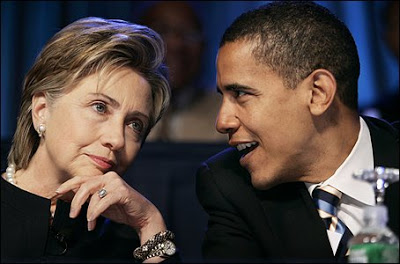

This is Change? 20 Hawks, Clintonites and Neocons to Watch for in Obama’s White House
By Jeremy Scahill / November 20, 2008

U.S. policy is not about one individual, and no matter how much faith people place in President-elect Barack Obama, the policies he enacts will be fruit of a tree with many roots. Among them: his personal politics and views, the disastrous realities his administration will inherit, and, of course, unpredictable future crises. But the best immediate indicator of what an Obama administration might look like can be found in the people he surrounds himself with and who he appoints to his Cabinet. And, frankly, when it comes to foreign policy, it is not looking good.

Obama has a momentous opportunity to do what he repeatedly promised over the course of his campaign: bring actual change. But the more we learn about who Obama is considering for top positions in his administration, the more his inner circle resembles a staff reunion of President Bill Clinton’s White House. Although Obama brought some progressives on board early in his campaign, his foreign policy team is now dominated by the hawkish, old-guard Democrats of the 1990s. This has been particularly true since Hillary Clinton conceded defeat in the Democratic primary, freeing many of her top advisors to join Obama’s team.

“What happened to all this talk about change?” a member of the Clinton foreign policy team recently asked the Washington Post. “This isn’t lightly flavored with Clintons. This is all Clintons, all the time.”

Amid the euphoria over Obama’s election and the end of the Bush era, it is critical to recall what 1990s U.S. foreign policy actually looked like. Bill Clinton’s boiled down to a one-two punch from the hidden hand of the free market, backed up by the iron fist of U.S. militarism. Clinton took office and almost immediately bombed Iraq (ostensibly in retaliation for an alleged plot by Saddam Hussein to assassinate former President George H.W. Bush). He presided over a ruthless regime of economic sanctions that killed hundreds of thousands of Iraqis, and under the guise of the so-called No-Fly Zones in northern and southern Iraq, authorized the longest sustained U.S. bombing campaign since Vietnam.

Under Clinton, Yugoslavia was bombed and dismantled as part of what Noam Chomsky described as the “New Military Humanism.” Sudan and Afghanistan were attacked, Haiti was destabilized and “free trade” deals like the North America Free Trade Agreement and the General Agreement on Tariffs and Trade radically escalated the spread of corporate-dominated globalization that hurt U.S. workers and devastated developing countries. Clinton accelerated the militarization of the so-called War on Drugs in Central and Latin America and supported privatization of U.S. military operations, giving lucrative contracts to Halliburton and other war contractors. Meanwhile, U.S. weapons sales to countries like Turkey and Indonesia aided genocidal campaigns against the Kurds and the East Timorese.

The prospect of Obama’s foreign policy being, at least in part, an extension of the Clinton Doctrine is real. Even more disturbing, several of the individuals at the center of Obama’s transition and emerging foreign policy teams were top players in creating and implementing foreign policies that would pave the way for projects eventually carried out under the Bush/Cheney administration. With their assistance, Obama has already charted out several hawkish stances. Among them:

— His plan to escalate the war in Afghanistan;

— An Iraq plan that could turn into a downsized and rebranded occupation that keeps U.S. forces in Iraq for the foreseeable future;

— His labeling of Iran’s Revolutionary Guard as a “terrorist organization;”

— His pledge to use unilateral force inside of Pakistan to defend U.S. interests;

— His position, presented before the American Israel Public Affairs Committee (AIPAC), that Jerusalem “must remain undivided” — a remark that infuriated Palestinian officials and which he later attempted to reframe;

— His plan to continue the War on Drugs, a backdoor U.S. counterinsurgency campaign in Central and Latin America;

— His refusal to “rule out” using Blackwater and other armed private forces in U.S. war zones, despite previously introducing legislation to regulate these companies and bring them under U.S. law.

Obama did not arrive at these positions in a vacuum. They were carefully crafted in consultation with his foreign policy team. While the verdict is still out on a few people, many members of his inner foreign policy circle — including some who have received or are bound to receive Cabinet posts — supported the invasion and occupation of Iraq. Some promoted the myth that Saddam had weapons of mass destruction. A few have worked with the neoconservative Project for the New American Century, whose radical agenda was adopted by the Bush/Cheney administration. And most have proven track records of supporting or implementing militaristic, offensive U.S. foreign policy. “After a masterful campaign, Barack Obama seems headed toward some fateful mistakes as he assembles his administration by heeding the advice of Washington’s Democratic insider community, a collective group that represents little ‘change you can believe in,'” notes veteran journalist Robert Parry, the former Associated Press and Newsweek reporter who broke many of the stories in the Iran-Contra scandal in the 1980s.

As news breaks and speculation abounds about cabinet appointments, here are 20 people to watch as Obama builds the team who will shape U.S. foreign policy for at least four years:

Joe Biden

There was no stronger sign that Obama’s foreign policy would follow the hawkish tradition of the Democratic foreign policy establishment than his selection of Sen. Joe Biden as his running mate. Much has been written on Biden’s tenure as head of the Senate Foreign Relations Committee, but his role in the invasion and occupation of Iraq stands out. Biden is not just one more Democratic lawmaker who now calls his vote to authorize the use of force in Iraq “mistaken;” Biden was actually an important facilitator of the war.

In the summer of 2002, when the United States was “debating” a potential attack on Iraq, Biden presided over hearings whose ostensible purpose was to weigh all existing options. But instead of calling on experts whose testimony could challenge the case for war — Iraq’s alleged WMD possession and its supposed ties to al-Qaida — Biden’s hearings treated the invasion as a foregone conclusion. His refusal to call on two individuals in particular ensured that testimony that could have proven invaluable to an actual debate was never heard: Former Chief United Nations Weapons Inspector Scott Ritter and Hans von Sponeck, a 32-year veteran diplomat and the former head of the U.N.’s Iraq program.

Both men say they made it clear to Biden’s office that they were ready and willing to testify; Ritter knew more about the dismantling of Iraq’s WMD program than perhaps any other U.S. citizen and would have been in prime position to debunk the misinformation and outright lies being peddled by the White House. Meanwhile, von Sponeck had just returned from Iraq, where he had observed Ansar al Islam rebels in the north of Iraq — the so-called al-Qaida connection — and could have testified that, rather than colluding with Saddam’s regime, they were in a battle against it. Moreover, he would have pointed out that they were operating in the U.S.-enforced safe haven of Iraqi Kurdistan. “Evidence of al-Qaida/lraq collaboration does not exist, neither in the training of operatives nor in support to Ansar-al-Islam,” von Sponeck wrote in an Op-Ed published shortly before the July 2002 hearings. “The U.S. Department of Defense and the CIA know perfectly well that today’s Iraq poses no threat to anyone in the region, let alone in the United States. To argue otherwise is dishonest.”

With both men barred from testifying, rather than eliciting an array of informed opinions, Biden’s committee whitewashed Bush’s lies and helped lead the country to war. Biden himself promoted the administration’s false claims that were used to justify the invasion of Iraq, declaring on the Senate floor, “[Saddam Hussein] possesses chemical and biological weapons and is seeking nuclear weapons.”

With the war underway, Biden was then the genius who passionately promoted the ridiculous plan to partition Iraq into three areas based on religion and ethnicity, attempting to Balkanize one of the strongest Arab states in the world.

“He’s a part of the old Democratic establishment,” says retired Army Col. Ann Wright, the State Department diplomat who reopened the U.S. embassy in Kabul in 2002. Biden, she says, has “had a long history with foreign affairs, [but] it’s not the type of foreign affairs that I want.”

Rahm Emanuel

Obama’s appointment of Illinois Congressman Rahm Emanuel as Chief of Staff is a clear sign that Clinton-era neoliberal hawks will be well-represented at 1600 Pennsylvania Ave. A former senior Clinton advisor, Emanuel is a hard-line supporter of Israel’s “targeted assassination” policy and actually volunteered to work with the Israeli Army during the 1991 Gulf War. He is close to the right-wing Democratic Leadership Council and was the only member of the Illinois Democratic delegation in the Congress to vote for the invasion of Iraq. Unlike many of his colleagues, Emanuel still defends his vote. As chair of the Democratic Congressional Campaign Committee in 2006, Emanuel promoted the campaigns of 22 candidates, only one of who supported a swift withdrawal from Iraq, and denied crucial Party funding to anti-war candidates. “As for Iraq policy, at the right time, we will have a position,” he said in December 2005. As Philip Giraldi recently pointed out on Antiwar.com, Emanuel “advocates increasing the size of the U.S. Army by 100,000 soldiers and creating a domestic spying organization like Britain’s MI5. More recently, he has supported mandatory paramilitary national service for all Americans between the ages of 18 and 25.”

While Obama has at times been critical of Clinton-era free trade agreements, Emanuel was one of the key people in the Clinton White House who brokered the successful passage of NAFTA.

Hillary Rodham Clinton

For all the buzz and speculation about the possibility that Sen. Clinton may be named Secretary of State, most media coverage has focused on her rivalry with Obama during the primary, along with the prospect of her husband having to face the intense personal, financial and political vetting process required to secure a job in the new administration. But the question of how Clinton would lead the operations at Foggy Bottom calls for scrutiny of her positions vis-a-vis Obama’s stated foreign-policy goals.

Clinton was an ardent defender of her husband’s economic and military war against Iraq throughout the 1990s, including the Iraq Liberation Act of 1998, which ultimately laid the path for President George W. Bush’s invasion. Later, as a U.S. senator, she not only voted to authorize the war, but aided the Bush administration’s propaganda campaign in the lead-up to the invasion. “Saddam Hussein has worked to rebuild his chemical and biological weapons stock, his missile-delivery capability and his nuclear program,” Clinton said when rising to support the measure in October 2002. “He has also given aid, comfort and sanctuary to terrorists, including al-Qaida members … I want to insure that Saddam Hussein makes no mistake about our national unity and for our support for the president’s efforts to wage America’s war against terrorists and weapons of mass destruction.”

“The man who vowed to deliver us from 28 years of Bushes and Clintons has been stocking up on Clintonites,” New York Times columnist Maureen Dowd recently wrote. “How, one may ask, can he put Hillary — who voted to authorize the Iraq war without even reading the intelligence assessment — in charge of patching up a foreign policy and a world riven by that war?”

Beyond Iraq, Clinton shocked many and sparked official protests by Tehran at the United Nations when asked during the presidential campaign what she would do as president if Iran attacked Israel with nuclear weapons. “I want the Iranians to know that if I’m the president, we will attack Iran,” she declared. “In the next 10 years, during which they might foolishly consider launching an attack on Israel, we would be able to totally obliterate them.”

Clinton has not shied away from supporting offensive foreign policy tactics in the past. Recalling her husband’s weighing the decision of whether to attack Yugoslavia, she said in 1999, “I urged him to bomb. … You cannot let this go on at the end of a century that has seen the major holocaust of our time. What do we have NATO for if not to defend our way of life?”

Madeleine Albright

While Obama’s house is flush with Clintonian officials like former Secretary of State Warren Christopher, Defense Secretary William Perry, Director of the State Department Office of Policy Planning Greg Craig (who was officially named Obama’s White House Counsel) and Navy Secretary Richard Danzig, perhaps most influential is Madeleine Albright, Bill Clinton’s former Secretary of State and U.N. ambassador. Albright recently served as a proxy for Obama, representing him at the G-20 summit earlier this month. Whether or not she is awarded an official role in the administration, Albright will be a major force in shaping Obama’s foreign policy.

“It will take time to convince skeptics that the promotion of democracy is not a mask for imperialism or a recipe for the kind of chaos we have seen in the Persian Gulf,” Albright recently wrote. “And it will take time to establish the right identity for America in a world that has grown suspicious of all who claim a monopoly on virtue and that has become reluctant to follow the lead of any one country.”

Albright should know. She was one of the key architects in the dismantling of Yugoslavia during the 1990s. In the lead-up to the 1999 “Kosovo war,” she oversaw the U.S. attempt to coerce the Yugoslav government to deny its own sovereignty in return for not being bombed. Albright demanded that the Yugoslav government sign a document that would have been unacceptable to any sovereign nation. Known as the Rambouillet Accord, it included a provision that would have guaranteed U.S. and NATO forces “free and unrestricted passage and unimpeded access throughout” all of Yugoslavia — not just Kosovo — while also seeking to immunize those occupation forces “from any form of arrest, investigation or detention by the authorities in [Yugoslavia].” Moreover, it would have granted the occupiers “the use of airports, roads, rails and ports without payment.” Similar to Bush’s Iraq plan years later, the Rambouillet Accord mandated that the economy of Kosovo “shall function in accordance with free-market principles.”

When Yugoslavia refused to sign the document, Albright and others in the Clinton administration unleashed the 78-day NATO bombing of Serbia, which targeted civilian infrastructure. (Prior to the attack, Albright said the U.S. government felt “the Serbs need a little bombing.”) She and the Clinton administration also supported the rise to power in Kosovo of a terrorist mafia that carried out its own ethnic-cleansing campaign against the province’s minorities.

Perhaps Albright’s most notorious moment came with her enthusiastic support of the economic war against the civilian population of Iraq. When confronted by Lesley Stahl of “60 Minutes” that the sanctions were responsible for the deaths of “a half-million children … more children than died in Hiroshima,” Albright responded, “I think this is a very hard choice, but the price — we think the price is worth it.” (While defending the policy, Albright later called her choice of words “a terrible mistake, hasty, clumsy, and wrong.”)

Richard Holbrooke

Like Albright, Holbrooke will have major sway over U.S. policy, whether or not he gets an official job. A career diplomat since the Vietnam War, Holbrooke’s most recent government post was as President Clinton’s ambassador to the U.N. Among the many violent policies he helped implement and enforce was the U.S.-backed Indonesian genocide in East Timor. Holbrooke was an Assistant Secretary of State in the late 1970s at the height of the slaughter and was the point man on East Timor for the Carter Administration.

According to Brad Simpson, director of the Indonesia and East Timor Documentation Project at the National Security Archive at George Washington University, “It was Holbrooke and Zbigniew Brzezinski [another top Obama advisor], both now leading lights in the Democratic Party, who played point in trying to frustrate the efforts of congressional human-rights activists to try and condition or stop U.S. military assistance to Indonesia, and in fact accelerated the flow of weapons to Indonesia at the height of the genocide.”

Holbrooke, too, was a major player in the dismantling of Yugoslavia and praised the bombing of Serb Television, which killed 16 media workers, as a significant victory. (The man who ordered that bombing, now-retired Army Gen. Wesley Clark, is another Obama foreign policy insider who could end up in his cabinet. While Clark is known for being relatively progressive on social issues, as Supreme Allied Commander of NATO, he ordered bombings and attacks that Amnesty International labeled war crimes.)

Like many in Obama’s foreign policy circle, Holbrooke also supported the Iraq war. In early 2003, shortly after then-Secretary of State Colin Powell’s speech to the UN, where he presented the administration’s fraud-laden case for war to the UN (a speech Powell has since called a “blot” on his reputation), Holbrooke said: “It was a masterful job of diplomacy by Colin Powell and his colleagues, and it does not require a second vote to go to war. … Saddam is the most dangerous government leader in the world today, he poses a threat to the region, he could pose a larger threat if he got weapons of mass destruction deployed, and we have a legitimate right to take action.”

Dennis Ross

Middle East envoy for both George H.W. Bush and Bill Clinton, Ross was one of the primary authors of Obama’s aforementioned speech before AIPAC this summer. He cut his teeth working under famed neoconservative Paul Wolfowitz at the Pentagon in the 1970s and worked closely with the Project for the New American Century. Ross has been a staunch supporter of Israel and has fanned the flames for a more hostile stance toward Iran. As the lead U.S. negotiator between Israel and numerous Arab nations under Clinton, Ross’ team acted, in the words of one U.S. official who worked under him, as “Israel’s lawyer.”

“The ‘no surprises’ policy, under which we had to run everything by Israel first, stripped our policy of the independence and flexibility required for serious peacemaking,” wrote U.S. diplomat Aaron David Miller in 2005. “If we couldn’t put proposals on the table without checking with the Israelis first, and refused to push back when they said no, how effective could our mediation be? Far too often, particularly when it came to Israeli-Palestinian diplomacy, our departure point was not what was needed to reach an agreement acceptable to both sides but what would pass with only one — Israel.” After the Clinton White House, Ross worked for the Washington Institute for Near East Policy, a hawkish pro-Israel think tank, and for FOX News, where he repeatedly pressed for war against Iraq.

Martin Indyk

Founder of the Washington Institute for Near East Policy, Indyk spent years working for AIPAC and served as Clinton’s ambassador to Israel and Assistant Secretary of State for Near East Affairs, while also playing a major role in developing U.S. policy toward Iraq and Iran. In addition to his work for the U.S. government, he has worked for the Israeli government and with PNAC.

“Barack Obama has painted himself into a corner by appealing to the most hard-line, pro-Israel elements in this country,” Ali Abunimah, founder of ElectronicInifada.net, recently told Amy Goodman of Democracy Now!, describing Indyk and Dennis Ross as “two of the most pro-Israel officials from the Clinton era, who are totally distrusted by Palestinians and others across the Middle East, because they’re seen as lifelong advocates for Israeli positions.”

Anthony Lake

Clinton’s former National Security Advisor was an early supporter of Obama and one of the few top Clintonites to initially back the president-elect. Lake began his foreign policy work in the U.S. Foreign Service during Vietnam, working with Henry Kissinger on the “September Group,” a secret team tasked with developing a military strategy to deliver a “savage, decisive blow against North Vietnam.”

Decades later, after working for various administrations, Lake “was the main force behind the U.S. invasion of Haiti in the mid-Clinton years,” according to veteran journalist Allan Nairn, whose groundbreaking reporting revealed U.S. support for Haitian death squads in the 1990s. “They brought back Aristide essentially in political chains, pledged to support a World Bank/IMF overhaul of the economy, which resulted in an increase in malnutrition deaths among Haitians, and set the stage for the current ongoing political disaster in Haiti.” Clinton nominated Lake as CIA Director, but he failed to win Senate confirmation.

Lee Hamilton

Hamilton is a former chairman of the House Foreign Affairs Committee and was co-chairman of both the Iraq Study Group and 9/11 Commission. Robert Parry, who has covered Hamilton’s career extensively, recently ran a piece on Consortium News that characterized him this way: “Whenever the Republicans have a touchy national-security scandal to put to rest, their favorite Democratic investigator is Lee Hamilton. … Hamilton’s carefully honed skill for balancing truth against political comity has elevated him to the status of a Washington Wise Man.”

Susan Rice

Former Assistant Secretary of State Susan Rice, who served on Bill Clinton’s National Security Council, is a potential candidate for the post of ambassador to the U.N. or as a deputy national security advisor. She, too, promoted the myth that Saddam had WMDs. “It’s clear that Iraq poses a major threat,” she said in 2002. “It’s clear that its weapons of mass destruction need to be dealt with forcefully, and that’s the path we’re on.” (After the invasion, discussing Saddam’s alleged possession of WMDs, she said, “I don’t think many informed people doubted that.”)

Rice has also been a passionate advocate for a U.S. military attack against Sudan over the Darfur crisis. In an op-ed co-authored with Anthony Lake, she wrote, “The United States, preferably with NATO involvement and African political support, would strike Sudanese airfields, aircraft and other military assets. It could blockade Port Sudan, through which Sudan’s oil exports flow. Then U.N. troops would deploy — by force, if necessary, with U.S. and NATO backing.”

John Brennan

A longtime CIA official and former head of the National Counterterrorism Center, Brennan is one of the coordinators of Obama’s intelligence transition team and a top contender for either CIA Director or Director of National Intelligence. He was also recently described by Glenn Greenwald as “an ardent supporter of torture and one of the most emphatic advocates of FISA expansions and telecom immunity.” While claiming to oppose waterboarding, labeling it “inconsistent with American values” and “something that should be prohibited,” Brennan has simultaneously praised the results achieved by “enhanced interrogation” techniques. “There has been a lot of information that has come out from these interrogation procedures that the agency has, in fact, used against the real hard-core terrorists,” Brennan said in a 2007 interview. “It has saved lives. And let’s not forget, these are hardened terrorists who have been responsible for 9/11, who have shown no remorse at all for the death of 3,000 innocents.”

Brennan has described the CIA’s extraordinary rendition program — the government-run kidnap-and-torture program enacted under Clinton — as an absolutely vital tool. “I have been intimately familiar now over the past decade with the cases of rendition that the U.S. Government has been involved in,” he said in a December 2005 interview. “And I can say without a doubt that it has been very successful as far as producing intelligence that has saved lives.”

Brennan is currently the head of Analysis Corporation, a private intelligence company that was recently implicated in the breach of Obama and Sen. John McCain’s passport records. He is also the current chairman of the Intelligence and National Security Alliance (INSA), a trade association of private intelligence contractors who have dramatically increased their role in sensitive U.S. national security operations. (Current Director of National Intelligence Mike McConnell is former chairman of the INSA.)

Jami Miscik

Miscik, who works alongside Brennan on Obama’s transitional team, was the CIA’s Deputy Director for Intelligence in the run-up to the Iraq war. She was one of the key officials responsible for sidelining intel that contradicted the official line on WMD, while promoting intel that backed it up.

“When the administration insisted on an intelligence assessment of Saddam Hussein’s relationship to al-Qaida, Miscik blocked the skeptics (who were later vindicated) within the CIA’s Mideast analytical directorate and instructed the less-skeptical counterterrorism analysts to ‘stretch to the maximum the evidence you had,’ ” journalist Spencer Ackerman recently wrote in the Washington Independent. “It’s hard to think of a more egregious case of sacrificing sound intelligence analysis in order to accommodate the strategic fantasies of an administration. … The idea that Miscik is helping staff Obama’s top intelligence picks is most certainly not change we can believe in.” What’s more, she went on to a lucrative post as the Global Head of Sovereign Risk for the now-bankrupt Lehman Brothers.

John Kerry and Bill Richardson

Both Sen. Kerry and Gov. Richardson have been identified as possible contenders for Secretary of State. While neither is likely to be as hawkish as Hillary Clinton, both have taken pro-war positions. Kerry promoted the WMD lie and voted to invade Iraq. “Why is Saddam Hussein attempting to develop nuclear weapons when most nations don’t even try?” Kerry asked on the Senate floor in October 2002. “According to intelligence, Iraq has chemical and biological weapons … Iraq is developing unmanned aerial vehicles capable of delivering chemical and biological warfare agents.”

Richardson, whose Iraq plan during his 2008 presidential campaign was more progressive and far-reaching than Obama’s, served as Bill Clinton’s ambassador to the UN. In this capacity, he supported Clinton’s December 1998 bombing of Baghdad and the U.S.-led sanctions against Iraq. “We think this man is a threat to the international community, and he threatens a lot of the neighbors in his region and future generations there with anthrax and VX,” Richardson told an interviewer in February 1998.

While Clinton’s Secretary of Energy, Richardson publicly named Wen Ho Lee, a scientist at the Los Alamos National Laboratory, as a target in an espionage investigation. Lee was accused of passing nuclear secrets to the Chinese government. Lee was later cleared of those charges and won a settlement against the U.S. government.

Robert Gates

Washington consensus is that Obama will likely keep Robert Gates, George W. Bush’s Defense Secretary, as his own Secretary of Defense. While Gates has occasionally proved to be a stark contrast to former Secretary of Defense Donald Rumsfeld, he would hardly represent a break from the policies of the Bush administration. Quite the opposite; according to the Washington Post, in the interest of a “smooth transition,” Gates “has ordered hundreds of political appointees at the Pentagon canvassed to see whether they wish to stay on in the new administration, has streamlined policy briefings and has set up suites for President-elect Barack Obama’s transition team just down the hall from his own E-ring office.” The Post reports that Gates could stay on for a brief period and then be replaced by Richard Danzig, who was Clinton’s Secretary of the Navy. Other names currently being tossed around are Democratic Sen. Jack Reed, Republican Sen. Chuck Hagel (a critic of the Iraq occupation) and Republican Sen. Richard Lugar, who served alongside Biden on the Senate Foreign Relations Committee.

Ivo H. Daalder

Daalder was National Security Council Director for European Affairs under President Clinton. Like other Obama advisors, he has worked with the Project for the New American Century and signed a 2005 letter from PNAC to Congressional leaders, calling for an increase in U.S. ground troops in Iraq and beyond.

Sarah Sewall

Former Deputy Assistant Secretary of Defense for Peacekeeping and Humanitarian Assistance during the Clinton administration, Sewall served as a top advisor to Obama during the campaign and is almost certain to be selected for a post in his administration. In 2007, Sewall worked with the U.S. military and Army Gen. David Petraeus, writing the introduction to the University of Chicago edition of the Army/Marine Corps Counterinsurgency Field Manual. She was criticized for this collaboration by Tom Hayden, who wrote, “the Petraeus plan draws intellectual legitimacy from Harvard’s Carr Center for Human Rights Policy, whose director, Sarah Sewall, proudly embraces an ‘unprecedented collaboration [as] a human rights center partnered with the armed forces.'”

“Humanitarians often avoid wading into the conduct of war for fear of becoming complicit in its purpose,” she wrote in the introduction. “‘The field manual requires engagement precisely from those who fear that its words lack meaning.”

Michele Flournoy

Flournoy and former Clinton Deputy Defense Secretary John White are co-heading Obama’s defense transition team. Flournoy was a senior Clinton appointee at the Pentagon. She currently runs the Center for a New American Security, a center-right think-tank. There is speculation that Obama could eventually name her as the first woman to serve as defense secretary. As the Wall Street Journal recently reported: “While at CNAS, Flournoy helped to write a report that called for reducing the open-ended American military commitment in Iraq and replacing it with a policy of ‘conditional engagement’ there. Significantly, the paper rejected the idea of withdrawing troops according to the sort of a fixed timeline that Obama espoused during the presidential campaign. Obama has in recent weeks signaled that he was willing to shelve the idea, bringing him more in line with Flournoy’s thinking.” Flournoy has also worked with the neoconservative Project for the New American Century.

Wendy Sherman and Tom Donilon

Currently employed at Madeline Albright’s consulting firm, the Albright Group, Sherman worked under Albright at the State Department, coordinating U.S. policy on North Korea. She is now coordinating the State Department transition team for Obama. Tom Donilon, her co-coordinator, was Assistant Secretary of State for Public Affairs and Chief of Staff at the State Department under Clinton. Interestingly, Sherman and Donilon both have ties to Fannie Mae that didn’t make it onto their official bios on Obama’s change.gov Web site. “Donilon was Fannie’s general counsel and executive vice president for law and policy from 1999 until the spring of 2005, a period during which the company was rocked by accounting problems,” reports the Wall Street Journal.

*****

While many of the figures at the center of Obama’s foreign policy team are well-known, two of its most important members have never held national elected office or a high-profile government position. While they cannot be characterized as Clinton-era hawks, it will be important to watch Denis McDonough and Mark Lippert, co-coordinators of the Obama foreign policy team. From 2000 to 2005, McDonough served as foreign policy advisor to Senate Democratic Leader Tom Daschle and worked extensively on the use-of-force authorizations for the attacks on Afghanistan and Iraq, both of which Daschle supported. From 1996 to 1999, McDonough was a professional staff member of the House International Relations Committee during the debate over the bombing of Yugoslavia. More recently, he was at the Center for American Progress working under John Podesta, Clinton’s former chief of staff and the current head of the Obama transition.

Mark Lippert is a close personal friend of Obama’s. He has worked for Vermont Sen. Patrick Leahy, as well as the Senate Appropriations Committee and the Democratic Policy Committee. He is a lieutenant in the Navy Reserve and spent a year in Iraq working intelligence for the Navy SEALs. “According to those who’ve worked closely with Lippert,” Robert Dreyfuss recently wrote in The Nation, “he is a conservative, cautious centrist who often pulled Obama to the right on Iraq, Iran and the Middle East and who has been a consistent advocate for increased military spending. ‘Even before Obama announced for the presidency, Lippert wanted Obama to be seen as tough on Iran,’ says a lobbyist who’s worked the Iran issue on Capitol Hill, ‘He’s clearly more hawkish than the senator.’ “

*****

Barack Obama campaigned on a pledge to bring change to Washington. “I don’t want to just end the war,” he said early this year. “I want to end the mindset that got us into war.” That is going to be very difficult if Obama employs a foreign policy team that was central to creating that mindset, before and during the presidency of George W. Bush.

“Twenty-three senators and 133 House members who voted against the war — and countless other notable individuals who spoke out against it and the dubious claims leading to war — are apparently not even being considered for these crucial positions,” observes Sam Husseini of the Institute for Public Accuracy. This includes dozens of former military and intelligence officials who spoke out forcefully against the war and continue to oppose militaristic policy, as well as credible national security experts who have articulated their visions for a foreign policy based on justice.

Obama does have a chance to change the mindset that got us into war. More significantly, he has a popular mandate to forcefully challenge the militaristic, hawkish tradition of modern U.S. foreign policy. But that work would begin by bringing on board people who would challenge this tradition, not those who have been complicit in creating it and are bound to continue advancing it.

[Jeremy Scahill pledges to be the same journalist under an Obama administration that he was during Bill Clinton and George Bush’s presidencies. He is the author of Blackwater: The Rise of the World’s Most Powerful Mercenary Army and is a frequent contributor to The Nation and Democracy Now! He is a Puffin Foundation Writing Fellow at the Nation Institute.]

Source / AlterNet

The Rag Blog

Posted in RagBlog | Tagged , , | 2 Comments

Christian : Turn the Other Cheek? Not on Your Ass!

God.

‘I may be a Christian, but it’s not like I’m one of those wacko “love your neighbor as yourself” types.’
By Janet Cosgrove / November 19, 2008

Everybody has this image of “crazy Christians” based on what they hear in the media, but it’s just not true. Most Christians are normal, decent folks. We don’t all blindly follow a bunch of outdated biblical tenets or go all fanatical about every bit of dogma. What I’m trying to say is, don’t let the actions of a vocal few color your perceptions about what the majority of us are like.

Like me. I may be a Christian, but it’s not like I’m one of those wacko “love your neighbor as yourself” types.

God forbid!

I’m here to tell you there are lots of Christians who aren’t anything like the preconceived notions you may have. We’re not all into “turning the other cheek.” We don’t spend our days committing random acts of kindness for no credit. And although we believe that the moral precepts in the Book of Leviticus are the infallible word of God, it doesn’t mean we’re all obsessed with extremist notions like “righteousness” and “justice.”

My faith in the Lord is about the pure, simple values: raising children right, saying grace at the table, strictly forbidding those who are Methodists or Presbyterians from receiving communion because their beliefs are heresies, and curing homosexuals. That’s all. Just the core beliefs. You won’t see me going on some frothy-mouthed tirade about being a comfort to the downtrodden.

I’m a normal Midwestern housewife. I believe in the basic teachings of the Bible and the church. Divorce is forbidden. A woman is to be an obedient subordinate to the male head of the household. If a man lieth down with another man, they shall be taken out and killed. Things everybody can agree on, like the miracle of glossolalia that occurred during Pentecost, when the Apostles were visited by the Holy Spirit, who took the form of cloven tongues of fire hovering just above their heads. You know, basic common sense stuff.

But that doesn’t mean I think people should, like, forgive the sins of those who trespass against them or anything weird like that.

We’re not all “Jesus Freaks” who run around screaming about how everyone should “Judge not lest ye be judged,” whine “Blessed are the meek” all the time, or drone on and on about how we’re all equal in the eyes of God! Some of us are just trying to be good, honest folks who believe the unbaptized will roam the Earth for ages without the comfort of God’s love when Jesus Christ our Lord and Savior returns on Judgment Day to whisk the righteous off to heaven.

Now, granted, there are some Christians on the lunatic fringe who take their beliefs a little too far. Take my coworker Karen, for example. She’s way off the deep end when it comes to religion: going down to the homeless shelter to volunteer once a month, donating money to the poor, visiting elderly shut-ins with the Meals on Wheels program—you name it!

But believe me, we’re not all that way. The people in my church, for the most part, are perfectly ordinary Americans like you and me. They believe in the simple old-fashioned traditions—Christmas, Easter, the slow and deliberate takeover of more and more county school boards to get the political power necessary to ban evolution from textbooks statewide. That sort of thing.

We oppose gay marriage as an abomination against the laws of God and America, we’re against gun control, and we fervently and unwaveringly believe that the Jews, Muslims, and all on earth who are not born-again Pentecostalists are possessed by Satan and should be treated as such.

When it comes down to it, all we want is to see every single member of the human race convert to our religion or else be condemned by a jealous and wrathful God to suffer an eternity of agony and torture in the Lake of Fire!

I hope I’ve helped set the record straight, and I wish you all a very nice day! God bless you!

Source / The Onion

The Rag Blog

Posted in RagBlog | Tagged , , , | 1 Comment

Schwarzeneggar : Time to Show Some Muscle on Prop. 8


Douglas Kmeic: ‘Gov. Arnold Schwarzenegger may well be a proximate cause of this breakdown … the Prop. 8 case should be settled, and there’s no one better to do it than our governor.’
By Jon Ponder / November 20, 2008

Douglas Kmeic says the Prop. 8 debacle could be resolved by limiting the state of California prospectively to the issuance of civil unions for all couples, rather than marriage licenses, leaving marriage to the churches.

The California Supreme court announced yesterday that it will hear arguments challenging the constitutionality of Proposition 8, the anti-gay amendment that overturned the right of gay people to marry in the state.

The Prop 8 debacle could be resolved by limiting the state of California prospectively to the issuance of civil unions for all couples, rather than marriage licenses, leaving marriage to the churches.

In May, the same court, which is composed of seven Republicans and one Democrat — who are all elected for 12-year terms — decided 4-3 to strike down a law banning same-sex marriage.

The judges are being asked now to decide whether the constitution can be amended to make discrimination against a minority group legal, a move that directly violates the constitution’s foundational principle of providing protection of rights equally to all residents — or whether a change of that magnitude should have been made through the constitutional “revision” process instead. A revision to the constitution would have required a two-thirds vote by both houses of the legislature before going before the electorate as a ballot initiative.

In a recent San Francisco Chronicle op-ed, Douglas Kmeic Pepperdine law professor , who served as a high official in the Reagan and Bush I Justice departments but who supported Barack Obama this year, laid out a compromise to the constitutional debacle brought on by the passage of Proposition 8 that puts the solution in the hands of California’s governor:

Gov. Arnold Schwarzenegger may well be a proximate cause of this breakdown … the Prop. 8 case should be settled, and there’s no one better to do it than our governor.

After all, the governor has been on both sides of the same-sex marriage issue. Twice the governor was against gay marriage and twice the governor was for it.

The governor told CNN that he hoped the state Supreme Court would overturn the people and Prop. 8. While there are some respectable legal arguments that the initiative does not meet the requirements of Article 18 of the state constitution, asking the court to invalidate Prop. 8 is a tall order. Properly, judges look for ways to avoid holding laws unconstitutional, and that is especially so when the law comes directly from the people.

All that said, the case is too close to call because Prop. 8 did not directly address the portion of the state Supreme Court decision that declared sexual orientation to be a suspect classification requiring compelling justification and because there is federal precedent that decries singling out any vulnerable group for legal disadvantage. In short, neither side can be confident of victory, and that is the best kind of case for settlement.

The governor should break the tie and free the judges from having to either set aside democracy or to uphold the decision of the people in a way that the governor and others would perceive as unequal treatment among his fellow Californians.

The governor has administrative authority to have regulations issued interpreting family law, and nothing in Prop. 8 precludes him from ensuring that homosexual and heterosexual couples are treated equally under state law so long as he stays clear of “marriage.” This could be accomplished by limiting the state of California prospectively to the issuance of civil unions for all couples, rather than marriage licenses, leaving marriage, which in origin is predominantly a religious concept and not the real business of the state, to religion.

To convince both sides to come to the table, the governor’s ruling should:

– Eliminate any doubt as to the validity of same-sex marriages undertaken between the time of the Supreme Court’s judgment and the effective date of Prop. 8. This is only fair because the proposition did not clearly state that it would be retroactive. People are entitled to have confidence in the law as it exists today without having to anticipate how it might change.

– Reaffirm the unfettered freedom of religions (not the state) to be either in favor or opposition to same-sex marriage as their doctrine teaches.

Is this perfect? No. Better than waiting for the outcome of an uncertain case? Yes.

Respectful of the dignity and equality of gay and straight citizen alike? It is intended to be so.

Mindful of the tradition of religious freedom? I think it is.

As Kmeic noted, Schwarzenegger could have prevented this entire debacle by not vetoing the legislation passed twice by both houses of the legislature that made gay marriage legal.

But what are the chances Schwarzenegger would take charge of this contentious issue? Politically, he is quite likely looking at the end of his political career. His approval ratings now are back down into George Bush territory, around 34 percent. He is term-limited out from running for re-election in 2010, and it is doubtful he’ll run against Sen. Barbara Boxer that year, if for no other reason than the fact that he is temperamentally unsuited for the U.S. Senate. In short, Schwarzenegger has nothing to lose, and could well burnish his legacy with a landmark resolution to this civil rights case.

And yet, despite his on-screen superhero persona and his bluster, nothing in Schwarzenegger’s record indicates he’ll make a bold move on this case along the lines Kmeic suggests.

Meanwhile, homophobe activists are threatening to recall the California Supreme Court justices who vote to overturn Proposition 8. But that could be a risky scheme. They might want to look at the recall in 2003 of Gov. Gray Davis, in which the extreme right attempted a legislative coup to replace Davis with an arch-conservative — at first it was Rep. Darrell Issa from San Diego County — but ended up with a liberal Republican Hollywood actor instead.

Given the decidedly leftward trend among the California electorate since 1992, a recall vote on these Republican Supreme Court justices could lead to their replacement by truly liberal Democratic justices.

Even without the Kmeic compromise, California gays and their supporters have reason to be cautiously optimistic. It appears the law is on their side — and a right-wing recall of GOP Supreme Court justices is as likely as not to backfire on the right.

Source / Pensito Review

The Rag Blog

Posted in RagBlog | Tagged , , , , , , , , , | Leave a comment

Quack!!! Lame Duck Bush Ripping Through Wilderness Protection


‘With barely 60 days to go until Bush hands over to Barack Obama, his White House is working methodically to weaken or reverse an array of regulations that protect America’s wilderness.’
By Suzanne Goldenberg / November 20, 2008

George Bush is working at a breakneck pace to dismantle at least 10 major environmental safeguards protecting America’s wildlife, national parks and rivers before he leaves office in January.

With barely 60 days to go until Bush hands over to Barack Obama, his White House is working methodically to weaken or reverse an array of regulations that protect America’s wilderness from logging or mining operations, and compel factory farms to clean up dangerous waste.

In the latest such move this week, Bush opened up some 800,000 hectares (2m acres) of land in Rocky Mountain states for the development of oil shale, one of the dirtiest fuels on the planet. The law goes into effect on January 17, three days before Obama takes office.

The timing is crucial. Most regulations take effect 60 days after publication, and Bush wants the new rules in place before he leaves the White House on January 20. That will make it more difficult for Obama to undo them.

“There are probably going to be scores of rules that are issued between now and January 20,” said John Walke, a senior attorney at the National Resources Defence Council. “And there are at least a dozen very controversial rules that will weaken public health and environment protection that have no business being adopted and would not be acceptable to the incoming Obama administration, based on stances he has taken as a senator and during the campaign.”

The flurry of new rules – known as midnight regulations – is part of a broader campaign by the Bush administration to leave a lasting imprint on environmental policy. Some of the actions have provoked widespread protests such as the Bureau of Land Management’s plans to auction off 20,000 hectares of oil and gas parcels within sight of Utah’s Delicate Arch natural bridge.

The Bush administration is also accused of engaging in a parallel go-slow on court-ordered actions on the environment. “There are the midnight regulations that they are trying to force out before they leave office, and then there are the other things they are trying not to do before they go. A lot of the climate stuff falls into the category of things they would rather not do,” said a career official at the Environmental Protection Agency.

Other presidents have worked up to the final moments of their presidency to impose their legacy on history. But Bush has been particularly organised in his campaign to roll back years of protections – not only on the environment, but workplace safety and employee rights.

“This is Bush trying to leave a legacy that supports his ideology,” said Gary Bass, executive director of OMB Watch, an independent Washington thinktank that monitors the White House office of management and budget. “This was very strategic and it was in line of the ideology of the Bush administration which has been to put in place a free market and conservative agenda.”

The campaign got under way in May when the White House chief of staff, Joshua Bolten, wrote to government agencies asking them to forward proposals for rule changes. Bolten had initially set a November 1 deadline on rule-making. The White House denies that the flurry of rule changes is politically motivated. “What the chief of staff wanted to avoid was this very charge that we would be trying to, in the dark of night in the last days of the administration, be rushing regulations into place ahead of the incoming, next administration,” Tony Fratto, the White House spokesman, told reporters.

But OMB Watch notes that the office of management and budget website shows 83 rules reviewed from September 1 to October 31 this year – about double its workload in 2007, 2006 and 2005.

Meanwhile, the Bush administration cut short the timeframe for public comment. In one instance, officials claimed to have reviewed 300,000 comments about changes to wildlife protection within the space of a week.

The new regulations include a provision that would free industrial-scale pig and cattle farms from complying with the Clean Water Act so long as they declare they are not dumping animal waste in lakes and rivers. The rule was finalised on October 31. Mountain-top mining operations will also be exempt from the Clean Water Act, allowing them to dump debris in rivers and lakes. The rule is still under review at the OMB. Coal-fired power plants will no longer be required to install pollution controls or clean up soot and smog pollution.

Yet another of the new rules, which has generated publicity, would allow the Pentagon and other government agencies to embark on new projects without first undertaking studies on the potential dangers to wildlife.

Announcements of further rule changes are expected in the next few days including one that would weaken regulation of perchlorate, a toxin in rocket fuel that can affect brain development in children, in drinking water.

The Bush strategy has prompted a fightback from environmentalists, the Democratic-controlled Congress, and members of the Obama transition team.

John Podesta, who is overseeing the transition, has said that Obama will review the last-minute actions, and will seek to repeal those that are “not in the interests of the country”.

Pollute, baby, pollute

The last-minute rules passed during the “midnight hours” of the George Bush presidency differ from his predecessors because they are basically a project of deregulation – not regulation. Among the most far-reaching:

• Industrial-size pig, cow and chicken farms can disregard the Clean Water Act and air pollution controls.

• The interior department can approve development such as mining or logging without consulting wildlife managers about their impact.

• Restrictions will be eased so power plants can operate near national parks and wilderness areas.

• Pollution controls on new power plants will be downgraded.

• Mountain-top mine operators could dump waste into rivers and streams.

• 2m acres of land in Utah, Wyoming and Colorado opened to development of oil shales, the dirtiest fuel on Earth.

Source / The Guardian, U.K.

Thanks to Common Dreams / The Rag Blog

Posted in RagBlog | Tagged , , , , , , | Leave a comment

Arabs Are Skeptical Since Obama Appointed Rahm


Obama inspires Arab dreams – and despair
By Hasan al Subaihi / November 19. 2008

Shabaan Abdel Raheem is a popular Egyptian singer who has developed a style inherited from the musicians of the Egyptian countryside. Abdel Raheem worked as a dry cleaner for many years while keeping his talents for the entertainment of his local neighbourhood. Now his songs are heard across Egypt and the Arab world. He sings about important issues that touch the hearts of the Arab people and many admire him for his openness.

He has sung about Israel, the Palestinian occupation and the Iraq war, and he now sings about Barack Obama. The lyrics of this enthralling song about the next President of the United States echo the way the Arab world relates to Obama’s presidency. Here is a small sample:

What will Obama do
with the catastrophe of Bush and his father?
Let’s not start our wishful
dreaming,
In case the dream will turn into
a nightmare

Before the US elections, the majority of Arabs were vigorously supporting Obama, putting a lot of faith in his ability to help to resolve the situation in Iraq and mediating between the Arabs and Israelis. This desperate hope derives from disappointing past experiences that have led Arabs to believe that the US, for a number of reasons, will side with the Israelis.

The fact that Obama comes from a minority race that has suffered much throughout US history was enough for Arabs to believe that he would be different. Yet hope turned to widespread shock and disappointment when Obama announced his support for Jerusalem as the capital of Israel.

Among Arab intellectuals, however, it was common knowledge that the would-be President needed to display a fair amount of support to Israel to secure the votes of the American Jewish community – and an overwhelming number did indeed vote for him: 78 per cent.

Now the Arab public is divided into a dozen or more schools of thought about Obama. The main group belong to those who believe that no American government is ever likely to show fairness towards the Arabs in their conflict with Israel.

After the election, this group has started to become even more pessimistic. They believe that it is better to deal with a clear enemy out in the open rather than a disguised, hidden foe – and Obama they identify as one of the latter. Their negativity increased when the President-elect chose Rahm Emanuel, his Jewish friend, as his chief of staff in the White House.

Emanuel has strong personal and family links with Israel, which leads this group to believe that the Obama White House is likely to be more supportive of the Israelis than even the Bush administration. These suspicions will only increase if Obama appoints other Jews to senior positions on his staff. After past disappointing experiences with Henry Kissinger, Dennis Ross and Madeleine Albright, many Arabs are now expecting the worst from Emanuel.

Another significant section of Arab intellectuals believe that Obama is different from all his predecessors. His career and his political history have shown him to be a fair man; a man of ideals and vision. These people feel that his treatment of the Palestinian and Iraqi issues could be based on developing negotiations and the implementation of United Nations resolutions.

Surprisingly, some of these intellectuals are Palestinian, who would normally be expected to take a strong stand against any American initiatives. Yet they are relatively few in comparison with those who have strong doubts about Obama’s future leadership and expect him to take the same positions as George Bush in his early days in the White House.

Finally, there are another three distinct groups worth mentioning. These three have the conviction that there is no chance that the United States will take a neutral stand and encourage a fair settlement between Arabs and Israelis – especially when it comes towards Palestinian rights, both in the struggle to make Jerusalem their capital and also in the return of refugees to their homeland.

One of the three groups is the Islamic fundamentalists of Hamas, al Qa’eda and the Muslim Brotherhood, who persist in their struggle to establish an Islamic caliphate. Such groups would never accept any deal coming from America – even if it were to adopt their strategy and plans.

The second group is made up of that large number of partially educated Arabs who have learnt what little they know through television stations such as Al Jazeera and the like. Such channels have already inflamed the tempers of millions of Arabs by the violence and bloodshed they have shown, and by the radical viewpoints that they broadcast. These people will not believe that Obama will be the kind of hero that they crave.

The third group is those who take the silent position, always subdued and lacking the courage to stand against the extremists. In times of crisis, they are likely to side with the radicals.

Despite this predominantly gloomy survey of Arab thinking, there is still one small glimmer of hope – and that comes from the Israelis. Signs are emerging of an increasing willingness by Israeli officials to accept Arab initiatives and come to a compromise with all Arab countries in one wide-reaching agreement. Here lies a way to a more peaceful future…

Dr Hasan Qayed al Subaihi is an assistant professor of Mass Communication at the UAE University.

Source / The National (UAE)

The Rag Blog

Posted in RagBlog | Tagged , , | 1 Comment

Type your summary here


Type rest of the post here

Source

The Rag Blog


Posted in RagBlog | Leave a comment

Andy Borowitz : Change we can Actually Understand!

William Buckley Syndrome? Barack Obama, interviewed by Steve Krofft on 60 Minutes, spoke in complete sentences and the show still scored record ratings. Go figure.

Stunning Break with Last Eight Years:
Obama’s Use of Complete Sentences Stirs Controversy

By Andy Borowitz / November 18, 2008

In the first two weeks since the election, President-elect Barack Obama has broken with a tradition established over the past eight years through his controversial use of complete sentences, political observers say.

Millions of Americans who watched Mr. Obama’s appearance on CBS’ “Sixty Minutes” on Sunday witnessed the president-elect’s unorthodox verbal tick, which had Mr. Obama employing grammatically correct sentences virtually every time he opened his mouth.

But Mr. Obama’s decision to use complete sentences in his public pronouncements carries with it certain risks, since after the last eight years many Americans may find his odd speaking style jarring.

According to presidential historian Davis Logsdon of the University of Minnesota, some Americans might find it “alienating” to have a President who speaks English as if it were his first language.

“Every time Obama opens his mouth, his subjects and verbs are in agreement,” says Mr. Logsdon. “If he keeps it up, he is running the risk of sounding like an elitist.”

The historian said that if Mr. Obama insists on using complete sentences in his speeches, the public may find itself saying, “Okay, subject, predicate, subject predicate – we get it, stop showing off.”

The President-elect’s stubborn insistence on using complete sentences has already attracted a rebuke from one of his harshest critics, Gov. Sarah Palin of Alaska.

“Talking with complete sentences there and also too talking in a way that ordinary Americans like Joe the Plumber and Tito the Builder can’t really do there, I think needing to do that isn’t tapping into what Americans are needing also,” she said.

Source / Borowitz Report

Thanks to Steve Russell / The Rag Blog

Posted in RagBlog | Tagged , , , , , | 1 Comment

Gulf War Syndrome: Self-Poisoned Under Orders


Panel: 1 in 4 Gulf War vets is sick
By Anne Usher / November 17, 2008

Report blames exposure to toxic chemicals and other causes, demands more research and spending.

WASHINGTON — At least one in four U.S. veterans of the 1991 Gulf War suffers from a multisymptom illness caused by exposure to toxic chemicals during the conflict, says a congressionally mandated report that is being released today.

For most of the past 17 years, government officials said that the health problems of the veterans — more than 175,000 out of about 697,000 deployed — were the effects of wartime stress, even as more people have come forward with severe ailments.

“The extensive body of scientific research now available consistently indicates that ‘Gulf War illness’ is real, that it is the result of neurotoxic exposures during Gulf War deployment, and that few veterans have recovered or substantially improved with time,” says the report from a panel of scientists and veterans. A copy was obtained by Cox Newspapers.

The panel said in a 2004 draft report that many of the veterans were suffering from neurological damage and pointed to toxic chemicals as a possible cause. The new report goes further by pinpointing known causes, and it criticizes past U.S. studies, which have cost more than $340 million, as “overly simplistic and compartmentalized.”

The panel is urging Congress to spend at least $60 million annually on research. It notes that no effective treatments have been found.

Two things that the military provided to troops in large quantities to protect them in combat — pesticides and pyridostigmine bromide tablets, aimed at thwarting the effects of nerve gas — are the most likely culprits, the panel found.

Gulf War illness is typically characterized by a combination of memory and concentration problems, persistent headaches, unexplained fatigue and widespread pain. It may also include chronic digestive problems, respiratory symptoms and rashes.

The Research Advisory Committee on Gulf War Veterans’ Illnesses, created by Congress in 1998 , will present the 450-page report to Secretary of Veterans Affairs James Peake. The panel said its report is the first to review the hundreds of U.S. and international studies on Gulf War veterans conducted since the mid-1990s.

It recommends that the Department of Veterans Affairs order a redo of past Gulf War health reports, calling them “skewed” because they did not include evaluations of toxic exposure studies in laboratory animals, as Congress had requested. The panel examined such tests and notes that recent ones have identified biological effects from Gulf War exposures that were previously unknown.

Although the report calls some new VA and Defense Department programs promising, it notes that overall federal funding for Gulf War research has dropped sharply in recent years. The studies that have been funded, it says, “have little or no relevance to the health of Gulf War veterans.”

The report also faults the Pentagon, saying that it clearly recognized scientific evidence substantiating Gulf War illness in 2001 but did not acknowledge it publicly.

“The VA has accepted and implemented prior recommendations of the committee and values the work represented in the report presented today,” said press secretary Alison Aiekele. “Secretary Peake thanked the committee for its report and recommendations and directed VA to review and respond to the committee’s recommendations in the near future.”

The panel focused its research on comparing the brains and nervous systems of healthy adults with those of sick Gulf War veterans, as well as analyzing changes to the neuroendocrine and immune systems. It found that in terms of brain function, exposure to pesticides and the pyridostigmine bromide pills is damaging to memory, attention and mood. Some people, it notes, are genetically more susceptible to exposure than others.

About half of Gulf War personnel are thought to have taken the tablets during deployment, with the greatest use among ground troops and those in forward positions. Many veterans say they were forced to take the pills, which had not been approved by the U.S. Food and Drug Administration. Some say they fell ill immediately.

“Many of us got sick from the pills,” said retired Staff Sgt. Anthony Hardie, a Wisconsin native who was with a multinational unit that crossed from Saudi Arabia into Kuwait and then Iraq. He said he was required to take them for several weeks and soon had watery eyes and vision problems, diarrhea, muscle twitching and a runny nose. A fellow special operations forces officer, he said, lost about 20 pounds.

To ward off sand flies in Kuwait City and the eastern Saudi province of Dhahran, Hardie said, trucks would come through at 3 a.m. and spray “clouds” of pesticides.

“The pesticide use was far and away (more) than what you’d see in daily life,” he said.

Several soldiers who were interviewed said they were ordered to dunk their uniforms in the pesticide DEET and to spray pesticide on exposed skin and in their boots to ward off scorpions.

The federal panel also said it could not rule out an association between Gulf War illness and the prolonged exposure to oil fires, as well as low-level exposures to nerve agents, injections of many vaccines and combinations of neurotoxic exposures.

Retired Sgt. Randy Stamm of Mesquite was among the 100,000 U.S. troops who may have been exposed to low levels of sarin gas as a result of large-scale U.S. demolitions of Iraqi munitions near Khamisiyah in 1991. Troops who were downwind from the demolitions have died from brain cancer at twice the rate of other Gulf War veterans, the report says.

His unit was nearby during the demolitions and near the burning oil fires for 31\/2 months. He said he took the pyridostigmine bromide pills for more than a month.

Stamm now takes 63 pills a day to treat health problems that include gastritis and esophagitis.

“My intestinal system is hosed,” he said, adding that he is losing vision in his right eye. “I lost eight wives because of this.”

A panel member, Dr. Roberta White, chairwoman of environmental health at the Boston University School of Public Health, found evidence last year that links low-level exposure to nerve gas among Gulf War troops with lasting brain problems. The extent of the deficits — less brain “white matter” and reduced cognitive function — corresponded to the extent of the exposure.

In addition, the panel said, Gulf War veterans have significantly higher rates of amyotrophic lateral sclerosis, commonly known as Lou Gehrig’s disease, than other veterans.

White said that although there is a lot of anecdotal evidence of Gulf War veterans contracting multiple sclerosis, studies haven’t confirmed a combat link to that degenerative disease. Questions also remain about rates of cancers, disease-specific mortality rates in veterans and the health of their children.

Conversely, the panel said, little evidence supports an association or major link with depleted uranium, anthrax vaccine, fuels, solvents, sand and particulates, infectious diseases or chemical agent-resistant coatings.

That veterans’ complaints are still repeatedly met with cynicism, White said, “upsets me as a scientist, as someone who cares about veterans.”

Source / Austin American-Statesman

Thanks to Janet Gilles / The Rag Blog

Posted in RagBlog | Tagged , , | Leave a comment

Texas : Arraignment Set for Cheney and Gonzales

Judge J. Manuel Banales has set arraignment for Dick Cheney and Alberto Gonzales in Raymondvill, TX.

Former Atty. Gen. Alberto Gonzales and veep Dick Cheney shown at the White House in 2006. Photo by Pablo Martinez Monsivais / AP.

The highest-profile indictment charges Cheney and Gonzales with engaging in organized criminal activity. It alleges that the men neglected federal prisoners and are responsible for assaults in the facilities.

By Christopher Sherman / November 19, 2008

RAYMONDVILLE, Texas — A Texas judge has set a Friday arraignment for Vice President Dick Cheney, former U.S. Attorney General Alberto Gonzales, a state senator and others named in indictments accusing them of responsibility for prisoner abuse in a South Texas federal detention center.

Presiding Judge Manuel Banales said Wednesday he will allow them to waive arraignment or have their attorneys present rather than appear in person at the hearing.

Banales also said he would issue summonses rather than warrants for the indicted since all have served in some public capacity. That would allow them to avoid arrest and the need to post bond.

After the prosecutor who won the indictments, lame duck Willacy County District Attorney Juan Angel Guerra, was a no-show in court, Banales ordered Texas Rangers to go to his house, check on his well-being and order him to court on Friday.

That was only the latest development in a situation that has lawyers from Texas to Washington, D.C., scratching their heads.

Half of the eight high-profile indictments returned Monday by a Willacy County grand jury are tied to privately-run federal detention centers in the sparsely populated South Texas county and the other half target judges and special prosecutors who played a role in an earlier investigation of Guerra.

“The state of Texas is not present, which is a rarity,” Banales said Wednesday. “I will not have a hearing when one of the parties is not present.”

Tony Canales, an attorney speaking on behalf of attorneys for Cheney and Gonzales and representing private prison operator The GEO Group, subpoenaed Guerra’s office manager to stand in for her boss.

Banales questioned Hilda Ramirez about her boss’ whereabouts, but got nowhere.

“I have been calling Mr. Guerra all day. I have not had him answer,” Ramirez told the judge. “I don’t know what to do.”

If Guerra does not appear Friday, Banales said he would likely appoint a temporary replacement.

The chance for further delay frustrated a courtroom packed with attorneys. Even though Banales said he would not hear their motions until Friday, they argued the indictments were improperly handled and the product of a vindictive prosecutor. All of the defendants had filed motions to dismiss indictments. They complained that Guerra had time to talk to the media about the indictments Tuesday, but did not show up for court Wednesday.

David Oliveira, Canales’ partner, said after the hearing, “the news media told him there was a hearing today and he ran.” Canales asked Banales to consider holding Guerra in contempt. Canales said if Guerra shows up Friday, he will put him on the stand.

The highest-profile indictment charges Cheney and Gonzales with engaging in organized criminal activity. It alleges that the men neglected federal prisoners and are responsible for assaults in the facilities.

The grand jury traced a sketchy line between Cheney’s influence over the U.S. Immigrations and Customs Enforcement agency, which oversees the county’s federal immigrant detention center, and his substantial holdings in the Vanguard Group, which invests in private prison companies.

Combining those interests, the grand jury accused Cheney of a conflict of interest because the more the prison companies were paid to hold inmates, the better he did financially.

“It is appalling to find that numerous elected officials from different levels of our government throughout our country to our U.S. Vice President Richard B. Cheney, defendant, are profiting from depriving human beings of their liberty,” the indictment said.

The indictment accuses Gonzales of stopping an investigation into abuses at the federal detention center.

Canales filed two motions Wednesday accusing Guerra of “prosecutorial vindictiveness” and of not presenting the indictments to the trial court.

In one motion, Canales said Guerra had hijacked “the grand jury process and disregarded the requirements of the Code of Criminal Procedure designed to protect defendants’ due process rights.”

T. Gerald Treece, a constitutional law specialist and professor at the South Texas College of Law in Houston, questioned Guerra’s jurisdiction over federal officials and federally-run buildings.

“You can’t have district attorneys across the country bringing charges against federal officials,” Treece said. If there are issues at the federal detention centers, then Guerra should turn the investigation over to the federal government, he said.

And even in a federal probe, Cheney and Gonzales have a “qualified privilege” that would protect them so long as they were acting within their jobs, Treece said.

The attorney for state Sen. Eddie Lucio Jr., who was indicted on a charge of profiting from his position through his consulting work for private prison companies, said that on the chance the indictment was not dismissed he wanted to go to trial before Guerra’s term ended this year. Banales set a Dec. 8 trial date, if necessary.

“I think it shows that this has just been a game,” Michael Cowen, Lucio’s attorney, said of Guerra’s absence after the hearing.

At times Wednesday it did seem like a bizarre game.

Since District Clerk Gilbert Lozano is under indictment, Banales decided he needed to appoint a temporary replacement to handle the cases. He asked Lozano for a recommendation, but Lozano said his top deputy is a witness and his next choice was out of town. Banales instead turned to his left and gave the job to a clerk from the 197th district, whose boss District Judge Migdalia Lopez is also under indictment.

Some attorneys argued that Banales may not even have the authority to schedule an arraignment because the indictments before him were invalid. One lawyer said Guerra never should have been allowed to present the cases to the grand jury because at least four of the indictments deal with people who had some role in the investigation of his office last year.

“He is the witness, the victim and the prosecutor,” said the attorney for Mervyn Mosbacker Jr., a former U.S. attorney who was appointed special prosecutor to investigate Guerra.

Lozano, the county clerk, District judges Janet Leal and Lopez, and special prosecutors Mosbacker and Gustavo Garza, a longtime political opponent of Guerra, were all indicted on charges of official abuse of official capacity and official oppression.

The grand jury tied all of their charges to an earlier investigation of Guerra’s office.

Banales dismissed an indictment against Guerra last month charging him with extorting money from a bail bond company and using his office for personal business. An appeals court had earlier ruled that Garza was improperly appointed as special prosecutor to investigate Guerra.

After Guerra’s office was raided as part of the investigation early last year, he camped outside the courthouse in a borrowed camper with a horse, three goats and a rooster. He threatened to dismiss hundreds of cases because he believed local law enforcement had aided the investigation against him.

Guerra has been in office nearly 20 years, but was defeated for re-election in the March Democratic primary.

© 2008 The Associated Press

Source / AP / Houston Chronicle

Also see Ritmo: Inhumane Texas Detention Center Should be a Crime. Cheney or No Cheney. by Will Bunch / The Rag Blog / Nov. 19, 2008

And Cheney and Gonzales Indicted in Texas : Abuse of Federal Prisoners / The Rag Blog / Nov. 18, 2008

Thanks to S. M. Wilhelm / The Rag Blog

Posted in RagBlog | Tagged , , , , , , , | 2 Comments

Thorne Dreyer : Our Progressive Opportunity

New Start / mogallery.com.

‘Millions have been newly engaged and motivated as a result of the recent electoral process and most are not traditional players who automatically buy in to the traditional assumptions.’
By Thorne Dreyer / The Rag Blog / November 20, 2008

History has taken an unexpected turn and, astounding as it may seem to those of us made numb by decades of disappointment, the possibility of building a viable progressive movement is before us.

Millions have been newly engaged and motivated as a result of the recent electoral process and most are not traditional players who automatically buy in to the traditional assumptions. Add to that the critical and tantalizing fact that these people need not fall back into the woodwork thanks to the unprecedented communications networks that we now have at our disposal.

The emergence and consolidation of a serious progressive movement is nowhere near a given, and we certainly have a tradition of blowing it — especially through turning in on ourselves rather than intelligently identifying and directing our energies at the real enemy — but we’d be fools not to bust our butts trying to make it happen.

We must recognize and be tolerant of our differences in ideology and approach, but we must also recognize that our only power is in unity. It is not only our right but our responsibility to address the Obama presidency with a critical eye; we must always hold Obama accountable to a progressive vision.

But we must likewise be supportive and leave the Obama-bashing to those who are best at it — the rabid right. The resurgent clout of the racists and the fear-mongers will be underestimated only at our serious peril.

The crises we face now scream of catastrophic potential and there may not be another chance.

Rag Blog reading list on the task at hand (much more to come):

I highly recommend that everyone read Carl Davidson’s Bumpy Road Ahead: Obama and the Left posted on The Rag Blog Nov. 18, 2008.

Few of us will agree with every word, but I believe it to be a bold and thoughtful beginning. Please join in the discussion by clicking the “comments” at the end of this (and every) post.

Other articles recently published on The Rag Blog that analyze the election from a left perspective and address the question of the day: what do we do now?

Robert Jensen : Real Hope: Facing Difficult Truths About an Uncertain Future by Robert Jensen / The Rag Blog / Nov. 18, 2008

‘Two Party’ or Not ‘Two Party’ : A Rag Blog Discussion on Change with articles by David P. Hamilton and Scott Trimble / The Rag Blog / Nov. 16, 2008

Bert Garskof on the Obama ‘Movement’ : Shoot Where the Ducks are by Bert Garskof / The Rag Blog / Nov. 10, 2008

Paul Buhle : The American Elections of 2008: A First Take by Paul Buhle / The Rag Blog / Nov. 8, 2008

Makani Themba-Nixon : A Black Woman Looks at the Election by Makani Themba-Nixon / The Rag Blog / Nov. 8, 2008

Obama Presidency : What the Left Should Expect by David P. Hamilton / Nov. 8, 2008

Ayers Seems Relieved That the Election is Over by Bill Ayers / Nov. 7, 2008

The Crash of 2008 : More ‘Washington as Usual’ Under Obama? by Dr. S. R. Keister / The Rag Blog / Nov. 7, 2008

Ron Ridenour on Obama : Conditional Hope from Across the Seas by Ron Ridenour / The Rag Blog / Nov. 6, 2008

Tim Wise : Tuesday Night Obama Made History; Now the Work Begins by Tim Wise / Nov. 5, 2008

Paul Buhle : FDR, Obama and a new Popular Front by Paul Buhle / The Rag Blog / Nov. 5, 2008

Michael Moore : Pinch Me! by Michael Moore / Nov. 5, 2008

[Thorne Dreyer was a pioneering underground journalist in the sixties and seventies and was active with SDS in Texas and nationally. He lives in Austin where he works with MDS/Austin and Progressives for Obama. A writer, editor and bookseller, he is a contributing editor to Next Left Notes and is co-editor of The Rag Blog.]

The Rag Blog

Posted in Rag Bloggers | Tagged , , , , , | 2 Comments