Thorne Webb Dreyer, Editor

SEARCH
RECENT POSTS
ALICE EMBREE / HISTORY / Where on earth was The Rag?
April 23, 2026
JAN LANCE / RETIREES / Senior Solidarity
April 2, 2026
DAVE ZIRIN / CULTURE / Bad Bunny Steals the Show
February 10, 2026
CARL DAVIDSON / POLITICS / SUMMING UP THE YEAR 2025
January 16, 2026
BRUCE MELTON / CLIMATE CHANGE / Climate Change Review 2025
December 31, 2025
ARCHIVES
Guantanamo: A US Government Desperate Not to Accept Responsibility for Its Mistakes

More treachery at Guantanamo
By Andy Worthington / November 03, 2008
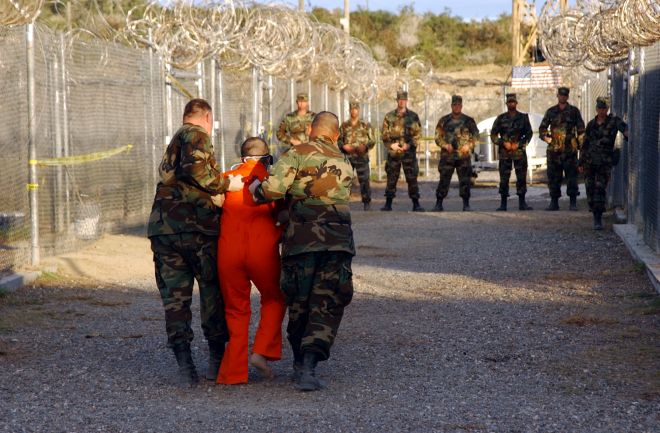
For many of the prisoners at Guantanamo, the forthcoming US presidential election holds little promise of change. Although both Barack Obama and John McCain have pledged to close Guantanamo, the problem for at least 50 of the 261 prisoners still held at the prison is not that the US government is unwilling to release them, but that there is nowhere for them to go.
These men are from countries including Algeria, China, Libya, Tunisian and Uzbekistan. Although they have been approved for release after multiple military review boards – some for at least three years – they cannot be repatriated because of international treaties preventing the return of foreign nationals to countries with poor human rights records, where they face the risk of torture. Attempts to find other countries willing to take them have also failed (with the exception of Albania, which accepted eight former prisoners in 2006), in part because, although they are approved for release, the government insists on maintaining that they are still “illegal enemy combatants.”
Generally ignored by the media, which focuses instead on the few prisoners chosen to face special “terror trials” (the Military Commissions), these men receive no special favors, in spite of their status, and are mostly held in conditions of strict solitary confinement for up to 23 hours a day.
Recently, however, some of these men have received extensive media coverage, Seventeen Uyghurs – Chinese Muslims who were sold to US forces after fleeing a settlement in Afghanistan where they had sought refuge from Chinese oppression – were allowed to present their case to a US court on October 7. The judge, Ricardo Urbina, ruled that their continued imprisonment was unconstitutional, and that, because no other country would take them, they should be rehoused in the United States.
This prompted a frantic appeal from the government, which is desperate not to accept responsibility for its mistakes by welcoming any former prisoners into the United States. The appeal was accepted, and arguments on both sides are scheduled to take place on November 24. If the appeals court upholds Judge Urbina’s ruling, this might bring an end to some of the other prisoners’ extensive legal limbo, but in the meantime the silence surrounding their predicament masks a darker truth, which has only just come to light.
Since June 2007, the administration has been stealthily attempting to repatriate various North African prisoners, under the cover of “diplomatic assurances” with the governments of Algeria, Libya and Tunisia. These are supposed to guarantee that, if returned, the prisoners will be given “humane treatment,” but as various human rights organizations have reported, the “diplomatic assurances” are worthless.
After two Tunisians were repatriated last June, the “diplomatic assurance” with the government of Zine al-Abidine Ben Ali melted away when the men faced show trials on trumped-up charges (extracted through the torture of other prisoners) and received jail sentences of three and seven years.
Fearing that other cleared prisoners would receive similar treatment, several lawyers sought help from the US courts to prevent their clients’ forcible return. A District Court blocked the return of a third Tunisian, and lawyers for at least two other prisoners petitioned to prevent their clients’ forced repatriation.
One was Abdul Rauf al-Qassim, a Libyan with an Afghan wife and a daughter he has never seen, and another was Ahmed Belbacha, an Algerian who had sought asylum in the UK in 1999. Belbacha, who was seized and sold by bounty hunters in Pakistan, had fled Algeria because he had been working for a government-controlled oil company and had been threatened by militants, but the British government refused to accept his return to the UK because he was kidnapped while his asylum claim was still pending. Terrified of being returned to Algeria, he told his lawyers that he would rather stay in Guantanamo, even though his cell was “like a grave.”
For most of this year, it appeared that the lawyers’ attempts to prevent their clients’ return to torture had been successful, but last month, during a visit with Cori Crider, staff attorney at the London-based legal action charity Reprieve, Ahmed Belbacha explained that in July he had been taken aside by a group of US soldiers who had ordered him to sign papers approving his release from Guantanamo. Knowing that a court had put a stay on his repatriation, Belbacha refused, but his lawyers did not hear about it until Crider’s latest visit with him last month.
Although lawyers for other prisoners are not at liberty to speak about similar cases (because their cases are sealed before the US courts), it appears that this was not an isolated case. The only conclusion that can be drawn is a bleak one: In an attempt to clear out unwanted prisoners from Guantanamo – and also, no doubt, to prevent them from seeking asylum in the United States if Judge Urbina’s ruling stands – the authorities at Guantanamo are deliberately undermining rulings made in courts on the US mainland to prevent the forced repatriation of vulnerable prisoners.
This is shocking, of course, but it is unsurprising given that those who established Guantanamo have consistently expressed disdain for the law, and have sought nothing less than unfettered executive power.
Andy Worthington is the author of “The Guantanamo Files: The Stories of the 774 Detainees in America’s Illegal Prison” (published by Pluto Press). Visit his website at: www.andyworthington.co.uk. He wrote this commentary for THE DAILY STAR.
Source / Daily Star Lebanon
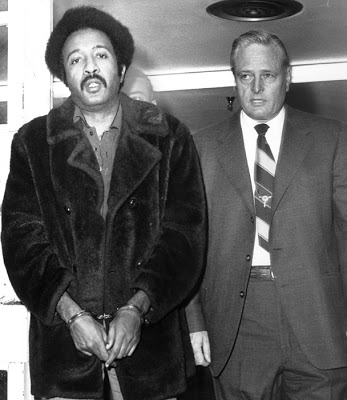
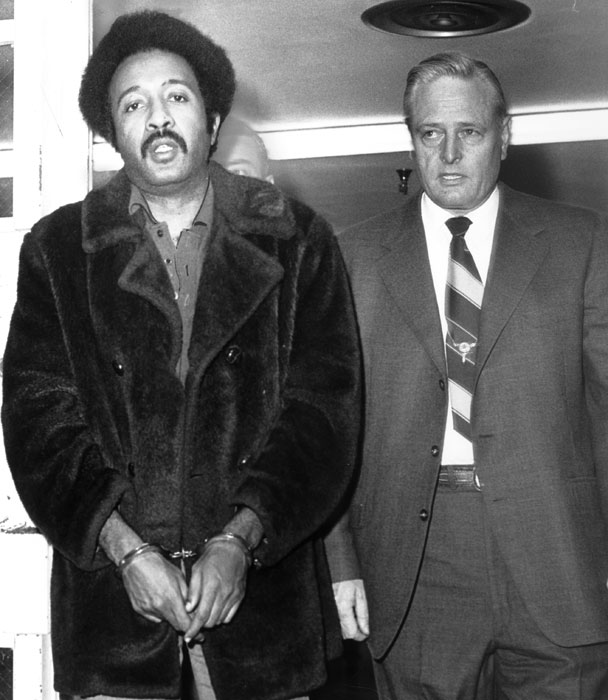
Ernest McMillan and Stoney Burns : Dallas 60s Activists Revisited
The Rag Blog was inspired by an underground newspaper we published in the 1960s in Austin. We called it The Rag. When Carol Neiman and I were editing The Rag — and many more whose bylines you see here from time to time were also involved with that heady undertaking — we also worked with SDS and were totally immersed in the sixties New Left uprising, organizing against social injustice and the War in Vietnam.
At the same time, Stoney Burns was editing a fellow underground paper in Dallas and Ernest McMillan was a leader in the civil rights struggle there, working with the Student Nonviolent Coordinating Committee (SNCC). SNCC and SDS were fraternal organizations. And for those of us active in the movement in Texas — where we were the underdogs! — you can bet we were all brothers and sisters in the struggle.
You know where we are now. Here’s an update on Ernie McMillan and Stoney Burns.
Thorne Dreyer / The Rag Blog / November 4, 2008
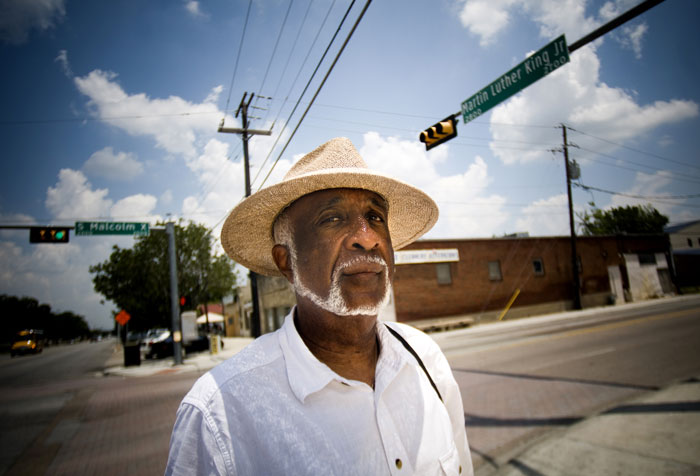
SNCC activist McMillan and underground newspaper editor Burns reflect on those days of turmoil and change.
By Roy Appleton
“Is this Stoney?” says the smiling man, crossing the threshold to hug his guest. “Hey, brother.”
“I bet you didn’t expect the gray,” says Stoney Burns.
“I got it too,” replies Ernest McMillan, leading the pony-tailed visitor into his East Dallas apartment and back to the past. Living now less than a mile apart, they hadn’t seen each other since those restless times. Not since the days of war in Vietnam, protests and assassinations, culture clashes and civil rights struggles, of Black Power, Flower Power and women’s liberation. When something not exactly clear was happening.
Tightly ruled, convention-numbed Dallas — still stung by the tragedy of Nov. 22, 1963 — was relatively tame for a big city in the 1960s. A vigilant police force helped see to that.
But as the peace and justice movements gained momentum elsewhere, they found voices here as well.
As in young Ernie McMillan, passionate foe of prejudice and war. And Stoney Burns, one playfully aggressive, seriously stimulated newspaper editor.
On separate paths, they would rouse and rattle in ways their hometown had never seen.
“Dallas was just outraged by Stoney,” said David Richards, one of his attorneys. “He represented everything they perceived to be evil.”
While Mr. McMillan set a tempo for activism to come.
“We owe a priceless debt to him,” said the Rev. Zan Holmes, a longtime Dallas pastor and social activist. “He stood up and spoke up. He called attention to the problems and became our inspiration.”
Cutting the head off the beast
“Seems like there was a lot more life. This is depressing,” says Mr. McMillan, soaking up some South Dallas sights and sounds near Martin Luther King and Malcolm X boulevards.
He has returned to a center of the action back when he led the local front of the national Student Nonviolent Coordinating Committee.
“We’ve got Freedom Fashions, not freedom and justice,” he says, driving through a land long waiting to bloom.
He sees stability along Meadow Street and fondly remembers Dr. Charles Hunter and his Hope Presbyterian Church, home now to a service agency for girls.
“We had a lot of mass meetings, community meetings here.”
Blocks away, at the corner of Pine and Malcolm X, he parks outside an abandoned building, long-ago home of an OK Supermarket.
“Looks a lot smaller than it did then,” he chuckles, standing near a rotting overhang. “Man, I don’t remember this.”
He talks of his group’s protests and boycott of the white-owned grocery chain, says it stocked inferior products at bloated prices.
“We would have people marching around the building with signs,” he says. “People would get off the bus and join us.”
He doesn’t talk much about the night of July 1, 1968, when he and an associate, Matthew Johnson, led a group into the store and left behind $211 worth of destruction. “We just went in to send them a message,” he says.
In less than two months, the two young African-Americans were arrested, tried and dealt 10-year prison terms by an all-white jury. The charge: Destroying private property worth more than $50.
The store owner’s son testified he saw Mr. McMillan drop a gallon bottle of milk and Mr. Johnson smash bottles of grape juice and a watermelon. Jurors heard a defense attorney liken them to the American patriots who dumped English tea in Boston harbor.
“They were making a political statement,” said attorney Vincent Perini, recently explaining his analogy. “They were standing up for the folks in South Dallas.”
Jurors also heard a prosecutor call the pair “revolutionists” helping rush civilization “to hell at a hundred miles an hour.”
The rush was on Mr. McMillan, said Don Stafford, a retired Dallas assistant police chief, at the time a police lieutenant in South Dallas. “He was a thorn in their side, and they needed to get rid of him.”
And they did, says Dr. Hunter, visitation pastor at Oak Cliff Presbyterian Church. “They were cutting the head off what they thought was the beast.”
Going against the grain
For the budding Ernest McMillan, a 1963 honors graduate of Dallas’ Booker T. Washington High School, war and racism were beasts.
After withdrawing from Morehouse College in Atlanta, he registered voters and demonstrated in the South before bringing his passion and training back to North Texas in 1965.
After briefly enrolling and protesting at Arlington State College (now the University of Texas at Arlington), he established a Dallas chapter of SNCC, then growing more militant.
“It was the way I was raised, to not abide injustice, to not be quiet in the face of wrongdoing,” said the son of a family steeped in ministry, medicine and teaching, reared near the Dallas Freedman’s Cemetery.
The SNCC cadre was hardly the first or last to oppose racism and discrimination in Dallas. The Progressive Voters League began organizing black voters in the 1930s. Protesters challenged segregation at the State Fair of Texas in 1955. Freedom rallies in 1961 called for boycotts of department stores and movie theaters.
Demonstrators picketed the whites-only Piccadilly Cafeteria in 1964 and marched for civil rights in 1965. It took a lawsuit and the courts to establish the current city election system. The fight for Dallas school desegregation lasted almost 50 years.
The efforts and influence of Felton Alexander, Juanita Craft, Richard Dockery, Kathlyn Gilliam, Elsie Faye Heggins, J.B. Jackson Jr., Al Lipscomb, Maceo Smith and the Revs. Peter Johnson and S.M. Wright and other local African-Americans have long been recognized.
The Revs. Wilfred Bailey, Mark Herbener, William McElvaney and Rabbi Levi Olan were among local clergy working for peace and equality in the Sixties and later, while attorneys Ed Polk, Frank Hernandez, Fred Time, Mr. Perini and Mr. Richards have been leading defenders of civil rights.
But few local black leaders had a radical, confrontational — edge in the late Sixties, Dr. Hunter and others say.
“There was definitely a sense that you stay in your place. You’ve got yours,” he said.
That wasn’t a concern for Mr. McMillan and his group of 30 or so. He, Matthew Johnson, Edward Harris, Michael Dodd, Fred Bell and the others would organize, mobilize and speak out with a fervor jolting to some. Beholden to none.
And working outside the system, they drew the system’s attention.
Mr. McMillan tells of traffic stops and searches. He smiles about the police officer seen going through his trash, and the one found eavesdropping in his back yard.
“They were trying to disrupt us, keep us off balance,” he said, recalling how his guys joined in, following officers and recording their actions.
The young agitators were hassled “no doubt about it,” said Mr. Stafford, the former police officer. “If you were against the establishment you were going to get harassed.”
No, police just tried to “keep the peace” and contain troublemakers during and after the SNCC years, said Paul McCaghren, a patrol captain in 1968 and later the department’s intelligence director.
“We didn’t want any problems, and we were really sensitive because of President Kennedy being assassinated” here, he said.
But some officers weren’t sensitive enough, Mr. McCaghren said. “Could we have done a better job? Oh, yeah,” he said. “We were reverting to the old police theory that fear is the best deterrent you have against violence. So we weren’t using dialogue and we made a lot of mistakes.”
In time Mr. McMillan was gone and his group fractured. Three weeks after his grocery conviction, he was indicted for draft evasion. Authorities said he refused to take an induction oath, an allegation he denies.
“I was cursing, belligerent, all this stuff. A lieutenant pulled me out of the line, said look now we’re going to let you go home, cool off. We’ll send you another [induction] letter.”
Freed after posting bond, he traveled to Connecticut in June 1969 to address a church group. While there his attorney told him he could be arrested for leaving North Texas. He fled, was captured in Cincinnati in late 1971, returned to Dallas and sentenced to three years in federal prison after pleading guilty to violating terms of his release.
Before his sentencing, and until stopped by the judge, Mr. McMillan read part of a statement in court, saying the draft charge “reflected … the systematic attempt to remove me, by any means necessary, from the political activities” of his group.
The draft charge was dismissed. An appeal of the supermarket case was rejected. And he spent three years and two weeks behind bars.
An era of tension and change
Dallas didn’t have the riots, destructive firebombings and mass arrests. Not even a tank in the streets. Still, the late Sixties was an eventful time in the city.
Residents in 1968 began loosening the business community’s grip at City Hall. The Dallas Citizens Council had selected and successfully backed City Council candidates for years. But voters changed the city charter, adding two new council seats. Months later George Allen would fill one of them, representing South Dallas, as the council’s first elected African-American.
In 1968, marchers in South Dallas, including Mr. McMillan, supported the Rev. Martin Luther King’s Poor People’s Campaign. Downtown, Ruth Jefferson, Mr. McMillan and other and protesters occupied the state welfare office demanding better benefits; others picketed the selective service center.
Dallas police opened neighborhood police centers to promote racial harmony, and the city’s Block Partnership program began connecting poor families and churches. A human relations commission would convene in 1969.
Groups such as the Dallas Committee for a Peaceful Solution in Vietnam, sponsor of Saturday vigils at Dealey Plaza, kept speaking out against the war.
“It was pretty heady stuff. We were trying to save the country,” the late Ken Gjemre, an organizer of the vigils, said in a 1999 interview.
City leaders and police braced for rioting after Dr. King’s assassination on April 4, 1968.
“We were expecting trouble. We had a lot of people on the street, and we didn’t want them to get a jump,” Mr. McCaghren recalled.
He had an officer keep a log of police activity during those times. It tells of heightened alerts throughout the city, anonymous calls about suspicious behavior and unfounded threats to bomb Love Field and city hall. It also reports that two lighted beer bottles with kerosene were thrown at a white-owned convenience store in South Dallas: “One started a small fire. … Both fell about 20 feet short of the building.”
Four months after the assassination, the City Council gave the mayor authority to impose curfews and other actions against civil disturbances, a move denounced by ministers and black leaders.
With the city preparing for mass detentions, the Dallas Bar Association asked members to help with any legal proceedings, recalled Vincent Perini, who said he offered his services.
“They wanted people to serve as prosecutors, defense attorneys, judges,” he said. “It was going to be a sort of makeshift tribunal. It was a wild time.”
Concerned about decorum downtown, the City Council in 1967 restricted gatherings at Stone Place, the walkway between Main and Elm streets — now home to mostly restaurants, then a hangout for street preachers and those hippie types.
So the peace people and others began gathering at Lee Park, near the counter-culture’s Oak Lawn center of gravity, for music, rallies, the high life and perhaps a dip in Turtle Creek.
Their looks and outlooks drew scorn from the mainstream, including the city’s two daily newspapers’ editorial pages. Their “pot parties” and illicit economy made news. As in this January 1968 report in The Dallas Morning News:
“Police raided a hippie pad in North Dallas shortly before midnight Saturday, rounded up 13 booted and unbarbered boys and girls,” and “enough marijuana to make 140 cigarettes worth $1 apiece.”
Other stories told of stiff prison sentences for drug convictions, such as a Dallas man’s 50-year term for selling $3 worth of marijuana.
And the News tried to help readers with a series of articles – Drug Peril in Big D – “outlining the problem in all its startling aspects.”
Dallas Notes
“Free Ernie.” A poster in Ernest McMillan’s apartment delivers those words with a drawing of his smiling, bearded face.
“I believe I took the photograph that this was taken from,” says Stoney Burns, eyeing the memento, as the reunion takes another turn.
He also splashed the drawing across the cover of Dallas Notes, for his newspaper’s Sept. 18, 1968, issue. An accompanying story, headlined SNCC Members Shafted, told of the OK Supermarket convictions.
It wasn’t the first or last article about Ernest McMillan or courtrooms to appear in what would bring Mr. Burns local celebrity and notoriety.
Launched in March 1967 to “tell the truth” about Southern Methodist University, Notes from the Underground — first produced on a Texas Instruments copy machine — would mushroom into Dallas Notes. And for almost four years, the biweekly paper’s alternative news services and ever-evolving staff would tear into those swirling times with a clear bias against war, intolerance and hypocrisy.
“Notes is the boss, the only fearless, wide awake, red-hot newspaper in town,” crowed an early advertisement for a publication that would peak with street sales of about 12,000 copies per issue.
The paper’s anti-war stories included “profit and loss” statements listing area companies’ war contracts and names of the local dead. Its reports on politics and dissent often had an editorial ring. “Elections Don’t Mean [expletive],” headlined an elections issue. “Our Power is in the Streets.”
Notes tried to mobilize its readers, calling in early 1968 for the boycott of an Oak Lawn Avenue waffle shop. People “with long hair, beads, boots, flowers, beards, etc.” weren’t being served, the paper reported, urging readers to “mark the date on your calendar: Flower Power can work in Dallas.”
The paper covered the area music scene and printed reviews, letters, cartoons, short stories and poetry. It kept tabs on the local drug trade, from arrests to user-friendly how-to’s.
And with a spicing of four-letter words and porcine portrayals, it wrote about the men in blue. Such as those who showed up at Stone Place on May 20, 1967:
“Over a hundred Dallas hippies tried to have a love-in last Saturday,” Mr. Burns wrote in his first bylined story. “Unfortunately, about twenty paranoid cops had a hate-in and, baby, they had the guns.”
That article “plunged Dallas into the sixties,” wrote James McEnteer in his book Fighting Words, Independent Journalists in Texas.
A graduate of Hillcrest High School and the University of Arizona, Mr. Burns – then known by his given name, Brent Stein – joined the newspaper while working for his father’s Dallas printing company and advising an SMU fraternity.
Introductions to marijuana and LSD had engaged him. He offered to help editors Doug Baker and Nancy Lynne Brown with their graphics. And while photographing a peace vigil at Dealey Plaza, the obscene taunts of American Nazi Party members moved him.
“I didn’t like seeing people abused like that,” he recalled, wiping a watery eye. “I definitely wasn’t an activist until then. But that was the breaking point.”
He wrote for the paper as Stoney Burns, the name he goes by today. “I had a straight job and didn’t want my customers to know,” he said.
His battles with police began when he was removed from downtown for selling the paper. SMU banned it in October 1967. He became editor two months later. And as Notes turned up the heat, so did authorities.
An October 1968 cover story about Dallas’ pornographic movie industry featured a photograph with bared female breasts.
Twice the next month, police raided Mr. Burns’ communal home and Notes office at 3117 Liveoak St., arresting him and others there, while hauling away newspapers, typewriters, cameras, telephones — everything used to produce the paper. With rented equipment, the staff kept publishing.
“That was the ploy used to shut down his newspaper,” said lawyer David Richards, who sued the police chief and others on Mr. Burns’ behalf.
Federal judges in Dallas decided the state obscenity law being used against the newspaper was unconstitutional. On appeal, the U.S. Supreme Court ruled federal courts had no place in the dispute. But by then the obscenity law had been rewritten and the charges against Mr. Burns dismissed.
“We had a great day, sitting on his porch, watching these angry police officers having to return his stuff,” Mr. Richards said.
Court orders later targeted two other supposedly obscene issues — after they had been widely circulated. One featured the frontal photo of a nude male at a Dallas parade of miniskirted women. A particular cartoon aroused some outrage as well.
“We got a lot of mileage out of that. It was fun,” said Mr. Burns, telling of the time television cameras documented officers ripping the cartoon from papers. Its most explicit panel dominated the next issue’s cover, but with numbered dots in place of lines and an invited headline: “Hey Kids! Just connect the dots and you too can be arrested.”
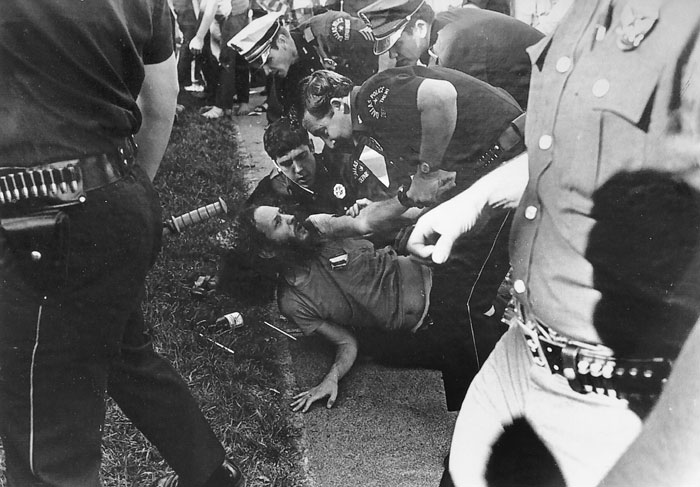
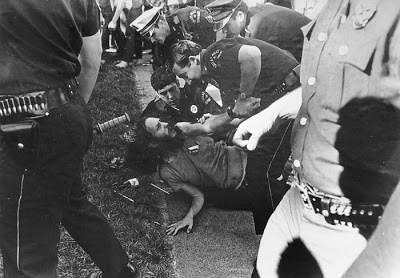
Mr. Burns was among those arrested at what Notes dubbed the Lee Park Massacre, a melee involving police and “hundreds of boisterous youngsters and hippies” (as The Dallas Morning News put it) on April 12, 1970.
Witnesses say a crackdown on swimmers in Turtle Creek started the ruckus, and officers blamed Mr. Burns for inflaming passions with obscenities and police death calls, a charge he did and does deny. “Too bad they didn’t kill you,” a prosecutor reportedly told him in court before his conviction for “interfering with a peace officer.” Sentenced to three years in prison, he was cleared on appeal.
Mr. Burns quit the paper in September 1970. It would fold early the next year. “There was too much pressure — my court date, making payroll,” he recalled. “I had to get rid of it.”
Months later, he was art director of another Dallas underground paper, the Iconoclast, and soon back in trouble, for helping photograph an undercover narcotics officer outside a Dallas courtroom. He received six months in jail for contempt of court but again was cleared on appeal.
He ran for Dallas County sheriff in 1972, leaving the race after being busted with marijuana. A jury gave him 10 years and, at prosecutors’ request, one day in prison for the almost one-tenth ounce of pot police found after stopping his van. That extra day made him ineligible for probation, but after changes in state law made possession of small amounts of marijuana a misdemeanor, his sentence was commuted.
Mr. Burns served 19 days and was freed in December 1974 — in the same week as Ernest McMillan.
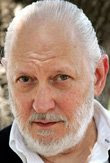
Mr. Burns returned to the print shop and his music magazine Buddy, ditching the dissent, but not his humor. He sold the magazine years ago, but now publishes a business advertising booklet.
Never married, 65 and Medicare-free, he lives in a house near Lower Greenville Avenue, where his days include music (mostly bluegrass), some television and friends. The wild curly black hair of youth is now a silvery gray, the once-scraggly beard trim and white. His underwear-only Frederick’s of Hollywood parties are long gone, but he will hit a bar or concert or (as Notes would hail it) “that harmless, non-addictive herb known as marijuana.”
“When I do I always say, ‘Why don’t I do this more often,’” he says with a smirk over a soft drink at a neighborhood dive.
Mr. Burns says he hasn’t cast a ballot since weighing in for Lyndon Johnson in 1964 and won’t break his streak this year. He attended an anti-war rally in Dallas before the Iraq invasion, but has no interest in firing up the outrage — or even messing with police.
“I just can’t do what I could then. It’s just too much trouble,” he says.
Still, he offers up remembrances from the days when he was, like it or not, the face of the local hippies.
“Stoney was a quiet, mild Jewish guy,” said Fred Time, his lawyer in the Lee Park case, who employed him for a spell as an investigator. “He had this underground paper and somebody labeled him king of the hippies. He was just a pot-smoking young guy trying to find a niche.”
Back then the rush of change and sense of possibility liberated some, threatened others.
Notes tried to inform and energize the young, “get Dallas to loosen up” and have a good time in the process, the editor says.
And to those ends, the effort was an unregrettable success, he says, shrugging off his part in it all.
“I was young and dumb and thought I was bulletproof,” he says. “But I wasn’t that much different from a lot of people in the movement. I was just the messenger.”
Still, “it was fun to see the straights freak out,” he said during a return visit to the SMU campus, where he recalled being routed by police for selling newspapers. “They said I was inciting to litter.”
Room for improvement
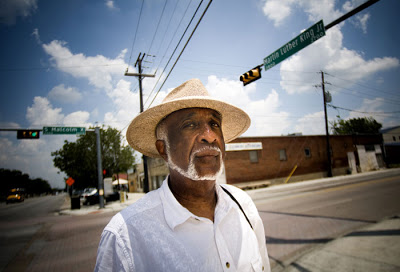
After prison, Ernest McMillan became an aide to then-state, now U.S. Rep. Eddie Bernice Johnson. He organized a prison-justice project before moving to Houston, where he founded a program to empower young inner-city males.
Back in Dallas, the 64-year-old grandfather remains an adviser to the Houston program. He volunteers at his church, Munger Place United Methodist, the Dallas Peace Center and with Pastors for Peace, among other gifts of time.
“I’m still evolving, trying to aim my arrow at the mark,” he says during a morning break.
He is not bitter about his clashes with the law. And he gives his SNCC days an OK — not a KO.
“We turned on some switches and lights, got some people off their butts and into voting booths and off their knees praying and into the city hall chambers, fighting for justice,” he said. “I’m not regretting it, and I’m not beating my chest about it.”
He and his group deserve credit, said Ms. Johnson.
“Those young people had the nerve to talk about it publicly.” And by bringing “attention to the inequities” facing local blacks, she said, “open access came much smoother than it might have.”
Despite “some positives,” much work remains in South Dallas, she said. “When you come home you don’t see a whole lot of changes. It’s depressing to see that as we move in, often the quality moves out,” she said.
Mr. McMillan barely recognizes the neighborhood of his youth, now Dallas’ upscale Uptown. He sees some advances in southern Dallas, but much room for improvement.
African-American families and neighborhoods are more fragmented, he said, but “there’s been no fundamental change from when I was around in 1968.”
What’s needed are organizations that “can sustain themselves and carry on the struggle” — groups always drawing in youth, he says.
“I want young people to know they have tremendous power, tremendous energy, tremendous resources within them, and they just have to flip the switch on and use it.”
Source / Dallas Morning News / Posted Oct. 25, 2008
Posted in Rag Bloggers
Tagged Alternative Media, Anne Lewis, Black Liberation Movement, Black Power, Counterculture, Dallas, New Left, Sixties, SNCC, Texas, Texas History, The Rag, The Rag Blog, Underground Press
3 Comments
Obama, and Our Sixties Dreams of Peace

‘While we will never realize the utopian dreams of our youth, the imminent election of Barack Obama is likely to serve as a catalyst that will lead to an impressive series of reforms…’
By Ken Brociner / November 2, 2008
I have been doing a lot of soul searching as this momentous election has drawn closer. Of all the hopes and fears that have passed through my mind, one of the most powerful has been the sense that that the clock is winding down for my generation — the “‘60s generation.”
By the time you reach late middle age, facing your own mortality is nothing new. But what has been gnawing at me in recent months is how loudly the clock is now ticking for my generation in a political sense.
I’ve long since let go of my youthful dreams of creating a world of peace, love and harmony based on social and political egalitarianism. Like many people who came of age in the 1960s or early 1970s, I now understand I once believed in the unattainable—a completely unrealistic variant of utopianism.
For some of us, this wildly romantic vision of the future came from reading Marx or Marcuse. For others, it came while marching and chanting in unison with hundreds of thousands of our contemporaries in the national movements to achieve civil rights for all Americans or to end the slaughter in Vietnam.
Since that time, the seemingly never-ending cycle of cruelties, crimes and tragedies in the United States and elsewhere has sadly convinced me that human nature is just too much of a mixed picture to provide the building blocks for the kind of a world that so many from my generation once thought was possible. Nonetheless, I still absolutely believe that if enough people work together, we can make the world a far better place than it is today.
But will my generation live to see the day when America at least comes close to living up to its great promise? Will we live long enough to see the day that social justice—in the United States and the rest of the world—becomes more the norm rather than the exception it is today?
Yes, the clock is winding down on the “‘60s generation.” But it hasn’t run out yet. While we will never realize the utopian dreams of our youth, the imminent election of Barack Obama is likely to serve as a catalyst that will lead to an impressive series of reforms during the next (hopefully) eight years – and beyond.
With Obama in the White House and the Democrats firmly in control of the Congress, the United States can become a key part of the solution to the global warming crisis – rather than the major obstacle it has been these last eight years.
As president, Obama will finally begin the process of ending U.S. involvement in Iraq, while placing a much greater emphasis on multilateral diplomacy than the Bush administration ever did.
On the issue of world poverty, Obama has pledged to help lead the struggle to achieve the UN’s Millennium Development Goal of ending extreme poverty by the year 2015.
On the economic front, Obama seems quite serious about placing meaningful regulations on Wall Street in order to help get us out of the current mess as and prevent similar meltdowns in the future. And his stress on revitalizing the economy by creating millions of good-paying new jobs while converting the U.S. to an environmentally sustainable society is a breath of fresh air after eight years of being ripped off by the oil industry and their pals in the Bush administration.
Obama is also strongly committed to enacting universal health care as well as to passing the labor-backed Employee Free Choice Act. The E.F.C.A. would provide important new protections for workers who might otherwise be fired for organizing, while also facilitating the formation of local unions. As the labor movement continually points out, the single most important factor in determining whether or not a worker is being paid a living wage is whether or not they belong to a labor union.
On so-called social issues, Obama’s election will almost certainly lead to America becoming a more decent and fair society by ensuring equal rights for women, African Americans, Latinos and gay people.
But in a curious and ironic way, these last few days of the presidential campaign have also served to highlight the limits of what we can expect from an Obama presidency. Obama’s off-hand remark to the now legendary “Joe the Plumber” about the need to “spread the wealth around” was music to the ears of every progressive and fair-minded person in the country. Or at least it should have been.
However, the Obama campaign’s explanation of what the senator meant by that comment makes it clear that he is only talking about an extremely mild form of economic redistribution.
And this is where we come in. In a world of such obscene wealth, misery and inequality, the progressive movement needs to support Obama’s agenda against the resistance it will face from big business and their allies in the Republican Party. At the same time, we need to push him to take bolder steps to tackle economic injustice than his program now calls for.
But we also need to significantly expand the reach of the progressive movement so that in 2016, we can help elect a president who really might be what the McCain campaign has falsely charged Obama of being – “the Redistributionist in Chief.”
While the sixties generation will never see “the revolution” that so many of us once felt was practically around the corner, Americans of all generations are about to enter an era that almost no one thought possible just a few short years ago.
It’s now up to all of us to make the most of this historic opportunity–both between now and Election Night, and then in the weeks, months and years that lie ahead.
[Ken Brociner’s essays and book reviews have appeared in Dissent, In These Times and Israel Horizons. He also has a biweekly column in the Somerville (Mass.) Journal.]
Source / In These Times
Thanks to Carl Davidson / The Rag Blog

Posted in RagBlog
Tagged American Society, Obama Presidency, Peace Movement, Progressive Movement, Sixties, Social Change
Leave a comment
Austin : 20 Men Exonerated by DNA call for Death Penalty Moratorium
‘The exonerated men, members of Witness to Innocence, want Texas to create a commission to search for wrongful convictions.’
By Grits for Breakfast / November 3, 2008
Twenty men exonerated by DNA evidence all gathered in Austin on Friday to call for a moratorium on Texas’ death penalty in light of the state’s recent slew of long-time inmates proven innocent by applying modern forensics to old evidence, including most recently the exoneration by DNA of Michael Blair who’d been sitting on Texas’ death row. Reported the Austin American-Statesman:
The exonerated men, members of Witness to Innocence, a Philadelphia-based organization that is holding its annual meeting in Austin, want Texas to create a commission to search for wrongful convictions. And while the commission works, they want a moratorium on executions in the busiest death penalty state — with 419 executions since 1982 and six more scheduled this month. …
Sam Millsap, former Bexar County district attorney, said he slowly came to believe that the death penalty must be abolished because of the growing number of exonerated death row inmates — 130 since 1973, including nine in Texas, according to the Death Penalty Information Center. “I am no longer convinced that our courts will in fact guarantee the protection of the innocent,” Millsap said.
Millsap said he has taken responsibility for the 1993 execution of Ruben Cantu , a San Antonio man who Millsap said might have been innocent of a 1984 murder. The conviction was based on one eyewitness who later recanted, and no physical evidence tied Cantu to the crime, he said. “My decision to seek the death penalty was a mistake.”
The most recent Texas exoneration was in September , when a Collin County court dismissed the capital murder case against Michael Blair , sentenced to die for the 1993 murder of 7-year-old Ashley Estell.
However, the reporter (perhaps rightly) warned the exonerees:
any bill to halt executions stands no chance of passing the Texas Legislature, [Austin state Representative Elliott] Naishtat said. Capital punishment has substantial support in Texas. The 2007 Texas Crime Poll by Sam Houston State University found 74 percent of Texans support the death penalty. And 66 percent said they were confident that innocent people are protected from execution.
Research underlying DNA forensics began in Houston
The Houston Chronicle published a story commemorating the 20th anniversary of a Harris County case that launched the international boom in the use of DNA in forensic science and interviewing Dr. Tom Caskey, whose patents on the early technology still fund research positions at the Baylor College of Medicine:
“Don’t ever say crime doesn’t pay. Crime does pay,” quipped Caskey, who now directs the Brown Foundation Institute of Molecular Medicine for the Prevention of Human Diseases, a part of the University of Texas Health Science Center at Houston.
Caskey’s early work on a Houston homicide case became the foundation for today’s national network of criminal DNA sampling, reported the Chronicle’s Eric Berger:
Caskey’s primary scientific interest at the time involved the identification of genes linked to human disease. But, during the course of his research, he identified short segments of DNA — called short tandem repeats, or STRs — that vary widely from person to person.
His lab developed an STR identification technique that soon became the gold standard for criminal cases.
The method underlies the U.S. Combined DNA Index System, or CODIS, which contains DNA information on more than 6 million offenders. The system also forms the basis of Interpol’s criminal database and that of most governments.
A constitutional right to DNA testing?
The US Supreme Court will soon decide whether a federal right exists to have DNA evidence tested that could prove a long-ago convicted defendant’s innocence, even if he confessed to the crime:
William Osborne was accused of raping a prostitute at gunpoint, beating her with an ax handle and leaving her for dead in the snow. His lawyer declined a DNA test of the evidence, thinking that it would confirm his guilt.
Osborne was convicted, spent more than a decade in prison and gave a detailed confession to a parole board. But after recanting that confession, the Alaska man won a federal lawsuit seeking new DNA tests that he now says can clear him, a judgment that was affirmed by the U.S. Court of Appeals for the 9th Circuit. It is the first time an appellate court has ruled that an inmate has a federal constitutional right to such testing.
Now, the Supreme Court is being asked to evaluate that ruling in a case that pits the administration of Alaska Gov. Sarah Palin, the Republican vice presidential nominee, against a Republican-appointed judge who accuses her state attorney general of being “obstinate” in blocking Osborne from getting to test the evidence used to convict him. The high court debated Alaska’s request to take the case in a private conference on Friday and could announce its decision as early as today.
Touch DNA evidence could overwhelm crime labs
Finally, if you’re not yet familiar with the concept of “touch DNA,” be sure to check out this piece from the back pages of Scientific American which answers the question:
So what’s touch DNA?
The touch DNA method—named for the fact that it analyzes skin cells left behind when assailants touch victims, weapons or something else at a crime scene—has been around for the last five years. In fact, the prosecutor in the Ramsey case, Boulder County District Attorney Mary Lacy, learned about touch DNA when she attended a course here at the West Virginia University Forensic Science Initiative in the summer of 2007.
The technique has dramatically increased the number of items of evidence that can be used for DNA detection. In the 1980s, in order to perform DNA analysis on a crime scene or victim, forensic investigators needed a blood or semen stain about the size of a quarter. The sample size fell in the 1990s to the size of a dime and then became: “If you can see it, you can analyze it.”
Touch DNA doesn’t require you to see anything, or any blood or semen at all. It only requires seven or eight cells from the outermost layer of our skin.
Here’s how it works: Investigators recover cells from the scene, then use a process called polymerase chain reaction (PCR) to make lots of copies of the genes. Next, scientists mix in fluorescent compounds that attach themselves to 13 specific locations on the DNA and give a highly specific genetic portrait of that person. The whole process takes a few days, and forensic labs are often backed up analyzing data from other cases.
These cautionary asides about touch DNA, backed up labs and evidence retention problems echo concerns voiced recently to the Court of Criminal Appeals “Criminal Justice Integrity Unit that:
The advent of “touch DNA” … threatened to overwhelm agencies’ storage capacity. Potentially lots of new items could be stored for touch-DNA testing, even though labs already have tremendous backlogs. That means long lag times during which the evidence must be securely stored despite limited space.
Texas’ DNA labs right now are backed up and understaffed, but the trend will be for their caseloads to dramatically expand in the near term as these techniques become more widely used (especially considering the range of possible uses to which it could be subjected). For these reasons, ironically, demand for DNA lab services will inevitably increase regardless of whether crime rates go up or down.
Forensic science errors and the introduction of junk science as evidence are responsible for up to a quarter of false convictions among Texas DNA exonerees. The focus on DNA forensics in Texas has been to bring existing labs up to snuff quality-wise, but nobody’s planning pro-actively, to my knowledge, how the state will make the labs independent, much less eliminate current backlogs, or meet the inevitable, expanded future demand for forensic capacity.
The advent of touch DNA is an amazing and wonderful thing evidence-wise, but it exacerbates an already problematic situation with regard to lab backlogs and DNA-related forensic errors.
Source / Grits for Breakfast
Posted in RagBlog
Tagged Austin, Capital Punishment, Criminal Justice, Criminal Justice Reform, Death Penalty, DNA, Forensic Medicine, Human Rights, Science, Texas
Leave a comment
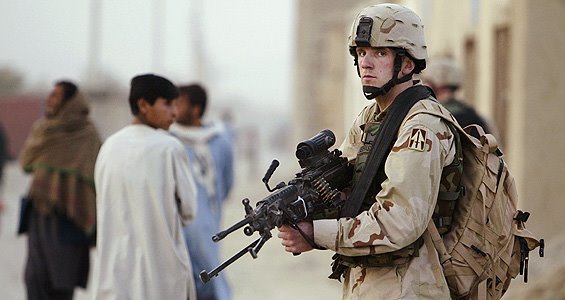
US Using UN Backdoor to Get Iraqi SOFA*
from Cross, S.C. as he patrols in Mosul.
U.S. weighs U.N. option to remain in Iraq: Shifts strategy after Baghdad crosses ‘red lines’ in proposal
By Nicholas Kralev / November 3, 2008
The Bush administration is looking to the U.N. Security Council to extend a mandate for U.S. troops to remain in Iraq beyond Dec. 31 – a move that would require Iraqi government cooperation but not Iraqi acceptance of a bilateral accord with Washington.
The shift in strategy follows the Iraqi government’s submission last week of several proposed changes a draft status of forces agreement (SOFA) being negotiated with the U.S.
Several of the proposed amendments, U.S. officials said, “crossed red lines.”
“A Security Council extension is our fallback option,” one official said, requesting anonymity because he was not authorized to speak for attribution. “Our preference is to have a status of forces agreement, and there were clear compromises in the draft on both sides, but the Iraqis are asking for things that no U.S. president can agree to.”
U.S. officials declined to detail the disagreements, but State Department spokesman Sean McCormack called them “numerous.”
“We are working through all of those, trying to put a lot of thought into how to respond to them,” Mr. McCormack told reporters Friday.
Raed Jarrar, an Iraqi exile who works as a consultant for the American Friends Service Committee in Washington and closely monitors Arabic transcripts from the Iraqi parliament, said the Iraqi demands include:
– Naming the final document, “Agreement on Complete U.S. Withdrawal from Iraq.”
– Allowing Iraqi officials to open and monitor U.S. military mail.
– Giving Iraqi courts the authority to decide whether they or U.S. authorities will try American soldiers accused or committing crimes while off duty.
– An outright ban on raids outside Iraq by U.S. forces based there – a demand apparently prompted by the recent U.S. raid on a suspected al Qaeda site inside Syria.
In addition, at least three Iraqi politicians, including former Prime Minister Iyad Allawi, have called for the Arabic version of the document to be revised so it matches the English version, Mr. Jarrar said.
U.S. and Iraqi negotiators reached the draft security accord last month, calling for U.S. forces to leave Iraqi cities by June 30 and combat troops to exit by the end of 2011, unless requested to stay.
Iraqi officials, however, faced domestic opposition and submitted a list of proposed changes to the draft. The Bush administration is not expected to respond until after Tuesday’s presidential election.
A 2003 a U.N. resolution provides the legal basis for the U.S. military presence, and the resolution expires Dec. 31. If nothing is done, U.S. troops would be forced to suspend most military and reconstruction operations in Iraq, and remain on their bases.
Moreover, it would leave future U.S. deployments entirely up to the next American president. In describing prospects for an appeal to the Security Council, the U.S. official said that Russia has made clear it will not exercise its veto.
But in discussing that possibility, Russian Foreign Minister Sergey Lavrov emphasized that the request to the Security Council would have to come from the Iraqi government.
“We’ll support Iraq’s request to the U.N. Security Council if the Iraqi government asks for the mandate of the current international military presence to be extended,” Mr. Lavrov said recently, the RIA news agency reported.
The U.N. option appears the most realistic at this time, given the upcoming change of administration in Washington and Iraq’s own elections next year, diplomats and analysts said.
“It’s the diplomatic equivalent of kicking the can down the road,” said Michael Rubin, resident scholar at the American Enterprise Institute for Public Policy Research.
Kim Holmes, vice president of the Heritage Foundation and assistant secretary of state for international organizations during President Bush’s first term, said the Iraqis “are thinking they may get a better deal” if Democratic candidate Sen. Barack Obama is elected president.
“They could welcome an extension of the U.N. mandate,” he said. “Postponing an agreement would avoid making some hard political decisions for them.”
But Michael O’Hanlon, senior fellow at the Brookings Institution, warned that the Iraqis “are playing with fire.”
“If Iraqis aren’t careful, they will hand Obama a rationale for a premature departure on a golden platter, assuming he wins Tuesday,” he said. “Even a sense of Iraqi ingratitude could be enough to trigger a decision to start marching brigades out at the rate of one to two a month, as promised, early in 2009.”
The administration has been trying to pressure Baghdad to sign the agreement by threatening to cut millions of dollars in reconstruction and other aid.
After the New Year, U.S. forces “will have no legal basis for operating in Iraq” if nothing is done, and that would be “disastrous” for security in the country, said a State Department official, who also requested anonymity.
“I don’t think the Iraqis fully realize the consequences” of an immediate U.S. withdrawal, he said, adding that many officials and government facilities would lose their U.S. protection, including Prime Minister Nouri al-Maliki.
Kelly Hearn contributed to this report.
Source / Washington Times
The Rag Blog

* SOFA = Status of Forces Agreement
Posted in RagBlog
Tagged Iraq, Iraq Occupation, Iraq War, Iraq Withdrawal, United Nations
Leave a comment
Paul Krugman on the Republican Rump : Hard Right All That’s Left
‘What will defeat do to the Republicans?’
By Paul Krugman / November 3, 2008
Maybe the polls are wrong, and John McCain is about to pull off the biggest election upset in American history. But right now the Democrats seem poised both to win the White House and to greatly expand their majorities in both houses of Congress.
Most of the post-election discussion will presumably be about what the Democrats should and will do with their mandate. But let me ask a different question that will also be important for the nation’s future: What will defeat do to the Republicans?
You might think, perhaps hope, that Republicans will engage in some soul-searching, that they’ll ask themselves whether and how they lost touch with the national mainstream. But my prediction is that this won’t happen any time soon.
Instead, the Republican rump, the party that’s left after the election, will be the party that attends Sarah Palin’s rallies, where crowds chant “Vote McCain, not Hussein!” It will be the party of Saxby Chambliss, the senator from Georgia, who, observing large-scale early voting by African-Americans, warns his supporters that “the other folks are voting.” It will be the party that harbors menacing fantasies about Barack Obama’s Marxist — or was that Islamic? — roots.
Why will the G.O.P. become more, not less, extreme? For one thing, projections suggest that this election will drive many of the remaining Republican moderates out of Congress, while leaving the hard right in place.
For example, Larry Sabato, the election forecaster, predicts that seven Senate seats currently held by Republicans will go Democratic on Tuesday. According to the liberal-conservative rankings of the political scientists Keith Poole and Howard Rosenthal, five of the soon-to-be-gone senators are more moderate than the median Republican senator — so the rump, the G.O.P. caucus that remains, will have shifted further to the right. The same thing seems set to happen in the House.
Also, the Republican base already seems to be gearing up to regard defeat not as a verdict on conservative policies, but as the result of an evil conspiracy. A recent Democracy Corps poll found that Republicans, by a margin of more than two to one, believe that Mr. McCain is losing “because the mainstream media is biased” rather than “because Americans are tired of George Bush.”
And Mr. McCain has laid the groundwork for feverish claims that the election was stolen, declaring that the community activist group Acorn — which, as Factcheck.org points out, has never “been found guilty of, or even charged with” causing fraudulent votes to be cast — “is now on the verge of maybe perpetrating one of the greatest frauds in voter history in this country, maybe destroying the fabric of democracy.” Needless to say, the potential voters Acorn tries to register are disproportionately “other folks,” as Mr. Chambliss might put it.
Anyway, the Republican base, egged on by the McCain-Palin campaign, thinks that elections should reflect the views of “real Americans” — and most of the people reading this column probably don’t qualify.
Thus, in the face of polls suggesting that Mr. Obama will win Virginia, a top McCain aide declared that the “real Virginia” — the southern part of the state, excluding the Washington, D.C., suburbs — favors Mr. McCain. A majority of Americans now live in big metropolitan areas, but while visiting a small town in North Carolina, Ms. Palin described it as “what I call the real America,” one of the “pro-America” parts of the nation. The real America, it seems, is small-town, mainly southern and, above all, white.
I’m not saying that the G.O.P. is about to become irrelevant. Republicans will still be in a position to block some Democratic initiatives, especially if the Democrats fail to achieve a filibuster-proof majority in the Senate.
And that blocking ability will ensure that the G.O.P. continues to receive plenty of corporate dollars: this year the U.S. Chamber of Commerce has poured money into the campaigns of Senate Republicans like Minnesota’s Norm Coleman, precisely in the hope of denying Democrats a majority large enough to pass pro-labor legislation.
But the G.O.P.’s long transformation into the party of the unreasonable right, a haven for racists and reactionaries, seems likely to accelerate as a result of the impending defeat.
This will pose a dilemma for moderate conservatives. Many of them spent the Bush years in denial, closing their eyes to the administration’s dishonesty and contempt for the rule of law. Some of them have tried to maintain that denial through this year’s election season, even as the McCain-Palin campaign’s tactics have grown ever uglier. But one of these days they’re going to have to realize that the G.O.P. has become the party of intolerance.
Source / The New York Times
Thanks to Ramsey Wiggins / The Rag Blog
Posted in RagBlog
Tagged Extremism, Paul Krugman, Racism, Republican Party, Republican Right, Right Wing
Leave a comment
James Dobson’s Mass Mailing : ‘Focus on Stupidity’
‘Letter from 2012 in Obama’s America,’: ‘Toxic Cornpone.’
by Robert Weitzel / November 3, 2008
You tell me whar a man gits his corn pone, en I’ll tell you what his ’pinions is.
Mark Twain
Mark Twain once said that “in matters concerning religion and politics a man’s reasoning powers are not above the monkey’s.” Now if the two are combined, as James Dobson’s right-wing Christian organization, Focus on the Family, did in their recent “Letter from 2012 in Obama’s America,” the bar has been lowered to somewhere between the reasoning power of the bacterium Clostridium botulinum, the most poisonous biological substance known, and that of George W. Bush … the most toxic presidential substance yet known [19 percent approval rating].
Dobson’s letter from the “future” was emailed on October 22 to millions of his weekly TV and radio audience in the United States. His purpose was to scare the bejesus out of corn pone connoisseurs who devour the stuff faster than even Jesus can multiply it.
Keep in mind that the targeted readers’ “reasoning power” has already convinced them that they’re going to be Raptured—swooshed up bodily [naked as a third-rate centerfold] into heaven—moments after they initiate an apocalyptic nuclear conflagration in the Middle East, which they hope will eventually engulf the entire world. This is not a one-derivation-above-the-mean crowd, after all.
“To create man was a fine and original idea; but to add the sheep was a tautology.” Thank you, Mr. Twain.
According to the letter, a phantasmagoria of horror begins shortly after Obama takes office. Shedding his centrist campaigning skin, he is transmogrified into a far left-wing liberal antichrist. Outlandish? Keep reading.
In his first week in office Obama fires all 93 U.S. attorneys and replaces them with radical ACLU lawyers. Consequently, the Justice Department initiates criminal proceedings against nearly every member of the Bush administration.
Due to death or retirement, the Supreme Court is taken over by far left-wing radical judges (6-3 majority) who—you guessed it—begin legislating from the bench. The youthful appointees are expected to rule the country for the next 30-40 years.
Same-sex marriage becomes the law and compulsory training in gender identity in elementary school results in the firing of tens of thousands of Christian teachers accused of hate speech for refusing to speak positively about homosexuality.
The Boy Scouts choose to disband rather than obey a Supreme Court decision ordering them to hire homosexual scoutmasters to sleep with young boys in tents.
The Bible can no longer be read on radio or TV because doing so amounts to hate speech, and students cannot pray in school … not even silently while sitting outside the principal’s office.
All federal restrictions on abortion are removed and babies are killed only seconds before they can be delivered. Doctors and nurses who refuse to “murder” babies lose their licenses.
A new law mandating equal time for alternative views on public airwaves drives Rush Limbaugh types off the air, essentially shutting down conservative [hate] talk radio in America by 2010.
Commander in Chief Obama proves to be a total wimp, which emboldens Taliban and Al Qaeda terrorists who eventually seize control of Iraq, imprisoning, torturing [imitation is the ultimate form of flattery] and putting to death millions of “American sympathizers” in that country.
Obama, it seems, is more interested in sending foreign aid to impoverished Third World countries in the form of food and medical aid, which does nothing but nourish and keep healthy the next generation of terrorists.
Dobson finally lets go of his tenuous grip on reality when he describes how Iran’s one nuclear missile destroys Tel Aviv and forces Israel to cede huge amounts of land to the Palestinians, leaving Israel defenseless. WHAT? Israel cede land? Israel defenseless?
“The trouble ain’t that there is too many fools, but that the lightening ain’t distributed right.” Thank you Mr. Twain.
Oh yeah, and gasoline costs $7 per gallon and only military personnel can own a gun.
Needless to say, the next four years are a living hell for the Dobson clan, much as the last eight years have been for anyone with reasoning power marginally superior to that of Twain’s pet monkey.
As a bona fide left-wing liberal atheist, who “wasted” a vote on Nader, I had mixed feelings reading Dobson’s half-baked corn pone. My initial reaction was something akin to enjoying a preposterously funny Twain satire. But then I began to get the creepy feeling I was reading an American fundamentalist version of the Nazis’1935 Nuremburg Laws, which disenfranchised German Jews and foreshadowed the murderous persecution of European Jewry.
It became clear that what I was actually reading was Focus on the Family’s back-handed glimpse of America under a ruler of their choice … say, for instance, Sarah Palin.
Win or lose this time around, Palin is the GOP’s rising star and James Dobson’s heartthrob. She’s the “real deal” of an End Times fundamentalist. Unlike President Bush—a suspected convert—she’s been stuffing her gob with apocalyptic corn pone her entire life. The only way for Palin to get to heaven with her admittedly appealing carcass intact is the Rapture route via an Armageddon avenue, which does not bode well for a survivable foreign policy.
It’s easy to poke fun at the corn pone Focus on the Family and like-mindless organizations dish out during an election. It stops being funny, however, when one realizes that for tens of millions of people this fare is their only sustenance, and this toxic repast, like the bacterium Clostridium botulinum, is the most poisonous of all substances to the body politic.
“If we would learn what the human race really is at bottom, we need only observe it in election times.” Thank you, Mr. Twain.
[Robert Weitzel is a contributing editor to Media With a Conscience. His essays regularly appear in The Capital Times in Madison, WI.]
Source / Dissident Voice
Posted in RagBlog
Tagged Christian Right, Fundamentalism, James Dobson, Obama, Obama Smear Campaign, Presidential Campaign, Religious Right, Scare Tactics
2 Comments
TRUE Democracy and the Common Good Will Lead the American Left to Victory
The ‘Common Good’ is a Rose that Smells as Sweet
By Zwarich / The Rag Blog / November 3, 2008
In his recent piece entitled ‘Socialism, Capitalism: What’s in a Name?‘, David Hamilton has hit upon the crucial key to success for the American Left. In this excellent essay, he posits that we should examine the terminology that we use to advance our social ideals. I could not agree more, and would like to support his thesis, and hopefully direct more attention and discussion to this crucially important idea.
I heartily agree with Mr. Hamilton’s implied thesis that too many of us insist on using terminology that has been loaded with layer upon layer of cultural mythology. Many people use these terms, like ‘socialism’ and ‘capitalism’, without having any clear idea in mind what they mean. They only know that the cruelly unjust system under which we live now is referred to as ‘capitalism’, and they have come to believe in a false binary reality in which something called ‘socialism’ is the only alternative.
It is my own impression, derived from a lifetime as a leftist, that very few people who advocate for ‘socialism’ have ever read Marx or Engels at all, or have even a rudimentary understanding of the extended implications of the kind of highly centralized economy posited by these mid 19th century thinkers.
Our modern cultural mythology has been heavily influenced by the historical record of the abhorrent ‘on the ground’ experiences that have resulted from the practice of noble socialist theory, to the extent that ‘socialism’ has come to symbolize the horrors of totalitarianism, with which it has always been closely associated in the real, (as opposed to the theoretical), world.
When many people use this word ‘socialism’, it is my experiential impression that they are not intending to advocate for a ‘dictatorship of the proletariat’, or any other policies that History has shown to be abject failures. They are simply advocating for what Mr. Hamilton so aptly suggests here, (the commons), but does not call by its full proper name, the Common Good.
The culture of indulgence of individual Desire that has developed in America with the rise of mass media is a perversion of the culture of the Common Good that was once much more characteristic of the thinking, manner, and teaching of the common citizenry. Americans once believed, and taught our children to believe, that an individual has the social obligation to restrain her or his Desire within the bounds of the Common Good.
It is fine, and admirable, and to be encouraged, for ‘the individual’, (according to this culture of the Common Good), to strive to achieve her or his desires and dreams, but it is the obligation of each to restrain dreams that infringe on the dreams and desires of others. Each individual must fit her or his dreams and desires within the shared social concept of the Common Good.
It is instinctively abhorrent to human sensibility that some should be allowed to garner such a degree of wealth and privilege that others are deprived of the necessities of a dignified life. Beneath this modern culture of the celebration of selfishness and greed, we have an instinctive sense of the Common Good. No parent teaches their children that they are free to grab a portion that deprives their brothers and sisters of their fair share.
I have long tried to get leftists in America to quit using emotionally charged terminology that is poorly understood and weighted down with the baggage of an historical record of totalitarianism. We should use terminology that has universal human appeal, and rather than refer to ‘capitalism’ or ‘socialism’ as mega-systems, we should refer to specific policies that either serve, or damage, the Common Good.
Health care, for example, is a human right. Our basic need and desire to be healthy should not be allowed to be grossly exploited as a profit opportunity. Likewise other needs that are common to all of us, such as our basic utilities, such as water and energy, or our mass communications system, or our basic food production and distribution, should not be allowed to be held captive by private interests to be grossly exploited for their opulent profit. All such policies can have universal appeal, (and once did), because they conform to the instinctive human perception of the Common Good.
I have tried to get the American Left to look at the empirical evidence of the historical record, or else to conclude from the most basic logic that seems like it should be easily clear to all, that neither Socialism nor Capitalism, nor any other ‘ism’, are the major determinants of social justice. It is the degree of True Democracy in a society that determines whether or not the society’s economic system serves the Common Good, or private gain.
We need only look at the historical record to see that in countries where Marxist theory has been put into practice, Democracy has been an absurd pretense, with the inevitable result that the people have soon discovered that by ‘overthrowing capitalism’ they have only traded one set of oppressive masters for another.
Why advance a concept represented by a word, ‘socialism’, that is used as a epithet by so many people, when we could advance concepts, like Democracy, and the Common Good, that are so deeply and inherently ingrained in the psyche of American culture? True Democracy, by its very intrinsic nature, cannot serve any purpose other than to advance the Common Good. This social concept has been severely assaulted by the culture of selfishness and greed at the level of mass consciousness, but when most American mothers and fathers rear their children, they still teach them that they must ‘share their toys’, and ‘consider others as they would have others consider them’.
These basic concepts, Democracy, (TRUE Democracy, not the perversions that have been purveyed by socialists and capitalists alike), and the Common Good, are the concepts that will lead us to the victory that we, the American Left, are destined to achieve.
Islamophobia in Texas : Fear-Mongering in Race for Education Board

Republican Bradley: Opponent soft on Islam.
By Lisa Falkenberg
Watch out, parents. Democratic State Board of Education candidate Laura Ewing wants to convert your children to Islam.
At least, that’s the implication of a campaign ad from her opponent, Republican David Bradley of Beaumont.
“Do you know what the Democrat for State Board of Education supports?” reads the handout, which was disseminated at a recent gathering of the Golden Triangle Republican Women and trumpeted earlier this year at a Republican senatorial convention.
The handout features a 2004 newsletter article documenting the scandalous details: In 2003, Ewing was one of nearly 20 social studies educators who traveled to Africa and India to study (gasp!) Islamic history and culture, with plans to develop curriculum for Texas schoolchildren in sixth-grade world cultures classes and high school-level world geography and history.
Fair game for fear-mongers
Need more proof? Bradley’s ad features a photo of Ewing, former teacher, social studies curriculum specialist and Friendswood city councilwoman, caught red-handed, posing in front of the Taj Mahal!
Ewing admits her guilt: Yes, the educator dared to educate herself about Islamic culture, including everything from architecture to poetry.
Why did she do it? She claims it has nothing to do with converting Texas students to Islam, and everything to do with another radical philosophy: “We’ve got to understand other people because we’re a global economy,” she says. “We’ve got to prepare our students for the 21st century.”
Where does she get this stuff?
Apparently, ties to Islam — any ties at all — are fair game for fear-mongers this election season. No exception for this down-ballot, but pivotal race for the Southeast Texas seat on the 11-member state education board.
It’s easy to dismiss Bradley’s campaign handout as dirty campaigning with an unusually bigoted bent.
And his argument is further undercut by some inconvenient facts: It was Bradley’s fellow Republican, Gov. Rick Perry, who worked with the University of Texas and the Aga Khan Foundation, to help arrange the trip for the social studies educators. And, Bradley admits that he voted, in his first term on the state board, for the state curriculum standards that call for students to study other cultures and religions.
The ‘A’ word
But the campaign piece represents more than politics of fear. It’s a poignant example of the kind of logic, or illogic, that Bradley, the board’s vice chairman, applies to crucial decisions involving curriculum and textbook selection affecting every public schoolchild in this state.
This is the man who, in my column in April, called critical thinking “gobbledygook.” He’s one of the board members who scrapped recommendations from educators from 17 literacy organizations representing 13,000 teachers in favor of a new, back-to-basics — many would say backward — reading curriculum for the next decade that eliminates the teaching of comprehension in higher grades.
And, if re-elected, the social conservative who favors teaching the weaknesses of evolution theory will help decide science curriculum standards in Texas for the next decade.
Recently, he nominated a leading promoter of intelligent design as one of six “experts” to review proposed standards. (Two others are scientists with serious doubts about Darwin.)
The board under Bradley and Chairman Don McLeroy, a College Station Republican — neither of whom have a background in education — has veered so far out of control that lawmakers are contemplating the option of converting the elected board back to an appointed one.
“I’ve heard the rumblings,” House Public Education Chairman Rob Eissler, R-The Woodlands, told me recently. “I’ve heard the ‘A’ word.”
I asked Bradley what bothered him so much about Ewing’s trip.
“I think Islamic curriculum is about the furthest thing that we need to be introducing into Texas classrooms,” he said, adding a bit later, “I think people are real sensitive about Islamic studies, given recent events in the United States.”
Some, like Ewing, believe that sensitivity should be best addressed with more education, not more ignorance.
Back to basics
But Bradley’s view of what our schools should offer is limited.
“I think we need to spend a whole lot more of our time and energy on reading, writing and arithmetic,” he told me. “And, you know, if there’s time to spare, the students might be able to spend a little time on some electives. But we’re doing a very poor job on reading, writing and arithmetic to be spending time, money and effort on other curriculums.”
And there you have it.
In 2008, the vice president of the board that decides what our children learn and what textbooks will teach it to them believes that science and social studies are unnecessary.
And traveling outside the country to learn about another culture is fodder for a political attack ad.
Copyright 2008 Houston Chronicle
Source / Houston Chronicle / Posted Oct. 27, 2008
Posted in RagBlog
Tagged Campaign Tactics, Education, Islam, Islamophobia, Political Campaigns, Public Schools, Religious Right, Texas
Leave a comment
Expert: Nuclear Power Is Too Risky and Expensive
Nukenomics no longer add up.
By Brittany Schell / October 31, 2008
WASHINGTON — Nuclear power is a risky source of energy that comes with many hidden costs, said an environmental analyst and long-time leader in the U.S. environmental movement Tuesday.
Lester Brown, president of the Earth Policy Institute, said the “flawed economics” of nuclear power are placing unforeseen burdens on taxpayers: the costs related to the construction of nuclear plants, the disposal of nuclear waste, the decommissioning of old plants, and security in case of an accident all contribute to the price the world pays for nuclear power. Wind energy is a more economically sound option, said Brown.
The apparent cost of nuclear power is the cost of construction and fuel for nuclear plants, and this price is rising. The estimated construction cost of a nuclear reactor two years ago was between $2 and $4 billion. Now it is $7 billion, in part because of the rising cost of steel and cement, Brown said.
The price of fuel for nuclear power plants is also on the rise. Uranium now costs $60 per pound, compared to $10 at the beginning of the decade. This increase is due to the depletion of easily mined sites rich in ore, Brown said. Companies now have to dig deeper to find uranium, and the uranium content of the ore has dropped.
Brown said that when calculating the true cost of nuclear power, factors such as waste disposal, insurance in case of an accident, and decommissioning costs once a plant is worn out have to be included.
“A dollar invested in wind produces more energy, leads to a greater reduction in carbon emissions, and creates more jobs than one invested in nuclear power.” -Lester Brown, Earth Policy Institute
Brown mentioned the Yucca Mountain nuclear waste repository, where the United States plans to store the radioactive waste from its 104 nuclear reactors, as an example of unforeseen costs of nuclear power. Yucca Mountain is located 90 miles outside of Las Vegas, Nevada. The cost of this repository, estimated at $58 billion in 2001, has climbed to $96 billion.
“Not only is Yucca Mountain over budget, it is 19 years behind schedule,” said Brown. “It was originally supposed to be ready to accept waste in 1998 and it now is scheduled for 2017. It’s not even certain that it will ever be completed.”
The lack of a permanent waste storage facility is a security risk and security costs are usually not included in financial analyses either, said Brown. There are 121 temporary facilities in 39 states, and it is difficult to monitor and provide adequate security for all the sites. He cautioned that this distribution leaves the sites vulnerable to leakage, as well as possible terrorist attacks.
“There is a growing risk of radioactive material getting into the wrong hands,” Brown said. He said there were 250 incidents last year of nuclear material being lost or stolen, and a lot was never recovered.
Another risk of nuclear power, according to Brown, is the danger of another accident like Chernobyl or Three Mile Island. Sandia National Laboratory estimates that a worst-case scenario accident would cost $700 billion, “roughly the size of the fiscal bail out that congress passed a few weeks ago,” said Brown. The cap on liability for U.S. nuclear power plants was set at $10 billion by the government, so in the case of such an accident the excess cost would be born by tax payers.
The cost of decommissioning older nuclear reactors can tip the balance sheet too. Reactors have an average life expectancy of about 40 years. Since the first plant opened in 1954, over 100 reactors have been closed, but many have not completed the decommissioning process, said Brown. According to a 2004 International Atomic Energy Agency report, the decommissioning cost for each reactor will range from $250 to $500 million, not including the cost of removing and disposing of the waste.
A report by nuclear consultant Mycle Schneider said recently that about 90 nuclear reactors are set to close within the next seven years. With only 36 new nuclear reactors under construction worldwide, Brown notes that world nuclear power generation could drop by 10 percent by 2015. With this “aging of the nuclear fleet,” nuclear power generation could hit a sharp decline as more aging reactors close.
“What we’re looking at is a half century of growth being replaced by what could be decades of decline,” said Brown.
In light of this impending decline, Brown said the U.S. government should stop investing money in nuclear power — currently over $70 billion a year — and devote more money to the research and development of renewable energy sources, such as wind.
Comparing nuclear power with wind, Brown pointed out that nuclear power already costs twice as much as electricity produced from the wind, not including the additional costs he cited.
“If we look at the economics comparing nuclear with wind, a dollar invested in wind produces more energy, leads to a greater reduction in carbon emissions, and creates more jobs than one invested in nuclear power,” said Brown.
Environmental research and activist groups, including the Center for American Progress, Greenpeace, and the Worldwatch Institute, are pressing the next administration in Washington to support multibillion-dollar “green jobs” programs to spur the U.S. economy while slowing the onset of global climate change. Each group’s plan calls for a significant increase in government support for renewable energy.
The U.S. Department of Energy released the first national wind resource inventory in 1991, which highlighted the potential of three states — North Dakota, Kansas, and Texas — to satisfy the country’s electricity needs through wind energy. Brown said that since then, wind turbine technology has improved and he estimated that these three states now have enough potential wind energy to satisfy the country’s entire energy needs, not just electricity.
“Wind is the most mature of the renewable energy sources,” said Brown. “Emphasizing the creation of new jobs with investments in renewables and efficiency is the way we want to go.”
Source / OneWorld.net
Protesting Oil Sands Development in Alberta
Ft. Chip residents, activists protest oilsands intrusion
By Clara Ho / November 2, 2008
Mike Mercredi is ready to fight what he calls the “slow industrial genocide” that oil companies are waging on the people in his hometown of Fort Chipewyan.
Last year there were over 20 deaths in the community of 1,200 people. Many were cancer-related deaths, which Mercredi said are linked to the oilsands activities in nearby Fort McMurray.
“Let’s put a lid on it and slow things down,” he said. “The graveyard is getting full.”
Mercredi was among the group of 200 activists who marched through downtown to the legislature grounds Saturday afternoon demanding a halt to new approvals for oilsands projects.
As they walked down Jasper Avenue from the Crowne Plaza Hotel, they waved signs and large banners with messages such as “Oil boom, planet doom” and “Crude is rude” while cars drove by and honked in support.
The march was organized by the Council of Canadians who were in Edmonton hosting their annual general meeting.
Supporting the aboriginal residents of Fort Chipewyan who have been impacted by oilsands development were Edmonton-Strathcona MP Linda Duncan, Friends of Medicare executive director David Eggen and members of the local Raging Grannies activist group.
Duncan said the economic downturn provides an opportunity for the federal and provincial governments “to bring people together, figure out a strategy, and figure out how we’re going to consider environment and human health.”
Assembling on the steps of the legislature building, Maude Barlow, the United Nations’ newly appointed water adviser, said oilsands activities need to be slowed down for the sake of future generations.
“This is not a sustainable future, this is a death future. This is a future that rapes from the planet so that we can continue to live a certain lifestyle for a few more years and leave our children with the legacy of a dying planet,” she said.
Barlow clarified that she’s not calling for to end all oilsands activity. Rather, she is rejecting the approval of new projects while recommending a full, environmental assessment to find safer, more sustainable ways of mining energy.
Barlow’s message was the focus of this year’s annual general meeting, which started Friday and ends today.
One of Saturday’s workshops, led by Council of Canadians energy campaigner Andrea Harden-Donahue, Greenpeace oilsands campaigner Mike Hudema and Parkland Institute director Gordon Laxer, examined the need for a Canadian energy strategy in the wake of peak oil and climate change.
Laxer said he is advocating for a strategy that would supply Canadians first to develop a strong environmental policy as well as “ensure that Canadians don’t freeze in the dark in an international supply crisis.”
Harden-Donahue argued there would not be jobs lost in the slowing of oilsands activities, but more green jobs available in the renewable resources industry. And Hudema urged workshop attendees to consider the human impact of the oilsands on northern communities such as Fort Chipewyan.
As for Mercredi, he said he would keep fighting to spread the message to slow oilsands development. “When faced with death, you do whatever you can to survive. So I’m going to fight to the end.”
© The Edmonton Journal 2008
Source / Edmonton Journal