Health Care : The Single-Payer Solution


It’s time for the candidates to stop dancing around real health-care reform and get behind a single-payer system.
By Amy Goodman / April 24, 2008

As the media coverage of the Democratic presidential race continues to focus on lapel pins and pastors, America is ailing. As I travel around the country, I find people are angry and motivated. Like Dr. Rocky White, a physician from a conservative, evangelical background who practices in rural Alamosa, Colo. A tall, gray-haired Westerner in black jeans, a crisp white shirt and a bolo tie, Dr. White is a leading advocate for single-payer health care. He wasn’t always.

He told me in a recent interview: “Here I am, a Republican, thinking about nationalizing health care. It just went against the grain of everything that I stood for. But you have to remember: I didn’t come to those conclusions with lofty ideals of social justice.”

In the early 1990s, his medical group started falling apart. White, a keen student of economics and the business of medicine, determined that it wasn’t just his practice but the system that was broken.

“You’re seeing an ever-increasing number of people starting to support a national health program. In fact, 59 percent of practicing physicians today believe that we need to have a national health program. I mean, that’s unheard of, even 10 years ago. It’s amazing to see a new generation of physicians coming up who are disgusted with our current health-care system. You know, we’re trained to be advocates of patients, we’re trained to save lives, we’re trained to practice medicine. And instead, what we’re doing is we’re practicing Wall Street economics.”

Single-payer is not to be confused with universal coverage, which Hillary Clinton and Barack Obama both support. In fact, in a recent debate, when Clinton raised the issue of single-payer, the audience interrupted with applause. She immediately countered, “I know a lot of people favor [it], but for many reasons [it] is difficult to achieve.”

Why? One of the most powerful industries in the country opposes it — the insurance industry. Under universal coverage, insurance profits are preserved. Under single-payer, they are not. Dr. Rocky White, who now sits on the board of the nonprofit Health Care for All Colorado, has switched his political affiliation. He also has updated and reissued Dr. Robert LeBow’s book on single-payer called Health Care Meltdown: Confronting the Myths and Fixing Our Failing System.

He described possible solutions: “There are a lot of different types of single-payer systems — you could have purely socialized medicine. That’s kind of like what England has. The government owns the hospitals, the government owns the clinics, the government finances all the health care, and all the doctors work for the government. That is truly socialized medicine, as opposed to the Canadian system, where the financing comes through their Medicare program, but all the doctors are in private practice.”

The economics are complex, but this plain-spoken country doctor explains it clearly:

“You know, this industry is a $2-trillion industry, and the profits in the for-profit insurance industry are so huge and it’s so deeply entrenched into Wall Street … but until we move to a single-payer system and get rid of the profit motive in financing of health care, we will not be able to fix the problems that we have.”

What would it take? Dr. White has spent his life dealing with the high winds on the high plains, from Nebraska to Colorado, and describes the challenge the country faces in familiar terms:

“I think that our current presidential candidates understand that ideally single-payer would be the best, but they don’t have the political will to move that forward. Their job is to feel which way the wind is blowing. Our job is to turn that wind.”

[Amy Goodman is the host of the nationally syndicated radio news program, Democracy Now!]

Source. / King Features / AlterNet
The Rag Blog

Posted in RagBlog | Tagged , | Leave a comment

Taking It to the Maxi…


Just in case you missed it!

This is an actual letter from an Austin woman sent to American company Proctor and Gamble regarding their feminine products. She really gets rolling after the first paragraph. It was PC Magazine’s 2007 editors’ choice for best webmail-award-winning letter.

Dear Mr. Thatcher,

I have been a loyal user of your ‘Always’ maxi pads for over 20 years and I appreciate many of their features. Why, without the LeakGuard Core or Dri-Weave absorbency, I’d probably never go horseback riding or salsa dancing, and I’d certainly steer clear of running up and down the beach in tight, white shorts. But my favorite feature has to be your revolutionary Flexi-Wings. Kudos on being the only company smart enough to realize how crucial it is that maxi pads be aerodynamic. I can’t tell you how safe and secure I feel each month knowing there’s a little F-16 in my pants.

Have you ever had a menstrual period, Mr. Thatcher? Ever suffered from the curse’? I’m guessing you haven’t. Well, my time of the month is starting right now. As I type, I can already feel hormonal forces violently surging through my body. Just a few minutes from now, my body will adjust and I’ll be transformed into what my husband likes to call ‘an inbred hillbilly with knife skills.’ Isn’t the human body amazing?

As Brand Manager in the Feminine-Hygiene Division, you’ve no doubt seen quite a bit of research on what exactly happens during your customers monthly visits from ‘Aunt Flo’. Therefore, you must know about the bloating, puffiness, and cramping we endure, and about our intense mood swings, crying jags, and out-of-control behavior. You surely realize it’s a tough time for most women. In fact, only last week, my friend Jenifer fought the violent urge to shove her boyfriend’s testicles into a George Foreman Grill just because he told her he thought Grey’s Anatomy was written by drunken chimps. Crazy!

The point is, sir, you of all people must realize that America is just crawling with homicidal maniacs in Capri pants… Which brings me to the reason for my letter. Last month, while in the throes of cramping so painful I wanted to reach inside my body and yank out my uterus, I opened an Always maxi-pad, and there, printed on the adhesive backing, were these words: ‘Have a Happy Period.’

Are you ****ing kidding me? What I mean is, does any part of your tiny middle-manager brain really think happiness – actual smiling, laughing happiness is possible during a menstrual period? Did anything mentioned above sound the least bit pleasurable? Well, did it, James? FYI, unless you’re some kind of sick S&M freak, there will never be anything ‘happy’ about a day in which you have to jack yourself up on Motrin and Kahlua and lock yourself in your house just so you don’t march down to the local Walgreen’s armed with a hunting rifle and a sketchy plan to end your life in a blaze of glory.

For the love of God, pull your head out, man! If you just have to slap a moronic message on a maxi pad, wouldn’t it make more sense to say something that’s actually pertinent, like ‘Put down the Hammer’ or ‘Vehicular Manslaughter is Wrong’, or are you just picking on us?

Sir, please inform your Accounting Department that, effective immediately, there will be an $8 drop in monthly profits, for I have chosen to take my maxi-pad business elsewhere. And though I will certainly miss your Flex-Wings, I will not for one minute miss your brand of condescending bull ****. And that’s a promise I will keep. Always.

Best,
Wendi Aarons
Austin , TX

Source. / The Ski Diva
Thanks to telebob / The Rag Blog

Posted in RagBlog | Tagged , , | Leave a comment

Baghdad Disneyland : That’s The Ticket…


Disneyland comes to Baghdad with multi-million pound entertainment park
By Sonia Verma / April 24, 2008

Llewellyn Werner admits he is facing obstacles most amusement park developers never have to deal with – insurgent attacks and looting.

When you are building an amusement park in downtown Baghdad, those risks come with the territory.

Mr Werner, chairman of C3, a Los Angeles-based holding company for private equity firms, is pouring millions of dollars into developing the Baghdad Zoo and Entertainment Experience, a massive American-style amusement park that will feature a skateboard park, rides, a concert theatre and a museum. It is being designed by the firm that developed Disneyland. “The people need this kind of positive influence. It’s going to have a huge psychological impact,” Mr Werner said.

The 50-acre (20 hectare) swath of land sits adjacent to the Green Zone and encompasses Baghdad’s existing zoo, which was looted, left without power and abandoned after the American-led invasion in 2003. Only 35 of 700 animals survived – some starved, some were stolen and some were killed by Iraqis fearing food shortages.

In the years that followed, the zoo and the surrounding al-Zawra park became an occasional target for insurgent attacks. But in recent months, families have begun to return cautiously for weekend picnics. Renovations have already begun on the zoo, with cages being repainted and new animals arriving, including ostriches, bears and a lion.

Mr Werner, who has been sold a 50-year lease on the site by the Mayor of Baghdad for an undisclosed sum, says that the time is ripe for the amusement park. “I think people will embrace it. They’ll see it as an opportunity for their children regardless if they’re Shia or Sunni. They’ll say their kids deserve a place to play and they’ll leave it alone.”

Ali al-Dabbagh, a spokesman for the Government, is equally optimistic: “There is a shortage of entertainment in the city. Cinemas can’t open. Playgrounds can’t open. The fun park is badly needed for Baghdad. Children don’t have any opportunities to enjoy their childhood.” Mr al-Dabbagh added that entry to the park would be strictly controlled.

The project will cost $500 million (£250 million) and will be managed by Iraqis. Under the terms of the lease, Mr Werner will retain exclusive rights to housing and hotel developments, which he says will be both culturally sensitive and enormously profitable. “I wouldn’t be doing this if I wasn’t making money,” he said. “I also have this wonderful sense that we’re doing the right thing – we’re going to employ thousands of Iraqis. But mostly everything here is for profit.”

A $1 million skateboard park, the first phase of the development, will open in July. Parts for 200,000 skateboards and materials to build ramps will be shipped from America to Iraq for assembly at state-owned factories and distributed free to Iraqi children along with helmets and knee pads.

The larger entertainment park, designed by Ride and Show Engineering Inc, will follow in phases, part of a strategy launched two years ago by the Iraqi Government and the US to attract private investment into the country’s 192 state-owned factories.

The factories were closed in 2003 by Paul Bremer, then the head of the Coalition Provisional Authority, who believed that private enterprise would take their place. Instead, industries withered and half a million skilled workers were left jobless.

A task force headed by Paul Brinkley, Deputy Under Secretary of Defence for Business Transformation, is now attempting to revive Iraq’s factories – a task undermined by persistent violence.

But Mr Werner, whose company manages several hundred million dollars of equity, sees Iraq as a great opportunity. “Iraq to me is an open field. I have never in my life seen an opportunity with the potential that Iraq has with its skilled workforce and oil reserves.” He has begun partnerships with several Iraqi factories in the last year, investing tens of millions of dollars in joint ventures. But the Baghdad Zoo and Entertainment Experience could prove the most ambitious. General David Petraeus, head of US forces, is said to be a “big supporter” of the project, according to Mr Brinkley.

Read all of it here. / Times Online, UK
Thanks to Roger Baker / The Rag Blog

Posted in RagBlog | Tagged , , , | Leave a comment

Raul’s Cuba

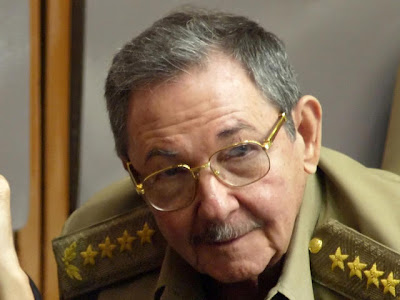
Cuban President Raul Castro

In Cuba, Raúl Castro is Doing Things His Way
April 24, 2008

• Recent reforms are of considerable importance because they grant Cubans increased rights and access to a growing wealth of consumer goods at a time of improved living standards

• Signing of International Covenant may be politically motivated, but it does mark an increased sensitivity to international human rights practices

• Raúl Castro’s far-reaching reforms attract almost no White House attention and was greeted by scarcely a yawn on the part of the media

• The maddening fact of life is that as seen from Washington, the U.S.-Cuban dispute is non-negotiable—a situation like no other in the world

Do Reforms Signal Extensive Changes in Havana’s view of the World?

Economic and agricultural reforms in Raúl Castro’s Cuba, though dismissed by those whose ideology prevent them from countenancing any kind of positive change in Cuba, could represent a significant opening up of Cuban society. The cell phone ban—which had prevented Cubans from legally owning such devices or obtaining service for them—was lifted on the 28th of March. Three days later, the hotel ban that had prevented Cubans from visiting or staying in hotels designated for foreign tourists, was also relaxed.

According to Toronto’s The Globe and Mail, Cubans will now be permitted to purchase state-owned housing, and wage limits also have been lifted, allowing Cubans to earn as much as the market allows. It is hoped that this will boost productivity, and will also enable Cubans to buy more of the consumer goods that have now been made available by means of other recent reforms.

Agricultural reforms will allow cooperatives and private farmers to use—but not own—government lands which for years had lain fallow, in order to grow food crops. The spirit of reform also may have inspired the addition of Havana’s signature to the United Nations’ International Covenant on Civil and Political Rights this past February. In that document, Cuba commits itself to observing a series of detailed principles. For example, according to Article 1, Paragraph 2: “In no case may a people be deprived of its own means of subsistence.” This reform could be an attempt to bring Havana’s policies into accord with the covenant.

The Cuban government is under no obligation as of yet to meet the covenant’s requirements, as the Raúl Castro regime signed but neither ratified nor formally acceded to the document. Nevertheless, the agricultural reform announced by Havana deserves to be taken as a signal that the Raúl Castro administration intends to adhere to the covenant’s standards. Viewed together with other reforms, this era of purported change is strengthened, and points the way to future reforms that may include allowing foreign aid to be sent to the farming sector and shutting down farming cooperatives that have under-performed. In a recent report, Reuters stated that, in addition to allowing for the availability of rental cars, restrictions on the sale of cars and travel abroad are expected to be lifted in the future.

According to Reuters, due to complaints by residents, “President Raúl Castro’s government will close more than half of Cuba’s family doctor offices and boost staffing at the rest in a major reform of its vaunted free health care system.” This will enhance the free medical care available to Cubans, albeit at fewer and more distant locations.

Raúl Castro’s Reforms

While Raúl Castro’s administration may now be prepared to permit Cubans to purchase goods and services they previously could not enjoy, few Cubans will, in fact, be able to afford to purchase the newly available luxuries. Various press sources cite the Cuban family’s average monthly earnings at anywhere between $17 and $20. Unfortunately, such earnings mean that most Cubans can barely afford to feed themselves, much less purchase the newly permitted expensive consumer items. Even with the lifting of wage limits, the increased income may not readily translate into significantly greater spending power if paid in the government-issued currency. By contrast, when foreign tourists visit the island, they exchange their money for a version of the local currency which is valued at 24 times of the former, and which cannot be easily obtained by Cubans.

Adhering to an International Code of Conduct

According to the Office of the United Nations High Commissioner for Human Rights, the International Covenant on Civil and Political Rights was signed by Cuba on February 28, 2008. This document entitles the citizens of a signatory nation to be guaranteed basic rights, and prohibits certain arbitrary acts by the government. For example, the populations of signatory nations must be granted freedom of assembly—among other rights—and the governments of signatory nations are prohibited from subjecting its citizens or other residents to torture or to non-consensual “medical or scientific experimentation” (International Covenant on Civil and Political Rights, Article 7).

However, there are limitations to the covenant, as many loopholes exist in its wording. For example, freedom of speech and expression of opinion via any media are guaranteed, but the government of the signatory nation is allowed to limit or deny these rights “for the respect of the rights or reputations of others,” or “for the protection of national security or of public order (ordre public), or of public health or morals” (Article 19, Paragraph 3). Therefore, dissidents in a given country could be deemed “threats to national security” and summarily subjected to scrutiny or detention. This is an inherent weakness of the document, and not a self-serving judgment of the current Castro government, which despite such opportunities for extending state control under the terms of the Covenant, actively appears to be exercising restraint and attempting to improve the living conditions of the island’s inhabitants by inviting these reforms.

Mobilizing Rights and Guarantees

The Covenant on Civil and Political Rights has been available to be signed by member countries since 1966, and yet Cuba had not availed itself of the opportunity to sign the document until now. The delay cannot be effectively explained by a Cold War mentality or some misguided loyalty to the USSR, because Moscow, in fact, signed the covenant in 1968, and ratified it in 1974, with the U.S. signing the covenant only in 1977, which was finally ratified in 1992. Therefore, if the Fidel Castro government had intended to show its unflinching support for Moscow, it might have signed this covenant safeguarding human rights decades ago.

Additionally, though Raúl Castro was officially elected to the Cuban presidency on February 24, 2008, the 76-year-old has been ‘acting president’ since July of 2006, when Fidel temporarily ceded power to his younger sibling in order to undergo surgery (Associated Press). The timing of the signing of the covenant could have been astutely arranged in order to have the greatest political effect, assuring that the decision—and credit for it—will be entirely Raúl’s.

Blogging and the Revolution

In the same week when the cell phones were being authorized and hotel bans lifted, those who scoffed at the changes may have risked having their smugness inconvenienced, but nevertheless, they were not prepared to release doves yet. This seems to indicate that the liberalization trend is not universal, and certainly not apparent to this White House. Yoani Sánchez, a Cuban living on the island, recently stated in her weblog that basic appliances, such as toasters, will be available “in two years’ time…satellite dishes will arrive in the middle of the century and my grandchildren will get to know GPS in their teen years.” (http://www.tnr.com/politics/sotry.html?id-8cb3f7de-37eb-4b94-826d-2b665d12dcce).

For unexplained reasons, her blog has been made nearly inaccessible from the usual servers, making reading her opinions more difficult for the less computer-savvy. The page takes an average of 15 minutes to load, which discourages readers, who must pay exorbitant prices for limited access to an internet connection. According to Article 19, Paragraphs 1 and 2 of the International Covenant on Civil and Political Rights, “Everyone shall have the right to hold opinions without interference.” If that were the only right provided, the Raúl Castro government might be justified in blocking access to her blog. However, Paragraph 2 goes on to state that “Everyone shall have the right to freedom of expression; this right shall include freedom to seek, receive and impart information and ideas of all kinds, regardless of frontiers, either orally, in writing or in print, in the form of art, or through any other media of his choice.”

Qualified Freedom?

The only provision in the International Covenant on Civil and Political Rights that has allowed a government to infringe upon the above right ironically has made Yoani Sánchez’s blog nearly inaccessible. In her March 5th posting, She told a humorous yet mournful anecdote about a friend whose toe was crushed by a passing lady’s heel. When the man asked for an apology, the lady refused to provide one. The popular blogger drew parallels between the story and the nature of Cuban politicians, who “never apologize. That’s why we, small copies of them, who imitate them, repeating their slogans and poses, also emulate them in not apologizing. ‘For what?’, the lady who stepped on my friend’s foot would ask. ‘We already have our toe crushed, and up there they don’t want to recognize they already have their soles dirty.’”

While this posting was more satirical than rabble-rousing, either this specific article or the accumulated slights from past postings apparently have caused the Cuban government to take punitive action. It also could be that this matter was not part of a genuine field theory, and that it was undertaken by some anti-Castro individual, or that it was the work of the CIA or some other intelligence service, or that it may have reflected a random occurrence. In any event, rather than imprisoning Yoani Sánchez, at worst, the government spooks simply made the page operate so slowly that most Cubans cannot afford the time or charges in an internet café to let it download.

Taking these events into account, the progress in Cuba can be seen as modest in scope at best. However, given the long history of the government’s use of a heavy hand in confronting dissent, and the depredations that have so weighed down Cuban society, while registering concerns, even modest advances must signal hope for the steady emergence of a Cuba that more generously recognizes the divergent expressions of its citizens’ rights, beginning with increasing satisfactory living standards and the faithful allotment of basic rights to every Cuban.

This analysis was prepared by Research Associate Bettina Huntenburg
Source. / Council on Hemispheric Affairs

Thanks to Jim Retherford / The Rag Blog

Posted in RagBlog | Tagged , , | Leave a comment

Round-Up Time for War Criminals?


Imminent Arrest of Americans for War Crimes?
By Len Hart / April 23, 2008

The ‘net’ is abuzz with talk of the imminent arrest of Americans for war crimes, specifically the tortures that were most certainly ordered by Bush and anticipated by then House Speaker Tom Delay who sponsored legislation to exempt the ‘President’ from war crimes prosecution. Since that time, Bush ‘lawyers’ have rewritten US Codes prescribing the death penalty for specific violations of the Geneva Conventions. Only the oblivious would not ask: was Bush planning 911, Afghanistan, Iraq even before he sought the office?

Of Bush plans to commit the war crime of torture, then Atty Gen John Ashcroft said: ‘History will not judge this kindly’ But history may also conclude that John Ashcroft was, in the final analysis, complicit with the Bush/Yoo conspiracy to make ‘legal’ numerous crimes against humanity that Bush had intended to commit in our name. There was, indeed, precedent but not the kind sought by Bush. It was Reinhard Heydrich who convened senior Nazi brass at Wannsee. Their mission: cook up a rationale, some legalistic mumbo jumbo, that will make mass murder and genocide legal!

Politico wrote the following as if it were current news.

Suddenly, something happens overseas that throws the presidential campaigns off the TV screens entirely: Former Defense Secretary Donald Rumsfeld, on vacation in Italy, is arrested and brought to The Hague to face war crimes charges.

–Politico, Could war crimes charges be October surprise?

Politico is not alone in thinking it just a matter of time until an American is arrested, charged, and, with any luck and justice, brought to trial. It is a measure of how Bush and by extension America is distrusted that almost every knowledgeable writer expects another terrorist attack on US soil. Politico refers to Bush as “on his way out”. Yet –another attack will give Bush the cover he needs to cancel elections and, in effect, complete a fascist coup d’etat!

A war crimes trial of any American should be a wake up call for Americans. Former Marine Corps Commandant, Gen. Paul X. Kelley reminded in the Washington Post:

“Violations of Common Article 3 are ‘war crimes’ for which everyone involved — potentially up to and including the president of the United States — may be tried in any of the other 193 countries that are parties to the conventions.”

I was not surprised by recent reports citing a declassified memo authored by JD lawyer/talk show pundit John Yoo. It bluntly favored sweeping, perhaps unlimited, presidential authority to order torture. A fuzzy cheeked idiot in my Congressman’s office had made the same argument to me with regard to a bill sponsored by Tom DeLay. The House Bill authorized Bush to carry out various war crimes and exonerated him in advance for numerous offenses which he clearly had intended to commit. I object to this utter disregard for America’s international obligations under international law. My Congressman’s aid said that the treaties meant nothing! In other words, I replied, America’s word means nothing so long as Bush occupies the White House! My opinion of the Bush regime has been confirmed daily since that time.

The Bush administration planned to commit war crimes from the outset of the administration, perhaps even earlier. Long before 911, Bush prepared legislation that would exempt US troops from war crimes prosecution at the Hague, specifically, violations of the Geneva Conventions later violated at Abu Ghraib. The measure positioned Bush in advance to exploit the crime of 911, though it had not yet happened. To this end, Bush sought Congressional authorization to go to war with the Netherlands should US troops find themselves on trial for war crimes at the Hague!

The measure exempting US troops from ‘war crimes’ was introduced by Rep. Tom DeLay (R-TX) as an amendment to H.R. 1646, The Foreign Relations Authorization Act of 2001, on May 8, 2001. It passed the House 282-137 on May 10 and introduced as S. 857 in the Senate on May 9 by Senators Jesse Helms (R-NC), Zell Miller (D-GA), Orrin Hatch (R-UT), John Warner (R-VA), Trent Lott (R-MS), Richard Shelby (R-AL), and Frank Murkowski (R-AK) –the usual suspects!

The bill authorized Bush “…to use all means (including the provision of legal assistance) necessary to bring about the release of covered US persons and covered allied persons held captive by or on behalf of the Court [International Criminal Court, ICC, in the Hague]. Some highlights:

The President is authorized to invade The Hague. Specifically, the bill empowers Bush to use all means necessary and appropriate to bring about the release from captivity of US or Allied personnel detained or imprisoned against their will by or on behalf of the Court.

No US governmental entity –including State or local governments and court of any US jurisdiction –may cooperate with the ICC in arrests, extraditions, searches and seizures, taking of evidence, seizure of assets, or similar matters.

No ICC agent may conduct any investigation in the US.

No classified national security information can be transferred directly or indirectly to the ICC or to countries Party to the Rome Statute.

These provisions are in addition to existing US law (the 2000-2001 Foreign Relations Authorization Act) which prohibits any US funds going to the ICC once it has been established unless the Senate has given its advice and consent to the Rome Treaty.

This measure was introduced before 911 in anticipation of a ‘War on Terrorism’ that only those with guilty foreknowledge could have anticipated, a ‘war’ that would include US aggression against Afghanistan and Iraq. Certainly no one but Bush, Dick Cheney, Tom Delay, the Project for the New American Century and high level members of the Bush administration could have anticipated the improbable series of events leading to the American quagmire in Iraq. Certainly, they are not ‘psychic’ despite a mantra repeated ad nauseam post 911: “No one could have foreseen….”! In fact, only the Bush administration ‘foresaw’ 911 in such detail, that they planned in advance to make legal the very laws they have in fact violated in the post-911 world. What incredible coincidences!

Certainly, no one but Bush –or those who had planned to help him perpetrate them –would have or could have foreseen that US atrocities at Abu Ghraib, GITMO and a gulag archipelago of US torture centers throughout eastern Europe would have necessitated measures in advance to get them off the hook, measures that would put Bush, US brass and members of his criminal junta above the law! This measure amounts to a criminal administration positioning itself –in advance –to exploit the crime of 911. It is more evidence that 911 was anticipated. It is evidence that 911 was an inside job.

It is evidence that the Bush administration was far better equipped and prepared to supervise the events of 911 from inside Dick Cheney’s bunker than was the rag tag, improbable and outlandish ‘conspiracy’ of 19 Arab hijackers –none of whom could fly a 757! Because Bush had planned in advance, his administration moved forward with plans to attack Afghanistan months before 911 as negotiations with the Taliban broke down. As for Iraq, Dick Cheney’s Energy Task Force had already carved up Iraq oil booty among the robber barons of big oil: Halliburton, Enron, et al! Bush and Cheney conspired to commit the grand theft of a nations oil and, in the process, mass murder.

Bush would soon have his first chance to exploit what the Project for the New American Century [See: PDF: Rebuilding America’s Defenses] would call a ‘catalyzing event’ like Pearl Harbor.

Courts in Italy and Germany already have issued warrants demanding the arrest of CIA operatives for illegally kidnapping and allegedly torturing citizens and residents of their nations. More than 30 US citizens have been named, their CIA covers blown. These warrants have not been executed, primarily for diplomatic reasons. But they could be acted upon rapidly with a simple decision by either government. And other names — of those directly involved in “enhanced interrogation techniques” [bloody torture] — are starting to emerge overseas.

–Politico, Could war crimes charges be October surprise?

Under the precedent of the Nuremberg trials, even making such an argument exposes Yoo, along with others — including federal Judge Jay S. Bybee, a former Bush administration Justice Department official, or former Attorney General Alberto Gonzales — to war crimes indictments.

How Bush Created a Dictatorship and Places Himself Above the Law

I encourage the International Courts to indict George W. Bush himself for having ordered a campaign of capital crimes i.e, wars of naked aggression in which millions are now dead as a result. If that’s not a crime in this world, then nothing is. If the ICC will proceed, I will happily assist them in the preparation of its case.

Source, with Addendum / Extistentialist Cowboy
Thanks to Jim Baldauf / The Rag Blog

How Bush Created a Dictatorship and Places Himself Above the Law

Posted in RagBlog | Tagged , , , , , | Leave a comment

Molly Ivins Lives : At Texas State University


Molly Ivins’ library finds a home on Texas State’s shelves
By Megan Celli

AUSTIN — The personal library of legendary Texas journalist Molly Ivins has been opened to the public at Texas State University in San Marcos.

The collection of more than 3,560 books was donated to the Southwestern Writers Collection at Texas State by her brother, Andrew Ivins.

The library showcases a portion of books Ivins read that influenced her throughout her journalism career. Also showcased were some of Ivins’ personal notations and commentary, including inscriptions by authors and friends who admired the outspoken, tough-on-politicians-yet-satirical writer.

Ivins was raised in Houston and worked at the Houston Chronicle, Minneapolis Tribune, The New York Times, two Dallas newspapers and the Texas Observer, where she became the editor.
In her later years, Ivins became a nationally syndicated political columnist known for her passionate liberal beliefs, Texas flare and wit. She authored many books of her own, such as “Molly Ivins Can’t Say That Can She?”

Ivins was diagnosed with breast cancer in 1999 and battled it until her death on Jan. 31, 2007. She was 62 when she died in her Austin home.

The photographs at the exhibit show the endless amount of books that filled her shelves and proved Ivins was a voracious reader. Catalog librarian Karen Sigler said five or six people from the library helped to pack up the books, which took more than 80 boxes to fill.

“I was surprised when I did the initial inventory to find so many inscriptions and so many letters laid down from different authors, publishers and friends that she kept,” Sigler said. “She kept everything.”

Mysteries, biographies, historical fiction, a Bible and a cookbook are just a sample of the books on display. Sigler said the exhibit has been divided by genre headings, so visitors could get a feel of what Ivins was interested in reading.

“She liked mysteries — she had over a 1,000 mysteries in her personal library,” Sigler said.

Sigler said because there were so many inscriptions, workers had a hard time trying to decide what should be put in the exhibit. Selected inscriptions include messages from authors and friends Jim Hightower, John Henry Faulk, Nancy Reagan and Maya Angelou.

Faulk’s inscription in his book read: “For a woman I love and who has always influenced me for the better. Molly Ivins, who done knows how much I love her.”

Angelou’s inscription read: “Dear Twin, Molly Ivins you are the only precious, practical, political pundit and my heart sings because of that!”

Sigler said the pens in the books at the exhibit were used by Ivins when writing her notations and are laid out exactly how they were found.

“She had a way with her words, and that’s why I think people liked her so much,” Sigler said. “By really making a point, whether it was political and calling politicians and some of their behavior, their policies out. But she did it with humor, there was a lot of humor in her private collection too. She had a way of injecting the humor and making the people realize.”

Sigler said after July 7 a bibliography will be started, and assistant curator Steve Davis will decide where the collection will be housed. The books with inscriptions and notations will either be part of the Southwestern Writer’s Collection or the Wittliff Collections, depending on their genre heading.

“We will preserve the ones that are part of the Southwestern Writer’s Collection, and the rest of the books will be incorporated into the main library stacks,” said Michele Miller, media relations and publications specialist for the Wittliff Collections.

Students will be able to read the books that Ivins read, and they will all be listed in the online catalog.

“I hope this will get people interested in reading some of her work, some of her columns, and to go back and take a look,” Sigler said. “Because that’s what I did, I started reading it and getting a better feel for Molly as a person. I miss her just like everybody else.”

The exhibition is located on the first floor of the Alkek Library on the Texas State campus.

It is open to the public until July 7.

Source. / KXAN
Thanks to David Hamilton / The Rag Blog

Molly Ivins Library Tour

Also from The Rag Blog:
Molly Ivins: 1944-2007 by Garrison Keillor.
Sad to see Molly go.

And go to:
Molly Ivins
tribute by By Anthony Zurcher.
In Loving Memory of Molly Ivins,
The Texas Observer.

Posted in RagBlog | Tagged , , , , | Leave a comment

Domestic Terrorism – A Few Black Eyes Along the Way

Few Clear Wins in U.S. Anti-Terror Cases: Moving Early on Domestic Suspects Often Does Not Bring Convictions
By Carrie Johnson and Walter Pincus / April 21, 2008

When seven ragtag men in a Miami religious sect were indicted in 2006 for their role in a bizarre plot to blow up the FBI Miami office and Chicago’s Sears Tower, then- Attorney General Alberto R. Gonzales said the case represented “a new brand of terrorism” among homegrown gangs that “may prove to be as dangerous as groups like al-Qaeda.”

Justice Department officials used similar rhetoric in a 2003 case against a Tampa-area man and his associates who allegedly supported a reign of terror by a violent Palestinian group. The officials did so again in a 2004 case involving a Dallas charity known as the Holy Land Foundation, which they said provided “blood money” to finance overseas suicide bombings.

But juries in all three cases saw things differently than the government’s national security team. In the most recent disappointment for federal prosecutors, a jury last week did not reach a verdict in the Miami case for the second time. In the Holy Land case, one defendant was cleared of the charges and jurors deadlocked on charges against the others. After 12 days of deliberation, jurors in the Tampa case acquitted two men and could not agree on the charges against the main defendant.

The department’s domestic terrorism record to date — no new attacks, but few blockbuster convictions and some high-profile hung juries or acquittals — has provoked criticism of its early strategy for going after homegrown terrorist cells and the people who fund plots well before deadly events occur.

Jurors appear to be particularly troubled by a controversial element in the Miami case, part of several other early prosecutions, in which FBI informants encouraged others to perform acts they otherwise may not have done.

This week, federal prosecutors in Miami will announce whether they will seek to try the defendants for the third time. The government’s incentive to do so is powerful: Two years ago, it intended the case to be a model for intervention against potential terrorists before they acquire the weapons and insight needed to act.

Read all of it here. / Washington Post

Posted in RagBlog | Tagged , | Leave a comment

Democracy Is So, Like, 20th Century

US President Bill Clinton acknowledges applause after signing
the North American Free Trade Agreement (NAFTA).
Congress approved NAFTA in 1993.

José Can You See? Bush’s Trojan Taco
By Greg Palast / April 24, 2008

Psst! George Bush has a secret.

While you Democrats are pounding each other to a pulp in Pennsylvania, the President has snuck back down to New Orleans for a meeting of the NAFTA Three: the Prime Minister of Canada and the President of Mexico.

You’re not supposed to know that – for two reasons:

First, the summit planned for the N.O. two years back was meant to showcase the rebuilt Big Easy, a monument to can-do Bush-o-nomics. Well, it is a monument to Bush’s leadership: The city still looks like Dresden 1946, with over half the original residents living in toxic trailers or wandering lost and broke in America.

The second reason Bush has kept this major summit a virtual secret is its real agenda. More important, the agenda-makers, the guys who called the meeting, must remain as far out of camera range as possible: The North American Competitiveness Council.

Never heard of The Council? Well, maybe you’ve heard of the counselors: the chief executives of Wal-Mart, Chevron Oil, Lockheed-Martin and 27 other multinational masters of the corporate universe.

And why did the landlords of our continent order our presidents to a three-nation pajama party? Their term is “harmonization.”

Harmonization has nothing to do with singing in fifths like Simon and Garfunkel. Harmonization means making rules and regulations the same in all three countries. Or, more specifically, watering down rules – on health, safety, labor rights, oil drilling, polluting and so on – in other words, any regulations that get between The Council members and their profits.

Take for example, pesticides. Wal-Mart and agri-business don’t want to reduce the legal amount of poison allowed in what you eat. Solution: “harmonize” US and Canadian pesticide standards to Mexico’s.

Can they do that? Can Bush just say, “Eat your peas – even if they’re radioactive?” Under NAFTA, at least the way George Bush reads it (or has it read to him), he can. At any rate, he does.

Read all of it here. / TomPaine.com / The Rag Blog

Posted in RagBlog | Tagged , , , | Leave a comment

Iraq Vet Suicide: Before Someone Stumbles on It

Jeffrey Lucey committed suicide subsequent to his service in Iraq

VA Debated PR Plan on Vets’ Suicides
By Jason Leopold / April 24, 2008

Top officials at the Veterans Administration tried to conceal information from the public about the sudden increase of attempted suicides among veterans that were treated or sought help at VA hospitals around the country, a previously undisclosed internal VA email indicates.

The email was disclosed Tuesday in a federal trial at a courthouse in Northern California where two veterans advocacy groups filed a class-action lawsuit against the VA alleging that a systematic breakdown at the VA has led to an epidemic of suicides among war veterans. These groups claim the VA has turned away veterans who have sought help for posttraumatic stress disorder and were suicidal. Some of the veterans, the lawsuit claims, later took their own lives.

The organizations who filed the lawsuit, Veterans for Common Sense and Veterans United for Truth, want a federal judge to issue a preliminary injunction to force the VA to immediately treat veterans who show signs of PTSD and are at risk of suicide and overhaul internal system that handles benefits claims. PTSD is said to be the most prevalent mental disorder arising from combat.

The Feb. 13., 2008, email, disclosed in federal court Tuesday, was sent to Ira Katz, the VA’s mental health director by Ev Chasen, the agency’s chief communications director.

Chasen sought guidance from Katz about interview queries from CBS News, which reported extensively on veterans suicides last year.

“Is the fact that we’re stopping [suicides] good news, or is the sheer number bad news? And is this more than we’ve ever seen before? It might be something we drop into a general release about our suicide prevention efforts, which (as you know far better than I) prominently include training employees to recognize the warning signs of suicide,” Chasen wrote Katz in an email titled “Not for CBS News Interview Request.”

Katz’s response is startling. He said the VA has identified nearly 1,000 suicide attempts per month among war veterans treated by the VA. His response to Chasen indicates that he did not want the VA to immediately release any statistical data confirming that number, but rather suggested that the agency quietly slip the information into a news release.

“Shh!” Katz wrote in his response to Chasen. “Our suicide prevention coordinators are identifying about 1000 suicide attempts per month among the veterans we see in our medical facilities. Is this something we should (carefully) address ourselves in some sort of release before someone stumbles on it?”

Read all of it here. / Z-Net / The Rag Blog

Posted in RagBlog | Tagged , , , | Leave a comment

New Chemical Weapon ‘Ennui Gas’ Induces Listlessness, Dissatisfaction With Life

A group of test subjects in an Afghan cave contemplate the banality of modern terror.

Pentagon reveals secret weapon.
April 21, 2008

WASHINGTON—Calling it the most effective tool to date in the War on Terror, the Pentagon announced Monday that it had developed a new chemical weapon called “ennui gas,” a nerve agent that overwhelms its victims with sudden philosophical distress over the meaningless tedium of human life and a sinking sense that everything they have ever accomplished ultimately amounts to dust.

“When the enemy inhales the gas, he will immediately retreat to his bedroom, lock the door, stare at the ceiling, pick idly at his fingernails, and muse upon the similarities between fingernails and the fragility of life,” Defense Secretary Robert Gates said. “While he broods over the futility of memory extinguished and the plaintive whisper of existence unhaunted by all but nothingness, that is when we strike.”

“Given the enemy’s state of mind, he will probably not even care,” Gates added.

Recently disclosed Pentagon documents indicate that the gas has a dissemination radius of four to eight miles, and that neither protective masks nor a positive outlook on life can prevent infection. Symptoms include uncontrollable sighing, repeated utterances of the phrase “What’s the use?” a confusion and bitterness regarding one’s place in the universe, and an increased proclivity to listen to Lou Reed records.

If one’s skin comes into contact with the agent, the physical effects are more severe. These include a sudden numbing of the very soul, a feeling that one is being crushed under the weight of the emptiness all around him, and mild eye irritation.

“Seeing life through the watery lens of pain and hopelessness will significantly weaken the enemy,” Gates said.

More than half of those exposed to ennui gas will suffer some permanent effects, including the tendency to view their existence not as a rich tapestry woven by memory and experience, but as one transitory life’s insignificant brushstroke on the canvas of eternity.

The Pentagon has reportedly been developing the ennui gas for five years, working alongside a team comprising molecular chemist Dr. Sigmund Falstaff, chemical warfare expert Dr. Adrian T. Heinzig, and Dave Eggers. Though they discovered early on that chloroethanol mixed with nitric acid produces an intense disinterest in action, society, and the world in general, it took three years to re-create the indescribable longing condemned to remain unsatisfied. This vague sense of existential angst was finally produced by synthesizing potassium sulfide with phosphorus trichloronate.

According to the Pentagon, lower-grade ennui gas was tested as a crowd-dispersal agent in Islamabad, Pakistan last year. Police reported that within five minutes of releasing the toxin, the rioters abandoned their protest and began penning lamenting odes to various species of bird.

“I am nothing,” said Sayid Al Nazer, one of those who was exposed to the gas. “We are nothing.”

Though critics allege that the gas violates the 1997 Chemical Weapons Convention treaty, the U.S. claims the substance is legal because it is not physically harmful. The military assured Amnesty International and other human-rights groups that ennui gas causes no pain, save for the pain of realizing that one has wasted his life.

As proof, Pentagon representative Byron Christie voluntarily inhaled a small amount of ennui gas at a private press conference last week.

“Because ennui gas is a nonpersistent substance, it is highly probable that its victims will someday feel whole again,” said Christie, suddenly furrowing his brow and gripping his temples. “Then again, no one is truly whole, are they? We are all just pieces of flesh and bone masquerading as life, and the world will go on without me, my absence unnoticed, death as futile as life. Pain hath no sting, and pleasure’s wreath no flower.”

Christie then lay down behind the podium and told members of the press to leave, repeatedly stating that there is no point to it all.

Pentagon officials still refuse to comment on rumors that they are close to completing an experimental mutagen that would transform its victims’ DNA into that of television star Kelsey Grammer.

Source. / The Onion / The Rag Blog

The following was posted by Michael J.W. Stickings on August 15, 2006 on The Reaction. We leave it to you to establish a connection, should you be able to get it together to do so. Just remember: there is a hairline’s breadth between what is real and what is dreamt.

Thorne Dreyer

Existential malaise: Some historical perspective.

According to Slate’s John Dickerson, President Bush read Camus’s novel The Stranger while on vacation this summer. According to Tony Snow, Bush “found it an interesting book and a quick read”: “I don’t want to go too deep into it, but we discussed the origins of existentialism.” Which suggests that the president delved into Heidegger, or perhaps Nietzsche. I suspect he didn’t, but I’m with John on this: “We want a book report!”

What does Bush think of Camus? What did he take away from this rather odd (for him) read (summer or not)? Did he find it challenging? Did it compel him to reconsider his Manichaean worldview? What does he think of existentialism? “Does his experience in Iraq push him to read works replete with themes of angst, anxiety, and dread? Was the president trying to gain insight into the thinking of Europeans who are skeptical of his plan for democracy in the Middle East, founded as it is on the idea of a universal rational essence that existentialists reject?” Will he now turn to The Fall. Or to The Myth of Sisyphus?

All good questions. At least, as far as we know, he isn’t wasting his time with, say, Ayn Rand. Whether he gets the point of Camus or not, whether “he identifies with Meursault,” the Arab-killer, or not, I’d much rather imagine him contemplating the meaning(lessness) of existence than wallowing arrogantly in his own righteousness. Although I suspect this is just some laughable effort by the White House spin machine to make the president look much more thoughtful than he really is, to “challenge the prevailing stereotype about the president’s favorite place and his intellect”. Or maybe Laura made him do it.

Next think you know, Tony Snow will enlighten us of Bush’s understanding of the unbearable lightness of being. Now that would demand a book report!

Source. / The Rag Blog

Posted in RagBlog | Tagged , , , | Leave a comment

The Business of Evicting the CIA from Ecuador

Rafael Correa

Will the CIA Kill or Oust Ecuador’s President?
by Jacob G. Hornberger / April 22, 2008

Ecuador’s president Rafael Correa may not be long for this world, both in a political sense and in genuine life-or-death sense. He recently fired his defense minister, army chief of intelligence, and commanders of the army, air force, and joint chiefs.

Why might those firings cost Correa his job or even his life? Because the reason he fired them was that Ecuador’s intelligence systems were “totally infiltrated and subjugated to the CIA.” As other rulers around the world, including democratically elected ones, have learned the hard way, bucking the CIA is a real no-no that sometimes leads to coups and assassinations.

What’s the CIA doing infiltrating Ecuador’s military intelligence systems? Good question! Maybe it’s because the CIA still fears the threat of communism. Don’t forget that that was the apparent rationale for the U.S. government’s support of Operation Condor, the campaign of assassination and torture co-sponsored by the brutal regimes in Chile, Argentina, Paraguay, Bolivia, Uruguay, Brazil, Ecuador, and Peru during the 1970s. Don’t forget also that many of the brutal military personnel in those regimes received their training at the U.S. Army’s infamous School of the Americas, famous for, among other things, its torture manuals.

To make matters worse for Correa, he promises to throw the U.S. military out of his country when the U.S. government’s lease at its base in Manta expires in 2009. The U.S. government spent $60 million to build the base in 1999, securing a 10-year lease that provided no rent to be paid to Ecuador.

So, why does the U.S. military have a $60 million military base in Ecuador? The base is part of the U.S. government’s much-vaunted 30-year-old war on drugs, one of the U.S. Empire’s never-ending wars around the world. The base houses Awacs surveillance planes whose purported mission is to search for international drug smugglers.

What irked President Correa is that apparently his CIA-infested intelligence services fed classified information to Colombian officials that led to a Colombian military attack on a Colombian rebel camp that was located inside Ecuador. One big problem was that when Correa’s intelligence services leaked the information to Colombia, they left Correa (their boss) out of the loop.

The final nail in Correa’s coffin might be the fact that he is an ally of Venezuela’s Marxist president Hugo Chavez, who himself is a likely target of CIA ouster or assassination.

The good news for Americans in all this is that the Ecuadorian people are doing their best to rid their country of the CIA and the U.S. military. Maybe the Ecuadorans will start a trend in which all other countries will do the same. While it would obviously be best if the American people were to dismantle their government’s overseas empire themselves, having foreigners do it instead by throwing the CIA and the Pentagon out of their countries would be just as effective and beneficial — to both the United States and the people of the world.

Jacob Hornberger is founder and president of The Future of Freedom Foundation.

Source / The Future of Freedom Foundation / The Rag Blog

Posted in RagBlog | Tagged , | Leave a comment

What Better Time for a New Social Movement?


Hunger Plagues Haiti and the World
By Stephen Lendman / April 23, 2008

Consumers in rich countries feel it in supermarkets but in the world’s poorest ones people are starving. The reason – soaring food prices, and it’s triggered riots around the world in places like Mexico, Indonesia, Yemen, the Philippines, Cambodia, Morocco, Senegal, Uzbekistan, Guinea, Mauritania, Egypt, Cameroon, Bangladesh, Burkina Faso, Ivory Coast, Peru, Bolivia and Haiti that was once nearly food self-sufficient but now relies on imports for most of its supply and (like other food-importing countries) is at the mercy of agribusiness.

Wheat shortages in Peru are acute enough to have the military make bread with potato flour (a native crop). In Pakistan, thousands of troops guard trucks carrying wheat and flour. In Thailand, rice farmers take shifts staying awake nights guarding their fields from thieves. The crop’s price has about doubled in recent months, it’s the staple for half or more of the world’s population, but rising prices and fearing scarcity have prompted some of the world’s largest producers to export less – Thailand (the world’s largest exporter), Vietnam, India, Egypt, Cambodia with others likely to follow as world output lags demand. Producers of other grains are doing the same like Argentina, Kazakhstan and China. The less they export, the higher prices go.

Other factors are high oil prices and transportation costs, growing demand, commodity speculation, pests in southeast Asia, a 10 year Australian drought, floods in Bangladesh and elsewhere, a 45 day cold snap in China, and other natural but mostly manipulated factors like crop diversion for biofuels have combined to create a growing world crisis with more on this below. It’s at the same time millions of Chinese and Indians have higher incomes, are changing their eating habits, and are consuming more meat, chicken and other animal products that place huge demands on grains to produce.

Here’s a UK April 8 Times online snapshot of the situation in parts of Asia:

— Filipino farmers caught hoarding rice risk a life in jail sentence for “economic sabotage;”

— thousands of (Jakarta) Indonesian soya bean cake makers are striking against the destruction of their livelihood;

— once food self-sufficient countries like Japan and South Korea are reacting “bitterly (as) the world’s food stocks-to-consumption ratio plunges to an all-time low;”

— India no longer can export millions of tons of rice; instead it’s forced to have a “special strategic food reserve on top of its existing wheat and rice stockpiles;”

— Thailand is the world’s largest rice producer; its price rose 50% in the past month;

— countries like the Philippines and Sri Lanka are scrambling for secure rice supplies; they and other Asian countries are struggling to cope with soaring prices and insufficient supply;

— overall, rice is the staple food for three billion people; one-third of them survive on less than $1 a day and are “food insecure;” it means they may starve to death without aid.

The UN Food and Agricultural Organization (FAO) reported that worldwide food costs rose almost 40% in 2007 while grains spiked 42% and dairy prices nearly 80%. The World Bank said food prices are up 83% since 2005. As of December, it caused 37 countries to face food crises and 20 to impose price controls in response.

It also affected aid agencies like the UN’s World Food Program (WFP). Because of soaring food and energy costs, it sent an urgent appeal to donors on March 20 to help fill a $500 million resource gap for its work. Since then, food prices increased another 20% and show no signs of abating. For the world’s poor, like the people of Haiti, things are desperate, people can’t afford food, they scratch by any way they can, but many are starving and don’t make it.

Read all of it here. / Z-Net / The Rag Blog

Venezuela to Send 364 Tons of Food to Haiti
By News Bulletin, Apr 22, 2008, 18:56

President Hugo Chávez in the Meeting of Intellectuals and Artist
for the Latin American Peace and Sovereignty, Caracas

President Hugo Chávez said that tons of seven extended-consumption food will be shipped and recalled the terrible situation of Latin America’s and the Caribbean’s first independent nation.

“We are providing Haiti with a shipment of food in the next hours,” announced the President of the Bolivarian Republic of Venezuela, Hugo Chávez, on April 12, during the Meeting of Intellectuals and Artists for the Latin American Peace and Sovereignty, held in Caracas.

This aid includes 364 tons of food to contribute towards a solution of the critical situation in the Caribbean nation as a consequence of the increase of food prices, especially rice, which has unleashed violent riots in the last days.

This shipment will include 52 tons of each of the following foodstuffs: meat, chicken, mortadella, milk, black beans, oil and lentils. “This will help alleviate somehow a very big and deep crisis,” added President Chávez.

“Tomorrow they’ll attack me. Sure they are going to tell the Venezuelan people that I’m giving away food, while it lacks here. But as our people has developed a conscience, these attacks generally crash into the Venezuelan people’s steadiness,” he said.

President Chávez recalled his experience when he visited the Republic of Haiti on March 12, 2007, when he walk the streets of Port-au-Prince, Haiti’s capital city, accompanied by the city’s people. He explained the passion he felt when sharing with the Haitian people.

“The situation, you know it’s terrible. Haiti was demolished as a Republic, as a state and as a nation,” he said.

Violent riots have caused at least five casualties resulting from confrontations between demonstrators, the police and the United Nations Stabilization Mission in Haiti (Minustah).

Haiti, the first Latin American and Caribbean Republic (it achieved its independence from France in February, 1804), is Latin America’s and the Caribbean’s poorest nation, with an average per capita income below US $ 2.

The Meeting of Intellectuals and Artists for the Latin American Peace and Sovereignty ended on April 13, and was held on the occasion of celebration of the “Week of the Brave People.”

Presidential Press Office

Source / Axis of Logic

Posted in RagBlog | Tagged , | Leave a comment


