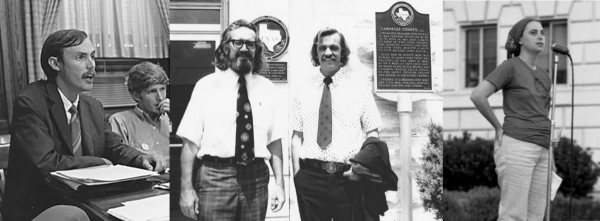
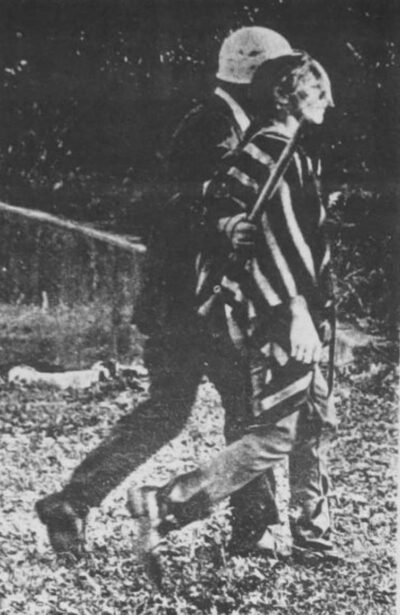
My prison experiences caused me to understand how much I had taken on faith about administrators.
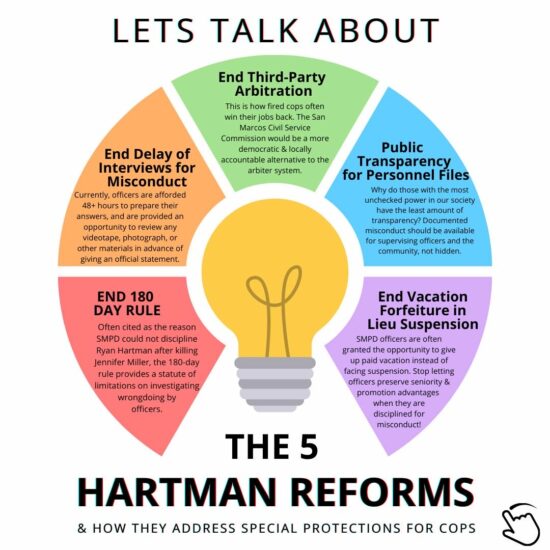
Organized troublemakers: When Mano Amiga realized that the disciplinary system for cops in San Marcos did little to protect the public, its leaders studied the deficiencies, analyzed them, and decided how best to explain the deficiencies to the public using this chart, based on an actual case, to drive home their issues. The Hartman Reforms chart explains graphically the major deficiencies in the discipline system. The chart also helped them put together a coalition of individuals, politicians, and groups to accomplish their goals.
By Lamar W. Hankins | The Rag Blog | February 24, 2023
At age 78, I continue to see the value in and the importance of being a troublemaker. I did not start out as an effective troublemaker, but I learned as I went along. These are a few of the rules that my experiences over the years have taught me.
Rule #1: Don’t trust people in authority
As a youth in the late 1950s and early 1960s, my social activities were mostly at school and church. One unsuccessful attempt to address a perceived inequality occurred when I decided that all Methodist youth in my hometown, Port Arthur, Texas, should get together for sharing, learning, and socializing. All of the predominately white Methodist churches had shared experiences periodically. We had one or two contacts with the members of the Hispanic Methodist church youth group, but proposing also to join together with the “Negro” Methodist church youth sent shock waves up and down the spines of all the adults to whom I broached the idea — our minister, my parents, and youth leaders in my church. Maybe Mexican-Americans were okay because our church had a handful of parishioners who were from that heritage, but joining together with “Negro” youth was a step too far. The adults all said “no.” (“Negro” was the term used back then, before Black and African-American became more common.)