Harry Targ : The REAL Scandal at the IRS

“Can’t make ’em see the light? Make ’em feel the heat” — Hugh Fike, coordinator of the Heritage Society for America’s “Sentinel” program.

The IRS ‘scandal’ is not
what opportunists claim it is

If the Internal Revenue Service is to be criticized, the attacks should be leveled at the government’s inadequate scrutiny of political lobbying groups who are granted tax exempt status

By Harry Targ | The Rag Blog | May 20, 2013

“Heritage Action for America is a unique combination of top-notch conservative policy analysis, a widely respected governmental relations team and dedicated grassroots activists that advance conservative policy.

“…As a 501(c)(4) organization, Heritage Action for America allows unprecedented coordination and communication with concerned citizens who want to be part of their national dialogue. We speak directly to the American people and help them break through the establishment in Washington.” — from Heritage Action for America website.

According to the Internal Revenue Code organizations may apply and be eligible for tax exempt status under Section 501(c)(4) if they engage primarily in “social welfare activities.” Contributors to 501(c)(4) organizations need not disclose their names.

In a recent website update on legislative issues being debated in the House of Representatives, Heritage Action for America, a 501(c)(4) advocated the repeal of the Affordable Care Act; endorsed the Full Faith and Credit Act, which would prioritize debt payment before financing federal spending; and supported legislation, the Preventing Greater Uncertainty in Labor-Management Relations Act, suspending the National Labor Relations Board from acting until such time as the Senate approves appointments to the Board.

Indiana Congressman Todd Rokita (4th Congressional District) wrote his constituents on May 17, 2013 that “…the IRS had specifically targeted legally-established non-profit conservative groups by singling them out for extra scrutiny when they applied for tax-exempt status.”

Heritage Action for America assigned Rokita a grade of 79 (out of 100) for his legislative record in the last session of Congress, not far behind long-time right-winger Dan Burton and new Indiana governor Mike Pence. Conservative former Democratic Congressman, now Senator, Joe Donnelly received a score of 23.

The principle of granting tax exemptions for groups that engage in social welfare was introduced in the Revenue Act of 1913 and revised in the tax code of the 1950s. Once groups are declared eligible, such as the Heritage Foundation’s Heritage Action for America, donors can contribute anonymously. Meanwhile the organizations so approved can advertise on television, radio, and the print media against programs advocated by those with different political orientations.

Ironically groups like Heritage Action for America define their political advocacy for tax purposes as social welfare. And, most important, organizations supporting the candidacy of right-wing Republicans such as Todd Rokita are receiving tax exemptions.

In short, Rokita has a high Heritage Action for America favorability score for opposing affordable health care for most Americans; federal programs for childhood nutrition, education, and emergency health services for the elderly; and government protection for worker rights.

If the Internal Revenue Service is to be criticized, the attacks should be leveled at the government’s inadequate scrutiny of political lobbying groups who are granted tax exempt status contrary to the intention of the law.

Those of us who are concerned about the undue intrusion of big money in politics should be working to insist that the tax code be applied as it was intended so that politicians like Rokita cannot get away with railing against “big government” while they benefit from how it has been applied to them.

[Harry Targ is a professor of political science at Purdue University and is a member of the National Executive Committee of the Committees of Correspondence for Democracy and Socialism. He lives in West Lafayette, Indiana, and blogs at Diary of a Heartland Radical. Read more of Harry Targ’s articles on The Rag Blog.]

The Rag Blog

Posted in Rag Bloggers | Tagged , , , , , , , , | 2 Comments

Bob Feldman : Texas Governors Bush and Perry, and Their Network of the Ultra-Rich, 1996-2011

Texas Gov. Rick Perry with then President (and former Texas Governor) George W. Bush at a 2002 campaign event in Dallas. On the left is Texas Sen. John Cornyn. Photo by Larry Downing / Reuters.

The hidden history of Texas

Conclusion: 1996-2011/1 — Bush, Perry, and their network of Texas ultra-rich

By Bob Feldman | The Rag Blog | May 20, 2013

[This is the first section of the conclusion to Bob Feldman’s Rag Blog series on the hidden history of Texas.]

When George W. Bush became the Republican Governor of Texas, “he arrived indebted to dozens of industries and wealthy patrons” and “repaid some of his supporters with choice political appointments,” according to the Center for Public Integrity’s The Buying of the President 2000.

The same book indicated what the political situation was like in Texas state politics in 2000 — before Texas’s governor moved into the White House in 2001 after receiving fewer popular votes than the Democratic Party candidate in the 2000 U.S. presidential election:

One of the most prestigious political appointments is a seat on the University of Texas board of Regents. The board is filled with Bush’s top-dollar donors. The chair of the UT Regents is Donald Evans, Bush’s old friend and longtime fund-raiser who, as the finance chairman for Bush’s presidential bid, has overseen the campaign’s record-shattering fund-raising drive. Evans is the chief executive officer of Tom Brown, Inc., an oil and gas company based in Midland, Texas .

In 1989, Bush joined the board as an outside director. He received $12,000 a year plus stock options for attending several meetings and participating in conference calls… Shortly after he was elected governor of Texas, Bush sold his Tom Brown holdings for a profit of $297,550.

Another regent and top Bush patron is A.R. `Tony’ Sanchez, the chairman and chief executive of Sanchez-O’Brien Oil and Gas Corporation… Sanchez and his mother also own a controlling stake in International Bancshares Corporation, the holding company of International Bank of Commerce, a Texas banking chain founded by his father in 1966. Over [George W.] Bush’s career, Sanchez, members of his family, and employees of his companies have given him at least $230,150, making them his No. 2 career patron…

Bush owed few people more than Richard Rainwater, the Fort Worth financier… Rainwater launched an investment company in 1994, Crescent Real Estate Equities Company… In 1997, Bush backed a plan to cut state property taxes that would have saved Crescent some $2.5 million in state taxes… Later that year,…Bush signed a bill into law that produced a $10 million windfall for Crescent… Dallas taxpayers were to foot most of the bill for the new sports arena…Rainwater, through Crescent, bought a 12 percent stake in the Mavericks. Under the purchase agreement, Crescent will get $10 million when the arena is completed…

The Texas Teachers’ Retirement System…sold two office buildings and a mortgage on a third to Crescent in 1996 and 1997 at a $70.4 million loss… At the time of at least one of the sales, Bush owned about $100,000 worth of Crescent stock… The University of Texas Investment Management Company [UTIMCO]…has steered close to $1.7 billion of its assets into private investments; a third of that money has gone into funds run either by…[UTIMCO Chairman Hicks]’s business partner or by Bush patrons…

Industries that have provided the bulk of Bush’s campaign contributions have gotten his help in a variety of endeavors, from staving off pesky environmental regulations and shielding themselves from consumer lawsuits to driving off meddlesome investigators… According to a study by Public Research Works, Bush raised $566,000 from…polluters for his two gubernatorial campaigns. And from March 4, 1999 to March 31, 1999 Bush raised $316,300… They included: Enron ( Bush’s No. 1 career patron); Vinson & Elkins (Bush’s No. 3 career patron), a law firm that represents Enron and Alcoa, a…polluter; and companies owned by the Bass family (Bush’s No. 5 career patron).

And, coincidentally, some of the same ultra-rich folks who bankrolled former Texas governor Bush’s campaigns in the 1990s have apparently been donating a lot of money in the 21st-century to fund the campaigns of the current governor of Texas, former 2012 GOP presidential primaries candidate Rick Perry.

Between 2001 and Oct. 23, 2010, for example, Perry (a former U.S. Air Force officer who is the son of former Haskell County Commissioner Ray Perry) received $337,027 in campaign contributions from Lee Bass, $100,000 in campaign contributions from Sid Bas, and 265,000 in campaign contributions from Ray Hunt, according to the Texans for Public Justice website.

The same website also recalled that “as Texas’ longest-serving governor, Rick Perry raised $98.9 million from 2001 through Oct. 23, 2010,” and that “Perry raised almost $49 million (or 50 percent of this money) from 193 mega donors who gave him $100,000 or more.”

Between 1990 and 2000, the number of people who lived in Austin increased from 465,622 to 656,562; and the number of people who lived in the Austin-Round Rock metropolitan area increased from 846,227 to 1,249,763 during the same period.

According to the “Forty Acres and a Shul: `It’s Easy as Dell’” essay by Cathy Schechter that appeared in Lone Stars of David: the Jews of Texas, between 1990 and 2000,  Austin ’s Jewish-affiliated population also increased from 5,000 “to more than 10,000,” and “by 2002, the American Jewish Yearbook estimated the city’s Jewish population at 13,500.”

But “the appearance of young `Dellionaire’ Jews who made millions in the brave new world of high-technology took the mellow Austin Jewish community by surprise.” Yet by 2007, Texas billionaire Michael Dell — with an estimated personal wealth that year of $17.2 billion — was the wealthiest ultra-rich person in Texas .

But in 2007 Robert Bass was still worth $5.5 billion, Ray Hunt was worth $4 billion, Sid and Lee Bass were worth $3 billion, and Ed Bass was worth $2.5 billion, according to Bryan Burrough’s The Big Rich. The same book also noted that in 2007, coincidentally, “Hunt Oil received a lucrative concession to drill in northern Iraq,” and “Sid Bass, whose family, along with the Hunts, ranked among Bush’s largest financial backers, was photographed alongside the president, Laura Bush, and the queen of England…”

[Bob Feldman is an East Coast-based writer-activist and a former member of the Columbia SDS Steering Committee of the late 1960s. Read more articles by Bob Feldman on The Rag Blog.]

The Rag Blog

Posted in Rag Bloggers | Tagged , , , , , | Leave a comment

Robert Jensen : The Collapse of Journalism

Graphic treatment by James Retherford / The Rag Blog.

The collapse of journalism and 
the journalism of collapse:
From royal, to prophetic, to apocalyptic

When we strip away supernatural claims and delusions of grandeur, we can understand the prophetic as the calling out of injustice, the willingness not only to confront the abuses of the powerful but to acknowledge our own complicity.

By Robert Jensen | The Rag Blog | May 16, 2013

Listen to the podcast of Thorne Dreyer’s May 10, 2013, Rag Radio interview with Bob Jensen at the Internet Archive. Rag Radio, a syndicated radio show, is first broadcast — and streamed live — Fridays from 2-3 p.m. on KOOP 91.7-FM in Austin, Texas.

For those who believe that a robust public-affairs journalism is essential for a society striving to be democratic, the 21st century has been characterized by bad news that keeps getting worse.

Whatever one’s evaluation of traditional advertising-supported news media (and I have been among its critics; more on that later), the unraveling of that business model has left us with fewer professional journalists who are being paid a living wage to do original reporting. It’s unrealistic to imagine that journalism can flourish without journalists who have the time and resources to do journalism.

For those who care about a robust human presence on the planet, the 21st century has been characterized by really bad news that keeps getting really, really worse.

Whatever one’s evaluation of high-energy/high-technology civilization (and I have been among its critics; more on that later), it’s now clear that we are hitting physical limits; we cannot expect to maintain contemporary levels of consumption that draw down the ecological capital of the planet at rates dramatically beyond replacement levels. It’s unrealistic to imagine that we can go on treating the planet as nothing more than a mine from which we extract and a landfill into which we dump.

We have no choice but to deal with the collapse of journalism, but we also should recognize the need for a journalism of collapse. Everyone understands that economic changes are forcing a refashioning of the journalism profession. It’s long past time for everyone to pay attention to how multiple, cascading ecological crises should be changing professional journalism’s mission in even more dramatic fashion.

It’s time for an apocalyptic journalism (that takes some explaining; a lot more on that later).

The basics of journalism: Ideals and limitations

With the rapid expansion of journalistic-like material on the Internet, it’s especially crucial to define “real” journalism. In a democratic system, ideally journalism is a critical, independent source of information, analysis, and the varied opinions needed by citizens who want to play a meaningful role in the formation of public policy.

The key terms are “critical” and “independent” — to fulfill the promise of a free press, journalists must be willing to critique not only specific people and policies, but the systems out of which they emerge, and they must be as free as possible from constraining influences, both overt and subtle.

Also included in that definition of journalism is an understanding of democracy — “a meaningful role in the formation of public policy” — as more than just lining up to vote in elections that offer competing sets of elites who represent roughly similar programs. Meaningful democracy involves meaningful participation.

This discussion will focus on what is typically called mainstream journalism, the corporate-commercial news media. These are the journalists who work for daily newspapers, broadcast and cable television, and the corporately owned platforms on the internet and other digital devices.

Although there are many types of independent and alternative journalism of varying quality, the vast majority of Americans continue to receive the vast majority of their news from these mainstream sources, which are almost always organized as large corporations and funded primarily by advertising.

Right-wing politicians and commentators sometimes refer to the mainstream media as the “lamestream,” implying that journalists are comically incompetent and incapable of providing an accurate account of the world, likely due to a lack of understanding of conservative people and their ideas. While many elite journalists may be dismissive of the cultural values of conservatives, this critique ignores the key questions about journalism’s relationship to power.

Focusing on the cultural politics of individual reporters and editors — pointing out that they tend to be less religious and more supportive of gay and women’s rights than the general public, for example — diverts attention from more crucial questions about how the institutional politics of corporate owners and managers shapes the news and keeps mainstream journalism within a centrist/right conventional wisdom.

The managers of commercial news organizations in the United States typically reject that claim by citing the unbreachable “firewall” between the journalistic and the business sides of the operation, which is supposed to allow journalists to pursue any story without interference from the corporate front office.

This exchange I had with a newspaper editor captures the ideology: After listening to my summary of this critique of the U.S. commercial news media system, this editor (let’s call him Joe) told me proudly: “No one from corporate headquarters has ever called me to tell me what to run in my paper.” I asked Joe if it were possible that he simply had internalized the value system of the folks who run the corporation (and, by extension, the folks who run most of the world), and therefore they never needed to give him direct instructions.

He rejected that, reasserting his independence from any force outside his newsroom.

I countered: “Let’s say, for the purposes of discussion, that you and I were equally capable journalists in terms of professional skills, that we were both reasonable candidates for the job of editor-in-chief that you hold. If we had both applied for the job, do you think your corporate bosses would have ever considered me for the position, given my politics? Would I, for even a second, have been seen by them to be a viable candidate for the job?”

Joe’s politics are pretty conventional, well within the range of mainstream Republicans and Democrats — he supports big business and U.S. supremacy in global politics and economics. I’m a critic of capitalism and U.S. foreign policy. On some political issues, Joe and I would agree, but we diverge sharply on these core questions of the nature of the economy and the state.

Joe pondered my question and conceded that I was right, that his bosses would never hire someone with my politics, no matter how qualified, to run one of their newspapers. The conversation trailed off, and we parted without resolving our differences.

I would like to think my critique at least got Joe to question his platitudes, but I never saw any evidence of that. In his subsequent writing and public comments that I read and heard, Joe continued to assert that a news media system dominated by for-profit corporations was the best way to produce the critical, independent journalism that citizens in a democracy needed.

Because he was in a position of some privilege and status, nothing compelled Joe to respond to my challenge.

Partly as a result of many such unproductive conversations, I continue to search for new ways to present a critique of mainstream journalism that might break through that ideological wall. In addition to thinking about alternatives to this traditional business model, we should confront the limitations of the corresponding professional model, with its status-quo-supportive ideology of neutrality, balance, and objectivity.

Can we create conditions under which journalism — deeply critical and truly independent — can flourish in these trying times?

In this essay I want to try out theological concepts of the royal, prophetic, and apocalyptic traditions. Though journalism is a secular institution, religion can provide a helpful vocabulary. The use of these terms is not meant to imply support for any particular religious tradition, or for religion more generally, but only recognizes that the fundamental struggles of human history play out in religious and secular settings, and we can learn from all of that history.

With a focus on the United States, I’ll draw on the concepts as they are understood in the dominant U.S. tradition of Judaism and Christianity.

Royal journalism

Most of today’s mainstream corporate-commercial journalism — the work done by people such as Joe — is royal journalism, using the term “royal” not to describe a specific form of executive power but as a description of a system that centralizes authority and marginalizes the needs of ordinary people.

The royal tradition describes ancient Israel, the Roman empire, European monarchs, or contemporary America — societies in which those with concentrated wealth and power can ignore the needs of the bulk of the population, societies where the wealthy and powerful offer platitudes about their beneficence as they pursue policies to enrich themselves.

In his books The Prophetic Imagination and The Practice of Prophetic Imagination, theologian Walter Brueggemann points out that this royal consciousness took hold after ancient Israel sank into disarray, when Solomon overturned Moses — affluence, oppressive social policy, and static religion replaced a God of liberation with one used to serve an empire.

This consciousness develops not only in top leaders but throughout the privileged sectors, often filtering down to a wider public that accepts royal power. Brueggemann labels this a false consciousness: “The royal consciousness leads people to numbness, especially to numbness about death.”

The inclusion of the United States in a list of royalist societies may seem odd, given the democratic traditions of the country, but consider a nation that has been at war for more than a decade, in which economic inequality and the resulting suffering has dramatically deepened for the past four decades, in which climate change denial has increased as the evidence of the threat becomes undeniable. Brueggemann describes such a culture as one that is “competent to implement almost anything and to imagine almost nothing.”

Almost all mainstream corporate-commercial journalism is, in this sense, royal journalism. It is journalism without the imagination needed to move outside the framework created by the dominant systems of power. CNN, MSNBC, and FOX News all practice royal journalism. The New York Times is ground zero for royal journalism.

Marking these institutions as royalist doesn’t mean that no good journalism ever emerges from them, or that they employ no journalists who are capable of challenging royal arrangements. Instead, the term recognizes that these institutions lack the imagination necessary to step outside of the royal consciousness on a regular basis. Over time, they add to the numbness rather than jolt people out of it.

The royal consciousness of our day is defined by unchallengeable commitments to a high-energy/high-technology worldview, within a hierarchical economy, run by an imperial nation-state. These technological, economic, and national fundamentalisms produce a certain kind of story about ourselves, which encourages the belief that we can have anything we want without obligations to other peoples or other living things, and that we deserve this.

Brueggemann argues that this bolsters notions of “U.S. exceptionalism that gives warrant to the usurpatious pursuit of commodities in the name of freedom, at the expense of the neighbor.”

If one believes royal arrangements are just and sustainable, then royal journalism could be defended. If the royal tradition is illegitimate, than a different journalism is necessary.

Prophetic journalism 

Given the multiple crises that existing political, economic, and social systems have generated, the ideals of journalism call for a prophetic journalism. The first step in defending that claim is to remember what real prophets are not: They are not people who predict the future or demand that others follow them in lockstep.

In the Hebrew Bible and Christian New Testament, prophets are the figures who remind the people of the best of the tradition and point out how the people have strayed. In those traditions, using our prophetic imagination and speaking in a prophetic voice requires no special status in society, and no sense of being special. Claiming the prophetic tradition requires only honesty and courage.

When we strip away supernatural claims and delusions of grandeur, we can understand the prophetic as the calling out of injustice, the willingness not only to confront the abuses of the powerful but to acknowledge our own complicity. To speak prophetically requires us first to see honestly — both how our world is structured by systems that create unjust and unsustainable conditions, and how we who live in the privileged parts of the world are implicated in those systems.

To speak prophetically is to refuse to shrink from what we discover or from our own place in these systems. We must confront the powers that be, and ourselves.

The Hebrew Bible offers us many models. Amos and Hosea, Jeremiah and Isaiah — all rejected the pursuit of wealth or power and argued for the centrality of kindness and justice. The prophets condemned corrupt leaders but also called out all those privileged people in society who had turned from the demands of justice, which the faith makes central to human life.

In his analysis of these prophets, the scholar and activist Rabbi Abraham Joshua Heschel concluded:

Above all, the prophets remind us of the moral state of a people: Few are guilty, but all are responsible. If we admit that the individual is in some measure conditioned or affected by the spirit of society, an individual’s crime discloses society’s corruption.

Critical of royal consciousness, Brueggemann argues that the task of those speaking prophetically is to “penetrate the numbness in order to face the body of death in which we are caught” and “penetrate despair so that new futures can be believed in and embraced by us.” He encourages preachers to think of themselves as “handler[s] of the prophetic tradition,” a job description that also applies to other intellectual professions, including journalism.

Brueggemann argues that this isn’t about intellectuals imposing their views and values on others, but about being willing to “connect the dots”:

Prophetic preaching does not put people in crisis. Rather it names and makes palpable the crisis already pulsing among us. When the dots are connected, it will require naming the defining sins among us of environmental abuse, neighborly disregard, long-term racism, self-indulgent consumerism, all the staples from those ancient truthtellers translated into our time and place.

None of this requires journalists to advocate for specific politicians, parties, or political programs; we don’t need journalists to become propagandists. Journalists should strive for real independence but not confuse that with an illusory neutrality that traps mainstream journalists within ideological boundaries defined by the powerful.

Again, real independence means the ability to critique not just the worst abuses by the powerful within the systems, but to critique the systems themselves.

This prophetic calling is consistent with the aphorism many journalists claim as a shorthand mission statement: The purpose of journalism is to comfort the afflicted and afflict the comfortable. That phrase focuses on injustice within human societies, but what of the relationship of human beings to the larger living world? How should journalists understand their mission in that arena?

Ecological realities

Let’s put analysis of journalism on hold and think about the larger world in which journalism operates. Journalistic ideals and norms should change as historical conditions change, and today that means facing tough questions about ecological sustainability.

There is considerable evidence to help us evaluate the health of the ecosphere on which our own lives depend, and an honest evaluation of that evidence leads to a disturbing conclusion: Life as we know it is almost over. That is, the high-energy/high-technology life that we in the affluent societies live is a dead-end.

There is a growing realization that we have disrupted planetary forces in ways we cannot control and do not fully understand. We cannot predict the specific times and places where dramatic breakdowns will occur, but we can know that the living system on which we depend is breaking down.

Does that seem histrionic? Excessively alarmist? Look at any crucial measure of the health of the ecosphere in which we live — groundwater depletion, topsoil loss, chemical contamination, increased toxicity in our own bodies, the number and size of “dead zones” in the oceans, accelerating extinction of species and reduction of bio-diversity — and the news is bad.

Add to that the mother of all ecological crises — global warming, climate change, climate disruption — and it’s clear that we are creating a planet that cannot indefinitely support a large-scale human presence living this culture’s idea of the good life.

We also live in an oil-based world that is rapidly depleting the cheap and easily accessible oil, which means we face a huge reconfiguration of the infrastructure that undergirds our lives. Meanwhile, the desperation to avoid that reconfiguration has brought us to the era of “extreme energy” using even more dangerous and destructive technologies (hydrofracturing, deep-water drilling, mountain-top removal, tar sands extraction) to get at the remaining hydrocarbons.

Where we are heading? Off the rails? Into the wall? Over the cliff? Pick your favorite metaphor. Scientists these days are talking about tipping points and planetary boundaries, about how human activity is pushing the planet beyond its limits.

Recently 22 top scientists in the prestigious journal Nature warned that humans likely are forcing a planetary-scale critical transition “with the potential to transform Earth rapidly and irreversibly into a state unknown in human experience.” That means that “the biological resources we take for granted at present may be subject to rapid and unpredictable transformations within a few human generations.”

That means that we’re in trouble, not in some imaginary science-fiction future, but in our present reality. We can’t pretend all that’s needed is tinkering with existing systems to fix a few environmental problems; significant changes in how we live are required. No matter where any one of us sits in the social and economic hierarchies, there is no escape from the dislocations that will come with such changes.

Money and power might insulate some from the most wrenching consequences of these shifts, but there is no permanent escape. We do not live in stable societies and no longer live on a stable planet. We may feel safe and secure in specific places at specific times, but it’s hard to believe in any safety and security in a collective sense.

In short, we live in apocalyptic times.

Apocalypse

To be clear: Speaking apocalyptically need not be limited to claims that the world will end on a guru’s timetable or according to some allegedly divine plan. Lots of apocalyptic visions — religious and secular — offer such certainty, imaging the replacement of a corrupt society by one structured on principles that will redeem humanity (or at least redeem those who sign onto the principles). But this need not be our only understanding of the term.

Most discussions of revelation and apocalypse in contemporary America focus on the Book of Revelation, also known as The Apocalypse of John, the final book of the Christian New Testament. The two terms are synonymous in their original meaning; “revelation” from Latin and “apocalypse” from Greek both mean a lifting of the veil, a disclosure of something hidden from most people, a coming to clarity.

Many scholars interpret the Book of Revelation not as a set of predictions about the future but as a critique of the oppression of the empire of that day, Rome.

To speak apocalyptically, in this tradition, is first and foremost about deepening our understanding of the world, seeing through the obfuscations of people in power. In our propaganda-saturated world (think about the amount of advertising, public relations, and marketing that we are bombarded with daily), coming to that kind of clarity about the nature of the empires of our day is always a struggle, and that notion of revelation is more crucial than ever.

Thinking apocalyptically, coming to this clarity, will force us to confront crises that concentrated wealth and power create, and reflect on our role in these systems. Given the severity of the human assault on the ecosphere, compounded by the suffering and strife within the human family, honest apocalyptic thinking that is firmly grounded in a systematic evaluation of the state of the world is not only sensible but a moral obligation.

Rather than thinking of revelation as divine delivery of a clear message about some fantastic future above, we can engage in an ongoing process of revelation that results from an honest struggle to understand, a process that requires a lot of effort.

Things are bad, systems are failing, and the status quo won’t last forever. Thinking apocalyptically in this fashion demands of us considerable courage and commitment. This process will not produce definitive answers but rather help us identify new directions.

Again, to be very clear: “Apocalypse” in this context does not mean lakes of fire, rivers of blood, or bodies lifted up to heaven. The shift from the prophetic to the apocalyptic can instead mark the point when hope in the viability of existing systems is no longer possible and we must think in dramatically new ways.

Invoking the apocalyptic recognizes the end of something. It’s not about rapture but a rupture severe enough to change the nature of the whole game.

Apocalyptic journalism

The prophetic imagination helps us analyze the historical moment we’re in, but it’s based on an implicit faith that the systems in which we live can be reshaped to stop the worst consequences of the royal consciousness, to shake off that numbness of death in time.

What if that is no longer possible? Then it is time to think about what’s on the other side. “The arc of the moral universe is long, but it bends toward justice,” said Martin Luther King, Jr., one of the more well-known voices in the prophetic tradition. But if the arc is now bending toward a quite different future, a different approach is needed.

Because no one can predict the future, these two approaches are not mutually exclusive; people should not be afraid to think prophetically and apocalyptically at the same time. We can simultaneously explore immediate changes in the existing systems and think about new systems.

Invoking the prophetic in the face of royal consciousness does not promise quick change and a carefree future, but it implies that a disastrous course can be corrected. But what if the justification for such hope evaporates? When prophetic warnings have not been heeded, what comes next? This is the time when an apocalyptic sensibility is needed.

Fred Guterl, the executive editor of Scientific American, models that spirit in his book The Fate of the Species. Though he describes himself on the “techno-optimistic side of the spectrum,” he does not shy away from a blunt discussion of the challenges humans face:

There’s no going back on our reliance on computers and high-tech medicine, agriculture, power generation, and so forth without causing vast human suffering — unless you want to contemplate reducing the world population by many billions of people. We have climbed out on a technological limb, and turning back is a disturbing option. We are dependent on our technology, yet our technology now presents the seeds of our own destruction. It’s a dilemma. I don’t pretend to have a way out. We should start by being aware of the problem.

I don’t share Guterl’s techno-optimism, but it strikes me as different from a technological fundamentalism (the quasi-religious belief that the use of advanced technology is always a good thing and that any problems caused by the unintended consequences of such technology can be remedied by more technology) that assumes that humans can invent themselves out of any problem. Guterl doesn’t deny the magnitude of the problems and recognizes the real possibility, perhaps even the inevitability, of massive social dislocation:

[W]e’re going to need the spirit with which these ideas were hatched to solve the problems we have created. Tossing aside technological optimism is not a realistic option. This doesn’t mean technology is going to save us. We may still be doomed. But without it, we are surely doomed.

Closer to my own assessment is James Lovelock, a Fellow of the Royal Society, whose work led to the detection of the widespread presence of CFCs in the atmosphere. Most famous for his “Gaia hypothesis” that understands both the living and non-living parts of the earth as a complex system that can be thought of as a single organism, he suggests that we face these stark realities immediately:

The great party of the twentieth century is coming to an end, and unless we now start preparing our survival kit we will soon be just another species eking out an existence in the few remaining habitable regions. … We should be the heart and mind of the Earth, not its malady. So let us be brave and cease thinking of human needs and rights alone and see that we have harmed the living Earth and need to make our peace with Gaia.

Anything that blocks us from looking honestly at reality, no matter how harsh the reality, must be rejected. It’s a lot to ask, of people and of journalists, to not only think about this, but put it at the center of our lives. What choice do we have? To borrow from one of 20th century America’s most honest writers, James Baldwin, “Not everything that is faced can be changed; but nothing can be changed until it is faced.”

That line is from an essay titled “As Much Truth as One Can Bear,” about the struggles of artists to help a society, such as the white-supremacist America, face the depth of its pathology. Baldwin suggested that a great writer attempts “to tell as much of the truth as one can bear, and then a little more.” If we think of Baldwin as sounding a prophetic call, an apocalyptic invocation would be “to tell as much of the truth as one can bear, and then all the rest of the truth, whether we can bear it or not.”

That task is difficult enough when people are relatively free to pursue inquiry without external constraints. Are the dominant corporate-commercial/advertising-supported media outlets likely to encourage journalists to pursue the projects that might lead to such questions? If not, the apocalyptic journalism we need is more likely to emerge from the margins, where people are not trapped by illusions of neutrality or concerned about professional status.

[INSERT HOPEFUL ENDING HERE] 

That subhead is not an editing oversight. I wish there were an easy solution, an upbeat conclusion. I don’t have one. I’ve never heard anyone else articulate one. To face the world honestly at this moment in human history likely means giving up on easy and upbeat.

The apocalyptic tradition reminds us that the absence of hope does not have to leave us completely hopeless, that life is always at the same time about death, and then rejuvenation. If we don’t have easy, upbeat solutions and conclusions, we have the ability to keep telling stories of struggle. Our stories do not change the physical world, but they have the potential to change us. In that sense, the poet Muriel Rukeyser was right when she said, “The universe is made of stories, not of atoms.”

To think apocalyptically is not to give up on ourselves, but only to give up on the arrogant stories that we modern humans have been telling about ourselves. The royal must give way to the prophetic and the apocalyptic. The central story that power likes to tell — that the domination/subordination dynamic that structures so much of modern life is natural and inevitable — must give way to stories of dignity, solidarity, equality. We must resist not only the cruelty of repression but the seduction of comfort.

The best journalists in our tradition have seen themselves as responsible for telling stories about the struggle for social justice. Today, we can add stories about the struggle for ecological sustainability to that mission. Our hope for a decent future — indeed, any hope for even the idea of a future — depends on our ability to tell stories not of how humans have ruled the world but how we can live in the world.

Whether or not we like it, we are all apocalyptic now.

This article was also published at AlterNet.

 [Robert Jensen is a professor in the School of Journalism at the University of Texas at Austin and board member of the Third Coast Activist Resource Center in Austin. His latest books are Arguing for Our Lives: A User’s Guide to Constructive Dialogue and We Are All Apocalyptic Now: On the Responsibilities of Teaching, Preaching, Reporting, Writing, and Speaking Out. His writing is published extensively in mainstream and alternative media. Robert Jensen can be reached at rjensen@austin.utexas.edu. Read more articles by Robert Jensen on The Rag Blog.]

The Rag Blog

Posted in Rag Bloggers | Tagged , , , , , , , , , | Leave a comment

Norman Pagett and Josephine Smit : Grain of Truth

Image from UCL.

Grain of truth:
Our precarious food supply

Global food production has been allowed to fall into the hands of fewer and fewer megacorporations, and their aims are simple: to deliver short-term profits and ultimately to control the entire system of world supply.

By Norman Pagett and Josephine Smit / End of More / May 16, 2013

“A hungry world is a dangerous world. Without food, people have only three options: they riot, they emigrate or they die.” — Josette Sheeran, World Food Programme

We owe our lives to technology that uses 10 calories of energy in the process of growing food to produce a single calorie of energy in the food we eat.

On average, we need to consume about 2,500 calories a day, so each of us has to find 10 times that amount of energy in order to stay alive. Our existence rests on that fundamental equation. Looked at it in cold print, this might seem irrelevant to our day-to-day lives but it means that global agricultural production and food supply systems are consuming 10 times more energy than they deliver as food.

Few of us ever stop to consider the embodied energy in what we eat. Why would we? Calories have become purely the currency of dietary fads, something to be limited in our constant battle with obesity. We have been well fed for so long that we imagine that supermarket shelves will always be amply stocked to support our affluent comfort. Until now, in the developed world at least, the food production, distribution and supply infrastructure has been able to obtain all the energy it needs, and in ever increasing amounts.

We are far more prosperous than the third world countries that are constantly being brought to the brink of food deprivation or outright starvation. Yet we are only marginally safer. We have a blind faith in our supply systems and expect our food stores to have everything we might want to buy available fresh every day. Remove the certainty of our seven-day-a-week food supplies and supermarkets would be stripped bare within hours.

Our food supply is extremely precarious; it takes very little disturbance to disrupt it severely. During an oil delivery tanker drivers’ strike in the UK in 2001, the government was given the stark warning by a consortium of major retailers that the food chain delivery system carried only three days’ supply. This information was not released to the public at the time.

The fuel supply emergency lasted only a week, but if it had gone on for longer rapidly emptying supermarket shelves would have provided the impetus for food hoarding and panic. This is what happens when there is a temporary break in just one link in the energy chain that supports our highly complex food supply system.

Reduced to its raw essentials, the embodied energy in food represents all the mechanical input of our farming system: the tractors, the fishing boats, and the trucks. It includes the water transported from Portugal disguised as melons, and that air-freighted from Kenya disguised as green beans — 4 litres of water are needed to grow a single bean stem.

It covers the diesel in the trucks that deliver loads to your supermarket several times a day, fresh and just in time, and it includes the gasoline in your car when you go to collect your weekly groceries. The cumulative energy intrinsic to so many food processes — growing, packaging, distribution and delivery — is so cheap in historic terms that most of us could buy sufficient basic food for a week for what we earn in an hour or two, and in many cases far less than that.

Over 50 years, our average food expenditure has dropped from half of our income to around 10% but that is a purchasing total, not the cost of what might be described as essentials. Our food is so cheap that we can afford to buy far in excess of what our bodies need for survival and throw large quantities of it away — at least a third of the food we buy is wasted.

Cheap food is an illusion; it is put there by energy sources that we have come to regard as inexhaustible. Our collective genius at devising new ways of producing food, faster and in the name of greater efficiency and productivity, has worked so well that we see it as normal. Greater abundance of food has allowed more people to survive, and dramatically increased global population.

It has been estimated that the number of people now alive is more than the entire number of human beings who have ever lived. Some 90% of those people are only here because of our ingenuity at delivering food with that 10:1 calorie factor built into it, together with all the other benefits of cheap fossil fuel energy.

As fossil fuel energy declines, renewable sources will not be able to maintain our complex, energy-intensive food systems in their present form. As a result, we will not be able to feed our present numbers. Our food production level will return to roughly what it was 500 years ago, when one calorie had to be put in as manual labour or animal manure to produce one calorie to eat. By that reckoning, our food supply system will only support one-tenth of us. To put it bluntly, at least 6 billion people won’t have a future.

The energy that goes into making our food is taken from the ground in some form of fossil fuel, and there is no substitute for it. It is not possible to make nitrate fertilizer or a tractor tire from the energy output of a wind turbine or a photovoltaic panel because these agricultural essentials depend on a high volume input of hydrocarbons.

We are pressing ahead with the large-scale manufacture of biofuel because we have convinced ourselves it is a viable alternative, predominantly to liquid hydrocarbon fuel. But a growing consensus of scientific opinion, backed by extensive research, has demonstrated that biofuel is not a practical solution.

It requires vast quantities of land, which we also need for foods, and consumes more energy in production than is obtained by its use. It is at best only marginally better than 1:1. Putting biofuel into a tractor to cultivate crops to make yet more biofuel would only be done by the kind of farmer who was a regular guest at the Mad Hatter’s tea party, unless of course he was being subsidized at the taxpayer’s expense.

This is the logic of what has come to be known as agribusiness. Agribusiness now dominates farming, although its originators have little in common with the land; they in fact began as giant chemical companies. These chemical companies had the resources to initiate development and analysis of fundamental crop science, so that plants could be engineered to suit exact conditions and resist specific pests while at the same time remaining under the patented control of their producers.

The science of agriculture and food production changed forever around the turn of the millennium when the United States Supreme Court judged that a patent could be granted on bioengineered seed. While dairy products, fruit and vegetables may still be wrapped in packaging bearing images of the rosy-cheeked farmer, food production is now an industrial process and inherited farming skills are rapidly being lost.

“Today so few people farm that vital knowledge of how to farm is disappearing.” Richard Heinberg, “Fifty Million Farmers,” 26th annual EF Schumacher lecture, 2006

Big business, in the form of supermarkets and agribusiness, is squeezing out the small farmers on the grounds that their methods are “inefficient” and is pushing down the price of produce to such an extent that local operators are struggling to make a living or are being displaced altogether. Agribusiness supplies supermarkets with consistent product on a massive scale and at a rock-bottom price. The small farmer struggles just to stay in business.

The principles of large-scale industrialized farming, now epitomized by the U.S. mega-farm, are being exported to Europe and elsewhere across the globe. The spread of agribusiness is stripping the world of its family farmers, those who possess skills handed down through generations in tending small parcels of land sustainably.

Today the typical farmer in both the UK and U.S. is likely to be over the age of 55, and UK farmers are leaving the industry at a rate of around a dozen a week. These trends are being repeated across the developed world. In developing countries small farmers are abandoning rural life to take their chances in the city because they can no longer make their living from the land.

This shift is of critical importance because the very infrastructure of farming is being destroyed. The inherited link between mankind and the land that supports him is being broken. Once gone, that link cannot be easily reestablished. Farming knowledge is an instinct passed down through generations; it is not something that can be learned from books.

The Caribbean’s lush islands were once key food producers with Jamaica providing up to 500,000 pounds of rice a year, until agriculture decreased in favour of a more lucrative income from tourism through the latter half of the twentieth century. The prosperity brought by tourism in turn supported increased population numbers, with visitors’ dollars buying rice from Guyana and the U.S. When the prices of basic foodstuffs soared around the world in 2008, the islands found their annual rice bill had risen to $3 billion.

Now they are seeking to revive lost farming skills but have had to turn to other countries for help, with Jamaica asking Guyana to help reestablish rice production. It is not redeveloping the techniques of its own small farmers, and has instead turned to foreign mega-farming operations, welcoming them with open arms and, according to local news reports, preferential treatment.

In microcosm, Jamaica serves as a warning to all of us. We have freely chosen to abandon our understanding of how food is produced, preferring more comfortable jobs that offer transient wealth but no long-term sustenance.

Global food production has been allowed to fall into the hands of fewer and fewer megacorporations, and their aims are simple: to deliver short-term profits and ultimately to control the entire system of world supply.

“The twenty first century is going to have to produce a new diet for people, more sustainably, and in a way that feeds more people more equitably using less land.” Tim Lang, Professor of Food Policy, City University, London, 2008

Biofuel production, now inextricably linked with that of food, has given the megacorporations even greater power over our lives. These megacorporations are feeding on government subsidies paid by the taxpayer and given by politicians on the vague promise that in the long term biofuel will become economic to produce, and will replace the conventional oil we need to provide our food by current farming methods.

Food security is of little concern to those involved in agribusiness. U.S. giant Cargill delivered a 68% increase in earnings over just three months in 2010, on the back of “crop market volatility,” ie, rising prices on the global market. Cargill is a very successful company and its financial performance was good news for the company’s stockholders. But over the same period of time in Mozambique, people at the bottom of the food chain were rioting at the 30% increase in the price of a loaf of bread.

Agribusiness exists to convert the fertility of the land into profit with maximum efficiency. The industry functions on the widely accepted, successful, and profitable laws of business. That may mean forcing food producers into a state of dependence on crops that must be treated with specific weedkiller and grown by increasing applications of fertilizer. Seeds, weedkillers, and fertilizers may have to be obtained from specific sources that further contribute to the profit margins of agribusiness.

In the third world basic farming economies have been devastated by agribusinesses dumping subsidised grain crops on the market at prices below that which indigenous farmers could compete. Their actions effectively forced farmers off the land, leaving the way clear for them to buy vast acreages from governments in order to make still more money from the twin essentials of food and oil.

Highly industrialized farming is stripping the soil of its underlying fertility and water reserves. Food products are ultimately shipped to those countries with the ability to pay the going rate for them.

If we think about these practices we may feel uncomfortable about the methods, but in our immediate short term, agribusiness is delivering what we need: cheap, varied foods of consistent quality.

Food has become currency, not only through the activities of agribusiness but more literally with the rise in prominence and influence of the food speculator. In 2000 the U.S. government changed the business of commodities trading with the introduction of the Commodity Futures Modernization Act. This paved the way for financial institutions that were in no way connected with the business of agriculture to trade in food-based commodities.

Effectively it gave investors the power to manipulate markets, by buying up foodstuffs, exacerbating shortages and as a result inflating prices. As returns from traditional investments have dwindled because of the global economic downturn, putting money into staples like food has appeared a safe and attractive investment. Investors are essentially profiteering at the expense of human hunger, an unacceptable trade that is provoking world-wide food riots as well as global demands for constraints on this kind of speculation.

In the hands of unscrupulous people, food is becoming a means of control. Profits and financial results are now the goals; starvation does not appear on balance sheets.

The rapid transfer of food and energy into the combined asset of money is resulting in supply pressures that are already climbing the ladder of prosperity and will inevitably exacerbate over time. Today it is the world’s poor who are affected, but each successive stratum of society will find itself subject to food stress as the one below falls under the hammer blows of outright starvation.

We can measure poverty or prosperity by the proportion of income that has to be used to obtain what we need for subsistence. Our perceived income, derived from raw energy itself, will buy less and less as even the developed societies of the west have to use a greater proportion of income to obtain the means to eat. We will be subject to the same shortages that drove the underclasses of Mexico City, Lagos, Cairo, or Jakarta to riot in 2008.

Those shortages will take a little longer to reach the food markets of the developed West, but already the poorest are depending on financial support to eat. In the U.S., one in eight citizens relies on the government’s supplemental nutrition assistance program, the politically correct term for food aid, and that number is rising every month. In the UK and most other countries in the EU there is a growing network of food banks to provide people with an essential supplement to state support.

“Part of the reason for the fall in stock levels was simply that global use of grains and oilseeds had overtaken production – a factor that has continued to hold for seven of the eight years since 2000” — Chatham House, “Feeding the Nine Billion,” 2009

There have always been hungry people in the world, although there has in fact been sufficient food to “feed” everyone. But increases in global population, pressures from developing nations for more varied diets, and the destruction of crops through environmental disasters are producing new tensions, and desperate steps to try to ensure security of supply.

The food production shortfall and resulting price spike in 2008 caused 29 countries to ban or restrict exports of staple foods. They had no option but to hoard what they had; there was no concern whatsoever for the condition of those who had not.

Saudi Arabia is now growing a high proportion of its food in Ethiopia using Nile water, while Ethiopia itself has to seek food aid from other regions of the world to feed its own starving people. In Indonesia, palm oil plantations suck water out of what was rainforest so that developed societies can cling on to vain hopes of maintaining a lifestyle of infinite plenty at the expense of others less fortunate. In Brazil, indigenous people are displaced en masse as the rainforest is cleared to make way for cash and energy producing crops.

“Although we believe agriculture has enabled us to lead lives of wealth, health and great longevity, it has in fact been detrimental to the human species.” — Jared Diamond, Guns, Germs and Steel

As with all species, our strength is drawn from the nourishment we absorb, and our survival depends on continued access to food. Although present levels of production cannot be maintained, let alone increased, we will continue to believe that this is somehow possible and that continual progress and growth form part of our ultimate destiny.

When we finally recognize that commerce and our own communal greed have destroyed our means of survival, we will have no option but to fight for what’s left, using every weapon at our disposal in order to gain advantage for our country, our tribe and ultimately for ourselves.

[Norman Pagett is a UK-based professional technical writer and communicator, working in the engineering, building, transport, environmental, health, and food industries. Josephine Smit is a UK-based journalist specializing in architecture and environmental issues and policy who has freelanced for British newspapers including the Sunday Times.Together they edit and write The End of More.]

The Rag Blog

Posted in RagBlog | Tagged , , , , , , , , , , | 2 Comments

REPORT / Mariann G. Wizard : ‘La Vida Coca’ in Bolivia and Peru / 2

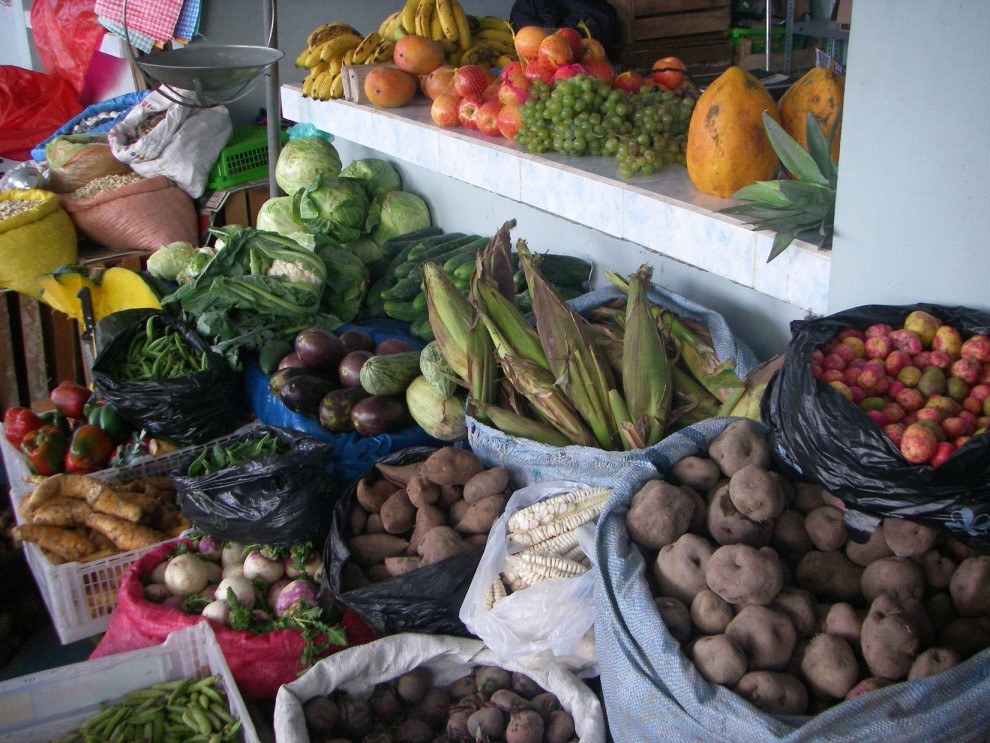
Coca leaves, a standard small bag sold for personal use in Bolivia. From 10-40 hojas are used at once while working, walking, or otherwise exerting oneself at high altitudes. Habitual users enjoy coca three or four times a day. All photos by Mariann G. Wizard / The Rag Blog, unless otherwise credited.

La Vida Coca /2: 
Currents in traditional coca 
use in Bolivia and Peru

The overall effect of chewing leaves, drinking coca tea, or eating coca-containing foods can be described as both energizing and calming. Stress and anxiety are decreased, gastric disturbances eased, and the next hill isn’t quite so daunting.

By Mariann G. Wizard | The Rag Blog | May 15, 2013

Part two of three.

[Rag Blog Contributing Editor Mariann Wizard recently visited Peru and Bolivia with former fellow Ragstaffer Richard Lee. Wizard says the whole thing was Lee’s idea, although she did the heavy lifting of writing this report of their experiences, while lifting copiously from conversations they shared and short reports Richard wrote on the spot.]

It is estimated that 50% of Bolivia’s gross national product is related directly or indirectly to coca. The illegality of much of this crop, and its ineligibility for international trade, has significantly handicapped Bolivia’s economy and given it, along with Colombia, something of an “outlaw” reputation.

Rather than succumb as Colombia has at least temporarily done to U.S. demands for crop eradication, Bolivia now charts an independent path to international legitimacy and respect. Commodities production has given Bolivia a positive trade balance since 2004. Natural gas, silver, zinc, and soybeans account for 72% of total exports.

Main imports are machinery and transport equipment, chemicals and related products, and mineral fuels and lubricants. Main trading partners are Brazil (33% of total exports, 18% of imports), Argentina (12% of exports, 13% of imports), and United States (10% of exports and 11% of imports).[1]

A new Bolivian Vice Ministry of Coca and Internal Development was established in February 2009, in a reorganization of the executive branch. It is charged with developing employment opportunities, diversifying the economy, respecting traditional cultural values, and in general furthering Bolivian President Evo Morales’ overarching vision of “Living Well.”

It is expected to rationalize the processing of coca, maintain a climate of social peace, and mitigate and prevent conflicts under the new national policy of peacefully combating drug trafficking.[2]

One of the possible side effects of this policy is a striking lack of domestic militarization in Bolivia compared with most other Latin American nations we’ve visited in recent years. It’s like the dog that didn’t bark in the night, not obvious at first but increasingly pleasant over time.

It’s worth noting that women spearhead Morales’ administration. Strides in women’s liberation are seen everywhere. Ending domestic violence and the rule of “machismo” are serious concerns in Bolivia’s social revolution. Billboards and televised public service announcements proclaim, “Don’t Kill The One You Love.” Civilian gun ownership is banned.

While we were still in Bolivia, the campaign to have traditional coca use removed from the list of narcotics finally succeeded,[3] following a powerful appeal by Morales to UN delegates in Vienna.[4] Among the folks we talked with or saw responding in newscasts, this was met with firm approval. If Evo is leading a revolution, his constituents, at least in the altiplano, are keeping pace every step of the way.

Today, there is an emphasis on developing new products to “soak up” the excess coca that feeds illicit drug production, rumored to be concentrated in Brazil. Across the Amazon River, in one of the most difficult environments on the planet, one can envision secret jungle drug labs. But in the highlands, coca is part of a healthy, active lifestyle: “Living Well.”

Coca candies, cookies, “teas” (actually infusions; true tea is Camellia sinensis), energy bars, and more are available or in the works. Coca Colla™, an energy drink made with coca extract, was reportedly launched in April 2010, but we didn’t see it anywhere; we would surely have tried it. At least 35 coca product brands are operating.[5] A new publication, Il Jornada Nacional del Acullico, launched in 2012 to “reclaim” traditional coca mastication.[6]

Stevia (Stevia rebaudiana), an herb that produces the sweetest natural substances known to date, calorie-free steviosides, grows in Bolivia and is included in many products, in line with the government’s overall health-promotion and economic development programs. It’s commonly available in restaurants as an herb.

While coca “tea” is often made with whole leaves, there are also many chopped, bagged products from large and small manufacturers. When made of pure hojas, such teas may still be chewed as well as brewed for a stronger effect.
Coca teas, Larco Museum gift shop, Lima. Note the different flavors, including a coca-green tea combination. Some sources state that the term “maté” was adopted for coca teas to capitalize on the popularity of yerba maté (Ilex paraguariensis), but it is used in northwestern Bolivia for any mixed infusion. Matés commonly include tea, anise (Pimpinella anisum), cloves (Syzygium aromaticum), cinnamon (Cinnamonum verum), or other herbs or spices.
Energizing coca- and maca (Lepidum meyenii)-based candies, left, from airport gift shop, Lima. Coca-and-quinoa (Chenopodium quinoa) cookies, right, from Arcoiris Pasteleria on the plaza in Coroico, Nor Yungas, Bolivia.

Many medicinal and personal care products are made with coca, like these at Coroico’s Blue Pine Tienda, as entrepreneurs combine traditional lore and modern marketing to legitimize coca in world markets.

Ingacoca’s™ banner lists coca syrups for coughs, asthma, prostate support, rheumatism, acidic urine, liver support, stomach ulcers, gastritis, anemia, weight loss, mental acuity, poor appetite, diabetes, nerves, insomnia, kidneys, intestinal parasites, and high blood pressure; salves for rheumatism, varicose veins, bone support (coca is high in calcium), arthritis, gout, fungi, and hemorrhoids; and shampoo and skin creams.

What scientific support is there for the claimed benefits of coca leaf? Herbal medicine expert Andrew Weil says,

Coca appears to be a useful treatment for various gastrointestinal ailments, motion sickness, and laryngeal fatigue. It can be an adjunct in programs of weight reduction and physical fitness and may be a fast-acting antidepressant. It is of value in treating dependence on stronger stimulants.

Coca regulates carbohydrate metabolism in a unique way and may provide a new therapeutic approach to hypoglycemia and diabetes mellitus. With low-dose, chronic administration it appears to normalize body functions. In leaf form coca does not produce toxicity or dependence. Coca can be administered as a chewing gum or lozenge containing a whole extract of the leaf, including alkaloids, natural flavors, and nutrients.[7]

However, as with cannabis, coca’s illegality makes it difficult for research on these benefits, all with at least some evidence, to proceed. A search of the PubMed database for Erythroxylon brought up just 109 reports, many on plant pharmacology. Interestingly, several studies used little-known species, not those most cultivated, but having local traditional uses. Most found a chemical basis for the tradition. Some reports are historical; others are policy, cultural, or environmental studies.

There are epidemiological and clinical studies of coca’s effects in altitude sickness. (Results: it works and people use it without ill effects.) A study of effects of hojas on biochemical and physiological parameters found metabolic benefits with prolonged physical activity; that is, more fat is burned by users during exercise.[8]

We started seeing coca tea and/or hojas at the hotel breakfast (desayuno) buffet in Nazca, Peru, and at most hotels and hostels after that. Coca tea was on almost every restaurant menu. We learned later that coca is also readily available in Lima, where we had spent a week in ignorance. After all, at sea level, why would anyone have altitude sickness?

But the energizing qualities of coca can benefit tourists at any altitude: see more, do more, enjoy your trip more. While I was sick in Arequipa (everyone there blamed Nazca’s water!), hotel staff, doctor, and “Ricardo” all recommended coca. Poco a poco, it helped.

Desayuno buffet at Hotel Berlina, La Paz, with hojas de coca and coca tea. This hotel also had leaves and tea, and hot water, in the lobby at all times.

So, everybody asks, “What is it like to chew coca?” What many really want to know is, “What is it like compared to cocaine?

It’s different. It’s not nearly as strong as blow, no matter how much lejia (see below) you use or how many leaves you cram into your cheeks. Yes, there is an astringent flavor; yes, you can get a numbing effect in mouth and throat; yes, there are alkaloids in the leaves and you can test positive for cocaine if that’s a concern.

The overall effect of chewing leaves, drinking coca tea, or eating coca-containing foods can be described as both energizing and calming. Stress and anxiety are decreased, gastric disturbances eased, and the next hill (everything in Bolivia is uphill or downhill from where you are!) isn’t quite so daunting.

But, unlike the single alkaloid cocaine, use of whole leaf products doesn’t end in a sudden emotional or energy crash or turn nice people into a–holes. After a time, the effect gently fades away. Neither of us ever experienced sleeplessness, anxiety, or remorse while using hojas.

And of course there is no issue of addiction or compulsion. You can take it or leave it (unless, of course, you’re one of those people who can’t take or leave anything; in that case, well, hojas are a lot cheaper than refined “salt”).

The mild, balanced effects parallel those of other whole herbs versus single compounds. A classic example is cannabis flowers versus tetrahydrocannabinol (THC), their main psychoactive ingredient. Pharmaceutical medicines of THC alone can cause anxiety. Using whole cannabis for pain control, appetite stimulation, and other medical purposes causes fewer problems and gives patients more control.

And as it turns out, many “minor” ingredients of cannabis — cannabinoids and other compounds — also have benefits. The latest pharmaceutical versions of what Mother Nature provides are standardized cannabinoid blends.

A small piece of lejia (“lye”) made from stevia (above) or quinoa ash, burned limestone, or baking soda (“bico“), is often chewed with coca to free more alkaloids. This produces a stronger effect, including numbing the inside of the mouth, than hojas alone.

Our serious quest for knowledge began in La Paz, the capital of Bolivia, 13,323 feet above sea level. We visited the coca market, ADEPCOCA, just four blocks from the Villa Fatima terminal, where minibuses from coca-growing Nor Yungas province leave and arrive hourly.

Four stories (each about 100 x 80 m) of coca fill La Paz’ bustling ADEPCOCA market. This photo, made early on a Sunday, shows little of the traffic that normally congests this intersection, so that more of the building can be seen. The structure covers a full block. The sign on the front says “COCA ES VIDA“; coca is life.
Bags of prime hojas with the ADEPCOCA logo ready for delivery to hotels, markets, and other outlets. Taxis often carry several bags at a time along with passengers, piling bags in cargo compartments and atop vehicles.
While most traditional women and older men in the market didn’t wish to be photographed, this young man with iPod had no qualms and happily posed. Many hundreds of bags like his are bought and sold daily at ADEPCOCA.

Between La Paz and Coroico, along what was once “the most dangerous road in the world,” cocal, as coca is called in the field, begins to be seen. The closer we came to one of Bolivia’s prime coca centers[9] (like our driver and some fellow passengers, chewing hojas all the way!), the more we saw the well-tended crop on steep hills framed by snowy peaks, rushing waterfalls, and infinite shades of green.

A cocal field near the road. Maintaining agricultural terraces or gradas under frequently torrential rains is an ongoing task of Andean coca growers. Photo by Richard Lee / The Rag Blog.


NEXT: Cocal up close and personal; everything else; our “Where’s Waldo?” moment.

[Rag Blog Contributing Editor Mariann G. Wizard, a Sixties radical activist and contributor to The Rag, Austin’s underground newspaper from the 60s and 70s, is a poet, a professional science writer specializing in natural health therapies, and a regular contributor to The Rag Blog. Read more poetry and articles by Mariann G. Wizard on The Rag Blog.]

Footnotes:
[1]Trading Economics.com. ]http://www.tradingeconomics.com/bolivia/balance-of-trade
[2]http://www.vcdi.gob.bo/index.php/institucion/institucional 
[3]Neuman W. Bolivia: Morales wins victory as U.N. agrees to define some coca use as legal. New York Times. Jan. 11, 2013. http://www.nytimes.com/2013/01/12/world/americas/bolivia-morales-wins-victory-as-un-agrees-to-define-some-coca-use-as-legal.html?_r=1& 
[4]Cusicanqui JJ. Morales buscar a retirar la coca de la lista de estupefacientes. La Razón. Mar. 12, 2013, p. A4. 
[5]Medrano E. Temen desvío de la industria de la hoja. La Razón. Mar. 12, 2013, p. A4. 
[6]Cusicanqui JJ. Morales buscar a retirar la coca de la lista de estupefacientes. Sidebar: Il Jornada del Acullico. La Razón. Mar. 12, 2013, p. A4. 
[7]Weil AT. The therapeutic value of coca in contemporary medicine. J Ethnopharmacol. 1981 Mar-May;3(2-3):367-76. http://www.ncbi.nlm.nih.gov/pubmed/6113306 
[8]Casikar V, Mujica E, Mongelli M, et. al. Does chewing coca leaves influence physiology at high altitude? Indian J Clin Biochem. July, 2010;25(3):311-4. doi: 10.1007/s12291-010-0059-1. http://www.ncbi.nlm.nih.gov/pubmed/21731204 
[9]The other is Chaparé.

The Rag Blog

Posted in RagBlog | Tagged , , , , , , , , , | 1 Comment

Type your summary here

Type rest of the post here

Source /

The Rag Blog

Posted in RagBlog | Leave a comment

BOOKS / Jonah Raskin : Blake Slonecker’s ‘New Dawn’ Tells the LNS Story

A New Dawn for the New Left:
Blake Slonecker’s valuable history of LNS

“By distributing a common news packet to underground outlets, LNS enabled local rags to cover national and international news to an unprecedented degree, curbing their isolation and giving shape to a vibrant Movement print culture.” –– Blake Slonecker

By Jonah Raskin | The Rag Blog | May 14, 2013

[A New Dawn for the New Left: Liberation News Service, Montague Farm, and the Long Sixties by Blake Slonecker (2012: Palgrave Macmillan); Hardback; 267 pages; $85.]

It’s hard to imagine anyone paying $85 — the list price — for Blake Slonecker’s comprehensive book about Liberation News Service (LNS), its eclectic members, and its curious reincarnations and permutations. Published in December 2012, A New Dawn for the New Left offers a close look at LNS, the radical organization that lasted more than a decade and that provided a real alternative to the manufactured news and information disseminated by the Associated Press (AP).

Slonecker, a professor of history at Waldorf College in Iowa, captures the spirit of the freewheeling Sixties, though he’s also a compassionate critic who recognizes the excesses and the flaws of the radical movement and the counterculture that accompanied it in the 1960s and 1970s.

It’s not that the book isn’t worth reading. On the contrary, it offers a valuable portrait of LNS as a political collective that aimed to put into practice the rousing slogan of the Industrial Workers of the World (IWW): “building the structure of the new society within the shell of the old.” The book ought to be available at a reasonable price and not priced out of the hands of readers.

Of course, Slonecker isn’t to blame for the $85 sticker shock. His publisher is.

The book begins where it ought to begin — with the notorious heist of the LNS printing press by its two cofounders, the legendary Marshall Bloom and Raymond Mungo. It follows Bloom and Mungo to Montague Farm in Massachusetts, traces the evolution of the rural commune, its deep rural roots, and turn to anti-nuclear protest. At the same time, it looks closely at the LNS collective that regrouped in New York without its troublesome founders.

Slonecker believes that the New York office of LNS was located in Harlem. In the first sentence, he writes, “On the morning of August 11, 1968, something brazen was happening in the Harlem basement of Liberation News Service.” Throughout the book he refers to LNS’s Harlem office.

As a longtime resident of the neighborhood and as a contributor to LNS from 1967 to 1970 who often attended meetings, I can say with a great deal of certainty that LNS was not in Harlem. It was in a basement on Claremont Avenue on the Upper West Side of Manhattan, not far from 125th Street and Broadway. Claremont Avenue was a stone’s throw from Columbia University; LNS’s geographical proximity to academia was more significant than its proximity to Harlem.

LNS staff members such as Allen Young, who played a pivotal role in the early days, graduated from Columbia and from the Washington Post and brought to the New Left’s pioneering news organization a wealth of experience in both academia and professional journalism.

Others at LNS came from similar backgrounds: Andy Marx dropped out of Harvard to join LNS; Mark Feinstein came from The New York Times. Not everyone, of course, was an Ivy Leaguer. Katherine Mulvihill, whose picture appears on the cover of the book, was a high school dropout.

Slonecker does a good job of describing the internal politics, including the sexism, at LNS and the role of the collective within the larger political world of the New Left. He looks at LNS and at the anti-war and anti-nuclear movements and at gay and women’s liberation, as well as Third World and working class struggles. He also provides vivid portraits of Mungo and Bloom, Marty Jezer, Harvey Wasserman, Sam Lovejoy, and Allen Young. The Rag Blog’s Thorne Dreyer makes a few brief appearances, and so does Vicky Smith.

What Slonecker doesn’t do — and that he might have done — is to describe the basement office in more detail. After all, the workplace environment contributed to the state of mind and to the culture of LNS itself. The graffiti in the bathroom was a veritable museum of New Left and counterculture slogans. My favorite was “Stones Cut Beatles.” I also remember the LNS ritual of watching Walter Cronkite on the CBS Evening News during the War in Vietnam.

Slonecker might have provided more details about the actual production of the mimeographed LNS packets that went out to underground newspapers all around the country — to The Seed in Chicago, The Great Speckled Bird in Atlanta, The Barb in Berkeley, and many others. The cover photo by Anne Dockery, shows Katherine Mulvihill at a machine; a description of the work itself would help.

If LNS went out to underground papers, the papers also flooded the office. I’d spend many an afternoon sitting around with the roar of the Gestetner machines in the background reading The Seed, The Barb, The Rag, and finding out what was happening on a grassroots level in Chicago, Berkeley, and Austin.

LNS was a kind of living library, a real movement hub and, not surprisingly, movement honchos often visited. The New Left, including SDS and the Yippies, took it seriously. When I wrote a review critical of Jerry Rubin’s Do It!, Rubin called LNS and complained bitterly. How could LNS not rave about him and his book? he wanted to know, and was told that LNS wasn’t in the business of writing advertising copy and blurbs for New Left and countercultural writers. Hadn’t he heard about freedom of the press?

A New Dawn for the New Left offers ample remarks from the likes of John Wilcock, the cofounder of the Underground Press Syndicate, and Teddy Franklin, part of LNS’s early core group. “We’re paying LNS $180 a year,” Wilcock complained, “to send us whatever they damn well feel like sending us.”

Some of my own pieces for LNS were widely picked up by papers — including a critique of hippie culture entitled “The Children of Imperialism” and a review of a concert by the Rolling Stones I did with Franklin. But other pieces — about books such as B. Traven’s The Treasure of the Sierra Madre — hardly proved exciting to editors at the feisty rags around the country.

Still, it was to LNS’s credit that odd, quirky pieces were published — sometimes by leading movement figures like Abbie Hoffman who wrote with real passion about Marshall Bloom’s suicide.

LNS lasted until about 1980, but by then its glory days had long since passed. Allen Young had moved to rural Massachusetts to live on a commune with other gay men. I’d relocated to California. Thorne Dreyer and Vicky Smith had gone to Houston to start Space City!

By the summer of 1972, veteran LNS members such as Teddy Franklin were lamenting the decline and fall of the underground press and bemoaning the sinking numbers of subscribers to LNS. “I’m hard put to name 10 underground newspapers I have any respect for at this point,” Franklin wrote in 1972. “Let’s be honest, we’re losing our readers out from under our feet.”

In part, what happened was a shift from underground newspapers to what were called “sea-level” weeklies or monthlies, such as University Review and The Chicago Reader.

In the 1970s, papers such as the Village Voice grew fatter and fatter with ad revenue and took over the role that had been played by the underground papers. Moreover, reporters for LNS, such as Mike Schuster, moved to much more reputable news organizations such as PBS. The New Left and its countercultural institutions had provided a training ground for a whole generation of editors, publishers, and journalists who went on to work for mainstream magazines and newspapers.

In a sense, LNS and the underground papers died not because they failed but because they succeeded. As one New Leftist put it, “Nothing sucks like success.”

Slonecker’s book makes a substantial contribution to the literature about the Sixties. It joins the company of recent, outstanding books about the underground press such as John McMillan’s Smoking Typewriters, Sean Stewart’s wonderfully illustrated On the Ground, and Ken Wachsberger’s multi-volume Voices from Underground. Along with them and young writers like Thai Jones, Slonecker belongs to the generation of historians reinterpreting radicalism in America.

[Jonah Raskin, a regular contributor to The Rag Blog is the author of For the Hell of It: The Life and Times of Abbie Hoffman and American Scream: Allen Ginsberg’s “Howl” and the Making of the Beat Generation. Read more articles by Jonah Raskin on The Rag Blog.]

The Rag Blog

Posted in Rag Bloggers | Tagged , , , , , , , , | 1 Comment

Michael James : Doing the Whirlpool at the Paradise

Whirlpool at the Paradise, Chicago, 2003. Photo by Michael James from his forthcoming book, Michael Gaylord James’ Pictures from the Long Haul.

Pictures from the Long Haul:
When the water was flowing at
Chicago’s Paradise bathhouse

I’ve been in lots of whirlpools, steams, saunas, and mineral baths: a palatial bath house in Leningrad, a funkier setup in Donetsk, a treasure of a place in Oaxaca, hot tubs in California and Utah, and a hot sea water and seaweed bath in Ireland.

By Michael James | The Rag Blog | May 14, 2013

[In this series, Michael James is sharing images from his rich past, accompanied by reflections about — and inspired by — those images. This photo will be included in his forthcoming book, Michael Gaylord James’ Pictures from the Long Haul.]

I like water in all its forms — liquid, steam, and ice. I’m sure my affinity for the H20 began for me in my mom’s womb, and developed over the years in bathtubs, showers, Long Island Sound, the pool at my hometown Westport YMCA, the Saugatuck River at the Y’s Camp Mahackeno, more pools, more rivers, more oceans, and certainly the Great Lake Michigan.

I am a big fan of aqua therapy. That started in the sauna and whirlpool at Chicago’s Lincoln Belmont YMCA. What a discovery back in the early 70’s when I started checking out — sneaking into — the Y’s Men’s Club that was off-limits to the regular low-rent-paying-members like myself. A whirlpool. A sauna. Forceful showers.

This developing affinity for water and heat has taken me many places, or going many places has led me to take the waters. There have been fun times in rushing rivers, waterfalls, warm and cold pools at hotels, motels, and aqua joints throughout the world: hot springs at Harbin in California, by the side of the Rio Grande in New Mexico, and up in the mountains of Oregon, as well as a hot mineral bath at the Stroppel Hotel in Midland, South Dakota, and an intense sweat lodge on the Menominee Reservation in Keshena, Wisconsin.

I’ve been in lots of whirlpools, steams, saunas, and mineral baths: a palatial bath house in Leningrad, a funkier setup in Donetsk, a treasure of a place in Oaxaca, hot tubs in California and Utah, and a hot sea water and seaweed bath in Ireland. I’ve enjoyed New York’s 12th Street Bath House where my friend Phil Shinnick (Olympic long jumper) took me, and the elaborate Queen’s Spa Castel that my son Jesse turned me on to, now a must-go when visiting family in New York.

Home here in Chicago, I was there before they were gone — the Finish and Luxor bath houses, and the old Division Street Russian Baths. The McGaw YMCA in Evanston has a fine steam: it let’s you control the steam and heat. I’ve yet to check out the Sweat Lodge or newly reopened Division Street Baths now called Red Square.

In days gone by there were times I hit the Paradise (aka the Korean Bathhouse) at Montrose and Richmond on an almost daily basis. It has long been my home base aqua facility, especially so when I get there before 7 a.m. to be first in before the jets, steam, showers, and heat erupt and the water begins to flow.

On early mornings you might find guys of all races, ethnicities, and nationalities, including cops, lawyers, dealers, businessmen, roofers, barbers, radicals, old guys, and young guys. And later in the day, over the last few years, there are more gay guys too.

The owner was Mr. Cho, a former martial arts hot shot, and a fine man. A falling out with his brother-in-law led him in his 80s to move to Arizona, where he opened a new place, but died shortly thereafter. Before he left there were rumors of the bathhouse closing, of new owners or new management coming in. We clientes have long been in limbo as to when the ceiling (and its leaks during torrential downpours) would be fixed, the tiles repaired, and various surfaces adorned with new paint.

The Paradise has always had the strongest jets of any whirlpool in my searching out of such facilities. It has been a number of years now since I drove my son Cadien to Bell School, which is close to the Paradise, making daily visits easy. Now I don’t go as often, but do tend to go on Sunday mornings or on days when I really need a soak.

On a recent Sunday I headed over early in the morning. The parking lot was empty. The doors were locked. The garbage dumpsters were full. And signs on both doors read: “Under new management. We apologize for any inconvenience, but there will be ‘REMODELING.'”

There was a phone number on the sign. I just called it and talked briefly with a Korean woman, telling her I’ve been going to the Paradise for years and that I hoped it would be open soon. She said, “I hope so.” We will see. My sense is that aqua therapy in many forms is on the rise. There will be many new and varied versions of such special places. I hope that along with them that the Paradise will endure.

[Michael James is a former SDS national officer, the founder of Rising Up Angry, co-founder of Chicago’s Heartland Café (1976 and still going), and co-host of the Saturday morning (9-10 a.m. CDT) Live from the Heartland radio show, here and on YouTube. He is reachable by one and all at michael@heartlandcafe.com. Find more articles by Michael James on The Rag Blog.]


The Rag Blog

Posted in Rag Bloggers | Tagged , , , , , , | Leave a comment

Alan Waldman : ‘Wire in the Blood’ is a Gripping British Crime Series

 
Waldman’s film and TV
treasures you may have missed:

Robson Green is powerful as an eccentric, troubled clinical psychologist who helps police solve gruesome Yorkshire crimes.

By Alan Waldman | The Rag Blog | May 14, 2013

[In his weekly column, Alan Waldman reviews some of his favorite films and TV series that readers may have missed, including TV dramas, mysteries, and comedies from Canada, England, Ireland, and Scotland. Most are available on DVD and/or Netflix, and some episodes are on YouTube.]

Wire in the Blood is an outstanding British crime series based on the best-selling Tony Hill novels of gifted Scottish mystery writer Val McDermid. It stars fine Brit actor Robson Green as psychologist Tony Hill, who has the extraordinary ability to get into the minds of serial killers and other creepy criminals and help police bring them to justice.

From 2002 through 2008, 27 episodes of Wire aired over six seasons. They are all available on Netflix, Netflix Instant and YouTube. The series won an Edgar award for Best TV Episode Teleplay for scripter Patrick Harbinson and noms for two other episode writers, actor Green, and “Best TV Crime Program.” It was a ratings and critical winner and aired in 30 countries in Europe, Asia, North America, Latin America, and Oceania.

In Britain over the past decades there has been a very popular literary genre called “Tartan Noir,” featuring strong, dark mysteries by great Scottish writers such as McDermid and Ian Rankin (TV adaptations of whose Rebus novels I have reviewed here previously). When McDermid or Rankin publishes a new novel, it often goes to number one on British best-seller charts.

Set in the fictional West Yorkshire city of Bradfield (a cross between Bradford and Sheffield), Wire in the Blood features Major Incident Team head Detective Chief Inspector Carol Jordan (Hermione Norris), replaced in later episodes by Detective Inspector Alex Fielding (Simone Lahbib), who hire Hill to profile and help them arrest truly warped criminals before they strike again.

Carole and Alex continually struggle with their superior officers, who are skeptical of Hill’s unorthodox methods and far-fetched theories. Tony so identifies with the mass murderers and child rapists he hunts that he finds it hard to distance himself from the cases.

Despite the terrible crimes depicted, these are all brilliantly written and acted episodes.

Green won two major awards for the equally brilliant Touching Evil and the military series Soldier, Soldier, and he garnered eight more nominations for five other TV works.

Four episodes were based directly on McDermid’s novels, and the other well-scripted 23 episodes were penned by others, based on her characters.

Jimmy Savile in 2006.

I have read and thoroughly enjoyed all 25 of Sir Ian Rankin’s novels, as well as 15 of Val McDermid’s. Her first seven Tony Hill/Carole Jordan mysteries are all terrific and highly recommended: The Mermaids Singing (The Crime Writers’ Association’s “Best Crime Novel of 1995”), The Wire in the Blood, The Last Temptation, The Torment of Others, Beneath the Bleeding, Fever of the Bone, and The Retribution. And I am haunting my local library catalog for her eighth, Cross and Burn, which comes out this year.

The vicious character Vance, the villain in the book/episode Wire in the Blood and two subsequent novels, is based on McDermid’s interview with Sir Jimmy Savile, a popular TV host (Tops of the Pops, a long-running music chart show), charity fundraiser, and media celebrity. He was discovered, after his death, to be to be one of England’s most prolific child rapists and sex offenders — accused in hundreds of cases. To render this psycho more interesting, McDermid also makes Vance a torturer, murderer, and arsonist.

Confession: Although I didn’t really enjoy the novels I read in her Lindsay Gordon and Kate Brannigan lesbian detective series, I was fascinated by some of her non-Hill/non-Sapphic sleuth novels, including A Place of Execution, A Darker Domain, and The Distant Echo. Like the TV series, these novels are smart, twisty, and full of complex characters.

[Oregon writer and Houston native Alan Waldman holds a B.A. in theater arts from Brandeis University and has worked as an editor at The Hollywood Reporter and Honolulu magazine. Read more of Alan Waldman’s articles on The Rag Blog.]
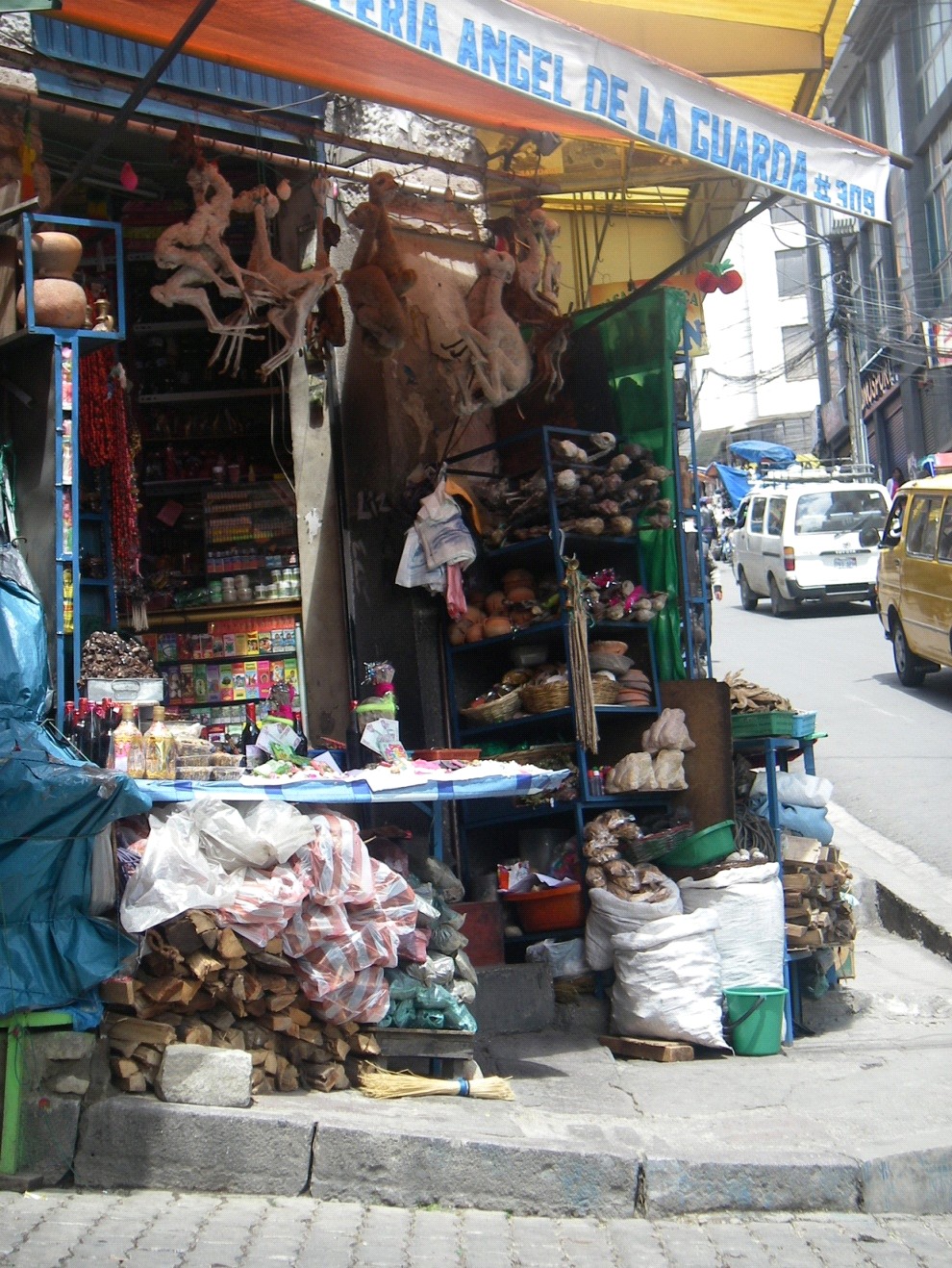
The Rag Blog

Posted in Rag Bloggers | Tagged , , , , , , , , | Leave a comment

BOOKS / Ron Jacobs : Wu Ming Does the Middle Ages

Masterful job by writers’ collective:
Wu Ming does the Middle Ages

The reader is propelled into a tale of spies for and against the Church; of bloody feuds between armies of the Church and peasant rebels; and of communities organized along principles we would now call communist.

By Ron Jacobs | The Rag Blog | May 14, 2013

The Middle Ages might not seem like an exciting period of human endeavor, even to historians. Popes, politics, and peasants are all one hears about in those survey courses taken in high school and college. The potential for intrigue and revolution seems remote and unlikely.

Wu Ming, the Italian author collective that originally wrote under the namd “Luther Bissett,” have done a masterful job dispelling that perception. The group’s novels Q and the newly translated Altai, not only bring this era alive, they dispel the perception mentioned above.

Q, the first novel in this duo opens in the years after Martin Luther attached his theses to that door in Wittenberg, Saxony. Immediately the reader is propelled into a tale of spies for and against the Church; of bloody feuds between armies of the Church and peasant rebels resentful of the Church’s submission of them; and of communities (indeed entire cities) organized along principles we would now call communist.

It is these communities that gain the wrath of everyone in power: the Holy Roman Empire and the Protestant establishment led by a wealthy class of merchants that is resentful of both the Church and nobility. Furthermore, this new class is also fearful of an enlightened peasantry and laboring class. Perhaps the most famous and most revolutionary of all those communities was the town of Münster, whose revolutionaries were led and inspired by Thomas Muntzer, John of Leiden, and the philosophy now known as Anabaptism.

In the pages of Q, Wu Ming renders in fictional form the Marxian position that the Peasant Wars of the period were not just about religion. In fact, as Marx makes clear, they were against feudal oppression and land — always an essential element of every peasant and worker rebellion throughout history.

Q is the nom de guerre of a spy for the Vatican. El Alemain is the Anabaptist rebel who takes part in numerous battles against the powerful, works to disseminate anti-Catholic and democratic literature, conspires with enemies of the Church, and ultimately disappears only to turn up in Constantinople still on the run.

He is the character that ties the two books together. After disappearing at the end of Q, he shows up in the Constantinople of Altai ready to take on the Church once again. The more encompassing connection is the history.

The story begins in Germany with the book Q. With Martin Luther’s reformation well underway, those who feel that Luther’s demands have not gone far enough are setting up their own communities. Many of these communities are essentially communist and opposed not only to the hierarchy of the Catholic Church, but to the demands of the aristocracy and even the new Protestant gentry and early bourgeoisie.

In essence, these communities are mutual aid societies that take the anti-monetary elements of Christianity and make them the centerpiece of their gospel. There is no place in Europe where the sentiment is greater than in Münster, Germany.

Wu Ming explores this combination of cause and effect in the novels Q and the just released Altai. It is another spy who narrates the sequel Altai. A converted Jew working for the Church in Venice, he is falsely accused of sabotage and escapes. As it turns out, those who aid his escape have their own agendas. Although he rejects those agendas at first, he soon realizes that he agrees with them more than he disagrees.

After arriving in Constantinople he rediscovers his Jewish faith and fate, allying himself with another Jewish exile from the Holy Roman Empire. Together they plan a strategy they hope will create a refuge for all of those persecuted by the Church. In the process, Wu Ming raises issues of sexuality, power, freedom, and the problem of war.

As the description of the final battle for Cyprus and the desolation resulting from the Ottoman siege in Altai makes obvious, these are antiwar novels as much as they are adventure stories and fictional depictions of history. The desolation and sheer butchery is graphic and disturbing; enough to make almost any reader question the use of violence to achieve a worthwhile end.

The members of Wu Ming are master storytellers. Their ability to weave together their individual narratives and their tales into a complete novel (let alone two) is a marvel. The fact that the completed tale is so much more than its individual parts is testimony to their craft and their artistry.

As a writer, I remain intrigued and mystified by Wu Ming’s process and astounded by the result.

[Rag Blog contributor Ron Jacobs is the author of The Way The Wind Blew: A History of the Weather Underground. He recently released a collection of essays and musings titled Tripping Through the American Night. His novels, The Co-Conspirator’s Tale, and Short Order Frame Up will be republished by Fomite in April 2013 along with the third novel in the series All the Sinners Saints. Ron Jacobs can be reached at ronj1955@gmail.com. Find more articles by Ron Jacobs on The Rag Blog.]

The Rag Blog

Posted in Rag Bloggers | Tagged , , , , , , | Leave a comment

BOOKS / Bill Fletcher Jr. : Gar Alperovitz and Visions of a New World

What Then Must We Do?:
Political economist Gar Alperovitz
and visions of a new world

The struggle for structural reforms is essential to changing the ‘common sense’ of the U.S. political arena. But it is not enough to wound the rabid beast; one must ultimately bring it down.

By Bill Fletcher Jr. / Jacobin / May 13, 2013

Gar Alperovitz, author of What Then Must We Do?, will be Thorne Dreyer’s guest on Rag Radio, Friday, May 17, 2013, from 2-3 p.m. (CDT) on KOOP 91.7-FM in Austin, and streamed live to the world. They will be joined by Rag Blog economics writer Roger Baker. The show will be rebroadcast by WFTE-FM in Mt. Cobb and Scranton, PA, Sunday morning, May 5, at 10 a.m. (EDT), and the podcast will be posted at the Internet Archive.

[What Then Must We Do?: Straight Talk About the Next American Revolution, by Gar Alperovitz (2013: Chelsea Green); Paperback; 224 pp; $17.95.]

I read Gar Alperovitz’s What Then Must We Do?: Straight Talk About the Next American Revolution with a level of skepticism. He set out to make an argument as to what can be done right now to demonstrate to a growing population weary of neoliberal capitalism that another world is not only necessary and possible, but that one can already see the first glimmers of that new world.

Alperovitz’s views are shaped by several assumptions. First, that actually existing capitalism is not working. Second, that socialism, as we have known it in the 20th century did not work. Third, that people need to actually see what an alternative world would look like in order to be encouraged to fight for one.

He then proceeds to identify actual examples of different struggles and projects that have been undertaken by progressives that show that a different way of organizing life and the economy is not only a great idea, but living realitiy.

Alperovitz spends little time critiquing 20th century socialism. For the most part he is interested in demonstrating that capitalist dogma, in particular neoliberal capitalist dogma, is both a myth as well as fundamentally unworkable. He suggests that there are projects that can be undertaken — like worker cooperatives — that will build power for the everyday person and actually move towards social transformation.

Advocating for these institutions, Alperovitz helps the reader to understand the differences that exist under the rubric of worker ownership, showing that there are forms of alleged ownership that really do not amount to control while at the same time there are processes that can be undertaken that alter workplace dynamics as well as the relationship of an enterprise to the broader community.

Alperovitz links his proposed process with what he sees as the next American Revolution. In that sense he believes that it is critically important that new transformative change in the United States must be rooted in lived reality in the country and also viewed by the public as “American.” For that reason, demonstrating to the “99%” that alternatives are underway and that they are not the creatures of foreign ideologies and foreign powers is absolutely essential.

What Alperovitz proposes are the equivalent of what has been traditionally known as “structural reforms” or in some cases “non-reformist reforms” along with a variation on what the Black Panther Party once called “survival programs.” This is reason enough that this book should not only be read but studied carefully.

The structural reforms and survival programs that Alperovitz is suggesting respond to the irrationality of neoliberal capitalism and the inability of the existing system to meet the needs of a growing percentage of the population. The reforms proposed are both clear and compelling and, in many cases, achievable.

In reading What Then Must We Do? I found it less a platform for revolutionary change than a platform for a frontal assault on neoliberal capitalism. To borrow the terminology of activist Carl Davidson, it is a program of a “popular front” against finance capital. It is the sort of platform and approach that can help to unite a broader progressive movement and make it more than the sum of its parts.

Alperovitz’s concern that the “99%” needs to see examples of the future is not grounded in 19th century utopian socialism. This book is not suggesting that various alternative experiments can be built, exist alone, and somehow convince the larger population — by their example — that this is the way to go. Rather he is suggesting that progressive and left forces undertake a multi-decade process of expanding democracy at all levels, within which the various experiments in alternatives are actualized.

Again, this is very much in line with certain more traditional leftist strategic directions regarding structural reforms and survival programs that can be fought for within the context of democratic capitalism.

But is this enough?

In the fall of 1988, I had the opportunity to tour Northern Ireland, meeting with the leaders of Sinn Féin. One of the areas to which I was introduced were worker cooperatives that had been established by Sinn Féin or its allies.

I arrogantly asked Sinn Féin President Gerry Adams what these cooperatives had to do with the liberation of Ireland from the British. Adams, very patiently, explained to me that, while these cooperatives would not liberate Ireland, at the same time the nationalist population was impoverished and needed a way to survive. With my tail between my legs I acknowledged the profundity of his point.

One of the strengths of What Then Must We Do? is that, much like Sinn Féin in the late 1980s, it is responding to an immediate challenge among the population. It is suggesting that there are things that can and must be done right now particularly within sectors of the population that have been largely written off by either the state or by private capital. The “dead cities” of this country come to mind, like Camden, which have become modern reservations for redundant populations.

A second strength is that the objectives that would fall more within the rubric of structural reforms actually do link with a larger democratizing movement that is necessary to take this country away from its drift toward neoliberal authoritarianism (or, for that matter, right-wing populism).

If thought of as part of a larger strategy, struggles around genuine healthcare reform, banking reform, or alternative economic development become battlegrounds not only in favor of the “99%,” but sites where the people are actually engaged in their own liberation.

But Alperovitz does not answer key questions. What, for example, is neoliberal capital doing while we are moving this democratization process? Alperovitz acknowledges that there remain dangers from the Right, including the use of violence. But this factor is critically important for all leftists and progressives.

The ruling power bloc has largely consolidated around a notion that huge chunks of this population — at least 47%, according to Romney — are nothing more than parasites and should be written off. They see no need, at least at the present time, to construct anything approaching an alliance with the working class generally, or organized labor in particular, along the lines of the New Deal coalition. Rather they seek to either crush the organized forces of the working class altogether or completely marginalize them.

While Alperovitz is correct to argue that this platform can be critical for a progressive movement, he may understate the challenges that face the Left. At each moment when we win, the forces of reaction not only seek to overturn the victory, but they also seek to overturn the means through which the victory was actually won.

None of this is to suggest that anything other than a movement for consistent democracy should be proposed. Rather, that the struggle that is undertaken in the name of structural reforms, survival, and democracy will inevitably reach a fundamental impasse with capital over the basic rules of society. At that point there should be nothing to lead anyone to believe that capital will handle this peacefully and humbly.

As a result What Then Must We Do? seems incomplete. I was persuaded by Alperovitz that a glimpse into the future is critical largely due to reality of the failure of 20th century socialism, or more accurately, what is better described as the crisis of socialism.

We are not, in other words, starting off with a clean slate. There are experiences with socialist and so-called socialist projects and those experiences are uneven in their outcome, and failed over the longer term to provide an alternative to capitalism.

Yet this does not mean that an evolutionary path into the future is realistic. That may sound contradictory since the direction proposed by Alperovitz is one that I praise. But one must remember the context: his book serves as a platform for a popular front against finance capital. It is not, however, a platform for a new society.

Where Alperovitz and I disagree seems to be on the question of how “elastic” democratic capitalism is and will be over the coming years. I think that democratic capitalism is far more flexible in adjusting to circumstances and crises than many of us on the political Left have believed over the decades.

At the same time, the combination of the economic and environmental squeeze leads me to believe that the ruling elite is on a mad dash to secure as much as it can while it can. If this means political disenfranchisement of millions through voter suppression and other efforts, or more direct forms of terror, there is nothing in the history of capitalism that leads me to believe that they will fail to exercise such an option.

Given this, Alperovitz’s platform is at best one component in a much more long-term socialist strategy. By this I mean not only the vigorous fight for structural reforms, but a level of popular organization and mobilization that ultimately pushes for a different constitutional framework, a fundamentally different arrangement in favor of empowering working people, an end to imperialism, and a new relationship between humans on planet Earth.

Such change necessitates a revolutionary transformation and an active process of eliminating the forms of oppression central to capitalism.

In using the term “revolutionary” I am emphasizing a break with actually existing capitalism rather than a slow transformation away from the current toxic system. Such a break, however, is not something that can be led by a small yet spirited sect, and neither is it something that is simply proclaimed. In that sense what Alperovitz suggests at the level of timeline is correct; we are speaking about a process over decades that is then followed by a process of actual transformation lasting decades into centuries.

For many this may all seem like a distinction without a difference, but the importance of clarifying this lies in both matters of expectations as well as strategy. The “Chilean option” succeeded in part because the forces around Allende underestimated what it would take to defeat the political Right. The struggle for structural reforms and survival presented by Alperovitz is essential in cornering the political Right and changing the “common sense” of the U.S. political arena. But it is not enough to wound the rabid beast; one must ultimately bring it down.

This article was first published at Jacobin / a magazine of culture and polemic.” 

[Bill Fletcher Jr. is a racial justice, labor and international writer and activist. He is the immediate past president of TransAfrica Forum; a Senior Scholar with the Institute for Policy Studies; and an editorial board member of BlackCommentator.com. His latest books are They’re Bankrupting Us!: And 20 Other Myths about Unions and Reimagining Labor Unions: Busting Myths, Building Movements. Find more articles by Bill Fletcher Jr. at The Rag Blog.]

The Rag Blog

Posted in RagBlog | Tagged , , , , , , , , , , | 3 Comments

Assata Shakur, Cuba,
and the “Most Wanted Terrorists”

By Harry Targ / The Rag Blog / May 13, 2013

“My name is Assata Shakur, and I am a 20th century escaped slave. Because of government persecution, I was left with no other choice than to flee from the political repression, racism and violence that dominate the US government’s policy toward people of color. I am an ex-political prisoner, and I have been living in exile in Cuba since 1984….

“People get used to anything. The less you think about your oppression, the more your tolerance for it grows. After a while, people just think oppression is the normal state of things. But to become free, you have to be acutely aware of being a slave.” (from “An Open Letter from Assata Shakur: ‘I Am Only One Woman,’ ” Colorlines, May 6, 2013)

To the credit of the National Conference of Black Lawyers, the National Lawyers Guild, The Black Commentator, The Nation, Democracy Now!, The Huffington Post, and an array of blog essays, the FBI decision to place Assata Shakur on its “Most Wanted Terrorists” list and the State Department decision to keep Cuba on the list of “state sponsors of terrorism” have been roundly condemned.

Assata Shakur was an activist in the Black Panther Party, the student and anti-war movements, and human rights causes in the 1960s. Her activism made Shakur a prime target of the violent FBI’s COINTELPRO program designed to arrest, convict, and assassinate those who worked against U.S. racism, classism, and war.

She was stopped in a car on the New Jersey turnpike on May 2, 1973. Police engaged in a shooting which led to the death of a passenger in the car. Also a police officer was killed in the shootout.

Shakur and another comrade were charged with the police killing even though she also was shot and was incapable of shooting a weapon because of her injuries. Shakur was subsequently charged and convicted for killing the police officer, though she was unarmed, and sentenced to life plus 33 years.

On November 2, 1979, she escaped from the New Jersey prison where she was serving her sentence. In 1984 she fled to Cuba, was granted political asylum, and has been living there ever since.

Expressions of outrage about the policies toward Assata Shakur and the government of Cuba need to be raised again and again because these policies get to the heart of racism, repression, and imperialism. The United States government, from civil rights organizing against Jim Crow in the South to urban Black liberation movements in the North sought to divide, repress, and crush demands for an end to institutionalized racism.

The same police and federal security apparatuses complicit in the hosing of protesters in the South, refused to vigorously investigate racist murderers in Alabama and Mississippi. State and federal authorities launched a nationwide campaign during the Nixon administration to falsely charge, arrest, sentence, and murder militants fighting racism.

From Chicago to Oakland, California, to Detroit to the New Jersey turnpike, police and FBI shootouts were initiated to eliminate those who were challenging the political and economic status quo. At the ideological level activists for change were labeled “communists,” “terrorists,” common “criminals,” and foreign agents. Let’s be clear: the Federal Bureau of Investigation and many police departments were agents of a policy of state terrorism. The first targets were African Americans.

In addition, what happened to Assata Shakur and untold thousands of others sent a clear message to activists, particularly young ones, that public protest would lead to violent repression. In 1970 the killings at Jackson State and Kent State Universities communicated to college students that protest might be life threatening.

Raising the issue of “terrorism” again in reference to Cuba and now Assata Shakur also serves to link the COINTELPRO violence against the people of the 1970s to the “war on terrorism” in the 21st century. Everyone knows that as economic crisis grows, demands for change are likely to increase. From a systemic point of view the tools of repression must be reinvigorated.

Raising the case of Assata Shakur now and framing it as an issue of terrorism links the political mobilizations of the 1970s to the Occupy Movement, the horrific bombings in Boston to the demands for change all around the world. Putting Shakur on the terror list and keeping Cuba on a similar list is a metaphor for all that economic and political elites regard as a threat. It seeks to reinforce the theme of the linkage of terrorism and people of color.

Finally, adding Assata Shakur to the terrorism list, and keeping Cuba on the state list, provides ready cover for a possible future military strike against targets on the island. It is conceivable that, unless massive voices are raised to protest these lists, some adventurist administration could launch a drone strike against targets in Cuba.

And, in the short run, associating Assata Shakur and Cuba with terrorism continues the argument that the U.S. blockade of Cuba needs to be maintained, which many of us would regard as a real act of terrorism against 11 million Cubans.

Lennox Hinds, Shakur’s lawyer and National Lawyers Guild member, summarized the current meaning of the Shakur case.

Clearly, the federal government is continuing the unrestrained abuse of power by which it attempted to destroy Assata Shakur and other Black individuals and groups by surveillance, rumor, innuendo, eavesdropping, arrest and prosecution, incarceration, and murder throughout the sixties and seventies.”

[Harry Targ is a professor of political science at Purdue University and is a member of the National Executive Committee of the Committees of Correspondence for Democracy and Socialism. He lives in West Lafayette, Indiana, and blogs at Diary of a Heartland Radical. Read more of Harry Targ’s articles on The Rag Blog.]
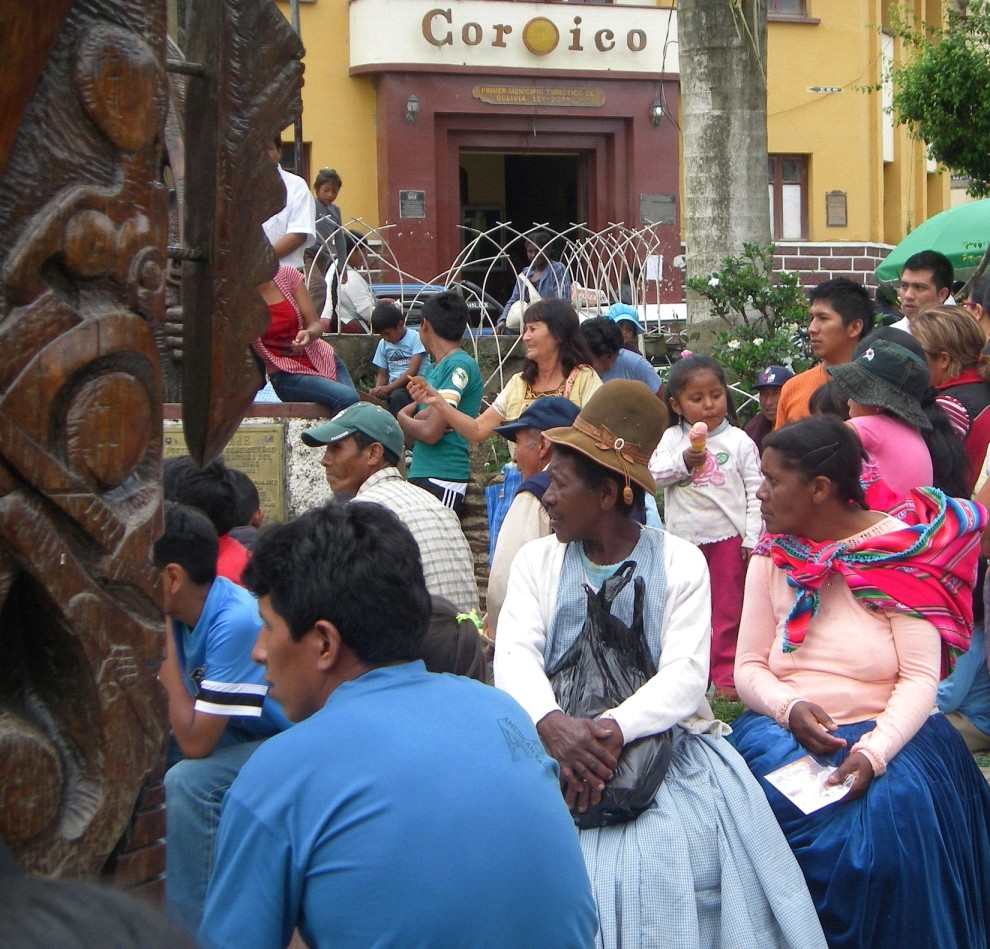
Type rest of the post here

Source /

The Rag Blog

Posted in RagBlog | Leave a comment