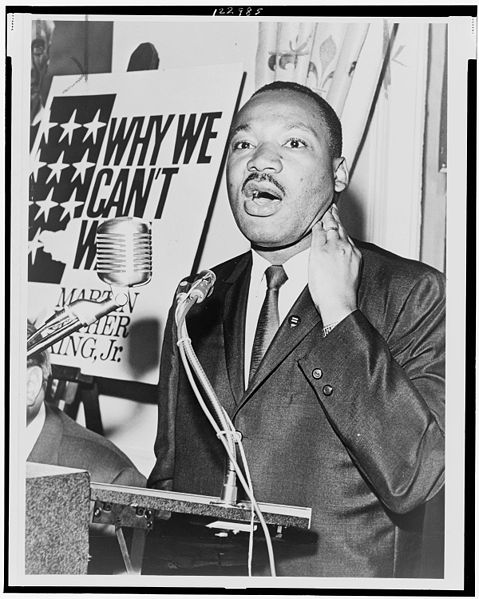
Willie Mitchell and Mary Daly : Partners in Demise

Above, Willie Mitchell with his axe and, below, Mary Daly with hers (a labrys, a traditional symbol of the Goddess).

Intertwined obit:
Soul man and radical feminist leave the stage

By Carl R. Hultberg / The Rag Blog / January 17, 2010

Life has a strange way of intertwining existences in ways that defy human reason. Like puns or anagrams that seem to reveal hidden meanings, passings away are also open to interpretation. Like the tea leaves, our leavings are also readable.

What I mean to say is that people die in pairs, creating accidental(?) marriages, pairings on the obituary page. Jacqueline Kennedy Onassis and George Balanchine. Farrah Fawcett and Michael Jackson. Despite all our efforts on our own behalf, dying, like jury duty, puts us back in the mix.

Who will we end up sitting next to on the bench outside St. Peter’s office in Heaven (or equivalent)? Even atheists and agnostics may have to admit to some degree of posthumous mortification looking back at their obits in the newspapers.

So who are the latest couple to have left together to go to tell their human stories to Whomever? None other than Willie Mitchell and Mary Daly. Who? Let’s just say this may be one of the oddest obit couples ever, or perhaps we are distilling ourselves somehow as Humanity.

Willie Mitchell was the trumpeter, bandleader and producer who brought us the third (and final) wave of sweet soul music from Memphis. As you probably know, Memphis sits at the top of the Mississippi Delta, the gateway from the Deep South to the North. The city that brought us Elvis (like Willie Mitchell from neighboring Mississippi), Sun Records (Elvis, Carl Perkins, Jerry Lee Lewis, Johnny Cash, Howling Wolf), Stax Records (Booker T & the MGs, Otis Redding, Isaac Hayes). Originally it was W.C. Handy, another trumpeter/bandleader who “discovered” the Blues in Memphis. That would have been about a hundred years ago.

Willie Mitchell had a sweet band but he was looking to break into record production. He found an awkward kid from Michigan who had a great voice but still hadn’t found his style. Al Green could sound like Marvin Gaye, or Wilson Pickett. Willie Mitchell’s advice was simple: try sounding like Al Green.

The result, “Let’s Stay Together” (from 1971) on Hi Records is perhaps the sweetest soul song ever laid down. Willie Mitchell continued as Al Green’s producer/mentor for years during the periods when Al (like Little Richard) switched from sacred to secular styles. Willie Mitchell produced sweet soul music after the assassination of Dr. Martin Luther King (also in Memphis).

That was a miracle.

His deathmate couldn’t have been more different. Mary Daly was the quintessential radical lesbian separatist. Instead of “Let’s Stay Together” her message was surely: men stay away. She was a white Jesuit theologian who, once she had been granted tenure at Boston College, defied the Catholic Church to create a woman-based Wicca movement within the university’s teaching environment. It took decades for the school to finally get rid of her.

By that time she had published many books in her own super creative woman language, an alternative to male dominant Indo-European usages. Words like “hag” and “crone” took on new meanings. You can be sure that if this had been the Middle Ages and not the 1960s, Mary Daly would have burned at the stake. Or maybe been dunked to death. Instead she was able to teach a separatist feminist course at a formerly all male seminary and totally exclude men from her classes.

Yes, this was one tough woman.

In some ways her life was reminiscent of that of Anne Lee, who created the Shaker Church in America as a feminist/separatist experiment in the 1780s. Ms. Lee was beaten to death by angry Massachusetts witch hunters but her movement flourished for almost 100 years.

Mary Daly lived to see her defiance of the Catholic Church and her open lesbianism flow into the mainsteam. Perhaps not a remnant of the original all-embracing matriarchy from the ancient past, more like another quasi-male intellectual academic bent on self-differentiation. Still, Mary Daly hit a note that resonated with many other women totally sick of the male world. May their Circle someday open up for all of us…

You’d have to say that Mary Daly and Willie Mitchell represented two totally honest aspects of our life. Hopefully as they journey together through eternity, born in the same year, leaving two days apart, forever wedded together, their spirits can find a way to reinspire us to do both things: stay together, and relearn how to truly respect women.

[Carl R. Hultberg’s grandfather, Rudi Blesh, was a noted jazz critic and music historian, and Carl was raised in that tradition. After spending many years as a music archivist and social activist in New York’s Greenwich Village, he now lives in an old abandoned foundry in Danbury, New Hampshire, where he runs the Ragtime Society.]

The Rag Blog

Posted in Rag Bloggers | Tagged , , , , , , , , , | 1 Comment

Larry Ray : Haiti’s Horror Hits Home


Disasters past and present:
Haiti’s horror hits home

By Larry Ray / The Rag Blog / January 17, 2010

GULFPORT, Mississippi — Many of my fading memories of destruction, death and total loss have come back into sharp focus as I watch the constant news reports from Haiti. The video of dazed, thirsty, injured, and frustrated disaster victims who have lost everything is still painfully familiar.

The photo above is not of the magnitude 7.3 earthquake damage in Haiti. It is a NOAA photo of my hometown on the Mississippi gulf coast taken just after hurricane Katrina slammed ashore almost five years ago pushing a 30 foot storm surge fron the Gulf of Mexico over our coastal communities. The tidal surge pushed back up into inland bays, rivers and bayous forcing water into houses up to their ceilings just a few blocks from my home. I was grateful to have only lost a side roof.

Along the beach front, homes and belongings, large buildings, automobiles, and those souls unable to escape the wind and rising water were smashed and broken apart in the powerful deep wind driven tidal swirl. The splintered debris washed inland or was sucked back out into the Mississippi Sound. Stark, bare foundations are all that remained of stately homes, churches and businesses for more than 50 miles along the coast. Only a few centuries-old Oak trees remained, still defiantly claiming their positions.

Haiti’s earthquake took 300 years to slowly build up sufficient energy for the fault zone beneath the island to finally vault violently upward. Mighty seismic ripples heaved up and down, racing outward with energy said to equal 35,000 atomic bombs. In a blink, structures in and around the capitol city of Port-au-Prince were leveled or perilously damaged.

Thousands died instantly, and untold thousands more were buried beneath impenetrable debris. As I write this it has been five days since the quake hit at about ten o’clock in the evening. The epicenter was beneath one of the island’s most populated areas.

While Haiti’s death and destruction happened in less than one minute, those of us who rode out Katrina in our homes were hammered for 11 hours with heavy rain and sustained winds reaching more than 140 miles an hour. Hurricane Katrina was the largest natural disaster in the history of the United States with damage estimates well in excess of $150 billion. At least 1,836 people lost their lives in the actual hurricane along the Mississippi gulf coast and in resulting floods in New Orleans from levee failures. Haiti’s death toll will reach the tens, perhaps hundreds of thousands.

While trying to compare the victims in Haiti with the American victims of Hurricane Katrina may seem a real stretch, there are, nonetheless, some valid commonalities. Regardless of skin color, rich or poor, educated or not, thirst is thirst and hunger is hunger. Broken bones and painful injuries feel the same in Haiti today as they felt here five years ago when roads were blocked and help had to be coordinated while we waited, doing the best we could do.

The desperation and suffering in New Orleans, where effective rescue and help was very slow in coming, was more like what we are seeing in Haiti today. Across New Orleans, survivors sought shade and drinkable water in the sweltering August heat for days on end. Many large residential sections of the city were flooded beneath a dark putrid swill that reached the rooftops and remained for days.

National news coverage quickly shifted from the much more extensive hurricane damage along the entire Mississippi Coastline to the crisis in New Orleans. Flooding in large areas of the bowl shaped city, below sea level, did not result directly from the hurricane, but from inadequate protective levees too long ignored by our Federal Corps of Engineers, and the politicians who approve and fund their projects. But the media suffered little deprivation. The undamaged French Quarter and Bourbon Street were open in a matter of days. There was no flooding or serious damage in the metro center of the city.

But after the dead are buried, debris is removed, and urgent aid is finally provided, there is a huge difference in long term recovery between Haiti and America.

A majority of Haitian citizens live on one dollar a day and governmental control was only recently becoming effective after decades of dictatorial rule and unchecked violence. There is no concept of FEMA in Haiti. Violence and sporadic looting has reportedly broken out in parts of Port-au-Prince.

People have not had food or water for almost five days. The dead are putrefying in the streets. Tons of food, water and medical aid from the USA and around the world are piling up at the only airport waiting for Haitian bureacrats, the UN, and many other countries to agree on an aid distribution plan. Desperation is spreading in the streets of Port-au-Prince.

We must remember that violence also broke out in New Orleans after several days when it was clear that no immediate help was coming. Lawlessness, frustration, hunger and opportunistic looting broke out. Shameless racial barriers went up with blacks seeking safety, food and water being turned back by white sheriff’s officers on the bridges crossing the Mississippi river over to the basically undamaged West Bank.

It was not a pretty picture. One Parish President near New Orleans was screaming and weeping on national TV because of the seeming total lack of coordinated federal assistance. Some New Orleans police officers helped themselves to several Cadillacs from a local dealership and did not return them for weeks till the cars were finally located and the cops identified. Haitian looting will not be surprising.

Then there are the political promises too often quickly forgotten after the debris is cleared away and the news media have left in their TV trucks. I can still see Jackson Square in the partially darkened New Orleans French Quarter all professionally illuminated under careful White House direction so George W. Bush could go on national television to make promises. He promised that government would “do whatever it takes” to help those in the Katrina disaster area completely recover assuring us he “would not forget you.”

Mr. Cheney walked the streets of Gulfport with local officials nodding and promising. Ultimately, government FEMA money did help many individuals here. But the inflexible, poorly managed bureaucracy allowed wide scale fraud to flourish while red tape prevented many from getting needed help.

Basically, strong local leadership has led us to a notable recovery in our major coastal cities. Mr. Bush’s well staged promises have had little to do with our hard earned recovery so far. The $11.3 trillion national debt he left us only makes things more difficult for everyone.

Truth is that many smaller towns up the coast west of here are still begging for a grocery store. Whole sewer and water systems are being rebuilt, keeping streets torn up. Detours are legion. Doctors and many other professionals who left have not returned. But a new kind of life goes on.

New Orleans, however, still has huge problems with entire sections of the city nothing but block after block of sagging mildew and varmint infested homes surrounded by overgrown weeds. The leadership vacuum there is palpable. What happened to millions of recovery dollars for Louisiana and particularly New Orleans remains a mystery.

So now try to imagine the total rebuilding that Haiti faces. The horrible irony is that Haiti was finally enjoying an end to violence through effective police protection and people were united for the first time in recent memory. Schools had opened, street markets were busy, and long-shuttered clothing manufacturing factories had just opened again. Name brand companies from around the globe were visiting almost daily to take advantage of Haiti’s well trained sewing and fabric cutting work force. Then in an instant it was all gone.

The world is being extremely generous with millions of dollars pouring in daily to help Haiti. Promises to rebuild the country are coming from many nations. Can the downtrodden Haitians, raised in a failed state, surrounded for decades with the cruel realities of oppression and poverty believe these promises? It is difficult for the very poor to do. But this could be the rebirth of a vital Haiti if strong leadership and close supervision insure all the promises are kept.

My next article will visit what has happened to the promises and money designated for the poor here in Mississippi after Katrina. It is not a nice story.

[Retired journalist Larry Ray is a Texas native and former Austin television news anchor. He also posts at The iHandbill.]

The Rag Blog

Posted in Rag Bloggers | Tagged , , , , , , | Leave a comment

Honduras : Micheletti Becoming ‘Second Pinochet’?

‘Congressman for Life’ Roberto Micheletti. Art by Brazilian cartoonist Carlos Latuff / IndyBay.

Honduran coup consolidating power:
Micheletti named ‘Congressman for Life’

By David Holmes Morris / The Rag Blog / January 17, 2010

As violent repression continues, the powers that be in Honduras have taken symbolic and substantive steps to consolidate the coup d’état that deposed President Manuel Zelaya last June 28.

The unicameral legislature has voted to name de facto president Roberto Micheletti congressman for life, thus granting him immunity forever from prosecution for crimes committed in connection with the coup. Micheletti was president of the legislature at the time that body named him to replace Zelaya in an act defenders of the coup insist was a constitutional presidential succession.

Bolivian President Evo Morales said the Honduran legislature has thus made Micheletti a “second Pinochet.” Augusto Pinochet, the bloody dictator who ruled Chile after the coup of 1973, had himself declared “senator for life” in 1989.

The legislature left consideration of the question of a general amnesty for actions taken in relation to the coup to the incoming government, thus avoiding the question of legal action against Zelaya for his alleged crimes, which the golpistas claim as justification for deposing him.

Meanwhile, the Honduran National Association of Industrialists held a private ceremony recently at the home of wealthy businessman Adolfo Facussé to honor Micheletti as a “true patriot” and “the first hero of Honduras in the 21st century.” As he accepted the plaque the group presented him, Micheletti told the audience, which included General Romeo Vásquez Velásquez and other military commanders, that he had never doubted he had the support of the armed forces and the police but “most importantly, God was with us.”

Vásquez Velásquez, head of the joint chiefs of staff, led the group of soldiers that abducted Zelaya on June 28 and delivered him to the airplane that flew him to Costa Rica. And Adolfo Facussé is widely thought to have instigated the coup and to have helped finance it. He and other members of the Honduran oligarchy are reported to have distributed sizeable cash payments to military commanders and other government officials immediately before Zelaya was kidnapped.

The legislature has further guaranteed Micheletti’s safety by providing personal body guards from the armed forces or the national police or, if government personnel become unavailable, from private security firms, for the rest of his life. Micheletti’s family will also have body guards. Some 50 other members of the golpista government will be given similar protection, including the attorney general, the six top commanding officers of the armed forces, 17 ministers of the Micheletti regime and their 17 vice-ministers, and the president of the supreme court, the body that provided the legal pretext for the coup.

Despite pressure from inside Honduras and outside the country, Micheletti has refused to relinquish office until January 27, when the legitimate president’s term officially ends and President-elect Porfirio Lobo takes office. In the meantime, Manuel Zelaya, the constitutionally elected president, remains in the Brazilian embassy, where he has been in refuge since entering the country secretly last September. Zelaya has rejected offers of political asylum, insisting he be treated as the legitimate head of the government.

The United States, Costa Rica, Colombia, Panama and Peru are the only countries in the world so far to pledge to recognize the Lobo presidency as legitimate.

In San Pedro Sula, the country’s second largest city, a new street leading to a branch of the National Autonomous University has been named Roberto Micheletti Boulevard.

In other actions, the legislature has voted to withdraw the country from the Alternativa Bolivariana de las Américas (ALBA – The Bolivarian Alternative for the Americas), proponents of the move arguing that it violates the principles of self-determination and non-intervention. Honduras’s membership in the regional affiliation was proposed by Zelaya and was initially approved by the legislature, including then legislative president Roberto Micheletti, but was attacked by conservatives adamantly opposed to the leftist governments of Latin America making up ALBA and particularly to the Venezuelan government and President Hugo Chávez, bête noire of the Honduran right. Membership in ALBA was one of the factors that brought about the coup.

Tiempo, the only mainstream newspaper in the country opposed to the golpista government, says withdrawal from ALBA will cost the country 100 million dollars in bonds purchased by Venezuela from the Honduran National Bank of Agricultural Development, 100 tractors, money to teach literacy, technical support for development of a government television channel, scholarships for medical training and funds to establish enterprises to produce generic drug.

And the minimum wage for Honduran workers, another sore point for the right, appears likely to remain at the level established in January 2009 when a 60 percent increase sponsored by Zelaya took effect, at 5,500 lempiras a month, about 290 U.S. dollars, for urban workers, and 4,055 lempiras, or $215.00 , for rural workers. After negotiations between union leaders and business owners broke down last week, the final decision will be left to the incoming president, Porfirio Lobo, who is more likely to decree a reduction than an increase. The unions had initially proposed a 30 percent increase.

[San Antonio native David Holmes Morris is an army veteran, a language major, a retired printer, a sometime journalist, and a gay liberationist.]

The Rag Blog

Posted in Rag Bloggers | Tagged , , , , , , | 3 Comments

Rag Blog Scoop about ‘Cognitive Infiltration’ Stirs up Internet Storm

Marc Estrin exhibits the tag line to his exclusive Rag Blog article about Obama advisor Cass Sunstein that has received much attention in the blogosphere.

Estrin’s exclusive about Obama confidant
Triggers alarm about controversial scheme

By Thorne Dreyer / The Rag Blog / January 16, 2010

The Rag Blog broke a story on January 11 entitled “Got Fascism?: Obama Advisor Promotes ‘Cognitive Infiltration’” that has stirred up an internet storm.

The article, written for The Rag Blog by novelist Marc Estrin, reveals a previously unreported and highly controversial strategy for fighting dissension and “extremism” — especially targeted at those adhering to “conspiracy” theories — originated by Obama appointee and long-time Obama friend and colleague Cass Sunstein in a 2008 scholarly journal.

The material published in The Rag Blog was in turn covered by Daniel Tencer at The Raw Story on January 13. It was followed up by Glenn Greenwald in an extensive article published by Salon.com entitled “Obama confidant’s spine-chilling proposal,” that has been updated several times since and even received a response from Paul Krugman. Greenwald’s Salon.com article was also distributed by CommonDreams.

Both Tencer and Greenwald credited The Rag Blog and Marc Estrin with breaking the story. Marc Estrin’s original article has been reposted extensively on domestic and international websites, and The Rag Blog has received thousands of referral hits from the Raw Story, Salon.com, and CommonDreams postings and from the republishing of our original story around the internet.

Visits to The Rag Blog have come from links placed on a wide variety of sites and from across the political spectrum, but the story has especially caught on with conspiracy buffs and among some on the ultra-right.

(In December The Rag Blog published an article about a Supreme Court decision that let stand a lower court ruling declaring torture, in the words of the author, “an ordinary, expected consequence of military detention” — a ruling that in effect denied even suspected enemy combatants the protection that comes with being classified a “legal entity.” The Rag Blog posting of that article (a story that did not originate with us) also drew extensive attention including a front page link on The Raw Story — much of it again from the conspiracy fringe — and resulted in thousands of visits to The Rag Blog.)

In his original Rag Blog feature Estrin wrote:

In a recent scholarly article, [Cass Sunstein] and coauthor Adrian Vermeule take up the question of “Conspiracy Theories: Causes and Cures.” (J. Political Philosophy, 7 [2009], pp. 202-227). This is a man with the president’s ear. This is a man who would process information and regulate things. What does he here propose?

[W]e suggest a distinctive tactic for breaking up the hard core of extremists who supply conspiracy theories: cognitive infiltration of extremist groups, whereby government agents or their allies (acting either virtually or in real space, and either openly or anonymously) will undermine the crippled epistemology of believers by planting doubts about the theories and stylized facts that circulate within such groups, thereby introducing beneficial cognitive diversity. (Page 219.)

Estrin reflected:

We expect such tactics from undercover cops, or FBI. There the agents are called “provocateurs” — even if only “cognitive.” One learns to smell or deal with them in a group, or recognize trolling online. But even suspicion or partial exposure can “sow uncertainty and distrust within conspiratorial groups [now conflated with conspiracy theory discussion groups] and among their members,” and “raise the costs of organization and communication” — which Sunstein applauds as “desirable.” “[N]ew recruits will be suspect and participants in the group’s virtual networks will doubt each other’s bona fides.” (p.225).

Glenn Greenwald wrote for Salon.com:

Cass Sunstein has long been one of Barack Obama’s closest confidants. Often mentioned as a likely Obama nominee to the Supreme Court, Sunstein is currently Obama’s head of the Office of Information and Regulatory Affairs where, among other things, he is responsible for “overseeing policies relating to privacy, information quality, and statistical programs.”

In 2008, while at Harvard Law School, Sunstein co-wrote a truly pernicious paper proposing that the U.S. Government employ teams of covert agents and pseudo-“independent” advocates to “cognitively infiltrate” online groups and websites — as well as other activist groups — which advocate views that Sunstein deems “false conspiracy theories” about the Government. This would be designed to increase citizens’ faith in government officials and undermine the credibility of conspiracists. The paper’s abstract can be read, and the full paper downloaded, here.

Sunstein advocates that the Government’s stealth infiltration should be accomplished by sending covert agents into “chat rooms, online social networks, or even real-space groups.” He also proposes that the Government make secret payments to so-called “independent” credible voices to bolster the Government’s messaging (on the ground that those who don’t believe government sources will be more inclined to listen to those who appear independent while secretly acting on behalf of the Government).

This program would target those advocating false “conspiracy theories,” which they define to mean: “an attempt to explain an event or practice by reference to the machinations of powerful people, who have also managed to conceal their role.” Sunstein’s 2008 paper was flagged by this blogger [The Rag Blog‘s Marc Estrin], and then amplified in an excellent report by Raw Story‘s Daniel Tencer…

And from Daniel Tencer at The Raw Story:

Sunstein’s article, published in the Journal of Political Philosphy in 2008 and recently uncovered by blogger Marc Estrin, states that “our primary claim is that conspiracy theories typically stem not from irrationality or mental illness of any kind but from a ‘crippled epistemology,’ in the form of a sharply limited number of (relevant) informational sources.”

By “crippled epistemology” Sunstein means that people who believe in conspiracy theories have a limited number of sources of information that they trust.

Therefore, Sunstein argued in the article, it would not work to simply refute the conspiracy theories in public — the very sources that conspiracy theorists believe would have to be infiltrated.

Sunstein, whose article focuses largely on the 9/11 conspiracy theories, suggests that the government “enlist nongovernmental officials in the effort to rebut the theories. It might ensure that credible independent experts offer the rebuttal, rather than government officials themselves. There is a tradeoff between credibility and control, however. The price of credibility is that government cannot be seen to control the independent experts.”

Sunstein argued that “government might undertake (legal) tactics for breaking up the tight cognitive clusters of extremist theories.” He suggested that “government agents (and their allies) might enter chat rooms, online social networks, or even real-space groups and attempt to undermine percolating conspiracy theories by raising doubts about their factual premises, causal logic or implications for political action.”

“We expect such tactics from undercover cops, or FBI,” Estrin writes at the Rag Blog, expressing surprise that “a high-level presidential advisor” would support such a strategy.

Estrin notes that Sunstein advocates in his article for the infiltration of “extremist” groups so that it undermines the groups’ confidence to the extent that “new recruits will be suspect and participants in the group’s virtual networks will doubt each other’s bona fides.”

Sunstein has been the target of numerous “conspiracy theories” himself, mostly from the right wing political echo chamber, with conservative talking heads claiming he favors enacting “a second Bill of Rights” that would do away with the Second Amendment. Sunstein’s recent book, On Rumors: How Falsehoods Spread, Why We Believe Them, What Can Be Done, was criticized by some on the right as “a blueprint for online censorship.”

Sunstein “wants to hold blogs and web hosting services accountable for the remarks of commenters on websites while altering libel laws to make it easier to sue for spreading ‘rumors,'” wrote Ed Lasky at American Thinker.

[Versions of The Rag Blog‘s story about Cass Sunstein are also up on Daily Kos, OpEd News, and Information Clearing House, along with numerous other blogs and news aggregators.]

[Thorne Dreyer is editor of The Rag Blog.]

The Rag Blog

Posted in Rag Bloggers | Tagged , , , , , , , , , , , , | 5 Comments

Marc Estrin : GREED — A Bedtime Story


GREED — A Bedtime Story

By Marc Estrin / The Rag Blog / January 26, 2010

I won’t bore or appall you with the toxic sludge spewing out of the mouths of our CEOs justifying — sans apology — their behaviors, salaries and bonuses. Especially during this week of Haitian horrors.

I will, however, offer you a bedtime story that relates to both. This, a chapter from an unpublished novel, When the Gods Come Home to Roost. George tells it to Demi’s 10-year old daughter, Zoe:

“Zoe, Zoe, puddin an pie,
Tonight, a story that will make you cry…
And though you may eat God knows what
Never again will you eat your snot.”

“I don’t eat my snot, you big bugboo.”
“Oh yes, you do. I saw you. And I saw you pick your head and eat it.”
“Get out.”
“You looked at it, and popped it in your mouth.”
“Get out. Ma, he’s disgusting. Find another one.”
“They’re too hard to come by,” Demi said, and kissed George on the ear. ” Into bed, and the big bad man will tell you a story. I’ll be up as soon as I finish the dishes.”

“Once upon a time, there was a mighty king who scorned the gods. His name was Erysichthon.”
“Erysickthon?”
“You got it.”
“I’ll call him Sickie.”
“And a sickie he was, no tree-hugger he. Sickie once went wild in a sacred grove belonging to Demeter — slashing all the trees with his sword, wounding each of them, lopping off their branches.”
“Why?”
“Good question. Because he was a king and could do what he liked?”
“Because he was a bully,” I think. “The trees couldn’t fight back.”
“Well, we’ll just see about that,” said George. “So he whacked and whacked until he came to a towering oak, centuries old, hung with messages and garlands, the centerpiece of many a dance. It would take a dozen people, holding hands, to circle it.
“But did Sickie care? He ordered his slaves to chop it down, to fell the sacred tree. Not one would do it. So he grabbed the axe himself, raised it up and screamed, ‘This tree may be the goddess’s. This tree may be Demeter herself — too bad!’ and his axe bit hard into the tree’s great body, and it trembled and groaned, and its leaves grew pale, and it started to bleed — red blood.”
“Do trees have blood?”
“Not most of them — and like you, everybody was stunned. Justus, his most beloved servant tried to stop him. His head rolled at Sickie’s feet, and bumped up against the tree. As the murderer turned back to the trunk a voice came from deep in the wood. ‘Hear me now in this hour of my death, Erysichthon, hear me well: You will be punished as no man has ever been.’
“And the oak tree fell, slowly, its huge canopy laying low the trees around. Then all the spirits of the forest went mourning to Demeter, mourning and complaining, complaining and demanding revenge — the monster’s death.
“The lovely goddess nodded, and her nodding caused the fields of grain to tremble. A simple death was too kind an end to such cruel arrogance. Goddess of abundance, she would strangle him in threads through her antipode — the tortured goddess Famine.”
“What’s that — antipode? Like her opposite?”
“You got it. So off Demeter flew on wingèd dragons, over the bleak Caucasus mountains, to the outer rim of icy Scythia, a dismal land where nothing grows, a land of pallid cold and fear. She looked for Famine, her negation, and found her in a stony field, digging her nails into the scrawny grass, and gnawing at its roots. Her hair was matted, her face was pale, her eyes were hollow. A living skeleton she was, with swollen joints and leprous skin.
“’Famine,’ she called, keeping her distance, ‘I must ask of you a favor. Would you be warmed for one night in a royal bed?’ Famine hungrily agreed. She followed behind Demeter’s chariot, blown by the wind, and came to Erysichthon’s palace in the dead of night.
“There he was, asleep. She crawled into the bed, and wrapped her skeleton self around him. She breathed into his ears, her dry tongue searched out the wet corners of his mouth, she warmed her hands between his thighs, and planted hunger deep within him. Then back she flew from the land of harvests to her sterile, fruitless home.”
“This is a yucky story.”
“What do you think will happen?”
“He’ll be hungry all the time?”
“Let’s see. Can you guess what he started dreaming of?”
“Food.”
“Smart girl. He chewed on the air, and ground his teeth, and swallowed, swallowed…”
“Spit.”
“And when he awoke, he was hungrier than he’d ever been.”
“Famished.”
“Ravenous! Unquenchable hunger. He ordered banquets, and at the banquets he dreamed of banquets. He ate enough food to feed his whole town, his entire country, he spent his treasure, and sold off all he owned for food till there was only one thing left to sell.”
“What?”
“His daughter.”
“Why didn’t he eat her?”
“You don’t eat daughters. And she was a very special daughter. Mestra, she was called, and so beautiful that she was loved by the god Poseidon who gave her the gift of changing shape at will. What a business they had — a con game. Sickie would sell her as a slave, and she would turn into a fishing girl. ‘Where’s my slave?’ the sucker would ask. ‘I paid good money for her, and there’s no one here but this fishing girl.’ And then the fishing girl would be sold to another rich chump, and all there was was a milkmaid, or a cow, or a bird.”
“Et cetera, et cetera…”
“You got it, Zoekins. A good scheme, huh? More food for her father — till finally there was no more.”
“Did he starve?”
“Not exactly. He tore apart his own body with his sharp teeth, and ate his shrinking self alive.”
“Did he eat his teeth?”
“No. The teeth were all that were left.”
“Were the teeth hungry?”
“No, they don’t have stomachs.”
“Oh.”
“What do you think the moral of this story is?”
“Don’t eat yourself up.”
“George,” Demi asked, “Why do you tell such stories?” She was standing in the doorway.
“I’m attending to her education.”

NPR reports that Goldman Sachs, Morgan Stanley and JPMorgan Chase combined have set aside $47 billion for bonuses. Haiti’s entire GDP is $7 billion.

The Rag Blog

Posted in Rag Bloggers | Tagged , , , , , | Leave a comment

Texas : Rick Perry Throws Kids Under the (School) Bus

Image from ConnectAmarillo.

Governor Perry ignores student needs:
Turns down $700 mission in fed funds

Among the Republican leadership in Texas, politics is much more important than educating children or solving social problems.

By Ted McLaughlin / The Rag Blog / January 16, 2010

Governor Rick Perry and the Texas State Board of Education can brag all they want to about how wonderful Texas schools are, but there are a couple of statistics that show what a big lie they are telling. First, Texas ranks near the bottom of all the states in funding its public education.

The second statistic shows the result of that underfunding. Texas schools only graduate 65.3% of high school students. That’s right. Of all the students that enter a Texas high school, more than a third of them will not graduate. This means Texas is dumping hundreds of thousands of uneducated (or minimally educated) students on society every year. This has to have a deleterious effect on many social problems like crime, poverty, unemployment, etc.

But among the Republican leadership in Texas, politics is much more important than educating children or solving social problems. Consider the purely political move made by the governor this last week (he is up for re-election this year and has a strong opponent in the Republican primary). In a move designed to appeal to his ultra-right-wing-teabagger base, Gov. Perry has turned down $700 million dollars from the federal government for Texas schools.

That money would have been Texas’ share of the $4.35 billion Race To The Top funds provided by the federal government to improve schools nationwide. (Alaska has also refused to apply for their share of the funds.) Perry said the funding program “smacks of a federal takeover of our public schools” because it would mean Texas would have to adopt federal standards for schools.

This, of course, would appeal to the nutty teabaggers who make up a majority of the Texas Republican Party. These people oppose all federal government programs except for the military — they do love their obscene little wars. So to get the votes of these nuts, Perry has shown he is willing to throw Texas school children under the proverbial bus.

Even more shocking is the fact that the Republican-dominated State Board of Education supports Perry’s political move in rejecting the $700 million. These board members, who are tasked with providing Texas children with the best possible education, are also willing to put their personal politics above helping the school children of the state.

The State Board of Education has now passed a resolution supporting Gov. Perry which says, “The State Board of Education opposes any effort to implement national standards and national tests and believes the authority to determine what Texas students will be taught in Texas public schools should reside with the State Board of Education.”

It is ridiculous to think that Texas is afraid of having to meet national school standards — standards that will be met in 48 other states. We should not be afraid to meet these standards because we should have already adopted standards that exceed those national standards. But we haven’t, and it shows in our schools.

The board members are afraid that those standards would prohibit their efforts to inject their religious and political beliefs into the school curriculum. The board is currently only one vote away from requiring the teaching of creationism in science classes, and they hope to get that vote in the next election. Science barely won the last skirmish, but the battle is far from over here in Texas.

Currently, the board is in the process of trying to install a revisionist view of history into the school curriculum. They want to make heros out of zeros such as “Tail Gunner” Joe McCarthy, anti-feminist Phyllis Schlafly and ethically-challenged ex-Speaker Newt Gingrich, while minimizing the contributions of true heroes like Cesar Chavez. [See “Textbooks in Texas: Rehabilitating Joe McCarthy?” on The Rag Blog.]

With people like Gov. Perry and the current State Board of Education in charge, is it any wonder that Texas schools are in trouble?

[Rag Blog contributor Ted McLaughlin also posts at jobsanger.]

The Rag Blog

Posted in Rag Bloggers | Tagged , , , , , , | Leave a comment

Texas : Rick Perry Throws Kids Under the (School) Bus

Image from ConnectAmarillo.

Governor Perry ignores student needs:
Turns down $700 million in fed education funds

Among the Republican leadership in Texas, politics is much more important than educating children or solving social problems.

By Ted McLaughlin / The Rag Blog / January 16, 2010

Governor Rick Perry and the Texas State Board of Education can brag all they want to about how wonderful Texas schools are, but there are a couple of statistics that show what a big lie they are telling. First, Texas ranks near the bottom of all the states in funding its public education.

The second statistic shows the result of that underfunding. Texas schools only graduate 65.3% of high school students. That’s right. Of all the students that enter a Texas high school, more than a third of them will not graduate. This means Texas is dumping hundreds of thousands of uneducated (or minimally educated) students on society every year. This has to have a deleterious effect on many social problems like crime, poverty, unemployment, etc.

But among the Republican leadership in Texas, politics is much more important than educating children or solving social problems. Consider the purely political move made by the governor this last week (he is up for re-election this year and has a strong opponent in the Republican primary). In a move designed to appeal to his ultra-right-wing-teabagger base, Gov. Perry has turned down $700 million dollars from the federal government for Texas schools.

That money would have been Texas’ share of the $4.35 billion Race To The Top funds provided by the federal government to improve schools nationwide. (Alaska has also refused to apply for their share of the funds.) Perry said the funding program “smacks of a federal takeover of our public schools” because it would mean Texas would have to adopt federal standards for schools.

This, of course, would appeal to the nutty teabaggers who make up a majority of the Texas Republican Party. These people oppose all federal government programs except for the military — they do love their obscene little wars. So to get the votes of these nuts, Perry has shown he is willing to throw Texas school children under the proverbial bus.

Even more shocking is the fact that the Republican-dominated State Board of Education supports Perry’s political move in rejecting the $700 million. These board members, who are tasked with providing Texas children with the best possible education, are also willing to put their personal politics above helping the school children of the state.

The State Board of Education has now passed a resolution supporting Gov. Perry which says, “The State Board of Education opposes any effort to implement national standards and national tests and believes the authority to determine what Texas students will be taught in Texas public schools should reside with the State Board of Education.”

It is ridiculous to think that Texas is afraid of having to meet national school standards — standards that will be met in 48 other states. We should not be afraid to meet these standards because we should have already adopted standards that exceed those national standards. But we haven’t, and it shows in our schools.

The board members are afraid that those standards would prohibit their efforts to inject their religious and political beliefs into the school curriculum. The board is currently only one vote away from requiring the teaching of creationism in science classes, and they hope to get that vote in the next election. Science barely won the last skirmish, but the battle is far from over here in Texas.

Currently, the board is in the process of trying to install a revisionist view of history into the school curriculum. They want to make heros out of zeros such as “Tail Gunner” Joe McCarthy, anti-feminist Phyllis Schlafly and ethically-challenged ex-Speaker Newt Gingrich, while minimizing the contributions of true heroes like Cesar Chavez. [See “Textbooks in Texas: Rehabilitating Joe McCarthy?” on The Rag Blog.]

With people like Gov. Perry and the current State Board of Education in charge, is it any wonder that Texas schools are in trouble?

[Rag Blog contributor Ted McLaughlin also posts at jobsanger.]

The Rag Blog

Posted in Rag Bloggers | Tagged , , , , , , | Leave a comment

Haiti : Anger and Courage in the Ruins

Haiti: Surveying the damage. Photos from AFP (top) and Reuters.

As aid efforts flounder,
Haitians rely on each other

By Ansel Herz / January 15, 2010

PORT-AU-PRINCE — The roof of Haiti’s national penitentiary is missing. The four walls of the prison rise up and break off, leaving only the empty sky overhead.

The gate to the jail in downtown Port-Au-Prince is wide open; the prisoners and police are all gone. Bystanders walk freely in and out, stepping over the still-hot smoldering remains of the facility’s ceiling.

The 7.0 magnitude earthquake on Tuesday afternoon broke it to pieces.

“I don’t know if he’s alive or not alive,” said Margaret Barnett, whose son was a prisoner. “My house is crushed down. I’m just out in the street looking for family members.”

“Where is the help?” she asked. The former government employee spits the question again and again, hands on her hips. “Where is the help? Is the U.N. really here? Does America really help Haiti?”

In the absence of any visible relief effort in the city, the help came from small groups of Haitians working together. Citizens turned into aid workers and rescuers. Lone doctors roamed the streets, offering assistance.

The Red Cross estimates that 45,000 to 50,000 people were killed in Tuesday’s earthquake, with some three million others left homeless and in need of food and water.

At the crumbling national cathedral, a dozen men and women crowded around a man swinging a pickax to pry open the space for a dusty, near-dead looking woman to squeeze through and escape.

The night of the quake, a group of friends pulled bricks out from under a collapsed home, clearing a narrow zig-zagging path towards the sound of a child crying out beneath the rubble.

Two buildings over, Joseph Matherenne cried as he directed the faint light of his cell phone’s screen over the bloody corpse of his 23-year-old brother. His body was draped over the rubble of the office where he worked as a video technician. Unlike most of the bodies in the street, there was no blanket to cover his face.

Central Port-Au-Prince resembles a war zone. Some buildings are standing, unharmed. Those that were damaged tended to collapse completely, spilling into the street on top of cars and telephone poles.

In the day following the quake, there was no widespread violence. Guns, knives and theft weren’t seen on the streets, lined only with family after family carrying their belongings. They voiced their anger and frustration with sad songs that echoed throughout the night, not their fists.

“Only in the movies have I seen this,” said 33-year-old Jacques Nicholas, who jumped over a wall as the house where he was playing dominoes tumbled. “When Americans send missiles to Iraq, that’s what I see. When Israel do that to Gaza, that’s what I see here.”

Late at night, Nicholas heard false rumors that a tsunami was coming and he joined a torrent of people walking away from the water.

Nobody knows what to expect. Some people said Haiti needs a strong international intervention — a coordinated aid effort from all the big countries. But there was no evidence on the streets of any immediate cavalry of rescue workers from the United States and other nations.

“My situation is not that bad,” said Nicholas, “but overall the other people’s situation is worse than mine. So it affects me. Everybody wants to help out, but we can’t do nothing.”

Haitians are doing only what they can. Helping each other with their hands and the few tools they can find, they lack the resources to coordinate a multi-faceted reconstruction effort.

U.N. agencies and humanitarian organizations on the ground are struggling to help survivors of the quake, but many are hindered by large-scale damage to their own facilities, as well as lack of heavy equipment to clear rubble.

Logistics remained the main obstacle on Friday, according to news reports, with damage to the main airport, impassable roads and problems at the docks continuing to bottleneck the outpouring of international relief workers and basic supplies.

The United Nations is issuing a flash appeal Friday for more aid as part of a coordinated immediate response and long-term reconstruction plan.

A popular radio host here reminded everyone that the strength of the Haitian people cannot be underestimated, posting on his Twitter: “We can re-build! We overcame greater challenges in 1804” — the year Haiti threw off the yoke of colonial slavery in a mass revolt.

As the days tick by and the bodies pile up, it will take bold vision and hard work on that scale for Haiti to recover from Tuesday’s tremors.

[Ansel Herz, a former Austin activist, is a multimedia journalist and web designer based in Port-Au-Prince, Haiti. He blogs at Mediahacker. This article was distributed by IPS.]

The Rag Blog

Posted in RagBlog | Tagged , , , , | Leave a comment

A Real Crime : How the Law Treats Sex Workers in New Orleans


‘Crimes against nature’:
Prosecuting sex workers in New Orleans

More than half of the people on Louisiana’s Sex Offender Registry — which was designed for rapists and child molesters — are indigent women convicted of sex work.

By Jordan Flaherty / The Rag Blog / January 15, 2010

NEW ORLEANS — Tabitha has been working as a prostitute in New Orleans since she was 13. Now 30 years old, she can often be found working on a corner just outside of the French Quarter. A small and slight white woman, she has battled both drug addiction and illness and struggles every day to find a meal or a place to stay for the night.

These days, Tabitha, who asked that her real name not be used in this story, has yet another burden: a stamp printed on her driver’s license labels her a sex offender. Her crime? Offering sex for money.

New Orleans city police and the district attorney’s office are using a state law written for child molesters to charge hundreds of sex workers like Tabitha as sex offenders. The law, which dates back to 1805, declares it a crime against nature to engage in “unnatural copulation” — a term New Orleans cops and the district attorney’s office have interpreted to mean anal or oral sex. Sex workers convicted of breaking this law are charged with felonies, issued longer jail sentences and forced to register as sex offenders.

Of the 861 sex offenders currently registered in New Orleans, 483 were convicted of a crime against nature, according to Doug Cain, a spokesperson with the Louisiana State Police. And of those convicted of a crime against nature, 78 percent are Black and almost all are women.

Impact on women’s lives

The law impacts sex workers in both small and large ways. Tabitha has to register an address in the sex offender database. Her driver’s license has the label “sex offender” printed on it. She also has to purchase and mail postcards with her picture to everyone in the neighborhood informing them of her conviction. If she needs to evacuate to a shelter during a hurricane, she must evacuate to a special shelter for sex offenders, and this shelter has no separate safe spaces for women. She is even prohibited from ordinary activities in New Orleans like wearing a costume at Mardi Gras.

“This law completely disconnects our community members from what remains of a social safety net,” said Deon Haywood, director of Women With A Vision, an organization that promotes wellness and disease prevention for women who live in poverty. Haywood’s group has formed a new coalition of New Orleans activists and health workers who are organizing to fight the way police are abusing the 1805 law.

Activists like Haywood believe that using the law in this way is part of an overall policy by the New Orleans Police Department to go after petty offenses. According to a report from the Metropolitan Crime Commission, New Orleans police arrest more than 58,000 people every year. Of those arrested, nearly 50 percent are for traffic and municipal offenses, and only five percent are for violent crimes.

“What this is really about is over-incarcerating poor and of-color communities,” said Rosana Cruz of VOTE-NOLA, a prison reform organization that is also a part of the new coalition.

Haywood, Cruz and other activists believe they have an opportunity with the mayoral and city council elections next month to change the system. With all of the candidates attempting to distance themselves from Mayor Nagin, who is prevented by term limits from running again, the new mayor is likely to be open to making changes. This includes hiring a new police chief, as all the candidates have pledged to do. Advocates are hoping this is an opportunity to shift the department’s focus. “When there’s a new police chief, we can educate them,” said Haywood.

Many of the women Haywood’s group works with are at the most high-risk tier of sex work. They meet customers on the street and in bars. Most are dealing with addiction and homelessness, and many cannot get food stamps or other public assistance because of felony convictions on their record.

“I’m hoping that the situation will look different because of this coalition,” Haywood said. “I can’t tell you how overwhelmed we’ve been from the needs of this population.”

Condemned

Miss Jackie is one of those women. A Black woman in her 50s, she was arrested for sex work in 1999 and charged as a sex offender. Her name was added to the registry for 10 years. When the registration period was almost over she was arrested for possession of crack. She says the arresting officer didn’t find any drugs on her person, but the judge ruled that she needed to continue to register as a sex offender for another 15 years (the new federal requirement for sex offenders) because her arrest was a violation of her registration period.

“Where is the justice?” she asked, speaking through tears. “How do they expect me to straighten out my life?” Struggling with basic needs like housing, Miss Jackie added: “I feel condemned.”

Advocates and former defendants claim that the decision over who is charged under which penalty is made arbitrarily, at the discretion of police and the district attorney’s office, and that the law disproportionately affects Black people, as well as transgender women. When asked about the allegations of abusing the crime against nature statute, New Orleans Police Department spokesman Bob Young responded: “Persons are charged according to the crime they commit.”

Wendi Cooper’s story, however, paints a different picture.

In 1999, Cooper had recently come out as transgender. A Black transwoman, she tried prostitution a few times and quickly discovered it wasn’t for her. But before she quit, she was arrested. At the time, Cooper was happy to take a plea that allowed her to get out of jail and didn’t think much about what the “crime against nature” conviction would mean on her record. As she got older and began work as a health care professional, the weight of the sex offender label began to upset her more and more. “This is not me,” she said. “I’m not that person who the state labeled me as… it slanders me.”

Cooper appealed to the state to have her record expunged and talked to lawyers about other options, but she still must register for at least another five years and potentially longer. “I feel like I was manipulated, you know, pleading guilty to this crime… And it’s hard, knowing that you are called something that you’re not,” she said. She is also afraid now that the conviction will prevent her from getting her license as a registered nurse or from being hired.

Although some women have tried to fight the sex offender charges in court, they’ve had little success. The penalties they face became even harsher in 2006 when Congress passed the Adam Walsh act, requiring tier-1 (the least serious) sex offenders to stay in the public registry for 15 years. There’s also an added danger to fighting the charges, according to Josh Perry, a former attorney with the Orleans Public Defenders office.

“The way Louisiana’s habitual offender law works, if you challenge your sentence in court and lose, and it’s a third offense, the mandatory minimum is 20 years. The maximum is life,” he explained.

Perry estimates that on an average day two or three people are arrested for prostitution in New Orleans, and about half of them are charged under the crime against nature statute. “Right now, there are 39 people being held at Orleans Parish Prison [for] crimes against nature,” Perry told a gathering of advocates. “And another 15 to 20 people… charged with failure to register as a sex offender.”

Sex workers accused as sex offenders face discrimination in every aspect of the system. In most cases, they cannot get released on bond, because they are seen as a higher risk of flight than people charged with violent crimes. “This is the level of stigma and dysfunction that we’re talking about here,” said Perry. “Realistically, they’re not getting out.”

Organizing for change

Advocates have said the ideal solution would be to get state lawmakers to change the law, but they feel there’s little hope of positive reforms from the current legislature. For now, organizers want to put pressure on police and the district attorney’s office to stop charging sex workers under the crime against nature statute.

There is a great deal of work that needs to be done. Haywood is working with lawyers and national allies to develop a legal strategy, as well as a broad local coalition that includes criminal justice reform organizations like VOTE-NOLA and activist groups like the New Orleans chapters of Critical Resistance and INCITE! Women of Color Against Violence.

“We’re trying to organize, but we’re also working on the human rights side of how it’s affecting their lives,” she said. “This is a population that works in crisis mode all the time.”

Jennifer, a 23-year-old white woman who asked that her real name not be used in this story, has been working as a prostitute since she was a teenager, and also works as a stripper at a club on Bourbon Street. She recently broke free of an eight-year heroin addiction. Unless the law changes, she will have the words “sex offender” on her driver’s license until she is 48 years old.

Haywood said that stories like this show that the law has the effect of forcing women to continue with sex work. “When you charge young women with this — when you label them as a sex offender — this is what they are for the rest of their lives,” she said.

Jennifer said it’s affected her job options. “I’m not sure what they think, but a lot of places won’t hire sex offenders,” she said.

Haywood said the women she sees have few options. Many of them are homeless. They are sleeping in abandoned houses or on the street, or they are trading sex for a place to stay. “The women we work with, they don’t call it sex work,” she said. “They don’t know what that means. They don’t even call it prostitution. They call it survival.”

[Jordan Flaherty is a journalist, an editor of Left Turn Magazine, and a staffer with the Louisiana Justice Institute. He was the first writer to bring the story of the Jena Six to a national audience and audiences around the world have seen the television reports he’s produced for Al-Jazeera, TeleSur, GritTV, and Democracy Now. His post-Katrina reporting for ColorLines shared an award from New America Media for best Katrina-related reporting in ethnic press. Haymarket Press will release his new book, FLOODLINES: Stories of Community and Resistance from Katrina to the Jena Six, in 2010. He can be reached at neworleans@leftturn.org . This article also appears in ColorLines Magazine.]

The Rag Blog

Posted in Rag Bloggers | Tagged , , , , , , , | 2 Comments

Her Crime? Sex Work in New Orleans
More than half of the people on Louisiana’s Sex Offender Registry – which was designed for rapists and child molesters – are indigent women convicted of sex work

By Jordan Flaherty / The Rag Blog / January 15, 2010

Tabitha has been working as a prostitute in New Orleans since she was 13. Now 30 years old, she can often be found working on a corner just outside of the French Quarter. A small and slight white woman, she has battled both drug addiction and illness and struggles every day to find a meal or a place to stay for the night.

These days, Tabitha, who asked that her real name not be used in this story, has yet another burden: a stamp printed on her driver’s license labels her a sex offender. Her crime? Offering sex for money.

New Orleans city police and the district attorney’s office are using a state law written for child molesters to charge hundreds of sex workers like Tabitha as sex offenders. The law, which dates back to 1805, declares it a crime against nature to engage in “unnatural copulation”—a term New Orleans cops and the district attorney’s office have interpreted to mean anal or oral sex. Sex workers convicted of breaking this law are charged with felonies, issued longer jail sentences and forced to register as sex offenders.

Of the 861 sex offenders currently registered in New Orleans, 483 were convicted of a crime against nature, according to Doug Cain, a spokesperson with the Louisiana State Police. And of those convicted of a crime against nature, 78 percent are Black and almost all are women.

Impacts on Women’s Lives

The law impacts sex workers in both small and large ways. Tabitha has to register an address in the sex offender database. Her driver’s license has the label “sex offender” printed on it. She also has to purchase and mail postcards with her picture to everyone in the neighborhood informing them of her conviction. If she needs to evacuate to a shelter during a hurricane, she must evacuate to a special shelter for sex offenders, and this shelter has no separate safe spaces for women. She is even prohibited from ordinary activities in New Orleans like wearing a costume at Mardi Gras.

“This law completely disconnects our community members from what remains of a social safety net,” said Deon Haywood, director of Women With A Vision, an organization that promotes wellness and disease prevention for women who live in poverty. Haywood’s group has formed a new coalition of New Orleans activists and health workers who are organizing to fight the way police are abusing the 1805 law.

Activists like Haywood believe that using the law in this way is part of an overall policy by the New Orleans Police Department to go after petty offenses. According to a report from the Metropolitan Crime Commission, New Orleans police arrest more than 58,000 people every year. Of those arrested, nearly 50 percent are for traffic and municipal offenses, and only 5 percent are for violent crimes.

“What this is really about is over-incarcerating poor and of-color communities,” said Rosana Cruz of VOTE-NOLA, a prison reform organization that is also a part of the new coalition.

Haywood, Cruz and other activists believe they have an opportunity with the mayoral and city council elections next month to change the system. With all of the candidates attempting to distance themselves from Mayor Nagin, who is prevented by term limits from running again, the new mayor is likely to be open to making changes. This includes hiring a new police chief, as all the candidates have pledged to do. Advocates are hoping this is an opportunity to shift the department’s focus. “When there’s a new police chief, we can educate them,” said Haywood.

Many of the women Haywood’s group works with are at the most high-risk tier of sex work. They meet customers on the street and in bars. Most are dealing with addiction and homelessness, and many cannot get food stamps or other public assistance because of felony convictions on their record.

“I’m hoping that the situation will look different because of this coalition,” Haywood said. “I can’t tell you how overwhelmed we’ve been from the needs of this population.”

Condemned

Miss Jackie is one of those women. A Black woman in her 50s, she was arrested for sex work in 1999 and charged as a sex offender. Her name was added to the registry for 10 years. When the registration period was almost over she was arrested for possession of crack. She says the arresting officer didn’t find any drugs on her person, but the judge ruled that she needed to continue to register as a sex offender for another 15 years (the new federal requirement for sex offenders) because her arrest was a violation of her registration period.

“Where is the justice?” she asked, speaking through tears. “How do they expect me to straighten out my life?” Struggling with basic needs like housing, Miss Jackie added: “I feel condemned.”

Advocates and former defendants claim that the decision over who is charged under which penalty is made arbitrarily, at the discretion of police and the district attorney’s office, and that the law disproportionately affects Black people, as well as transgender women. When asked about the allegations of abusing the crime against nature statue, New Orleans Police Department spokesman Bob Young responded: “Persons are charged according to the crime they commit.”

Wendi Cooper’s story, however, paints a different picture.

In 1999, Cooper had recently come out as transgender. A Black transwoman, she tried prostitution a few times and quickly discovered it wasn’t for her. But before she quit, she was arrested. At the time, Cooper was happy to take a plea that allowed her to get out of jail and didn’t think much about what the “crime against nature” conviction would mean on her record. As she got older and began work as a healthcare professional, the weight of the sex offender label began to upset her more and more. “This is not me,” she said. “I’m not that person who the state labeled me as…it slanders me.”

Cooper appealed to the state to have her record expunged and talked to lawyers about other options, but she still must register for at least another five years and potentially longer. “I feel like I was manipulated, you know, pleading guilty to this crime…And it’s hard, knowing that you are called something that you’re not,” she said. She is also afraid now that the conviction will prevent her from getting her license as a registered nurse or from being hired.

Although some women have tried to fight the sex offender charges in court, they’ve had little success. The penalties they face became even harsher in 2006 when Congress passed the Adam Walsh act, requiring tier-1 (the least serious) sex offenders to stay in the public registry for 15 years. There’s also an added danger to fighting the charges, according to Josh Perry, a former attorney with the Orleans Public Defenders office.

“The way Louisiana’s habitual offender law works, if you challenge your sentence in court and lose, and it’s a third offense, the mandatory minimum is 20 years. The maximum is life,” he explained.

Perry estimates that on an average day two or three people are arrested for prostitution in New Orleans, and about half of them are charged under the crime against nature statute. “Right now, there are 39 people being held at Orleans Parish Prison [for] crimes against nature,” Perry told a gathering of advocates. “And another 15 to 20 people…charged with failure to register as a sex offender.”

Sex workers accused as sex offenders face discrimination in every aspect of the system. In most cases, they cannot get released on bond, because they are seen as a higher risk of flight than people charged with violent crimes. “This is the level of stigma and dysfunction that we’re talking about here,” said Perry. “Realistically, they’re not getting out.”

Organizing for Change

Advocates have said the ideal solution would be to get state lawmakers to change the law, but they feel there’s little hope of positive reforms from the current legislature. For now, organizers want to put pressure on police and the district attorney’s office to stop charging sex workers under the crime against nature statute.

There is a great deal of work that needs to be done. Haywood is working with lawyers and national allies to develop a legal strategy, as well as a broad local coalition that includes criminal justice reform organizations like VOTE-NOLA and activist groups like the New Orleans chapters of Critical Resistance and INCITE! Women of Color Against Violence.

“We’re trying to organize, but we’re also working on the human rights side of how it’s affecting their lives,” she said. “This is a population that works in crisis mode all the time.”

Jennifer, a 23-year-old white woman who asked that her real name not be used in this story, has been working as a prostitute since she was a teenager, and also works as a stripper at a club on Bourbon Street. She recently broke free of an eight-year heroin addiction. Unless the law changes, she will have the words “sex offender” on her driver’s license until she is 48 years old.

Haywood said that stories like this show that the law has the effect of forcing women to continue with sex work. “When you charge young women with this—when you label them as a sex offender—this is what they are for the rest of their lives,” she said.

Jennifer said it’s affected her job options. “I’m not sure what they think, but a lot of places wont hire sex offenders,” she said.

Haywood said the women she sees have few options. Many of them are homeless. They are sleeping in abandoned houses or on the street, or they are trading sex for a place to stay. “The women we work with, they don’t call it sex work,” she said. “They don’t know what that means. They don’t even call it prostitution. They call it survival.”

Jordan Flaherty is a journalist, an editor of Left Turn Magazine, and a staffer with the Louisiana Justice Institute. He was the first writer to bring the story of the Jena Six to a national audience and audiences around the world have seen the television reports he’s produced for Al-Jazeera, TeleSur, GritTV, and Democracy Now. His post-Katrina reporting for ColorLines shared an award from New America Media for best Katrina-related reporting in ethnic press. Haymarket Press will release his new book, FLOODLINES: Stories of Community and Resistance from Katrina to the Jena Six, in 2010. He can be reached at neworleans@leftturn.org.

——————————————————————————–


Type rest of the post here

Source /

The Rag Blog

Posted in RagBlog | Leave a comment

Rabbi Arthur Waskow on ‘Avatar’ : Celebrating the Tree of Life


Avatar and Tu B’Shvat:
Celebrating the Great Tree of Life

Avatar is extraordinary. Not only for the superficial but powerful technology… but most of all for its spiritually-rooted progressive politics.

By Rabbi Arthur Waskow / The Rag Blog / January 15, 2010

The film Avatar is an obvious metaphor for the European-USA destruction of Native America and Africa; for the corporate destruction of the Amazon forest and its tribal human eco-partners; for the U.S. destruction of much of Iraq and parts of Afghanistan.

For the indigenous peoples of the film’s quasi-planetary moon Pandora, the most sacred places are ancient living trees that embody the life force of the planet. So for me, the film spoke powerfully in the tongue of Tu B’Shvat, the festival of the Trees’ ReBirthDay.

Avatar is extraordinary. Not only for the superficial but powerful technology of the filming/viewing, 3D and FX, but most of all for its spiritually-rooted progressive politics.

See it!

See it in the spirit of its watchword: “I see you.” For Pandora’s people, these words express what in Hebrew is “yodea,” interactive “knowing” that is emotional, intellectual, physical/sexual, and spiritual all at one — what “grok” is in the English borrowing from High Martian, channeled by Robert Heinlein in Stranger in a Strange Land.

In the film, the indigenous people of Pandora – the Na’vi – (in Hebrew, this would mean “prophet”) stand in the way of an Earthian techno-conquistador corporation that is hungry to gobble up a rare mineral crucial to an Earth that the human race, or at least its corporations and governments, have desolated.

The Na’vi worship/celebrate a biological unity of their planet and all its life-forms — Eywa — especially focused on great trees that are the most sacred centers of their lives. These great trees embody Eywa, the Great Mother – but S/He is more than even these trees, S/He is all life. Spirit incarnate. (Notice that “Eywa” can be heard as “Yahweh” (sometimes misdescribed as the Hebrew Name of God) turned inside-out).

Just as Avatar began appearing in theaters, we began approaching the ecological-mystical festival of Tu B’Shvat. It intertwines celebration of the midwinter rebirth of trees and the rebirth of the Great Tree of Life Itself, God, Whose roots are in heaven and whose fruit is our world.

Tu B’Shvat comes on the 15th day (the full moon) of the midwinter Jewish lunar month of Sh’vat. This year, that falls from Friday evening, January 29, till Saturday evening, January 30. Its observance was shaped by Jewish mystics –- Kabbalists — 500 years ago, but the breadth and depth of its sense of God can embrace all religious and spiritual communities — not Jews alone.

Out of winter, out of seeming death, out of seeds that sank into the earth three months before, the juice of life begins to rise again. Begins invisibly, to sprout in spring.

This is a social and political reality, as well as a biological one. Beneath the official deadly failures of the Copenhagen conference that was supposed to reinvigorate the world’s effort to face the climate crisis, the seeds of rebirth were growing. They were growing in the grassroots activists who will not let our earth die so easily at the hands of Oil and Coal and governmental arrogance as the Crusher tanks and rocket-planes and the robotic Marine generals and corporate exploiters of AVATAR would like to kill Pandora and its God/dess Eywa.

I urge that Jews, Christians, Muslims, Hindus, Buddhists, Wiccans, those who celebrate Manitou/ GreatSpirit in the varied forms of Native practice, join for Tu B’Shvat to celebrate the Sacred Forests of our planet.

I urge that we reach across our boundaries and barricades to celebrate the trees that breathe us into life. The forests that absorb the carbon dioxide that humans are over-producing, the forests that breathe out life-giving oxygen for ourselves and all the other animals to breathe in.

For us, Eywa is YyyyyHhhhWwwwHhhh, “pronounceable” only by breathing, the Interbreathing of all life, Great Mother/Father/Creator of our planet Whose breath, Whose very Name, what we call “climate” or “atmosphere,” is being choked and scorched by corporate rapacity and governmental arrogance.

I urge that we begin by going, anytime from now till January 29, in interfaith, multireligious groups to see AVATAR and then — discuss its meaning in our lives. It is the discussion afterward that will make “seeing” the film into the profound “seeing” God, life, and each other that the film itself calls for. And then I suggest we gather on the evening of January 29 to celebrate the sacred meal of Tu B’Shvat together.

What’s to discuss?

  1. AVATAR teaches that the war against peoples and the war against the earth are the same war, being incited and fought by the same Crusher institutions. If we agree with this, how do we bring together the so-far separate struggles to end the two kinds of war? If we don’t agree, how do we see the relationship?

    Why does the Torah command that even in wartime, we must not destroy the enemy’s fruit trees? (The U.S. Army did precisely this to the forests of Vietnam; the Israeli Army has done this to Palestinian olive trees; in Avatar, the invading Earthians do precisely this to the sacred trees of the Na’vi. Why?)

  2. Avatar teaches that in the struggle to heal our world, birds and animals and trees and grasses can become our active allies if we “see” them as part of ourselves, part of our Beloved Community. Is there a way to make this true for us?
  3. Some knee-jerk leftists have criticized the heroism of Jake Sully as merely another racist case of a “white male Marine” becoming savior of the exploited community. Indeed, some conservatives have stolen that rhetoric to discredit a widely celebrated film that clearly threatens to undermine the corporate-military-conservative alliance. But there are two mistakes in this rhetoric:

    First, it is not Sully who leads the Na’vi; it is his Avatar who joins the resistance; he becomes a blueskin Na’vi transformed from his life as a Marine, just as Moses the Egyptian prince remakes himself into a leader of the Israelite slave revolt.

    More important, it is Eywa Herself, acting through the plants, birds, animals of Pandora, Who saves all life from depredation. The story echoes the biblical story of Exodus, in which Moses may be a spokesperson but it is the locusts, the rivers, the frogs, the hailstorms — what we call the Ten Plagues, the earth itself rising up as an expression of God’s Will to topple Pharaoh — that triumphs. It is YyyyHhhhWwwwHhhh‘s very breath, becoming the Holy Wind that splits the Red Sea, that drowns Pharaoh’s army.

    What do we make of these stories? Can the Earth, God/dess Incarnate, defend Herself? What role do humans play?

  4. Avatar describes how some Earthians turn their backs on the military-corporate attempt to shatter the Na’vi and instead join the Na’vi resistance. They become — let’s not mince words — traitors. Or rather, they transform themselves into the Avatars that actually become Na’vi, loyal not to oppressive Crushers but to the web of life. What do we Americans, we Westerners — who have already done so much to crush the life from many parts of our planet and threaten to destroy the rest by choking its Breath, its Climate — what do we make of that? What do we owe the indigenes of Peru, Bolivia, Brazil, Nigeria, Burma?
  5. In the climax of the film, it is not only the invading Marines in their Crusher machines who use extreme violence. The Na’vi and Eywa‘s life forms use violence too, to defend themselves. There is barely a hint of any attempt to use nonviolent resistance in the mode of King or Gandhi to defend Pandora. Can we imagine an alternative? Why did the film not present one?

Talking together may help us “see” each other; eating together may help even more. On January 29, what’s to eat? A sacred meal, a Seder with four courses of nuts and fruit and four cups of wine. Foods that require the death of no living being, not even a carrot or a radish that dies when its roots are plucked from the earth. For the Trees of Life give forth their nuts and fruit in such profusion that to eat them kills no being. The sacred meal of the Tree Reborn is itself a meal of life.

And the four cups of wine are: all-white; white with a drop of red; red with a drop of white; and all-red: the union of white semen and red blood that the ancients thought was the start of procreation. And the progression from pale winter to the colorful fruitfulness of fall also betokens the growing-forth of life. The theme of Fours embodies the Four Worlds of Kabbalah: Action, Emotion, Intellect, Spirit.

There is much more to learn about this moment that so richly intertwines the mystical, the ecological, and the political. I helped bring together the Tu B’Shvat Anthology called Trees, Earth, & Torah (available in paperback from the Jewish Publication Society at 1.800.234.3151) that traces the festival through all its own flowering across 4,000 years of history.

On the evening of Thursday, January 21, I will lead a teleconference seminar on the meanings of the Trees’ RebirthDay in the context of Avatar and the senate’s crippled debate on a climate bill. All are welcome. To take part, please click here.

I look forward to speaking with you, “seeing” you.

You can also click to this essay on the Shalom Center’s home page and comment there. Share your thoughts about AVATAR, sacred trees, Tu B’Shvat, violence/ nonviolence, and corporate/ military behavior!

With blessings of shalom, salaam, shantih — peace,

Rabbi Arthur Waskow

Since 1969, Rabbi Arthur O. Waskow has been one of the creators and leaders of Jewish renewal and of several important interfaith projects addressing issues of peace, justice, and healing of the earth. He founded The Shalom Center in 1983 and has been its director since then.

His Freedom Seder (1969) seeded a generation of Passover seders that addressed the issues of our time. His book Seasons of Our Joy has become a classic guide to the history, practice, and spiritual meaning of the festival cycle.

Rabbi Waskow pioneered in developing Eco-Judaism, in seeking peace between Israel and the Palestinians, and in applying Jewish wisdom to issues of the nuclear arms race and world peace. In 1995 he was named by the United Nations one of 40 Wisdom-Keepers from around the world. In 2007 Newsweek named him one of the 50 most influential American rabbis. He has also been honored by several Muslim and several interfaith organizations.

Rabbi Arthur Waskow is a regular contributor to The Rag Blog.

The Rag Blog

Posted in Rag Bloggers | Tagged , , , , , , | 4 Comments

Textbooks in Texas : Rehabilitating Joe McCarthy?

Sen. Joseph McCarthy displays one of his many reports on Communists he found in the woodwork. Photo from Wisconsin History.

What did you learn in school today?
Efforts to vindicate commie-hunting senator

By Justin Elliott / January 15, 2010

See ‘Who stays and who goes? Texas Board of Education meeting in Austin,’ Below.

When we last checked in on the U.S. history textbooks standards setting process in Texas, the conservative-dominated State Board of Education was mulling one-sided requirements to teach high school students about Newt Gingrich, Phyllis Schlafly, and the Moral Majority.

Now, in the home stretch of a process that will set the state’s nationally influential standards, a liberal watchdog group is worried that the State Board of Education will try to push through changes to claim that communist-hunting Sen. Joseph McCarthy has been vindicated by history, among other right-wing pet issues.

The Republican-dominated board is meeting in Austin to vote on amendments to the current draft standards.

“The social conservative bloc is pressing for the standards to turn Joseph McCarthy into an American hero,” says Dan Quinn of the Texas Freedom Network, a group that aims to “counter the religious right.”

The conservative effort to turn public opinion in McCarthy’s favor began way back in 1954 — while the Wisconsin senator was still in office — with the publication of William F. Buckley’s McCarthy And His Enemies.

If such an amendment is proposed, Quinn expects it to come from outspoken conservative board member Don McLeroy, who has been talking up the idea. In a note to curriculum writers last fall, McLeroy encouraged them to “read the latest on McCarthy — he was basically vindicated.”

We last encountered McLeroy in September when he argued that minority groups should be thankful to the majority for granting them rights. (“For instance, the women’s right to vote. … The men passed it for the women.”)

A requirement to teach America’s “Christian or Biblical heritage” is one of the other clauses conservatives may try to get into the standards, Quinn says.

What’s at stake here is not just what Texas students learn in high school. Because the state represents one of two largest markets in the country, publishers tailor their books to the Texas standards. Those same textbooks are then sold in smaller states around the country.

The current standards draft (.pdf) has lost some of the biased requirements that had raised the ire of liberal groups. Back in October, a curriculum writing team made up of educators jettisoned the requirements that students be able to “identify significant conservative advocacy organizations and individuals,” including the Moral Majority and Gingrich. Schlafly remains on a list (see page 54) of political leaders, but she is alongside figures like Thurgood Marshall and Hillary Clinton.

But at this stage, the curriculum writing team as well as an expert review board are out of the picture. Now, the board members will have to vote on amendments proposed by their colleagues. The final vote will come in March.

It was at this same point in the ’08-’09 science textbook standards process that conservative members began to offer technical amendments about purported gaps in the fossil record, and the impossibility of natural selection, Quinn says. Members who were in favor of teaching evolution became confused in some cases about what they were voting on.

While amendments to the history standards may be easier to understand, McLeroy and the rest of the conservative bloc are at least as passionate about leaving their mark this time around.

He told the Washington Monthly (in a lengthy feature very much worth reading):

“The secular humanists may argue that we are a secular nation. But we are a Christian nation founded on Christian principles. The way I evaluate history textbooks is first I see how they cover Christianity and Israel. Then I see how they treat Ronald Reagan — he needs to get credit for saving the world from communism and for the good economy over the last 20 years because he lowered taxes.”

Source / TPM Muckraker

Former San Antonio mayor and HUD secretary: He’s out.

Who stays and who goes?
Texas Board of Education meeting in Austin

AUSTIN – Early efforts by social conservatives on the State Board of Education to give more emphasis to religion in the teaching of U.S. history came up short Thursday as a majority of board members opted for a more traditional approach to the subject.

Among the proposals shot down by a majority of board members was a requirement to include “religious revivals” as among the major events leading up to the American Revolution.

That proposal, offered by board member Terri Leo, R-Spring, would have called on fifth-graders to study religious revivals alongside the Boston Tea Party.

Only members of the social conservative bloc — all Republicans — supported the idea, while other Republicans and Democrats opted to stay with the recommendation of a writing team of Texas teachers and academics on the topic.

The divided vote came as the board on Thursday considered scores of amendments to proposed curriculum standards for social studies, spelling out what students should be taught in history, government, geography and other social studies classes from elementary grades through high school.

The board worked late into the night, concentrating on curriculum standards for elementary and middle schools, before adjourning. It will take up high school standards — expected to generate the most debate — today.

Much of the discussion Thursday night was over which historical figures should be covered in history classes and textbooks, as board members added several new people while deleting others who were recommended by curriculum writing teams last year.

Among those dropped from the elementary school standards were former San Antonio Mayor and Clinton Cabinet member Henry Cisneros and labor leader Delores Huerta, who co-founded the United Farm Workers with Cesar Chavez. Also deleted was the first female governor of Texas, Miriam “Ma” Ferguson.

Board critics said the three were not worthy of inclusion in the standards. Huerta was cited by one board member for her membership in the Democratic Socialists of America.

On the other hand, board members added former Texas Supreme Court Justice Raul Gonzalez, the first Hispanic elected to the high court.
[….]
Social conservatives on the board have called for the new standards to reflect the major role of religion in U.S. history, and they were expected to offer several other amendments to achieve that.

But various groups have cautioned against the board including any requirement that could jeopardize the religious freedom rights of students.

The social studies requirements will remain in place for the next decade, dictating what is taught in government, history and other social studies classes in all elementary and secondary schools.

Terrence Stutz / Dallas Morning News / Jan. 15, 2010

Thanks to Harry Edwards / The Rag Blog

Posted in RagBlog | Tagged , , , , , , , , , , , | 2 Comments