Baxter Contaminates Flu Vaccine with Live Virus


‘Accidental’ Contamination Of Vaccine With Live Avian Flu Virus Virtually Impossible
By Paul Joseph Watson / March 5, 2009

Czech newspapers are questioning if the shocking discovery of vaccines contaminated with the deadly avian flu virus which were distributed to 18 countries by the American company Baxter were part of a conspiracy to provoke a pandemic.

The claim holds weight because, according to the very laboratory protocols that are routine for vaccine makers, mixing a live virus biological weapon with vaccine material by accident is virtually impossible.

“The company that released contaminated flu virus material from a plant in Austria confirmed Friday that the experimental product contained live H5N1 avian flu viruses,” reports the Canadian Press.

Baxter flu vaccines contaminated with H5N1 – otherwise known as the human form of avian flu, one of the most deadly biological weapons on earth with a 60% kill rate – were received by labs in the Czech Republic, Germany, and Slovenia.

Initially, Baxter attempted to stonewall questions by invoking “trade secrets” and refused to reveal how the vaccines were contaminated with H5N1. After increased pressure they then claimed that pure H5N1 batches were sent by accident. This was seemingly an attempt to quickly change the story and hide the fact that the accidental contamination of a vaccine with a deadly biological agent like avian flu is virtually impossible and the only way it could have happened was by wilful gross criminal negligence.

According to a compiled translation from Czech newspaper stories, the media over there is asking tough questions about whether the contamination was part of a deliberate attempt to start a pandemic.

“Was this just a criminal negligence or it was an attempt to provoke pandemia using vaccination against flu to spread the disease – as happened with the anti-B hepatitis vaccination with vaccines containing the HIV virus in US? – and then cash for the vaccines against H5N1 which Baxter develops? How could on Earth a virus as H5N1 come to the ordinary flu vaccines? Don’t they follow even basic precautions in the american pharma companies?” states the translation.

The fact that Baxter mixed the deadly H5N1 virus with a mix of H3N2 seasonal flu viruses is the smoking gun. The H5N1 virus on its own has killed hundreds of people, but it is less airborne and more restricted in the ease with which it can spread. However, when combined with seasonal flu viruses, which as everyone knows are super-airborne and easily spread, the effect is a potent, super-airbone, super deadly biological weapon.

As the Canadian Press article explains, “While H5N1 doesn’t easily infect people, H3N2 viruses do. If someone exposed to a mixture of the two had been simultaneously infected with both strains, he or she could have served as an incubator for a hybrid virus able to transmit easily to and among people.”

There can be little doubt therefore that this was a deliberate attempt to weaponize the H5N1 virus to its most potent extreme and distribute it via conventional flu vaccines to the population who would then infect others to a devastating degree as the disease went airborne.

The Canadian Press article states, “That mixing process, called reassortment, is one of two ways pandemic viruses are created,” but then claims that there is no evidence that this is what Baxter were doing, despite there being no clear explanation as to why Baxter has samples of the live avian flu virus on its premises in the first place.

However, to reiterate, the key aspect of this story is that it is virtually impossible for live avian flu virus to find its way into a vaccine by “accident”.

As health expert Mike Adams points out, “The shocking answer is that this couldn’t have been an accident. Why? Because Baxter International adheres to something called BSL3 (Biosafety Level 3) – a set of laboratory safety protocols that prevent the cross-contamination of materials.”

As explained on Wikipedia:

“Laboratory personnel have specific training in handling pathogenic and potentially lethal agents, and are supervised by competent scientists who are experienced in working with these agents. This is considered a neutral or warm zone. All procedures involving the manipulation of infectious materials are conducted within biological safety cabinets or other physical containment devices, or by personnel wearing appropriate personal protective clothing and equipment. The laboratory has special engineering and design features.”

Under the BSL3 code of conduct, it is impossible for live avian flu viruses to contaminate production vaccine materials that are shipped out to vendors around the world.

This leaves only two possibilities that explain these events:

Possibility #1: Baxter isn’t following BSL3 safety guidelines or is so sloppy in following them that it can make monumental mistakes that threaten the safety of the entire human race. And if that’s the case, then why are we injecting our children with vaccines made from Baxter’s materials?

Possibility #2: A rogue employee (or an evil plot from the top management) is present at Baxter, whereby live avian flu viruses were intentionally placed into the vaccine materials in the hope that such materials might be injected into humans and set off a global bird flu pandemic.

Spreading bird flu would create an instantaneous surge of demand for bird flu vaccines. The profits that vaccine companies such as Baxter International could reap out of such a panic are astronomical.

In addition, as we have previously reported, those that have a stake in the Tamiflu vaccine include top globalists and Bilderberg members like George Shultz, Lodewijk J.R. de Vink and former Secretary of Defense Donald Rumsfeld.

Authorities in both Europe and the U.S. have openly detailed plans for martial law, quarantine and internment should a bird flu pandemic occur.

The other motivation, as we have exhaustively documented on this website for years, is the fact that elites throughout history have openly stated that they want to see a world population reduction of around 80 per cent. Shocking stories like this take the plausibility of that narrative out of the realms of conspiracy theory and into the dangerous reality of conspiracy fact.

“Baxter is acting a whole lot like a biological terrorism organization these days, sending deadly viral samples around the world. If you mail an envelope full of anthrax to your Senator, you get arrested as a terrorist. So why is Baxter — which mailed samples of a far more deadly viral strain to labs around the world — getting away with saying, essentially, “Oops?”, Adams concludes.

This is not the first time that vaccine companies have been caught distributing vaccines contaminated with deadly viruses.

In 2006 it was revealed that Bayer Corporation had discovered that their injection drug, which was used by hemophiliacs, was contaminated with the HIV virus. Internal documents prove that after they positively knew that the drug was contaminated, they took it off the U.S. market only to dump it on the European, Asian and Latin American markets, knowingly exposing thousands, most of them children, to the live HIV virus. Government officials in France went to prison for allowing the drug to be distributed. The documents show that the FDA colluded with Bayer to cover-up the scandal and allowed the deadly drug to be distributed globally. No Bayer executives ever faced arrest or prosecution in the United States.

Source / Prison Planet

The Rag Blog

Posted in RagBlog | Tagged , , , | 2 Comments

Middle East Peace: Probably Not This Year

Hillary Clinton meets with Palestinian President Mahmoud Abbas at his Ramallah headquarters 4 March 2009.

Here we go again?
By Paul Beckett / The Rag Blog / March 6, 2009

So now it’s Hillary Clinton who begins to shuttle, looking for that grail that has eluded all her predecessors, a final peace settlement between Israel and the Palestinians. Will things be different this time? According to former Senator James G. Abourezk, no — unless the Secretary of State can lay aside the “glaring double standard” that blinds us to the realities of the Middle East situation and makes a just peace unattainable.

It’s time for tough love with Israel, Abourezk is saying: there will be no peace settlement unless the U.S. tells Israel it must remove its settlements. Period.

One More Farcical Tour of the Middle East by a Secretary of State: This Time It’s Mrs. Clinton’s Turn
By James G. Abourezk / March 5, 2009

It was almost dreamlike, watching Secretary of State Clinton make her visit to Israel, one that can be called the first of many trips pretending to encourage peace talks between Israel and the Palestinians. It’s a dream I’ve had several times over; one needs only to simply fill in the names of the various U.S. Secretaries of State, say that they’ve met with the Israeli leadership and with Mahmoud Abbas, (who is about as popular with the Palestinians as Rush Limbaugh is with Democrats), and that no progress was made.

Aside from saying that Abbas heads the only legitimate government of Palestine, Mrs. Clinton did say that the building of new settlements was, “unhelpful,” or maybe it was the demolition of several Palestinian apartment blocks in Jerusalem that was unhelpful. It’s hard to remember which one did not help. She did conveniently forget that Abbas’ term as President of the Palestinian Authority has expired, and she also forgot that Hamas won the Parliamentary elections big time. It’s not that the Parliament has been meeting regularly, mostly because Israel arrested most of the Hamas members of Parliament, all of them still behind bars. It was the kind of election that the U.S. did not believe in. It was legal, and showed the preferences of the Palestinian public, something which the U.S. chose to ignore.

Mrs. Clinton did send two diplomats to talk to the Syrians, which is as hopeful as it is interesting. Syria has been on the bad, bad guy list since George W. Bush decided to act on Israel’s dislike of Syria and withdraw the U.S. Ambassador, Margaret Scobey. It was Syria’s support of US and Israeli-designated “terrorists” that caused that diplomatic rupture.

I had lunch in Damascus a few years ago with Ms. Scobey, who told me that the problem “we” had with Syria was that the country was not stopping insurgents from crossing into Iraq to fight the U.S. military. “Why don’t you just put American troops on the border to stop them?” I asked, “Why do you blame Syria for not policing the long border?’

“Well, we don’t have enough troops to do the job,” was her honest answer.

By publicly denouncing Syria, George W. accomplished his goal of making Israel happy, but he also trashed a valuable ally in his “war on terrorism.”

A few years ago, in the early part of Bush’s first term, I was in a meeting with Syria’s president Bashar al Asad. He mentioned that he had given the U.S. information he had uncovered on an attack planned by Al Qaeda on U.S. interests in the Middle East. That early warning allowed our people to disrupt the terrorists’ plans to do harm to us. (I assumed it was an attack planned on the U.S. Naval base in Bahrain, but I was never told exactly where it was). I saw the U.S. Ambassador, Ted Kattouf, shortly after that and asked him if it was true. His response was that, not only was it true, but Syria’s intelligence personnel had uncovered and had stopped more than one planned attack on Americans in the Middle East.

What a visibly irritated President Al Asad told me that day was that if George Bush continued to call Syria a “terrorist” country, he would never again give us warning of an attack.

News sources now tell us that Syria is playing around with the development of nuclear weapons. If that’s true, it’s not good news. But here again we are our own worst enemy with respect to nuclear proliferation. While our politicians loudly denounce Iran’s nuclear ambitions, nothing at all is said about Israel’s possession of over 200 nuclear warheads. The reason Israel’s nuclear arsenal should be openly discussed is that, not surprisingly, it is the cause of its neighbors’ drive to develop their own nukes. Self Defense is a powerful motivation.

When we look back at history, outside of Saddam Hussein’s Iraq, Israel is the only country in that neighborhood that has attacked its neighbors. Iran has not, in the last two or three hundred years, attacked anybody. Nor has Syria. Even Syria’s misadventure in Lebanon was the result of initially being invited into Lebanon to help settle the Civil War back in the 1970s, but it was not a real invasion, not like the ones Israel has specialized in. Syria’s sin was to clumsily overstay its welcome in Lebanon.

What is not widely known, (and one wonders why?) is that both Syria and Iran have proposed a “nuclear weapons free Middle East,” — proposals that were immediately scoffed at both by Israel and by the United States.

This double standard also applies to the Arab militias—Hizbollah and Hamas–that arm themselves to defend from Israel’s assaults on them and their freedoms. Calling Hamas and Hizbollah terrorist groups is, as Mrs. Clinton might say in another context, “unhelpful.” They are, under any definition, except for definitions by the U.S. and by Israel, “liberation groups.” They are trying to liberate their lands from foreign occupiers — namely Israel — an action which we here in the U.S. normally applaud. But Israel has asked our government to identify them as terrorist groups, which our government happily did. Doing Israel that favor was very much like the favor done by Bush’s invasion of Iraq, which was greatly encouraged by Israel’s fear of Iraq’s policies toward them. Of course, the influence of the neocons in the Bush Administration made the decision to go to war much easier to make.

The double standard is so glaring that it would be embarrassing if the American public were ever made aware of it. President Obama is now on record as supporting a multibillion dollar arms gift to Israel over the next ten years. Both Israel and the U.S. decry — in the loudest terms –arms being slipped into Gaza so the people there can defend themselves. The same is true for Hizbollah. Much is made about weapons “smuggling” to Hizbollah, which, like Hamas, does whatever it can to defend their people from Israel’s armed might. But American politicians and American journalists dutifully read Israeli talking points when the time comes to explain their feelings. Hamas’ crude weapons do not quite match the fighter jets, modern tanks, pilotless drones, cluster bombs, phosphorous shells and bombs that Israel inflicted on the civilians in the Gaza Ghetto. The new DIME weapon, which severely burns anything it touches, was particularly effective when used on the civilians of Gaza.

The most prominent talking point handed out by the Israeli propaganda machine during the assault on Gaza was, “We would not stand by and allow our families be targets of someone shooting rockets into our cities.”

Totally unexamined, that was a brilliant piece of propaganda explaining the slaughter of some 1,500 people in Gaza, most of them women and children. Like the Nazis trying to eradicate the Warsaw Ghetto, Israel willfully and deliberately slaughtered civilians who were unable to escape because of the fences that surrounded them. When they were caught doing so, the Israeli military merely said it would investigate. Nothing has ever come from such an investigation, if, in fact, it was ever investigated.

It is embarrassing to see the Lobby for such a small country cause our politicians to quake in their boots. Despite all the demolitions of Palestinian homes, despite the expansion of the settlements in occupied territories, despite the devastating invasions of Lebanon in 1982 and in 2006, the brutal invasion of the Gaza ghetto last year, and despite the holding of thousands of Palestinians in their prisons, most without benefit of charges or trials, we hear not one word of criticism from our Congress or our President. Amazing, is it not?

I have said this before, but it bears repeating—there will be no peace deal between Israel and the Palestinians unless and until the President of the United States tells Israel that they must remove the settlers from the West Bank, thereby allowing a Palestinian state to be formed. If he does not do that, Mrs. Clinton and George Mitchell will tire themselves out traveling to the Middle East under the pretense that they are sponsoring peace talks.

[James G. Abourezk is a lawyer practicing in South Dakota. He is a former United States senator and the author of two books, Advise and Dissent, and a co-author of Through Different Eyes. This article also runs in the current issue of Washington Report For Middle East Affairs. Abourezk can be reached at georgepatton45@gmail.com.]

Source / CounterPunch

The Rag Blog

Posted in RagBlog | Tagged , , , , , | 2 Comments

Krugman, Stiglitz Join Dr. Oliver Fein : Single Payer Health Care a Must

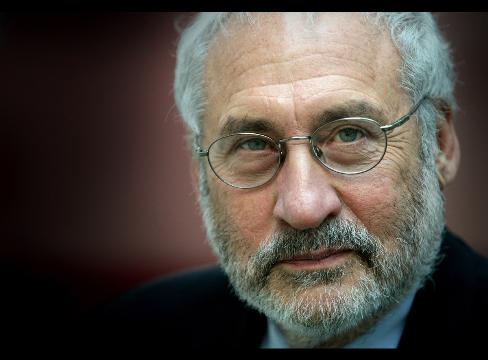
Nobel laureate economist Joseph Stiglitz: “Single payer is the only alternative.”

With a single-payer national health insurance program we can assure lifelong, high quality, comprehensive and affordable coverage for everyone. — Oliver Fein, M.D.

By Dr. Stephen R. Keister / The Rag Blog / March 6, 2009

I will have more to say on the breaking developments regarding universal health care in upcoming articles; however, for the moment I would suggest that Rag Blog readers take note of the presentation by Oliver Fein, M.D., President of Physicians for A National Health Program. I will have further observations following these remarks, which were prepared for distribution at President Obama’s health care summit.

Remarks by Dr. Oliver Fein

Mr. President, Physicians for a National Health Program agrees with your statement during your presidential campaign: health care should be a basic human right.

Physicians recommend an improved and expanded Medicare-for-All – that is, a single-payer national health insurance program, providing care that is publicly financed but largely privately delivered. This fundamental health reform – which enjoys solid majority support among physicians and the public – has become even more urgently needed in view of our severe economic recession.

Millions of people are losing their employer-sponsored health insurance, joining the 46 million who already lack coverage. Millions more, including those with insurance, are finding it harder to pay their co-pays and deductibles and are scrimping on their medications and doctor visits. Many go without care, risking their health and often their very lives.

Physicians find that private, for-profit health insurance companies add cost but no value to the health care system. The administrative waste associated with the private-insurance-based industry – enormous paperwork, marketing costs, and other costs that have nothing to do with delivering care – consumes 31 cents of every health care dollar.

As long as we rely on private health insurers, universal coverage will be unaffordable.

Mandates to buy private insurance are not the answer. Experience with mandate plans in Washington state (1993), Oregon (1992) and Massachusetts (1988 and today), shows they simply don’t work, achieving neither universal health care nor cost containment.

Some of these plans offer a Medicare-like, public option that people could buy into, but experience with Medicare shows that the private plans refuse to compete on a level playing field. They cherry-pick healthier patients and insist on more than their share of payment.

In contrast, single payer guarantees everyone access to comprehensive, quality health care and choice of their own doctor and hospital.

Single-payer health reform, an improved Medicare for All, is the only reform model that offers $400 billion in annual savings in administrative costs. It is the only approach that contains effective cost-containment provisions such as bulk purchasing and global budgeting.

Such economies would allow for expanding health coverage to everyone – with no co-pays or deductibles – with no overall increase in health care spending. In other words, it’s the only health reform proposal that pays for itself.

The single-payer model is the only fiscally prudent proposal available, an especially important consideration at a time of economic distress. And we know from our experience with Medicare and other single-payer systems that it will work.

With a single-payer national health insurance program we can assure lifelong, high quality, comprehensive and affordable coverage for everyone. Such a program will lift the heavy burden of crushing medical expenses off the shoulders of our population, expenses that often lead to personal bankruptcy. And we can save lives: the Institute of Medicine estimated in 2002 that more than 18,000 Americans die each year from lack of health insurance. That number is certainly higher today.

From the standpoint of what benefits our patients, single payer is the health policy model that best reflects their needs and values.

Support for single payer is extensive. In a peer-reviewed statistical study in the Annals of Internal Medicine, 59 percent of U.S. physicians said they would support government action to establish national health insurance. In a recent Associated Press poll, 65 percent of the respondents said, “The United State should adopt a universal health insurance program in which everyone is covered under a program like Medicare that is run by the government and financed by taxes.”

Single-payer health reform is embodied in the U.S. National Health Care Act, H.R. 676, sponsored by Rep. John Conyers (D-Mich.). It had 93 co-sponsors in the 110th Congress, the most of any health reform legislation

We are pleased to be here today and appreciate the implicit recognition of the majority support for single payer in our country. We hope this is the beginning of a serious dialogue on how to enact single-payer health reform and we look forward to working with you and the Congress toward this end.

The Obama Plan is surely inferior, and much more costly than that promulgated by PNHP; however, as we will see later it is a step in the right direction. The Obama plan continues to incorporate private insurance but adds a public component, for those who desire, similar to Medicare. Even this gives the Republican “opposition,” who have no plan of their own, holy fits. They fear that the citizenry will change from their private insurers to the public plan, and yet contend that our present system is the “best health care in the world,” decrying the health care in all other western nations. Yet, they fail to see the anachronism inherent in their argument.

For instance, Charles Krauthammer recently posted an editorial in the Washington Post demeaning the Canadian System, a whipping boy for all of the right wing critics. J Michael Kirkland of Toronto, Canada, responds to Krauthammer’s diatribe as follows:

It is fascinating to watch Americans debate health-care reform once again. As an American living in Canada for the past 30 years, I am always surprised by dismissive references to Canadian, British and French health-care systems. I do not recognize the Canadian system described by American critics such as Mr. Krauthammer.

To be clear: There is no waiting for imperative services here, one can have the doctor of one’s choice and costs are moderated by a stipulated fee-for-service regime.

President Obama’s proposal as described by Mr. Krauthammer – “a reformed system that retains a private health-insurance sector but offers a new government run pla” — would be a half measure made necessary by a stupefying fear of “socialized” medicine. Such a proposal may increase coverage, but it won’t address costs — which are increasingly ruinous.

The United States has a socialized military system, a socialized school system, a socialized national park system, and socialized police and fire departments. Some things simply do not function well for the majority of citizens when run as a business enterprise.

In an article in process we will address health care costs and opinions for the reduction of same. It seems that the fight is joined and that the process is now underway.

Progressives Democrats of America (PDA) has at this moment sent out an e-mailing incorporating a delightful idea in support of HR 676. They request that you fax your health insurance bills or letters of denial to your members of Congress .

Another pertinent e-mailing this morning is from The California Nurses Association; Nobel Prize winning economist Joseph Stiglitz asserts: “Single Payer is the only alternative.”

It seems Dr. Stiglitz has now joined Dr. Paul Krugman , another Nobel Prize winning economist, who has been on board for HR 676 for some time.

The Rag Blog
@pdamerica.org>

Posted in Rag Bloggers | Tagged , , , | Leave a comment

Foodie Friday: World’s Best Tortilla Soup


Healing Broths
By Janet Gilles / The Rag Blog / March 6, 2009

My old buddy David Hamilton, knowing of my recent foray into healing broths, gave me a large grocery sack of collard greens from his garden. Why it took so long to seek out these old remedies I do not know, as throughout the ages broths have been used to heal what ails us. I got out the big soup pot, and cleaned out the fridge, throwing in some old celery, onions, and carrots.

Boiled in three gallons of water for a few hours, I got a couple gallons of terrific broth, which I drink in the evenings instead of wine, beer, tea or coffee. Surprisingly delicious and satisfying. Another one is to take 6 artichokes and boil three hours. Very nice and a great way to spend an evening sipping hot broth with friends that you care about.

Additionally, you have on hand an excellent broth for the making of soup. Guests confirm that this is the best tortilla soup they have eaten!!

World’s Best Tortilla Soup

Take three cups of rich vegetable broth in a pot. Add a sliced tomato or two, and a couple tablespoons of miso, for depth, and for the microbes that we need for proper food digestion. Heat.

In each of two bowls put:

Two tablespoons hummus (mashed garbanzo beans, sesame tahine, garlic, lemon juice, olive oil)
Chopped green onions and cilantro
Sliced corn tortillas (cooked rice also quite delicious!)
Avocado slices

The Rag Blog

Posted in Rag Bloggers | Tagged , | 2 Comments

Like Jeffrey Dahmer Selling Body Parts to a Clinic

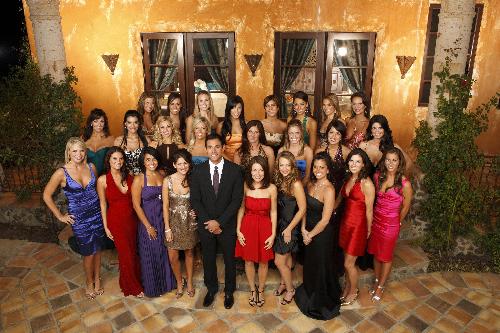
Jason Mesnick and his Bachelor’s harem. Photo source: Whitney Port.

The Rant List
By Gail Collins / March 4, 2009

I am having a tough time dealing with news that the former president of Countrywide Financial, the mortgage company that did so much to dig the hole in which we all now reside, is making a killing buying up delinquent mortgage loans from the government at bargain basement rates.

“It’s like Jeffrey Dahmer selling body parts to a clinic,” sniped one of my friends.

As Eric Lipton reported in The Times, Stanford Kurland, who was president of Countrywide during the years when it was selling mortgages with temporary low “teaser” rates that later turned into permanent unaffordable ones, now leads Private National Mortgage Acceptance Company, known to its friends as PennyMac.

In what one company official said was “off-the-charts good” business, PennyMac buys troubled mortgages from the government (which got them from failed banks) at rates like 38 cents on the dollar. Then it offers the beleaguered homeowners a chance to refinance at far more favorable terms. PennyMac makes money, the homeowner gets an affordable mortgage and the government gets a share of the profit.

Everybody’s happy! Except, of course, those of us who helped come up with the other 62 cents on the dollar.

Once again, we are reminded that life is not fair. Lately these unfairness bulletins have been coming so fast and furious that there isn’t time to get upset about all of them. Prioritization is essential.

Given the competition, I can’t get all that worked up about defaulting homeowners who are looking to the government for a rescue. True, a lot of them got in over their heads betting that housing prices would rise forever. But when it comes to stupid financial decisions to vent about, I’m sticking with Alan Greenspan.

Clearly, not everybody agrees. In Congress, warnings about “rewarding those who acted irresponsibly” have bogged down a bill that would allow federal judges to reduce mortgage debt as part of a bankruptcy settlement. A watered-down version is finally coming up for a vote on Thursday in the House. From there it goes to the Senate, whose capacity for watering things down is second only to Category 5 hurricanes.

Earlier efforts by the White House to come to the aid of the hopelessly indebted homeowners sparked the now world-famous unfairness explosion by the CNBC reporter Rick Santelli. “How many of you people want to pay for your neighbors’ mortgage that has an extra bathroom and can’t pay their bills?” howled Santelli, in one really impressive display of righteous wrath and misplaced modifiers.

He got a ton of publicity for his tirade, a reward that was pretty unfair in and of itself. As a Chicagoan, he was even mentioned very, very briefly as a possible replacement for Senator Roland Burris of Illinois.

Although Burris isn’t leaving. While we’re talking unfair, can we point out that Burris, who clearly misled people about what he did to pry the Senate seat out of Rod Blagojevich’s hot little hands, is never going to give it back. Illinois officials can yell all they want. A guy who has already erected his own mausoleum with a list of achievements running down two sides of it is not going to let anybody add “resigned from the U.S. Senate in disgrace” after “President of the National Association of State Auditors, Comptrollers and Treasurers.”

And can we also mention that Blagojevich has gotten a book deal? True, only six figures, but much better than his other offer, an $800-a-month contract to play baseball for the Joliet JackHammers. Have you ever listened to Blagojevich talk? Do you think anybody’s going to want to read a whole book? Phoenix Books, why are you encouraging this person?

When I walked into work on Wednesday, the big unfairness issue people were talking about was not Countrywide, or Illinois pols, but the finale of “The Bachelor,” when the guy who had just picked his lifetime love on national television returned to the airwaves to dump her for the woman who came in second.

“I had to hurt people in a way, but I feel I did it with integrity,” said the bachelor in question, whose name is Jason Mesnick.

The big objection to Mesnick’s behavior is not the dumping but the fact that he waited until everybody had gathered together for a follow-up special to break the news to his about-to-be-ex fiancée. Mesnick told People magazine that he would have preferred to spare the poor woman the humiliation of being rejected in prime time, but the producers wouldn’t allow it. “That was part of the deal,” he said.

Unfair, but not making my Top 10. A woman who volunteers to find true love on a reality TV show is really uniquely qualified to get past this sort of trauma. Plus, at least Mesnick made good on his contract. Not enough of that going around these days.

Source / New York Times

The Rag Blog

Posted in RagBlog | Tagged , , | Leave a comment

Ethnic Media : Important Voice Seriously at Risk


The danger of losing the ethnic media

With their ability to tap into the communities they serve, the ethnic media contribute context, history, and perspectives found nowhere else.

By Sally Lehrman / March 5, 2009

AsianWeek, San Francisco’s English-language weekly for Asian Americans, and San Francisco Bay View, which has served the black community there for three decades, both have dumped their print editions. Siglo21, a Spanish-language paper published in Lawrence, is returning to publishing weekly after three months as a daily due to declining advertising. Ming Pao Daily in New York will shut down entirely, while Hoy New York abandoned print at the end of last year. At the venerable Ebony and Jet in Chicago, all employees must reapply for their jobs – that is, the jobs that remain.

With the ever-deepening cuts across the news business, these losses may seem worth no more than a shrug. AsianWeek, after all, employs only 11 staffers. But the harm goes deep. Ethnic media play a vital role in the communities they serve and do a great deal of unrecognized work for journalism.

Ethnic media, like other news media, recognize that an informed populace will help keep government accountable. Armed with knowledge of current events and issues, the public can become wise participants in societal decision-making. Ethnic media also cultivate democracy in ways that the mainstream seems to have abandoned. Univision, for instance, has led bipartisan citizenship and voter registration drives during the past two presidential elections. This involvement in the democratic process might appear unseemly to some traditionalists. But at least according to the Society of Professional Journalists Code of Ethics, this is the US news media’s fundamental role: to further democracy.

Day after day, the various branches of the ethnic media follow some of the most important and contentious issues, ones that grab the attention of the mainstream only sporadically. Take immigration. A reader might find a story now and then on CNN or the Associated Press. But Impremedia, which owns eight Spanish-language print outlets including Hoy New York, features as many as 10 immigration stories on its website every day.

Ethnic media can help steer the mainstream away from short-sighted and shallow reporting on communities and the ways in which race and ethnicity operate in all of our lives. When the New Yorker and National Public Radio’s Daniel Schorr declared that Barack Obama’s campaign signaled a new, “post-racial” era, the rest of the mainstream took up the theme. We do all get along, the story went, and Obama’s success proved it. The black media, however, were quick to point out that one black president might create dramatic change, but could not transform a history of institutionalized inequities.

When the New Yorker ran its infamous caricature of Barack and Michelle Obama, the mainstream news interviewed comedians who worried about making fun of a black president. But Eric Easter of Ebony/Jet offered more insight. He wrote about the powerful impact of grotesque, racialized cartoons, from political propaganda of the Nazi era to family fare of recent decades, that “still find their ways . . . into the backs of our minds.” The New Yorker cover did not affront because the joke failed, but because it harkened back to the dehumanizing imagery that takes up residence in our reactive minds.

Ethnic media see their role as primarily to give voice to the community, strengthen cohesion, and chronicle community life. They also consider it important to correct misperceptions promulgated by the rest of the news. They report about the community from the inside out, sometimes quite literally. When inmates of the Reeves County Detention Center protested poor medical care at the privately run Texas facility, most outlets highlighted the damage to buildings. Telemundo’s station in Midland/Odessa, Texas, also described the plight of hundreds of inmates – detained there on immigration violations – who slept outside in makeshift tents despite the freezing weather.

More than 42 percent of print newsrooms across the country employ no black, Asian American, Latino, or American Indian journalists at all. According to even the most generous analyses, they consult white sources at least two-thirds of the time. With their ability to tap into the communities they serve, the ethnic media contribute context, history, and perspectives found nowhere else.

[Sally Lehrman holds the Knight Ridder/San Jose Mercury News Endowed Chair for Journalism in the Public Interest at Santa Clara University.]

© Copyright 2009 Globe Newspaper Company.

Source / Boston Globe

Thanks to Media Reform Daily / The Rag Blog

Posted in RagBlog | Tagged , , , | 2 Comments

Michael Meeropol : Business Unites to Fight Workers’ Rights

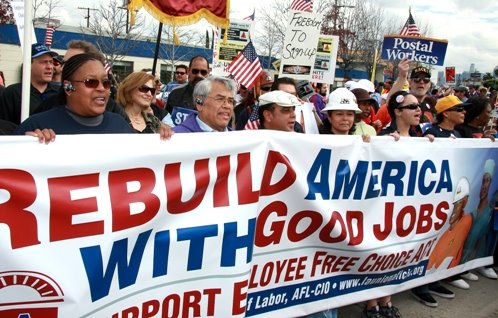
Virtually the entire organized business lobbying apparatus is united in attempting to convince the public that the Employee Free Choice Act is a terrible blow against workers’ rights.

By Michael Meeropol / The Rag Blog / March 5, 2009

The US is facing its gravest economic crisis since the Great Depression. Last Fall, Congress was stampeded into giving $700 billion to the financial sector with virtually no strings attached. Then Congress refused to authorize less than $20 billion to help two of the US automobile giants stay afloat. One of the reasons advanced was that autoworkers’ wages were too high.

This argument is part of a general campaign that suggests that in the modern era of globalization, union negotiated wage and benefits packages are out of date and counter-productive. This campaign is also aimed at convincing Congress not to pass the Employee Free Choice Act.

Virtually the entire organized business lobbying apparatus is united in attempting to convince the public that the Employee Free Choice Act is a terrible blow against workers’ rights. To hear these individuals (usually lawyers working for firms dedicated to helping employers defeat union organizing efforts) tell it, they and their corporate employers are just sick at heart at the prospect that workers will be denied their rights to a secret ballot election to determine if they want to be represented by a union.

So what is the Employee Free Choice Act? Its major section says, if the majority of workers in a particular company covered by the National Labor Relations Act show that they want to join a union by signing membership cards, then the company must recognize and bargain collectively with that union. Currently, if the majority sign up, then the company may choose whether to recognize and bargain or, as is most common, to require the National Labor Relations Board to conduct a secret ballot election.

Why would such a law be necessary? Why aren’t secret ballots enough? The answer is that employers have proven extremely adept at delaying the vote once the cards are signed and using the time before the vote to intimidate pro-union workers and mislead others by controlling the terms of the debate.

The election campaign with secret ballots is not enough to ensure a democratic process. When people run from Congress or the Presidency, voters have relatively equal access to their positions and the people running have equal access to the voters. Not so in union representation elections. Under the current election process, management has almost unlimited and mandatory access to employees, while union supporters have almost none. This would be the equivalent, in a congressional election, of one candidate owning all the local media outlets and denying the candidate’s opponent any access. In addition, management knows who the employees are, obviously, but union supporters have access very late in the process to a list of their potential constituents.

The argument that absent the secret ballot, “labor goons” will intimidate workers into signing cards even though they do not want to join a union fails the laugh test because management has much more power, the power to deprive employees of their livelihood and to control their pay, hours, and working conditions.

And they use that power. Kate Bronfenbrenner of Cornell University conducted a survey of 400 NLRB election campaigns in 1998 and 1999 for the United States Trade Deficit Review Commission. Her research team found numerous examples of explicit and implicit threats to close the plant if the union won the election. The report (Uneasy Terrain: The Impact of Capital Mobility on Workers, Wages, and Union Organizing, p43) notes that “one in every four employers in our sample discharged workers for union activity.” A major study covering the Chicago area found that 30% of the companies targeted for union organizing fired pro-union workers.

Firing and harassment are against the law but the sanctions are relatively mild (and it takes years to win those cases). Thus, employers routinely employ this tactic and if they do get sanctioned by the NLRB, the fine and back wages become a cost of doing business – well worth the investment because they have kept the union out of their plants.

According to survey after survey, a very high percentage of American workers would like to join unions but they have to this date been defeated by the ability of management to “win” the organizing campaigns in a decidedly unlevel playing field. The Employee Free Choice Act would redress that imbalance.

The great American middle class was built after World War II when a high percentage of the workforce was covered by union-negotiated contracts. As the percentage of the workforce covered by union contracts has declined, workers’ wages have stagnated. In the context of our current efforts to prevent a re-run of the 1930s, we must remember that the key to a prosperous business is a prosperous group of workers who can then buy the products of business.

Congress should pass the Employee Free Choice Act and we must resist the siren song that suggests wage cutting in places like Detroit will solve our economic problems. These are two important steps towards recreating an America where the middle class can rise again.

[Michael Meeropol was Professor of Economics at Western New England College, 1970-2008.]

The Secret Big Business Doesn’t Want You to Know

Learn more about the Employee Free Choice Act here and here.

The Rag Blog

Posted in Rag Bloggers | Tagged , , , | Leave a comment

Annie Leibovitz and The Gay Tax : The Cost of Love

Susan Sontag. Photo © Annie Leibovitz / Politics, Theory & Photography.

Annie Leibovitz and the gay tax

Same-sex couples do not have the same privileges as straight married couples when it comes to inheritance. If your partner passes away and leaves her estate to you, you have to pay up to 50 percent of the value of your inheritance in taxes. However, if you and your partner were recognized as a married couple, you wouldn’t have to pay a dime.

By Nancy Goldstein / March 5, 2009

Poets swoon about it and singers croon about it, but LGBT people can calculate the cost of love down to the last penny. In my household it comes to around $329.25 monthly: that’s the gay tax my wife and I shell out for me to be on her health insurance plan, because her company must treat that benefit as additional taxable income. It doesn’t matter that our Massachusetts marriage is recognized in New York. Companies pay for their employees’ health insurance with pre-tax money through a federal program, and same-sex marriage isn’t federally recognized.

But that’s chump change compared to what love is currently costing celebrity photographer Annie Leibovitz. Back in late February the NYT noted that Leibovitz had borrowed a total of $15.5 million from a company called Art Capital Group using “as collateral, among other items … town houses she owns in Greenwich Village, a country house, and something else: the rights to all of her photographs.”

But what the NYT missed, along with every other straight newspaper that picked up the story, is why Leibovitz suddenly found herself in such dire financial straits. It took AfterEllen’s Julie Miranda to put two and two together and figure out that “most of Leibovitz’ financial woes stemmed from her inheritance of her longtime partner, Susan Sontag’s estate.” Writes Miranda (who, in turn, is channeling Suze Orman’s Valentine’s Wish for Gay Marriage):

“Same-sex couples do not have the same privileges as straight married couples when it comes to inheritance. If your partner passes away and leaves her estate to you, you have to pay up to 50 percent of the value of your inheritance in taxes. However, if you and your partner were recognized as a married couple, you wouldn’t have to pay a dime…When Sontag died in 2004, she bequeathed several properties to Leibovitz, who was forced to pony up half of their value to keep them.”

Will this profoundly unfair issue be challenged now that attention’s being drawn to it by the situations of couples like Sontag and Leibovitz who are far higher-profile than me and my gal? We’re about to get a shot at finding out. As my Broadsheet colleague Judy Berman reported on Tuesday, Gay and Lesbian Advocates and Defenders filed suit earlier this week on behalf of same-sex couples who have tied the knot in states that have marriage equality, seeking to challenge their blocked access to federal benefits. The plaintiffs include Dean Hara, spouse of the late Rep. Gerry Studds. But even with the spectacle of a U.S. Congressman’s widower being denied Social Security benefits, the case isn’t a slam dunk, since its slingshot is aimed at the big federal law that institutionalized this discrimination: the 1996 Defense of Marriage Act. It’s likely to face a long slog up to the U.S. Supreme Court. Until then, there’s a high price on our heads, dead or alive.

Source / broadsheet / salon.com

The Rag Blog

Posted in RagBlog | Tagged , , , | 3 Comments

Sherman DeBrosse : An Economic Enema to Chill the Meltdown

People walk to work in the snow as they pass the flag-draped New York Stock Exchange Monday, March 2, 2009. Photo by Mark Lennihan / AP.

The Geithner Plan may be good economics but it probably is terrible politics.

By Sherman DeBrosse / The Rag Blog / March 5, 2009

The Dow and Obama

Last night, an evening news anchor said that the plunging Dow registered investors’ belief that President Barack Obama’s policies were not helping the economy or fixing the financial system meltdown. The fact is that the Dow does not reflect what is going on in the economy, and it does not reflect political opinion.

This line of reasoning demands that Obama be a miracle worker. In the last twenty months, about half the world’s wealth has evaporated, and Obama is supposed to fix it in a matter of weeks!

Obama cannot be blamed for the insolvency of the banks. That was a result of Republican economics. Yes, some Democrats bought into the new ideas, but it was largely Reaganism and Phil Gramm economics. Now John McCain, a big Gramm backer, wants to investigate what happened! What a joke! But if this disaster goes on too long, current Republican efforts to blame him will pay them big dividends.

The Dow is going down because investors know the financial system is broken and insolvent, and they fear that the fix will be painful for them. Some, of course, have listened too much to talk radio and Republican interviews on the cable stations. They fear “nationalization” and “socialism” but would be hard pressed to define either. The obverse of these fears is that the bank managers have done a wonderful job so far.

Headlong panic could doom the Geithner Plan, no matter how excellent it may be.

Setting aside their fears and the real “panic” that exists in the investment world, they have a point in wanting to know exactly what the Geithner Plan is, what banks will be reorganized, and how shaky assets will be assessed. He has kept to very broad outlines because he shares the fear that there is insolvency across the board and because he needs flexibility in addressing it.

The problem is that panicked investors are incapable of patience or even thinking clearly about this. So long as these questions are not answered, the market will plunge over the several months needed to conduct the “stress tests” and for the banks to, probably unsuccessfully, seek private refinancing.

As long as there is uncertainty, investors will stay on the sideline watching the bloodbath and shareholders will keep dumping their stocks.

The continued dramatic drop of the Dow will further reduce confidence in the economy and will begin to rapidly chip away at confidence in the Obama Administration. It will make recovery so much more difficult and will, though unfairly, do infinite damage to Obama and the progressive cause. Republicans are busy talking down recovery efforts and claiming Obama has “cooked the books” when pointing to any sign of hope.

We now know that the Obama Administration thinks another $700 billion is needed to continue the bail-out. If the market continues to plunge, it will be exceedingly hard to get votes for this. Moreover, the folks in Congress do understand the absolute rage most people feel toward the banks.

The current Geithner Plan and the proposed new TARP must be considered together. Maybe this writer has been wrong in saying an approach modeled on what happened in Japan was wrong. Assume a Japanese-style rescue approach is theoretically correct. The fact seems to be that it will take too long to implement and will drive the Dow and public confidence to an unacceptable level. Phase two of this effort seems to be raising another $700 billion to continue the bailout. Finding votes for that will be very, very tough and will cost many Democratic seats in November, 2010. Unless the Democratic leadership and Obama people are sure the GOP will provide half the votes for the Second TARP, a course change is absolutely necessary.

The near impossibility of getting another TARP might save us from just sustaining “zombie banks” through what has been called “the shovel method” and producing a lost decade.

The Geithner plan makes some sense, but it is a political time-bomb and unworkable without a huge second TARP. We need a second best plan that passes the political tests.

A few of the deans of the punditocracy write that great presidents can get beyond partisanship and that Obama should continue to reach out to the GOP. So far we saw a near brick wall of opposition to the stimulus package and GOP’s, led by Corker and Shelby, trying to push GM and Chrysler into bankruptcy, throwing millions out of jobs. Even FDR could not have charmed these blind partisans. Obama should follow Ronald Reagan’s advice, “Trust but verify.”

We need “Plan B” now — sort of an economic enema

If the current plan is creating too much uncertainty and cannot be completely carried out, we need to think about a second-best approach that can be performed quickly and decisively. Hopefully, its implementation would commit the taxpayer to far less immediate debt.

To buy time and perhaps stimulate growth, four steps—three of which are usually anathema to progressives—could be tried to, promote confidence, buy time and slow the slide.

  • Increase the tax credit on new home construction and purchases to 10% up to 15,000.
  • Roll back the recent moratorium on off-shore drilling to just the most environmentally sensitive areas.
  • Legislate no long-term capital gains taxes on purchases made in the next 24 months.
  • Ban short selling for 12 months. We all know that the hedges profit mightily by driving the market down. This must stop now! Even ultra-rightist Ben Stein calls for a halt to selling short.

“Plan B” should simply build on the existing plan. Given that Paul Voelker is a key Obama advisor, a good guess is that the Geithner plan is designed to slowly release the remaining air from the Bush bubble. The problem is that the fear out there was underestimated.

We read that the “stress tests” do not take into account exotic assets and liabilities. They must be thoroughly examined. There is a New Deal lesson we must heed. Conservative scholars may be correct in saying that hundreds of millions were wasted trying to recapitalize insolvent banks. It might be better to just let them sink, more or less at once.

When the tests are done, Geithner should announce that the most insolvent banks must be left to bankruptcy. Market forces must be permitted to do their work. Weak banks can be restructured and combined, with losses being carried by stockholders.

If the second TARP is unattainable, the only recourse is to move swiftly to let market forces quickly and decisively resolve the situation. It might mean more pain for the GOP’s constituencies—banks and bankers, but it will speed the recovery.

To the extent possible, the FDIC will guide restructured banks, and they can be partly recapitalized with money from the Fed. All the bad assets must be identified, purged, and revalued. If there is no TARP money to purchase them, they should be given current market value and placed on contingency basis in a federally operated aggregator bank.

Make a distinction between the everyday banks that loan money for things we can see and use and those at the top of the pyramid that engage in issuing exotic instruments and casino capitalism. Focus on fixing the former and seeing that any aid advanced to them cannot be sent up to whatever is left of the bank holding companies.

Of course, the U.S. needs banks at the top end, but we can build around those we have already subsidized.

When all the smoke clears, borrow a Republican idea and introduce a new insurance scheme for banks and phase it in gradually, perhaps with partial premium write-offs at first.

It will be very messy for some time, and the Dow will fall to new lows. This was going to happen anyhow under Plan A. But the purge could well work if it is sufficiently thorough. There does not seem to be any other choice given the strong possibility that the Congress and public simply will not accept borrowing hundreds and hundreds of billions to bail out the irresponsible bankers.

It is a shame we could not fix the banking and securities sector in several weeks as did FDR, but the problem is so much greater and more complicated.

Take out some insurance — plan for more setbacks

If “Plan B” does not work due to lack of bank cooperation, there need to be contingency plans for bypassing them to make loans to merchants, students, car purchasers and home buyers to get the economy going. In the New Deal, there were contingency plans for all sorts of undesirable contingencies. A second contingency plan will provide making some banks smaller so that none are “too big” to fail in the future.

The GOP is banking on a deepening crisis

The political dimensions of this are fascinating. One cannot help but wonder if the Bushies warned the GOP on the hill that the problem was so darned big that there was no clear solution. A long banking crisis means a long depression, and that most likely would provide political dividends for the GOP.

We see every day that Rush Limbaugh, who calls for Obama’s failure, has become the party’s most important spokesman. Former Speaker Newt Gingrich has emerged from retirement as their most important tactician. Remember when he and his followers called opponents “traitors;” now he says the “secular left” is driving “God out of the secular affair.” We can only imagine the line he will take on the Bush depression. His rule or ruin, scorched earth, take no hostages obstructionism was rewarded by the American people in the election of 1994 with turning over the House of representatives to him and his party. Previously, his approach took years of throwing monkey wrenches into the machinery of government. This time, a few years of obstruction might be enough for many voters to give up on this creative, bright and idealist president and go back to the party of trickle down economics.

It is doubtful if most Republicans think beyond blocking useful legislation, demanding more tax cuts for the rich and reciting easily understood but childlike bumper-sticker formulae. But some, like Gingrich, would seize the opportunity to scrap entitlement programs, privatize as much as possible, slash taxes for the rich and resume using our armed forces to pursue abroad the economic objectives of the great interests on Wall Street. They would also have the internal security apparatus begun by Ronald Reagan and Ollie North and vastly increased by George W. Bush to subtly cripple their opposition.

The Rag Blog

Posted in Rag Bloggers | Tagged , , | Leave a comment

Perhaps BushCo Will Yet Meet Justice

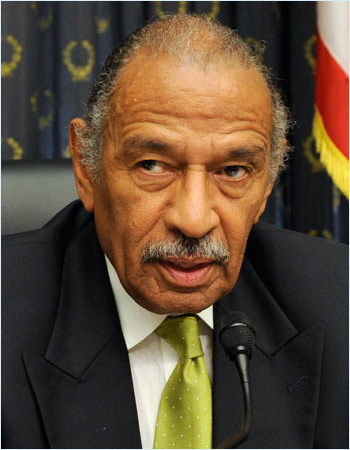
Representative John Conyers Jr. has called for an investigation.
Photo: Susan Walsh/Associated Press.

Release of Memos Fuels Push for Inquiry Into Bush’s Terror-Fighting Policies
By Charlie Savage and Neil A. Lewis / March 3, 2009

WASHINGTON — A day after releasing a set of Bush administration opinions that claimed sweeping presidential powers in fighting terrorism, the Obama administration faced new pressure on Tuesday to support a broad inquiry into interrogation, detention, surveillance and other practices under President George W. Bush.

Justice Department officials said they might soon release additional opinions on those subjects. But the disclosure of the nine formerly secret documents fueled calls by lawmakers for an independent commission to investigate and make public what the Bush administration did in the global campaign against terrorism.

The chairman of the House Judiciary Committee, Representative John Conyers Jr., Democrat of Michigan, said the revelations, together with the release of new information about the Central Intelligence Agency’s destruction of 92 interrogation videotapes, had underscored the need for a commission that would have the power to subpoena documents and testimony.

Officials who discussed the process spoke on the condition of anonymity because memorandums still under review might involve classified information. Among those that have not been disclosed but are believed to exist are a memorandum from the fall of 2001 justifying the National Security Agency’s program of domestic surveillance without warrants and one from the summer of 2002 that listed specific harsh interrogation techniques, including waterboarding, that the C.I.A. was authorized to use.

The Justice Department officials said the decision to release the nine memorandums on Monday came after some of the opinions were sought in a civil lawsuit in California. They said department lawyers had determined that the opinions did not contain classified information.

The lawsuit was filed by Jose Padilla, a United States citizen who was arrested in Chicago in 2002 and detained for years as an enemy combatant before eventually being tried and convicted in a civilian criminal procedure. Mr. Padilla is suing John C. Yoo, a former Bush administration lawyer who was the author of many of the opinions justifying detention and interrogation policies.

The Senate Judiciary Committee has scheduled a hearing on Wednesday on whether to create a commission to look into the Bush administration’s counterterrorism policy. The committee chairman, Senator Patrick J. Leahy, Democrat of Vermont, has already called for a commission, and another Democrat on the panel said Tuesday that he would support such an approach.

But David B. Rivkin Jr., an associate White House counsel under the first President Bush who is scheduled to testify at the hearing on Wednesday, said he planned to urge Congress not to move forward with that proposal, which he said would violate the rights of Bush administration officials and set them up for prosecutions by foreign courts.

“They want to pillory people,” Mr. Rivkin said. “They want to destroy their reputation. They want to drag them through the mud and single them out for foreign prosecutions. And if you get someone in a perjury trap, so much the better.”

President Obama has signaled a reluctance to open a wide-ranging investigation into his predecessor’s policies, saying he preferred to fix the policies and move on. In his first days in office, he issued executive orders requiring strict adherence to rules against torture. As a senator, he voted for legislation that brought surveillance efforts into alignment with federal statutes.

The increased calls for a greater public accounting come as the Justice Department’s internal ethics office is preparing to release a report that is expected to criticize sharply members of the Bush legal team who wrote memorandums purporting to provide legal justification for the use of harsh interrogation methods on detainees despite anti-torture laws and treaties, according to department and Congressional officials.

The Office of Professional Responsibility at the Justice Department is examining whether certain political appointees in the department knowingly signed off on an unreasonable interpretation of the law to provide legal cover for a program sought by Bush White House officials.

The report is expected to focus on three former officials of the Office of Legal Counsel: Mr. Yoo, a Berkeley law professor, now on leave at Chapman University, who was the principal author of opinions on national security matters from 2001 to 2003; Jay S. Bybee, who oversaw the counsel’s office during that period and is now a federal appeals court judge; and Steven G. Bradbury, who oversaw the counsel’s office in Mr. Bush’s second term.

Mr. Bradbury wrote two of the opinions released on Monday. Written last October and this January, they broadly repudiated the aggressive theory of virtually unlimited commander-in-chief power at the heart of Mr. Yoo’s memorandums.

Although he was a critic of Mr. Yoo’s work, Mr. Bradbury himself wrote three memorandums on the use of harsh interrogation techniques in 2005. Those documents are believed to be part of the Office of Professional Responsibility’s investigation.

In a footnote to Mr. Bradbury’s January memorandum that sharply criticized Mr. Yoo’s work, Mr. Bradbury signaled that he did not want a repudiation of Mr. Yoo’s legal reasoning to be used against him as part of the ethics inquiry.

Mr. Bradbury wrote that his retractions were not “intended to suggest in any way that the attorneys involved in the preparation of the opinions in question” violated any “applicable standards of professional responsibility.”

[Scott Shane contributed reporting.]

Source / New York Times

The Rag Blog

Posted in RagBlog | Tagged , , | Leave a comment

Yowling Conservatives : Preferring to Defy Definition?

Graphic by Larry Ray / The Rag Blog.

Stuck in a time warp of denial and obstinacy, it seems that conservatives today continue to thrash about as harsh reality bangs hard against their deep seated belief in some sort of fiscal tooth fairy.

By Larry Ray / The Rag Blog / March 4, 2009

The cable channels are choked with yowling, contumacious conservatives who rail against President Obama’s emergency stimulus bill and a federal bailout of failed financial institutions. What makes them “conservative?” Defining “conservative” as it applies to today’s obstreperous orators is not an easy thing to do.

The shaping and molding of today’s conservatives has taken a twisting path over past decades. From the Whigs of the 1830’s to the early twentieth century when Teddy Roosevelt’s governing style was more as a Progressive than a Conservative, on to the promises of Herbert Hoover that prosperity was just “on the horizon,” defining conservatives has been but a series of redefinitions.

Other evolutionary benchmarks include William F. Buckley, Jr’s founding of The National Review in 1955. It was a magazine where writers could express their disagreements with liberal views and leadership. Buckley attracted the strident anti-communist, Robert W. Welch, Jr., who founded the John Birch Society and helped bankroll the new right wing magazine. The anti-left, anti-liberal movement picked up steam in the 1970’s with Irving Kristol’s attacks upon those whom he saw as “soft on communism.” Kristol is credited with starting the neoconservative movement which ultimately produced the likes of Dick Cheney, Donald Rumsfeld, Paul Wolfowitz, and most of the top players in the eight years of the George W.Bush administration.

But, in a few words, what do conservatives believe today? What do they want from government? The conservative family tree is a murky genealogy. It ranges from Whigs to Libertarians to the influence of Russian immigrant and popular author, Ayn Rand, whose “Atlas Shrugged” is still a top seller on Amazon. Rand, to me, was like the oracle Sibyl, because her populist political pronouncements are interpreted so broadly from opposing poles.

It has been noted that, “On the left, linguist and analytic philosopher Noam Chomsky considered Rand “one of the most evil figures of modern intellectual history.” On the right, conservative commentator William F. Buckley, Jr. declared: “Ayn Rand is dead. So, incidentally, is the philosophy she sought to launch dead; it was in fact stillborn.”

More recently, Social scientists at UCBerkeley undertook a detailed non-judgmental study of “consistent underlying motivations of politically conservative agendas.” It basically boils down some of the common psychological factors linked to political conservatism which include:

  • Fear and aggression
  • Dogmatism and intolerance of ambiguity
  • Uncertainty avoidance
  • Need for cognitive closure
  • Terror management

Prof. Jack Glazer of the University of California explains, “Conservatives don’t feel the need to jump through complex, intellectual hoops in order to understand or justify some of their positions. They are more comfortable seeing and stating things in black and white in ways that would make liberals squirm.”

That certainly seems to apply to the flat statements of present day conservatives like Eric Cantor, John Boehner, and certainly John McCain. “Our plan would create 6 million jobs,” is a common claim they present. However no one has ever bothered to explain their “plan” and how it would create jobs. Conservatives seem to believe, just as they believe they are going to heaven, that if we only granted tax cuts, tax credits and tax-rebates without actually spending any money, we would create 6 million jobs and overcome a recession. They also call for “Victory in Iraq” which is equally undefined, and undefinable.

So, what is left of the so-called conservative-base today are at each others throats. Radio entertainer Rush Limbaugh, exploits their discord, whipping up a frenzy. It seems so difficult for conservatives to admit they may be wrong. It is equally hard to admit that Limbaugh is playing them all like a cheap guitar while he rakes in millions from his outrageous radio show.

Howard Gardner, a psychologist at Harvard University, asks, “Why, then, do right wing partisans ignore this evidence and continue to support policies that are patently dysfunctional? I believe it is because, having stated a position, based on either their own family values or those dictated by their religion, they are loathe to change their minds and declare that they have been wrong.”

British Economist, John Maynard Keynes’ economic policies basically state: “The modern capitalist economy does not automatically work at top efficiency, but can be raised to that level by the intervention and influence of the government.” Such governmental control is anathema to conservatives. Today, they refuse to admit that their gradual removal of the Keynesian oversight of banks and Wall Street largely brought about the mess we are in today.

Keynes himself noted, appropriately, “I do not know which makes a man more conservative — to know nothing but the present, or nothing but the past.”

Stuck in a time warp of denial and obstinacy, it seems that conservatives today continue to thrash about as harsh reality bangs hard against their deep seated belief in some sort of fiscal tooth fairy.

Rush Limbaugh this afternoon reached new heights of megalomania when he invited President Obama to come to his studio and debate him. Regarding the invitation, Mr. Obama will certainly apply his understanding that, “If one finds oneself in an argument with a fool, make sure he is not similarly occupied.”

[Retired journalist Larry Ray is a Texas native and former Austin television news anchor. He also posts at The iHandbill.]

The Rag Blog

Posted in Rag Bloggers | Tagged , , | Leave a comment

GI Coffehouse : Checking ‘Under the Hood’ in Killeen, Texas


Grand opening of the Under the Hood Cafe in Killeen, Texas. Photos by Carlos Lowry / The Rag Blog.

Under The Hood is an experiment. It’s a labor of love. It’s an antidote to the “divide and conquer” mentality that undergirds war.

By Susan Van Haitsma / The Rag Blog / March 4, 2009

March came in like a lion lying down with a lamb. Or maybe the day was about recognizing that the lion and lamb exist together in each of us. In any case, collaboration was the theme on Sunday, March 1, as soldiers and civilians, men and women, children and adults, locals and out-of-towners, seasoned and new organizers gathered to celebrate the opening of a meeting place in Killeen, Texas, on the edge of the world’s largest US Army base. “Under The Hood” is the catchy name of the new coffee house that is up and running near Ft. Hood as a long-wished-for resource for soldiers and military family members who find the culture of silence around military bases detrimental to their health and well-being.

As stated on the café’s website, the purpose of the coffee house is to provide a welcoming setting for the free exchange of ideas and information, as well as offering a family-oriented entertainment space for soldiers and civilians. The house rules encourage talking, flirting, learning and debating, and from what I observed at the opening Sunday, the café is functioning just as it was intended.

The engine propelling Under The Hood is its warm and able manager, Cindy Thomas, a native Texan, military spouse, mother of two young daughters and step-mother of a military-aged son. While her husband was serving a tour in Iraq last year after having been injured there on a previous tour, Cindy looked for support for her own family as well as the military families she saw around her who were dealing with issues involving physical and mental health, housing, education and GI rights.

I first met Cindy in the Fall of 2007 when she walked up to the Café Caffeine in Austin along with her two girls, all of them sporting something pink, to attend a CodePink meeting after having heard about the national group on the Rosie O’Donnell show. By coincidence, as Cindy and her daughters joined us, we were finishing up an interview with a reporter from the Austin American-Statesman just before the official start of our meeting. I was impressed with Cindy’s candid and cogent answers to the reporter’s questions, even though she hardly expected to be interviewed by the press the moment she arrived to meet a new group of women a hundred miles from home.

It was a fortuitous meeting. Our Austin CodePink group already had been actively engaged in outreach to GIs and military families, forming alliances between civilians, soldiers, activists and veterans through several projects in support of GI resisters. Cindy’s outgoing nature and capable organizing skills blended well with the abilities of kindred souls in our group. Together with the fledgling Central Texas Iraq Veterans Against the War, Veterans for Peace and the reinvigorated Movement for a Democratic Society, a committee formed to fundraise and look for a location for a coffee house in Killeen.

In some respects, Under The Hood is a reincarnation of the Oleo Strut, one of the most vibrant of the GI coffee houses that sprang up in the 1960’s as active duty soldiers organized in resistance to the US war in Indochina and in opposition to the use of soldiers to thwart civil rights and antiwar demonstrations in the US.

As described in the history of the Oleo Strut documented by Thomas Cleaver and posted on the Under The Hood website, one of the most awesome acts of resistance by GIs during the Vietnam war was launched from Ft. Hood when 43 decorated African-American GIs refused to board planes destined for the Great Lakes Naval Training Center where they were to be used as backup for Chicago police against demonstrators at the 1968 Democratic National Convention.

The Oleo Strut had opened just a month prior, taking its name and purpose from a mechanical part on a helicopter that functions as a shock absorber. The Oleo Strut distributed its own GI newspaper, “The Fatigue Press,” and became a beehive of activity where soldiers could hang out, organize and mingle in a supportive atmosphere with civilians. The coffee house also hosted poets and musicians, including the renowned Pete Seeger and the as-yet-unknown 16-year old Stevie Ray Vaughn and his blues band.

Under The Hood doesn’t resemble the Oleo Strut much in terms of looks, judging by photographs and accounts of those who were there both Sunday and back in the day. But, there is a strong spirit of life, love, resistance and support in the café that bridges the years while also evolving with the times. I saw it in the tears that photojournalist and Veteran for Peace, Alan Pogue, brushed from his eyes as he took pictures during Sunday’s opening while remembering The Oleo Strut he photographed in its heyday. I saw it in the tears that Cindy brushed from her eyes as she was being presented a medal by members of the Ft. Hood chapter of Iraq Veterans Against the War. On one side of the medal was an engraved portrait of Thomas Paine, who coined the term “Winter Soldier” that Vietnam Veterans Against the War and IVAW adopted. On the other side of the medal was an inscription from the IVAW chapter: “Love and Thanks from Man and Woman.”

Others from CodePink Austin were honored by IVAW, as well, for assistance with the café project in everything from fundraising to painting, carpentry, cleaning, cooking and counseling. CodePink seamstress extraordinaire, Heidi Turpin, made the handsome curtains and banner that adorn the café’s windows and walls. She and her husband, Jim, made the sign that hangs in front of the house and installed the ammunition box that had been transformed into a donations box (bills, not bullets!). Jim, a vegetarian, amiably helped grill chicken and sausages all afternoon for the hungry flock that arrived for the opening. Fran Hanlon, active with CodePink and the GI Rights Hotline, and Alice Embree, active with CodePink and MDS, have served with Cindy in the Ft. Hood Support Network that has powered the project from the beginning.

These folks and other volunteers combined their time and talents to create a welcoming space that is beautiful in both form and function. There are games to play, books to read, films to see, and comfortable places to sit and talk, think and peruse the materials that are made available. There is good light, good coffee and good company. (Check out the slide show of photos taken during the opening by Alice’s husband, Carlos Lowry and posted to the site.)

Under The Hood is an experiment. It’s a labor of love. It’s an antidote to the “divide and conquer” mentality that undergirds war. Soldiers are taught to distrust and separate themselves from civilians, but the coffee house brings soldiers and civilians together. The military is a male-dominated institution, but this coffee house project has been led by women. Children are welcome. Music is welcome. You are welcome, all you lions and lambs, so come on in.

Also see the following:

The Rag Blog

Posted in Rag Bloggers | Tagged , , , , , | Leave a comment