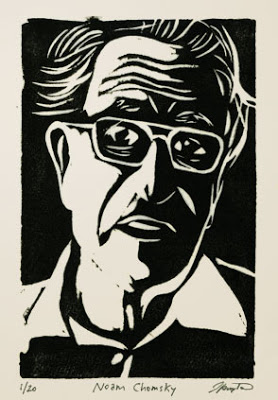
An Interview With Noam Chomsky

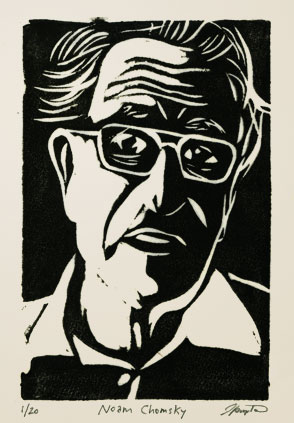
Noam Chomsky at WritersMugs

In which he discusses Iran, Irag and
other matters of great import

By Wajahat Ali / June 17, 2008

“I’m absolutely deluged with requests right now, but I really would like to do this interview, I just don’t know when,” replied the 79 year old, prolific author, linguist, scholar and political dissident to the first of my many emails over a six-month correspondence. Noam Chomsky is the most cited, and perhaps most controversial, leading living public intellectual according to the 2005 Global Intellectuals Poll. Although mainstream media refuses him airtime, The New York Times states Chomsky remains one of the most “influential” intellectuals alive, constantly sought by students, Universities, activists, academic symposiums, and even world leaders like Venezuela’s Hugo Chavez.

I first met the infamous and controversial scholar activist in 2002 when I moderated a question and answer session with him at my old alma mater, U.C. California, Berkeley. [The educational and informative event was later transcribed in the book Power and Terror: Post 9-11 Talks and Interviews.] Before the program, we had a nice hour to chat, and I was impressed by his inexhaustible memory, low key demeanor, and razor sharp recollection of facts, names and dates when answering my endless questions. When I asked whether he identified himself more as a scholar or an activist, he said neither exclusively, but mentioned dissent was firmly ingrained in him after he wrote his first article condemning the rise of fascism during the Spanish Civil War. [He was ten when he wrote it.] Although many academics and intellectuals’ arrogance is outmatched only by their insecurity thereby reflecting a cold, selfish elitism, I’ve always found Chomsky to be gracious, accommodating and agreeable with his time and knowledge.

Thus, it was no surprise that after six months of email tag, Professor Chomsky “finally found a little time to respond to the questions.” In this exclusive interview, Chomsky discusses the “threat” of Iran, the parallels and dissimilarities between Vietnam and Iraq, the American media, his critics and detractors, Pakistan, and the Norman Finkelstein tenure debacle.

ALI: In 1969, you published your first major political work, American Power and the New Mandarins, a scathing critique of the United States involvement in Vietnam and South East Asia. As you know, many have drawn parallels between our current War in Iraq with our military actions in Vietnam. (Others, of course, reject this comparison). As one with considerable experience researching both significant moments in history, are these parallels premature and presumptuous? Or, are there significant similarities that can be gleaned from both wars in relation to the United States involvement?

CHOMSKY: The primary similarities have to do with how the wars are viewed in the U.S. (and the West generally). Apart from the margins, opinions range from “hawk” to “dove.” In both cases, the hawks say that with more commitment the U.S. could win. The doves, in both cases, take the stand expressed by Barack Obama about Iraq (a “strategic blunder,” too costly to ourselves), or by the prominent liberal historian and Kennedy adviser Arthur Schlesinger in 1966, when Vietnam was coming to be seen as a venture that is too costly for the US. Schlesinger explained that “we all pray” that the hawks will be right, and that more troops (the “surge” of the day) will bring victory. And if they prove to be right, we may all be praising “the wisdom and statesmanship of the American government” in winning victory while leaving “the tragic country gutted and devastated by bombs, burned by napalm, turned into a wasteland by chemical defoliation, a land of ruin and wreck,” with its “political and institutional fabric” pulverized. But escalation probably will not succeed, he felt, and will prove to be too costly for ourselves, so perhaps strategy should be rethought. The position of the doves on Iraq is rather similar. If, for example, General Petraeus could achieve anything like what Putin has achieved in Chechnya, he would be elevated to the Pantheon, with the applause of liberal doves.

It is next to inconceivable, within the mainstream of Western intellectual culture, that one might give a principled critique of the war – that is, the kind of critique we give reflexively, and properly, when some enemy state commits aggression: for example, when Russia invaded Czechoslovakia, or Afghanistan, or Chechnya. We do not criticize those actions on grounds of cost, error, blunder, quagmire. Rather, we condemn the actions as horrendous war crimes, whether they succeed or not.

The Vietnam and Iraq wars themselves, however, are quite different in motivation and character. Vietnam was of no particular value to the U.S. in itself, even though President Eisenhower tried to arouse some support for his undermining of the Geneva peace agreements by bringing up resources of tin and rubber. If Vietnam had disappeared into the sea, it would have been of little concern to U.S. planners. Iraq is entirely different. It has perhaps the second largest oil reserves in the world, which are, furthermore, very cheap to extract: no permafrost or tar sands. And it is right at the center of the world’s greatest resources of easily exploitable energy.

In the case of Vietnam, the concern was that successful independent development there might be a “virus” that would “spread contagion” to others, to borrow Henry Kissinger’s rhetoric with regard to democratic socialism in Chile. That has been a primary motive for military intervention and subversion throughout the world since World War II – the rational version of the “domino theory.” The “contagion” is that others suffering similar burdens might see successful independent development as a model and might try to pursue the same path, and the system of domination might erode. Even the weakest and tiniest country therefore poses extreme threats to order.

International affairs are much like the Mafia: the Godfather cannot tolerate disobedience even from a small storekeeper who fails to pay protection money, or “the rot might spread and spoil the barrel,” in the terminology of US planners: the rot of successful independent development, out of US control. Vietnam, it was feared, might infect surrounding countries, even Indonesia, with its rich resources. And Japan – what the prominent Asia historian John Dower called “the superdomino” – might “accommodate” to an independent East Asia, becoming its industrial and technological center, effectively recreating the “New Order” that fascist Japan had sought to construct by force during World War II. The U.S. was not prepared to lose the Pacific phase of World War II a few years later.

When there is fear that a virus may spread contagion, the proper steps are to destroy the virus and inoculate those who might be infected. That was done. Vietnam was virtually destroyed (along with Indochina altogether, as the U.S. expanded its war to Laos and Cambodia). By the late 1960s it was clear that it would never be a model for anyone, and would be lucky to survive. And the region was “inoculated” by imposition of murderous tyrants: Suharto in Indonesia, Marcos in the Philippines, and so on. Suharto’s military coup in 1965 was particularly important. It was described fairly accurately. The New York Times described it as a “staggering mass slaughter” – and also as “a gleam of light in Asia” — as Suharto’s military forces led the massacre of perhaps a million people, mostly landless peasants; destroyed the only mass popular political party in the country, a party of the poor, as it was described by Australian Indonesia specialist Harold Crouch; and opened the rich resources of the country to exploitation by Western corporations. Euphoria was unconstrained. In retrospect, Kennedy-Johnson National Security Adviser McGeorge Bundy reflected that the U.S. should have called of the Vietnam war in 1965, after this grand victory for freedom and justice.

The U.S. achieved a significant victory in Indochina, though it did not achieve its most far-reaching objective: installing a client state. For the imperial consciousness, the Vietnam war is therefore a “disaster.”

Iraq, as noted, is entirely different. It is far too valuable to destroy. It is imperative that it remain under U.S. control, if at all possible, with an obedient client state that will also house major U.S. military bases. That these were the primary goals of the invasion was always quite obvious, but there is no longer any need to debate it. These plans were made explicit by the Bush administration in its November 2007 declaration and subsequent pronouncements, along with the rather brazen demand that U.S. corporations must have privileged access to Iraq’s enormous oil reserves.

ALI: It seems the American public has finally discovered the existence of Pakistan after 60 years. How sincere was General Musharraf’s intentions in rebuilding a democracy in Pakistan? Specifically, why does the United States trust Musharraf over potential rivals, such as Bhutto and Zardari’s PPP, Nawaaz Sharif and others, in their “War on terrorism” and “hunt for Bin Laden?”

CHOMSKY: We need not tarry on Musharraf’s sincere intentions to rebuild democracy. The U.S. supported him as long as possible, just as it supported earlier tyrants, like Zia ul-Haq. Choice of allies follows a simple criterion: it depends on who is perceived to be the most loyal client, the one who can most be depended on to follow orders. Despite occasional exceptions, the uniformity is impressive.

ALI: Recently, an U.S. intelligence report concluded that Iran had successfully stopped a nuclear weapons program 4 years ago. Iran maintains it never advanced a program in the first place. Regardless, President Bush, Israel President Olmert and ranking officials in Washington claim Iran remains a “dangerous threat” and is still in pursuit of “nuclear weapons.” How tenable are both parties’ claims (U.S. and Iran)? If it is unsubstantiated, why then the aggressive and confrontational rhetoric against Iran, and how does this benefit U.S foreign policy in the Middle Eastern region?

CHOMSKY: The claims should be evaluated by the International Atomic Energy Agency. I have no special knowledge, of course. It would hardly be surprising if it were discovered that Iran has some kind of nuclear weapons program, perhaps contingency plans. The reasons were explained by one of Israel’s leading military historians, Martin van Creveld. He argued that Iran would be “crazy” if it were not developing a nuclear deterrent in its current predicament: with hostile forces of a violent superpower on two borders and a hostile regional power (Israel) brandishing hundreds of nuclear weapons, both calling loudly for “regime change.” Nevertheless, the available evidence indicates that if Iran had such a program, they stopped pursuing it several years ago.

From the U.S. perspective, Iran committed a grave crime in 1979. As we know, in 1953 the U.S. and UK dismantled Iranian parliamentary democracy and installed a brutal tyrant, the Shah, who remained a pillar of U.S. control over the energy-rich region until 1979, when he was overthrown by a popular uprising. That was rather like Cuba’s overthrow of the Somoza dictatorship in 1959, or other acts of “successful defiance” of Washington’s principle, to borrow the terms used in internal documents. The Godfather cannot tolerate “successful defiance.” It is far too great a threat to what is called “stability” – that is, obedience to the master.

Iranian independence is no slight problem. It threatens U.S. domination of one of the most valuable prizes in the world, Middle East oil. Accordingly, from 1979 the U.S. has been bitterly hostile to Iran. Washington backed Saddam Hussein’s vicious and murderous assault against Iran, and even after the war, continued to provide strong support to its friend Saddam, even inviting Iraqi nuclear engineers for advanced training in nuclear weapons development in 1989. It then turned to severe sanctions against Iran, along with regular threats to attack Iran and overthrow the government.

That continues to the present. As I write (June 15, 2008), Reuters reports that ‘Analysts believe that offering Iran security guarantees, an idea floated by Russia, could help end the deadlock, seeing such guarantees as Iran’s fundamental goal given the Bush administration’s “regime change” policy toward it. But the United States last month said major powers had no plans to make such security pledges to Tehran.’

In simple words, the US insists on maintaining its stance as an outlaw state, dismissing core principles of international law, including the UN Charter, which outlaws the threat or use of force in international affairs. Bush is joined by both 2008 presidential candidates and by elite opinion in the U.S. and Europe – but not by the American public, which by a large majority favors diplomacy and opposes the threat of force. But public opinion is largely irrelevant to policy formation, not just in this case.

The political class, across the spectrum with rare exceptions, is committed to maintaining U.S. control over the world’s major energy resources, and to punishing “successful defiance.” Therefore, the U.S. has tried very hard to mobilize an anti-Iranian alliance among the Sunni states of the region, though without much success. Bush’s two trips to Saudi Arabia in early 2008 were complete failures in this regard. The Saudi press, normally very polite to important visitors, condemned the policies proposed to them by Bush and Secretary of State Condoleezza Rice as “not diplomacy in search of peace, but madness in search of war.” The Gulf monarchies are no friends of Iran, but appear to prefer accommodation to confrontation, a bitter blow to U.S. policies. Washington is facing similar problems in Iraq and Lebanon. In the background lies a much broader concern: that the energy producers of the region may turn to the East, perhaps even following Iran to establish links to the Shanghai Cooperation Organization, which includes China, Russia, and the Central Asian states, with India, Pakistan, and Iran as observers, a status denied to Washington.

ALI: A significant rise in Sunni-Shia conflict has arisen over the past few years specifically in Iraq due to the rising insurgency and civil war catalyzed by Saddam Hussein’s fall and the resulting power vacuum. How will the “Sunni-Shia” conflict, if at all, reverberate throughout the Middle East, specifically in countries like Iraq, Iran, and Lebanon and in relation to “The War on Terror?” Are we going to see a rise in terrorism, extremism and Anti-Americanism, or will this lead the way for “Divide and conquer” and help American forces and foreign policy “pacify” the region?

CHOMSKY: According to the studies of popular opinion in Iraq by the Pentagon, sectarian conflict in Iraq was not “catalyzed by Saddam Hussein’s fall and the resulting power vacuum,” but by U.S. aggression. To quote the Washington Post summary of the Pentagon findings released in December 2007, “Iraqis of all sectarian and ethnic groups believe that the U.S. military invasion is the primary root of the violent differences among them, and see the departure of `occupying forces’ as the key to national reconciliation.” As noted, the U.S. has not had great success in inspiring a regional Sunni-Shia conflict, though the tensions and conflicts are real, and ominous.

The Iraqi invasion has increased terrorism, far more than was anticipated: seven-fold, according to an analysis of quasi-official figures by terrorism specialists Peter Bergen and Paul Cruickshank. What happens next depends in no slight measure on what U.S. policies will be, though there are many internal factors in this complex region.

ALI: On September 20, 2006, Venezuelan President Hugo Chávez promoted your book, Hegemony or Survival: America’s Quest for Global Dominance, during his speech at the U.N. General Assembly praising the book for articulating why the greatest danger to world peace currently is the United States. Consequently, there was a media barrage and blitz. You rejected most of the interviews, because you mentioned the reporters didn’t bother or care to actually read the book and discuss its contents, they were instead chasing sensationalism. Does the U.S. media provide an outlet for informative and educational journalism and accurate information that is not tainted by “sensationalism” and ratings-grabbing rhetoric? Does the advent of the Internet and blogs, YouTube, webzines and the like, counter what you have called the “manufacturing of consent,” whereby powerful entities, such as corporations and the U.S. government, spoon feed the media and public convenient propaganda and half truths?

CHOMSKY: If I were restricted to a single newspaper, I would choose the New York Times, even though I have written hundreds of pages documenting in detail its misrepresentations, distortions, and crucial omissions in the service of power – selecting the NYT for close examination specifically because of its importance and unmatched resources. One can learn a great deal by careful and critical reading of the mainstream media, though other sources are very valuable. The internet provides access to an extraordinary range of information, opinion, and interpretation. But as with any source, it is useful to the extent that it is used with discrimination and insight. The best biologists are not the ones who have read the most technical papers in their field, but the ones who have a framework of understanding that enables them to select what is likely to be significant, even in a paper that is otherwise of little value. The same kind of discernment is necessary in the study of human affairs.

ALI: Your critics, and there are many, state your rhetoric and ideologies belie a broken record – an endless litany and screed of repetitive assaults against the U.S., its foreign policy, and its military actions. How do you respond to critics who insist your painting of U.S. foreign policy is both simplistic and cynical? Is the U.S. truly an evil empire? Can we not point to instances where U.S. intervention or aid was truly selfless and altruistic as per the ideals of the Constitution?

CHOMSKY: The kind of criticisms to which you refer are leveled against dissidents in just about every society in history, and are therefore rightly ignored. If critics have arguments and evidence, I am glad to look at them, in this domain or others. When they simply produce tantrums, of the kind to which you refer, we can dismiss the performances as another illustration of what the founder of realist international relations theory, Hans Morgenthau, called “our conformist subservience to those in power,” referring to American (in fact Western) intellectuals, always with a margin of exceptions. I do not respond to the charge that I describe the U.S. as an “evil empire” because the charge is an infantile fabrication by desperate apologists for state power. In fact, I repeatedly stress that the U.S. is very much like other systems of power. True, that stance that is intolerable to nationalists, who insist on U.S. “exceptionalism” – as do the political leadership and the intellectual classes in other powerful states, past and present, quite commonly. As for genuine “selfless and altruistic” intervention, it is very hard to find examples in the historical record, as scholarship has reviewed, though of course virtually every intervention is depicted in such terms by the perpetrators, even the worst monsters. The picture is more ambiguous with regard to aid, but not all that different, when we look closely, again close to a historical universal, as I have discussed.

ALI: What does the Norman Finkelstein tenure debacle at Depaul and his scathing critique and dismantling of Alan Dershowitz’s book, Case for Israel, tell of intellectual honesty and integrity in the United States? Is this a warning for academics and intellectuals who don’t “play by the rules” and openly challenge ideologies espoused by powerful interest groups and lobbies? Or, is this just an isolated incident without profound implications or reflections regarding the intellectual environment of post 9-11?

CHOMSKY: The behavior of the DePaul administration in overturning the faculty recommendation for tenure was of course deplorable, but this case should not be generalized too far. It had special features, notably the role of the desperate and fanatic Harvard Law professor Alan Dershowitz. Finkelstein demonstrated with impeccable scholarship that Dershowitz is a slanderer, a liar, and a vulgar apologist for the crimes of his favored state. Dershowitz turned over heaven and earth to try to prevent the book from being published, and after he failed, launched a hysterical crusade to try to suppress its contents. He is not a fool, and knows that he cannot respond at the level of fact and argument, so turned to what comes naturally to him: a stream of vilification and abuse, and an extraordinary campaign of intimidation, to which the administration finally succumbed, presumably because of concerns that funders would be mobilized. The depraved performance is reviewed with fair accuracy in standard journals, like the Chronicle of Higher Education, and I need not comment further here.

It is true that there are major efforts to prevent honest and independent discussion of Middle East issues, particularly anything relating to Israel. Nonetheless, this is a special case. And it has nothing to do with the post-9/11 environment.

[Wajahat Ali is Pakistani Muslim American who is neither a terrorist nor a saint. He is a playwright, essayist, humorist, and Attorney at Law, whose work, “The Domestic Crusaders” is the first major play about Muslim Americans living in a post 9-11 America. His blog is at http://goatmilk.wordpress.com/. He can be reached at wajahatmali@gmail.com]

Source. / CounterPunch

Thanks to David Hamilton / The Rag Blog

Posted in RagBlog | Tagged , , , , , , , , , , , , | Leave a comment

Tom Hayden : Obama’s Core Constituency is Progressive

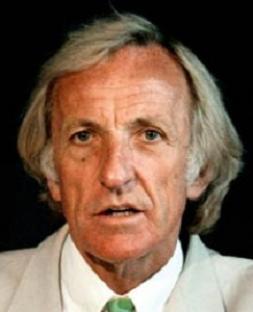
Journalist and documentary filmmaker John Pilger.

With All Respect, John Pilger Is Wrong
By Tom Hayden

John Pilger’s “Continuing the Tradition – Obama is a Hawk” was recently published in the British Economist and circulated widely. (See Pilger’s article on The Rag Blog.) It oppossed those urging a vote for Obama.

John Pilger is one of my favorite critics in the world, but he’s very wrong on Barack Obama. Not all wrong, though.

Take Robert Kennedy. Pilger says RFK, like Obama, was “a senator with no achievements to his name.” What? He was US Attorney General during the Freedom Rides; after a token start, he became an important supporter of the Student Nonviolent Coordinating Committee.. He initiated the community action programs that briefly offered hope until the Democratic establishment smothered them. His backdoor diplomacy defused the Cuban missile crisis. He raised hopes in South Africa through a controversial visit. We can disagree with these gestures, in whole or part, but to say RFK had “no achievements” is foolish by far.

Neither is it accurate to assert that Kennedy “continued to support [Vietnam] in private.” What is true is that he was ambivalent in private and public, but determined to reverse a policy that was sinking 500,000 troops in a quagmire. At worst, as president he would have embarked on a gradual de-escalation combined with diplomacy. Pilger’s clear implication is that Kennedy was faking his opposition to Vietnam to seduce the anti-war vote.

Pilger says Kennedy’s motive was to rescue the Democrats from the “threat of real change.” And so he visited Indian reservations, Appalachian hollows, hunger-striking California farmworkers, and the streets of Watts in a deceptive campaign filled with “vacuities.”

To believe this narrative is to deny the living examples of Ted Kennedy, Ethel Kennedy, Bobby Kennedy, junior, and the leaders of black and latino communities who apparently continue the delusion of living out this pattern of “politricks” decade after decade.

Could Bobby Kennedy have been more antiwar? Yes? Was he too hopeful about the remedies to Bedford-Stuyvesant? Yes. But that doesn’t make him a vacuous politician peddling false hope. He would have appointed hundreds of progressives to civil rights, anti-trust, and anti-poverty offices, and been at least responsive to the winds of change which he himself helped to stimulate. For Pilger, it apparently wouldn’t matter if Kennedy, Humphrey or Nixon were president.

Now to Obama. It’s plain crazy to argue that Obama and John McCain are “almost united” on Iraq. It is a truism of politics that rival candidates tend toward the center to win uncommitted votes. That doesn’t obscure the obvious, that their differences on the Iraq war are wide and deep. Further, Pilger sees no differences between the two on domestic issues either. Why? Because Obama takes Wall Street money, apparently eclipsing the unprecedented sums his campaign has raised online.

For Pilger, tens of millions of Americans who either love or hate Obama are victims of mass manipulation, since Obama is neither their savior or enemy, but only another politician “exploiting the electoral power of delusion”…and so on.

Sorry for the unintended sarcasm, but there is an alternative to sitting on the sidelines waiting for people to wake up from their electoral fantasies.

It’s called www.progressivesforobama.blogspot.com.

It’s a network for people who strongly support Obama, or Obama’s movement [myself], or who think Obama is the “best option”, or who simply want to stop McCain and the neo-conservative renaissance. Or people who believe it important to be engaged in mass movements.

We disagree on certain fundamentals with Obama, which is why we are independent of his campaign. We agree that his anti-war proposal will leave tens of thousands of Americans trying to carry out counterinsurgency in Iraq. We believe diplomacy, not escalation, is the best approach to Iran and Afghanistan. We believe deep revisions must be made to NAFTA, CAFTA, FTAA and WTO. Those policies must be reversed by the power of social movements, public opinion and the election of a more progressive Congress.

But we believe that Obama’s core constituency is a progressive one, and the new voters he excites will be progressive political activists for years to come. We believe that certain presidential appointments matter to the progressive movement, such as the US Supreme Court, the civil rights division of the Justice Department, labor standards enforcers, appointments to the Federal Communications Commission, and the head of the Environmental Protection Agency. And more.

As far as I know, none of us believe that a new president is a substitute for the education, organizing and movement-building that is the primary force in progressive social change. But experience teaches that who is president matters. And this is a major point of difference with Pilger, whose belief is that [a] an Obama victory will be “liberalism’s last fling”, and [b] that if Obama wins, “domestic resistance to rapacious America will fall silent.”

It’s also possible that an Obama defeat will accelerate domestic resistance, based on a larger, angrier constituency than ever before, and they won’t be followers of those who sat by dismissing the Obama campaign. On the other hand, a November Obama victory, like the Obama primary victory, will energize a spirit that will lead to a new progressive cycle of organizing and movement building and trigger expectations that will surprise the new president.

Source. / Progressives for Obama

The Rag Blog

Posted in RagBlog | Tagged , , , , , , , , , , | Leave a comment

Imperfect Obama or Republican Brownshirts

A Study in Tyranny: oil sketch, inspired by my interest in politics, persuasion, influence, brain washing, propaganda, as well as sales and marketing. Luscher.

At this point,we have no other choice than Obama, love him or not, unless we want to support some third party candidate who would certainly lose badly as they always do. He will surely do less damage than McCain, but we would be foolish to expect miracles from Obama unless they toss most of the Republicans out of Congress in November or the next election.

Jon Ford / The Rag Blog

Elect Obama or Fall Into Tyranny
By Paul Craig Roberts / June 16, 2008

As recent articles by John Pilger, Alexander Cockburn, and Uri Avnery make clear, by groveling before the Israel Lobby Obama has dispelled any hope that his presidency would make a difference.

Obama told the Lobby that in order to protect Israel he would use all the powers of the presidency to prevent Iran from having a nuclear weapon. As in the case of Saddam Hussein’s “weapons of mass destruction,” the conclusion whether or not Iran is making a nuclear weapon will be determined by propaganda and not by fact. Therefore, there is no difference between Bush, McCain, Obama, and the Lobby with regard to the Middle East.

As Israel has several hundred nuclear weapons, and a modern air force and missiles supplied by the US, the idea that Israel needs American protection from Iran is a fantasy. All Israel needs to do in order to be safe and to live in peace is to stop stealing the West Bank and to drop its designs on southern Lebanon. Obama is too smart not to know that US foreign policy has been Shanghaied by the Lobby not in order to protect innocent Israel but to enable Israel’s territorial expansion.

Obama has dispelled hope on the economic front as well. Obama has appointed two leading apologists for jobs offshoring as his economic advisors–Bill Clinton’s Treasury Robert Rubin and Rubin associate Jason Furman. These two are notorious for their justifications of policies that benefit Wall Street, CEOs, and large retailers at the expense of the economic well being and careers of millions of Americans.

As a result of offshoring, good jobs in America are disappearing. The Bureau of Labor Statistics job figures make it totally clear that the US economy has ceased creating net new middle class jobs in the private economy in the 21st century.

Stressing higher returns to shareholders, Wall Street pressures corporations to move their operations abroad. Wal-Mart tells its American suppliers to “meet the Chinese price” or else, a price that US firms can meet only by offshoring their operations to China.

Every job and product that is offshored increases the US trade deficit and lowers US GDP. It is a losing game for America that rewards the overpaid elite of Wall Street and corporate America, while dismantling the ladders of upward mobility.

By enlarging the trade deficit, offshoring erodes the reserve currency role of the dollar, the real basis of US power. Now that US imports exceed US industrial production, it is unlikely that the US trade deficit can be closed except by a sharp reduction in US consumption, which implies a drop in US living standards. If the dollar loses its reserve currency status, the US government will not be able to finance its budget and trade deficits.

Where is the hope when Obama endorses a foreign policy that benefits only Israeli territorial expansion and an economic policy that benefits only multimillionaires and billionaires?

The answer is that Obama’s election would signify the electorate’s rejection of Bush and the Republicans. Considering the cowardice of the Democratic Congress and its reluctance to hold a criminal regime accountable, electoral defeat is the only accountability that the Bush Republicans are likely to experience.

It is not sufficient accountability, but at least it is some accountability.

If the Republicans win the election and escape accountability, the damage Republicans have done to the US Constitution, civil liberty, and a free society will be irreversible. The Bush Regime and its totalitarians have openly violated US law against spying on Americans without warrants and US and international laws against torture. The regime and its totalitarians have violated the Constitution that they are sworn to uphold. Bush’s attorney general Gonzales even asserted to the Senate Judiciary Committee that the US Constitution does not provide habeas corpus protection to American citizens.

When federal courts acted to stop the regime’s unconstitutional practices and abuse of prisoners, the Republicans passed legislation to overturn the court rulings. The Republican Party has shown beyond all doubt that it holds the US Constitution in total contempt. Today the Republican Party stands for unaccountable executive power.

To reelect such a party is to murder liberty in America.

The June 12 Supreme Court decision pulled America back from the abyss of tyranny. For years hundreds of innocent people have been held by the Bush regime without charges, a handful of which were set to be tried in a kangaroo military tribunal in which they could be convicted on the basis of secret evidence and confession extracted by torture.

The Court ruled 5-4 that detainees have the right to appeal to civilian courts for habeas corpus protection. The Bush Republicans claiming “extraordinary times” had created a gestapo system in which the government could accuse, without presenting any evidence, a person of being a threat and on that basis alone imprison him indefinitely. Justice Anthony Kennedy reminded the Republican Brownshirts that “The laws and Constitution are designed to survive, and remain in force, in extraordinary times.”

Bush’s current attorney general, Michael Mukassey, said he would proceed with his kangaroo trials.

President Bush indicated that he was inclined to again seek to overturn the Court with a law.

Brownshirt Republican Senator Lindsey Graham said he would draft a constitutional amendment to restore the executive branch’s tyrannical power.

Republican presidential nominee John McCain said that the Supreme Court decision protecting habeas corpus “is one of the worst decisions in the history of this country.”

The four Supreme Court justices (Alito, Roberts, Scalia, and Thomas) who voted for tyranny in America are all Republicans. They all came out of the Federalist Society, a highly subversive group of right-wing lawyers who are determined to elevate the powers of the executive branch above Congress and the Supreme Court.

The Republican Party has morphed into a Brownshirt Party. The party worships “energy in the executive.” If the Brownshirt Republicans are reelected, they only need one more Supreme Court appointment in order to destroy American liberty.

That is what is at stake in the November election. As bad as Obama is on important issues, his election will signal rejection of the tyranny to which the Republicans are committed.

Source. / Information Clearing House

The Rag Blog

Posted in RagBlog | Tagged , , , , , , , , , , | Leave a comment

Ride ’em, Corn Dog!

Are you ready, boots? Sen. John Cornyn’s personalized/emblemized black leather cowboy boot. Courtesy Michael Weiss / Wonkette.

“Big John” Cornyn. Now that’s a big one, all right. The junior senator from Texas with the ultra-conservative voting record — known to Dubya as “Corn Dog” and to the rest of us as the president’s “lap dog” because he faithfully does his master’s bidding — may be meeting his match when he faces soldier-statesman Democrat Rick Noriega in the general election.

In the meantime, let him think he’s “Big John.” Just hope he doesn’t fall off that horse.

Thorne Dreyer / The Rag Blog

Texas Senator Cornyn Backs Away
From Wild-West Themed Campaign Video

By Jason Linkins / June 16, 2008

“My staff convinced me it was a good idea…Maybe I need a new staff.”

Those words were spoken by Texas Senator John Cornyn after his staff produced the attached video. Intended as an introduction to the Republican Party of Texas state convention, the video, featuring awesomely overwrought voice overs and the most stoned gospel chorus ever assembled, basically depicts Cornyn as a dull-witted rodeo clown who never descends from his horse or stops dressing like Jon Voight in Midnight Cowboy.

The Austin-American Statesman finds Cornyn gamely attempting to defend the terrible video, saying, “It’s actually an attempt to bring a little humor to a subject I take very seriously. We’re going to have to think differently this year, work smarter and harder, and bury the ‘same-ole, same-ole’ politics of the past.” By which he means: do everything in super, super, super, super slow-motion, apparently.

Source. / The Huffington Post.

Holly Shulman, press secretary to Rick Noriega, the Democratic nominee challenging Cornyn in November, responded: “Cornyn’s call for change today is ironic given his long record of serving Washington special interests instead of Texas families. Texas families are demanding real change – and real solutions to their every day problems. Texans need a senator who will take action, not just be a rubber stamp for the Bush administration’s failed policies as this junior senator has been for the entirety of his time in office.”

Judge the cowboy — uh, video — for yourself.

W. Gardner Selby / Austin American-Statesman / June 16, 2008

See the video at The Huffington Post

The Rag Blog

Posted in RagBlog | Tagged , , , , , , , , | 2 Comments

Pesky Kudzu Fuels Speculation

Good for Something? The kudzu vine, also known as “the plant that ate the South,” was brought from eastern Asia in 1876, can grow more than 6.5 feet a week. Because of its high biomass and resilience, kudzu is being considered by some researchers as a potential biofuel. Photo from Getty Images.

Kudzu Gets Kudos as a Potential Biofuel
By Jessica Marshall / June 16, 2008

As concerns rise over corn ethanol creating competition between food and fuels, ethanol made from one of the country’s most invasive plants — kudzu — could be part of the solution, according to Rowan Sage of the University of Toronto and colleagues at the U.S. Department of Agriculture.

The kudzu vine, also known as “the plant that ate the South,” was brought from eastern Asia in 1876 and can grow more than 6.5 feet a week. Its starchy roots plunge deep into the soil, and just a fragment of the plant remaining in the ground is enough to allow it to come back next season.

“Kudzu is just a large amount of carbohydrate sitting below ground waiting for anyone to come along and dig it up,” Sage said. “The question is, is it worthwhile to dig it up?”

His team gathered samples of kudzu from different locations in the south at different times of year and measured the amount of carbohydrate — which can be converted into ethanol by yeast — present in leaves, vines and roots.

The roots were by far the largest source of carbohydrate in the plant: up to 68 percent carbohydrate by dry weight, compared to a few percent in leaves and vines.

The researchers estimate that kudzu could produce 2.2 to 5.3 tons of carbohydrate per acre in much of the South, or about 270 gallons per acre of ethanol, which is comparable to the yield for corn of 210 to 320 gallons per acre. They recently published their findings in Biomass and Bioenergy.

Crucial to making the plan work would be figuring out whether kudzu could be economically harvested, especially the roots, which can be thick and grow more than six feet deep. To balance this expense, Sage said, the plant requires zero planting, fertilizer or irrigation costs.

Even if equipment could harvest the roots, a large fraction of kudzu vines blanket steep hillsides and would be difficult to access. The team estimated that about one-third of kudzu plants would be harvestable. If so, they calculate that kudzu could offer about 8 percent of the 2006 U.S. bioethanol supply.

“It’s not going to solve anybody’s energy crisis, but it would be a useful supplement,” Sage said.

“You could use it to get rid of the kudzu,” he said, “or, alternatively, you could let it regenerate naturally, and just walk away and then come back and do it again in a few years.”

“There is a conundrum there,” said Irwin Forseth of the University of Maryland in College Park. “Unless you’re going to let it come back and devote some land to cultivating it, it wouldn’t form a stable source. You wouldn’t want to put in a stable infrastructure and work out how to extract it from roots to have it go away after three years.”

However, if existing corn ethanol manufacturing plants could be used to process kudzu, too, then the approach might be feasible, Forseth said.

Bob Tanner of Vanderbilt University in Nashville, Tenn., proposed using kudzu for energy in the energy crisis of the 1970s, but he now suggests that the starch, which is used as a gelling product in food in Japan, carries a higher value as a food product.

He advocates using the starch for food and converting the cellulose — the woody, fibrous carbohydrate that gives structure to the stems and leaves — into ethanol once processes under development are commercially available.

The fibers also make fine textiles, Tanner said. “My suggestion is, be creative. Don’t cuss at it. Use it creatively.”

Source. / Discovery

The Rag Blog

Posted in RagBlog | Tagged , , , , , , | 1 Comment

Del and Phyllis Tie the Knot

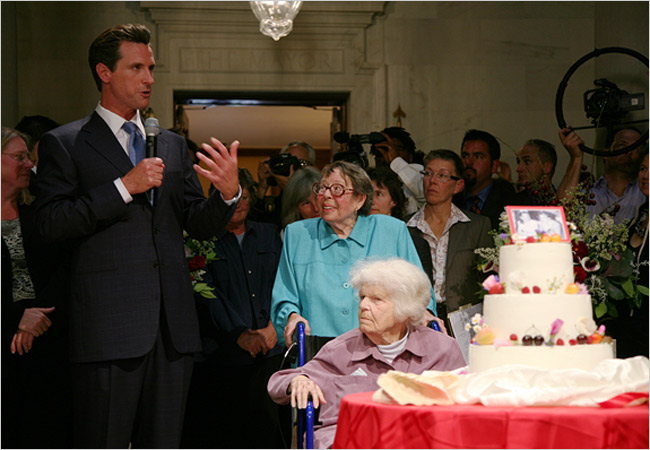
San Francisco Mayor Gavin Newsom, left, with Del Martin, seated, and Phyllis Lyon at San Francisco City Hall on Monday. Photo by Jim Wilson / The New York Times.

Same-Sex Marriages Begin in California
By Jesse McKinley / June 17, 2008

SAN FRANCISCO — With a series of simple “I dos,” gay couples across California inaugurated the state’s court-approved and potentially short-lived legalization of same-sex marriage on Monday, the first of what is expected to be a crush of such unions in coming weeks.

The weddings began in a handful of locations around the state at exactly 5:01 p.m., the earliest time allowed by last month’s decision by the California Supreme Court legalizing same-sex marriage. Many more ceremonies will be held on Tuesday when all 58 counties will be issuing marriage licenses to same-sex couples.

In San Francisco, Del Martin, 87, and Phyllis Lyon, 84, longtime gay rights activists, were the first and only couple to be wed here, saying their vows in the office of Mayor Gavin Newsom, before emerging to a throng of reporters and screaming well-wishers.

Ms. Martin and Ms. Lyon, who have been together for more than 50 years, seemed touched, if a little amazed by all the attention.

“When we first got together we weren’t thinking about getting married,” Ms. Lyon said before cutting a wedding cake. “I think it’s a wonderful day.”

Outside City Hall, several hundred supporters and protesters chanted, cheered and jeered in equal measure, giving an unruly carnival feel to the scene, complete with a marching band playing wedding songs and signs reading “Homo Sex is Sin.”

In Oakland, across the bay from San Francisco, Mayor Ron Dellums presided over more than a dozen marriages in the City Council chambers, which had been transformed into a de facto wedding chapel, with stands of flowers and a standing-room-only crowd.

In Sonoma County, the wine-rich region north of here, 18 couples were scheduled to be wed on Monday, including Chris Lechman, 37, and Mark Gren, 42, who called to book their nuptials shortly after the court’s decision.

“We’ve been on pins and needles,” said Mr. Lechman, who celebrated the 15th anniversary of meeting Mr. Gren on Monday. “We are thrilled to be part of history.”

Janice Atkinson, the Sonoma County clerk, said her office would stay open late for the rest of the month to accommodate what she expected would be a heavy load of same-sex weddings.

On Sunday, Ms. Atkinson and staff members were at a gay pride celebration in Sonoma handing out applications for marriage licenses to prospective newlyweds.

“We’re expecting some very happy couples,” she said. “And a lot of media.”

The selection of Ms. Martin and Ms. Lyon as San Francisco’s first same-sex couple was symbolic; the couple wed here in 2004, when the city broke state law by issuing more than 4,000 marriage licenses and conducting weddings in City Hall. Those marriages were later invalidated by the state Supreme Court.

On May 15, however, the same court struck down the two California laws that prohibited such unions, opening the door for California to becomes the second, and largest, American state to legalize same-sex marriage. Massachusetts did so in 2004, and more than 10,500 couples have wed there.

Same-sex marriage has been hotly contested nationwide and state by state in the courts and at the ballot box, and California is no exception.

Voters in the state will decide a ballot measure in November that would effectively overturn the court’s decision by defining marriage as “between a man and a woman.”

Forty-four states already have some sort of legal barrier — either a law or constitutional amendment — barring such unions. In 2004 alone, 13 states passed ballot measures banning same-sex marriage.

This year, however, supporters have found encouragement in both the California Supreme Court decision and in a subsequent order by Gov. David A. Paterson of New York to force his state agencies to recognize same-sex marriages from elsewhere. The California court has also rebuffed several challenges to its May 15 decision made by two conservative legal groups and Republican attorneys general who fear that the marriages will cause legal challenges to be brought in their own states.

One legal challenge was filed last week by the Liberty Counsel, a group based in Florida that wants the California Court of Appeal to halt the weddings to allow the State Legislature time to work out discrepancies in marriage law created by the state Supreme Court’s decision.

Mathew D. Staver, the founder and chairman of Liberty Counsel, said Monday’s ceremonies “make a mockery of marriage.”

“Marriage has traditionally been known, across continents and all geographical regions, as between a man and a woman,” said Mr. Staver, who is 51 and married. “Marriage between the same sex may be some sort of union, but it’s certainly not marriage.”

There has also been some local opposition to the ceremonies. In rural Kern County, north of Los Angeles, the county clerk has canceled all weddings performed by her office, a position she took after consulting with the Alliance Defense Fund, an Arizona legal group that argues against marriage for gay men and lesbians. Weddings at the county clerk’s office — long an affordable, no-frills option for couples — have also been called off in Butte County, north of Sacramento, the state capital.

In more liberal parts of the state, however, the weddings were being warmly embraced.

In Beverly Hills, Robin Tyler and Diane Olson also married, saying their vows under a chuppah on the steps of the city’s courthouse. The ceremony was solemnized by a rabbi, Denise Eger.

“Great floods cannot dampen your love,” Rabbi Eger said. “Your courage brought you here today.”

Carolyn Marshall contributed reporting from San Francisco and Oakland, and Rebecca Cathcart from Beverly Hills.

Source. / New York Times

The Rag Blog

Posted in RagBlog | Tagged , , , , , | 1 Comment

There’s Peak Oil and then there’s (FREAK!!) Oil…

I think this might Imply that we can either try to devise techno-fixes aimed as business as usual or we can move to a more survivalist post-corporate mode of social organization dealing with an abrupt reduction in the average living standard, as implied by peak oil. There is going to have to be a right and left wing of the peak oil believers, probably represented by a political movement of sorts,

Roger Baker / The Rag Blog

A leading ‘peak oil’ theorist
ponders movement’s direction

By Nathanial Gronewold / June 16, 2008

NEW YORK — Record oil prices, which have more than doubled in a year and have already jumped nearly 40 percent in the last six months, have some “peak oil” theorists gloating a bit.

But Nathan Hagens, a prominent peak oil scholar, isn’t in the mood to celebrate. He is worrying that the community of economists and analysts who say global oil consumption will outstrip daily production is headed for a schism.

“We’re going to start to decouple in the peak oil community,” said Hagens, a student of energy and ecology and co-editor of “The Oil Drum” blog.

Once dismissed as alarmists and doomsayers, proponents of peak oil are now enjoying the spotlight at center stage of a global energy debate. More mainstream energy analysts, including Platts’ senior oil economist and even some heads of major oil companies, are increasingly giving credence to their arguments. The International Energy Agency is also concerned that the world might soon reach maximum output, spurring a major reassessment of the agency’s supply forecasts.

But there is growing disagreement about what peak oil means. Some factor tar sands, oil shale and other unconventional sources into the equation, suggesting production can continue to increase for quite some time. Others count only free-flowing crude and say the world has already reached peak output, pointing to the popularity of unconventional extraction as a sign of a desperate society exerting more and more energy for less and less oil.

Nevertheless, there is broad consensus within the peak-oil community over the fundamental thesis. But Hagens says the increased attention they are getting and the heightened public anxiety over high fuel prices is splitting the community “between people focusing on supply-side answers, technology … and others that say the problem is much, much bigger than that and we need to change the whole economic system that underpins society.”

Hagens places himself in the more pessimistic camp, arguing that a 1,300 percent increase in oil prices over the past decade will accelerate in coming years, with devastating consequences for the poor and middle class.

And if his central argument is correct — that market economics are inherently irrational and that mankind was driven to this point by forces of human nature that most are incapable of resisting — then it may be too late to reverse the world’s long-standing complacency over energy security and effectively address the problem.

“I think we’ve peaked in net energy production already,” he said.

“There’s an energy-to-profit ratio on coal, and nuclear, on hydro, on oil, on natural gas, and they’re all declining.”

‘Depletion is beating technology’

Hagens was not born a skeptic of market forces. In an interview, he described the path he took from managing investment portfolios of wealthy clients at Salomon Brothers and Lehman Brothers to running his own hedge fund, then to quitting Wall Street altogether in 2003 to sound the alarm over peak oil.

“I decided to go back and get my Ph.D. and study the environment,” Hagens said. “The impetus for that was I saw that the market was not including negative externalities, and that we were kind of running out of resources, of the high-quality, low-cost resources.”

Hagens currently pursues the problem at the University of Vermont. His unique approach to the topic — which mixes economics, psychology and evolutionary biology — has won praise from and notoriety among his peers and has helped solidify peak-oil theory.

Hagens now divides his time between his research, giving lectures at energy conferences, and explaining his findings and concerns to lawmakers and industry insiders who seek him out.

“Global warming and everything else had me upset that people were just focused on making money,” he said, “but subsequently I learned about peak oil and the evolutionary side of our behavior, and I thought those two issues trumped global warming and the other environmental things.”

Studying the peak-oil conundrum from the perspective of human evolution, the world Hagens describes is one where human society is driven to compete and grow. This growth, in the form of economic and population expansion, can only continue as long as we are able to extract much more energy than we exert trying to get it, an equation more popularly known as net energy return on energy invested.

The signs that we are reaching “peak oil” are not coming from the depletion of reserves — most proponents of the theory accept that there is plenty of oil left in the world and will be for a long time. Rather, the run-up in oil prices, and indeed in the price of all energy, is a sign that we are fast approaching, or have already hit, a net energy peak. Whereas in the past it took perhaps the equivalent of one drum of oil’s worth of energy to gain 100 drums of oil, Hagens argues that the world is fast approaching a 1-to-1 ratio.

“Depletion is beating technology, and in the end it always will,” he said. “We’ve gone from 100-to-1, to 30-to-1, to 10-to-1, and at some point you could spend as much energy as you get out, and that would only make sense if you had an unlimited amount of lower-quality energy.”

Hagens and others do not believe the world has an unlimited supply of oil shale, deep water reserves, coal to liquid and other schemes companies and governments everywhere are busily pursuing.

And Hagens said his research shows that the market forces most economists are relying on to save the day do a terrible job of pricing resources trapped underground, resulting in an over-reliance on gasoline, which, even at $4 a gallon, is still cheaper than Gatorade.

The marketplace is adjusting to higher prices. Consumers are driving less and turning to more fuel-efficient vehicles. Energy consumption as a whole is growing less or becoming more efficient in the face of higher prices. People are beginning to move their residences closer to their places of work, or working from home. Business travel is also way down.

But proponents of peak oil theory say that none of that will be enough to offset the loss in terms of energy gain that declining production will bring. Experts believe that it takes at least 17 years for the United States to roughly overturn its entire vehicle fleet — and changing jobs and houses to shorten commutes is not something that is accomplished quickly, either.

“As our energy-to-profit ratio declines, we can’t grow, we can’t grow the economy unless that is offset by efficiency and conservation, but the magnitude of gain that we have right now can’t possibly be offset by efficiency and conservation,” Hagens said.

‘Lifeblood of civilization’

In the end, those on the more pessimistic side of the peak-oil argument — those who see a global economic crash coming — say we risk becoming victims of our own nature.

Hagens, for one, says numerous studies of evolutionary behavior and the workings of the mind show that humans value the present far more than the future, and that we are driven by a powerful assumption that what is true today will continue to be true tomorrow.

This fundamental aspect of how the mind operates, he said, explains why the peak oil argument has been dismissed by mainstream society for so long. It also explains why even the brightest minds in the industry, notably expert analysts at the consulting firm Cambridge Energy Research Associates routinely fail to accurately predict future oil prices. Today, the cost of a barrel of crude oil is hovering at around $135, not the $85 level that many experts assumed it would beat.

“The root causes are at the psychological side of human behavior,” said Hagens. “Individuals being rational is the exception, not the rule.”

The point is to not only become more energy efficient, diversify energy supplies or develop ever greater technological fixes, he said, but to change human behavior so success will be measured in consuming less instead of more. That, he added, is a tall order.

And the peak-oil crowd itself, now increasingly divided between those who fear the worst and those who believe in market forces and are even exploring ways to profit from the fallout, needs to find a consensus on how serious the problem is and on ways to influence economic and political changes, Hagens said.

“What people don’t understand,” he said, “is that this is the lifeblood of civilization, and once people realize that it’s scarce, you’re going to see individual behaviors revert to ‘I’m looking out for number one,’ and things can flip pretty quickly.”

Source. / Greenwire (limited access)

The Rag Blog

Posted in RagBlog | Tagged , , , , | Leave a comment

Cindy’s Cookie Caper

Cindy McCain’s filched oatmeal butterscotch cookie. Yum.

…how will America heal?

Cindy McCain Continues To Steal
Easily Googlable Recipes


A few months ago, John McCain’s second and current wife, “Trollop” Cindy, was caught stealing recipes from the Food Network and publishing them as her own material, a simple lapse of ethics that you’re supposed to learn, and master, at age four. To atone for this, Cindy fired a hapless intern. But the problem was systemic! Cindy has contributed another recipe, to Parents magazine. This recipe for Oatmeal Butterscotch Cookies was, of course, directly cribbed from Hershey’s website. Th-that’s not ch-change we-ee can b-believe in. In fact, it’s copyright infringement!

Source. / Wonkette / June 16, 2008

Cindy McCain’s Oatmeal-Butterscotch Cookies / Parents

Cindy McCain Stole Her Cookie Recipe Straight from the Hershey’s Website! / Democratic Underground

Thanks to Jim Baldauf / The Rag Blog

Posted in RagBlog | Tagged , , , , | Leave a comment

Mariann Wizard : Hypocrisy and the Drug War

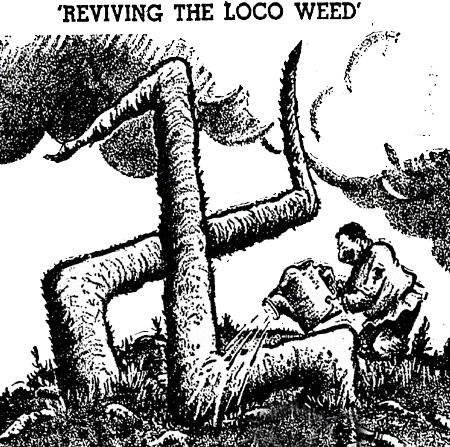
Sinister Drug War Propagandists will stoop to any low level as evident in this World War 2 Era Political Cartoon from the Buffalo Courier-Express equating Marijuana with Nazism. From Daily Kos.

Mariann Wizard posted the following as a comment appended to an article published last week on The Rag Blog, about the number of people now in our criminal justice system having reached a record total of over 7.2 million.

I believe this to be a critically important issue facing our society today, and Mariann speaks to it with intelligence and feeling.

Thorne Dreyer / The Rag Blog

On Prohibition and Propaganda
By Mariann Wizard / The Rag Blog / June 17, 2008

I have worked to end the drug war for over 40 years and it is not politicians who will turn it around.

Every politician I have ever talked with PERSONALLY about the issue has told me that they PRIVATELY agree with me, but that THEIR CONSTITUENTS would have their heads on a pike if they were to support any reduction in drug war expenditures or penalties.

In Alaska in 2004, we saw local elected officials who were known to smoke pot — virtually everyone in AK has at least TRIED it by now, since their Supreme Court consistently rules in favor of AK’s more libertarian Constitution — coming out in public with the “Drug Czar” to denounce Proposition 2, which would have legalized, taxed and regulated cannabis commerce. THEY were bullied into this flat-out public hypocrisy and lying by threats to cut federal funding to Alaska, which is fed, more than any other state, at the federal teat.

Alcohol Prohibition, to which today’s drug prohibitions are often compared, has some fundamental similarities, and some even deeper, imho, fundamental differences. Chief among the latter is the length of duration. Alcohol Prohibition survived in these United States for less than a dozen years; Cannabis prohibition began (in El Paso, Texas)in 1914, going federal in 1937. THAT IS SEVENTY-ONE YEARS OF LIES, DECEIT, HYPOCRISY, FALSE TESTIMONY, FALSE “SCIENTIFIC EVIDENCE,” GRAFT, CORRUPTION, GREED, and every other SOCIAL POISON imaginable, and people have become simply inured to it. Those of us who know the government lies about pot knows it lies about everything else as well. Those who don’t get it by now, ain’t ever gonna get it.

Even taking Mary Jane out of the equation and simply looking at the “hard” drugs, mostly characterized by their white or brown powder one-chemical formulation, and certainly not excepting the very many prescription drugs whose legal use can awaken illegal cravings in those susceptible, this is not a “problem” which should have any significance whatsoever to the criminal justice system. We don’t lock up tobacco addicts. We don’t lock up alcoholics, unless they drink and drive or commit some actual crime, and even then, we almost always offer the choice of rehab and restitution to first offenders.

If you wonder why marijuana is illegal, read Jack Herer’s seminal “The Emperor Wears No Clothes”, available at any Planet K store in Austin and through lots of web sources, I’m sure. HINT: It has to do with “marijuana’s” alter ego, HEMP, the most valuable and versatile agricultural crop known to humanity over thousands of years, and today marginalized and virtually eliminated due to a MASSIVE (and successful!) RESTRAINT-OF-TRADE CONSPIRACY led by such all-Americsn stalwarts as William Randolph HEARST, DuPONT, Southern COTTON FARMERS, the brand-new PHARMACEUTICAL industry, and ALCOHOL & TOBACCO interests.

A LOT OF MY FRIENDS AND POLITICAL ASSOCIATES APPARENTLY THINK I “JUST LIKE TO GET HIGH” — WHICH I DO!!! — AND THAT THEREFORE THE REST OF THIS IS SOME MEANINGLESS FANTASY PIPEDREAM. Just goes to show how vulnerable THEY are to a 71-year WAR of PROPAGANDA.

We have allowed ourselves to be cheated of one of the greatest gifts of the universe, however you conceive of that, through terror and trivialization. And one in every 100 Americans (MANY OF THEM OUR TRUE BROTHERS & SISTERS) went to jail or prison in 2006.

PS — When they get out, they tend to think they can’t vote anymore. They don’t register to vote, and therefore aren’t on the jury rolls.

The Rag Blog

Posted in Rag Bloggers | Tagged , , , , | Leave a comment

We Need a Second American Revolution

This is only in part a response to the comments made on yesterday’s post about a recent Nader speech. The bigger picture for me is that we do desperately need election reform in the US to change this jaundiced process. Joel Hirschhorn has some of the best ideas going in that respect, as he outlines in his book Delusional Democracy. If we are to have meaningful change for the better, we need to keep the discussion moving forward.

Richard Jehn / The Rag Blog

Fighting Resistance To Voting for Ralph Nader
by Joel S. Hirschhorn / June 16, 2008

In so many ways Ralph Nader deserves to be president of the U.S. more than any Republican or Democratic candidate. For anyone that understands the need to overturn the two-party plutocracy and the corporate money that supports both major parties, Nader is the only credible candidate. He is also the most honest one and the only one that has the best interests of ordinary Americans as his highest priority. Yet most of the millions of independents and progressives that are disillusioned with the two major parties will probably not vote for him in November. Here is the case why the two most prevalent reasons they will use are without merit.

First, there is the classic view that Nader cannot win and therefore that voting for him is just a wasted vote. On this point the wisdom of I.F. Stone has kept me committed to always voting for Nader:

The only kinds of fights worth fighting are those you are going to lose, because somebody has to fight them and lose and lose and lose until someday, somebody who believes as you do wins. In order for somebody to win an important, major fight 100 years hence, a lot of other people have got to be willing — for the sheer fun and joy of it — to go right ahead and fight, knowing you’re going to lose. You mustn’t feel like a martyr. You’ve got to enjoy it.

In other words, when voting for an independent like Nader it is psychologically necessary to consciously accept the fact that the fight is not about electing Nader president. We need a long view of history and revolution. No, a vote for Nader is a most effective way to participate in the corrupt political system by expressing utter disdain for the two-party plutocracy. A vote for Nader is all about overthrowing the power structure that is killing the middle class and fostering rising economic inequality. The misplaced zeal for candidates like Ron Paul, Hillary Clinton, and Barack Obama is based on a short-term embrace of a particular candidate, rather than devotion to the battle to destroy the two-party plutocracy. When Nader runs and loses we the people are not losing, we are stubbornly still fighting for what must ultimately be victorious — restoration of American democracy by overturning the two-party plutocracy.

Specific policy positions are largely distractions from what should be seen as the central battle to restore American democracy. But even when it comes to specific policy positions it is amazing that so many change-driven Americans will not fully understand how Nader’s positions on major issues are so much better than those of Obama, Clinton, and McCain. On the health care issue alone, only Nader supports what every American should embrace: a single payer insurance system. This is the only position that can remove the obscene profit-loving power of the insurance and pharmaceutical industries. That every Democratic and Republican candidate refuses to embrace the single payer system is proof positive of their commitment to keep corporate money and power happy, because that sustains the two-party status quo.

Second, there is a persistent view among voters unenthusiastic about the two-party system that Nader is a spoiler and that voting for him imposes guilt for electing a terrible president. Should you have any negative thoughts about Nader because of the 2000 election, the facts refute blaming him for the Bush victory, including more than 200,000 registered Democrats in Florida who voted for Bush (compared to 97,000 votes for Nader, only 25 percent of which would have voted for Gore) and over half of the registered Democrats that did not vote at all because Gore ran a terrible campaign.

It is simply illogical and moronic to blame Nader and the people who voted for him. This year, Democrats will undoubtedly work hard to create a guilt atmosphere so that people who might be inclined to vote for Nader are made to fear that doing so could elect McCain president.

The people who should bear primary responsibility for electing McCain president are those who vote for him. And possibly those who truly believe that Obama should be president but do not vote at all. But millions of Americans that see Obama mostly as the lesser evil candidate should vote for Nader. They must trust their instincts and knowledge that Obama is simply another two-party plutocracy candidate that used slick rhetoric to con the public. Making Obama president is not winning the battle against the two-party and corporatist tyranny.

If Obama had any shred of true democracy-decency he would be advocating for allowing third party and independent candidates to participate in the televised presidential debates. But nothing about Obama and his positions has anything to do with restoring American democracy. If he truly wanted to get corporate and other special interest money out of politics he would also support a constitutional amendment that replaced all private money in campaigns with total public financing. If he truly wanted to deliver universal health care he would be supporting a single payer system. And on and on.

I see Nader as the only candidate who has key characteristics of our Founders, because he is the only one willing to explicitly fight domestic tyranny and the only one that understands we need a Second American Revolution.

Indeed, this is what he recently said: “We need a Jeffersonian revolution. If it doesn’t happen, our democracy will continue to weaken and things will get worse. Right now, we have a two-party electoral dictatorship with each party looking for the highest corporate bidder.” Amen.

Work for Nader, contribute to his campaign and vote for him. And enjoy the fight.

Source / Swans Commentary

The Rag Blog

Posted in RagBlog | Tagged , | 1 Comment

Congress Votes to Fund Amtrak


Bush wants to veto Amtrak cash
when it’s needed most

Now that the airlines are dying due to soaring jet fuel costs, it could well be that there is not enough rail capacity to pick up the slack. Especially since the rail lines make their main money from freight and tend to treat passenger service as an annoyance.

It should be noted that this was the authorization bill that passed. The second necessary step is to pass a bill that actually provides the rail money.

Roger Baker / The Rag Blog

Time’s right for rail

The impossible happened this week — the U.S. Senate and House voted overwhelmingly to fully fund Amtrak for the next five years. There’s even some matching money to help states set up or expand rail service.

It’s amazing what four-buck-a-gallon gas will do.

Amtrak’s funding package even got the votes of some of its biggest
critics, like Florida Republican Rep. John Mica, who admitted for
the first time that Americans need some transportation choices.

“Nothing could be more fitting to bring before Congress today, on
a day when gasoline has reached $4.05 a gallon across the United
States on average,” he announced on the floor.

The two houses need to patch over some minor differences in the
bills they passed, but Amtrak backers are confident that won’t be
any trouble.

The biggest trouble, though, may still come from the White House.
President Bush, who has attempted to dismantle the national rail
system throughout his presidency, has pledged to veto the bill.
Fortunately, both the House and Senate passed the funding by veto-
proof margins. Unless Republicans switch because they don’t want
to “embarrass” their president, Bush’s veto will be moot.

Frankly, the president should be embarrassed. His stand on public
transportation has marginalized him on the issue. He continues to
insist that Amtrak should be dismantled and pieces of it turned over
to private companies to run short-line routes. That might work in
highly urbanized areas, but without government subsidies the vast
expanse of America would be left with no rail service of any kind.

But Bush has been far from alone. There has long been a mind-set
against subsidizing rail transportation. Politicians from both sides
of the aisle have never had trouble subsidizing the building of more
and bigger highways and underwriting the cost of airports and sleek
terminals, but when it came to rail, they sang a different tune.

Had we adequately funded Amtrak so that it could have improved trackage in congested areas and run more than one train a day between big cities like Chicago and Minneapolis, for example, the country would today have a reasonable alternative to $4 gas and gridlocked and unreliable airports. We might even have had rail service to Madison.

And now that Congress appears to be finally seeing the light, let’s
hope that Wisconsin does too, and scraps its plans to eventually
spend nearly $2 billion to widen I-94 between Milwaukee and the
Wisconsin-Illinois state line, ostensibly to relieve congestion in
Racine and Kenosha counties.

The DOT has been relentlessly moving ahead with the project despite
an outcry from area citizens that what’s really needed is commuter
rail, which would cost a fraction of what it would take to expand the
interstate.

If ever there was a time not to encourage yet more travel by
automobile, this is it.

Americans are at a point where they’re looking for alternatives. At
$4 a gallon for gas, they’d embrace rail transit if only it were
available. That’s not to mention the environmental benefits that come
from people riding in train cars rather than spewing carbon into the
air while driving and idling in traffic.

It’s beyond time for our governments — federal, state and local —
to come to grips with the future of higher-priced and less-available
oil.

That future doesn’t involve building more superhighways.

Source. / Capital Times / Yahoo

The Rag Blog

Posted in RagBlog | Tagged , , , , , , | Leave a comment

Books : Writings for a Democratic Society : The Tom Hayden Reader


Richard Flacks discusses Tom Hayden
and the new collection of his writings

By Richard Flacks / June 12, 2008

If you were on the campus at Ann Arbor at the dawn of the 1960s, you’d have been aware of Tom Hayden’s writings in The Michigan Daily (the substantial and influential University of Michigan student newspaper). He first came to notice for his travels to the South to cover scenes of civil rights struggle and the movement then bursting into history. Then during the summer of 1960, Hayden was reporting from California, on the new breed of student rebel at Berkeley, on farmworker conditions in Delano, and a conversation with Edward Teller, the father of the H-bomb, at the Livermore Nuclear Lab. And then there was Hayden at the Democratic National Convention in Los Angeles, watching JFK’s nomination and interviewing Martin Luther King Jr. as he led pickets in the streets outside the convention arena. In the fall of 1960, Hayden became editor in chief of the Daily, writing full-page articles declaring the birth of an American student movement. He was 20 that year.

Mickey and I, just married, were in Ann Arbor, where I was working toward a Ph.D. in social psychology. We’d gone there from New York City, both of us red diaper babies, disillusioned with communism’s betrayals, harboring no expectations that we’d ever find a way to restore political hope, enjoying instead our breakaway from the provincialism of the City, and discovering at that moment cultural possibilities unknown to New Yorkers. Ann Arbor was humming with film and electronic music festivals, “happenings,” coffeehouses and bookstores where young writers and artists could find voice and space that would not have been possible in the big city. Tom Hayden’s articles in the Daily became part of that ferment. We read them avidly, seeing them not as mere reportage, but as an effort to construct an exciting political myth—that Cold War apathy and conformism might be replaced by a new, youthful protest and dissent, spawned by the civil-rights movement, seeking possibilities for personal commitment and social renewal. We weren’t yet ready to believe his story line, but we certainly wanted to hear it.

In March 1962, Hayden delivered a well-advertised speech at the university on “student social action.” That speech changed my life: Here was a 21-year-old kid from America’s heartland, putting into words what Mickey and I had been groping and hoping for—that in the United States a new left was needed and possible, that it had to break with many of the fundamental suppositions of all the factions of the traditional left and with Cold War America, that it could come in part from students. He quite insightfully saw how personal struggles for individual self-determination and moral coherence could fuel a collective commitment of youth to social change. I remember coming home right after the speech and telling Mickey: “I think I’ve just seen the American Lenin!” This wasn’t a reference to the substance of Hayden’s talk, which was quite self-consciously antithetical to Marxist-Leninist doctrine, but to his evident gift for making the hope for a movement seem a practical possibility.

Hayden’s speech that day was a trial run for what became, by the summer of 1962, a fuller draft of a manifesto for the emerging Students for a Democratic Society. Sixty folks, including Mickey and me, gathered in Port Huron, Mich., in June to debate and rework the draft and lay the groundwork for what was meant to be, and eventually became, the organizational expression of the 1960s’ new left, and the spearhead of a multi-issue student movement. Tom Hayden wasn’t the originator of this breakthrough (if any single person deserves credit, it’s Al Haber—a fellow Ann Arborite, who actually created SDS out of the remnants of the old Student League for Industrial Democracy and recruited Tom and other student leaders to the project). But Tom’s writing and speaking enabled a genuinely new political voice and outlook to come into being. He was, appropriately enough, elected first president of the new formation at that meeting.

Forty-five years later, City Lights, the independent press founded by Lawrence Ferlinghetti, has published a collection of Hayden’s writings over the last nearly five decades, called “Writings for a Democratic Society: The Tom Hayden Reader.” Its 600 pages [in one edition] make it a monumental book in more ways than one. It’s fat and densely packed, with some 60 pieces of reportage, advocacy, reminiscence and reflection drawn from some of the more than 15 books Hayden has written or edited, and the hundreds of articles and speeches he’s produced over these years. (Full disclosure: Not only have I been a friend of his for the last 47 years, but I discovered, after getting the galleys, that one of the chapters is a speech Tom gave in my honor two years ago. But what I write here is not a “review”; rather, it uses the occasion of this book to reflect a bit about Tom’s work in helping advance radical democracy in our time.)

It isn’t the size of the book that makes it monumental; it’s the life that has gone into the writing and that is reflected by it. The book’s chapters trace that life: from student journalist to SDS leader to community organizer in the Newark ghetto; then on to North Vietnam in the midst of war, to Chicago streets leading anti-war protest, to Chicago courtroom as a defendant in the conspiracy trial. Then his partnering with Jane Fonda in working to end the war and in life. In the mid-1970s, seizing new mainstream political openings, running for the U.S. Senate in California, building a statewide electoral organization, winning a seat in the California Legislature. In the state Legislature, where he serves for 20 years, he pioneers alternative energy development and, along the way, crafts a spiritual perspective on environmentalism, discovers his Irish heart, and tries to rouse the University of California to serve egalitarian purposes.

Tom Hayden with wife Jane Fonda, after Fonda’s return from Hanoi.

And, after he ends his adventures as politician, we find him in the streets of Seattle and Miami, in Mumbai and Chiapas, in Bolivia and Cuba exploring and reporting newly emerging movements for global justice. Not many Americans have done so much making of history while, at every juncture, taking the time to be a “participant observer” of the scenes and events one is helping to shape. The writings so produced are of course uneven in style and perspicacity. Some are remarkably moving and insightful: a heartfelt reflection on the meanings of the Irish famine for the American Irish soul; some brilliant appreciations of the meaning of the World Social Forum and other grass-roots resistances to corporate globalization; a weird “journal” of epiphany in the Amazon, and a number of valuable documents and reflections on the meanings of the 1960s, both personal and political. These suggest that Tom Hayden could have been one of the great journalists of our time, given his ability to combine a penetrating style, keen eye and an unusually sharp theoretically informed mind.

Tom, however, chose a different path—to change the world rather than merely interpret it. From those early Ann Arbor days, he insisted on living inside the fierce contradictions and dilemmas inherent in political engagement. Engagement demands advocacy, and therefore at least some sacrifice of the intellectual’s claim to being a disinterested truth-seeker. Accordingly, these “Writings” don’t tell stories or express ideas for their own sake; each of them is making a point in an ongoing debate with the powers that be and reflects a persistent effort to challenge the complacent and the passive.

But some of these pieces are deeper and more durable than topical advocacy. Tom has had, from his earliest work, something to teach both activists and intellectuals about the tensions and connections between them. He’s been guided by a fairly coherent philosophical pragmatism, learned from his Michigan professors like Arnold Kaufman and Kenneth Boulding, from immersion in the writings of C. Wright Mills, as well as now neglected heroes of the late ’50s and early ’60s Albert Camus and Paul Goodman. Our passion and our action, this pragmatism says, should be guided by our experience, rather than ideological doctrine, theory or concealed thirst for power. Here, Tom suggests, are some ways to make our experience useful for making change:

* Take institutional claims seriously and see if they are practiced by those in power.

* Challenge elites to live up to their claims, to justify their actions.

* Oppose structures of authority that block ordinary people from, in the language of Port Huron, “participating in the decisions that affect their lives.”

* Try to figure out, by observation of relevant cases, by experimentation, by dialogue, how social empowerment and participatory democracy can be made real.

It is through such ongoing efforts to organize from below, to win voice for the voiceless, to de-legitimize elites, that fundamental change happens. And, he teaches, whether or not transformation is possible, that struggling for democratic voice and empowerment is the essence of practical strategies by which ordinary people can advance their interests.

In 1976, at age 36, Tom made a turn to electoral politics after 15 years as a movement leader. He decided to run in the California Democratic Party primary for U.S. Senate, opposing the incumbent John Tunney. Not only was this a break with his longstanding political identity, but it was an affront to the interests and sensibilities of party professionals. Running for the Senate was presumptuous for a political upstart, it threatened a perfectly respectable liberal incumbent, and it was bizarre to imagine that a former revolutionary ex-Chicago conspiracy defendant, spouse of Jane Fonda, might have a chance in the political mainstream. The move was also questioned by many on the left—as an opportunistic betrayal of principle which would legitimize one of the two corporate-dominated political parties and undermine the effort to build a mass movement.

Tom’s pragmatism, however, allowed him to see that the mid-1970s might be a moment when the electoral process could be open for a genuinely democratic possibility. The generation of the 1960s was now grown up and ready to be an electoral force (“The radicalism of the sixties is the common sense of the seventies,” he declared). The economy was in stagflation (and the Keynesian strategies to revive it seemed no longer viable). Rising global competition in manufacturing was leading to declining real wages for American workers for the first time since World War II. A new awareness of environmental peril was rising; newly asserted demands for economic justice were being expressed by women and minorities. In Europe and the United States speculation was growing that corporate capitalism was in crisis, no longer able to manage its manifold contradictions. New paradigms were in the air: “Eurosocialism” and “Eurocommunism,” Ralph Nader’s crusade against corporate domination, and a variety of ideas about how to empower communities, workers and consumers. Tom’s campaign decided to issue a new Port Huron Statement-style manifesto, and gathered a number of academics and activists, myself among them, to write a campaign platform which we called “Make the Future Ours.” Some passages from this lengthy effort are reprinted in the “Writings.” The key idea was captured by the phrase “economic democracy,” coined by Derek Shearer, a term that paralleled and focused the “participatory democracy” of SDS at Port Huron.

Tom Hayden speaks before signing copies of his book, “Ending The War in Iraq” June 24, 2007 in Los Angeles, California. Photo by Michael Buckner/Getty Images.

In reality, however, the Hayden for Senate campaign did not operate as a vehicle for new vision. Instead the logic of big-time campaigning—and the availability of Jane Fonda as effective fundraiser—led to a series of negative TV ads aimed at Tunney’s vulnerabilities, featuring Henry Fonda and other Hollywood figures. These ads boosted Hayden’s poll numbers into the 40 percent approval range. In addition, there was a sizable grass-roots organization, and Tom undertook a 1,000-mile walk down the California coast. To win the race was always a long shot, but garnering 1.3 million votes led the media to take Hayden seriously as leader of something new on the political scene.

An internal premise of key organizers was that the campaign, when it was over, would be the foundation for a permanent progressive electoral organization in California, and within a few weeks after the June primary race, the “Campaign for Economic Democracy” came into being. The CED became a significant electoral force in several cities and counties over about five years. It came to an end as Tom focused on his own political career, getting elected from Santa Monica to the California state Assembly, while many other CED activists found niches in government, party politics and mass media.

This chapter in Tom’s life story is not well represented in the book, nor does he devote much space to the 20 years he spent in the California Legislature. This absence reflects the fact that he hasn’t written much about these matters. The CED’s work and his efforts in the Legislature certainly bore fruit of which he’s proud (and these are mentioned in the text of the book). But to write in detail about these efforts, and the times themselves, might also be painful. The hope that many new leftists had, in the 1970s, of creating a new movement for economic democracy was considerably dashed by the rise of Reagan and the triumph of conservatism on the national stage.

The fact that such a hope existed has been largely obliterated in prevailing memory, and there has not been much documentation of the fact that as national politics moved right in the last 30 years, many localities across the country were moving left. Politics rooted in environmentalism, feminism and the growing numbers of Latino and Asian-American voters have changed local structures of power and implemented some pieces of the “economic democracy” agenda. (The Web site http://www.community-wealth.org/ provides a comprehensive inventory of local efforts at establishing economic democracy.) Below the radar, new forms of citizen action have taken local power away from old local elites. In Santa Barbara, where we’ve lived for 40 years, local government, once securely controlled by bankers and real estate agents, now is led by environmentalists, feminists and liberal Democrats. It’s a shift that’s happened in many other California communities, too. These developments need to be documented, in part because they constitute some of the experience that a new national reform agenda can draw on.

Tom is now 68, and some of us of the SDS generation are in our 70s. It would be a good thing if, individually and collectively, members of that generation were to spend some part of their remaining years in efforts to closely interrogate our political experience. I don’t mean producing further rehashings of “The 1960s.” It’s the 40 years since then that have been inadequately examined. Tom Hayden and his compatriots helped shape the history of these decades, and not always in ways we intended. Still, it’s the right that claims and is generally perceived to have dominated during most of this time. Yet all ideological perspectives from left to right have failed to comprehend the world as we now experience it. An effort to comprehend the state of that world would benefit from a systematic examination of the gap between the expectations and hopes of activists on all sides and the reality that ensued.

But ’60s oldsters now are stirring themselves to new action rather than reflection. Tom Hayden himself has been tirelessly speaking, writing and organizing in hope of mobilizing grass-roots opposition to the war in Iraq. Some of the pieces in “Writings” express his excitement on encountering the street-level global justice movement. He and other ’60s veterans are even more excited by the Barack Obama youth surge. It inspires hope for social regeneration in some of the ways the youth revolt of the 1960s offered.

Hillary Clinton wasn’t, as far as I know, an SDS member back in the day, but we do know that she was moved by the student movement and the new left. Yet it is Obama, (even though, as he has reminded us, he was only 7 years old in 1968), whose campaign provides validation for some of the hopes of the new left. He, like Tom Hayden, roots his leadership experience in his work as a community organizer. His campaign, as explained by Michelle Obama, bears a striking resemblance to the way Hayden’s 1976 Senate campaign was conceived. She declared: “Barack is not a politician first and foremost. He’s a community activist exploring the viability of politics to make change.” Obama’s frequent assertion that it’s not the president who makes change, it’s the movement from the bottom up that makes change, very much expresses the spirit of the “organizing tradition” that includes SNCC, SDS, King, Saul Alinsky and the “local heroes” who led the movements of the 1960s. Maybe participation in and critical observation of the Obama experiment will provide the best opportunity we’ve had to learn about the chances for that democratic society Tom and his co-conspirators started to write and organize for in the very year that Obama was born.

Richard Flacks is professor of sociology emeritus at the University of California, Santa Barbara, where he has taught since 1969. He is the author of “Making History: The American Left and the American Mind,” published by Columbia University Press.

Source. / Truthdig

Find Tom Hayden’s Writings for a Democratic Society on Amazon.com.

The Rag Blog

Posted in RagBlog | Tagged , , , , , , , , , , | Leave a comment